• We want to know how young people become adults. The question we ask is “What’s your coming of age story?” Every Thursday, we’ll bring you the story one young Nigerian’s journey to adulthood and how it shaped them.

    The young woman we spoke to this week feels like she turned out okay, but she knows she could have been in a better place if she mentally prepared for some of the things that happened as she became an adult.

    My life as a child revolved around the church. My parents were ministers in a popular Pentecostal church at the time. They made my siblings and I go to church on Sundays, Saturday evenings and often after school for weekday services. My reading revolved around religious books. I read a lot of bible stories with the same reverence that I read books like Chicken LickenFamous Five, and Enid Blyton titles. My dad was an avid reader too, so there were books around me all the time. This made me develop a love for reading real quick. Reading was my escape.

    In junior school, I read a court case and decided I would be a lawyer. A 10-year-old who knew what she wanted was everyone’s darling. I’d tell adults I wanted to be like Gani Fawehnmi, a human rights activist and a writer like Wole Soyinka, and they would smile. At every moment as a child, I knew exactly what I wanted and had all I needed to get to there. Knowing this made me confident.

    My parents were bankers. Executives in two old generation banks. In spite of the money they had, my parents taught us to live so frugally. It was mostly my mum; she was strict. She made us save the little we had and invested in top companies on our behalf before we even became adults. When my dad bought us expensive gifts: new laptops, new shoes, dolls, etc., my mum complained. She shopped for our things on the busy streets of Eko market, while my dad bought most of our things when he travelled out of Nigeria. Somehow, this made me think we were poor, or at best average. 

    When I joined a new secondary school that was different from my old school at the start of SS1 — in that they used both British and American curriculums — this feeling became even more profound. I was astounded by just how often my classmates travelled every summer. In my first week, when my new classmates asked where I went for summer, I shrugged and said, “Just South Africa,” because I felt it didn’t count. It wasn’t Greece, or London, or Rome, or Paris. 

    They also had very liberal parents; parents who let them drive, allowed them to have sleepovers, boyfriends, and girlfriends. It was a very lonely period of my life because I felt left out. Worst still, the class bullies picked on me because I had acne and didn’t carry the best backpacks or wear the best shoes. 

    Still, when I looked at my results at the end of every term, I was proud of myself. In the old school, we were 50 in a class, and each set had at least six classes. While my older siblings were the smartest in that school, always coming top of their set and winning prizes, I was never given any special award. I always came among the first 10 in my class. That was as good as it got. My mum’s response to this was always, “Congratulations.” Nothing more. It was her response to everything, even when one of my older siblings competed for the entire state in a Math competition and came in first. 

    In the new school, we were 30 in a class; each set had at most 4 classes. I was often the best in government, Christian religious studies, and literature. I usually came in the first 5 in my class. This was largely because the teachers in the new school were very thorough and friendly — they never flogged students; they spent time helping each student develop in weak areas. I even excelled in subjects like Maths and Biology, subjects I had previously sucked at. One time, during a test out, I scored 14/20 and was the highest in the entire set. The best students from other classes, especially the science class came to me to explain it to them. That was the only time I felt like I truly belonged in that school. 

    Things changed in 2008, during the financial crisis when stock prices crashed. My father lost his job — compulsory retirement — after his bank was merged with a new bank. It was a dark time, but my parents never painted the full picture for us. The only changes made were moving schools and my mum became the one to give us allowances. My older siblings were already in university at the time. The stability I had known for so long crashed. At first, I hated the new school. It was a lot cheaper than the old school, but still quite expensive than my first secondary school. Subsequently, however, I met new people and made new friends. I was still a star student, only now, in an environment that made me feel like I was truly accepted. 

    I assumed my dad would try to find a new job, but he didn’t. He got an offer at some point, but he rejected it on religious grounds. Before he lost his job, I was really close to my dad; we had the same interests and look exactly alike. He was my shield from my mother. But I started to loathe him after he declined the job on a religious basis. I don’t know how it happened, but the contempt slowly crept in and soon, I discovered I couldn’t stare at him when speaking to him. My siblings and I complained about him to ourselves all the time. We had a house and cars; we were comfortable, but it didn’t look good for our father to remain jobless. We couldn’t continue to lie to people when they asked what our father did for a living that he was a businessman, when all he did was watch movies and read books all day.

    When I became a feminist, I loathed him even more — if he was going to be a stay at home dad, the least he could do was pull some weight around the house, but he didn’t. My mum still returned home after a hectic day at work, to prepare his meals. His demands of her, and us increased. I soon realised how fragile masculinity was. He had to assert himself somehow, so we could continue to respect him. And the ways in which he did it were terrible.

    When it was time for university, I hoped to go to school in the UK, like most of my classmates. I searched online for scholarships and started speaking with people. I didn’t want to write JAMB, just because. My parents made me take it, and I ended up in a government university in Nigeria studying the course of my dreams.

    It was at this point adulting started in the true sense of the word. However, if I’m being honest, I’ve always felt like an adult, even as a child; there’s one part – the unfair pressure of growing up as a girl-child in Nigeria. Then there’s this goodie-two-shoes maturity I’ve always had, that some of my classmates and friends didn’t. It’s the attitude that makes me a stickler for rules, always so scared to break rules or offend people. Sometimes, I blame my mum for this. She made us grow up fast because she didn’t want us to make mistakes she might have made. She wanted us to be independent, and with a mother like that — a mother that started a business on the side while being an executive in a bank just to support the family — it was easy. 

    With all the strikes and poor facilities, law became the course of my nightmares. I was on a 4.8 GPA in my first and second years. My older siblings had finished with first class, so I wasn’t about to be the exception. But in my third year, my grades dropped and I really didn’t care. I mean I did care to some extent – I became depressed but I eventually stopped caring. All my studying and burning the midnight candle wasn’t reflected in my results, so I settled for 3.8, second class upper. Sometimes, I wonder if I had put a little more effort, I’d have done better, but I’m not sure. I’ve always been laid back especially in uni:

    I can’t come and go and kill myself. o

    I could also fault my parents for this: we had drivers all through the time we were in primary and secondary school. We were pampered and sheltered to an extent, and suddenly, I get admission into university, and I’m expected to suffer by jumping busses and feeding myself? That’s hell. To cope, I found writing jobs that paid, which allowed me to take cabs and live in a decent place off-campus. This afforded me some comfort. 

    While in university, I abandoned religion. When my dad first lost his job, I thought things were falling apart, and so I found solace in religion. After a while, I realised that humans would always be stupid and find a way to say it’s religion. I didn’t make a conscious decision to stop, I just abandoned it. 

    If there was something I could do differently, it would be to mentally prepare myself right from a young age that mummy and daddy’s money won’t always be there. Although I’m comfortable and happy with life now, I still always have it at the back of my mind that if things go to shit, I can always call my mum and she’ll give me money or ask me to move back home. Maybe that’s not necessarily a bad thing. But that independence my mum always wanted me to have — financial independence that meant I wasn’t relying on men for money — made me rely on her for money. I feel like I’m ambitious, but I also feel like I’m too lazy and laid back. 

    Right now, I work a job that isn’t giving me the optimum satisfaction I want, and I’m afraid to quit because the money is good and I’m afraid I’ll never get another job again and end up like my father. Which is an irrational fear because I’m poached regularly, either to join companies or become freelance. 

    In the end, I’m comfortable with one thing: I am not turning out too badly. Yes, my relationship with my father might not be all that, but it’s getting better. I’m starting to see the future a bit clearly, and that’s good enough for me. 

  • If you had to explain Nigerian parenting styles, chances are the descriptions around civilian dictators, passive-aggression champions and flogging samurais would probably make the cut.

    Now I can’t think of  any one scenario where these features would be ideal, least of all when young and highly impressionable children are thrown into the mix, but somehow, these have been part and parcel of the Nigerian parenting handbook for years and years

    Perhaps because Nigerian children have always turned out okay, or okay to the extent where we aren’t publicly losing our shit in public on a daily; but it just might appear that these styles work… or do they?

    To know where hearts stand in the matter of Nigerian parenting styles, we asked five people if they would continue where their parents left off in raising children of their own.
         

    “I have to say the strongest, most non-negotiable no” – Femi

    I don’t want to outrightly say God forbid because there is a chance my parents get wind of this and call a family meeting on my head, but I have to say the strongest, most non-negotiable ‘no’ there is to that question.

    Growing up, the minute my father came in through the door, in fact, the second we heard the double-beep honk that marked his arrival home, my siblings and I would use all of .2 seconds to turn off the television, clean up every sign that we were in the living room and make our way to our rooms. The fear was so real, I don’t recall ever sitting down with him to chat, beyond asking for school fees here and some additional money for expenses there. Mind you, these requests only happened when my mother absolutely refused to be the conduit between children and father. Of course, as I’ve gotten older, attempts have been made to forcibly create a relationship, but it’s too little, too late. I’m overly polite at best and completely uninterested in the conversation most times.

    When I have children, best believe my primary goal is being their best friend, someone they can confide in and laugh with. Not someone who takes pride in children being unable to look him in the eye for the smallest requests.

    “I would ask my parents to write a book” – Dorothy

    I grew up in the most unconventional Nigerian home there ever was. This may have had a part to play with my mother being half-Sierra Leonian but it was the most loving, nurturing home there ever was. Rather than leaving the raising of their children to schools and parental hands alone, our home was always filled with trusted family and friends. We were always encouraged to ask questions, speak up against anything we considered wrong and were granted social and freedom at relatively young ages. If possible, I would ask my parents to write a book on how they managed to be so liberal as patients while somehow raising the most well rounded children, if I do say so myself.

    “There are actually a number of places my parents got it wrong.” -Nsikan

    The only thing I would take away from the way my parents raised me was how strict they were with religion. You would think they were on the left and right hands of Jesus while he was on the cross. No songs, clothings, television programs or events not sanctioned holy in their heads were allowed while I was growing up. And if you were the one responsible for somehow bringing the devil into the home, oh boy, you might actually prefer death. Honestly, I don’t like remembering those days too much.

    There are actually a number of places my parents got it wrong, but this religion thing, definitely the first place I’d note.

    “My mom has the whole thing down to a science” – Husseinah

    I grew up with my mom, who can I add is an absolute rockstar. She single handedly raised strong headed twin girls, with only the barest of outside help. She taught us to cook, change tyres, haul a jerry can of petrol, man, if anyone needs some training on self-sufficiency, look no further than my mother. If  there was something I could change about her parenting style, I can’t think of it. She has the whole thing down to a science, I’ll forever be indebted to her. – Victor

    “I won’t be making their mistakes” – Victor

    I didn’t grow up with my parents. I was one of those children that attended primary and secondary boarding schools. They’ve been relative strangers my whole life. Though this had more to do with them living in a different state from where my schools were. It has made it virtually impossible to have any relationship short of perfunctory checking in and birthday wishes.

    I have a child now, perfectly precious and just learning to walk. I’m considering homeschooling him, I want to spend every waking moment with him. My obsession with my child makes things a little hard from their perspective, but I guess things happen like that sometimes. I won’t be making their mistakes however.

  • In a Nigerian home, there’s a very fine line between being a child and being an adult. 21 might be the official legal age for most things like voting or drinking but if you think that’s when you come of age then you are a joker. To prevent your parents from calling a family meeting on your head, here’s how you really know you’ve come of age in a Nigerian home.

    When your mum starts putting two pieces of meat on your rice.

    Is this me

    When they ask for your opinion during a family meeting.

    You mean you want my opinion??

    When you are still out at 7pm and your mother hasn’t called you ten times

    I don’t understand what’s happening right now

    When they start using style to ask you if you have a boyfriend/girlfriend.

    Is this a trick question?

    When your parents stop sending you pocket money just because you got one small job like that

    Am I not your child again?

    When they start asking you what you are still doing in their house.

    Is it not our house again?

    When they bring NEPA bill and your parents ask how much you are going to contribute

    But when did this one start?

    When your mum starts asking you for grandchildren

    Please ma stop this rough play

    When you can go out without dropping 5 working days notice

    Ehn sho mo age mi

    When during family prayer your parents only prayer point for you is to get married and leave their house.

    When did this one start?

    When you tell your parents you have a boyfriend and they reply ‘Thank God o!’

    Is it that serious?

    But the surest way to know you’ve come of age is when they give you signs you’re ready to become a parent. Are you ready to have a child? Watch this video to find out what Nigerians have to say about parenthood.

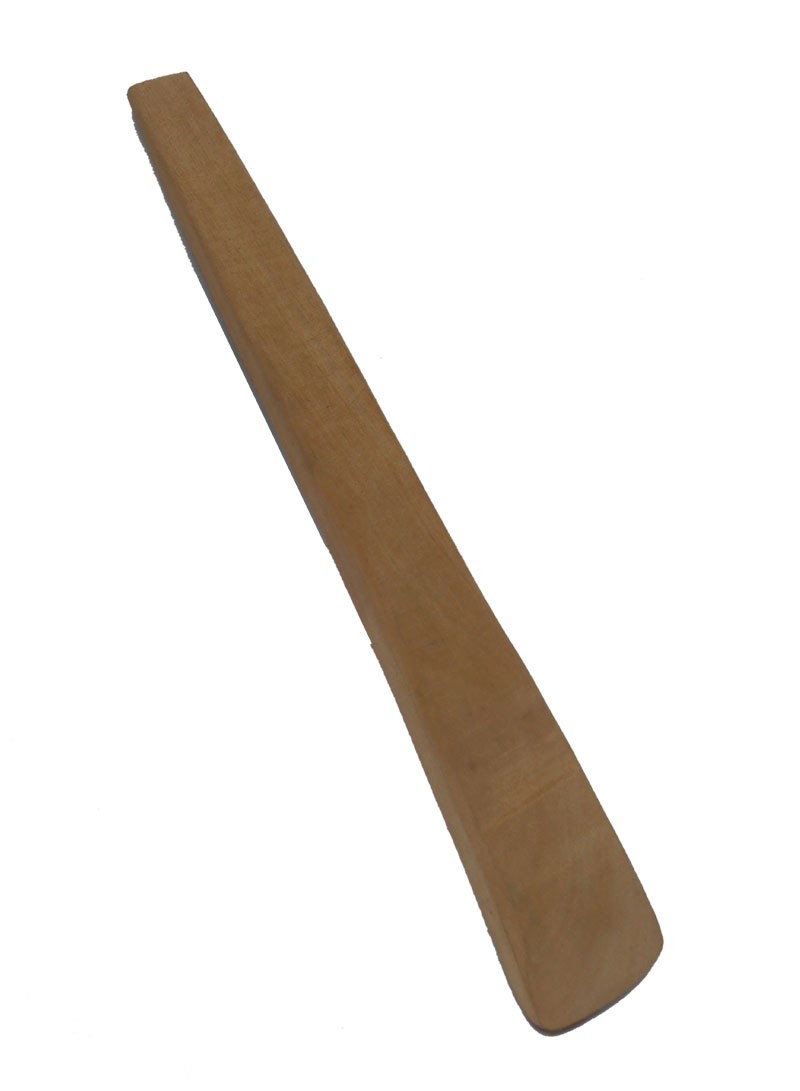
  • 1. The eba stick that doubles as a weapon:

    Your mother’s favourite.

    2. The iron sponge that is always on the brink of death:

    Your only friend when washing that evil pot.

    3. The Nylon bag full of even more nylon bags:

    For what? Only God knows.

    4. The only seasoning that matters:

    More important than water sef.

    5. The bowl every visitor uses to wash their hand before they eat:

    Because God forbid they enter the kitchen to wash their hands.

    6. The almighty microwave cover:

    Nigerian mothers swore it would prevent cancer.

    7. That bowl with a wedding or burial sticker:

    If not for Owambes would Nigerians even have kitchen utensils?

    8. That handle-less pot that is “older than you”:

    You mother had the pot before she had you. Show it respect.

    9. The eva bottle filled with palm oil:

    The realest oil ever made.

    10. The infinite number of unwashable plastic containers:

    That stain will NEVER go out.

    11. Those plastic covers with their matching bowls nowhere in sight:

    Always more covers than actual bowls.

    12. The blender that smells like pepper no matter how much you wash it:

    Can even try and blend anything else without tasting pepper.

    13. The morning fresh that is more water than actual morning fresh:

    It always lasts longer than it has any right to.

    14. The ice-cream bowl full of disappointment:

    It will never not hurt,

    15. The “there is rice at home” bag of rice:

    How rice is not on the Nigerian flag is beyond us.
  • 1. How your parents come to wake you up in the morning:

    You people should chill, biko.

    2. When you open your eyes and it’s still pitch black outside.

    Hay God! What time is it?

    3. When your whole family is waiting for you to lead opening prayer.

    Why me na?

    4. When your mother decides to lead praise & worship, so you know you will clap tire.

    Get ready for at least 10 songs.

    5. You, trying your best to not fall asleep.

    The struggle is real.

    6. When your mother starts using what you did during the week to preach.

    Sub me jeje.

    7. Your father, when he hears you and your siblings gisting.

    We are sorry, sir.

    8. When your parents turn the devotion into a full-blown Sunday service.

    Kai!

    9. Your parents, when they catch you dozing off:

    You are now possessed, abi?

    10. When the devotion was meant to last 30 minutes and 1 hour has already passed.

    Somebody save me.

    11. When the person that is meant to lead closing prayer starts off with another song.

    How is it doing you?

    12. When your mother still prays right after you just lead closing prayers.

    Ah! You don’t trust my own prayer to reach God?

    13. When you think it’s over, then this song restarts it.

  • 1. How all the class efikos sit in front during speech and prize giving day:

    Let’s do this.

    2. Those unbothered students that only came for free drinks and food:

    Where is the meatpie, biko?

    3. You, when just one student is collecting all the gifts for your set:

    Who is this one?

    4. How the students that get called out for best in Maths and English walk out:

    WINNING!

    5. All your classmates, when the class olodo’s name gets called:

    Say what?

    6. How your mother looks at you when it’s almost over and they still haven’t called your name:

    See your life.

    7. When your father comes with all his friends and you haven’t won anything.

    Hay God!

    8. When your friend that always stabs class with you gets called out and you’re still empty-handed.

    WOW! So it’s like that?

    9. When your mates are getting called out for ‘best in Physics’ and you hear your name for ‘best in Yoruba’.

    To use and do what?

    10. When the efikos open their prizes in front of you and you’re just seeing water bottles.

    See nonsense.

    11. You, when the class oversabi’s name doesn’t get called out.

    OUCH!

    12. How you leave the speech and prize giving day empty-handed:

    It can pain.
  • 1. The common entrance book of life:

    Ugo C. Ugo for the win.

    2. When your school forces everyone to do mock exams to prepare.

    Don’t add to my stress.

    3. When your parents force you to attend one local common entrance lesson:

    What is all this?

    4. When you ask your parents for a new math set and they start asking you JAMB questions.

    “What about the one we bought for you 4 years ago?”

    5. How you look at Primary 4 students that want to follow you and do common entrance too:

    Wait your turn biko.

    6. You, jacking the Friday before your common entrance like:

    Secondary school is my portion.

    7. How you see the maths and quantitative common entrance questions:

    Wetin be dis?

    8. You, waking up on the Saturday of common entrance like:

    The day has arrived.

    9. You, looking for your friends when you get to your common entrance centre:

    Where are my people?

    10. How you stroll into your centre with 12 extra pencils and 10 biros:

    My body is ready.

    11. When you see them repeat questions you crammed in your Ugo C. Ugo.

    WINNING!

    12. You, when the invigilator starts dictating answers for some of the students.

    Ah! Is it like that?

    13. You, waiting for your parents to come and pick you from the centre when it’s over:

    I want to go oh.

    14. When your result finally comes out and you passed the cut-off mark.

    YES LORD!

    15. Your face, when you remember you still have interviews to do:

    Hay God! It’s not over.
  • 1. When you wake up late on Sunday.

    Oh no!

    2. Then you remember you don’t have to go to work or school.

    Somebody follow me and praise the Lord!

    3. You, taking your time because no need to rush:

    You just enter everything with style!

    4. You, enjoying sunday rice and parties.

    Because Sunday rice is the sweetest rice!

    5. When you check the time and see it’s almost 5pm.

    How?

    6. When you have to start thinking about what you’ll wear this week to work.

    Chai! Is this life?

    7. When you start getting whatsapp broadcasts wishing you a productive week.

    Is it by force?

    8. When you blink for one minute and another 3 hours have passed.

    Ahn ahn!

    9. When people in your office group chat start asking questions about work.

    So you people cannot wait till tomorrow abi?

    10. You, trying to figure out what exactly you achieved during the weekend now that it has finished.

    How as the whole weekend gone when it seems like nothing has happened?

    11. When you are happy to go to bed because you are tired but sad at the same time because tomorrow is Monday.

    Is this life?
  • 1. How people react when they hear your name the first time:

    Their brain is already frying.

    2. Your face, whenever someone tries to pronounce your name:

    Chai!

    3. When someone asks if you have “an easier name”.

    You will learn today.

    4. You, calculating how much time you spend sounding out your name for people:

    Wasting my life.

    5. When you still have to spell it for them right after pronouncing it.

    STRESS!

    6. When people still get your name wrong after you’ve corrected them a million times.

    Are you mad ni?

    7. When people give you a nickname you hate against your will.

    Did I send you?

    8. When a teacher hesitates during roll call and you know they are about to destroy your name.

    Hay God!

    9. You, whenever someone says “sorry if I butcher your name”:

    Save your sorry.

    10. When they correct you when you say “Susan” wrong, but can’t get “Kunle” right.

    See your life.

    11. When you can’t even remember the true pronunciation of your own name again.

    Everybody has already scattered it for you.

    12. Your face, whenever someone asks what your name means:

    You can like to mind your business.

    13. When you stop telling people your name first and just start spelling it.

    No energy, abeg.

    This is post is brought to you by MAGGI @ 50:

    The big idea for the MAGGI 50th anniversary campaign is: Let’s Celebrate. We intend to do this primarily by sending gift boxes containing specially curated ingredients and gifts to women influencers pan Nigeria & beyond for trusting MAGGI in the past years, and in the future ahead. Clink the link below to learn more.
  • 1. You, going to the sick bay when you know your teacher is going to inspect your notes.

    I cannot come and chop cane.

    2. When you carry your friend that just vomited in class to the sick bay.

    You will now stay there with them to dodge class.

    3. How you run to the sick bay when you didn’t do your assignment:

    It’s not me they will beat today.

    4. You, looking at that girl that always faints when they are about to flog the class:

    Oversabi.

    5. How all the boys rush to carry the girl to sick bay when she faints:

    See these ones.

    6. When you stab class and lie that you were in the sick bay and the teacher wants to go and confirm.

    Hay God!

    7. How you feel when you successfully convince the nurse that you’re sick:

    “and the Oscar goes to…”

    8. You, when the nurse now gives you actual drugs to take.

    Uhm. Actually…

    9. When you go to the sick bay with a cough, a cut, a broken leg or heartbreak.

    That’s all you people know.

    10. How the sick bay nurse gives you your injection:

    The worst.

    11. You, using the sick bay to dodge manual labour like:

    No cutting grass for me.

    12. How boys go to the sick bay when the nurse is fine:

    See these ashewos.

    13. What the sick bay always looks like during evening prep:

    You people should do and go, abeg.

    14. How you sleep in the sick bay when you know they are flogging your classmates:

    The best.

    15. You, leaving the sick bay when the class you were stabbing is over:

    WINNING!