• “I became the third parent” — Tola, 27

    I’m a first-born daughter and that meant that from an early age, I had to fill in for my mum who had a full-time job. I hated every minute of it because I didn’t even know what I was doing. I learned to cook at age 7 and I was in charge of all house chores. I thought it’d get better when I left for university, and it did for a while. But then I graduated from school and got an awesome job. I started making my own money, and requests for financial assistance have been pouring in from everyone. I’m back here, living my life for them, and it feels like there’ll never be an end to it.

    “Losing my dad forced me to grow up” — Daniel, 24

     I had a sheltered background, but everything changed when I lost my dad. I was 16 at the time, and I had two other siblings. My mum was a petty trader, so we quickly went from being relatively comfortable to very poor. What made it worse was that we weren’t close to the extended family, and my parents were all I had. 

    I had to make money to survive somehow because my mother still had two kids (14 and 12) to take care of. I started with the easiest thing I could think of — laundry. I was washing clothes for my classmates for ₦‎200 a piece, even missing classes sometimes. I quickly became popular for this and soon started my own laundromat in school. My grades weren’t bad, but I’d gotten too preoccupied with making money that I’d lost interest in school.

    Eventually, I discovered tech through a friend and started learning how to code. I was 19 at this point and I already had a lot of money saved up from my business. I shut it down to focus on school and coding. I graduated at 20 and got my first job two months before graduation. In many ways, losing my dad forced me to grow up faster. Even though I’m sad that he’s gone, I’m still grateful for the road that brought me here.

    “I wasn’t ready to go to the university when I did” — Feyi, 29

    Growing up, I was the ideal child. I was well-behaved, got good grades, and made my parents proud. I even skipped two classes in secondary school and got into the university at 14. It’s not that I was done with secondary school, but I’d taken JAMB and GCE in SS2 and passed really well. I got admitted to study medicine and my life pretty much looked like a straight line towards becoming a doctor at 20.

    I got into school and quickly found out how brutal it was. I wasn’t used to the long classes. I’d never lived outside of home, and I didn’t even know how to take care of myself outside the influence of my parents. But that was easy to learn. The hardest part was blending in with people who were several years older than me. 

    I had classmates who had boyfriends, and who’d talk about sex like it wasn’t a big deal. Meanwhile, the closest thing I ever had to a boyfriend was a class crush that lasted one term. I didn’t even know “Netflix and Chill” meant something else until my third year in school. 

    Even though I’ve always been proud of the fact that I grew up fast and had excellent grades, I realized that I had poor social skills.Growing up too fast had done nothing to prepare me for life in school.

    “My parents were never around so I had no choice” — Ibrahim, 22

    My parents worked late every day, and they went to parties on weekends. It also didn’t help that I was the first of  five kids. We used to have a maid, but she was sent away after she had a physical fight with my mum. Somehow, all her duties were transferred to me when I was only 8. 

    I’d take care of my siblings after school and wash their uniforms. I cooked most of the food we ate, and I did most of the chores around the house, with my siblings doing as little as possible because they were really young. The worst part was that I had mischievous siblings, who made sure I always got into trouble with our parents for things they did. That gave me a huge sense of responsibility to keep them in check. It’s probably why I’m such a control freak now. But looking back, the experience gave me invaluable life skills.

    “I started working when I was 15” — Amaka, 25

    My family fell on hard times after my father died, and my mum didn’t have enough money to support all four of us through school. After I graduated from secondary school, my mum told me to wait a few years and work before going to university. This was so she could have enough money to support my two other siblings through school.

    I started out working as a waiter at a nearby restaurant for ₦‎15,000 monthly when I should have been in school. A lot of it was demeaning and I was sacked two years later when I slapped a customer who tried to harass me. With the help of someone I met at the restaurant, I went on to learn how to import shoes from China and sell them for huge profits. In my first round of sales, I made ₦‎90,000 in profit. That was the highest amount of money I’d ever seen in my life at that time.

    I continued with the business and used the money to support the family and enrol in school. It wasn’t the most horrible experience, but it forced me to grow up and learn to fend for myself.


    NEXT READ: We Asked 7 Nigerians for the Biggest Lies They’ve Told on Their CVs


  • What She Said: Growing Up With A Pastor Mum Was Hard

    Tell us about your childhood

    There was food and shelter, but emotional safety was missing. Whenever my mum came back from work, everyone would scramble because she was always angry about something. Sometimes I used to avoid even sitting in the living room because I might be sitting the wrong way, and she’d lash out.

    That level of uncertainty led to anxiety, hypersensitivity, and over-analysing. I was always anxious about the smallest of things.

    I’m assuming this affected your relationship with others, like your siblings?

    I have three sisters, and our relationship is beautiful. We understand each other on many levels. I think we bonded over the trauma of living with a mum like ours. But I haven’t explored this conversation with them, to be honest. 

    Let’s talk about your relationship with your mum

    Growing up, like every Nigerian girl, you think your mum hates you at some point. Mine was even more intense because, as I said before, my mum is a pastor, and there were lots of religious and vigorous religious activities always going on in our house. It definitely played into my personality traits. The only friends I had were from church, I didn’t have many outside church. 

    It was all very stressful; going to multiple churches, having pastors come in and out of the house, being a Christian, your parents having certain expectations of you. Now that I’m older, I sort of understand and sympathise with them because I recognise how difficult raising four girls must have been. I’m pretty sure it wasn’t their intention to create that kind of environment, but that was the result.

    It was intense; there wasn’t a choice to be anything but a Christain girl. But even then, I didn’t believe in the patriarchy, I’d always questioned that. But life outside of religion was difficult for me to navigate, and still is. Now I ask questions about who I am outside of that very intense Christian upbringing, and sometimes I don’t have the answers. 

    Now our relationship is a long-distance relationship. We touch base, but nothing too in-depth. I don’t feel like I can really talk to her, we’ve never had that type of relationship, but I recognise that she’s mum, and I know that if shit hits the fan, she’ll be there for me. 

    How does your healing impact interactions with friends?

    If I’m in a gathering with friends, I’m able to notice when I’m overextending myself or people-pleasing. I’m also reluctant to ask for help or accept it. It stems from being hyper-independent from a young age. I’m the firstborn; my sister (the middle sibling) has always been closer to my dad, and my mum was more concerned about my younger sister because she’s deaf, so she had special needs. I was mostly left to figure out myself and also take care of everybody else in a way. I was usually the one they’d ask about laundry or cooking. 

    Growing up like that, you just get the sense that you’re your protector and provider. I guess that’s why it wasn’t too difficult for me to leave my parent’s house. I remember going to university and thinking, “Whew, this is nice!”

    Being on my own has been my way of feeling like I have control over something. My therapist was telling me recently that I have to be okay with relying on people sometimes but also understand that they won’t always be able to come through for me.

    Let’s talk about leaving home

    In 2018, when I was 24, I moved to Ghana for a scholarship programme. I felt relief but also a little sad. Leaving family and friends was scary, but it also felt freeing. It was like breaking away from the pressures, the belief system, and just the environment. 

    What belief system?

    Christianity. My mum is a pastor and fervent Christain, so we were always in church or going for church programmes or hosting house fellowships. Being away from home and indoctrination, you’re faced with more in-depth interactions that aren’t coloured by religion. Sometimes you start to see the cracks in your existence. 

    A big example is when I lived with my friend; we had a big fight, and it was about me not being able to express my needs and concerns because I avoided negative reactions. This stemmed from just trying not to make my parents angry, and that felt normal because, as a child, my life was easier if I could avoid it. But as an adult, I had to confront and work that out. 

    So those interactions force you to see the places where there are issues and what you need to solve. I only started to recognise emotions for what they are when I moved away and had to interact with other people on many different levels. Growing up, emotions were always shut down because, in Christianity, you’re not allowed to be afraid as a child of god or feel anxiety or anything. In a religious setting, you’re either happy or sad, and if you’re sad, you have to go and pray. I remember my dad always saying, “You can’t be afraid because you’re a child of God.” But it never stopped me from feeling the fear, even though things usually worked out. So you never explore or confront what you’re afraid of or anxious about. 

    Outside of the bubble of Jesus being your joy, you have to find happiness in yourself. You start to ask yourself what makes you happy etc. Being present in your own body and life helps you recognise all these things. So now I’m identifying and recognising emotions like anxiety and hypervigilance and stuff. They’ve always been there, but I now have the language for it. And I know there are other ways to exist. The biggest part of my healing journey is being able to recognise what is outside that bubble. 

    So, I take it you’re no longer a Christian?

    No, and it wasn’t an abrupt decision It took some time to get there and for me to even acknowledge it. Once I left home, there was less pressure to go to church, to pray, to do all these things. And that meant that sometimes I didn’t do these things, and I was okay. I didn’t get attacked by demons or anything of the sort. It was in the little things; for instance, if you dream about eating, the church would have told you that you’ve been poisoned spiritually and you have to pray, but I’ve had that dream, and nothing happened. I’m alive and well.

    So as you shift away from that, you see that it’s not that deep. And you even start to question those beliefs. Sometimes you meet other people that are living life completely differently. For instance, one thing that intrigued me when it was still very early on when I first moved. I went for some sisters’ fellowship, and everybody was wearing trousers with nail extensions, they didn’t cover their hair, but I could see that they were very much rooted in their beliefs like other Christians. It was bizarre to me because I’m coming from a background where they’d have told those ladies that they were going to hell for wearing extensions, so it made me think about things differently. There was a lot of fear-mongering, and it felt like normal human things were things that would take you to hell and have horrible consequences.

    You see things that help shape your narrative and change your mind. I’ve also been doing a lot of learning; like, I saw a TikTok about how Christianity is a colonisation technique. So I’m getting a lot of information from many places and making my own inferences. 

    RELATED: Growing Up around Juju Made Me a Stronger Christian

    How did your parents take it?

    It was a disaster the first time we had that conversation. I came to Lagos to visit, and one day, said I wasn’t going to church. They sat me down and talked and talked. The fear-mongering came up, and one of our family pastors called me every week for two to three months until I eventually stopped picking up his calls. 

    The second time around, I was much bolder, and said it was my decision. My dad was like, “What do you mean it’s your decision?” and I was like it’s just is. I don’t need to defend or explain it. And he was like, “Where is all this coming from, who have you been talking to?”  And I reminded him that I’m almost 30 and I can make my own decisions outside of other people. He asked if I was going to change my mind, and I said we’d see how it goes. 

    I guess they have a fear of me missing heaven, and there’s also the idea that if you don’t stick to God’s plan, your life won’t turn out the way it’s supposed to. You could end up destitute or poor. I guess that’s what they’re afraid of. 

    How has the healing affected your relationship with your partner?

    It’s been helpful. Now some of the things I’m also aware of is seeing the patterns in other people. A lot of things happen because we fear vulnerability, because growing up, it wasn’t accepted with kindness or patience. And that shows up in different ways for different people. So now I tend to recognise it in my partner, and I can usually point it out and redirect the conversation to a healthy place. 

    Due to the few things I have learnt (I’m no expert, please), I’m able to help him navigate his own hurt too. 

    That’s sweet. What are the daily steps you take to make sure you don’t regress?

    Regression is normal. Some days, I don’t have the bandwidth or capacity to do the exercises that are required to grow, and that feels like a regression. But it’s all part of the healing process. 

    If you’d like to be my next subject on #WhatSheSaid, click here to tell me why

    What sort of exercises?

    The most recent one is something called identifying and separating facts, feelings and sensations. I learnt it from this book I’m reading: Becoming Safely Embodied by Diedre Fay. 

    So facts, feelings and sensation is essentially dealing with an upsetting or triggering event like this: you identify what the facts are, what you’re feeling and the sensations in your body. The idea is to write it all down, then circle the facts, and then underline the feelings and sensations. Then you read only the facts a few times. When I tried it, I found that the more I read the facts, the less intense the feelings. When I started to feel calmer, I went back to read the feelings attached to it and found it easier to work it out. 

    What other tools do you use?

    I spend like 15 minutes meditating every day in the mornings. I also try to focus on core wounds. For instance, if I’m feeling unsafe, I spend a few countering the belief system by stating the facts around it. So questions about safety in my job, my relationship, my finances, my career, emotionally and mentally. I list these things and just counter the feelings with these facts.

    Another thing I do is: at the end of the day, I do something called guilt and shame journaling. I look back at my day and list the ways I felt guilty the point is to identify them and find the ways I’m innocent and the ways I’m being realistic in my expectations. For instance, if I’m feeling guilty about taking a nap because I was tired, I claim innocence because it happens sometimes, I’m only human.

    I exercise and try to sleep, these two things are really helpful. Having routines are also very helpful. 

    Any last things you want to share?

    Self-development and self-healing work is hard. We all need support. It sounds nice to be self-aware, but it’s a lot of hard, painful work. But if I can see myself navigating life a lot calmer, more peaceful, more secure and just generally better, then it’s all worth it. 

    For more stories like this, check out our #WhatSheSaid and for more women-like content, click here

    RECOMMENDED: I Never Knew My Father, but He Gave Me the Best Life 

  • When we were younger, many of us spent a lot of time wondering when we would grow up so we could finally be adults. How is that going now? If you haven’t clocked it yet, let us be the first to tell you: adulthood is a major scam and these 14 things prove it:

    1. You have to feed yourself.

    16 Signs You're Not The Bad Bitch You Think You Are | Zikoko!

    This is one sure sign of adulthood being a scam. So you mean I have to come back to this house and my parents don’t have food waiting for me? My mother is not offering me extra meat? Wow, so I have to look for what I will eat on my own? This is betrayal.

    2. You start to manage meat and fish.

    When you actually manage to feed yourself, you realise how much turkey and Titus costs in the market, no one will teach you before you start rationing the meat and fish you eat. Especially with this one that Constable Sapa is in town.

    3. You probably won’t even be able to afford milk.

    16 Signs You're Not The Bad Bitch You Think You Are | Zikoko!

    You see that three scoops of milk you always wanted as a child? You see that Milo you wanted to lick but were not allowed to? You probably won’t be able to afford it. And even when you can afford it and can lick it the way you want to, you’ll realise that it is not enough to soothe the pain of adulthood.

    4. You are qualified for heartbreak.

    You think adulthood is one land of bliss and romance until one person will invade your peace and then break your heart. Like, what exactly did I do to you people? Is it a crime to be an adult?

    5. You have to pay your own bills.

    fave-girl-pissed | Zikoko!

    From now on, rent is on you. Data subscription payment is on you too. Anything you buy or involve yourself in, you must pay for it by yourself. The literal definition of carrying your cross by yourself.

    6. There are really no parties to attend.

    African Kid Crying With A Knife | Know Your Meme

    I blame Nollywood and Hollywood for making us believe that adulthood was all parties and popping outfits. See ehn, as an adult, there are not so many parties to attend. Take it from us.

    7. And when there are parties to attend, you are too tired.

    After working hard all week, when Friday night comes, you just want to curl up in your bed watching Netflix and laughing at tweets or TikTok videos. The party can take care of itself. You simply won’t have the energy for it.

    8. The sex you want so much, you won’t get it.

    You think you’ll enter adulthood collecting knacks and snatching orgasms left, right and centre. LEEMAO. The lies. Either the sex is bad or simply just not available with the person you want it with. Eventually, you will turn celibate.

    9. No more Christmas clothes.

    The only thing you might get is a matching pyjamas set. And even that one is dependent on finding love. You that is constantly chopping heartbreak, where will that one come from?

    10. You have to motivate yourself to get things done.

    Because if you don’t, who will? So, you have to motivate yourself to show up for work in time so they don’t fire you. You have to motivate yourself to wake up in the middle of the night to put extra effort into your own personal development.

    11. Nobody dashes you free money anymore.

    Everybody is an adult now. Deal with it oh. The most they can dash you is urgent 2k. And the day you misbehave like this, they will probably drag you for it.

    12. Your younger ones expect you to dash them money.

    Nigerian men tell us about being cheated by Nigerian women | Pulse Nigeria

    These ones don’t know what is wrong with them. They don’t know you are also expecting to be dashed money. The ghetto. LMAO, sorry dears, we are all corporate beggars in these streets.

    13. Your parents and everyone around you suddenly expect you to be responsible.

    comedy | Zikoko!

    Imagine that. Responsibility, when you are trying to survive and stay afloat. Wahala for who dey look up to me oh.

    14. Expect to cry. A lot.

    This is the strangest part of adulthood. You could be doing something unrelated to tears and you will feel the tears running down. Someone shouts at you too much and the tears come pouring down. Sometimes, you even schedule date and time to cry.

    Yes, it do usually happen like that.

    [donation]

  • If you grew up with only sisters, chances are, you’ll be getting some nice memories and flashbacks as you read this

    1. Makeovers and Dress-ups

    Growing up, if your sisters were ever bored, you already knew it was time for a complete makeover. You would say you didn’t want it, but you low-key did. We know.

    2. When your guy friends say your sister is hot

    They would even just say this randomly, just to trigger you, but once they did, it’s on! “LEAVE MY SISTER ALONE”

    3. Dolls everywhere

    These things would just be lying everywhere and whenever you asked for a toy car, you would be told to focus on your studies. This life no balance.

    4. Watching fights

    One sister would slim-fit the other sister’s dress and that house would go up in flames. Grab your popcorn and enjoy.

    5. Getting hairdos

    They would also use your hair to practice for the future when they would become hairdressers. Not a bad experience at all.

    6. Hair pins everywhere

    These things were fucking everywhere! You would even find them in your own room. And they were always annoying and oily.


    Hello, Zikoko fam. Something for men by men is coming to Z!

  • 1. You knew you were almost blind, but you refused to spoil your swag with glasses.

    Can’t stain my bad guy.

    2. You, trying to see the board whenever you sat anywhere except the front of the class:

    You still refused to sit in the front with all those oversabis.

    3. When you wanted to cheat during a test, but you couldn’t see your friend’s paper.

    Is this my life?

    4. When you finally accepted your fate and told your mother you need glasses:

    Hian! From where to where?

    5. You, trying to read the second line on the optician’s chart:

    Chineke!

    6. The lens struggle:

    The worst.

    7. When you wore your glasses for the first time and realized how blind you actually are.

    WOW!

    8. Then your mother tried to force you to wear your glasses with that yeye rope.

    You sha want to dead my swegz completely.

    9. Whenever someone asked if your glasses were “shakommended”.

    See question.

    10. Whenever your friends tried on your glasses and shouted, “You’re blind oh!”

    You don’t mean it?

    11. Whenever your friends started asking, “How many fingers am I…”

    Save it.

    12. Whenever a teacher assumed you were smart because of your glasses.

    Abeg oh!

    13. Whenever people started debating whether you look better with or without your glasses.

    Go and debate over Nigeria’s economy, biko.

    14. “Do you take your bath with your glasses?”

    Have sense na.

    15. You, trying to wear contacts for the very first time:

    What is this torture?

    16. The ultimate struggle of trying to find your glasses without your glasses:

    Kuku kill me.

    17. You, still waiting for your eyesight to “improve” like the optician promised.

    I hate lies.

  • If you grew up in the 2000s, then you did one or more of these things:

    1) Using floppy disks.

    I can’t even remember what we used it for. Lmao.

    2) Manually looking up words in a dictionary.

    Those small Oxford dictionaries suffered in my hands.

    3) Waiting for Channels to show cartoons on Sunday.

    Who else remembers watching Spider man on Channels?

    4) Doing midnight calls on MTN.

    Good times oh.

    5) Eagerly waiting for the next episode of Super Story or Papa Ajasco.

    Toyin Tomato and Suara.

    6) Using flip phones.

    There was no greater swag than closing this phone in anger.

    7) Believing in witches and wizards.

    It’s a pity that kids these days don’t have Mount Zion movies to scare them correct.

    8) Listening to music on Walkman or MP3 players.

    Who else remembers listening to Craig David’s “I’m walking away” on their Walkman?

    9) Going to Cyber Cafes.

    Thank God for affordable mobile data. The days of overnight browsing are well over.

    10) Recording your ringtone from the radio.

    Then begging everyone to be quiet while you recorded it.

    11) Buying 100 in 1 DVD’s.

    The very first “Netflix.” So many options to choose from.

    12) Actually hating WhatsApp calls.

    There was a time that WhatsApp calls were deemed a “broke” people thing. Thank God for growth.

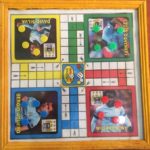
  • If you loved (or still love) playing Ludo, then you’ll understand the rush of playing a double six, sending someone’s seed back home and beating all your friends with a mix of strategy and sheer luck.

    1. When someone wants to play ludo with just one die.

    Are we joking here?

    2. When there are only 2 players so each of you has to handle 2 homes.

    STRESS!

    3. Your face, when they try to make you play with either yellow or green:

    Tueh! Red or blue or nothing, biko.

    4. When the game is almost over and you’re still struggling to get your first six.

    Am I cursed?

    5. The joy that fills your heart when you see this:

    YES LORD!

    6. How you look at your friend when they land on you and send you back home:

    Later you will say we are guys.

    7. When the person that shakes and blows the dice the most still doesn’t get double six.

    E go pain you die.

    8. The pain you feel, when you’re already here and someone lands on you:

    WHY ME?

    9. How you feel when you get double six twice in a row:

    As a boss.

    10. You, wondering whether to bring out a new seed or keep moving when you get a six.

    Nigerian Constitution

    The toughest choice.

    11. When you’re about to cheat and they catch you.

    Oops!

    12. When you get to this position and you have to get double one to enter.

    The worst.

    13. How you feel when your last seed finally enters.

    WINNING!

  • If you grew up Christian in Nigeria, then you definitely have memories of children’s church. From the snacks that were always guaranteed to having to wait for your parents to pick you, this post will take you right back to those simpler times.

    1. How you dress for church when your mother picks out your clothes:

    Chai! See my life.

    2. When your parents drop you and you see your noise-making squad.

    YESSS!!!

    3. That newcomer that doesn’t want to leave their parents and come to children’s church:

    See this one.

    4. When you finally graduate from the first bible to the second bible:

    As a big boy.

    5. When you use your offering money to buy ice-cream from that seller at the gate.

    God, forgive me oh.

    6. You and the rest of the children’s choir, singing in adult church like:

    They will sha clap for us.

    7. When you’re the first child to read the scripture during ‘draw your sword’.

    WINNING!

    8. Testimony time in children’s church be like:

    What else na?

    9. When all the children have to stay in the adult’s church for a special service.

    NOOO!!!

    10. The children’s church choreography starter pack:

    Still don’t know what the gloves were for.

    11. When your teacher picks you to recite the memory verse for the day.

    Hay God!

    12. When you see them bringing out biscuits and capri-sonne after service.

    The best.

    13. When you’re already too old but you don’t want to leave children’s church.

    I’m not ready, biko.

    14. You, when children’s church closes service before adult’s church.

    You people should share the grace na.

    15. When your friends have gone and you’re still waiting for your parents to come and pick you.

    You know your parents are greeting the whole church.

  • 1. When you leave small food in the pot so you don’t have to wash it.

    No time, abeg.

    2. When your mum shouts at you for not doing the dishes, and you go to the sink and see:

    Are you kidding me?

    3. When your mother uses all the pots in the kitchen to cook one meal.

    It’s because you’re not the one washing, abi?

    4. Your parents, when you go to sleep with dishes still in the sink:

    You people should chill small na.

    5. When you’re already standing by the sink with a sponge and your mum says, “Remember to wash those plates.”

    Do you think I want to eat the sponge?

    6. When you’re doing the dishes and your mother starts complaining that you’re wasting water.

    Should I use my saliva?

    7. The STRUGGLE of washing stew out of this:

    The absolute worst.

    8. You, after washing plates with dried eba stains on them:

    The struggle is too real.

    9. How the sink looks when you’re not around:

    Be waiting for me oh!

    10. When your parents make you do the dishes at someone else’s house.

    So, I’m now house-help for rent?

    11. When you tell your mother that dish-washing liquid has finished and she just pours water inside.

    If you can wash well with diluted morning fresh, you can do anything.

    12. When you break a plate while doing the dishes.

    It’s all over.

    13. When you’re almost done and someone drops another plate in the sink.

    Are you not wicked?

    14. When your mother is doing the dishes and you try to add your own.

    Sorry ma.

    15. You, acting like you didn’t see that dirty pot on the cooker:

    I’ve tried, abeg.

    16. Mother: “Why didn’t you wash the pot?”

    The ultimate excuse.

    17. When you finish and your mother complains that you didn’t dry the sink well.

    Hay God!

  • Nigerian parents often have good intentions, however, their methods can be somehow.

    Can we guess how tough growing up was?

    Take the quiz below: