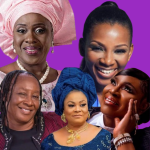
In the ’90s and early 2000s, a generation of Nigerian actresses defined what the industry looked and felt like: its drama, glamour, emotional depth and unforgettable characters. These women shaped early Nollywood and influenced how audiences understood love, family, conflict and identity. They became the cultural icons who raised an entire generation of film lovers.
This list highlights twelve Nigerian actresses whose talent, charisma and screen power helped lay the foundation for what Nollywood is today.
Bukky Ajayi
Bukky Ajayi was one of Nollywood’s earliest pillars and a theatre-trained actress whose experience grounded early films with authenticity. Long before Nollywood became mainstream, she was already a household name through classic television shows like VillageHeadmaster and Checkmate. She often played the quiet and wise matriarch whose presence shaped the moral arc of stories.
Clarion Chukwura
Clarion Chukwura’s acting style set a high bar for female actresses at a time when Nollywood was still experimenting with tone and form. From the home videos in the 1990s, she has stood out for her ability to dominate the screen with roles that demand range. She shaped the template for strong female leads. Whether playing a baddie, the defiant mom, the wronged woman, or the outspoken matriarch, she elevated any movie she was in.
Not only has Genevieve Nnaji shaped Nollywood on-screen, but she also has seamlessly bridged local fame and global relevance. Her early roles in romantic and family dramas, as well as coming-of-age movies, showcased a refined acting that goes beyond the theatricality of many early Nollywood actors. Beyond acting, Genevieve’s crossover success as the producer and director of Lionheart, Netflix’s first Nigerian original movie, has solidified her as an industry trailblazer.
Joke Silva
With a background in stage and film training, Joke Silva’s acting carried a level of class that elevates any movie she touches. Her usual portrayal as the calm and graceful mother or aunt has made her one of Nollywood’s most respected figures.
Joke Silva’s influence also goes beyond acting. She’s a mentor, educator and co-founder of Lufodo Academy (Film) with her husband, Olu Jacobs. If we’re talking about legacy and stewardship of the industry’s future, we’re never leaving Joke Silva out.
Kate Henshaw
In the early 2000s, Kate Henshaw brought a youthful dynamism to Nollywood. She became synonymous with strong-willed women, romantic leads with charming characters that lit up our screens. Over time, she has become one of the most durable actresses and has transitioned into a respected veteran. Kate Henshaw is proof that longevity is possible when talent meets adaptability.
Liz Benson
Liz Benson was, in many ways, Nollywood’s first true superstar actress. Her breakout roles in movies like Glamour Girls made her the industry’s symbol of sensuality and drama. Her range allowed her flexibility to shift between drama and romance, and made her one of the most recognisable faces of the VHS era. Even after stepping back from mainstream acting, Liz Benson’s influence remains.
Idowu Philips, popularly known as Iya Rainbow, is a foundational mother of Yoruba Nollywood, having shaped and acted in numerous movies. She often starred as a mother whose love was both tough and tender; possibly bringing her experience as a trained nurse into her roles. She has helped shape the Yoruba movie industry through roles that balanced tradition, morality, family and humour.
Iya Rainbow remains one of the most influential actresses of her era.
Omotola Jalade-Ekeinde (AKA Omosexy)
At her peak, Omotola was a larger-than-life actress who brought confidence and emotions to every role. She was a popular face and supernova who dominated screens as a magnetic leading actress, from family dramas to romance. She helped redefine the celebrity culture around Nollywood.
Her star power extended beyond film into music, activism and global recognition, including being named one of TIME’s most influential people. She shaped Nollywood not just through acting, but by building one of its most iconic personal brands and competing on a global stage.
Patience Ozokwor (AKA Mama G)
Patience Ozokwor is a memorable face that brought an unforgettable ferocity to Nollywood. She mastered the role of the wicked mother-in-law, conniving aunt, or overbearing parent, becoming a cultural icon. Yet beneath the villainous roles is a comedic appeal and emotional depth.
Her characters became a signal of the chaos and drama of Nigerian family life. Antagonists can be beloved, and Patience Ozokwor is an example of this. Her influence continues to echo across meme culture and dialogues.
Regina Askia-Williams
Regina Askia was the gorgeous IT-girl of the 1990s. She was a former beauty queen-turned-actress who represented Nollywood in the late 1990s and early 2000s. With her looks and self-assured presence, she quickly became one of Nollywood’s most recognisable stars, symbolising youthful, fashionable Nollywood in the early years.
She often played the stylish career woman, the desirable love interest, or the romantic lead. Although her acting career was relatively short compared to her peers, her cultural impact was deep.
Get More Zikoko Goodness in Your Mail
Subscribe to our newsletters and never miss any of the action
Sola Sobowale
Sola Sobowale has always been a force: loud and expressively unrestrained in the best way. In the Yoruba movie industry and early Nollywood, she has established a reputation for playing fearful, no-nonsense women. Her exaggerated yet deeply human performances contributed to Nollywood’s most chaotic moments.
Her comeback in 2016’s The Wedding Party proved her timelessness and relevance, but her OG legacy began decades earlier. Sola Sobowale shaped Nollywood by embracing the full spectrum of female emotions, from joy to rage to heartbreak.
Stephanie Linus
Stephanie Linus emerged in the early 2000s in Nollywood, bringing a calmness that set her apart from the loud, melodramatic style of the era. She mostly acted as characters of women grappling with love, trauma, injustice or personal transformation. Her performances in films like Emotional Crack showcased her ability to dive into complex and emotionally demanding roles, helping shift Nollywood’s focus toward more socially conscious storytelling.
She became one of the first Nollywood actresses to adopt a strong activist lens in filmmaking. Her award-winning film Dry addressed child marriage and gender-based violence, earning her international recognition and positioning her as a social storyteller.
If there’s one thing Old Nollywood babes knew how to do, it was serving iconic fashion. From the slinky dresses of Regina Askia to the bold, thin brows of Eucharia-Anunobi, the 90s and 2000s were a golden era for statement style. And what better way to make an entrance at HERtitude than by channeling the retro glamour of this era? If you’re looking to turn heads and give hot babe energy, here’s how to bring Old Nollywood fashion into 2025.
1. Ankara & Adire
If Nollywood aunties of the 90s taught us anything, it’s that African prints will always be a slay. Whether it’s an Ankara two-piece, an adire wrap dress, or a structured boubou with exaggerated sleeves, the key is in the tailoring. You can wear Oleku (a short-sleeved top and wrapper combo). Pair with bold accessories, think chunky gold earrings and strappy heels, to add a modern twist.
Remember when Genevieve Nnaji and Omotola Jalade-Ekeinde would pull up in those oversized, tinted sunglasses, serving boss babe realness? Well, that’s your blueprint. Go for retro, oval-shaped frames or dramatic cat-eye sunnies. Even better, pair them with a mini bag for that ultimate “rich aunty” aesthetic.
Old Nollywood glam was all about looking expensive. The ladies of that era understood the assignment, draping themselves in velvet gowns, satin midi dresses, and silk blouses. Choose rich jewel tones—emerald green, deep burgundy, royal blue, you can even do black—and let the fabric do the talking. Bonus points if you add a thigh-high slit for drama.
4. Micro Bags & Chunky Gold Jewelry
Handbags in Old Nollywood movies were either comically large or adorably tiny—there was no in-between. For HERtitude, lean into the micro bag trend, preferably in a bold color or textured material. And don’t forget the jewelry—layered gold chains, oversized hoop earrings, and chunky rings are your best friends.
Subscribe to our newsletters and never miss any of the action

5. Short Skirts, Skimpy Dresses & Daring Fits
Let’s be real! Old Nollywood baddies didn’t shy away from showing some skin, and neither should you. Think mini skirts, halter tops, tube dresses, and body-hugging fits that scream confidence. Channel your inner Rita Dominic by rocking a bold, short dress paired with knee-high boots or strappy heels. Add a cropped leather jacket for that extra Y2K touch.
Channel the 90s and 2000s with bold beauty choices. High ponytails, yaki flip, puffy afro, deep side parts, and sleek buns were signature looks. And we can’t talk Old Nollywood beauty without mentioning those thin, long, perfectly arched brows that Eucharia Anunobi and co. rocked effortlessly. Pair them with deep brown lip liner, ultra-glossy lips, shimmery eyeshadow, and—if you’re feeling daring—a pop of blue or green eyeliner. And if you’re feeling extra, throw in some body glitter—because why not?
Style isn’t just about what you wear, it’s about how you wear it. The true essence of Old Nollywood glam is confidence. So, whether you’re rocking a corset dress, a matching set, or a power suit, wear it like you just stepped out of a scene.
HERtitude 2025 is themed Retro Glam, and we’re celebrating women who own their power, and what better way to embody that than by channeling the most iconic women of Old Nollywood? So, step out, serve lewks, and let the HERtitude energy flow. See you there, hot babes!
It’s giving single stupor. If you’ve never made time to watch these films, how would you have time for a full relationship. Do better and maybe they’ll take you to the next Losing Daylight exhibition so you can see Nollywood’s history on full display.
You got #{score}/#{total}
It’s complicated. In the sense that, you love them, but it’s not looking like they love you back. It’s okay though, maybe if you take them to the next Losing Daylight exhibition they’ll see Nollywood’s history and all the old romance films and realize that they love you.
You got #{score}/#{total}
Look at you!! You’re in love and in a good, healthy relationship. You should definitely celebrate your love at the next Losing Daylight exhibition, you’ll get to walk hand in hand and take in Nollywood’s rich history.
There’s no Nollywood without Stanley Okorie. Whether or not that name rings a bell, you can bet you’ve heard his voice before — especially if you grew up watching Old Nollywood movies.
With soundtrack credits on over 1,000 Nollywood films, Stanley Okorie is the singer and composer behind songs like Karishika (Queen of Demons) from the 1996 film of the same name, the popular Nkem Owoh song, I Go Chop Your Dollar (Stanley sang the song while Nkem Owoh lip synced Drag-race style) from the 2004 film, The Master,and the recently viral Billionaire (Onye Ji Cash) from 2019’s Return of the Billionaire that seems to be setting the streets of TikTok on fire.
Catching up with the singer in May 2023, he talks about his entry into Nollywood at a time when the industry depended on soundtracks to push storytelling, the struggles of navigating Nollywood in the 1990s and early 2000s and the hilarious story of how he got paid with a bottle of Sprite for his first soundtrack.
Source: Provided by subject
Let’s talk about what I like to call the Stanley Okorie Renaissance.
It’s been amazing and pleasantly surprising that the music I made in the 1990s and early 2000s is getting attention these many years later, on platforms I’m still learning about. It makes me feel like I didn’t waste my time back then because I made music I liked, not necessarily for anyone in particular. But there’s also a sense of feeling challenged by it all. If the work I did back then can hold its own decades later, I need to make new music that can have the same value years from now.
Fun fact: the people who were ten years old at the start of my career are now parents in their 30s and early 40s. How time flies.
I’m one of them. LOL. How did you discover that you and your music had become viral sensations?
Someone called me a while ago, singing Happy Mumu, and I wondered why this young guy was singing a song I released almost ten years ago. He explained that everyone online was making videos of that song and Billionaire (Onye Ji Cash), but I didn’t understand until he started sending me videos. It was like people had recorded hundreds of videos with my songs.
I’m not on social media, so I didn’t get the gist on time. But I now realise a lot is happening online, and I need to find a way to create some presence there.
I’m curious about your Nollywood journey. What inspired your decision to enter the then-unconventional industry?
When I showed my grandmother my first car, she asked what I did for a living, and I told her I produced music. She was shocked. I remember her saying she’d never seen any newspaper job advert calling for a “Music Producer”. To them, music was a reckless career.
Every one who got into Nollywood at the time I did in the late 1990s did so with a lot of passion but little to no money or experience. I moved to Lagos after university to pursue a master’s in mass communication, and it was during this time I met my friend, the late Sammie Okposo. I’d hoped to become a gospel singer, but Sammie was into the soundtrack business, so I got introduced to that part of Nollywood when I lived with him for about six months.
Making soundtracks was purely by accident. Sammie and I learnt on the job and did it because we loved music. There was no money in it when we started. My first soundtrack was in 1995, and they paid me with a bottle of Sprite.
It’s a lie. What?
Yes o. And the guy was even saying he overpaid me. This is what it was like back then when we struggled and didn’t have a name in the industry. This guy had come to me with the script and idea, I recorded a song, and he told me he wouldn’t use it because he didn’t like it. I’d moved on until I heard my song on the film two weeks later. I called him, and he was like, “I paid you. That bottle of Sprite I bought for you when we were recording was your payment.”
And you took it like that?
I mean, from that soundtrack, I booked my next job, Compromise, in 1996, which I actually got money for. Then there was Atrocity and Karashika that same year. That first film, I can’t remember the title now, set the ball rolling, so I can’t say I regret working on it.
You mentioned the legendary Sammie Okposo’s role in your journey. As an artiste who’s left an indelible mark on both Nollywood and the gospel music scene, I’d like to know more about your experience with him.
Sammie was my guy, and I miss him very much. He taught me how to compose chords. The man had a great ear. When Sammie knew what he wanted, he was impatient in getting that sound, but when unsure, he’d take as long as he needed to figure it out. He always worked towards perfection.
I actually encouraged Sammie to go into gospel music. I’d just released my album, Jesus, I Love You, but I realised live performances weren’t my thing. I wanted to be behind the scenes, but Sammie was someone who could handle the fame, so we switched. You cannot do gospel music without performing and shouting “Praise the Lord” on stage. I don’t have that energy. I want to compose music in a closed space with air conditioning. LOL.
I was supposed to work with Sammie on an album this year [2023].
I’d like to know how you guys made soundtracks back then. Did the script come first, or did you watch the movie then record a song?
When we first started, the producers and directors would call us, sit us down and narrate the film’s plot in two minutes. After that, they’d say, “We need music for when the girl runs mad” or “when the woman is crying after her husband dies”. The funny thing is, they’d then ask if we could get the music ready by the next day. Can you imagine?
We started asking for scripts down the line when our role as soundtrackers began to have weight in the industry. When the scripts were being changed on location or the film ended up taking a different direction from the scripts, we started asking for rough cuts of the scene our music would be used for.
The final process was we’d get the rough cut, compose our music, book a studio to record, pay instrumentalists and backup singers, and then, submit the song to the person in charge. They’d pay us our balance if they liked it, and everyone would live happily ever after.
Source: Provided by subject
Soundtracks back then ended up giving away the film’s plot most of the time. Was this intentional?
No. We made soundtracks to heighten the emotions of a scene, not give away that scene before it happened. But the issue was editors placed these songs before the scenes they were created for, messing up the flow of the soundtrack and story. I noticed it and started asking producers to allow me to place my songs myself, but they refused to pay me for that, so I just let them do whatever they wanted. It was a dog-eat-dog industry, and I wouldn’t kill myself because of it.
In the 2010s era of Nollywood, films stopped focusing on narrative storytelling through music. What was it like for you as a creative who made a living making soundtracks?
Nigeria’s relationship with music is cyclical. The 1960s and 1970s were all about Nigerian music, with artistes like Fela and Bobby Benson. When we stepped into the 1980s and 1990s, we’d become obsessed with foreign artistes like Michael Jackson and Biggie. The wheels have turned again, and everyone is on a Tiwa Savage and Davido vibe. Music is constantly evolving.
There was a time when I made almost 98% of the soundtracks out of Nollywood. So I’ve actually struggled to get out of the industry.
You wanted to leave Nollywood?
Yes, several times. Working in the industry took all my time and concentration. It cost me my marriage and many other relationships. I missed important moments like my children’s birthdays and my friend’s weddings, all because I was working on one project or the other. There was always the next job. I wanted to leave, but Nollywood didn’t want to let me go.
How?
Every time I said I would retire, I’d get an offer I couldn’t resist. Producers started paying me my fee before I even submitted a song, so I’d be committed to making it. I kept saying the next one would be my last, but here we are today.
The power of capitalism, for real. What’s the next move now that everyone is back on the Stanley Okorie train, thanks to social media?
I’m working on a Best of Stanley Okorie compilation of my soundtracks, so you’ll get to listen to popular songs like Billionaire (Onye Ji Cash) and Happy Mumu, as well as songs people probably didn’t know I wrote or performed. I’ll also throw in three or four new tracks I’m working on. I’m looking to work with Flavour, Davido and Don Jazzy for the new tracks. Since I’m making new music, it might as well be big-time projects.
I’m also getting into filmmaking soon. After all these years working on other people’s films, it’ll be fun to make my own.
Have you seen some of the films coming out of Nollywood these days?
I’m excited to see Gangs of Lagos. I like movies that tell our stories, not those ones where Nigerians are acting white. I want to see films that are true to the authentic Nigerian experience. As long as the hunter tells the story of the hunt, it’ll never favour the dog.
Damn, is that a parable? You’re giving Old Nollywood energy, and I love it.
LOL. That saying means if we continue to allowforeigners to control our narrative, we’ll never get reflected positively. I’m a disciple of Fela; he was all about African consciousness. No matter how we try to be Western, we’ll always be Nigerian. These Nigerian stories are what I’d like to see on my screen — whether or not I’m the one behind them.
Saint Obi was as iconic as they come. The late actor was the blueprint for most of the leading men Nollywood has today. With a filmography that covers a wide range of characters and films ranging from high-octane action projects to tear-jerking romance dramas; no one did it like him, and no one is now.
While Saint Obi might be gone, his work’s impact on the Nigerian entertainment scene will continue to live on. Here are some of the actor’s most iconic roles.
State of Emergency
James Bond, Jason Bourne and Jack Reacher have nothing on Saint Obi’s Detective Smith in State of Emergency. He was in his action star bag when this Teco Benson film was released in 2000. The action thriller follows Detective Smith on a mission to rescue politicians held hostage by his now evil colleague Charles (JT Tom West) at the National Arts Theatre. Yes, you read that right. Of all places for the president to hold a conference, the movie expected us to believe he chose the National Arts Theatre.
State of Emergency is complete with a weird CGI shootout, a bomb scare in a hospital and people getting shot in the head. It looks like camp now, but this film will always be iconic to us 1990 kids.
Festival of Fire
Festival of Fire was peak Old Nollywood with Saint Obi and Regina Askia playing twins who get separated at birth. Regina becomes a reverend sister; passionate about spreading the gospel, while Saint Obi chooses to become a hot babalawo who supports the killing of twins and other ritualistic extracurricular activities.
After a couple of back and forth about whose God is right, Saint Obi eventually realises that Regina is his twin sister after noticing a birthmark similar to his on her chest (Nollywood and birthmarks sha). Remorseful, he helps her escape when the village tries to unalive her, offering himself as the village’s sacrificial goat instead.
Take Me to Mama
This list will be incomplete without Saint Obi’s directorial debut, Take Me to Mama. The film finds Obi as director and lead character, playing a man who tries to escape a life of crime only to discover that it might be too late. Take Me to Mama was also the first Nollywood film I ever saw successfully pull off a non-cringey CGI car explosion.
Final Whistle
Are you really an iconic Nollywood actor if you haven’t played the role of a man who defies his parents for love? In Final Whistle, Saint Obi gives us his version of Romeo and Juliet, playing Richard, an IJGB who falls in love with one of his mother’s maids. In classic Nollywood rich mummy fashion, Mummy Richard (Bukky Ajayi) doesn’t stand for this poverty romance. But how can their love fail when they both take time to sing to each other by the beach like they’re in a Bollywood musical?
Love conquers all when you know how to lip sync for your life.
Sakobi the Snake Girl
In Sakobi the Snake Girl, Saint Obi plays Frank, a man who gets a short lifespan (but with plenty of money) for using his child for money rituals. He seems comfortable with his short life until he meets Sakobi (Susan Patrick), a femme fatal who fucks his life all the way up. Tony Umez makes an appearance in this film because, for some weird reason, I guess you can’t make a film about sacrificing children without him popping up.
Look at that iconic image and tell me you don’t feel the nostalgia? Directed by Chico Ejiro, Wanted Alive is a 2001 film that follows Saint Obi as the leader of an infamous armed robbery gang; who’s trying to turn his life around and away from crime. The film also features Old Nollywood bad guys like Hanks Anuku, Emeka Enyiocha and Jerry Amilo.
Deadly Proposal
Deadly Proposal is the perfect entry into the “men are scum” genre of old Nollywood movies. Co-starring Pete Edochie, Dolly Unachukwu and Alex Lopez (I’ve always wondered if this was her real name), Saint Obi plays Steven, a guy who makes his girlfriend (Obot Etuk) promise to wait for him, only to return from “obodoyinbo” with an Americana fiance. For context, this babe rejected other men, and stayed cooking and cleaning for his parents while he was away.
This film proves that the moment you say “My man will never” is the exact moment that man will start to never all the nevers he never nevered before. Word.
Outside of Stephanie Okereke’s love for leather and power bikes, this film has little to no similarities with the Aaliyah song and video of the same title. In More Than a Woman, Stephanie Okereke plays a beautiful young thief named Tricia, while Saint Obi plays the hot Inspector Daniel on a mission to stop her. And yes, they fall in love because small romance here and there is more important than crime fighting.
When the Going Gets Tough
I love how Old Nollywood was very pro “Love is more important than the bag” because, sis, it doesn’t fly in this day and age where a dollar is almost N1k. In When the Going Gets Tough, Saint Obi plays Dan, a millionaire who pretends to be poor to weed out fake friends and find true love. Dakore Egbuson-Akande plays the girl who dips as soon as the going actually got tough, while Chiege Alisigwe plays the girl attracted to poverty. The whole pretending to be a poor man thing is a bit dramatic sha.
“It was a reality check, mehn,” Stella Damasus tells me. “I was a household name in Nigeria, and I was doing good. But then I moved to a different country [America] where people didn’t even know who I was.”
From the outside looking in, Stella is one of those few actors who has achieved stardom that never really fades. She’s transitioned from the prominent face on posters for Nollywood classics — Missing Angel, Real Love and Games WomenPlay — in the early 2000s to being the face of some of the most viral memes on the internet today.
As someone whose childhood was marked by several Stella Damasus movie moments, it was hard not to get starstruck as we talked about what it was like navigating Old Nollywood, her favourite Stella Damasus memes and the struggles that come with starting all over again after leaving a successful career in Nigeria behind.
It’s been a minute since we saw you onscreen. What have you been up to lately?
Plenty of work. On the entertainment side, I’ve shot four movies in America I hope will come out this year (2023). I’m shooting another one soon that’ll hopefully bring me back to Nigeria. And then, I have businesses because life in America is different.
Tell me about it
I can’t depend on one source of income. I have a media company; an online store, Geli; I coach marketing and communications; and I teach actors in An Actor’s Playhouse. What else do I do again? Omo, dem plenty.
The hustle is real. I’m curious how you adjusted to living in a new country, where you couldn’t rely on being “Stella Damasus, the actress”
I had to sit up and realise acting opportunities, specifically the ones I like, don’t come along all the time. But you know what comes almost every day? Bills. America isn’t a place where I can say, “Oh, I have a gateman or a driver.” I have to do everything myself.
As an immigrant, I had to do double work to learn the culture and look for opportunities because no one cared who I was back home in Nigeria.
Did you ever consider moving back to Nigeria?
I still considered moving back yesterday. I’ve thought about it on and off for seven years because no matter how much time I spend, life here is never easy. Sometimes, I wonder why I left my life in Nigeria behind, but then, I remember I’m doing this for my children. I want to come back after I’ve accomplished much more with my life. I want my children to look at me and be inspired by the sacrifices I made.
Why did you feel the need to make that sacrifice and walk away from everything?
I wanted my girls to grow up in a more enabling environment where they’d be free to explore different skills and career paths. Growing up in Nigeria, I saw how women were marginalised and their voices stifled; I didn’t want that for my girls. Don’t get me wrong, there’s still disparity in equality for women worldwide, but there’s a certain level of freedom women have here, and that’s what I wanted for my girls.
What did you want for yourself?
I wanted to learn more about what it took to be an international actor. I’d been a big fish in a small pond, and I was ready to challenge myself by getting into an industry in a completely different environment.
I remember actresses like Sandra Achums, Georgina Onuoha and Victoria Iyanma moved abroad and stopped acting. Yet, you’ve somehow managed not to. How do you find these projects?
Stella Damasus in Victoria, 2023
I don’t blame the actors who move abroad and stop acting. E remain small, me sef I for don start nursing or IT.
LOL. I’m scrimming
As a Nigerian, your number one goal when you get here is: “How am I going to survive?” Now imagine trying to feed and get shelter, and then someone tells you to go for acting classes or audition with small small children because your Nigerian resumé doesn’t count?
Getting acting jobs was hard for me. In Nigeria, they told me to tone down my oyinbo. But in oyinbo land, they told me I didn’t sound American or African enough, so they didn’t know what to do with me. Then there was my skin not being “African enough”, me needing to lose weight to become a size six and finding a manager who believed in me as an actor.
Hollywood speaks a lot about diversity and inclusion, but the truth is, they haven’t extended this diversity to African actors. They would rather cast non-Africans to play an African role and make them put on these outrageous accents.
As someone used to telling Nigerian stories, how do you approach or connect with characters you get as an actor in America?
When I read a script, I like to ask questions. I ask myself and then the producer: “Does the story make sense? Does my character make sense in the story, or can they do without me?” I’ve never been the person to go: “Oh, the money is too small,” because I’ll do it as long as the script speaks to me.
I’ve grown to understand that just because I don’t relate to a character or story as a Nigerian doesn’t mean they’re not important. Americans have a different culture. I’ve received scripts where my peculiarities as a Nigerian didn’t allow me to understand the story from the jump. I’m like, “Okay, this and this happened, but what does it mean?” I have to do the work to understand where they’re coming from.
Tell us about a recent character that challenged you in that way?
Red. She’s a character from a short film I did called AKWUNA, and she’s a sex worker. It’s a very gritty story, so I had to do things I haven’t done in my over 28 years of acting. I know when people finally see it, they’ll be shocked. It’s not the girl-next-door character they’re used to seeing me play.
Let’s go back in time a bit: I’ve heard many stories about Old Nollywood, back in the 1990s and early 2000s in Surulere and Festac. What are some of your fondest memories from this era?
Stella Damasus and Kanayo O. Kanayo in The Market Seller, 2003
Oh, my goodness! Those two places. No matter where we lived at the time, we had to show up in Surulere for auditions, and then Festac was where the movies were shot. There was this small hotel, Winis, where we gathered every morning to go and look for auditions like it was our office. Life wasn’t that difficult back then because we were all friends. It wasn’t just about who got what role.
There was also this office at the National Theatre where they’d paste notices for auditions. See, even if it was three different places we had to go for auditions, we’d enter buses and go. It was do or die for us. If we wanted a role, we had to line up for hours to audition, and sometimes, it didn’t get to our turn before they chose someone.
It’s different from today; I can stroll in and get a role based on my social media following or how much I can invest in the film.
Stella Damasus and Genevieve Nnaji in Games Women Play, 2005
We wanted to act so badly. There was no plan A or B; acting was our only plan. I look back now, and I miss those days.
Being an actor is a big deal now so it’s easy to see why anyone would want that life. But Nollywood wasn’t always like this, which makes me wonder how you could want something so bad when you couldn’t even tell what success would look like when you got it
We didn’t have a clear cut vision of what the future would look like. It was just passion. The money we were paid when we started was nothing, but we didn’t mind. I was lucky enough to have married early and had a man who supported my decision to become an actor, but not everyone had support at home. Acting was frowned upon. My family fought me and didn’t talk to me for three years. I said, “I’ll become something, and you guys will love me back.” LOL.
We didn’t have an idea of stardom or that the money will one day be good. Acting was a chance for us to have the freedom to be anyone we wanted and still get paid something for that. What could be better than that? It was a part of our existence. Omo, I go still dey inside bus and I go see my face on top of posters under Ojuelegba bridge. No one could tell me anything. That was our high. Walking around Tejuosho market and having people recognise us and say, “See that girl from that film,” because they didn’t even know our names. That was our idea of stardom.
Stella Damasus, Richard Mofe Damijo and Kate Henshaw in The Bridesmaid, 2005
I remember my father calling me to say they’d asked him to come into the manager’s office at the bank because they saw his last name, and he said he was my dad. That was the beauty of it for us actors back then.
I miss the era of posters, videotapes and DVDs. Going digital has made superstardom less tangible in my opinion. Now you can just swipe, scroll and move on.
Stella Damasus, Genevieve Nnaji and Omotola Jalade-Ekeinde in Games Women Play, 2005
My kids call me old school because I like to hold and feel things live. I still have my old CDs, and sometimes, I just go into my bedroom and watch my films. Nothing beats inserting that CD and being drawn into a different world.
As an actor back then, you knew you’d made it when your face is bigger than everyone else’s on a poster, and your name is written in bold. It’s not like now where we have different posters for each character. I could take a poster and have it up in my room. It felt real to me. We’ve gained a lot from technology, but I miss that life too.
You enjoy watching your old work?
I used to hate looking at myself doing anything. But over the past few years, I’ve realised I appreciate myself more because there’s proof of growth. I watch some old movies and be like: “Damn, how did I become a household name?” or “Why was I crying and shouting like say somebody bin dey press my neck?” But all this was without formal training. Many of us came into the industry with just raw talent.
Talking about your old work, please, tell me you’ve seen the memes people have made from clips of your scenes?
Perish that idea! I’ve seen a lot.
Stella Damasus’ iconic “Perish that idea” meme.
I’m dying. Which one’s your fave?
It has to be that one—Wait, I also like that clip of me in the brown dress, rolling on the floor screaming: “Oh my god. I’m dead,” and the one from Games Women Play where I’m trying to open the floor.
I love seeing these memes because they always make me laugh. But what I appreciate the most is someone thinking of an expression or reaction, connecting it with a scene I’ve done and then taking time to cut that scene out for memes. Guy, that’s a lot of work. If someone had told me when we were shooting that those scenes would be something people call a “meme”, I wouldn’t have believed them.
Let me dive into your memory of these films for a minute. I remember watching Engagement Night with Charles Okafor, The Bridesmaid with RMD and then that sad film with Jim Iyke and Clarion Chukwura—
It was called Cry Like a River.
Yeah, that name is apt. You were a millennial romantic comedy and drama icon, and I’d like to know what you remember about making those films.
Those movies made my career what it was. Producers would look at me and say, “This babe is good for romance and crying.”
It was weird taking on romantic roles initially because most of the films selling were about jazz, like Circle of Doom or Living in Bondage. So it’s not like we had role models for romcoms. Imagine meeting someone for the first time, and you have to start hugging them and forming love.
I contemplated stepping away from romantic roles, but then, I started seeing how much impact these films made, and I reconsidered. People loved these films. Everybody wanted to marry me! I’d meet random people telling me how the way I loved Ramsey [Nouah] or RMD changed their marriage and made them believe in romance. These films gave people joy. They wanted the type of love we showed in our films. Their responses made me want to do more.
See, I was one of those people who were confident you were married to RMD. I miss iconic pairings in Nollywood.
Stella Damasus and Richard Mofe Damijo in Romantic Attraction, 2004
The people we regarded as movie stars back then weren’t up to a thousand like today’s Nollywood. Pairing me and RMD, Genevieve and Ramsey or Omotola and Emeka Ike was easy. But now, an actress gets paired with 15 different guys in one month, so it’s hard to find a pairing that works.
We used to work on our chemistry. On the late Amaka Igwe or Charles Novia’s set, you couldn’t come and do nonsense. We’d be on set from 8 a.m. to 3 a.m. until we got it right. These new guys don’t always have time to build chemistry, and it shows.
The way our movies are written these days also causes this disconnection. I always get in trouble for saying this, but evolution can be dangerous. Nollywood has sacrificed too much of our stories, culture and relatability because we want to go international. We’ve decided to become someone else, and our audience notices these things. That’s why people keep looking back at old Nollywood today.
But who am I to talk? Shebi I need to produce my own first and bring it. LOL.
Still on those romance films from back then, what are your top three? Let’s compare lists.
Stella Damasus and Desmond Elliot in Missing Angel, 2004
I’d do Engagement Night for sure. Missing Angel too. What’s the name of that film I did with RMD and Sharon Ezeamaka where my character died?
Yes, the one where he fell in love with Chioma Chukwuka?
Yes, Romantic Attraction.
The way RMD and I played husband and wife in that film? Mehn, I can confidently say it was #CoupleGoals.
Facts. Movie titles were so unhinged back then.
Stella Damasus and Ramsey Noah in Real Love, 2003
It always had love: Could This Be Love?,Real Love, Pure Love, etc.
LOL.
Stella, people want to know who’s the best onscreen lover/husband/boyfriend out of Ramsey Nouah, Desmond Elliot, Jim Iyke and RMD?
Ah! This is a dangerous question. But everyone knows the answer. The name has only three letters.
Yessss. I knew it.
Stella Damasus and Richard Mofe Damijo in The Intruder, 2003
Let me tell you why. RMD is friends with my older sister from their secondary school days, and he was the first person to sit me down to talk about what I should expect getting into Nollywood.
RMD also taught me to always rehearse with my partners. Even if we couldn’t rehearse before the day we shot, you’d find both of us in a corner while the crew was setting up, just going over the script and how we wanted to act and react to different things. We always agreed on a style for each couple. That’s why even though the way we did Engagement Night was different from Romantic Attraction, people still felt that chemistry between us.
I learnt scene breakdown from RMD, and I used it with other actors. I still teach it to my students today.
That explains a lot. Before you go, I need you to help me find love. As someone who’s played multiple romantic characters, what’s the best way to unsingle myself, abeg?
I don’t believe in “finding love”. You’ll meet love. Finding love is when people look for someone to complete them or make them happy, but the right person will only meet you at a point where you’re your own person. No one can complete you; they’ll just complement you. Once you get to a place where you’re considerate, loyal, respectful and ready to communicate, you’ll meet love. It shouldn’t be a hunt.
But this is based on my experience o. Before someone will come and say this is what Stella asked them to do.
LOL. It’s time for me to go out there and meet love.
We know astrology is a thing, and everyone has their Leo, Gemini and Mercury in egusi drama going on. But what if we told you there’s a better way to analyse your personality?
Reliable or not, here’s what your favourite Nollywood onscreen mum says about who you are.
Joke Silva
Everything about you is posh, and you’re unapologetic about it. You’re nobody’s mate, and you know it. Your accent is real and natural, unlike everyone else with fake, untraceable accents. Even though some of your decisions are questionable, you still run things; things don’t run you. Plus, everyone sits up when you enter a room.
Ngozi Ezeonu
You’re the calm, non-judgmental person everyone can always rely on. You won’t help anyone bury a dead body, but you won’t make them feel bad they committed murder either. With you, there’s always a silver lining.
Sola Sobowale
Baby, you are the drama and the life of every party you attend — invited or not. The people in your life love you because you’re deeply loyal. They all know you’re the one person who can throw hands whenever they need to rack in public. You love hard, but you fight harder.
Patience Ozokwor
People misunderstand you a lot, and honestly, it’s not fair. It’s not your fault you know what you want and always go after it — even if it’s watching someone’s downfall with glee. You’re driven and willing to do what you think is necessary, whether wrong or right. Your happiness is your priority, and you’re more than happy to unalive any obstacle in your way. I stan.
Your middle name is “Wisdom” because everyone is always rushing to you for advice. From struggling relationships to money wahala, you can calm anyone down even though you’re single, rich and can’t relate to their struggles. You don’t even have to say anything wise. Just your grammar (without any fake accent) and posture are enough to make people believe you’re saying the right thing.
Shaffy Bello
Overall best in skincare, fashion and enjoyment. Your motto is: “I can’t come and kill myself”, and you follow it religiously. If anything or anyone stresses you, you just put them in rice and distance yourself from the drama. You love being the centre of attention, so you show up to places late and leave early. You like to leave them wanting more, sho get?
Ireti Doyle
You’re a no-nonsense person who isn’t afraid to reply everyone’s gbas with a gbos of your own. You generally avoid trouble, but you’re not scared to pound trouble and eat it with efo riro if someone brings it your way. You’re the one people come to when they want to stop being delusional and actually hear the truth because they know you won’t hold your tongue. You keep to yourself a lot, but stories of all the people you’ve shown pepper are legendary.
Yes, Vin Diesel is great at lying to us that cars can fly in the Fast and the Furious movie series, but has he ever had to challenge spirits in the evil forest like Gentle Jack?
We all know The Rock kills it playing the same character lost in a bush over and over again in Jurassic World, Jungle Cruise and Journey 2: The Mysterious Island, but can he fight while speaking in an untraceable accent like Hanks Anuku? The answer is “No”.
Here are some of Old Nollywood’s finest action stars I believe would give Vin and Dwayne a run for their money.
Gentle Jack
Before all the men in Lagos started to look like bouncers because of iFitness, Gentle Jack was the biggest guy I’d ever seen. This man looked like a pro WWE wrestler with arms the size of an average person’s head. Don’t believe me? See it for yourself:
Gentle Jack was one of Nollywood’s biggest action stars based on movies like Vuga and Rescue Mission that showed his ability to switch from village hero to modern gang leader with ease.
Sam Dede
We can’t talk about Nollywood without mentioning the anti-robbery film, Isakaba. It’s also impossible to talk about Isakaba without stanning the film’s leading man, Sam Dede. This man invented the word, “Zaddy” — please, argue with yourself.
Over two decades later, Sam Dede is still fighting criminals and kicking ass in Jadesola Osiberu’s Brotherhood. A forever fave.
Saint Obi
If Old Nollywood ever made a Bond movie, Saint Obi would’ve been James. Saint Obi was one of those actors who could beat your ass in one minute wearing this fit:
Then, show up the next minute dressed like one of those “aspire to perspire” motivational speakers:
This is the versatility I stan. When last did you see Vin Diesel in a suit?
You know a character is up to no good when he’s played by Hanks Anuku. Fear the character some more when you hear he just got back from the “states” but has an untraceable Ameringlish accent.
Even though he was terrifying AF, something about his acting (and accent) made even the most serious scenes feel comedic. He was like, “I’ll blow your brains out, but at least, you’ll die laughing.”
JT Tom West
JT Tom West was the ultimate villain in the Nollywood hostage film, State of Emergency. Not only did JT’s looks and acting embody his characters, his name literally sounds like it belongs to a random CIA agent on 24 or Quantico.
JT was a no-nonsense action star ready to waste anyone who wasted his time. No forgiveness or mercy unlike the guys in Fast and Furious.
Chidi Mokeme
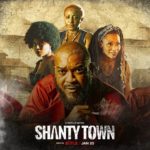
Nothing is more satisfying than when one of your faves finally gets the flowers they deserve by entering the Gen Z cool book. Chidi Mokeme recently had that moment after playing Scar on Netflix’s Shanty Town.
But before he played the gang leader and human organ trafficker who also happens to be a polyglot, Chidi Mokeme was a renowned action star in Old Nollywood thanks to films like Bad Boys with Saint Obi and His Majesty with Kanayo O. Kanayo. Action star or not, Chidi was also a big time Nollywood lover boy:
McMaurice Ndubueze
Is it really a campus cult movie if McMaurice Ndubueze isn’t roaming up and down, terrorising everybody in sight?
While all the other action stars on this list intimidated people by throwing hands or shooting guns, McMaurice’s power is in his ability to threaten his victims until they piss themselves. His facial reactions to his gang members’ or victim’s stupidity also live rent free in my head.
Sometimes, you don’t know how special a movie is until you look back at it 20 years later, and go, “Omo, this film is a classic.”
While it’s easy to talk about the best films of the year, this article is about the movies we’ll look back at a decade from now with a newfound appreciation for just how iconic they are.
Eyimofe
Eyimofe is about life in Lagos, and it doesn’t glamorise or gloss over the realities of the average Lagosian (who doesn’t have an influential last name, access to funds or connections in the city). It’s the poignant story of two Nigerians and their very different journeys to japa from Nigeria and escape its wahala. I can already picture students studying and writing about this movie when millennials start using walking sticks.
The Lost Okoroshi
A man wakes up and realises he’s now a masquerade. This is the insane plot that drives Abba T Makama’s The Lost Okoroshi, and as ridiculous as it sounds, he manages to make it work. I refuse to spoil the movie, but watch it with an open mind and you’ll get why generations to come will look back and say, “WTF?” but in a good way.
The Wedding Party
The film that started Nollywood’s obsession with ensemble comedies. A hilarious cast of old and new Nollywood players? Check. Two leads with chemistry so hot they actually married in real life? Check. Sola Sobowale and Ireti Doyle dragging each other? Double check. The Wedding Party was, and still is, THAT GIRL.
Lionheart
Lionheart, Genevieve Nnaji’s love letter to Enugu, is one of the most beautifully shot Nollywood films ever. Genevieve replaces overcomplicated storylines and unnecessary characters with a simple story about a woman willing to do anything (including work with her hilarious but annoying uncle) to ensure her family’s legacy is protected. Lionheart was everything and more.
King of Boys
A film about a female mob boss who has all the male politicians shook and panicking? Eniola Salami of King of Boys was girl-bossing, gate-keeping and gal-gadot-ing all over a fictional Lagos, and the audience rooted for her all the way. Until someone does a better crime mob project, King of Boys will go down as Nollywood’s The Godfather, and that’s on period.
Juju Stories
Juju Stories isn’t just a movie but a full-on experience. Divided into three parts, it covers three different scary AF stories that’ll shake you to your core and make you second guess eating yam ever again. A nod to Nollywood’s unhinged juju-inspired films era, this is one horror project people will still talk about years from now.
You can be a successful woman killing it in all aspects of your life, and everyone will still focus on whether or not you have a marital home to return to. This is the story of Dakore Egbuson’s Isoken. Before Jadesola Osiberu started producing films with bombs and car chase scenes, she made this cute-ass romcom. And it worked so well, it’s still the standard six years later.
Up North
If you’ve endured life in an NYSC camp in a remote town, then you’d relate to the struggles of Banky W’s Bassey in Up North. Bassey, a proper ajebo, experiences the culture shock of a lifetime when he’s posted to Bauchi and has to get used to life there. Up North shows a different side of northern Nigeria the media has drowned out with negative coverage.
The Delivery Boy
A suicide bomber has a chance encounter with a prostitute trying to raise money for her brother’s surgery. What could go wrong? The Delivery Boy was one of the best films of 2018, anchored by Jammal Ibrahim’s brilliant performance. His breakout role as Amir makes me wonder why he isn’t in more films. Also, Nollywood needs to make more thrillers about actual social issues.
Fifty
Before The Wedding Party or Chief Daddy, there was Fifty, EbonyLife’s first foray into films. It follows the complicated lives of four women turning 50. From infidelity and abuse to having sugar babies, this film was nuanced and intentional, covering many relatable topics. The only issue is they hoped to convince us Dakore Egbuson, Nse Ikpe Etim, Omoni Oboli and Iretiola Doyle were in their 50s back in 2015. How?
The Meeting
Rita Dominic as an Abuja secretary who’s the author and finisher of everyone’s contract-chasing dreams? Inject it. Even though the central love story between Linda Ejiofor and Femi Jacob’s characters dragged out for too long, Rita Dominic’s performance carries the film like Agege bread from start to finish making it one of Nollywood’s funniest movies of all time.
For Maria: Ebun Pataki
For Maria: Ebun Pataki saved Nollywood in 2022, when everyone was dragging the industry for another disastrous ensemble comedy. Delving into the rarely spoken about subject of postpartum depression, the film started a serious conversation on and offline.
If you haven’t watched Shanty Town, I’d like to congratulate you for withstanding the peer pressure and advise you to stop reading now.
The new Netflix series, which follows characters trying to navigate Lagos’s criminal underworld, stars Ini Edo, Nse Ikpe-Etim, Chidi Mokeme, Richard Mofe Damijo and Nancy Isime. Since the show has taken over social media, I watched it and documented all the random questions that popped up in my head during its six episode run.
Let’s go!
Why haven’t I heard Ibibio in a Nollywood film before?
Watching Ini Edo’s Inem and Nse Ikpe-Etim’s Enewan banter in Ibibio was my favourite part of Shanty Town. I’ve heard Yoruba, Hausa and Igbo in Nollywood before, but not Ibibio. I want more.
Does chewing gum automatically turn you into an experienced sex worker?
The way Ini Edo’s Inem switched the minute that chewing gum entered her mouth was hilarious and shocking at the same time. Mama was ACTING.
Sorry, but why isn’t Chidi Mokeme in everything?
I hope Chidi Mokeme’s back is doing okay after carrying all six episodes of Shanty Town like it was nothing. There’s a high chance I’ll cross to the other side of the express if I run into him. But not since Eniola Salami from King of Boys have I seen a Nollywood villain this terrifying yet likeable.
Does Scar’s calculator actually work?
There’s no way in hell Scar could calculate so fast on that calculator that looked like it was about to give up the ghost.
Nancy Isime, girl, what is this wig?
From Mercy Eke’s pink Nicki Minaj wig (and those fan lashes) to Ini Edo’s C.R.S teacher bob, all the wigs on Shanty Town stressed me. But none came close to Nancy Isime’s independence day wig. Sis, what is this 1960s afro?
Important question: Who I go fuck for ₦15 million?
This is the question that truly keeps me up at night. Nancy Isime, we’re looking for the same person. Call me when you find them.
Why does RMD look a lot like that popular Nigerian presidential candidate?
RMD’s Chief Fernandez seems to be modelled after a popular former governor turned presidential candidate. I can’t say more than that. If you know, you know.
What is an African Zombie, and where can I get one?
As someone who prides himself in alcohol consumption, I’m a bit concerned I haven’t heard of or tasted an African Zombie before. Please, email the Zikoko team if you know where I can find one. Treat as urgent.
Is Scar a polyglot?
I’m totally jealous of Scar’s ability to speak Yoruba and Igbo fluently. It’s rare to find a man who can switch from Yoruba demonry to Igbo wickedness with such finesse.
Will Shaffy Bello step on me if I ask nicely?
Shaffy Bello as a quirky villain dressed like a character straight out of Rupaul’s Drag Race wasn’t something I thought I’d see in 2023, but I’m here for it. I also need a movie where Shaffy Bello just screams “Scar” over and over again.
If there’s one scene that cracked me up, it’s when Sola Sobowale’s Mummy T started coughing and decided to take some cough medicine to solve her problem. I’m sorry, but how can I trust your jazz when you’re going to the pharmacist at the junction like me?
Does “touch and follow” really work?
I’m asking for a friend who’s meeting Femi Otedola soon. I mean, if “touch and follow” worked on Femi Fernandez, then maybe, just maybe, it could work on Femi Otedola.
Why does Femi Fernandez have a thick Anambra accent if he’s old-money Yoruba?
First of all, Femi Fernandez is the most made-up name in the history of made-up names. But outside of his fake name, I was also worried about his Intro Tech teacher jackets (not suits) and thick Anambra accent. The math isn’t mathing.
Why was Uche Jombo’s detective just nodding like an agama lizard?
Someone needs to check on this guy’s neck. I’m worried about him after all the nodding he did in this scene.
Did Jackie send that voice note from the spirit world?
I believe you have to be alive to press send when you record a voice note? But if we could hear discussions after Jackie’s death on the voice note she sent, then I’d like to know what network she’s using in the spirit world, because I doubt it’s Glo.
How many scars does Scar have?
I had to ask this question after the scene where one of Chief Fernandez’ henchmen cut off his finger. Has Scar ever counted his scars? Or is my fave villain running on iodine, bandages and vibes?
Is Chief Fernandez related to Banky W’s Anikulapo from Sugar Rush?
Chief Fernandez and Anikulapo are both rich bulletproof mob bosses, so I’m curious to know if they’re cousins or something. Or is everyone bulletproof these days, and I’m the only one left?
Why is the fight scene at the end so damn long?
Nollywood, I get it, you guys have learnt fight choreography now, but you need to know when to stop. The fight scene at the end was long for no reason. For a film that left so many questions unanswered, they sure spent a lot of time fighting in slow motion.
How did three random policemen arrest a bulletproof mob king like Chief Fernandez?
After all his gra gra, I’m expected to believe Chief Fernandez was arrested just like that? This man is bulletproof and powerful, so the fact that they arrested and tried him, yet nothing happened is weird. His powers or goons couldn’t get him out of police custody after he was arrested? Please make it make sense.
What was that ending?
Shanty Town was enjoyable, but it felt rushed and incomplete. Most of the characters were either underutilised or left with no clear motivation for their actions. It’s almost like they did things just to move the plot forward. Why did Nse’s Enewan frame Jagun to protect someone she wanted dead from the start? Why did RMD’s Chief Fernandez ask to see Ini Edo’s character and then not bother to bring her up after cutting Scar’s finger? Why did the police need an invite to the fundraiser if they were going to just barge in any way?
I heard it was supposed to be a movie before it was broken down into six episodes. But if it couldn’t wrap up the story in six episodes, I wonder how it was hoping to do that as a film.