It’s hard to stand out and steal scenes playing opposite actresses like Adesua Etomi-Wellington and Bisola Aiyeola, but that’s precisely what Bimbo Ademoye did as the third sugar sister in Kayode Kasum’s 2019 comedic thriller, Sugar Rush.
Coming into 2020 as the film’s breakout star and the face of countless memes, Bimbo Ademoye has become an unstoppable force, transitioning from underrated YouTube and Iroko TV actress in films like, The Diary of a Crazy Nigerian Woman and One Long Day to a Netflix queen in Kunle Afolayan’sAníkúlápó.
My introduction to Bimbo Ademoye came with 2017’s Back Up Wife with Seun Akindele. Her role reminded me of Funke Akindele’s star-making turn in the original Jenifa from 2008. While it was funny, I was also scared of these roles — the razz village girl who unintentionally makes herself the butt of every joke — as we’d seen it become a trope Funke Akindele still struggles to escape from years after Jenifa.
With new Nollywood constantly relying on comedic elements, whether they’re necessary or not, I’m not surprised Bimbo has successfully caught our attention. She was the funniest sister in Sugar Rush, the funny friend in Nneka the Pretty Serpent, and we can’t forget Ayinla from the legendary Tunde Kelani.
However, while other performers grasp onto these funny elements like their lives depend on it, Bimbo seamlessly skates through like it’s nothing. Her jokes are timely, and her presence is so consuming that, half of the time, I worry for her back because it can’t be easy carrying an entire production from start to finish.
Comedy can often make characters one-dimensional, but Bimbo seems to have hacked the tropes she’s been given to present characters that feel real. Yes, her character is presented as a joke in films like Selina and Breaded Life. Still, instead of just laughing at them, you end up understanding their motivations and the fact that these could be real human beings, even though they’re exaggerated and fictional.
After making Citation — a film which failed to make the post sex for grades statement it was aiming for, and Swallow — popular only for it’s wigs, production design and Ijeoma Grace Agu’s revelatory performance, Kunle Afolayan finally redeemed himself in my eyes with his latest Netflix project, Aníkúlápó.
The Yoruba epic was released in September 2022, and quickly became one of the most talked about Nollywood films of the year. Aníkúlápó also served as another reminder that men will disgrace you, even in the 1900s.
Stealing the show once again as the seductive turned vengeful, Arolake, Bimbo eats into her role with a certain level of depth and nuance that, in my opinion, the script didn’t really deserve. You want her in the beginning of the film, pity her by the second act, and by the time the credits roll, she makes you understand that it pays to be wicked, sometimes sha.
If there’s one thing Aníkúlápó showed, it’s Bimbo doesn’t have to be funny to keep you locked in by her performance. Another film that hinted at this side of her was Daniel Ademinokan’s 2018 redemption drama, Gone. That was the first time I thought, “Omo, this babe is going to go all the way.”
It also doesn’t hurt that Bimbo actually has a personality off-screen. Her sense of humour and ability to turn what could’ve been boring sponsored ads into hilarious original skits has made her a social media darling with over two million followers. If you haven’t already, you really need to get into her instagram character, Iya Barakat.
With the announcement of Sugar Rush 2and Amazon Prime’s Gangs of Lagos coming soon, it’s safe to say Bimbo has made that transition from underrated to Nollywood it-girl status. I know we love it when our faves are underrated, but the truth is, Bimbo has become everyone’s fave, and honestly, that’s fine. It means we had taste from the start.
As Nollywood continues to push itself with productions like Brotherhood and For Maria: Ebun Pataki, I’m super excited to see more of Bimbo Ademoye, and yes, as this tweet said, we’re still rooting for a Bimbo and Uzor Arukwe romcom.
In September 2016, I was picked up from my university apartment in Enugu by members of the now “defunct” Special Anti-Robbery Squad (SARS) with a gun pointed at my face. My crime? I lived in the same building as an alleged cultist. That Saturday was one of the scariest moments of my life, only to be rivalled by the time gun-wielding police officers chased me during the #EndSARS protests.
Going into Bolanle Austen-Peters’ new Netflix film, Collision Course, I knew I would be triggered. The film’s promotional narrative sold it as a story attempting to hold a mirror to society, with a heavy focus on police brutality and its impact on Nigerians like me. And yes, I did get triggered watching Collision Course, but not for the reasons you’d expect.
Collision Course introduces its protagonist, Mide (Daniel Etim Effiong), with a situation that feels all too familiar to young Nigerians. On a night ride, Mide is kidnapped by the film’s version of SARS (TARZ), beaten and extorted. The events of that night leave him traumatised until another encounter with a local police officer (Kelechi Udegbe) changes his life forever.
While Collision Course starts on the right, albeit traumatic foot, the film quickly turns away from Mide’s life to focus on the police officer who kills him, Corporal Magnus. If trenches were to be captured on film, Magnus’ house and family life would do it justice. From a dilapidated structure and bowls of garri to a “nagging” wife, Collision Course tries to convince us that Magnus is really going through it and is a victim of his circumstance. The pity party for Magnus is so intense that by the time Mide dies, you’re supposed to pity both the murderer and the murdered..
This pity party for Corporal Magnus is one of Collision Course’s biggest flaws.
Despite a rousing effort by Daniel Ettim Effiong to make Mide feel real, the film’s script works as an opp. Corporal Magnus gets a well-rounded story arc to get the audience to understand his motives, but Mide doesn’t feel like a real person. What millennial performs dead rap music with an Afro wig at Quilox in the year of our lord, 2022?
There’s no gainsaying Nigeria is messed up. We all live here. But Collision Course’s attempt to all-lives-matter one of Nigeria’s most unfortunate social problems with rogue law enforcement makes it a copaganda project. It’s not trying to hold the police system accountable, it’s a contrived attempt to get people to “understand” their side, and that’s just fucked up.
Two other things stick out like sore thumbs in Collision Course. In the film’s climax, Corporal Magnus kills Mide by accidental discharge, a move by the film itself to avoid accountability. If Corporal Magnus had let Mide go, perhaps Nigerians would’ve called the film out for not being true to reality. But if he had taken a clean shot at Mide, it would’ve been an outright call out of the Nigerian Police Force. So Collision Course took the easy — too easy — way out: an accidental discharge which still leaves Corporal Magnus as a victim even though he called his friends at TARZ to finish up the job.
The other upsetting part of Collision Course is the team’s decision to slap scenes from real #EndSARS protests at the end of the film. Why use actual footage of a real situation when you’re clearly not on the side of the movement?
In Collision Course, police officers and citizens are the same, equals even. After all, we’re all being fucked over by a corrupt system. But how can I be equal with someone holding an assault rifle? How is the power dynamic balanced when a police man can shoot me and walk away scot free?
Once you have a gun, it doesn’t matter who our mutual oppressor is, we’re not on the same side level.
We’ve been asked to applaud Collision Course for making an “effort”. But as someone who’s suffered at the hands of men like Corporal Magnus and TARZ, I think I’ll save my applause. I don’t get the concept of approaching a topic if you’re not ready to have a real conversation. No one is asking for a perfect story, but we also don’t deserve to have our trauma harvested and used for profit without us getting anything in return.
There’s an ongoing conversation about how Collision Course tries but fails actually to say anything, but I think that’s false. Collision Course says a lot, it just happens to be saying all the wrong things, and that’s even worse than saying nothing at all.
We get it, sometimes Korean series are just too long for you to watch, but that doesn’t mean you should miss out on the greatness that is Korean entertainment. Here are seven of the best Korean movies you can watch on Netflix.
Love and Leashes
Some of the best romantic K-dramas started with an office romance, and I’m glad this movie did not fail me. What happens when two coworkers find themselves in a contract-based BDSM relationship and try their hardest not to fall in love? Chaos. This movie accurately represented how kinks play out and still managed to be sweet and wholesome. The lead actors had great chemistry; the best part was that the dominant was a woman. Hard not to root for them.
Koreans realized that they could put multiple spins on zombie movies and haven’t stopped making them ever since. If you enjoy films like Train to Busan, this zombie thriller will hit the spot. The movie follows the life of a loner millennial video gamer who has to fight to survive after the world turns into an apocalyptic zombie nightmare. But it’s more than horror; it’s the struggle to keep hope alive even while the world burns before your eyes which is fitting since it was released in 2020.
Wish You
For people that enjoy K-pop, Wish You is an LGBTQ romance set in the K-pop music industry that stars two actual singers in the lead roles. In Wish You, Sang Lee is a Keyboardist who falls in love with the work of a street musician played by Kang Ye Na. They spend some time working on music together, and of course, they fall in love. This cute romance will hit the spot if you enjoy movies where characters fall in love at first sight.
https://youtu.be/yoSOUb1gwmM
The Bros
The Bros is a hilarious movie about two brothers who haven’t spoken since their mother died, forced to work together to carry out traditions at their father’s funeral. Add a mix of classic sibling rivalry, a mysterious woman, family secrets and meddlesome siblings and be ready for premium entertainment. The movie is funny and heartfelt as we watch the two brothers try to fix their relationship amid the crazy situations they find themselves in.
Okja
If you’re a Bong Joon Ho fan or loved Parasite, you’ve either already seen or will enjoy this movie. It follows the life of a young girl called Mija who tries to rescue her genetically modified pig “Okja.” This gut-wrenching movie spoke about the horrors of capitalism and the brutal treatment of animals in the food industry. After seeing Okja, you might become a bit obsessive about how the food industry works, pele.
Space Sweepers
Koreans have range, and they showed it with this sci-fi movie. Space Sweepers is set in 2092 after Earth has become nearly unlivable, and a corporation called UTS starts to build homes on mars for people that can afford it. It’s a hilarious movie about a crew of “space sweepers” who collect debris from space and sell it for money. Their lives are a mess, but it gets worse when Dorothy, a robot which belongs to UTS, stows away on their ship. At first, they try selling Dorothy to the highest bidder, but the crew falls in love with her and make it their mission to protect her.
The Pirates: The Last Royal Treasure
For people that love adventure, The Pirates: The Last Royal Treasure fit’s the bill when you don’t want to watch something too serious. A group of thieves and their eccentric leader Wu Mu-chi are stuck in the middle of the ocean but are rescued by pirates. Both groups are after a lost royal treasure and form an unlikely alliance to find it. It’s a movie about thieves and pirates, so expect lots of deceit, hilarious scenes and romance.
This particular movie left us with more questions than answers, and we know we’re not the only ones that felt the sudden urge to know what Glamour Girl character we are.
So take this quiz to find out.
This movie is proof once again that the Nollywood industry can only get better. We can all agree that everything from plot to actors in Breaded Life was spot on, but only people that really paid attention to details will ace this quiz.
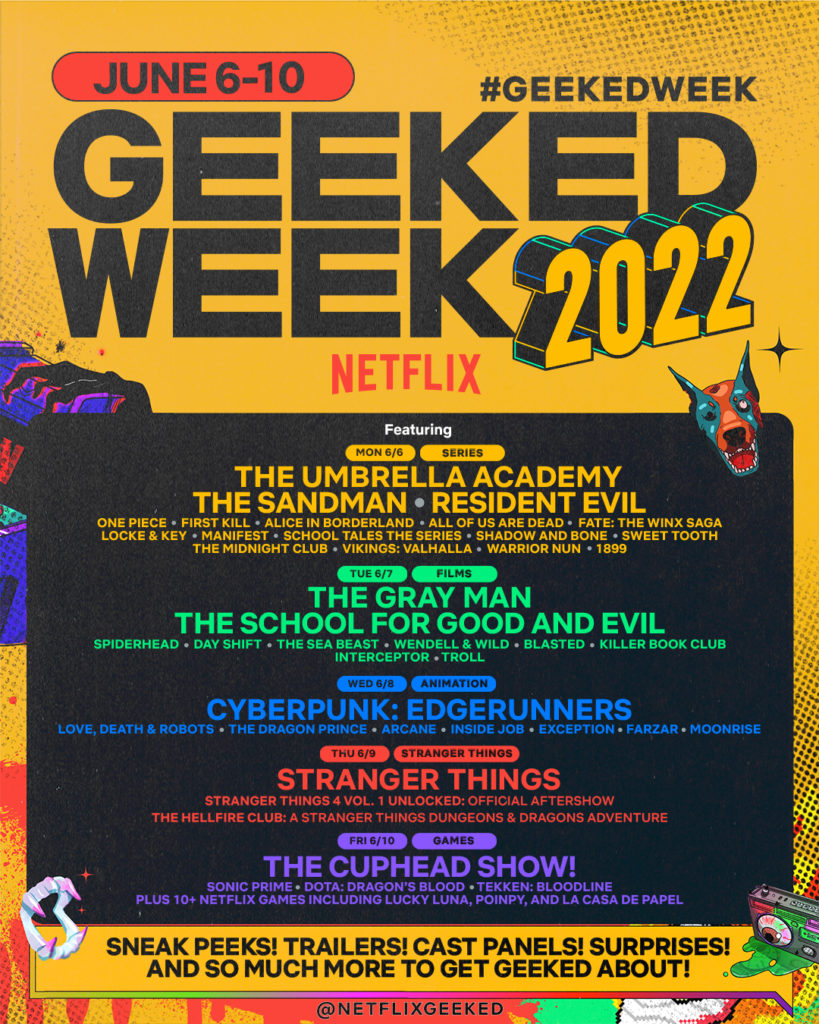
Netflix Geeked, Netflix’s home for all things genre entertainment, is prepping for our second annual Geeked Week and we’re going all out for this year’s festivities. Geeked Week 2022 is a free five-day virtual event celebrating Netflix’s genre series, films, and games that runs June 6-10 across all your favorite platforms. You can expect tons of exclusive news, new trailers, celebrity appearances and so much more. Here’s everything you need to know so you don’t miss a thing:
How to Watch
We’re hosting Geeked Week across all major platforms including our YouTube, Twitter, TikTok, Twitch and Facebook channels.
When to Watch
Geeked Week runs Monday, June 6-Friday, June 10 at:
Monday, June 6
Series Showcase at 9am PT/12pm ET/5pm GMT
The Sandman Panel at 10:10am PT/1:10pm ET/6:10pm GMT
The Umbrella Academy Panel at 10:40am PT/1:40pm ET/6:40pm GMT
Most Presents: Vampire Pride with First Kill at 11:15am PT/2:15pm ET/7:15pm GMT
Tuesday, June 7
Film Showcase at 9am PT/12pm ET/5pm GMT
The Gray Man Panel at 9:40am PT/12:40pm ET/5:40pm GMT
The School for Good & Evil Panel at 10:10am PT/1:10pm ET/6:10pm GMT
Wednesday, June 8
Netflix Geeked Week After School Special at 3pm PT/6pm ET/7am JST
Animation Showcase at 4pm PT/7pm ET/8am JST
Cyberpunk: Edgerunners Inside Look at 4:45pm PT/7:45pm ET/8:45am JST
Thursday, June 9
Stranger Things 4 Vol. 1: Unlocked at 9am PT/12pm ET/5pm GMT
The Hellfire Club: A Stranger Things Dungeons & Dragons Adventure at 10am PT/1pm ET/6pm GMT
Friday, June 10
Games Showcase at 10am PT/1pm ET/6pm GMT
The Cuphead Show! Table Read at 11am PT/2pm ET/7pm GMT
Resident Evil star Ella Balinska LIVE at the /twitchgaming Summer Gathering at 11:30am PT/2:30pm ET/7:30pm GMT
Geeked Week Podcast LIVE: Best of Geeked Week at 12pm PT/3pm ET/8pm GMT
What to Expect
Every day promises lots of excitement about our Netflix genre series, films and games, including exclusive teaser and trailer premieres, sneak peeks, surprise announcements, never-before-seen footage, cast interviews, script table reads, and much more covering more than 60 Netflix projects. There even is a whole day dedicated to Stranger Things!
And each day of Geeked Week has a special theme:
Monday, June 6 (Day 1) – Series;
Tuesday, June 7 (Day 2) – Film;
Wednesday, June 8 (Day 3) – Animation;
Thursday, June 9 (Day 4) – Stranger Things; and
Friday, June 10 (Day 5) – Games.
For a breakdown of what series, films and games to expect each day of Geeked Week, check out our new poster above and watch the explosive trailer below.
Who to Expect
We don’t want to spoil the surprise, but you can expect a few drop-ins from the cast and creatives behind some of the series and films listed above. And, as previously announced, we’ll also have an exciting group of hosts to help break down all the jaw-dropping news and must-see first looks, including Jacob Bertrand, Megan Cruz aka jstoobs, Jaeden Martell, Reece Feldman aka guywithamoviecamera, Juju Green aka Straw_Hat_Goofy, Ella Purnell, Tiffany Smith, Felicia Day, B Dave Walters, Geoff Keighley and Mari Takahashi.
How to Co-Stream
The Geeked Week feed will be open for co-streaming via Twitch so that our loyal fans and fellow Geeks like you can get in on the action.
How to Get the Latest News and First Looks
If you miss any of the fun, don’t worry, you’ll still be able to catch up. We’re compiling all the biggest news and first looks to come out of Geeked Week right here on the Netflix Newsroom, and you can rewatch the full day’s programming on YouTube, Facebook and Twitter. Tudum.com, Netflix’s official companion site, will also be sharing bonus content from each day’s programming.
So get your cosplay ready and keep this page bookmarked for all the latest on Geeked Week.
You’ve probably seen a lot more Netflix Naija movies than before, but we bet you won’t get all 10 movies right.
Questions
This is a question
Water Brothers
Servants of Men
Ugly water
Iya Ghetto
Woman of the Devil
Dying in Freedom
Salt Delay
Peasant Son
Staircase Baby
Poor Husbands of the FCT
You got #{score} over #{total}
You clearly don’t watch Nollywood movies.
You got #{score} over #{total}
Not bad. You either have friends/family that make you watch Nollywood movies.
You got #{score} over #{total}
Great job! You obviously know your Nollywood movies.
You got #{score} over #{total}
Are you sure you don’t work with Netflix Nigeria? Best in English and Movies combined.
Everyone is talking about Netflix’s Blood Sisters. The star studded limited series follows two friends, Sarah (Ini Dima Okojie) and Kemi (Nancy Isime), as they try to escape the police and a ridiculously hot/silent Ramsey Noah after beheading Sarah’s abusive fiancé minutes to their wedding. Yes, it’s chaotic as hell, but I loved every minute. One thing about the show that’s blowing people’s minds (asides from the gripping plot) is the fashion. Every single character served lewks worthy enough to grace the MET Gala red carpet Let’s talk about some of our favourite looks from the show.
9. Abasiyama’s seduction outfit
Starting this right with my girl, Abasiyama (Toke Makinwa). This is how you turn up to your ex’s wedding with the intention to spread bad vibes and wreck homes.. I still can’t get over her “Chai, let me kiss you for the last time as a single man,” line. Abby baby, please seek help.
8. Kemi’s girl boss looking for a gun look
I call this outfit: Suited to kill. This babe was on a gun hunt while trying to hide a murder, but still had time to dress in couture. The fabric from the sleeves alone is enough to make another dress. This outfit is giving She-E-O/Girlboss/Beheading queen vibes. You better werk, sis!
7. Sarah’s engagement dress
While we can all agree that Kola (Deyemi Okanlawon) was a terrible man who lowkey deserved the ending he got, we also have to admit that the dress he wanted Sarah to wear for their engagement party was way better than her first choice? I mean, unlike that “show me your back” number she first had on, this dress is giving wealth and opulence. Anyways, RIP Kola, your fashion sense may be top notch but the evil you’ve done is enough. Have fun styling Karashika in hell.
6. Yinka’s wings of celebration outfit
This is exactly the type of power suit I also want to wear while receiving updates on the man I’ve paid someone to kill. Look at the wing thing on the shoulder. Sis, where are you flying to? While we’re on Yinka’s (Kehinde Bankole) case, can we get into her acting in this scene? She was probably doing sungbalaja in her head while pretending to be saddened by Kola’s death. A true Uduak (Kate Henshaw) in the making. No wonder they were giving each other hot hot. Uduak could see herself in Yinka and lowkey respected her for being that bitch.
She came, she slayed and she beheaded. This jumpsuit is EVERYTHING! This look alone is enough to convince the judge that Kemi (Nancy Isime) doesn’t deserve to be in jail wearing those ugly prison uniforms.
4. Frozen part three
Madam Uduak is giving ice queen with that cape and big ass diamond earrings. Elsa was found dead. By the way, is it me or was this staircase a supporting character on this show?
3. #Kate4Disney
Someone get Disney on the phone. We need to get Kate Henshaw a role that’ll let her explore her Disney villain fantasy.
2. The “I don’t want to be here” Iro and Buba
How else will everyone know you’re beefing your soon-to-be daughter-in-law if you don’t show up and try to outshine her? Madam Uduak was on a mission here, and she clearly succeeded. Our favourite perpetually irritated villain ate and left no crumbs. Those shoulders alone na die.
1. She is an icon and she is the moment.
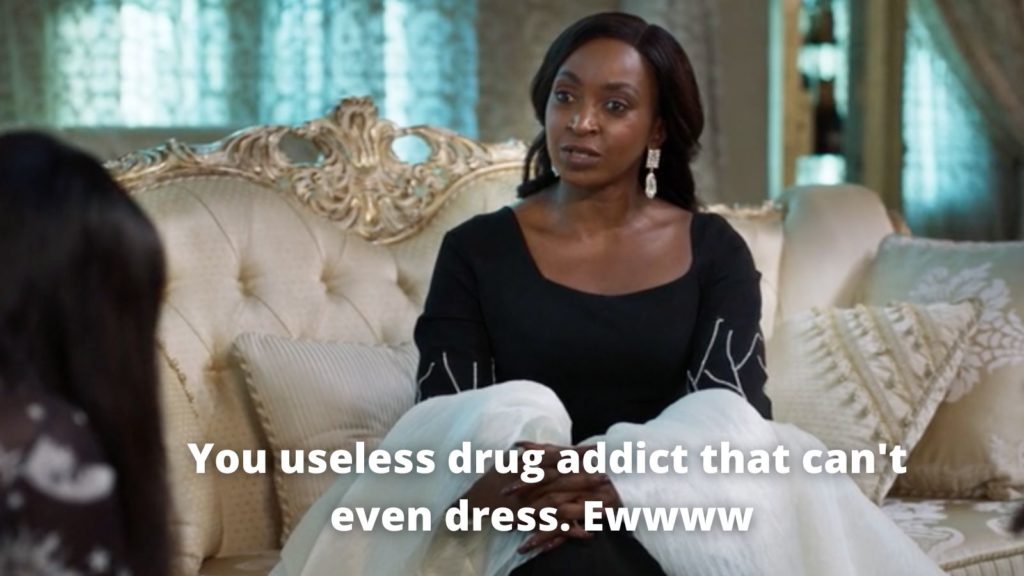
THIS IS IT. No words. How is this woman dressed like this in her living room on a regular afternoon. What will she now wear when there’s something really important going on? The colour of this dress, her nails, the earrings, the couch…This is a moment.
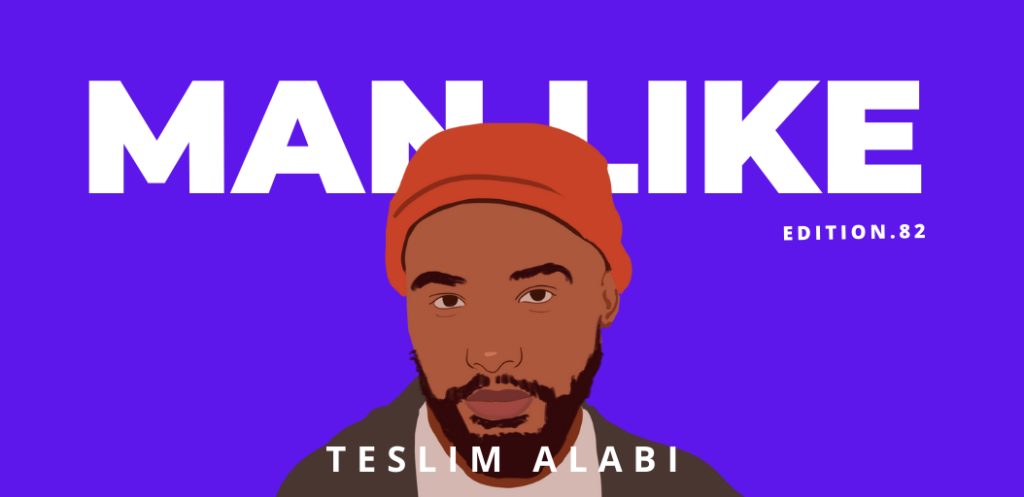
What does it mean to be a man? Surely, it’s not one thing. It’s a series of little moments that add up. Man Like is a weekly Zikoko series documenting these moments to see how it adds up. It’s a series for men by men, talking about men’s issues. We try to understand what it means to “be a man” from the perspective of the subject of the week.
Teslim Alabi is living the dream: leading Product Design at Netflix Global after five years at Microsoft, living a nice life in a country with constant electricity and having great skin — yes, I noticed. Honestly, Teslim is the tech bro I aspire to be. But as I fawn over his life, our conversation shows that the self-declared introvert hasn’t always had it easy. It’s been a long journey, and now, he’s finally getting settled into the life he deserves.
In this episode of Man Like, Teslim talks about growing up with a Muslim dad and Christian mum, stepping up to save his university relationship and how he’s been able to navigate life as a black man living in America.
What was growing up like for you?
I grew up with my family in Enugu. We didn’t have a lot, but I wouldn’t say we were poor. My dad was a branch manager for a restaurant start-up in Enugu, and my mum was a trader with her own store. We were generally okay, my parents did a good job of shielding my siblings and I from the tough times we’d routinely experience. Interestingly, when we were younger, my dad was Yoruba-Muslim, while my mum was Igbo-Christian. We grew up with that mix and went to the church and mosque. We were in between.
Wow. I’m interested in knowing how this worked out?
I don’t know how they did it, but my parents made it work, and we never noticed any friction between them about religion. We would go to the mosque on Fridays and church on Sundays. Outside religion, the difference in their cultures was another interesting intersection for my siblings and I. My dad always said, “When you’re old enough, you’ll decide the path you want to take.” He later converted to Christianity, and if you ask my mum, she’ll tell you it’s because of her prayers. LOL.
Did growing up with a structure like that affect your sense of identity?
The only time I became aware that my family was a bit different was in primary school, specifically in social studies classes, where they’d talk about the makeup of an ideal family. Those were the moments I realised my family didn’t fit into the typical box of what a Nigerian family should look like. Intertribal & inter-religious families weren’t as common as I assumed at the time.
Growing up like that helped me realise that multiple truths can co-exist. It has shaped my mind to accept different views and ways of living and being.
Now that you’re older, what religion have you settled on?
I was raised primarily Christian, but I’ve always been very curious about exploring philosophy and understanding more about the universe. I don’t oppose any beliefs. I will always be curious — wherever that leads me, I’ll go.
Still on identity, can you tell me when you first realised you were a man?
I feel like I’ve always been independent since I was like 8 years old. But one significant moment I can pinpoint was when my wife’s (my girlfriend at the time) parents wanted her to return to Nigeria for NYSC, after university in Canada. We had done long-distance in the past and understood a move would strain our relationship, so we had to act fast. There was a short period of time when she wasn’t getting any direct support, and I offered to help.
It wasn’t easy. I wasn’t making money at the time, but whatever pocket money I had, I’d split it with her. We made it work. She’s also very independent, so the idea of someone who’s not her family supporting her didn’t sit well. It took her a while to accept any help from me. I had to beg. LOL. It was a lot of pressure and sacrifices on both sides.
I told my dad about it, years later, after we had gotten engaged, and his response was that these are the things that make us men — we make sacrifices and give even when we don’t have.
What did you take away from this experience?
I learnt how to see things from a mindset outside of my own. My wife is more balanced and level-headed with how she approaches things. But as a man, I wanted to be useful and do something immediately. In a bid to act, I could’ve come off as desperate and controlling, and she’d have just gone back to Nigeria instead of putting herself in that situation. Working through this process with her taught me to be gentle in my approach to conversations and problem-solving. It was a learning curve for me.
Why did you feel this need to be “useful”?
From my perspective, it’s a massive part of our notion of masculinity — the need to always be the problem solver, to want to be seen as the person mobilising and moving everyone else forward. But over time, I’ve realised that people’s needs differ, and masculinity should be about a malleability of approach. I’m learning that being there for people doesn’t always mean that I have to solve their problems. Sometimes, they just want you to be there, to listen.
Nice. Being a black man in Nigeria is one thing, but being a black man in the US must be different. Can you tell me about your experience?
So I moved to the US for my master’s after completing university in Nigeria. I’d been to the US with my parents a number of times, but this time, I travelled on my own. When I arrived, on my first day, I went out to look for food, and it hit me that my parents had been doing most of the running around whenever we visited. For the first time, I was on my own. I went to this crowded park across the street, and even though there were so many people around me, I just felt incredibly alone.
Things got easier as I started cultivating relationships, but something happened in my first week that messed with me. I was walking on the street with my headphones, and a group of mostly white teenagers started following me around, yelling the N-word. All I could think about was how I was alone on the road and how this could end badly for me.
I’m so sorry.
I was coming from a country where I looked like everybody else, and suddenly, I was in this country where I stuck out like a sore thumb. It was a jarring switch for me. Oppression is rife in Nigeria, but people see it, everyone is aware, it’s undeniable. As black men in America, we get oppressed and people act like it’s not there, they can’t see it, so we feel paranoid and question our reality. There was another time I was in Hawaii, this woman on a scooter called me the N-word and just sped off. There are other less apparent instances like being the only black person at work and having no one take your ideas or suggestions seriously. Even though you’re the expert, your qualifications are always being questioned.
Early on, I had to repress my experiences with racism, hoping that maybe if I didn’t dwell on them, then they never happened. It wasn’t until a community gathering after another black man got profiled, shot and killed that all of the repressed emotions came flooding back again. Coming from Nigeria, the use of the N-word might not be seen as a big deal. But getting here and knowing that some people say it to intimidate me, to make me feel small, gives it a different meaning.
I’ve adapted to the system because I know I wouldn’t be where I am today if I didn’t come here. But despite all this, every time I go back to Nigeria, I immediately feel like I’m home. There’s something peaceful about being around people who look and sound like me.
I agree. Let’s switch gears for a bit. What brings you joy these days?
Joy, for me, is starting to look more like impact. I’ve always been in this space where I try to make an impact by telling stories. And now, I am getting to a point in my career where I am mentoring other people, and I co-founded a program to help underrepresented people get jobs in tech. When I think about joy and fulfilment these days, I think about these things. It’s always about service and what you can do for others.
As a product designer, I’m working with Netflix to design features that ensure users have the best possible experience on the platform. I’m doing what I love, so my job is a source of fulfilment. Also, making time for family and the important people in my life. I’m trying to invest more in those relationships.
Looking at what we’ve discussed, and your journey so far, if you could change one thing, what would it be?
If I changed anything, I don’t think I would end up where I am. We can have all the speculations about what could have gone better, but I feel like I only have the power to influence what is before me, so I spend a lot of energy on that. I don’t have regrets.
Amen to that.
We’ve watched the second season of Bridgerton and thoroughly enjoyed it. The plot, the enemies to lover trope and the intense chemistry between Kate and Anthony.
Watching the show made us wonder what it would be like if the characters were replaced with Nigerian actors and here’s what we came up with.
1. Eucharia Anunobi as Queen Charlotte
It’s almost as though Eucharia was made for this character. From the brows to the way she speaks, there’s no better Nigerian actress and veteran who can body this role.
2. Joke Silva as Lady Danbury
Joke Silva embodies wisdom and class, very much like Lady Danbury. She has a readily available personality to carry the role and succeed at it.
3. Bimbo Akintola as Mary Sharma
The range of this woman. We need to tell Netflix to give her a call if they ever get the bright idea to give us a Nigerian version of Bridgerton.
4. Ireti Doyle as Countess Bridgerton
She’s the perfect dotting mum who wants the best for her children in terms of marriage and happiness. Countess Bridgerton is an unproblematic fave, very much like Ireti Doyle.
5. Sola Sobowale as Lady Portia Featherington
Conniving Lady who’d do anything for her family? Almost reminds of us our own king of boys. It’s either aunty Sola or no one else.
The older self-made woman who doesn’t conform to societal norms and has chosen to work hard to make a name for herself seems like the perfect description of real-life Nse.
7. Jemima Osunde as Penelope Featherington
To be very honest, Jemima Osunde seems like someone who has all the tea on what’s going on in Nollywood but decides not to speak. Jemima Penelope Featherington Osunde
8. Susan Pwajok as Eloise Bridgerton
We surprised you with this one, didn’t we? Susan’s character on The Johnsons is already similar to Eloise’s. We’re not trying to put her in a box, we’re only pointing out how perfect she’d be for this role.
9. Uzoamaka Aniunoh as Edwina Sharma
Uzoamaka has proven herself in all the roles she’s ever been in. Her beauty and talent are so surreal. There’s no better person to play Edwina than her.
10. Meg Otanwa as Kate Sharma
Nollywood is filled with a lot of talented actors, but none of them is like Meg. She has the beauty and charm to deliver the best performance in this role.
11. Nonso Bassey as Anthony Bridgerton
Nonso Bassey playing Viscount Anthony Bridgerton? Yes, please, count us in. Even in his music, you know Nonso is the ultimate lover boy. If it’s not him, it’s no one else.
12. Jim Iyke as Lord Jack Featherington
Poor businessman turned scammer who eventually got played by a woman sounds like a role created for Jim Iyke.
13. Efa Iwara as Colin Bridgerton
Colin can’t see the love of his life right in front of him same way Efa can’t see all the women who’ve been trying to marry him.
14. Adesua Etomi-Wellington as Duchess Daphne Basset, née Bridgerton