

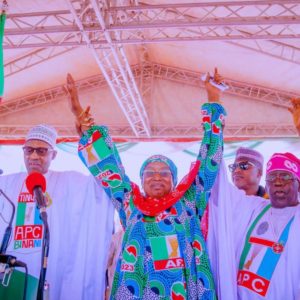
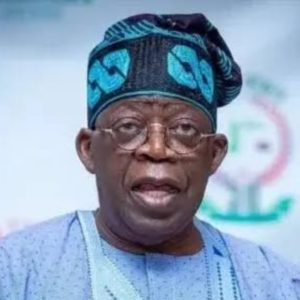
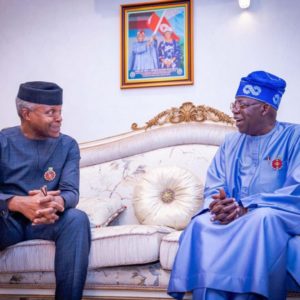
• The APC is just two senators shy of a two-thirds majority in the Senate, and it feels like every other week we hear about another defection from the opposition. The idea of a one-party system is not just speculation anymore—it is starting to look like a very real possibility.

    Defections, coalitions, and alliances are not new in Nigerian politics. But why is it so easy for politicians to switch sides, team up, fall out, reconcile—and then fall out again? Why does it matter so little which party a candidate belongs to? And why has it become normal for serving officials to switch parties mid-term?

    The simplest answer? Ideology—or rather, the lack of it.

    Victoria Oladipo, a political scientist and founder of Learn Politics NG, an organisation focused on making political education accessible, believes defections are so common in Nigeria because politicians view it as “A quest for power.”

    The ideology of party politics

    In places like the United States and much of Europe, politics is shaped by deep ideological divides—liberal versus conservative, left versus right. Parties are built around these core beliefs. For instance, Republicans (typically conservative) believe in lowering taxes and reducing government spending, while Democrats (typically liberal) believe that taxes should be scaled according to income and that the government should invest in providing services, such as healthcare, for the less fortunate. The tug-of-war between them defines the political landscape.

    It is not just rare for politicians to switch parties in that kind of system—it is risky. It means changing your entire brand, your rhetoric, and sometimes even your values. If a politician truly believes in their party’s ideology, then jumping ship is basically off the table.

    But Nigeria’s political system is built differently, and it didn’t start today.

    Get More Zikoko Goodness in Your Mail

    Subscribe to our newsletters and never miss any of the action

    Na ideology we go chop?

    Post-colonial politics was immediately dominated by ethnically motivated regional parties, such as Obafemi Awolowo’s Action Group (AG) in the South West and Tafawa Balewa’s Northern People’s Congress (NPC) in the North.

    These parties formed the foundation for the current trend of ethnically based political parties in Nigeria with regional strongholds: APGA in the South East, APC in the South West, and PDP in the South South and South East. Some are even more localised, like the NNPP in Kano.

    This sort of political landscape allows for simpler, sentiment-based politics, where ideology and policy discussions often take a back seat and trivial things like ethnic loyalty and political settlement become the focus points of politicians’ campaigns. A more recent instance is Bola Tinubu, whose informal campaign slogan during the 2023 election, Emi Lokan, means “it is my turn.”

    Nigerian politicians know what a largely politically illiterate populace wants to hear. And it is not ideological debates. The average Nigerian voter, typically religious and conservative, is not interested in culture wars or abstract political theory. They want real, tangible improvements in their lives. So promises of safer and better roads, steady electricity, and cheaper food are what move the needle here.

    This reality was demonstrated in a 2022 study done ahead of the 2023 general elections. The study, which surveyed 1043 Nigerian voters found that  42 per cent of them wanted to hear political aspirants speak on insecurity,  28 per cent wanted to hear about the economy, while 23 per cent were more interested in job creation.

    ALSO READ: Wrapped: Worst Nigerian Politicians of 2024

    The loopholes in the Nigerian constitution is an enabler

    Political scientist, Victoria Oladipo, believes the main reason Nigerian politicians defect so easily is because there is virtually nothing stopping them. “There are no consequences for such actions, and where there are no consequences for actions, people will do whatever they like,” she said.

    A Quick Look at the 1999 Constitution confirms Victoria’s statement; It only addresses the defection of legislative members, stating that they are to vacate their seats if they switch parties mid-term. However, there is no such provision for executive office holders who abandon the parties that got them elected.

    Even the law for legislators contains a convenient loophole that Nigerian politicians frequently exploit: it permits party switching if the legislator’s original party experiences a “division.”

    As a result, politicians often claim internal divisions at the slightest opportunity and use that as a justification to defect.

    The consequences of an ideology-free politics?

    So what happens when all  the parties end up saying the same things. Their manifestos are basically copy-paste: infrastructure, jobs, security, development. And if everyone is selling the same product, it becomes easy for politicians to switch brands without losing credibility. There is no need to rebrand or explain themselves—they simply keep selling the same promises under a new logo.

    In a system where ideology does not matter, what does matter is perceived effectiveness. If every candidate is promising the same things, then the real competition is about who can deliver, or who can convince people that they will deliver.

    In theory, this kind of system—where ideology is irrelevant and messaging is uniform—is tailor-made for a one-party setup. And that may be where Nigeria is headed.

    Victoria disagrees with this line of thinking. “I do not think that we are eventually going to get to a one-party system,” she said, emphasizing that  Nigerian politics is too diverse, with too many major players and big personalities to fit into a single party. She points to the cracks appearing in the opposition coalition under the umbrella of the ADC and their difficulty in deciding on a frontrunner for the 2027 presidential elections.

    Victoria’s assessment mirrors that of Prince Adewole Adebayo, the 2023 presidential candidate of the Social Democratic Party (SDP). Speaking about the possibility of a one-party system, he said: “What makes a one-party state is when people think that they do not need any other party outside the one that is ruling, or when people are being forced by law not to create another party.”

    Opposition leaders have accused the APC of having ambitions of a one-party state, though the APC leadership has denied it, stating that they do not need a one-party system to win elections.

    ALSO READ: Is Politics a Dirty Game?

    What do existing one-party states look like? 

    There are many countries practising one-party systems—some officially, others not so much. For instance, in Russia, there are 27 officially registered political parties. However, the ruling party, United Russia (UR), has held a parliamentary majority since 2007 and an absolute majority since 2016.

    In China, the Communist Party of China (CPC) has held a monopoly on power since 1949. Though smaller parties are allowed to exist, they are all affiliated with the CPC and are not permitted any real power.

    Singapore has been governed by the People’s Action Party (PAP) since its independence in 1965, though opposition parties are also allowed to exist and contest elections.

    Russia, China and Singapore have very high Human Development Index (HDI) scores. Russia has an HDI of 0.832, China’s is 0.797, and Singapore’s is 0.946, indicating a generally high quality of life. However, all three countries are highly restrictive of freedoms, particularly in relation to political dissent, the press and freedom of expression. They score poorly on the Freedom of Expression Index, with Russia at 0.08, China at 0.04 and Singapore at 0.34.

    To put it simply, while material gains and economic development are possible in one-party systems, they do not allow democratic norms to thrive. True democracy and its associated freedoms must be sacrificed at the altar of one-party progress.

    Can we make a case for the current state of Nigerian politics?

    Whether Nigerians are getting a fair deal in this ideologically poor, productivity-focused system would be a more interesting debate if Nigerian politicians were actually productive. If they delivered on their promises, we could have a discussion about whether the lost freedoms of a one-party system are worth it.

    However, what we have in Nigeria is a recipe for disaster should a one-party system emerge. At present, the competition from opposition parties has not inspired the ruling party to improve its performance. So, what happens when there is no competition at all?

    It is important to note that the ruling parties of Russia, China, and Singapore have fiercely nationalist ideologies. Importing the one-party system into Nigeria’s unique political environment is dangerous. Nigerian parties are more tribalistic than nationalist, so it actually risks worsening ethnic tensions.

    Nigeria’s Gen Z democracy is still finding its feet

    When asked why Nigerian politics is less structured when compared to some other countries, Victoria Oladipo pointed out that it is a young democracy which still has a long way to go.

    “When you are 26 years old (like Nigeria’s democracy), you cannot have your whole life figured out,” she said. “I do not think that comparing Nigeria with established democracies like the United States is a fair way to look at things because Nigeria’s democracy is still quite young at 26, and America has over 200 years of democracy.”

    However, she does not want that to be used as an excuse for complacency. “Still, when you are 26, you are old enough to know what you ought to do.” She wants to see Nigeria begin working towards consolidating democracy and believes a one-party system would be the wrong direction.

    “I do not think there is any democracy that survives in a one-party system. Any form of government that only has one entity in power is not a democracy anymore. It is a façade of what democracy is.”

    So much of Nigeria’s current leadership spent their early adulthood under military rule, and we may not see a democratic culture truly entrenched in Nigeria until those born post-1999 are old enough to take the reins of leadership.

    Falling into the trap of a one-party system risks smothering our young democracy before it can truly come into its own, and its citizens can begin to reap its promised dividends.

    How can the youth  protect Nigeria’s democracy?

    Victoria believes that strengthening multi-party politics in Nigeria requires a shift towards ideological and issue-based politics. “If we want to push ideology-based politics, we need to vote for candidates that represent the things that matter to us the most,” she said.

    However, she noted that there is a gap in knowledge among Nigerian voters that prevents them from linking politics to the policies that affect their lives. To bridge this gap, she says organisations like Learn Politics NG have a big role to play. “Organisations like Learn Politics have to continue raising awareness and shaping political thinking to help people understand, draw conclusions, and make rational decisions. We need to educate citizens on the logic behind politics and why they have to vote a certain way to achieve the kind of Nigeria we desire.”

    But Victoria does not want Nigerians to see voting as the only means of political engagement. She said: “I call voting and elections the highlight of democracy, but there are also many smaller, equally important factors like the relationship between citizens and the government. How often do citizens actually engage in the democratic process? For the kind of democracy we aspire to, we need to learn to speak out more. And I do not just mean protesting.”

    She wants to see more citizens using democratic provisions such as the Freedom of Information Act, (which allowed a man in Ekiti to sue a local government chairman over the budget for a gate project) to hold their leaders accountable. “We cannot build the kind of democracy we want if we do not hold leaders accountable.”

    “Another thing that we can do is to start joining political parties,” she said. But she wants to see more political participation even outside the existing political parties. “I am really hoping that the Independent Candidacy Bill will pass so that we will see how people can organise themselves outside of the established parties.”

    Looking ahead to the 2027 elections and beyond, Victoria felt it was still too early to make any predictions about Nigeria’s political future. “I do not know what will happen; the political system is quite volatile,” she said. Whatever happens, she hopes for fairness and the continuation of Nigeria’s democratic plurality. “I would love to see, at the very least, free and fair elections. We deserve that much. And we need to maintain our democracy because it gives us something very important: freedom of choice.”

    ALSO READ: What’s It Like Dating a Politician? We Asked 7 Nigerians

    All opinions expressed by Victoria are solely her own and do not reflect the views of any individuals, organisations, or entities she is affiliated with or represents.

    [ad]

  • In 2024, the New York Times reported that Nigeria was experiencing its worst economic crisis, and even though the government tried to downplay the credibility of the report by claiming that it was all “gloom and doom,” the deteriorating quality of life of the average Nigerian says otherwise. 

    In this story, Amaka*, 27, shares how her life has taken a drastic turn for the worse since President Tinubu took office and how her hatred for the ruling All Progressives Congress (APC) is fueled by the needless death of her mother.

    This is Amaka’s story as told to Margaret 

    My life has changed in the worst way possible since Tinubu became president. I went from having some essential luxuries to having nothing at all. It got even worse after I went for my NYSC. I’ve been speaking against the ruling party since 2014, and some people still think I’m joking.  APC has taken so much from me. I was 16 in 2014, when Buhari came into power, but even then, young as I was, I knew something was off with him. After he became President, I started picking up more interest in politics and current affairs because I wanted to know just how bad things would get. 


    If you’re interested in staying in the know, our daily newsletter simplifies and delivers news to your inbox at 7 AM every morning. Subscribe here.


    My parents told me how terrible he was during his time as Nigeria’s head of state. They narrated how he made old people queue for bread, so I was confused when everybody else fell for his tall promises about making ₦1 equal to $1. I was crying when he became president. I just knew that Nigeria was setting itself up for failure.

    Three years later, in 2017, I gained admission into the university and thought I would graduate by 2021. That didn’t age well because, in March 2020, ASUU decided to go on an academic strike for almost a year. It was at that time that my hatred for APC doubled.

    Shortly after the strike began, COVID-19 set in and forced us all to stay at home. But when things got better and other students returned to school, those of us in Federal Universities still had to wait because the strike was still ongoing. I stayed in school for two extra years because of bad governance. 

    But 2023 was the year that changed everything for me. My mom fell sick and eventually died because of a government-owned hospital’s inadequacies. She was at the government hospital because that was what my dad could afford. The treatment was subpar, but private hospitals were too expensive for us, so it was never a matter of choice. She eventually died, and my hatred for APC increased. There are basic things that the government owes us, and primary healthcare is one of them.

    Shortly after my mum died, I left Lagos to start my National Youth Service Corps (NYSC), and that was when I saw how deep Nigeria’s poverty ran. The sad part is that poverty is institutionalized and designed to make the poor get poorer while the rich get richer. When I was in NYSC camp, I often talked about politics. I was the Orientation Broadcasting Service (OBS) president, so I had the right platform for it. I discussed it so much that other corpers started telling me to tone it down, but I didn’t stop. My goal was to get young people to hate APC as much as I did.  Despite the initial kickback, I continued pointing out to corpers that all government officials are public staff who are being bankrolled by taxes from Nigerians. Even during CDS, I used to preach to them, telling them the need to take politics seriously and hate APC because the party is after our future. Unfortunately, some corpers started displaying tribalism and kicking against my opinion, which I still can’t understand because no tribe gets more electricity than the other, and neither do they get special discounts at the market. 

    Get More Zikoko Goodness in Your Mail

    Subscribe to our newsletters and never miss any of the action

    I am currently jobless, not because I want to be, but because I had to quit my former job, as the salary could no longer cover my monthly expenses. I was earning ₦180,000 and spending ₦110,000 on transportation alone. In addition to getting stuck in traffic every day, I saw no progress in my life—  It just felt like I was wasting away.

    I recently withdrew money at the ATM outside of the bank I use,  and when the debit alert dropped, I saw I had been charged ₦100 for withdrawing ₦20,000. That ruined my day completely. It might seem minor to some people, but not to me. Buhari should never have been president, and neither should Tinubu. My hate for these bad leaders goes beyond just them. I hate their children, too, and we should all hate them. I spent two extra years at the university, but their children are in Oxford. We shouldn’t be laughing with them.

    Right now, I have no APC supporter in my life, I’ve cut all of them off. They know me well enough not to say hi to me. I will be turning 28 soon, yet  I can’t account for my achievements. I deserve more than that and anybody who disagrees that we are victims of bad governance is my enemy. 

    I’m looking forward to 2027 because we’ll finally get another chance to make better choices. I don’t want APC in power anymore. I know that there are politicians who belong to different parties who are also capable of continuing the evil cycle. But I won’t be voting if Nigerians don’t come together to fight APC together. Not because my vote won’t count but because I don’t want to feel a repeat of what happened in 2023. 

    I am one of the Nigerians who believe that our votes still matter. Even government officials know that they need humans to manipulate votes. Why else will they be paying people to vote for them? They cannot rig without votes. So imagine if we all come out to vote out Tinubu. 

    I can’t even boast of 8 hours of electricity anymore. My dad and I spend more than ₦8,000 buying fuel every day. Even if electricity is the only thing a good president can give me, I’ll take it.


    ALSO READ: Is the Nigerian Senate Trying to Silence Natasha Akpoti? 

    [ad]

  • For Navigating Nigeria this week, Citizen had a chat with Abdul-Hameed Adeshina. He’s a media and public relations expert and a proud card-carrying member of the APC. He spoke on a lot of things including his party’s scorecard over the last eight years, BAT’s gaffes, the fuel and naira scarcity and why citizens — not the government — should protect government property.

    Editorial Note: Navigating Nigeria is a platform for Nigerians to passionately discuss policies and politics with little interference to individual opinions. While our editorial standards emphasise the truth and we endeavour to fact-check claims and allegations, we do not bear any responsibility for allegations made about other people that are founded in half-truths.  

    Are you familiar with Zikoko Citizen?

    Unfortunately, today’s the first time I’m hearing about you guys.

    We hope you take the time to check us out. You claim to have been a long-time member of the APC. Why should young Nigerians vote for your party at the polls?

    Young people from the age of 15 should choose the APC as their sure banker. Reason’s that the APC is progressive. We’re a party that cares for the young and the aged. The party has a structure in place for the betterment of not only youths but all Nigerians. 

    We have a lot of young men in our party, in governance, that are doing well in life ever since they joined. We have a good template for the betterment of every youth in the country.

    This view you hold, is it a consensus as a member of the APC, or a personal one?

    We have many political parties in Nigeria. The APC, PDP, LP, APGA, and NNPP. Now, look at all these states. Which party produced the youngest governor in Nigeria? It’s APC and that person is Yahaya Bello of Kogi state. Lagos state is one of the largest economies in Africa led by Babajide Sanwo-Olu. You can categorise him as a youth. He joined us, I think, at the age of 32. He’s among the best-performing governors in Nigeria today. 

    So when I say APC has a structure for the youths, I’m not saying it to promote my party. I’m backing it with facts and figures. Go to Kogi state and see what Yahaya Bello is doing. 

    How would you rate the APC’s performance over the last eight years?

    We have a scorecard. When talking about infrastructure I’ll rate the APC 100/100. On security which hasn’t really been fair, I’ll say 60/100. On jobs, 85/100. 

    100 per cent in infrastructure? 

    Before we came on board, Goodluck Jonathan said he’d be the first president to construct the Second Niger Bridge. Funds were allocated for that project. We came on board, said we’d do it and we’ve done it. That’s number one.

    Lagos-Ibadan expressway was started and funded by the OBJ administration. They did nothing. Our administration has taken it to almost 95% completion.

    People who live around that axis won’t agree with you

    The last time the Minister for Works, Babatunde Fashola, gave updates on that expressway, he said the project would have been completed if not for some conflicting projects being done by Oyo state governor, Seyi Makinde.

    We have federal and state roads. Fashola spoke to Makinde to inform him that it’s his projects that are delaying them. We know what that road was like in 2015, so 95% is what I’d give.

    Hmm. Besides these two projects, what else? 

    Funding universities, building roads, and provision of jobs. Recently, the president came to commission a rice mill in Lagos making it the largest producer of rice. The Kaduna-Abuja expressway is there.

    When the PDP was there we travelled by road. Now we have railways working perfectly. Our administration brought back the lost glory of railways.

    The Abuja metro has been grounded. Kaduna railway has been attacked by bandits. Warri-Itakpe railway has also had its issues

    You’re bringing up a narrative of some people sabotaging the nation. Government and the people have duties. It’s for the government to provide social amenities, and it’s for the citizens to protect government property. We’re taught this in the first year of university. It’s the citizens that should be blamed for this.

    I tweeted that God’ll judge the people doing this evil to us. We cannot say because people are sabotaging government efforts we then put the fault on the government. No, it doesn’t work that way. It’s our promise that we’ll do something and we’ve done it. There’s a difference between “we will do it” and “we’ve done it”. We’ve done it.

    Security is also part of our success story.

    How?

    When we came on board we all knew how rampant kidnapping and banditry were. In April 2014 nearly 300 girls were kidnapped in Chibok under the PDP-led administration. In 2015 we told Nigerians to vote for us on two basic issues. For a prosperous economy and to fight insecurity. Before we came on board, 13-14 local governments were under Boko Haram. Today, it’s a thing of the past. 

    At every level, there’s a different devil. We’ve fought the devil of bandits, of  terrorists, but now we still have the devil of kidnappers which I believe will be resolved before May 29, 2023.

    We experienced increased herder-farmer clashes under the APC. Are you satisfied with how this government handled this issue?

    On this herdsmen issue, they’re not Nigerians.

    They operate in Nigeria

    That’s it. They’re not Nigerians but they’re terrorising our people. I don’t want to use the narrative that they’re Fulani herdsmen because there are instances where security operatives arrested them and they’re not Fulanis. You could just term them kidnappers. There’s nothing like Fulani herdsmen. We have Yorubas as herdsmen, we have Igbos as herdsmen.

    But I never mentioned that

    Ok. When was the last time you heard about this? 

    So you’re saying the government intervened?

    Not only the government, we the people. Citizens should also be given kudos for being supportive towards the men in uniform.

    BAT has spoken in recent times about fuel and naira scarcity. Do you think this will affect your party’s chances at the polls?

    It will not and it cannot. Do you know why? In 2015 there was no fuel scarcity like this, all the way till 2021. Before, we experienced fuel scarcity during festive periods but people gave us kudos for how we managed it under this administration. There was no fuel scarcity three to four months ago. Why’s it now, close to elections, that we’re experiencing this?

    Abuja has been experiencing fuel scarcity for longer than six months

    Yes, Abuja could be experiencing fuel scarcity but not as it is now. Practically every state in Nigeria is experiencing fuel scarcity and we have fuel. There’s enough fuel. The NNPC director said it. Punch published this article that some people are sabotaging government efforts to make life easy for people. You’re collecting fuel from the NNPC, why are you hoarding it? It’s not the fault of the government. It is our own evil agenda towards ourselves. 

    It’s not the fault of the government. There’s fuel, people are hoarding it. There are filling stations that have fuel 24/7 and sell as low as ₦180 per litre. Why’s the price of others different?

    The new naira design is a good approach but the timing is what I’m personally against. The APC governors met with the president who told them to give him seven days to review the decision.

    The reason for this naira redesign is to stop kidnappers from operating. We’ve tried using the National Identification Number (NIN) and tracking them with SIM cards but it doesn’t work. Ok, they collect cash ransoms. What if we try a cashless policy? How would they receive ransom when they know cash isn’t in circulation? That’s what brought about the policy, as well as to reduce the amount we use in printing money.

    Nigeria is not that developed in terms of technology to use the cashless policy. The pepper and flour sellers don’t know what technology is.

    Kenya has M-pesa, a cashless policy initiative that has appeal among the classes of people you describe. Don’t you think the implementation is the issue here?

    I’ll use this medium to apologise to Nigerians that are feeling the pain. Like I said in one of my tweets, I’ve separated myself from any policy that brings pandemonium and hardship to the people that elected us.

    BAT has made several gaffes prompting laughs on social media. Do you think this could affect his chances, and whether he’s fit to lead?

    Lots of questions but I’ll answer every one of them.

    Hahaha

    Let’s talk about the gaffes. Asiwaju is a politician and wants to be the talk of the town. In his recent one, he said, “vote for me, your eight years (in school) will be eight years.” Honestly, I don’t think that should be a matter of discussion in the public because this is Nigeria and we’ve seen a lot.

    Let me now tell you something. You can’t be working 24/7 and not make mistakes. Could be when you’re working, walking or even eating. Asiwaju was in Osun and left around 9:50 p.m., got to Ekiti where they wrapped things up and moved on to Nasarawa. It’s not easy.

    But other candidates are moving around as well

    They’re making the same mistakes. There’s no top presidential candidate that hasn’t made a funny mistake. Is it Atiku, or Peter Obi, who? Was it not Peter Obi that went to Nasarawa and said it was a very big country? How’s Nasarawa a big country? People don’t talk about that.

    Atiku that’s telling us he’s strong went to a state and told his supporters to vote APC. There’s none of them that haven’t made such errors because they’re all working hard. If you’re supposed to sleep for six hours in a day and you sleep for two, your head will be hot. Your thinking might even be different. You might be pressing your phone and dozing off. One can’t cheat nature. You can’t use these things as factors to determine who Asiwaju is.

    Lol. A former member of the APC presidential campaign council Naja’atu Mohammed, has said BAT isn’t fit for office. What’s your take on this?

    If you’ve read Hajiya Naja’atu’s profile you’ll know she’s not a doctor and has never worked in the health sector before. So her comments on Asiwaju Bola Ahmed Tinubu are false. She’s in no position to know who is or isn’t fit. The only person who can speak authoritatively about my state of health is my doctor.

    She left our camp for Atiku and she said Yemi Osinbajo was her choice. If Osinbajo believed her she wouldn’t have left our camp for the opposition. It’s a paid job. When you see a paid job you’ll know.

    We can talk about one of the former aides of Alhaji Atiku Abubakar, showing the world how corrupt Atiku is. Nobody’s talking about that.

    Well, that has been discussed a lot on social media

    This is 1-1. Someone left their camp and came to ours because they believe in us. Likewise, someone left our camp and went to theirs. Our political ideology is quite different from others. If someone brings us any evidence we show it to the world and back it up with the law. If she believes BAT isn’t fit let her come up with evidence. All she’s doing is just public relations (PR). I’m a PR expert. 

    You’re based in the UK. Some might say your support for the APC is only possible because you’re not in Nigeria

    This isn’t the first time I’m hearing this. Let me tell you something. I was supposed to go to Onward Primary School, a private school. I was given money to purchase a form but misplaced it. It was then I settled for a public school, Methodist Primary School in Iragbiji, Osun state. My secondary school was Iyana Community School in Oyo state. I went to Community Grammar School, Sasha. Then I went to the Federal Polytechnic, Offa. I also went to Kwara State University.

    Now, tell me. What’s wrong with me coming overseas for another degree? I’m not the first person to come to the UK to live or study. Why’s my case different? They’re talking about suffering. I schooled in Kwara. I had classes around 8 a.m, I’d leave Oshogbo around 5 a.m, take a bus from Otefun to Ilorin. From Ilorin to Malete. 

    I’m not an ajebutter, we’re in it together. I don’t see the UK as paradise. What I’m telling you is that in Nigeria people are enjoying themselves more than in the UK.

    How so?

    Let me tell you. If I fail to go to work tomorrow, I might become homeless in the next three weeks. Do you know why? If you don’t go to work you don’t get paid. If you don’t get paid how can you have electricity? Water? Transport? You have to work. Unlike in Nigeria where in some places it’s difficult for NEPA to disconnect you from power. People just make assumptions.

    This young man talking to you is coming home to vote. When I was in Nigeria I did giveaways on Fridays on my Twitter and Instagram. 

    So you’re coming to Nigeria to vote?

    Insha Allah. I’m just waiting for permission from my manager. Once I get it I’m coming home to vote. Let me say that ever since I’ve been in this game of politics I’ve never, in my life, received a penny from any political leader. This is going all the way back to Rauf Aregbesola who I worked for, day and night. Same with Gboyega Oyetola, never collected a penny.

    Reno Omokri came to the UK the other day to disrupt Asiwaju’s speech at Chatham House. I know what I brought on the streets (to counter him). All the things I’m doing fall under professional PR work and people pay millions for it. I do it for free, for my country. And I’m not the only one. 

    There are other people overseas who are paid millions to support Atiku and Obi and they’re not coming home to vote. Why’s my case different? It’s only when I’m campaigning for BAT that people say I’m enjoying the good life. If I’m enjoying the good life are my parents at home enjoying? We’re middle-class people and I can support my party anywhere I want. That’s my submission on that.

    One of Buhari’s legacies is the Electoral Act which he’s received commendation for. Do you think BAT will improve Nigeria’s electoral system if he gets in?

    Asiwaju, despite not being president, has fought for democracy. Asiwaju wasn’t president when he fought the PDP in Osun state when Aregbesola was being cheated. He wasn’t president when he helped a PDP governor reclaim his mandate in Oyo state. He doesn’t care what party you belong to, he just wants the rule of law. He’s the only man alive who fought the president for eight years and won.

    Are you referring to his time as Lagos state governor and his spat with President Obasanjo over federal allocations?

    Yes, with Baba Obasanjo then. Asiwaju respects the law which is why till today there’s no case of corrupt practice against him. I can say this anywhere.

    Corrupt practices he’s yet to be found guilty of, you mean

    Yes. He was charged by the code of conduct tribunal but they found nothing. Don’t forget this was when OBJ was in power, if he was guilty they’d have nailed him with whatever they had. 

    One criticism against the APC is nomination forms are very expensive which makes it hard for youths to take part

    At the beginning of this year the party leadership offered a discount. Any youth from 25-35 would get a 50% discount on nomination forms. We also made it free for women contesting. In some instances, some didn’t pay. We have the consensus and direct primaries and depending on whatever’s used some people might not even pay. 

    Does the APC have confidence in INEC’s ability to conduct free and fair elections?

    President Muhammadu Buhari has provided everything needed for INEC to conduct free and credible elections. In terms of security, the president has pledged to do his best. We experienced it in Ekiti and Osun. So come February 25, I urge everyone to come out and cast their vote. There won’t be any form of intimidation, violence or ballot snatching. I have 99% trust in the leadership of INEC led by Prof. Yakubu.

    The Citizen Situation Room and Helpline are your ultimate plugs for real-time gist and drama on the 2023 elections. Join the conversation today!

    You should also sign up for our Game of Votes newsletter. We help you make sense of news jargon and keep you up-to-date, especially with election news. Make the subscription of a lifetime here.

  • This is Zikoko Citizen’s Game of Votes weekly dispatch that helps you dig into all the good, bad, and extremely bizarre stuff happening in Nigeria and why they’re important to you.

    Subscribe now to get the newsletter in your email inbox at 8 am every Friday instead of three days later. Don’t be LASTMA

    Doyin Okupe Resignation Sanwo-olu Meffy

    In the famous Harry Potter series, the villain, Voldemort, succeeded, for the most part, because he had followers who were more than ready to fight, bleed and die for him. Unfortunately, this type of loyalty doesn’t exist in Nigerian politics. The “Emi lo kan” campaign team of the ruling All Progressives Congress (APC) recently experienced this first-hand as they were seemingly betrayed by one of their own a month before the presidential election.

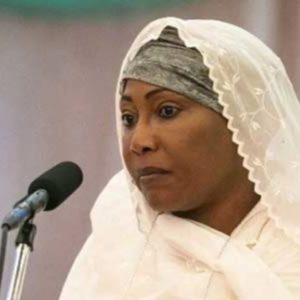
    On January 21, 2023, Hajiya Naja’atu Muhammad, a Director in the Presidential Campaign Council (PCC) for the APC, tendered her resignation letter. She claimed she didn’t want Nigeria’s affliction to rise a second time by supporting Bola Tinubu, APC’s presidential candidate, who’s too sick to rule a nation properly. Also, she said she’d be quitting partisan politics because none of them aligned with her values or beliefs. 

    This is why it was shocking to see Hajiya Muhammad, a mere 72 hours after her resignation and “quitting party politics”, smiling brightly for the camera with Atiku Abubakar, the presidential candidate for the People’s Democratic Party (PDP).

    And while we’re still trying to figure out if this means she’s now a part of PDP’s campaign, the APC recently released a statement saying Hajiya’s resignation is a scam as she was fired for incompetence and being a mole. 

    So you can’t help but wonder, was Hajiya Muhammad just someone planted by the PDP into Bola Tinubu’s presidential campaign or was she recently bought over? 

    What else happened this week?

    Woman wins ₦1.5 million for being called a witch

    In the words of the great Bobrisky, “Have you ever seen anybody on this earth that died of insurrrttt?”. Well, you can’t die from insult, but you can make money off it. 

    Naja’atu Muhammad APC elections

    On June 5, 2020, Sahura Suleiman, on her way back from grocery shopping, was called a witch, hypocrite and bastard by six people: her in-laws, neighbour and a native doctor. They grabbed her by her neck and also almost stripped her naked. 

    In turn, she filed a case against them in court for defamation and breach of her fundamental human rights. Three years later, it ended in praise as a High Court in Kano ordered the six respondents to pay a sum of ₦1.5 million. 

    Have you seen this video?

    Question of the week

    We’re weeks away from the 2023 general elections. Have you gotten your PVC yet?

    Ehen one more thing…

    Nigeria experienced one of the worst flooding crises in 2022. The Nigeria Meteorological Agency (NiMet) has released a report warning Nigerians to expect early rainfall in most parts of the country. Here’s everything you need to know about this.

  • You can call the All Progressives Congress (APC) party many well-deserved names, but the one thing they’re not is boring. Throughout the 2023 election season, they’ve made us go through many emotions ranging from pure amusement to “how are these people our leaders?”

    Tinubu APC presidential win campaign

    On June 8, 2022, Bola Ahmed Tinubu won APC’s presidential primaries, and since then, his campaign has been in full swing. He’s gone from state to state trying to convince Nigerians to vote for him.  

    Tinubu APC presidential win campaign

    Surprisingly, the greatest opps to Tinubu’s presidential run aren’t members of opposition parties but instead members of his party, the APC.

    What’s going on?

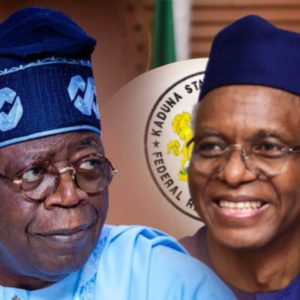
    On February 1, 2023, Nasir El-Rufai, Kaduna state governor and Tinubu stalwart, during a live appearance on Channels Television, revealed that some people in the Aso rock are trying to sabotage APC’s presidential win. Why? They’re still unhappy with Tinubu’s victory over their preferred candidates at APC’s presidential primaries. 

    El-Rufai said Emefiele’s Naira redesign is taking place at a sensitive time because it leaves the APC vulnerable ahead of the upcoming elections. 

    This isn’t the first time we’ve seen trouble in the APC camp

    Naja’atu Muhammad

    On January 21, 2023, Naja’atu Muhammad resigned from APC’s Presidential Campaign Council (PCC). And like a bitter ex, she gave us all the tea on Bola Tinubu and why he shouldn’t be Nigeria’s next President. 

    She said the APC presidential candidate has dementia, and he bribed his way to the presidential ticket. Tinubu’s running mate, Kasim Shettima, also took some stray bullets as she accused him of being in bed with terrorists. 

    Babachir Lawal

    When Bola Tinubu decided to run with a Muslim-Muslim ticket, many Nigerians raised eyebrows. Babachir Lawal, APC chieftain and former Secretary to the Nigerian government, was one of the many to voice his disapproval. 

    During an interview with the British Broadcasting Corporation (BBC), he stated that he had withdrawn his support from Bola Tinubu. And in December 2022, he publicly declared his support for Peter Obi, the presidential candidate of the Labour Party (LP). 

    President Buhari

    President Buhari has been lukewarm towards Bola Tinubu’s presidential campaign. Although the PCC has come out to say that the president is too busy to attend campaigns, the opposition parties have picked up on this with a claim that he might be trying to separate himself from Tinubu’s presidential candidacy. 

    Tinubu has now entered full dragging mode and won’t leave Buhari’s baba’nriga. On January 31, 2023, during his campaign rally in Calabar, he called out the government over the consistent depreciation of the Naira from 200 to 800. 

    Before then, he had claimed at a rally in Ogun state on January 25, that some people in the party were trying to sabotage his campaign. Again, he said Emefiele’s redesign policy was targeted at him.

    It’s starting to look like the APC might need to regroup because, with barely weeks left until the 2023 presidential elections, the biggest hurdles to their victory at the polls might just be themselves. 

    Are you signed up to our Game of Votes newsletter yet? We help you make sense of news jargon and keep you up-to-date especially with election news. Make the subscription of a lifetime here

  • Just as Judas betrayed Jesus, so would political supporters tend to betray their parties for rivals during the buildup to every election. 

    This has been evident in the People’s Democratic Party (PDP) camp with the rise of the G5 governors and the transfer of key guber aspirants into rival parties such as the Labour Party (LP).

    Although the ruling All Progressives Congress (APC) has received its fair share of defections over the past year, this woman’s case might be the juiciest because of the drama attached. 

    Naja’atu Muhammad

    Her comments on operations inside APC presidential candidate Bola Tinubu’s campaign have sparked conversation and further disgust for the APC. 

    But who is she, what happened between her and the APC and what are some of the claims she has made about Tinubu and the APC?

    Who is Naja’atu Muhammad?

    Naja’atu’s political career was boosted as a senate nominee for Kano Central District under the Action Congress of Nigeria (ACN) in 2007 before they merged with other parties and became APC. 

    Naja’atu was one of President Buhari’s biggest fans during his early days as president from 2015-2016.

    Until her resignation on January 22, 2023, she was the Director of Civil Society in Tinubu’s campaign team. 

    What went wrong between her and the APC, causing this drama?

    The Naja’atu-APC fallout 

    The first sign of ‘love gone bad’ between Naja’atu and the APC was when she filed her resignation letter to the APC National Chairman, Abdullahi Adamu.

    According to Naja’atu, she could no longer participate in party politics due to “recent developments in the political and democratic space.”

    However, Naja’atu didn’t waste time sharing the developments, as she had an exclusive interview with Whistlers the day after her resignation. 

    In the interview, she gave more context into her leaving the APC due to Tinubu’s ‘ill health’ and ‘dementia’.

    The day after the interview, Naja’atu must have decided that party politics were still ‘her thing’ after all. She pledged allegiance to her former boss’s rival — Atiku Abubakar of the PDP. 

    According to her, she chose Atiku because she didn’t have the “luxury of time” and thus had to pick between “the devil and the deep blue sea.”

    At this point, the disloyalty was too much for Tinubu’s presidential team. On January 24, 2023, they fired back by saying that Naja’atu didn’t actually resign, but was sacked

    According to Tinubu’s Adviser on Public Affairs, Mahmud Jega, Naja’atu was fired for incompetence and leaking vital information to rival parties. 

    He also said that she resigned when she found out that they knew about her disloyalty. 

    Are you for real?

    Since then, it’s been nothing but disses from Naja’atu concerning the inner workings of the APC. Let’s outline four of them:

    Tinubu’s illnesses

    During her interview with Whistlers, Naja’atu revealed that Tinubu has Alzheimer’s because “he couldn’t even hold a cup of tea.”

    She also hinted that he sleeps almost all the time and may have dementia, as he could no longer decipher simple terms and meanings. 

    “Tinubu bribed APC governors for the presidential ticket”

    Naja’atu also sat down with THISDAY Newspapers to give them more exclusive gist. 

    According to her, the APC presidential primaries were rigged, as ballot papers were already marked with Tinubu’s name on it. She also claimed that there are clips of APC governors sharing money given by Tinubu after the primaries.

    “Northerners are plotting for Shettima to take over”

    During the THISDAY interview, she also released another bombshell on why some Northerners are running for Tinubu. This is so that Tinubu’s running mate, Kasim Shettima, can become president if his health fails.

    According to Naja’atu, “Some people from Maiduguri called me asking, ‘Hajia, why did you do this? You have now punctured our interest. Our son is going to be president, and you’re talking like that? After all, look at Tinubu; he cannot do it. We’re all for Kashim.”

    “Terrorist Kabiru was arrested in Shettima’s house”

    Naja’atu in an interview with AriseTV also accused Shettima of being in cahoots with terrorists. 

    According to Naja’atu, “Kasim Shettima has been associated several times with the funding of terrorism. We should not forget Kabiru Sokoto, who was one of the most wanted terrorists in 2016. He was found and arrested in Shettima’s house.”

  • It’s one month until the presidential election. Almost everyone’s giddy about the prospect of choosing Nigeria’s next President. 

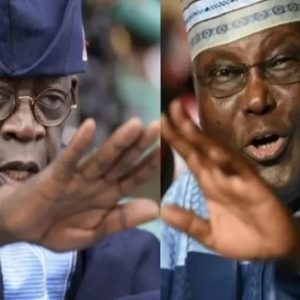
    So it’s fascinating to learn that the two leading parties, the All Progressives Congress (APC) and the People’s Democratic Party (PDP), have commenced court proceedings seeking the disqualification of their opposing principals. 

    This led us to ask, what needs to happen for a candidate to be disqualified from contesting for president? But, before we answer that, let’s see if something like this has happened.

    Is this the first time this is happening?

    No. In the lead-up to the 2015 presidential election, the current president Muhammadu Buhari was at the centre of a certificate scandal

    Section 131 of the Nigerian Constitution covers the qualifications for becoming President

    Subsection (d) reads, “A person shall be qualified to the office of President if he has been educated up to at least school certificate level or its equivalent.” The problem was, despite Buhari’s claim at the time that his school leaving certificate (WAEC) was with the military, they initially denied having it. After much back and forth, Buhari’s academic records were released to the public. However, their authenticity remains an open question.

    What are eligibility requirements to become president?

    The essential requirement needed to be President, not stated in the Constitution or the Electoral Act is money. Lots of it.

    Beyond being a joyful spender, section 131 of the Constitution provides four personal requirements, namely;

    1. You must be a Nigerian citizen by birth
    2. You must be at least 40 years old
    3. You must belong in a political party and sponsored to the office of the President
    4. You must be educated up to at least school certificate level or its equivalent

    So what needs to happen to be disqualified from becoming president?

    Section 137 of the Constitution provides grounds for disqualification to the office of President. Unlike the qualification requirements, this one’s a longer list. A person shall not be qualified for office of the president if they;

    1. Have dual citizenship, although this is subject to the provisions of Section 28 of the Constitution.
    2. Served two terms as President already which excludes Buhari and former president Olusegun Obasanjo.
    3. Have been declared to be a lunatic or of unsound mind by any law in Nigeria. Sounds fair. Nigeria’s hard enough as it is and we don’t want to worsen things by electing a mentally unfit person.
    4. Are under a death sentence, or sentenced to prison for fraud. 
    5. Are convicted of fraud or dishonesty less than ten years before the election date.
    6. Have been declared bankrupt. Because someone who can’t manage their own affairs shouldn’t be trusted to manage that of a country.
    7. Haven’t resigned from any public office at least 30 days before the election.
    8. Belong in a secret society. Because why?
    9. Have been indicted for embezzlement or fraud by a judicial commission or tribunal.
    10. Present a forged certificate to the Independent National Electoral Commission (INEC).

    How likely is it for anyone to be disqualified at this point?

    There have been allegations of corruption and forgery levelled against the top two parties both within and outside. Aspirants have the right to challenge the results of primaries as provided in Section 29 of the Electoral Act.  

    However, INEC, as an umpire, has limits on how it can intervene. For example, in 2019, a federal high court in Abuja in a case between the Social Democratic Party (SDP) in Kogi State and INEC, ruled against INEC saying it had no power to disqualify a candidate that its party has cleared. 

    There’s good reason to believe that despite court cases springing up this late, the presidential candidates may still have to slug it out at the polls on February 25. 

    Ultimately, the people will pass judgment with their ballots.

    We write the news and track the 2023 elections for citizens by citizens in our weekly newsletter, Game of Votes. Make the subscription of a lifetime here.

  • For months, the All Progressives Congress (APC) has gone around the country hawking their candidates like fine bread. President Buhari has been missing for most of the campaigns until yesterday when he blessed Yola with his presence and endorsed Senator Aishatu Binani’s bid as Adamawa’s governor. If she wins, she will make history in Adamawa and as Nigeria’s first female governor.

    Who is Aishatu Binani?

    A serving senator of the 9th Assembly

    Aishatu aka “Gimbiyar Adamawa”, meaning the Princess of Adamawa, was a former House of Representatives member representing the Yola North/Yola South/Girei federal constituency (2011-2015). She is currently the Chairman of the Senate Committee on Sustainable Development Goals (SDGs) and also serves as a member of the 9th National Assembly – the only female senator from the north to do so. 

    First female governorship aspirant to represent a major political party

    On May 27, 2022, Aishatu emerged winner of APC’s governorship primaries for Adamawa state, defeating her close rival, former EFCC boss, Nuhu Ribadu. 

    You would think a female aspirant wouldn’t be out of the norm with the population of women in Nigeria. However, women have, for years now, struggled to get adequate representation in politics and government, with the House of Assembly shutting down any bill seeking equal rights and opportunities.

    Mother of all empowerment

    Aishatu isn’t known only for her political upheaval but for her philanthropy which has endeared her to her constituents. She has empowered them with scholarships, ICT facilities, and healthcare services.

    Regardless of her win at the APC primaries, she has had to fight many opps to her governorship aspiration so far.

    • On October 13, 2022, a federal high court in Yola nullified APC’s governorship primaries and annulled her victory. But her village people finally let her go when on November 24, 2022, the Court of Appeal overturned the ruling and reinstated her.  
    • Our First Lady, Aisha Buhari, was very busy last year, from shuffling Nigeria and Dubai to dealing with trolls; she also gave her two cents on a female governorship. In a meeting with stakeholders on November 18, 2022, she threw her weight behind Nuhu Ribadu and claimed Adamawa wasn’t ripe for a female governor. What happened to women supporting women?

    For some reason, it seems like the thought of a female governor makes many people uncomfortable. Here are some examples of women whose governorship dreams were shut down:

    Aisha Al-Hassan

    Many people called her “Mama Taraba” for her influence in the state. 

    In 2015, she contested Taraba’s gubernatorial seat under APC and was declared the winner in November. However, her victory didn’t last long, as the Appeal Court soon reversed the judgement. 

    Gbemi Saraki

    Sibling rivalry is nothing new except that in the Saraki family, rather than fight for food or clothes, the reason for their feud was Kwara’s governorship seat. In case you didn’t know, Gbemi Saraki, current Minister of State For Mines and Steel Development, is the sister of former Senate President Bukola Saraki. 

    After his tenure as Kwara state governor, Gbemi had plans to succeed him, but rather than pitch camp with his sister, he decided to side with the other candidate. And her attempts to win the gubernatorial elections proved futile. 

    A big conversation right now is ensuring more female representation, especially in government. And if Aishatu emerges victorious, it would definitely be a big win for women and a great way to kick off 2023. 

  • It is not news that Nigeria’s education system is drastically poor. From the frequent strikes by the Academic Staff Union of Universities (ASUU) to high tuition fees by public universities, graduating from a Nigerian university has become as difficult as forcing a horse to drink water.

    On rising tuition, APC Presidential aspirant, Bola Ahmed Tinubu (BAT), said he has a solution. But let’s first understand how serious the problem is.

    The problem of education financing in Nigeria

    Nigeria desperately needs to get more money for education. A 2022 United Nations Educational, Scientific and Cultural Organization (UNESCO) report states that Nigeria now has 20 million children who are out of school, which is largely due to high tuition.

    But when it comes to meeting the yardstick for financing that could help pay for these fees, Nigeria is way below the cut-off mark. 

    In August 2022, United Nations said if Nigeria doesn’t act fast on increasing its education budget to 20%, meeting the global agenda goal for education would prove difficult in 2030.

    While President Buhari has allocated ₦1.79 trillion (which is an increase from 8.8% to 7.9%), it is still far off from the 20% ‘cut-off’ mark. Experts have predicted that the future of Nigeria’s education sector is in the hands of our future president now. And that is where BAT comes in.

    Bola Ahmed Tinubu [Premium Times]

    Bola Tinubu and the Student Loan

    BAT has been preaching consistently about his plans for student loans since 2015, when he campaigned for President Buhari.

    Fast forward the clock eight years later, and Nigerian citizens are yet to hear anything about student loans. Tinubu has also not revealed any concrete plans to the media on how the student loans will be distributed.

    According to Tinubu’s wingman and Federal Minister of State for Labour and Employment, Festus Keyamo, the promise has not been fulfilled due to a lack of revenue. 

    https://twitter.com/realuchepokoye/status/1583700679511928837?s=46&t=rxRQT9txYHxEfvwMmMppQg

    But if this is true and the country truly wasn’t gaining enough revenue, what happened to miscellaneous money received like Abacha’s loot?

    The reality of Tinubu’s student loan

    As much as the student loan may sound like a nice plan to avoid high tuition fee billings, this may not be the solution Nigerian students need. Here’s why:

    Students may not be able to pay back the loans 

    The fact still remains that a lot of Nigerian citizens are very broke. In November 2022, the National Bureau of Statistics (NBS) announced that over 130 million Nigerians are suffering from multidimensional poverty.

    Just imagine suffering from not just a lack of money, but lack of good hospitals, lack of quality education, and even clean water. That’s what multidimensional poverty looks like.

    This is not to talk of the unemployment rate in Nigeria which rose to over 33% in 2022. How would Nigerian students pay their loans if they have no jobs?

    It hasn’t worked for other countries 

    America is a very good example of this. In August 2022, President Joe Biden announced his plans to cancel $10,000 worth of student loans for low to middle-income earners. 

    This was after America started experiencing loan debt of $1.6 trillion and above for more than 45 million borrowers.

    If America could suffer this much student debt with only a 3.7% unemployment rate, who is Nigeria to take the challenge on?

    Nigeria already has an education tax

    Many corporate companies are already paying for education funding in Nigeria, thanks to the Education Trust Fund (ETF) Act of 2011 and the Education Tax under it. 

    According to the Act, all corporate companies are required to pay 2.5% of their assessable profit every year to support the funding of Nigerian universities. There are even plans in the new Finance Bill of 2022 to increase the tax up to 10% for these companies. And it’s not just your regular startups. Think of companies like MTN, Dangote Group, Mobil, and many more. 

    But despite this tax increase, why isn’t this having the desired impact on education financing? These are factors Tinubu should consider before embarking on the implementation of a student loan.

  • On October 19, 2022, the All Progressives Congress (APC) launched the Tinubu/Shettima Presidential Campaign Council (PCC). The council was chaired by President Muhammadu Buhari and included other APC heavyweights like the Kaduna State governor Nasir El-Rufai, Kano State governor Abdullahi Ganduje, Minister for Works Babatunde Fashola and the Senate President Ahmed Lawan.

    One big name was missing from the list. The vice president and former protege of Bola Ahmed Tinubu (BAT), Yemi Osinbajo. In June 2022, Osinbajo contested against BAT and 12 other aspirants at the APC Presidential primaries. BAT won with 1271 delegate votes ahead of Rotimi Amaechi, who finished second with 316 votes and Osinbajo, who finished a distant third with 235 votes.

    While the APC primaries were a coronation for BAT, Osinbajo didn’t leave without taking shots at his boss. Nigerians who followed the primaries will remember that speech.

    How have things played out since then?

    Campaigns have been going on since October, but neither Osinbajo nor several other contenders at the primaries have been seen with BAT on his campaign trail. Notable absentees include Rotimi Amaechi, Tunde Bakare and Rochas Okorocha. For Osinbajo, though, it has been a bit of a cat-and-mouse game.

    In October 2022, BAT speaking in Kano said he had forgiven Osinbajo which suggests there was some beef. However, both of them have subtly ignored each other. For instance, at the conclusion of the APC primaries, BAT saluted other APC members but skipped Osinbajo. He shook hands with him following the prompting of House Speaker Femi Gbajamiala.

    Osinbajo must have kept that snub in mind and retaliated a few months later. At the burial ceremony of the mother of Ondo State governor, Rotimi Akeredolu, high-profile APC politicians were in attendance, including BAT. Osinbajo also ”forgot” him when paying respect to the dignitaries before acknowledging his “error”.

    On December 21, 2022, Osinbajo visited BAT in Abuja. It was the first time outside public functions that the duo met since his defeat at the primaries. The meeting was described as not being a political one but in the spirit of the Christmas season.

    Regardless, Osinbajo has continued to stay away from BAT’s campaign.

    So where are Osinbajo and the others?

    Osinbajo has mostly been ‘focused’ on his work, travelling for functions and heading Nigeria’s energy transition plan. Anything to keep him far away from BAT.

    He’s not alone, either. No one has heard from Rotimi Amaechi, who was Buhari’s campaign director-general for the 2015 and 2019 elections. There are rumblings that Amaechi has not been “treated fairly” by BAT.

    Fashola seems more concerned with inspecting and delivering road projects rather than votes for BAT. 

    Okorocha who was excluded from the PCC said he has “subtle ways of campaigning” for the party.

    Bakare still believes he’ll be Buhari’s successor or “number 16” following his prediction that he’d be Nigeria’s 16th president. We don’t know how, as he scored zero votes at the APC primaries, but one can never say never.