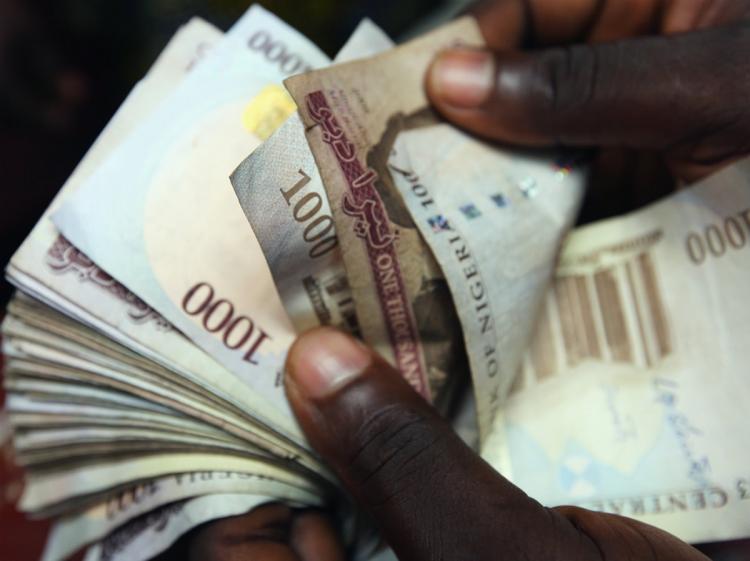
• In 2020, Lekan* (31) thought he’d finally made it, until the pandemic left him broke overnight. In this story, he recounts his gritty climb back to financial independence. Spoiler alert: it was marked by long hours, smart investing, and a few strokes of luck. 

    As Told To Boluwatife

    In early 2020, right before the lockdown, I thought I had finally made it.

    In January, after about four years of working as a photographer/graphic designer for multiple employers, I transitioned into freelancing full-time, travelling across Nigeria for gigs and taking home what felt like a substantial income. 

    The final push to venture out on my own came after my 9-to-5 job cut my salary from ₦120k to ₦80k for no apparent reason. I realised I could make my salary in three days just from shooting portraits. I was already taking on photography gigs on the side and knew I could make more money if I dedicated more time to it. 

    My bet paid off. By February, only about a month after I quit, I had almost ₦1 million sitting in my account.

    For the first time, I wasn’t thinking about survival. I was thinking about growth. So, I took a huge chunk of the money and bought a drone.

    Then the world shut down.

    I’d just returned from a work trip when the government announced it would be locking down some states because of COVID. I’d heard about the virus going around in China, but I didn’t know it had hit home so quickly.

    At first, I wasn’t worried. I had ₦200k left and thought the lockdown would only last a few weeks. That was a stupid error on my part. I had no idea how much the lockdown would affect the creative economy.

    Everything came to a standstill, even after the lockdown was eventually lifted. 

    No events. 

    No travel. 

    My gigs evaporated overnight. 

    By May, I was down to my last ₦500, surviving on one meal a day and trying not to panic. Noodles and garri became my go-to food options.

    At this point, I was living alone in Kwara, far from my parents, who were in Lagos. I’d moved there because of my 9-to-5 job and a desire to be independent. I didn’t know how to start asking them for money again. Besides, my parents were also dealing with the effects of the pandemic on their finances. 

    So, I tried to survive on my own, waiting for the next gig to come.

    Get More Zikoko Goodness in Your Mail

    Subscribe to our newsletters and never miss any of the action

    The Breaking Point

    My breaking point came in June. I woke up to the sound of my cleaner sweeping the floor. It was the end of the month, and her ₦8,000 salary was due. I didn’t have it.

    That was the day I broke down and cried. It hit me that I was truly broke; I had no backup plan, no savings, and no idea where my next meal would come from.

    Later that day, I got a call from an old client. He worked at a really big firm, and I’d shot a project for him the previous year. He told me he was visiting my city and asked to meet. I scraped together transport money and went.

    We talked for hours. I told him how I wanted to “make it on my own” instead of moving back to Lagos. He listened quietly, then said something that stuck with me:

    “Lekan, the easiest way to make money is to be close to where the money is. The most money you can find in Nigeria is in Lagos. The closer you are to the money, the higher your chance of finding opportunities.”

    He told me Nigeria was too unstable for entrepreneurs and encouraged me to return home and find a job. At least, my parents had a house, and I could figure things out while I looked for opportunities.

    Before I left, he gave me ₦10,000 for transport. That small act of kindness became the bridge between my breakdown and my comeback.

    I took his advice and started looking for a job. Two months later, I’d found one and was back in Lagos.

    I Decided I Would Never Go Broke Again

    My new job was also in photography and paid ₦250k/month. I made myself a promise: I’d never go broke again to the point where I don’t know where my next meal would come from.

    My strategy to fulfil that promise was to work till I dropped and network hard enough to find as much work as possible. Rather than spend my free time after work playing video games or partying, I spent it working on side gigs.

    Luckily, my 9-to-5 was remote, and I only had to go to the office when we had shoots. When I wasn’t at the office, I filled my time by shooting for other people, taking on graphic design gigs, and seizing any opportunity that came my way. Most of the time, I earned the equivalent of my salary from these gigs.

    This strategy allowed me to live 100% off my side gigs and save the entirety of my salary. I clocked into dollar investments around that period, so I saved all my money in dollars through an investment platform, using their real estate and fixed assets options. Then, the exchange rate was about ₦450 to $1 and after converting my salary, I was saving around $500 monthly.

    For about a year and a half, I grinded every day and didn’t touch a single kobo of my salary. I worked up to 18 hours a day, slept for only four hours, and just kept going. My body suffered, and I even developed high blood pressure that I still manage today, but I kept stacking money. I was addicted to seeing the figures in my investment app go up.

    By 2022, I had saved over $8,000.

    My First Lucky Break: Arbitrage

    That same year, I started paying close attention to the dollar-naira exchange rate. I had noticed how quickly the naira fluctuated in that period — one week ₦580, the next ₦620, then back again. I thought I could make some money from it if I made close enough predictions. 

    I had this bureau de change guy whom I called almost every day to check the rates and compare with the rates I saw online. I started to notice a pattern that implied the rates were about to fall again: ridiculous differences between the buy and sell rates.

    I’ll paint a scenario using 2022 rates: If the dollar moves from ₦500+ to ₦700, more people want to buy dollars. However, if it drops to ₦620, most people start to sell off their dollars because it appears the dollar is losing value. 

    The bureau de change guy also doesn’t want to hold on to more dollars, so if you try to sell to him, he’ll offer to buy at a ridiculous price. The Central Bank can say the dollar is ₦620, but he says he’ll buy a dollar at ₦550. 

    But then, if you want to buy dollar from him, he’ll tell you ₦680. Why? Because he’d bought those dollars when they were more valuable, and he doesn’t want to lose money. 

    So, whenever I called my bureau de change guy and saw a ridiculous difference in the buy and sell rates, I predicted there would be another fluctuation. So, I started making some crazy moves.

    I did the opposite of what everyone else was doing. Instead of holding onto dollars when the value increased, I’d take out my savings, convert it all to naira and then wait for it to dip over the next couple of days. Then buy the dollars back to make some profit. 

    Those moves were risky gambles, but I thought, “the worst thing that can happen is that I’ll lose some value. I won’t lose the whole thing.” I did that at least once every two or three months, whenever the exchange rate started its thing.

    I made small gains here and there, as well as a few losses. Sometimes I didn’t even make anything. But the thing about arbitrage is, you need a lot of capital to make a substantial profit.

    So, in mid-2022, I sensed a massive fluctuation coming and withdrew all my savings of just under $10k and converted it to naira. I’m not sure how much the dollar had risen to then, but it dropped back down by about ₦100 a few days later, and I bought the dollars back. 

    I made almost $1k in profit from that move; $1k without doing anything major. That was my first proper money from arbitrage.

    I did it a few more times, but I don’t think I made up to that amount again. I also didn’t have really crazy losses. The most I lost on a move was ₦400k.

    My Second Lucky Break Came From the Government

    In late 2022, I decided to pursue a master’s degree abroad. Most of my friends were moving abroad, and I didn’t want to be left behind. The master’s was my opportunity to do that and also take a chance on myself.

    I had the money and didn’t need to worry about working multiple jobs to afford tuition. I applied to a school, got in and used my savings to pay tuition. 

    The tuition wasn’t in dollars, so I converted my savings to naira — it was ₦8.5 million — and used Form A to pay my fees. Form A was the Federal Government’s allocation that allowed citizens to pay for tuition abroad at official exchange rates; you didn’t have to pay the black market rate.

    After I paid my fees, I think I had about ₦1 million left. I still needed to hustle for proof of funds, so I started talking to family and friends. While doing that, I realised I didn’t know much about what relocating to that country entailed. 

    Apparently, if I didn’t find a job willing to sponsor my visa within two years after my master’s program, I’d have to leave. Additionally, job sponsorships were becoming increasingly difficult to find. 

    The math didn’t make sense to me. I was paying so much money for tuition, and it didn’t even guarantee me a place in the country. It felt like too much of a gamble. Around the same time, I landed a new job that paid almost three times my salary. It felt like a sign from God to stay put. My fiancée also wasn’t ready to move with me as she didn’t have the necessary funds. I considered all that and decided to cancel the relocation thing and take the new job.

    Next, I looked into the school and tried to see if they’d give me my money back. I called them, provided a lengthy explanation as to why I wouldn’t be attending anymore, and asked if I could receive a refund. To my surprise, they agreed.

    Now, this was in 2023, and I paid my fees around 2022. During the six months between when I paid and when they refunded me, the exchange rate had almost doubled. By the time I received the naira equivalent of my tuition (approximately $19,000), it had increased to nearly ₦15 million. 

    Essentially, I “put in” ₦8.5 million and grew it to ₦15 million in six months. That one decision not to relocate unintentionally became my second big break.

    After that, I still made small arbitrage moves occasionally, but I stopped risking too much. I had more to lose, so I converted currencies strategically while holding on to my core savings.

    Present Day: I Can Finally Breathe

    My approach to making money, saving and investing has changed. I still work a 9-to-5 job, and my monthly salary has grown to ₦1 million. I don’t work myself to the ground anymore, trying to live off side gigs. 

    I now save around 35–40% of my monthly income. I’ve stopped taking risky arbitrage bets. I could gamble like that because I was single. Now that I’m married with a child, I need to think about tomorrow differently.

    That said, on the investment side, I’m now long on the naira. I noticed in 2024 that some policy changes meant money markets were returning almost 27% on investments steadily. So, I converted all my forex to naira funds instead. I just had faith that the ROI on money markets would be much more than whatever the naira devaluation would be. The naira has also been stable for a while.

    Today, I have approximately ₦25 million invested in naira funds. I use a Nigerian bank’s fund manager for this, and make 18% per annum. It was 27% when I first started, so it’s dropped, but it’s still solid and safe. I also have an additional $5,000 in dollar investments that bring me just under 6% per annum. That’s a total portfolio of around $23k.

    My finances have been stable for the most part, and it feels like I can finally breathe. Sometime last year, I went on my first real vacation. I felt like I had too much money saved up, so I took out close to $9,000 and took a trip across 10 countries. It was good to see the world after working 18-hour days for almost 3 years.  

    Sometimes, I remember that day in 2020 when I woke up crying because of ₦8000, and it feels like an entirely different life. I no longer feel that intense pressure. Even if I lose my job today, as long as I don’t do anything foolish, I can survive and pay my rent for at least three years. 

    I’m glad I made those early sacrifices and risks. They set me up for where I am today.


    *Name has been changed for the sake of anonymity.


    NEXT READ: I Quit My Job a Year Ago. 500 Applications Later, I’m Still Jobless

    [ad]

  • Choose all that apply:

  • Yinka* (27), the subject of this week’s Sunken Ships, reduced her friend group from four to three girls, after cutting one off for constantly feeling entitled to their money and trying to garner pity by emphasising how much less than them she earned.

    Talk to me 

    Yinka: I once cut off a friend because she was broke. 

    Ah 

    Yinka: When I say it like that it sounds terrible, but it was more than that. She was very annoying because she was broke.

    Please explain 

    Yinka: So we’re a group of four babes who went to the same university. Me and Uche were roommates in 2015, so we knew each other longer. The third, Toyin, was a coursemate of mine I got close to later that year, and the fourth, Halima, we met at a party in 2016. It’s been the four of us since then. 

    We made promises to each other that we’d always stay in touch. We envisioned a life that allowed us to travel and wear expensive clothes like the girls we saw in magazines. It’s not like it was impossible. All of us came from middle class families so the plan was to build on what we already have. 

    How did that work out? 

    Yinka: Not so well in the beginning. We left school in 2017, and it was bad job after bad job for all of us. Add in some failed businesses and investments and it was a disaster. Life was hitting us back-to- back. 

    Damn 

    Yinka: Things didn’t start looking up until the middle of 2018. I got a new job and so did Halima. Uche decided that a 9-5 wasn’t for her and started her own business, and Toyin got a promotion at her job. It was great. 

    RELATED: Sunken Ships: I Wasn’t Her Emergency Wallet

    What made it so great? 

    Yinka: We could finally do some of the things we’d planned to do since we were in university. We started going to parties together and buying tables, planning vacations within Nigeria and having movie nights in our houses. It wasn’t big things, but it was great. 

    We also got to show up for each other in better ways. We’d give each other expensive bags and household items for birthdays and other important dates. I loved how our sisterhood improved when we had money. 

    But nobody sounds broke here 

    Yinka: That’s the thing. Being broke is a state of mind for some people, and Toyin was one of such people. As the years went on, we started making even more money. We really poured a lot of what we had into our work and it showed great results. However, since all fingers aren’t equal, some people earned more than others. As at 2021, Toyin earned the least. 

    We never brought up it, but she did. Constantly. We’d go out for dinner and Toyin would automatically declare that we shouldn’t expect anything from her since we’re the rich ones. It was ridiculous because someone would’ve already said the meal was on them before we even went to the restaurant. 

    Other times, it’s when we wanted to contribute money for a gift for one of us. She would start complaining that we’re giving gifts that are too expensive. She’d borrow money from us and never pay back, collect all our expensive items and never replace them. We didn’t understand what was going on. 

    What if she was struggling? 

    Yinka: We asked her about work and even offered help on many occasions, but she just acted weird about it. It almost always ended up in an argument where she hinted we were calling her poor.

    We once gifted her six months rent so she could at least save the rent money for something else. But throughout that period, she still made weird jokes about how much less she earned and stuff. I started to think she preferred that both her money and ours was spent on her alone. But it’s not how friendship works.

    Did you ever talk to her about it? 

    Yinka: I did towards the end of 2021. My other friends are very soft people. I’m the more direct one about things like this, maybe because I’m an aries. I pulled her aside once and told her the jokes were weird. It’s not like she even earned much less than we did. It was just a small margin, but she kept trying to make it as though she were dirt poor. 

    What happened next?

    Yinka: She flared up and told me I was wicked. This led to her kind of withdrawing from the group and I just stopped talking to her completely. We still talk to her as a group, buy her gifts, send her flowers and stuff, but for me to text her personally? Not at all. 

    Her attitude to earning less was the problem. We didn’t mind giving. She just seemed too entitled to it.

    RELATED: Sunken Ships: I Was Too Much of a Bad Bitch for Him

  • Being broke is tough, especially when you’re in a relationship. Wanting to give your partner the world but only being able to afford Sangotedo. We see you and have your best interests at heart, so we’ve curated a special list of low-budget gift ideas for that special someone.

    Peace of mind

    No stress, no long talk, just sweet, tender loving. But just for the day because you have to remember that in everything, wickedness is key. 

    Handmade coupons for hugs and kisses 

    A handmade coupon? Talk about love and intentionality. If they don’t shriek and act excited, it means the love isn’t strong because what’s better than hugs and kisses from you?

    Cut and join albums 

    It could be physical or digital. As long as they contain images of you, they’ll love it. You could also sprinkle a picture or two of them because you’re nice.

    A handwritten note 

    “Roses are red. Violets are blue. Your eyes shine bright when my lips do muah”. Light work — you don’t have to do much. 

    Handmade gift box

    Go around their space, pick up little keepsakes and chuck them in a box. Maybe it’s the empty wrapper of the plantain chips you ate after your first date, or the brush they use for their shoe. Anything works.

    Give yourself a spa day 

    Think of it this way. If you look good, you feel good, and that should be enough for them. 

    Make a playlist

    Music that inspires them (to break a bottle on somebody’s head) or slow love songs that make their heart sing with joy. Put them all in a playlist for your boo.

    READ: Naija Street Jams That Are Actually Love Songs

  • You think your biggest problem is sapa, so you devote all your time and energy trying to avoid it. But we’re here to convince you with these eight reasons why you should give sapa a chance. 

    Easy way to avoid billing 

    You won’t have to worry about looking for ways to avoid billing because you’re actually broke. If anything, you should be the one billing them sef. With time, nobody will send you again. So even when you now get money, they won’t come back to bill you. 

    You learn to enjoy your own company 

    Instead of always hanging out with people that may be planning to japa without even telling you, you’ll spend time in your house, enjoying your own company.

    Peace of mind 

    Just think about it. Nobody is calling you; you’re not calling anybody. Even social media fights will not interest you. Because where will you see the energy to argue about who is the GOAT online when you’ve not eaten? 

    You’ll eat healthily

    Cravings where? Being broke will force you to look for substitutes. So you’re craving pizza? Don’t worry, you’ll like bread and egg. And since you’ll no longer be spending money on junk food, you can now focus on your fitfam journey. 

    Also try: 7 Unconventional Foods to Fight Back Sapa 


    You can separate the fake friends from the real ones 

    What’s a better test of your friendships/relationships than sapa? When you’re broke and have nothing to offer, you’ll see the people that still rate you. 

    It births creative ideas 

    You may not agree, but most of the best ideas come to us at our lowest. So when you’re broke, you’ll focus your energy on the different ways you can make money to japa from sapa. 

    Decision-making is easier 

    You no longer have to stress your head about what to eat or if you should get a dress instead of a bag. Because when you’re broke, your options are limited. You only buy what you can afford.

    You develop an attitude of gratitude

    Why else do you think urgent ₦2k slaps? Because sapa has shown you shege, you’ll learn to appreciate any and every assistance. 


    You have to read: Sapa Is Real, and These Are the 7 Signs You’re About to Be in Debt 

  • How will your December be? fun or calm? pick a few answers and we’ll predict how your December decisions will financially affect you in January:

    Select all the Detty December options that apply to you:

  • Worried that your enemies will turn you into a laughing stock because of how broke you are? Do these 5 things and no one will ever guess that it’s 2,000 Naira you have left in your bank account.

    1. Rub groundnut oil on your face

    Groundnut oil will make you glow. Even if hunger is showing you pepper, you must not let it reflect on your face. That’s the fastest way enemies will know you are broke.

    2. Wear clothes with money related inscriptions

    “I am a millionaire” or “30 BG” will do the trick.

    3. Always play loud music in your house

    That way, if your enemies live nearby, they won’t hear you breaking a coconut to drink garri.

    4. Decorate your house with empty packaging boxes

    Make sure it’s packaging from top brands. At least, if your enemies disguise themselves as friends and pay you a visit, they’ll know that you’re not their mate. It’s a condition that made crayfish bend.

    5. Reactive your old MTN SIM card

    When you reactivate your old MTN SIM card, you get a whopping 12x amount on recharges above N50! You can use it to call for hours and let people think you’re so rich that airtime is the least of your problems.

  • Every week, Zikoko seeks to understand how people move the Naira in and out of their lives. Some stories will be struggle-ish, others will be bougie. All the time, it’ll be revealing.

    This week’s Naira Life is brought to you by QuickCredit. With QuickCredit, you not only get the funds you need instantly, but you also get to pay back at the lowest interest rate in Nigeria.

    The first time the guy in this story tried to make money, he was beaten for it. Years later, he became a product manager and was slowly building up his wealth until a work mishap sent him out of a job and wiped out his life savings. Two years later, he’s building it back up and at $9800/month; it’s never been easier. 

    What’s your oldest memory of money?

    It dates back to 1994 when I was in primary three or four,  I stole ₦20 from my mum to buy some biscuits and sweets for a teacher so I could become their favourite student. I said it was from my mum. Unfortunately for me, the following week was Open Day and the teacher thanked my mum for the gifts. When we got home, she asked me to explain and I came clean. I got the beating of my life. 

    Wiun. Could you paint a picture of what it was like growing up?

    My mum was a teacher in the civil service and my dad was a jack of all trades. What both of them made wasn’t always enough for a family of eight. Things were especially tough during periods when the government owed my mum salaries or times when my dad’s businesses didn’t do so well. We were pretty much alternating between plenty and lack for the longest time.

    Do you remember the first time you made money?

    1997, and I was about 10 years old. I had friends who worked at the local market. They helped people carry their goods for a fee. I asked to follow them one day to observe how they worked. After watching for a while, I joined them. I made ₦16 on that evening and was so proud of myself. Unfortunately, one of my church members saw me and reported to my mum. I got another round of beating for “embarrassing the family and making people think we were hungry.”

    I don’t even remember what I used the money for anymore. But I stayed off trying to do anything for money until I got into university to study computer science. This was in 2005.

    What was the next thing you did for money?

    I helped someone write a math exam in the second semester of my first year, and I got ₦2k for it. I got over the guilt of what I had done when I got the money. For context, my allowance from home was ₦1k/month. 

    When I got to my second year, he introduced me to another guy who had missed out on school for the entire semester due to a personal tragedy. He was going to write six exams that semester, and I agreed to do it for ₦6k per course. That brought in ₦36k.

    I knew it was illegal and could get into a lot of trouble, so I pivoted into something different in my third year.

    What was this?

    I started a tutorial centre to teach students in the lower levels. The centre caught on, and I was always booked and busy during the exam periods. On the side, I was writing final year projects and seminar papers for final year students. On average, I was making more than ₦150k per semester. I did these things until I left university in 2011. By that time, I had about ₦1m in savings. 

    Hmm.

    One of my cousins was going to a university in the UK that year, and I started thinking about the possibility of going abroad for my master’s degree. He directed me to the affiliate centre that helped him with the whole process, and I went there to make enquiries. But I missed the floor and found myself at an I.T training centre. Somehow, the facilitator of the centre convinced me to get some certifications with them instead and showed me a pathway of how I could use this to get into tech. I thought it sounded good, so I paid for six certifications in software development and network engineering. It cost me ₦600k.

    The courses lasted for six months. The centre retained me as a facilitator after I finished my programme and paid me ₦15k/month. On the side, I was also looking for a better paying job, but nothing came until NYSC in 2012. 

    Two weeks before my service year ended, I got a job as a systems and server admin with a contractor doing some IT work for the government.

    How much was the pay?

    ₦90k. But I also had to be transferred to a state in the south-south. However, I was at the job for only three months. I resigned in May 2013. 

    Ah, why?

    I found out that my chances of growth were low. On my team, there were people who had been working there for two to three years and were still at the same income level they were when they joined. I didn’t want that for myself. I’ll admit that I made the decision because I had a bit of savings. ₦450k. 

    Fair enough. What came after?

    Unemployment. I was at home for five months. 

    Uh-oh.

    I was getting interviews but I either didn’t think the companies I was interviewing with were the right fit for me or they were offering me ridiculous salaries. I was bent on not accepting any offer below ₦100k and these companies were offering me ₦40k or ₦50k. 

    By the fifth month, I had burnt through my savings and had ₦70k left. I was beginning to realise that saving money only works if you’re earning. 

    Thankfully, a company reached out to me in October 2013. Someone at my last job had referred me to them. I got an offer almost immediately after I did my interview. They wanted me to come join them as IT support staff and my starting salary was ₦90k. Not the ₦100k I was looking for, but it was close. 

    I get that. How long did you spend there?

    Six months. I left in March 2014 after I got a better offer from an FMCG company. They brought me on as an IT lead and my salary was ₦150k. This was probably one of the most toxic places I’ve worked at. 

    Why, what happened?

    First, an IT lead was the highest role for the Nigerians who worked there. The supervisor positions and other superior roles went to foreigners. So, there was no opportunity for growth for me. I spent six months there and left in August 2014 after an argument with one of the supervisors. 

    Here’s where it got interesting: they didn’t accept my resignation. 

    Why not?

    A lot of the foreigners on the team were in violation of their visas, and they feared I would report them to immigration if I left like that. They gave me an offer instead: they would pay my salary for six months if I didn’t get another job within that time frame. I accepted it. 

    Sweet. 

    I got a new job lead at a fintech company about two weeks after I left. Two months and a series of interviews later, they offered me a senior IT role. My basic salary was ₦250k, but there was an extra ₦30k transport allowance, which brought my total monthly earnings to ₦280k. Another ₦150k was coming in from my last job. In total, I was earning ₦430k until November 2014. Somehow, my former workplace found out that I had gotten another job and stopped the payments. 

    Hehe. How did it go at the fintech company?

    Oh, it was great. I spent three years there. A lot of growth and learning happened there, so I wasn’t in a rush to leave. However, I never got a salary raise even once. It probably wouldn’t have mattered much, but I got married in 2015, so I had to earn more. Ultimately, it was one of the reasons I left. 

    Another fintech company had been trying to bring me on board, but I didn’t give them a lot of attention. I accepted their invitation to interview when I made a decision to leave the company I was with at the time. They liked me, and I got the job. Like that, my salary grew from ₦280k to ₦650k. It was a massive move I should have made earlier. 

    It does seem that way. 

    Haha. Apart from my salary, there was at least one bulk payout in every quarter of the year: leave allowance in March, performance bonus in June, Profit from the previous business year in September, and end of the year bonus in December. 

    Could you tell me a bit about how you navigated money at the time?

    I was saving 40% of my monthly salary. The remaining 60% was spread across other expenses, mostly household expenses and black tax. At the end of everything, my core savings was enough to cover house rent, which was ₦1.8m.

    The bonuses I got on the job went into investments. 

    What kind of investments?

    Bank investments. Treasury bills were hot and at an all-time high, bringing in 13% – 14% per year. I also had a fixed deposit account I was putting money into. By 2018, I had gathered ₦6m in core savings and investments. 

    Then something happened. 

    Uh-oh. 

    At the fintech where I worked, I was on a product team where we managed high network individuals. We helped them buy international portfolios and investments to reduce tax.

    Everything ran smoothly until December 2018. I got a call from work and was notified that the infrastructure we used to facilitate these transactions had been exposed. What had happened was that the systems could not verify if the transactions we had made on that day to the BDCs — who were the middlemen — were successful, so we ended sending money to these people more than twice. And these were large volumes of money — $30k here, $20k there, some were more than that. 

    By January 2019, we had recovered most of it. But the other BDC agents went underground with the money. The total debt that was on our head was $2m. 

    Ehn? This sounds like a nightmare. 

    It was. The affected  High Net Worth Individuals were on the company’s neck. Before long, the regulators got wind of it and everything spiralled out of control. My line manager resigned. I was next in line, so I had to be the fall guy. 

    When the regulators came knocking, they seized the assets of everyone on my team to recover the money. All the money I thought I had went up in smoke. 

    How much?

    About ₦8.2m. They also took two cars belonging to me and my wife and some pieces of land I had bought. I was at level 0.

    Damn. 

    The company asked me to resign, so I was without a job for the most part of 2019. Marrying my best friend saved me. My wife took over providing for the family on her ₦200k salary. 

    Seven other people were affected by the asset freezes, and we were fighting it in court. But I pulled out in 2019 because I realised how long court cases in Nigeria can drag on. I had to move on. 

    What did moving on look like for you?

    For starters, I had to figure out how to make rent in October. Thankfully, there was something to look forward to. 

    What was that?

    Before the whole situation started, I had been talking with some Chinese acquaintances about the possibility of bringing in Android POS machines into the country, and I had paid ₦700k for it. In March 2019, 10 POS machines were delivered to me. I had the infrastructure and configuration skills, but zero coding skills to integrate the POS into the Nigerian payment gateways and teach them how to read ATM cards. I went back to the same fintech company I worked at the previous year and convinced two friends to work on it with me, promising them 15% equity each. After five months, we figured it out. 

    Agent banking was already becoming popular in the country, so it wasn’t hard to find 10 agents. I got ₦120k in revenue from the 10 machines in the first month. It increased to ₦300k in the second month. 

    Then I ran into another problem.

    What was it this time?

    Regulators again. I got an email and they informed me that I was running the operation without a license. That’s how I was back to fighting for my life. I still had a relationship with the MD of the last fintech company I worked with, so I thought I could leverage it. After a series of back and forth, the company bought me out and paid me ₦10m for the POS machines and the solution I had built.

    Whew.

    I paid my guys ₦1.5m each per our equity agreement, ₦2m fine to the regulators and paid my rent, which had been due for a month. At the end of everything, I had ₦3m left. Things were beginning to look up again. 

    Did you ever get another job?

    I did in the same month. My former boss came through again and referred me to a company that needed somebody to manage their payment gateway. The salary was ₦350k. 

    It was less than what I earned at my last 9-5, but it was either that or rely on the ₦3m I had left. I spent only three months there and left in January 2020. The people there weren’t open to change and preferred to stick with their old ways of doing things. 

    The same week I left, I got a call from an oil and gas company. They were looking to build a product for efficient fuelling for their fleet offshore and someone had referred me to them. I got a six-month contract as senior product manager for the product. ₦750k per month. When I left, I had built my savings to about ₦5m. 

    Then I got another job. 

    Tell me about it. 

    I wasn’t even keen on another 9-5, but it was a digital bank and the offer was good. ₦1.3m. It’s funny when I think about it now, but it took me about eight years to hit ₦1m every month. 

    Inside life. 

    The product I was building went live in December, but I stayed two extra months before I left in February 2021. The plan was to take some time off, build and ship my own product. But I couldn’t refuse the next offer I got. 

    Ghen Ghen. 

    One of the VPs of a digital bank in South America DMed on Twitter and asked if I was interested in a senior product manager role at the bank. I got an offer from them in April 2021.

    How much?

    $11k gross. $9800 net. That’s about ₦4.9m per month. 

    Omo.  How do you move money in and out now?

    Every month, I take $2k out for my monthly running costs, $2900 for short term investments, and I leave the rest in my international bank account. My wife and I should leave the country before the end of the year because of my new job, so I’m saving for when the time comes. 

    Let’s start with a breakdown of your running costs. 

    This is not an exhaustive list, but I imagine it looks something like this. 

    What about your short term investments?

    Every month, $900 is spread across different crypto investments. $400 goes into my PiggyVest for any emergency expenses. I put $1k in mutual funds, and this is to raise the tuition for my two kids when it’s time every three months. I also put $600 across a couple of agritech investments. 

    What has all of this done to your perspective about money?

    First, your risk appetite is directly proportional to how much you’re earning. I’ve realised that the more I earn, the more my interest in investments grows. A couple of years ago, I wouldn’t have considered investing in crypto. 

    Also, whoever says money doesn’t give happiness isn’t being fair. I would know because I was at my lowest point in 2019, and I know what that did to me. I developed high blood pressure during those months that I now have to manage for the rest of my life. 

    I’m sorry about that. 

    Thank you. I’m fine. But perhaps the most important shift is realising that people who depend on you will manage without you if you don’t have money. For the entire time I was down to zero, calls from members of my extended family were non-existent. The good thing about that is it’s now easier to say no to them when they come knocking. So, maybe don’t kill yourself so others could live. 

    How much do you think you should be earning now?

    I don’t think I should be earning a salary at this stage. I feel like I should have launched a couple of products in the market and earn money based on their market valuations. That’s one of the things I’m looking to do in the next five years. 

    Let’s come back to the present for a bit. Is there anything you want but can’t afford?

    I’m big on family houses. I’ve been thinking about a building that would accommodate my family, my parents, and my siblings and their families. I know the location I want for this project, but I’d have to buy old properties from the current owners and tear them down, and that alone will cost about ₦90m. It’s a huge investment I can’t take on yet. 

    That’s an ambitious project. Is there anything you’ve bought recently that’s improved the quality of your life?

    An air fryer. I bought it for health reasons, and it’s been absolutely worth it. It cost only ₦120k. 

    Ah, nice. Is there a question you think I should have asked but didn’t?

    My financial happiness. 

    I was coming to that, but let’s hear it. 

    It’s a six. 2019 was tough, but it could have been worse. I’m also glad that I’m bouncing back. I’m not 100% fulfilled yet because I haven’t built and shipped a product for myself — all the ones I’ve worked on have been for companies I’ve worked with. When this finally happens, I’m moving up to an eight or nine. 

    Great! You got to the end of this article. Know what’s even better? You can get QuickCredit faster than the time it took you to read this article. With Quickcredit, GTBank customers can get N2million in less than 2 minutes and pay back over 12 months at an interest rate of 1.5%. No forms. No collateral. No hidden charges. Get Your Quick Credit on GTWorld

  • Not everyone gets to be the rich Nigerian aunty, some of us have to be the broke aunty to bring the balance. If you are reading this, you are probably in doubt of what type of aunty you are. There’s a high chance you are a broke Nigerian aunt, and here are some signs to prove that we aren’t wrong. 

    1.Your best gifts to your niblings are hugs and kisses.

    You always shower your niblings with hugs and kisses, they love your hugs and look forward to them. What they don’t know is that those hugs are the best gifts they can receive from you; for now. 

    2.Your PiggyVest account is begging you for money.

    All you’ve saved so far is your life. If you can’t save for yourself, how then can you save for others?

    3.You prefer jeans to kaftans.

    Tell yourself the truth, have you seen a rich Aunty that prefers jeans to kaftan?. One of the signs of being rich is preferring comfortable clothes and you are clearly not there yet. 

    4.You are ‘gainlessly’ employed.

    You are employed, but not too much. Your salary can only last you a few days before you are back to point zero. 

    5.Kids can’t play with your phone because you are still paying for it.

    You don’t let anyone near your phone, talk less of kids. If the kids need to play with something, they can play with you.

    6.Your family members always group you with the kids.

    Your family members are always so quick to group you with the kids. You think it’s a harmless joke, but they do it because they know you are broke like the kids. 

    7.Your younger cousins don’t call you.

    Your younger cousins don’t call you to greet you or ask you for money, they already know the response they’ll get. It’s a win for you- advantages of being the broke aunty.

    8.All your carts are uncleared.

    Your ‘God when’ is so strong-  mostly for those uncleared carts.

    9.Your parents air your calls.

    Your parents put their phone on airplane mode when your call comes in. They know what your calls are for, and they don’t want to hear it. 

    10.You have only one wig.

    You have convinced yourself and others that you prefer your natural hair to wigs. Self-love is good and so is self-awareness. 

  • There is, I have-just-100k-in-my-account broke, and then there’s the full-blown Sapadenmic situation. For the latter, you’re bound to find these 8 types of people.

    1. The motivational speakers

    Set awon “tough times never last but tough people do.” It doesn’t hurt to be optimistic in a Sapadenmic sha.

    2. The sad ones

    These ones can just burst into tears while washing the plate they used to drink Garri. If you see them, just press urgent 2k into their hands.

    3. The angry ones

    Their body peppers them once there’s no money. In fact, everybody should getat. *bangs door*

    4. The budgeter

    These ones can write lists and scale of preference for Africa before getting the money, but end up spending impulsively. Within three hours, fiam! they’ve blown 200k. Coconut head.

    5. The extra nice ones

    Motto: you never know who’s your destiny helper. Let that money enter their hand first, you will see shege.

    6. The singers

    It’s only when these people are broke that they remember their worship playlist. Google, play “Then Sings My Soul“, maybe money will fall from Heaven.

    7. The Ultimate Searchers

    They search every nook and cranny of the house, clothe pockets, bags and even wastebin for money they did not keep a.k.a miracle money. Guilder Ultimate Search no do pass this one.

    8. The nonchalant ones

    To them, problem no dey finish, so why not use the last 1k to eat away your sorrow?