•  

    The subject of this story makes her money from selling soap and kerosene. She talks about how losing her job 18 years ago changed everything and how a social enterprise she belongs to made all the difference for her in 2020. 

    Do you remember when you started your business?

    18 years ago. I used to be a secretary at an insurance company before I lost my job. My husband also lost his job at the same time. Banks and insurance companies were merging at the time, and we were among those who were affected.

    That must have been tough. 

    It was. We didn’t have any money. My company gave me about ₦120k, and most of it went into finding a new house. We were in a 3-bedroom flat and had to come down to a room and parlour. 

    Do you want to know the toughest part of this? Changing my children’s school from a private school to a public school. I cried when I realised that we had no choice but to change their schools. 

    I’m sorry. 

    I got a shop, but I didn’t know the kind of business I wanted to do or have money to stock up the place. My friend introduced me to a lady who had just started a social enterprise — Mamamoni — and was training people on how to make soap. I think I was one of the first people she trained. I opened my shop and started making and selling soap and toilet wash. 

    How did you raise money to start this?

    One of my sisters gave me ₦100k, and that was it. I also started selling kerosene and using what I made to take care of my family. 

    Have you had to raise more capital since you started?

    Yes. A lot of times. Mamamoni has been helping a lot with that. I collect loans from her when I need them and pay her back. I think the first loan I collected was ₦10k, but I’ve collected up to ₦150k loan at a time. Also, I’m a leader in the community. So when people collect a loan from the organisation, they give me the money, and I pay it into the bank account. 

    How has your business evolved since you started?

    The soap business hasn’t changed a lot. I used to buy kerosene and store it in a tank. But one time, I bought it in large quantities at ₦150 per litre. A week later, the price came down to ₦50. It was a great loss for me. When I managed to sell everything, I found out that I couldn’t afford selling from a tank anymore. So I started storing the market inside gallons. That’s what I’m still managing till now.

    How much does this typically bring in profit?

    Sometimes, ₦10k. At other times, ₦7k. When the market moves very well, I can make ₦15k. But if the market comes down, I have to bear the loss. 

    How have you been taking care of your family from this?

    I manage oh. I don’t depend on anybody. And things are working out. My daughter will soon graduate from university. If not for Covid, she would have left. One of my boys has just finished secondary school and my last boy is about to write WAEC. When it’s time to pay my house rent, I use my savings. If it’s not enough, I take a small loan to complete the rest.

    Do you pay interest on the loans you get?

    There is a small interest. People don’t give women loans with no collateral, so Mamamoni stands in for us. 

    Interesting. How do you manage to save after taking care of your basic expenses?

    I work with Mamamoni and help her train women on how to start businesses, and I get ₦20k at the end of the month. I save that in my account. I’m also in a daily contribution program and put ₦500 in it every day. I don’t touch the money unless a need arises — usually rent and other family needs.

    That’s great. How was 2020 for you?

    I don’t think I would have survived it if I had faced it alone. I had access to palliatives because of the organisation I belong to, so food wasn’t a problem. But some people around me had it worse. I saw how the pandemic affected people in the compound where I live. Since I had some food, I always gave them part of what I had. One cup of rice here, two cups of beans there. Everyone had to come together to help one another. 

    That’s sweet. Did your business take a hit?

    People still needed kerosene, so I was still selling. But my profit dropped to ₦2k – ₦4k every month. I was lucky if I made ₦5k. Thankfully, things are getting better now. I want to start selling engine oil now because they sell very fast. But I’d need about ₦100k for that. 

    How do you plan on raising the capital?

    I don’t know yet. But I don’t want to take another loan. With loans, you have to buckle up so you can sell your market and return the money you owe. I’ll just manage what I have until I find the money. 

    A lot of people would say that 2021 is looking better than 2020; how do you think the rest of the year will look like?

    If God keeps us alive, everything will be better. I know the people around me will put a smile on my face. My two sons are my concern right now — I’m hoping the first one will get into a school this year. The second boy is about to write WAEC. When that’s done, I’ll ask him if he wants to go to school or learn a trade. Then I can relax small and concentrate on other things. 

    Read this story next:

    Coping In A Pandemic: The Widow Struggling To Pay Rent

  • Since August 2020, Nigeria’s Government Enterprise and Empowerment Program (GEEP) and 60 decibels with the support of the Rockefeller Foundation have been administering a survey to GEEP clients to understand how COVID-10 impacted their personal and economic situation. An interim report has been published, and it shows that the Nigerian informal sector was adversely affected by the outbreak. 9 out of 10 GEEP clients recorded drops in their income levels, businesses struggled to stay afloat due to government-imposed closures, low footfalls and constrained supply chains. To survive, GEEP clients had to rely on their savings, borrowed heavily and reduced percentages set aside for household and business savings or stopped outrightly. The data also showed that 35% of GEEP respondents had to close down their businesses, 66% recorded fewer customers and 84% have been using their savings to cope with current hardships. We decided to examine how everyday Nigerians, particularly small business owners were affected by the pandemic. One story every week for the next six weeks. 

    The subject of this story sells tomato and other items at a market in Abuja. She talks to us about how she’s been building her business over the years and how the pandemic and a market dispute are making things a little more difficult for her.

    Do you remember when you started your business? 

    I started this business when my husband passed away in 2005. After his funeral in our hometown, I returned to Abuja, and my people said that it was good for me to start something. They gathered themselves together and gave me ₦15k, and that was my capital. I started selling tomato and pepper. Later I added onion and ginger. I couldn’t afford a shop, so I sold in an open space. I’d put my goods on the ground and sell.

    The market was moving. Then the government said we should leave the place in 2009.

    Why?

    They said it was illegal for us to sell there. Like that, I didn’t have a job anymore. 

    What did you do after?

    Someone helped me to look for a job, and I started working as a house help for a woman. I was paid ₦30k every month. 

    How long did you stay at this job?

    About a year. I started looking for another market to continue selling my goods. I still couldn’t afford a shop — a year’s rent was ₦75k if you got it directly from Urban Centre. But some people get shops from Urban centre and give them out to rent. Those ones usually want ₦120-₦130k per year. I couldn’t afford either, so I went for something else.

    What was that?

    Ground space, although I had to pay for it too. They were measured by portions, and I rented two portions at ₦40,100 per year. 

    Oh wow. How much did you start with this time?

    I’d saved ₦97k from my previous job. After renting my space and settling the agents, what remained wasn’t enough to buy goods. I went to a friend and borrowed ₦100k. She asked me not to pay interest on it and take care of my business first before returning the money to her. 

    I managed for the first three months. When I started making some sales, I started putting ₦200 and ₦500 into a daily contribution programme. After a year, I had ₦132k. I returned ₦80k to my friend, and she didn’t even complain. I used what was left to stock up, and I continued the daily money contribution. This is what I’ve been doing since that time. 

    At the time, how much money were you making every month?

    I was making about ₦6k profit per week. Sometimes, it was as low as ₦4k. It wasn’t a lot, but it was something.

    What was life like for you during this time? 

    I was making enough to train my five children — four boys and a girl. Two of the boys have graduated now. My daughter has just finished her OND. My last boy has finished his secondary school education and is currently learning graphic design.

    They are good children. When I was going through a hard time finding work, they were understanding. They managed whatever I provided. Also, my husband’s community always sent bags of rice, foodstuff and money during Easter and Christmas. I also joined some small-small NGOs to ease the burden. One of them paid two of my children’s school fees when they were in secondary school and bought books for them.

    That must have been a huge relief. What about other things like rent?

    Hmm. After my husband died, his elder brother threw us out of the house. He said I was the one that killed his brother. It was a big problem. 

    Our people reported the case to the minister of the FCT at the time, and he took it up. He promised to help. One day, I got a call from his people to go to FCDA in Abuja. They gave me a form to fill and asked me to write what I needed from the minister. Not long after, they gave me a 2-bedroom flat for free. They did the same thing for 29 other widows. This was 2007.

    Wow. 

    But the place was very far from the market, so I put it up for rent — ₦150k per year. I’m living in a single room apartment in a government quarter now, and I’m paying ₦80k there. I pay my rent with the money I get from the house. The only problem is the tenants. There was a man who stayed there for over three years and didn’t pay. Before I knew it, he ran out. There have been other people like that. I just got a new tenant last year, and I hope they won’t be like the others. 

    Hopefully. How was 2020 for you?

    It started out okay. February and March were good. 

    When the lockdown was announced, people rushed to the market to buy things. And everything crashed after that. Many people in the private sector were affected and lost their jobs, and this affected sales a lot. 

    I couldn’t afford to do my daily money contribution anymore. And I tried to. Things didn’t change after the lockdown because customers were afraid to come to the market because of the crowd.

    What did this mean for you?

    I would have goods sometimes and customers wouldn’t come. The ones who came would complain a lot before they bought whatever they had the means to buy. Sales reduced, and it was a struggle to even get the capital back. Let’s not talk about profit. 

    Things are better now than they were last year. I started putting ₦200 in my daily contribution at the beginning of this year, and I should be able to continue doing that for the rest of the year. But there’s a new problem now.

    What’s that?

    The sellers who have shops in the market gathered themselves and announced that those of us without shops should stop selling onions, Irish potatoes, water yams, dry fish, and some other food items. They said it isn’t fair that we didn’t pay what they did for their shops, but we’re selling the same thing they sell. I used to sell onions and Irish potatoes. Now, I can only sell tomatoes and pepper.

    This is a problem because onions and Irish potatoes sell very fast. I finish selling a bag of potatoes in less than five days and get about ₦4k in profit. A bag of onions finishes in a week and brings ₦3k-₦4k in profit. I’m losing about ₦7k in profit every week now. I used to have more gain on tomatoes, but everyone is selling them now, so I don’t see a lot of profit anymore — maybe ₦1500 every week if I’m lucky. 

    Ah.

    There’s no point going to the market every time anymore since I can’t sell the things that sell fast and bring me a better profit. I’m just managing my life. Wetin I go do?

    Do you think access to credit facilities, like loans, will make it easier for you to rent a shop and buy more goods?

    I don’t like loans because of the interest. They are too stressful. I’m almost 60 years now, and I don’t want anything that will be disturbing my peace of mind. If I see one that has the right conditions, and I know how to pay it back, I might consider it. But I haven’t seen one, so I will continue to manage. If I need money, I go to my friend and borrow it from her.

    With the issue with shop owners, how do you think the coming months will play out?

    I hope things will be better. The Covid scare is coming down. The only issue that could affect my business now is the insecurity in the North. These bandits are attacking farmers here and there. 

    I also hope that I have more money to put into my business. If I have enough capital, I can get a shop. But there’s a problem there. I hear that they will be selling some shops for ₦1.7m starting from June. How can I afford that? I don’t know what will happen, but I’ve decided to put my faith in God. 

    Editor’s note: This interview has been edited for clarity.

    You should read this story next:

    Coping In A Pandemic: The Mother Of Three Counting Her Blessings

  • Since August 2020, Nigeria’s Government Enterprise and Empowerment Program (GEEP) and 60 decibels with the support of the Rockefeller Foundation have been administering a survey to GEEP clients to understand how COVID-10 impacted their personal and economic situation. An interim report has been published, and it shows that the Nigerian informal sector was adversely affected by the outbreak. 9 out of 10 GEEP clients recorded drops in their income levels, businesses struggled to stay afloat due to government-imposed closures, low footfalls and constrained supply chains. To survive, GEEP clients had to rely on their savings, borrowed heavily and reduced percentages set aside for household and business savings or stopped outrightly. The data also showed that 35% of GEEP respondents had to close down their businesses, 66% recorded fewer customers and 84% have been using their savings to cope with current hardships. We decided to examine how everyday Nigerians, particularly small business owners were affected by the pandemic. One story every week for the next six weeks. 

    The subject of this week’s Coping In A Pandemic is a widow with three children. She talks about starting her businesses, how Covid-19 has affected her income and her current struggles with paying her rent. 

    Do you remember when you started this business?

    15 years ago. I started as a salesgirl for someone at the mammy market in a barrack. My pay was ₦4k per month. The good thing about the job was that it was a good way to learn the business, and I almost always made more than my salary per month. 

    How?

    My boss had his price, and I had my price. I could add a little to the price of cartons of frozen foods I was given to sell. And we sold hundreds of cartons every month, so it was easy to make my own money. I think I got up to ₦1k on every carton I sold. 

    So, you were making up to ₦100k per month?

    On a good month, yes. I’ve always been good at saving, so I was always putting money away. The job was good, and I was learning and understanding how the business worked. We brought the goods in from Seme and sold them here. I was with him for six or seven years. By the time I was leaving, I’d saved enough to buy a shop in the same market and a car I could use for business — a Golf 3.

    Wow. How much did you buy the shop and the car?

    I bought the shop for ₦200k, and the car was about ₦700k. Now that I had everything to go out on my own, I left the job and started going to buy the frozen goods, mostly chicken and fish. 

    That’s great.

    My husband and I would drive to Seme for the products, and because I had a shop, sales were good. I also supplied people. Life was really good. At least, I could conveniently pay my kids’ school fees and house rent. No wahala at all.

    Then I went to Seme one time, and they seized my car and goods. 

    Ah, why?

    Customs oh. After some back and forth, they released my car, but they held onto my over ₦200k worth of goods. I had used all the money I had for business on that trip. 

    Ah.

    As if that wasn’t enough, my husband decided that we had to sell the car.

    Why?

    He said he wanted to travel to the US. I think he sold it for ₦450k. I don’t even know how he got the rest of the money. I guess he travelled to the village and sold a few plots of lands. Do you want to know what happened after?

    Tell me. 

    He came back home after some time. It didn’t even take long. He said one paper was not correct, so he had to come back. And he came back empty-handed. All that money went down the drain. 

    I’m so sorry about that.

    It didn’t end there oh. He started talking about how disrespectful I was to him. He packed and left. I heard he went to Abuja first, then went to the village. He left me with three kids. My last daughter was one year and three months at the time. I couldn’t reach him — his number was always switched off.

    He didn’t come back till he died about six years ago. It’s been me and my kids since that time.

    Wow, I’m so sorry. 

    Life became harder for me. I was not doing any business, and I had no money to do it. Since my husband died, his family has never checked up on me or offered to give me ₦5. They made it clear that my girls and I don’t matter to them, and we would have to figure our lives without them. 

    I didn’t have money to go back to the business until 2016. 

    How did you pick it up again?

    I joined Mamamoni, and they gave me a ₦100k interest-free loan to start my business again. I went back to my shop and picked up where I left off. Whatever I made from it, I put it back in the business. And I was there until I had to sell the shop in 2018. 

    What happened?

    I was going through another rough patch and couldn’t make rent. The pressure the landlady put on me was a lot, and I couldn’t let her kick us out. I had to put my children first. Rent was ₦200k, so I sold my shop to get the money. With the shop gone, I moved my freezer home and continued my business from there.

    How much did you get for the shop?

    ₦300k. What remained after I paid rent went to their school fees. Two of them were in secondary school already at the time, and their tuition was ₦37k each. 

    I’m curious, how much did you make in sales every month at the time?

    At least ₦50k. It never went below that. 

    Did you have enough to save after meeting your basic needs?

    I’ve always been very particular about saving. You know what I used to do? Ajo. I put ₦500 in every day and ₦100 for each of my kids. I don’t touch that until the end of the year, and that’s what I used to settle rent. But it didn’t work out in 2018. That’s why I had to sell my shop. 

    What about loans? Did you have access to those?

    Ah, I fear loans a lot. The mere mention of loans with interest gives me a panic attack. I’d rather borrow money from people and agree to a payment plan. Those kinds of loans where you will pay excess money in interest put people in trouble. I can’t touch it.

    Anyway, I didn’t need to take those kinds of loans. I was managing just fine with my savings until Covid came. 

    2020. 

    Covid did a lot. Sales declined rapidly during the lockdown. I couldn’t go out to supply and the light wasn’t good, so most of the goods I had in my freezer spoiled. Thank God for Mamamoni; they took care of food and supplied foodstuff for me and my girls. They also gave me another ₦50k interest-free loan to start another business. This was lifesaving. I travelled to Ogun state to buy cassava, and I also bought a gas cooker. That’s how I started selling fufu. And I’m still doing it now.

    How much has this been bringing in?

    I have small small customers I supply to, but It depends on the market and the number of people I can supply in a month. But on average, I’ve been making about ₦20k per month since I started last year. 

    That’s different from what you used to make every month. How has this affected things?

    I couldn’t continue my Ajo last year. What this means now is that I may not meet this year’s rent. And the landlady has increased it to ₦250k. I told her that I cannot afford that, and she was like, “If you cannot pay, move out.” I don’t know how it will work out because I have only ₦50k. I’ve asked her for more time to do what I can do to find the ₦200k. I believe in miracles. One of my daughters is writing an exam this year, and I had to pay school fees — about ₦50k. When finding the money to pay for school fees was becoming a problem, God sent someone to give me ₦70k. I don’t know the lady. Someone just told her about me, and she decided to help.

    That must have been a huge relief. Do you ever want to go back to selling frozen food items?

    Yes, I was making more money from that. Also, the stress of selling fufu is too much. It takes a lot of strength to turn the cassava, and the pain that comes with it is too much. I got sick one time, but I couldn’t stop because I needed all the money I could get.

    How much do you think you need to go back to it?

    Everything is expensive now. A carton of chicken used to be as low as ₦8k, but it’s almost ₦18k now. A carton of fish is even more expensive. And also, I can’t go on that Seme road again because of Customs. They treat you like you’re carrying cocaine and seize your goods. I can’t deal with that stress. Although things are cheaper there, I’d have to buy locally. I also need a generator — Nepa has shown me a lot. I’d need at least ₦200k to return to the business. 

    As it is now, won’t a bank or microfinance bank loan be helpful for you?

    As I said earlier, these loans that come with interest are not for me. Some people will add interest so high that the thought of paying it back will give you high blood pressure. I don’t want to be one of those people who take a microfinance bank loan and start hiding when the collectors come. I cannot do it. It will kill me.

    It’s not like I don’t have the power to collect a loan, I just don’t want to. If I had a shop now, I might consider it. I’ll just concentrate on this fufu thing I do for now and hope things open up soon. I know how to do business very well and make the best use of money, so my children and I will be fine.

    What aspect of your finances do you think you could be better at?

    Savings, maybe. I couldn’t save last year, and that’s affecting a lot of things now. If I can save more, that can help prepare me for something like Covid. That being said, It’s hard raising a family alone. I don’t know how I’m taking care of these responsibilities. But God has been helping me through a lot of people.

    With everything that has happened in the past year, would you say you’re happy?

    Why wouldn’t I be? There’s life, and there’s always hope. Also, I’m watching my kids grow, and that means everything to me. My house rent is the only problem now. When I settle that, I’ll be happier.

    You should read this story next:

    Coping In A Pandemic: The Petty Trader Who Can’t Sell Everything She Wants


  • surviving coronavirus

    A woman fired from the job where she got infected. A man who thinks that losing his sense of smell was a blessing in disguise. A woman worried about the future of her work at the Stand To End Rape Initiative – Three Nigerians describe their hospital journeys during a pandemic. 

    Since February 2020, when Nigeria reported its first case of Coronavirus, almost 40,000  Nigerians have been infected. Over 14,000 have recovered. And about 1,000 Nigerians have died. Since the third infected person recovered, Zikoko has been speaking to survivors. The aim is to put a face to the numbers we see everyday: stories are more powerful than statistics. The human mind just can’t grasp the gravity of large numbers.

    On April 27, a 5-week lockdown put in place by the Nigerian government was lifted. Since then, there seems to be a reversal to the norm. Nigerians are throwing “small parties”; rules of social distancing and self-isolation are not being followed. Meanwhile, the number of cases are rising. The hope is that by sharing stories of real people who have survived this virus, we are all reminded that the Coronavirus is very real, and there’s still a lot of work to be done.


    MRS. ALEXANDER

    Age: 33

    Isolation center: Onikan Center

    Symptoms: Asymptomatic

    surviving coronavirus

    I was not with my family when I got infected. My family members don’t stay in the same state as me. It was from a live-in job where I was a nanny that I went into the isolation centre. I told the doctors not to contact any member of my family. Except in case of an eventuality [God forbid]. But I knew I was going to survive. With the information people had about the virus, any family member who was told about my situation would have panicked. Especially my mum. She’s hypertensive, so I didn’t want to bother her. The doctors took care of us and visitors weren’t allowed, so there was nothing any family member could do to help.

    I got tested because I came in contact with someone who tested positive. The NCDC tested everyone who was in contact with the person. At the point of testing, I was asymptomatic. The only thing I remember is having constant heartburn and chest pain which I attributed to ulcer – I am an ulcer patient. It wasn’t until my result came out positive that I thought the pain might have been caused by something else. 

    I wasn’t scared the day I was taken into isolation. The hospital called in the morning and they explained that they were sending an ambulance to pick me up. So, I packed some clothes and waited for them.

    My hospital experience was initially tough for me because I couldn’t eat the food. It wasn’t bad or anything but I am picky about food. Also, because of my ulcer, I couldn’t eat some food they served like yam and beans. At some point, I had diarrhoea, so I was scared to eat. The doctors said it was part of the COVID symptoms, but I think it’s because I forced myself to eat the moi moi they served one time. At a point, I requested for beverages and someone on the medical team got it for me. I think that was when I started to adjust. 

    The worst part of my hospital stay was the sample collection. At intervals, they would dip a long cotton bud down your nose. I had to stay still while it was pushed down my nose to a particular point. I suspect it even hit my brain because I felt it there. The process was very uncomfortable, and I always sneezed. There was a particular day where they had to take my sample twice because the first one got contaminated. I almost cried that day, but that was the test that declared me Corona free so I wasn’t sad for long.

    Isolation Centre

    In the middle of all this, I got fired from the live-in job where I got the virus. When the lockdown started, my old boss asked if I had money to send home for my family to stock up. I told her I had no money after which she gave me ₦20,000 to send home. Not once did she mention that this was out of my salary ( my salary is  ₦50,000). While I was in the hospital, I got a call from home that my kids were sick and they needed money for treatment. To keep up appearances that all was well on my end, I promised to send some money. I texted my boss for my salary for the month I worked before falling sick. I made sure that I explained the situation of things at home.

    That’s how she started: “I feed you, you are ungrateful, didn’t I pay you last month?” The money I gave you was a part of your salary. I protested that she never mentioned it. She called me a fool and told me she couldn’t condone my attitude and relieved me of my job. She sent the money after deducting the ₦20,000 and I didn’t say anything.

    To further worsen things, she called to say that her laptop was missing, and I had to produce it. I explained to her that I couldn’t have taken it seeing as I left the house in an ambulance to the isolation centre which I hadn’t left. At that point, I was starting to feel uncomfortable, so I complained to the COVID team. It was surprising to me because this was someone I used to help withdraw from her ATM card; I know her pin. When she was in the hospital caring for her son who tested positive and infected me, I was in charge of the house. It was shocking to me. 

    For the first time in my life, I had high blood pressure. My blood pressure went from my usual range of 107 to around 130/90. I just had to look for a way to take my mind off it. I remember Easter Sunday when a gospel musician called BJ Sax was invited to the centre to play. I danced and danced. That day, I danced my problems and Corona away. Before that, I had been lying on my bed and feeling sad.

    When the doctors told me that I was discharged, I had nowhere to go. I couldn’t go back to work, I couldn’t travel home to my family because of the lockdown. Luckily, a friend agreed to let me stay with them while I recovered.

    I have gotten to the point where I no longer allow things I can’t control bother me. The conditioning of your mind is very crucial to whether you survive a difficult situation or not. There’s a way your mind helps you fight that your body eventually agrees. These days, I am staying positive while I fully recover.

    At least, the worst part is over.

    HILARY

    Age: 29

    Isolation center: Mainland hospital, Yaba.

    Symptoms: Loss of taste and smell.

    surviving coronavirus

    I travelled to the U.K. On my last weekend there, I sprayed my perfume and I realized that I couldn’t smell anything. My initial assumption was that maybe it was the flu. Now and then, I get catarrh and my nose gets blocked.

    The next day while having a shower, I couldn’t smell my soap. I had been coughing for a while before this happened but it had gone so I didn’t imagine that I had the virus. I just felt it was allergies that would go on its own.

    I got back to Nigeria on Tuesday. My housemaid made fried rice, but the taste was unusual so I became worried. I called my doctor who asked me a few questions to ascertain if I had the virus or not. The common symptoms at the time I got tested were cough, fever, sneezing. But when I told my doctor that I couldn’t smell anything, she advised me to get tested. After going around, I was referred to the Infectious Diseases Center at Yaba. 

    At the centre, I was directed to a place called the “isolation centre.” I met a doctor there who asked me routine questions. Because I wasn’t exhibiting common symptoms at the time, he told me to come back in 14 days if I developed regular symptoms like cough or fever.

    surviving coronavirus
    Picture by Hilary.

    I refused.

    I explained that I couldn’t smell anything and that my sense of taste was also altered. I asked that rather than come back after it was too late, I wanted to get tested and start treatment. There was no way I was leaving their facility without getting tested. After a back and forth, they tested me. This happened on a Wednesday. 

    On Saturday morning, I got a call from the NCDC saying that I tested positive and an ambulance was coming to pick me.

    At that point, my body was shaking from fear because I didn’t understand what was happening. My colleagues from work advised that an ambulance would be too dramatic and might expose me to social media drama. They advised that if I was feeling well enough, I should quietly drive down to the centre. I packed a few things: Water, Aboniki balm, vitamins and I drove down. 

    My time at the hospital was fairly okay. The nurses and doctors were empathetic, but I guess they were overwhelmed. They didn’t plan for the number of cases they got so there were times they spoke out of turn. 

    At some point, we ran out of water in the ward. Part of our treatment involved drinking lots of water to stay hydrated. In the beginning, we got as many as 3 – 4 bottles of water per meal. But as our numbers increased, this reduced to one bottle per meal. On one occasion, someone needed more than a bottle and the staff said: “tell your people to bring you water.” It didn’t make sense because that person’s only family member was his pregnant wife. And she stayed in Ajah. It was a silly statement asking his wife to drive down to Yaba because of one bottle of water. We eventually called them out, and they started giving us more than one bottle again.

    Losing my sense of smell was a blessing in disguise because it meant that if the hospital toilet was dirty or smelling, I wasn’t affected. This gave me a soft landing as I settled in. People were checking on me and that occupied my time so I didn’t feel lonely. During my sickness, my boss sent me ₦100,000. My sister sent me fruits, kettle, ginger, and green tea. I also had two friends that sent me food – one sent a smoothie with salad. Another friend sent me special fried rice, with pasta, sauce and a smoothie. 

    After getting discharged from the hospital, I now know that I can stay alone in my own space for days and not get bored. I discovered my need for Netflix in the centre. Before I went to the isolation centre, I never bothered with Netflix because I am not a movie person. At the hospital, I saw the movie 93 days about Ebola in Nigeria. The movie gave me the strength to pull through.

    Since I got home, I now take regular evening walks to stretch my body. Sometimes, I run into people from work who still avoid me. It makes me feel somehow, but people see things differently. If the roles were reversed, I don’t think I would do that to them.

    Coronavirus is a deadly disease, but it’s not a death sentence. I have not fully recovered. My sense of smell hasn’t fully returned, but I feel it coming back. However, I think my sense of taste is back. I look forward to the day I can finally smell my favourite Hermes and Versace perfume again.

    AYODEJI

    Age: 29

    Isolation center: Mainland Hospital, Yaba.

    Symptoms: Fatigue and fever.

    It feels good to be out and to be able to move around in my house. I was in the isolation centre for too long, and my freedom was limited. It was a tough experience because it’s not your regular malaria where you understand the pattern, and you know how your body will react. 

    I had symptoms like fatigue and fever. I had just returned from a trip to the UK so I reached out to the NCDC to get tested. It was a nerve-wracking period for me because my life was in the hands of one organisation, and I was not getting  prompt responses. I just wanted to know what was happening to my body. I could not go to the hospital because I didn’t want to put health workers at risk, but I also needed to be out of my misery.

    Because of the novelty of the virus, I had so many unanswered questions: Was I going to survive? Was I going to die? I was also thinking of all the money I hadn’t spent, all the things I had yet to enjoy. As much as it was a physical illness, it was also a mental sickness.

    After a lot of back and forth, I finally got tested by the NCDC and I was taken to the isolation centre.

    At the hospital, I had so many negative thoughts. There were days I’d try to be positive and days that I’d be negative. The way the media plastered the death scare as opposed to the cases of recovery worsened it for me. Also, because of the way the Nigerian healthcare system is structured, it’s a gamble knowing what you are getting out of that system. It was a mental gamble on whether I was going to live or die. 

    What kept me going was my faith in God because I kept on reminding God about his promises to me. I kept reciting these verses: John 10 vs 28, Jer. 17 vs 14, Isiah 41:10 -13. I also read Psalm 91.

    My family and friends were supportive. They sent me prayers, emotional support, and constantly checked up. My organisation was also on my mind because we have a lot planned for 2020. The idea that I could be dying was scary.. 

    I experienced some of the greatest kindness  at the isolation centre. One time, someone’s husband brought pizza and we had a pizza party. It’s a kind thing when people who are otherwise strangers are connected by one issue and they help each other. When one person was throwing up and losing energy, people were supportive: “Take one gulp, oya use your medication.” The communal love was one of the best things that I experienced. This made it become like a game; a game for your life. 

    It was touching. They had no reason to care about you because they were in a similar condition, but they did. It was one of the biggest kindnesses I have experienced. 

    The day my test results came back negative, I moonwalked in the isolation centre. Everyone was like “go Ayo.” I felt happy knowing that I had beaten the virus. Coming from a place where I thought I might not survive it to beating the hell out of it was a good feeling. It was a victory of hope for other people in the centre. As one of the first patients in the isolation centre, it re-assured my fellow ward mates that they could fight and win. It re-assured me that even when life throws lemons at me, I always make  juicy lemonade.

    Photo by Ayodeji on the day of her discharge.

    Beating the virus changed a lot of things for me. When I came out, I was like do I even need to have savings? Should I just have a lush life as I’m not guaranteed tomorrow? [laughs]. On a serious note, it made me appreciate life more. I now understand that sickness is a leveller. You can have a chronic disease at any time and you might not survive.


    Visit www.coronafacts.africa for the latest updates on the pandemic.

  • COVID

    Ever since the lockdown eased up, there has been a relaxed atmosphere among Nigerians. Fewer people are wearing masks and there are “small parties” happening all over the country. Understandably, people are tired. 

    How worried would you feel if you avoided these parties, followed the necessary guidelines, and still got COVID-19? Today, Lisa and Tomiwa share their experience with taking precautions and still getting infected.

    When did you first suspect that you had COVID-19?

    My wife fell ill, and that made us get tested. I wouldn’t have known I was sick if she hadn’t fallen ill because I’m completely asymptomatic.

    Damn, what were her symptoms?

    She had a fever that lasted two or three nights. The type where the fever disappeared during the daytime and came back at night. She was also tired – a lot of fatigue – like constantly tired.

    Then she lost her sense of smell.

    Wow.

    Prior to her falling ill, she would go to work once a week. Other than that, we only went out for essential shopping like groceries. And that was like once every two weeks. Apart from grocery shopping, I’ve not had any reason to go out because I’ve been working from home.

    At the beginning of her illness, I think she went to work once – One day when she was feeling better, and before we got the diagnosis that it was COVID-19. Immediately we got the diagnosis, we informed people in our compound. Now, we’re just isolating inside our house.

    We are fitness people. Before this started; we were dosing up on vitamins, keeping fit and just staying healthy. Our cook came in one Monday morning after going home for the weekend and said he had malaria, so we sent him home. We told him to go isolate and get tested. Then my wife fell ill the next day.

    We are a little bit concerned that she might have gotten it from him. Now it’s just the two of us at home and I’ve been looking after her. It’s been two weeks of giving her vitamins, food, and just kind of keeping the house together. She’s been fine and hasn’t been doing too much. 

    Has this affected the quality of your 9-5?

    Not significantly.

    The best thing about working from home is that your schedule is your own. If you want to wake up earlier, you can do that. If you want to work later in the evening, you can also do that. The difference between being in the office and now is that I’ve done a hundred loads of laundry since this thing started. 

    It just feels like I’m always washing clothes. It feels like I’m always doing dishes. It’s just the two of us at home, why are there so many bloody dishes? Why are there so many bowls? 

    You just do stuff on your own schedule. If you have a call, you take your call. The thing about calls is that if it’s a conference call where you’re not the one talking, you can mute and be doing the dishes while it’s happening. So, you’re taking your phone and moving it around while you’re doing things. You finish a call, you make lunch, you do some work, you do the dishes.

    Because we’re home, it’s a bit easier to manage the time pressure and the logistics of the thing. If she were ill and I had to go to the office, that would change the equation completely. In a sense, it’s a blessing that it’s happening this way.

    I’m curious. Are you saying she got Corona even with preventive measures?

    In the first two months of the quarantine – like March, April and most of May, we were super strict. As I said, we have someone who works with us, but for at least the first 8 weeks, we just sent him home – and we were paying salary o. Just sit down in your house and be collecting salary, don’t come to work. We also didn’t receive visitors.

    The lockdown eased in like two or three stages. When the government eased it the second time, we were like “we’re tired”, so we let the guy come back to work.

    Then, after they released the lockdown again, my wife started going to work.

    When the cook came back to work – we told him to have a shower, change his outside clothes to inside clothes, and wear a mask before coming into the house. We knew that wasn’t the most ideal protocol but we relaxed a little bit, with the mask.

    Why didn’t your wife continue working from home?

    She works in manufacturing and they sometimes have to go in.

    Ah, I see. What has been the scariest day since she got ill?

    The scariest day health-wise was the first day. She had a fever so bad that I really wanted to take her to the hospital but we knew that hospitals would turn us back because of COVID fear. She had really bad headaches, and was super tired; that was worrying. When she lost her sense of smell, we were like “oh, this might be COVID.” Then when we got our results, we were like “right, we’re positive.” 

    Then there was having to tell people. There’s still a huge stigma to it; different people react differently. Some people were angry with us for not telling them quickly enough, others were really worried for us – We were just like we have this thing but don’t be scared, she seems to be okay. Thankfully, I think her case is relatively mild. She hasn’t had any breathing issues. She’s been taking her vitamins and just resting. She took paracetamol to break the fever. But it hasn’t been as bad as some of the cases we’ve heard of.

    So, I think the health scare hasn’t been as bad for us.

    Whew! How did you guys even get tested?

    So we did two tests.

    A friend had the antibody tests and we took two of those. It’s a blood test that you do at home. The way it’s supposed to work is that if you have the disease or you’ve had it, there are antibodies to show that your body is fighting it. Or that your body developed antibodies to fight it.

    There’s an IgG antibody. Basically, if you have it, it means your body is currently fighting it. Then, there’s IgM which means you had it and your body developed antibodies to fight it. So, we took that and they came back negative. But we were advised to still take a proper COVID test.

    My dad told us about Mainland hospital in Yaba where we could get it done. So we just drove down there and got tested, it took about 90 minutes and it was completely free. They sent us back home, and we got our results back in about 3 or 4 days.

    How did you guys handle the apprehension as you waited? 

    She became sick on a Tuesday. We thought it doesn’t seem like COVID. It’s just a headache, fever, tiredness. Then by Friday of that week, she lost her sense of smell. So, we were like “ah, this might be COVID.”

    Before we even knew it was COVID, we went to a regular hospital. They did a blood test for malaria and it came back negative. We then went to Mainland hospital in Yaba to get tested for COVID. And remember, it took them 3-4 days to get our results. So, we were basically managing it ourselves for almost two weeks.

    The instructions from the internet have been to boost your immune system: Eat food that’ll boost your immune system. Take vitamins like Vitamin c, Zinc, Vitamin D and then a general multivitamin. If you have a fever, take paracetamol. So, there’s no chloroquine, or treating yourself for malaria and all of that. Just treat your symptoms, isolate at home, and drink lots of fluids. 

    We did have some apprehension after we took the test that she might have to go to an isolation centre, but we’ve been able to isolate at home. 

    So, it’s been like DIY?

    Ish.

    Cool. What about this current crisis gives you hope based on your own experience?

    There are two or three things that give us hope:

    One – She got it and it wasn’t as bad as we’ve heard it can be. I don’t know if it’s because we have a lighter strain in Nigeria. I don’t know if it’s because she has no relevant underlying conditions. She was in really good health ahead of time. We are fitness people and take vitamins even when there’s nothing on the horizon. If you have a healthy immune system and no underlying condition, there’s a possibility that it won’t be that bad. I’m not saying people shouldn’t take it seriously, but we got a relatively mild case of it.

    Secondly, I’ve been asymptomatic. so that gives some kind of hope. Like my test came back positive, but I’ve been fine. I don’t know if I’m immune or anything, but I’m fine.

    Thirdly, the testing was efficient even though 90 mins is a long time to wait. To be fair, we were number 98 on the queue. There were a lot of people and it was relatively well-spaced and organized. It was orderly, there was not too much shalaye. The process was just to fill this form and give them that information, then we got tested. It looked like it was a well-run process.

    The results take some time to come out, which can be a bit annoying. Other than that, it’s fine.

    Nice. How have you been coping with the isolation boredom?

    So, both of us have been working out at home. Even with this thing, we’re still exercising. It’s also been work, tv, and books. 

    The silver lining of this thing is that I’ve never hung out alone with my wife for so long – that’s a good thing. I’m enjoying that.

    COVID
  • “Churches and Mosques” in Nigeria was trending on social media yesterday, June 1st. If you were swarmed with some of the other important things trending, you may have missed the announcement and the relevance of the trend: new Covid-19 guidelines were issued by the Presidential Task Force on Covid-19.

    Here’s what we know about the updated guidelines:

    1. Curfew

    The curfew which was formerly 8pm – 6am has been moved to 10pm—4am.

    2. Banks

    Churches Mosques Nigeria

    Banks and other companies in the financial sector are now back to normal working hours

    3. Churches and Mosques in Nigeria:

    Churches Mosques Nigeria

    Churches and mosques can now be reopened, but this is still restricted to regular services and is based on the state governments protocols. Worshippers should wear masks, properly sanitise their hands, among other health guidelines to tackle the spread of COVID-19.

    However, if churches and mosques are opening in the rest of Nigeria, this isn’t applicable to Lagos. According to the Commissioner for Home Affairs, Anofiu Elegushi, churches, mosques, and other worship centres in Lagos will remain shut due to the continued high number of coronavirus cases in the state.

    However states like Akwaibom would be reopening churches from June 7.

    4. Restaurants:

    If you’re into fine-dining, we don’t have good news for you. According to the new guidelines, restaurants outside of hotels must remain closed for eat-in. Only take-out is allowed.

    5. What about things that make your life easier and fun on a normal day?

    Still closed. Here we’re talking about bars, gyms, cinemas, nightclubs and park. They’re closed until further evaluation

    6. Can the kids go back to school?

    Nope. All schools to remain closed until further evaluation.

    7. What about social distancing?

    Social distancing and all the rules of keeping safe remain intact. Wear your masks, wash your hands, use your hand sanitizers, don’t touch your face, etc.

    8. What about flights?

    We don’t know yet but the aviation industry has requested to be allowed to develop protocols in order for domestic flights to resume from June 21, 2020.

    See more details in thread below:

    Here are some reactions to the updated guidelines:

    https://twitter.com/534_angeli/status/1267549449380859904?s=20
  • It’s a struggle to be a Nigerian woman on a normal day. Add that with the pandemic and it feels like the world’s out to get you. The struggles the Nigerian woman faces during Covid-19 goes beyond not being able to hug your friends or hang out with them. It goes beyond being locked in a house and being afraid to leave because Covid-19 is outside. It includes:

    Realising your period is not going to stop for the Covid-19 pandemic

    Covid-19 Struggles Nigerian Woman

    I never esspered it.

    Realising that you can’t go to the saloon to get your hair done.

    Covid-19 Struggles Nigerian Woman

    Covid-19: Do you mind looking like a hobo for a bit?

    Wondering whether it’s safe to get your nails done.

    Covid-19 Struggles Nigerian Woman

    People before Covid-19: The drip never ends.
    Covid-19: LOL.

    All the missed wax appointments

    Covid-19 Struggles Nigerian Woman

    The question becomes: to grow the bush or to grow the bush.

    Having to cook your own meals

    Because cooking is the absolute ghetto, but Ms Rona is outside.

    Not knowing when to stop eating

    You eat your breakfast, lunch and dinner in one sitting. It’s been real, waist line.

    The struggle not to gain weight

    If I perish, I perish

    No more dick appointment.

    Covid-19 Struggles Nigerian Woman

    Or any kind of sexual appointments for that matter.

    Girl’s night out becomes something short of a Zoom meeting

    Why does the curse of work keep following us?

    Trying not to text your ex

    Jesus be a fence.

    All the baffs but nowhere to go

    Might as well dress up and sit down in your house.

    Wearing a bra after several weeks or day of not wearing one:

    Why does life have to be hard?


    What are some things you have struggled with as a woman in the past few months of this Covid-19 pandemic? Leave a comment. Also check out this stack with stories about women.

  • Madagascar’s herbal cure for Covid-19 has been in the news recently.

    Madagascar's herbal cure

    What is it?

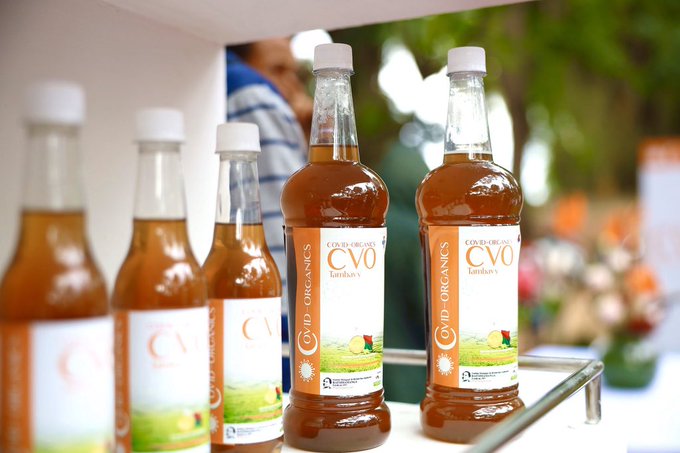
    Madagascar’s herbal cure, also known as COVID-organics is a drink invented by the Malagasy Institute of Applied Research. It contains Artemisia, a plant on used in the fight against malaria. The president of Madagascar, President Andry Rajoelina claims that this drink cures and prevents Covid-19.

    What is the World Heath Organisation saying?

    WHO has advised that people do not use untested remedies for Covid-19. It has also called for clinical trials. It said only products shown to be effective through scientific study would be endorsed by them. The Economic Community of West African States, ECOWAS has also dissociated itself from the medicine.

    In spite of the criticism, the president of Madagascar insists that COVID-organics could prevent and cure patients infected with the virus. He believes that WHO’s criticism speaks to how they look at Africa.

    How does this affect Nigerians?

    Madagascar's herbal cure

    On Monday, during the daily Presidential Task Force on Covid-19 briefing, it was disclosed that Nigeria was going to fly in Madagascar’s herbal cure.

    According to Secretary General of the Federation, Boss Mustapha, President Buhari has given strict orders that the COVID-Organics consignment be subjected to necessary standard validation processes for medicines.

    Nigeria is not alone in showing interest in COVID-Organics. Several other African countries like Tanzania, Guinea-Bissau, and the Republic of Congo have ordered COVID-Organics from Madagascar.

    How have Nigerians reacted?

    The Pharmaceutical Society of Nigeria criticised this decision to import Madagascar’s Herbal Cure, saying that it is distasteful for a country that should be the leader of Africa to go this low.

    Some Nigerians are questioning the need to wait for a vaccine from overseas.

    Trust that some Nigerians will turn it into a joke.

    Whatever the case, we do hope that the federal government knows what it’s doing. Visit Coronafacts Africa for more insights on the number of cases rising from Africa as a whole and from different countries in the continent.

  • COVID-19 Dreams

    Since the lockdown started, I’ve been having strange dreams. I didn’t think too much of them at first because my dreams are usually bizarre. But as the lockdown went on, they got even more batshit. This got me wondering if this spike in the weirdness of my dreams had a connection to the mental effects of the lockdown (it totally does). And because I’m an amebo, it also got me wondering what kind of weird dreams other people were having.

    So I went ahead and asked around. I’ll start.

    Astor, 1#

    “Two weeks ago, I had a dream that I was watching an R-rated version of the 2020 movie, ‘Sonic the Hedgehog’. And because of the way dreams work (where you’re sometimes in them as opposed to just observing), I was IN the movie, running around frantically with everyone else as Doctor Robotnik violently killed people in a bid to draw Sonic out of hiding. Why is this a weird dream? I haven’t even watched Sonic the Hedgehog in real life!”

    Nnamdi, 30

    “I was at a house party, watching myself dance when someone ran up to me (not me exactly but the version of myself I was watching), grabbed me, and screamed, ‘YOUR EYES ARE HURTING BECAUSE YOU HAVE CURRENT EYES!’. Immediately after this, I woke up in a haze. I picked up my phone, googled ‘current eyes’ to see if it meant something (it doesn’t btw), and went back to sleep.”

    Victoria, 25

    “I think the strangest dream I’ve had in the last few weeks was the one where mop hairs started growing out of my crotch in place of pubic hair. Yeah, like the mops for cleaning floors. It was horrifying! The more I cut them, the more they grew. I shaved so hard until I began bleeding. It was just like that scene in ‘X-Men: The Last Stand’ where Angel’s father walks into the bathroom and finds him frantically cutting off his wings with a knife. It was so random and disturbing. I still haven’t been able to look at mops the same way.”

    Bimpe, 21

    “I was going on vacation with my family to London. To show you how detailed this dream was, I knew in the dream that we were flying with KLM. Got on the plane and fell asleep. Next thing I knew, I woke up in Accra. Before I could find out what was going on, I fell asleep again and woke up in Kinshasa. We went straight from the airport to a nice big house where a wedding was taking place. I wandered off during this wedding and got lost in the house. As I was trying to find my way out, I woke up. I’ve never been to the Republic of the Congo or Ghana.”

    Dapo, 32

    “I had sex with 8 men on the same night. Look, I’m not a child. I’ve had sex dreams before but not on this level. What made this weirder is that it wasn’t at an orgy or something. It happened in quick succession. It was like a series of dreams. Every time I woke up from one sex dream and went back to sleep, there would be another guy (my spec) waiting to rock my world. I messed up my hip IN THESE DREAMS because of all the thrusting. Best sex of my life (real or imaginary)! I would not mind one (or all) of those guys returning at some point sha. I can’t go out because of Corona but body no be firewood. And there’s only so much your hands can do, you know? Lol”

    COVID-19 Dreams

    COVID-19 Dreams

    What’s up, Zikoko Fam? It would mean the world to us if you spared a few minutes to fill this Reader Survey. It’s so we can bring you the content you really want!

  • Hello.

    I’ve made a lot of lists suggesting you can do or watch to at least try to forget about Miss Rona’s tour for a bit. I don’t know if you’ve tried any of them but I’m going to keep making these lists anyway because, at this point, they’re just as much about distracting me as they are about distracting you.

    Here’s a list of 5 cartoons from your childhood you should rewatch for a good time.

    1) Animaniacs

    Hulu's Animaniacs Reunites Original Voice Cast, Reportedly Eyes ...

    Rejoin Yakko, Wakko, and Dot (along with a large cast of supporting characters) as they take you on a wild ride with this variety show with short skits featuring great music, character catchphrases, pop culture references and humour mostly directed at an adult audience.

    2) Johnny Bravo

    Revisit the adventures of this the muscular, super horny, mama’s boy with a pompadour hairstyle and an Elvis Presley-esque voice as he goes around town trying (and failing) to get women to go out with him.

    3) Tom and Jerry

    Tom and Jerry, Terrorists of the Cartoon World – Foreign Policy

    Go back and observe the hilarious rivalry (and occasional friendship) between this cat and mouse duo. Modern audiences have described their volatile relationship as the perfect definition of the slang “on sight”.

    4) SilverHawks

    Amazon.com: Watch Silverhawks Season 1 Volume 1 | Prime Video

    Relive the subtle horror of this sci-fi, freakshow cartoon about a group of humans in the 29th century who become bionic after they’re given metal bodies and wings to become heroes and fight organized crime in their galaxy of Limbo.

    What’s up, Zikoko Fam? It would mean the world to us if you spared a few minutes to fill this Reader Survey. It’s so we can bring you the content you really want!