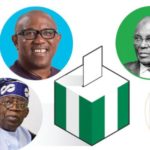
• Every year, on Independence Day, Nigerians in the diaspora paint everywhere green and white. This consistent show of patriotism must have impressed the lawmakers in the House of Representatives, who have now proposed a bill that could allow this category of Nigerians to vote in future elections.

    Section 1 of the bill lays the groundwork for granting voting rights to Nigerians living abroad. It proposes that once passed, elections conducted under this Act would include provisions for Nigerians outside the country to cast their votes, with the Independent National Electoral Commission (INEC) taking charge.

    Meanwhile, Section 4 clarifies that the bill isn’t trying to disrupt existing laws but is designed to create a framework that lets Nigerians in the diaspora join the electoral process without compromising current regulations.

    This bill, co-sponsored by Speaker Abbas Tajudeen and Sodeeq Abdullahi,  passed its second reading on November 21 and has been sent to the constitution amendment committee for further action. So there’s a solid chance that it could become law soon. 

    Why are they pushing for this bill to become law?

    In July 2024, during the debate on the bill’s general principles, Abdullahi clarified why he’s standing on his ten toes to see this bill come to life. His reasons? Section 39 of the 1999 Constitution (as amended) gives Nigerians the fundamental right to freedom of expression and opinion. He says this includes the right to vote no matter where you are.

    He added that Nigerians in the diaspora invest heavily in the economy by sending money home through remittances, which make up about $20 billion annually. He argued that this financial contribution alone should earn them a say in choosing the country’s leaders, whether they live in Nigeria or not.

    In his words,  “It is widely believed that diaspora remittances have contributed remarkably to the development of Nigeria. Nigerians in the diaspora make considerable contributions to the Nigerian economy through huge financial inflow. Sadly, existing laws in Nigeria have not provided voting rights to Nigerians in the diaspora”. 

    Abdullahi also emphasised that this bill has the potential to “promote holistic inclusiveness in a democratic society.”

    What does this mean for Nigeria?

    It could boost democracy in the country by giving millions of Nigerians abroad a direct say in choosing leaders. The new level of inclusivity the bill would promote, as Abdullahi said, would also bring fresh perspectives and accountability to the political scene.

    But there would be some potential hiccups, too, since this is uncharted territory for Nigeria. There’s a lot to figure out, from setting up secure voting systems to ensuring votes are accurately counted. Considering Nigeria’s bad history with electoral processes, it’s fair to wonder how smoothly this will actually go.

    Has this worked in other parts of Africa?

    In South Africa and other African countries,  citizens in the diaspora are allowed to vote. If you’re wondering how that’s going, all we can say is that the process isn’t flawless. While the idea is good, the process has some weaknesses. In South Africa, for example, one of its major flaws is that diaspora voters can only cast their ballots at South African embassies or consulates, which can be inconvenient and stressful to access.

    The voting process itself is not hard to figure out, but given the not-so-great turnout recorded, the system could use a little more “wow” factor—maybe a digital option or something that makes it easier for people to get involved.

    For diaspora voting to work in Nigeria, INEC will not only need to address inadequacies that threaten its integrity to conduct free and fair elections, but it will also need to study the gaps in systems from countries like South Africa and use those lessons to create a smoother, more efficient voting experience for diaspora voters (that’s if the bill gets passed).

    [ad]

  • The 2023 general elections had many surprises, and for Adamawa state, more election drama is set to unfold in the coming weeks.

    Adamawa’s governorship elections caught the interest of many Nigerians because of its potential to produce Nigeria’s first female elected governor if Aishatu “Binani” Dahiru of the All Progressives Congress (APC) emerge victorious. However, her opponent is the state’s incumbent governor, Ahmadu Fintiri of the People’s Democratic Party (PDP).

    On the D-day of the March 18 governorship elections, Fintiri was in the lead with 421,524 votes, and Binani trailed behind with 390,275 votes. But, the election was declared inconclusive for two reasons:

    • The vote margin (i.e. 31,249 votes) between Fintiri and Binani exceeded the cancelled votes.
    • Due to electoral violence and overvoting, elections were cancelled in 69 polling units which affected about 37,016 potential voters.

    On March 27, 2023, the Independent National Electoral Commission (INEC) announced that supplementary polls would be held on April 15, 2023.

    However, it’s unfortunate that the supplementary elections conducted in Adamawa can be described as a show of shame. We will break down some key things that happened during the elections.

    Journalists weren’t allowed to observe the collation process

    It’s customary for journalists to cover the collation process in every election, but armed security officers prevented journalists from entering the collation centre during the supplementary elections in Adamawa state. When asked why, the security officials said it was “an order from above”. 

    A winner was declared before the conclusion of the collation process

    The results of the elections started trickling in, and it showed Fintiri in the lead in 10 out of 20 local governments. But, the Returning Officer suspended the collation process at 1 a.m. and said the results announcement would resume by 11 a.m. the next day, April 16. 

    However, the state’s INEC Resident Electoral Commissioner (REC), Hudu Ari, shocked Nigeria when by 9 a.m., he announced Aishatu Binani as the winner of the governorship elections. 

    According to Sections 64 and 65 of the Electoral Act, the winner of an election can only be announced by a Returning Officer appointed by INEC, but it looks like Hudu decided to take matters into his own hands.

    Aishatu Binani gave an acceptance speech

    While many Nigerians were still trying to figure out the magic happening in Adamawa, Binani hurriedly gave an acceptance speech thanking the people for electing her. She also said her win would encourage other women to participate in politics. 

    INEC annuls the declaration

    As we already said, only a Returning Officer has the right to declare the winner of an election. INEC condemned the action of the REC and described it as a “usurpation of the power of the returning officer”. The declaration of Aishatu Binani as the Adamawa state election’s winner was rendered null and void, and the election process was suspended.

    Hudu Ari might be looking at jail time

    The seemingly rogue REC, Hudu Ari, has been summoned to the INEC headquarters in Abuja. According to Section 120(4) of the Electoral Act 2022, he might be sentenced to 36 months imprisonment for announcing a false result.

    On April 18, 2023, INEC announced that it hopes to close the controversial chapter on Adamawa’s governorship elections by Thursday, April 20, 2023. Nonetheless, the 2023 general elections have shown us so far that there are a lot of internal issues INEC needs to work on because it’s almost as clear as day that they’re too compromised to trust with conducting free and fair elections in Nigeria. 

  • I’ve always believed that many Nigerian scriptwriters aren’t aware they are sitting on a plot goldmine enough for a dozen seasons of TV. 

    This month, we’ve seen people tear their Nigerian passports and politicians electing themselves into power using voter intimidation and violence— we also learnt that people born in inter-tribal marriages are considered to have ‘tainted blood’. But, the icing on the cake is that some Nigerians are taking sides with a racist against fellow citizens. 

    Racism Nigeria Nasarawa elections

    On March 22, 2023, in a Sapele community in Delta state, a group of youths came out to protest the removal of the Board of Directors of the oil and gas company Seplat Energy PLC. 

    The gist here’s that on March 3, 2023, the Federal Government (FG) and the Ministry of Interior withdrew the work and resident permit of Seplat’s CEO, Roger Brown. This was due to a petition filed against him by the workers over allegations of racism, bullying, discrimination, sacking and retiring of Nigerian workers without due process and favouring foreign workers. An instance was when he refused to promote a qualified Nigerian, Emeka Onwuka, to the Chief Financial Officer (CFO) position. Instead, he hired a fellow Irishman, Mr Alaisdair Mackenzie. 

    Before FG revoked his resident and work permits, Brown received several invitations to address these allegations, but he snubbed them. 

    The Board of Directors, led by Basil Omiyi, has refused to remove Brown from his position as CEO. They, instead, have passed a vote of confidence and accused the media of trying to spread false information. 

    Sadly, it’s 2023, and Nigerians don’t have to japa to experience racism. 

    What else happened this week?

    Women Go Topless to Protest Election Results

    So far, there have been mixed reactions to the results of the gubernatorial elections held on March 18, 2023. In Abia state, there have been celebrations over the victory of the Labour Party candidate, Alex Otti, but the same cannot be said for Nasarawa.

    Racism Nigeria Nasarawa elections

    Abdullahi Sule of the All Progressives Congress (APC) won his re-election bid as governor of Nasarawa. But the women in the state are rejecting this result, accusing him of rigging himself for a second term. On March 23, 2023, they took to the streets topless to express their anger with songs and placards telling INEC to let their votes count as they don’t want Governor Sule, but instead the People’s Democratic Party (PDP) candidate David Ombugadu. 

    In all this, it’s almost funny how despite having four years to prepare for elections, INEC still somehow manages to lose even more credibility every election season. 

    Video of the week

    Question of the Week

    Do you know when your state will hold Local Government elections?

    Ehen one more thing…

    Former Deputy Senate President Ike Ekweramadu and his wife, Beatrice, have been found guilty of organ trafficking charges. Here’s everything that led up to this case.

  • I would describe the presidential elections of February 25, 2023, as an experience. While some supporters of opposition parties are still waiting for INEC to say they somehow declared the wrong winner, other people have started preparing for the March 18 gubernatorial elections like they’re marching into war. 

    These people wouldn’t be entirely wrong, as many were victims of voter disenfranchisement and electoral violence in the last elections. So, to ensure that this doesn’t repeat itself on March 18, some Nigerians have decided to tap into their creative side by wanting to bring dogs and other pets to the polling units to scare thugs who might want to disrupt the elections.  

    Polling units around Nigeria were going to be filled with the scariest and toughest lineup of pets in the country, but unfortunately, the Nigerian Police Force (NPF) has once again decided to rain on our parade. 

    On March 7, 2023, the NPF released a statement saying Section 126(1) of the Electoral Act classifies dogs as offensive weapons that can be used to cause harassment and intimidation by their owners. Therefore, pets are banned from polling units, and the police discourage people from violating this law.

    So, maybe we should start looking for other ways to defend our votes and leave the animals out of it because the last kind of trouble anyone wants is one from the Nigerian police. 

    What Else Happened This Week?

    Light at the end of the tunnel of Naira scarcity

    If there’s one thing the Nigerian government’s good at, it’s making unnecessary policies that only serve to make our lives harder. In November 2022, President Bubu launched the newly designed naira banknotes, and the Central Bank of Nigeria (CBN) announced that it’d become the official tender from February 10, 2023. 

    Since the redesign, we’ve entered a rat race trying to get our hands on the new naira, which has proved harder than finding good roads in Ogun state. 

    However, after weeks of suffering, POS extortion, bank queues, and court cases, the Supreme Court finally came to our rescue on March 3, 2023, when they announced that the old banknotes should remain Nigeria’s legal tender until December 31, 2023. 

    governorship elections Nigerian police dogs

    Some commercial banks have already started paying customers old banknotes over the counter. And although some traders still refuse to accept them as payments, the CBN’s acting Director of Corporate Communications, Dr Isa Abdulmumin, has come out to reassure Nigerians that they can now receive the old banknotes as a form of payment.

    Video of the week

    Question of the week

    Lagos state governor, Babajide Sanwo-Olu, has choked us this week on social media with his achievements while in office. Can this help tip the elections in his favour in the gubernatorial elections?

    Ehen one more thing…

    We know the gubernatorial elections will be held on March 18, 2023. But do you know how many governors are vying for a second term? Check them here.

  • The build-up to the 2023 elections has been a marathon for many Nigerians. On February 25, 2023, the national elections (Presidential and National Assembly) were held, and we finally know who our next president is. 

    However, it’s important to note that we aren’t at the finish line yet. On March 11, 2023, state elections (Governorship and State House of Assembly) will be held nationwide. 

    Gubernatorial elections will be held in 28 states, and 11 incumbent governors will be seeking a second term in office to continue their good work or reign of mediocrity. 

    Who are these governors?

    Babajide Sanwo-Olu, Lagos state

    Sanwo-Olu, unlike his predecessor Akinwunmi Ambode, won the party ticket to contest for a second term. But, he has probably not had peace of mind since his party, the All Progressives Congress (APC), lost Lagos state at the presidential polls.

    Since then, he has taken out time to hawk the gospel of his achievements on social media. He mentioned the expansion of the Bus Rapid Transport (BRT) system, the construction of hospitals around Lagos, and the development of the education sector with infrastructure, free education and affordable tuition rates for tertiary schools. 

    It’s also important to mention that he seriously warned containers to stop falling off bridges and advised people to roll up their windows to avoid getting robbed on the Eko bridge. He also banned motorcycles and ride-hailing companies like Gokada, leaving thousands with no source of income. 

    Bala Muhammed, Bauchi state

    This PDP governor and former FCT Minister is expected to win his re-election bid with little to no hiccups.

    On December 9, 2022, his campaign got a boost when the former governor of Bauchi state, Mohammed Abdullahi Abubakar SAN, publicly endorsed him during a state dinner.

    Mai Mala Buni, Yobe state

    Mala Buni, a former Chairman of a political party in 2006, the Advanced Congress of Democrats (ACD) and a two-time National Secretary of the APC. In his first six months as governor, he constructed a Damaturu-Ultra Modern Market worth ₦2.8 billion and a 200-bed capacity hostel at the Dr Shehu Sule College of Nursing and Midwifery at the cost of ₦215.9 billion. He also invested heavily in the area of security and agriculture. 

    In December 2022, a 16-year-old boy was arrested for allegedly insulting him on social media, which is, unfortunately, becoming the norm for Nigerian politicians.

    Seyi Makinde, Oyo state

    Seyi Makinde is unfortunately recently remembered by many as being part of the Aso-ebi boys, the G-5 governors. 

    If he wins the forthcoming elections, he will be the second governor in Oyo state’s history, after Ajimobi Abiola, to get a second term in office. However, his chances are slim, given that his party, the Peoples Democratic Party (PDP), is facing infightings. 

    On March 6, 2023, the Labour Party (LP) adopted him as their governor, abandoning their governorship candidate, Tawfiq Akinwale. Given the recent upset the LP has caused in the political scene, it would be interesting to see how this plays out in Seyi Makinde’s favour. 

    Bello Malawalle, Zamfara state

    You might remember Bello Malawalle as the governor who signed the death penalty bill into Law for bandits, cultists and kidnappers to end insecurity in the state.

    Incumbent governors 2023 gubernatorial elections

    He recently faced the threat of disqualification from the governorship elections for allegedly falsifying his age and academic qualifications. The case was taken to a federal high court in Abuja, where the presiding judge, Justice Inyang Ekwo, dismissed it by saying it had no merit.

    Dapo Abiodun, Ogun state

    The governor of the gateway state believes one term (good or bad) deserves another. Many traditional leaders like the Orimolusi of Ijebu-Igbo, and Oba Lawrence Adebajo, have supported him. 

    They’ve also thanked him for fixing some of their roads which makes you wonder who started this trend of thanking politicians for doing their jobs in the first place.

    Ahmadu Finitri, Adamawa state

    Former State House of Assembly speaker served as Adamawa’s acting governor (July – October 2014) following the impeachment of then-Governor Murtala Nyako. 

    Incumbent governors 2023 gubernatorial elections

    He became the state governor again in 2019 under the PDP and is expected to emerge victorious in the gubernatorial elections.

    Abdullahi Sule, Nasarawa state

    Abdullahi Sule is a businessman and engineer who co-founded Sadiq Petroleum Nigeria Limited in Lagos. He later became the CEO of African Petroleum (AP) in 2001. The state monarchs and civil servants have rallied behind him for his re-election bid to ensure his victory. 

    AbdulRahman AbdulRazaq, Kwara state

    AbdulRahman first contested for the Kwara state governorship seat in 2003 but was defeated by the state’s golden boy, Bukola Saraki. The same thing repeated itself in 2007. The story, however, finally changed in 2019 when AbdulRahman contested under the All Progressives Congress. 

    The current Senate president, Dr Ahmed Lawan, recently lauded AbdulRahman’s administration, saying he surpassed the achievements of his predecessors in two years. We’ll see soon if Kwara state indigenes agree with this statement.

    Inuwa Yahaya, Gombe state

    This state governor is one of the very rare politicians believed to have fulfilled his campaign promises. For instance, as promised, the state government increased the education budget allocation by over 60% and revamped over 150 schools. 

    Many people believe Inuwa Yahaya is a governor most deserving of a second term in office. 

    Babagana Zulum, Borno state

    This professor and former Ramat polytechnic Rector became Borno state governor in 2019 under the APC. His administration has tried to battle and solve the insurgency problem facing the state for years. He has also been the target of many assassination attempts by Boko Haram.

    Incumbent governors 2023 gubernatorial elections

    Babagana is one of the governors who have the backing of his people. In August 2022, he was awarded the Best Governor of the Year in the Leadership Excellence Awards.

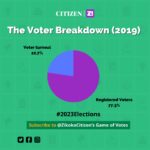
    Unfortunately, Nigeria witnessed the worst voter turnout in its history at 27.1 per cent in the recently concluded national elections. Hopefully, this changes on March 11, 2023, for the gubernatorial elections because the last thing we want to do is give certain people a free pass to steal our mandate. 

  • Sunken Ships is a Zikoko series that explores the how and why of the end of all relationships — familial, romantic or just good old friendships.

    In this episode of Sunken Ships, Kiki* (22) shares why she blocked her uncle and how it goes beyond supporting different candidates.

    What was your relationship with your uncle like pre-elections? 

    Kiki: Pretty normal. You know how in every Nigerian home, there are different kinds of uncles? The rich ones who always give you money, the stingy/broke ones, the one you’re convinced is a pervert, the cool one and the rest? He was one of the rest. A bit younger than my dad, but not young enough that we had things we could relate to. His children are also younger than me, so we didn’t have much to talk about. 

    However, we weren’t enemies. I spent holidays in his house, and when we had family events, we had proper conversations. He didn’t treat me like a child who didn’t know anything, but he provided support only someone older can give. He’d send me articles he read and thought I was interested in so we could talk, but he also sent those ridiculous BCs and bulk messages on Whatsapp. He was okay, and so was our relationship. 

    How did the fight start? 

    Kiki: I won’t call it a fight, but we started having issues over WhatsApp. I hardly use the app, but that day, I decided to check people’s statuses. That’s when I saw that he’d put up the poster of a particular candidate running for President. I swiped up to have a conversation with him because I couldn’t believe who he supported. I wanted to know his thought process if any. He didn’t reply immediately — probably because of work — but we eventually had a conversation. 

    The words he sent that day shocked me. I wanted to scream at him, but I maintained my peace. We had this long back and forth that ended with me blocking him. I didn’t have the strength, and he wouldn’t change his mind. 

    A week later, while I was out with my mum, she stopped by his house. When we got there, he brought up the fact that I’d blocked him to my mother. It’s one thing for him to support someone who’s incompetent, but to report me to my mother over it? I lost it. I reminded them that I’m an adult and can decide I no longer want certain people to have access to my life. My mother told me it didn’t make sense for me to fight family because of politicians. That people have a right to vote and campaign for whoever they want. I told her it’s more than that. 

    RELATED: Sunken Ships: Politics Is Enough for Me to End Our Friendship

    Explain 

    Kiki: If someone doesn’t align with my values, I can also choose to remove their access to me. 

    It’s not just about picking a different candidate. I think that’s very reductive of the issue. You can disagree on the policies of different candidates. Candidate one wants to increase tax by 5%, and candidate two wants to reduce it by 3%. Or one candidate wants to make Lagos the capital of Nigeria, while another wants to make Edo state the capital. These are differences you don’t have to cut off friends and family members over. 

    But  he’s endorsing a corrupt, terrorism-affiliated, allegation-heavy candidate whose policies might as well lead to the end of my life.  I’m upset that he supports someone who’ll most likely make millions of people suffer. I have every right to choose to no longer associate with someone who willingly chooses death and suffering. 

    It shows his beliefs and values align with said candidate. If the candidate he supports has made degrading comments about people from certain tribes, it means my uncle feels the same way. If the person is known to align with thugs and thieves, then that’s something my uncle stands for. I don’t stand for those things, so why should I keep him around? 

    What’ll happen after the elections? 

    Kiki: Nothing. He’s still blocked and will forever remain blocked. Why should he remain in my life? He’s been reporting me to family members, and they’ve called and begged, but that’s their business. I don’t know why they think my uncle and I must talk by force. 

    RELATED: Sunken Ships: My Best Friend Didn’t Like Him so We Broke Up

  • Indeed, delay can never be denial. 

    After years of fleeing from anything government and law related, I finally decided it’s time to get familiar with Nigerian politics and its wahala.

    For the past week, I’ve been hearing how the Shehu Shagari elections of 1979 were dramatic AF. Everywhere I turn, someone is comparing the ongoing 2023 elections drama to it. So I decided it was time to put on my amebo gear and get to work.

    Luckily (or unluckily) for me, I stumbled on The 1979 Elections, a 212-page book on the subject.

    According to this book, in 1960, everything was all well and good for a country that’d just emancipated itself from the clutches of colonisers. Nigerians were enjoying independence. They actually had cash to spend.

    Yes, Meffy baby, it’s you I’m looking at.

    And they’d just conducted their first elections. But somehow, they were already talking about the domination of Northern Nigerians in government.

    The southern political parties weren’t the happiest about this, but they picked their sandals off the ground, dusted themselves and decided to try again four years later.

    Except, as usual, Nigeria said…

    General market, go round the block one more time.

    In came Nigeria’s first military government led by General Aguiyi Ironsi in 1966.

    General Aguiyi Ironsi

    Which led to a ten-year military rule, featuring Yakubu Gowon, Murtala Mohammed and one of the owners of Nigeria’s internet, Olusegun Obasanjo.

    Who sent these people this military rule message?

    By 1979, the military government had basically handed over.

    Like those Iya arugbos who share souvenirs at burials, they put everything in place for the elections and eventual civil rule.

    Election day comes, and Nigerians head to the polls to vote for the person they want to lead them. My people just wanted to do what’s best for themselves after years of early bedtimes and being parented by the Nigerian military.

    Five days later, at 12:40 PM, FEDECO, the 1900’s INEC,  released the election results. 

    This result might be the only straightforward thing in this book. 

    Shehu Shagari, with a total of 568,857 votes, won the presidential elections and was announced president-elect. But as it turns out the people chasing Nigeria right now have been at it since colonisation, because why did FEDECO release results if they weren’t ready?

    This is why you should be straightforward in all you do, BECAUSE LOOK AT FEDECO CAUSING ISSUES FOR AN ENTIRE NATION.

    This caused kasala in 1979 Nigeria. Which was really the fault of the lawmakers, because, if they made the law easy and simple to understand, old men with grandchildren in the university won’t banter words with each other in public because of elections.

    I don’t care if the conversation fits, I shall now be using legal howler in my daily interactions.

    Less than 24 hours after the commotion and brouhaha, FEDECO stuck to their koboko, and named Alhaji Shehu Sahagari the winner of the 1979 elections. 

    The New Nigeria newspaper – a publication that clearly had it out for Shagari and refused to remove their leg from his trousers – started peddling the accusation that Obasanjo of the internet, the transitioning head of state, was in ACTIVE support of Shehu Shagari’s presidency.

    After the president-elect was announced, most Nigerians didn’t know how to feel. 

    Again, let it be known that I do not tell lies. Do you see that they’re also complaining about the words used in the constitution and how it can lead to multiple interpretations?

    Why is politics filled with theatrics and drama? Isn’t there an easier way to do it? Maybe, come out like it’s testimony time, and tell us the plans you have for Nigeria, instead of putting us through all the drama.

    “Hi guys, these are the things I want to do for Nigeria. These are my credentials; this is my family lineage.” 

    And then the newspapers started fighting each other on behalf of the candidates.

    I love a good media tussle

    After a while, everyone started noticing that the matter, like the current governor of Lagos state, had ironed gators into its jeans. Things were getting too hot. So, Chief Fani Kayode, like a pokenosing neighbour, carried his legs from nowhere,  and went to beg the spiritual leaders.

    Why is New Nigerian always trying to start up shit?

    The top three presidential contenders,  Awolowo, Azikiwe and Waziri, were clearly listening, which is why they held a press conference, rejecting Shehu Shagari as the president-elect.

    I mean, if you believe in something, then you believe in it, right?

    But as the Nigerian electoral body that they were, FEDECO told the three musketeers:

    But Awolowo decided to take the matter to the distinguished court by himself. He filed a petition at the electoral tribunal, stating that Shehu Shagari wasn’t duly elected.

    One week after, Shehu Shagari finally decided he also had a mouth and could speak.

    Long and short, Shagari looked Awolowo in the eye and went:

    The case spent less than a month in court, and the tribunal finally gave their judgment: Shehu Shagari for president. If you don’t like it, kneel down and face the wall.

    But surely, someone who dragged Shehu Shagari through the Nigerian media and judiciary system wouldn’t suddenly stop because the electoral tribunal said no?

    Awolowo dragged Shagari to the supreme court on the exact same basis as before, Shehu Shagari wasn’t duly elected. But the court wasnt having it and basically told him and his appeal to get out.

    The court decreed Awolowo had no case or foot to stand on, and Shehu Shagari was the winner of the 1979 election.

    This was the most confusing piece of literature, I’ve ever read.

    RECOMMENDED: Are We Seeing a Repeat of the 1979 General Elections?

  • Next Saturday, the current governor of Lagos state will be seeking re-election. But how has he fared over the past four years? Here’s what his report card looks like.

    Year One

    He banned motorcycles in Lagos

    In January 2020, less than a year into his tenure, Governor Sanwo-Olu decided that commercial motorcycles were no longer a part of the mega plan he had for Lagos and that they just had to go. It didn’t matter that the state had a terrible traffic situation, or that most people had no alternative.

    The result: Lagosians had to trek… everywhere. Ride-hailing companies like Gokada, Max, and Opay laid off thousands of people, leaving them without a means of livelihood.

    Closed down the Eko bridge

    On March 11, 2020, Sanwo-Olu closed down the Eko Bridge in the early hours of the day without prior notice, causing a lot of people to be stuck in traffic in other areas. 

    The result: Commute became harder for people and the traffic got worse. The bridge was later reopened, but it was closed again after a fire gutted a section of it last year. It’s remained closed ever since.

    The Lekki shootings happened under his watch

    On the 3rd day of the ENDSARS protest, the 20th of October, Sanwo-Olu announced a curfew that would start at 4 p.m. This was ignoring the fact that it was a weekday and many people were outside. People kicked back against it, and the curfew was moved to 8 p.m. By 7 p.m., Sanwo-Olu called in the army and they arrived at the toll gate.  

    The result: Dozens of people were massacred at the gates and Sanwo-Olu still denies any involvement in the incident.

    Year Two

    He told people to roll up their windows when they got robbed

    In 2021, after the Eko bridge was finally reopened, insecurity had gone up in Lagos and people were getting robbed in traffic on the bridge. What did he say? “Roll up your windows and stay safe.” 

    Year Three

    He “increased” the salaries of civil servants in Lagos

    In October 2022, Sanwo-Olu announced that he was going to increase the salary of civil servants in Lagos by the end of the month.

    Result: 2022 is gone, and 2023 is here, but the pay raise is yet to be implemented. Why that is the case, it’s currently unclear.

    He asked containers to stop falling off the Ojuelegba bridge

    Who knew that all we needed to do was to just ask nicely and containers would stop falling? 

    Containers falling off bridges have been an issue for so long in Lagos. Since 2015, at least 20 people have been killed in accidents involving containers in Lagos State. Instead of erecting a simple barrier on these bridges to prevent huge trucks from using them at all, he simply said he’s not going to tolerate containers falling off bridges anymore. We’re sure the containers won’t try it again.

    He bought 62 fire trucks for the Lagos state fire service

    This is commendable considering how often fire outbreaks happen in markets and different areas of Lagos. Sanwo-Olu inaugurated 200 fire trucks in October 2022 to be used by the fire service authorities in the state for quick response to fire outbreaks. 

    Year Four

    He commissioned Lagos’s first light rail

    Earlier this year, Sanwo-Olu commissioned the first phase of the Lagos Blue Line with President Muhammadu Buhari. It’s a light rail system that had been planned as far back as 1983 before it was scrapped by the same person, Muhammadu Buhari. The line runs from Okokomaiko to Marina, and we were told to expect two more lines after this one.

    This is expected to ease up traffic within Lagos over time. But a few days ago, fire razed a section of the blue line and the fire service was reported to be super late to the incident.

    Overall Grade:  E 

    Why? Despite the pockets of work he did here and there, he oversaw one of the worst cases of human rights abuse this country has seen in the past few years.

  • Everyone dreams of retiring early with money that scares poverty for good. Nigerian politicians have discovered that the key to achieving this dream is being a member of the Senate.  

    What’s the Senate?

    Nigeria’s National Assembly consists of two chambers, the House of Representatives and the Senate. The Senate, also called the Red Chamber, is modelled after the federal Congress of the United States. For equal representation, it’s composed of 109 senators, with the 36 states represented by three senators each. 

    The Senate is the highest law-making institution in the country, with the authority to impeach the president, vice president, and other executive officials. 

    For many Nigerian politicians, the Senate seems to be where most of them hope to end their careers, and we’ve seen this repeatedly happen, especially with former governors.

    The current 9th Assembly consists of 16 former governors representing their state. They are:

    Danjuma Goje

    He was not only the Minister of State, Power and Steel from 1999-2002 but also served as the Governor of Gombe state from 2003 – 2007 under the People’s Democratic Party (PDP). 

    He now represents Gombe Central in the Senate and was re-elected to represent the region in the 2023 national elections held on February 25, but this time, under the All Progressives Congress Party (APC). 

    Ibrahim Gaidam

    Ibrahim Gaidam is a three-term governor of Yobe state. He was formerly the deputy governor till he took office in 2009 when the then-Yobe state governor, Mamman Bello Ali, died of Leukemia. 

    Gaidam stayed in office till 2019, after which he joined the Senate to represent the Yobe East district. 

    Kashim Shettima

    Many people now know Shettima as APC’s vice-presidential candidate for the recently conducted 2023 presidential elections. He was a former two-term governor of Borno state, from 2011 to 2019, before representing Borno Central in the Senate. He is now the Vice-President of Nigeria in waiting.

    Aliyu Wammako

    He served as the governor of Sokoto state in 2007 and currently represents Sokoto North district in the 9th Assembly (2019-2023). 

    Adamu Aliero 

    He was the former governor of Kebbi state from 1999 to 2007, after which he became a senator representing Kebbi Central. 

    He was also re-elected in the elections held on February 25, 2023, defeating the incumbent governor of Kebbi state, Atiku Bagudu.

    Kabiru Gaya 

    Kabiru Gaya was the governor of Kano state from January 1992 to November 1993. He was elected to the Senate to represent Kano South in 2007. He has since remained in office for the past sixteen years. 

    Ibrahim Shekarau

    This former Minister of Education (2014-2015) was previously Kano’s governor from 2003 to 2011. He represents Kano Central in the Senate and won his re-election in the recently concluded elections.

    Theodore Orji Kalu

    Theodore Orji was governor of Abia state from 2007 to 2015. He currently represents Abia Central in the Senate.

    Orji Uzor Kalu

    This Nigerian politician also doubles as a businessman. He’s the Chairman of SLOK Holdings, the Daily Sun and New Telegraph newspapers. 

    Senate former governors represents

    He was Abia’s state governor from 1999-2007 and represented Abia North in the Senate. He was also successful in his re-election in the election held on February 25, 2023.

    Sam Egwu

    Sam Egwu was the governor of Ebonyi state from 1999-2007. He became a member of the Senate in 2015, representing Ebonyi North. However, he lost his third term bid as a senator in the last election to APC’s Onyekachi Nwaebonyi.

    Chimaroake Nnamani 

    Chimaroake’s a medical doctor who served as Enugu’s governor from 1999 to 2007. 

    He first joined the Senate to represent Enugu East in 2007. He lost the seat in the 2011 elections under controversial circumstances. He ran again for the same seat in 2015 but was again unsuccessful. However, his luck finally changed in 2019 when he beat the incumbent Senator, Gilbert Nnaji.

    Rochas Okorocha

    Rochas currently represents the people of Imo West in the Senate, but before now, he was their state governor from 2011 to 2019.

    Ibikunle Amosun 

    Amosun’s a two-term governor of Ogun state (2011-2019). 

    In 2019, he was accused of illegally importing about 4 million rounds of ammunition and many firearms without obtaining the necessary approvals. Despite calls for his arrest and probe, nothing was done. 

    Instead, he’s now a member of the Senate representing Ogun Central. Nigeria’s sometimes a joke that writes itself.

    Seriake Dickson

    Seriake Dickson’s a lawyer who, unlike many of his counterparts, was a member of the House of Representatives (2007 -2012) before becoming governor. 

    Senate former governors represents

    He was Bayelsa’s governor from 2012-2020 before joining the Senate to represent Bayelsa West.

    Abdullahi Adamu

    He was the governor of Nasarawa state from 1999 to 2007 and currently represents the people of Nasarawa West in the Senate.

    Tanko Al-Makura

    This politician and businessman was Nasarawa’s governor from 2011-2019. After this, he was elected into the Senate to represent Nasarawa South. 

    This trend of ex-governors becoming legislators has repeated throughout our history from as far back as 1999. Let’s break this down.

    Former governors in the 8th National Assembly (2015-2019)

    • Enyinnaya Abaribe: Deputy governor of Abia state from 1999-2003. He joined the Senate in 2019 to represent Abia South.
    • Theodore Orji: joined the Senate in 2015 and represents Abia Central.
    • Godswill Akpabio: joined the Senate in 2015 and represents Akwa Ibom North-West district.
    • Akume George: Benue state governor from 1999-2007, joined the Senate in 2007 to represent the people of Benue North-West.
    • David Mark: Niger state governor from 1989-1990, joined the Senate in 1999 to represent Benue South.
    • Sam Egwu: joined the Senate in 2015 to represent Ebonyi North.
    • Rabiu Musa Kwankwaso: Kano state governor from 1999 to 2003 and 2011-2015. He became a senator in 2015 to represent Kano Central. 
    • Bukola Saraki: Kwara state governor from 2003-2011. He became a senator in 2011 for Kwara Central. 
    • Jonah Jang: Plateau state governor from 2007-2015. He joined the Senate in 2015 to represent Plateau North
    • Abdullahi Adamu
    • Aliyu Wammako
    • Sani Yerima: Zamfara state governor from 1999-2007. He joined the Senate in 2007 to represent Zamfara West. 

    Former governors in the 7th National Assembly (2011-2015)

    • Abdullahi Adamu
    • Danjuma Goje
    • Sani Yerima
    • Bukola Saraki

    Former governors in the 6th National Assembly (2007-2011)

    • George Akume
    • Sani Yerima
    • Abdullahi Adamu
    • Danjuma Goje
    • Godswill Akpabio
    • Theodore Orji
    • Aliyu Wammako
    • Sam Egwu
    • Rabiu Musa Kwankwaso

    Former governors in the 5th National Assembly (2003-2007)

    • David Mark
    • Felix Ibru: Delta state governor from 1982-1983. He joined the Senate in 2003 to represent Delta Central district.
    • Tunde Ogbeha: Akwa Ibom governor from 1987-1988. He joined the Senate in 2003 to represent Kogi West. 
    • Iyiola Omisore: Deputy governor of Osun state from 1999-2003. After his time as deputy governor, he joined the Senate in 2003 to represent Osun East.

    Former governors in the 4th National Assembly (1999-2003)

    • Ike Nwachukwu: Imo state governor from 1984-1985. He joined the Senate in 1999 to represent Abia North.
    • Melford Okilo: the first governor of Rivers state from 1979-1983. He joined the Senate in 1999 to represent Bayelsa. 
    • David Mark
    • Maina Maaji Lawan: Borno state governor from 1992-1993. He joined the Senate in 1999 to represent Born North. 
    • Ali Modu Sheriff: Borno state governor from 2003-2011. He joined the Senate in 1999 to represent Borno Central. 

    It’s not surprising that in certain areas, Nigeria might be considered backward. Some legislators have been in power since the 90s with the same old ideologies. It’s almost like the Senate has become a vacation home with guests who refuse to leave for new people and minds to take over. 

    We hope this changes eventually, but looking at what has happened recently in the elections, it might be difficult for this to happen anytime soon.