• I saw this tweet and immediately knew Idris “Big 4 4-star general” Ayinde’s story had to be shared. How does one grow up in some of the worst parts of Bariga and end up working in one of Europe’s largest financial hubs? 

    This is Idris’ story, as told to Boluwatife

    Image source: Idris Ayinde 

    “Manage to finish secondary school and make quick cash,” was the general mindset of the people I grew up with in Bariga. No ambition or long-term plans — the goal was just to survive. 

    Bariga is known for its gangs, notoriety and terrible living conditions. If you’re familiar with the area, you know it’s divided into two parts. The part that’s close to Akoka is much saner. Then there’s the inner part, close to Gbagada, with streets like Ososa, Pemu Otunubi and Oyekunle that housed the notorious individuals Bariga is known for. That was the neighbourhood I grew up in.

    We didn’t have much money growing up. My dad’s job as a non-academic staff member at the University of Lagos (UNILAG) came with a meagre salary, and my mum once had a shop on the island she lost to government demolition. One period, my mum had to sell her jewellery for us to eat, and both of us had to hawk ogi to supplement the income.

    I must’ve been in SS 1 then. We didn’t want people to know how bad it’d gotten, so I’d put all the ogi wraps in a bag and go some distance away from my street before I arranged it on a tray to hawk. I think the most I earned daily was ₦500. 

    A neighbour saw me hawking once, and I had to beg him not to tell anyone. I was ashamed. After a couple of months, my mum got a small shop to sell from. 

    But sometimes, we still had little to zero money. We couldn’t afford to move somewhere else even though the room we lived in was always flooded during the rainy season and we’d spend all day packing water whenever it rained. The streets were worse off. When the gutters overflowed with rainwater — which was often — everyone took off their shoes and walked gingerly to avoid slipping and falling into it. Of course, without the shoes, we risked getting injured by whatever was in the water. But we had no choice.

    Like most children in my neighbourhood, I attended a government secondary school where there wasn’t much of a reading culture. It was just: go to school, return home and do anything you like. But my dad regularly brought assignments from work for my siblings and I to solve after school. It meant I rarely had time to go outside after school to mingle with the other kids.

    My attitude towards education changed in SS 2, when I joined the Muslim Students Society of Nigeria (MSSN) faction in my school. I met someone in the society who taught me how to read. I moved from someone who only read a day before an exam to getting textbooks and having a study routine. By the time I left secondary school in 2007, I was an efiko.

    With 2008 came JAMB, and since I couldn’t afford to pay for a tutorial centre, I put all my energy into preparing on my own. I chose to study accounting because it was my favourite subject in school, but that also meant I had to study further mathematics to take JAMB mathematics. I was a commercial student who’d never taken further math before.

    So, I bought Dele Ashade’s “A-Z of JAMB”, got as many past questions as possible and made arrangements with someone who had a tutorial centre. He taught me further math and economics; in return, I taught some of his secondary school students. My efforts paid off. I had 297 in JAMB, passed post-UTME and got admitted into UNILAG in 2008.

    I found out about the admission on a Saturday morning. I was outside, brushing my teeth, when someone reading a newspaper in the only good duplex in my street came to say he saw my name on the list of admitted students for UNILAG. 

    It was the best news of my life. I was the first person among my peers on my street to get a university admission!

    But I couldn’t afford a hostel close to school — even paying the ₦20k school fees required financial help from a relative abroad — so I moved in with an uncle who lived in the part of Bariga that was closer to Akoka. I still had to wake up early to queue for the campus shuttle buses and navigate the daily traffic between Pako bus stop and UNILAG gate. Almost all through my first year, I trekked for almost 30 minutes every morning from Pako to the school gate and to my lecture hall around UNILAG’s Distance Learning Institute (DLI). I also often stayed in school till late at night because there was no light in my uncle’s place to read.

    I didn’t immediately start chasing a first class. I just thought I needed to do my best and graduate well. But I also joined MSSN in uni and once attended a program called “Scholars Roundtable”. First-class graduates attended, and they all shared their stories of how they achieved the feat. That was all the inspiration I needed. If they could do it, I could do it too.

    I forged relationships with people ahead of me in the department so they could give me their materials at the end of a session. I’d use them to prepare ahead of the new level. I started teaching secondary students during the 2009 ASUU strike so I could go without asking my parents for money. I taught math, economics and accounting and was supposed to get paid ₦200 per hour. I say “supposed” because the school’s owner hardly paid me, but when she did, it was something. 

    I had to stop in my third year because of increased responsibilities. I’d contested in my department’s association elections and emerged as vice president. I was also the financial secretary at MSSN. I supplemented the occasional ₦1k I got from home by tutoring my classmates. Some of them were quite generous and would show their appreciation by buying me lunch. Others (mostly non-classmates) randomly paid a small fee for private tutoring. Thinking about it now, I don’t know how I survived in school.

    I graduated in 2012 with a 4.63 CGPA. That was a feat because my final year must’ve been my busiest. I retained my office in MSSN, became president of my department’s association and handled several tutorial classes. My various activities in school helped me build a good network, so landing an internship after school only involved an email to someone who owned an accounting firm.

    My parents moved out of Bariga to their own home in Badagry in the same year. They’ve had the land for years, but at the point they moved, the house was still incomplete. I interned at the firm for about four months on a ₦20k/month salary and left for NYSC in Bayelsa in March 2013.

    The plan was to work at one of the Big Four accounting firms, and I knew I needed to become chartered with ICAN to boost my chances. Others started the ICAN exams in uni, but I had no money. Plus, I’d heard ICAN offered the opportunity for first-class graduates to apply for scholarships. So, my service year was dedicated to ICAN preparation.

    I requested to be posted to a university for my NYSC Place of Primary Assignment (PPA), and this request may not have been accepted if not for my first class result. I was posted to a university in Amassoma, Bayelsa State, so while there was no light in the city, I took advantage of the university’s power supply to study. I got the ICAN scholarship and used part of my NYSC allowance to pay for ICAN tutorials. I also made some money organising tutorials for uni students. But I think the most each student paid was ₦100.

    In November 2013, I wrote and passed all four papers for the first level (PE 1) ICAN certification and emerged as the third-best candidate in January 2014. That came with a ₦25k bonus, and I automatically got another scholarship to write the final-level exams — Accounting graduates from ICAN-accredited universities get to write only two exam levels. ICAN also gave me a ₦60k bonus to attend tutorials. 

    I’d started applying to the Big Four firms around this time. I wanted to have a job immediately after NYSC, so I applied to one and was so confident I’d get in that I didn’t even try to pursue others. You guessed it — I didn’t get in.

    I finished NYSC in February 2014 and returned to my uncle’s house in Lagos without a job. I applied to a few random firms and got some job offers; one with a ₦100k/month salary. But when the offers came, I gave it a second thought and decided to stick to my goal of Big Four and nothing else. I decided to rely on the little savings I had from NYSC to survive and focus on passing the final ICAN exams to boost my Big Four chances. It was a gamble, but I don’t regret turning down those jobs. 

    I wrote the final ICAN exams in May 2014, and thanks to my network, found out about an internship opportunity at PwC. I applied and got it. It paid ₦80k/month, less than the other offers I’d gotten. But I wanted the Big Four experience.

    I moved out of my uncle’s house to a place between Bariga and Oworo that was easier to navigate to the Island, where the office was located. But I wasn’t out of the “trenches” yet.

    I also started contributing to the completion of my parents’ Badagry house. It’s now a four-bedroom house with additional flats for tenants, and I must’ve contributed about 70% of the total cost over time.

    The ICAN results came out in July. Again, I was the best qualifying candidate for that diet as well as for the year 2014 — I only got to know this in January 2015. ICAN gave me about ₦250k in prize money.

    Interestingly, I had a written test for an associate role with Deloitte the day after the results came out. It wasn’t supposed to be a panel interview, but I dressed in a suit and tie all the same. That test turned out to be an interview when they found out I was chartered, and I got the job on the spot. 

    By 2017, the japa wave had started to gain ground, and a number of people had discovered the Canada route. I’d worked at Deloitte for three years and had just rejoined PwC as a Senior Associate, but I wanted to leave Nigeria too. In the accounting world, most of the big things happen in London. Specifically, Canary Wharf, where the International Accounting Standards Board (IASB) is situated. It’s one of the major financial hubs in the entire Europe, like Silicon Valley for us finance people. Canary Wharf was where the big boys were, and I wanted to be there too.

    I decided a visa sponsorship job route made the most sense for me, so I started applying for UK jobs. There was a lot of trial and error. The UK had a “22,000 skilled workers” visa limit per year, which affected the number of international employees each organisation could bring into their country. They also had to do a resident labour market test. So before they employed any foreigner, they had to advertise and interview for a month after a successful interview to make sure no one in the UK could do the job.

    This long process meant that even though I got an Assistant Manager offer from KPMG UK in February 2018, I didn’t get the visa until December. I left for the UK in January 2019, almost a year after.

    In 2021, I moved to EY because I wanted to expand my experience — making it the fourth of the Big Four firms I’ve worked with in my professional career. I’m a manager now, and I only know one or two people who’ve worked in all four firms; it’s that rare. I recently tweeted a thread on X, detailing all I’ve learnt from working at all four firms.

    The journey hasn’t been all smooth. I failed two different levels of the CFA exam the first time I attempted them in 2017, losing thousands of dollars in the process. At first, I didn’t know how to handle going from winning national awards to failing, but I picked myself right back up and tried again.

    I’ve learnt a lot too. From the importance of delaying gratification — especially when I had to forgo a ₦100k job for something smaller but more profitable in the long run — to having a solid network, and of course, staying prepared for anything. Education isn’t a scam. It was the starting point of all I’ve achieved. If I didn’t have a first-class, I wouldn’t have gotten the ICAN scholarship or won the prize money. I also had access to recruitment opportunities reserved for only first-class graduates.

    Everything in life tends to add up. And now, I can pay it forward by caring for my siblings. My mum comes to London as much as she wants. Sadly, I recently lost my dad, but I was able to do the little I could before he passed. 

    Sometimes, I sit and reflect on where I came from. The boy from Bariga defied all odds and made it to Canary Wharf. It’s not something I take for granted. 


    NEXT READ: I Knew Cleaning Wasn’t My Last Stop in Life


    Psst! Have you seen our Valentine Special yet? We brought back three couples – one now with kids, one now married and the last, still best friends – to share how their relationships have evolved in the last five years. Watch the first episode below:


    [ad]

  • Fashion, drips, glitz and glamour go in sync with music awards and red carpets.

    On October 21, 2023, Trace Music hosted its awards ceremony in Kigali, Rwanda for the first time to celebrate Afro music. We look at some of the fashion moments that did it for us yesterday.

    Davido

    If the classic American Jazz music fashion had a 2023 design, it’d be this OBO’s outfit — an oversized sequined dress adorned with “shine-shine.” The overall has his self-titled “OO1” nickname etched on its back. Baddest, for real 🙌🏿.

    Yemi Alade

    One would have expected Mother Africa covered from head to toe in Ankara, but she picked a simple, glossy emerald dress. Also, we couldn’t miss the emerald touches in her jewellery. Simplicity and intentionality >>>>

    BK Arena

    Then she turned up on the stage like this. Loveee it.

    Soraia Ramos

    We absolutely love this effortless look from Portuguese-Cape Verdean singer, Soraia. We haven’t seen anyone else that can turn Kiwi into a fashion drip.

    Soraia Ramos

    Mucyo Sandrine

    Mucyo Sandrine came draped in a bead-embroidered sequin, covered with an orange and pink fluffy design. The dress is well put together, and we think Mucyo had to remind us why she’s one of the hottest fashion models on the continent.

    BK Arena

    2Baba

    We know why 2Baba came in agbada and Hausa cap — he’s now an elder-statesman in African music. Plus, cultural representation is never out of style.

    BK Arena

    Nomcebo Zikode

    The twisted shoulder design, framed corset and open-finger gloves are beautiful. Also, the short afro haircut and royal-blue tail blend the gorgeous look together. Nothing screamed “royalty is here” like the colour choice and quality tailoring.

    Azarias Muecalla

    Who knew cowries would bang this hard on a suit? Look at the petal design stapled at the hand which low key doubles as a hand-fan, and tell us the coolest looks don’t come from the most daring people. Nice one, Azarias.

    Rutshelle Guillaume

    All-black looks always eat. But Haitian singer Rutshelle munched everything with her thigh-slit dress, complimented by flying wings and arm gloves — giving an I’m-here-for-what-is-mine look. Behold, she bagged Best Artist in The Carribean category at the ceremony.

    Maureen

    We don’t know if she picked this dress a day before this event or if she just likes simple outfits, but the knee-length golden heels spiced up her look. Somehow, it ate.

    BK Arena

    Viviane Chidid

    She stepped on stage for her performance in this beautiful patterned gown. She first appeared with a long fur coat hanging over her shoulder, then took it off with poise; Viviane served a proper don-chic look.

    Another day to remind you that we’re getting closer to the Burning Ram. Have you bought your ticket to the biggest meat festival or you’re still sleeping?

  • Tanzania’s rapidly growing ‘Bongo’ film industry is going full steam ahead, with British actor, Idris Elba, planning a major studio in the country.

    British actor Idris Elba plans to open a major film studio in Tanzania after holding initial talks with President Samia Suluhu Hassan.

    Tanzanian’s Director of Presidential Communications, Zuhura Yunus, recently made this announcement during a media briefing session on the outcome of President Hassan’s trip to the 53rd World Economic Forum in Davos, Switzerland.

    “The president met with Idris Elba and his wife Sabrina, and they are keen to invest in a film studio in Tanzania,” said Yunus.

    “Discussions on the project have just begun, and if successful, the project will help not only Tanzania but also Eastern and Central Africa,” she added.

    Elba, who was born in Britain to a Ghanaian mother and a Sierra Leonean father, has previously spoken about his plans to help develop the film industry on the continent.

    “Young Africans view me as a leader or a beacon. And I feel like I could bring something. So I’m keen to bring what I’ve learned in media and amplify it in Africa,” he told South Africa’s SA People in August last year.

    And while this recent news is a shot in the arm for the country, Tanzania has worked hard over the years to package and position its film industry for international success.

    Despite having low budgets and limited production skills and equipment, the country’s filmmakers have matured the local ‘bongo’ films to rival Nigeria’s Nollywood and Kenya’s Riverwood.

    In September 2021, Vuta N’kuvute made history by becoming the first Tanzanian feature film to screen at the Toronto International Film Festival. It has also been screened at various festivals in Germany, South Africa, the USA, Brazil, Switzerland and Tanzania.

    The Swahili film, which tells the story of a young woman whose romance blossoms on the back of a political revolt woman during the final years of British colonial Zanzibar, won the Tanit d’Or at the prestigious Carthage Film Festival in Tunis.

    It also took home four awards at the 18th edition of the Africa Movie Academy Awards, held in October 2022 in Lagos. It won the Oumarou Ganda Prize for Best Fiction at FESPACO 2021 and the Special Jury Prize at the Seattle International Film Festival 2022.

    The most significant success for the film, however, came in September 2022, when it became Tanzania’s official entry for the Oscars 2023 Academy Awards under the Best International Feature Film category.

    “The future of Tanzanian cinema is finally in our hands. A wave of Swahili filmmakers is growing every day with pride, intelligence and boldness,” said Amil Shivji, the film’s co-producer.

    Tanzania also saw three of its films streamed on Netflix in 2022, marking a great start in the international market. Binti, produced by Angela Ruhinda, became the first Swahili movie streamed on Netflix, followed by Bahasha and Nyara: The Kidnapping (2020), respectively.

    But Tanzania’s prolific film industry did not start with the Bongo films and movies in the early 2000s.

    The industry dates back to 1961 when the government of the new nation of Tanzania established the Government Film Unit in 1963, the Tanzania Film Company in 1968, and the Audio Visual Institute in 1974.

    These institutions produced, distributed, and exhibited films, albeit films that propagated the Ujamaa socialist policies of president Julius Nyerere’s government.

    Over the years, the government has continued to support the film industry with incentives and new regulations.

    The Tanzania Film Board, in October 2022, embarked on a programme to coordinate the production of films with local strategic content featuring the country’s richness in several avenues to market the country’s attraction.

    “We want a vibrant and aggressive film industry,…we are training the local producers to enhance quality, competitiveness and national identity films,” said the film board’s executive secretary, Kiagho Kilonzo.

    The government also reduced filming permit fees to help filmmakers produce high-quality movies. According to the new regulations, filmmakers pay US$21 to get a filming permit, down from the previous US$215.

    Non-profits like the Zanzibar International Film Festival, established in 1997, have also continued promoting Tanzania’s film industry.

    The annual festival screens approximately 70 domestic and foreign productions and hosts capacity-building sessions for upcoming filmmakers, including workshops, masterclasses, debates and network events.

    In a 2021 report, the UN cultural agency, UNESCO, revealed that Africa’s film and audio-visual industries could create over 20 million jobs and contribute US$20 billion to the continent’s combined Gross Domestic Product (GDP).

    Market and consumer data company Statista says that Africa produces about 5,500 films per year, of which Tanzania manages around 500 yearly.

    According to the Tanzanian Minister of Culture, Arts and Sports, Mohamed Mchengerwa, the country has at least 30,000 people employed in the filmmaking business, and the entertainment and arts industry contributes at least 19.4 per cent to the economy.

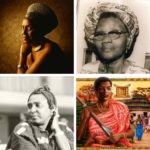
  • As we celebrate women’s month this year, Zikoko is all out for all the women breaking the bias. In this article, we are raising a toast to women from the 90s that made moves in their times. Here are a few of the African women that paved the way for us.

    1. Funmilayo Ransome-Kuti (1900-1978)

    If you don’t know Funmilayo, I want you to go and fight your social studies teacher. This is the woman that gave us the legendary Fela Kuti. Funmilayo was an African feminist and dedicated her life to the cause. She organized tax strikes against economic policies negatively affecting women and was very vocal in the call for an end to colonial rule. To top all this up, she was the first Nigerian woman to drive a car. Yes, Funmilayo was the “It girl.”

    2. Yaa Asantewaa (1863-1923) — also known as  Queen Mother of the Ejisuhene

    Beyond being queen mother of the Asante people, Yaa was a badass woman. What do you think you’ll be doing at 60? As for Yaa, she was leading the famous Asante uprising in 1900 against the British. It had been a long fight against the Brish troops. They had taken over their gold mines and were after something dearly important. The British troops were in search of what the Asante people called the Golden Stool, a symbol of their independence. The troops went village to village in search of it and left destruction down every part they crossed. The last straw for Yaa was the attack on a village with defenseless children. After the attack, the council of elders was summoned and as queen mother, Yaa was present. 

    Now here’s the badass part. 

    At the meeting, the men were afraid of retaliation. The British troops were well-armed and ready to kill anyone. For Yaa, that wasn’t a factor. She told the men to stay back and asked only the women to fight. In March 1900, Yaa mobilised Asante troops, and for three months laid siege to the British mission at the fort of Kumasi. In the end, the British troops overpowered the Asante troops. Yaa was captured and remained in exile for 20 years. The Asante protectorate did not receive independence until 1957 — 36 years after Yaa’s death.  She might have lost the battle in 1900, but Yaa’s revolutionary act accounted for the fight to in Ghana. That’s why till today, she’s called “Keeper of the Golden Stool.” A queen we stan!

    RELATED: Four Months of Living Together and Hopefully We Don’t Kill Each Other

    3. Miriam Makeba (1932-2008)

    Feel free to call her mama Africa like the rest of us — yes, I’m claiming to be South African. Makeeba was a civil rights activist and singer. With growing up in a segregated town outside Johannesburg, Makeba was no stranger to the struggles in South Africa.  She was a singer that used her songs to speak up against apartheid. When she travelled to the UK in 1959, to star in Come Back, Africa — a movie on apartheid. The role led her to the US, where she carried on her activism through music. Clearly, the South African government felt threatened. In 1960 our girl was banned from reentering the country. Even her passport was also revoked in 1963. Yet, Makeba was unmoved. She released even more revolutionary music. With popular songs like Pata Pata and grammy-winning album, An Evening with Belafonte/Makeba, Makeba was one of the first African musicians to receive worldwide recognition.  Amapiano is not the only thing you should be thanking the South Africans for.

    4. Huda Shaarawi (1879–1947)

    I know the title said it, but if you’re a feminist and you don’t know Huda, please, step down from your pedestal today. If Huda wasn’t pushing the rights of women as a feminist then, she was advocating for better governance in across the Arab world. Huda was a pioneering feminist leader and established the Egyptian Feminist Union in 1923.  Essentially, she was letting the people know women were here to take over. She is one of the many women that fought hard to see Egyptian women living as the gorgeous gorgeous girls they are.

    5. Mariama Bâ (1929–1981)

    If you are a lover of books, this is the babe for you. Born and raised as a Muslim woman in Dakar, was very opinionated on the rights of women in Senegal. She was particularly opposed to the custom of polygamous marriages and was keen on the empowerment of women. Her frustrations were voiced out in her first novel, Une si longue lettre (So long a letter). ’s other literary works such as Scarlet Song and La Fonction politique des littératures africaines écrites also speaks to the role of women in building Africa. Get you a Bâ today.

    6. Rose Lokissim

    Just look at that fro. This is a woman that knew how to fight. Literally. Rose was one of the first female Chadian soldiers. She strongly opposed Hissen Habré, a Chadian politician convicted for war crimes. In 1982, Rose fought against the dictatorship in Chad. Sadly, she was imprisoned in 1984 and tortured for eight months. Within that time, Rose was able to record and smuggle out the names of prisoners. Although she was executed for this act on May 15th, 1986, she’ll never be forgotten.

    CONTINUE READING: 17 Things You’ll Relate to if You Grew Up in Ibadan

  • Does love really conquer all? What’s it like for an atheist to date a religious person in Africa? These six African atheists share how they have navigated their relationships with religious partners.

    African Atheists

    1. Adilah*, Namibian

    I dated a Christian woman and we made a rule at the beginning of relationships to quickly quench heated debates. But we’re not robots, so once or twice, we almost had really hectic theological debates. But we managed not to let them snowball. When we were first getting to know each other, I asked her how she saw us ever working out, considering how very strongly atheist I am, and how very strongly religious she was. I promised to drop her off at church every Saturday (she’s Seventh Day Adventist) and pick her up after. She thought it was very sweet. If she sneezed, I’d say, “God bless you,” not because I believed in this God that must bless her, or because it’s just what people say, but because she believed. When I was going through stuff, she would tell me, “I know you’ll be fine, because I pray for you to the God you don’t believe in.” Despite my nonexistent faith in God, I would be grateful.

    2. Idaraesit, Nigerian

    There’s no law that says atheists can’t date religious people, but it’s very weird to me. I didn’t use to care about religion before — because I don’t believe in it, obviously. But growing older, I now prefer not to date religious people, especially the ones who staunchly believe in hellfire. I once fell for a beautiful woman who was deeply religious but she kept on invalidating my worth just because I didn’t believe in her god. It messed with my self-esteem so much and it was hard to move on. 

    Later, I dated non-dogmatic Christians who don’t think hell exists and those who don’t go to church. These relationships were a little better but they still got weird at some point. I really hope my next relationship will be with an atheist because I feel that if I and my partner are on the same page in terms of religious beliefs, we may last longer.

    3. Rita*, Zimbabwean

    I prefer to date atheists as it’s better not to have someone trying to convert me or praying for my soul to be saved. But we’re in Africa and my primary target audience is small. So I typically have to make do with what I get. My last relationship was with a Nigerian Muslim guy while I was living in Cape Town — the first Muslim I ever dated and it lasted less than a month. We were fucking like rabbits but he still thought he was better than me because I don’t subscribe to Islam.

    4. Fundiswa*, South African

    My boyfriend and I are super together. His family loves me and everyone thinks no couple could be more perfect. I’d like to marry him but she’s a devout Christian, and I don’t believe in God at all. He has the purest heart I have ever seen but doesn’t think my heart can be truly pure unless I convert to Christianity. 

    It didn’t use to be a problem and we dated for two years, but now that we’re thinking of the next step, I’m considering if I should just convert for the sake of it. I don’t think religion should stand in the way of our love. But then again, I won’t mean it and I wonder if he’ll see through my insincerity. I have never been more stressed. But one thing I’m sure of is that I don’t want to lose him.

    5. Kwame*, Ghanaian

    I’m an agnostic engaged to a Muslim but she’s not pious. I don’t know how, but I’ve started to be more open-minded about her faith. I used to love watching her pray, Then one day I joined her and it felt so peaceful, like Yoga, but even more comforting. Since then, I’ve prayed with her whenever I can, even when we’re not in the same location. She calls me and tells me she’s about to pray and I stop what I’m doing to join in. I’ve even started learning Jumat prayers little by little. and even though I don’t believe in her religion. 

    I still have my reservations about meeting her family, and I don’t know where this road leads, but as long as she’s in my life, I want to experience every bit of her.

    6. Femi, Nigerian

    I’m nonreligious and my bae is Christian. My last two relationships before this one were largely the same — they were hypocrites. They committed all the sins in the Bible but drew the line because I didn’t believe in their god. But my current significant other is more of a liberal Christian.

    I feel like I’ve influenced my current partner religiously more than she’s influenced me sha. She doesn’t go to church as much as she used to, nor does she pray as regularly as before. I wake up and narcissistically thank myself for existing, so that’s not good. Anyhoo, we’ve been going strong for two years and one month and it’s been my best relationship in forever. Religion has never been a problem for us.

  • Are you African through and through or are you a scam? Match the dish to its country to prove yourself.

  • We can guess your zodiac sign based on the African countries you want to visit.

    Select all the African countries you’d like to visit:

  • Think you’re a genius? Ace this African Geography quiz to prove it.

    Go on:

  • Digital art is fast becoming one of the most lucrative art types as social media advances as well as the tools used to create the art. In this article, we spoke to 5 female African digital artists about their work. 

    Ohimor Oghenerume, 22, Nigerian 

    I started digital art in September 2017 because I was very sick and I thought I was going to die. Digital art was on my list of things to try out. I googled the apps I needed, downloaded them on my iPod touch, and started playing around. I didn’t even know when I became good enough for commissions but people kept recommending me for jobs and eventually someone gave me a shot. Sometimes, I still get shocked that people think I’m good enough to be commissioned or be in their galleries. 

    There is so much talent that it’s easy to feel like you would never be good enough. It can be overwhelming, but I’m learning that the presence of someone else’s talent isn’t the absence of mine. This allows me to be deliberate about the work I put out. 

    Araba Opoku, 22, Ghana

    I learnt how to use Corel Draw in high school because it was the easiest way to replicate my print patterns and vectorize the motifs. I was 16 at the time. Now, I alternate between CorelDraw, Photoshop and Illustrator. I still paint on canvas and sew but digital art is easier for me — from creating colours to cleaning brush strokes or applying a fill. I think it’s profitable but not as your main source of income.

    Titilola, 21, Nigerian 

    I started as a traditional artist and then transitioned into digital art in 2018. I was inspired by some digital artists I found on the internet — people like Duks Art and Yinkore. Art for me is a journey filled with experiments. It took about a month for me to create decent work

    In the art world, traditional art is still preferred from what I know because there is a debate around whether or not digital art is real art. Hence, it is difficult to get contemporary galleries to notice your work or take it seriously. Aside from this, digital art is versatile and there are multiple avenues to create income from it. 

    Yuwa, 23, Nigerian

    I’ve been drawing since I was like 6 or 7 as a hobby. I work as a product designer but in 2019, I got an iPad as a gift from someone who knew I wanted to learn digital illustration, and my journey as a digital artist began. A few months later, I got an Apple Pencil and started experimenting. I earn money from it as a side-gig. I love the versatility it allows — I have worked with different kinds of people, from bridal shops to writers. 

    I am not interested in turning my hobby into a job, so I take small jobs that require minimal effort. The largest amount I have received for my work is £300. I believe the ability to draw is a gift that God has blessed me with. I love the fact that I can use it to tell people about Jesus. That’s the larger purpose for me.

    Samira, 27, Nigerian

    I started drawing and writing as a child. It has always been a hobby for me. My mum wanted me to publish one of my stories but I wasn’t interested in it. My stories were my escape — I draw and write about places or characters I want to meet. 

    I started taking drawing seriously because I wanted to prove a point to my brother that I was good at it. It’s been great so far. At first, I felt uncomfortable charging for my illustrations but when I moved out of my parents’ house and hunger saw the chance to tag along, I became comfortable with charging for my work. I am lucky to be blessed with great clients.

    QUIZ: Can You Score 7/10 On This Primary School Art Quiz?

    Are you smarter than a primary school student? Take this quiz to find out.

  • Africa is deeply multicultural, and there are an estimated 2000 languages spoken around the continent.

    We can’t fit all of these languages into one quiz, so we’ve selected some and you’re required to guess the country they’re native to.

    NOTE: Please read each question before you attempt to answer.


    [donation]