From the mainstream to the underground scene, 2024 saw a handful of albums that changed the game in Nigerian music. It’s a new year, with a clean slate for the industry, and musicians are already announcing albums and EPs that will drop this year.
See below eight albums that you should look out for in 2025:
TBA* — Tiwa Savage
In case you’re wondering what TBA is, I’m simply saying that the title of Tiwa Savage’s new album, set for release this year, is to be announced. She recently posted on her IG story that the album, her fifth release, will likely be her last one. Its release date is also to be announced. While we wait for the album, stream her latest single, “Mega Money Mega.”
Unkle K — Kizz Daniel
Whether Kizz Daniel is looking to offer big-uncle support to his nieces and nephews or a crash course on enjoyment to the youngins who find him cool, his upcoming album, Unkle K, is giving millennial vibes. No release date yet, but we trust Mr. No Bad Songs to deliver jams for both the young and old. His new single with AG Baby is out.
No Sign of Weakness — Burna Boy
I’m hoping that when Burna Boy is done with all his internet drama, which should’ve faded with 2024, he’ll join us in 2025 and begin a proper, organic rollout for his next album, No Sign of Weakness. There is no release date yet. No confirmation if “Bundle By Bundle” is a single from Burna’s new album, but it’s his latest jam and it gets the club going.
Clarity of Mind — Omah Lay
After finding love among fans of emo music, Omah Lay leaves his Boy Alone era behind and offers Clarity of Mind with his upcoming album. This time, he picks yellow as his album art, something brighter and illuminating, to win over all the happy folks and possibly heal those still lonely and struggling. It’s been eleven months since this song came out. We patiently look forward to his next drop.
I Am the Blueprint — Qing Madi
Thankfully, Qing Madi didn’t rob us of her incredible talents by giving up on music at age 13. Now, she’s 18, and her debut album, dropping on January 31, 2025, is set to make a statement of what she had said about herself and her musical journey: I Am the Blueprint. It isn’t a cap that she’s one of the hottest 18-year-old singers and dancers in Afrobeats at the moment. She has a new single titled “Favorite Pyscho.”
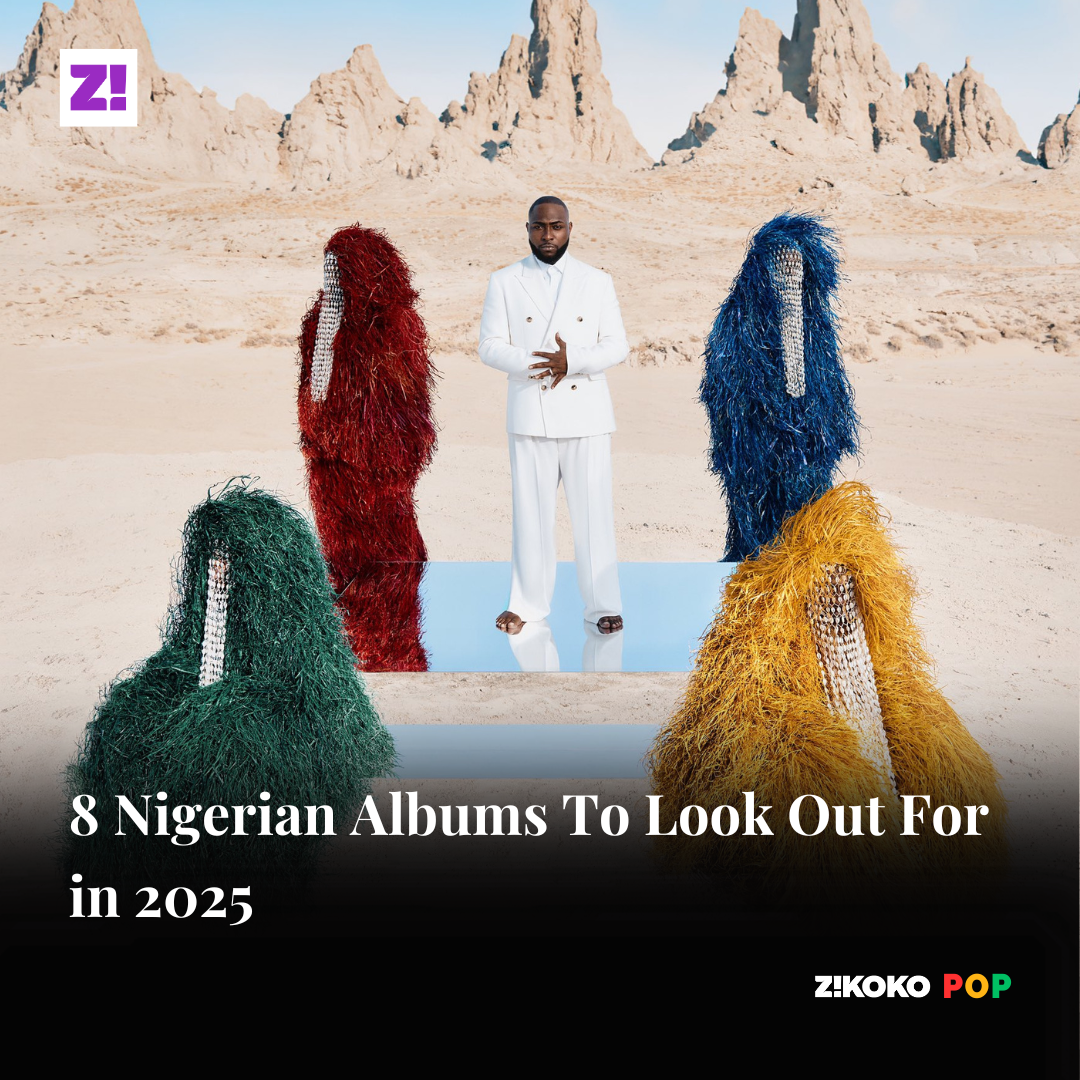
5ive — Davido
On March 14, 2025, Davido will put out his fifth studio album 5ive. It’s a 17-track album, and he has dropped two singles, “Awuke” and “Funds” off it. It’s almost two years since OBO’s last album, Timeless, and I hope the new one, 5ive, is worth it. “Awuke” is one of two singles he put out last year.
Protect Sarz At All Costs — Sarz
Nigerian prolific music producer and DJ, Sarz is back this year with a new project, Protect Sarz At All Costs. From its title alone, it’s giving ambitious. With a daring solo project like Sarz Is Not Your Mate and the beastly EDM-infused production he’s churning out lately, his new album is set to be an experimental and bold rave soundscape. No release date yet, but keep on jamming his new single with Asake.
TBA* — Lojay
Afrobeats lover boy Lojay will also release his first official full-length album in 2025. There is no title or release date yet, but we’ll continue rinsing and repeating his latest singles like “Billion”, “Loveless,” and “Dishonest.”
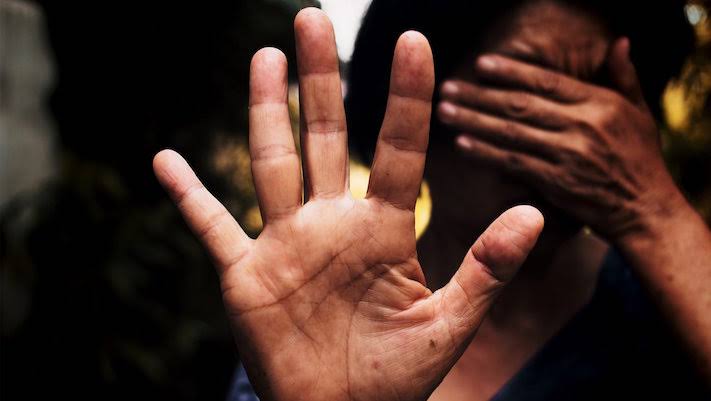
Gender-based violence (GBV) is not just a serious and pervasive issue that affects people across all demographics in Nigeria; it also hinders societal progress.
You probably already know this, but GBV includes a wide range of harmful behaviours directed at people based on their gender. But while all genders are affected by this issue, women and girls suffer it the most.
Every now and again in Nigeria, reports of different forms of GBV, like rape, domestic abuse, femicide, and many more, make the news, and each time, we ask what can be done to stop this— the answer to that question is not a straight one, as deep fundamental societal issues and norms cause GBV but there is a major solution that can be used to reduce the prevalence of GBV— the law.
How to fight GBV with the VAPP Act
Even though there are several laws in place to combat Gender-based violence in Nigeria, this crime has remained a huge issue in the country, mostly because many victims do not understand the legal frameworks available for combatting it.
This article provides a guide to clear, actionable information about legal avenues available to victims of GBV in Nigeria; this guide will help lead victims to healing and justice.
Violence Against Persons Prohibition (VAPP) Act: The VAPP Act, enacted in 2015, is at the heart of Nigeria’s legal response to Gender-based violence. This landmark legislation represents significant progress in protecting individuals from various forms of violence, particularly women and girls.
What are the key provisions of the VAPP Act?
Comprehensive Definitions: The VAPP Act defines various forms of violence, including physical, sexual, psychological, and economic abuse. This broad definition ensures that multiple forms of GBV are recognised and addressed.
Penalties for Offenders: Offenders face severe penalties, including imprisonment ranging from two years to life, depending on the nature of the crime. This serves as a deterrent against GBV.
Victim Protections: The Act guarantees confidentiality for victims and protects their identities throughout their legal proceedings. This encourages more victims to come forward without fear of stigma or retaliation.
Access to Legal Representation: Victims can seek legal aid to navigate the complexities of the legal system, ensuring they have support during what is typically an overwhelming process.
Protection Orders: This is a special legal tool in the VAPP Act designed to prevent further violence against victims. This order can be used to prohibit an abuser from contacting or approaching the victim. Section 28(1) of the Act allows victims to apply for protection orders that are effective throughout the country. Additionally, the Protection Against Domestic Violence Law (PADVL) in Lagos State provides further provisions for individuals in domestic relationships to seek such orders.
Step-by-step guide to reporting GBV
Reporting GBV is a crucial step in seeking justice and holding offenders accountable. Here’s how this can be done effectively:
Gather Evidence
Preserving evidence is crucial for constructing a compelling case against an offender. The types of evidence that can be collected include:
Medical Reports: Obtain medical documentation that records any injuries sustained.
Photographs: Capture images that clearly show visible harm.
Eyewitness Accounts: Gather testimonies from individuals who witnessed the incidents, as their accounts can corroborate your story.
Reporting
Victims can report incidents at local police stations, NGOs specialising in GBV support, or through dedicated hotlines established for immediate assistance. These hotlines include:
1. International federation of women lawyers (FIDA) – 2347088496115
2. The Mirabel center – 08155770000, 08187243468, 07013491769
3. Women at Risk International Federation (WARIF) – 08092100009, 08092100008
4. Lagos DSVA – +2349167802222
When reporting, it is important to include details such as dates, locations, descriptions of the incident, and any witnesses who may have seen or heard what happened.
Legal Processes involved in the fight against GBV
The journey through the legal system can be daunting, but understanding each stage can help manage expectations:
1. Investigation
Once a report is made, law enforcement will gather evidence through interviews with witnesses and forensic analysis if necessary. Legal advisors play a crucial role in ensuring that victims’ rights are upheld during this phase. During this process, victims have certain rights, including the right to be treated with respect and dignity by law enforcement officials and the right to be duly informed about their case’s progress and any developments during investigations.
2. Prosecution
Once sufficient evidence is collected, charges are filed in court. Victims retain rights throughout the trial process; they should feel safe and supported while testifying and to ensure their comfort and safety, the court may implement measures such as closed hearings or allowing testimony via video link if there are concerns about intimidation.
3. Judgment
The outcomes may vary from conviction to acquittal based on the evidence presented. For example, if the accused is found guilty, appropriate sentencing measures may include restitution for victims—financial compensation for damages suffered due to violence.
The case timeline varies, but staying informed and persistent ensures better outcomes.
Profiles of Some Organizations Offering Pro Bono (free) Legal Support
Women Impact Nigeria (WIN): Committed to combating social injustice and violence against women and girls through a comprehensive legal aid system.
Mirabel Centre: Specializes in providing medical care and legal assistance specifically for survivors of sexual violence.
LEEDAP: Provides free legal representation to poor and vulnerable victims of human rights violations.
Project Alert: Focuses on raising awareness about GBV while offering support services such as counselling and legal aid.
These organisations play a crucial role in empowering victims by providing essential resources and support networks tailored specifically for those affected by GBV.
In addition to the VAPP Act, other relevant laws include the Criminal Code, Penal Code, and Child Rights Act. These laws collectively address various forms of violence and discrimination. For example, the Criminal Code outlines offences related to sexual violence, while the Child Rights Act provides specific protections for minors.
These laws operate at both federal and state levels, with some states, like Lagos and Ekiti, implementing additional gender-based violence laws that complement the VAPP Act. Understanding how these laws interact is essential for effectively navigating the legal landscape.
Gender-based violence is a grave issue, but victims are not powerless. Armed with knowledge of their rights and Nigeria’s legal framework, survivors can hold perpetrators accountable and begin their journey to healing. With the support of dedicated organisations and advocates, the path to justice becomes clearer and more attainable.
You are not alone. Seek justice, find support, and break the cycle of violence.
This article was written by the We Believe You Initiative.
Want to get heart eyes for someone this 2025? Start prepping now. The last person to fall in love is a coconut head. This quiz will tell you when you should expect love to knock on your door this year.
The topic of how young Nigerians navigate romantic relationships with their earnings is a minefield of hot takes. In Love Currency, we get into what relationships across income brackets look like in different cities.
How long have you been with your partner?
I’ve been married to my husband for 10 years, and we’ve been together for 12.
How did you both meet?
Funny story. Akin was in a relationship with one of my old classmates, and we met when he accompanied her to my school’s alumni reunion in 2012. The lady abandoned him to flirt with another former classmate, so Akin angrily left. The whole drama played out in front of almost everyone at the reunion, and I remember feeling so embarrassed for him.
A few days later, I saw his Facebook profile and impulsively sent a friend request. He accepted almost immediately and sent me a message. He remembered me from the reunion, and we joked about how his babe left him for another guy. About three months after we started chatting, we met up, and love entered the picture. I moved in with him a month after we started dating.
So fast?
Akin was the first boyfriend I ever co-habited with, and I don’t even know where the confidence came from. My landlord had just increased my rent from ₦66k to ₦120k, and there was no way I’d pay that amount for a tiny face-me-I-face-you room. The initial plan was to find another apartment my ₦35k receptionist salary could afford, but househunting took a lot of time.
Akin didn’t want me to rush into getting an apartment that’d turn out worse, so he asked me to move in while I searched. I never thought I could co-habit with a lover because all you ever hear is that men take advantage of free bumbum and cooking.
But I asked myself, “What’s the worst that could happen?” At 28 years old, I wasn’t a small girl. If I became uncomfortable with the situation, I could just leave. So, I stayed, and it turned out well.
What was co-habiting like?
It was pretty smooth. Akin and I worked well together and shared everything from finances to chores. When I told my friends I paid for foodstuff and handled bills around the house, they thought I was stupid. Like what woman lives with a man who isn’t her husband and pays for things? But I didn’t see it as a big deal.
Did you both share the bills and expenses equally?
Not at all. It wasn’t like he asked me to bring money for anything — he worked in a bank and earned way more than me — we just liked to spend on each other.
I could buy foodstuff on my way home from work, and he would do the same the next day. If NEPA bill met me at home, I would just pay it. That’s how we did it. Akin paid the rent, though.
When we got married in 2014, we still approached our finances the same way. That said, we’ve had to make several changes over the years.
What kind of changes?
Between 2014 and 2017, Akin was the sole provider. I had our children and couldn’t juggle motherhood with a job.
However, he lost his bank job in 2017 and started a tiles business, which meant we were no longer sure of a specific amount coming in monthly. So, I looked for a job to support the family.
I got a teaching job with the federal government through a family friend, and my first salary was around ₦80k. Once I received my salary, I’d take ₦15k out for transport and sit down with Akin to plan how to spend the rest. On his own part, he sent his weekly profits to me to hide in a separate account for our rent.
It probably sounds like we were so in sync, but we occasionally fought about money.
What were the fights about?
First, they were mostly due to financial pressure. I felt like I couldn’t even dictate how to spend my hard-earned money because he kept tabs on my salary. When I felt like that, I complained, and it almost always led to arguments.
Sometimes, Akin also kept profits to himself and would go weeks without giving me any money to keep. Whenever I noticed that, I complained, and he’d argue that he also wanted to hold money in his hands and spend without having to explain to me.
At that point, I’d go, “Ehen? But you know exactly how much I earn and help me spend it right?”
So, yes, we fought about money a lot. But after the flare of emotions had died, we’d talk about it and understand it was normal for both of us to feel that way. It’s normal for us each to want to dictate how we spend our own money. But ultimately, we had to put family first and combine our resources for our children. When money fights happen now — which isn’t often — we try to remember that.
Glad it’s working out. What are your finances like these days?
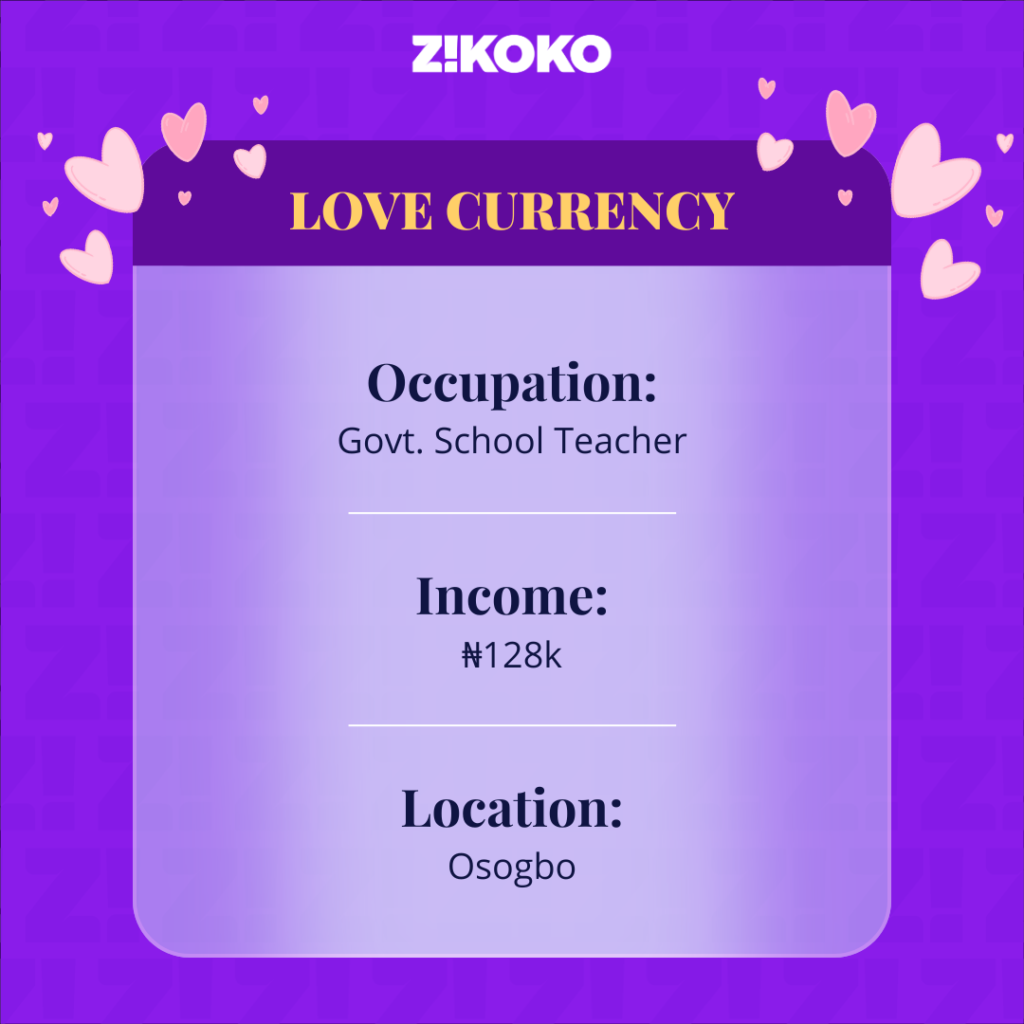
Numbers-wise, we earn more, but I don’t think it shows in our standard of living. In a good month, Akin can make like ₦200k from his business. I now earn ₦128k, bringing our total average monthly income to ₦300k+, but we still struggle a lot.
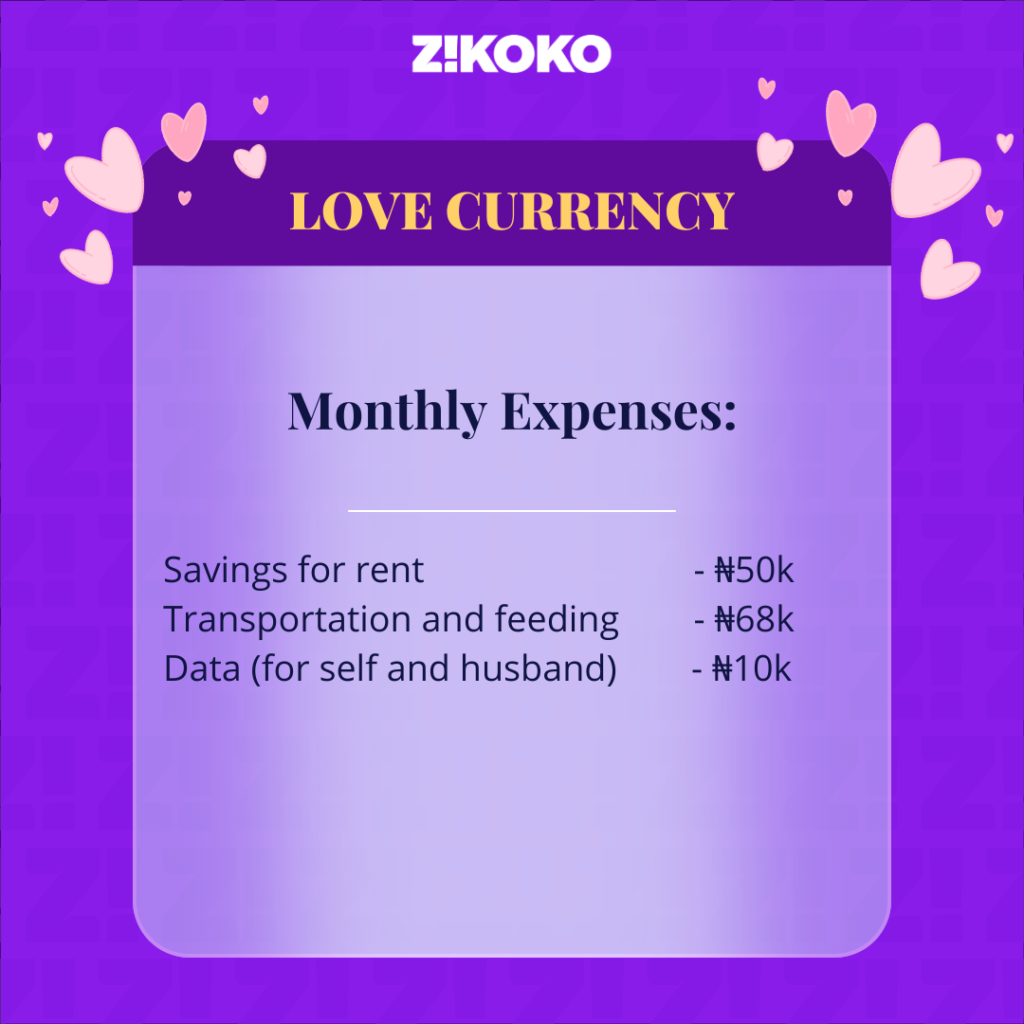
Our house rent is ₦650k, and I save at least ₦50k monthly for that. The remaining ₦78k can’t feed my family for three weeks, and there are still small expenses like children’s clothes, medication and the rest.
Akin still keeps money with me, but now we use that to handle school fees and major expenses. For example, we bought a washing machine for ₦180k in 2024. Everything else he makes goes into daily expenses like transportation, feeding, utility bills, fuel and sending money to our families.
Do you both have a relationship budget for dates and romance stuff?
Romance ke? Haha. We don’t o. Sometimes, my husband buys me suya when I disturb him about no longer putting effort into toasting me. We also take the children to cinemas and eateries during festive occasions. On my last birthday, he bought me a bag and a pair of shoes. I also bought him shoes for his birthday.
I don’t mind that we don’t always buy each other things or go out. I know how difficult things are, so it won’t be reasonable for me to ask. My husband is kind to me and helps me with everything.
Before we got the washing machine, Akin did all the laundry by hand. He’s a good man, so I understand our situation. I don’t mind spending all my money to make our lives easier. That “the man must provide everything” story doesn’t apply in my home.
What’s your ideal financial future as a couple?
My husband and I always talk about owning our home one day. If big money hits our hands, we’ll just erect a building of two or four flats so we can live in one flat and rent out the others for passive income. That would solve more than half of our problems.
Interested in talking about how money moves in your relationship? If yes, click here.
*Names have been changed for the sake of anonymity.
If you’re a netizen and you spend huge amounts of time camping on X and IG, you likely have seen the drama around streaming farms among music fans accusing one fandom or the other of using bots to rack up streaming numbers.
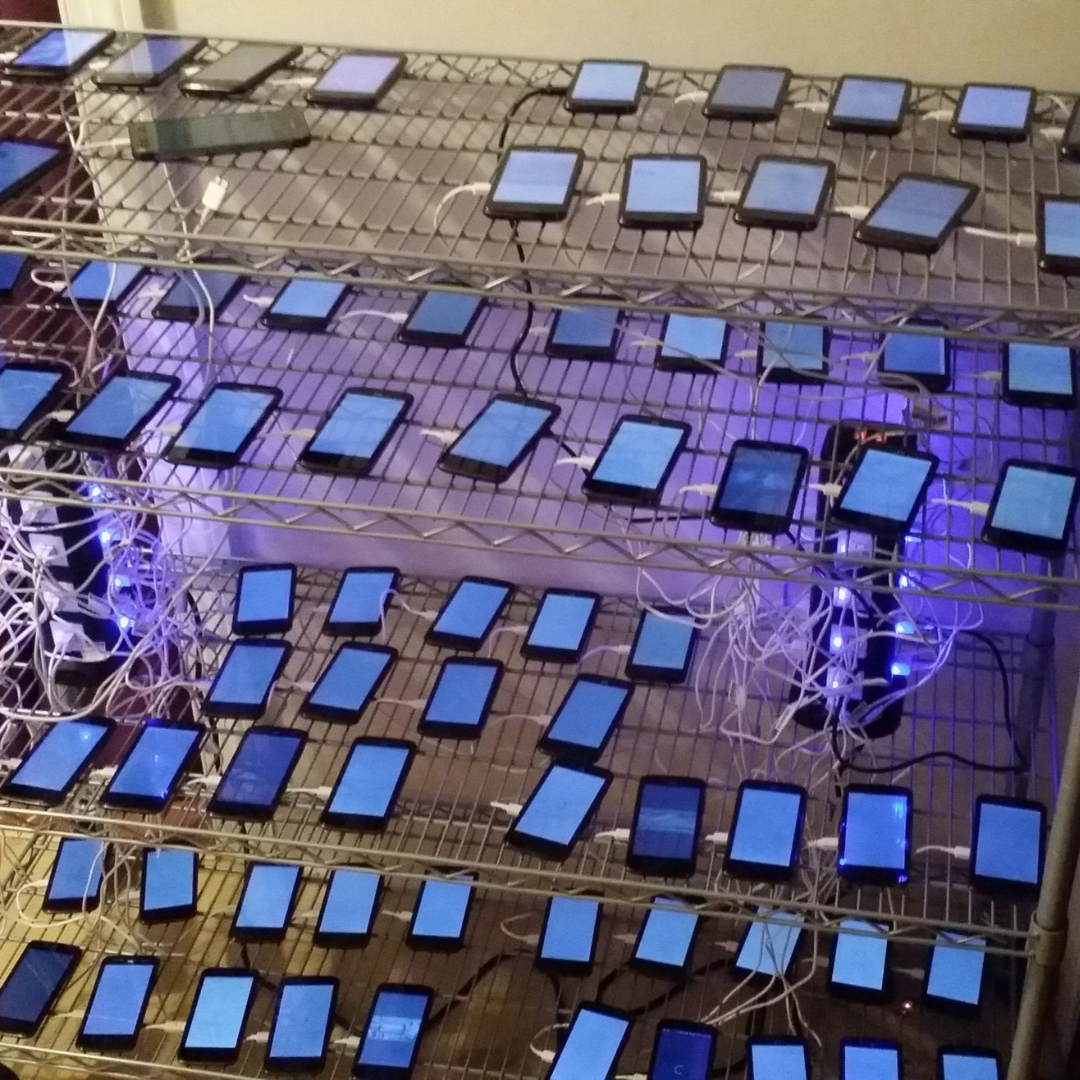
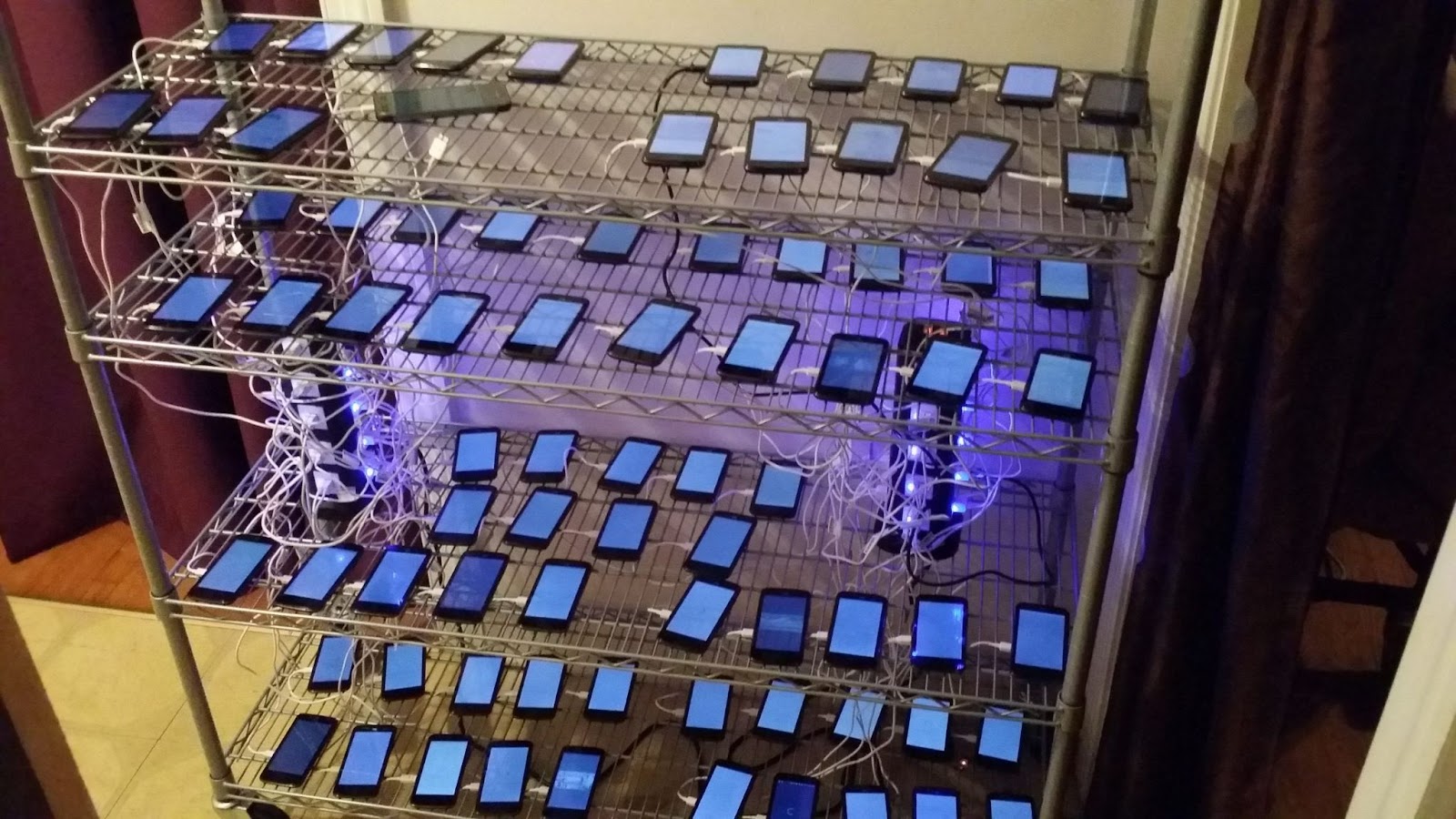
But what exactly is a streaming farm? Simply put, it’s a shady operation where bots, fake accounts, and other sneaky tactics are used to inflate music streaming numbers artificially. We’re talking millions of fake streams, raking in thousands of dollars in royalties. Welcome to the wild, wild west of surviving DSP.
If you’re looking to get into it, we have seven sure-fire steps below:
Buy a plot of land in Ikorodu
To set up a streaming farm, the first thing you need is space to set up a shop and store your devices. So, if you have free land, now is the time to build a structure on it. If you don’t have that, consider buying or leasing one at Ikorodu.
Buy many Buy-1-Get 5-free SIM cards in traffic
You need many SIM cards for your multiple phones to stream songs and share a hotspot with the laptops. Suggesting an efficient internet provider in Nigeria is hard, but go with what works for you.
[ad]
Pay a trip to Alaba
The most essential tools you need for your streaming farm hustle are phones and laptops because they stream your clients’ songs. Get many for cheap at Alaba International. They can never be too many.
Buy unlimited data plans
I’m sorry, but ₦600 for 2.5 gigabytes of data can’t sustain a streaming farm. You need unlimited data. Stick with the networks in Nigeria if you don’t have Starlink money.
Invest in good jazz
You need a strong connection to reroute the IP of your streaming devices to residential addresses outside the original location to rake up streams from other places. Even the most premium VPI can’t stand beside a very good jazz. Argue with your tech bros.
Employ your jobless friends
You need people to oversee the operations. Who else fits this, if not your less-busy discreet friends or relatives?
Refuse to trust NEPA
If you put all your hope in NEPA, you can’t have a booming streaming farm. Instead, invest in solar or be ready to splurge on fuel or diesel.
It’s January, and your IJGB (I Just Got Back) bae is back in the abroad. What was supposed to be a “no strings attached” December fling has turned into you catching feelings they’re probably not aware of.
Usually, this is where most December flings fizzle out, but not on your watch. If you’re determined to keep their interest alive, here’s how to make them miss you so much they’ll be booking the next flight back.
Remind them why they fell for you
Don’t let them forget the elite experience you put them through during Detty December. Send them cute throwback photos of your time together, or randomly text, “Remember how you kept purging after drinking roadside kunu?” A little nostalgia is your secret weapon.
And play the “Hard to Get” card
Listen, nothing keeps someone hooked like a little mystery. Don’t be too available. Let them wonder what you’re up to in Lagos. Post cryptic WhatsApp statuses like “Outside later?” or “Who’s picking me up today?” They’ll be dying to know who’s in the picture.
Speak their love language (virtually)
Find out what their love language is and cater to it. Is it words of affirmation? Send them texts like, “You’re killing it over there; I’m so proud of you.” Acts of service? Help them find a plug for the Nigerian food they’re craving. Show them that distance isn’t a barrier for you.
[ad]
Drop hints about your growing options
IJGB flings are built on competition. Now that they’re back abroad, remind them you’re still in demand. Casually mention someone who bought you lunch or took you out for drinks. Don’t overdo it, though; just enough to keep them on their toes.
Flirt like your life depends on it
Remember how you had them hooked during the Detty December rush? Bring that energy back. Send them random texts like, “I miss how you laugh at my jokes,” or “When are you coming back to finish what we started?” or send them thirst traps. IJGBs love a good ego boost.
Start planning their next trip back to Nigeria
Listen, you have to be proactive here. If you leave it to them, they’ll probably not return to Nigeria until the next Detty December rush, and that’s enough time for them to move on to the next thing. Suggest places you both didn’t visit during December, or hint at fun activities you’ll do together next time. Make the idea of seeing you again too exciting to resist.
Save the drama
Nothing kills interest faster than unnecessary stress. Resist the urge to ask, “Where is this going?” or send a “So you’ve forgotten me now?” text. Let things flow naturally, and let them realise they can’t live without you.
Have a life outside them
Here’s the twist: while trying to keep them hooked, ensure you’re living your best life, too. Post pictures of yourself enjoying Lagos life, hanging out with friends, or even starting new hobbies. Let them see they’re just an option and not your final destination.
Not to sound like a broken record, but thank you for sticking with us through 2024. I speak for the team when I say that we enjoy finding these stories and bringing them to you. It’s been a privilege.
This year, we’re doubling down on our mission to make sense of money: how Nigerians make, spend, grow, and sometimes lose it. Our goal? To tell honest, relatable stories that spark meaningful conversations about personal finance, open you to possibilities you hadn’t considered, and help you make informed decisions.
There’s something for everyone here, and I hope you find the newsletter even more useful (and fun!) in 2025. How’s that for a manifesto?
Now, let’s kick off the year with the first Naira Life of 2025!
In this letter:
The #NairaLife of an Unemployed Graduate Who Isn’t Looking for a Job
Tell Us How We Did This Year
QUIZ: How Will You Make Money in 2025?
Where The Money At?!
The #NairaLife of an Unemployed Graduate Who Isn’t Looking for a Job
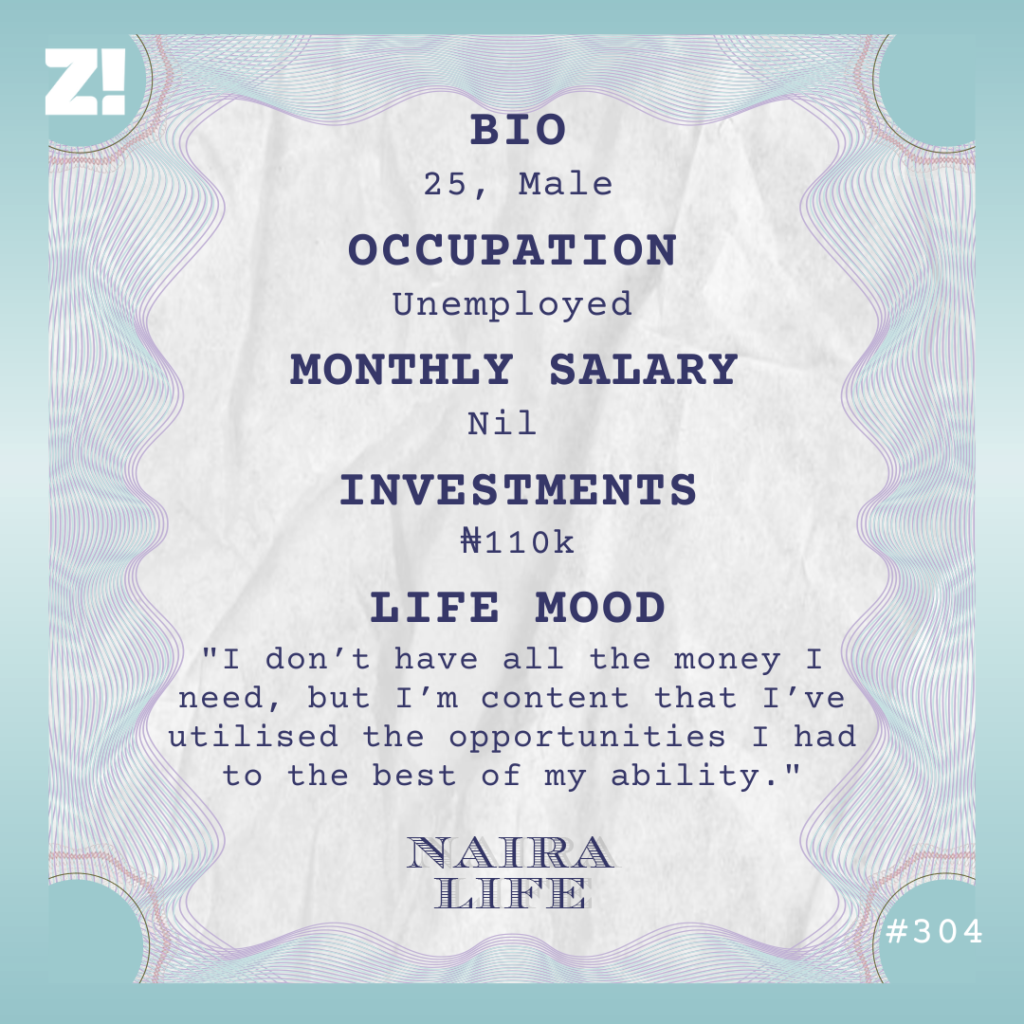
This subject may be only 25 years old, but he has several years of experience trying different tricks to make money and has built income opportunities where there were none. However, he hasn’t had a stable income for about three months now, but he’s not bothered. Why?
We can’t say we’re about the money and not actually help you find the money.
So we’ve compiled a list of job opportunities for you. Make sure you share this with anyone who might need it because in this community, we look out for each other.
Every week, Zikoko seeks to understand how people move the Naira in and out of their lives. Some stories will be struggle-ish, others will be bougie. All the time, it’ll be revealing.
What’s your earliest memory of money?
In JSS 3, I was a part-time apprentice learning how to make aluminium windows. Sometimes, clients would drop amounts like ₦1k for the apprentices to share. I can’t remember how much I usually got, but it was enough for snacks. That was the first time I got extra money — my family was quite poor —so it was a big deal.
Tell me more about your family’s financial situation
I grew up in the north, and everyone was pretty much content with what they had. I only realised we were poor when I became older.
My dad was an okada rider, but when the state government banned okadas, he lost that income source. Then, he had a stint cleaning at a general hospital and farmed for food.
My mum also did several things for money; she sold kerosene, firewood, uncooked pap and ground pepper for people with her grinding machine.
I’m the first child, and learning a trade while still in school was my parents’ way of making sure I had skills that could lead to money in the future. I didn’t just learn how to make windows; I also learnt photography and electrical installations. Those didn’t exactly bring money— except on the random occasions when clients dashed the apprentices’ money. I did get a chance to make money when I got into the polytechnic in 2017.
How did that happen?
So, at this point, I was living with my uncle. His son and I schooled in the same area, and I remember him giving us foodstuff and ₦500 each, then explaining that was all he had after saving for two weeks. It was very clear I needed to figure something out.
My mum sent me my first school fees — around ₦62k, but instead of paying my fees, I teamed up with my girlfriend and used the money to start a plantain chips business. We’d wake up at 4 a.m. to buy plantains at the market for insanely low prices, fry and pack in small plastic buckets, which we then gave to people to sell in school.
We didn’t turn a profit at first, but I made my school fees back.
Phew. That could’ve turned out badly
That wasn’t the last time I used my school fees for business. We sold the chips for about a year and used my school fees as the capital for the most part. We stopped after a year when school authorities banned students from selling on the premises.
Around the same time, my landlady sent me and my guys packing, so I used everything I’d saved from the business to rent a new room. My guys never refunded me, and that’s how that money went.
I finished my OND in 2019 with distinction and got a ₦50k cash gift from the state governor. I used the money to buy an Infinix phone someone eventually stole.
Yikes.
Anyway, my internship came next, and I secured an intern technician role at a company that sold inverters, batteries and other energy products. My salary was ₦15k/month, which mostly only covered transportation.
Whatever was left went into financial self-help books. I think my financial situation really started to hit me, and I just wanted to learn everything I could about making money. I also started a liquid soap side hustle with the guys I lived with.
We made the soap in 5-litre kegs and sold each at ₦1k. We stopped when we ran out of customers. Then, we moved to coated peanuts. A friend’s sister sold zobo, so I went to her for used zobo bottles. We washed the bottles and used them for our peanuts. I can’t remember how much we sold the peanuts because sales weren’t consistent. We just shared whatever profit we made.
That’s how I managed my ₦15k salary. At some point, my employers increased it to ₦20k, but I didn’t enjoy that for long because my two-year internship ended three months later.
Two years?
It was supposed to be one year, but I waited an extra year to return to school for my HND because of my girlfriend. Our school had some delays with the HND programme, and I didn’t want to leave her behind. Funny enough, she got a scholarship to study at a private university, and I returned to school alone.
But before I returned to school, my girlfriend and I decided to take the coated peanuts business seriously and make it a professional venture. We registered the business as a company and got NAFDAC approval in 2021. That was around the time Vice President Osinbajo offered a discount for people to register companies, and I spent less than ₦20k.
What was the NAFDAC approval process like?
Pretty seamless. I went to their office to get the requirements, and it took us about two months and about ₦100k from start to finish. That included the cost of fumigating the kitchen space we used for production and settling other requirements the NAFDAC officials gave as conditions for the inspection before finally getting the approval. We started selling before the approval came, though.
My girlfriend took the peanuts to different banks on Fridays, and we also approached several supermarkets. We made the peanuts in 200 and 500 grams bottles and sold each at ₦1500 and ₦3k, respectively. Again, sales weren’t that consistent, and we put most of what we made back into the business.
Marketing reduced when I resumed school. Since my girlfriend had transferred schools, I had to do it alone. So, in 2022, I dialled down on production and turned to writing for extra cash.
How did that go?
The money wasn’t great, but I survived. Although it was inconsistent, I charged ₦15k to write and print projects for students. Even when the gigs came, a project could take about three to six months to complete.
Naturally, I was exploring other opportunities. A few friends in school had access to the SUG buses and used to get periodic solar installation gigs, so I tagged along since I had installation experience. The first time I went with them, we installed 12 panels in about four different places, and they paid me ₦45k. That was the biggest lump sum I’d ever received as personal income. I was so excited.
Subsequent gigs paid ₦15k, but I absolutely loved it. I spent practically nothing on transportation and got fed whenever we went for gigs. It was like free money for only three hours of work. After a few months, I started getting the gigs myself and sharing the work with a friend. The first huge gig I got was in 2023, during NYSC. ₦1.3m for solar panel installations.
Mad o
That wasn’t only profit o. I still had to buy the panels and other materials. Even though I brought two friends on the project, I made ₦200k in profit. But that ₦1.3m was the biggest amount to ever enter my account. It was surreal.
Besides the occasional income from the solar installation gigs, I also got ₦53k/month from NYSC — ₦33k stipend and ₦20k from my Place of Primary Assignment (PPA). I served in the same polytechnic I graduated from, and I did everything from being a personal assistant to a lecturer to helping him teach classes within and outside the school.
In addition, I got some side income helping students write project reports, which brought ₦30k on average. Plus, I received random ₦10ks here and there from students who were being supervised by the lecturer I worked with. The lecturer was super strict with projects, and some students gave me money to help with their projects or make sure they got approved.
I made good money during my service year, and when it ended in October 2024, the money was pretty much used to set up my life. I got a ₦150k/year self-contained apartment and furnished the place with some furniture and other essentials. I even splurged ₦280k on a fridge and got a new laptop for ₦370k. In all, I spent about ₦1m.
What’s your income like post-NYSC?
I’m currently unemployed with no consistent income. Right now, I have only ₦900 in my account. Solar panel installation gigs don’t come as often anymore, and I can’t be sure of when or how much money will enter my account. The last gig I got was about a month ago, and it paid ₦220k. I used that to buy half a bag of rice and some other provisions because I might not get another gig for another month or two.
I still run the coated peanut business, but I don’t earn from it. My girlfriend and I broke up in 2023, and I haven’t had much time to focus on growing the business. I have a manager who I pay ₦30k/month to handle the end-to-end process of producing and packaging the peanuts whenever we have orders from a supermarket.
Whatever we make is returned to the business to pay the manager and other workers involved in production. The orders don’t come every month, and I have to pay the manager out of pocket most of the time, like I did in the last two months. I hope to give more attention to the business in 2025 and see how I can grow it.
Out of curiosity, does your unstable financial situation come with some anxiety?
Definitely. I get anxious, but I anticipated this as I was rounding up NYSC. I just make sure to always have food at home so I don’t add hunger to the pressure of not having a job. That way, I can keep a clear head and explore how to pursue my dreams and turn my business around.
I also have some money invested. Out of the ₦220k I made last month, I invested ₦110k in a friend’s cassava farm. I’m supposed to put in ₦350k, so I’ll spread the balance over the next few months. I expect to make a ₦245k profit added to my initial investment after harvest at the end of the year.
So, when I feel bad about asking someone for ₦2k data like I did last night, I remember that I still have something to look forward to. I also have the bulk of my money invested into my business. It reminds me that while I don’t have money right now, I didn’t exactly waste it when I had it.
Right. Sounds like you’re not exactly job-hunting
I think about getting a job sometimes, but I want one that’ll give me time to pursue other interests and maybe explore a writing career. I don’t want to be stuck at a 9-5 that’ll keep me in a cycle. I’m not looking for a job just to survive.
I’ve turned down offers. The person I work with on solar installation projects offered me ₦100k/month to come work with him full-time, but I refused because I’d have to go everywhere with him and possibly work 24/7. I don’t want that. If I find a remote job that allows me flexibility and creative control of my time now, I’d definitely take it.
I notice you haven’t really mentioned your family, but you’re the firstborn. Do they have financial expectations of you?
My dad and I are not on great terms. Nothing serious; he just doesn’t know whether I’m surviving or not since I was in the polytechnic. My mum doesn’t ask me for money, but she put me through school. So, whenever I have money, I send her between ₦20k – ₦30k, or as I earn. For my siblings, I support them when I need to. I’m not under black tax pressure to handle anyone’s expenses.
Talking about expenses, what are your recurring monthly expenses like?
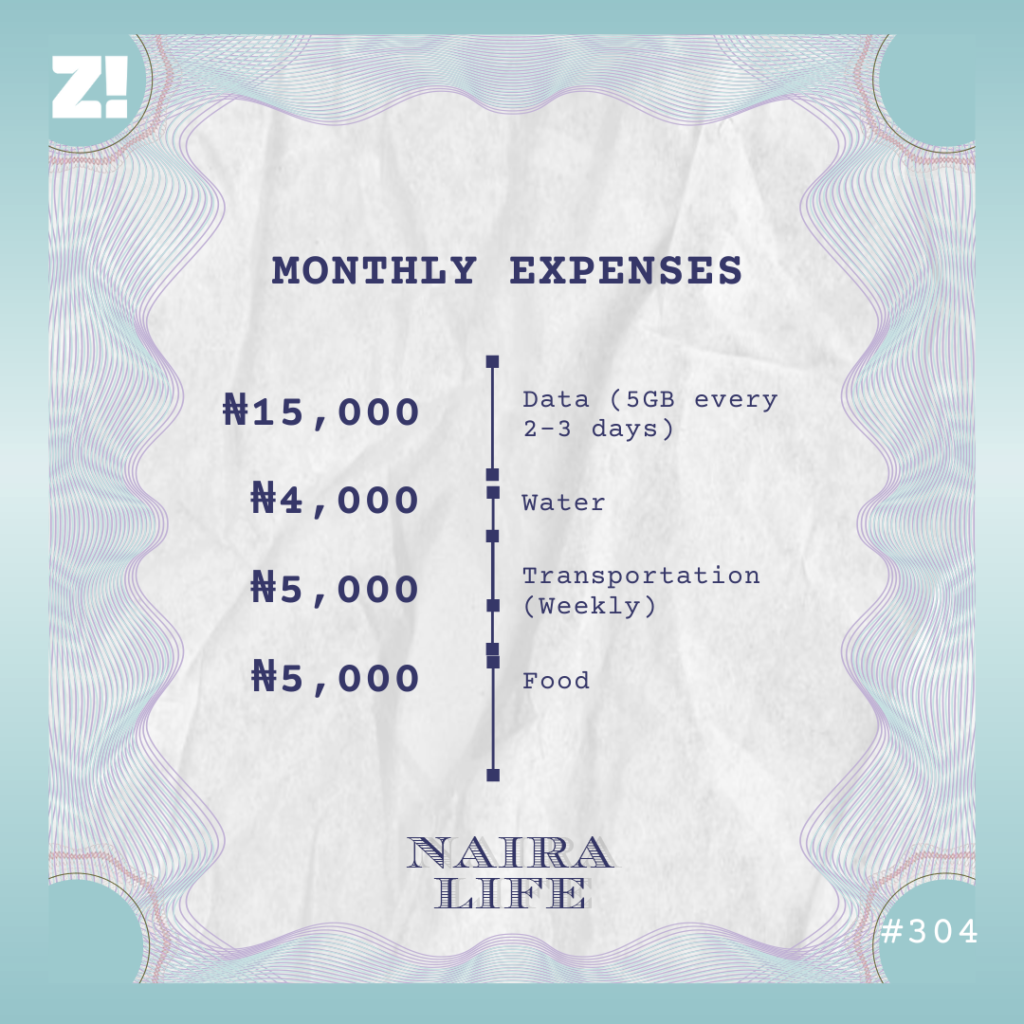
I buy food in bulk when money enters my account, so I don’t spend on food monthly. The only food items I buy outside bulk shopping are bread and the occasional pepper for stew.
How would you describe your relationship with money?
I’m quite self-sufficient, so it makes me plan my money right down to the last kobo. I don’t like begging or asking for salt from neighbours, so I think ahead for whatever I might need and plan accordingly.
I also like to invest. I know if I spend everything that comes to my hand, I’ll suffer for it soon. But by investing, I have something to look forward to.
Is there something you want right now but can’t afford?
A washing machine. I’ve become very lazy to do my laundry. The last one I checked cost ₦177k, and I’ll probably get it next year from the proceeds of my cassava investment.
How would you rate your financial happiness on a scale of 1 – 10?
5. I don’t have all the money I need, but I’m content that I’ve utilised the opportunities I had to the best of my ability.
If you’re interested in talking about your Naira Life story, this is a good place to start.
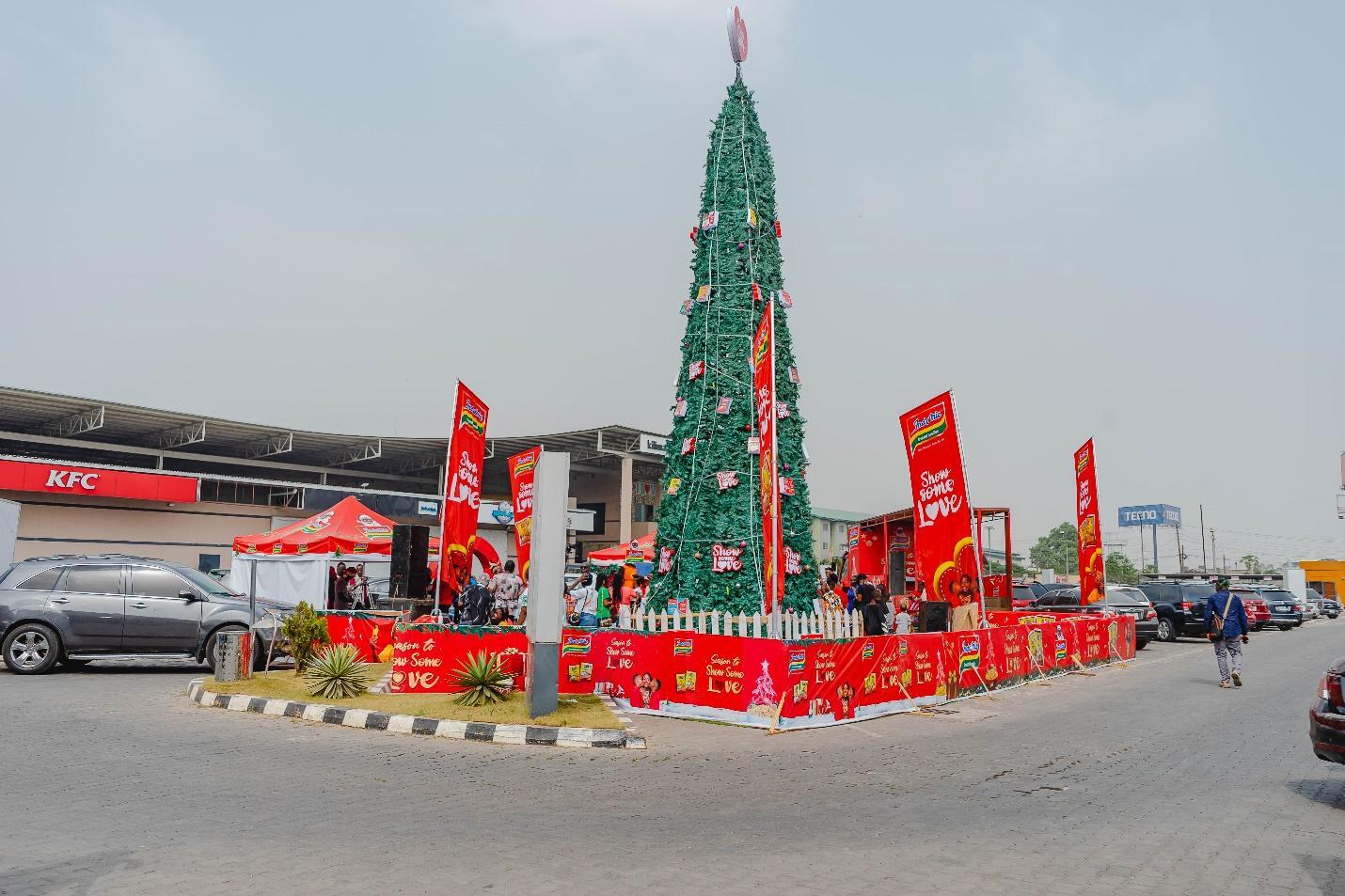
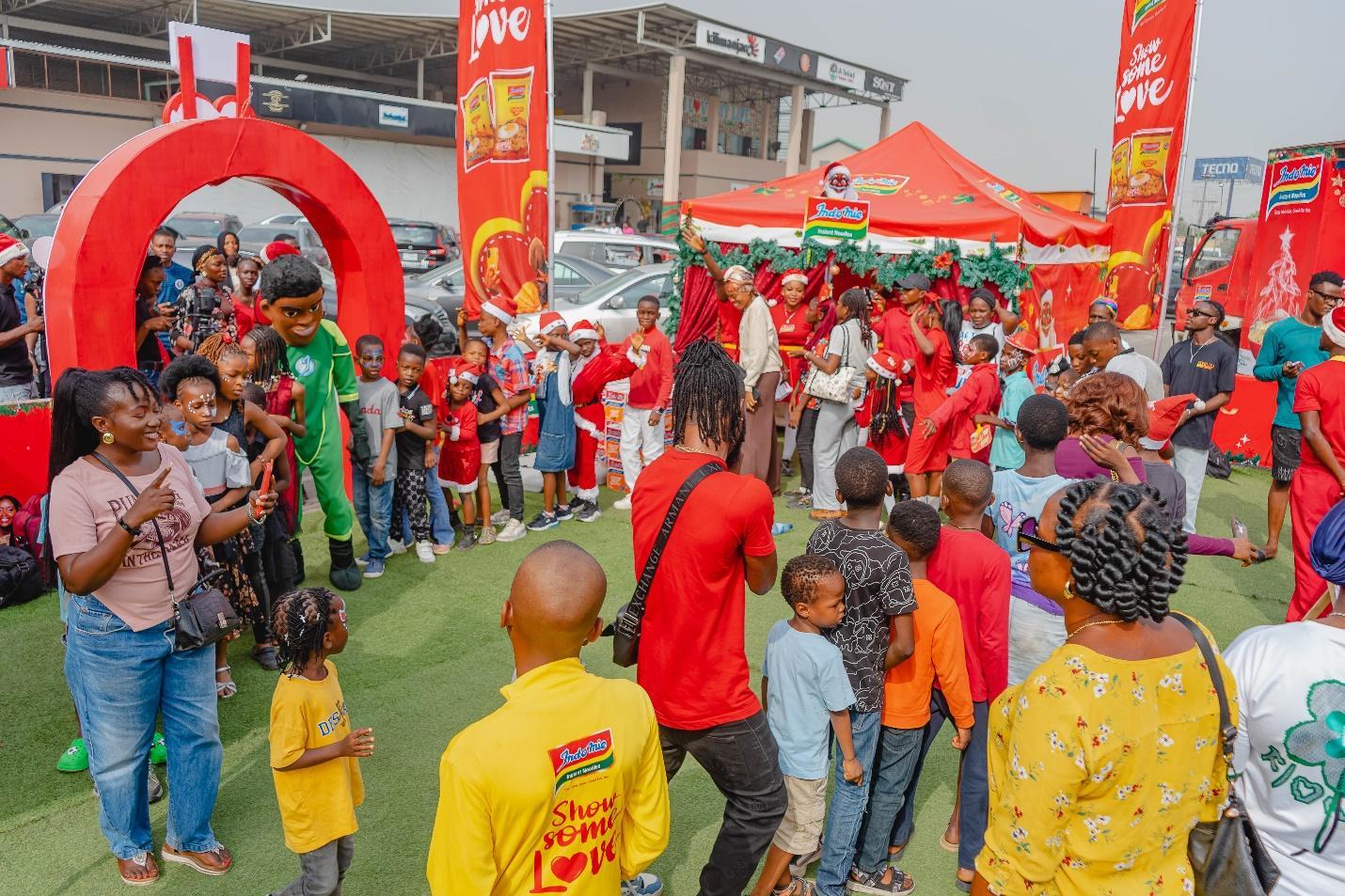
How Tall is the tallest Christmas Tree You have Seen? As part of Indomie Noodles’ Season to Show Some Love campaign, the brand has brought the festive spirit to life with the Indomie Noodles Christmas Experience Centre! This experience features a record-breaking Tallest Christmas Tree. The whole space was carefully designed to offer families an unforgettable Christmas experience filled with love, laughter, and cherished memories. The festivities kicked off on December 21st and are set to run until December 29th. However, the celebrations truly reached their peak on December 24th, 2024, delivering an experience to remember.
The festivities kicked off on December 21st and will run until December 29th. But the centre came to its peak on the 24th of December 2024, and it was truly special! From the moment the doors opened, every corner buzzed with awe, excitement, smiles, celebration.
This wasn’t just an event to attend, it was an experience to be part of. The giggles and chatter you could hear from every corner showed that every detail of this experience was carefully crafted to create lasting memories. From twinkling decorations to lively activities and heartfelt moments, the atmosphere created gave every visitor the magical feeling of the season.
For those who missed out, here are some of the standout highlights:
The Tallest Christmas Tree: Starting with the showstopper! The brand’s magnificent Christmas tree proudly towers above the entire Experience Centre. Adorned with twinkling lights and ornaments, it’s not just a tree, it’s a symbol of love, unity, and togetherness. A simple glance at it just gives you that extra sparkle to excitement around the season.
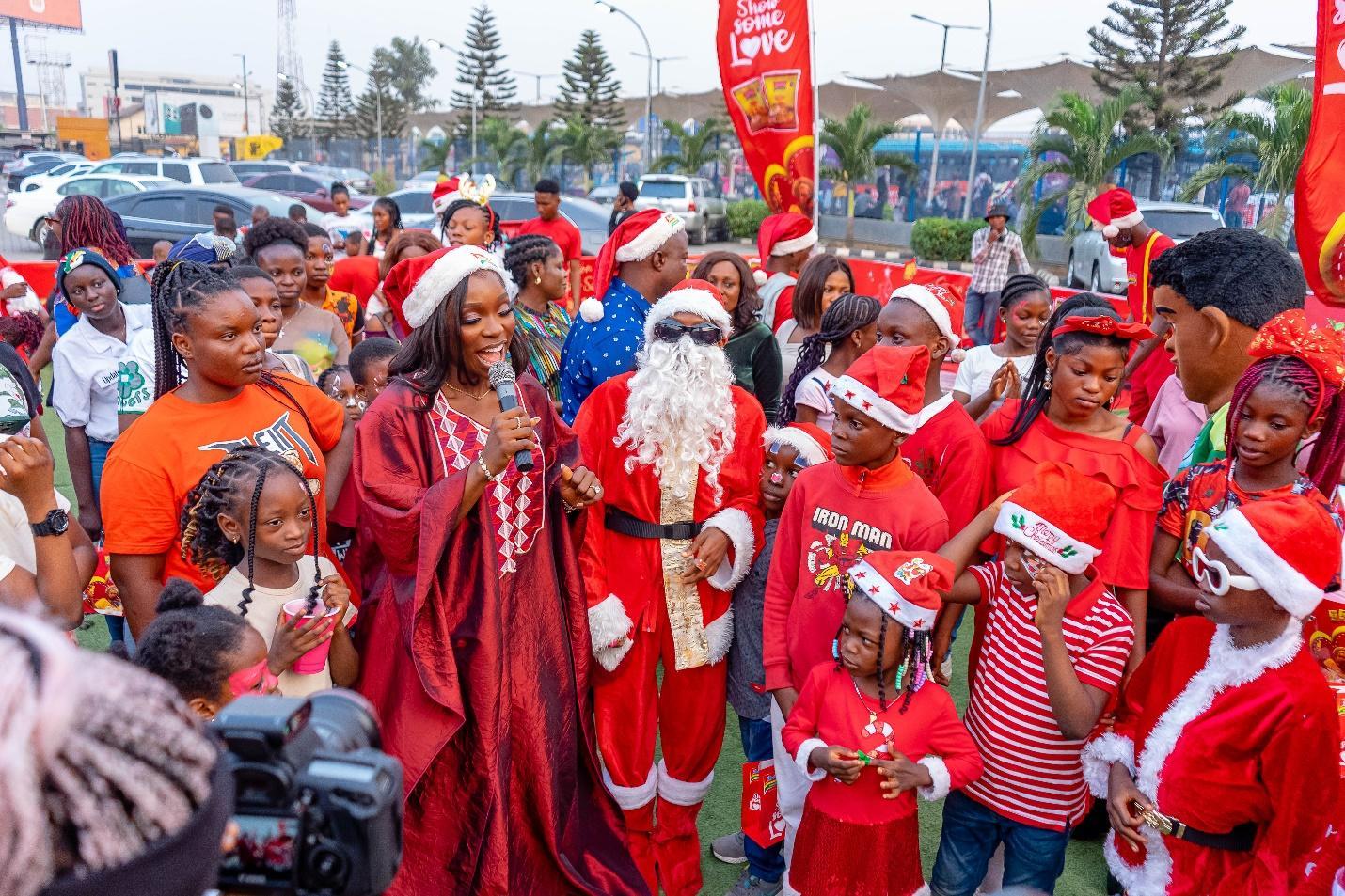
Indomie Santa: What is the Indomie Christmas Experience without the Indomie Santa Claus? The Indomie Santa has been a key aspect of the brand’s entire Christmas campaign. Since its digital take over and Nieghbourhood Santa Surprise, it is only right that he would be present at the Indomie Experience Centre. Indomie Santa brought warmth, laughter, and surprise gifts, making every child and even adults feel truly special.
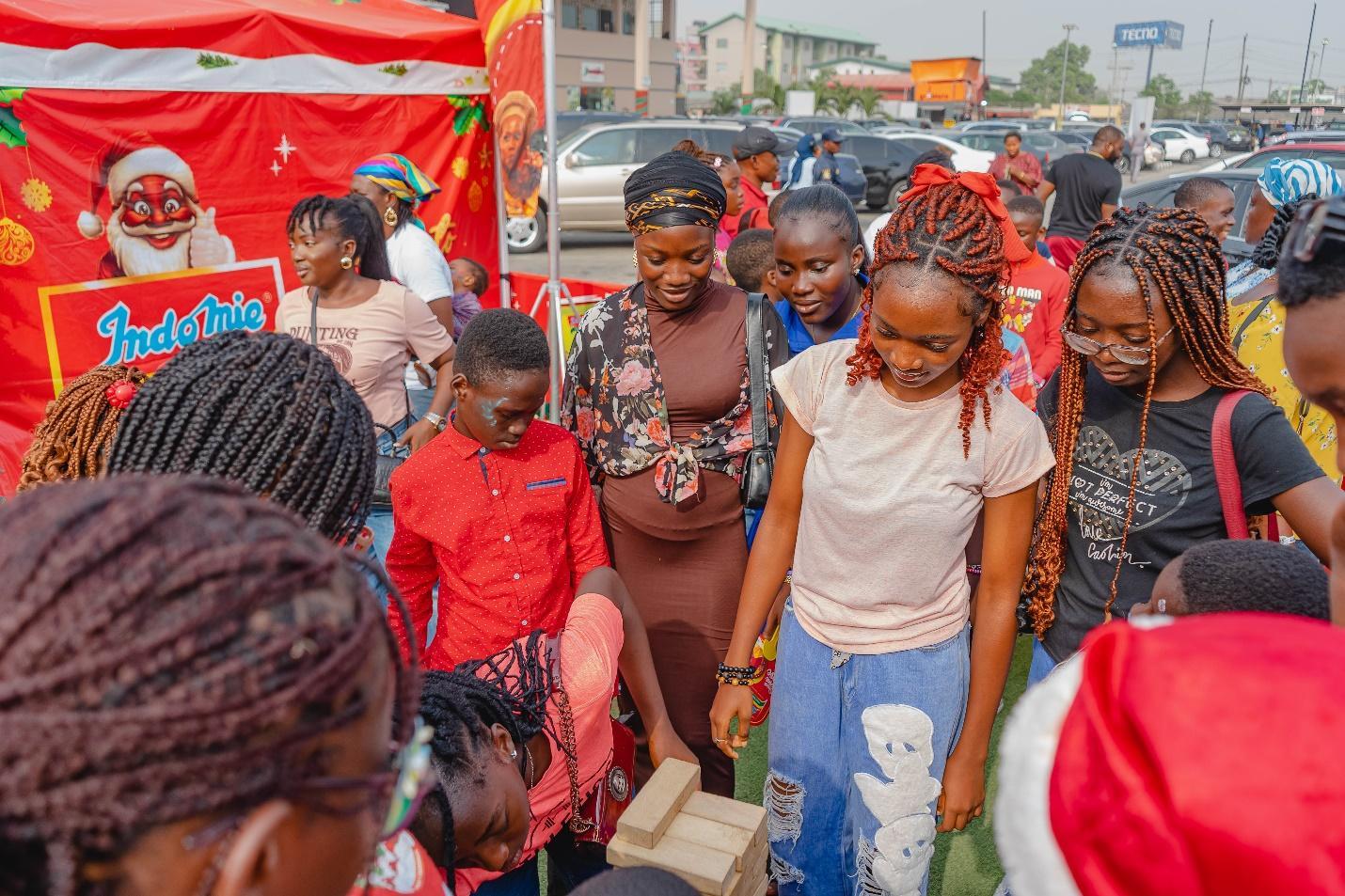
Fun Activities for Everyone: The brand also curated numerous activities best fitting for its target audience, ensuring that there was never a dull moment! From lively games to friendly competitions, colourful face painting, and electrifying music, every activity was designed to keep families engaged and entertained. Whether the guests chose to join in the fun or cheer from the sidelines, the fun was contagious!
The Santa Costume Competition: One of the biggest highlights was the Santa Costume Competition! Indomie Noodles invited guests to dress up as Santa Claus, and the participants delivered. From classic red suits to creative interpretations, every participant brought their A-game. After much excitement the winners were crowned and celebrated in true Indomie style, going home with multiple packs of Indomie.
Influencer Surprise by Tomike Adeoye: Just when the people thought the day couldn’t get any better, Tomike Adeoye came strutting in like an angel, catching everyone present by surprise and amping up the Christmas spirits. The celebration went up a notch as she engaged the audience in various activities, such as dance competitions, games, and even hosted the Santa Competition.
Indomie Show Some Love: At Indomie, showing love isn’t just a campaign theme, it remains at the heart of their values. Everyone who was present at the experience centre was special, so the brand surprised every guest with Indomie Santa Claus caps and festive goodies. Whether or not they participated in competitions, everyone left a winner!
Tasty Instant Noodles: No Indomie experience is complete without the mouthwatering aroma and irresistible taste of Indomie Instant Noodles! To wrap up an already exciting day, everyone was treated to freshly cooked servings of Indomie Noodles. Whether enjoyed solo or shared with loved ones, these servings added the perfect finishing touch to a day filled with fun, laughter, and festive cheer.
The Indomie Christmas Experience Centre was truly the place to be this season. From the joyful moments shared with friends and family, to the new bonds created, it was an experience that left everyone with lasting memories.
Following the success of the experience centre, Indomie Noodles promises to keep the magic and festive spirit going. The brand will always find ways to spread love and create memorable moments, both during the holidays and throughout the year.
We are not sure if this is to be categorised as a high or low-quality problem, but some Nigerians might be in for the mother of all modern inconvenience– a telecommunication shutdown.
On December 31, just as Nigerians said goodbye to 2024, the Association of Licensed Telecommunications Operators of Nigeria (ALTON) said that they might suspend their services in some regions of the country if the Nigerian Communications Commission (NCC) does not okay their demand for a tariff increase.
In a statement signed by ALTON Chairman Gbenga Adebayo, the association said that Nigeria’s telecom industry is hanging by a thread and would need to increase the current tariff as a matter of survival as they currently suffer high energy costs, rising inflation, high cost of operation, unstable exchange rates, and other issues.
The ALTON chairman emphasised that telecom operators need to, as a matter of survival, raise the tariff to reflect the unfortunate impact of the Nigerian economy on their businesses but have been able to do so due to the NCC’s refusal and have experienced stagnancy as a result.
Although they were not specific on time and location, ALTON said it’d be cutting telecommunication services in certain regions of the country and at certain times. In the words of its chairman: “If nothing is done, we might begin to see in the new year grim consequences unfolding, such as Service Shedding; operators may not be able to provide services in some areas and at some times of the day leaving millions disconnected…”
How will a telecommunications shutdown affect you?
Actually, the question should be, “How will it not affect you?” because a telecommunications shutdown is on the same level (if not worse) as an electricity blackout. If telcos go ahead with their plan to suspend their services in some regions of the country, this means that people in those regions will literally be catapulted back to the Stone Age, as they will only be able to use their devices at certain times of the day. Imagine using your phone only when the rationing allows you to.
On a larger scale, a suspension of telecom services would be potentially catastrophic for Nigeria, as essential sectors like healthcare, education, security, and commerce would be mad stranded without those services.
What does a tariff increase mean for you?
Telecom operators have explained how the current tariff weighs heavily on their operations, and Nigerians will definitely be singing the same song if the NCC agrees to a tariff increment.
Currently, the tariff stands at ₦11.00 per minute for voice calls, ₦4.00 for Short Message Services (SMS), and ₦1,000 for one GB data bundle. If the tariff increases, customers will be charged ₦15.40 per minute for voice calls, ₦5.60 for SMS, and ₦1,400 for one GB data bundle.
So, in addition to paying more for almost everything, Nigerians will have to dig into their pockets for extra cash to afford services as essential as telecom services.
What is the solution to this problem?
The obvious solution here might seem to be for telecom operators and the NCC to come to an agreement, but according to all that ALTON has said, the only acceptable agreement in their books is a tariff increase, which unfortunately brings us back to the issue of being forced to pay more.
The only real solution is the not-so-obvious one—an economic turnaround. Nigeria is currently experiencing what has been termed its worst economic crisis on record, and its impact has been felt on just about everything in the country.
From an increase in the cost of air and road travel to an increase in food prices and more, people in the country have barely caught a break, and neither has its industries. In 2023, following the impact of fuel subsidy removal and bold monetary policies, several companies like Bolt Food, Procter & Gamble, GlaxoSmithKline (which had operated in the country since 1972), and Jumia Food all left the country for similar reasons.
Also, in 2023 alone, about 767 manufacturing companies in Nigeria had to shut down their operations due to the same old culprit– the economic crisis. Now, telecom operators are asking for a tariff review, citing the same issues.
From all angles, there hardly seems to be a solution or an end in sight to the current telecom threat. As it stands, the NCC might have to finally agree to the tariff hike and Nigerians might have to pay extra for telecom services.