Marriage is often framed as a story of love and family. But for many Nigerian women, it also becomes a defining force in their professional lives. These five women navigated the intricate balance between ambition and marital commitment. For some, marriage became a partner in progress; for others, it demanded tough choices and relentless grit.
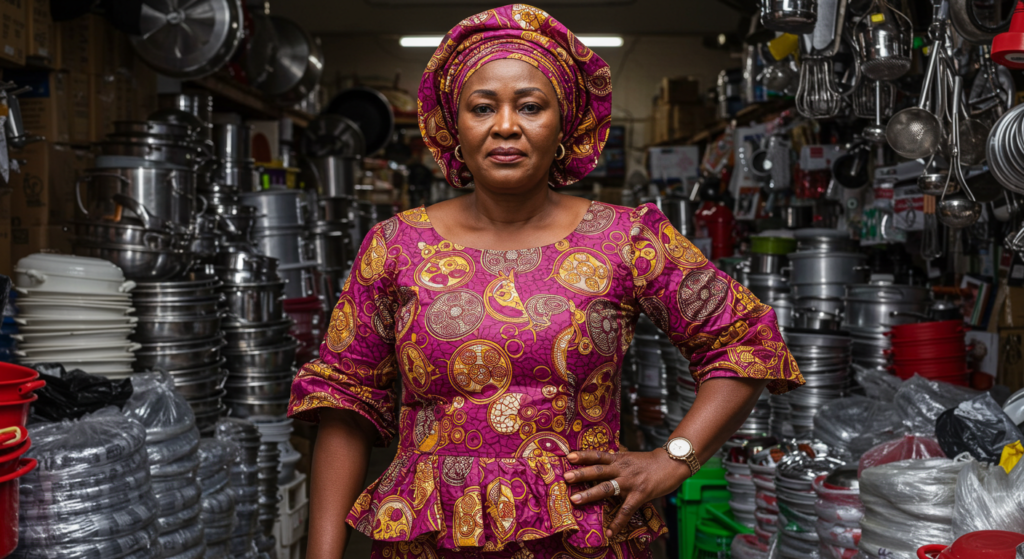
“I had to choose between my business and my home, and I refused to shrink” — Silifa*, 58
I was 22 when I got married for the first time in 1989. Two years before I married, I finished secondary school and ventured into business. My mother was a well-known trader in the town’s market, and she brought me into her business line: kitchen utensils. She didn’t just teach me the ropes; she helped me set up, passed down her supplier list, and gave me her blessing. Within a year, my shop looked like an overnight success.
Around the same time, she arranged for me to marry the son of a family friend — a young man who worked as an administrator in a government office. On the surface, everything was perfect: a thriving business, a stable husband. But that balance didn’t last long.
My business was wholesale, so I supplied retailers. That meant waking up as early as 6 a.m. to meet market demand, sometimes not returning home until 8 p.m. I was either on the road to Cotonou to buy goods or moving between warehouses and shops. By the early 1990s, my business was booming, and we had our first child. I was young, ambitious, and earning more than most men my age, including my husband.
I was out-earning him, expanding to a bigger shop, and building influence in the market. Instead of celebrating, he withdrew.
I didn’t notice the cracks at first. I was barely home; nannies cared for our child, and housemaids ran the home whenever I was away. My husband grew more uncomfortable, and his family even more vocal. Over the years, the pressure mounted. They called one family meeting after another, each with the same accusations: “She’s neglecting her wifely duties. She’s not submissive. She’s too focused on money. A woman should know her place.”
I would listen, nod, and go back to my shop. But the complaints never stopped.
Then, in 1997, the final meeting that broke the camel’s back happened. They sat me down and told me plainly: I had to choose between my business and home. Our daughter was five, but I knew I couldn’t throw away what I had built over ten years. I refused to shrink.
My husband packed his things a few months later and left our rented apartment. The marriage was over.
I stayed single for a few years and focused on my business.
Eventually, I remarried a businessman who I thought would understand my lifestyle in the early 2000s. At first, it seemed like a better match — we spoke the same business language, and I thought we could build together. But soon, the same questions came up: Who is the man? Who is the woman? We were both ambitious and making money, yet the marriage couldn’t hold. We had one child together before it collapsed after two years.
After that, I chose my path and kept scaling my business. I bought my first car, built my first house, and established my name in the market. I’ve run the same business for over thirty years, and I’m now setting up one for my daughter.
I have companions from time to time, some older, some younger, but marriage as an institution wasn’t for me.
“He handled what I couldn’t, I handled what he couldn’t, together, we built a life of balance and ambition” —Tito*, 55
When my husband and I met at the university in 1988, we were both studying Business Administration. From the start, he saw something I didn’t fully see in myself. After graduating in 1991, he went straight into the job market, while he encouraged me to specialise further. “Go for accounting,” he said, “you’ll be good at it.”
It wasn’t an easy path. The chartered accounting exams were tough, and at the same time, we were starting our young family. But he stood firmly behind me, holding down the house and ensuring I had the space to study. By the time I qualified, I was already balancing motherhood with a growing career in finance.
Step by step, I climbed the corporate ladder and increased my earning potential. Promotions came slowly at first, but things moved faster once I broke into management. Eventually, I became an executive, earning far above the average Nigerian. I even went back for a PhD in my late 40s.
Meanwhile, my husband built his steady career in business administration, never once making me feel guilty for earning more than him. If anything, he celebrated it. He handled what I couldn’t, I handled what he couldn’t, and between us, our children had both stability and ambition at home.
By our early 50s, we were in a place many couples dream about: comfortable, financially secure, with properties in our names and children studying abroad. Looking back, I’m glad we made the quiet decision to invest in each other’s strengths and trust the balance of our partnership.
“I stopped waiting for my husband to make the business work, and rebuilt it on my own” — Bosede*, 46
I was in university when I got married in 2001. My husband supported me through school, and by the time I finished in 2004, I had landed a teaching job. At first, it felt decent, like a small step in the right direction. But reality sank in quickly: the pay was poor, the work exhausting, and with marriage and two children to balance, the effort didn’t seem to add up. I’d often complain to my husband that the stress drained me without any substantial reward.
One day, he came home with a suggestion. He told me I should quit teaching and set up a business with him instead. He said I had the resilience for pressure and the organisational skills to manage operations, qualities wasted in a low-paying classroom. “Let’s build something of our own,” he said. It made sense. I wanted to believe in us.
In 2010, with ₦100,000 capital from him, we opened a small supermarket a few streets from our house.
The idea was a joint business, but I ran it mostly on my own. He was always busy with his 9-5 office work, and only showed up sometimes. The business was more talk than commitment from his side. The money trickled in, but the stock became more for household use than sales as the years passed. With no profit and steady reinvestment, the business staggered until it collapsed. After five years, we were left with nothing.
By then, I was in my early forties, too detached from teaching to return, but too restless to sit at home. My husband had stopped pushing the business idea, but I wasn’t ready to give up on myself. I turned to my family for a loan, determined to rebuild on my own terms. This time, I studied what had moved fastest from the old shop: soft drinks. Unlike bags of rice or cartons of noodles that vanished into our pantry, drinks went straight to customers.
With that focus, I opened a wholesale soft drink store. This time, the risk was mine alone. The loan weighed on me, but forced me to take the business seriously. There were no excuses, no half-hearted effort, no waiting for my husband to show up. In two years, I repaid the loan. Today, the business is profitable, and for the first time, I feel like the true owner of my business, not an employee in my own home.
“He gave up his own chance to leave Nigeria so that I could soar, and in the end, we all flew together” — Ofure*, 38
I had always been an academic scholar, and by the time I graduated with a first-class in biomedical engineering in 2012, my then-boyfriend, now my husband, already saw my potential.
He started working as an engineer right after graduation, but as the first son, his father had bigger plans for him. He was given money to travel abroad for greener pastures.
Instead, he made a different choice: he used the opportunity to send me abroad for a PhD in Asia right after we married in 2013. I had spent months applying for postgraduate programmes, determined to push further.
Eventually, I landed what felt like a dream — a doctoral admission straight from my bachelor’s degree, with a full tuition waiver. But even with the scholarship, there were expenses it didn’t cover. My husband stepped in, providing the proof of funds for my visa, paying for flights, and covering the extra costs of living abroad.
I lived and studied there for four years and even had two children. My husband visited when he could, but most of the time, he was in Nigeria, working hard, keeping everything together, and providing the funds the family needed abroad. When I returned to Nigeria with our children, I worked for a few years to build experience, but my qualifications soon opened doors beyond what we imagined.
Eventually, I secured permanent residency for our family in Canada. The move wasn’t easy, but once we landed, the transition was smooth — my PhD meant I found work quickly, and soon, we were settled.
The life we have now, raising our children in Canada, financially stable and happy, wouldn’t have been possible without the sacrifice my husband made years ago. He gave up his own chance to leave Nigeria so that I could soar, and in the end, we all flew together.
“Marriage gave me the chance to run a business I never could have done alone” — Aminata*, 46
When I got married in 2003, I taught Yoruba in an elementary school and ran a small side business selling grade clothes I sourced from a friend in the UK.
My husband worked in banking and had access to credit facilities and people in the system who could make things happen. One day in 2008, he came to me with an idea: a water factory. Abuja was booming, and clean packaged water was in demand. He said he would take care of the finances, and I would handle the operations side of the business.
I was barely 24, but suddenly, I was in charge of a factory. He provided the capital, the credit lines, and the connections. I offered the day-to-day grind. At first, it was overwhelming — sourcing staff, handling suppliers, managing the quality, and keeping the distribution running. But step by step, the factory grew.
Over ten years later, we were no longer a small operation; we’d become one of the top water factories in Abuja. Many people assumed I was the owner because I was the face they saw daily. But those who worked closely with us knew the balance. He handled the finances and long-term planning, while I kept the engine.
Now that he’s retired, we work side by side in the factory. Sometimes we laugh about how he once handled the books while I managed the day-to-day; now the roles blend. What matters is that the factory has stood the test of time. Looking back, I’m simply grateful we took the risk when we did, and even more thankful that it paid off for our family and the generations coming after us.