It was a day of celebration, emotion, and pride as Bet9ja Foundation paid tribute to Nigeria’s Para Powerlifting champions, who have once again put the nation on the global map. The Foundation, deeply committed to its mission of fostering sports development, proudly rewarded these extraordinary athletes for their remarkable achievements.
The heartwarming event took place at the Insight Redefini Campus at noon, where an impressive lineup of Paralympic stars was present, including Silver Medalist Bose Omotayo, Gold Medalist Folashade Oluwafomiayo, Nigeria’s First-Ever Female Gold Medalist, Coach Ijeoma Iherobiem and Thomas Kure. Their arrival was met with enthusiastic applause from both Bet9ja Foundation management and Insight Redefini staff, recognizing the pride these athletes have brought to Nigeria.
Adaobi Cuomo, Vice President of Bet9ja Foundation, gave an inspiring speech in which she expressed her admiration for the Para Powerlifting team. “It is a profound honor to be part of your journey,” she said. “These athletes have not only broken world records but have demonstrated that true strength lies in the heart and mind. Every lift on the global stage is a testament to years of hard work and perseverance, defying seemingly insurmountable odds. You are the embodiment of the Nigerian spirit, a nation that rises to every challenge.”
In recognition of their victory and their continued excellence, the Bet9ja Foundation awarded the Para Powerlifting team, Three Million Naira. This event reflects the Foundation’s ongoing commitment to its core pillars, as outlined in the 2023/2024 Impact Report, with sports development being one of the key focus. Bet9ja Foundation’s efforts also align with the United Nations Sustainable Development Goals (SDGs), particularly Goal 16: Promoting peaceful and inclusive societies and building accountable institutions.
In addition to their dedication to sports, Bet9ja Foundation is also committed to improving access to higher education for financially challenged yet talented individuals. By fostering educational opportunities, the Foundation aims to reduce disparities, promote academic excellence, and equip future leaders with the skills to drive Nigeria’s progress.
About Bet9ja Foundation
The Bet9ja Foundation is a charitable organization established by Bet9ja, Nigeria’s leading online bookmaker company that offers betting on major sporting events operating in Nigeria the foundation’s mission is to address critical challenges facing Nigeria, particularly in the areas of healthcare, education, sports development, community projects, and youth empowerment.
The Foundation is committed to improving the lives of Nigerians across the country through a variety of programs and initiatives that address the unique needs of diverse communities.
Beyond the health challenges that come with PCOS, the condition can take a toll on women’s professional lives.
From a student with dreams of working in a bank who’s now leaning towards remote work to a woman who had to leave her well-paying job, these Nigerian women open up about how PCOS has impacted their careers.
Image by Freepik
Fareedah*
I have the kindest boss who doesn’t make me feel inadequate for needing time off whenever my period starts. But it’s frustrating to miss out on opportunities just because it’s that time of the month. I always try to compensate by working extra hard when I return, but that also means losing time I could’ve spent with family or on personal projects. Life would be so much easier if I didn’t have to deal with PCOS.
Bisi*
I run my own catering business, so I can take time off whenever needed. But dealing with PCOS has its challenges. I’ve struggled with being overweight for a while, and people love to make backhanded comments about how my weight must be due to the nature of my business. That’s far from the truth. I’ve been on a strict diet even before my diagnosis. Over time, those comments affected my confidence, and I started turning down public events. Now, I’m always self-conscious about how I look in public, and it’s taken a lot of effort to work on my mindset.
Joy*
In 2021, I left my well-paying job in banking, but only my family knew why. I didn’t want to share my PCOS diagnosis with my bosses because I was scared they’d label me unfit to work. I’d seen it happen to others and didn’t want to be passed over for promotions. But not opening up was a mistake. My mood swings and aggression during painful periods were misunderstood, and I became the person everyone thought was difficult to work with. I was only lashing out because I was in pain.
Ibukun*
NYSC taught me I couldn’t do a 9-5 job with PCOS. I worked at an e-commerce company in Ikeja, and we only got one day off per month. If you took more, it got deducted from your salary, or you’d get a query. The first time I asked for sick leave due to period pain, my boss looked at me like I was crazy. He even suggested I plan my day off around my period. I was too stunned to respond. That experience made me realise I didn’t want to depend on anyone regarding something as basic as resting when I was sick. Now, I run my own business and take all the time I need when my period hits.
Ife*
I had a female boss who knew about my PCOS but didn’t care. She’d make comments like, “You’re not the only one menstruating, so why should you get special treatment?” Once, I asked to work from home because I wasn’t feeling well, but she insisted I come to the office for an important meeting. I made it to work, but the pain got so bad that I started rolling on the floor, screaming. She still thought I was faking it until one of the clients suggested taking me to the hospital. The next morning, she texted me asking about work—not even a word about how I was feeling. That was the last straw for me. I quit, and although it hurt because I needed the money, I had to choose my peace of mind.
[ad]
Abibat*
I’ve always dreamed of working in one of the new-generation banks, but the stories I’ve heard about how difficult it is to take time off keep making me rethink it. I was diagnosed with PCOS in 2022, but even before then, I’d always had intense period cramps. I’ve lost count of how many times I’ve missed classes or tests because of my period. It scares me to think about the choices I’ll have to make when I start working. I already know I’ll lean towards remote work—not because it’s what I want, but because it’s what I’ll need to do to manage my health.
Are you looking for more information about PCOS? Famasi Africa has worked on a resource, and it’s full of practical tips and essentials for Nigerian women navigating PCOS. Find it here.
Three things should happen when you receive a call or text from your best friend: laugh, smile like a fool and respond ASAPingly. But these things can only happen if you’re intentional about how you saved their name in your contact list. Don’t know where to start? This list has some of the most hilarious and hilarious names to save your best friend’s contact.
Names for your male best friend
Gee
This is short for my guy.
Chief
For the best friend you met a football viewing centre and never bothered to ask for his real name.
Wavy
If he’s always the highest in the room.
Ovy
If your best friend doesn’t like his government name, Ovie.
Alaga
If your best friend is an egbon adugbo.
Musty
If your friend doesn’t like his real government name, Mustapha.
Bad guy
If he’s the bad influence that threatens your heavenly race.
Are you out there for a gown that’s both stylish and comfortable? Chiffon gowns are where the magic’s at if you want to make a statement with your looks. The lightweight nature of the fabric makes it airy and perfect for any occasion. Whether you’re making a quick dash to work, a party, or a casual event, these chiffon gown styles will make people stop in their tracks to admire you.
1. Floral chiffon gown style
Want everyone to know you care about your plant babies when you step out of the house? Go for this floral chiffon gown, which is a nice option for casual outings.
2. Long sleeve layered dress
Yes, chiffon is a great option for casual outings, but if you’ve got a badass tailor, you can go for this style, which is a nice option for semi-formal gatherings.
3. Simple chiffon dress
Step out for a casual playdate with friends in this, and everyone will know you’ve got style.
This style is a multitasking bae. Wear it to a casual hangout with friends and rock it to the office on Fridays.
7. Long sleeve chiffon wrap dress
Are you really the rich aunty you claim to be if this isn’t one of the chiffon gown styles in your wardrobe? If your answer is no, here’s your chance to fix up.
8. Chiffon wrap blouse
Rock this chiffon blouse as a dress if you’re feeling adventurous and want to compete with Ayra Starr.
9. Cross-neck sleeveless gown
You’ll thank whoever created this chiffon style if you rock it during the hot season.
10. Chiffon kimono
This one is for the Muslim girlies. Consider it if you want to look a little extra for Friday prayers.
Every week, Zikoko seeks to understand how people move the Naira in and out of their lives. Some stories will be struggle-ish, others will be bougie. All the time, it’ll be revealing.
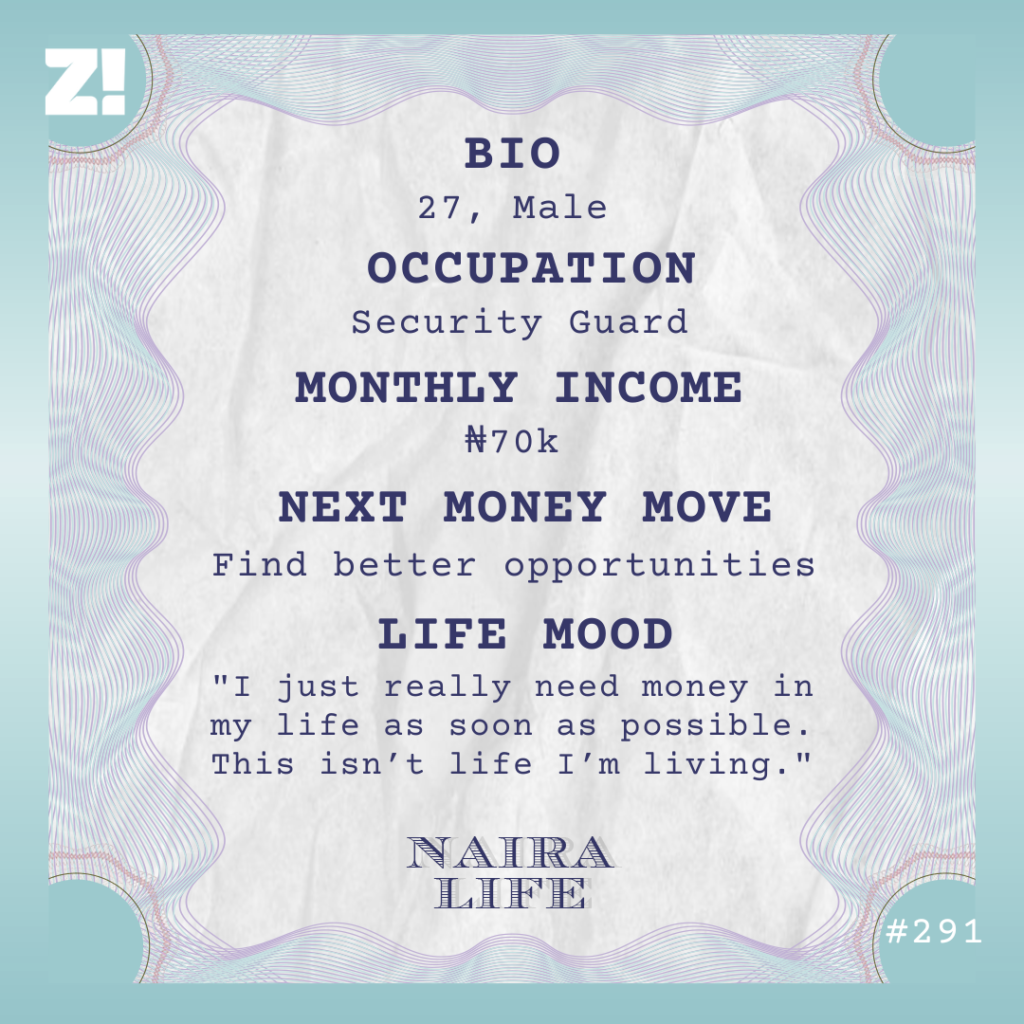
How did you find yourself working as a security guard?
Ah. It’s a long story.
Let’s start from the top
I’ve been hustling since I was around 12 years old. My father was a butcher who couldn’t provide for his three wives and 11 children. So, my mother used what she made from her provisions store to take care of me and my three biological siblings. She didn’t make much, so I mostly paid my school fees myself.
How did you do that?
Different things. For example, when I was in JSS 2, I learnt how to repair phones from a friend. I also got into online business around that time. This was around 2012/2013.
What kind of online business?
Actually, it was yahoo yahoo — another friend introduced me to it. I was pretending to be oyinbo on Facebook and Instagram and chatting with oyinbo people. Some people have luck with this online work, but I didn’t make much from it. The lowest I made was $100, and the highest money I got at a time was $400.
I didn’t make money regularly, and the dollar exchange rate wasn’t up to ₦200 then, so I didn’t make big money. But it was enough for me to drop small money at home for foodstuff and pay my school fees.
I also didn’t regularly make money from my phone repair business because I didn’t have a shop. I just had a spot where I worked after school with my tools. My pay depended on whatever fault my customer’s phone had, but it was usually between ₦500 – ₦1k.
When I got to JSS 3, I decided I couldn’t continue school.
Why?
School fees. I just know I couldn’t afford it again. Things were tight.
From 2014 to 2020, I survived on what I made repairing phones and some financial support from a brother who was out of the country. I still lived with my parents, so I didn’t have many responsibilities. But after I got married in 2019, I realised I needed to do something more to bring more money home.
How did marriage happen?
It just happened. I’d been with my girlfriend since primary school, and getting married was the next step after she got pregnant. It wasn’t a proper wedding like that, more like an introduction ceremony. But a baby was coming, and I knew it’d increase my responsibilities, so I started looking for business ideas.
Were you still doing the “online business”?
I gradually stopped because it wasn’t really working. By 2020, I befriended one of my Facebook clients, and she also convinced me to stop. We became friends after she realised I wasn’t who I was pretending to be. I think she changed me. She said she didn’t want me to do yahoo anymore and even gave me $200.
When I added that money to some money I’d saved up, it was up to ₦200k. I decided to use it to start a wholesale provisions business.
Tell me how that went
I got a shop and made small sales here and there. But I really wanted to get a car. My major distributor was in a neighbouring state, and I always paid money to pick up the goods at the park. I figured that a car would allow me to drive down myself, cut out delivery costs and even buy more goods.
I joined a cooperative so I could borrow money to buy the car, but that wasn’t a good idea.
What happened?
First, I decided to get the car through my aunt. She said her husband knew much about cars, so I thought I was in good hands. Her husband initially told me the second-hand 1999 Toyota Camry would cost ₦1m. So, I took a ₦1m loan from the cooperative. But I got there and learned the car cost ₦150k more — the middleman was trying to add his own profit, but I didn’t have a choice. I had to borrow the balance from my aunt.
My biggest problem was that the car had issues. I didn’t know much about cars, so I didn’t notice until I started using the car. It was always one problem or the other, and I was just spending money repairing and repairing. I couldn’t even use it for the reason I bought it.
Remember I still had the loan to pay off? The car was supposed to bring more profit to my business so I could repay the loan. But the car’s problems forced me to sell it off after seven months. Problem number two.
People didn’t want to buy it?
They didn’t want to o. I wanted to sell it for ₦1.150m so I could get the money I paid back, but people kept pricing it at ₦500k. I eventually sold it at ₦800k.
I couldn’t use the whole amount to repay the loan — which was almost ₦1.3m plus interest — because my wife gave birth around that time, and there were a lot of expenses. I also had to put some of the money into my business to restock the shop.
Only half of that money from the car made it back to the cooperative. I had to repay the loan small small using both profit and capital from my business. It almost caused an issue with my aunty because she stood as guarantor for me and the cooperative people were on her neck, and she was on mine.
It took me two years to repay the loan, but my business was totally run down by that time. To top it all off, my wife had given birth to another baby.
Damn. So what did you do next?
I started looking for money again. My search took me to an online chat platform where people post jobs. That’s how I saw one promising to pay up to ₦100k/month to work in a hair factory in Lagos. So I packed my bags, left my family in Delta state and moved to Lagos in 2023.
Did you know anyone in Lagos?
An uncle, but I didn’t know where he lived. I could’ve asked my dad for the address, but I wanted to struggle on my own. You know, so I’d be able to say I made it without relying on anyone.
Anyway, the job wasn’t what I imagined. It wasn’t a fixed monthly pay job; the factory paid workers based on the number of tasks we completed daily. I’d work from 6:30 a.m. to 6 p.m. to make ₦700 – ₦800. They then recorded how much we made per day to determine the salary at the end of the month.
They created a bank account for me to receive my salary, but I didn’t even wait for the first salary. I just stopped showing up at the factory after a few weeks.
Just like that?
Just like that o. The work was stressful, and I couldn’t cope. While I worked at the factory, I lived in a shared apartment provided for the workers. It wasn’t free o. Each person paid ₦2k every month to live there. I also paid, even though I didn’t stay there for up to a month.
I made friends with a fellow worker before I left the factory. He was also a bricklayer, and he lived in Ogun state. So, when I left the factory, I began working and squatting with him. I don’t even know if squatting is correct. He didn’t have a house, and we lived on the streets.
How did that work?
We hung around looking for bricklaying jobs during the day and slept in front of shops at night. We used mats and our clothes as mattresses. Sometimes, we slept inside a church, mosque or whatever uncompleted building we worked at. We always woke up by 5 a.m., so we’d leave before people came. Of course, people occasionally chased us away. It was dangerous too. Ritual killing was rampant in Ogun state at that time, but thankfully, they didn’t get us.
Back to working with this friend. I mixed cement and whatever else he told me to do for ₦3500/day. Money only came when we found a site to work on, so we went from place to place between Lagos and Ogun to find construction work. On some days we didn’t find work, I’d only eat biscuits and drink water.
One day, I woke up and realised I couldn’t continue. The job was too stressful, and the money I made went into trying to survive. I still had a wife and two children back home to provide for.
True
I returned to the platform that introduced me to the factory job and found an advert for a security guard at a company on Lagos Island. This was in November 2023. My initial salary was ₦24k/month, but my employers started removing ₦1k after a month for uniform.
I knew ₦23k wouldn’t do anything, so I found another security job that pays ₦40k/month in December. I still do both jobs today. My first job increased my salary to ₦30k early this year, so my income has grown to ₦70k/month.
How do you manage working two security jobs?
Security jobs allow workers to work one day on and the next day off, and I’ve arranged it so that I’m always at one of the jobs.
I work from 6 a.m. to 6 a.m. the next day, then move to the second job and resume at just a little after 6 a.m., too. Both workplaces are close to each other, so it works.
However, this arrangement means I work 24/7. I try to catch some sleep at night by sharing short four-hour sleep rotations with my colleagues while on duty at night. If one person is sleeping, someone else is awake. The work is stressful, but who will feed me if I rest?
Also, I don’t have a house, so there’s nowhere to “go home” to. I move from one job to another with my few things and make wherever I am my home. I haven’t even been able to visit my family since I moved to Lagos.
I was just about to ask about your family. How do you support them financially?
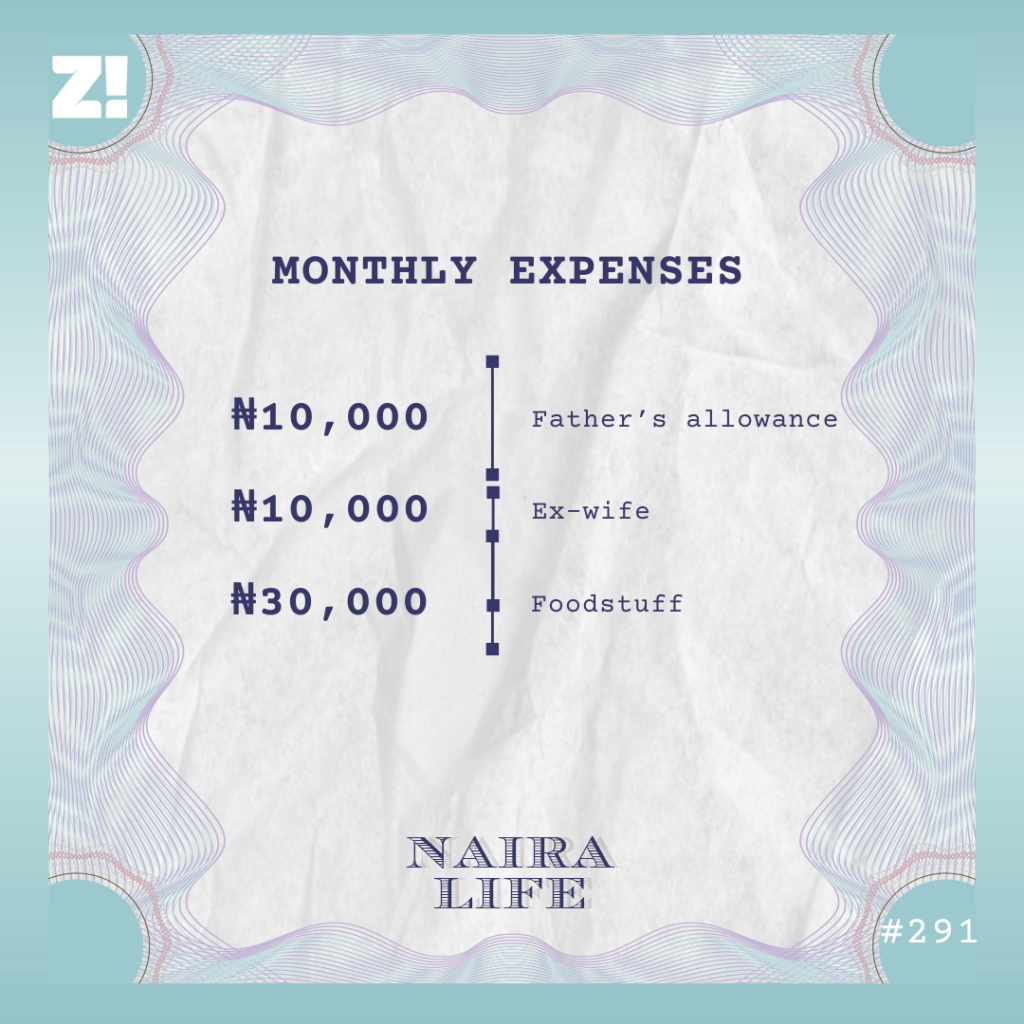
It’s just my children now. My wife left me in March this year and said she couldn’t take care of the children. Mind you, I sent her ₦25k – ₦30k monthly when I started working and paid the children’s school fees. I also took care of my family when I had my provisions business. But I guess that wasn’t enough.
So, she dropped my first child with my father and took the second one. I reduced the monthly allowance to ₦10k since I had to send my dad at least ₦20k/month for my first child and pay school fees.
However, last month, my ex-wife went to collect my first child. My mum passed away in 2020, and my father remarried. So, my ex-wife’s justification was that my stepmother mistreated my child, which I don’t believe. That wouldn’t have been possible with my father living in the same house.
Also, it meant I had to change the child’s school again and get uniforms. I didn’t support that, but she just did her own. I’ve told her I won’t increase her allowance since she made that decision alone. I’m still sending ₦10k.
What do these expenses typically look like in a good month?
I’ve reduced my dad’s allowance because my first child no longer lives with him. I hardly spend on transport fare since I walk back and forth between both workplaces. I also carry an electrical plate around to cook and save money on food.
I hold what’s left to see road, even though it hardly does anything with how things have gotten expensive. I also just started a ₦500 daily ajo contribution to save for emergencies, and I make the money I use for the ajo from tips I get while on duty.
Do the tips come often?
It’s just sometimes, like once a week. This security job is not easy. Nigerians look down on security guards so much. I’ve gotten several insults from people.
One of my workplaces is a club, and one time, a popular celebrity visited and dashed money to the hostesses, valets and bouncers. I told him, “Ah oga. Security sef dey here o,” and he replied, “Abi security dey craze? Who be security?”
It touched me, but I didn’t take it to heart. I know the job I do, so I’ll only take it as motivation to move forward in life and earn better.
Is there an ideal amount of money you’d like to earn?
If I can get two jobs and each pay ₦70k – ₦80k, it’d make sense. Ideally, I want to leave this security work and do business. I can’t sell provisions here because getting a shop space on the Island is so expensive, so my only option is to drive e-hailing cabs.
I pray to find someone who can give me a car on hire-purchase. At least, I can also sleep in the car at night and look for where to bathe in the mornings. And if I make enough money to rent an apartment, it’ll be even better. I just really need money in my life as soon as possible. This isn’t life I’m living.
I hope it works out soon. How would you rate your financial happiness?
5/10. I’m still homeless, but at least I’m no longer sleeping on the streets.
If you’re interested in talking about your Naira Life story, this is a good place to start.
I was looking to speak with women whose struggles with PCOS have affected their relationships when I found Ife*(31).
She shares how painful period cramps in university made her the centre of unwanted attention and ultimately robbed her of her closest friends.
As told to Adeyinka
There are many things I don’t like remembering about my experience in uni, but my painful periods top the list.
The first time I experienced extreme period cramps was in 200 level. I had just moved into a self-contained hostel with my coursemate, who had become my closest friend. Before then, my period pains were moderate and manageable, with felvin medication and tea usually doing the trick.
But this time, it was different. One morning, I woke up with heavy blood stains on my bed and excruciating pain in my lower abdomen. I brushed it off, thinking I had overindulged in sweets before my period, cleaned up, and took some felvin.
But as the day went on, the pain worsened, and I started feeling dizzy. I called my roommate, who had left earlier for class, to return and help me get to the clinic. I hated inconveniencing her, but we were practically like sisters at that point, and there was no one else I could have called.
At the clinic, the nurse asked if I’d ever had such intense pain before. I hadn’t. They gave me an injection, and within minutes, the pain subsided. I returned for a second dose the next day, and by the third day, everything seemed normal. I was relieved, thinking it was a one-time thing.
I had no idea the worst was yet to come.
The following month, the pain came back tenfold. It was indescribable—almost like someone clawing at my insides with nails. It was so bad that I woke up one morning on the floor clutching my stomach, screaming, crying and rolling back and forth.
My roommate panicked when she saw me. She rushed out of our room and returned with some other female hostel mates, but no one knew what to do until someone suggested taking me to the clinic again. I can’t remember the events that played out afterwards, but I woke up later at the clinic with my roommate by my side. She’d called my parents, and as soon as I was awake, she redialed them so I could speak to them.
After that episode, the pain became a regular occurrence. I started dreading my period because it came with embarrassment. Everyone in the hostel always knew when I was on my period because of the constant screaming. Even some okada riders and nurses knew me on a first-name basis.
I became a “monthly regular” at the clinic, and people began making weird remarks. One nurse even suggested that I might have a “spirit husband” causing the pain and invited me to her church for deliverance. Although I didn’t pay much mind to her, there were times I considered the possibility of the entire thing being spiritual.
While all these went on, I started to notice a shift in my roommate. She was always there when I wasn’t on my period, but when it started or she knew it was almost my time of the month, she would make herself unavailable.
She’d stay with another friend for an entire week or come home very late on the days she chooses to stay in the hostel. I could’ve sworn she was monitoring my cycle because her timing for the visits and long nights always seemed too much of a coincidence.
I was hurt and lonely but also understood. Once, I fainted during a bad episode, and my roommate was really freaked out. I woke up to people in my room and she was in a corner crying. That week, she didn’t really say much to me, she just became distant.
When we had a conversation, she admitted she was scared, saying she didn’t know what she would’ve done if something worse had happened. Honestly, I don’t think her reaction was far-fetched—there were times I thought the pain would kill me.
[ad]
It wasn’t just my roommate who withdrew. Some of my other friends also distanced themselves. I always tell myself that it wasn’t out of malice or callousness; they were just scared and didn’t know how to help. Looking back, I can’t blame them. We were all in our early twenties, and none of us had the experience to deal with such health emergencies.
After 200 level, my roommate moved out of the hostel. She made excuses about needing privacy because she was dating, but I knew the real reason. We didn’t talk much after that because I still felt hurt by her decision to move out.
In 2018, during my NYSC, I was finally diagnosed with PCOS. A women’s health NGO came to camp offering free consultations, and they referred me to a specialist hospital after hearing my symptoms.
Since starting medication and making some lifestyle changes, the pain has lessened, but there are still days when it gets bad. I scared my husband two years ago when the pain hit in the middle of the night. He had to call some of our older neighbours for help. But at least with him, I know he won’t up and leave like my friends did.
Are you looking for more information about PCOS? Famasi Africa has worked on a resource, and it’s full of practical tips and essentials for Nigerian women navigating PCOS. Find it here.
If you want screenshots of your legendary pick-up lines to go viral on social media and become a reference for other man dem who want to bag baddies, this article is for you. We asked Chat GPT how to rizz up a girl, and let’s just say AI might be up to something.
But first, what even is rizz?
Rizz means charisma. It’s what the gals dem make of you when you approach them to flirt. Now, how do you avoid giving the rizz of a married man who drives a space bus or one who’s been single for years? That’s where AI comes in.
How to rizz a girl up online
Asking a girl out via text means you’ll have to do double the work since many other things are likely fighting for her attention.
Be funny AF
If there’s any situation where being a comedian works, this is it. Open the chat thread with a pick up line that’ll have her respond quicker than she intends to.
Throw in some word play
Don’t give basic compliments when she posts a photo. Consider lines like “You look like you’re from Manchester. Can we be united?” or “I have 206 bones in my body but when I look at you, I have 207.”
Be generous with compliments
Make sure they’re genuine compliments that come as a result of paying close attention. Although you might get away with some sweet lies, it’s not always the case.
Be subtle but direct
Say something like, “I don’t usually message people first, but for some reason, I just couldn’t help myself with you,” and watch her text immediately.
Create fun scenarios
“I’ve been thinking…let’s skip the small talk and fast forward to the part where we’re sipping juice and arguing over the best pizza toppings.”
[ad]
How to rizz a girl up in person
Thanks to all the gestures and micro-expressions you can use, rizzing a girl up in a face-to-face situation is much easier.
Look the part
Please don’t look like a dead guy because you’ll do double the work to change the narrative if you make the wrong first impression. If your outfit isn’t giving, postpone that meet up.
Always maintain eye contact
Because how will she believe you can give her the world if you fail at something as simple as looking into her eyes?
Ask permission for physical touch
Yes, you’ve forced yourself to see an imaginary speck of dirt on her face. Don’t just invade her personal space. Ask. “There’s something on your chick, can I remove it?” Consent is sexy AF.
Know when to leave
Don’t be an Oliver Twist who wants to cross all the to-dos in one meet. Leave room for a little mystery by dashing off early and leaving her to wonder when she’ll see you again.
Did you really grow up in a Nigerian home if you didn’t have older folks who shared bedtime stories that teased your imagination and curiosity? From the mischievous tortoise to the iconic Olurombi and The Iroko tree, this article contains 17 Nigerian folktales that’ll make you feel like a child again.
Yoruba folktales
How Aaye and Aigboran became enemies
A long time ago, there was a man named Aigboran. He was married to a beautiful woman, Aaye, whom he cherished and worshipped like a god. In the village of Ojutaye, everyone knew Aaye was the most beautiful woman around.
Instead of feeling fortunate, Aigboran was deeply troubled by her beauty and began monitoring her every move. Aaye, a trader who sold beans like many other women, often attracted attention from the men in the village. One day, while passing by with her calabash of beans, Aigboran’s close friend and a group of men started teasing her.
One of them said, “Aaye, your beauty is enchanting. Don’t sell me beans; I want to buy your beauty. Will you sell it to me?” The other men joined in, refusing to pay her. Embarrassed and hurt, Aaye left in tears. When word of this reached Aigboran, his suspicions grew even stronger.
Determined to catch Aaye in the act, Aigboran consulted a herbalist to put “magun” (a powerful charm) on his wife. The herbalist advised against it, but Aigboran wouldn’t listen. He went to Orunmila, the god of wisdom, who also warned him, insisting that Aaye was faithful. But Aigboran refused to believe it.
In his desperation, Aigboran went to Esu, the trickster god, who gave him a plan. Esu taught Aigboran how to remove his eyes and attach them to Aaye’s calabash whenever she went to sell beans. This way, Aigboran could watch her every move while he stayed blind at home. Once she returned, he would take his eyes off the calabash and place them back in his sockets.
One fateful day, Aaye sold her beans and the calabash to a man performing a ritual. Excited by the large sum of money she received, she returned home and began counting her money when Aigboran, still blind, called from the room.
“Aaye mi, ni bo ni igba ewa re wa? Mo n wa oju mi o?
(Aaye mi, where is your calabash of beans? I’m looking for my eyes.)
Aaye, unaware of her husband’s actions, told him she had sold the calabash along with the beans. Aigboran screamed and started crying, explaining how he had been using the calabash to monitor her. Shocked and terrified that she had unknowingly made her husband blind, Aaye fled from the house and was never seen again.
Aigboran, helpless and blind, was taken to Orunmila by a kind person. But Orunmila simply said, “If we don’t find Aaye, you’ll never get your eyes back. They are with her.” Aigboran remained blind for the rest of his life because Aaye could not be found.
This tale led to the popular Yoruba saying, “Airoju Airaye” (The blindness of life), which is still used today to describe chaos or trouble.
Olurounbi and the Iroko tree(Itan Oluronbi ati igi Iroko)
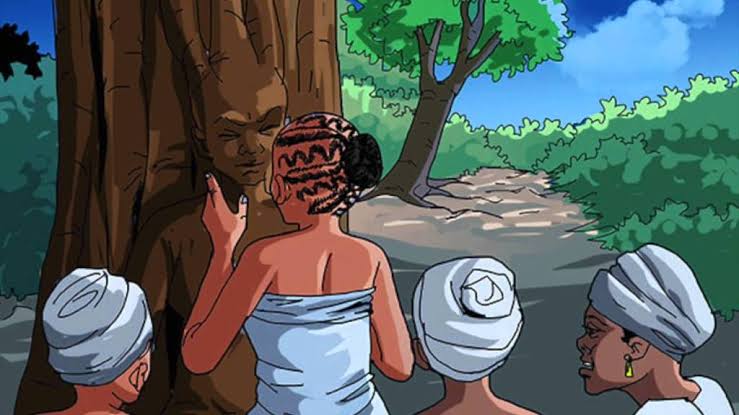
A long time ago, there was a village where many women were barren. They desperately wanted children and asked the spirit inside the big Iroko tree for help.
One by one, they went to visit the Iroko tree to beg the Iroko tree spirit for help. The Iroko tree asked each woman who showed up what she would give in return for bearing a child. Woman after woman promised the Iroko tree spirit goats, yams, handwoven cloth, or whatever it was she sold for a living, as many of these women were traders who sold their wares at a weekly market in an open field.
One of the women, Oluronbi, also approached the Iroko tree for help. She was so desperate for a child that when the Iroko tree spirit asked her what she would give in return for one, she eagerly offered her firstborn child.
Before the year ran out, many women had given birth to children and returned to the Iroko tree to fulfil their various promises. When it was time for Oluronbi to fulfil her promise, she went to the Iroko tree to plead her case. She could offer the Iroko tree everything, anything else, but not her child. But the tree spirit would not be swayed and took the child despite Oluronbi’s cries and pleas.
Why mosquitoes buzz in people’s ears
A very long time ago, when Ear was a beautiful woman and ready for marriage, several suitors were wooing her. There were big, small, fast, sleek, and slow creatures. But they all professed their love for Ear and demonstrated their skills, and there was such an impressive array of skills that Ear had a difficult time deciding. Then came the mosquito.
“I would like you to be my wife”, proposed Mosquito.
Ear was so offended by this insult. “Look around you!” she cried. “Of all the people and creatures in the whole world, what makes you think I can entertain such a thought?” Ear was distressed. “Marry you?” she continued. “You will be dead before the week is over. You’re not strong, you’re weak and I will never marry you.”
Ear was exhausted from this tirade and fell into her seat, fanning herself vigorously like she was trying to get any image of Mosquito out of her head. Meanwhile, Mosquito was really hurt by all that Ear said. It was embarrassing to be talked to like that in front of all the other creatures whispering to each other and giggling. They all agreed with Ear. “Dead before the week is over?” thought Mosquito as he slunk away. We’ll see about that.
From that day forward, whenever Mosquito sees Ear, he flies up to her and says, “Emi re, mi o ti ku,” which in English means, “Here I am; I am not dead.”
Tortoise and Yannibo(Itan Ijapa ati Yannibo)
Several years ago, Tortoise and his wife, Yannibo, struggled to have children. Despite all their efforts, they remained childless, and frustration began to set in.
Desperate for a solution, Tortoise visited a herbalist to seek help. After listening to his story, the herbalist prepared a special concoction for Yannibo. It was made from mushrooms, bushmeat, and fish stew, and it smelled delicious. However, the herbalist warned Tortoise several times not to taste the concoction, as it was meant solely for his wife. Tortoise thanked him and placed the calabash containing the mixture in his bag.
On his way home, the aroma of the concoction became overwhelming. Tortoise tried to resist, but his greed and love for food got the better of him. Unable to control himself, he sat under a tree, took out the calabash, and defied the herbalist’s instructions by eating the entire concoction, leaving none for his wife.
As Tortoise stood to leave, he felt strange movements in his stomach. Suddenly, his belly began to swell—he was pregnant.
Panicking, Tortoise realised he couldn’t return home to his wife after what he’d done, and he was too ashamed to go back to the herbalist. In despair, he began to cry, but then an idea struck him. He decided to return to the herbalist, explaining what had happened through a song.
When Yannibo heard the song, she became furious, realising what her husband had done. The concoction, meant to help her conceive, had instead affected Tortoise. The herbalist was equally enraged and kept shouting, “Didn’t I tell you not to drink the soup? Didn’t I warn you?”
In great pain and regret, Tortoise eventually died a few hours later in Yannibo’s arms.
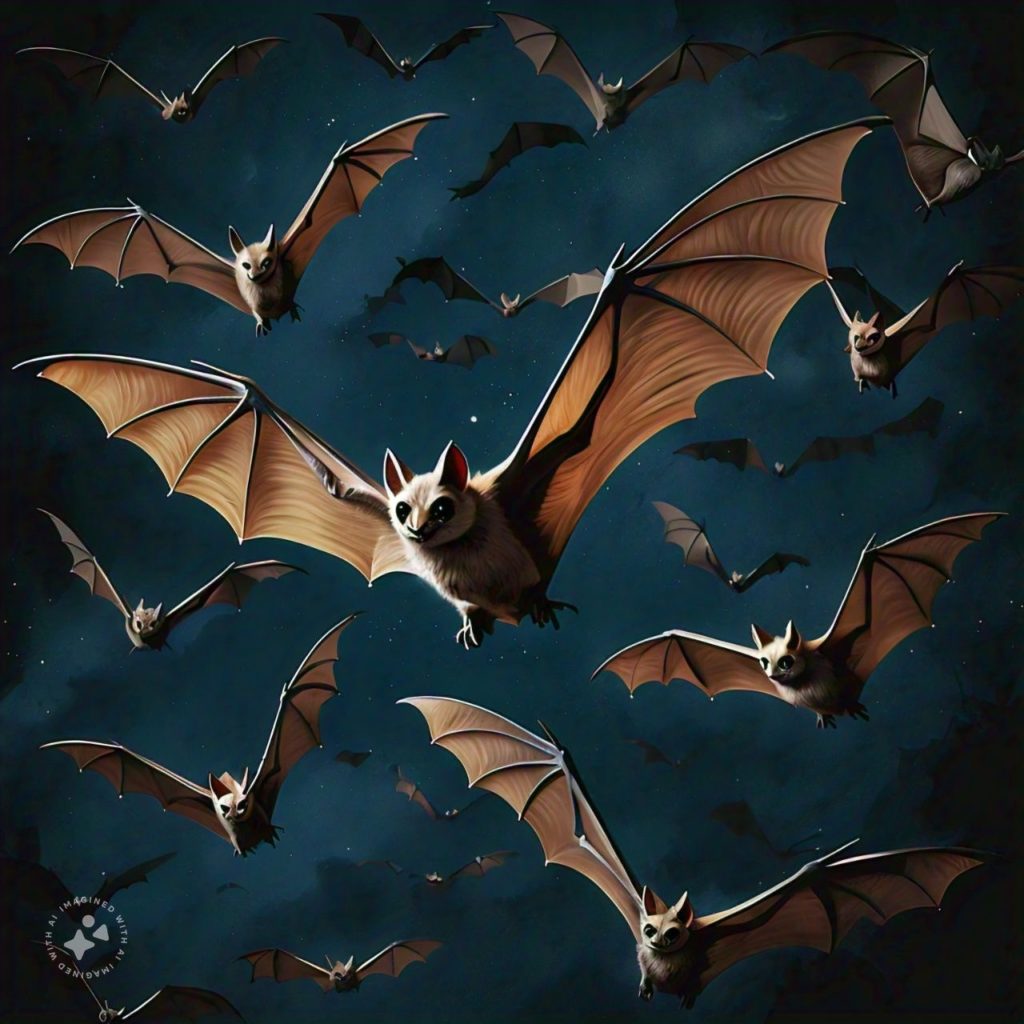
Why bats fly at night
The bat and the squirrel were very good friends. They lived in a village near Idin forest. There came a time when the bat became jealous of the squirrel because the squirrel was good-looking, and he, the bat, was ugly.
The bat was a very good cook, so whenever the squirrel visited the bat, the bat would cook a mouth-watering soup, which the squirrel would gladly eat. The squirrel was never good at cooking, so one day, he begged the bat to teach him how to cook a delicious soup. The jealous bat told the squirrel, “whenever I want to cook my delicious soup, I dip myself in boiling water then cook the soup with the hot water“.
The squirrel was very glad and thanked the bat. He ran home and told his wife to boil some water, which she did. The squirrel narrated what the bat had told him to his wife, who laughed and told him it was all a lie. When the squirrel’s wife was not looking, the squirrel quickly jumped into the boiling water and died instantly.
The squirrel’s wife was very angry and reported the matter to the king, who also became angry. The king was so angry that he ordered his guards and the villagers to capture the bat and kill him. That evening, two ants were strolling past the bat’s house and were discussing the king’s order to capture and kill the bat. When the bat heard this, he became so scared that he hid in the Idin forest. Since then, afraid that he might be caught if he fly during the day, the bat has been flying at night. This is why bats fly at night.
Igbo folktales
The blind man, the cripple, the poor man, the thief and the king (Akuko onye isi, onye ngwuro, ogbenye na Eze)
A blind man once found himself in a well-known town, struck by a great famine. Seeking help, he approached the king, who generously gave him yams and meat but advised him to keep it a secret.
As the blind man made his way home, he encountered a hungry cripple and told him about the king’s generosity. The cripple went to the king and asked for food. When the king asked how he knew about the food, he said the blind man had told him. The king gave the cripple yams and meat and urged him to stay quiet about it.
However, as the cripple left, he met a poor man and loudly announced, “Go to the king; he’s helping the needy!” The poor man hurried to the king for his share. When asked who informed him, he pointed to the cripple. The king gave him food as well and repeated the same advice.
Later, the poor man encountered a thief who begged to know where he got the food. The poor man refused to share the information. Undeterred, the thief went to the king, asking for food. The king questioned who he had met on the way, and the thief mentioned the cripple but claimed they hadn’t spoken.
The king then instructed the thief to steal from the blind man and the cripple, advising him to leave the poor man alone, as he would report him. The thief stole from the blind man, who couldn’t see him, and from the cripple, who couldn’t chase him. He left the poor man untouched, fearing retribution from the king.
How death came into the world
In the olden days, God called Goat and sent him to the earth to deliver a message to mankind: as long as there was procreation, there would be no death. However, Goat became distracted along the way, stopping to eat grass and chat with friends, wasting valuable time.
Seeing this, God sent Dog and Tortoise to deliver the message instead. Dog, proud of his speed, underestimated Tortoise and thought he could do other things before delivering the message. He wandered into the bush, eating anything he found, even filth. Occasionally, he’d remember his mission, but each time, Tortoise would defecate, distracting Dog further with his waste.
Tortoise, though slow, was determined and steady. He reached mankind first, but in his excitement, he delivered the message wrongly. He told humans that God had said they would all begin to die from that day onward.
By the time Dog realised his delay and ran to deliver the correct message, it was too late. He arrived to find humans already crying and dying.
The story of origin
Among the Igbo, it is believed their origin traces back to Nri, a town in Anambra State. The founding father, Eri, was said to have come from heaven with his wife, Namaku, who was sent by Chukwu (God). They landed and settled in Aguleri. When Eri and his wife arrived, the land was marshy, making it impossible for him to rest his legs, so he lived on an anthill. Frustrated by his situation, Eri complained to God, who then sent an Awka blacksmith with bellows, fire, and charcoal to dry the land. Once the blacksmith completed his task, Eri rewarded him with an ofo, a symbol of authority that gave him special rights to the blacksmithing profession.
According to historian Afigbo, Eri lived solely on the benevolence of God. He neither bought nor planted food, as God provided for him and his family. However, after Eri’s death, this divine provision ceased, as the covenant between Eri and God ended. As people began to starve, Nri, Eri’s first son, complained to God about their suffering. In response, God ordered Nri to sacrifice his first daughter and son, burying them in separate graves. Nri obeyed, and three weeks later, yam and cocoyam sprouted from the graves, providing food for the people.
Later, God directed Nri to sacrifice his slaves and bury them as he had done with his children. From their graves, palm trees and palm fruit grew. Nri became prosperous, but when God instructed him to distribute food to others, he refused, believing his wealth was earned through the blood of his children and slaves. This act of refusal made him even richer and gave him authority over those who lived around him.
The orphan boy and the magic stone
Many years ago, a chief of Inde named Inkita had a son, Ayong Kita, whose mother died during his birth. Inkita, a skilled hunter, often took Ayong on hunting trips in the dense grasslands of the Inde country. In those times, guns were unheard of, and the chief hunted with a bow and arrows, a craft he passed on to his son. Ayong quickly became skilled at using his small bow, often hitting lizards and small birds with ease.
When Ayong turned ten, his father passed away, leaving him as the head of the household. This newfound authority over the family slaves made them resentful, and they plotted to kill him. Sensing danger, Ayong fled into the bush. For days, he survived on nuts from palm trees and small animals like squirrels and birds.
One night, as Ayong slept in the hollow of a tree, his father appeared to him in a dream, revealing the location of a hidden treasure. However, being young and frightened, Ayong didn’t act on the vision. Days later, while searching for water, Ayong approached a lake but heard a hissing voice warning him not to drink. Frightened, he fled without quenching his thirst.
The next morning, Ayong encountered an old woman with long hair. Though her appearance frightened him, she reassured Ayong that she meant no harm to him and that she had been the one to warn him about the lake’s danger. She explained that the water contained bad Juju that could have killed him. The old woman then took Ayong to a stream, where she pulled out a small, shiny stone. She instructed him to return to where his father had shown him in the dream and dig for treasure.
Following her advice, Ayong dug at the designated spot and uncovered a great treasure. The old woman told him to buy two strong slaves and have them build a house deep in the forest. She instructed Ayong to place the magical stone inside the house, assuring him that the stone would grant it whenever he wished for anything.
Ayong did as instructed, and for years, he became wealthy and powerful, acquiring many slaves and forming alliances with the Aro men, who were influential in the slave trade. He built a large town and lived comfortably. But ten years later, the old woman appeared to him in a dream, advising him to return the stone to the stream. Although Ayong had become rich, he wanted more—he desired to rule over his father’s land and the entire Inde country.
Determined, Ayong gathered Juju men and witch doctors and marched with his slaves to his father’s town. Before leaving, he held a meeting to identify any slaves with bad intentions who might plot against him. The Juju men pointed out fifty slaves, accusing them of being witches. Ayong immediately imprisoned and subjected them to the ordeal of the Esere bean, a deadly poison. None survived, confirming their guilt as witches.
Despite their deaths, the spirits of the witches haunted Ayong, causing him to fall ill. Once again, he summoned the Juju men, who revealed that the witches’ spirits were sucking his blood at night, causing his sickness. The Juju men recommended gathering ten of their kind to counteract the curse. Together, they exhumed the bodies of the witches, found them to be intact, and burned them one by one.
Afterwards, Ayong regained his health, took control of his father’s property, and ruled the land. Ever since, in the Inde country, those accused of witchcraft have been subjected to the Esere bean test. If they vomit the poison, they are declared innocent. If not, they die in agony, confirming their guilt.
Hausa folktales
Gizo the trickster
In Hausa folklore, Gizo (the Hausa equivalent of the spider or trickster) is often portrayed as a cunning, mischievous character. In this story, Gizo tricks a powerful king to gain access to his palace.
The king announced that he would reward anyone who could make him laugh. Many tried but failed. Gizo, knowing that the king was curious about rare things, said, “Your Majesty, I have a special riddle for you, but I will only tell it to you if you give me food first.”
The king, eager to hear the riddle, gave Gizo food. But after Gizo had eaten, he said, “Oh, I forgot the riddle! But don’t worry, if you give me more food, I will surely remember it.” The king, being generous and curious, kept giving Gizo food, but each time Gizo would come up with a new excuse for why he couldn’t remember the riddle.
Finally, the king, realizing he had been tricked, burst out laughing. He appreciated Gizo’s cleverness and gave him the reward for making him laugh, even though he had been deceived.
The story of the tongue
Once upon a time, a chief told one of his servants to bring him the best meat from the market. The servant brought him a tongue. The next day, the chief told the servant to go and bring him the worst meat in the markets. The servants again brought him a tongue.
“What?” the chief said, “when I asked you to bring the best meat, you brought me a tongue, and then you brought the same thing for the worst meat.
The servant replied, “Your highness, sometimes a man is very unhappy because of his tongue, and other times the tongue makes him very happy.” The chief sighed and said, “you are right, let us be master of our tongue”.
The story of “No King as God”
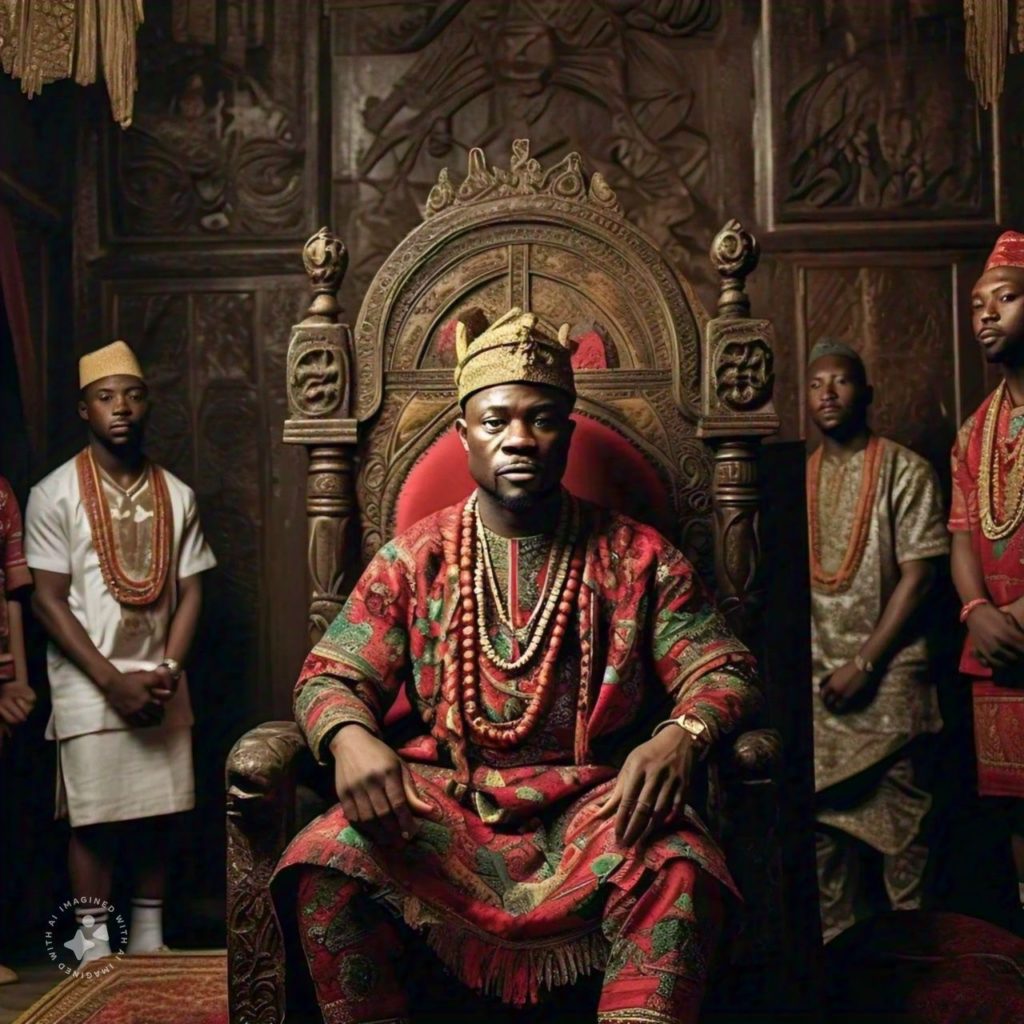
When an ordinary man appears before an African king, he typically greets him with, “May the king live forever!”
However, there once lived a man who refused to say these words. Instead, he always declared, “There is no king like God.” After hearing this repeatedly, the king grew angry and plotted to destroy the man.
One day, the king gave the man two silver rings, pretending they were a gift but secretly intending to use them against him. The man, now known as “No-King-as-God,” placed the rings in a dried ram’s horn and entrusted them to his wife for safekeeping.
A week later, the king sent No-King-as-God to a distant village on an errand. While he was away, the king visited his wife and offered her a thousand cowries, along with fine clothes, in exchange for what her husband had left with her. Tempted by the wealth, she gave the king the horn with the rings inside.
The king instructed his servants to throw the horn into a lake, where a large fish swallowed it.
On No-King-as-God’s return, he went fishing with his son and some friends. They caught the same large fish, and while cleaning it, his son found the ram’s horn inside. To their amazement, the rings were still safely stored.
“Truly,” he said, “there is no king like God.”
Just then, a royal messenger arrived, summoning the man to the king’s court. Before leaving, he asked his wife where the precious item he had entrusted to her was, but she lied, saying she thought a rat had eaten it.
At the royal court, the counsellors greeted the king with, “May the king live forever!” But No-King-as-God said, “There is no king like God.”
The king demanded the rings, ready to kill the man if he couldn’t produce them. But No-King-as-God reached under his robe, pulled out the horn, and handed it to the king. The king opened it and found the rings.
“Indeed, there is no king like God!” he exclaimed, and the counsellors all agreed.
In a gesture of admiration, the king divided his city in two and made No-King-as-God the ruler of half of it.
Other Nigerian folktales
Why the sun and moon live in the sky
Many years ago, the sun and water were great friends and lived together on earth. The sun often visited the water, but the water never visited him in return. One day, the sun asked the water why he never came to his house. The water explained that the sun’s house wasn’t big enough to accommodate him and his people. He warned that if he came, he would drive the sun out because his people were so numerous.
“If you want me to visit, you’ll need to build a very large compound,” the water said.
The sun promised to build the largest compound and returned home to tell his wife, the moon. The next day, he started building the huge compound to welcome his friend. Once it was ready, he invited the water to visit.
When the water arrived, he called out to the sun, asking if it was safe for him and his people to enter. The sun, excited to host his friend, said, “Yes, come in.”
The water flowed in, bringing along the fish and other water animals. Soon, the water reached knee level, and the water asked again if it was still safe. The sun assured him it was, so more water came in.
When the water rose to the height of a man’s head, the water asked again, “Do you want more of my people to come?”
The sun and moon, not fully understanding, said yes again. The water continued to rise, forcing the sun and moon to climb onto the roof.
Even after this, the water kept coming, and soon it overflowed the roof. The sun and moon had no choice but to rise into the sky, where they have remained ever since.
[ad]
The ‘Nsasak bird and the Odudu bird
A long time ago, during the reign of King Adam of Calabar, the king wanted to know if there was any animal or bird capable of enduring long hunger. He promised to make the winner a chief of his tribe.
One of the contenders was the Nsasak bird, a small bird with a shining green and red breast, blue and yellow feathers, and a red neck. His primary food was ripe palm nuts. His competitor was the Odudu bird, larger in size, with black and brown feathers, a cream-coloured breast, and a long tail. The Odudu bird mainly fed on grasshoppers and crickets.
Though friends, both birds were eager to compete for the title. The confident Odudu bird believed his size would give him an advantage and offered to starve for seven days. The king then asked both birds to build houses, which he would inspect. Once satisfied, the birds would be locked inside, and the one who endured the longest without eating would be declared the winner.
The cunning ‘Nsasak bird, knowing he couldn’t survive seven days without food, devised a plan. He built a small hole in the wall of his house, covering it so the king wouldn’t notice during his inspection. The king carefully examined both houses and, seeing nothing unusual, declared them safe. He then locked the birds inside.
Every morning, the ‘Nsasak bird slipped out of his house through the hidden hole, flying far away to feed and enjoy the day. He ensured no one saw him and returned before sunset, sealing the hole behind him. Each night, he called out to the Odudu bird, encouraging him to stay strong and endure the hunger while pretending he was fine.
As the days passed, the Odudu bird grew weaker. Eventually, he stopped responding. The ‘Nsasak bird, knowing his friend had died, felt sorry but couldn’t report it as he was supposed to be confined.
When the seven days were over, the king opened the doors. The ‘Nsasak bird flew out cheerfully, singing from a nearby tree, while the Odudu bird was found dead, his body mostly eaten by ants. Only feathers and bones remained.
The king, impressed by the ‘Nsasak bird’s survival, appointed him as the head chief of all the small birds. To this day, in the Ibibio country, boys who manage to shoot a ‘Nsasak bird with their bows and arrows receive a prize, sometimes even a female goat, because the ‘Nsasak bird, as king of the small birds, is notoriously difficult to catch due to his wit and small size.
The cock who caused a fight between two towns
Ekpo and Etim were half-brothers, sharing the same mother but different fathers. Their mother first married a chief from Duke Town, and had Ekpo. Later, she left him and married Ejuqua in Old Town, where she gave birth to Etim.
Both brothers grew up wealthy. Ekpo had a pet cock he cherished, which would join him at the table during meals. Ama Ukwa, a native of Old Town, was envious of their wealth and secretly sought to create a rift between the two despite pretending to be friends with both.
One day, Ekpo hosted a grand dinner, inviting Etim and other guests, including Ama Ukwa. As they ate, Ekpo’s cock flew onto the table and started feeding from Etim’s plate. Annoyed, Etim told a servant to tie the cock up in his house until the feast was over. The servant did as instructed.
After dinner, Etim went home with Ama Ukwa. Before bed, Ama Ukwa noticed the cock tied up in Etim’s house. Early the next morning, he visited Ekpo and was warmly welcomed. When Ekpo noticed his cock was missing during breakfast, Ama Ukwa lied, telling him that Etim had taken the cock and intended to kill it to provoke Ekpo. Furious, Ekpo sent Ama Ukwa to retrieve the cock, but instead of delivering the message, Ama Ukwa told Etim that Ekpo was angry and ready to declare war.
Etim, equally provoked by Ama Ukwa’s false message, prepared for a fight. Ama Ukwa continued to fuel the conflict, advising both brothers to gather their people and set a day for the battle. The two sides eventually clashed across a creek, resulting in heavy casualties. The battle raged on until the chiefs of Calabar intervened, sending Egbo men with drums to stop the fighting.
Three days later, a palaver was held to resolve the issue. When the truth came out, it was revealed that Ama Ukwa had instigated the fight. The chiefs sentenced him to death. Despite his father’s offer of five thousand rods, five cows, and seven slaves to spare his life, the chiefs refused. Ama Ukwa was flogged, tied to a tree for twenty-four hours, and then executed.
Ekpo was also ordered to kill his pet cock to prevent further disputes between him and Etim. A law was passed banning the keeping of pet cocks or any other tame animals to avoid future conflicts.
Why the tortoise has a bald head
Turns out that tortoises used to have hair before. Long ago, Mr dog and his family were making porridge yam, like the evil spirit he is, Mr Tortoise somehow smelt and followed the aroma to the dog’s house. Instead of asking for a plate like a sensible person, Tortoise decided to lie that the king had summoned Mr dog and his family, Tortoise promised to safeguard his house while they were away. As soon as they left, he began to eat as much as he could, knowing that they would hurry back as soon as they realized that the king wasn’t even around. He heard them approaching and decided to take some porridge home for his family but he had nothing to put it in, he got the brilliant idea to stuff the porridge in his hat and wear it. Mr dog came back and was so annoyed that Tortoise had wasted his time and they argued for a bit when all the tortoise wanted to do was rush home. The pain eventually got too much for the tortoise to bear, so he removed his hat and the porridge along with his hair fell out to everyone’s dismay. That’s why Tortoises are bald.
Why worms live underground
During the reign of Eyo III, ruler of all men and animals, he regularly invited his subjects to his large palaver house for feasts. After these feasts, it was customary for the attendees to make speeches, especially after they’d had plenty of tombo to drink. One day, after such a feast, the head driver ant stood up and boasted that he and his people were the strongest of all. He claimed that no one, not even the mighty elephant, could stand against them. He particularly insulted the worms, calling them weak, wriggling creatures.
The worms, offended by this, complained to the king. To settle the matter, King Eyo suggested that the two sides face off in a battle to determine who was truly stronger. He scheduled the contest for three days after the feast, and all the people gathered to witness the fight.
On the appointed day, the driver ants left their nest early in the morning, marching in their usual dense line, only an inch wide but packed with thousands and millions of ants. They sent out scouts, an advance guard, and flankers, with the main body following closely behind.
When they reached the battlefield, the ants spread out, and soon, the ground was a seething mass of ants and worms locked in combat. The battle didn’t last long. The ants, with their sharp, pincer-like mouths, quickly bit the worms into pieces. The few worms that survived squirmed away and buried themselves deep underground.
King Eyo declared the driver ants the clear winners. Since then, worms have lived in fear of the ants and have remained underground, only surfacing after rain. But whenever something approaches, they quickly burrow back into the ground, fearing everyone.
On Saturday, September 24, eligible voters will head to the polls to elect a new governor in Edo State. Outgoing governor Godwin Obaseki is stepping down after serving the maximum two terms the constitution allows.
According to INEC, 17 candidates are vying for the seat, but opinion polls suggest three major contenders: Olumide Akpata, Asue Ighodalo, and Monday Okpebholo. Here’s a breakdown of the candidates and what they’ve promised the Edo people.
Asue Ighodalo, PDP
Asue Ighodalo, a prominent lawyer and economic adviser to former governor Adams Oshiomhole, is the PDP candidate. Thanks to Governor Obaseki’s endorsement, he’s seen as a strong contender. However, this support has sparked concerns that his administration could feel like an Obaseki extension.
Ighodalo’s impressive credentials include a law degree from the University of Ibadan and a master’s from the London School of Economics. He’s a founding partner of Banwo & Ighodalo, one of Nigeria’s top law firms, and has served as chairman of several boards, including Sterling Bank and NESG.
What are his campaign promises to the Edo people?
Ighodalo’s manifesto tagged, “Path to Prosperity for All”, is centred around:
Welfare: Hardship relief, affordable healthcare, quality education and women and youth empowerment.
Good governance: Transparency, fiscal responsibility, and e-governance.
Security: Supporting police reforms and adopting technology for law enforcement.
Environmental sustainability: Erosion control, green energy projects, and resilient city planning.
Monday Okpebholo, APC
Senator Monday Okpebholo represents Edo Central in the National Assembly and is the All Progressives Congress (APC) candidate for governor. His emergence wasn’t smooth—after the party’s primaries, house of representatives members Dennis Idahosa and Sunday Dekeri were also announced as winners. APC party stakeholders eventually confirmed his victory after a supplementary primary. Despite being a senator, concerns about Okpebholo’s public speaking and media engagement have haunted his campaign.
Okpebholo holds a PhD in Agricultural Economics from the University of Ibadan.
What are his campaign promises?
Senator Okpebhelo has vowed to take Edo to the next level with his “Manifesto of Renewed Hope.” The manifesto contains five cardinal programmes: security, infrastructural development, education, agriculture, and water provision.
During a campaign visit to the United States, the governorship candidate addressed Edo indigenes in the diaspora, emphasising his plans if elected.
“I promise to rejuvenate Edo security and bring up massive infrastructure to advance the economic development of the state and open it up for foreign investments, affordable healthcare, water, food security, value-driven education, while not leaving behind tourism and the creative industry.
“I remain committed to liberating Edo from stagnation. The manifesto of Renewed Hope for Edo people will give life to Edo Diaspora Agency which will boost the participation and engagement of Edo State indigenes resident abroad.”
Olumide Akpata, LP
Former Nigerian Bar Association (NBA) president Olumide Akpata is the candidate for the Labour Party (LP). Known for his remarkable legal career, Akpata was the first non-Senior Advocate of Nigeria (SAN) to lead the NBA. In August 2023, he stepped down as a senior partner at Templars, a prominent Nigerian law firm, to focus fully on his political ambitions. He said the decision was born from a desire to “contribute towards the critical task of nation-building”.
In February 2024, he defeated other candidates to clinch LP’s governorship ticket.
While Akpata hopes to capitalise on Peter Obi’s support from Edo State during the 2023 presidential election, his main challenge is Obaseki, who hails from the same senatorial district and has thrown his full support behind PDP’s Ighodalo.
[ad]
What are his campaign promises?
Akpata’s manifesto, tagged “My Pact With The People of Edo State,” features eight focus areas highlighting his plans to revitalize Edo’s economy through industrialisation, create an enabling environment for businesses, and promote sustainable development. Here’s a summary:
Economy and job creation: Focus on revenue growth and responsible fiscal management, drive industrialisation, and create an enabling business environment.
Roads and infrastructure: Develop a masterplan to upgrade major roads for economic growth, build flyovers and bridges in key cities, partner with the Federal Government to rehabilitate federal roads and upgrade urban roads with street lighting, traffic lights, and lanes for pedestrians and cyclists
Electricity and energy access: Promote renewable energy sources like biomass, solar, hydro, and wind, attract private sector investment for power projects, partner with Benin Electricity Distribution Company to improve power supply and mobilise funds from multilateral development banks and investors to support energy projects.
Agriculture and food security: Establish community-based grain reserves, attract investments in agro-processing plants in all senatorial districts, develop export value chains for crops like oil palm, cassava, and rubber, and provide farmers with loans, machinery hire services and equipment for better productivity.
Education: Upgrade schools and recruit more teachers; ensure inclusive education for persons living with disabilities; develop model schools and skills incubators; revive Ambrose Alli University and other tertiary institutions.
Healthcare: Set up primary healthcare centres (PHC) in all 192 wards in Edo, train and retrain healthcare workers, establish emergency and ambulance services across the state and expand the Edo Health Insurance Scheme, including free coverage for people with disabilities.
Security: Increase funding for security infrastructure, improve welfare for security personnel, ensure better coordination among security agencies, and promote community engagement in maintaining law and order.
Other essential infrastructure: Invest in digital technology infrastructure, improve access to water resources and implement erosion and flood control measures.
Other candidates in the Edo governorship race
Uwaifo Osaro — Action Alliance (AA)
Aner Aliu — Social Democratic Party (SDP)
Azena Azemhe Friday — New Nigeria Peoples Party (NNPP)
Osifo Isiah — All Progressives Grand Alliance (APGA)
Ugiagbe Sylvester — All People Movement (APM)
Areleogbe Osalumese — All Peoples Party (APP)
Akhime Afere — Action Democratic Party (ADP)
Udoh David — African Action Congress (AAC)
Akhalamhe Amiemenoghena — Zenith Labour Party (ZLP)
Osirame Edeipo — Boot Party (BP)
Iyere Kennedy — Accord Party (AP)
Obazele Agbone — African Democratic Congress (ADC)
Key Ndidi — Peoples Redemption Party (PRP)
Okungbowa Ovbokhan — Young Progressive Party (YPP)