Do the children of Nigerian politicians recognise their [often unfair] privilege? Amelia* does. The 24-year-old talks about growing up privileged, her reasons behind publicly denying her family and why she’s grateful for them regardless of how they make money.
As told to Boluwatife
Image by Freepik
I’ll be honest; I’m privileged, and I know a lot of that privilege comes from dirty money.
My family has been in the Nigerian political scene since before I was born, and from a young age, I had a sense of how things worked. I knew my parents were important people, and not everyone liked us. I got to know that second part because my mum always talked about enemies and people plotting our downfall.
Visitors were constant in our house, and my mum tried her best to ensure that my siblings and I were always in a different wing —mainly for security concerns but also because she didn’t want us too involved in my dad’s business. Again, because she didn’t want our enemies to get us. You’d wonder why she married a politician in the first place.
But despite my mum’s best efforts, it was hard to miss the plenty of cash always available at home, especially during campaign periods. My dad liked introducing his smart daughter to his colleagues, so I frequently got cash gifts. I once got ₦200k cash as a 12-year-old for greeting my dad’s colleague in French.
To be honest, I had a lit childhood. I attended secondary school with children of politicians and businessmen, and while everyone was rich, I was considered a rich kid.
My dad was in office throughout my secondary school days, so I didn’t lack anything. I had a ₦100k/month allowance even though I had access to free meals at school and didn’t have expenses. So, I did what any teenager with too much money would do and spent it all on my friends.
My generosity made me popular, and everyone wanted to be my friend at school. I even created a clique of my top seven best friends and often bought them gifts for no reason.
I pretty much did the same thing during my time at the university. I schooled abroad, but money still wasn’t a problem. I was the friend who would convince everyone to abandon class so we’d take an impromptu flight to one Island somewhere or attend a Taylor Swift concert.
I spent money without thinking twice about it because, well, the money was there. Aside from getting allowances from my parents, my name also opened doors, especially when I was in Nigeria. My dad’s colleagues fall over themselves to give me gifts or do favours for me because they know I’m one of my dad’s favourite children and want to be in his good graces.
When I first became active on social media and fancied myself a content creator, I plastered my name on my accounts. In hindsight, I knew it was a bad idea. Most of my friends from political families tend to stay low-key for safety concerns and to avoid random insults from Nigerians who are angry at whatever their politician parents do.
But I was proud of my name, so I owned it. It went well at first. Brands began reaching out to offer me free stuff so I could post them on my feed, and I was really getting into my influencer bag when the COVID lockdown happened in 2020.
It wasn’t particularly the lockdown that made me rethink publicly affiliating with my family; it was what happened after the lockdown — the #EndSARS protests and the mass looting of COVID-19 palliatives.
I wasn’t in Nigeria while all those were happening, but there was this palpable tension, especially among the ruling class. It was like a threat to a system that’d worked so well for certain people over time; no one knew how much effect it’d have. I wasn’t too concerned because I’m not that crazy about politics. But then, a few angry Nigerians found my social media, linked me to my father and started commenting about — and swearing for — politicians’ kids who help in spending the country’s money.
[ad]
There were only a few comments like that, but I panicked and hurriedly deactivated my accounts before the attacks would gather steam. That was my first reality check about the people praying for my family’s downfall that my mum had been preaching for years, and I didn’t like it.
Since then, I’ve become wiser. While I’m back on social media, I use a pseudonym. I’ve abandoned all plans of becoming a content creator and set all my accounts to private, so it’s just my friends and people in our circle who know who I am.
I also often deny my family name in public spaces. I work in the professional space now and have had to deny being related to my family more than once when I introduce myself to people, and they ask about my distinct surname. Of course, some people in the political circle still know who I am, but I try to limit that knowledge.
My friends usually ask why I do the whole hide-and-seek thing, and I think a major reason is self-preservation. I don’t want a target placed on my back simply because of my family’s choices. I prefer not to be judged based on who my father is or what he did before I was born.
I know my family has done some illegal things, and my privilege isn’t exactly clean, but I’m not ashamed of my family. Claiming to be ashamed would be a lie. They’ve provided me with a good life and meaningful connections, and many people would kill for the same opportunity. I know several political families who aren’t as close-knit and loving as mine, and I wouldn’t trade that for anything.
No one chooses their family; the most we can do is work with the cards we’ve been dealt. The same way a poor person can’t run away from their family because they were born poor is the same reason I can’t run away from mine.
I don’t always agree with my family’s actions and don’t see myself towing the same path, but I can’t become a puritan and choose to live like a pauper because I don’t want to touch blood money. I’m trying to make my own path and career, but I won’t reject my family’s support where needed, either.
Not everyone will agree with me, but I think it’s worse to pretend like I don’t know my privilege because I don’t want to offend anyone. I have access to bastard money and can choose not to work if I want to. It’s not fair, but then life isn’t fair. I can’t change my family or “turn them good,” so I have no choice but to accept them.
Still, I want to make a name for myself, and I don’t want my surname to announce me before I even arrive. So, I’ll probably keep denying my family in public for as long as possible.
I’d just published this story about an apprenticeship gone wrong when Tunrayo* reached out, saying she’d had a similar experience with a Nigerian politician who’d been her role model since she was 9.
She talks about finally getting the opportunity to work with this politician, abandoning her family, enduring abuse, and almost losing her identity and life to her work.
I became fascinated with a particular Nigerian politician at 9 years old. Fascination doesn’t even begin to cover it. I was obsessed. I even had pictures of the woman in my room.
Let me tell you how it started. I decided I wanted to be a journalist pretty early in life. I loved watching the news and following political stories. Though a businessman, my dad knew a lot about the political happenings in my home state. That’s how I got to know this politician. Biodun* was a prominent political figure in my state at a time when it was almost impossible to see women at the forefront of politics. She was 20 years older, but I wanted to be like her.
I admired and wanted to be like Biodun so much I’d write short notes about my admiration and paste them on the noticeboard at the mosque. Biodun was partly the reason I didn’t study in the UK. I graduated from secondary school around 2010 and had already secured admission to the UK — not for journalism, though. My dad thought studying law was better.
Just before I was meant to travel, my dad changed his mind and decided I’d better go to school in Nigeria instead. His reason? Biodun also studied in the UK and was a chain smoker. He knew how much I idolised her and feared I was ready to imitate this woman in everything, including smoking. He was right because I did get into smoking years later because of her, but we’ll get to that.
Eventually, I got admitted to study law at one of the universities in my state. Ironically, that brought me closer to Biodun — it was the same state she worked in. By then, my obsession had grown to commenting on all her social media posts and fighting everyone with anything negative to say in the comments. I followed every single thing she did. I started calling myself a “Biodunist” and made her picture my wallpaper on everything I owned. She was also my display picture on all my social media accounts — the love was that deep.
It was politics that finally brought me the opportunity to meet her. My penchant for writing led me to work for several media houses as a student, and I regularly wrote articles criticising the state government in power. This made me well-known to some members of the opposing political party in the state, and I became friends with many of them. I also became active in student union politics and championed several causes to ensure female involvement in school politics.
In 2014, I organised a female conference and magazine launch to highlight women doing great work in their fields. Of course, Biodun had to be the face of the magazine. I repeatedly sent several invitations to her via Facebook, but I didn’t get any headway until someone I knew from my political activities gave me her contact. Surprisingly, Biodun responded, and we started chatting on BlackBerry Messenger.
I couldn’t believe my luck. It was my chance to impress her, and I tried my hardest. She loves rap music — BBM had a thing where you could see what people were listening to, so I started listening to Nicki Minaj and Drake because she did, too. One time, we were chatting about Game of Thrones during exam season, and I’d literally leave my books to watch new episodes so that I could respond if she talked about the series.
Biodun wasn’t in office at this point, but she planned to run again in 2015, and I somehow became involved in her campaign. She knew I was her staunch supporter and that I knew my way around politics. So, she sent me a data modem and tasked me with creating social media accounts for her campaign.
I should note that we hadn’t met at this point, and I wasn’t being paid, but it felt like I was part of something great. I bragged about my work with her to everyone who cared to listen. I went for Hajj that year, and instead of praying for myself or my family, I stood in front of the Kabba praying for Biodun to win the election. I cried like a baby when she lost the party’s primary elections.
Remember that conference I organised? She didn’t come, even though she promised she would. She sent a representative instead, but I couldn’t stay angry with her for long. Especially since she came through for me some months later when I got into trouble with the police because of my outside-school political activities. She promised to send lawyers if I wasn’t released. It didn’t get to that, but I took that assurance as her reciprocating my love for her. And my loyalty tripled.
We still kept in touch when I went on to law school. She’d always tell me how stressful work was for her since she didn’t have a personal assistant, and I’d respond by saying I wished I was there to help her. I moved into her house immediately after my final exams in 2017 and resumed work unofficially that same night. I say “unofficially” because no one gave me an appointment letter. I was supposed to go home — my mum had even booked a flight for me, but I refused to leave her side.
Biodun was planning to run for governor in 2023, and I was tasked with building a roadmap for her to get there through humanitarian initiatives, charity, and the like. That became my life’s work. In my head, I was going to help make a difference in the state.
My daily schedule involved waking up around 11 a.m., going to Biodun’s study, and working with her until 3 a.m. I lived in the same room with her maid and slept on a bunk bed. They also had a dog in the maid’s room who peed everywhere, which meant I couldn’t observe my daily prayers regularly.
I ate once a day in Biodun’s house — only breakfast, and that was typically bread and eggs. I rarely ate more than once a day, and that happens if the maid brings food to her study and Biodun tells me to come and eat. That wasn’t often because she did a lot of diet fasting. I also wasn’t being paid, so I sometimes called home for money so I could buy food. Looking back at it now, it was a far cry from my privileged background, but I didn’t see it at the time. I was working with my idol, and that was all that mattered.
It also didn’t matter that I took monthly flights with my own money during NYSC year for monthly clearance just so I could keep living with Biodun even though I was posted to a different state.
Our schedule got a lot tighter in 2018 because of the preparations for the general elections the following year. Biodun wasn’t contesting, but she needed to ingratiate herself with the party, and she handled many campaign efforts and empowerment projects in our state on behalf of the presidential candidate.
We flew together everywhere. I was always in the car with her, never more than a few feet away. No jokes; I followed her into the toilet several times and even helped her dress up. I was the one carrying campaign money and following her up and down. People began calling me her PA, and it thrilled me.
If you know anything about politics in Nigeria, you know there’s never a shortage of enemies. Biodun’s house was always full, with different people going in and out. That crowd got bigger with the campaigns, and we began killing a cow daily to cook for people. I was the one handling money, and sometimes, when she directed me to give someone money to buy something, I’d naively exclaim that the item shouldn’t cost that much. That brought me a lot of enemies.
There was also a lot of backbiting and passive-aggressiveness going around, and I soon started feeling unsafe. I had to bring some friends to come live with me because I worried about even eating food at the house. I’m honestly not sure if I was attacked because I was found unconscious one day with my three cats dead beside me and three random scars on my back. This was just before the elections in 2019, and I’d briefly returned to my family home. I was hospitalised for a week, and after I was discharged, I still returned to Biodun’s house despite pushback from my family.
2019 was also the year my eyes started to “clear”. Biodun landed a ministerial appointment and got an actual PA. I didn’t mind it because I thought there was a way personal assistants were supposed to dress or look, and I didn’t fit that position. Where did I even want to see money to buy good clothes? I was literally dressing like a maid back then. But that wasn’t the only thing that changed.
I’d always known Biodun had temper issues — she was known for screaming at people and throwing objects, but I always knew to avoid her when she was in a mood, so I was hardly the focus of her outbursts. But the night before a dinner to celebrate her appointment, she called me a stupid person and threw a remote at me because I couldn’t find golden spoons to rent for the dinner.
We also went from working closely together to hardly speaking to each other. We were still living in the same house, but there was now a PA and several DSS officers around her and I couldn’t just approach her.
Those first few weeks after her appointment, I felt like I was just floating around—going to the office and returning to the house with no sense of direction. After a while, I was officially given a title as research and policy assistant and a ₦150k salary, but I didn’t feel like part of the team.
I’d thought the ministerial position would provide an opportunity to work on the projects Biodun and I had discussed as her roadmap to governorship, but she was no longer interested. We’d planned to start a recycling project, but that got abandoned. She’d also placed someone on a scholarship but suddenly stopped paying the fees and ignored prompts about it.
Around the same time, she bought aso-ebi for everyone in the office for someone’s wedding. People would reach out for help, and we’d ignore them, but if the person died, we’d send cows and visit for optics. I didn’t recognise who she’d become, and I felt betrayed. What happened to the visions and the people we used to go see back to back during the campaigns?
It suddenly became like I didn’t know how to do anything anymore. Biodun would scream at me and insult me in full view of everyone for the slightest thing. I wasn’t allowed to leave the house or office without permission. One time, I went to the mosque, and when she didn’t see me in my seat, it became an issue. I was also working long hours. I had to get to the office before 9 a.m. and only leave after she had left. Sometimes, I’d return home by 9 p.m. only to continue working till well past midnight.
The office politics was even worse. People who work in government offices have the opportunity to go on training programs with an estacode allowance (or travel allowance) to cover any expenses. Biodun’s chief of staff made sure he was the only one who went for those programs. He actually didn’t even go for most of them; it was the allowance he wanted.
In 2020, I summoned the courage to leave Biodun’s house. I rented an apartment but had to lie to her that it was my friend’s place, and I just wanted to visit her during the weekends. That was how I packed my things small small till I moved into that apartment.
Moving out was a lifesaver. I really began to see how I’d grown into a shadow of myself. I could cook and eat without worrying about going out to buy food and having to explain where I went. I should mention that my mum had been worried about me for a long time. My dad had passed away at this point, and she expected me to return home to manage his business, but I couldn’t even visit. I was also constantly taking money from my trust to survive. She didn’t understand why I just couldn’t leave.
The final push I needed to leave came during the EndSARS protests. I wasn’t allowed to join because I worked for the ruling government, but it was a cause that affected me. My younger brother was a victim of these SARS officers, and it was personal to me. So, I’d sneak out of the office to attend protests. I could do that because the presidency had directed most officials to return to their states to try to diffuse the tension.
On social media, Biodun formed solidarity with the youths, even helping project the #5for5 demands. But on a WhatsApp group with other party members, she was inciting people to throw curses on the youths for protesting and claiming a political opponent sponsored them. I was appalled by it all and even got into a public argument about it on the WhatsApp group until some people reached me privately and called me to order. I was so disappointed and ashamed. This wasn’t the Biodun I knew and admired.
The presidency also called for stakeholders to present reports about the protests, and I attended one to get pointers on how to prepare Biodun’s report. You won’t believe no one talked about the lives lost at the Lekki toll gate or the damaged properties. The “stakeholders” were rather discussing contract approvals.
I think that was the point I became disillusioned with the whole thing and decided I was leaving for good. I did leave sometime later during a meeting with Biodun and some other staff. They were complaining about something I supposedly did wrong, and I just stood up, plugged in my headphones and walked out.
Four years later, I’m still glad I left when I did. I can finally breathe. Since then, I’ve grown in the political space and have done important work that I care about. I also manage my dad’s business now.
I can make friends with whomever I want. I couldn’t do this while working with Biodun because I wasn’t allowed to talk to anyone connected with other politicians. She also made me write damaging and insulting articles about other people, and I regret being used to do so much of her dirty work, but I’m moving on from that.
Most importantly, I’ve grown, and I now know my worth. I wasted so many years of my life following someone mindlessly, but I know better now, and no one can make me go through that again. I don’t have any political leader because I can’t do that running up and down for someone else anymore. I’m grateful for my family and appreciate how much they stood by me while I figured things out. I’m in a better place now, and my experience has taught me to treat people with respect. I know how it feels to be treated like shit, and I have a responsibility to make sure I don’t pass that on.
For every young person aspiring to get into politics, it’s important to develop yourself first before putting yourself under someone else because reaching your full potential will be difficult that way. Also, don’t trust any politician. They change.
Every week, Zikoko seeks to understand how people move the Naira in and out of their lives. Some stories will be struggle-ish, others will be bougie. All the time, it’ll be revealing.
Tell me about your earliest memory of money
I’ve always been surrounded by money. But the memory that strikes me the most is from when I was around eight or nine years old. I’d followed my dad to his office that day, and when I went to use the toilet, I noticed several ghana-must-go bags there. I was a curious child, so I peeked inside. You can guess what I found.
Money?
Loads of it. Later that day, some of his staff came to carry the bags out of the office, and I never saw them again. I asked my dad what the bags were for, and he said they were for work.
Now I want to know what the work was
My father is a politician. He and some of his siblings have been in politics for as long as I can remember. At the time of the money bag incident, he was a House of Reps member. I didn’t know then, but I can assume now that the money was probably to share with certain people or groups as part of the party’s campaign efforts.
What was growing up in a political family like?
The early years were good. My dad wasn’t always around, so I spent more time with my mum — the first of my father’s two wives.
The second wife was the “public wife”, and she always went with him for his political engagements. On the other hand, my mum was busy with us and her business. Both wives lived in separate houses, and I only met my half-siblings during parties and holidays.
We didn’t lack anything, though. I was even supposed to go to secondary school in the UK. My dad suggested it, but my mum refused. She thought I was too young to stay with extended family over there, and she wasn’t ready to relocate.
I was upset about this, so what did I do? I took ₦30k cash to school on my first day of JSS 1 and blew it all during recess. I can’t even remember what I spent the money on because the school provided lunch for students.
But where did you get the money from?
My dad put me and my siblings on a ₦20k monthly allowance when we started secondary school, and we usually got gifts from people anytime we visited him. I had a piggy bank where I saved all my money, and I wasn’t supposed to spend from it without informing my mum.
I was grounded for a week when she found out, but I was like, “What’s the use of all this money if I can’t spend it?” I thought she was being unnecessarily frugal, but I soon figured out her reason.
What was it?
My father has this “grace” system. You’re in his good graces whenever you please him, and you automatically become his favourite person for the week, month, or however long your grace period lasts. During this time, he goes out of his way to ensure you have everything you want. But when you annoy him, he almost forgets you exist.
I experienced this for the first time on my 14th birthday in 2014. Birthdays are a big deal in my family, and even when my dad wasn’t around, he’d send money. He did none of that, and it was later I realised it was because I missed his calls multiple times the day before and forgot to call back.
My mum is quite familiar with his system, so she uses it to her advantage and to secure her children’s future. Since we turned 18, my siblings and I have had investments in our name, and they remit monthly payments. We also have trust funds that’ll mature when we’re 25. I don’t think I’ll ever come to a point where I absolutely need to work for money.
Does that mean you’ve never had a job?
Does charging for rent count? When I moved to the UK in 2017 for university, I was supposed to live in one of my dad’s apartments. But I wanted to enjoy uni life with other students and attend parties, so I rented another apartment with a couple of friends and gave out my dad’s apartment to some random people for £1,500 per month. In addition, I got roughly £2k/month allowance from my parents— which wasn’t set in stone because I could always call them if I needed more money.
I only rented for about a year. My mum found out and put a stop to it before my dad found out.
What were you typically spending money on?
My school expenses were on my parents, so my allowance was for me. But my ₦30k debacle should already tell you I’m a very anyhow spender. I spent most of my money on clothes and my friends.
My love language is gift-giving, so I love going all out for my friends to show them I care.
Beyond that, my recurring expenses were my car, other basic needs and random destination trips. In 2018, I sponsored eight friends to Jamaica to attend my half-brother’s birthday party because I didn’t want to travel alone.
Did your friends question your spending?
Most of the African students in my uni were the children of Nigerian public servants, and they spent lavishly too. So even though most of my friends were white, they knew most of the African students were from privileged backgrounds.
My time in school was a spending blur until I graduated in 2020.
What happened after uni?
I planned to return to Nigeria for NYSC, but COVID happened. So I stayed back in the UK till 2021 and did NYSC the following year.
I like to say I served on paper because I only visited the orientation camp once. My PPA was with one of my dad’s colleagues, so I didn’t need to show up. The only reason I didn’t return to the UK was because my mum wanted me to be around my dad.
Let me guess, to be in his good graces?
Exactly. He was going to contest for re-election in the 2023 general elections, and she wanted him to see I was valuable. Perhaps he’d reward me with a position in government or help me get better acquainted with his colleagues.
But do you want to be a public servant?
No, I don’t even like being in the public eye. I prefer not to be known as my father’s daughter in public. My stepmother is the political wife, so her children are a bit more well-known in our state compared to me and my siblings. And I like it that way because I don’t have the strength for trolls. I’ve never had personal experience with insults from random people on the internet, and I’d like to keep it that way.
I just helped with the campaign to put my marketing degree to use and please my mother.
Did you make any money from the campaigns?
I didn’t have official duties, so I was just lowkey participating in party campaigns. I got a few monetary gifts here and there, though — about ₦950k in total. My primary income was from the monthly remittance I mentioned earlier, and I’ve been getting it since I was 18.
I was coming back to that. How does it work?
I’m unfamiliar with the details, but I have different assets in my name, and they bring in an average of ₦800k monthly. They technically belong to my dad, but it’s illegal for public servants to have other companies or business deals which could pose a conflict of interest. But hardly any public servant in Nigeria adheres to that. So, they front other people as the owners and even award contracts to these “companies”. It’s like standard practice.
So… money laundering?
Something like that. But to most of my knowledge, my assets aren’t from diverted government contracts. They are just not publicly linked to my family because they were obtained when my dad was in public office.
“Was”?
He lost the re-elections. But knowing him, he’ll find a way back.
What are you doing these days?
I want to return to school for a postgraduate degree in fashion marketing in 2025. I have a knack for fashion; if I ever have to work, I might as well do something I love. That said, I’m taking two gap years to clear my head. I intend to travel the world, but I’m starting with Nigeria because how am I a Nigerian and have visited only four states?
I visited a resort in the South West a few weeks ago with my friends, and I was surprised the West had something that beautiful. We spent three days there and spent roughly ₦300k on accommodation and refreshments. I hope to do one such local visit every month till I get my trust fund.
How much is in your trust fund?
About $250k. I’ll get it in 2025, and I already have plans for it: tour six countries in four months, enrol in school for my postgraduate degree and keep the rest in a savings account. It’s my safety net because I know if I run to my dad for financial help, he’d ask, “What about your trust fund?” Plus having to pander to be in his “good graces” is exhausting, and I don’t want to do that for the rest of my life.
Do you have other savings or investments?
No, I don’t. I tend to apply an “I can’t kill myself” approach to money, but I know it’ll need to change if I want to be less dependent on my parents. I think I’ll be in a better position to explore investment options when my trust fund comes in.
What do your recurring monthly expenses look like?
Is there something you want but can’t afford?
A Birkin bag — the one I’m eyeing costs about $10k. Apart from the fact that I can’t afford it yet, I know I might end up giving it out to a friend when I get bored of it, so I try to get it off my mind.
How would you rate your financial happiness?
6. I’m not broke, but I’m the most financially-indisciplined person I know. I just spend knowing that money will always be there. It now feels like there will be a ticking clock on my finances the moment I get my trust fund, and I need to figure shit out soon.
If you’re interested in talking about your Naira Life story, this is a good place to start.
If you don’t count the many court cases and possibility of re-runs in some places, the 2023 election season is over. What this means is many politicians have now lost their jobs — noticeably five governors (out of eleven) and a certain Senator Chimaroke who’s gone on a Twitter rant since he lost his Enugu East senatorial seat to a Labour Party candidate.
It must suck to suddenly be unemployed, especially after putting so much effort into a campaign, and we get it. That’s why we thought to share all the other jobs these ex-incumbents can do now that they’re back in the job market.
Activist
All they have to do is put “Political Activist” in their bios and drop one tweet condemning injustice every three months. They can even throw in random hot takes once in a while for pizzazz. Will they earn? I don’t know, but at least, they won’t be idle.
Social media influencer
They already have the two major requirements: followers and small fame. Just get a ring light, start going live every two days, and brand endorsement deals will start rolling in.
Hairdresser
Why only get pictured making hair in salons during election season when you can make it a full-time job? Those who learnt how to fry akara and roast corn for campaign pictures can also sell their wares for real now.
Motivational speaker
No shade to motivational speakers, but it seems like an easy job. All they have to do is share how they got their first pair of shoes at the ripe old age of 25, and career don set.
Travel vlogger
Our politicians don’t like sitting their asses down in Nigeria before, so they might as well take up vlogging. I know I’d love to watch a “Travel to launder money in Turkey with me” video.
Organise meet-and-greets
Shocking as it may seem, many questionable politicians have die-hard fans. They should just ask those fans to pay to shake their hands, since they obviously don’t have sense.
Magician
Remember how a snake swallowed ₦36 million in JAMB office? Nigerian politicians are already experts in doing the impossible. So what are a few more magic tricks to them?
Bus conductor
They obviously love promising us change and never delivering. Maybe if they become bus conductors, they’d remember to?
When Derin* married her campus fellowship friend-turned-love interest, politics was the last thing she saw in their future. She talks about why she decided to follow his lead, fearing for her children’s safety and other challenges when you’re in the public eye.
When we met, Debo* was a mild-mannered church boy. We became close friends, and soon realised we had similar dreams, We were simple people who just wanted to do business and serve God with our finances.
He proposed marriage to me soon after I graduated from Lagos State University in 2011. We’d actually met there, in the campus fellowship I joined in my second year. He was in his finals.
We got married in 2012, and had two kids in succession. We didn’t lack anything. His real estate business was growing steadily, and I was into retailing female fashion items. We’re both quite entrepreneurial, so the long-term goal was to build a business empire. We’d own multiple businesses and support the church financially. And we were on track, until politics entered the picture.
I should mention that all through our years of friendship and brief courtship before marriage, politics was never in the picture. No reaction to national issues or conversations gave the tiniest idea that he’d someday be interested in politics. Business and church had always been his priorities. We were — and still are — very religious, so we just focused on God guiding us through the way and blessing the works of our hands.
Then in 2016 — four years into our marriage — people started coming to him to talk about politics. He had become quite successful in real estate, which meant he had access to an impressive network of people. They told him how much real impact he’d make if he were part of the people making decisions that affected the nation and even the business sector. He relayed their suggestions to me, and I wasn’t in support.
Everyone knows politics is a dirty and often violent game. I didn’t even think he was seriously considering it till he woke up one day and said he would become a card-carrying member of one of the popular parties. I kicked against it. This was a party known for thuggery and corruption, but he assured me he wasn’t actually running for office, he was only joining. According to him, there was no way to make light take the place of the darkness in our society if the light decided to cower away. I had to agree.
He eventually became fairly active. He’d attend their meetings and conventions, which seemed to triple in frequency as election season drew closer. His weekends became filled with party activities. I hated it, but I could do nothing except pray for him and hope his interest would end with becoming a member. It didn’t. He came home one day in late 2018 and said he felt God was leading him to contest in the 2019 elections for a federal representative seat in his hometown.
This was a big shock for two primary reasons. One, we weren’t in the habit of making significant decisions without agreeing as a family and seeking God’s approval together. Two, when did running for office enter the picture? We had extensive talks about it, and again, I agreed though I wasn’t so sure about it. He’s my husband, I have to follow his lead. Apart from the somehow-ness of politics, I’m also not a big fan of begging people to “Please, vote for me”. There’s this desperation attached to it that doesn’t sit well with me.
He picked the form and started campaigning in earnest. The first hurdle to cross was the party primary elections. I think two people from his party were also seeking the party’s ticket. The campaigns meant he had to leave our home in Lagos a lot to oversee things in his hometown. I also tried to attend some of the campaign efforts.
I wasn’t as involved in the campaigns as he was because it really wasn’t my thing, and less attention was placed on the spouses since it was still just the primaries.
We had to start moving with armed police officers though, because joining politics automatically opens you up to more eyes. We also had to take down pictures of our children from social media just to be safe. Our finances really took a hit during this period because most of the campaign efforts were out of pocket. Most of which involved providing relief packages for his constituency, refurbishing a water distribution system, and all those small small monies here and there to community heads to boost popularity.
These tactics seemed to work because he became something like a household name. According to his team on the ground, his campaign materials were everywhere and the people knew his name. He was like the people’s favourite to win the primaries.
Then one day, the party leaders called him aside and suggested he entered into some sort of covenant with them so they’d be assured of his loyalty if he eventually got the party’s ticket and won the House of Representatives elections. It already sounded diabolical, and my husband refused. He assured them he had the party’s interests at heart and that they could take his word for it. They obviously weren’t pleased with that response because after he won the first primary election, they cancelled it due to some “irregularities” they noticed and slated a date for a re-run.
On the eve of the re-run, they came out to say they didn’t want an election again, stating that the party stakeholders had appointed someone to represent the party instead. That’s how my husband’s ambitions ended.
I’m somewhat relieved, but it feels like it’s just the start of his political career. He didn’t run in the 2023 elections, but we’re already in the public eye. It means I can’t tweet anything I like or even go to the cinema alone for a late-night movie, and I’m still concerned for his and our children’s safety once in a while.
I know 2019 won’t be the last time he’ll try to run for office, because I sense how uneasy he feels about the state of the nation. His favourite line now is, “We need godly people in government.” He may not run now, but definitely when the political landscape changes for the better. For me, I’m just prepping myself to pray for and support him when the time comes.
*Names have been changed for the sake of anonymity.
If you can ace this quiz you really know your Nigerian politics.
Questions
This is a question
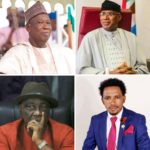
Which politician is this?
I got #{score}/#{total}
This small quiz showed you shege?
I got #{score}/#{total}
Say the truth, how do you feel about your score?
I got #{score}/#{total}
You did good, but it’s probably because you sleep on Twitter.
I got #{score}/#{total}
It’s not just by acing this quiz oh, I hope you have your PVC.
Will you be quietly eating the national cake or feeding us lies every weekend on live TV? Take this quiz and we’ll tell you the kind of Nigerian politician you’d be.
Nigerian politics might be your true calling, but there’s only one way to know. Take this quiz and we’ll tell you.
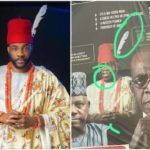
On 6 January 2023, the All-Progressives Congress (APC) presidential candidate, Bola Ahmed Tinubu, caused quite a stir on social media timelines with a photoshopped picture of him appearing on a campaign billboard.
The victim of the act was Ebuka Obi-Uchendu, host of the popular reality TV show, Big Brother Naija (BBN). In the photo, both Tinubu and Ebuka seem to be sharing the same pose, clothes, and even his wedding ring.
Sadly, this isn’t the first time politicians have been accused of the photoshop act. Here are some other cases:
Atiku receiving a handshake from Trump
During Atiku’s 2019 presidential campaign, a picture of him with a former American president, Donald Trump, was circulated. This was to clear rumours about his ban in the U.S.
However, Africa Fact Check revealed that President Muhammadu Buhari was the original person in the photo in April 2018.
Peter Obi with “Tinubu’s Insignia” Cap
Shortly before the Labour Party (LP) presidential candidate joined the party in May 2022, a post by Facebook user Taiwo Olaore was circulated. In the photo, Obi was wearing Tinubu’s insignia cap at an event. This drove the narrative that Obi was a supporter of Tinubu’s campaign or “BATified”.
However, further checks by The Cable revealed that the cap was digitally imposed on his head, as he wore no cap in the original photo.
However, this was thoroughly disputed by Buhari himself. He came out to assure the public that he has not been replaced by a double.
Tinubu with Joe Biden
Shortly before his Chatham House visit in 2022, a photo of Tinubu speaking with the current president of America, Joe Biden, was circulated.
However, the APC campaign media director, Bayo Onanuga, cleared the air that the photo had been doctored and there the presidential candidate’s last location then was at Abuja.
Most jobs usually have a condition that binds an employee to be on their best behaviour or risk termination of employment. No one wants to hire a chef who stinks up the kitchen or a driver who drinks on the job.
Unless you have a car you can afford to lose to gravity
This social contract about red flags isn’t any different for politicians who want to occupy influential positions that determine the state of their societies. But Nigerian politicians are clearly not subjected to any known laws of nature because they’ve got away with things that would make other regular people lose their jobs.
The people on this list are top of the class.
Elisha Abbo
He thinks he’s him. He thinks he’s James Bond
You’d think one of the most enduring qualities of a public official would be their temperament and strong willpower not to commit crimes. But Senator Elisha Abbo didn’t consult that handbook when he savagely attacked a woman inside a sex toy shop in Abuja.
Just a few weeks after he was sworn in as the youngest senator of Nigeria’s 9th Assembly in 2019, a leaked video of the attack turned the lawmaker into online sensation. Abbo repeatedly slapped the woman because she supported the shop owner whom the lawmaker had accused of insulting him. Even worse, he instructed police officers to arrest her while vowing to deal with her.
The incident sparked a tsunami of outrage that resulted in a Senate investigation, a criminal case and a civil lawsuit. The Federal Capital Territory (FCT) High Court ordered the senator to pay his victim, Osimibibra Warmate, ₦50 million as compensation, but he beat the criminal case and the Senate investigation died a shameful, quiet death.
The senator even comically won a “Beacon of Hope” award and an “ICON at Democracy” award months after the assault. He’s contesting for a second term as senator in 2023.
Ovie Omo-Agege
If you don’t know what a mace is, just think of it as the Bible of a legislative chamber in Nigeria. It’s the most sacred object of authority that gives legitimacy to the business of the people that make laws ruining running our lives as Nigerians. But on April 18, 2018, some thugs invaded the upper legislative chamber where senators meet and stole their mace. If you’re wondering how thugs invaded a well-fortified building crawling with security agents, it’s because they entered the chamber with Senator Ovie Omo-Agege who had been suspended by the chamber for misconduct.
The police arrested and questioned Omo-Agege but he maintained his innocence. The mace was later found abandoned by the roadside but no one else was ever arrested. The case ended up as another mysterious one for our police officers to never bother about solving.
Now, no one is allowed to call Omo-Agege a mace thief, so we’re definitely not calling him a mace thief.
We’re just pointing out that the thieves followed him into the chamber to grab the mace and take it out for lunch. This would be a career-ending scandal for a politician in saner climes — if they don’t end up in jail first. But, like a phoenix, Omo-Agege rose from the ashes of the controversy and won his re-election as a senator. His colleagues were so impressed by his panache that they even elected him the deputy senate president in 2019.
Omo-Agege is now a strong contender to win the 2023 election to become Delta State’s next governor. Who said stealing the mace doesn’t pay?
Abdullahi Ganduje
He’s got hands that love to receive
What do you get a man who has everything and is sitting in a prime position to corner public funds? The answer to that question can change from person to person, but we know how the governor of Kano State, Abdullahi Ganduje, likes it.
The answer is dollars
In October 2018, the Daily Nigerian published a series of scandalous videos that caught Gandollar Ganduje taking wads of American dollars from someone and sticking them into his clothes. The collection was payment he took from a contractor — allegedly o — to approve contracts for a project. Basically, he was getting paid dollars on the side to motivate him to do his day job. Some people would call it bribery, and many people called it that.
“It’s only a crime if you get caught, right?”
The videos raised a stink and Nigerians called for the governor’s impeachment and prosecution, but Ganduje used his good friends in the Kano State House of Assembly to block all that nonsense blowback and kept his job.
The governor went even further to win re-election one year later and was cheeky enough to make anti-corruption policies to stop public officials from becoming like him abusing their power.
Abba Moro
In 2014, the Nigeria Immigration Service (NIS) needed to fill 4,556 vacant positions and made a public call for recruitment. 675,675 young Nigerians applied across the country and even paid a controversial ₦1,000 access fee. Things started to go sideways when over 500,000 shortlisted applicants were instructed to go to designated centres for further assessment.
The volume of applicants that showed up caused overcrowding issues which escalated and left at least 15 people dead in the ensuing chaos in Abuja, Edo, Niger and Rivers.
The chief architect of the recruitment exercise was Abba Moro who was the Minister of Interior at the time. Moro’s initial reaction to the tragedy was to blame the victims for their impatience — he’s a Nigerian politician after all. It took the minister more than a week to even acknowledge some responsibility. He also blamed Drexel Tech Nigeria Limited, the firm hired to run the exercise, for the disorganisation and illegal fees paid by the applicants, but a Senate investigation discovered he made the unilateral decision to hire the consultant.
Abba Moro never lost his job over the scandal, and even beat a criminal case that convicted another official, Anastasia Daniel-Nwobia, who was the Permanent Secretary of the ministry, for awarding the contract to the firm.
While the case dragged in court for years, Abba Moro contested and won a senate seat in 2019, and is contesting for a second term in 2023.