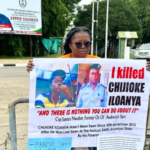
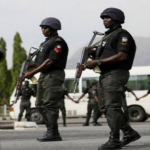
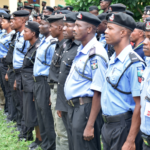
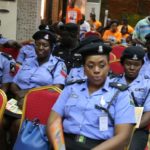
• Nigeria has a diverse range of security agencies that perform very different roles. The Nigeria Police Force (NPF) handles domestic issues, the Nigerian Army maintains Nigeria’s territorial integrity and the Amotekun is into animal prints or something.

    What Happens When Nigerian Police Officers Clash With Soldiers?

    Too much skin

    Despite their operational differences, they all have the same goal to ensure the safety of Nigeria and Nigerians. But another thing most Nigerian security agencies have in common is a reputation for human rights abuse and gross misconduct.

    What Happens When Nigerian Police Officers Clash With Soldiers?

    And while much of this brutal streak is directed against civilians, there are occasional incidents of officers of these agencies turning on each other. One of such occasions reared its ugly head again on April 3rd, 2022, in Lagos traffic of all places.

    This story doesn’t end well for at least one person.

    What happened?

    A group of soldiers were stuck in traffic just like it happens to everyone in Lagos. When they investigated what was holding them up, they realised a group of police officers were holding up their lane to pass vehicles in another lane. And because they’re soldiers, they thought they needed to address the slight, so they confronted the police officers. Expectedly, a shouting match started between the two groups.

    This is the point where the story of what went down deviates into more than one version, depending on who you ask. 

    The army’s version of events

    During the quarrel, a police officer fired his weapon.

    The bullet brushed the ear of one of the soldiers and caused enough damage to send him to the hospital. His mates didn’t like this, so they descended on the shooter and beat him to death. 

    His name was Inspector Monday Orukpe, and he’s survived by a wife and four children.

    The fate of Inspector Monday Orukpe is what happens when Nigerian police officers clash with soldiers.

    The police version

    The soldiers, numbering about 30, attacked the five police officers on traffic duty for holding up their lane. 

    The soldiers beat up the team leader and kidnapped two inspectors and their AK-47 rifles. And when they tried to snatch another inspector, he fired into the air, forcing the soldiers to retreat.

    The retreating soldiers turned their attention to torturing the kidnapped inspectors. Inspector Orukpe didn’t survive the injuries the soldiers inflicted on him and died. The second inspector, Igbafe Ojo, is currently being treated for his injuries.

    The Lagos State Police Command has called out the Army’s claim of an injured soldier as a lie and demanded the return of the two AK-47 rifles and three magazines the soldiers stole.

    So this is the state of affairs right now:

    What Happens When Nigerian Police Officers Clash With Soldiers?

    There’s a history of bad blood

    The clash between soldiers and police officers in Lagos continues a string of bad blood incidents between officers of both security agencies in Nigeria. 

    For example, when a team of policemen arrested a wanted kidnapper, Bala “Wadume” Hamisu, in Taraba in 2019, a team of soldiers attacked them. The soldiers killed three policemen and two civilians and liberated the suspect. 

    The government indicted 10 soldiers involved in the attack but withdrew charges against them to allow the Army to court-martial them first. Their dismissal from the Army remains a waiting game three years later, despite protests from the police. 

    What will happen to the Lagos case?

    The Army has already set up a board of inquiry to investigate the incident, promising to punish anyone found guilty of misconduct. But if the history of how these things play out is anything to go by, the police will be lucky to get justice for its brutalised officers.

    The clash illustrates why security agencies have to consider serious reforms for the conduct of their officers, both with one another and with civilians.

    In a tribute to Inspector Orukpe, the Police Command’s spokesperson, Ben Hundeyin, said, “You absolutely didn’t have to die.” 

    And that is as true for the officer as it is for every victim of police brutality in Nigeria.

    ALSO READ: What Every Nigerian Should Know About the Supreme Court

    Subscribe for Zikoko Citizen’s weekly newsletter to get all the tea on Nigeria!

  • Today, a report was released of a female police officer named Olajide Omolola, who got sacked for getting pregnant while being unmarried. This started after the Department of Finance and Administration in Ado Ekiti sent a signal to where Omolola was based, informing the authorities in charge to stop the payment of her salary and to have her relieved of her duties.

    The full document reads, “Section 127 of the Police Act and Regulation against women police getting pregnant before marriage W/PC (woman corporal) Olajide Omolola passed out of Police Training School on 24/04/2020 attached to yours contravened above provisions.

    “She stands dismissed from the Force. Dekit her. Retrieve police documents in her possession with immediate effect. O/C CFO Ekiti only. You are to relay signal to IPPIS Abuja for the stoppage of her salary with immediate effect.

    “DECOMPOLS (deputy commissioners of police)/ACPOLS (assistant commissioners of police)/HODs/DPOs Ekiti State only. You are to lecture women police. Treat as very urgent.”

    When Nigerians online got the news, many pointed to the discriminatory body of this law and the way it continues to make workplace structure unequal for women.

    https://twitter.com/AthenaZor/status/1354416789892030467?s=20

    This got us thinking about what other binding laws apply to Nigerian female police officers and what they essentially mean.

    1. Female police officers are required to seek permission to marry.
    Wait, what?

    This law in Section 124 mandates female police officers to seek permission before getting married so some background checks can be carried out on them. This law, however, does not apply to men. While contributing to a bill that sought to end existing discrimination against women in the police force in December 2019, Senator Enyinnaya Abaribe said, “A male counterpart can marry a criminal. Nobody will go to check whether the woman he wants to marry is a criminal or not. A man does not need to write to ask for permission to marry and the question of not being able to bear arms.”

    1. Female police officers are not allowed to drill under arms.
    Are you people serious right now?

    Nestled in Section 123, this law means that Nigerian female police officers cannot bear arms while carrying out their duties.

    1. No Maternity Leave.

    According to section 126, female police officers do not have the privilege of getting maternity leave should they happen to be pregnant. It isn’t clear what alternatives the law provides for this specific situation (although we suspect job termination) but the law still remains.

    1. Nigerian Female police officers are not allowed to wear jewelry on duty.
    say what?

    Yes, you read that right. Necklaces, bracelets, earrings and all things deemed jewellery are prohibited on female police officers who are on duty (Section 128). It is not quite clear why this law was passed, or what goal it serves. It is not certain if a revised bill will be passed any time soon.

    There are more laws that directly discriminate against Nigerian female police officers and deter them from enjoying privileges such as choosing who to love, and ensuring job security for them and financial support for their families, as the law only recognizes men as viable candidates for family support when they are gone. This needs to change.

  • When Kelvin Eghagha heard about the death of David Ntekim-Rex on Sunday, 17th of January, two days after it happened, he remembers feeling upset because he thought his older brother, who broke the news to him, was making a tasteless joke.  “But he seemed serious about it, so I asked him how he could confirm this and he told me that a neighbor close to David’s house had told him.”

    Kelvin’s parents were colleagues and close family friends with David’s mother, Dr. Yewande Ntekim-Rex, a senior lecturer at the English department, University of Lagos. Kelvin had known David since he was a child and had come to see him and his other two brothers as his own siblings, and their mother, Dr. Yewande as his aunt.

    Later that day, Kelvin drove his parents to David’s house where he learned more about David’s death. As he recounted the story he was told over Zoom, his voice heavy and disappointed, the timelines and scenarios that make up this story pointed to how little regard authorities have for a Nigerian life. 

    While trying to keep a firm composure, Dr. Yewande was the one who explained how she had been worried that David hadn’t returned home at around 8 p.m., which was when he usually came home. She then called on family relatives to help her look around the neighborhood for David, a search that would end when she got to the side of the street where David’s body lay, bloody and barely conscious. 

    The Robbery:

    David Ntekim-Rex suffered a robbery attack on a Friday night, the 15th of January in Jibowu, a street within close range of Yaba, in Lagos, Nigeria. He was on his way home from work when some robbers riding past on a bike tried to steal his phone and when they couldn’t, they shot him in the face. Eye-witnesses at the scene were afraid of taking his body to the hospital to avoid being possibly framed for his shooting if stopped by the police. But they had to do something, so they called the police.

    By the time his mother would get to the scene, the police had arrived and were taking pictures, collecting evidence. “Aunty Yewande explained that when she held David’s body in her arms, she could still feel his pulse, but the police would not let her take him to the hospital for treatment.” This was around 8 pm and between that time and when the police would finally let them go at 10 pm, they had tried to take possession of David’s bag containing his laptop. They had insisted, as Kelvin was told, to keep the laptop without explaining why.

    The Chase To Save David’s Life:

    When the police agreed to let David be taken to the hospital at 10 pm, his pulse had already begun to dull. “When they got to the Military Hospital, Yaba, she said the gates were locked. She and the relatives with her kept trying to get the attention of the nurses who they could see behind the gate, but they made no move to help. After a while a matron at the hospital stepped out to see what was going on, she checked for a pulse and confirmed that the pulse had grown significantly weak. The doctor that would later step in only felt David’s pulse briefly and then told them to take him away,” says Kelvin. But that would not be the only time David would be rejected care. Kelvin was told that the police had insisted on David’s family driving with them to a police station at Sabo, Yaba where they were delayed even further. “Aunty Yewande told me that when they got there, the police took a long time getting the statement ready. For one, the senior officer that was meant to write the report was inebriated and it took him up to an hour to write the report because he was staggering and unconscious. After the statement had been put together, the police began to inquire about the laptop again. It wasn’t clear what their aim was, but they weren’t allowed to leave until 12:30.” The police’s insistence on a statement was especially suspicious as the law mandating a police statement before hospitals can treat gunshot wounds was pretty scrapped in 2019.

    According to what was relayed to Kelvin, the family couldn’t get any medical help at LUTH’s emergency ward. “The doctor they finally got to speak with asked aunty Yewande if David’s body was still warm, and she confirmed that it was. He asked her if he still had a pulse and that if it was low or if he didn’t at all that there was nothing he could do. He did not come out from behind the door where he spoke to them, he didn’t check David’s body, he just shut the door on them and walked away.”

    David Ntekim-Rex

    What The Police Had To Say:

    In a statement made to Punch Newspaper, the Lagos State Police Public Relations Officer, Muyiwa Adejobi alleged that David had passed away by the time they got to the scene of the crime. He said, “On January 15, 2021, we were informed around 11.20 pm. On getting to the scene, police men met his lifeless body, but relations insisted that he was not dead. So, police took him to Military Hospital, Yaba but the hospital said they could not treat him and then referred him to LUTH.

    “He was accepted at LUTH and he was confirmed dead. The family returned to the police to get extracts at the station for a mortuary. So, the allegation of the police abandoning him is not true.”

    David wasn’t just a prodigious tech talent, beating 17,000 other participants in the 2018 Master the Mainframe competition to emerge as that year’s regional co-winner, or collecting outstanding awards for his computer skills since 2014. He was also a child who was fiercely loved by his mother, “she was the one who plaited the braids he had on his head and when she talked about him, you would often see her eyes sparkle with pride.” Kevin tells Zikoko.

    “He was a quiet person and being very gifted. If you’d met him, he most likely won’t say much to you, but when you leave, he’d describe you so well,” a friend Temitope Oladejo tells Zikoko. Many of David’s friends also share that sentiment and it is without a doubt that he meant a great deal to the people he left behind. At this time, not much is known about who will be held accountable for denying David the early treatment that might have kept him alive today, but one thing continues to be apparent about the current systems available in Nigeria, and it is clear that they have been designed in one way or another to end lives and snuff out dreams.

    “This incident is really making hit accelerate on my Japa plans. David’s family is going through unbelievable pain right now. They need all the support they can get. There were plans for David to move out of the country this year, his mum was certain that he still had some time, that he would be safe enough to make it out of here alive. He had so much promise, now it’s all gone.”

    You should read this too: 5 Nigerians Talk About Getting Their NIN

  • Citizen is a column that explains how the government’s policies fucks citizens and how we can unfuck ourselves.

    The Nigerian police is ranked as one of the worst in the world, and the Nigerian society is notable for widespread human rights abuses. In your house or outside it, you’re always a moment away from having your rights abused by the police in Nigeria.

    After the #EndSARS protests, the Nigerian police have ramped up arrests of people who are perceived to be the arrowheads of the protests. Typically, the Nigerian police round people up through whatever means necessary and then whisk a person off to a far-away place where they have no access to their friends, family or lawyer.

    Here, we explain the relevant law in criminal administration in Nigeria, the Administration of Criminal Justice Act (2015), and the important things the Nigerian police should do when they arrest you or want to have you arrested. 

    Of course, whether the Nigerian police actually does these things is another matter entirely.


    You:

    Nigerian police:


    Here are 11 rights the Nigerian police must consider when they have you arrested as enshrined in the law :

    1) Use of handcuffs 

    You cannot be handcuffed unless you have attempted to escape or it is necessary to handcuff you for your safety, or by an order of the court. (Section 5)

    2) Notification of arrest

    The police officer or anyone making the arrest must notify you of the reason for your arrest, except you were arrested while committing an offence, after committing an offence or after you escaped from a police custody. (Section 6 (1).

    3) Right to a legal practitioner 

    The police officer making the arrest or the police officer in charge of a police station must inform you of your right to remain silent or to avoid answering any question until after you meet a legal practitioner or anyone of your choice.

    They must also inform you of your right to consult a legal practitioner before making, endorsing or writing any statement or answering any question that has been put to you.

    They must also notify you of free legal representation by the Legal Aid Council of Nigeria, in the case where you are unable to afford a lawyer.

    Also, the police or security authorities who are in charge of the custody where you have been arrested must notify your next of kin or relative of your arrest, and you don’t have to pay anything for this service. Section 6 (2).

    4) Arresting another person

    Nobody can be arrested in place of another suspect. 

    This means that the police cannot arrest your friend or family member cannot be arrested in your place. (Section 7).

    5) Treatment with dignity

    You must be treated with dignity and humanely while in the custody of the police or whoever has arrested you. Section 8 (1)

    This means that you must be treated with respect as a human being, and not as a slave or a property.

    6) Arrest for a civil wrong

    You cannot be arrested by the police for a civil wrong or a breach of contract. Section 8 (2).

    A civil wrong is something that you have done to someone else that affects their rights, like noise pollution. 

    A breach of contract is when you fail to fulfill your end of a bargain with another person.

    7) Arraignment or release

    You must be brought to court in accordance with the provisions of the law or be released conditionally or unconditionally. Section 8 (3).

    8) Search of an arrested suspect

    In the case that you have been arrested, whoever is arresting you may search you using the force that is necessary, but the person must safely keep all the properties found on you, except the clothes you’re wearing. (Section 9).

    The search must also be conducted decently, and it must be done by a person who is of the same sex as you, except where it is urgent to conduct the search and a person of your gender is not around.

    9. An inventory of everything recovered from you

    Once you have been arrested and the items on you have been taken away by the police, the police must record everything taken away from you in an inventory, and the inventory is not invalidated even if you fail to sign it.

    You can direct that your lawyer or any other person should be given a copy of the inventory, and the police can release your properties to you before you are charged to court.

    The police must also return all your properties to you once they have found that you are not guilty of the offence you were being charged for. (Section 10)

    10. You can only be arrested without a warrant where:

    • a police officer suspects strongly that you have committed an offence against the laws of Nigeria or against the laws of another country.
    • the offence was committed right in the presence of the police officer.
    • you have obstructed a police officer in the conduct of his duty, or you have attempted to escape or have escaped from custody.
    • a stolen property is found on you or a property that may appear as if it was stolen was found on you.
    • a police officer suspects that you ran away as a deserter from one of the armed forces in Nigeria.
    • if a police officer suspects that you have committed a crime outside Nigeria that warrants that you are arrested in Nigeria.
    • you are in a situation where you have to prove that you did not break into a house, steal a car or be in possession of any dangerous weapon.
    • the police officer believes that a court has issued a warrant for your arrest.
    • the police officer believes that you are hiding your identity because you want to commit an offence.
    • your warrant of arrest has been issued, or a Judge, Magistrate or a superior police officer has directed the police officer to arrest you.
    • the police officer believes that you are trying to commit an offence and arresting you without warrant is necessary to prevent you from committing the offence. (Section 18)

    11) Notification of offence and access to communication

    Once you have been arrested, with or without a warrant, the police must take you to a police station and inform you of your crime in the language that you understand.

    The police must also give you reasonable time to obtain legal advice, to communicate with your family and friends on how you can meet the bail conditions and how you can make arrangements for your defence or release. (Section 14)

    12) Recording of arrests

    Within 48 hours of your arrest, whether you have been been arrested with or without a warrant, the police or any other security agency arresting you must take a record of your:

    • alleged offence;
    • the date and circumstance of the arrest;
    • your full name, occupation and residential address;
    • your identification records, which includes your height, your photograph, your full fingerprint impressions, and any other means of identifying you. (Section 15).

    These are just some of the things you must know when the police arrest you. It is important that the police treat you with care and follow the law as you remain innocent until a court of law has proven that you are guilty. Hence, your rights must not be trampled upon.

    For more on the Administration of Criminal Justice Act (2015) and how criminal processes should be embarked upon in Nigeria, read here.

    We hope you’ve learned a thing or two about how to unfuck yourself when the Nigerian government moves mad. Check back every weekday for more Zikoko Citizen explainers.


    [donation]

  • Citizen is a column that explains how the government’s policies fucks citizens and how we can unfuck ourselves.

    The Nigerian police are always averse to protests. But things took a different turn earlier today when the Lagos State government, through its official Twitter account, stated that the Lagos State police command has vowed to resist any protests in Lagos State, under any guise or “nomenclature”.

    As expected, a lot of social media users were angry at the declaration. Many people referred to the constitution as supporting the rights of citizens to protests, and they went on about how the police and the Lagos State government were trying to stifle the rights of displeased Nigerian or protesters.

    Curiously, we decided to look at the laws that guide assembly in Nigeria, including if and when the Nigerian police can put an end to protests in Nigeria. Just maybe the police and the Lagos State government were seeing some things we weren’t.

    Read: Who Has Powers Over The Nigeria Police Force?

    1. Section 40 of the Constition

    The most important position of the law for anyone who wants to understand the position of Nigerian laws on protests is Section 39 and 40 of Nigeria’s 1999 constitution.

    Section 39 of the constitution guarantees free speech while Section 40 of Nigeria’s 1999 the constitution states that:

    Every person shall be entitled to assemble freely and associate with other persons, and in particular, he may form or belong to any political party, trade union or association for the protection of his interests.

    This provision states simply that everyone is entitled to assembly freely and associate with other people.

    However, Section 45 of the constitution states that any law against section 40 is valid if it is in the interest of defence, public safety, public order, public morality or public health, or in the interest of protecting the freedom of other people.

    So, the only thing that can affect the right to hold a peaceful protest is if the government makes a law that restricts movement in the interest of defence, public safety, public order, public morality or public health or in the interest of protecting the freedom of other people.

    But the laws on assembly are not finished.

    2. Public Order Act of 2004

    The “Public Order Act” was enacted in 2004.

    Section 1(1) of the act gives a governor of a state the power to direct the conduct of any assembly on a public road or all public places of resort in the state, and prescribe the route any procession may pass.

    Section 1 (2) also states that anyone who wants to convene any assembly or meeting or of forming any procession in Nigeria must have a licence to do so.

    The person must first make an application for a licence to the governor not less than 48 hours before the assembly, and if the governor is satisfied that the assembly is not likely to cause a breach of the peace, he must direct any superior police officer to issue a licence, not less than 24 hours to the assembly, specifying the name of the licensee and defining the conditions on which the assembly to take place.

    If he is not so satisfied, he must convey his refusal in the same manner to the applicant within the time stipulated.

    Section 1 (4) of the Act also gives the governor the power to delegate his powers in relation to the whole state or part thereof, to the Commissioner of Police of the State or any superior police officer of a rank not below that of a Chief Superintendent of Police.

    This means that a state governor has to give a licence before people can assemble in any state, and he can delegate his powers to the commissioner of police of the state.

    But the position of the law is still not over with regards to protests.

    3. All Nigeria People’s Party v. Inspector General of Police (2006)

    In this case, All Nigeria People’s Party (ANPP) took the IGP to court and challenged the constitutionality of the police permit under the Public Order Act after the police disrupted their rally.

    At the Federal High Court, the Judge stated the Public Order Act is a violation of section 39 and 40 of the constitution, and chapter 11 of the African Charter on Human and People’s Right, and the law is a violation of the right of people’s assembly to free speech.

    The judge agreed with Mr Falana, the lawyer for ANPP, that Nigeria’s criminal law should be used to prosecute violent protesters, but the rights to assemble cannot be taken away if they protest peacefully.

    The judge conclusively stated that “sections 1(2),(3),(4),(5) and (6), of the Public Order Act are inconsistent with the fundamental rights provisions in the 1999 Constitution and to the extent of their inconsistency, they are void. I hereby so declare.”

    4. In Conclusion

    The Federal High Court has held, through a continuous order, that the Inspector-General of Police, whether by himself, his agents, privies and servants cannot prevent aggrieved citizens of Nigeria from organizing or convening peaceful assemblies, meetings and rallies against unpopular government measures and policies.

    The Court of Appeal also held, on the same case, that permits for peaceful demonstrations are things of the past, and that protesting peacefully is part of the fundamental pillars of a democracy.

    It is now a settled case that peaceful protests are guaranteed under the Nigerian constitution, and are an important part of Nigeria’s democracy. And they cannot be denied except in a situation where Nigeria or part of the country is in a special emergency like a disaster.

    Quiz: What Are You Most Likely To Get Arrested For?


    [donation]

  • Citizen is a column that explains how the government’s policies fucks citizens and how we can unfuck ourselves.

    The recent events and killings in Oyigbo, Rivers State, all started on October 21, 2020. On that day, members of the “Independent People of Biafra” (IPOB), a group that has been described as a terrorist organisation by the Federal Government and a Federal High Court, were said to have invaded Oyigbo Local Government Area of Rivers State “in a senseless and mindless attack”, killing three police officers and burning down three police stations.

    In a press briefing given on Monday, October 26, 2020, the commissioner of police in Rivers State, Joseph Mukan, accused members of the IPOB as hiding under the #EndSARS movement to kill three police officers in the state and burn down three police stations in Afam and Oyigbo Local Government areas.

    He gave the identity of the killed police officers as Sunday Dubon, Swawale Ornan, and Umunna Uchechukwu, whose corpses were either burnt to ashes or parts of their bodies cut off.

    Read: Why Are Nigerian Police Officers Off The Streets?

    Governor Wike Imposes Curfew, Proscribes IPOB

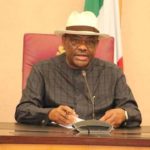
    Following this development, the governor of Rivers State, Nyesom Wike, in a state-wide broadcast, stated that the state government had “serious concern” about the activities of the outlawed Independent People of Biafra (IPOB) in the state.

    He stated that it had become a regular occurrence for IPOB members to disturb the peace of the state, including unleashing violence on communities, people and police officers.

    He stated that Oyigbo town had become the “operational base” of the group in the state, and that following the violence that the group routinely unleashes in Rivers State, the government has decided to “outlaw IPOB from existing or operating in Rivers State or any part thereof”, and that security agencies are to stop any agitation by IPOB and arrest any person that identifies with IPOB in the state.

    He also declared one Stanley Mgbere wanted for destroying lives and properties in Eleme and Onne Local Government Areas, and that there was a ₦50 million bounty for anyone who had useful information that would lead to the arrest and prosecution of the Stanley Mgbere.

    Meanwhile, before that time, specifically on October 21, the governor had imposed a curfew in the state in Mile 1, Mile 2, Emenike, Ikowu, and Iloabuchi areas of Port-Harcourt Local Government Area as well Oil Mill area of Obi-Akpor Local Government Area. He later lifted the curfew in every part of the state except that of Oyigbo Local Government Area.

    Read: 14 Hilarious Reactions To The Curfew In Nigeria That Starts 4th of May

    Curfew In Oyigbo, Killings By Soldiers

    Since Wednesday 21st October 2020, residents of Oyigbo Local Government have been in their homes following the 24-hours curfew imposed by the Rivers State Government. Reports say that residents lack access to food and basic healthcare services.

    Officers of the Nigerian military have also been deployed to the area, and there have been reports of human rights abuses and extra-judicial killings by officers of the Nigerian military.

    The soldiers are said to be going from house to house, while harrassing and killing people.

    https://twitter.com/dspken/status/1322782455758266369

    Online publications are putting the death toll in Oyibo Local Government at more than a hundred while stating that the military has blocked journalists and human rights groups from accessing Oyigbo, an Igbo-dominated settlement eastwards from Port-Harcourt.

    Meanwhile, the Nigerian Army is denying the accusations. The public relations officer for 6 Division of the Nigerian Army, Major Charles Ekeocha has insisted that the ongoing operation was not designed to inconvenience residents of Oyigbo.

    According to him: “We are there to carry out an operation to recover weapons carted away from our soldiers who were killed so that the criminals will not use the guns to kill innocent citizens in Rivers and outside the State. We carry out our search professionally”.

    Read: The Nigerian Military Has A History of Killing Unarmed Civilians

    We hope you’ve learned a thing or two about how to unfuck yourself when the Nigerian government moves mad. Check back every weekday for more Zikoko Citizen explainers.


    [donation]

  • Citizen is a column that explains how the government’s policies fucks citizens and how we can unfuck ourselves.

    There has been a curious observation that Nigerian police officers are off the streets. This is coming after the wave of violence that greeted the curfew order imposed in Lagos State and other states in Nigeria following the #EndSARS protests and the highly controversial #LekkiMassacre

    But if police officers are truly off the streets, there’s only one thing that can happen next — anarchy. 

    Hoodlums, thugs and other miscreants will cause mayhem and unleash havoc on the lives and properties of many citizens, and there will be widespread lawlessness. And maybe it is already happening.

    But Why Are The Police Off The Streets — Fear or Anger?

    Over the past few days, the police have maintained that 22 of their officers have been killed in wave of violence that spiraled after the #EndSARS protests, and that 205 police stations were destroyed in the mayhem.

    Other reports also claim that, at least, 17 police stations were destroyed in Lagos alone, including the loss of about 205 “security assets”.

    10 firearms, including 8 AK-47 rifles were also reportedly taken away from police stations during the violent attacks.

    It is this attack on Nigerian police officers that is said to have affected the morale of members of the police force, with many of them preferring to stay in their barracks rather than return to the streets or police stations for fear of being attacked or killed.

    Meanwhile, the Police Service Commission, the body that monitors the conduct of police officers, has directed the striking police officers to return back to their duty posts or face dismissal.

    Read: Who Has Powers Over The Nigeria Police Force?

    Illegal Arrests

    But the police are altogether not complicit in this situation. Following attacks on police stations and police officers, the Inspector General of Police, Muhammed Adamu, stated that the police had arrested 1,596 suspects in connection with the attacks and the subsequent looting all over the country. 

    However, the way and manner these “suspects” are being treated leaves more questions to be answered.

    Many of the arrested suspects have been held in detention for days, without access to necessities like food and water, or even communication with their family and friends.

    In many instances, the police round up suspects, parade them and presume they are guilty, even without the pronouncement of the court to this effect.

    Read: Here’s All You Need To Know About The #AbujaPoliceRaidOnWomen

    We hope you’ve learned a thing or two about how to unfuck yourself when the Nigerian government moves mad. Check back every weekday for more Zikoko Citizen explainers.


    [donation]

  • The Nigerian Police is currently recruiting, and we want a clean slate from the past. These questions must be asked if we are serious about integrity and professionalism in the force.

    1. “Are you hopelessly addicted to 50 Naira?”

    Obviously, he won’t say he is. But check his eyes, if he describes 50 Naira with so much passion and gusto, and his eyes light up with lust, that’s an incoming thief. He is high on mutilated N50 Naira. Boot him out!

    2. “Who Is Kcee? Do you know his brother E-money?

    He will try to hide his admiration for Kcee (“Alhaji Bureau de Changer”) and his elder brother E-money. But pay attention to his lips, if he smirks it any suggestively then he’s somebody who will leave the force to open doors for rich people. He’s a door opener, not a police. Get that man out!

    3. “Are tattoos from the Devil?”

    If he says no earrings, no tattoos and no dreadlocks and anyone who has them on is suspect, that’s a SARS material. He will be a menace on the streets. Sack that man before you’ve even given him a job!

    4. “Is virginity Important?”

    If he says virginity is a material fact, and that he has to ask about virginity once he questions any girl, that man is going to be a benefit policeman, and a terror to our girls. Sweep him out!

    5. Tell him to say “Park”

    If he shouts “Parrrrrrrk!”, and the veins in his head is bulging out and his eyes are almost coming out of their socket, that’s a baby tyrant. He will stop every car and tax every driver, even more than Sanwo-Olu. Show that man the exit!

    6. “Road or air travel, which do you prefer?”

    If he says he “so much” likes road travel and that he likes Nigeria’s rough and rugged inter-state roads, he’s going to be an inter-state extortionist. Decline his application before he extorts all the drivers on Nigerian roads.

    7. “Oga or Boss, which is correct?”

    If he says he likes calling his superiors “Oga”, you’re looking at a Makanaki. He will start a bribery ring with his “Oga”, and they’ll share it 70-30. He understands how to pay tithe in the Devil’s kingdom. Sack than man, now!

    Jara

    Check his wrist and see if he’s wearing a wrist watch. If he’s not, he will run away from the crime scene and come back hours after the criminals have gone. He’s a scammer, that one.

    But we know the Nigerian Police Force won’t ask these tough questions. That means, God safe us from this incoming batch of members of the police force who will certainly not be our friends, as always.

  • So on the 13th of July 2020, the Nigerian Police posted an instructional video on Twitter on how to navigate its online portal for those looking to join the force. Nigerian Twitter saw the video and lost its collective mind because…see ehn…the video…wasn’t…

    After the hailstorm of criticism, they deleted the video. But because I’m a messy bitch who lives for drama, I’m about to list out all the things that were wrong with it. Watch it below:

    https://twitter.com/blickyrick/status/1282998866913173504?s=19

    1) The Voiceover: I damn near died laughing the moment the voiceover began because it sounded like it was done by Dracula on a day he was battling a pretty nasty head cold. Wtf was that accent? Transylvanian??

    2) The Soundtrack: Not to expose the shenanigans I used to get up to as a child, but if you’re familiar with the mild, almost retro video game-like background music from 90s softcore pornography, you’ll understand what’s funny about this video’s soundtrack. Here’s a meme that perfectly represents all I could imagine while watching the video:

    3) The Spelling: They forgot the “t” in “recruitment”, misspelled “fourth” as “forth”, and “complaint” as “compliant”. I’m not saying that whoever made this can’t spell. (Those mistakes are obviously typos.). But that proves this was made in a hurry, and the fact that no one at the Nigerian police force noticed the mistakes is troubling.

    4) The Design: Given the way things like this in Nigeria, you just know an insane amount of money was allocated to this project but we somehow got THIS as the end result.

    Graphic Design is my Passion :) by ColtonDHoff on DeviantArt

    They could’ve at least used a black avatar. Who the hell is that white nigga?

    What’s up, Zikoko Fam? It would mean the world to us if you spared a few minutes to fill this Reader Survey. It’s so we can bring you the content you really want!

  • If you live in Nigeria, then you already know that our police are not above moving mad. So, the likelihood of you getting arrested, rightfully or not, is quite high. That’s why this quiz is here to prepare you for what you’re most likely to get in trouble for.

    Take to find out: