• The Nigerian Police Force has a long history of abuse and extortion. Random searches, unwarranted detentions, and the targeting of young people for extortion led to the nationwide #EndSARS protests in 2020. Years later, little has changed and police reform remains an unfulfilled promise.

    Ayo* was having a nice afternoon nap in his hostel when he was rudely awakened with a gun to his face. His day was about to get much worse in ways that have left him still holding a grudge against the Nigerian Police.

    This is Ayo’s story as told to Franklyn

    Anywhere they are hating on the Nigerian Police is my kind of space. I have plenty of reasons for how I feel about that organisation; too many unpleasant run-ins to count. But one I will never forget happened during my university days in Ilorin.

    It was one of those lazy afternoons that make a midday nap really slap. The guys from the room next door had come over to mine to gist and play video games. Usually, I would have joined in the banter, but that nap was calling my name.

    Since they were in my room, theirs was empty. I left them with my roommate and went to their room instead. From there, their noise became a soft hum that lulled me to sleep. I cannot say how long I was out, maybe an hour, before I sensed the door open.

    I cracked my eyes just a little, and the first thing I saw was the sneakers. My gaze travelled up from the shoes to the worn jeans, and then I was staring down a dark tunnel with no light at the end. I was looking straight into the barrel of an AK-47.

    If I had even thought for a moment that they were armed robbers, it vanished quickly. I knew that look too well—the black shirts, jeans, sneakers, sometimes a face cap. It was the Nigerian Police.

    I found myself wondering, as I often do, why our thugs-in-uniform carry assault rifles like they are in a warzone. But that was not the time for such thoughts. The gun in my face had jolted me awake, and I sat up quickly.

    “What is happening here?” I asked, rubbing my eyes.

    “We are here for you people!” one of them barked.

    ***

    Get More Zikoko Goodness in Your Mail

    Subscribe to our newsletters and never miss any of the action

    I lived in a private hostel off campus with a bunch of other guys. One of them, who had moved out a few months earlier, had a run-in with the police. They searched his phone and found something incriminating.

    This was 2018, when Internet fraud was booming and the police were cashing out too, extorting guys through random searches and phone checks. Even those of us just minding our business were caught in the mess.

    They arrested him and asked him to take them to his place. For reasons best known to him, he brought them to our hostel instead of wherever he was actually staying. That was how I ended up being woken up with a gun in my face.

    ***

    The guys in my room must have heard the commotion and bolted. That was the standard reaction. In Ilorin, as a young man in 2018, you see the police, you run. If they had not caught me asleep, I would have run too.

    My roommate was not fast enough.

    They saw him leaving and called him back. He lied, saying he lived in a different room and was heading there. I do not know if they did not believe him or just felt lucky to have caught someone, since the others had escaped.

    The officers held both of us and began searching our room. They tore it apart, flipping everything, throwing clothes off hangers. They did not find anything incriminating, but they did find our IDs, which exposed my roommate’s lie.

    So much of that day is burned into my memory, but the worst part is a sound I still remember too clearly after all this time. The whole hostel heard the slap one of the officers landed on my roommate’s face. More slaps followed as they started to drag him away.

    I am a big, tall guy, and I have noticed that it brings a sort of respect. People listen when I speak. I naturally fall into a big brother role with my friends. So I stepped in.

    I told the officers he had done nothing wrong. They had not found anything on him. Lying about his room was not enough reason for this kind of treatment.

    I said, “You are not taking him anywhere.”

    Omo, it was like play. Before I knew it, they carried the two of us.

    ***

    They dragged us downstairs to their vehicle. It was not even the usual Hilux pickup truck. They had come in a taxi. I still remember its distinct yellow and green paint job. I was still trying to figure out how we would all fit when one of them opened the boot.

    They shoved my roommate in first. Then me. Like I said, I am a big guy, so the boot would not close with us inside. They kept trying to force it shut, but it was not working. Then one officer stepped up and slapped me across the face.

    As I recoiled in pain, my body bent just enough for them to slam the boot shut, pinning me in the most uncomfortable position. Then they started driving.

    I do not know how long we were in there. I tried to memorise the turns, listened to the sounds outside, anything to figure out where we were going.

    When the car stopped and they let us out, I was not surprised that we were not at a police station. Nothing about this had felt official. We were at a really big tree, and from the way they immediately made themselves comfortable, I could tell it was their usual hangout spot.

    It was then that the negotiations began.

    ***

    They told us we had to go if we wanted to be set free. After some haggling, we settled on ₦15,000. Of course, we did not have the cash, so it was agreed that I would go and get it while my roommate stayed behind.

    One of the officers flagged down a motorcycle for me. It took me to the nearest ATM, where I withdrew the money. I returned and gave the officers the money.

    As we left, they shouted warnings after us. “If we come una side next time find anything for una hand, na serious trouble!”

    I still think about the madness of that day. How I just wanted a nap, only to be woken up with a gun in my face, shoved into a car boot, slapped and extorted. I knew from the start they were not armed robbers, but looking back, I ask myself if there’s any real difference. Armed men woke me up, assaulted me and took my money.

    As long as I am alive, the Nigerian Police will always have at least one hater. God will actually punish them on my behalf.


    Share your story with us here if you’ve ever had a moment where Nigeria’s systems made life harder or unexpectedly easier. We want to hear about your personal experiences that reflect how politics or public systems affect daily life in Nigeria. We’d love to hear from you!


    Click here to see what other people are saying about this article on Instagram

    [ad]

  • On Monday, July 29, 2024, a two-month-long protest by staff and students of the Federal College of Education (Technical) came to a head when the Nigerian Police shot bullets and tear gas at the disgruntled protesters. 

    The police also arrested 32 staff and students for allegedly damaging five vehicles and the provost’s official quarters.

    How did the protest start?

    According to a resident of the institution’s staff quarters who requested anonymity, the protests started because the school’s current provost, Dr Ademola Wahab Azeez, was trying to extend his tenure illegally. 

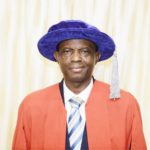
    Dr Ademola Wahab Azeez

    The source also told Zikoko that the protests had started out peaceful until the police shot at protesters at the provost’s orders.

    “Dr Azeez resumed office as provost on May 26, 2019, and his four-year tenure should’ve originally ended on May 26, 2023, after which he would’ve been eligible to run for a second term upon election. But, the new act gave him one more year,” she said.

    The amended Federal Colleges of Education Act 2023 stipulates a single, non-renewable five-year term for provosts of Federal Colleges of Education. The act came into effect in June 2023, overriding the initial provision of a four-year term renewable upon election (for a maximum of two terms) for the provosts. 

    The Act partly reads thus, “Provosts with less than five years in office will serve a single term of five years, regardless of their original appointment terms. Those serving a second term at the time the Act was enacted will complete their current four-year term without any extension.”

    This meant that Dr Azeez could’ve secured a second four-year term if the re-election had been done in May, before his tenure expired and before the new Act came into effect. However, our source says no re-election took place. 

    “We expected his tenure to end on May 26, 2024, and an election for a new provost. But he announced that he had no intention of stepping down. That’s why the peaceful protests started on May 28 and happened daily till July 29.”

    Allegations of fraud and misconduct

    Illegal tenure extension isn’t the only bone staff and students of FCE(T) have to pick with their provost. There are also claims of misconduct, fraud and intimidation.

    Oreoluwa, another resident of the school’s staff quarters, told Zikoko that there were several sexual assault reports levelled against Dr Azeez and the Dean of Student Affairs during the initial four-year term, but the provost did nothing.

    “Dr Azeez is utterly despotic. No one dares to go against him or utter a word of disagreement with his policies. All sexual assault reports were ignored. He also constantly diverted funds meant for the maintenance and renovation of school buildings. Even the staff of the medical center always complain that he diverted funds meant for the facility, leaving them unable to function effectively.”

    Sometime in 2022, staff and students noticed a new building in the school. According to the project details, the building was supposed to be for the “Department of Home Economics.” However, Dr Azeez moved into the building after completion.

    During Construction

    Now

    “It’s illegal. He used government funds to build a residence for himself and his family. His son now uses the flat to host parties.”

    A former student also claims they’ve been unable to receive a certificate despite graduating in December 2022 because of the provost’s alleged misappropriation of funds. “FCE(T) runs affiliate programs with some federal universities like UNIBEN. These universities have refused to give graduates their certificates for a while now because the provost still owes them a lot of money. Some people who graduated in 2020 are still in limbo.”

    The Minister of Education’s involvement 

    Some weeks into the daily protests, the Minister of Education, Tahir Mamman, called for a meeting with the warring parties in Abuja. There, he affirmed the legality of the provost’s second term and called for an end to the protests. 

    However, this was met with resistance, and the protests continued. Oreoluwa claims this led to the arrest of the Deputy Registrar, Mr Chris Olamiju, by officers of the DSS.

    “Olamiju has been one of the protest’s most vocal leaders. DSS broke into his school residence on July 11, 2024, between 3 a.m. and 4 a.m. and carted him away amidst the screams of his wife and children. They also shot at the security men and took one of them away too. We even thought they were kidnappers. When we learnt it was DSS, we knew it was Dr Azeez.”

    According to Oreoluwa, Azeez denied involvement but must’ve made calls to secure Olamiju’s release that same evening when he realised the situation was getting ugly.

    Indefinite closure

    The protest came to an abrupt end on July 29 after the police fired shots to disperse the crowd. This has left many students injured, with two reportedly in critical condition at the hospital.

    The 32 students and staff arrested by the police were released on July 30 after being made to write an undertaking of good behaviour.

    On July 31, the Federal Government directed the indefinite closure of FCE(T) Akoka.

    “Step Aside”

    According to the Premium Times, the FCE(T) Governing Council has advised Dr Ademola Azeez to “step aside” from his position as provost effective July 31, 2024. This decision was passed through an internal memo with reference FCE/T/AK/RO/IM/2/206 and signed by the College’s Registrar, Mr Rasheed Dada. The Council has now appointed Dr Isaac Oluwatoyin Miller as the acting provost.


    This story has been updated to include the provost’s suspension.

    NEXT READ: Everything You Need To Know About the Upcoming #EndBadGovernanceinNigeria Protest

    [ad]

  • The Nigerian Police Force (NPF) is one of the most prominent security agencies in the country, tasked with ensuring the security of citizens within the country. If you’ve ever been curious about the Nigerian police ranks and salary structure, this article answers your questions.

    What Are the Nigerian Police Force Ranks and Their Salaries?

    A brief history

    According to the NPF, its history dates back to 1861, when it was a 30-man security group that operated in Lagos state. The group would be expanded to accommodate about 1200 men in 1879 and renamed the Hausa Constabulary, an armed paramilitary outfit. By 1896, the Lagos Police was established and a similar security outfit, the Niger Coast Constabulary, started operations in Calabar in 1894. Meanwhile, the north had its own security agency, the Royal Niger Company Constabulary which was set up in 1988.

    In 1900, the Northern and Southern Nigeria Protectorates were born, and with them came the Northern Nigeria Police and Southern Nigeria Police. Fast forward to 1930, the Northern and Southern forces merged to form the colony’s first national police, the Nigerian Police Force.


    ALSO READ: The New National Anthem of Nigeria: Full Lyrics of ‘Nigeria, We Hail Thee’


    Ranks of the Nigerian Police Force

    Nigerian police officers are deployed from across the 36 states of the country and the capital to “fight crime, criminality and ensure the maintenance of law and order vis-à-vis peaceful co-existence in the society.”

    The NPF has three different structures: Command (authority), administration and organisation. The command is hierarchical, starting with the Inspector-General of Police and ending with the constable.


    ALSO READ: The Complete Guide to 36 States and Their Slogans in Nigeria


    We outline the Nigerian police ranks and salary below:

    The Inspector-General of Police (IGP)

    What Are the Nigerian Police Force Ranks and Their Salaries?

    Image: NPF

    The head of the entire NPF and the most senior officer, the IGP controls the administration of the NPF. Kayode Egbetokun is the current IGP, after he succeeded Usman Baba in 2023.

    Monthly salary according to grade

    Inspector-General (1): ₦1.543,960.95

    Inspector-General (2): ₦1.701,188.95

    Inspector-General (3): ₦1.849,000.29

    Inspector-General (4): ₦1.987,396.61

    The Deputy Inspector-General of Police

    This is the second most-senior office of the NPF, and it usually has multiple officers who can step in for the IGP when the situation arises. The deputy IGPs head the administrative departments of the NPF. Frank Mba, Habu Sani, Usman Nagogo, Daniel Sokari-Pedro, Ede Ekpeji, Ibrahim Ka’oje and Bala Ciroma are the current Deputy Inspectors-General of Police.

    Monthly salary according to grade

    Deputy inspector-general (1): ₦1,405,277.58

    Deputy inspector-general (2): ₦1,558,160.45

    Deputy inspector-general (3): ₦1,706,152.46

    Deputy inspector-general (4): ₦1,849,057,45

    The Assistant Inspector-General of Police

    What Are the Nigerian Police Force Ranks and Their Salaries?

    Commonly called the AIG, this rank is subordinate to Deputy IGP. AIGs oversee the zonal operations of the NPF. In October 2023, Kayode Egbetokun decorated 12 AIGs.

    Monthly salary according to grade

    Assistant Inspector-General (1): ₦867,552.16

    Assistant Inspector-General (2): ₦1,018,009.62

    Assistant Inspector-General (3): ₦1,168,071.66

    Assistant Inspector-General (4): ₦1,318,468.87

    The Commissioner of Police 

    What Are the Nigerian Police Force Ranks and Their Salaries?

    These are officers charged with overseeing the force’s state commands. The CP is appointed by the IGP, subject to approval by the Police Service Commission.

    Monthly salary according to grade

    Commissioner of police (1): ₦849,977.67

    Commissioner of police (2): ₦869,472.56

    Commissioner of police (3): ₦887,087.64

    Commissioner of police (4): ₦909,435.78

    Commissioner of police (5): ₦929,497.93

    Commissioner of police (6): ₦960,137.01

    The Deputy Commissioner of Police

    A DCP oversees an area command. They’re the second-highest ranked officer in the force’s state command and are often in line to succeed the CP.

    Monthly salary according to grade

    Deputy commissioner of police (1): ₦420,772.22

    Deputy commissioner of police (2): ₦432,576.03

    Deputy commissioner of police (3): ₦443,576.03

    Deputy commissioner of police (4): ₦454,977.94

    Deputy commissioner of police (5): ₦466,379.84

    Deputy commissioner of police (6): ₦477,781.85

    The Asst. Commissioner of Police

    What Are the Nigerian Police Force Ranks and Their Salaries?

    These are officers directly below the DCP. They answer to both the DCP and the Commissioner.

    Monthly salary according to grade

    Asst. commissioner of police (1): ₦382.860.45

    Asst. commissioner of police (2): ₦396.258.98

    Asst. commissioner of police (3): ₦409,847.23

    Asst. commissioner of police (4): ₦423,626.20

    Asst. commissioner of police (5): ₦433,396.91

    Asst. commissioner of police (6): ₦447,459.47

    The Chief Superintendent of Police

    What Are the Nigerian Police Force Ranks and Their Salaries?

    Monthly salary according to grade

    Chief superintendent of police (1): ₦338,759.83

    Chief superintendent of police (2): ₦346,451.39

    Chief superintendent of police (3): ₦354,306.95

    Chief superintendent of police (4): ₦362,162.38

    Chief superintendent of police (5): ₦370,017.94

    Chief superintendent of police (6): ₦377,873.50

    Chief superintendent of police (7): ₦385,728.92

    Chief superintendent of police (8): ₦393,584.48

    The Superintendent of Police

    Monthly salary according to grade

    Superintendent of police (1): ₦276,759.05

    Superintendent of police (2): ₦283,103.54

    Superintendent of police (3): ₦289,447.89

    Superintendent of police (4): ₦295,792.39

    Superintendent of police (5): ₦302,136.88

    Superintendent of police (6): ₦308,481.37

    Superintendent of police (7): ₦314,825.72

    Superintendent of police (8): ₦321,170.21

    The Deputy Superintendent of Police

    The DSP answers to the superintendent and can take up the role in their absence.

    Monthly salary according to grade

    Deputy superintendent of Police (1): ₦259,706.29

    Deputy superintendent of police (2): ₦265,707.25

    Deputy superintendent of police (3): ₦271,708.08

    Deputy superintendent of police (4): ₦277,708.90

    Deputy superintendent of police (5): ₦283,709.86

    Deputy superintendent of police (6): ₦289,710.68

    Deputy superintendent of police (7): ₦295,711.51

    Deputy superintendent of police (8): ₦301,712.33

    The Asst. Superintendent of Police

    Nigerian police ranks and salary according to grade

    Assistant superintendent of police II (1): ₦219,736.63

    Assistant superintendent of police II (2):  ₦223,254.74

    Assistant superintendent of police II (3): ₦226,772.98

    Assistant superintendent of police II (4): ₦230,281.23

    Assistant superintendent of police II (5): ₦233,809.47

    Assistant superintendent of police II (6): ₦237,327.58

    Assistant superintendent of police II (7):  ₦240,845.82

    Assistant superintendent of police II (8): ₦244,344.06

    Assistant superintendent of police II (9):  ₦247,882.17

    Assistant superintendent of police II (10): ₦251,400.42

    Assistant superintendent of police I (1): ₦239,210.28

    Assistant superintendent of police I (2):  ₦243,079.18

    Assistant superintendent of police I (3): ₦246,948.09

    Assistant superintendent of police I (4):  ₦253,312.59

    Assistant superintendent of police I (5): ₦259,754.55

    Assistant superintendent of police I (6):  ₦268,847.01

    Assistant superintendent of police I (7):  ₦275,482.53

    Assistant superintendent of police I (8): ₦282,195.23

    Assistant superintendent of police I (9):  ₦288,985.51

    Assistant superintendent of police I (10): ₦293,125.15

    The Inspector of Police

    What Are the Nigerian Police Force Ranks and Their Salaries?

    Monthly salary according to grade

    Inspector II/Cadet inspector (1): ₦119,693.87

    Inspector II/Cadet inspector (2)  ₦121,879.47

    Inspector II/Cadet inspector (3):  ₦124,064.96

    Inspector II/Cadet inspector (4): ₦126,250.56

    Inspector II/Cadet inspector (5): ₦128,436.16

    Inspector II/Cadet inspector (6): ₦130,621.65

    Inspector II/Cadet inspector (7): ₦133,747.12

    Inspector II/Cadet inspector (8):  ₦136,872.59

    Inspector II/Cadet inspector (9): ₦139,997.95

    Inspector II/Cadet inspector (10): ₦143,123.42

    Sergeant Major

    The highest-ranked non-commissioned officer of the NPF, and the highest junior officer of the force. A sergeant major offers assistance to administrative officers in regiments.

    Monthly salary according to grade

    Sergeant major (1): ₦96,216.19

    Sergeant major (2): ₦99,233.25

    Sergeant major (3): ₦102,250.32

    Sergeant major (4): ₦105,267.53

    Sergeant major (5): ₦108,284.59

    Sergeant major (6): ₦111,301.66

    Sergeant major (7): ₦114,318.86

    Sergeant major (8): ₦117,335.93

    Sergeant major (9): ₦120,353.00

    Sergeant major (10): ₦123,370.20

    Sergeant

    A sergeant is a middle-ranked non-commissioned officer under the sergeant major.

    Monthly salary according to grade

    Police sergeant (1): ₦77,974.65

    Police sergeant (2): ₦79,336.16

    Police sergeant (3): ₦80,617.34

    Police sergeant (4): ₦82,128.16

    Police sergeant (5): ₦85,639.11

    Police sergeant (6): ₦88,150.07

    Police sergeant (7): ₦90,660.89

    Police sergeant (8): ₦93,171.84

    Police sergeant (9): ₦95,682.80

    Police sergeant (10): ₦98,193.61

    Corporal

    This officer is responsible for the supervision and training of police officers. The corporal assumes the position of the sergeant when on the streets or in the absence of one.

    Monthly salary according to grade

    Police Corporal (1): ₦71,809.19

    Police Corporal (2): ₦72,951.64

    Police Corporal (3): ₦74,093.95

    Police Corporal (4): ₦75,236.27

    Police Corporal (5): ₦76,378.72

    Police Corporal (6): ₦77,521.04

    Police Corporal (7): ₦78,663.35

    Police Corporal (8): ₦79,805.80

    Police Corporal (9): ₦81,002.13

    Police Corporal (10): ₦82,144.58

    Constable

    This is the lowest-ranked officer in the NPF, which includes newly employed graduates of the Nigeria Police Academy.

    Monthly salary according to grade

    Police constable II (1): ₦68,262.29

    Police constable II (2): ₦69,035.85

    Police constable II (3): ₦69,809.41

    Police constable II (4): ₦70,582.97

    Police constable II (5): ₦71,356.54

    Police constable II (6): ₦72,130.10

    Police constable II (7): ₦72,903.66

    Police constable II (8): ₦73,677.22

    Police constable II (9): ₦74,450.78

    Police constable II (10): ₦75,224.48

    Police constable I (1): ₦69,524.55

    Police constable I (2): ₦70,475.23

    Police constable I (3): ₦71,426.04

    Police constable I (4): ₦72,376.85

    Police constable I (5): ₦73,327.66

    Police constable I (6): ₦74,278.47

    Police constable I (7): ₦75,229.28

    Police constable I (8): ₦76,180.09

    Police constable I (9): ₦77,130.90

    Police constable I (10): ₦78,081.71

    Salary structure

    During the heat of the protest against police brutality in October 2020, former president, Muhammadu Buhari, approved an increase in the salary paid to police officers.

    In 2021, the then police affairs minister, Maigari Dingyadi, said the Federal Executive Council (FEC) approved a further 20% increase from January 2022.

    A document titled “New Consolidated Police Salary Structure (CONPOSS) with 20% chart (Effective January 2022)”, obtained by DUBAWA, outlines the current Nigerian police ranks and salary paid to officers of the law in the country. Officers are paid according to their ranks and grades.

  • Around 8 p.m. on October 20, 2023, X users saw posts that followed the pattern of dissatisfied customers calling out an erring vendor. This time, it was Adeola Akinmola (@ade_authority) calling out Wunmi Odunmorayo, the CEO of Naija Hair Factory, for allegedly insulting her after a business transaction went wrong.

    However, by the evening of October 25, 2023, things had taken a different turn. X users found out that Akinmola had been detained by the police following a report by Odunmorayo. Several posts were made asking for Akinmola’s release.

    What happened?

    On Thursday, October 12, 2023, Akinmola direct messaged Naija Hair Factory’s Instagram page to enquire about their wig revamping services.

    “I sent an Instagram DM explaining that I wanted to revamp three wigs, with all the details they needed to know for each hair, “Akinmola explains. “I also asked about the price and duration of the process, but instead, they [presumably someone from customer service] collected my address to come pick up the hair and requested that the conversation be moved to WhatsApp. They didn’t reach out to me on WhatsApp.”

    Akinmola confirms that the wigs were picked up the next day [on Friday], but there was no confirmation from them till she sent them an Instagram message on Tuesday, October 17, 2023, to complain that no one had reached out to her on WhatsApp.

    “They sent a WhatsApp message hours later asking me to confirm the hair they received. At this point, I was furious. If they were just asking me to confirm something that had been sent since Friday last week, it meant the hair hadn’t been revamped yet. On top of that, the pictures they sent for confirmation had my hair looking like something from a dumpster. These were wigs that were still fairly new”.

    Akinmola went on to ask when she’d get the wigs revamped, and was told she’d receive them by Wednesday, October 25, 2023. “This meant the wigs would’ve been with them for three weeks, and I couldn’t wait. So instead, I said I’d send my dispatch rider down to pick up the wigs and pay for the pickup they did, which was ₦3k. On hearing that, they tried to reach a compromise. I explained that I needed the hair by Friday afternoon at the latest, as I had an event on Saturday. They said they’d be able to meet up.”

    But Friday [October 20] came, and the story changed. Delivery was moved to the next day.

    “At that point, I just asked to send my rider instead. They agreed, and I informed them when I sent the rider around 4 p.m., but they were no longer responsive. They then responded on Instagram at 5 p.m. that they’d closed for the day and I should check back tomorrow. The rider I sent eventually cancelled the trip and left.

    I lashed out, and soon after, they reached out on Instagram, asking me to send another rider because they’d dropped my hair with security. They sent me account details to pay the ₦18k bill — ₦3k each for pickup and delivery, and ₦12k for the service. I paid ₦15k because I was paying for delivery myself. Immediately after I sent evidence of payment, I was blocked on Instagram and couldn’t view the account anymore.”

    Akinmola went on WhatsApp to complain that she hadn’t received her hair before being blocked, but there was no response. Frustrated, she then went on X and posted, “Naija Hair Factory just blocked me even before delivering my hair”. But she deleted the post almost immediately.

    “I didn’t want to get involved in drama. I eventually arranged for another rider to pick it up, but because it was quite late, I didn’t get the hair that day.”

    The confrontation with Wunmi Odunmorayo

    A few hours after the deleted post, Akinmola received a call from someone who turned out to be Wunmi Odunmorayo, the CEO of Naija Hair Factory.

    “She introduced herself and promptly started calling me names like “idiot”, “bitch” and “shameless”. She also called my husband names. The call was unexpected, so I couldn’t immediately record the call. My husband was with me, and I told him to record, but she ended the call. She then proceeded to send me messages and make calls to me via WhatsApp. I recorded it all. I even asked why she’d bring my family into this.”

    It was at that point that Akinmola posted about her ordeal on X. What followed was a text message from Odunmorayo who later picked up negative feedback on Akinmola’s business (@corporateewa) from X to defend herself on Instagram story.

    When did the police get involved?

    On Saturday, October 21, Akinmola received a call from one Mr Jide at State Criminal Investigation Department, Panti, who informed her that Wunmi Odunmorayo had filed a petition against her.

    “I immediately informed my lawyer and asked the policeman to continue the conversation with him. All this while, I was still receiving random calls from Odunmorayo. On Monday, she called me to take down the thread I made of the ordeal on X. I said I’d do it on the condition that she apologised to me. She refused and said, “You will see.” The call is recorded.”

    By 4 p.m. on that Monday, four police officers visited Akinmola’s Surulere office and asked to see her. She wasn’t around, so they dropped a message inviting her to a Bariga station the next morning. 

    “I expected the questioning to happen in Surulere, where I was based, so I informed my lawyer. We went to the Surulere station to make a report on Tuesday and told the Bariga policemen we’d show up on Wednesday. I even had an accident that Tuesday evening, which required me to fix my car on Wednesday morning. But I arrived at the Bariga station with my husband and lawyer for what was supposed to be a simple dialogue.”

    What happened at the police station, as recounted by Akinmola and her husband

    We waited for Odunmorayo to show up at the station for over an hour. She finally arrived with a man. They were holding hands and seemed close, even exchanging quiet remarks. 

    Two other policemen (Nosa and Kenny) joined us, and we all sat under a tree in the compound. We were soon made to understand that the man who came in with Odunmorayo was the S.O (station officer). 

    She told her side of the story, twisting it completely. The S.O kept taking random calls with friends in between my turn to speak. When I was done, he simply told Nosa to take us to write statements. Then he left the station.

    Odunmorayo wrote hers first, and they didn’t read it. But when I wrote mine, Kenny read it out and went through my phone to look at the tweets. They also told me to write in the statement that I posted her personal number, but I refused because the number was introduced to me as a business line. He said I didn’t have a case, so I mentioned I had recordings on my husband’s phone to prove she had been threatening me via calls and messages. The phone’s battery was dead at the time, so Kenny took the phone to charge, but when he returned it, he didn’t bother to check the recordings.

    Instead, he asked Odunmorayo to show him the threats she had been receiving on her phone. He supposedly checked it but never showed me anything. I never sent any threat. 

    At that point, I noticed Odunmorayo call her parents to call the DPO (Divisional Police Officer). In a matter of minutes, the DPO called the police officers and asked them to charge me with cyberstalking, cyberbullying and intent to cause problems. I was detained immediately. 

    The DPO wasn’t even there, he hadn’t examined the statements, my recordings or done any investigations. Odunmorayo was right there when they announced that I’d be detained. My lawyer tried to disagree, but they threatened to send him out. My earrings, slippers and other personal effects were removed. I even told them I was on my period, but I got no audience. Odunmorayo left soon after.

    The lawyer and my husband tried to seek bail, but they claimed the DPO wasn’t around. The officers refused to drop the DPO’s number, and it also wasn’t written down anywhere in the station.

    We eventually got the number via X, but the DPO didn’t pick up. We had to wait till around 10 p.m. when the DPO finally showed up. Apparently, the S.O was the DPO.

    I was taken into his office, and he said in Yoruba, “You these influencers think you can get away with everybody.” At that point, I hadn’t changed my tampon or eaten anything. I was tired. I asked if I could sit on one of the chairs in his office as I was on my period, and he said, “Does this place look like a period place?”

    Nosa and Kenny were there too, so I tried to explain to the DPO that my evidence wasn’t examined and I wasn’t given a fair hearing. Those officers lied through their noses and said they checked everything.

    I was taken back to detention while my husband continued seeking bail. He wasn’t allowed to stand in as surety because they said they wanted someone from Bariga, so we had to call a friend. My husband tried to see the DPO again to address the situation, but he was told he wasn’t available, even though he could see him watching TV through the window at the back.

    Around 11 p.m., the DPO walked out and drove off even though they knew someone was coming to process the bail. The friend came and placed a call to the DPO. The DPO directed him to Nosa (who was the Investigating Police Officer – IPO) to help, but Nosa said, “Why are you coming at this time? Who will process bail at this time?” We tried to call the DPO again several times, but he didn’t pick up.

    We were delayed till around 9 a.m. on Thursday before the bail was processed, and I was released. We were told to return on Monday, October 30, at 10 a.m.

    What next?

    “We aren’t sure what the next step is now, but we’ll continue to do everything legally,” Akinmola says.

    Odunmorayo released a statement on Instagram on Thursday, October 26, insisting that her personal number was posted and the police report was due to being “deeply troubled by the harassment and threats”. She also stated that by the time she left the station, Akinmola wasn’t detained.

    This is a developing story.


    We’re celebrating the Nigerian culture of meat and barbecue with Burning Ram on November 11. Get tickets here.


    [ad][/ad]

  • It’s not a nice feeling to be caught in a web of dangerous or life-threatening situations. It’s even worse for it to happen in our dear country, Nigeria, where systems are often crippled to the point of slow response or all-out inactivity. Always self-prioritise and take the necessary safety measures in case of emergencies.

    We’ve compiled some vital steps to take when it feels like you are in harm’s way.

    Police is your friend

    An important first step to take when involved in life-threatening situations is to visit and make an official report to the nearest police station in your neighbourhood. Never take matters into your own hands, especially if such problems escalate to involve violence.

    The Nigerian Police Force (NPF) has a dedicated website with the official mobile numbers of each state’s PROs and another page with emergency numbers for every state. In cases where you’ve been a victim of cybercrime, they have an official website where you can file a complaint or report suspected individuals. 

    Use national and state emergency lines

    What to Do When You Feel Endangered in Nigeria

    Many Nigerians understandably have trust issues when it comes to the functionality and responsiveness of systems that have been put in place by the government. The emergency services are one such systems, but it’s not a good bet to rule them out completely.

    Nigeria’s toll-free emergency number is 112. It’s an umbrella code that caters to all emergencies from fire outbreaks to road accidents or flood and even personal safety. It’s also important to get familiar with the emergency services in your state of residence. For instance, Lagos State has contact numbers for designated agencies.

    Amplify your cry for help on social media 

    What to Do When You Feel Endangered in Nigeria

    Source: SearchEngineJournal

    Some social media platforms have proven to be effective in helping people get out of life-threatening situations or get the help they need. For instance, X (formerly Twitter) has become a go-to for people to get the public, and sometimes, local authorities’ attention. 

    Police officers like Benjamin Hundeyin and Olumuyiwa Adejobi have gained popularity for taking up requests or offering guidance to citizens on X. The NPF also has an official account on the platform, dedicated to receiving complaints about erring police officers.

    In addition, several cases ranging from missing persons, fraud or abuse have been solved because they were shared on X. It’s important to follow relevant security-related accounts and reach out whenever you find yourself in life-threatening situations.

    Inform trusted contacts

    What to Do When You Feel Endangered in Nigeria

    It’s important to let everyone around you know what is going on as silence will only embolden perpetrators of abuse, intimidation or harassment. Inform your family members and friends about what is going on. 

    In urgent situations where you can’t get to family and friends quickly, inform your neighbours. 

     [ad]

    Use technology to your advantage

    Apple recently released an iOS 17 feature called Check-In. The feature detects when you’ve arrived at your destination and automatically informs family and friends. Every 15 minutes during your trip, the feature also asks if you’ve gotten to your destination. If you don’t respond, it’d automatically share useful information with loved ones. It’s important to get familiar with security features on your mobile devices and set them up ahead of time. 

    Another useful hack is to take photos, audio and video recordings when you find yourself in distressing situations. The evidence gathered can help the police or other security agencies carry out a smooth investigation and absolve you in case of false accusations.

    READ ALSO: Where’s the Nigerian Police When You Need Them?

    Know your legal rights

    Many Nigerians land in avoidable situations because they don’t know their rights. It’s important to get familiar with your fundamental human rights as a Nigerian citizen to avoid being a pawn in the hands of corrupt police officers, landlords or people who want to ride on your ignorance.

    Seek legal advice or involve your lawyers in legal issues. Organisations like Hope Behind Bars Africa, Human Rights Law Service, among others, provide free legal aid.

    Self-defense

    What to Do When You Feel Endangered in Nigeria

    This should always be the last resort. You might sustain serious injuries, get implicated and even land in jail while trying to defend yourself.

    However, just as Yoruba people are commonly assumed to make empty threats, doing so could save you from potentially threatening situations and get you flagged as not-so-easy targets. Still, It’s important to always gauge the situation properly before taking the bet on self-defence. 

    We’re throwing the biggest meat festival in Lagos. Sign up here to be notified when ticket sales begin.

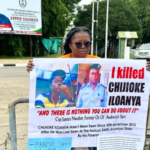
  • Ada is determined to see justice served for the disappearance of her brother, Chijioke Iloanya. Chijioke’s case was part of what fueled the 2020 #EndSARS protest after he went missing in 2012. The notorious Awkuzu SARS in Anambra, where Chijoke lived with his family, is said to be responsible, and there’s a face and name for who to hold accountable. Now, Ada is staging a solo protest at the National Assembly in Abuja, demanding justice for her brother and other victims of police brutality. 

    The Nigeria Police Force’s vision is “To make Nigeria safer and more secure…to create a safe and secure environment for everyone living in Nigeria.”

    However, this vision has been nothing short of a nightmare for Ada and her family, who have been searching for elusive justice for the past 11 years. Ada narrated to Citizen everything that has led her up to this moment.

    Walk us through why you’re staging this protest

    My brother, Chijioke, was arrested by the Nigerian police on November 29, 2012. Then he was transferred to Awkuzu Special Anti-Robbery Squad (SARS) in Anambra state before my mum could bail him out.

    When my parents tried to bail him out at Awkuzu SARS, they denied having him at first. My parents were about to leave the station when they saw my brother being led in, and my mum raised the alarm that he was the one they came to bail out. My parents were thrown out, and it would take several days before they were allowed into the station.

    When they eventually got access, they met James Nwafor, the officer in charge of the SARS unit. When my mum asked for my brother, he told her that if it was those boys (including my brother) she was looking for, he’d already killed them and that there was nothing she could do about it.

    My mum slumped when she heard it and was taken to the hospital. This started this journey for us, and we’ve been trying to get justice in different ways. In 2019, I wrote about it on Twitter. In 2020, I called out James Nwafor because I saw his handle on Twitter.

    I’ve written petitions to the National Human Rights Commission (NHRC). I’ve also written petitions to different Inspector Generals of the Police

    We went to the #EndSARS panel in 2020. The Anambra state government hasn’t made the panel’s recommendations and findings public. No whitepaper has been released either. Nothing has happened. James Nwafor is still a free man while we’re still in the pain of losing our brother and son. Other families have lost someone to James Nwafor, and others have been victims of police brutality. 

    Download the Citizen Election Report: Navigating Nigeria’s Political Journey

    It’s tough what you and your family have had to go through

    I started this protest on July 3. It will go on for ten days, ending on July 13. The reason it’s happening now is because it’s going to three years since we wrote a petition and went to a panel for #EndSARS to demand justice over the death of my brother, Chijioke. 

    The panel made findings and recommendations, but we’ve not gotten that yet, up till now. I’m also doing this because I’m getting tired. I have a life outside of this. My life revolves around Chijioke, and I would like justice for him. It draws me back whenever someone sees me and asks if something has been done about my brother’s case. I have no good answer to that, and that has to change.

    July is also Chijioke’s birth month, which makes this symbolic. His birthday is July 13, which I’ve chosen as the day to end the protest. Because I’ve fought for justice for my brother, other people who have been victims of police brutality have reached out to me as a point of contact. They tell me about family members they’ve lost, and I feel so bad I can do nothing for them. The least I can do is use my voice to speak on their behalf. So while I’m advocating for Chijioke, I’m also trying to get justice for them because we deserve it.

    How’s it been so far?

    I’ve been pushing, although it’s been getting harder and harder. Yesterday’s protest was harder than Monday’s because the sun was scorching hot, and I had to stand for long hours without a place to sit. When I get tired, I sit at the barricades, which still places me under the sun’s searing heat.

    It rained in the morning today so I couldn’t start early. But I’m here now, protesting. I’ve noticed that people have been asking me to go to Ahmed Isah (Ordinary Ahmed of Brekete Family). But when I first tweeted about it, some people like Segalink tried to help, but nothing happened. So I’m conflicted. Do I reach out to him? Would it change anything or not? Also, it’s not just about me. What about other families? It’s a little convenient for me because I’m based in Abuja but what about them? Do they spend their money to come to Abuja to meet Ahmed when it’s easier to arrest James Nwafor immediately? 

    What would you like to see happen?

    Start the investigation and prosecution of James Nwafor immediately. Let each state release its #EndSARS panel reports, whitepapers and recommendations to the public. It makes no sense for ordinary citizens to seek justice through one man who is probably overwhelmed with so much. Why should I rely on a regular Nigerian to help me when we have institutions that aren’t doing their jobs? It’s unfair. I’ve been here since having people look at me with pity, and I don’t want that. I just want justice.

  • I’ve said this before, and I’ll say it again, a nationwide therapy session should be held for Nigerians because we’ve sadly become desensitised to many issues. Mass kidnappings now barely make news headlines; no one cares that a politician on murder charges won an election, and police officers and government officials brutalising security agents is simply another day at the office. 

    On Monday, April 17, 2023, the security agents and residents of Omole Estate Phase 2 saw the kind of crazy they weren’t prepared for. According to the estate’s laws, visitors in private or unbranded vehicles aren’t allowed in without producing a proper means of identification. 

    However, when officials of the Lagos State Building Control Agency (LASBCA) who pulled up in a private vehicle were asked to identify themselves, they ignored the security guards and tried to force their way through. Annoyed at being stopped, one official stepped down from the vehicle and assaulted the guards. And before they could even grasp what was happening, touts came from nowhere. They started beating up the estate’s security agents. 

    At this point, there was panic and chaos everywhere. When armed police officers finally arrived at the scene in a coaster bus and Hilux van, you’d think they’d try to defuse the situation or at least protect the security guards from being harassed, but we all know the Nigerian police is built different. They instead threatened to shoot the guards and tried to force one of them into the coaster bus. 

    The police and the touts eventually took over the estate and prevented people from going in or out of it. 

    You’d expect that this behaviour would be condemned by the government or the Police Force, but nothing has been said so far because human rights abuse in Nigeria is now, unfortunately, the norm. But, one lesson that can be learnt from this is if you’re ever in trouble, you have more chances of being saved by your village people than you do with the Nigerian police.

    What Else Happened this Week?

    Woman Sells Her Baby to Offset Bank Loan

    Debt is a trap that many Nigerians are falling into with the number of microfinance banks and loan apps available now. People do many crazy things to escape the shame and embarrassment of defaulting on a payment, but things are getting out of hand.

    On April 17, 2023, a complaint was lodged at the Ogun State Police Command by Nureni Rasaq, who reported that his wife left home with their 18-month-old baby to Lagos on March 15, 2023, but she returned without the baby. 

    The woman was arrested, and on interrogation, she confessed that she went to Lagos to raise enough money to pay her debt to a microfinance bank. While hawking on a certain day, she met a man who offered to buy her baby for the sum of ₦600,000 and she agreed.

    Investigations to recover the baby are underway, and the woman will be transferred to the State Criminal Investigation Department for further questioning. 

    Video of the Week

    Question of the week

    Traditional worshippers are demanding that the federal government declares August 20 as a public holiday for them. Do you think the federal government will agree to this?

    Ehen one more thing…

    Have you ever heard of the Ekumeku War? It’s a story of how Igbo vigilantes resisted Britain for 31 years. Learn more about this Nigerian history here.

  • Sports enthusiasts may be familiar with the term “flat-track bully.” It originally comes from cricket but has crept into regular usage. It’s a term that describes a sportsperson who dominates inferior opposition but cannot beat opponents of similar or higher standing. Football fans can relate to this very well, like when they call Cristiano Ronaldo “Penaldo” after he’s scored a couple of penalties against a small team but fails to turn up against a more formidable team. Or Lionel Messi being called “Pessi” for the same reason.

    With this background, we’d like to introduce you to the latest flat-track bullies in town, the Nigeria Police Force (NPF).

    On March 7, 2023, the Nigerian police, via its official Twitter handle, put up a tweet condemning the use of dogs at polling units, citing the Dogs Act. The police described dogs as “offensive weapons.”

    The “ratio” they got from that tweet tells you all you need to know. The police, being the flat-track bullies that they are, flexed their muscles over dogs while ignoring — forgive the irony — the elephant in the room (or their logo, whatever). 

    In any case, law experts have refuted the police as having misinterpreted the law.

    More importantly, however, this speaks to a Nigerian systemic disease, namely, the unusual focus on symptoms than the root causes. A brighter line of inquiry from the police should be, why do citizens prefer to carry dogs to their polling units?

    Warning signs

    Before the February 25 elections, there were signs that election manipulation would be rife. YIAGA Africa released a report showing states with a high risk of election manipulation based on six indicators. Lagos state alone presented a very high-risk level with five of these six indicators. They include INEC capture, tampering with the voter register, voter suppression, resistance to election technology and a history of election fraud. To varying degrees, these things played out. 

    We’ve called out INEC for the shambolic way it handled the elections, but it would be completely unfair to lay all blame at their feet. INEC, for example, can’t provide security detail to protect ballots. This is the work of the police, and it’s to their shame that they also performed poorly.

    The Financial Times of London reported seeing, with their own eyes, party goons invading PUs and armed men removing a presidential ballot box in Surulere. In Oshodi and Elegushi, election materials were destroyed by thugs in open view. All these happened despite the police assuring Nigerians that they had “state of the art” equipment to suppress unrest anywhere. 

    In the face of these visible threats, the police and their “state-of-the-art equipment” abandoned their civic responsibility and pulled off a disappearing act that David Copperfield would be proud of. That’s a hallmark behaviour of a flat-track bully.

    Will history repeat itself?

    In the leadup to the March 18 governorship elections, we’ve seen reports of voter suppression and intimidation online and offline. Musiliu Akinsanya, the acclaimed ‘thug’ and Chair of the Lagos State Parks Management Committee, also known as MC Oluomo, has threatened Igbo voters, asking them to stay home if they don’t want to vote for the All Progressives Congress (APC). Dog-whistling, ethnic baiting and outright offensive campaign adverts have become the order of the day.

    Curiously, the police spokespersons have been quiet on the matter. 

    Based on these, is it out of reach to expect citizens to defend themselves with dogs when the people entrusted with that responsibility have gone quiet? As Stears recently noted, Nigeria has, over the years, adopted a Bring Your Own Infrastructure (BYOI) model, which includes election results, electricity and, with the latest developments, security. 

    A call to action

    It’s high time the Nigeria Police Force took some responsibility. Its slogan reads, “change begins with me.” The Nigerian police must be the change it wants for the better. One way to redeem its battered image is to ensure that troublesome elements who want to foment trouble on election day are clamped down on. 

    No more flat-track bullying, arresting and intimidating innocent protesters as we saw during #EndSARS and empty press releases that do nothing. The Nigerian police need to show workings, and it needs to do so immediately.

    We’ll be bringing you special coverage of the governorship elections as they happen across the country. To get live updates, join us on our WhatsApp by clicking the image below:

  • I would describe the presidential elections of February 25, 2023, as an experience. While some supporters of opposition parties are still waiting for INEC to say they somehow declared the wrong winner, other people have started preparing for the March 18 gubernatorial elections like they’re marching into war. 

    These people wouldn’t be entirely wrong, as many were victims of voter disenfranchisement and electoral violence in the last elections. So, to ensure that this doesn’t repeat itself on March 18, some Nigerians have decided to tap into their creative side by wanting to bring dogs and other pets to the polling units to scare thugs who might want to disrupt the elections.  

    Polling units around Nigeria were going to be filled with the scariest and toughest lineup of pets in the country, but unfortunately, the Nigerian Police Force (NPF) has once again decided to rain on our parade. 

    On March 7, 2023, the NPF released a statement saying Section 126(1) of the Electoral Act classifies dogs as offensive weapons that can be used to cause harassment and intimidation by their owners. Therefore, pets are banned from polling units, and the police discourage people from violating this law.

    So, maybe we should start looking for other ways to defend our votes and leave the animals out of it because the last kind of trouble anyone wants is one from the Nigerian police. 

    What Else Happened This Week?

    Light at the end of the tunnel of Naira scarcity

    If there’s one thing the Nigerian government’s good at, it’s making unnecessary policies that only serve to make our lives harder. In November 2022, President Bubu launched the newly designed naira banknotes, and the Central Bank of Nigeria (CBN) announced that it’d become the official tender from February 10, 2023. 

    Since the redesign, we’ve entered a rat race trying to get our hands on the new naira, which has proved harder than finding good roads in Ogun state. 

    However, after weeks of suffering, POS extortion, bank queues, and court cases, the Supreme Court finally came to our rescue on March 3, 2023, when they announced that the old banknotes should remain Nigeria’s legal tender until December 31, 2023. 

    governorship elections Nigerian police dogs

    Some commercial banks have already started paying customers old banknotes over the counter. And although some traders still refuse to accept them as payments, the CBN’s acting Director of Corporate Communications, Dr Isa Abdulmumin, has come out to reassure Nigerians that they can now receive the old banknotes as a form of payment.

    Video of the week

    Question of the week

    Lagos state governor, Babajide Sanwo-Olu, has choked us this week on social media with his achievements while in office. Can this help tip the elections in his favour in the gubernatorial elections?

    Ehen one more thing…

    We know the gubernatorial elections will be held on March 18, 2023. But do you know how many governors are vying for a second term? Check them here.

  • On August 30th, 2022, two men and two women appeared at the Magistrate Court in Ogba, Lagos State. Moments later, the magistrate remanded all four of them at the Kirikiri Maximum Correctional facility until the next hearing on October 10th, 2022.

    The four had walked their way into troubled waters through a physical encounter with police officers during a car stop. It’s still unclear what provoked the altercation, but both men were caught on camera in a shoving match with the officers. The encounter led to this viral video posted online on August 27th, 2022:

    Just a day before the video, another one that also involved a civilian and police officer made its way online on August 26th. In the video, a motorist accused of driving against one-way traffic dragged an armed police officer by his pants and resisted arrest.

    And today, September 2nd, 2022, the spokesperson of the Lagos State Police Command, Ben Hundeyin, announced the arrest of Nigerian rapper, Ice Prince Zamani. He accused the celebrity of abducting and assaulting a police officer during a midnight car stop.


    RELATED: You Only Need Three Things at Nigerian Police Checkpoints


    Police vs Nigerians

    The three incidents that took place within days of one another are a reflection of the long-standing hostility between the Nigeria Police Force (NPF) and the Nigerian public. This troubled relationship came to a head with the #EndSARS protests of 2020, and its painful conclusion has done nothing to ease it.

    Despite claims of reforms, the atrocities like police brutality and extortion that sparked the historic #EndSARS protests remain. You can draw a line from this aggression to cases of civilians fighting fire with fists. 

    The Inspector-General Wants Nigerians to Stop Beating Up Police Officers

    But the NPF is failing to be reflective enough about the situation.

    A disturbing trend

    On August 29th, 2022, the Inspector-General of Police (IGP), Usman Baba, “strongly condemned” the trend of assaults on his police officers across Nigeria. He stressed that such attacks are “illegal and an affront on the rule of law.”

    Who knew?

    The IGP ordered that anyone caught assaulting officers in the line of duty should face a swift trial to serve as a lesson to others. He said the trend of attacks must not be allowed to grow as it shows a disrespect for the fundamental rights of officers.

    IGP’s notable omission

    Something that stuck out in the IGP’s statement was the lack of a copious amount of self-reflection. Sure, physically attacking police officers isn’t a trend you want to spread because of its security implications, but the IGP failed to address a significant component of what may be causing it — the officers themselves.

    In fact, in his statement, Baba said “preceding factors” shouldn’t matter when civilians attack police officers. But to say this is to ignore the messy relationship between the police force and the public and the part officers play in causing hostilities by intimidating and extorting Nigerians. 

    The Inspector-General Wants Nigerians to Stop Beating Up Police Officers

    The IGP’s statement was a missed opportunity to remind his officers that they too have a responsibility to respect the rights of Nigerians. That’s the kind of olive branch that’d mend fences and foster a healthy relationship between the police and law-abiding citizens.

    The Inspector-General Wants Nigerians to Stop Beating Up Police Officers

    Maybe that’s something police officers will learn when the Force finally launches its public relations school. Only subscribers of our Game of Votes newsletter would understand what we mean by that. And to also always be cool enough to have all the tea you need when it comes to Nigerian politics and governance, and how they affect citizens, you should subscribe now.

    The Inspector-General Wants Nigerians to Stop Beating Up Police Officers

    ALSO READ: What Happens When Nigerian Police Officers Clash With Soldiers?