• The textbook definition of feminism describes  it as “a socio-political movement and ideology that advocates for the political, economic, and social equality of the sexes.” In other words, feminists believe women deserve equal rights and that restrictions should not be placed on their lives simply because they are women. 

    Now, where does religion and spirituality come in? 

    A lot of feminists have argued about the intersection between feminism, spirituality, and religion. Some believe that religion is harmful to the feminist movement and that to truly be a feminist, one must divest from and denounce religious practices. Others, however, believe their religion and spirituality should not, and do not, affect their feminism. 

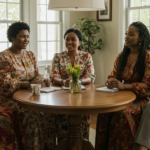
    We sat down with a few women, some of whom identify as feminists and some who do not, and listened to what they had to say about feminism, religion, and spirituality. 

    women of different religions sitting at a table to discuss feminism and religion

    “Religion never felt real to me” – Anjola*, 20

    I started questioning religion when I was 15, and it’s been downhill ever since.  

    Every time I tried to be religious, it felt like a performance that everyone else seemed good at except me. The speaking in tongues, the long hours of prayer, etc. I could never get into it. Religion never felt real to me. It didn’t help that most of the  Christians I knew were hypocrites. 

    Realising I was queer also played a role. I couldn’t rationalise homophobia, and it didn’t feel right to participate in a religion that stood against who I was. The same thing happened with feminism. There was so much casual misogyny in the Bible. Lots of “Men are the head” conversations while women suffered and were treated as afterthoughts. I don’t think I can fully participate in religion with a clean heart while being queer and a feminist. 

    READ ALSO: I Dated a Man of God. It Was the Closest Thing to Hell

    “I think a huge part of my hesitancy to accept feminism is a result of my religion” – Christiana*, 23

    I believe women should have equal rights with men, but not in every aspect. The Bible and my religion make that very clear. I have never called myself a feminist because I don’t see myself as one. Feminism encourages women to be the head of the family and to not be submissive. But submission in itself isn’t bad; it’s just a sign of respect to your husband. Sure, you can be a feminist and a Christian, but I think my hesitancy to accept feminism is a result of my religion. If I wasn’t a Christian, I don’t think I’d care so much about what the Bible says about submission, but I am, so I do. 

    “I am not blinded by faith to look the other way when something is misogynistic” – Blessing*, 18

    I’m religious because I don’t believe human beings just spawned; I believe we were created with purpose and that there is a God. I’ve had certain experiences in my life that I don’t believe were just coincidences. I believe in something beyond myself. However, I am not blinded by faith to ignore misogyny, even if it’s in the Bible. I know it sounds contradictory, but that’s how I make it work. People will call it cherry-picking, but I focus on Jesus and His teachings, not what any other man in the Bible says. I am aware that even though a lot of the men mentioned in the Bible were influential figures in the church, they still had their biases. 

    Get More Zikoko Goodness in Your Mail

    Subscribe to our newsletters and never miss any of the action

    “What does Christianity have to do with equality?” – Ose, 66

    Feminism is why  I was able to go to school when I did. It is why  I can read, write, own property, and save money. I was born in a time when people said things like, “Why will I send a girl to school?” and “How person go just born girl, wetin you go use am do?” and other demeaning things, and no one batted an eye. Sure, some of those things are still being said today, but at least now people can publicly stand  up for girls being denied education. 

    I’ve been Catholic all my life, and that is not going to change. I believe in God the Father, the Trinity, and the Holy Catholic Church. I also believe God ordained different roles for us. A man being ordained to lead a home should have nothing to do with whether a woman can become the General Manager of a company or be paid equally. What does Christianity have to do with equality? 

    “When people tell me they’re religious and feminist, it feels like a joke” – Elizabeth, 19

    I wasn’t always irreligious, but to be fair, I never really felt the connection to religion like others did. Church and prayer always felt like a chore. I didn’t peg that I was an atheist at first, but I called myself a feminist from secondary school. Still, I used to excuse a lot of bad behaviour with, “Oh, the Bible says,” even when it felt wrong. Ever since I left religion completely, it felt like the scales fell from my eyes. There’s no longer any bias or excuse for misogyny. 

    When people say they’re both religious and feminist, it feels like a joke to me. Something would suffer for it.  But I don’t t say it out loud because I know people have different relationships with religion, and they hold on for whatever reasons. 

    “If I  ever had  to pick between identifying as a Muslim or a feminist, I’d pick feminist” – Aisha, 32

    Most days, I think I’m Muslim because there’s nothing else for me to be. My father, his father, and all the fathers before them were  Alhajis, Imams, and clerics. To be anything else feels like disobedience to an entire generation. Does that mean I always agree with what the clerics teach or what the Qur’an says? No. Do I agree that a lot of men used Islam as a means to control and subjugate women? Yes, I do. Do I also think that some women have found solace and peace in the religion? Yes, there’s that as well.

    Still, I saw how  Islam was used to punish my grandmother. I also saw how my mother and sisters fought for me to have peace and comfort. If I ever had to choose between Islam and feminism, I’d pick feminism. I know what my grandma endured at the hands of my grandfather, and I know it was feminism that saved her. If I ever find myself in her position, feminism will save me, too. It would be an insult to the women who risked their lives for me to deny that. 

    READ ALSO: 10 Nigerian Women Share What It’s Like Being a Hijabi

    “I am tired of people assuming I’m a feminist because I say I don’t believe in the existence of any god” – Fola, 28

    Whenever I tell people I am an atheist, they automatically assume I’m a feminist or that I support the LGBTQ+ community. While I don’t care what a gay person does with their time or body, I’m tired of people assuming  I’m a feminist because I say I don’t believe in the existence of any god. 

    Sure, I think women should go to school and have rights, but I don’t believe we can ever be equal. Based on biological and social factors, men are just better suited to leading society, and honestly, let them. I don’t want to have to worry about money or a 9-to-5 job. I want to marry a good man who’ll take care of me, so I can focus on raising our children and building a home. That’s what I believe women were biologically made to do, and it’s the life I want. 

    “If some women need to hold on to religion to keep living and they can square off the contradictions, then by all means, they should go for it” –  Amaka*, 24

    I think I’ve always been a feminist, I just didn’t have the word for it. I was raised by a single mother, and while it wasn’t easy, it was obvious to me from really early on that a woman can do anything a man can do. Sure, there was a lot of internalised misogyny I had to unlearn. Phrases like “A woman is the neck and a man is the head,” stuck because my mum said them when my sisters got married. Plus, it sounded catchy, so it stuck. But it wasn’t until I started my journey of discovery that I started unlearning all of those things. 

    I grew up Christian, but I remember a friend who lost his sister and father within a few years. I tried to comfort him the way I knew how, with the typical “God knows best,” but when he sat in the hospital crying and praying, he concluded that if he lost yet another person after everything, it was either God was callous or didn’t exist. That was the beginning of my journey into spirituality. I just stopped caring. I thought the worst thing that could happen would be I’d die and go to Christian hell, and I was okay with that.  If I died and God was real, I’d make Him answer for the convoluted and messy system he created before I went down to hell. 

    Now, I’ve gotten to a point in my life where I can say boldly that I am spiritual. There’s so much about being a human being that we can never understand. I think we live in a largely disinterested universe, and but I also believe in things only the spiritual can touch: love, kindness, music, connection, art. 

    At the end of the day, religion has morphed depending on what the times look like. If some women need to hold on to religion to keep living, and they can square off the contradictions, then by all means, they should go for it. Who am I to take that away from them?

    READ ALSO: I Called Off My Engagement Because of a Joke

  • Social media has become one of the most accessible tools for activism and the Twitter girlies are making the most out of it. While online misogynists hate, the new generation of feminists is drowning out the noise, making real-life impacts, and driving social change. In my books, they are the new GOATS of Nigerian feminism that the world needs to watch out for. 

    Ladies and allies, I found four young women who are carrying women’s rights on their heads and doing a damn good job at it. 

    Sanni Misturah Morenikeji (@BigBadReni)

    If Reni has never popped up on your X timeline, it’s probably because you’re on the wrong side of the app.  This 22-year-old changemaker is a powerhouse in the new-wave Nigerian feminism online movement and she’s doing all the right things,

    Reni started identifying as a feminist in 2018, right after she graduated from secondary school. That was the same year she joined Twitter and got a more realistic look into the struggles of Nigerian women.

    But her feminist awakening didn’t happen until she saw a viral Twitter trend showing a woman refusing to kneel during her traditional wedding ceremony.  That tweet changed everything for Reni and sparked something new inside her. “I saw so many cases where women were demonized for breaking stereotypes, and it was a whole process that opened my eyes,” she said. 

    When Reni became more popular on X, she realised she could make her newfound passion have real-life effects by amplifying feminist causes and participating in digital campaigns so she began to act on it.

    In September 2023, Reni and other women on X started a digital campaign to call for justice for Austa Osedion, who was brutally murdered by her boyfriend Benjamin Best Nnanyereugo, popularly known as Killaboi. This campaign made the hashtag #JusticeForAusta trend for days, bringing awareness to the rising cases of femicide in Nigeria and putting the police force under pressure to ensure that justice is served. 

    Currently, women make up only 20% of the Nigerian tech workforce. Reni’s most recent digital campaign set out to play a part in closing this gender gap- She is proud to have raised over ₦1.5 million to support recipients of the Kiki Mordi scholarship, a funded opportunity for Nigerian women who are interested in tech. 

    Also, in November 2023 she raised ₦800,000 to help about three women with their law school fees.

    Reni’s not just about quick fixes; she’s got her eyes on the bigger picture, too. When asked about policies she wishes the Nigerian government would implement, she passionately points out the need for laws like the Violence Against Persons Prohibition Act (VAPPA) and other laws guiding the prosecution of sexual offences to be revamped. “These laws are outdated and need better wording and faster litigation processes,” she emphasises.

    Priye Diri (@PriyeDiri)

    Priye is the poster child of the “girl’s girl” concept. When she was in Junior secondary school, her older brother told her that she was a feminist, and since then, Priye has worn the tag with “no ifs, buts, or maybe’s”. 

    She’s what you’d call an “artivist” because she mixes advocacy with artistry, using storytelling to amplify marginalized voices and build a safer Nigeria. She has curated the Dorothy Njemanze Foundation Human Mata Exhibition, reaching over 3,000 people. She has also created social impact campaigns to educate people on the VAPP Act, under the #CallItAsItIs Campaign

    Priye is always on the lookout for things that are harmful to women and when she finds them, she makes them her projects and takes them head-on. One of those projects is her ongoing petition to save the VAPP Act. 

    In case you don’t know what VAPP is, it’s a law that offers protection against gender-based violence (GBV) and helps keep Nigerian women and girls safe, empowered, and educated. Recently though,  Senator Jibrin Isah started pushing to cancel this law. Engaging the government has been slow, but Priye isn’t giving up on stopping Isah anytime soon. The petition currently has 400 signatures and she hopes to reach a more significant number soon. 

    When she’s not holding the government by the throat to protect women, Priye is holding the hands of GBV survivors and creating a self-space for them at the Dorothy Njemanze Foundation. She’s also a member of the Young Women in Politics Abuja Chapter, where she pushes for the inclusion of more women in governance.

    Priye is showing us what feminist leadership looks like with documentaries like Leadership As It Should Be and her work Women’s International League for Peace and Freedom (WILPF ) where she monitored women’s participation in governance and raised awareness about issues concerning violence against women. 

    There are many meaningful stories and long years of social impact in Priye’s future. She’s on a mission to create a more inclusive world, and we can’t wait to see how she achieves that. 

    Adeyinka Atilola (@Zoyablooms)

    OG feminists like Margaret Ekpo walked so that hot babes like Atilola could fly. If Atty’s name sounds familiar, it’s probably because you’ve seen her on your X timeline talking about women’s rights. Growing up in a family where gendered roles were nonexistent, Atilola was a feminist before she even knew what the word meant

    In 2020, Atty started a group chat called Siren, as a safe space where women can bond without the interference of men then it grew into a helpline for women who needed mental, financial, and legal support. Since then, Siren has survived an organizational break and grown into a full-blown nonprofit organization for women, by women

    23-year-old Atty isn’t someone who just talks the talk, she walks the walk too, literally. Earlier this year, she had an idea to organize a walk against sexual assault in Nigeria, where 1 in 4 girls are sexually assaulted before the age of 18. She teamed up with another women-centred NGO called Herbode to make this a reality.

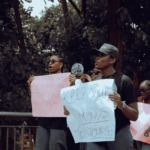
    The walk against sexual assualt

    What started as an idea eventually became an event that took place in states like Lagos, Oyo, Abuja, Kaduna, Rivers, Benin, Osun, and Ekiti. The walk against sexual abuse lasted for days in different states and sparked conversations around consent on X. 

    Emitomo Oluwatobiloba Nimisire (@Nimisire)

    Nimisire’s feminist journey started early. She has always hated oppression, but things clicked when she saw activists on TV and told her dad she wanted to be like them. The feminist title was officially registered when Nimisire realised that standing against oppression and embracing feminism go together like bread and beans.

    At only 27, Nimisire is no stranger to leadership. One of her standout moments is the Say Her Name march, which she helped organise in 2019  to fight against the arrest and abuse of women by police in Abuja. She organized a march in Ibadan, in partnership with other feminist activists while writing exams—talk about a multitasking babe! She is also a Margaret Ekpo Fellow, and a  ONE Champion, and has additionally done amazing work as an independent consultant.

    Nimisire is also big on female inclusion in politics and believes that we can achieve change at a faster pace if we consolidate our political convictions with actions. Matching her words with actions, she worked on research for Invictus Africa in the 2023 elections, gathering data on female political participation. 

    In 2022, she played a forefront role in pushing back against rejected gender bills through digital campaigns supporting the Nigerian Women Occupy NASS campaign.  Currently, female representation at the senatorial level is only about 8%  and Nimisire believes this can be better because, to her, equality means getting women in all the rooms where decisions are made—because real change starts with feminist leadership. 

    She’s also the brain behind Baddies in Dev (she knows she ate with this name), a women-led community that provides solace to feminists, so that they don’t face the burnouts and reprisals that come with the movement all alone. Nimisire is like a fairy godmother of new-wave feminism because she always wants to know who’s taking care of feminists. With capacity-strengthening sessions, intergenerational conversations, a feminist resource hub, and even a book club, she is making Baddies in Dev that safe space for feminists one day at a time.


    Nimisire believes the hate projected against feminists by misogynists online has real-life consequences, is shrinking the civic space, and holding back progress. Despite the rise of online misogynists and incels, she isn’t backing down. Nigerian feminists are resilient, and she’s making sure they’re supported every step of the way.

  • As told to Boluwatife

    Image: Ogo

    The first time I heard that taking your husband’s surname after marriage stemmed from patriarchy was in 2018 on Facebook. 

    This feminist had made a whole note explaining how women who did it didn’t have minds of their own and were changing their identities for a man. Such women are oppressed and have been conditioned to stay chained to the shackles of patriarchy. 

    Many of her fans commented in agreement, but while I partly agreed, I objected to the notion that women who did it were oppressed. What about those who chose to do it? I commented the same, and she descended on me, saying something about the patriarchy being so subconsciously ingrained in us that we’ve been conditioned not to see anything wrong with it. Not one for online arguments, I said nothing else, but it stayed with me.

    My logic behind treating a married woman’s name-change as a choice might seem flawed, but maybe my story will explain my stance.

    For as long as I can remember, I’ve hated the surname I was born with. It’s an unusual name, and I remember almost every new teacher in primary school asking me to tell them the meaning. My father is very traditional, so he made sure we knew the meaning of all our names as soon as we could talk. Translated into English from Yoruba, it means something like “worshipping an idol”, and it never sat right with me. 

    I soon learnt to pretend not to know the meaning when I left primary school. It almost always involved long explanations that made me the centre of the class’s attention for about ten minutes. Sometimes, my classmates would chorus the meaning when a teacher asked, because they’d already heard it multiple times. I found it off-putting.

    A rare depiction of my actual reaction. Image: Zikoko memes

    When I turned 18, I told my dad I wanted to change my surname legally, and he kicked against it. Unfortunately for him, I inherited his stubbornness, so we fought about it for weeks. My mother had to step in to stop the cold war between us. She told me I could easily change it when I got married, so what was I fussing about?

    When I started thinking about marriage at 22, my potential spouse’s surname played a significant role. Imagine marrying someone surnamed “Sangonimi” (I am Sango), for instance, and jumping from frying pan to fire. I remember confiding in my best friend about it. She laughed so much I thought she’d choke. I eventually agreed it was childish and decided if the man I married had a “strange” surname, I’d just use his first name as my married surname. Thankfully, my husband has a “normal” surname, and I didn’t have to resort to that. I just wanted to change my name, and this social rule helped. 

    Recently, the (false) Hakimi Twitter gist brought back the name-change conversation. But while I understand that this surname matter has been a tool for men to claim ownership of their wives, I think outrightly labelling it oppression fosters the belief that women don’t have a choice in the matter. Maybe historically, we didn’t, but Nigerians have become more progressive. I’ve met several women who didn’t change their names after getting married, and I know many who did because they wanted to.

    I may be wrong, but the emphasis should be on allowing women to choose what they want to do and accepting the choices without attributing said choices to oppression.


    *Subject’s name has been changed for the sake of anonymity.

    GET TICKETS HERE

    RECOMMENDED READ: I Was Married Three Years Before My Husband Knew I Had Kids

  • Navigating life as a woman in the world today is interesting. From Nigeria to Timbuktu, it’ll amaze you how similar all our experiences are. Every Wednesday, women the world over will share their experiences on everything from sex to politics right here. 

    Photo by Good Faces on Unsplash

    This week’s #ZikokoWhatSheSaid subject is a 23-year-old Nigerian woman. She tells us about discovering her feminism, pansexuality and atheism through books while living with her close-knit conservative family.

    What’s something about your life that makes you happy?

    I’m enjoying being single right now. I don’t have commitments to anybody, and I don’t need to make weird decisions based on what society expects in relationships.

    My last serious relationship was in 2018 when I was in year two at university. Right after that, I got into a toxic and demeaning situationship with an older guy, that went really bad. I was 19, and he was manipulative, so it was difficult to get out of it. Those two years were a character development phase for me, and I’ve only been in situationships since then.

    Since the first situationship was so toxic, why did you enter more of them?

    I’m scared of being in a proper relationship. And this is because I just don’t like most of the people who’ve approached me, or they’re misogynists. Or I don’t like them because they’re misogynists.

    How do you know they’re misogynists right away?

    Through conversation? The last time I met someone who wanted to be in a relationship with me, we had a very telling conversation. And I have some red flags that make knowing easier for me. One of them is if you’re anti-LGBTQ. 

    For me, feminism and freedom of sexual and gender identity are inseparable. If you claim to be a feminist man, you need to understand people can make choices on who their partner should be too. When you meet some men, they’ll say, “I’m a feminist, but….” Just know the ‘but’ will reveal how they’re not feminists because they’ll give an excuse. It’ll be “but you should understand….” 

    No, I want someone who understands the basics of equality.

    And the guy you met?

    He wasn’t LGBTQ. He said, “I don’t have a problem with them, but….” He might as well have said, “I’m a feminist, but….” Apart from that, he randomly asked me, “Do you know how to cook?” I said no, and he was like, “It’s a lie because if you grew up in an African home, every mother teaches their daughter how to cook”. 

    He started talking about how he knows it’s not compulsory, but he thinks a woman should know how to cook. Meanwhile, he didn’t know how because his mom didn’t teach him, and his daddy didn’t like men entering the kitchen. He was obviously not a feminist. That turned me off immediately.

    Understandable. So how do these casual relationships work?

    I’m a fool because I expect exclusivity in them. I think it’s the boyfriend-girlfriend tag I don’t want. I just want a go-to person I can see regularly, who’s not my boyfriend. And I’m terrible at casual relationships for someone who always finds a way to enter them because I always end up catching feelings.

    There’s no avoiding those, I fear

    I know. In my last situationship, the person was my G. We were just friends who started liking each other, and something happened. I was scared he would want something serious after that, so I told him I didn‘t want us to continue since I wasn’t ready for that. He assured me he didn’t want anything, and that’s when I caught feelings. 

    This only ever happens when I know the other person is not interested. Once it looks like the person likes me back, I run away. I don’t even know what my problem is, but I’m not interested in any kind of dating right now. And of all the new people I’ve met, none of them is giving.

    What was growing up like for you, considering your progressive beliefs?

    First of all, from JSS 1, my parents sent me off to boarding school, and I hated all the flogging and shouting there. But back home on holidays, my family was pretty close. Like most girls in the average Nigerian family, I was an omo get inside. I wasn’t allowed to go out. Once I’m home for even a midterm break, I’m locked in. I wasn’t allowed to attend my friends’ birthday parties. I wasn’t even given a phone until after I graduated from secondary school.

    This is probably why I prefer to stay indoors now; I’m so used to it. I was always monitored, and I was never given a reason why. I got no allowance, so I couldn’t even sneak out, and if I was caught outside, I’d be flogged. It was just my siblings and me, reading books and watching TV indoors, all day every day, while our parents went to work. My mom would usually be home earlier than my dad; he was hardly available except on Sundays and some Saturdays. So I wasn’t comfortable with him because he was like a guest in our home. 

    Were you religious like the average Nigerian family?

    Yes. We went to church every Sunday and for some weekday services too. When I was younger, we attended MFM, so we would always go to camp. Then we moved to Redeem and continued the trend. We never missed crossover services in particular. 

    We always had to go to church to cross over into the New Year and have the pastors pray over water and oil to rub on our heads. My parents would always remind us that God doesn’t like this and that, you’re supposed to do this as a child, and this is a sin. 

    And how did you feel about all that?

    It felt normal, actually. I mean, I didn’t know any other way. And it wasn’t in my face that we were religious or my parents were restrictive. I enjoyed some things about my childhood. Like, on Saturdays, my dad would take us to the tennis club. On Sundays, we would go to restaurants. 

    We went to Apapa Amusement Park a lot because my dad worked in Apapa. We also visited my extended families, and I enjoyed seeing my cousins and gisting with them. Every December 25, my parents threw Christmas parties, inviting our extended family, and my cousins would stay over for a week or two. I enjoyed that a lot. 

    So I’m curious. How did you go from this everyday Nigerian daughter to having the strong beliefs you have now?

    It started with feminism. When I was 17, and in secondary school, I read Chimamanda’s book, We Should All Be Feminists. I liked her definition of feminism and understood why ‘We Should All Be Feminists’. Growing up, I remember feeling cheated when I heard men say you’re supposed to do this and that.

    I think every woman has some gender rules they’re uncomfortable with, but they’ve just gotten used to them. They’d say things like, “What can I do? It’s a woman’s place.” Early on, I decided I wouldn’t accept it. Feminism formed my understanding of the LGBTQ community and also led me to atheism.

    In university, I studied sociology and learnt that society shapes who we are. The kind of family we come from, the environment we grew up in, the religion we were born into and the type of school we went to, all shape us. People aren’t a certain way because they were born like that; society shapes them. People are different because of how they grew up and the values they picked up as children and adults. 

    If that’s true, why didn’t you remain conservative as your family shaped you to be? 

    Family is the primary agent of socialisation, but my family sent me to boarding school. 

    I learnt a lot through books I read in the hostel and when my parents locked me up at home. We Should All Be Feminists was probably the first non-children’s book I read. Then A Woman Is No Man by Etaf Rum, and another Chimamanda book, The Thing Around Your Neck, which spoke about how the British colonised us through religion. It’s one of the vital moments I’ve had when I started asking questions about religion. Why didn’t God help black people when they were mistreated? 

    Then, I started Googling things. I found out the Bible contained more chapters, and the King James Version was shortened by an actual King James; a British King. I learnt that Christianity was infused with politics; the church was the state, so they made religious decisions and wrote their version of the Bible to take advantage of people.

    That must’ve been a lot to discover so young. How did you process it?

    As a sociologist, you ask questions like, is this book objective? And you find out there’s no book in the world that’s objective. The Bible is an account of people, their ways of life and the ideologies of society in those ancient times. When I read the Bible in secondary school, it was like it was against humanity and was meant to subjugate women.

    People give their different interpretations of it — “No, it means you should love” — but it’s clear with words like ‘submission’, ‘subjugation’, ‘a woman should not climb the pulpit’, ‘she should not preach’. At that time, I wasn’t even an atheist. I just thought the Bible was ancient, and the people in it were practising the culture of their time. Times have changed, we’re civilised, so we’re not supposed to follow what happened then. 

    But as I read more and more about how women were not allowed to go to the market during their period because they were considered dirty, and in the New Testament, Matthew, Mark, Luke and John have different accounts of Jesus’ life, I realised the Bible is different people’s biased perspectives. I was about 20 years old when I decided I won’t take directions from it anymore.

    Big decision

    Yes, but it was strangely an easy one to make knowing the things I knew. I went to the root of Christianity and how it came from older religions, read about the evolution of religion itself and about our own gods. Then I formed a theory that maybe God exists; people just serve him in different ways because we’re from different societies. 

    When I read how Chinua Achebe and Chimamanda wrote about traditional prayer in the olden days, it’s similar to how Christians pray now. So when I see Nigerian Christians pray, I’m like, “You’re just praying to a foreign God.” 

    RELATED: 9 Nigerians Tell Us About Their Journey To Atheism

    So why did you become an atheist instead of a traditionalist?

    Because I realised nobody’s coming to save you. 

    There were points in my life when I was really down. I was in a toxic relationship, like I mentioned earlier, I was so young, and it was terrible for me. My self-esteem had gone to shit, and I felt very bad about myself. 

    I prayed and I cried, and nothing happened. Just looking back at my life, secondary school, primary school, I’ve had times when I pray to God for things, and when nothing happened, I’d just say maybe it’s not God’s will. And I realised we keep on making excuses for him.

    How did you realise this exactly?

    When I was in SS 1, they kidnapped the Chibok girls. I heard the news, fasted and prayed with so much faith because I believed faith could move mountains. I had so much faith that if I fasted as a child, something miraculous would happen, and the girls would be released. 

    But you know how the story went. Was it that God didn’t want it to happen? Was it not God’s will for the girls to be released? Since I started taking control of my life and decisions, it’s felt better not to hope for miraculous things. There’s nobody out there coming to save or help you.

    And now, you no longer believe he exists?

    My atheism is still evolving. Sometimes, I think he exists, but I’m just angry at him. Terrible things are happening in the world, and he’s not doing anything. I wonder why. People are getting killed. Girls are getting abducted, raped. Women are being treated anyhow, and good people suffer a lot in the world. In the Bible, they’ll tell you this is the reason. Sometimes, they’ll just tell you to do things without giving any reason, and I just can’t live like that. 

    These days, I’m also discovering things about the universe, how it’s much bigger than our Milky Way. I think the universe is too big for one person to control. I also don’t believe there’s heaven or hell. I’d rather just be on my own, make my own decisions, live my life the way I want and just be kind to people.

    As for feminism, was there a defining moment that made what you read about in books more personal?

    My earliest memory of feeling violated as a woman was in secondary school, even though I didn’t think of it deeply at the time or relate it to feminism. I was walking on the road with my friend, and this man tapped me to ask for my number. I said no. He was a much older man, and I think he was drunk. He was drinking pure water, and he just threw it at me. 

    I was very scared because I couldn’t confront him. I thought he would beat me. Things like that make me very sad. I’ve been groped on the road once before. And you just go to one corner and cry because you can’t do anything about it, especially when you’re young. I was sexualised a lot, growing up.

    I’m so sorry

    I’ve also seen it happen to others. One time during NYSC, a female flagbearer was marching, and because of the way she moved, a guy just shouted that she’ll know how to do doggy very well. It just gets to me when boys make rude comments about girls and their bodies, especially dismissively. 

    One other time, we were doing inter-house sports in secondary school, and a boy made a comment about a girl’s body, that her big bum bum was making her float. I don’t understand why people talk about women like that. It feels weird and wrong, and it makes me upset.

    Did you talk about it to your mum or someone close?

    No. I’m constantly fighting in my house sef because I have a younger brother who has a free pass to do whatever he wants, and I don’t. Growing up, my brother could go out and visit friends. But my sister and I were always locked inside and constantly harrassed with, “Where are you coming from? Where are you going to? Who are you talking to? Bring your phone.” 

    One time, my dad checked my phone and saw a text from a guy, and he was very angry. We were always monitored, but my brother didn’t go through that kind of vigorous training. Till now, I’ll be working, and they’ll tell me to go to the kitchen, while my brother is sleeping.

    Do you push back? What’s your parents’ reaction to that?

    They’re always angry, especially my mom, who feels she’s training me to be a woman. I tell them I don’t like it, and I’m not going to change. The only thing I can do is rebel and fight it. My dad, at one point, said my brother is not supposed to wash plates because he has sisters. I told him, “No, it’s not possible. He’s eating, so he has to wash it.” Sometimes, I’m sad because I’m tired of fighting. I just can’t wait to make money and get my own place, but for now, I’m a struggling youth corper.

    And do these fights work to change their mindset at all? 

    Nope. Sometimes, they’re just tired and they let me be. But of course, their mindsets don’t change at all. My dad is a misogynist, and my mum is a patriarchy princess.

    What about your brother?

    He’s 20 now and is constantly told the reason he doesn’t have to do certain things is because a woman will do it for him, so he can just rest. And he believes it; he’s enjoying that male privilege. I try to have conversations with him, but his mindset is forming. Sometimes, my dad would say something like, “she’s just talking her feminism talk,” and they’d both laugh at me.

    Even my sister who’s 24 isn’t a feminist. She says the double standard is wrong but still says feminism is extreme. I just think she couldn’t be bothered to fight or struggle over the injustice. She’s decided to go with what society dictates because she fears the repercussions and backlash. I’m always ready for the backlash. 

    How did your interest in the LGBTQ community come in? 

    It works hand in hand with feminism for me. I’ve always been pretty open-minded, so I’ve always just believed in people’s freedom of choice. I’m pansexual myself.

    How did you discover your sexuality?

    In 2019, I kissed a woman during a game of truth or dare, and I liked it. I’ve never been in a relationship with one, but I now know it’s something I would consider. The experience made me realise my attraction isn’t limited to gender because I’m still very much attracted to men.

    How do your parents feel about your atheism and pansexuality?

    My mom is always praying. I’m always fighting with her because I’m not the average Naija babe who’s looking for husband and hoping to be a good wife. I’m very vocal about my beliefs. And they just look at me as this weird Gen Z babe.

    My dad keeps advising me that my beliefs are wrong; he takes a chilled approach. I can tell they don’t want to scare me off and lose me to the ‘devil’ for good, but my parents no longer force me to go to church. They’ve gotten used to it.

    How has being an atheist, in particular, affected your friendships?

    Well, first off, I lost a close friend because of it. She became very Christian at the same time I became an atheist. I’m still trying to get over it, but she’s moved on. Anytime I see her posts with other friends, I get really sad, I feel like crying. Towards the end, we fought a lot, and I would tell her it was because of our differing beliefs, but she’d deny it. I wanted to keep the friendship so bad I even compromised and started following her to church, but in the end, I still lost her.

    How did you two form such strong differing beliefs despite being so close? 

    It was during the COVID-19 lockdown. It was a very mentally stressful time for everybody. So while I was reading books, she was getting closer to God. 

    Do you have friends who share your atheist views?

    I have one friend who does. And he even helped me strengthen my atheism. Before, I just had these thoughts in my head, but I was surrounded by Christians so I couldn’t really express it because no one could relate. He could relate, and we had so many conversations in which we exchanged ideas. I asked him questions and we would Google stuff together.

    You know when you’re in the closet and you meet other people who’ve come out of it? My other friends say he changed me, but I had these thoughts way before I met him. He was also the close friend I had a situationship with and ended up catching feelings. Now, we’re just friends.

    Does it get lonely having fewer friends and not being close to your family because of your beliefs?

    Yes, actually. Sometimes, it does. I haven’t seen my friends in a long time, and my closest friend doesn’t care about me anymore. But I don’t think I’m lonely because I’m an atheist or feminist. I think it’s because I’m terrible at socialising.

    READ THIS NEXT: What She Said: I’m 55 And Feminism Is No Stranger

    For more stories like this, check out our #WhatSheSaid and for more women like content, click here

  • With the dollar rising faster than dough, feminists have sprung to action to save the entire country from extinction. We spoke to them and here’s a list of things they plan to do: 

    Stealing our partner’s hoodies 

    Because we need to save money. What’s better than buying your own hoodie with money you don’t have? Stealing one. 

    Hiding money in our PiggyVest accounts 

    By hiding our money and spending other people’s money, we’re trying to reduce the amount of money in circulation and thus bring down the dollar exchange rate. 

    RELATED: 10 Things Nigerian Women Spend Their Salary On

    Refusing to cook or do the dishes alone

    By making everyone participate in physical labor, we’re actively contributing to increasing productivity, which will yield more revenue, and directly improve the exchange rate. 

    Practicing how to eat corn 

    I believe we were all there when a presidential candidate said that we will survive on corn. We need to all join hands to eat corn better so the dollar rate can come down. 

    Practicing safe sex 

    Safe sex reduces the level of sexually transmitted infections on the streets, which reduces the amount of money spent on treatment. Less money spent = lower dollar rate. Quick maths. 

    RELATED: 7 Things To Do After Having Unprotected Sex

    Spending time on Twitter 

    All the time we spend on Twitter is actually us putting in our hours to reducing the dollar rate. We do this by quoting tweets with shady responses or telling men to moisturise. Quite effective, if you ask me. 

     Empowering women 

    This is pretty simple economics. As women empowerment goes up, the dollar rate comes down. Everybody is happy. This is a call to action.


    Now that you know what Nigerian feminists are currently up to, here’s an article about how to be a feminist Nigerian men love

    How chaotic would Zikoko on TikTok be? Follow us to find out!

  • Every Nigerian man knows feminists are bad vibes and should be avoided at all costs, but some feminists manage to gain their approval. Would you like to know how to feminist in a way that appeals to Nigerian men? Find out below.

    How to be a feminist that Nigerian men love

    1. Aspire to be “likeable”

    Put conscious effort into being liked. Tone down your voice in public spaces, garnish the truth and pander to men as much as possible. The point is to avoid offending the men around you. Audition for male validation every chance you get. Once men start agreeing with your brand of feminism, know you are doing great. 

    2. Always listen to “both sides”

    You must fake objectivity even when it is absolutely unnecessary. The men around you will see you as unbiased and logical. A good example is comparing misandry to misogyny. Call both of them “extreme,” because women must remain calm and unfettered in the face of systemic violence. Always remember to add “not all men” when other women are talking about all the things men are capable of.

    3. Uphold culture and tradition even when it doesn’t benefit you

    Do it just because you can, after all women are some of the strongest soldiers of the patriarchy. When women object to bride price or taking their husband’s surnames, remind them that they are doing too much. As wives, their business is to the kitchen, their husband and their kids. Everything else na over sabi. Na you talk am and men will stand by you. 

    4. Stand for equality while reminding other women that the man is the head of the house

    Always remind women of their place as the neck of the home even while preaching equality. You can start with, “Women are equal to men,” but quickly add that, “Men are natural leaders, with special leadership qualities vested upon them by virtue of their genitals and God”. Men love feminists who know this. 

    5. Remind everyone that you’re not like other girls whenever you can

    Remind everyone that you’re not like other girls, especially not these toxic feminists who hate men and are always bitter. It doesn’t matter that you have never read anything on the history of feminism, and how women fought on the streets, burnt property, held naked protests, went to prison, just so you can have the rights you have today. Those women must’ve been incredibly bitter and were doing too much. You are not like them and everybody needs to know. 

    6. Occasionally, tweet things like, “Women are not fighting against oppression; they just want to be the oppressor,” or, “Women are their worst enemies.”

    This should be a constant feature in your journey to be a feminist loved by Nigerian men. Women’s worst enemies aren’t the ones at the center of their harassment or violence, but their fellow women, of course. When a woman catches her husband cheating, her worst enemy is the other woman that lured her naive husband into adultery. 

    7. Shut down other women when they call out oppression by saying they’re playing victim

    You know, the same way Nigerians are always playing victim by spending all day calling out political and ethnic oppression instead of just working hard to improve things for themselves, yes, just that. Women too are imagining things because they have too much time on their hands. They should get their ass up and get to work.

    8. Be an equity feminist

    Tell everyone that cares to listen that the feminist fight should be for equity and not equality because, in your imagined world, equity can be achieved without addressing the root cause that is inequality. Conflate equality with sameness, because for some reason, in this special world of divine comprehension, they both mean the same thing.

    9. Shit on sex workers

    Do this as often as possible in order to signal that you are different. Compare them to actual criminals like fraudsters and money ritualists because sex is as harmful to the human population as killing and stealing. It does not matter that you as a woman are one kidnap or murder away from being stripped of your humanity, just do it.

    10. Be queerphobic

    Need I say more? You don’t have to do it the old fashioned way, you know. Be benevolent with it. Posture as that bisexual feminist who fancies threesomes and you will have a lot of cis men lined up and salivating. Drop queerphobic nuggets from time to time like, “Don’t make your sexuality your personality.” Remember to always end it with, “I’m not homophobic, I have gay friends.” Nigerian men will be falling over themselves to marry you. 

    Subscribe to our HER newsletter for more stories about African women and how they navigate life.

  • If you look around you, you’ll spot issues that feminists are solely responsible for. In fact, scientists have said that more than half of the world’s problems are a result of the very existence of feminism and the people who practice it.

    Get More Zikoko Goodness in Your Mail

    Subscribe to our newsletters and never miss any of the action

    1. Lesbianism 

    A huge part of feminism is women supporting and paving the way for each other, which we all know inevitably leads to genital meet & greets and violent scissoring.  This is how lesbianism was invented and how they keep recruiting people into the act.

    2. The heat in Nigeria 

     Feminists are too hot. Their arguments are too hot, and their bodies too. The heat they emit is fucking up the ozone layer and speeding up global warming. Why hasn’t Greta Thunberg said something about this yet?! 

    3. The price of fuel in Nigeria

    Feminists have refused to refine crude oil themselves, and that’s why Nigeria is still importing crude oil and selling fuel at such a high price. Feminists need to come off their high horses and start refining oil or use all their knowledge to make water-powered cars. All this arguing on Twitter is not achieving anything.

    4. The Nigerian passport being useless

    Feminists aren’t doing enough to change the colour of the Nigerian passport. We’re not sure if changing the colour will help but they need to get to work and do something about it.

    5. The quantity of Nkwobi

    Feminists eat so little food because they are always watching their weight, and Nkwobi sellers seemingly market that meal to feminists. Now non-feminists have to eat so little too. 

    6. Nigeria getting kicked out of the Afcon

    . They were too busy focusing on Maduka Okoye’s beauty, they forgot to join the men on the pitch and play with them (seeing as they want to be men so bad). 

    7. Exchange rate 

    All feminists are doing is exchanging pussy juices instead of being beneficial to foreign exchange. 

    8. The existence of Semo

    Semo is here today because a feminist thought it was a meal worthy enough to be eaten. Gosh

    9. Capitalism 

    Your boss stressing you out today because a group of women loved the concept of work so much, they fought for the right for everyone to work. Now everyone has to wake up and obey their employer’s call.

    10. Chief Daddy 2

    The movie most likely has a feminist as part of the crew. That’s enough reason for it to be on this list.

    11. Bad roads 

    Bad roads exist because feminists won’t sit down in one place. Always moving up and down with their high-heeled shoes fighting for the rights of women and children. 

    12. Divorce

    See, it’s feminists that started divorcing men opened other women’s eyes to men’s red flags and bad behaviour.  Now, women all over the world see a reason to divorce their sweet husbands.

  • Just in case you don’t know, sexism is prejudice or discrimination based on a person’s gender. A common example is an idea that women are inferior to men and so should only do certain things like cooking, taking care of the family, etc. While many may not agree with this, there are sexist ideas they unknowingly perpetuate, sometimes as jokes. Here’s a list of nine jokes and statements that still count as sexism and why: 

    1. The idea that women are more emotional than men 

    This is one of the most common ideas about women. Some people even go further to add that men are more logical than women. First of all, logic is not the absence of emotions. Also, there are studies to prove that men and women have the same emotions. This idea exists because of how society has socialized us to treat women. Such that when women express anger, it’s used against them and when men do it, it’s a show of his manliness. Fix it, Jesus. 

    2. ‘Beauty and brains’

    It’s you that is beauty and brains. Pointing out that a woman is beautiful and smart is saying that she cannot be both. That idea is why silly blonde tropes exist and beautiful women are often not taken seriously. Shaking ass on a yacht while earning good money and having a serious job isn’t an abstract concept. Get with the program. 

    3. ‘You’re not like other women’

    Men usually say this when they have done something offensive to a woman but she is calm about it. They say you are not like other women so you can feel special and endure rubbish. My dear sister, don’t fall for it. People often say this to make you feel superior to other women, again, don’t fall for it. We are all the same dear, no woman wants to take your rubbish. 

    4. Calling women wife material as a compliment 

    If the first compliment that comes to your head when a woman does something spectacular is ‘10 yards’, you are sexist because you perpetuate the idea that the reward for a worthy woman is marriage and outside of marriage, she doesn’t hold any value. I know you mean it as a joke but I’m telling you there’s more to it. It’s always silly ‘10 yards’ jokes, never ‘take 10million dollars for your spectacular work’.

    5. You are strong for a woman 

    This statement should be ‘You are strong.’ Who gets to determine who is strong for a man or who is strong for a woman? Definitely not you, dear. Sit down. Please if we want to be strong we’ll go to the gym or represent Nigeria as heavyweight champion. Long suffering isn’t a sign of strength. 

    6. No wonder she dey drive like that 

    This one is funny because anybody can use it to mean anything. I’ve seen someone pass a woman driving slowly and say, “No wonder” but I have also seen someone accuse a reckless driver of driving like a woman. So which is it, dears? This one is closely followed by men who assume every woman who owns a car, got the car because a man bought it for her. Men will scratch your car and have the audacity to assume that a hypothetical husband will fix it for you. 

    7. Why you dey do like babe 

    The next time I hear someone say this one, I will ask them to give me a 10 page thesis on what it means to do something like babe because only then will it make sense to me. 

    8. You should smile more 

    No. Are you smiling more? No? Then leave me alone, we don’t owe you niceness. 

    9. Why does she look like a man?

    This is the most limiting of them all — not just even for women but also for men. There is no one way to be a woman and there is no one way to be a man. We are not in the dark age, dear. Even then, sef. 

    Subscribe to our HER newsletter for more stories about African women and how they navigate life.

  • Are you a radical feminist or a nice feminist? Are you even a feminist at all?

    Let’s find out:

  • Feminism is a diverse movement that aims to liberate women and other oppressed groups. Each feminist’s path is different from the next. In this article, I asked eight Nigerian women why they became feminists, and here’s what they had to say: 

    Kay, 26

    I was a feminist even before I knew what the word meant. Growing up, I used to question societal norms because I wasn’t okay with “That’s how things are done” or “It’s a man’s world”. After I got married, I started having issues with my husband because I wanted him to treat me the way he would want to be treated. He couldn’t take what he gave me. He was the one that helped me realize that I am a feminist. We were fighting one day and he blurted out, “You are just a fucking feminist!” I had been hearing and seeing the word around but I didn’t know the meaning. 

    After that fight, I started reading feminist materials and I was so happy to find a word for everything I had been feeling. 

    Tomi, 24

    I have always been a feminist.I grew up in Northern Nigeria and I watched small girls get married off to grown men and I hated everything about it. I didn’t realize I was a feminist till 2018 when I read an article from Chimamanda. Since I have been carrying women’s issues on my head like gala. 

    Bisola, 22

    I was 15 and in secondary school when I found Chimamanda’s Purple Hibiscus in my school’s library. I loved the book so much that I turned to the back cover to read about the author. There, it was stated that she’s a feminist. I checked the meaning of the word and thought “Who doesn’t believe that men and women are equal? That means I am also a feminist!” From that day, I started identifying as one and made it a duty to advocate for women’s rights like Chimamanda.

    Amaka, 21

    I think it dawned on me that I am a feminist when we travelled home to my father’s family. Every single thing those people said was unfair to women and they called it tradition. My mum had a minor surgery just before we travelled so the brunt of the work fell on me as the first child. I would refuse to do the things I didn’t want to do. I hated that they would listen to my brother, who I am older than with three years before listening to me. I didn’t want to be pounding yam while men drank. I told my parents I didn’t want any of it. They call me an ogbanje because of how outspoken I am. I don’t care as long as I am choosing myself. 

    I started reading about women’s rights and I found the word feminism. Initially I didn’t want to call myself a  feminist because of the stigma attached to it. But I eventually did and became an ally to other marginalized groups. 

    Aisha, 31

    I have always been a feminist but I didn’t know the word for it until I became an adult. As a child, I found gender roles ridiculous and always campaigned for equality. I watched women shrink themselves and tolerate rubbish from their husbands and husbands’ brothers. ven as a child, I knew it was unfair. I swore it would never be my portion, not realizing the struggles I would face rebelling against that as an adult.

    Women are and do so much — the continuity of humanity literally depends on women, yet they’re given second-class treatment? How could that ever sit well with me? Or anyone? I had to be a feminist. Anything less is unimaginable. We die here.

    Uche, 25

    Identifying as a feminist was inevitable for me because I was a rebellious child. I always did C when everyone else was doing A, and it was always different from what was expected of me as a woman. I heard things like “As a woman you need to learn how to cook for your family” when I was only 6. Those expectations felt like confinement. I first saw the word feminism in university. It was the first day of orientation and a girl, who later became my best friend, was upset at a school policy that involved expelling students that got pregnant while in school. I couldn’t understand why she was angry. She explained to me what a woman decides to do with her body is her choice and what they are really punishing is the audacity of a single woman to be pregnant. It blew my mind. I started to think about the other ways the African society oppresses women. I became a feminist after that. I embraced my rebellion, and I found a community of feminists that didn’t make me look odd for not wanting to conform.

    Ivie, 24

    I became a feminist because the misogyny in my family was too much. Men are allowed to do what they want but when women want to do their own, it’s a disgrace to the family. First time I got my period, I had menstrual cramps. My uncle told me to stop acting like a baby because I was crying. Before my mum died, she would tell me that I’m supposed to be better than my brother at chores because I am a woman. It used to annoy me. I became a feminist in my first year of university. My feminism was birthed out of the frustration of Igbo women. Igbo culture suffocates women. If not for civilization, e for don be. I call myself a Christian Feminist. There is misogyny in the church but people try to justify it as the word of God. God can never treat you less because you are a woman. I know He loves us all equally.

    Tos, 19

    I have been misogynistic in the past. There was this girl I knew who was vocally feminist and I used to insult her for it. Now, I cringe when I think about it. My journey to feminism started when I joined Twitter. I would see tweets pointing out the injustices against women and it made sense to me. Now, I am a radical feminist and my views surprise many people, including other feminists.

    Subscribe to our HER newsletter for more stories about African women and how they navigate life.