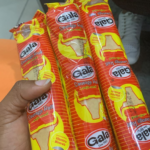
• If you lived for snack time back then, it’s time to put the knack for tasty treats to the test.

    What colour is the wrapper of the OG Gala sausage roll?

    [ad][/ad]

  • We’ve all been there—sneaking a peek at that forbidden movie, or quickly shutting off the TV when our parents walk in. For many of us, childhood movie memories are filled with secrecy, disciplinary punishments and occasional embarrassment.

    But what happened when we were caught? We asked five Nigerians to share their most memorable childhood movie moments; the ones that earned them a scolding, a slap on the wrist, or a beating.

    Iyiola, 24

    Growing up in a Christian home, everything we watched was scrutinised.

    My mom banned us from watching Ben 10 because she believed the aliens were demons. That was 2006, around the time a pastor said he went to heaven, came back to earth and saw Ben 10 characters. The ban extended to the Wizards of Waverly Place because of magic, and then the Disney channels because of the high-school love scenes, boyfriend-girlfriend issues were too much for us. She also stopped us from watching House of Anubis because of the eye symbol. She detested anything with eye symbols.

    Ayanfe, 28

    It was Campus Girls, a film about university girls who like to go out to meet sugar daddies. They kissed on screen and all. My uncle, who rented the film, didn’t allow us to watch it but I snuck back to the parlour to watch it and they saw me. I was seven years old, but they beat me too much, I almost saw Jesus that day.

    But to be honest, I don’t get why they beat me. Those actors had clothes on when they made out. It wasn’t different from other Yoruba films we saw. They didn’t beat me for watching Papa Ajasco that introduced Cossy Orjiakor that had all her boobs out and made Papa Ajasco shout “Oooh gbigbigbigbi.” I knew Cossy from there. Boy Alinco always said sexual things too. I wonder why it wasn’t an issue.

    Now, the reason I hate that they beat people for watching explicit things more is another situation with my uncle when I was 11. I went to collect music CDs from him — 50 Cent, Ja Rule, etc. While selecting the CDs I wanted, I saw one that had “Blue Film” written on it. I played it, and saw “BJ” on screen. I was surprised and curious to see the rest, so I took it home. They caught me and beat the shit out of me. They didn’t hear the story that it was my uncle’s CD, or ask why he let a kid near that type of content. They rained all the blame and punishment on me.

    Vanessa, 24

    I got a VCD of 300, but we (my siblings and my mom) didn’t know what to expect from it. We decided to watch it while my mom was out. When she came back, it was still playing, but we had gone outside to carry what she brought home from her car.

    When we entered, it was around the time the characters made out. My mom vexed and started asking, “What sort of rubbish are you watching?” and stuff. She shouted so much. Luckily, no cane. But she banned us from watching TV in her absence.

    Juwon, 35

    I was 12 and I skipped school one day to watch Fatal Attraction, a film that my neighbour had rented the day before and recommended we watch together. NEPA took light while we were at it. I tried using a screwdriver to open up the VHS player, but my old man met us when he came home during work break (unlike him). The whippings my dad gave me that day were insane.

    Funke, 24

    Instead of getting into trouble for watching certain films on my own, my uncles allowed me to stay and created one for me. When Spartacus and Game of Thrones were released and the pirated versions started making rounds in Nigeria, I was around 11 or 12. I developed an affinity for films when I was younger, so when my uncles watched films, I was allowed to sit in with them. As you know, Spartacus and Game of Thrones had plenty of sex scenes. So, whenever the sex scenes started, they’d send me out of the sitting room, “Oya. Go to the passage. We’ll call you back soon.”

    Soon enough, I started telling the vibe and left the room whenever the sex scenes were about to start. I don’t even know if it made them [my uncles] impressed or wary. 

    It’s funny that some years later, I saw Game of Thrones again and watched all the sex scenes and it felt like a “What’s even there? Mtcheeew” moment. What was the point of sending me outside at every sex scene? It was unnecessary, unhelpful and stressful. I hated it.

  • Growing up in a Christian Nigerian home in the 90s to early 2000s meant you listened to certain gospel songs over and over again. We all sang along to these tunes during weekend chores, and danced choreographies to them in church or at end of the year parties.

    Come, Let’s Praise the Lord — Panam Percy Paul

    Panam Percy Paul released Bring Down the Glory 2 (God of War) in 1989, and its first song, Come, Let’s Praise the Lord, instantly became the go-to for choreography presentations in schools and churches. Once upon a time, at this time of the year, kids across Nigeria would be rehearsing their synchronised moves to the gospel worship song.

    Akanchawa — Princess Njideka Okeke

    Akanchawa is an Igbo gospel song that was popular across households in the South-East and Lagos. The title means “The hands that bring good things”, a reference to God’s hands. Akanchawa is the first track on Princess Njideka Okeke’s Ministration Worship Part 1 album. Almost every Nigerian mum had the audio CD and played it on Saturday mornings.

    Apata Ayeraye — Cherubim and Seraphim Movement Church (Surulere District)

    The Cherubim and Seraphim Movement Church choir, Surulere, Lagos, released their Oke Mimo album in 1991. Apata Ayeraye which means “rock of ages” in Yoruba, was a standout hit for most families throughout the 90s. The worship song interpolates from the popular Yorùbá hymn of the same name.

    Opelope Anointing — Dunni Olanrewaju

    Every Sunday morning before rice and stew, this song was the tonic. If you grew up in a Christian Yorùbá home in the early 2000s, there’s no way you escaped this song. The titular track on Dunni Olanrewaju’s Opelope Anointing (2000) became a pop statement for gratitude and escaping adversity. The filling station closed immediately after they sold me fuel? Opelope anointing.

    Chioma Jesus — Amaka Okwuoha

    In 2003, Amaka Okwuoha released her hit song, Chioma Jesus, under New Jerusalem Music. She performed the song in Igbo with her iconic high-pitched vocals backed with heavy keyboard and drums. Chioma Jesus became such a hit that the singer is still referred to as “Chioma Jesus” today.

    Oga Eme — Rosemary Chukwu

    In 2008 and 2009, you couldn’t travel from Lagos to the South-East for Christmas and back without hearing this jam. It was a favourite for bus drivers and Igbo mothers alike. Oga Eme is fast-tempo and full of traditional Igbo music elements.

    Baba Mimo Mowa Sope — Tope Alabi

    Baba Mimo Mowa Sope (2001) is one of Tope Alabi’s classics and most diverse records. The praise song has a Makossa sound that sampled Magic System’s 1er Gaou (1999). It wasn’t just a turn-up jam in Christian circles, it was the ultimate birthday party favourite. Back then, the best dancer to this song always got sweet and biscuit. What a period.

    Igwe — Midnight Crew

    The year was 2008 when a music quartet called Midnight Crew stormed the country with Igwe, their multi-lingual gospel hit. It was recognisable instantly from its beat drop — the perfect ringtone material. If Midnight Crew, made up of Patricia Uwaje-King, Odunayo Ojo-Onasanya, Mike Abdul and Gbenga Oyebola, put this out today, it’d be a TikTok bop.

    Olori Oko — Infinity

    Infinity arrived in the era when Nigerian Gospel music was experimenting with diverse genres to bridge creativity with spirituality. Although Olori Oko came out in 2006, it’s an evergreen gospel bop today.

    Ijoba Orun — Lara George

    Lara George’s 2008 debut album, Forever In My Heart, gave us the hit single, Ijoba Orun, which has since become the Nigerian church’s call-to-action for those seeking to become “born again”. Ijoba Orun is a mellow and soulful cut, and Lara did absolute justice to it with her skilled vocals.

    Opomulero — Angel

    As a kid, Opomulero (2009) by Angel signalled gospel music’s complete shift from the stereotype to elements of secular pop instrumentals and delivery. Opomulero didn’t just eat as a party jam, it was the go-to for choreography presentations across Nigerian primary and secondary schools.

    Joy, Joy, Joy — Destined Kids

    “Joy, joy, joy in my heart is ringing” was on the lips of every kid when it came out in 2008. The Iwueze siblings (Favour, Rejoice, Joshua, Best and Caleb) had everywhere in a chokehold when they debuted with Joy Joy Joy, the first volume of their gospel music installations.

  • This week, a young girl shared a TikTok video of her parents’ reaction to her request for an iPhone 8, striking up a conversation about Nigerian parents and their preferred parenting styles that tend to border on abuse.

    Angel (22) had a different Nigerian upbringing. She talks about experiencing gentle parenting with her mother and grandma, and how it’s made her a self-assured adult.

    This is Angel’s story, as told to Boluwatife 

    Image designed by Freepik

    Corporal punishment is the average Nigerian parent’s default when a child misbehaves. That wasn’t the case for me. And I did misbehave— a lot.

    My mother had me very young, while still schooling in the university. So, I spent most of my formative years living with my grandmother in Abuja. 

    I was a troublesome, extroverted child. So much so that I was already sneaking out to go play by six years old. We had only recently moved to Maraba then. My grandma thought the new environment was unsafe, so she thought it best to keep me at home with my nine-year-old uncle (whom I called “brother”) when she was away. An older uncle was supposed to watch us, but my brother and I would time him. Immediately he started washing plates, we’d run to a fence close to my house and jump over it.

    One day, during our usual running escapade, I suddenly developed cold feet when I climbed the fence. I became scared of jumping down, and when my brother got tired of talking me into jumping, he left. I later jumped after a while, but instead of going to look for him, I decided to play with a neighbour’s son on a nearby farm instead.

    Only, we were playing with lighters, and before you could say jack, I’d burned down the entire corn farm to ashes. Luckily, the mother of the boy I was playing with pleaded with the farm’s owner on our behalf and my grandma never knew. Even if she did, she didn’t believe in spanking.

    I remember when, still at six years old, I created a dance group with about six other girls, and we were practising to show off our moves at a neighbour’s birthday party. We called our dance group “Hottie Pop Girls” and really thought we’d get to Maltina’s dance all competition. 

    On the day of the party, I was excited to get to the venue as soon as possible, but my grandma asked us to wait a while. That didn’t sit right with me, and I angrily threw a stone at our window louvres and broke a couple of them. She didn’t beat or shout at me. Instead, she said, “Well, now you aren’t going to the party.” I had to sit and hear all the festivities. It was painful, but as usual, she explained how actions have consequences, and how my impatience had cost me something I wanted. At that moment, I wished she’d just punish me and let me go to the party, but that wasn’t her way.

    I was nine years old when I got into boarding secondary school, and that’s when I started living with my mum in Kaduna. She was pretty much on the same wavelength as my grandma when it came to discipline: calm, rational and believed in conversation.

    In JSS 2, I got into a fight with a classmate who’d taken a letter from my bag to read without my permission. The fight led to me getting suspended from the hostel for two weeks because even though the other person had started it, she falsely accused me of ripping out her hair. When school authorities called my mum to inform her, she immediately defended me. She asked if a proper investigation had been carried out, knowing I wouldn’t just pick a fight for the sake of it. The school insisted, so she came to pick me up. 

    That day was our inter-house sports day, so she took me to the stadium and bought me snacks and a yoghurt. She allowed me to explain what happened and never once questioned me. She even bought food for my classmates at the stadium too, including the girl who’d falsely accused me. The school later did an investigation and apologised to me, but my mum never doubted me for a second. She taught me always to speak my truth, regardless of who believed me or not.

    It’s not like I was a saint. I got into trouble with neighbours too, but when they came to report me, she’d defend me in their presence but then show me the error of my ways when we were alone. With her, I never had to hide anything. She made sure I could tell her even the most uncomfortable things, like when I started getting attention from boys. She never used whatever I said or did against me, and we’d always just talk and talk.

    There was a time I almost burned the house down. I returned from school extremely tired and hungry, so I started cooking. I was watching TV at the same time and somehow fell asleep. By the time my mum returned home, I was still sleeping, but the kitchen was on fire, and smoke was seeping into the sitting room. She put off the fire, woke me up and took me outside. I was expecting her to shout or ask why I was so careless, but she hugged me and told me not to try to cook when I was tired. It was like, “Don’t put yourself in this kind of danger. Just buy bread when you’re tired instead. Collect it on credit if you don’t have money, and I’ll pay.” That was the kind of relationship we had.

    I sat for WAEC in 2015 and passed all my subjects except Maths. Even on the exam day, I knew I’d done rubbish. So, when I came out of the hall, I put a call through to her and said I’d messed up. She encouraged me to think positively and wait for the results.

    I was on holiday with my grandma when the results came out. As expected, I failed, and I was devastated. My grandma had the funniest reaction. She was like, “Why are you crying because of only one fail? Come and eat.” 


    Psstt! Come and eat your fill at our meat festival happening on November 11: Burning Ram. We’re celebrating the Nigerian culture of meat and grill, and we’re going all out. Whether meat is your thing or not, there’s something for you at Burning Ram.

    Click HERE to buy a ticket.


    My mum saw how bad I felt and just encouraged me to focus on the GCE alternative. She got me a math tutor, and I passed— end of story.

    I had a “spoilt” upbringing by Nigerian standards, seeing as I was never spoken to harshly or punished unnecessarily, but it’s made me a very self-assured adult. Even when I got into uni and would get mocked for being so skinny, I’d remember how loved I was at home, and soon the comments stopped getting to me. It was also when I got older that I realised not everyone had the privilege of growing up in a place where they were actually talked and listened to. 

    I had this roommate in my first year in uni who came from an extremely strict background. It was basically taboo for her to talk to boys. When she experienced freedom in school, she started running after every Tom, Dick and Harry. It was like she was set free and didn’t know how to handle herself. It was strange to me because I was trusted with freedom from a young age and didn’t think it was anything special. It made me grateful for my background.

    I grew up with so much assurance, and it’s such that even the people I call friends now show me the same type of assurance. It’s a continuous cycle. That’s definitely what I want to pass across to my children, regardless of the Nigerian status quo.


    NEXT READ: I Was Happier When I Stopped Sending My Parents Money

    [ad][/ad]

  • “I became the third parent” — Tola, 27

    I’m a first-born daughter and that meant that from an early age, I had to fill in for my mum who had a full-time job. I hated every minute of it because I didn’t even know what I was doing. I learned to cook at age 7 and I was in charge of all house chores. I thought it’d get better when I left for university, and it did for a while. But then I graduated from school and got an awesome job. I started making my own money, and requests for financial assistance have been pouring in from everyone. I’m back here, living my life for them, and it feels like there’ll never be an end to it.

    “Losing my dad forced me to grow up” — Daniel, 24

     I had a sheltered background, but everything changed when I lost my dad. I was 16 at the time, and I had two other siblings. My mum was a petty trader, so we quickly went from being relatively comfortable to very poor. What made it worse was that we weren’t close to the extended family, and my parents were all I had. 

    I had to make money to survive somehow because my mother still had two kids (14 and 12) to take care of. I started with the easiest thing I could think of — laundry. I was washing clothes for my classmates for ₦‎200 a piece, even missing classes sometimes. I quickly became popular for this and soon started my own laundromat in school. My grades weren’t bad, but I’d gotten too preoccupied with making money that I’d lost interest in school.

    Eventually, I discovered tech through a friend and started learning how to code. I was 19 at this point and I already had a lot of money saved up from my business. I shut it down to focus on school and coding. I graduated at 20 and got my first job two months before graduation. In many ways, losing my dad forced me to grow up faster. Even though I’m sad that he’s gone, I’m still grateful for the road that brought me here.

    “I wasn’t ready to go to the university when I did” — Feyi, 29

    Growing up, I was the ideal child. I was well-behaved, got good grades, and made my parents proud. I even skipped two classes in secondary school and got into the university at 14. It’s not that I was done with secondary school, but I’d taken JAMB and GCE in SS2 and passed really well. I got admitted to study medicine and my life pretty much looked like a straight line towards becoming a doctor at 20.

    I got into school and quickly found out how brutal it was. I wasn’t used to the long classes. I’d never lived outside of home, and I didn’t even know how to take care of myself outside the influence of my parents. But that was easy to learn. The hardest part was blending in with people who were several years older than me. 

    I had classmates who had boyfriends, and who’d talk about sex like it wasn’t a big deal. Meanwhile, the closest thing I ever had to a boyfriend was a class crush that lasted one term. I didn’t even know “Netflix and Chill” meant something else until my third year in school. 

    Even though I’ve always been proud of the fact that I grew up fast and had excellent grades, I realized that I had poor social skills.Growing up too fast had done nothing to prepare me for life in school.

    “My parents were never around so I had no choice” — Ibrahim, 22

    My parents worked late every day, and they went to parties on weekends. It also didn’t help that I was the first of  five kids. We used to have a maid, but she was sent away after she had a physical fight with my mum. Somehow, all her duties were transferred to me when I was only 8. 

    I’d take care of my siblings after school and wash their uniforms. I cooked most of the food we ate, and I did most of the chores around the house, with my siblings doing as little as possible because they were really young. The worst part was that I had mischievous siblings, who made sure I always got into trouble with our parents for things they did. That gave me a huge sense of responsibility to keep them in check. It’s probably why I’m such a control freak now. But looking back, the experience gave me invaluable life skills.

    “I started working when I was 15” — Amaka, 25

    My family fell on hard times after my father died, and my mum didn’t have enough money to support all four of us through school. After I graduated from secondary school, my mum told me to wait a few years and work before going to university. This was so she could have enough money to support my two other siblings through school.

    I started out working as a waiter at a nearby restaurant for ₦‎15,000 monthly when I should have been in school. A lot of it was demeaning and I was sacked two years later when I slapped a customer who tried to harass me. With the help of someone I met at the restaurant, I went on to learn how to import shoes from China and sell them for huge profits. In my first round of sales, I made ₦‎90,000 in profit. That was the highest amount of money I’d ever seen in my life at that time.

    I continued with the business and used the money to support the family and enrol in school. It wasn’t the most horrible experience, but it forced me to grow up and learn to fend for myself.


    NEXT READ: We Asked 7 Nigerians for the Biggest Lies They’ve Told on Their CVs


  • It’s 9 a.m. on a Saturday morning. If the world made sense, you’d be in front of a TV screen watching cartoons while waiting for breakfast to be ready. But adulting has taken that away too. 

    That’s why you should watch these 13 cartoon intros to relive your childhood Saturday mornings.

    1. The Animaniacs

    https://youtu.be/whUOy_q7_vA

    2. Pinky and the Brain

    3. Cow and Chicken

    https://youtu.be/Vii7Tkejrfg

    4. Johnny Bravo

    5. Foster’s Home for Imaginary Friends

    6. Ben 10

    7. The Powerpuff Girls

    8. Skunk Fu

    9. Samurai Jack

    10. My Gym Partner’s a Monkey

    11. Justice League

    12. Ed, Edd n’ Eddy

    13. Time Squad

    14. Scooby Doo

    15. Phineas and Ferb

    16. The Flintstones


    NEXT READ: 10 Best Feel-good Anime for Beginners


  • If you were born to Nigerian parents in Nigeria, chances are, you got ass-whopped a fair amount of times. And you see, Nigerian parents use different items to spank their kids.

    Take this quiz and we’ll guess which one was mostly used to spank you as a child.

  • When you grow up in the north, there are specific snacks that must have made your childhood. And if they didn’t, go and claim Lagos as your state. When everyone else is reminiscing about the good times of Goody Goody and baba dudu, northern kids are thinking about these seven snacks.

    Licky licky 

    If you grew up in the north and didn’t have a massive tree with yellow fruits called licky licky on your street or in your school, your childhood wasn’t complete. Scientifically, the tree is called the black velvet tamarind tree, but that’s not our business. It’s called licky licky because you suck on the fruit until it melts away in your mouth like candy. Some people chew it, but we don’t judge here.

    Fried chinge/grasshopper and yaji

    “Chinge” are those insects that gather around lightbulbs when it rains. When you fry them and eat them with seasoned pepper, your life will change forever.. Secondary school was the best because we’d have them tied in nylons and hidden somewhere for break time.

    RELATED: 6 Snacks You Ate As A Child But Would Probably Kill You Now

    Ridi

    Buying ridi after school with your last change was something special. Ridi is simply sesame seeds covered in sugar syrup, then dried and cut into different shapes and allowed to cool. So ridi is basically the candy of the north. You can’t say you grew up in the north without having memories of gathering all the ₦5 to your name to buy ridi.

    Masa

    Masa was everything. I think of it as tiny fluffy pancakes made from rice. You can imagine it as akara because, unlike pancakes, they puff up when you fry them. Even as an adult, I daydream about masa doused in suya pepper after work. Sometimes, masa is made from millet but isn’t as sweet as when it’s made with rice, so you’d want something sweet like sugar or syrup to the mix.

    RELATED: 11 Foods And Soups You Have To Try If You Find Yourself In Kaduna

    Kuli Kuli

    You can still get these outside the north, but nothing compares to the kuli kuli an elderly woman from Maiduguri or Jos prepares. Kuli kuli is basically chin chin made from groundnut. The groundnut is ground into a paste and mixed with hot water to help extract all the oil. After that, the residue is rolled into different shapes and fried with the groundnut oil you separated from the mix.

    Dankwa

    Once you put dankwa in your mouth, it melts. It was a savoury snack for long car rides or walks because you’d find it sold on almost every street. In fact, I’d say it’s one of the most accessible street snacks in and out of the north. Dankwa is made from dried millet or groundnut that’s mixed with seasoning, particularly pepper and salt, and rolled into balls. 

    Alewa

    I know I said ridi was the candy of the north, but this is the real OG. It’s literally water and sugar mixed with food colouring for variety. It may be the quickest way to die of diabetes, but alewa was everything you needed for a good day as a kid. If I wasn’t trying to outlive my grandmother, I’d still buy it almost every day.

    READ ALSO: 12 Things to Snack on if You Work From Home

  • If you served at least seven of these punishments as a child, you were either stubborn or your teachers didn’t like you.

    Tick all the punishments you served:

  • When you think of betrayal, you think of lovers hurting you or friends doing unimaginable things to you, but that’s not the case for a lot of millennials.

    Before we go on, we need to ask one question: are baby boomers proud of the lies they told and the hurt they caused young millennials? 

    Here are a few ways millennials got introduced to betrayal.

    1. “Go and put on your shoes”

    Seems like a harmless statement, but this sentence was the poster phrase for betrayal. Nigerian parents, uncles and aunties broke our hearts with this phrase. Some of us almost gave up wearing shoes because shoes were synonymous with heartbreak and betrayal. 

    2. Finding thread and needle in the Danish cookie container

    Every millennial knows how good Danish cookies are. So imagine the hurt and pain when you open a Danish cookie container and find thread and needles there? Nigerian adults had several other containers they could store their thread and needles in but chose to put them in the ones that would attract the most and hurt their kids’ feelings. Peak betrayal. 

    3. Finding egusi in the Ice-Cream bowl

    Someone needs to do a study to understand the reason for this kind of wickedness. Opening up an Ice-Cream bowl (especially Supreme ice cream of those days) and finding egusi in it hurt more than finding thread and needles in cookie containers. And why must it always be egusi?!

    4. “If you tell me the truth, I promise I won’t beat you”

    Nigerian adults had a thing for lies, but no one comes close to boomer parents. You’ll tell them the truth and still get the beating of your life. We’re sure a lot of young Nigerian men are liars today because they had to tell a lot of lies to avoid getting betrayed/beat up as kids. 

    5. “Let me hold your money for you”

    Millennials being the sweet little peas they are, always trusted their parents (especially mums) to actually keep their money safe. Just imagine their shock when they asked for it in the future only to be blackmailed. Mummy, you promised to keep this money for me, not use it to feed me? 

    6.“I’ll be back soon”

    One day we’ll sit with older Nigerian parents and ask them why they had such an issue with telling the truth. You’d expect them to be back soon while waiting for several hours with a broken heart.