There’s so much new music being released that it’s hard for even the most loyal fans to wade through the trash to find the gems. That’s why we’ve created #BumpThis – a Friday series that features new songs, by and featuring Nigerians, that you absolutely need to hear.
BUJU — “Mind Games”
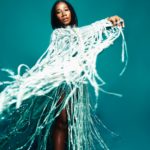
The immensely talented BUJU is one of the rising stars we said is primed to dominate the afropop scene in 2020. With his new release, “Mind Games”, he seems more than ready to prove us right.
On the fantastic track, BUJU sings about a girl who supports him and never asks for more than he can give. The up-and-comer seems incapable of making a bad song, and “Mind Games” effortlessly reaffirms that.
J Hus – “Play Play” ft. Burna Boy
While Burna Boy soars on any collaboration, he seems especially in his element with J Hus (“Sekkle Down”, “Good Time”). Now, they’ve been reunited on “Play Play” – a standout off the rapper’s new LP, Big Conspiracy.
On “Play Play”, a very unconventional love song, we get J Hus skillfully rapping about girls and guns. Burna Boy also matches his energy, delivering a hook that elevates the track, making it their strongest collab yet.
2019 had a ton of great Nigerian albums, courtesy of big-name stars like Burna Boy and rising phenoms like Lady Donli. While all of these releases came with solid singles, all of them still have non-singles that are worthy of our attention as well.
Burna Boy’s “Wetin Man Go Do” (African Giant)
Burna Boy’s Grammy-nominated magnum opus, African Giant is overflowing with excellent deep cuts, but a clear standout is the hustler’s anthem, “Wetin Man Go Do”. Even Kel-P, the album’s primary producer, declared it his favourite track.
Lady Donli’s “Take Me Home” (Enjoy Your Life)
Lady Donli’s debut album, Enjoy Your Life was easily one of the best releases of 2019. While a lot of tracks on the LP could have made this list, the strongest has to be the BenjiFlow-assisted “Take Me Home”, an immensely sensual song about the allure of the chase.
Santi’s “RX-64” (Mandy & The Jungle)
On Santi’s transportive, genre-defying debut album, Mandy & Jungle, the singer invites us into his vivid universe, and the sun at its centre is the KrisIrie-aided “RX-64 (The Jungle)”. Excellently produced by Odunsi, the hypnotic deep cut shows Santi at his magnetic best.
Asa’s “Stay Tonight” (Lucid)
With Lucid, Asa’s masterful fourth album, the singer-songwriter brilliantly explored the messiness of love and heartbreak. On “Stay Tonight”, the LP’s dreamiest deep cut, she looks to heal from the hurt, bravely putting herself back out there in search of the one.
Simi’s “Immortal” (Omo Charlie Champagne Vol. 1)
On Omo Charlie Champagne Vol. 1, Simi tackles a host of different themes — from loss to fame — but it’s on “Immortal”, her sexiest song to date, that she truly shines. With a fantastic assist from Maleek Berry, “Immortal” is further proof of Simi’s dynamic range.
Falz’s “Follow Follow” (Moral Instruction)
Thanks to Sess’ faultless production work, Falz’s Moral Instruction emerged as one of the most technically impressive albums of 2019. The track that most perfectly encapsulates the album’s sonic mastery is “Follow Follow”, a Fela-inspired gem that calls out posers.
Davido’s “Get To You” (A Good Time)
The most cohesive project of Davido’s career, A Good Time finds the afropop juggernaut celebrating happiness and love. For the latter theme, the song that does the best job of capturing that is “Get To You” — a delightfully toned down and deeply romantic effort.
Tay Iwar’s “DON’T KNOW” (Gemini)
Tay Iwar is one of our most gifted musical minds, and he proved that on his astonishing debut, Gemini. Every song on the LP is a testament to his genius, but “DON’T KNOW”, which features his equally brilliant brother, Suté Iwar, shines just a little bit brighter.
Fireboy DML’s “Like I Do” (Laughter, Tears & Goosebumps)
With Laughter, Tears & Goosebumps, Fireboy DML delivered one of the strongest afropop debut albums we’ve had in years. While littered with beautifully written and performed songs, a clear standout on the project is “Like I Do” — a truly heartwarming love song.
YCee’s “Dada” (YCee Vs Zaheer)
YCee’s debut album, YCee Vs Zaheer, served as an infallible reminder of his range — both as a singer and a rapper — but it was on the Dapo Turbuna-assisted “Dada”, easily the project’s most infectious deep cut, that he reminded us just how much fun he could be as well.
Stars like Wizkid, Burna Boy, Tiwa Savage and Davido have been doing it for years, but do you have what it takes to orchestrate an afropop hit? Well, all you have to do is pick your artists, producer, co-writer and video director, and we’ll let you know if your song flops or not.
Go ahead:
Your favourite musicians also have favourite musicians, and that’s why we created #MyLoop — a weekly series that asks Nigerian stars who they like to listen to when they’re feeling any type of way.
With every new release, it becomes increasingly clear that Prettyboy D-O is incapable of making a bad song. The manic energy he brings to every track is utterly infectious, and whether it’s a solo effort or a one-verse feature, he is always a memorable presence.
This year, he’s soared on two fantastic tracks, Mojo’s anthemic “Chop Life Crew” and “Dey Go Hear Wehh”, the first single off his upcoming debut album, Pretty World. He also dropped the iconic video for the Santi-assisted “Pull Up”, a standout off his Everything Pretty mixtape.
So, as we impatiently wait for the rapper to come through with his debut album, we decided to find out what he’s been listening to recently, specifically when he is feeling any major emotion (ranging from happiness to anger) or doing something as simple as getting dressed.
From Burna Boy to Nav, here are the artists that made D-O’s loop:
1. Happy:
2. Sad:
3. Angry:
4. In Love:
5. Heartbroken:
6. Turned On:
7. Uninspired:
8. Homesick:
9. Driving:
10. Getting Dressed:
For creators, inspiration can be found in the most unexpected places. That’s why we created #Watchlist — a series that asks Nigerian video directors to list the most interesting things that influenced their creative choices while shooting.
The most essential Nigerian star of the past two years, Burna Boy kicked off 2019 with the clip for his Zlatan-assisted gem, “Killin Dem”. While the song actually dropped in 2018, the dynamic video helped turn the banger into one of the year’s biggest hits.
So, as the video just crossed 20 million views on YouTube, we decided to talk to Prodigeezy, the Headies-nominated director behind it all. Driven by a desire to make “the greatest Zanku video ever”, here’s how he put together one of 2019’s most unforgettable clips.
On main inspiration:
When we got to set, I remember saying to Wande Thomas, the producer of the video, “This has to be the greatest Zanku video ever”, and it turned out to be exactly that.
Inspiration always starts with the song. It creates a visual universe you can explore. “Killin Dem” inspired the overall mood of the video, influencing location, choreography, directing and cinematography decisions.
On the intended effect:
I wanted to create something epic for the Zanku culture. The song had only been out for a few days, but I knew it had the potential to be one of the biggest Zanku songs ever.
It needed to have a video that would equally represent, and my vision was for people to see images and frames from the video each time they heard the words “Gbese” and “Zanku”.
On visual references:
The visuals were inspired by photowalks I had taken around that location a while back. Lagos island is one of my favourite places to shoot because of its authenticity — a seamless blend of the old and new.
It definitely matched the energy of the collaboration and was a no-brainer. As far as influences, Adriaan Louw’s work with Major Lazer created an interesting palette which we borrowed some elements from.
A picture from Prodigeezy’s photowalk
Major Lazer and Burna Boy’s “All My Life”
On casting and performance references:
The style choices in the video were influenced by the fusion of afrobeat and hip-hop dance culture. As for the performances in the video, everyone was just matching Zlatan and Burnaboy’s energy.
On oddest influence:
The harmattan. It’s my favourite season of the year, and it was still dry and windy when we filmed. It must have subconsciously influenced parts of the creative process. Not sure which parts, but it did something for sure.
For the love of the real stars, the producers, we created #Beatsmith — a series that focuses on the connections and inspirations that led to the creation of that hit song or album.
Burna Boy’s exceptional African Giant is easily the best Nigerian album of 2019, as well as one of the best of the past decade, so it comes as no surprise that it recently nabbed a well-deserved Grammy nomination for ‘Best World Music Album’.
While Burna Boy’s talents cannot be praised enough, it’s also worth noting that this album wouldn’t be what it is without the brilliant Kel P, who produced over half the tracks. So, we decided to reach out to 2019’s defining beatsmith to ask how the game-changing album came to be.
On meeting Burna Boy:
So, around August last year, Ceeza Milli recorded Burna Boy on one of my beats. Burna Boy asked who made it, and Ceeza told him about me. The next day, I got a call from both of them to link up and that was how I met him.
I never knew I was coming to make an album. I just knew I was there to record songs. We didn’t really have any serious conversation or even a moment to get to know each other beforehand. We were just working and the vibe was smooth.
On main inspiration:
My main inspiration was Burna Boy himself. His previous songs, the ones he released before I met him, influenced my work on the new songs. I was also influenced by his unique vocal texture and writing.
On the difficulty level:
It was very tasking. I was basically indoors for an entire month, grinding to make sure every song sounded different. Burna is a fast writer — he can record four complete hit songs in a single day.
On his favourite track:
My favourite track is definitely “Wetin Man Go Do”. The composition is somehow simple and dynamic all at the same time. The vocals and adlibs also blend really smoothly together.
Your favourite musicians also have favourite musicians, and that’s why we created #MyLoop — a weekly series that asks Nigerian stars who they like to listen to when they’re feeling any type of way.
BUJU has been one of the year’s most exciting new talents. He landed his big break with “Spiritual” — a Zlatan-assisted hit that ranks among the best songs of 2019. He then went on to earn a well-deserved nomination for ‘Rookie of the Year’ at the Headies.
Since then, the rising star has continued to put out music that reaffirms his gifts. His last two singles, the confident “L’Enu” and the romantic “Ohema” made our must-listen lists, and thankfully, he shows no signs of slowing down anytime soon.
So, in a bid to learn more about BUJU before he becomes the massive star he is clearly destined to be, we decided to ask him which songs he listens to when he is feeling any major emotion or doing something as simple as getting dressed.
From Hozier to Burna Boy, here are the artists that made BUJU’s loop:
1. Happy:
2. Sad:
3. Angry:
4. In Love:
5. Heartbroken:
6. Turned On:
7. Uninspired:
8. Homesick:
9. Driving:
10. Getting Dressed:
The past two years have been a monumental one for Burna Boy. He kicked off his renaissance with his masterful mixtape, Outside, and he’s capped it off with a Grammy nomination for his career-best LP, African Giant. So, naturally, everyone is now claiming to be a day-one Burna fan.
Well, if you really are, then you should ace this quiz:
There’s so much new music being released that it’s hard for even the most loyal fans to wade through the trash to find the gems. That’s why we’ve created #BumpThis – a Friday series that features new songs, by and featuring Nigerians, that you absolutely need to hear.
Burna Boy — “My Money, My Baby”
Burna Boy has had a monumental 2019, mostly due to the success of his career-best album, African Giant. Well, the afro-fusion star has continued his winning streak, appearing on the star-studded soundtrack for upcoming Oscar-hopeful, Queen & Slim.
On the Afrobeat track, “My Money, My Baby”, Burna Boy samples Fela’s “Shakara”, and the outcome is unsurprisingly fantastic. His performance on the song has a raw, freewheeling nature to it, making it one of the most instantly memorable things he’s done this year.
Since Queen & Slim follows the story of a black couple on the run from the police — reminiscent of the iconic tale of Bonnie and Clyde — it makes sense that “My Money, My Baby” is all about Burna Boy and his lover becoming felons after he kills someone.
https://www.youtube.com/watch?v=vcK-9RTuDqc
Sometime in September, while condemning xenophobia, the Nigerian philosopher/prophet Burna Boy (Government Name: Damini Ogulu) solemnly vowed on Twitter to fight South African Rapper AKA (Government Name: Unknown). Tweet made 3rd of September 2019, exactly a month ago, has now been deleted.
The logic behind this gauntlet drop is pretty clear. International Law stipulates that if two musicians physically fight, the country of the loser has to apologise to the country of the winner and stop extra-judicial killings. Xenophobia solved.
So in solidarity of Burna’s brave decision to be Nigeria’s Champion, I decided to listen to our dada-haired Messiahs 2019 banger “Anybody.” While listening I had an epiphany. The chorus of the song is fire but it also raises a fascinating question. It goes:
Anybody, wey no want to soji Anybody, wey no dey carry body Nack am something, ahh Nack am something To ba ta fele, fele Nack am something
It suddenly hit me. I mean I get wanting to beat up AKA (who doesn’t right?!) but the scope of this chorus goes further than beating up one annoying rapper. Is Burna Boy advocating for physical violence on certain portions of the Nigerian population with his incendiary lyrics? The chorus literally says “Anybody, wey no want to soji or Anybody, wey no dey carry body” such persons should be “Nacked (Nigerian slang for hit) with something” promptly.
He then proceeds to stress this point by crooning that “To ba ta fele, fele”, a Yoruba phrase which roughly translates to “if they misbehave in your presence” you are entitled to hit them with a weapon of your choice.
But then why would Oluwa-Burna (with his controversial past/present/probably future) say such a thing?! I set out to find out.
I began by asking the important questions. “What does it mean to Soji?” And “Why does Burna-Boy strongly believe that a failure to do so should result in grave bodily damage?”
So “What does it mean to Soji?” This was a simple question to answer. The Nigerian man “Sojis” by “Carrying his body”. He does this by flailing his limbs around in an established rhythmic pattern. For example. He might mime the act of masturbating while hopping on both legs, etc. This act is commonly referred to in the Western World as “Dancing”.
And why “Why does Burna-Boy strongly believe that a failure to do so should result in grave bodily damage?” This was a tougher question to answer, but I solved it by digging deep and answering the existential question “What does it mean to be Nigerian?”
For a significant percentage of the population, Nigeria is a terrible place to live. Thus, the average Nigerian consistently craves literal or metaphorical moments of escape and fleeting moments of happiness. This is where Nigerian music comes in. Nigerian music (from Fela to Wizkid) has been crafted in such a way that it is impossible for a Nigerian listener (or the occasional enthusiastic white man on Instagram) not to find the joy and escape he seeks.
In plain terms, it is literally impossible not to “Soji”.
Thus in Nigeria, if a man chooses to not “Soji” when confronted with Nigerian jams, he has made a deliberate choice to pick unhappiness over joy. Such persons are locally described as Bad-Belles. Furthermore, the negative energy of a bad-belle is a contagious plague to innocent bystanders around him. Nigerian poet, WizKid echoed this sentiment when he crooned in 2018 hit “Bad Energy” that “Bad energy stay far away”. He did so because he feared its unstoppable effects.
Logically therefore, if you encounter a bad belle who refuses to Soji you should act by defending himself against such person.
In summary, Burna-Boy is a lover of peace and positive vibes not an advocate for assault merely self-defence (except when he is literally threatening to assault someone on Twitter). The hidden meaning of the chorus of “Anybody” is:
“No longer shall we passively accept the Nigerian bane of unhappiness. Never again!! Arise my fellow patriots!! Any man woman or child who wilfully chooses to deny himself and his fellow man joy, Assault him with the closest weapon!!! For if he is left unchecked our fleeting joy shall be stolen!!”