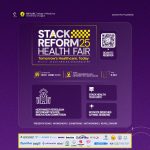
• The future of healthcare is in need of innovation. On November 22, 2025, the Tayo Adenirokun Hall at the University of Lagos will welcome a gathering of innovative minds determined to shape it. The STACK Reform Health Fair, the largest student-led health-tech conference, is organised by the KB Klub, a social philanthropic organisation of medical students from the College of Medicine, University of Lagos. This year’s conference will carry the theme ‘Tomorrow’s Healthcare, Today,’ which dares participants to rethink how the nation designs, delivers, and sustains its health systems. 


    From its establishment in 2017, STACK has advanced from a student-organised forum into a nationwide movement that influences the vision, values, and leadership of Nigeria’s next generation of healthcare professionals. It has become a movement for translating innovative ideas into purposeful action, bridging the gap between imagination and implementation. By hosting students, professionals, policymakers, and entrepreneurs, the conference aims not only to encourage critical dialogue and practical experimentation but also to adopt a more practical approach than in the past editions. 

    STACK Reform ‘25 will feature keynote sessions, panel discussions, and workshops addressing important themes, including digital health and medical innovation, as well as system design and health equity. A significant highlight of the conference is the Health-Tech Expo, where five outstanding founders will present their solutions to real-world health problems, showcasing Nigerian innovation in areas like remote patient monitoring and health data management. 

    In addition, STACK Reform will be extending its hand to the next generation through the Northwest Petroleum Secondary School Innovation Competition. With its theme titled “Innovating for Good Health: Solutions for a Healthier Future,” the segment of the conference aims to inspire future innovators by challenging secondary school students to develop projects that tackle health challenges in their communities. 

    STACK Reform has evolved into a yearly awakening, challenging Nigeria’s healthcare sector to reconsider how care is delivered, systems are built, and knowledge is shared. It serves as a reminder that progress does not necessarily belong to the future; it can always begin now in the small but deliberate steps of those willing to make it happen. 

    If you would like to be a part of the day, register now at https://stack.kbklub.org/register
    Can’t wait to see you at STACK!

    [ad]

  • Someone you know has left or is planning to leave. 1,000 Ways To Japa will speak to real people and explore the infinite number of reasons and paths they use to get to Japa


    When Boye had to pick between finishing the degree he had studied for four years to get in Nigeria and moving to the U.S as a permanent resident, he chose the most sustainable option. In this story, he shares how he got his visa and is now trying to figure out life as a videographer in the States. 

    Where do you currently live, and when did you move out of Nigeria?

    I live in Chicago, United States of America, and I moved here in October 2024.

    Congratulations! How exactly did you move?

    My mom has family in the U.S. who have become citizens. They were the ones who filed for us to move here as permanent residents ten years ago. 

    Ten years?

    Yes, I was still in secondary school when the process started. We waited ten years for an interview date and finally got one last year. Then, we got the visa and were given six months to prepare and leave Nigeria.

    Why did the process take that long?

    I can’t say why for sure, but I’m guessing that’s because many people were in the queue and it was a “first come, first served” arrangement. My knowledge of the immigration process isn’t the best because I was still a kid when it started.  But I remember we used to get updates telling us they were still working on it as the years passed. We had already given up when we finally got the interview date last year. 

    How did you feel after getting the visa?

    It was very interesting because I didn’t plan for it. I was in my fourth year at UNILAG, and the academic session hadn’t even ended.

    Also, my videography career had just started picking up in a new way, so there were so many things to look forward to in Nigeria. But when the opportunity to leave came, I couldn’t resist it. I saw it as a chance to chase bigger dreams. But my dad was against it at first. It took lots of conversations, but he finally gave his approval.

    Did you finish your degree before you left?

    Oh, no. I just requested my transcript. I have the opportunity to resume my education in the U.S, and I’m working towards doing that next year. Right now, I’m focusing on building my videography career here in the U.S. I could have attempted to finish my degree at UNILAG. However, it would have been impossible because I still had two academic years left, and as I mentioned earlier, we were asked to leave the country in six months. I also couldn’t predict how long it would take me to finish the course because of potential academic strikes. 

    What’s life in the U.S looking like?

    It looks promising. As a creative individual, I feel I’ll thrive here. I’ve met many people in the creative space here and seen enough to know I was being cheated in the Nigerian creative industry. I currently work as a videographer with a real estate company, and the few months I’ve spent doing this job have made me feel like God gave me a second chance. I’m making more money than I’ve ever made in my entire life, and I can’t help but wonder what my life would look like if I had spent the last four years being a videographer here instead of in Nigeria. 

    So, you have no regrets leaving Nigeria?

    I have no regrets. I wasn’t really an academic person, so it didn’t hurt that much to ditch UNILAG. I’ve always believed there’s more to life than a university degree. I miss the values the school instilled in me and the people I met there, but I have no regrets.

    Are you going to resume at the same academic level in the U.S with your transcript?

    I’m not sure. I know they’ll check the number of credits I’ve done in UNILAG and compare it to those I haven’t taken. When they have their final calculation, they’ll determine the number of years I’m supposed to spend in college.

    Besides school, what was your life in Nigeria like?

    While I was at UNILAG, I worked with a media agency. It is one of the leading agencies in Lagos, so I got to network with influential people. On a typical day, you’ll find me shooting videos when I should be in class, but it was worth it. The financial aspect wasn’t very rewarding, but it paid off in terms of exposure. Now, I have a solid portfolio to present in any part of the world. 

    Get More Zikoko Goodness in Your Mail

    Subscribe to our newsletters and never miss any of the action

    Love that for you. Have you experienced any culture shock in the US?

    So many culture shocks. Everyone here tells me that I have an accent, which is funny because don’t we all? But they always struggle to hear me. I constantly have to repeat my words before my colleagues hear me. The funny thing is, I can hear them clearly, as I think they should hear me too. But I’ve started using faking an American accent just so they can understand me without having to repeat myself constantly. Another culture shock is probably how much people love afrobeats here.

    In what significant ways has moving abroad changed your life?

    Honestly, I feel more relaxed than I’ve ever felt. I’m not being hard on myself like I used to in Nigeria because there is a system that makes life easier here. When you work, you get a reward for it. And not just any form of mediocre reward, you actually earn your worth. Anytime I convert my monthly pay to naira, I still can’t believe it.

    Do you still see a future in Nigeria?

    I’d probably like to retire in Nigeria, but I won’t like to go back there anytime soon.

    On a scale of one to ten, how happy are you in the US?

    9.5 is a fair number. It could be higher, but I miss my friends in Nigeria. 


     Want to share your japa story? Please reach out to me here.

    [ad]

  • Trigger Warning: Sexual assault

    On June 30, 2024, X user @Theariaspeaks posted a Twitter thread to raise awareness about an epidemic of sexual assault at the University of Lagos, sharing anonymous texts from victims and the university’s unwillingness to punish the offenders. In the hours that followed, perpetrators who’d escaped punishment for this act were called out.

    This is everything we know about the reported time and dates of the sexual harassment cases flying around the College of Medicine, University of Lagos, and some parties involved.

    March 2024 — Oluwagbemileke Otokiti

    Image source: @Theariaspeaks (X)

    On June 29, 2024, Oluwagbemileke Otokiti, a 200-level pharmacy student, was called out for allegedly sexually assaulting a 200-level female medicine and surgery student. According to the anonymous messages sent to X user @Theariaspeaks, Oluwagbemileke had been involved in another incident in March 2024. He got caught, and Unilag’s House of Lords  — the student legislative council — fined him ₦5000, asked him to write an apology letter and provide a guarantor to “vouch for his conduct”.

    The victim reported that Oluwagbemileke assaulted her in the early hours (2:55 AM and 3:05 AM) of March 10, 2024, while studying in a classroom. During a conversation with Oluwagbemileke, he hugged her from behind without consent. Despite her expressed discomfort and attempts to get away from the situation, Oluwagbemileke persisted, “making inappropriate sexual comments and exhibiting aggressive behaviour.” She reported to the House of Lords later in the day. 

    According to a statement released by the House of Lords, upon the report of the assault incident, a committee was formed to investigate the situation. During one of the meetings, Oluwagbemileke confessed to the crime and issued a recorded apology. The victim asked for a written apology letter to be sent to all group chats of the College of Medicine and Pharmaceutical Sciences Students (COMPSSA), stating what happened while keeping her anonymous. At the time, she didn’t want the matter to get to the school authorities.

    As of March 20, Oluwagbemileke had paid the ₦5000 fine and asked for a week extension to find his guarantor. However, he eventually failed to do so, and the matter escalated to the Dean of Student Affairs (DSA).

    The victim stated that Oluwagbemileke is a repeat offender and something similar and non-consensual had happened between them in 100 Level.

    On March 22, 2024, the Pharmaceutical Association of Nigerian Students, Unilag Chapter, wrote to the Dean of the Pharmacy faculty about Oluwagbemileke’s sexual misconduct.

    Oluwagbemileke, however, participated in a faculty sports event despite several complaints from women who didn’t feel safe around him.

    June 26, 2024 — Samuel Adigwe

    Image source: @OlajumokeHera (X)

    On June 28, 2024, another male pharmacy student was reported for sexually harassing a female radiography student. 

    At approximately 1:00 AM on June 26, when the victim had fallen asleep in a Cold Room where she was studying, Samuel inappropriately touched her. The victim pushed Samuel away and called her friend, who confronted him, but he wasn’t bothered. He allegedly claimed that “it was mutual”.

    She reported the case to the House of Lords, and an investigation was launched immediately.

    In response to the sexual assault report, Unilag’s Sub-Dean sent a warning message directed at the male students in the 400 Level pharmacy group chat.

    A 300-level male Pharmacy named Ajibola was also reported around the time for the same crime. Many of his victims have come forward to report incidents where he flashed his penis or inappropriately touched them. Although he was once reported to the faculty, he’s yet to face any consequences.

    October 2023 — Chibueze Nwanmah

    One of the messages sent to @TheAiraspeaks also exposed Chibueze Nwanmah, a 600-level male medical student, as an abuser who has allegedly assaulted over thirty female students. Under the guise of checking on his victims’ academic progress severally, he allegedly takes advantage of them, forcing them to hug him and rub his penis against them.

    In October 2023, Chibueze was reported to the school authorities over sexual assault involving at least eleven female classmates and an unknown number of students in younger classes. A petition was written and signed by fifty-four people. The authorities formed a panel, but there has been no update.

    Currently, the University of Lagos and the Faculty of Pharmacy are yet to address the issues. Meanwhile, Lagos State parastatal and organisations like Lagos State Domestic and Sexual Violence Agency (DVSA) and Stand to End Rape (STER) have picked up the case.

    In an effort to mandate accountability for sexual harassment cases at the College of Medicine, Unilag, a petition has been launched, trending with the hashtag #EndSACultureInCMUL.

    On July 2nd, X user @Theariaspeaks announced in a tweet that she and another X user, @BigBadReni, had a meeting with Unilag’s Vice Chancellor, Professor Folasade Ogunsola. The VC has agreed to the demand to punish the perpetrators, and she has pledged to create a safe space for students to report issues of abuse anonymously and make a new sexual abuse policy for the College of Medicine, Unilag.

    Unilag set up on disciplinary panel to punish the perps. On July 15th, @Theariaspeak made a tweet about Oluwagebemileke pretending to be mentally ill on during his panel hearing.

    @Theariaspeaks informed the public on July 18th that Oluwagbemileke Otokiti and Samuel Adigwe have both faced Unilag’s disciplinary panel. On July 25th, @Theariaspeaks updated that Chibueze Nwanmah has also face the school’s disciplinary panel. Currently, Oluwagbemileke and Chibueze are undergoing mental evaluation with professionals in Unilag.

    Now, we await the disciplinary panel’s final verdict.

    This is a developing story.

  • Imagine getting set to graduate from your Nigerian university and you get an email from the school management notifying you that there’s been a convocation gown heist. Ghen, then.

    What to Wear When Your Convocation Gown Has Been Stolen

    While it may seem like all hope is lost, we’re here to show you how to make lemonades with this bitter lemon. You just need to keep an open mind to see the vision.

    Sutana

    Have you seen celestial church members heading to church on a Sunday morning? They’re the next best thing after the agege bread that leaves the bakery that morning. Listen, you’ll be the centre of attraction from the moment you step into your convocation ceremony.

    Wedding gown

    What to Wear When Your Convocation Gown Has Been Stolen

    Your wedding day shouldn’t be the only happiest day of your life. You can have many happiest days of your life, and on top of that list should be graduating from a Nigerian institution. What better way to show up on the day the Lord has made than in a Mai Atafo custom piece?

    Abaya

    What to Wear When Your Convocation Gown Has Been Stolen

    One thing about an abaya is it can cosplay as a graduation gown perfectly. It’s basically a convocation gown with pizzazz.

     [ad]

    Jalamia

    Go with the ones that come in silk and have gold buttons. You wouldn’t have to announce yourself twice at the university gate before the security guards lead you to the convocation hall.

    Rain coat

    What to Wear When Your Convocation Gown Has Been Stolen

    Listen, if Deyemi Okanlawon can do this to a movie premiere, nothing is stopping you from making this your convocation attire. 

    A lawyer’s gown

    I don’t know who stole the fashion inspiration from whom, but one thing is clear, all things have fallen in your favour. You can throw in the wig if they also stole the graduation caps.

    Lab coat

    Just look at this picture and tell me they don’t look like a bunch of happy students who just signed out of uni. 

    Don’t know the next step after graduation? Learn from the graduates in this article: 7 Nigerians Share What They Did After Graduation

  • On July 21, 2023, the University of Lagos (UNILAG) put out an important notice to all its students that their school fees would be increased by 400% from September 1st. Neither the new undergraduates nor returning students were exempt.

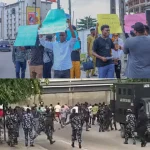
    On September 6, students gathered to march and raise their voices in solidarity against the inconsiderate school fees hike. The UNILAG management responded by calling the police on its students. Let’s get into everything there is to know about these events.

    New school fees

    New students whose course of study requires laboratory or studio use now pay ₦140,250. Others pay ₦100,750, while college of medicine undergraduates had their fees increased to ₦190,250 from an average of ₦20k per year. Why the sudden increase despite the current economic hardship?

    The Student Loans Act

    On August 8, Mr. Andrew Adejo, the Permanent Secretary of the Ministry of Education said that the fees hike isn’t motivated by the Student Loans Act proposed by the new Tinubu government. According to him, the new fees will cover the cost of accommodation and utilities, to ensure the promise of premium quality of education.

    Ministry of Education approval

    Mr. Adejo also revealed that the Ministry of Education gave UNILAG the go-ahead but has stopped giving other universities. But why can’t there be a uniform decision for everyone? 

    The VC said it’s the national price

    Although the government at the top has said they’ve stopped other universities from increasing their school fees, Professor Folasade Ogunsola, the Vice Chancellor of UNILAG, said the fees have been set all around Nigeria and can’t be adjusted for anyone.

    UNILAG staff privilege

    Staff members’ children can still pay their fees in installments at least a month before final exams. They also get accommodation spaces in the hostels reserved for them. The staff members themselves may begin remote work soon to cut down on their transportation expenses. These compromises make it easier for some people, while the majority bear the brunt of hardship.

    The protest

    After the university’s management failed on their promise to the student leaders on August 2 that they’ll reduce the school fees , the National Association of Nigerian Students (NANS) announced their plans to protest against the hike. NANS also sent a warning to the Department of State Services (DSS) not to stop them from protesting as it’s their universal human right.

    But on the morning of September 6, 2023, policemen shot rubber bullets and teargas to scatter the agitated students’ peaceful protest. 

    Students in lock-up

    Some of the protesting students have been arrested. While most are yet to be identified by names, the NANS PRO, Giwa Temitope, alongside another student named Femi Adeyeye are among them. The students’ representative council of Obafemi Awolowo University (OAU) wrote a solidarity letter, calling for the release of their arrested comrades and other students.

    Burning Ram is coming.

  • Students of the University of Lagos (UNILAG) received a rude awakening when, on July 21, the school announced that it had “reviewed obligatory fees” upwards. The mandatory charges are coming in light of what the school said were “prevailing economic realities and the need for the University to be able to meet its obligations to its students, staff, and municipal service providers, among others.”

    The school said it consulted with stakeholders, including students and their guardians, before making this decision. Interestingly, UNILAG describes itself as “the school of first choice and the nation’s pride.” However, with the increment set to happen at the beginning of the 2023/2024 academic session, students may have to rethink whether they’d still stick with UNILAG as their first choice.

    Here’s what fees look like now for new undergraduate students:

    And here’s what fees look like for returning undergraduate students:

    For comparison, previous fees for new undergraduate students were around ₦55,000, while returning students paid ₦15,000. While tuition remains free, the other mandatory expenses have gone up considerably. Understandably, the news has sparked strong reactions online.

    What are the arguments in favour?

    One major issue that has plagued public tertiary institutions is the lack of funding. You can draw a straight line between every strike that has occurred since the beginning of time and challenges relating to poor remuneration for staff and underfunding, leading to a paucity of research and development. 

    ASUU has argued for university autonomy, allowing institutions to raise funds for themselves rather than being overly dependent on government subventions. And although ASUU didn’t sanction this increase, it’s hard to see them argue against it. Some say Nigerian tertiary education is too subsidised and don’t consider the new fees expensive.

    According to Deborah Tolu-Kolawole, who covers Nigerian tertiary education extensively, the hike in fees was inevitable. In a series of tweets, she explained that schools were struggling to stay afloat, with the federal government unwilling to release more funds.

    She notes that for now, some subsidy is still in place, as evidenced by the zero cost of tuition. She warned that there will be more increments once full autonomy is granted to universities. This is where the Student Loan Act will come into play.

    Download the Citizen Election Report: Navigating Nigeria’s Political Journey

    What are the arguments against it?

    In economics, a public good is a commodity or service made available to all members of society. Typically, these services are administered by governments and paid for collectively through taxation.

    A 2018 paper by the UNESCO Chair on Human Rights and Ethics of International Cooperation, Rita Locatelli, argues that education should be a public good in light of “current trends in the privatisation and marketisation of education.” 

    UNESCO recommends 15-20% of public expenditure on education. Nigeria has never met that threshold. 

    One in every five of the world’s out-of-school children is in Nigeria. Among those who manage to brave all odds and make it to university, they will now have to contend with this new hurdle of a fee hike. If other public universities follow UNILAG’s example, this will exclude even more students from tertiary education that they can’t afford.

    So while we recognise that universities need funding and that education is subsidised in Nigeria, we also recognise that it is for good reason. The timing of this hike in light of economic circumstances is tough to justify, at least on moral grounds. 

    As it stands in Nigeria today, the return on investment in education is negative. This is apparent in the fact that many university graduates are unemployed. Hiking fees perpetuate the common Nigerian saying, “School na scam.” If fewer students get access to subsidised education, the outcome for Nigeria could be unpalatable.

    In related news in education, the FG recently increased fees in federal government colleges, aka Unity Schools, by 122%. All of these combined will cause human capital development to slide even further. Nigeria’s prospects of leaving the ghetto might become bleak. 

    For now, UNILAG students are facing the brunt of it. Other universities are watching, and they will join in sooner or later. At some point, the federal government will have to lift its head out of the sand and intervene, or we could be staring at a full-blown state of emergency in Nigeria’s education sector.


  • [countdown date=”Feb 25, 2023 7:00:00″]

    It’s not the best time for students of the University of Lagos (UNILAG). Particularly, students of the College of Medicine (CMUL). Many of them are now in dire straits as it’s likely they’ll be shut out from exercising their voting rights on February 25 due to an order from above.

    On February 9, the Nigerian University Commission (NUC) issued a directive to all Nigerian universities. It mandated them to close up shop and suspend academic activities between February 22 and March 14 due to security concerns relating to the election.

    In a memo signed on February 20, the UNILAG management ordered students to vacate the premises. However, aside from teaching, the university staff will continue their duties for that period.

    How are students reacting to the directive?

    Students of CMUL, aka Medilag, are unhappy with the directive. The key reason for their displeasure is that many have polling units (PU) within the school premises. The college is in Idi-Araba, and there are at least seven PUs within the premises of the Lagos University Teaching Hospital. 

    These include the Staff Quarters, LUTH, Engineering Department LUTH, School Of Nursing LUTH i, School of Nursing, LUTH ii, Student Hostel LUTH i, Student Hostel, LUTH ii and Student Hostel, LUTH iii. 

    Citizen spoke to some of them who chose to stay anonymous. Here’s what they had to say.

    Get More Zikoko Goodness in Your Mail

    Subscribe to our newsletters and never miss any of the action

    Ajoke*

    “I’m a student at CMUL, where hundreds of students registered to vote because the LUTH/CMUL campus has seven polling units. The school is now using the NUC directive to close hostels, disenfranchising several students due to supposed security concerns, even despite students’ willingness to sign indemnity forms.

    “During the 2019 elections, students successfully voted on the campus. Because of that, many students retained their polling units here while others newly registered for hostel polling units. CMUL students register in school because our hostels are typically open year-round, as some departments do not run a semester programme. Even during strikes, student hostels are usually left open. Last year’s strike was a surprising exception.

    I hope publicity about the school management’s decision could sway them. It’s untenable that they’ll disenfranchise so many Nigerians.

    “Our union, the College of Medicine and Pharmaceutical Science Students’ Association (COMPSSA), through the student body, reached out to the Provost and College Secretary, but it was futile. Please keep me anonymous. I don’t have my degree yet.”

    Dare*

    “I’m a registered voter, and my polling unit is within the school premises. I understand that the school wants to protect itself but at what cost? We’ve always been able to vote in school. There are seven polling units in LUTH. It would’ve been nice to know much earlier if there was any inkling of the hostel’s closure during the elections. 

    “Most people would have been able to change their polling units. When we were on strike, people travelled to Mushin to register their Permanent Voter Cards (PVC) there because they assumed they’d be voting in school as usual.

    “Because they’ve done it this way, the gesture seems malicious. Like they intentionally don’t want us to vote en masse, which I hope is not the case. This should have been my first time voting, and I was very excited to perform my civic responsibility.

    “It was crucial for me to have a say in deciding the people to rule the country next. I’ll have to leave that to everyone else.

    “The school should’ve tried to figure out what percentage of people registered to vote in school versus those who registered to vote at home. They should’ve made their decision based on that.


    “I want them to allow those registered to vote in school to stay in the hostel until the election ends. Some people may be able to squat somewhere nearby, but I won’t. I’m going straight home.”

    Jennifer*

    “I have my voter’s card and am not the only student affected. Students were allowed to vote in LUTH PUs during the last election. That’s why newly registered voters in school also chose LUTH as their PU, and we’re all students. Some people registered long ago, and LUTH’s also their PU.

    “Some students submitted letters to the department of student affairs (DSA), but they still told us to vacate the hostels. They’re not saying anything about it.

    “They should’ve informed us about going home when we could still change our PUs. Not now when we can do nothing about it. We want to vote.”

    Rotimi*

    “I’m a registered voter, and my PU is within LUTH. Nothing has been said to us directly, but they’ve pasted memos asking us to vacate the hostels. I live in a private hostel inside the school, so it wouldn’t affect me because I was here all through the strike. But I have another friend whose PU is in school and stays in the school hostel.”

    Ogbonna*

    I’m a registered voter, and my PU is in LUTH. We received a directive via a broadcast (BC) asking us to vacate the hostel by February 22. I was in school for the last election and could vote, so I don’t know why this time’s different. I want the school authority to keep the hostels open so students can vote. 

    “There’s a petition going around right now to alter the directive but to be honest. I don’t think they’d do anything.

    How has UNILAG responded?

    Citizen contacted the UNILAG communications department to hear their side of things. They said:

    “Thank you for contacting the University’s Communication Unit, via email. As regards your inquiry, please note that:

    “All students of the University of Lagos are to vacate the university campus, particularly halls of residence, between 12:00 noon, Wednesday, February 22 and 12:00 noon on Friday, February 24, 2023.

    “This is in line with the federal government’s directive that students of higher institutions across the country should vacate their schools ahead of the forthcoming 2023 general election.

    “The university will re-open its doors to students from Tuesday, March 14, 2023, even as further updates would be provided as the need arises, in the coming days.”

    *Name changed to protect their identity


  • This week’s subject of Navigating Nigeria is Matilda*, a 24-year old author who spoke to Citizen on her failed japa attempts, switching passions and churches, and the harsh reality of getting a job in Nigeria even with a first class degree.

    Growing up, what did you want to be?

    I’ve always felt from a young age I was meant to study medicine. When I was in primary school, my father brought home a calendar that had cartoon characters with different professions. There was a lawyer, engineer, accountant and doctor. I didn’t like the first three characters, only the doctor. And that was it.

    Just like that

    Yeah. Going forward from that point though, I had to really convince myself I wanted to become a doctor till it became an obsession. In secondary school, I was adamant I would study medicine or nothing. Anyway, JAMB happened and you know how that usually is. I had to find another way to study medicine so I chose to go through the direct entry format by doing a diploma at the University of Lagos (UNILAG).

    That’s a familiar story

    Midway through my diploma, I was tempted to change to physiotherapy. It wasn’t too much of a departure from medicine and it had a lower cutoff mark. But I eventually decided to stick with medicine because I was too lazy to go through the stress of changing courses. 

    Lol 

    Diploma was such a trying time for me. I stayed in a bad hostel with six other people who weren’t supposed to be there. My roommates had squatters and it was so congested. This made me uncomfortable because I cherish my privacy. And then there was terrible power supply, it was so bad. 

    To make matters worse, some road workers broke a connecting pipe that delivered water to the hostel. So we had gutter water flowing through the pipes. Everywhere stank. I had to go fetch water from two streets away which was a struggle. All of that contributed to emotional stress for me. In the end, I finished with 13 points out of 16 in my diploma. It was a good result, but not enough to get me into medicine.

    Yikes, sorry

    I was lowkey happy. I was sad small o, but not that sad. At that point, I didn’t want to spend seven years in school anymore. It was just a lot of work I didn’t think I was willing to go through. I’m not about that life.

    When I tried to change my course of study to cell biology, UNILAG  gave me botany instead. And I was like, “Fine, I’ll do it like that.” 

    I figured that without doing a medicine-related course, it would be harder to get a good job in this country. So, my sole focus was finishing with a first class. I worked really hard and did side jobs tutoring people. But even that sef, na wa because people don’t pay tutors that well. I was also a mentor to some students. There was this programme in school that allowed us to teach students for a semester which I participated in. In the end, I finished with a first class.

    Oshey

    I enjoyed botany even though Nigeria doesn’t give a hoot about it. The reality is a good job for a botanist is hard to come by here. There’s an expectation that everything will be smooth once you get a first class. I thought I’d apply to different schools overseas and further my education. But that didn’t happen because UNILAG kept messing with my transcript.

    Ah

    I don’t know how they kept fumbling it. In 2019, I got admitted into the University of Westminster but it didn’t come with a scholarship so I had to leave it. I applied to the University of Alabama but I didn’t get sufficient funding so I had to let that one go too. I applied and got a scholarship to the University of Illinois, but UNILAG didn’t send my transcript on time so I missed that opportunity. 

    In 2020, I applied to four Swedish universities that offered scholarships. I personally went to the transcript office this time to follow things all the way. I explained the urgency of the situation and paid all the fees that were required. Still, they never delivered it. I think they sent it to the wrong institutions or so.

    Sigh. What options did you explore?

    There’s this thing called World Education Services (WES) where you can send your transcript when you want to apply to foreign universities. But to do that, your school has to send the transcript directly to WES. 

    There are backdoor payments to expedite the process, but even that didn’t work out for me. I didn’t have any legal steps I could take because this problem affects almost everyone. I went to the department of student records to get it fixed but it wasn’t, even till today. You could submit an unofficial transcript at the beginning but you’d still need the official one to process your admission.

    Wahala. How did that make you feel?

    I was mentally exhausted and really fixated on leaving the country because I believed everything about my life would be fine when I did. I have this nerve illness I’ve been battling that subjects me to episodes of extreme pain. It makes it very difficult to eat, drink or even touch my face.

    I was hoping I’d be able to treat myself better if I left Nigeria. Instead, I was left frustrated when that didn’t happen. I also come from a deeply religious background, one of the firebrand churches I won’t name. I started having this mentality that this was the work of village people. It seems like a joke now but it was a serious issue then. I was getting panic attacks and anxiety because of the pressure from my church that felt my whole situation was a spiritual problem.

    How are things for you now?

    I had to tell my mum I wanted to switch churches but she was against it. It was when I broke down in tears and told her I really had to leave that she understood the gravity of the situation. 

    The new church made me see things from a new perspective. My pastor made me understand everything happening was just “life, lifing”. From then on, I started having more peace. I got a better job and my mindset changed. I was no longer pressed to japa — it’ll happen when it’s supposed to happen. Before, when I’d see stories of people who have japaed, I’d be a bit sad. But now, I’m just happy for them. And I finally feel like I’m moving forward with my own life too.

    What lessons do you take away from your experience?

    Basically, you shouldn’t just do things for the sole purpose of pleasing your parents. I chose medicine partly due to pressure as a first child and because of the prestige that comes with being a doctor. My parents sacrificed a lot to send me to school so it felt like a great way to repay them. It was also a primary motivation for wanting to travel out, to make money and provide for them. 

    When I really think about it, if I had pursued botany to the fullest I’d have been a researcher or lecturer and I really don’t want to get stuck in a lab for the rest of my life. I’d be bored. 

    That’s a valid fear

    But I have peace now as a writer. I tell stories that matter and do things that give me a sense of achievement. When I see my stories out there, I feel proud that I’ve done this. I’ve always admired writers from afar, like, “How are you able to express all these beautiful things from your head?” I do that now and it makes me feel accomplished.

    *Name changed to protect their identity

  • Hostels around Unilag are God’s worst punishment to man. If you don’t like staying on campus or you are just too bougie for that campus hostel life, and you are looking for hostels around Unilag the things you will see will scar you for life, but at least you’d be prepared for life outside of your parent’s house. 

    1. The one that never has light or network

    As a human being in this time and era, I don’t have to tell you that this is a red flag. If an agent takes you to a hostel around Unilag and the generator looks like it hasn’t been used in years or people are sitting outside in the afternoon, you better run. 

    2. The mixed hostel

    Whatever expectations you have for this hostel, just throw it all away. It will suck, especially if you have to share a kitchen space or laundry space. All the dirty disgusting things you will see, flesh and blood will reveal it to you. Don’t try looking for love here, nobody wants to spend a year avoiding an ex in the same building.

    3. The one built on a quiet street

    This is never a good sign because that means there’s no restaurant, provisions store, hairstylist or anything close by. It will end in premium tears. If you do not see kids on that street the first time you go there, block your agent. 

    4. The overpriced one 

    The worst thing about this type of hostel around Unilag is the audacity. They are usually small and tight and all they offer is stable light which really shouldn’t be a thing and they’ll have the audacity to tell you that it’s over a million Naira. Yes girl, give us nothing. In all this, I blame Unilag and the people that still go ahead to pay. Also, they get robbed a lot because people expect the occupants to be rich. 

    5. The underpriced one

    These are a money-laundering front for sure. They are usually moderately priced with good water, light and they even take care of maintenance by themselves. They don’t stress you out and it’s almost like they handpicked people with good attitudes and manners. I still think you should run sha, nothing can ever be that good. 

    6. The one in Bariga 

    First of all, the point of going to Unilag is living near Unilag and no, Bariga is not near Unilag. Don’t let your friends deceive you, even Pako is not near Unilag. If you are spending up to 500 hundred Naira on transport, that’s a problem. Another thing is the water. There is a whole ass canal in there, so when it rains you will hate yourself but at least the hostels in there are cheaper-ish. 

    7. The face-me-I-slap-you

    The funniest thing about these types of hostels around Unilag is that it’s not even one of the cheapest options around, the maintenance is just really poor. There are so many obvious problems that come with living in a place like this, for instance: Your neighbours will be a proper family unit and they will steal and borrow everything you own. The landlords that own buildings like these are always against growth so no, you can’t repaint that dirty brown wall or bring in that nice furniture because he will end up charging you ten times more than everyone else.  

    8. The partially refurbished family house

    Sometimes, this is one of the better types of hostels around Unilag you’ll find. Because it was built for people that care about each other, it’s always big and spacious but since this is Nigeria, something must disappoint you. Nothing in that hostel will work well, not taps, showers, cupboards, fans, absolutely nothing. Maintenance? Do you mean the same people that repainted and installed bunk beds into their family house and did nothing else, you think they’ll take care of repairs? Nothing like that dear. 

    9. The apartment

    Or at least that’s what your agent will call it. If you are planning to rent a hostel around Unilag just prepare yourself for disappointment and if you find yourself being happy with the place you finally selected, that’s a red flag. It’s only around Unilag that you will rent an “Apartment” and buy both the front door and every other door in the house. If you’ve never lived alone maybe don’t try this option. Do you know how expensive curtains are?

    10. The boarding school structure

    If you have really bad luck and you end up in a hostel like this, here’s what to expect: You will at the very least, pay three hundred thousand Naira to live in the same room with 5 other people only to be given boarding house rules. You can’t let guys in until 3 pm and they must leave before 9.  No drinking, smoking or parties which is fair since you have to respect the fact that you are living with other people. You will have a strict midnight curfew, A house mistress that hates everyone’s guts and they can decide to evict you for making too much noise. You might as well just be living with your parents.  

    If you enjoyed reading this article, you should read this.


    [donation]

  • The University authorities released a statement addressing the rise of Covid-19 cases in UNILAG on Tuesday after this tweet was made.

    Huh ??? Covid outbreak in Unilag  ??? https://t.co/LbH5Xv3nM7

    – Jahmal (@JahmalUsen) July 12. 2021

    The statement reads,

    Read more here.

    School activities were going on as normal, even after several Covid-19 positive students were found in hostels like Kofo, Moremi and Honours Hall. Students have reacted in various ways to this news. Here a few reactions: 

    There’s covid in Unilag

    Moremi

    Kofo

    Honors

    Stay safe guys

    — Komedi Queen (@_tohluh_)  July 12. 2021

    The students who tested positive were asked to move out of the hostels to curb the spread of the virus. 

    The roommate of my classmate tested positive for covid-19 and Unilag sent them home. That’s all, go home and come back after two weeks.

    — Nonso this Nonso that. (@Chukwunonsoffor) July 13. 2021

    But some Unilag students had different thoughts on the matter.

    Lets finish this semester before they send us home abeg. Last semester was bad enough. 

    We are all aware we’re in a pandemic.  Get the vaccine, protect yourselves properly and let’s get this semester done with abeg.

    — Omojo? (@allwell_) July 13. 2021

    Is like Covid19 just came back again afresh 😭😭😭 and Unilag is just having its fair share of it.

    It actually didn’t leave Nigeria 💀.

    I don’t want to go home or have to deal with e-learning and at the same time, I don’t want to get infected 😭.

    — Girlie O! (@saabi_girl) July 13. 2021

    There was also speculation on the silence due to the indemnity form students signed upon admission into the university.

    Others have decided to take a lighter tone on the subject:

    if you like wear 20 nose masks, so far you are staying in unilag 🗿you don already catch am

    — maryam (@maryamamasa) July 13. 2021

    unilag students “we outside we outside” now there’s covid everywhere

    –chupaco (@hardtolu) July 13. 2021

    The vice-chancellor of the University of Lagos, Professor Oluwatoyin. T. Ogundipe had an emergency meeting yesterday at 2 pm to discuss the vacation of halls of residence by students after a Covid outbreak in the university.  

    The outcome of the meeting was an immediate closure of hostels to curb the spread of covid-19 on campus. These messages were sent out to the student body; 

    “To check the spread of Covid-19 on campus, the University Senate has directed that all students vacate the halls of residence latest by 12.00 noon on Thursday 15 July 2021. No access will be granted to any student after 12.00 noon on 15 July. The hostels will be locked indefinitely therefore students are advised to move all their personal effects at once. Lectures for the rest of the semester will be delivered virtually with effect from 26th July 2021. DSA”

    Students can be seen all over campus trying to get home. 

    Because of how impromptu the announcement was, and the tedious stress of moving, the university sent out another message earlier today that read; 

    “ IMPORTANT NOTICE. EXTENSION OF THE DEADLINE TO EVACUATE THE HOSTELS TO 12.00 NOON ON FRIDAY 16 JULY 2021. To ease the burden of transportation the deadline to evacuate the hostels is hereby extended to noon on Friday 16 July 2021. DSA.”

    For preventive measures on how to deal with Covid-19, click here

    CTA: If you’re a UNILAG student affected by this we’d like to hear from you. Reach out to us by sending a dm on social media or Malakai Bassey