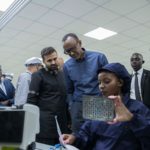
While Nigeria is busy engaging in a lot of shenanigans that are not moving the country forward in any way, Rwanda recently established the first smartphone manufacturing plant in Africa — Mara phones.
This is a feat that has been a longtime coming and I can’t help but applaud it.
What about the Giant of Africa?
This makes me wonder about the sorry state of the Giant of Africa whose Minister of Technology, Dr Ogbonnaya Onu, whose post is hardly remembered (since he doesn’t seem to be doing anything).
It’s gonna be a whole new level with the “Made In Rwanda” smartphones as Rwanda plays the perfect host, creating more employment for its citizens.
Considering that Nigerians seem to be smartphone collectors, I’m pretty sure the appeal of a made in Africa smartphone will make Mara Phones storm the market and oh, the Lion insignia on the phone cover is so cool.
What are your thoughts? Will you feel comfortable buying a made in Africa smartphone?
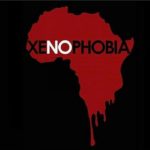
The headlines have been short, scary and painfully familiar, spelling out different variations of the same message: “Xenophobic Attacks In South Africa.”
The story: the alleged shooting of a cab driver in Pretoria erupted into a wave of mob violence against African nationals in South Africa this week. Xenophobia is today’s trending topic of discussion, although the unfurling of the now-too-familiar #SayNoToXenophobia hashtag is the only reminder you need that we’re simply rehashing a very old problem.
In 2008, 60 people were killed and over 50,000 forced from their homes in violence against African nationals, according to Human Rights Watch. In 2015, similar attacks forced many foreign governments to repatriate their citizens from South Africa.
The recent violence is motivated by decades-old rhetoric that blames immigrants, particularly those from other African countries, of ‘stealing’ jobs and bringing crime into local communities. The sentiment was echoed by South African truck drivers who, on Monday, embarked on a wildcat strike protesting against their foreign colleagues. In videos circulating on social media, mobs can be seen shouting “Go Home” in the streets.
A closer look, however, suggests a disturbing connection between socio-economic conditions and the outbreak of these xenophobic attacks. The South African economy has been unstable for four years and counting. It shrank badly in the first quarter of 2019, amidst fears of an impending recession. There are other sources of discontent. The South African government still faces crises of representation and legitimacy, months after ex-president Jacob Zuma was ousted. Unemployment is worryingly high; more than 10 million people are unemployed, or 38.5% of people who could be working.
In the last few years, populist regimes and movements have emerged in almost every corner of the world. From Brexit to the Trump White House, it would seem the nationalist bug has now bitten South Africa. If there’s anything we’ve learned from Trump, it is that populism needs enemies. And when things go wrong, it often looks to offer up ‘minorities’ as the problem. It doesn’t help that immigrant population in South Africa has doubled in the last decade.
Add that to years of systemic oppression, apartheid and unfair land ownership laws and you can see how decades of discontent and anger are directed at an easy target – immigrants. Despite subsequent reports that the Pretoria shooter was not Nigerian, many have been killed, beaten, forcefully removed and had their businesses destroyed. It is an easier solution than the years of economic development, institutional restructuring and education that South Africa’s indigenous population, and Africans in general, should be asking for.
Received sickening and depressing news of continued burning and looting of Nigerian shops and premises in #SouthAfrica by mindless criminals with ineffective police protection. Enough is enough. We will take definitive measures. @NigeriaGov @DigiCommsNG @GovernmentZA@DIRCO_ZA
While the hashtag #WeHaveNoPresident silently indicts Nigeria’s notoriously lethargic President Buhari, Nigerians are outspoken about the attacks. Nigeria’s Foreign Affairs minister, Geoffrey Onyeama condemned the attack in strong language – so did the former minister, Oby Ezekwesili among other commentators and public personalities.
Social media has become the second battleground of sorts. Nigerian rapper, Ycee alluded to old tweets by AKA, which in turn led to a slew of ill-advised comments by the SA rapper that forced Burna Boy out of his social media hiatus with strongly-worded warnings to the former, MI and South Africa. Burna’s tweets have now been deleted.
The misplaced anger of South Africa’s xenophobia has also exposed problems in other African countries, most notably here at home in Nigeria. While the giants fought on social media, a spate of reprisal attacks began in suburbs of Lagos, Ibadan, Uyo and later, Abuja. They gradually descended into outright robbery, particularly in Lagos where two large malls were looted. “What does this have to do with South Africa?” is the burning question. First, nothing. Second, the answer has been staring us in the face for years.
Years of multidimensional poverty are festering like an open wound. The World Poverty Clock reports that Nigeria’s 87 million extremely poor people are the most of any country in the world. Over half the population of young people aged 15 to 35 are without work. The government is facing corruption allegations of its own. Amidst all of this, there is pervading sentiment that some classes & groups have managed to corner the good of the land for themselves. Sounds familiar?
These moments hold up a mirror to us as Africans. Two things have been made clear. As we learned yesterday, any cue to blame or antagonise a group in these times is an invitation to misplace anger and unleash violence. It doesn’t matter if it’s South Africa or Nigeria – oppressed, marginalised people react in the same way, whether there is a xenophobic agenda or not. It’s why many have warned that the looting in Lagos is a precursor to a violent class struggle that could follow the same script as the attacks in South Africa.
What happened in Lagos yesterday is an indication of what’s to come, it has nothing to do with Xenophobia or South Africans but a glimpse of what the middle class should expect from poor Nigerians who are waiting for a reason & an excuse to strike.
A few conspiracy theories have been thrown in the air: Why is this happening while Africa tries to get its act together? Why is this coming barely weeks after all 54 countries agreed to trade freely across the continent? Why did Burna Boy destroy his chance of winning a Grammy? Who has been hacking Babes Wodumo’s social media accounts? Is every Nigerian musician a cultist?
Whatever the angle, our biggest learning is that African countries have a huge job on their hands. Some say it’s a ticking time bomb. It is why it’s important to reiterate now more than ever that no country is the other’s problems.
The present path only threatens to drive us further apart, with the world watching. Reprisal attacks have begun in Zambia. Nigeria has just recalled her High Commissioner to South Africa and joined several African countries in shunning the World Economic Forum event holding in Johannesburg. Free Trade & Internal security were thought to be high on the agenda.
South Africa and Nigeria
What do the two have in common?
CORRUPTION + FAILURE OF LEADERSHIP + YOUTH BULGE + HIGH UNEMPLOYMENT + HIGH CRIMINALITY
In SA we have Xenophobia; in Nigeria, it is the underclass turning against the middle/upper classes
SA President Cyril Ramaphosa has spoken against the attacks. The Police have made over 60 arrests since Tuesday. But some of the silences are too loud. More South African leaders and monarchs need to condemn the violence in clear terms, and call their followers and constituents to order. These are small, necessary strides. Long-term solutions will be required to prevent a re-occurrence.
Africa’s governments need to get the message – the people need economic freedom. We also need to know our history, so that friends are not presented as enemies. For now, there’s little we can do but use our voices to #SayNoToXenophobia.
Did you enjoy this? You should sign up for our weekly pop culture newsletter, Poppin’. You’ll get to know what we’re up to before anyone else + insider gist, reviews, freebies and more. If it sounds like your deal, sign up here.
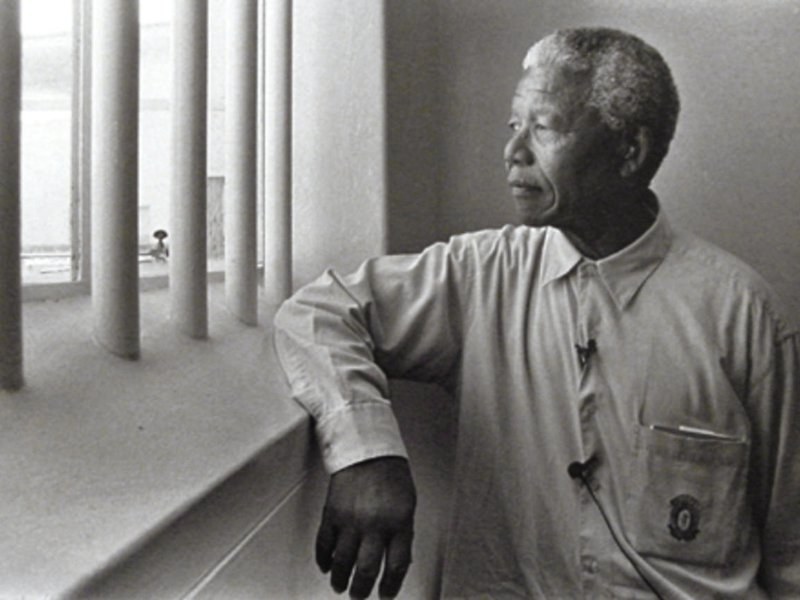
On the 11th of February, 1990 in South Africa, the revolutionary anti-partheid activist, Nelson Mandela, was freed after 27 long years in prison. In 1964, he was tried and sentenced to a life in prison for sabotage.
1. To Robben Island Prison Yard
Mandela, with some other political prisoners, raise their hands in the popular fist salute – a symbol of resistance to apartheid rule.
2. Mandela and Walter Sisulu
Walter Sisulu was a fellow inmate in Robben Island Prison Yard. He later became an important politician and served as the ruling party’s (ANC) Deputy President.
3. Prisoners doing manual labour
Amongst them was Mandela. He spent most of his time on Robben Island working on a quarry, crushing limestone.
4. Learning in prison
Mandela actually bagged a law degree in prison and if that’s not badass, we don’t know what is! He also learned to speak the local Afrikaans language to better communicate with the inmates.
5. A low class prisoner
Mandela was at first a Class D prisoner – the lowest grade ever, so he’d poop in a trash can and eat in the same place. In 1975, he was moved up to a Class A.
6. Behind bars
Even in prison, he was a good troublemaker and that earned him solitary confinement regularly. He got a letter and a visit every 6 months.
7. Long walk to freedom with his wife, Winnie Madikizela Mandela
Even though he’d been pushing for it, Mandela was still very surprised at the sudden announcement of his release. He went on to become the country’s first black president in 1994.
Beyonce’s Irreplaceable is a jam for days, best believe!
It’s more than a jam, it’s the ultimate break-up song for that yeye boyfriend that doesn’t want you to see road.
However, we can’t get over this Cape Town rendition of the song, it’s the most dramatic thing you’ll see this week.
The song was performed by South African band, Woman2Woman, on the Cape Town lifestyle show, Espresso. Watch the video below:
Don’t forget to share your thoughts in the comments section.
Female students at one of South Africa’s leading multinational schools, Pretoria Girls High, have staged a huge protest against its code of conduct which has been described as racist towards its African students.
According to the protesters, students who have contemporary African hair texture are forced to arrange their hair differently and are often asked to straighten their hair to make it look ‘tidy’.
The school which was open to white people only during the Apartheid has also banned students from speaking African languages within the school premises.
We’re still wondering how and why people are so bothered by black girls’ hair in 2016.
What do you think of this hair ban? Share your thoughts in the comments section.
1. Funmilayo Ransome-Kuti: Lioness of Lisabi.
You know her as mother of the great Fela, but she was much more than that. A great advocate for women’s rights, Kuti led more than 10,000 women in a protest against native authorities at the palace of the Alake of Egbaland in 1949, causing him to relinquish his crown for a bit.
2. Yaa Asantewaa: Queen Mother of Ashante Kingdom.
Born in 1840, Yaa Asantewaa became famous for leading the Ashanti rebellion against British colonialism to defend the Golden stool- a symbol of the Asante Kingdom- from Frederick Hodgson, then Governor-General of The Gold Coast.
3. Queen Aminatu: Warrior of Zazzau.
Born around 1533 in Zazzau (now Zaria), Amina was a fearsome warrior with a great army and empire. Her story inspires the fantasy series: Xena, The Warrior Princess.
4. Moremi Ajasoro: Olori of Ile-Ife.
Married to King Oranmiyan, this brave queen risked her life by going undercover to learn the secrets of the tribe terrorizing her people.
5. Ana de Sousa Nzinga Mbande: Ngola of Ndongo
Some say she was a queen, others believe she was a ruthless ‘king’! At the turn of the 17th century, Nzinga fearlessly and cleverly fought for the freedom of her kingdom from the Portuguese, who were colonizing the area now known as Angola.
6. Winnie Madikizela-Mandela
Born 1936, South Africa’s first black professional social welfare worker chose to struggle for equality and justice for all people in South Africa. After her marriage to Nelson Mandela in 1958, she suffered harassment, imprisonment, and periodic banishment for her continuing involvement in the struggle against apartheid.
7. Flora Nwapa: Mother of modern African literature.
Born 1934, Nwapa’s ‘Efuru’ was the first book written by a Nigerian woman. Flora unarguably paved the way for a generation of African women writers. ‘Efuru’ (1966), is based on an old folktale of a woman chosen by the gods.
8. Chioma Ajunwa-Opara, MON.
Chioma was the first West African woman, as well as the first Nigerian, to win an Olympic gold medal in a track and field event when she emerged victorious in the women’s long jump event at the 1996 Olympics in Atlanta.
9. Margaret Ekpo: Political activist.
Born in Cross River in 1914, Ekpo was among the first wave of Nigerian women in politics. She was known for attending political rallies, and unionizing women to fight for their rights.
10. Miriam Makeba: Mama Africa.
Widely known for her incredible voice and music, Makeba was also a political activist. In 1963 she testified against apartheid before the United Nations. As a result the South African government revoked her citizenship and right of return. She stayed in America and married Stokely Carmichael, a Black Panther leader.
This is post is brought to you by MAGGI @ 50:
The big idea for the MAGGI 50th anniversary campaign is: Let’s Celebrate. We intend to do this primarily by sending gift boxes containing specially curated ingredients and gifts to women influencers pan Nigeria & beyond for trusting MAGGI in the past years, and in the future ahead. Click the link below to learn more.
Yas! Drake is currently in South Africa to shoot the music video for his One Dance single!
That didn’t stop him from speaking to South African youths at the Nelson Mandela Centre of Memory.
— Nontobeko Yamantungwa Sibisi (@Nontobek0Sibisi) June 27, 2016
He shared this picture of popular South African dance crew, Material Culture, and it means they may appear in the video.
So many fans came through to take pictures with Drake behind the scenes of the video but we have few question…
Abeg where is Wizkid?
Or are they fighting?
Maybe Wizkid’s part in the music video is being shot secretly.
Maybe he’s just the one taking all the pictures.
Because if he doesn’t appear, the ela will pain many of us sha.
Because the people who don’t believe Wizkid actually sang in One Dance will never be convinced.
This weekend my cousin invited me to her place for drinks. I anticipated nothing more than a night of heavy drinking (punctuated by an increasing number of slurred proclamations starting with the words “in life…”), followed by a morning of deep regret.However, before I could get to my second drink and un-buckle my “drinking jeans”, the loud engine of a work-van parking in the guest-house garage brought my attention to the finest product of South Africa I’d ever laid my eyes on. My jaw dropped (but not my drink…never my drink) as I watched a man so gorgeous that his muddy jeans and rolled up sleeves looked like they’d accompanied him straight out of a 1970’s romance novel titled “[the afrikaans version of] The year Hans, the tractor-mechanic re-awakened my desires” (or something), walk out of the van. His piercing eyes and confusingly arousing uni-brow shot sparks through my body and I immediately decided to seduce this man even if it meant my advances would have to be lubricated by the tears of my ancestors.And in true form I found a way to muddle up the whole thing. In fact, when in the heat of the moment my words act as my enemy. I know this because not too long after I opened my mouth all the young man’s attempts to put his mud-caked hands on my nubile thighs while he recounted tales that illustrated his very heroic non-racism (is that a white mating ritual?) came to a loud halt.So for the black girls out there that are suffering from a particularly relentless bout of Dutch-fever, I present to you the 5 questions I said that ruined my first (and probably last) attempt to seduce an Afrikaner man.
1. “So you’re Afrikaner, right? Do your parents have a farm?”
To this I got a puzzled look that may have illustrated two things: my obvious ignorance and the fellow’s own obvious slow recovery from the concussion he told me got in his high school rugby days. Eventually he laughed “no.”
2. “Your drunk stories are so funny! What’s the weirdest thing you and your matric friends did when you were drunk? Did you guys ever get really drunk off klipdrift and do something crazy like steal a black village’s land?”
3. “You strike me as a family man…so tell me: if you had to choose between saving a black family and saving your favorite dog from a fire, what therapist would you take your dog to, to help it recover from the trauma of its near-death experience?”
4. “How many of your ancestors would vomit if you hooked up with me?”
5. “What’s Afrikaans for “I want to make love to you so passionately that every ancestor I’ve ever had places a 200-year-long curse on our mixed-race offspring?”
After the last statement the space between us grew exponentially throughout the evening so that by the end I was shouting drunken poetry at the wall of his house while he presumably slept off the last of any “jungle-fever” he had ever had.I suppose I’d better shove away any dreams I ever had of spending my life on a big farm and being perpetually mistaken for the maid by “well-meaning” relatives.
Written by Zikoko contributor, Siyanda Writes
Africans naturally love to turn up and dance to really good music. Cool DJs like DJ Xclusive, DJ Spinall, DJ Uhuru among others are known for dropping beats hotter than Monday morning moi moi.
This three year old South African boy has joined the league of extraordinary people on the wheels of steel.
DJ Arch Jr was barely two years old and had been playing with a music mixing app on an iPad when his father observed the perfect timing of the song changes.
His mother recorded videos of him mixing songs, while his father mentored him and helped him count the timing properly.
He won the just concluded South Africa’s Got Talent competition and is currently the youngest DJ in the world.
A viral video of him mixing songs in his diapers broke the internet earlier this year. He is very talented and seems to really enjoy mixing music immensely.
Watch his performance at the finale of South Africa’s Got Talent.
He only plays at events for young children, has his own fan page and is the cutest DJ ever.
Over the past few days, thousands of protesters in South Africa have been speaking out against the government’s decision to raise school fees by 10.5%.
The protesters believe the rise in tuition will make tertitary education unaffordable and will prevent poor black students from accessing and benefitting from education. Demanding instead for institutions to provide free education for all.
https://instagram.com/p/9GqEBtKBrT/
The hashtags #FeesMustFall, #NationalShutDown and #ZumaMustFall have been trending on social media and the important message is being received all over Africa and all around the world.
If your child was born in 2015, by the time they reach 18, university fees for an average 4-year degree could cost R1.2M #FeesMustFall
The protests began on Monday with students barricading a number of South African campuses including the University of Cape Town and University of the Witwatersrand in Johannesburg. Today, over a dozen universities have been involved in the demonstrations.
But what was originally intended as a peaceful protest that demanded answers from the ANC, resulted in policemen releasing teargas, stun grenades and arresting students.
Overall, many South Africans feel this is a mirror event to the Soweto uprising in 1976 when students protesting against apartheid language policies were fired on by police.
The only thing that changed is the quality of our cameras . Our leaders have failed us pic.twitter.com/iZMqAjKeYn
South African President, Jacob Zuma, is reportedly planning to meet with student leaders and university administrators today according to his spokesman, Bongani Majola. We hope that an agreement can be made. In the meantime, our thoughts remain with our South African brothers and sisters.
In 2015, quality education should really be free for all.