• Someone you know has left or is planning to leave. 1,000 Ways To Japa will speak to real people and explore the infinite number of reasons and paths they use to get to Japa


    Akin (32) was sponsored to attend a South African conference, and his life changed because of it. In this story, he shares how networking, resilience, and 80 attempts at shooting his shot got him a fully-funded academic fellowship in the country.

    Where do you currently live, and when did you move out of Nigeria?

    I live in Johannesburg, South Africa. I’ve been in and out of Nigeria for a while, but I officially left in 2024 for postdoctoral research as a postdoctoral research fellow (PDF) at the University of Johannesburg.

    South Africa is a unique choice for most Nigerians. Why South Africa?

    I studied accounting in Nigeria, where I obtained my first, second, and third degrees. I am also a member of the Institute of Chartered Accountants of Nigeria.

    South Africa came into the picture in 2022, when I submitted an application for a conference there but couldn’t attend due to some challenges. I tried again in 2023, and at that time, I got a sponsorship to participate in a conference at Daniels College of Business.

    After attending that conference, I realised there were opportunities for PhD graduates to take on postdoctoral fellowships. If I hadn’t attended, I probably wouldn’t have known. That’s the power of conferences—you meet people, network, and get access to new doors. After that conference, I started applying, and by October 2024, I officially began my fellowship at UJ.

    Get More Zikoko Goodness in Your Mail

    Subscribe to our newsletters and never miss any of the action

    Congratulations! How is the fellowship going?

    It’s very research-focused, but it’s going well.

    How exactly did you apply for the fellowship?

    I started applying when I got back to Nigeria. I sent out over 80 emails to professors and lecturers in my field. I faced many rejections, but I also got good feedback. Eventually, I secured offers from both the University of Johannesburg and the University of South Africa (UNISA). Since UJ gave me the first offer, I chose them and resumed in October 2024.

    And is it a fully funded fellowship?

    Yes, all expenses paid.

    So, how can other Nigerians get similar opportunities?

    You only need three things: determination, exposure, and networking. My own journey started with attending that conference. When I got back home, I began sending emails to professors. I attached my CV, introduced myself, and expressed interest. Consistency is key. You’ll face rejections, but if you keep pushing, you’ll get positive responses.

    Also, start early. Postdoctoral fellowships usually require you to apply within the first five years of completing your PhD. So if you wait too long, your chances get slimmer. My advice to younger colleagues finishing their PhDs is: apply immediately, even before you officially finish. Also, publish as much as you can in international journals, not just local ones. In South Africa, for instance, there’s a list of accredited journals that count towards your credibility. Publishing there increases your chances.

    You mentioned sending emails to 80 lecturers. How do you even find these lecturers to pitch to?

    It’s simple. Go to university websites and check departments in your field. You’ll usually find lecturers’ profiles and email addresses. That’s how I reached out. My first offer came through networking at the conference, and the second came through cold emails. Both strategies work.

    ALSO READ: She Got A Fully-Funded Scholarship After Sending 360 Cold Emails. Here’s How She Did It

    Interesting. So, is this type of fellowship open to people without a PhD? Maybe master’s graduates or undergraduates?

    For a postdoctoral fellowship, you must already have your PhD; that’s the minimum requirement. But South Africa also offers fully funded scholarships for MSc and PhD. In fact, many Nigerians are here doing their PhDs with funding. If you’re in the sciences or technical fields, your chances are even higher, especially if you can provide a good proposal and a host supervisor.

    Do South African universities have a fixed application window, like the UK or US?

    Yes. Applications usually open towards the end of the year, around October to December. By January or February, admissions are released. It’s better to start early. Do your homework by finding potential supervisors, reaching out, and getting your documents ready. The documents should include your passport (valid for at least three years), evaluation of your certificates, certified copies of credentials, medical documents, and a visa.

    Great. You’ve shared a lot of tips already, but do you have any final advice for Nigerians who want to pursue these opportunities?

    Yes. First, don’t get discouraged by rejections. It’s part of the process. Keep sending emails, keep networking, keep publishing, and keep pushing. Money can also be a challenge, but don’t let that stop you. Sometimes help shows up when you least expect it. For instance, someone sponsored my conference trip, which eventually led me to this fellowship.

    Also, even while still in Nigeria, keep yourself active by publishing, collaborating, and building your CV. Opportunities sometimes come at the most random times, and if you’re not prepared, you’ll miss them. And finally, fellowships are life-changing. Beyond funding, they expose you to better research facilities, training, and networks. What takes me two months to achieve in Nigeria, I can finish here in two weeks. Unfortunately, our country doesn’t provide the same enabling environment, and that’s why many scholars leave.

    But I’ll say this, Nigerians have so much potential. Being here showed me I could achieve far more than I ever imagined. 

    On a scale of one to ten, how would you rate your experience in South Africa so far?

    Okay, I’d say around seven or eight. Life is great here.


     Want to share your japa story? Please reach out to me here.

    [ad]

  • South African-born Tyla Laura Seethal became the first-ever winner of the Best African Music Performance Grammys Award on February 4th, 2024. Since her hit song Water took the international stage by storm in 2023, she’s been one of the most promising global stars rising from Africa. 

    We made a timeline of her journey from Jo’burg to the Grammys.

    2019 — Tyla, Garth von Glehn and Getting Late

    Tyla had just graduated from high school and started posting singing and dancing covers on social media when a photographer named Garth von Glehn discovered one of her Instagram videos. She mistook him for an online scammer until he met her parents to discuss managing her in 2019. 

    Throughout that year, she and her bestie and stylist, Thato Nzimande, spent weekends writing and recording songs at von Glehn’s studio until she met South African DJ and music producer, Kooldrink, and recorded her eventual debut single, Getting Late. This was when she picked up her Popiano sound, a fusion of amapiano and afrobeats with R&B and pop music.

    2021 — Epic Records deal and Blood & Water series

    After a quiet COVID year, writing and recording, Tyla signed to Epic Records — home to Mariah Carey, Travis Scott, DJ Khaled, the late Michael Jackson, among other icons. This happened in a joint venture with the Jo’burg/New York-based music company, Fax Records, in 2021. Soon after, she dropped her next song, Overdue, a collaboration between Tyla and DJ Lag, a South African DJ, producer and pioneer of the gqom genre (a style of electronic dance music). The song was featured in the season two trailer of Netflix’s South African hit series, Blood and Water

    2022 — Nomination at SAMA

    Getting Late music video was nominated for “Best Video of the Year” at the 28th edition of the South African Music Awards (SAMA). At this point, it had amassed several million views on YouTube. She didn’t win, but the nod was a big deal for such a new artist on the scene. In November, Tyla released To Last and made a remix with DJ Maphorisa and Young Stunna.

    Source: Ubetoo

    2023 — Tour with Chris Brown and breakout hit

    In January, Tyla released the dancefloor jam, Been Thinking. At Tricky Stewart’s Grammy party later that month, the head of Epic Records, Sylvia Rhone, asked Tyla if she’d like to open Chris Brown’s “Under the Influence” Europe and UK tour. She joined the tour on February 14th, solidifying her audience base, especially in the U.S.

    Source: Tenor

    For the first episode of our Valentine Special, we brought back three couples – one now with kids, one now married and the last, still best friends – to share how their relationships have evolved in the last five years. Watch below:


    During the tour, she attended Dolce & Gabbana’s Fall/Winter 2023 runway show, where she was seen with Kim Kardashian and performed at the after-party. She also featured Ayra Starr on her next promotional single, Girl Next Door, in May, and dropped what would be a life-changing global hit — Water — in August, the same month during which her iconic choreo went viral. Water debuted at number 67 on the US Billboard Hot 100, the only South African song to do this in 56 years, since Hugh Maskela’s Grazing in the Grass (1968).

    Source: Jacaranda FM

    In October, Tyla made her U.S. TV debut on The Tonight Show with Jimmy Fallon, performing Water. The same month, Water was considered for nomination for the Best African Music Performance at the 2024 Grammys Awards. In December, Tyla released her self-titled introductory EP. The project opened with Water and ended with its remix, but has now been extended to a full album coming on March 22, 2024.

    2024 — First platinum, Grammy nomination and win

    In January, Water was certified platinum by the Recording Industry Association of America. On February 5, Tyla won the first Grammy Award for Best African Music Performance with Water, among nominees like Nigeria’s Davido, Burna Boy, Asake and Olamide.

    Source: Yahoo

    The year is still young; who knows what more it’ll bring the aspiring global African popstar.

    Check Out the Complete List of Grammy Awards 2024 Winners

  • In the Nigerian music industry, most copyright infringement cases go unpunished. But on November 22, 2023, the Nigerian proverb, “Everyone is a culprit. But the one caught on the day is a thief,” latched onto former NATIVE Records artist, Smada. 

    SMADA EH! vs Hamba Wena

    In April 2023, Smada posted a video in which he was hanging with Poco Lee at Obi’s House. In October, the two made another video that went viral. In it, Poco and Smada sang along to a short but infectious “Smada eh, Smada ah” snippet.

    Soon, the X timeline was filled with requests for them to release the song. But many South African and Nigerian listeners were furious at the snippet and remarked that it was a copy of Deep London’s Hamba Wena. Unconcerned, Smada released SMADA EH! featuring Poco Lee and producer-DJs, Smeez and Dean, on October 27th. Smada performed the still trending song in public for the first time on November 4, 2023, and on November 7, he kicked off a promo challenge that helped it gain even more traction. 

    The copyright infringement and imitation comments from South African and Nigerian music listeners too, while other Nigerians maintained that Amapiano “belongs to us now”. Even Nigerian producer, Killer Vybez, tweeted that Nigeria doesn’t recognise copyright.

    On November 23, Deep London quoted one of Smada’s promo tweets with “Can you please at least respect South Africans?” In a subsequent quote, he promised to take legal steps against Smada. The following day, he posted a statement that included a suit against Smada for copyright infringement. On November 29, Deep London posted that SMADA EH! had been removed from all digital music platforms. As of December 4, Smada still performs the song.

    To understand how copyright infringement works in the music industry, we spoke with Nigerian entertainment, intellectual property and data protection lawyer, Lola Oyedele. She explained the infringement in Smada’s case and what the situation means for the African music scene.

    Good vs bad interpolation

    Lola: Interpolation is when a song is re-recorded, note by note, copying the basic composition. Artists do this when they don’t have enough money to pay the owner to sample the original song. However, it doesn’t mean you shouldn’t pay to interpolate it. It’s just a cheaper alternative. You still have to get a mechanical license, and you have to give credit. 

    Sampling is taking an original composition and using it as is in an entirely new song.

    Smada interpolated both the beat and melody of Hamba Wena in his song, SMADA EH!. Anyone who doesn’t know who Smada is will hear “Smada ah, Smada eh” and assume Deep London and Boohle made a remix of Hamba Wena.

    But none of the money earned off SMADA EH! goes to the South Africans who created the original composition.

    Copyright infringement 

    Lola: What Smada did on his song is copyright infringement because he copied someone’s work without permission. The moment you use and commercialise someone’s creation, it’s an infringement. The only exception in the Nigerian Copyright Act 2023 is in cases of fair use — writing your thesis or news articles with footnotes, you don’t need express permission to do so.

    If Smada didn’t get express permission to use the musical composition, there’s no reason why the matter should be taken lightly. That’s somebody’s intellectual property, so he needs to pay. 

    How Smada could’ve avoided legal drama

    Lola: When you plan to use someone else’s work in your music, you should write to them first. They may charge a fee or ask for credit as the original owner of the song. Some also demand a percentage of the music sales.

    When it gets legal

    Lola: Most unestablished artists use copyrighted work without authorisation because they don’t expect that their songs would exceed five or ten cities, so the original creator may never hear about the used composition.

    As a lawyer working with an established artist whose music has been used without permission, I’d write to the unestablished artist saying, “I know your probably didn’t think the song would have a huge traction or reach, but here we are now. What do you want to do about it?” If my legal team decides not to take “sorry”, the next thing to do is pull down the song. But the drama doesn’t end there. My legal team would state which part of our client’s copyright suffered infringement. Smada is earning from the stolen music. “Smada, eh, Smada, ah” is all over on the internet, and he’s getting paid; it doesn’t matter if it’s just a naira or two. 

    I’m not sure how it’ll go in Smada’s case, but ideally, he should pay the original creators a percentage of every dime he’s earned from the song. As the infringed artist’s lawyer, I wouldn’t take a one-time fee. People are even using the catchphrase as a joke.

    The song will be on the internet forever. 

    If negotiations don’t work, the last resort is to go to court. Court proceedings would happen in the defendant’s jurisdiction or where the infringement occurred. So, in Lagos, Nigeria, where Smada made his record. This case is a civil suit because it’s a matter of intellectual property (IP).  The consideration and ruling rests finally on the judge, and the new Nigerian copyright law (2022) is stricter than ever. If Smada’s team can prove they didn’t infringe, no problem. But a case like this can drag, depending on the infringed artist’s label or whichever company might own the original musical composition. The company will institute the action against Smada.

    What to do when you’re about to sample or interpolate a song you like

    Lola: Don’t incorporate what isn’t yours into your work. It’s alright for inspiration, but learn to get credit. Reach out to the artist, no matter how established they are. There are many internet-savvy entertainment lawyers like Foza Fawehinmi you can also approach.

    I work with Teni. Some artists from different places have reached out to use her song, and we gave them out Pro Bono.

    What this means for the African creative industry moving forward

    Lola: Some artists may find it harder to clear songs, and it may mean tighter copyright laws depending on the location.

  • American rapper, Swae Lee’s tweet went viral on July 11, 2023. But the Nigeria flag in his tweet didn’t help. South African thinks he gave credit to Nigeria.

    Apparently, it’s the sound Swae Lee’s been enjoying since his arrival in Nigeria almost a week ago.

    Enraged South Africans virtually pounced on him and Nigerians for trying to rewrite history and not giving credit to the originators of the sound. It’s understandable, since they’re not wrong with their claims; Nigerians have been talking about the South African sound with ownership because several Nigerian artists have made popular hits with it.

    Swae Lee tried to clear the air about the context of his tweet but no one cared.

    No culture grows if you gatekeep it. But the failure to give due credit to its roots is a disservice to it. Which is why Zikoko has come to do what’s right with a peace offerings to reconcile us with our dear Mzansi family.

    First of all, stop all the lies

    Amapiano didn’t start in 2021, nor did it start this year. These are bold claims; we shouldn’t engage cap like these

    Credit should be given to South African acts like JazziDisciples, Mdu TRP, Kabza De Small, etc.

    There is evidence that amapiano didn’t start in Nigeria and it has been around the world before it got popular here.

    Dissolve the “Afropiano” title

    What does afropiano even mean other than a shameless way of appropriating the amapiano culture? Let afrobeats be Nigerian and keep amapiano South African. Both can lovingly coexist.

    Or South Africa can have Asake

    His two album’s sounds are dominantly amapiano. He even titled a recent single of the same name. Maybe it’s a cry for naturalisation. Who knows?

    In fact, they can have afrobeats too

    If all afrobeats credits are given to South Africa for a year, I’m sure Nigerians won’t be annoyed . Music crosses borders, right? After all, we’re all one; African brothers and sisters.

    QUIZ: Which Music Genre Are You?

    More collaborations with SA

    The biggest Nigerian artist right now literally has a song called Amapiano and credit wasn’t given. That’s appropriation right there. This is about the Nigerian music industry in general, and credit can be given in the form of working with SA producers, collaborating with SA artists, or even shooting videos even in the country. Need I say more?

    Focus on Nigerian sounds

    Before Nigerian artists started facing the same direction, they explored a variety of sounds. The craze for amapiano-hits is shifting focus from motherland sounds.

    Listen to only Mzansi’s amapiano

    We can still enjoy the music even without making it ourselves.

    QUIZ: This Quiz Knows Which Nigerian Amapiano Song You Think Is the Greatest

  • A hall of fame solidifies the iconic work a person puts into their craft.

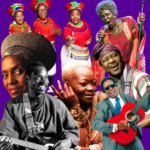
    We should have an African music hall of fame, a museum to highlight the impact of its music on society and honour the significant contributors to the industry. But since we don’t have one yet, we can only imagine it would feature these greats.

    Miriam Makeba

    Mama Africa wrote, sang and performed music, acted in movies like “Come Back Africa” and campaigned against the apartheid — even got exiled from South Africa as punishment. While on exile in the U.S, she performed at the birthday party of US President John F. Kennedy at Madison Square Garden in 1962. Due to her exile from South Africa, she moved around a lot, eventually holding nine passports and honorary citizenships from ten countries — her situation is the grace japa warriors pray for. Her discography boasts nine albums, including the Grammy-Award winning “An Evening With Belafonte/Makeba”.

    E.T. Mensah

    The Ghanaian “King of Highlife”, E.T Mensah championed Highlife with his Tempos Band throughout the 1950s. In 1940, he joined the Tempos Band originally created by the European soldiers stationed in Accra. Soon, Mensah became the leader of the band which disbanded and was reshaped in 1946 to consist of only African musicians. Mensah’s popularity grew worldwide when he performed with Louis Armstrong in 1957.

    Angelique Kidjo

    The Beninese singer-songwriter, actress and activist was born into a family of artists. Her father was a musician; mother, a theatre director and choreographer. She first gained success as a teenager with her version of Miriam Makeba’s “Les Trois Z”. She performed as a backup singer for local groups and as a lead vocalist for Pili Pili, an Euro-African jazz and rock band in 1985. In 1991, she signed to Island Records and made four albums. Since then, she’s gone on to record 11 more, with five Grammy Awards to her name.

    Fela Anikulapo-Kuti

    Abami Eda, as Fela’s also called, was a Nigerian musician, bandleader, composer, instrumentalist and activist. His music is robust, endures in relevance, and his lyricism is unapologetic in delivery. He sang in Pidgin English, Yoruba and didn’t cater to the Western audience. As his music grew popular, the ruling class were not having it because of his political messages, and raids were launched on his Kalakuta Republic — his iconic home. Under military rule, Fela’s music grew too political for labels to publish and his commentary brought him at loggerheads with the soldiers. He was in jail for 20 months under Muhammadu Buhari’s first government. After his release, he continued to make and perform music until his death in 1997.

    Brenda Fassie

    She was the IT babe of her era and went by nicknames like MaBrr, Queen of African Pop, The Black Madonna, Madonna of the Township — titles that capture her brilliant musicianship and closeness to the grassroot. Due to the consistent anti-apartheid lyrics in her music, she enjoyed massive popularity. Among her multi-platinum selling albums is “Memeza”, South Africa’s best-selling album of 1998. Brenda’s impact earned her the 17th spot among the top 100 Great South African according to public vote, and the 2005 Lifetime Achievement Award at South African Music Awards.

    King Sunny Ade

    KSA performs juju music crafted out of ancient oriki — poetic lyrics to praise-singing people in high places. He ushered the steel pedal guitar into the Nigerian pop music scene and is the first juju musician to accompany the music with tenor guitar, clarinet, synthesizers and vibraphone in an effort to imitate the traditional juju instruments that were hard to carry on the road. His 1983 album, “Synchro System”, earned him a Grammy nomination — the first for a Nigerian artist. In 1998, he bagged another nomination for his album, “Odu”. Although he’s never won a Grammy, he’s regarded as one of the world’s greatest band leaders. KSA’s elite musicianship shows in his guitar prowess and impeccable dance moves when he comes alive on stage. 

    Oumou Sangaré

    She’s considered the queen of Wassoulou, a region in Mali that heavily inspired her music, which advocates for women’s low status in the society. Oumou has recorded ten albums and received awards like Commander of the Order of Arts and Letters of France (1998), Ambassador of Food and Agriculture Organisation (2003), Artist Award at WOMEX 2017, all for her music and women’s rights advocacy.

    Hugh Maskela

    Dubbed the Father of South African jazz, Hugh Maskela was highly recognised for his beautiful compositions that addressed South African apartheid. While touring Africa in the 1970s, he worked as a teacher for a year in Guinea, played with Fela Kuti’s band and recorded five albums. He has over 45 albums to his name today.

    Umm Kulthum

    Umm Kulthum’s career spanned over four decades, from the 20s to the 70s, and her emotive performances captivated audiences across Africa and beyond. Her vocal range, mastery of maqam (Arabic musical modes) and improvisation made her an unparalleled artist. Her songs explored themes of love, patriotism and social justice, resonating deeply with the Egyptian masses and elevating her to a symbol of cultural identity and national pride. Umm Kulthum passed away in 1975, but her legacy as the “Star of the East” lives on.

    Sir Victor Uwaifo

    A multidisciplinary artist born in Benin, Nigeria, Victor Uwaifo started playing music in secondary school. He played at St. Gregory’s College, in Lagos, and with Victor Olaiya’s All Stars band before moving to E.C Arinze’s highlife group. At 24, he released his popular track, “Joromi”, in 1965 — the same year he founded his Melody Maestros band. The song won him the first gold record certification in Nigeria and Africa, courtesy of Philips, an old British record label. Throughout his career, he experimented and developed sounds like Akwete, Shadow and Ekassa.

    Ali Farka Toure

    Regarded as one of Africa’s most important musicians from Africa, Ali Toure is the creator of desert blues — a fusion of traditional Malian music and African-American blues. Many of his songs have featured in films and documentaries like the geo-quiz segment of The World PRI-BBC, the short film titled “L’Assedio”, 2018’s “Black Panther”, Nintendo’s Animal Crossing games and more. He passed away in 2006, but till today, he’s on the list of 100 greatest guitarists of all time, as seen on Rolling Stone and Spin Magazine.

    Mahotella Queens

    Talent scout and music producer, Rupert Bopape, formed Mahotella Queens in Johannesburg in 1964. Originally a band of five South African women, the supergroup, famous for their unique harmonies, guitar-led mbaqnaga music and fast-paced dance, now has three — Hilda Tloubatla, Nobesuthu Mbadu and Amanda Nkosi. Since the group’s inception, they’ve made hundreds of recordings, mostly for the international audience. Their music has been recognised and sampled by new generation artists like Cassper Nyovest.

    Dorothy Masuka

    https://youtu.be/9owfn3ljW-g

    Dorothy Masuka was a renowned Zimbabwean musician known for her powerful voice and versatility in blending jazz, traditional African rhythm and afro-pop. Her music career began in the 1950s when she moved to South Africa and established herself as a prominent jazz singer. Her 1993 hit song “Hamba Nontsokolo” addressed migrant workers’ struggles and catapulted her to fame. Masuka fearlessly tackled political and social issues through her music, collaborating with notable artists like Miriam Makeba.

    Mounira Mitchala 

    She’s a Chadian musician known for her soulful voice and captivating performances. She blends traditional Chadian melodies with contemporary African and global influences, creating a unique and eclectic sound. Her lyrics are a blend of local languages — Arabic, Sara and French — showcasing her commitment to promoting the language diversity of her country. Mounira has released several critically acclaimed albums, including “Talou Lena” (2010) and “Tchad” (2014). Her music addresses social issues and promotes unity and resilience, elevating Chadian music.

    Khaled

    Algerian singer, songwriter and multi-instrumentalist, Khaled, has been active in the industry since he was 14. His 1986 album, “Kutche”, shot him to the limelight and introduced rai music — an Algerian genre characterised by its folk music, Western influences and elements of pop, reggae, and funk — to a broader audience. Khaled’s bold voice and charismatic stage attracted audiences across continents to rai. His music has influenced artists like Rachid Taha, Acid Arab and Soolking.

    Take the survey here.

  • The Nigerian experience is physical, emotional, and sometimes international. No one knows it better than our features on #TheAbroadLife, a series where we detail and explore Nigerian experiences while living abroad.


    This week’s subject on Abroad Life is a recent graduate who has lived in Johannesburg since he was five years old. Over the years, he’s missed out on big opportunities because he’s not a native South African. He shares his South African xenophobia experience with me. 

    When did you decide to move abroad?

    Well, I can’t say I decided. In 2003, I migrated to South Africa with my family at the young age of five. So I’ve spent almost my whole life here. 

    Do you have any memories of life in Nigeria?

    I can vaguely remember growing up in Anambra. Life wasn’t great when it came to finances. The ground in our compound was red earth, and there was hardly any power. I also remember being constantly hungry. These memories tally with my parents’ reasons for leaving Nigeria — to secure a better life and be financially prosperous.

    What was the relocation process like?

    My dad had been in South Africa for ten years. He became a citizen through naturalisation, though he kept coming to Nigeria often to see his family in Nigeria. After the tenth year, he processed the necessary immigration papers for myself and my mum to move here as well. I got in through my dad’s citizenship, and I’ve gained mine through naturalisation too, as I’ve been here for more than ten years. I have two passports now. 

    Did you experience any culture shock?

    In South Africa, there are so many cultures because people come in here from all over the world. That’s where South Africa gained the nickname “Rainbow Nation” from. I’ve visited Nigeria a couple of times since I left, and the difference in terms of respect is clear. You always have to attach “Ma” and “Sir” to everything, but not here in South Africa. No one cares about that. 

    Are there advantages to living in South Africa?

    The quality of life is great here. You can still get the basics even if you’re struggling in South Africa, unlike Nigeria where even good roads are hard to find. It’s only recently we started having power outages, mostly because of the increased cost of power generation due to the COVID-19 pandemic.

    Growing up here, I’ve assimilated well into society. I may not have been able to say this if I came here at a more mature age. And because of my citizenship, I have access to bursaries, scholarships, etc. 

    What would life have been like otherwise?

    The cost of living is expensive. The school fees for public universities here is equivalent to what the best private universities in Nigeria charge. Most Nigerians need scholarships and two jobs to afford higher education in South Africa. 

    It’s also harder to make friends when you don’t have the typical South African accent, which I’ve developed.   

    Have you experienced any challenges?

    I still experience a bit of xenophobia. I’ve lost opportunities because I’m not a native South African. Employers prioritise native South Africans over foreigners, especially blacks.  

    Can you give more context into your experience with xenophobia?

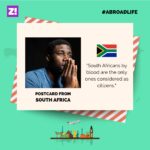
    It has to be one of the worst things about South Africa. They want to reserve all the good opportunities for the native South Africans. South Africans by blood are the only ones truly considered citizens. 

    For example, Nigerians and Zimbabweans are targeted a lot. When they talk about foreigners here, they usually mean us. Most Nigerians here are self-employed and their businesses are doing well, and a lot of South Africans don’t like it. They try to hinder the growth of those businesses, either by looting the stores, protesting or claiming rights. A few years ago, South Africans burnt down many shops owned by Nigerians in the business district of Johannesburg. I know people in Nigeria retaliated by burning down Shoprite and all.

    How has xenophobia affected you personally? 

    I’ve lost scholarships that would’ve advanced my professional football career, even though I had excellent grades when I graduated from university. I also didn’t scale an interview for an entry-level government job opportunity, even though I had all the qualifications. And everyone here knows that government jobs pay some good money.  

    Tell me about the interview you failed 

    I can’t really mention the name of the government sector, but it’s a huge sector in the country. They seemed highly impressed with my skills and qualifications, so I was asked where I’m from because of my surname. I said I grew up in South Africa, and my parents are Nigerian. After that question, the interview panel proceeded to end the interview. 

    I just knew that my parents being Nigerian was what formed their decision not to take me. 

    Would you ever come back to Nigeria?

    I’m not sure I can ever come back to Nigeria. The amount of insecurity and inflation there is too much. There are better chances of a better life here in South Africa than Nigeria. Besides, I’m more South African than Nigerian in my attitude, culture and everything I do. The country is in my veins, and thus, I can never go back.

  • Navigating life as a woman in the world today is interesting. From Nigeria to Timbuktu, it’ll amaze you how similar all our experiences are. Every Wednesday, women the world over will share their experiences on everything from sex to politics right here. This is Zikoko’s What She Said.

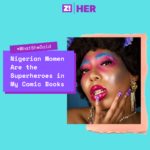
    This week’s #ZikokoWhatSheSaid subject is Nanya Alily, a 25-year-old Nigerian woman. She talks about working with her family to tell African stories through comic books, becoming more conscious of being Nigerian after moving to South Africa and how it has influenced her art and music. 

    You have so many things going for you at 25. What’s that like?

    I see myself as a multimedia creative. That’s the easiest English term to explain how I’m a music artist, comic book illustrator and social entrepreneur all at the same time. And those are just the three highlights of my life amongst the million other things I do like content creation, commercial modelling and poetry. 

    How did drawing comic books start?

    My family has a passion for drawing, so when I was very young, my parents put that into Vanimax Comix, where we illustrate stories about powerful African characters. My dad, brother, sister and I draw. So everyone except my mum — the mumager overseeing everything.

    So, a family business?

    Yeah, I became a part of it at 16. But my dad had been working on comics before I was born. Macmillan actually published his first comic, Mark of the Cobra, in 1981. My mum was always aware of his talent. So when she saw her kids had the same interest, she nudged my dad to put the company together in 2010.

    Wow

    Yeah. And every character tells a story that reflects who we are as individuals. We have Jack Ebony, a Nigerian super spy (created and illustrated by my Father); Super South Africa, Africa’s finest hero (created and illustrated by my brother); Moonlight (created and illustrated by my sister). 

    That sounds so cool. What’s your story?

    The Amina Angels. They’re four Nigerian female superheroes from different tribes; Ifeoma Anyawu who’s Igbo, Nsse Henshaw from Calabar, Yewande Ajayi who’s Yoruba and Halima Danjuma who’s Hausa. I know there are a lot more tribes, but I was interested in bringing these four together for a start.

    What influenced the creation of these characters?

    My background. Growing up, it didn’t seem cool to be African. I couldn’t relate to some of the characters I watched in cartoons because none of them looked like me. And when I drew, my own characters were always people who didn’t look like me. The consciousness didn’t happen until I was 16.

    What changed?

    We moved to South Africa, and my dad started to share stories about his life with my siblings and me; our Igbo heritage, experiencing the civil war as a young boy — essentially, what it meant to be Nigerian. And I felt disconnected from it because the media I consumed never showed it. Becoming aware of this through my dad made me want to tell those stories. 

    Your dad opening up about his life was really sweet

    It was. Those conversations made me think about the Amina Angels, which I started illustrating at 15. It changed the way I drew features, like the characters’ hair. And the questions I got in high school also piqued my interest in culture. A lot of my classmates asked about my Nigerian language and background. I had few answers, but they could tell me more about what it meant to be Zulu or Xhosa. Thankfully, my Dad shared his stories.

    Since you didn’t entirely understand the culture, how did you tell your stories?

    My family travelled a lot because my dad did. I was born in Lagos. We moved to Ghana and back to Lagos before we settled in Owerri, where both my parents are originally from. At some point, we moved to Benin before finally relocating to South Africa when I was 13. 

    All before 13? That’s pretty cool

    Yeah. Although I spent most of my pre-teen years in Nigeria, travelling made it difficult to learn my culture and be rooted in it. But I don’t regret the experience. I got to see the diversity in Nigeria and Africa, and that’s what inspires my stories. 

    So how did you progress into music?

    That’s the thing. Everything kind of happened simultaneously. I’d been singing since I was six and started rapping in Grade 10. In Nigeria, I’d follow my friends from class to a community music centre, and we’d write and record songs. Then, I got into quality music production when I joined my local church’s choir. That was the trajectory to becoming an independent artist.

    You don’t make music with your family?

    Not exactly. It’s the one thing I do alone, but my family still has some influence. My dad is my biggest fan and invests in my music. 

    When did you release your first song?

    My official releases were in 2018 and 2019. Before then, I only uploaded my songs on Soundcloud. I felt ready to put some money behind marketing Flex (2018) and I Sabi Who I Be (2019) because I wanted people other than my family to enjoy my music. I also wanted to move on from the amateurish phase of being a musician. Now, I’ve just finished recording my first EP, Isimbu, which means “the first one” in Igbo. 

    What’s it like being a Nigerian artist in South Africa?

    I think my music is well received in South Africa because it’s different from what they’re used to. My sound isn’t tagged to any particular group of people. Nobody fixates on it being Nigerian music even with the mix of pidgin or Igbo. It’s just good music.

    So you’re an illustrator and musician, and a social entrepreneur, at 25? What’s going to happen at 50, please?

    LOL. I have no idea. But I started the initiative (The Queen’s Goals) for girls when I was 20. It started out as talking to girls at a local high school in Johannesburg. I didn’t want it to be a one-off thing, so I got my sister, friends and a few women from the church involved, and we’ve kept up with it since 2017. 

    If you had to pick one version of your life to stick to, what would you choose?

    I don’t think I can choose. Discovering new facets of my talent is what makes my life interesting. It feels like there’s no cap. I wake up one day, inspired to put a vision together and I do it. 

    Well, since you can’t pick one, what has been the highlight for you?

    In a creative family, it’s harder to find your voice, so finding my own voice and identity is something I’ve loved, and translating all of that into art and music has been amazing.

    How does it feel to share that with your family practically all the time? 

    We have our collective love for drawing, writing and telling stories. But everyone has their own baby they personally nurture. For me, that’s music. My sister wants to be a model, my brother loves animation and my dad is focused on writing and publishing. My mum is the “let’s go get the bag” woman; she’s a professional motivator and truly inspires us all. 

    LOL. She knows what’s up 

    LOL. And I guess what we have is a blessing. It works well for the business and our personal lives. Everything I get to do is a reflection of my background as a Nigerian Igbo woman. I want other women to see themselves represented in my work.

    If you’d like to be my next subject on #WhatSheSaid, click here to tell me why

  • The Nigerian experience is physical, emotional, and sometimes international. No one knows it better than our features on #TheAbroadLife, a series where we detail and explore Nigerian experiences while living abroad.


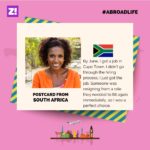
    Today’s subject on Abroad Life visited Cape Town in 2016 and swore she had to move there. A few months later, a job that paid 10x of her Nigerian salary poached her to South Africa. To her, Cape Town is the perfect balance between Nigeria and the UK, where she’s a citizen.

    When did you realise you wanted to leave Nigeria?

    I was in my second year of university studying law. I tried to leave, but it didn’t work out. I was born in Switzerland because my dad’s job took him there. In 1981, after living there for six years, the same job took us back to Nigeria.

    Do you remember what Switzerland was like?

    The things I remember the most about Switzerland are winter and Christmas. We’d go up to a family friend’s house in the mountains and go skiing. It was fun spending time with family and friends, but I remember hating the skiing part because it was all so wet and cold. 

    In Switzerland, my siblings and I didn’t learn French because people told my parents that teaching a child multiple languages would confuse their brain. We went to an English school, and our parents spoke English to us. It wasn’t even until we returned to Nigeria that they started speaking Yoruba to us, so as you might imagine, my Yoruba isn’t the greatest. 

    Haha… Wait, are you a Swiss citizen?

    Nope. The process of getting Swiss citizenship isn’t so easy. It takes over 10 years and has mind-boggling requirements. For example, you have to prove that you’re living as a Swiss to get Swiss citizenship. What that means is that they have spot checks. If they come to your house and see you watching Nollywood, or having garri in your pantry or ankara in your wardrobe, it means you’re not ready. A family we knew stayed after we left and their children have only just recently been able to get citizenship. 

    That’s hilarious. You said trying to leave didn’t work out when you were in university. Why?

    At that point, we didn’t have internet and my parents couldn’t afford to send us to school abroad, so applying to schools meant finding programmes I wanted to do in print, then writing to multiple NGOs to sponsor me. When none of that worked, I decided to stick around and finish my law degree and then go to law school in Nigeria. 

    In the period between my second year in uni and when I finished law school, my parents got a bit wealthier, so they were able to send us abroad for our master’s. First, it was my older sisters, then me. 

    When you say they got wealthier…

    They got promotions at work, and that came with more money. My dad’s promotion meant he also got to travel more and get bonuses such as hotel allowances, feeding allowances, per diems, and all that. When he travelled, if he got $5,000 for a trip, he would spend only $500, staying in the smallest hotels and rationing everything he did so he could save the rest of the money for our master’s. 

    Love it. Where did you go for your master’s?

    London, 1999. After getting my master’s, I didn’t want to go back to Nigeria, so I started looking for a job. It took a few applications but I eventually found a lecturing job in a university in Scotland. I took the six-hour train ride there, did my interview, got the job and moved. 

    Fun fact: For some reason, my mum was in the UK when I was to start my new job, so she came to Scotland and followed me to work for my first day. Now that I think about it, it’s the most ridiculous thing ever, but I don’t know why we both thought it was a good idea. I was going around introducing myself like, “Hi, I’m the new lecturer, and this is my mum.” I’m now thinking of making it a family tradition for when my children start their own jobs. 

    LMAO! What was Scotland like?

    Coming from England, Scotland was aesthetically pleasing. Scottish people are nicer, friendlier and more genuine. The English are a bit cold and less friendly, just like their weather. It was in Scotland I started living as an independent adult. All my life before then, I’d lived with my family. Even during my master’s, I lived with my older sister. In Scotland, I was finally able to discover who I was and the things I liked. 

    I stayed in Scotland for two years before I got a call from a bigger university in England. I had applied for a job there when I was initially looking, but they have an opening for a law lecturer with my specialisation. When they reached out, I moved back to England and took the job. I stayed at the job for about 10 years, and in that time, I got my doctorate and was able to get my UK citizenship and change the colour of my passport. 

    It was also in that period I met my husband in the UK and got married. In 2010, four months after I had my first child, we moved back to Nigeria. 

    Why?

    From the outside, Nigeria, and Africa on the bigger scale, seemed to be on an economic and infrastructural rise. There was a fresh wave of Pan-Africanism that intoxicated a lot of us outside and brought us back home. It seemed like we were finally getting things right and Nigeria was becoming a good place to live. 

    What was it like when you came back?

    It was difficult to settle in. This was my first experience in Nigeria as an adult, so there was a bit of a culture shock. One major way I suffered was in the job market. In the UK, there isn’t much “man know man” that goes on in the job application process. You find a job, apply, and if you qualify, they call you for an interview. In Nigeria, I learnt the hard way that it wasn’t always like that. In many cases, you had to talk to someone. At first, it was confusing that nobody ever reached out back when I applied for jobs, not even to say my application was rejected. 

    After two years and a lot of struggle, I finally got a legal department job at an NGO, and two years later, I got a lecturing job at a university’s law department. The position was much lower than my qualifications and number of publications commanded, but I took it because I was desperate. 

    Fair enough. So when did you leave again?

    2016. Before that, I already started to feel like although some aspects of Nigeria were good, we were failing at many others. One of the major problems was Boko Haram during Jonathan’s regime. Nigeria was feeling more and more unsafe, and my family had started considering moving, but I didn’t want to go back to England because I don’t like the weather. 

    In April 2016, I had some health issues that meant I had to travel to Cape Town, and I went with my family. The beauty of the place overwhelmed me. It overwhelmed all of us. I could see myself living there immediately. I contacted a friend who worked at a university in Cape Town and told him that if any open roles came up, he should let me know. 

    By June, I got a job in Cape Town. I didn’t go through the hiring process, I just got the job. My friend recommended me as I asked, and coincidentally, someone was resigning from a role they needed to immediately fill. Buhari had come into power and things were already looking bad economically in Nigeria, so the timing on this job was perfect. By July, we packed our bags and moved to Cape Town. 

    Amazing. 

    I was hired as an associate professor and shortly after, promoted to professor. The salary I got at the beginning was 10x what I earned in Nigeria. 

    Sweet. Was it difficult settling in?

    In some ways, it was. First of all, I found out that the school session from primary school to university runs from January to December, so even though we moved in July, school was still in session. I had to jump straight into work, and my daughters had to get into school even though normally, they’d be on summer break in Nigeria. What this meant was that we had to juggle working with finding a good school for our daughters. Many primary schools here don’t accept students midway through the session, so we went through a ton of schools before we finally found one that made an exception. 

    When we eventually put them in school, we found out that they were way ahead of their mates academically. What a primary 1 student learns in Nigeria is what a primary 3 student learns here. We had to get them lesson teachers. 

    Something else I found interesting was the way the economy is set up. Even though the poverty rate in South Africa is high, things are set up to favour the rich. In Cape Town where I live, you either buy your things at a big supermarket or at these tiny markets called spaza shops where things are sold to low-income earners. In these shops, instead of buying a loaf of bread, you can buy four slices.

    One more thing is labour. Labour is much more expensive here than in Nigeria. What I pay my nanny now is about the same thing I used to earn as a lecturer in Nigeria. 

    Are applications open for a new nanny?

    Haha… No, thanks!

    Do you see yourself leaving South Africa?

    Nope. I think it’s home. At first, I was scared of xenophobia, and even though I have experienced some slight racism here, it’s not so bad that it’ll make me leave. My family is settled here and I enjoy it. My daughters are growing up to be confident young women, and I think it’s because of our environment. The place is beautiful. The weather here is never too cold and never too hot. I enjoy my job. I don’t see any reason to leave. You should come and see it for yourself. 

    I’m adding it to my bucket list for when I can afford it!


    Hey there! My name is Sheriff and I’m the writer of Abroad Life. If you’re a Nigerian and you live or have lived abroad, I would love to talk to you about what that experience feels like and feature you on Abroad Life. All you need to do is fill out this short form, and I’ll be in contact.

  • Can you tell whether these African countries are in the North or South? Take the quiz to prove yourself:

  • The Nigerian experience is physical, emotional, and sometimes international. No one knows it better than our features on #TheAbroadLife, a series where we detail and explore Nigerian experiences while living abroad.


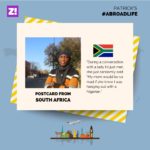
    When you hear of Nigerians living in South Africa, one topic crosses your mind: Xenophobia. The subject of today’s Abroad Life today, Patrick, tells us what it is to live and study in a place many Nigerians are scared of, and why he plans on staying there for the foreseeable future. 

    First things first, what are you doing in South Africa?

    I’m here as a fellow for the Open Society Foundation on Investigative Journalism at the University of the Witwatersrand, in Johannesburg. I arrived in February 2020 and started lectures on that same day. 

    No time to settle?

    None at all. 

    The fellowship is all about data and investigative journalism. Five people were selected: one Ugandan, a Nigerian [ me], and three South Africans. It’s actually a  practical fellowship, so apart from attending lectures, we also do a lot of fieldwork. 

    At the end of the fellowship, we’ll be interns for investigative newsrooms here in South Africa for 6 months – the fellowship is for a  year, followed by an internship for six months.  This makes everything one year and six months. It’s been wonderful so far. It’s been a great learning experience and we’ve had amazing investigative journalists from all around the world as lecturers. 

    That’s awesome. 

    How has Covid-19 affected your learning experience? 

    The only thing the pandemic affected was physical learning because South Africa went on lockdown in March. Everything else has been normal because of tools like Zoom, Skype and WhatsApp. Although, it’s also been really disappointing not getting to meet more world-renowned investigative journalists one-on-one. Networking is a big deal and when you’re meant to meet someone in person and they end up talking to you through a Zoom call, it can be underwhelming. 

    Damn…sorry about that.

    So are you studying full time, or…

    No. I’m also working as a freelance journalist for whatever publication comes around.   Recently, I received a grant from National Geographic to do a story on how COVID 19  affected Nigerian farmers and how they are coping.

    Are you doing that as a story from South Africa?

    I have colleagues back at home in Nigeria who are journalists and they do the fieldwork while I do the writing. 

    I’m curious though, how did you get admitted into the fellowship at the University of the Witwatersrand?

    I had tried to apply for another fellowship three times and I kept getting rejected, so I decided to try this one out. The Open Society Foundation on Investigative Journalism fellowship started in 2019 to celebrate its  20th year in South Africa. They intend to let it run for three years. I applied in 2018 to be among the first set of people to be selected for the 2019 class, but that was unsuccessful. So I tried again last year and here I am for the 2020 class. I guess you could say that my tenacity paid off. 

    That’s awesome. 

    Can you walk me through the timeline from when you got the admission till when you got to South Africa?

    I remember that I was notified on November 24th that my application was successful. I was really excited because apart from getting something I really wanted, I was  really looking forward to some timeout from Nigeria. Additionally, I was also looking for a chance  to add to my skills, get some exposure, and meet people in my field from all over the world – I knew I had a better chance of getting that in South Africa than in Nigeria. 

    After getting notified, I started all the visa processing. 

    By yourself?

    Yes. They supplied the letters I needed: letter of acceptance, and letter of admission. After getting notified, I had to apply for admission. I got the admission and  I also applied for other stuff like medical insurance. 

    It was a really hectic and overwhelming process.

    Was there a possibility that your visa application would be denied? 

    Haha… Yes.

    I was confident that I was going to get the visa but anything is possible. I’d have been extremely disappointed if I didn’t get the visa because I had been trying to get an opportunity like this for some time. Imagine getting it and being denied a visa at the final stage. That would have been drastic. 

    Okay. You moved there in  February.  How quickly did you settle in? 

    The department handling the fellowship had already paid for my accommodation, so, before I arrived, an apartment was waiting for me. Immediately I landed at the airport, I checked in with the security, and then I went to the apartment. I dropped my bags in my room and headed straight to the university for classes. 

    I think I arrived around 7 am and I had lectures by 10 am so I had to rush the whole registration process with the stress of being on a plane for hours without sleep. 

    After that day though, settling in was a bit easy for me even though it was a new environment. If you survived in Nigeria, there’s no place you can’t survive so getting around and meeting new people was easy. So I’d say in one week, I got accustomed to the environment. 

    So you were living normally in the space of one week?

    Yeah but not 100%, I wasn’t entirely familiar with the whole environment but it wasn’t awkward anymore. I could go to the mall, to campus, and come back home with an Uber. Making friends was also becoming easy. I was even making friends and other connections before I got here so that made it easier. We’d just go out together and settle in together until Coronavirus made us all stay indoors. 

    When I hear that a Nigerian is in South Africa, I get scared because of the reported Xenophobia. Did you have that fear when you were leaving Nigeria, and how has that played out?

    I wouldn’t say I had fear. It was more of a subconsciousness that there was a possibility of something like this. Before I got here, I spoke with a lot of Nigerians here and read wide about the dangers of coming to South Africa as a Nigerian, so I knew it was a reality. 

    Getting here, I met wonderful people who welcomed me warmly, I can’t lie about that. But I have also witnessed a lot of hatred for foreigners. Not only for Nigerians, but for people from Zimbabwe, Zambia, Lesotho, and other African countries. The narrative of other Africans coming to take their jobs and their wives is a real and prevalent one. 

    There’s a mindset that has been built in the media about African foreigners, so they [South Africans] tend to keep their distance even if they don’t have a reason to. 

    I have both male and female South African friends and we get along. Some of them ask questions about Nigeria that they find in the media. They watch Nollywood and know about Wizkid, Davido and all that but they’re in the minority. 

    What is a South African experience that you can’t forget?

    This one might interest you – About two weeks after I arrived, I was getting my Student ID one day and I needed help locating a building. I ran into this South African babe who offered me all the help I needed. We got talking, and even went to get some drinks. 

    During the conversation, she just randomly said: “My mom would be so mad if she knew I was hanging out with a Nigerian.” To my face o. Then she started talking about how we would just come to take their jobs and commit crimes. She said she admits that South African men might be “lazy” but it was still their country and they didn’t need to be dominated. 

    Awkward…

    Yeah. I downed the rest of my drink and called it a night. She did the same. We haven’t spoken since then. We’d see one another from time to time and just wave or say hi, but I’m not about to hang out with her anymore. 

    Crazy

    In day to day living, how’s South Africa different from Nigeria?

    The food, the dressing, and the crime. 

    Women here have a very liberal way of dressing that I couldn’t first understand because I come from Nigeria where stuff like that is majorly done conservatively. 

    The food is obviously different because it’s a different culture. And the crime rates are high. For some areas, it’s dangerous to walk even in the broad daylight. Just yesterday, I saw the video of a man in Johannesburg being grabbed by 5 people in broad daylight.  People were recording but couldn’t  help  because they didn’t want any trouble. They [the robbers] also collected his phone and all his belongings. Not so long ago, my Kenyan friend was also mugged.

    Do you feel unsafe?

    I just know where to be and where not to be at different times. My area is relatively safe andI hope it stays that way.

    I hope so too. 

    What’s the cost of living there like?

    Feeding is pretty much normal. I could actually say that it’s cheap. I have not adapted to the local food so I go to the supermarket to buy my normal Nigerian foodstuff and cook myself. 

    Transportation is not expensive. I almost always use an Uber or the school bus to move around. I hear the trains and buses are very cheap as well, but I have not tried using them yet. 

    But house rent is extremely expensive. You’ll probably pay about N70k monthly for a self-contained room. And you have to pay every month. A room and parlor will probably cost you N100k a month. It might also depend on location too, but generally, it’s very expensive. 

    Omo

    Would you advise a Nigerian to live in South Africa? 

    To be honest, I don’t know about coming here to hustle as a Nigerian. It might be toxic. But being here as a student has been nice for me. It basically depends on what you’re coming  to do. To live and work here as a journalist is something I can advise.  Maybe if you’re coming to work and the organization you’re working for has provided accommodation  , then it’s nice too. 

    After your fellowship do you plan on coming back to Nigeria? 

    I’ve not decided but I am most likely to stay back and practice; I’ll work from here to see how it goes. Going to Nigeria won’t be to stay so I’m most likely staying here to practice journalism after my internship.  I might leave for another country. To explore, and maybe further my academics and get other fellowships, but I’ll be based here before I decide. 

    So you’re one of the Nigerians coming to take South African jobs and women.

    *wink wink*

    Haha…I’m not here to drag their women with them. As for the job, it’s an open market where the best person will get it. Nobody is “stealing” anybody’s jobs. I’m not even looking to get a full-time job. I’ll keep freelancing

    I hope that works out man. I hope it does. Stay safe