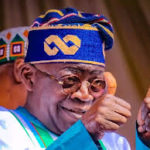
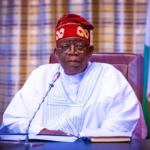
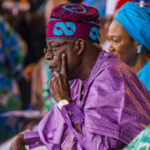
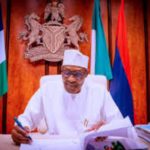
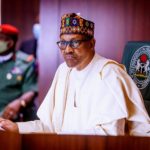
• Nigerian leaders might not know how to do what citizens elected them for but when it comes to speeches and lamba, just leave the arena for them. When it comes to bangers especially, leave it for our current President. From releasing his most famous fuel subsidy banger on his very first day in office to many others, Tinubu has never disappointed us. Many Nigerians have looked forward to hearing how he would address the country considering the current state of things and as usual, he delivered. Below are some of the nuggets we picked.

    Nigeria is working, your eyes are the problem

    While praising our founding fathers, as usual, the President said something that struck us. In his words “Nigerians worldwide can see how well we have succeeded in realising the lofty dreams of our founding fathers.” Excuse my French but as how? Right now, Nigerians currently cannot afford to buy second hand cars, and even those who can, are paying through their noses for fuel but according to the President, Nigeria has achieved its “lofty dreams.”

    Natural disasters are bowing before us

    Not sure if strolling in many days after about 30 people died in the Maiduguri flood can be categorised as responding but according to the President’s speech, “our government has been responding to the recent natural disasters, particularly the flooding in parts of the country.”

    You’re not the only person food is expensive for

    The President acknowledged the hardship in the country but not without hinting that Nigeria is not a one-off case and that it’s not entirely his fault.

    “The central concern of our people today is the high cost of living, especially food costs. This concern is shared by many around the globe as prices and the cost of living continue to rise worldwide,” he said.

    Fine, yoots, we’ll give you 30 days to speak your mind

    During his speech, the President announced his administration would be organising a 30-day National Youth Conference.

    According to the President, this conference will give young people the opportunity to “participate actively in nation-building. By ensuring that their voices are heard in shaping the policies that impact their lives, we are creating a pathway for a brighter tomorrow.”

    Not sure where I stand on it. Naturally, young Nigerians on X have quickly reacted to the news.

    We are defeating insecurity

    “On the security front, I am happy to announce to you, my compatriots, that our administration is winning the war on terror and banditry,” Tinubu said.

    I’m not sure how to react to this. There might actually be a multiverse after all because in the version of Nigeria, a lot of us live in, insecurity has peaked to a level that crowdfunding for kidnap victims has become so common, the government itself has to tell people to stop. In that Nigeria, public figures regularly say Nigeria is “a war front,” and offer government advice on how to fix it, and in that version, 19 medical students were kidnapped just in August. Must be fun in President Tinubu’s own version.

  • After a highly controversial election in February 2023 and the heated post-election drama, Bola Ahmed Tinubu was sworn in on May 29, 2023, as the 16th President of the Federal Republic of Nigeria. 

    From student loans to cybersecurity taxation, we take a stroll down memory lane to highlight how events have unfolded in the past year under the Tinubu-led administration.

    May 2023

    At his inaugural speech, President Tinubu’s first official decision was to remove the fuel subsidy, stating that Nigeria needed to redirect the subsidy funds to nation building. This led to a sharp increase in petrol prices from ₦195 to around ₦660 per litre, and a resultant increase in inflation in the months that followed.

    Read: Fuel Subsidy: Tinubu Went off Script, and Nigerians Are Facing the Brunt

    June 2023

    As the war for access to fuel raged on, the President added a twist with foreign exchange. The CBN announced that the exchange rate will be unified, merging all forex market segments into a single window determined by market forces. The Central Bank Governor, Godwin Emefiele, was also suspended. This came following his decision to redesign the naira notes which influenced the disastrous cash scarcity of January 2023. 

    In the same month, President Tinubu introduced the student loan bill and signed the Nigeria Data Protection Bill 2023 into law to establish a legal framework for safeguarding personal information. 

    The story: Tinubu Wants Obazee to Investigate CBN. But He Has a Dark Past

    July 2023

    President Tinubu shifted his focus on infrastructure development to create jobs, and address housing and road deficits. 

    As the newly appointed chairman of the ECOWAS, he was also a core part of the decisions regarding the Niger Junta, which changed Niger’s political climate. Tinubu received backlash for his initial suggestion of a military response. Subsequently, the ECOWAS resorted to placing bans on the Niger Republic. 

    Let’s not forget that he promised us palliatives in this month too. We’re still waiting for our credit alerts.

    The story: Tinubu Has Gifts for Nigerians. What Are They?

    August 2023

    President Tinubu announced a rollout of Compressed Natural Gas (CNG)-powered buses to cushion the impact of high transportation costs after the fuel subsidy removal. The President also released his ministerial nomination list which saw some reshuffling and an increase in youth leaders. They were inaugurated on August 21, 2023.  

    The story: Nigeria’s Ministers and Their Portfolios in 2024

    September/October 2023

    These were the twin months of drama and vindication for the President who had been facing court challenges over his victory as Peter Obi and Atiku Abubakar accused him of electoral manipulation. The tribunal started in September but somehow dragged into November.

    In October, allegations of drug trafficking and money laundering against him were also declared null and unfounded. 

    In what seemed like a hope sparker, the president declared a cash transfer program for the poor and an N-Power program for unemployed graduates. Both of which, much like the palliatives of July, are now non-functional. 

    On October 1, 2023, President Tinubu released a statement awarding ₦35,000 provisional wage for all treasury-paid federal government workers for six months. He also announced that it will commence payment of ₦75,000 to ₦15 million households at ₦25,000 per month, for a three-month period from October-December 2023 among other financial schemes. 

    The Story: The Presidential Election Tribunal: What You Should Know

    November 2023

    Nigerians dragged their president over alleged national budget padding and a plan to buy a presidential yacht. The president denied this and claimed that the demand was made by the Nigerian Navy. 

    The NLC, TUC and other associations went on strike in response to a physical assault on their leader, Comrade Joe Ajaero. The Federal Housing Authority also embarked on a demolition spree in the Festac area of Lagos state. 

    The Story: Key Takeaways from President Tinubu’s ₦2.1 Trillion Supplementary Budget

    December 2023

    The President announced the commencement of a feeding programme for primary school pupils. The program has been in a hiccup state from the start.

    January 2024

    The Vice President, His Excellency, Kashim Shettima, commissioned a 37-man committee to review the 2019 Minimum Wage. Prior to this, On October 1, 2023, the president had awarded a ₦30,000 relief fund to treasury-paid workers. This marked the beginning of a thread of tension-laced discussions with no end in sight.

    The story: About Nigeria’s Plan to Increase the Minimum Wage

    February 2024

    The NLC went on a two-day strike because of the minimum wage and general economic difficulties. In a bid to solve this, the 37-man minimum wage committee finally convened for the first time in March.

    March 2024

    Under the leadership of President Tinubu, the ECOWAS lifted the sanctions placed on Niger Republic, while minimum wage discussions continued as the NLC proposed ₦615,000. There was also a massive blackout in parts of the federation as the national grid fell, and underwater submarine cables were compromised leading to a four-day internet downtime. The Federal Government announced the commencement of a 700 km Lagos-Calabar coastal highway construction through the minister of works, David Umahi.

    The story: Why the ECOWAS Lifted All Sanctions on the Republic of Niger

    April 2024

    Tinubu’s whereabouts were unknown for over a week after returning from a trip to Saudi Arabia in April 2024. The vice president was also out of the country at the time, causing a stir. 

    Fuel scarcity made a comeback, with prices going as high as ₦1000 per litre at fuelling stations. NNPCL dispelled rumours of trying to increase fuel prices and stated that the hike was as a result of logistics issues. However, VOA stated that the scarcity was a result of debts. The ministry of power implemented theElectricity Tariff Hike, another policy that saw mixed reactions from Nigerians.

    The story: Yet Another Fuel Scarcity: How Are Remote Workers Coping?

    May 2024

    The Office of the National Security Advisor (ONSA) entered the limelight for a Cybersecurity levy CBN imposed on electronic transactions. This sparked outrage on social media until it was eventually suspended. Landmark Beach and other businesses on the Lekki coastline were demolished for an interstate highway project under the direction of the minister of works, David Umahi for a coastal highway project but the demolished sites were eventually mapped out of the plan in a bid to avoid damaging submarine network cables. 

    The President also set out to commission road and infrastructure projects such as the remodelled third mainland bridge, apapa bridge and national library among others, to mark his first year in office. 

    The NLC gave the minimum wage committee a May 31 deadline to reach an agreement and implement a new minimum wage. 

    The story: Is NLC Winning The Minimum Wage Negotiations?

    With the many trials and tribulations Nigerians have faced in the past year, one can only imagine how the next three years of President Tinubu’s administration will go. 

    RELATED POST: The Year in Review: These Events Drove The Hottest Conversations in 2023.

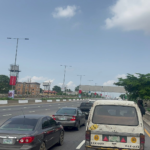
  • If your trip cuts through Gbagada expressway or involves the Apapa-Oshodi-oworonshoki bridge, you may need to find an alternative because of the traffic caused by canopies that have been set up on the expressway.

    What’s happening?

    President Bola Tinubu scheduled the commissioning of the refurbished Third Mainland Bridge among other infrastructural projects for Sunday, May 26, 2024.

    The purpose is to mark the one-year anniversary of his tenure by highlighting his achievements in this period.The road commissions and inauguration started in Lagos on May 26, and are expected to last till May 31, 2024, but the resultant roadblocks are taking their toll on Gbagada road commuters already.

    These projects include the Apapa and Tin Can Island roads, Southern parkway at Abuja, National Assembly Library Complex, the Abuja Light Rail Project and the Lagos-Calabar Coastal Highway.

    Public Response

    Nigerians on X (FKA Twitter) have expressed their disapproval of the canopies at Gbagada and the resultant traffic. They have also relayed that they believe the commissioning is unnecessary, and has not been properly carried out, as it did not put the interest of road users at heart.

    However, this is just the first of many commissions and traffic may continue in other parts of the nation until May 31, 2024 when the president completes this exercise.

    Read: What You Should Know as Third Mainland Bridge Rehabilitation Commences

  • President Bola Ahmed Tinubu is barely a year into his reign and is already arguably the most critiqued president of Nigeria. One of his lesser-known but still highly criticised actions is his response to the Republic of Niger’s current political instability.

    What happened between Nigeria and the Republic of Niger?

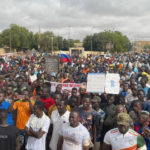
    On July 26, 2023, junta forces took over President Mohamed Bazoum’s government through a coup. In a bid to return things to order, the ECOWAS imposed sanctions spearheaded by President Tinubu. 

    However, these sanctions have affected both Niger and Nigeria, disrupting cross-border trade and causing economic hardship in both countries. They have also hindered regional stability and counter-terrorism initiatives in which both countries were involved. What started as an effort to control political turmoil has created multiple problems in that region of West Africa. 

    What were the sanctions placed on Niger?

    The sanctions included the closure of land and air borders, freezing of assets in the ECOWAS Central Bank, suspension of commercial and financial transactions between ECOWAS member states and Niger, freezing of state enterprises in commercial banks, freezing of service transactions, including utility services, and a no-fly zone for commercial flights to and from Niger. 

    What is Nigeria’s business there? 

    Our President, Bola Ahmed Tinubu, is the sitting chairman of the ECOWAS. And the sanctions with the most effect on Niger’s socio-economic decline are Nigeria’s decision to cut off electricity supply to Niger and close the borders between us. 

    As the chairman, President Tinubu was instrumental in the decision-making of the ECOWAS board. He received criticism for initially taking forceful measures that affected the trade and security of Nigerian states sharing borders with Niger. Once the border was reopened, he received praise from the Northern governors forum whose states had been most affected in Nigeria. 

    What’s the current situation?

    The ECOWAS sanctions against the Niger Republic were lifted on February 24, 2024, on humanitarian grounds, with the hope of fostering dialogue with the military junta in Niger, Mali and Guinea and improving the socio-economic conditions in the region. 

    The land and air borders between ECOWAS countries and Niger, the No Fly Zone for all commercial flights to and from the country and the suspension of all commercial and financial transactions between ECOWAS member states and Niger have all been lifted. 

    Public reaction

    While some political analysts, like Idayat Hassan, welcome the decision to lift the sanctions, others doubt its impact. Some others believe the ban should have never happened in the first place and that lifting it is a sign of weakness from the ECOWAS, which the junta will exploit.

    Do you think ECOWAS could’ve done better, or President Tinubu could’ve managed a better compromise? 

    To keep up to date with what’s happening in society, start with this: About Nigeria’s Plan to Increase the Minimum Wage

  • The journey to Nigeria’s presidency has been long, starting with the presidential primaries in May 2022

    On March 1, 2023, the Independent National Electoral Commission (INEC) declared Bola Tinubu (BAT) of the All Progressives Congress (APC) winner of a tumultuous electioneering process marred by pockets of violence across the country. 

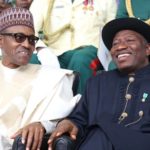
    [Buhari and Tinubu shake hands / Twitter]

    The electioneering saw voter suppression, violence, allegations of vote buying, and lack of transparency, among other failings.

    While many young Nigerians are still absorbing the outcome of this news, it might be helpful to understand what the coming days will look like for Nigerians and the president-elect.

    The transition committee

    On February 14, the Secretary to the Government of the Federation (SGF), Boss Mustapha, unveiled the presidential transition committee. This followed an executive order signed on February 7 to facilitate and manage the presidential transition.

    This committee is responsible for facilitating the handover process. They also provide security briefings and set up personnel for the president-elect and his transition team.

    Lawsuits

    The opposition parties including the Labour Party (LP), the People’s Democratic Party (PDP) and the New Nigeria People’s Party (NNPP) have called for cancellation of the elections fraught with irregularities. It takes no genius to see that the election tribunal has a busy schedule ahead of it.

    The certificate of return

    INEC will issue a certificate of return today, March 1, to the APC flag bearers BAT and his running mate, Kashim Shettima. INEC chair Mahmood Yakubu declared earlier that the duo “satisfied the requirements of the law and are returned elected.” 

    Swearing in on May 29

    May 29 used to be Nigeria’s Democracy (and swearing-in) Day because it was when Nigeria returned to democracy in 1999 after years of military rule. In 2018, President Buhari changed Democracy Day to June 12 in honour of MKO Abiola, who was widely regarded as the annulled June 12, 1993, presidential election winner.

    Still, on May 29, 2023, a new president will be sworn in after being administered the oath of office by the chief justice of the federation. 

    This is officially the beginning of the new president’s tenure.

    [Buhari taking the oath of office in 2015 / Nigerian Observer]

    Change of guard

    The president is heavily protected by a set of guards across military and intelligence services attached to him. However, as the outgoing president leaves, the incoming gets fresh protection. 

    In 2015, it took a month after Buhari’s swearing-in to have a new set of bodyguards. According to a report by Vanguard, 150 bodyguards were rendered redundant as they were all posted out of Aso Villa following Buhari’s emergence.

    Setting up of ministerial cabinet

    Buhari earned the title “Baba go slow” for his slowness in naming his cabinet. He was inaugurated into office on May 29, 2015, but only had his ministerial cabinet ready by September. We hope the new president doesn’t take a leaf from Buhari’s playbook and, instead, hits the ground running.

    Now you know what happens after a winner is declared. 

    Thank you for following the Zikoko Citizen live coverage of the presidential election. Tune in to our web page and WhatsApp for coverage of the gubernatorial elections on March 11, and tips on how to hold the new President’s agbada through his tenure in office. 

  • In January 2022, Muhammadu Buhari said during an NTA interview he was tired of being Nigeria’s president

    He said “I see my colleagues, they’re now resting, and I assure you I look forward to the next 17 months when I too will be less busy. The age is telling on me — working now for six, seven to eight hours per day in the office is no joke.”

    Buhari may be complaining about all the hard work he has to do as president, but he can’t deny he’s looking forward to the benefits waiting for him after May 29, 2023.

    If you have no idea what we’re talking about, allow us explain.

    What law guides the perks ex-presidents enjoy?

    That would be the Remuneration of Former Presidents and Heads Of State (and Other Ancillary Matters) Act of 2004. The Revenue Mobilization Allocation and Fiscal Commission (RMAFC) determines the benefits package for former presidents and former vice-presidents.

    What are these benefits?

    We know that’s what you’re really after, so here’s a list of the major perks former presidents and vice-presidents receive:

    1. ₦‎350,000 monthly allowance for ex-presidents and ₦‎250,000 monthly for ex-VPs. 
    1. The families of deceased former heads of state are entitled to ₦1 million per annum, paid ₦250,000 per quarter. The families of deceased ex-VPs get ₦750,000 per annum, paid ₦187,500 per quarter.
    1. Upkeep of the spouses and education of the children of deceased ex-presidents and deceased ex-VPs up to the university level.
    1. Three to four armed policemen for security.
    1. One State Security Service (SSS) officer not below grade level 10 as an aide-de-camp to be attached for life.
    1. Three vehicles for ex-presidents and two vehicles for ex-VPs, replaceable every four years. 
    1. Drivers.
    1. An officer not below the rank of a chief administrative officer and a personal secretary not below grade level 12.
    1. Diplomatic passport for life.
    1. Free medical treatment for ex-presidents and ex-VPs and their immediate family within Nigeria.
    1.  Treatment abroad for ex-presidents and ex-VPs and their immediate family where necessary.
    1.  30 days annual vacation in Nigeria or abroad.
    1.  A well-furnished and equipped office in any location of choice within Nigeria.
    1.  A well-furnished five-bedroom house in any location within Nigeria. An ex-VP gets a three-bedroom house.

    Look at that list again and ask yourself why you aren’t running for president.

    Oh, one other thing: the spouses of deceased leaders stop receiving their benefits if they remarry so it’s beyond till death do us part. 

    When did ex-presidents start receiving a pension?

    Former leaders enjoying these perks today have one man to thank: General Sani Abacha. It was during his administration Nigeria started thinking about providing pensions for living presidents and their families. Bad belle people would say Abacha was looking out for himself and the irony is he wasn’t around to enjoy it.

    Is this practice normal?

    Former leaders around the world like in the United States and the United Kingdom receive allowances and extra benefits after leaving office. But trust Nigeria to push things to the extreme.

    In 2016, the secretary to the government of the federation (SGF), Babachir Lawal, lamented that the government couldn’t pay the salaries of past presidents due to lack of funds. Between 2018 and 2021 alone, the perks that ex-presidents and ex-VPs received cost Nigerian taxpayers ₦9.2 billion. In October 2022, findings revealed ex-presidents, ex-VPs and other appointees would receive ₦63 billion in pension in 2023.

    Clearly, the benefits package for former leaders needs to be revisited as the cost is becoming too unbearable for a country already burdened by debt. But knowing Nigerian leaders, don’t hold your breath on things changing anytime soon.

  • A lot can happen in a month — you could safely lose as much as 9kg, read as many as 20 books or make 10 trips to the moon. And if you’re a Nigerian, one month is enough time for one socio-political group to endorse two different candidates for the 2023 presidential election.

    On October 30, 2022, Afenifere, a Yoruba group, endorsed the presidential candidate of the All Progressives Congress (APC), Bola Tinubu. A respected leader of the group, Pa Reuben Fasoranti, announced the endorsement in Akure, Ondo State when the candidate visited him. But this wasn’t Afenifere’s first endorsement of a 2023 presidential election candidate.

    On September 26, 2022, another Afenifere leader, Pa Ayo Adebanjo, threw his support behind the presidential candidate of the Labour Party (LP), Peter Obi.

    What do the separate endorsements mean?

    What’s clear from Afenifere’s endorsement competition is that the group is a house divided against itself. Just like political parties in Nigeria, Afenifere has factions that aren’t always in agreement.

    Even though Fasoranti stepped down as the group’s leader for Adebanjo in 2021, they’ve ended up on opposite ends of issues. In his response to Fasoranti’s endorsement of Tinubu, Adebanjo said the Obi endorsement is the real deal.

    Do these endorsements really matter?

    On one hand, politics is largely a game of numbers and interests which explains why politicians seek the support of individuals who hold influence over large groups of people. These individuals could be anyone from towering political figures to traditional rulers and religious leaders. 

    On the other hand, it’s difficult to measure the impact of these endorsements on elections in Nigeria. For example, former president, Olusegun Obasanjo, publicly endorsed Atiku Abubakar and described him as “President-to-be” for the 2019 presidential election, but we all know how that ended.

    Like the Afenifere, there are many more groups waiting to endorse candidates, whether organic or paid for. But the real question is how much do these endorsements affect real voters?

    ALSO READ: One of These 18 Candidates Is Nigeria’s Next President

  • Nigerians just can’t catch a break — from dealing with news of possible terrorist attacks, to Meffy redesigning the naira, to the fuel scarcity and the ongoing flooding crisis

    And what makes everything worse is Nigeria has a president who can’t be bothered to deal seriously with the issues. Buhari’s poor attitude has inspired the question of what might have been if we had a different president.

    We decided to go down memory lane and reflect on what could have been if the people on this list won the president’s seat. Some of them didn’t perform in the elections as well as expected and some of them were so close, but got no cigar.

    Obafemi Awolowo — 1979

    Obafemi Awolowo [Image source: Britannica]

    Awolowo was a former minister of finance and three-time contender for Nigeria’s highest political office. His closest call was in the 1979 presidential election running on the platform of the Unity Party of Nigeria (UPN). Just like the forthcoming 2023 presidential election, the 1979 contest was also a three-horse race

    Awolowo finished second with 29.18% of the votes, just behind the winner, Shehu Shagari, with 33.77% of the votes. Although he fought hard to overturn the result, the Supreme Court ruled against him. His consolation is becoming the face on Nigeria’s ₦‎100 note.

    Moshood Abiola — 1993

    MKO Abiola [Image source: The Nation]

    MKO Abiola was a businessman and politician who contested the 1993 presidential election as the candidate of the Social Democratic Party (SDP). He was quite popular and regarded as the winner of the election having polled 58.36% of the popular vote. 

    However, one thing football has in common with politics is, the match is never over until the referee blows the final whistle. In MKO’s case, the referee — General Ibrahim Babangida — swallowed the whistle. Babangida’s military government annulled the election and Abiola died in prison for fighting for his mandate.

    ALSO READ: Buhari Needs to Do These Things Before He Leaves Office in 2023

    Olu Falae — 1999

    Olu Falae [Image source: Osun Defender]

    When Nigeria’s Fourth Republic began in 1999, Olu Falae, a former minister of finance, ran against Olusegun Obasanjo, a former military ruler. Falae ran on the joint ticket of the Alliance for Democracy and the All People’s Party against Obasanjo’s People’s Democratic Party (PDP).

    Unfortunately for Falae, two heads were simply not better than one as he only polled 37.22% of total votes compared to Obasanjo’s 62.78%. Falae had seen enough and that would be the last time he ever ran for president.

    Odumegwu Ojukwu — 2003

    Ojukwu [Image Source: Britannica]

    Ojukwu is mostly remembered for his role in the Nigerian Civil War as the president of the breakaway Republic of Biafra. But he also ran for president of Nigeria in 2003 as the candidate of the All Progressives Grand Alliance (APGA), finishing third with 3.29% of the votes cast. 

    While we may never know what might have been, it certainly would have been fascinating to have a president who had fought against Nigeria and for Nigeria. At least, everything would’ve been balanced.

    Nuhu Ribadu — 2011

    Nuhu Ribadu [Image source: Blerf]

    The first chairman of the Economic and Financial Crimes Commission (EFCC) makes this list not so much because he was close, but because he had a very audacious run. 

    As a third force candidate of the Action Congress of Nigeria (ACN) contesting in the 2011 presidential election, he managed to finish third with more than two million votes. Given the brutal history Nigerians have with the police, it’s quite impressive to see a former police officer get that kind of love. At least it’s a massive step up from collecting egunje.

    Atiku Abubakar — 2019

    Atiku Abubakar [Image source: Punch]

    If there’s one lesson Atiku Abubakar has taught us, it’s that if at first you don’t succeed, try again. And again. And again. Ad infinitum. 

    Atiku has run unsuccessfully for president five times going all the way back to 1993. His closest run was in 2019, running as the candidate of the PDP, when he polled 41.2% of votes. While that translated to over 11 million votes, it simply wasn’t enough to defeat Buhari. He’s on his sixth run in 2023 and maybe his village people will finally remove their hand from his matter.

    ALSO READ: Atiku Can’t Stop Running for President Despite His Record

  • Are you cut out to be the next president of Nigeria? Take this quiz to find out.

  • Citizen is a column that explains how the government’s policies fucks citizens and how we can unfuck ourselves.

    In Oko-aba, Abule-Egba, Lagos, a budding journalist, Pelumi Onifade captured Abiodun Bolarinwa, a politician, shooting at a crowd after not being allowed to address them. However, since October 20, 2020, when the incidence occurred, Abiodun Bolarinwa has still not been sanctioned.

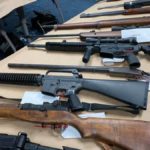
    Today, we will explain Nigeria’s firearms act, and why Abiodun Bolarinwa should not have had access to guns.

    The firearms act was enacted in 1990. The main point of the law was that no person should be in possession of any firearm in Nigeria, except such person has a licence from the president of the Inspector General of Police.

    Some of the most important provisions of the law include:

    1. Possession of firearms

    Section 3 of the firearms act states that no person must have in his control any firearm of one of the categories specified in the Act, except in accordance with a licence granted by the President.

    The firearms in this category includes artillery, gas explosives, rocket weapons, bombs and grenades, machine guns and machine pistols, military rifles, revolvers, pistols and any other firearm that is added to the category.

    2. Possession of personal firearms

    Section 4 of the firearms act states that no person must be in possession of any personal firearm except a licence has been granted by the Inspector General of Police.

    3. Muzzle-loading firearms are prohibited

    Section 5 of the firearms act states that the Commissioner of Police of a state may, by order, prohibit the possession or use of muzzle-loading firearms.

    4. Firearm licences are not rights

    Section 6 of the firearms act states that the authorities have the right to grant a licence permit, and revoke a licence, and the licence to own a firearm may be given as the authorities may think fit.

    However, nobody will be granted licence of a firearm if the person is under the age of 17, is of unsound mind, has defective eyesight, has intemperate habits, or has been convicted of an offence relating to violence within the past five years .

    5. Safe custody of firearms

    Section 7 of the firearms act states that the licenced owner of a firearm must keep the firearm in safe custody.

    6. Prohibition in dealing in arms except by a registered dealer

    Section 9 of the firearms act states that nobody must sell a firearm in Nigeria except the person is a registered firearms dealer.

    7. Maintenance of armouries

    Section 10 of the firearms act states that registered firearms dealers must maintain armouries for the purpose of selling firearms.

    8. Sale only to licence holders

    Section 11 of the firearms act states that nobody must transfer firearms to anybody else except that person is a registered firearms dealer.

    9. Stamping of firearms sold

    Section 12 of the firearms act states that every registered firearms dealer must stamp the permit that was given to them to trade in firearms, with the person’s name, number or any other particular required.

    10. Import of firearms

    Section 17 of the firearms act states that nobody must import or export firearms through sea or air or by any other means into Nigeria, except a port in Nigeria.

    11. Restriction on import of firearms

    Section 19 of the firearms act states that no person must import any firearms or ammunition into Nigeria, except the person produces to a customs officer, the licence to import a firearm or ammunition.

    12. Prohibition of manufacture

    Section 22 of the firearms act states that no person will manufacture a firearm in Nigeria except the armed forces, established with the discretion of the president.

    13. Penalty

    Section 27 of the firearms act states that anyone found guilty of the offence of possessing a firearm without a licence is liable to a minimum sentence of ten years.

    14. Production of licence

    Section 28 of the firearms act states that anyone who has a firearms licence or is in possession of a firearm must produce it if a police officer requests it from him, and if he is unable to produce it, the offender will be fined one hundred thousand naira or sentenced to six months imprisonment.

    From the provisions of the law, it is clear Abiodun Bolarinwa should not have had access to a firearm. Section 6 of the firearms act states that a firearms licence should not be granted to a person who has “intemperate habits”, or has a lack of self-control.

    Consequently, the Nigerian police authorities have exercised a serious lack of judgement if they truly granted Abiodun Bolarinwa licence to firearms. And they owe the Nigerian public an explanation.

    We hope you’ve learned a thing or two about how to unfuck yourself when the Nigerian government moves mad. Check back every weekday for more Zikoko Citizen explainers.


    [donation]