• 2024 was such an eventful year for Nigerians, and we do not mean this in a positive way; the year stressed Nigerian citizens in many ways. From the constant disgrace of the Naira to the sky-high inflation rates, the unending fuel queues, the painfully high cost of living, and more, Nigerians saw shege that was heavily televised.

    Politicians in the country were no better either; in different ways, they added to the frustrations of Nigerians either by idly watching as citizens suffer due to harmful policies, helping implement those policies themselves, supporting them, or generally incompetent at their jobs. As the year slowly comes to an end, we thought to remind you (and the politicians) of their bad characters within the year by giving them awards that represent all they did in 2024.

    Godswill Akpabio- Best in Agbaya behaviour

    Godswill Akpabio is Nigeria’s Senate President, but this year, he did and said things that were in no way appropriate for the leader of the Nigerian Senate. On July 31, for instance, while Nigerians prepared for the Hunger Protests, Akpabio was in the news for mocking the protest plans of many Nigerians.

    While he attended a Niger Delta Development Commission (NDDC) event, the Managing Director of the NDDC, Samuel Ogbukwu, made a solidarity statement saying the Niger Delta region was in support of the present administration and wasn’t pushing for a regime change to which Apkabio responded. “…You said we are not interested in regime change; let us own this government. Those who want to protest can protest, but let us be here eating.” 

    The Senate President was famous in 2024 for insulting the sensibilities of ordinary Nigerians, and there are other instances of this, but that was not the only thing he was guilty of this year. He also had a thing for showing his loyalty and support to the Tinubu administration to the detriment of the reputation of his office as the leader of the Senate, an arm of government which is supposed to keep the executive in check.

    In May 2024, in the thick of suffering for Nigerians, Apkabio thought Tinubu’s intention to phase out the country’s national anthem for the old anthem, “Nigeria we hail thee”, was a fantastic idea, and he didn’t just show this by skipping an essential step like a public hearing and ensuring that the bill was hastily passed in a matter of days, he also thought it’d be fun to voice his thoughts on the bill even if they didn’t make sense to anyone. 

    On June 18, a few weeks after the bill passed, Akpabio implied that the national anthem change was the best thing since sliced bread because, according to him, insecurity, one of Nigeria’s biggest problems, wouldn’t exist if the anthem hadn’t been removed. In his words: “If we kept the anthem, we probably would not have banditry today in Nigeria because if you took your neighbour as your brother, you would not want to kill your brother…”

    Akpabio probably saw the criticisms that followed this development as haters hating because, in December, he topped off his pro-Tinubu theatrics with an even more distasteful drama. On Wednesday, December 18, when Tinubu walked into the Senate chamber to present the controversial 2025 budget, Akpabio, like a true Agbaya, started singing, “On your mandate, we shall stand!” (and other senators joined in) even before the President had a chance to begin his presentation.

    This behaviour is wrong on all fronts, and Nigerians called him out for it, but the thing with the winner of the Agbaya prize is that he does not seem to care that his behaviour is unbecoming his position. Just like an Agbaya wouldn’t. We couldn’t think of a more fitting winner for this award.

    Remi Tinubu– Best in “Innovative Solutions”

    Like the previous politician, this award-winner was mighty proud of her decisions, but there is something quite unique about her. No, it’s not her position as the wife of Nigeria’s President; her one big thing is that she wasn’t in the news for merely supporting her husband’s ideas and performance (or of others in his government); she backed up her support by coming up with innovations of her own.

    Like most things, food was costly for Nigerians in 2024, but Remi Tinubu did not think this crisis would be solved by finding solutions to insecurity, inflation, climate change, or any other cause of the problem; she felt that food would suddenly become affordable if all Nigerians started cultivating a garden in their backyard, so she came up with the “Every Home a Garden” farming Initiative in July to “boost food production” in the country.

    In September, ahead of the country’s Independence Day, Remi Tinubu came up with yet another brilliant innovation— a unity fabric.

    The Unity Fabric is a special project, which envisions the end to national issues caused by tribal differences through the help of a fabric (Unity Fabric) which would be worn by all.

    Haters will say that these brilliant innovations did not yield any results, but what did they say about haters hating again?

    Abdulmalik Sarkindaji– 1st Runner Up, Innovative Solutions category

    The position of the most innovative Nigerian politician of 2024 was hotly contested, but the speaker of the Niger State House of Assembly, Abdulmalik Sarkindaji, held his own and came out second only to Remi Tinubu, all thanks to a bright idea he came up with in the first half of the year.

    On May 10, Sarkindaji announced that he was going to marry off 100 orphan girls who lost their parents due to attacks in the Mariga Local Government Area (LGA) of Niger State. Sarkindaji probably took a look at obvious solutions like scholarship programs and scoffed because he believed in his genius idea. Even when he came under fire for his plan, he stuck to it and was able to marry all 100 of the girls off in separate ceremonies on Friday, May 24.

    Yahaya Bello– Best in audacity

    This year, Yahaya Bello proved that you can get away with just about anything in Nigeria with the right amount of audacity.

    Bello’s journey to this award first started in April 2024 when the Economic and Financial Crimes Commission (EFCC) said he used $720,000 of state funds (during his time as governor) to pay the school fees of his children in advance to the American International School in Abuja. The EFCC shortly attempted to arrest Bello on April 17 over corruption charges it brought up against him, but the former governor evaded the arrest and was declared wanted. Bello continued to play in Nigerians’ faces until November when he submitted himself to the EFCC. If another politician won the audacity category, it’d insult what Bello pulled off this year.

    Adebayo Adelabu– Best in incompetence

    This is by far the most hotly contested award category because by default, both President Tinubu and everyone in his administrations were eligible for this award but the Minister of Power, Adebayo Adelabu, worked extremely hard to emerge the winner of this category.

    This year under Adelabu, Nigerians, on top of having an epileptic power supply were thrown into complete darkness as a result of the collapse of the national grid.

    In 2024, the national grid fell so much that Nigerians stopped being surprised when it happened. In a particular week in October, for instance, the grid collapsed three times, and by December, it had collapsed 12 times in total.

    The award for this category should naturally go to Tinubu, but that would be stating the obvious, so for this reason, because Adelabu’s failures are the only ones as loud as Tinubu’s, he gets to go home with the award for most incompetent Nigerian politician of the year.

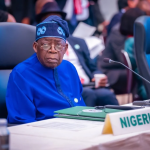
    Tinubu– Grandpatron award

    President Bola Ahmed Tinubu gets this position not only because he is the leader of all the politicians in the country but simply because there is nobody badder. Tinubu’s doings are so loud that his policies from the previous year are still showing an immeasurable amount of shege to Nigerians.

    While Nigerians battled with the unending consequences of the removal of fuel subsidies, the devaluation of the Naira, and many others, the grand patron taxed them more while continuing to promise things that he never did.

    Under President Tinubu, the exchange rate skyrocketed, several factories closed down, the manufacturing sector went into life support, and Nigerians suffered hunger more than ever. This translated to what has been described over and over by the international media and experts as the worst economic crisis on record witnessed by Nigeria.

    In response to this hardship, Tinubu has been adorned with nicknames like T Pain, so we cannot think of a more deserving winner than him.

    Going into 2025, we hope for better representation and leadership from Nigerian politicians, and we’ll be on the alert to report their bad and hopefully good behaviours to you. 

  • On November 4, the Economic and Financial Crime Commission (EFCC) arrested the former governor of Delta State, Ifeanyi Okowa, for allegedly diverting ₦1.3 trillion derivation funds meant for his state’s development.

    His arrest has had Nigerians wondering if he’ll face the wrath of the law, or if, like some others before him, he finds a way to get away with these charges or if his case simply gets forgotten over time.

    This took us down the long memory lane of corruption cases against  Nigerian governors with similar inconclusive endings. 

    Murtala Nyako, former governor of Adamawa state

    On July 19, 2021, an Abuja federal high court told  Murtala Nyako and his son that they had some explaining to do over a ₦29 billion fraud case filed against them by the EFCC. The father-son duo were slammed with a 37 count charge—everything from criminal conspiracy and stealing to abuse of office and money laundering.  The case was later adjourned till January 2022, but it hit a roadblock after the judge in charge became temporarily unavailable. 

    In March 2024, the court case resumedNyako, along with his son, pleaded not guilty, and the judge adjourned the case to October 24 and October 28. If the case was revisited, then Google’s search engine should be questioned because nothing suggests it was. 

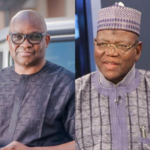
    Sule Lamido, former governor of Jigawa state

    Lamido and Murtala Nyako might not be besties, but they definitely belong to the same “present-fathers” Whatsapp group. In 2015, the EFCC charged Lamido and his two sons, Aminu and Mustapha with 37 money laundering charges of ₦1.35 billion. In July 2023, after eight years of back-and-forth without results, the Abuja Court of Appeal dismissed the case because, according to them, the federal high court should have held the trial in Jigawa, where the alleged crime was committed instead of Abuja.

    But the EFCC wasn’t about to let it go so easily. In August 2023, they asked the Supreme Court to revive the case and overrule the court of appeal’s decision because it didn’t make sense to them that the case was completely dismissed when it could have been easily transferred to Jigawa. The court didn’t overrule that decision, and the case remains dismissed to this day. If you’re wondering what Sule Lamido has been up to since then, he’s been granting interviews and being referred to as a “seasoned politician.”

    Ayo Fayose, former governor of Ekiti state

    This name probably rings a bell because the EFCC has had its sights set on Fayose and his aide, Abiodun Agbele since 2014 for a ₦6.9 billion fraud and money laundering case. Among many other things that, Fayose and his sidekick did with the money, they reportedly used ₦1.2 billion of it to fund his gubernatorial campaign in Ekiti. 

    The case never made it to court till 2018. He pleaded not guilty and got a   ₦50 million bail on October 24, 2018. In  December 2021, he was re-arraigned after the EFCC filed a petition against the court’s ruling. The back and forth continued for 3 years until March 2024 when the judge ordered the presentation of witnesses. in June 2024, Fayose’s lawyers argued that the EFCC hadn’t provided enough evidence to continue the case and, therefore, had no case against the ex-governor. They presented a no-case submission (a plea to dismiss the case) that was approved by Judge Nnamdi Dimgba from the federal high court in Abuja. EFCC appealed the court’s ruling, but there isn’t much information on what happened after.

    Yahaya Bello, former governor of Kogi state

    Yahaya Bello went from receiving praise for making history as Nigeria’s youngest governor to becoming the EFCC’s regular customer. In May 2024, the EFCC chairman accused Bello of transferring $720,000 from Kogi State funds to a Bureau De Change to cover the children’s school fees in advance before he left office. Instead of cooperating with EFCC’s investigations, Bello avoided the EFCC like a plague and resisted arrest

    In September, Bello got tired of hiding and decided to finally honour the EFCC’s investigation to “clear his name”, but the name-clearing part didn’t happen because the EFCC brought 16 new charges against Bello, accusing him of misusing ₦110.4 billion in state funds to buy fancy properties in Abuja and Dubai and transferring a large part of the funds to a U.S. bank.  As if those allegations are not wild enough, he was still accused of unlawfully obtaining ₦677 million from a business deal.

    After the fresh allegations were brought up, Bello went back to avoiding the EFCC, but a court recently ruled that his trial should start even if he doesn’t appear in court. We still don’t know how the Yahaya Bello story will end, but it’s beginning to look like it might stretch on for years because the case has now been adjourned until January 2025. Yahaya Bello’s history of resisting arrest and acting unbothered suggests that we shouldn’t hold our breath for any consequence. 

    Danjuma Goje, former governor of Gombe state

    In October 2011, Danjuma Goje and four other members of his administration were accused of moving ₦25 billion from the state treasury, but the case kept dragging on. In May 2012,  while the case was being heard, members of the Gombe State Students Association protested outside the court demanding that Goje face justice without delay. But that never happened. 

    Goje and the EFCC had a long back and forth which lasted for eight years until June 2019, when things took a surprising turn: just 24 hours after Goje met with President Muhammadu Buhari and agreed to step down from his race for Senate President in favour of Ahmed Lawan, the EFCC  handed the case over to the Attorney-General’s office, saying they hadn’t completely abandoned it but were simply transferring it. 

    Things worked in Goje’s favour again in July 2019 when the Attorney-General’s office requested to drop the last two charges against him. The court approved this request, and Goje walked away a free man. 

    Orji Uzor Kalu, former Governor of Abia state

    In 2007, the EFCC charged Orji Uzor Kalu and his finance director, Jones Udeogu to court for misappropriating ₦7.65 billion in state funds. For 11 years, Kalu and his finance director didn’t face any real consequence until 2019, when he got a 12-year prison sentence and Udeogu a 10-year sentence.

    But they barely spent one year in prison because, in 2020,  Kalu and Udeogu were released after they argued that the verdict against them was invalid because the judge who gave it had already been promoted to the Court of Appeal when he handed it down.

    The Federal High Court blocked the EFCC from restarting the trial, but they appealed the court’s decision in March 2024. The commission lost again after the Court of Appeal dismissed the appeal over missing documentation—a classic case of Nigeria’s “missing file” issues. The EFCC now says it’s fixing its paperwork system and will continue from where it stopped. Kalu is still a free man and a senator in the National Assembly. 

    The cases referenced in this article are few in a long list of politicians whose corruption cases never saw a conclusive end, either because they never went to court, they went to court and were dismissed after many years of back-and-forth, or they died while the cases were still ongoing.

    [ad]

    Why do some corruption cases fade away?

    1. There are loopholes in the judicial system, and politicians take advantage of them
    2. Nigeria’s judicial system is inefficient, and this sometimes leads to delays.
    3. The EFCC is under-resourced.
    4. Interference from the executive arm of the government 
    5. Overall system corruption

  • If you’ve ever dated a Nigerian politician, you know the experience is a rollercoaster that leaves you questioning your life’s choices. Between the endless trips to Abuja for “party meetings,” the constant spiritual fortifications, and the stinginess that somehow vanishes in public, the cons sometimes outweigh the pros.

    We spoke to seven people who have been in relationships with politicians, and let’s just say they’ve been through a lot.

    What’s It Like Dating a Politician? We Asked 7 Nigerians

    Lola*

    They’re relentless in their pursuit of power. My husband started running for a councillor position in his early 30s as a committed PDP member. But Lagos was mostly AC at the time, and he kept losing. After contesting three times, I and other family members advised him to try a different party or redirect his resources, but he refused and stayed with PDP, losing every time. He finally switched to APC when they took over Lagos, and after some waiting, he got the ticket and is now in his second term. Thinking about it, he spent nearly 12 years chasing that seat—ridiculous. This dedication is only shown in politics; it’s not like this in other areas of his life.

    Hassan*

    What’s really going on in Abuja? I get it’s the seat of power, but why do politicians need so many trips there? My girlfriend, a youth leader in her ward, makes at least one unplanned Abuja trip every month. If it’s not Abuja, it’s another state for a convention or meeting. I hate it because it makes planning anything as a couple impossible—she always has to check with her “leaders” first.

    James*

    I’ve never dated a politician, but my mum is a dedicated party woman, and I wonder how my dad copes. She’s out of the house most of the time for party meetings. The only benefit is the freebies—cash gifts, foodstuffs, and ad-hoc job opportunities. During festive seasons, we also get bags of rice, gallons of oil, and sometimes even livestock. I honestly can’t remember the last time we bought foodstuffs ourselves.

    Grace*

    Between politicians and yahoo boys, I don’t know who’s more fetish. During election season, it’s crazy. I’d open my ex’s wardrobe to find all sorts of concoctions and odd-looking containers. His perfumes even had particles, and some alfa, pastor, or herbalist always came to deliver something. I couldn’t relax around him because, after a while, I wasn’t sure if those “protections” were for safety or harm.

    Ayo*

    Politicians aren’t as generous as people think. I dated a local government chairman once, and he was stingy AF. He preferred impressing outsiders over spending on those close to him. Once, someone from his family even messaged me, begging me to convince him to pay his kids’ school fees. Imagine that—he wasn’t even giving me money like that. I haven’t been with other politicians, but that experience was all I needed to know they aren’t all that.

    Bisi*

    My university boyfriend was heavily into student politics, and I’ve never seen anyone with such deep trust issues and paranoia, especially around elections. If he walked past a group, he’d convince himself they were talking about him. Sometimes, he’d join their conversations to put in a good word. He even made his friends swear they wouldn’t betray him. It was exhausting. We broke up after uni, but I can only imagine the paranoia if he’s still in politics.

    Patience*

    They don’t take defeat well. My husband campaigned for Obanikoro in 2007, and I still remember when they declared Fashola the winner. He came home two days later and sank into a depression—he wasn’t eating, talking, or sighing constantly. I didn’t get it; he was more devastated than the actual candidate. Eventually, I called his family to come and snap him out of it.

    Read this next: What’s It Like Dating a Medical Practitioner? We Asked 6 Nigerians

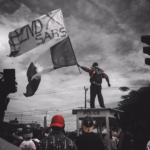
  • In October 2020, Nigerian youths spoke in one voice against the widespread police brutality in the country through the EndSARS nationwide protests. On October 20,  2020,  a date that now has sadness forever etched in it, the Nigerian government set out to crush the movement.

    Deep into the night, while protesters at the Lekki Tollgate in Lagos State, held the Nigerian flag and recited the national anthem, soldiers of the Nigerian military fired their guns into the crowd, killing many.

    In the days and years that followed, some politicians and the Nigerian government denied, and have continued to insist, in different ways that the Lekki massacre never happened.

     Here is a timeline of statements made by politicians, both in individual capacities and on behalf of the government, denying Nigerians were killed for demanding their rights.

    Babajide Sanwo-Olu (Lagos State Governor), October 21, 2020

    On October 21, 2020, during a press briefing a day after the shooting, Sanwo Olu said that nobody was killed at the Lekki tollgate.

    “Fellow Lagosians, as we pray for the swift recovery of the injured, we are comforted that we have not recorded any fatality as against the widespread speculation on social media. Both myself and the leadership of the Ministry of Health have been going round. We went round all the hospitals last night, to see and to monitor for ourselves what has happened and to look and identify the injured protesters,” he said.

    Nigerian Army, October 21, 2020

    On October 21, a day after the massacre, the Nigerian army took to its X account to label different reports about the incident as fake news.

    Lai Mohammed-(Former Minister of Information), November 19, 2020

    On November 19, 2020, at a press conference organised to address the EndSARS protests, Lai Mohammed described reports of the Lekki shootings as fake news and encouraged the international community to ignore them.

     “At this juncture, we want to appeal to countries that have made faulty judgments on the basis of fake news and disinformation emanating from #EndSARS crisis to endeavour to seek and find the truth,” he said.

    Wasiu Sanni (Deputy Speaker, Lagos State House of Assembly), October 29, 2020

    On October 29, 2020, during a plenary session, the lawmaker said: “In fact, the way and manner it was out on social media, I could not even eat, I was down, I was very very sad. I thought what we had, we cannot have less than 300 or 100 people who had died from such whatever.”

    Lai Mohammed, November 2020

    After CNN released a report saying the military killed EndSARS protesters in Lekki, the former minister of information said that “the report lacks fairness and balance, and that “the organisation relied heavily on manipulated social media videos.”

    Lai Mohammed, October 20, 2021

    On the first anniversary of the Lekki shootings, Lai Mohammed, speaking for the Nigerian government, continued to deny the massacre happened, even after a Judicial Panel of Inquiry and Restitution set up to investigate the incident described the events of that night as a massacre.

    “Today marks the first anniversary of the phantom massacre at Lekki Toll Gate in Lagos…” Continuing, he said “The military did not shoot at protesters at the Lekki Tollgate on Oct. 20, 2020, and there was no massacre at the toll gate. The only ‘massacre’ recorded was in the social media, hence there were neither bodies nor blood.”

    Tukur Buratai (Former Chief of Army Staff), December 4, 2020 

    At the decoration of some major generals, Buratai denied the Lekki shootings, even after the CNN report confirmed it happened.

    “.. there was no single corpse, but some persons were seeing double at Lekki toll gate in Lagos State,” he said.

    Why are these denials dangerous?

    Apart from being downright insensitive to victims and families who suffered as a result of the Lekki shootings, here are some of the things that make the denials from the Nigerian government dangerous.

    Denials reduce public sympathy for social movements

    Because movements like EndSars heavily rely on public support, denials from government and public figures have a way of making the movement appear illegitimate and reducing sympathy, especially from those who were not directly affected by it.

    Denials delay justice and accountability

    When the government refuses to admit that it has done something wrong, it becomes difficult for movements to push for legal reforms as the system they are fighting against has refused to acknowledge the issue. It also delays justice, as has been seen in the case of the EndSars movement.

    Denials create a culture of fear

    When the government denies events like this and threatens media houses that present alternative reports and narratives, they create a culture of fear that prevents regular citizens and activists from taking more action and this weakens the strength of a movement.

    Denials demoralise people

    When the government does something of this nature and denies it, it makes people feel their actions have been in vain because the government would always get away with such crimes.

    What can Nigerian youths do to avoid future denials?

    This question is key to future social movements and if young people are successful in answering it, things are likely to change. Young Nigerians are asking this question now more than ever and here’s what we think the answer is.

    1. Document events with clear evidence
    2. Utilise secure platforms like blockchain-based archival systems to make sure important footage and documents remain accessible
    3. Build strong alliances with the media
    4. Build stronger social movements

  • On Wednesday, March 27, 2024, an incident between KFC represented by the manager at their outlet in the Murtala Mohammed Airport and the son of the former Ogun state governor, Adebola Daniels, broke into the limelight. The Federal Airports Authority of Nigeria (FAAN) acted swiftly and shut down the branch barely a day later on Thursday, March 28, 2024. The incident has sparked public reaction and criticism. Here’s everything we know about the situation.

    What went down between KFC and Debola Daniels?

    The issue between Debola Daniels and KFC stemmed from an incident where KFC denied access to Adebola Daniel, the son of former Ogun State Governor Gbenga Daniel, who uses a wheelchair. Adebola Daniel shared his experience of being asked to leave the KFC premises at the Murtala Muhammed Airport in Lagos because of KFC’s “No wheelchairs allowed,” policy. He described this experience as humiliating and discriminative towards people with disabilities

    In his open message to KFC, Debola asks if he is not human enough to eat at the restaurant.

    Debola Daniel via X

    What reaction did this get?

    This incident prompted a reaction from the Minister of Aviation, Festus Keyamo, who announced the shutdown of the KFC outlet following an investigation that confirmed the allegations of discrimination against Adebola Daniel by the Director of Public Affairs and Consumer Protection at FAAN. The only penalty on the list was a public apology.

    Some individuals took to Twitter to disagree with this penalty, stating that an apology would not cut it as KFC violated the law through their actions.

    What does KFC have to say about this?

    Taking to their Twitter account, KFC released a statement about the incident reinforcing the management’s stand against bias and discrimination and assuring the public that they are training their staff to be more inclusive and servicing to guests regardless of their status and ability.

     While Nigerians await KFC’s public apology as directed by FAAN, you can join the conversation on our WhatsApp channel here.

  • There is a new social media platform that might be giving Elon Musk a run for his money and having him choke on whatever irks his throat. Ever since Twitter had Mr. Musk as its new landlord, things haven’t quite been the same. And on Wednesday, July 5, Meta launched a messaging app called “Threads” that looks like the start of a new era for many social media users. 

    What exactly is Threads, and how is it different? 

    Threads is a text-based social messaging app launched in over 100 countries that allows you to follow the same accounts you do on Instagram. You can post pictures or texts and like, comment, repost, and quote them. While it’s yet to have a trend table or options for sending private messages, unlike the Bird app, Threads is free, and you can put the worries of exceeding a daily limit behind you. 

    For many people, especially Nigerians who have a larger following on Instagram than Twitter, this new app is an opportunity to create a new social media personality. After all, it’s never too late to achieve your dreams of becoming an influencer. And it also looks like Nigerian lawmakers have the same idea as many of them have become “Tailors”, as many Nigerians call themselves on Threads. Hours after its launch, they’ve begun sewing content for many Nigerians.

    Download the Citizen Election Report: Navigating Nigeria’s Political Journey

    Who are the lawmakers there now?

    President Bola Ahmed Tinubu

    Since the days of his campaign, no love has been lost between Tinubu and the Bird app, so Threads might finally give him a chance to breathe.

    Babajide Sanwo-Olu

    If there’s one thing the Lagos state governor does well, it’s preaching the gospel of his good news and putting his legs in strategic corners, and a new app isn’t going to stop him. 

    Abba Kabir Yusuf

    Kano state governor, Abba Kabir Yusuf, also didn’t carry last here. He’s already spreading his message of good tidings. 

    So far, eight other governors have joined the Threads app; they include Prince Dapo Abiodun, Ogun state governor; Umo Eno, Akwa Ibom state governor; Bala Mohammed, Bauch state governor; Peter Mbah, Enugu state governor; Biodun Oyebanji, Ekiti state governor; Uba Sani, Kaduna state governor; Yahaya Bello, Kogi state governor; and Seyi Makinde, Oyo state governor. 

    Other key lawmakers and political figures on the app are Vice-President Kashim Shettima, Atiku Abubakar, Senator Orji Uzor Kalu, former Vice-President Prof. Yemi Osinbajo, and the Police Public Relations Officer, Lagos State Command, SP Benjamin Hundeyin. 

    Also joining the Threads are some key government agencies, such as the Federal Inland Revenue Service (FIRS), to remind you that you can’t escape tax in this administration, and the National Drug Law Enforcement Agency (NDLEA), with their message of catching drug abusers and traffickers.

    As expected, you’ll also find many media houses like the National Television Authority (NTA), Silverbird TV, Arise News, Channels Television, and the TVC on the new tailoring app.

    Also, Read: New Phase, Who This? The Nigerian Television Authority (NTA) Resurgence

    And, of course, ZikokoCitizen is on Threads to ensure you’re always up to date with everything and anything Nigerian in politics, policies, and governance. 

  • Have you ever wondered which disciple Davido or Babajide Sanwo-Olu would be if they were in the New Testament with Jesus? Whether you’ve had this thought or not, this article is here to help you visualise this alternate universe. 

    You’re welcome. 

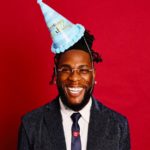
    Burna Boy is Peter 

    Source: Youtube

    Our one and only African giant who disappears when Nigeria actually needs him, Burna Boy has a lot in common with Simon Peter. Burna Boy also gives off the “I want to walk on water like my boss” energy. Tell me you see it too. 

    Mahmood Yakubu is Judas Iscariot

    Source: The Sun 

    We’re not saying INEC Chairman, Mahmood Yakubu, sold Nigeria for 30 pieces of silver. But there’s something fishy about him resorting to manual result reporting after promising us electronic transmission with BVAs, ignoring cases of voter manipulation and suppression then announcing the winners at 2 a.m. that feels suspicious AF. Do with that information what you will. 

    Davido is John the Beloved 

    Source: Stephen Tayo 

    No stress, good vibes and loved by all, John was Jesus’ fave. Sounds a lot like our unproblematic king, Davido. All David Adeleke does is donate money to charities and make music about spoiling his baby with cash. We all love a benevolent king. 

    Yemi Osibanjo is Matthew 

    Source: The Daily Post

    Matthew used to be a tax collector called Levi before he found Christ and said goodbye to the world of capitalism. Sounds a little bit like Vice President Yemi Osinbajo, who kept quiet during #EndSARS but tried to rebrand as a BFF to the youths when it was time for the presidential elections. But unlike Matthew, his rebrand flopped harder than BVAs on election day. 

    Pheelz is Andrew

    Source: YouTube 

    According to the book of John, Andrew, Peter’s older brother, was a disciple of John the Baptist before he started following Jesus. His ability to port with such finesse reminds me of Pheelz’s transition from producing to singing. It’s giving talent, and I’m here for it. 

    RECOMMENDED: Which Nigerian Music Producer-Turned-Singer Surprised You the Most?

    Tiwa Savage is Mary Magdalene

    Source: Okay Africa

    Let’s be real, Mary Magdalene would’ve been a disciple if not for the patriarchy of those days. Before anyone comes for me, remember that this was the same era when people were willing to stone a woman who committed adultery, but nobody mentioned the man she slept with. 

    Tiwa Savage is just as talented as Nigeria’s big three, but people often forget to give our African Bad Gyal her flowers. 

    Omoyele Sowore is Thaddeus 

    Source: Business Day

    Raise your hands if you remember Thaddeus from the bible. No one? Okay. Now, raise your hands if you think about Omoyele Sowore outside of election season? Glad we’re all on the same page. Thanks for coming to my TEDx Talk. 

    Thaddeus Atta is Mathias 

    Source: NewsNGR

    Mathias was a last-minute addition to the disciples after Jesus died and Judas bounced. He wasn’t mentioned before he became a disciple, yet he somehow managed to score a spot on the hottest line-up in the Bible. This gist lowkey reminds me of how Thaddeus Atta of the Labour Party came out of nowhere to beat two popular candidates — Banky W of the People’s Democratic Party (PDP) and nepo-baby, Babjide Obanikoro (APC) — to get the Eti-Osa seat in the National Assembly during the 2023 general elections. 

    Babajide Sanwo-Olu is Doubting Thomas

    Source: Punch

    Thomas, AKA Mr Show Me The Receipts, was the disciple who asked Jesus to prove he had resurrected even though he was talking to him face to face. This is the same way Lagos State Governor Babajide Sanwo-Olu has refused to acknowledge the 2020 Lekki Massacre even though the Nigerian Army has said he was the one who invited them. Hmmm. 

    ALSO READ: Just Imagine These Nigerian Celebrities As Nigeria’s President

  • On February 16, 2023, Nigerians were all over the place regarding a claim made by the House of Representatives Majority Leader of the All Progressives Congress (APC), Alhassan Doguwa.

    Doguwa, speaking after a meeting with President Muhammadu Buhari, addressed the issue of the scarcity of the new naira notes.  

    [Alhassan Doguwa, to President Muhammadu Buhari’s right. Channels TV]

    He said, “A member of the House of Representatives is expected by law to have not more than ₦70 million to conduct his elections and whatever logistics and other things. ₦70 million cash, by law.”

    On the Wait First flagship, we rate claims into three categories. We rate a valid claim as fresh banana. We rate a false claim as burnt dodo. A misleading claim is cold zobo.

    What’s the status of this claim?

    To answer that, let’s look at the Electoral Act 2022, which guides the conduct of elections in Nigeria.

    The relevant section that pertains to campaign financing is Section 88, titled “Limitation on election expenses.” See the screenshot below:

    The part that concerns us is subsection 4. “The maximum amount of election expenses to be incurred by a candidate in respect of Senatorial and House of Representatives seat shall not exceed 100,000,000 and 70,000,000 respectively.” 

    However, there’s nowhere in the Act that says a candidate must have “hard copy” cash to do this.

    Verdict: The law provides a ₦70 million limit for campaign expenses related to House of Representatives positions, that is, from the commencement till the end of campaigns. However, Doguwa’s claim that it must be in cash is misleading. You’ll not find colder zobo anywhere else.

    Did the Finnish government issue a letter to Simon Ekpa regarding the Nigerian elections?

    A viral letter made the rounds recently on social media. It claimed to have come from the Finnish government. The letter targeted Simon Ekpa, a Nigerian secessionist based in Finland. Ekpa has links to the Indigenous People of Biafra (IPOB). It said the Finnish government would charge him with terrorism if he didn’t cease a sit-at-home order in the South East on election day.

    ALSO READ: Who’s This Simon Ekpa Guy Running IPOB?

    So how true is it?

    The fact checkers at the Centre for Democracy and Development (CDD West Africa) looked into the letter. Here’s what they found:

    “CDD War Room contacted the Finnish Embassy in Nigeria, and we were informed that the letter is not an official correspondence of the Finnish government.

    “An official spokesperson of the Finnish government in Nigeria said the embassy has contacted Twitter to remove the letter from the micro-blogging platform.”

    Verdict: Do you still need us to spell it out? Na burnt dodo. We hope you didn’t fall for it.

  • Every four years, Nigeria’s enters another election season when politicians visit places they’ll never set foot in again to whisper sweet nothings into voters’ ears. 

    For the 2023 elections, nothing has changed. Politicians are again making promises they’ll probably forget or find difficult to fulfil if they get what they want. 

    Let’s take a look at some of them so far.

    Fuel will become ₦100 per litre 

    On January 25, 2023, during a live appearance on Channels Television, Dan Nwanyanwu, presidential candidate of the Zenith Labour Party, promised to revitalise our refineries in 3-4 months. 

    Source: blueprint.ng

    Also, he would build modern refineries in all six geo-political zones. Thus, by the end of his first six months, fuel would be sold for ₦100 per litre, saving us from the problem of independent marketers. 

    One thing the current administration has taught us is if it sounds too good to be true, it’s probably never going to happen.

    Relocation to the Sambisa forest

    Everyone wants a leader who’d lead them fearlessly into battle. Hamza Al-Mustapha, presidential candidate of the Action Alliance (AA), plans to be just that.

    Source: Vanguard

    During an interview with the British Broadcasting Corporation (BBC) Hausa, he said that if elected president, he’d end our insecurity and terrorism crisis within six months. But that’s not all; he plans to spend his weekends and holidays in the Sambisa forest, where notorious extremist groups like ISWAP and Boko Haram are often camped. 

    Election Campaign promises Politicians

    Creation of 30 million jobs

    One of the things Adebayo Adewale, presidential candidate of the Social Democratic Party (SDP) has on his agenda is the creation of 30 million jobs. 

    Source: Vanguard

    He plans to achieve this using cryptocurrency. It sounds promising, but Nigerians have seen this film before, and we didn’t like the ending. 

    In 2015, President Buhari promised to create 3 million jobs annually, but gave us a 33% unemployment rate instead.

    No more generators or foreign education 

    Presidential candidate of the African Democratic Congress (ADC), Dumebi Kachikwu, has castles in the air, too. 

    Source: Leadership.ng

    While explaining his manifesto, he said if elected, he’d draft a Nigerian Patriot Bill that’d ban public officers from giving their children foreign education. 

    Election Campaign promises Politicians

    He also plans to restrict their access to private and foreign hospitals, generators and boreholes for as long as the ordinary people can’t afford these amenities. 

    In theory, most of these campaign promises sound like good plans and a step towards making our lives easier. However, why do we hear nothing from these politicians after elections, and their campaign promises end up looking like lies?   

    No punishment for failed promises

    Sadly, there is no provision in the law that holds politicians accountable for their campaign promises. As such, fulfilling it or not is entirely up to their hardly reliable goodwill. 

    Lack of funding

    While some elected officials have plans to fulfil what was promised, they soon realise Nigeria –and by extension, states– are only rich on paper. For instance, a report last year showed that Abia state hadn’t paid some of its workers for 22 months. In such situations, the elected government would have to solve the existing problems before fulfilling his campaign promises.

    Need for restructuring

    Early December 2022, President Buhari, while addressing members of the Senior Executive Course (SEC), accused state governors of being responsible for the poverty level as they were looting local government allocations. According to the president, the local government chairmen would pocket half of what was allocated and thus fail to embark on necessary projects.

    Election Campaign promises Politicians

    An evil we’ve been dealing with for a long time is corruption, and it, unfortunately, begins at the grassroots level. If we’re to experience any real change, the entire system would need to be cleaned and restructured. 

    Are you signed up to our Game of Votes newsletter yet? We help you make sense of news jargon and keep you up-to-date especially with election news. Make the subscription of a lifetime here

  • During elections, politicians try every strategy to win people’s hearts. From eating roadside boli to wearing school uniforms, they’d do everything with bright smiles for photo ops.

    Tinubu Abiola 1993
    Lagos state Governor, Babajide Sanwo-Olu showing his hairdressing skills

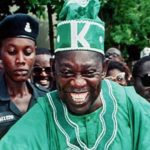
    For the 2023 general elections in Nigeria, the presidential candidate for the All Progressives Congress (APC), Bola Ahmed Tinubu, has decided not to use the all too popular method of pretending to be a commoner. Rather, perhaps to invoke the spirit of June 12, 1993, and tug the hearts of the older generation, he has made symbolic references to the campaign of arguably Nigeria’s most popular politician, M.K.O. Abiola.

    Tinubu Abiola 1993

    Some of the similarities are:

    • Tinubu’s manifesto is titled “Renewed Hope”, similar to Abiola’s “Hope ’93”.
    • Like Abiola, Tinubu is also from the South-West and running a same-faith campaign with his running mate, Baba Gana Kingibe.
    • Similar to Abiola, Tinubu also kick-started his presidential campaign in Jos. 

    Many people, including Tinubu himself, have taken this opportunity to reiterate that this is a chance to restore Abiola’s mandate. However, this isn’t the ’90s, times are different, and Nigeria has changed in many ways. So while Tinubu may posture himself and his campaign similarly to Abiola’s, here are some reasons why he might not get his desired outcome.

    The internet never forgets

    In 1993, M.K.O. Abiola had a massive influence on the media, especially as he owned the Concord newspaper, a leading publication in the country that formed public opinion. While Bola Tinubu also owns media bodies like The Nation newspaper and TVC news station, he doesn’t have as much media privilege, as he now has to deal with social media and the ever-present bone in his neck: the gen-zs. 

    Tinubu Abiola 1993

    And you can say that it’s a little too late for rebranding as many people already associate him with corruption and godfatherism. Proof of the internet staying winning is in videos of bullion vans entering his residence during an election and of him “charging” his team to snatch power at any cost.

    The Muslim-Muslim ticket

    Like we said earlier, this isn’t the ’90s. While the same faith ticket may have worked for Abiola, Nigeria today is deeply divided along religious lines. Many people are uncomfortable with the lack of representation, especially since many churches and Christians have suffered attacks in previous years. Some Christian bodies and leaders have already discouraged their followers from voting for Tinubu, which can be detrimental to his campaign, especially if he has to worry about a “third force ” that has managed to achieve this religious balance. 

    Nationwide influence

    One of the peculiar things about Abiola was his political relevance on a national scale. Due to his philanthropy, he was loved widely. Sadly, we can’t say the same about Tinubu. Although he has established himself as a powerhouse in the southwest, there’s still much distrust from people from other parts of the country. Another thing to remember is that Abiola faced opponents who he could have easily defeated if the elections were repeated twice over. But as it stands, the story is very different for Tinubu as he is facing candidates equally strong in their own rights. 

    Although we don’t know yet what the outcome of the upcoming general elections will be, it’s clear that when it comes to recreating Abiola’s historic June 12, 1993 win, Tinubu may still have a long way to go.