• This article is part of Had I Known, Zikoko’s theme for September 2025, where we explore Nigerian stories of regret and the lessons learnt. Read more Had I Known stories here.


    Parenting is one long guessing game. You do what you think is right, hope it sticks, and pray your children turn out better than you did. But sometimes, the decisions that seemed wise in the moment are the same ones parents look back on with heavy hearts.

    We asked Nigerian parents to share the parenting choices they regret the most; the ones that still haunt them, even after their children are grown, and they had a lot to say.
    “Sending them abroad too early ruined the bond we could’ve had” — Kaosarat*, 49

    Many Nigerian parents see relocating their children abroad as the ultimate gift,  a chance at opportunities they never had. But for Kaosarat, sending her children to the US too early left her with a regret she still carries.

    “I thought I was giving my children the best shot at life by sending them to the US. My first son left right after junior secondary school, and his sister went after primary school. At the time, I convinced myself it was the safest option. Nigeria felt too uncertain, and everyone talked about endless opportunities abroad.

    I tried to prepare them before they left. I prayed over them, taught them Nigerian values, and corrected them when I could. But the truth is, between managing shifts at work and trying to keep them comfortable, there were lapses. And those lapses have cost me more than I imagined.

    Today, I feel like I don’t have children. My son joined gangster groups, smokes heavily and barely listens to me. My daughter is extremely rude; she once called the police on me. When people in Nigeria ask after them, I just say “they’re fine.” But the truth is, I don’t recognise them anymore.

    Looking back, I wish I’d listened to those who advised me to let them at least finish secondary school before relocating. I didn’t want to risk leaving them in Nigeria, but maybe they would’ve been more grounded if I had.

    Last year, I spent four months in Nigeria, and neither bothered to call. They ignored my calls and messages throughout. All I can do now is trust God to touch their hearts.”

    “My children respect me, but they don’t love me” — Emmanuel*, 58

    Some parents pride themselves on being feared, believing discipline must come before friendship. Emmanuel followed that path, and now that his children are grown, he wishes he’d chosen differently.

    “I grew up believing that children must fear at least one parent. Naturally, as the father, I became the one they feared. I was the disciplinarian. I thought I was raising them right.

    And to be fair, I took care of them. They went to the best schools. They never lacked food, clothes or anything. But in the process, I shut the door to any real relationship with them. Now they’re grown, most of them married, with only the last one still at home. They call, they check in, they do their duties. But there’s no warmth. Everything feels like an obligation, not love.

    I’ll never forget the day my firstborn told me, “You were our dad. Yes, you took care of us and gave us the best, but we always doubted it was done with love.” Those words pierced me. And the worst part is, I can’t argue. It’s the truth.

    These days, I try to be softer. I laugh more, I ask questions, I try to connect. But it feels late. Whatever they do for me now — even visiting — feels like ticking a box, not because they actually enjoy my company.

    I used to be proud that my children feared me. Now I’d give anything for them to love me instead.”

    Get More Zikoko Goodness in Your Mail

    Subscribe to our newsletters and never miss any of the action

    “We stopped at two kids because of poverty, now I wish we had more” — Yetunde*, 54

    For many parents, the number of children they have is shaped less by choice and more by circumstance. For Yetunde, poverty shaped hers and decades later, she still wonders what could have been.

    “Back then, life was unbearable. My husband couldn’t keep a job, and I was hawking provisions in the sun just to keep food on the table. We both agreed that bringing children into that kind of suffering was cruel, so we stopped at two. Along the way, I got pregnant twice more, but we couldn’t keep them. We chose abortion because, honestly, we could barely feed the ones we had.

    But fast-forward to today, and life is good. My husband and I run successful building materials businesses. If anyone had told me we’d reach this level, I would have kept every pregnancy. I look at our two children now, and while I’m grateful, I still imagine a fuller house with more laughter and siblings.

    I’m in my 50s now and don’t want to try anymore. My children are adults, and I’ve begged them to give me as many grandchildren as possible. But they’re stuck on small families, too. In fact, my first daughter only wanted one child until I pressured her and her husband into having a second.

    I’ve taken solace in what God has given me. But sometimes, I wonder if we limited ourselves too much because of fear. If only we knew better days were coming.”

    “I should have listened before it was too late” — Bose*, 56

    Some parenting regrets are born not from what you did, but from what you didn’t do. For Bose, ignoring her son’s complaints about boarding school is a decision she’ll never forgive herself for.

    “When my son started boarding school, he cried and begged to come home every visiting day. He said the teachers were harsh, the seniors were wicked, and the environment was unbearable. I dismissed it all. I had gone to that same school and suffered the same conditions, and I believed it made me stronger. I told him he’d survive like I did.

    Then one day in SS1, I got a call from the school saying he’d been admitted to the hospital. Nobody could give me a straight answer. My son swore a teacher slapped him. The school claimed he was caught in a fight with other students. Whichever it was, the damage was done: he lost hearing in one ear. Since then, he’s had to wear hearing aids.

    He left that school after the incident, but the guilt hasn’t left me. If I had listened to him earlier, maybe he wouldn’t have suffered this kind of lifelong damage. Parents always think they know better, but children sometimes tell you exactly what they need.”

    [ad]

    “I should have protected my children spiritually” — Ajara*, 74

    For Ajara, regret doesn’t come from money, discipline, or even opportunities. At 74, her deepest regret is spiritual: the sense that she failed to shield her children from unseen battles.

    “I married into a polygamous family, and from the very beginning, people warned me. Friends and relatives would pull me aside to say, “Ajara, you need to cover your children. Polygamous homes aren’t ordinary; there’s jealousy, rivalry, and all kinds of spiritual warfare. Join this cult. Do that ritual. Protect them.” But I always refused. I told myself I had God, and prayer would be enough. I didn’t want to do things that felt wrong to me, so I relied on morning prayers, fasting when I could, and just keeping faith.

    Back then, I thought that was sufficient. I was even proud of myself for staying ‘clean.’ But years later, when I look at my children’s lives, I sometimes wonder if I made a mistake. They’re not wayward, thank God. They’ve done well in their careers, built reputations, and they live comfortably. But it’s like they’ve been marked when it comes to family life. My two sons have both struggled to keep their marriages. One has been divorced twice. The other never lasts more than a few years in any relationship. And my only daughter still hasn’t had a child. She’s over 40 now, and doctors keep saying she’s fine medically, but nothing has happened.

    Of all of my husband’s children, only mine seem unable to keep a stable home. How do you explain that? Can it really be a coincidence? Sometimes, when I sit alone, I ask myself if those warnings people gave me all those years ago were true — that I needed to do more than prayers, more than fasting, to cover my children.

    What makes it worse is that my children themselves bring it up. They’ve gone for spiritual consultations as adults and sometimes come back to me saying, “Mummy, they told me you didn’t do enough to protect us.” Do you know how painful that is? To hear your own children blame you for their struggles? I raised them with everything I had, and yet, in the place that matters most — family and continuity — they feel I failed them.

    Now, they come to visit me in the same house where I raised them, but none of them has been able to build a lasting home of their own. I smile, cook for them, and pray with them, but there’s always this ache inside me. What more could I have done? Should I have listened to those friends who told me to seek protection in other places? Did my insistence on staying “clean” cost my children their happiness?

    Still, I thank God. They are not failures. They are respected, comfortable, and they take care of me. But deep down, I know there’s a missing piece in their lives, and I can’t help but feel responsible. Sometimes I tell myself maybe this was how God wanted it, but as a mother, you never stop wondering if you could have done more.”

    “The scar on my son’s face came from me” — Adebayo*, 49

    When Adebayo talks about regret, it’s not about money or missed opportunities. It’s about the most visible scar on his son’s face and how he put it there.

    “My boy was always stubborn. From childhood, he tested every limit. I tried everything: gentle parenting, sending him to stay with relatives, even leaving him with the church for a while. But nothing seemed to change him. The only thing that felt effective was beating. I didn’t enjoy it, but I felt it was the only language he understood.

    Then came the night I’ll never forget. I returned from work one evening, and the house smelled of my perfume. It was strong, almost choking. Beneath it, though, was another smell I couldn’t place. I scolded him for wasting my perfume and left it at that. Two weeks later, it happened again, only this time my nose caught it: cigarette.

    I waited until midnight, stormed into his room, and turned it upside down. I found sticks of cigarettes hidden under his mattress. This was just a boy in SS3. I was livid. Something snapped in me. I beat him so hard that night, and in the chaos, I pushed him against the burglary. The sharp edge cut deep into his forehead. We rushed him to the hospital, and he needed stitches.

    I can’t forget how he looked at me that night, not with fear, but with a kind of deep-seated anger. The cut healed, but it left a scar. Not a faint one either, a big, visible line across his forehead. The first thing people notice when they see him.

    That incident shook me. I never beat him again after that night. I told myself it wasn’t worth it. Still, he didn’t change immediately; he kept being difficult for a while. But over time, he grew out of it. Today, he’s a responsible young man, one I’m proud to call my son. He has a job, he’s focused, and whenever we go out, I introduce him proudly.

    But every time my eyes linger on his face, that scar stares back at me. A reminder of the night I lost control. He doesn’t look bad — people still say he’s handsome — but the scar is the first thing you see. And I know I put it there.


    Do you have a story of regret? Share it with us by filling this form.

  • Gbemi*, 31, thought she could finally breathe a sigh of relief after a new job allowed her to fill in the financial gap left by her husband’s inconsistent income. However, this relief was unexpectedly cut short after she discovered she was pregnant.

    In this story, she shares how pregnancy discrimination at work got her laid off, and how motherhood has led to uncertainty about her career options and financial future.

    This is Gbemi’s story, as told to Boluwatife

    I remember staring at the ₦200 pregnancy test strip as the second line appeared, and my world shifted on its axis. 

    I was unbelievably happy, but also terrified. There I was, holding the answer to five years of prayers and a silent struggle with unexplained infertility. I took the test right at the mall where I bought it —  after so many negatives, I couldn’t risk letting hope balloon inside me by waiting until I got home. But for the first time ever, the strip told a different story. 

    I sank to the toilet floor, not caring that I was in a public bathroom; my legs couldn’t hold me up a second longer. The miracle I’d cried out for, begged for, had arrived at the worst possible time. Yes, my dreams were finally coming true, but it also meant my job was on the line.   

    Eight months earlier, I’d started work at a plastic factory, my first real on-site 9-to-5. Until then, I’d mostly done remote stints in operations, social media management and virtual assistance. But my husband’s income as a freelance consultant had become too inconsistent to plan our lives around. 

    He could make ₦1m one day, then go the next six months without a credit alert lighting up his phone. We needed steady income, so when the factory job came up in June 2023, I jumped at it. The ₦180k salary wasn’t life-changing, but it was consistent. We needed that.

    Get More Zikoko Goodness in Your Mail

    Subscribe to our newsletters and never miss any of the action

    On my first day of onboarding, after I introduced myself to my manager, he looked me straight in the eye and asked, “Do these people still hire women in this place?” I froze, watching him scratch his head and assess me from head to toe, as if he expected my body, not my mouth, to answer his question. 

    It took a few weeks, but I eventually discovered why he’d asked that. Management rarely allowed women to work on the manufacturing side because of the chemicals and the belief that we weren’t as “strong” as the men. Women, they claimed, also took more sick leaves, so they just hired fewer of us.

    Although I didn’t work in manufacturing — I was in admin operations and accounts — the discrimination still found its way to the women in the office. My manager, especially, was notorious for grumbling about female staff who had to rush off a few minutes before closing to pick up their children from school. If it were up to him, he’d only work with men. 

    I was one of just two women under his authority, and I could feel him waiting for me to make a mistake so he’d have a reason to let me go. 

    So, even while I rejoiced at my miracle pregnancy in February 2024, I knew there was a big problem: my manager would never consider maternity leave. The company didn’t even have a policy for it. 

    My only option was to work till the exact day of my delivery and resume one day after giving birth. Anything else, and I knew I wouldn’t have a job to return to.

    My husband and I had only just started to enjoy some stability with my income. By then, he wasn’t even getting consultant gigs anymore and was fully job-hunting. How would we survive without my job?

    I tried to console myself with the fact that I had some time. I figured it would take at least six months for my belly to show, and by then, my husband would’ve hopefully found something.

    It didn’t work like that. Firstly, I had all-day sickness — my symptoms refused to limit themselves to mornings — through the entire first trimester, and it showed in my work. I was constantly fighting headaches and nausea, surviving on nothing but crackers and water. I couldn’t focus and kept missing deadlines.

    Secondly, my belly started to show at just three months. I didn’t think anyone would notice, but my hateful manager immediately did.

    One afternoon, he called me into his office. “You’re pregnant. You didn’t plan to tell us?” The way he said it left no room for denial. I just nodded and smiled, bracing myself for him to sack me on the spot. He gave me a smile I can only describe as triumphant, and asked me to return to my desk.

    He didn’t sack me that day or the day after — not even the week after. Two weeks later, when I’d forgotten our conversation, I resumed work to find an email from HR. The email said the company was “restructuring,” and my role was no longer “feasible” for their new direction. It was a “layoff,” but I was the only employee affected.

    I walked out of the office that morning, my heart heavy with grief and questions. I was the breadwinner in my family, and suddenly I had no job, no income. My husband had been trying his best, but he hadn’t found anything, and we had a baby on the way. 

    The months that followed were a blur of uncertainty. I sent out application after application, but no one wanted to hire a pregnant woman. When we could no longer rely on urgent ₦10k handouts from friends and family, my husband took a security job for ₦80k/month. It was a huge downgrade, but we had no choice.

    The financial strain and uncertainty intensified after the arrival of our daughter, but we were blessed with a lifeline: our church community. They rallied around us, showering us with diapers and baby clothes, as well as the occasional cash gift. For five months, we didn’t have to worry about buying diapers.

    And then there was breastfeeding. Doctors sing the virtues of breastfeeding exclusively for six months, citing the numerous health benefits to the baby. For me, it wasn’t a choice; it was a necessity. We couldn’t buy baby food, so breastfeeding was the only option. 

    It’s been almost a year since our baby came, and our financial situation hasn’t improved much. My husband no longer does the security job — he was sacked for sleeping on duty — and freelancing is still as inconsistent as ever, even though the income trickles in more often now. 

    I haven’t returned to work because I haven’t found any, but honestly, I’m not looking as hard as I should be. I struggle with the idea of being away from my child. I want to earn an income and contribute to my home again, but where do I keep her?

    Sometimes, in the quiet moments when I’m breastfeeding at night, I wonder if I didn’t have this child at the wrong time. I immediately banish the thought as soon as it comes, but it always finds a way to creep back in.

    I looked forward to motherhood for so long, but I didn’t realise how much it would change me. It feels like I’ve lost what it takes to provide for myself and my family. The internet describes a phenomenon called “mummy brain,” where new mums struggle with focus. I think I have that. There’s this fog in my brain preventing me from taking decisive steps to better my life and career. 

    I’m scared and uncertain about the future. Will I ever find a job? What kind of job can I even get? Will I ever be financially free? Will my family ever leave the struggle phase?

    I have to believe I’ll get through this, somehow. I’ll find a way to make it work. I’ll find a way to balance motherhood and a career, so I can make my own money and be the mother and wife I want to be. 

    It won’t be easy, and I don’t know where to start, but I have to rebuild. My story can’t end here.


    *Name has been changed to protect the subject’s identity.


    NEXT READ: I Took Loans to Sponsor My Sister’s Education. Now I’m Fighting Addiction and Resentment

    [ad]

  • When you’re dating someone with a child, love isn’t just about the two of you; it’s about learning to share space, affection, and decision-making with a third (or fourth) person who didn’t choose you. 

    From discipline drama to silent resentment from kids, these Nigerians open up about how dating someone with children forced them to confront boundaries they didn’t know existed.

     “I got scolded for shouting at her son ”— Femi*, 32

    Femi* met his coursemate in grad school, and what started as casual flirty banter quickly became a situationship. She had a sweet, giggly toddler whose father was out of the picture, but he didn’t flinch.

    “At first, it was just vibes. I’d drop by her place to study or eat, and the boy would run into my arms, screaming my name. We became close fast. I’d play games with him, help with homework and sometimes pick him up from school when she had to be somewhere. He wasn’t my child, but it never felt like a burden. I genuinely liked the boy.

    Then one day, I came over to work on an assignment with her. Her son was home and kept interrupting us with tantrums — whining, crying, throwing toys. She tried to calm him, but he wasn’t listening. I was stressed, the deadline was close, and in that moment of frustration, I raised my voice and threatened to whoop him if he didn’t stop.

    The silence that followed was insane. He immediately calmed down and sat by the wall. She didn’t say anything; she just gave him his tablet and told him to behave. I didn’t think much of it. But later that night, she sent me a long epistle. She said she didn’t appreciate how I shouted at her son and that I crossed a line by trying to discipline him.

    I was shocked. I thought we were all in this together. I’d never been anything but kind and present in that boy’s life. I apologised, but something shifted. It felt like she saw me as an outsider, not someone she was building something with.

    We fizzled out not long after. The incident exposed the fact that, even with all my efforts, I didn’t have a say in how she raised her child. It made me realise that loving someone with a kid is not just about willingness, it’s about being trusted with the most sensitive parts of their lives. Since then, I haven’t dated anyone with a child. I’m not sure I have it in me.”

    Get More Zikoko Goodness in Your Mail

    Subscribe to our newsletters and never miss any of the action

    “He said I didn’t love his child enough” — Lami*, 30

    Lami* started dating her old secondary school mate in 2020, two years after he lost his wife during childbirth. By then, his daughter lived with her grandmother and only visited occasionally.

    “I genuinely liked Tade* in school, but we never dated. Life happened, and we crossed paths after he lost his wife. He was thoughtful, emotionally present and never rushed me into anything. He told me everything about what happened to his late wife, so I didn’t feel like he was hiding grief under the carpet. His daughter came around occasionally — holidays, sometimes weekends — but she wasn’t a permanent fixture.

    Still, I tried to be careful. I wasn’t hostile, but I didn’t get too involved either. I’d buy gifts, play a bit, make small talk, but I didn’t lean into the ‘mummy’ role. I just didn’t feel like it was my place. I knew the emotional dynamics of mothering a child who still had her maternal family involved could get tricky.

    He eventually brought it up. One night, he said, ‘I can see you love me, but I don’t feel like you love her.’ Hearing those words hurt because I cared; I just didn’t want to overstep. He said he wanted someone who could be a mother figure to his child. I understood. I just wasn’t sure I was that person.

    I’m not the wicked stepmother type. I could never maltreat a child, but I also know a child deserves more than polite affection. That little girl lost her mum in the most tragic way. I didn’t want to pretend I could fill those shoes when I knew I couldn’t. We never had a big breakup fight; we just stopped trying.”

    [ad]

    “Their dad said I was trying to replace him” — Wale*, 44

    Wale* had always been great with kids. Before switching jobs, he worked as a school administrator for some time. So, he wasn’t fazed when he met his girlfriend, a single mum of two teenagers.

    “Her kids were 13 and 15, and from the start, we just clicked. I knew how to talk to teenagers without acting like a know-it-all. I listened more than I spoke, gave them space, and didn’t force bonding. Eventually, we built something real. They’d invite me to their school events, ask for advice about uni, and I started feeling like family.

    But the problem came from their dad. According to my girlfriend, he never got over the divorce. At first, he ignored the fact that she was dating. Then, he went berserk once he found out I was spending time with the kids. He called her at odd hours, accusing her of trying to ‘replace him’. He even told her I was brainwashing the kids.

    It got really messy. He involved his family and made noise about how he was still alive and didn’t want another man acting like a father to his children. At some point, he started showing up unannounced when the kids were with us, asking to take them out or inspecting who was around.

    The kids were confused and torn. Their mum tried to shield them, but there was too much drama. I didn’t want them growing up in that kind of back-and-forth, so I stepped back a little. Eventually, we got married, and the drama died down, maybe because he saw we weren’t just dating casually. He still acts weird sometimes, but I don’t let it get to me. The kids are still in my life. I don’t try to be their dad. They already have one. But I’m there and take my role as stepdad seriously.”

    “I felt like the villain in their eyes, even though I genuinely cared about their mum” — Henry*, 52

    When Henry* started dating a widow with two grown children, he wasn’t trying to play daddy. He just wanted companionship after a lonely divorce. But her kids made it clear that they wanted no part of him.

    “She was a beautiful woman; graceful, intelligent, warm-hearted. We connected instantly. I’d lost my marriage years before and was finally ready to love again. She made me feel like myself.

    But her children…God. The oldest was around 22, the youngest about 18. Every time I visited, they’d greet me without eye contact, mutter something like ‘good evening’ and disappear. If I arrived before their mum returned, I’d be left alone in the parlour like an intruder.

    She tried her best to make things easier. She’d tell them, ‘Greet Mr Henry properly,’ or invite them to sit with us. But they wouldn’t even pretend to care. The looks they gave me felt like knives. It was as if they blamed me for taking up space that still belonged to someone else.

    Then, one day, she asked me to talk with them about taking their studies seriously. I didn’t want to, but I agreed because I cared about her. It was a disaster. They looked at me like, ‘Who are you to talk to us?’ The energy in that room was so hostile, I wanted the floor to swallow me.

    After that, I started declining visits. I loved their mum, but I couldn’t deal with being the object of silent hostility every time. We eventually ended things. To this day, I wonder if we could have survived it if the children had been more open. I wish they had given me a chance.”

    “He kept saying his son was ‘fine with it,’ but the boy never said a word to me”— Sarah*, 29

    Sarah* had always been open to dating someone with kids. But nothing could have prepared her for how invisible she’d feel in her last relationship.

    “I once dated a 38-year-old single dad, who was the most attentive man I’d ever been with. From the beginning, he told me he shared custody of his 11-year-old son. He said the boy understood his dating life and had no issues. But the few times I visited, and his son was around, I got this cold wall of silence. The boy wouldn’t talk to me, make eye contact, or even respond when I greeted him. It wasn’t rude; it was like I simply didn’t exist.

    At first, I tried to rationalise it. He was just a child, maybe shy. But I started to feel weird in that house. I’d bring small gifts and ask about his day, but nothing changed. I talked to his dad, but he dismissed it. ‘He’s just quiet,’ he’d say. He likes you, he told me.’ But actions speak louder than words, and the boy’s disposition said otherwise.

    I wanted to feel like a part of something, not like a visitor on probation. I wasn’t trying to replace his mum, but I wanted at least a cordial relationship. Eventually, I left. I realised no matter what, he would always pick his son over me, which I completely understood. I wouldn’t also pick a stranger over my child.  But yeah, I wish it worked out.”


     *Names have been changed to protect the identity of the subjects.


    Click here to see what other people are saying about this article on Instagram

  • Nigeria welcomes approximately 800 new births every hour, and it’s easy to understand why. Having (multiple) kids is strongly tied to our societal and religious beliefs. Plus, the idea of having a cute mini version of yourself doesn’t sound half bad.

    But beyond the cute smiles and precious moments, parenting can also involve endless worries and significant financial burdens. We spoke to five Nigerian parents, and they shared how having children has impacted their cost of living, financial stability and even income opportunities.

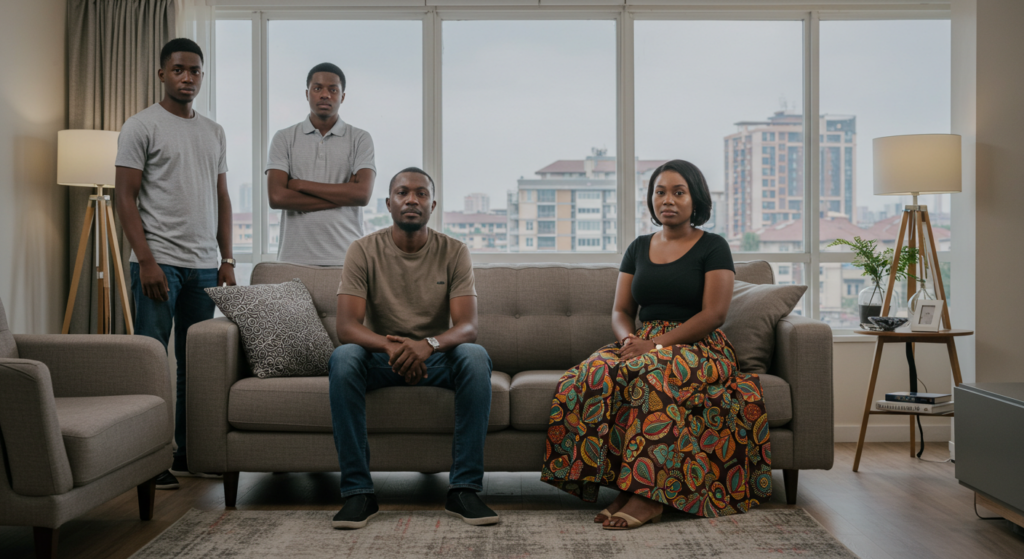
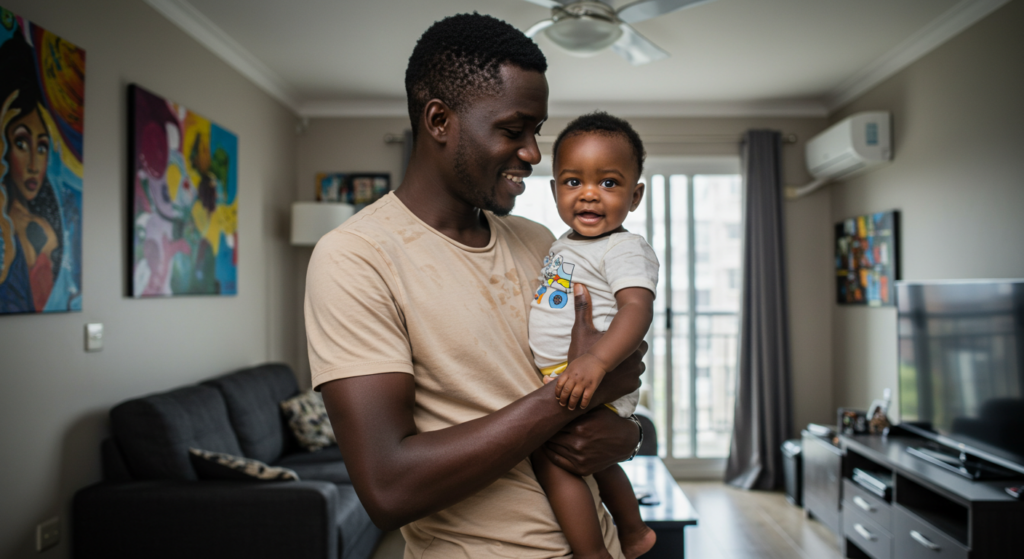
    Image source: Zikoko. Models are not affiliated with the story.

    “I went from earning ₦500k/month to ₦100k”

    Oyin, 35, single mother of one

    I knew I’d be a single parent while still pregnant with my son, so I mentally prepared for it. My partner and I planned to get married, but I caught him cheating when I was five months pregnant. The cheating incident revealed a history of lies I couldn’t overlook, so I left him and had my son alone in 2023. 

    I thought I was ready to raise a child, but nothing prepared me for the reality that motherhood would also affect my income source. Before my son, I had a job and a side hustle selling perfumes and thrift, bringing my monthly income to ₦500k on average. I still managed to juggle both while pregnant, but it became a different story after I gave birth.

    I quit my job and thought I could rely on my business, but that didn’t work. I couldn’t go to the market regularly anymore because I had no one to keep my son with. The few times I managed to go, I begged my neighbour to watch him. That stopped when I came home one day and saw she had left my six-month-old crying alone on a mat on her balcony. 

    When my son was eight months old, I decided to risk taking him along with me to the market. I saw shege that day. The heat made him very irritable, and he cried throughout the day. I also almost fainted from the stress of carrying him on my back and dragging heavy bags of clothes. Safe to say I didn’t try it again.

    Over time, I’ve had to scale my business down because there’s only so much I can do alone. I only sell perfumes now because they’re less stressful, and my customers come from social media — no time to go office to office hustling for customers. Right now, I make an average of ₦100k in profits monthly. It’s even more than I used to make between 2023 and 2024, when my son was still a baby and I had less free time.

    From that ₦100k, at least ₦80k goes to our feeding and my son’s needs. I manage the remaining ₦20k for utility bills, internet and emergencies. I had ₦800k in my savings when I got pregnant, but I’ve been pinching out of that to survive and pay rent. Only ₦60k is in my savings now. My son’s father sends ₦30k every three months to “support”, but it doesn’t go anywhere. Plus, the money only comes after I’ve called to shout at him several times. 

    I literally live hand-to-mouth every day, and it’s a sharp difference from who I was before. I don’t buy things for myself anymore, and I dread when my son will have to resume school because the expenses will only increase. But I try to console myself with the fact that school will mean extra time for me to try keeping a job. So, there’s hope. 

    “I’m tied to my job because of constant loans”

    Dabiri, 38, married father of three

    My wife got pregnant one month after our wedding in 2014, and we suddenly moved from newlyweds to new parents. As if that wasn’t shocking enough, we gave birth to twins. 

    I was initially scared — my wife was unemployed and I earned ₦80k/month — but I figured we could make it work. Fortunately, our family came through for us with monetary gifts, and my mother-in-law helped us with the babies while my mum often sent us food stuff. Those first few years were great, and I didn’t feel too much financial pressure. But to be safe, my wife and I agreed to leave it at two kids. She’d be a stay-at-home mum and we’d manage with my salary. 

    Fast forward to 2021, we found out we were expecting again — my wife’s IUD contraceptive failed. Our situation was much tougher this time. Our mothers had passed away, and the COVID lockdown had taken my job. I was still wondering how I’d provide for my family with no salary when we found out about the pregnancy. I begged my wife to have an abortion, but she refused. 

    The whole thing almost separated us. I was angry that she wasn’t being realistic, and I moved out of the house. I was honestly scared of the expenses. It took our family’s intervention for the issue to die down. A family friend also helped me get my current job at a microfinance bank that pays me ₦200k/month. 

    I have a salary now, but it really doesn’t feel like it. After paying for food and school fees, there’s nothing left. My twins had to change to a government school for their secondary education because I don’t have ₦500k to pay for both per term in a private school. 

    But the expenses aren’t my biggest challenge. It’s that I can’t change my job. I’m tied to my workplace because I’m constantly taking loans from my employer to cover household expenses. Currently, I owe ₦800k, and they’re removing ₦40k from my salary for a 20-month period. I’m very sure I’ll borrow more money before I finish paying this one. 

    Since I can’t get a new job and receive a salary immediately to pay my debts, I have to stay here until I can gather (or borrow) enough money to pay them off. It feels very limiting.


    Join 1,000+ Nigerians, finance experts and industry leaders at The Naira Life Conference by Zikoko for a day of real, raw conversations about money and financial freedom. Click here to buy a ticket and secure your spot at the money event of the year, where you’ll get the practical tools to 10x your income, network with the biggest players in your industry, and level up in your career and business.


    “It feels like the expenses are never-ending”

    Bukola, 44, widowed mother of three

    I didn’t fully realise how expensive raising children was until my husband died in 2022 and left me to provide for three teenagers alone.

    Suddenly, I had to bring out money from my unstable income as a fabrics trader for food, school fees, birthday gifts, and even barbing appointments. I sometimes get support from my late husband’s sister, but it feels like the expenses are never-ending.

    Two of my children are in uni and they’re constantly calling for money. If they don’t need a laptop for assignments, it’s that their ₦30k/month pocket money has finished. I laugh when I remember complaining about handling the feeding expenses when my husband was alive. Now that I’m paying for everything, I wish to return to the time when I only worried about food. 

    I’ve turned to an accountant by force, constantly drawing budgets and calculating how to save more money. In one way, it has made me better with money. I save more and avoid unnecessary expenses. I even started a ₦60k monthly ajo contribution for my house and shop rent. 

    I would’ve liked to become more intentional about money under different circumstances, but this is my situation, and I have to try my best. 

    “I’m slowly accepting that I can’t have it all”

    Esther, 27, married mother of one

    When I got married in 2023, I had a clear plan: Relocate with my husband to the US for my master’s degree, find a job, make money, and then start thinking about children.

    But like they say, man proposes, God disposes. I already had a uni admission offer, but the whole wahala with Trump led to the school pausing my scholarship. I dusted myself off and applied to UK schools instead. While the offers came, scholarships didn’t follow.

    Then, in August 2024, I fell sick and the hospital discovered I was five months pregnant. Even I didn’t know. I missed my period once during the five months, but my home pregnancy tests were negative. The periods even returned, so I’m still confused how I turned up with a whole five-month fetus.

    The baby put all my plans on hold. I quit my job after getting the US scholarship and am still unemployed. I can’t even look for a job properly because I have a baby to worry about. My husband provides all my needs, but it’s somehow not having anything to my name.

    I’m still half-heartedly applying for scholarships, but slowly accepting that I can’t have it all. Even if I get the scholarship, will I study with a baby? My husband won’t come with me because he has a really good job now. We can’t risk relocating to a new country as two unemployed people with a child.

    My financial prospects don’t look great right now. I just hope things start to make sense when my child gets older.


    RELATED: Having Kids Took Me From Middle-Class to Poor


    “I’m glad I invested before having children”

    Daniel, 36, married father of two

    I earn reasonably well at ₦800k/month, but I also have two growing boys who seem like they were born to chop my money. 

    Before we had our children, my wife and I could spend only ₦80k on food monthly. But now, it’s ₦250k and above. My children will eat breakfast at 8 a.m. and start shouting, “I’m hungry” by 10 a.m. I still have to worry about clothes, toys and school fees. 

    I’m just glad I wisely invested in a plot of land before getting married. Now, I just try to save 100k monthly and put it towards my building fund. I should have 3m by the end of the year, and I’ll use it to start building something. 

    If I hadn’t gotten land before having children, I doubt I’d be able to do it now, especially with the economy. I mean, it took me almost four years to save just ₦3m. This is me who saved ₦2m in a year for my wedding in 2018. But saving is a luxury now. I’m just glad I can still afford to put some money away.


    *Names have been changed for the sake of anonymity.


    NEXT READ: I Stopped Paying My Family’s Bills, and They Started Disrespecting Me

    Get More Zikoko Goodness in Your Mail

    Subscribe to our newsletters and never miss any of the action

    [ad]

  • Every week, Zikoko seeks to understand how people move the Naira in and out of their lives. Some stories will be struggle-ish, others will be bougie. All the time, it’ll be revealing.


    Tired of the stress of moving money across borders? With Juicyway, you can seamlessly send, receive, and convert fiat or stablecoins like USD, CAD, USDT, and USDC in Nigeria—at great rates. Free multi-currency accounts, instant transfers, and top-tier security? Say no more. Click here to get started!


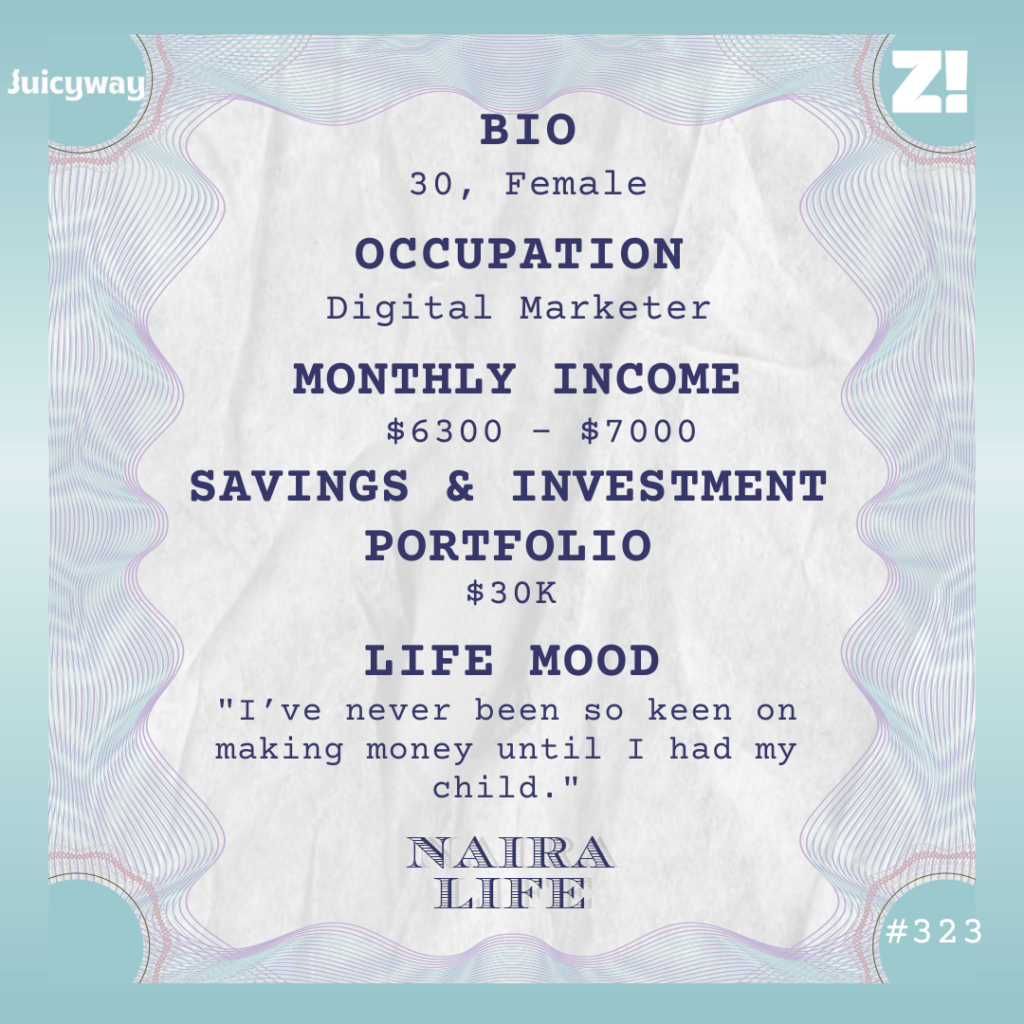
    Nairalife #323 bio

    What’s your earliest memory of money?

    It was 2003 — the year my mother died — and I was 8. My aunt, her boyfriend and I were on the bus, and her boyfriend asked me to read a figure in the newspaper. I think it was 15 million and something-something thousand. When I pronounced it correctly, he gave me ₦15, and I used it to buy sweets. 

    I’m sorry about your mum

    Thank you. The newspaper incident happened because my aunt’s boyfriend was trying to cheer me up. We were going to my aunt’s workplace, and I think he wanted to take my mind off the whole thing.

    I imagine your mum’s passing away led to some changes at home 

    It stirred me into independence. My dad remarried a few years later and had four more children. I had to transition from being an only child to an elder sister to my siblings. Plus, my step-mum and I didn’t get along at all, so I was pretty much independent.

    Things didn’t change much on the financial side. My mum worked at a bank, and my dad was a contractor. I didn’t grow up looking for food to eat or anything like that. Even after my mum passed, my dad still made enough to keep us comfortable. I had a BlackBerry phone at 15. We were above average. 

    Do you remember the first time you earned money?

    I do. I’m really good at explaining stuff, so at uni, people came to me to simplify lecture notes and explain things in a way they could understand. At first, I did it for free until people started becoming entitled. I’d go home during the holidays or school breaks, and people would ask me, “Why weren’t you available to teach us?” 

    At some point, I thought to myself, “You know what? I can charge these people.” So, I started charging each person between ₦200 and ₦500 per lecture. I did that from 200 level to my final year. That said, it didn’t bring serious money, so I lived on my ₦20k monthly allowance, which was enough for whatever I needed in school.

    I also had a few internships during school holidays at an NGO. I only worked there when school was out and got paid ₦15k/month each time. I think I did that twice. Then, after I graduated from university in 2017, I got an opportunity to travel to the US for a five-month work and travel program. 

    How did that happen?

    Someone at my uni organised work and travel programs for students in my department — a student exchange program. I can’t remember how much the process cost, but I know my round-trip ticket was ridiculously cheap. It was just ₦350k, but it also came with insane layovers. I spent three days travelling through different cities before finally reaching my destination. The point is, I got there. 

    A few days after I arrived, I got a job flipping burgers in the food section of an amusement park, earning $5/hour for 30 hours/week.

    Wait. I thought it was an academic program

    They didn’t really send us like that. It didn’t matter where we worked; they just wanted us to meet people from around the world and experience other cultures.

    Plus, each person had to pay for their accommodation from the money they earned. I stayed in an extended-stay apartment with five other Nigerians. I think the rent was $750/month, and we split it equally. So, I had to make money. 

    A few weeks after I started the amusement park job, I found another at a Wendy’s restaurant. The program didn’t allow us to work more than 40 hours/week, so I cut my hours at my first job so I could do 20-20 at each job. Wendy’s paid $7/hour, bringing my income from both jobs to around $800/month, minus tips. The tips were so good. Sometimes, I earned up to half of my income just from tips.

    So the money was good

    It was, but the work was hell. Both jobs had me standing 16 hours every day. At some point, I even broke down.

    To be fair, maybe I didn’t need to work that hard. My aunt had encouraged me to save as much money as possible, but I also wanted to balance it with having a good time. So, one salary was for spending and shopping, and the other was for saving. 

    I returned to Nigeria in November 2017 with about $2k in my account, which I gave to my aunt to keep. For context, I started living with her when I got into uni, and she had sponsored me for the US program.

    What happened after you returned to Nigeria?

    NYSC was the next step. Service year taught me hunger. Allawee was ₦19800, plus another ₦4k from my PPA that was always delayed. It was ridiculous. 

    By this time, my aunt had stopped giving me an allowance because I stubbornly refused to do my NYSC in the same state, so I had to make do with allawee. Thankfully, she paid my rent, but it was a real struggle surviving on ₦19,800. I learnt a new dimension of independence. Interestingly, my service year also changed the trajectory of my life. 

    How so?

    Corp members learned blue-collar skills as side hustles, but it didn’t make sense to me. I thought, “There have to be more lucrative options”. I came across a place where people learnt digital marketing and how to build websites; it intrigued me. 

    I joined them and learnt how to code on Adobe Dreamweaver using HTML and a few other languages. Throughout the service year, I attended weekend classes and learnt even more. 

    After NYSC in 2018, I got a job at a publishing firm. My salary was ₦50k/month to build websites and do digital marketing for them. The job made me realise my skills were pretty basic, so I learned a lot on the job and watched YouTube videos to keep up. 

    I learnt everything from SEO to digital marketing and website building. I was intrigued by the advent of digital marketing and how small businesses were moving from traditional marketing to digital. I knew that was where I wanted to be, so I kept honing my skills.

    Unfortunately, my employer was an asshole who owed salaries and never paid in full. After he withheld my salary for three months, I just left. This was in 2019.

    Did you have other income opportunities?

    Somehow, I found myself offering freelance services. I met my first client at a supermarket, and we entered into a conversation. He said he was a lawyer and also sold books. I mentioned I could build websites, and that’s how he said he needed an e-commerce website for his books. Before I knew it, he sent me ₦100k, and I remember staring at my account balance in shock. 

    I built the website, and he settled the domain and hosting. It turned out super nice. I wanted to do even more, so I got certified in digital marketing and kept learning. I was also applying for jobs and found one on LinkedIn towards the end of 2019. It was an on-site role, so I had to move to Lagos. I moved in with a friend, and we shared the ₦600k rent. My aunt paid for my half. 


    Join 1,000+ Nigerians, finance experts and industry leaders at The Naira Life Conference by Zikoko for a day of real, raw conversations about money and financial freedom. Click here to buy a ticket and secure your spot at the money event of the year, where you’ll get the practical tools to 10x your income, network with the biggest players in your industry, and level up in your career and business.


    How much did your job pay?

    My salary as a digital marketer was ₦125k/month. I also took on the occasional social media management and website-building side gig for anything between ₦50k – ₦150k. I kept my 9-5 job until 2021, when something very funny happened.

    What was that?

    I got pregnant. My job became hard to manage with pregnancy, especially with the late nights, and my partner wasn’t having it. We decided I’d quit, and he’d support me pending when I could get a new job.

    However, he became super distant and annoying after I had my child. He struggled to sustain us as a family, and I knew I needed to find a job immediately. I couldn’t depend on him for money.

    A few months later, in 2022, I got a job heading the digital marketing team in a fintech company. 

    Energy!

    My starting salary was ₦350k, and it increased to ₦420k in 2023. That same year, I took on an additional remote role with a foreign company that paid ₦300k, bringing my income to ₦720k. 

    My new income allowed me to afford nicer things for my child and live independently of my partner. I didn’t have to ask him for the smallest things like data anymore, and I think he couldn’t handle that switch. We eventually separated, so we co-parent now, and fantastically at that. 

    I switched jobs in 2024 to one that paid $800/month, and about six months later, I got a contract offer that really improved my life. I worked with that client for three months, making $3k/month. It was such a fun time. I bought things I needed and even started buying stupid things.

    Within those three months, I bought a car, changed my apartment, and put my daughter in a better school. I even got on Ozempic. Like I said, stupid things. 

    I’m screaming. Curious, how much was your pay in naira at the time? 

    It fluctuated a lot. The $800 from my 9-5 was usually about ₦1m, and the $3k was ₦4m and some change. 

    My 9-5 salary was paid to my traditional domiciliary account, and I often converted it by transferring dollars to the black market BDCs; they also had domiciliary accounts. However, I received the $3k from my client through a payment platform that allowed me to convert the funds to naira on the platform or transfer dollars to my domiciliary account. They had good rates, so it was pretty seamless. 

    I still go through the same process. The three-month contract was extended by a year, so I still work with the client today. 

    What’s your monthly income like these days?

    I currently work three full-time jobs, which is actually crazy. My income from all three is $6300/month. Bonuses sometimes push that to $7k, which is about ₦11m after conversion.   

    Also, I recently founded a marketing agency with a Mexican friend. The agency is based in Mexico, and my friend is white-passing, so she helps us close leads faster. She’s the face of our company, and I’m the brains. 

    We currently have about 7 clients we charge between $2k- $4k per month, depending on the scope of work. We share the profit 40:40:20 — 40% for each of us, and 20% back to the business and to pay staff. I don’t consider the agency as an income source. It’s more like a contingency plan; I save whatever profit I make for my child’s future. 

    I’m still stuck on the three full-time jobs part

    See, I have an obsessive need to work. I don’t ever want to return to a time when I cannot provide for my daughter. 

    Plus, I plan to japa to Mexico to fully scale my agency so I can “retire” from full-time work. So, I need the money from my three jobs as well. I just want to be comfortable to the point where I can afford anything my child wants.

    What do these japa plans look like now?

    It should happen sometime next year. My child will be done with kindergarten and transitioning to primary school, so it’ll be the perfect time to move. I also got her a Spanish tutor, so she already speaks Spanish as a second language.

    I save ₦5m/month from my income and have about $30k in my total portfolio. I have about $5k in investments using online financial services platforms. I also bought about $5k worth of foreign stocks in my daughter’s name in 2024. I get pretty good ROI on my investments, and they’ve helped with my portfolio. 

    So, I’m pretty much set for the move. The cost of living in Lagos and the city I plan to move to is similar. Rent, groceries, and everything else are pretty much the same. So, I’ll maintain my current lifestyle there. 

    Speaking of lifestyle, how has your income growth impacted your relationship with money?

    I used to be really bad with money. I like to eat, so I have this bad habit of visiting restaurants people have reviewed on TikTok just to have a personal experience. I actually have a spreadsheet of all the restaurants I’ve visited in Lagos. I go on these dates with my child.

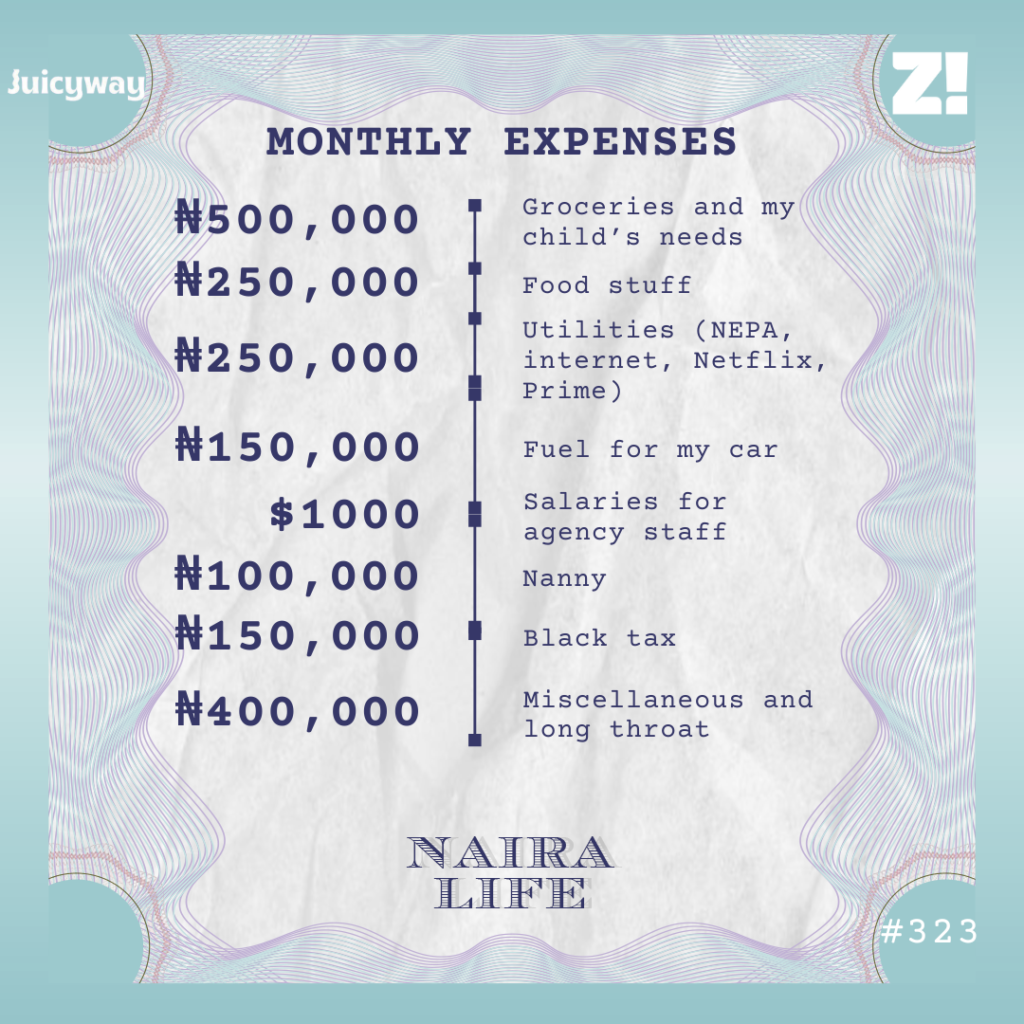
    But now I’m becoming more reasonable. I need to save for the rainy days, so once I go grocery shopping every month, I buy my kid’s stuff, pay bills, pay my staff salaries, and buy the things I need, I save the rest. Now I have like ₦400k budgeted for miscellaneous expenses every month. If e finish, e finish.

    Walk me through your typical monthly expenses

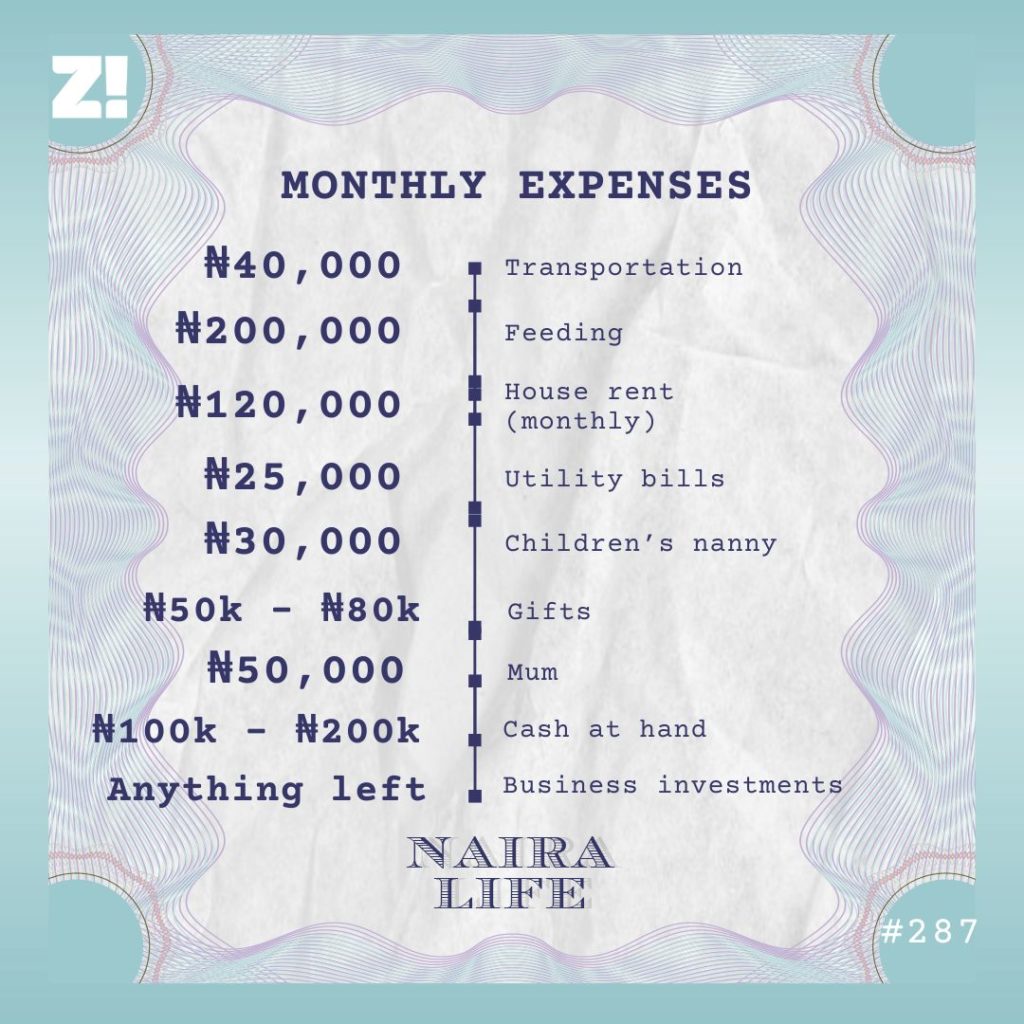
    Nairalife #323 expenses

    This is after I take out my savings. I also sponsor my nanny through university. The black tax is to three of my step-siblings in university. I give them ₦50k each. I also send my dad money occasionally. 

    You know the saying, “more money, more problems”? That’s my life right now. Every time I open WhatsApp, one family member asks me for stuff. But my daughter is why I work so hard. I’ve never been so keen on making money until I had my child.

    What was the last thing you bought that made you happy?

    I got a new phone a few weeks ago. My phone started acting weird, and I didn’t think of fixing it; I just bought a brand new one, which made me really happy. It was an iPhone 15 Pro, and it cost ₦1.7m.

    Also, buying my car last year was one of my proudest moments. I bought it for ₦10m, and it was a birthday present to myself.

    Is there anything you want right now but can’t afford?

    Probably a citizenship by investment in one of the Island countries like St Kitts. That costs $500k. But honestly, I’m very content with the life I have right now. Not bad for a single mum.

    Not bad at all. How would you rate your financial happiness on a scale of 1 -10?

    9. I want to scale even further to the point where I know my child has everything she needs if I’m not here anymore. 

    I have an insane fear of dying. Because I lost my mom at a young age, I worry that my child may not have me for long (even though I know say I gallant until 88 haha) but all in all, once I get to a point where I’ve saved enough for my child — I honestly don’t know when or how much that is — then I’ll finally get to a 10.


    If you’re interested in talking about your Naira Life story, this is a good place to start.

    Find all the past Naira Life stories here.

    Subscribe to the newsletter here.

    Get More Zikoko Goodness in Your Mail

    Subscribe to our newsletters and never miss any of the action

    [ad]

  • *Tayo, a 29-year-old father of one, never planned to become a parent so early. He’d barely wrapped up NYSC when his then-girlfriend told him she was pregnant. At the time, he wasn’t emotionally, mentally, or financially ready. He tried to convince her not to keep the pregnancy, but she was firm. “I considered walking away,” he admits. “And I did disappear for the first two months. But something about knowing I had a child out there just wouldn’t let me rest.”

    He eventually returned — not to a perfect situation, but to the start of something he would grow into. His son turns five this year, and even though parenting still feels like an uncharted path, Tayo is trying to do better than his parents ever did.

    “My childhood was mostly about survival, not love”

    Growing up, Tayo’s parents never spared the rod. “They beat us so much, it became hard to separate discipline from outright hatred,” he says. “I remember telling friends in secondary school that I didn’t think my parents liked me. They didn’t act like they did.”

    The house was filled with rules, mostly centred on scarcity. “Don’t waste food. Don’t use too much water. Don’t ask for anything.” He internalised it quickly. Instead of calling home for money or provisions in boarding school, he endured punishments from teachers or found ways to trade protection for snacks with younger students. “It just didn’t make sense to ask my parents. It would put them in a bad mood, and I’d still leave empty-handed.”

    But in all that coldness, one thing stood out: a brutal kind of honesty. “My dad used to say, ‘I don’t owe you anything. My own parents didn’t do half of what I’ve done.’ Those words stuck with me.” It wasn’t encouraging, but it pushed Tayo to be independent early. “I learned to hustle from secondary school, and that mindset has served me well in adult life.”

    Get More Zikoko Goodness in Your Mail

    Subscribe to our newsletters and never miss any of the action

    “I won’t beat my child. Ever.”

    Tayo painfully admits that the physical abuse from his father felt almost gleeful, like he enjoyed it. His mother’s beatings felt more reactionary than malicious. “My mum? I’m not sure she enjoyed it, but it was her go-to method whenever she wanted something done fast.”

    But Tayo knows for sure that he’s not continuing that legacy. “He’s only four, but I’ve already caught myself reaching for the kind of discipline I grew up with. Still, I hold back. I remind myself that he’s just a child. He needs understanding, not pain.”

    Discipline for now is limited to stern warnings. No smacks, no canes. “I used to be that neighbourhood uncle kids ran from — cane in hand. But with my son, it’s different. I think, maybe for the first time, I’m seeing what parenting without violence can look like.”

    “I want him to ask me for things. That’s new for me.”

    Tayo doesn’t remember ever feeling like he could ask his parents for anything. Now, even though he didn’t plan to be a father, he’s committed to making sure his child knows he’s there. “I try to meet his needs. If he wants something and I can’t afford it immediately, I write it down and find a way later. That’s already miles ahead of what I had.”

    That freedom to ask — something Tayo never had as a child — is one of the things he’s most proud to offer his son now.

    “I don’t owe my child everything. But I care.”

    Tayo’s parenting philosophy is rooted in independence. “I won’t coddle my child forever. Once he hits 18, he should be able to make his own way in life. That’s how I survived.”

    But unlike his parents, Tayo balances that tough love with presence. “I actually care. My parents didn’t. Even now, if I don’t call or visit them, they’re fine. As long as I’m not disturbing them, they have no issues. But I genuinely care about my son. Yes, I want him to grow up independent, but I also want him to know I’ll be there if he needs help.”

    Hyper-independence is something he’s intentionally passing down, but now with a bit more care. “I want him to be strong, but not because I forced him to be. Because he knows he has the tools.”

    [ad]

    “If they saw how I parent, maybe they’d reflect. Maybe not.”

    Tayo isn’t sure what his parents would think of the way he’s raising his child. “They’ve only met him twice. I honestly don’t think they care.”

    But if they did observe him, he hopes it would make them think. “But maybe—just maybe—seeing how I handle parenting might make them reflect on how they raised me. That’s a stretch, though. I’m not holding my breath.”

    For now, he’s focused on doing better, not perfect, just better. “I’m figuring it out as I go, but I know one thing for sure: my child will never question if I care. He might not get everything he wants, but he’ll never doubt that I love him.”


    READ THIS TOO: My Mum Believed in Public Shaming, But I’m Raising My Kids Differently

  • The topic of how young Nigerians navigate romantic relationships with their earnings is a minefield of hot takes. In Love Currency, we get into what relationships across income brackets look like in different cities.


    How long have you been with your partner?

    About one and a half years. My wife, Josephine, and I hit our first wedding anniversary in December 2024. We dated for five months before we got married.

    How did you meet Josephine?

    We first met at our NYSC orientation camp in 2020. I asked her out, but she had a boyfriend, so we just exchanged numbers and chatted occasionally. I accepted that I’d been friend-zoned and didn’t ask her about her relationship status again.

    Then, we met again at work in 2023. I was the new hire, but Josephine had been there for a while. We were both surprised to see each other and began talking more regularly. We also often hung out at work and had lunch together. 

    About two months after we reconnected, Josephine jokingly asked if my girlfriend wouldn’t be annoyed that we talked so much. I said I was single, and she asked, “So why won’t you ask me out?” I was like, “Shebi you had a boyfriend?” 

    In summary, she’d been broken up with the guy for years, so we started dating.

    What was dating a coworker like?

    We didn’t tell our coworkers because we weren’t sure if there was a policy against it  —there wasn’t. But spending so much time with my girlfriend was definitely a plus. We’d hang out at work, then get food after office hours and end up in either her house or mine.

    I think it also helped that we knew each other’s salary. I earned ₦100k, and Josephine earned ₦120k, so there were no unrealistic expectations of going to restaurant dates every week or buying expensive gifts. 

    Our first date was at the cinema, and we even shared the bill. I bought the ₦7k tickets and paid about ₦15k for the cabs, while Josephine bought the popcorn and drinks. We didn’t even talk about splitting the bills beforehand. She just offered. I think that was the moment I knew I’d marry her, and I proposed two months later.

    Sharp sharp?

    I didn’t see any point in delaying. Plus, Josephine and I had talked about marriage. We weren’t fans of long dating. If you already love the person, why wait for years and years?

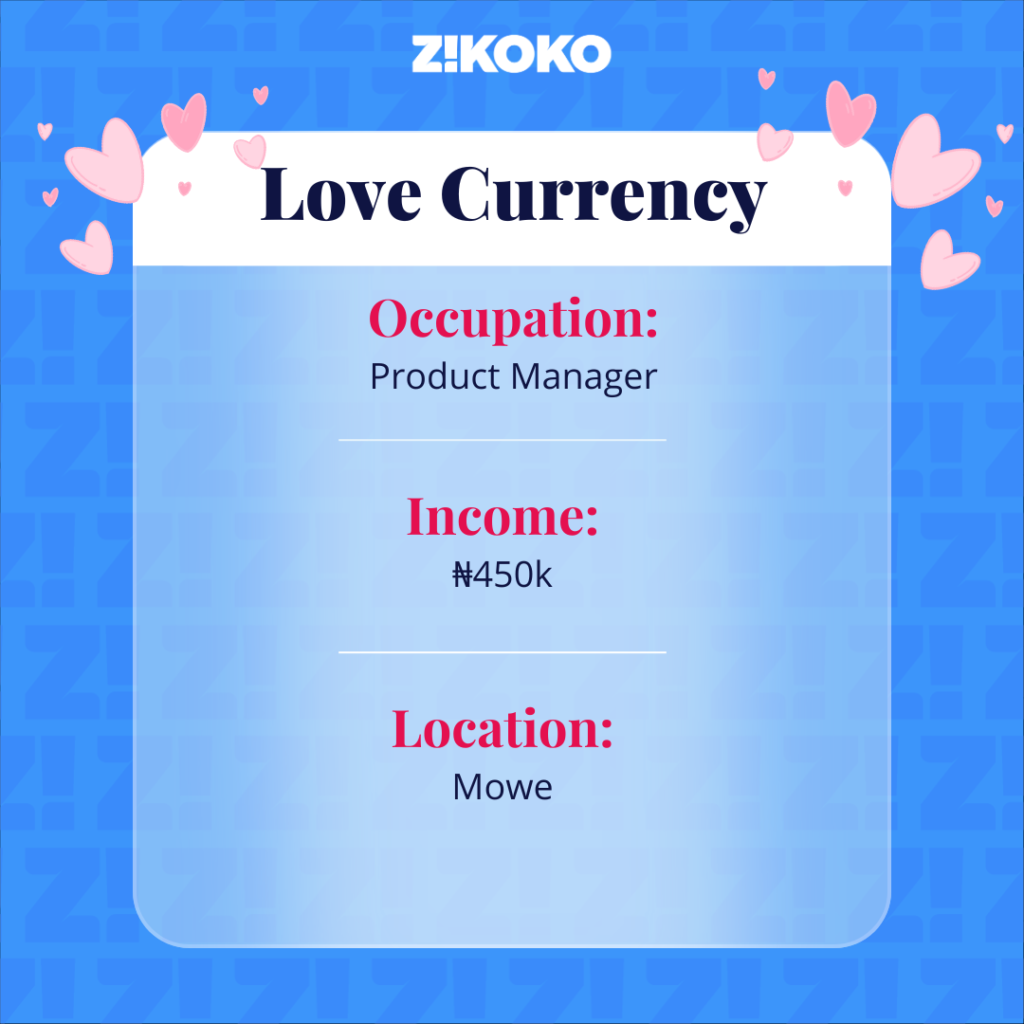
    Also, a few weeks earlier, I’d gotten another remote job—a ₦350k/month product management role at a fintech company, bringing my income sources to two. I felt ready to get married. Josephine also had a job, and our combined incomes would be enough to support our home.

    Did you already discuss combining your finances?

    Something like that. We’d had reasons to discuss traditional expectations in marriage versus what we wanted in our relationship, and Josephine had said she didn’t subscribe to the man being the sole provider. She made it clear that she wouldn’t be a stay-at-home wife. She’d work and also contribute to the home. I didn’t see any point in discussing a contribution percentage. I believe the man should provide more; if the wife needs to support him, she’ll step in. Plus, we were transparent with our finances, so I didn’t expect money to be a problem.

    These were my convictions when I proposed in August 2023. She said yes, and we got married in December. We got a lot of financial support from our family and friends. We also combined our savings to rent a ₦700k/year two-bedroom apartment in Mowe, Ogun state. We chose Mowe because it was cheaper than most places in Lagos. 

    What has marriage been like?

    Harder than expected. I’ve been the sole breadwinner since April 2024. Josephine got pregnant almost immediately we got married, and it was a tough pregnancy. She managed to work for the first three months. But by April, she had to be placed on bed rest, so she resigned. 

    My remote job had increased my salary to ₦450k when this happened, so I also resigned from the other job. It had become too stressful commuting from Mowe to Lagos mainland. Plus, I needed to be available to assist Josephine.

    Hospital bills drained my salary during that period. At some point, Josephine observed bed rest at home, but she started bleeding, so the hospital admitted her. We practically lived in the hospital for the remaining four months of that pregnancy. I was just hearing, “Pay ₦50k for this, bring ₦80k for that.” I can’t even calculate how much I spent because I’ll just develop a headache.

    Sigh. Sorry you went through that 

    We even had to borrow ₦200k from family members to settle the bill after we had the baby in September. I could only buy baby things in small quantities when I received my salary because I couldn’t afford everything at once. It’s been really hard.

    As if I didn’t have enough problems, Josephine initially couldn’t produce enough milk to breastfeed. In the first month, I spent almost ₦100k on baby formula. Thankfully, Josephine started producing milk after a few months, but I was overwhelmed by how expensive and mentally draining childcare was.

    Sometimes, I’d think about all the expenses in front of me, lock myself in the toilet, and cry. I couldn’t tell my wife because she was also recovering from a traumatic pregnancy and caring for an infant. Omo, we went through it. Now, I advise anyone who has ears not to try to have children until they’re very sure they can handle it financially and emotionally.

    Word. With your baby and limited finances, do you both even have time for romance stuff?

    Was it not romance that got us into this mess? Honestly, we haven’t had any time for each other. Our baby is almost four months old now, so she sleeps a bit more at night, and we try to use the quiet time to talk or watch movies. But that’s not often because we’re almost always tired to do anything.

    Josephine has been stylishly hinting that we buy pizza occasionally for indoor dates like we used to do, but her requests often irritate me. I bring out money for every single thing we need, even down to matches, and she wants pizza. I know she means no harm, but it’s a bit insensitive. 

    In December, I had to borrow ₦300k from a loan app to make rent, and I’ve been repaying from a salary that isn’t even enough. I’m exhausted all the time, and I’m even scared to check my blood pressure because I know it’ll be high. I’m sick and tired of being the primary breadwinner, and I’m counting the days until Josephine can work again.

    Have you both agreed on when that’ll be?

    I hope it’s when our baby turns seven or eight months old. I’ve brought it up with Josephine, but she is set on getting a remote job so she can be with the baby. I don’t have issues with that because I also don’t think I can care for the baby while working. 

    But I’m scared that her search for a remote job may take too long. I just need help as soon as possible. I told her this, but she made it seem like I didn’t believe in her. So, I’ll just quietly hope she finds a job as soon as she starts searching.

    What kind of conversations do you both have around money now?

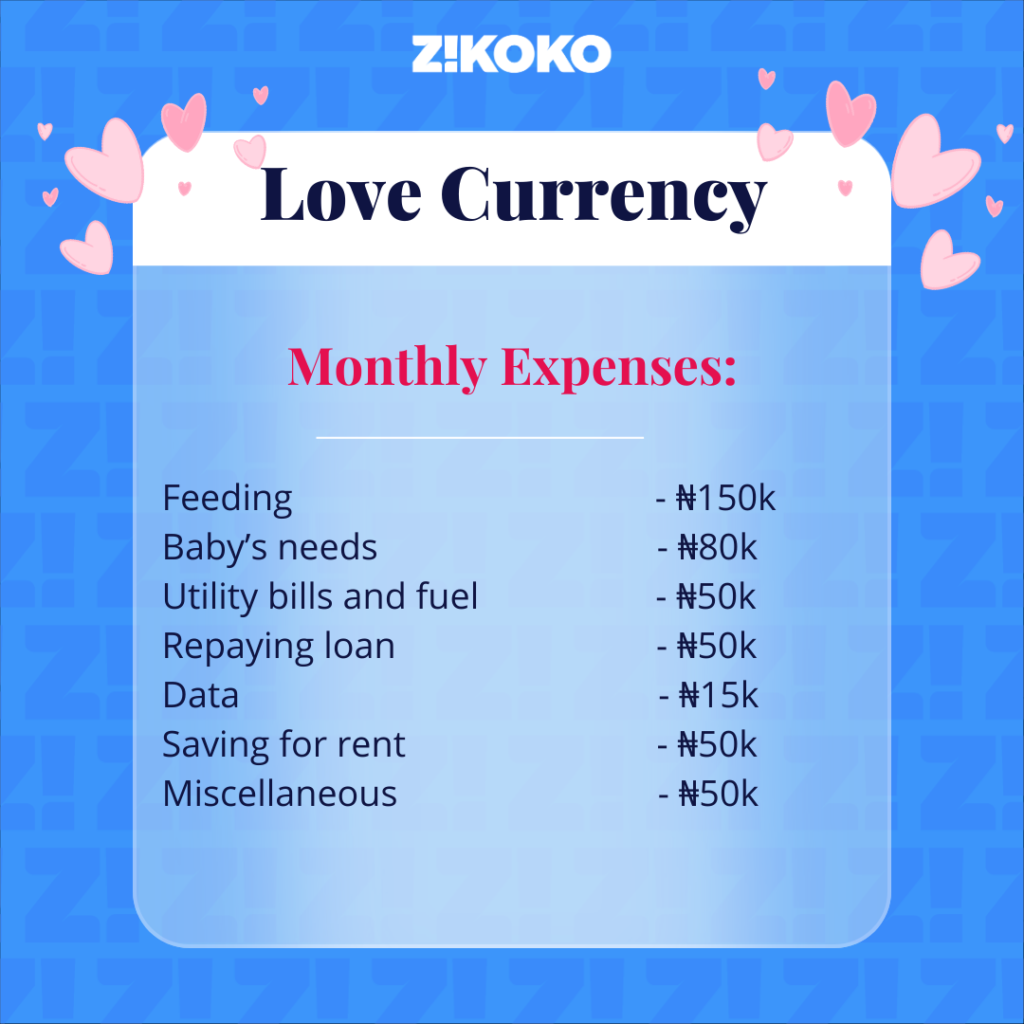
    Right now, it’s about how much money she needs from me to buy diapers or medicine. This January, we discussed the need to save at least ₦50k/month for rent so we don’t run helter-skelter when it’s due. It will be hard to be consistent, but we’ll have to try our best. Hopefully, Josephine also gets a job this year so we can improve our finances and possibly look at saving for things we need, like a washing machine.

    What’s your ideal financial future as a couple?

    I just want both of us to have good incomes so the load on my shoulders can be reduced.

    Interested in talking about how money moves in your relationship? If yes, click here.


    *Names have been changed for the sake of anonymity.


    NEXT READ: The Hairdresser in a Long-Distance Marriage on a ₦25k/Month Income

    [ad]

  • Every week, Zikoko seeks to understand how people move the Naira in and out of their lives. Some stories will be struggle-ish, others will be bougie. All the time, it’ll be revealing.


    Nairalife #287 bio

    What’s your earliest memory of money?

    In Primary 1, I sold my biscuits to my classmates for money. My parents gave me biscuits to school, but I preferred money. Money meant I could buy anything I wanted and not be limited to biscuits. 

    So, I sold the biscuits for ₦3 even though they were worth ₦5. Then, I spent ₦1 on sweets and saved ₦2. This was in 1993, so there were still ₦1 sweets. I did that till my elder sister found out after some weeks when she saw money with me and snitched.

    Yikes. Were you punished?

    No, but my parents held a family meeting. They wanted to understand why I sold my biscuits cheaper just because I wanted money. Like, what did I need the money for? 

    I don’t remember what I told them, but they started giving me ₦3 to school instead of the biscuits. I continued buying sweets and saving what was left. Every month, I’d give my mum what I’d saved and ask her to add money to buy me a shirt or anything that caught my interest. It was a good arrangement.

    Tell me more about what growing up was like, financially

    I was born with a silver spoon and lost it along the way. My dad was a big-time contractor and businessman; he had a printing press and a real estate business. My mum was a full housewife who also made aso ofi at home.

    Unfortunately, our fortunes started to change around 1995. My dad bought a German company that was exiting Nigeria without knowing the company was already going under. He told me much later that the deal had cost him ₦35m — big money back then — and he’d also taken some loans from the bank.

    When the company eventually folded up, we had to move to a smaller house, and my mum lost all her aso ofi customers. I must’ve been 8 when it happened, and I saw how we slowly went from wealthy to struggling.

    What were some of the things that came with this major change?

    First, we didn’t have a driver to take my siblings and me to school anymore. Then we started taking danfo buses. I also transferred to a nearby, less expensive school. 

    The Christmas clothes also stopped coming, and people stopped visiting us. Usually, during festive seasons, many visitors came to ask my dad for money, but that stopped.

    My dad didn’t get as many contracts as he used to. He lost some of his influential friends due to his bank debt. However, he managed to sponsor me and my siblings through school by selling many of the landed properties he’d acquired.

    Sounds tough. Do you remember the first time you worked for money?

    That happened after graduating secondary school in 2005. I couldn’t start uni immediately because two of my elder sisters were in the polytechnic, and my dad couldn’t afford to send more children to school at the time. 

    So, I picked up a ₦2500/month teaching job at a small private school. Apart from the salary, I made small change teaching after-school lessons. The school charged each student ₦20 daily for those lessons, and the proprietor shared the money amongst the teachers. Sometimes, I made ₦100 extra, sometimes ₦800. It depended on how many students paid per day.

    I worked at the school for two years until I started university in 2007. Because of our financial situation, I barely got an allowance from home. When the allowance came, it was between ₦3k – ₦5k for a month. So, I had to do several hustles to support myself.

    What kind of hustles?

    I joined the decoration unit of my university fellowship and often got small gigs outside the fellowship. They weren’t paid gigs, but I was fed before and after the job.

    Sometimes, I got actual decoration gigs that paid in cash, and I had to share the money with the unit members I took to assist me. My share at the end of these jobs was mostly ₦5k.

    When I was extra broke, I’d gather ₦200 each from a few friends and tell them to come eat in my room. Then, I’d buy foodstuff at the market and cook enough rice. It worked out because the portions I served were more than what my friends would get with ₦200 at the cafeteria, and I also got to eat out of the food.

    That was how I survived university till I graduated in 2011. 

    What did you do next?

    I worked as a manager at a clubhouse for six months, earning ₦12k/month before I left for NYSC in 2012.

    My place of primary assignment was a school, and I wasn’t paid a salary. However, the local government paid me ₦1500/month, while the state government paid ₦5k/month. Then there was the ₦19800 allowance from NYSC.

    I supplemented my income by transporting food items for fellow corps members. I served in the North, so whenever I was returning home, I’d ask them to give me a list of things they wanted me to bring back to the North— anything from beans and garri to gadgets. 

    Some of them even bought on credit and paid me in installments. I didn’t mind because I added healthy profits. I could buy a UK-used BlackBerry phone for ₦25k and sell it for ₦35k. I made ₦30k-₦50k monthly from that business.  

    Not bad

    I didn’t pay for rent as I lived in a lodge, so I saved most of my income after the food and travel costs. I also applied for a master’s program during this time. The plan was to start my master’s degree immediately after NYSC.

    I finished NYSC in 2013 and invested in a hire-purchase taxi business just before returning to school. I bought a local taxi for ₦320k and gave it to a driver who paid ₦15k weekly. The agreement was for him to pay ₦650k and then own the taxi afterwards. The weekly payment delivery essentially supported me through postgraduate school, which I finished in 2015.

    What happened after postgraduate school?

    I became a network marketer at a company that sold nutritional supplements. To work with the company, I registered with ₦36k. I had the option of selling the products or recruiting other people to join, and I chose the latter because I didn’t like the idea of selling products. 

    I earned ₦9500 for each person I recruited, and there were months when money didn’t come in at all. Then, sometimes, payments would come in quick succession, up to ₦100k. It was tough, but I had no other option, so I stuck with it. 

    The only positive thing about that job was that I learned to sound convincing and market anything to anybody. I also travelled a lot around Nigeria.

    But how did you survive if payment wasn’t regular?

    My fiancée had a job, and she often helped me out with cash. I also registered more accounts on the network company to increase my earnings through recruits; I went from having one account to 15, which helped the payments become a bit more regular.

    Then, in 2016, I joined MMM. I made a lot of money at first — I already knew how to canvas people and got great referral bonuses. Then, I got carried away and joined a few other Ponzi schemes —Twinkas, Helping Hands, Donation Hub, etc. Anyway, I received sense when I lost about ₦6.5m after the schemes crashed.

    Damn

    I lost almost all I’d made from the networking marketing job and all the profit from the Ponzi schemes. I lived in a ₦65k/year apartment, but I started owing rent because I couldn’t pay it.

    I tried to go into dog dealing to make money quickly, but I gave the dogs out after a few weeks. I was using all my money to feed the dogs, and I was starving myself. I decided it wasn’t worth it and focused on my job at the network company. Thankfully, I’d used some of my MMM money to rent an office space, so I decided to intensify my efforts.

    I made reasonable money for a while. I got a car, got married, and things were reasonably okay. But I started having second thoughts about the network company.

    What happened?

    I started questioning my morality. I was good at what I did; I could convince people to join. But then these people joined and didn’t know how to do the same, so they didn’t make money. 

    Once, I recruited someone who used his house rent to register after hearing me speak. Unfortunately, he didn’t make money, and the landlord nearly chased him out. Another did the same with his child’s school fees. I became uncomfortable with the whole system; it was starting to look a lot like MMM. So, I quit in 2018 even though I had no alternative. 

    That’s when sapa hit me full-time. I lost my dad earlier in the year, which affected me mentally, and I couldn’t think of business ideas. I became extremely broke, and then my wife got pregnant. Things went downhill from there. 

    The baby came, and I sold my car to handle the bills. After some months, I moved my family to my parents’ house when I couldn’t afford rent anymore. Nine months after we had our first child, my wife became pregnant again.

    Oh wow

    There I was — broke, owing rent and trying to survive with a baby and another on the way. Also, my wife had left her job because of the babies and the fact that we changed locations.

    I tried to make money from forex trading and crypto, but it was a series of ups and downs. I’d make money today and lose it the next day. I also had a stint driving cabs on an e-hailing app in 2019.

    In 2020, I moved my family to a friend’s family house. It was a four-bedroom house, but we had access to two. My friend lived in one of the rooms with his wife. I lived in another room with my family and another friend who was also squatting. My wife and two children slept on the bed, and I and the other friend slept on the floor. 

    Later that year, a family member moved us to Lagos and rented an apartment for us. My wife got a small teaching job, which sustained us for a bit.

    Were you still trading forex and crypto?

    On and off, but it wasn’t profitable. In 2021, I landed a government contract to supply bricks for a project in my home state. I got it through some friends, and it was supposed to change my finances.

    This is how these contracts work: the contractor funds the project and gets paid after different levels of completion. The contract was worth ₦40m, and I didn’t have money, so I borrowed it from a finance firm.

    Unfortunately, the engineer overseeing the project wasn’t happy with me. He’d expected me to give him a ₦2m bribe, and when I didn’t, he decided to frustrate my payments. I finished the project in 2022 and was in a ₦40m+ debt.

    Ah

    It was a terrible period. The interest on the loan increased every day, and the finance firm threatened me several times.

    At a point, the payments began coming in very small instalments. I had to involve a lawyer to retrieve the money when only ₦8m came in after several weeks. The lawyer’s fee sef was about ₦3m.

    It took a year to get 90% of the project payment—about ₦36m. Thankfully, the finance firm understood my plight after I explained and gave me time to repay. I paid the ₦4m loan balance myself in 2023. 

    How did you do that?

    I secured more contracts. I’m a restless person and don’t know how to sit back and watch, so I applied for several government contracts. In 2023, I got one to supply furniture to schools, made ₦2.5m, and used most of it to pay off some of the debt. 

    I got a job that same year and used part of my salary to pay off the balance until I cleared everything.

    Tell me more about the job

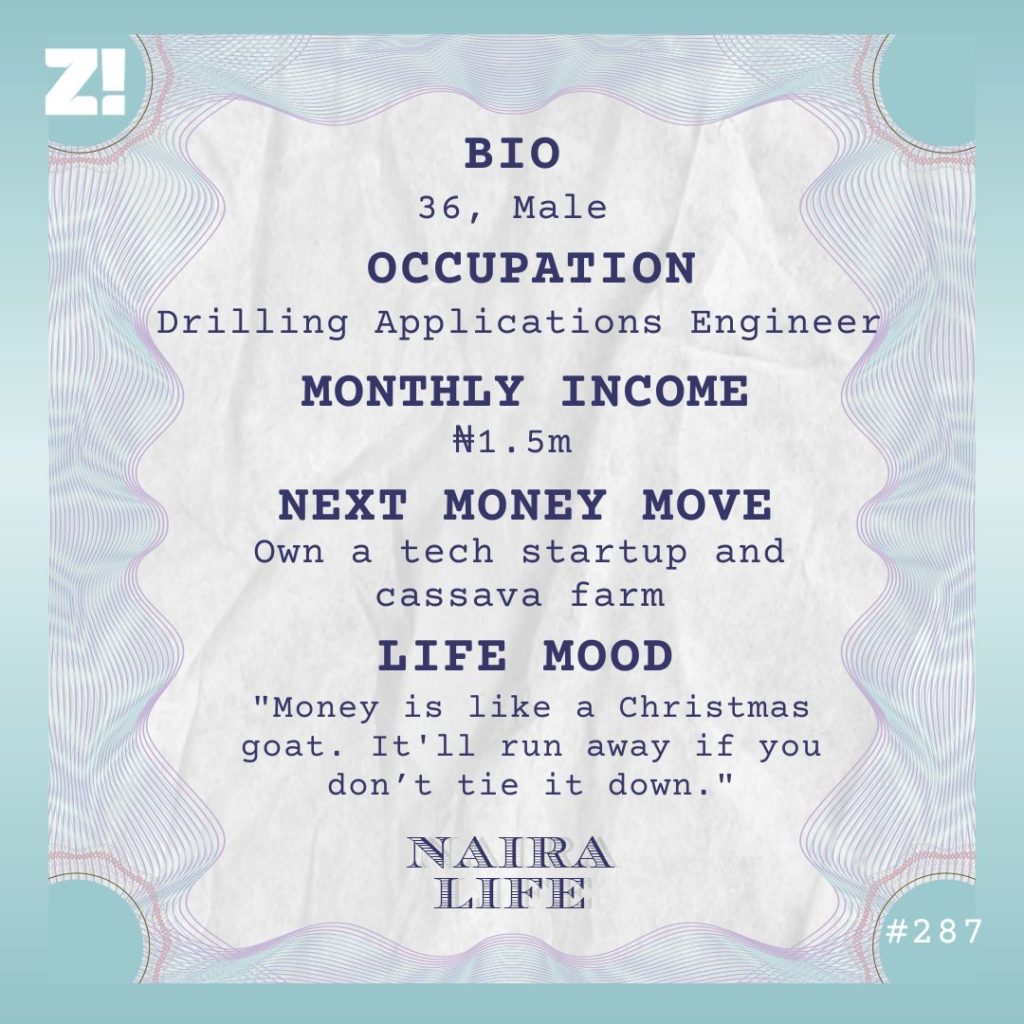
    The role was drilling engineer at a multinational oil company, a job I got by a stroke of luck. I was at a family friend’s event when someone randomly asked my wife if her husband needed a job. I sent my CV, got the interview invite and eventually got an offer — ₦1.4m/month, including bonuses.

    I got promoted a few weeks ago, and my average salary is now ₦1.5m/month. 

    Whoosh. To think you were ₦40m in debt just about a year ago

    It’s such a relief. My experience has taught me a big lesson: never give up. There were days I wanted to end it all, but I looked at my family and lost my nerve. Plus, I’m not a coward. I couldn’t run away from my problems. 

    However, there were days I tried to run. One evening, when I was still squatting with my friend, my baby was crying out of hunger, and there was nothing I could do. I just told my wife I was coming and walked out of the house. I switched off my phone and kept walking. I slept in a church that night. 

    I raised some money from a few people before I returned to the house the following morning. I found my wife crying, thinking something had happened to me. 

    Luckily, one of the guys we lived with borrowed her money that night so my baby could eat. I really felt terrible. As a man, I couldn’t feed myself, talk more of my family.

    I’m sorry you went through that

    2018 to 2022 were trying years for me, and I’m grateful they’re behind me now. I just kept telling myself that if I didn’t die during that period, everything would be fine. I also developed high blood pressure at some point. How many stories do I want to tell?

    I can imagine. Have there been any lifestyle changes with the new income?

    Well, I don’t owe rent again, and I can easily pay my kids’ school fees. My lifestyle hasn’t changed much except that I now invest heavily in different business ventures.

    Aren’t you worried that some of your investments didn’t exactly do great in the past?

    Nope. I face everything believing that I have God and no matter the outcome, I’ll survive. Moreover, business is in my DNA. I can’t do without it.

    I’m currently investing in a tech startup designed to connect people globally via digital cooperative societies. My team and I are still in the app development and compliance stage, and I’ve spent over $2k on it.

    I also leased some land to cultivate cassava and process garri in 2023, which cost me about ₦1.2m. I’d have started planting this year but couldn’t get farmers because I was busy with work. However, I intend to begin operations next year. 

    I also regularly pursue government contracts, which require constantly pumping in money. I have over ₦8m tied up in these contracts.

    That’s a lot of money tied up in investments

    I believe that money is like a Christmas goat. It’ll run away if you don’t tie it down, and your Christmas is gone. I’ll always spend money, so I think it’s better that it’s out there working for me.

    That’s pretty much my relationship with money. I don’t believe in holding money; I either give it out, loan it, or invest it. 

    Let’s break down your typical monthly expenses

    Nairalife #287 monthly expenses

    Is there anything you want right but can’t afford?

    “Can’t afford” is relative, but I want three things: to get my tech startup running, move my family abroad while I stay back to hustle, and build a house. I’ll need about ₦5m to get the startup fully functional, and japa will cost a lot more. 

    I estimate I’ll need about ₦35m – ₦50m to build a house. I can’t get that from my salary, which is why I’m always on the lookout for contracts and business opportunities.

    How would you rate your financial happiness on a scale of 1 -10?

    4.5. I’m grateful for where I am, but more must be done. I really want to influence society and help people, which is why I’m keen on the startup. It’ll help me reach as many people as possible and play a role in people’s lives.


    If you’re interested in talking about your Naira Life story, this is a good place to start.

    Find all the past Naira Life stories here.

    Subscribe to the newsletter here.

    [ad]

  • Bolade* (33) is a mother of two, and her youngest child was born with Cerebral Palsy. She talks about the challenges and guilt she’s had to navigate, and why hope is the only thing that keeps her going.

    As told to Boluwatife

    Image designed by Freepik

    The school holidays are my favourite time of the year because I can bundle my two children (aged 7 and 5) to their grandparents’ and pretend I’m free. But I haven’t been free for five years, and I hate myself for even desiring freedom.

    By freedom, I mean somehow erasing the stress, worry and uncertainty that come with caring for a special needs child. 

    My second child, Ife*, was born with Cerebral Palsy, and she’ll live with it for the rest of her life. I love her with every fibre of my being, but sometimes I feel I’m not cut out to mother a special needs child.

    My husband and I got the diagnosis when she turned ten months old. I’d been worried about how long it was taking her to reach milestones her elder sister had crossed without stress. 

    Ire* had jumped the crawling stage and moved straight to walking at 10 months. But at that age, Ife couldn’t sit, roll over or even control her neck. My husband and mother waved off my concerns, insisting that children were different, but I felt in my heart that something was wrong. So, I insisted on taking her to the hospital. 

    It was the first time I even heard the words “Cerebral Palsy”. 

    After the doctor explained the diagnosis, my husband said, “God will help us”. Me, I spent hours Googling the condition daily. My research only drew me into a deeper level of fear. Would Ife ever walk or even eat on her own? What kind of future could she hope to have if she couldn’t take care of herself? Would people call her an “imbe”?

    I had to relearn everything I knew about mothering toddlers. 

    Typically, when children cross infancy, parenting becomes both easier and more difficult. The child becomes a bit more independent and learns to voice out their needs rather than cry constantly. But independent means you’re constantly monitoring them so they don’t jump into the road or drag a pot from the fire. 

    I’d experienced that with Ire, but with Ife, we’re still stuck in the infancy stage.

    Years of therapy have made it so that she can sit upright and hold a bottle to feed herself ogi and custard now, but she still can’t walk and barely speaks. Up until she was three years old, I used to take her with me to my teaching job so she could stay with other children in daycare, but the weird looks became too much. 

    If it wasn’t the stares, it was parents stylishly asking the daycare teachers if it was safe for Ife to be in the same class with the other active kids. I quit my job when it became too weird — I couldn’t take her someplace else where I couldn’t watch her closely — and we’ve been home together ever since.

    The daycare incident is an example of why I feel I’m not cut out for this life. I’m part of some special needs support groups online, and I regularly see other mothers share stories about the different ways they stand up for their kids. One even made her child’s school install wheelchair ramps. 

    I, on the other hand, couldn’t even speak up to keep my child in daycare so I could keep my job. Why couldn’t I say, “She just has a disability, she isn’t made of glass. She can be around other children,” when the parents dropped side comments about Ife?

    It’s been even more difficult to explain to my eldest why her sister can’t play with her, or why she can’t play outside because Mummy can’t leave Ife alone in the house. I don’t spend as much time with Ire as I should, and I wonder if she’ll ever resent me for always putting her sister first. 


    RELATED: I Love My Brother, but Sometimes I Feel Like an Only Child


    But what time is left after feeding, cleaning and massaging one child and then attending to chores? 

    Ife throws tantrums too. If she doesn’t like the food I’m feeding her or is just upset about something, she groans loudly for hours. And I have to beg her until she decides to stop. My husband relocated to the UK two years ago — with hopes that we’d join him later — so even though he sends money, I’ve had almost no support, except during the holidays when I can leave my kids with their grandparents and breathe a little. They have a live-in maid, so it’s easier for them to manage.

    Sometimes, I wish Ife was normal. Does that make me a terrible mother? Isn’t a mother supposed to accept her child wholeheartedly? I really don’t want this life. It seems there’s no end in sight to being Ife’s primary caregiver. I’ll never have a career again, and I’ll always be this exhausted, mentally drained woman.

    I’ve heard that speech therapy and surgeries may help, but with my husband’s japa and my unemployment, we can’t afford it. Our only hope is to gather enough money to handle visas and flights to join my husband in the UK, so we can get her the right medical care.

    People have advised me to take Ife to church and pray for a miracle. I won’t take her for deliverance sessions or anything, but praying and increasing my faith have kept me sane for a while now. 

    I also struggle with the fear that she won’t live long because of the average life expectancy of people with cerebral palsy. 

    It’s a lot to take in, and I just pray God will look at me one day and grant me a miracle. I’m not even asking for the cerebral palsy to disappear; just for Ife to be able to walk, write and talk legibly. I can only keep that hope alive.

    *Names have been changed for the sake of anonymity.


    NEXT READ:  What’s It Like to Care for People Living With Disabilities? — 5 Nigerian Caregivers Tell Us


    [ad]

  • Nigerian parents have dished out their fair share of stress to their poor Nigerian kids, and it’s only fair that you retaliate. So, we made a list of seven things you can do to stress them a little bit too. Just make sure you don’t overdo it. Except you no longer want your inheritance.

    Tell them you don’t want to get married

    You know fully well they have your wedding day planned out in their heads. Dish them small heartbreak by announcing you want to stay unmarried for life.

    Then have a baby out of wedlock

    Since they’re asking you for a spouse, go one step further and give them a grandchild out of the blue. The shock will stress them, but they’ll come around.

    Get a Bible-verse tattoo

    You need to get a tattoo in a way that pleases God. So take a line of scripture and have it inked on your body. When they see it, they’ll be stressed out with deciding whether you’re doomed to hell or not.

    Get a piercing they didn’t give you

    Pierce your tongue and send them a picture of it on WhatsApp. Then, sit back and watch your phone blow up.

    Dye your hair

    Don’t dye it gold or brown — those are safe. You need a colour that’ll make them think you’re suffering through a quarter-life crisis. Keep the colour on for about two weeks, and if they don’t seem stressed enough, shave your head gorimapa for dramatic effect.

    Send traps to the family group

    If that’s not enough, take thirst traps and send them to the family group, with the caption, “outfit of the day”. But don’t try this if your parents are hypertensive, please. We’re begging.

    Go missing for a while

    Go out on a random day and get lost on purpose. Let them be wondering where you are while you have the time of your life with your sneaky link

    Laugh at their WhatsApp BCs

    You’ve been acknowledging their WhatsApp BCs for years. That’s why they don’t stop. The next time they send one to you, record a voice note of you mocking whatever it is they sent. If they don’t block you by themselves, come and beat us.

    Give them the silent treatment

    Nobody hates the silent treatment like a Nigerian parent. Air them for no reason at all, and watch how confused they get as they wonder what they did that made you suddenly hate them so much.


    NEXT READ: 8 Totally Normal Things Nigerian Parents Do That Are Lowkey Toxic