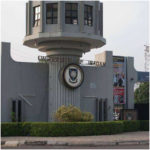
• A Nigerian academic guru from the University of Calabar (UNICAL), identified as Cyril Ndifon, is facing allegations of sexual misconduct from female students of the school. Here’s all we know about the matter that has already garnered thousands of reactions from Twitter users under the trending hashtag #NdifonMustGo.

    Who is Professor Cyril Ndifon?

    Cyril Ndifon: The UNICAL Professor Facing Allegations of Sexual Misconduct

    According to information in the institution’s staff directory, “Professor Cyril Osim Ndifon is a Professor of Law at the University of Calabar, Calabar, Nigeria.” He has held several positions in the institution, including Dean, Faculty of Law; Sub-Dean, Faculty of Law; Head of Department; Chairman, Faculty of Law Graduate Board; and Examination officer.

    Professor Cyril Ndifon is also a member of the Nigerian Bar Association (NBA), the National Association of Law Teachers, among others.

    Why is he trending?

    On Monday, August 14, 2023, a Twitter user identified as @ada_mummyya shared a video showing a group of female UNICAL law students, accompanied by a few male counterparts, protesting for the removal of their dean.

    The students were seen raising placards with bold inscriptions like “Prof Ndifon, let girls with big breasts breathe, stop suffocating us”, “We are tired of sucking dicks”, “Prof Ndifon must go for our sanity”, “Law girls are not bonanzas, Prof Ndifon should stop grabbing us”, “The faculty of law is not a brothel” and “Enough of law school list manipulation.”

    When did the allegations start?

    While @ada_mummyya’s video has only just brought the matter to light, an online search of Professor Ndifon’s name returns with a string of articles that link him to allegations of sexual abuse from as far back as 2015.

    In a 2016 article, it was reported that Prof Ndifon was accused of sexually assaulting a 20-year-old year student in his office on August 29, 2015. The incident led to Ndifon’s suspension by the university management. He was only to return to office once he was completely exonerated from the allegations of sexual misconduct.

    The aggrieved professor dragged the matter to court, and on September 21, 2016, the National Industrial Court in Calabar, presided over by Justice Eunice Agbakoba, dismissed the suit.

    On November 16, 2017, reports that the university management had recalled Professor Ndifon made headlines with pictures of his arrival on the university premises.

    Professor Ndifon receives a warm welcome upon reinstatement

    Why are the students protesting now?

    On January 30, 2023, an article published in the campus news segment of UNICAL’s website announced the re-election of Professor Ndifon as the dean of the faculty of law. According to the release, Ndifon’s tenure is to run for two years, from January 27, 2023, till January 26, 2025.

    The re-election didn’t sit well with the students, who are still accusing Professor Ndifon of sexual misconduct and the school authority of attempting a cover-up.

    “/” [ad]

    Has this received any public attention?

    In December 2022, a civil service organisation, Sacredhearts Gender Protection Initiative, wrote to the UNICAL management, querying the reinstatement and promotion of Professor Ndifon despite allegations of misconduct.

    A portion of the letter addressed to the Vice Chancellor of the University of Calabar, Prof. Florence Obi, read “…we therefore find it hard to understand the basis for which Ndifon who is under investigation for sexual assault against a female law student was reinstated as a staff of the university and made Dean of the Law Faculty. Is it that the Management of the University of Calabar has no moral standard for measuring or distinguishing right from wrong? 

    The group equally vowed to hit the streets and protest the reinstatement of Professor Ndifon.

    “Our organization together with other Civil Society groups involved in Sexual and Gender-Based Violence (SGBV) activities will lead a protest march and advocacy visit to international organizations and foreign embassies in the Federal Capital Territory to call your university management to order.”

    A number of Nigerians have also taken to social media in solidarity with the protesting students, calling for the professor’s immediate removal.

    UNICAL suspends Professor Ndifon

    Following the recent allegations of sexual harassment, the university management on Thursday, August 17, suspended Professor Ndifon.  In a letter signed by the registrar, Mr Gabriel Egbe, the school management expressed reservations about Ndifon’s unsatisfactory response to a query issued to him.

    The letter read: “Please refer to our letter Ref UC/REG/DISC.45A dated August 14, 2023, on your alleged violation of the provisions of the extant laws and policies of the university and your response to the said letter which was dated August 16, 2023.

    “The vice-chancellor has gone through your written representations and is not satisfied with your explanations. She has therefore directed that you be relieved of your position as the Dean, Faculty of Law and placed on suspension while the matter is referred to a panel that will be set up to investigate these allegations.”

    This is a developing story.

  • A Nigerian university student, Cyprian Igwe, woke up to the news of a 50% increment in payable fees by the school management in May 2023 and planned a protest against it. But this was met with his rustication from the school.

    The situation has now taken a legal turn. Here’s all we know about so far:

    Who is Cyprian Igwe?

    Who is Cyprian Igwe? The UniAbuja Student Suing University for ₦50m

    He’s a 400-level undergraduate student in the Sociology department of the University of Abuja. Igwe is also a member of the student union. He caught the attention of the public following his rustication from the university after allegedly inciting fellow students against the school management.

    Why was he rusticated?

    On April 29, 2023, the university announced the total payable fees for the 2022/2023 session in a Facebook post. And the 50% bump didn’t go down well with Igwe whose fee shot up to ₦89,000 from ₦47,300. He proceeded to express his displeasure with fellow student union executives via an official WhatsApp group. In his message, he called for a meeting to discuss possible solutions to the situation.

    Who is Cyprian Igwe? The UniAbuja Student Suing University for ₦50m

    Source: ICIR

    The university caught wind of Igwe’s WhatsApp message and responded to the call for a protest by issuing a rustication letter dated May 26, 2023, signed by the deputy registrar. Cyprian Igwe, and another student, Olalekan Oladeru, who broadcasted his message on WhatsApp, were accused of circulating “an inciteful press release”, an action “capable of jeopardising the peaceful smooth conduct of academic activities in the university and a breach of the university matriculation oath.”

    Igwe told the International Centre for Investigative Reporting (ICIR) that he was brought in for questioning by the school’s security officer, forced to sign the rustication letter and detained for four hours with no access to his mobile phone.

    Who is Cyprian Igwe? The UniAbuja Student Suing University for ₦50m

    The rustication letter | Source: Twitter (@cyrpianigwe3)

    How did Cyprian’s case get media attention?

    Cyprian shared a Twitter post on May 26, the same day he was rusticated, which caught the attention of journalists and activists, amongst others. Reputable outlets like TechCabal, International Centre for Investigative Reporting (ICIR) and Legit.ng have since picked up his story.

    There’s been an outpour of support from Nigerians who argue that students should be able to freely express themselves.

    What’s the position of the student union president?

    The SUG president, Emito Emmanuel Ayandayo, is against the university’s decision and maintains that there’s no evidence to back up the claims levelled against Cyprian Igwe and Oladeru.

    He told the ICIR that the rustication letter referenced the incitement of violence, a meeting with members of the SUG, alumni and stakeholders, and a planned protest slated for May 29, which was all false. He said he issued a counter press release stating he never signed Igwe’s announcement, and there was no meeting held to discuss a protest as claimed in the rustication letter.

    Ayandayo also said he spoke with the dean of student affairs, Prof Umar Kari, who maintained that there was a mistake in the rustication letter the assistant registrar sent out. Kari said the students should’ve been suspended and not rusticated.

    Has Igwe’s status as a student been reinstated?

    That same week, the university recalled the initial rustication letter and issued a fresh letter of suspension. The school’s public relations officer (PRO), Dr Habib Yakoob, claimed that the students were suspended contrary to widely circulated reports of rustication.

    Is Igwe back in school?

    As of June 2023, Igwe, through his lawyer, Tope Temokun, has taken legal action and sued the university at the Federal High Court in Abuja. The respondents include vice chancellor Professor Abdul-Rasheed Na’allah, Yahaya Mohammed (registrar), Alkasim Umar (deputy registrar, academics, CSO Ibrahim Abdullahi Burga and four others.

    Igwe is seeking an order reinstating his status as a bonafide student of UniAbuja, an order setting aside his rustication for violating his fundamental rights to a fair hearing and a declaration against his arrest and detention at the intelligence unit of the school on May 26.

    In addition, he’s seeking damages to the sum of ₦50 million, for violation of his human rights.

    Got a story to share? Send a pitch here.

  • Every three bathroom breaks, Nigerian universities get dragged through the mud on and offline. But are they spitting facts or just dissing? We joined the conversation to uncover the reasons behind all the hate.

    I-can-do-and-undo lecturers

    Just pray you don’t get in trouble with a lecturer that thinks they’re next after God. They’ll tell you how they taught medicine to Small Doctor; and find a way to keep you in school for the next ten years.

    Sex for grades

    Why are there so many lecturers who can’t keep their genitals in their pants?

    Payola champions

    Some lecturers must always collect money for books or department projects from students. Their catch phrase is “I’m not forcing you to buy my book, but if you don’t buy this year, you’ll buy next year”.

    When will people stop asking if school’s on break?

    It’s painful when you finally realise you’re still fighting for a bus at Unilorin car park when your mates from private unis are already complaining about NYSC PPA or entry-level work stress.

    Hot babes, come to Ikoyi to get lit with other hot babes at HERtitude 2023 on May 27th. Get your ticket here.

    Student union that’s weaker than spiderweb

    Other than appearing at department dinners, they’ve no power to implement change. Also, why is a boomer the leader of the National Association of Nigerian Students?

    Every year, school fees hike

    Money doesn’t grow on trees, but school management wants you to have it when they want it.

    Every morning, database is on 404 Error

    One school got hacked several times recently. How long will sensitive data go unprotected? Just hire professionals.

    Missing exam scripts

    Imagine retaking a six-unit course because your exam script is sleeping under one dusty, heavy shelf in the department, and no one could be bothered to find it. How did it get there in the first place? No one knows.

    ALSO READ: Just Imagine: If Nigerian Universities had Honest Slogans

  • The Nigerian Voter is a series that seeks to understand the motivations that drive the voting decisions of Nigerians — why they vote, how they choose their candidates, why some have never voted, and their wildest stories around elections.

    This week’s subject of The Nigerian Voter is Tolu*, a 200-level Mass Communication student in his early twenties schooling at the Federal University of Technology, Minna. He is passionate about voting, but with exams clashing with the elections, he and 26,000 other students at his school can’t travel home. He tells us of his frustrations with the educational system, his desire to vote and who he hopes can win this election.

    When did you first enter university, and how many strikes have you experienced?

    I got admission in 2019 but resumed in 2020. I was in school from January to March 2020, when the COVID-19 pandemic lockdown started. 

    I was at home from March to December 2020 due to COVID-19 and a strike from the Academic Staff Union of Universities (ASUU). 2021 was the only year that I had a full session. In 2022, I was in school from January to March before the eight-month strike that ended in October. That is two strikes already in three years. 

    Wow. How would you say the strikes have affected you?

    By now, I’m supposed to be in my final year (400 level), but I’m still in the second semester of my second year. I’ve not even written exams. 

    I’ve not been able to make progress with my goals in life. There were so many things I planned and put in place. 

    For instance, I had a summer job shortly before I entered university. The manager there liked me and promised I could return and work there in my 300 level for Industrial Training (IT). Now the manager that promised that opportunity was transferred last year. If there were no strikes, I’d have worked there by now. Now I can no longer do it there, and my chances of working at the firm in future have been cut short. 

    It has also affected my grades too. When I returned from the 2020 strike, some lecturers claimed that they had misplaced all the test scripts we had written before the strike. Hence, they gave people random scores and the “random score” I got wasn’t so favourable and it brought down my Grade Point Average (GPA). 

    Also, this has affected me mentally because I’m slowly but surely losing hope in the educational system. It makes me wonder if having an education is worth it or not. 

    Who do you think is the cause of the strikes?

    Well, I can’t say lecturers for sure because my parents are also in the educational system. It is not easy to teach endlessly and not have your salaries paid monthly. A politician can’t be there taking your money, and you don’t do anything about it. So I’d say a larger portion of the blame goes to the politicians.

    But I’d also like the lecturers to have compassion for us. We understand their plight, but it is also our future that they are using to fight for their rights. 

    Since the recent strike was called off in October 2022, how have you coped with your academics?

    We had it rough for the first three weeks with back-to-back classes and tests, but now we’ve adjusted. I have classes from 8 a.m. to 6 p.m. every day. Even though it is stressful, I like it in a way because it is helping us to meet up with the school calendar. We are far behind because of these strikes. We have no option.

    Is the schedule by any chance clashing with the elections? 

    Firstly, I should say that it almost affected my collecting my Permanent Voter’s Card (PVC). We closed for the holidays three days to Christmas Day. If I didn’t make up my mind to collect it before resumption, I’m not sure I’d have ever been able to collect it again. 

    As to how it’s clashing with the elections, my exams start on February 20. I also have exams on February 24, which is the day before the presidential elections. 

    How does this affect you?

    My residence is in Kogi state, a 7-hour drive from Minna. I cannot finish exams by 2 p.m. and then make a 7-hour drive to Kogi state just to vote. My parents will not support that, with the insecurity on that route. 

    I also have exams after February 25 as well. If I go back home, there is no way I’d be able to prepare that weekend (being election weekend). Only people from Niger state can go back home, and even then, it’s a five-hour drive at best. People from far distances like mine can’t go back. FUTMINNA has to realise that they are disenfranchising the rights of over 26,000 students in this school to vote. 

    I’ve been following the news in other schools too, and I’ve seen that 7,000 students have raised their grievances on this issue on social media platforms. I’m very sure that if universities decide to give a one-week break before the elections, I can bet that at least 10,000 students would use the opportunity to vote. 

    Why do you have so much passion for voting?

    It’s because I’m very much concerned about the country’s well-being. The well-being of this country ultimately affects my future. There have been occasions when I was in my room, and I shed tears just because of the state of this country. And the only way I can change things is by voting. 

    But now I can’t even do that anymore. How can I be preparing since June 2022 to vote and now that the elections are almost here in 2023, I can’t vote? It hurts me a lot. The 2023 elections are possibly the only chance I’d have to rewrite the story of my country and my educational future. And now I’m about to lose that because of my school. If the presidency falls into the wrong hands, I will lose 8 years of my life. And eight years plus my current age is a lot. I might probably have had children by then. I don’t want my kids to live in a destabilised country. 

    Right now, public universities are talking about how to increase school fees. The current fee we pay here at FUTMINNA is N39,000. Even then, the money took a lot of work for most people. Some had to go on social media and open GoFundMe accounts to raise money for their tuition. How would things be if they increased it to N80,000, for instance? If you have a good country, the school fees would be regulated. I know how much my parents spend on my fees and well-being in this school, and I know they don’t have savings at the end of the month. Voting in this election is my only chance of making things right and ensuring that affliction doesn’t prevail a second time. 

    What are your plans going forward with the elections? Have you accepted your fate? 

    If it’s the will of God, I’ll vote. I’m being optimistic that things could change between now and election day. 

    Who would you vote for if you were able to, and why? 

    I’d vote for someone with competence and charisma. I’d vote for someone who I can hold accountable. I’d vote for who has a track record, and Peter Obi of the Labour Party (LP) is that person. 

    What about the other candidates? 

    I may not be old enough to have been around when the other candidates were at the peak of their political careers, but I’ve read books and watched their presidential town halls. Who has presented the most sensible points to us? Who can we look at his antecedents, at his past and say that he is a bit capable of rebuilding Nigeria?

    I have been to Anambra state and I see what he did with the road network and it’s worthy of commendation. 

    In terms of education, what do you think Peter Obi would do for you if he became president? 

    When he came to Niger state, he assured us that our four years course would be four years. He also promised us SME skills for entrepreneurs. He will also give people small-scale loans for students who wish to do business while in school. He also promised to teach people online and technical skills. 

    Even though you might not be able to vote, are you mobilising others to exercise their rights? 

    Well, I know my parents and siblings are going to vote. Before I saw my exam schedules, people in my state planned to rent buses to transport people to polling units to vote. 

    Even in school, I make sure that I reach out to people back home to remind them to vote on February 25. My friends and I do the same thing here at school to anyone willing to listen. 

    Nonetheless, there are still a few of us who have enough passion and can put our lives on the line to go out there and vote.  

    We write the news and track the 2023 elections for citizens, by citizens in our weekly newsletter, Game of Votes. Make the subscription of a lifetime here.

  • Last week, Afrobeats artist, Paul Okoye of PSquare shared his concerns about Nigerian students still in school when they were supposed to be collecting their Permanent Voter’s Card (PVC)s.

    This caused a flurry of advice for students. Some said that parents could help them collect their PVCs using the INEC printout, while some students didn’t even see the point of leaving school for a PVC.

    Despite the varying opinions, one thing is for sure — 3.2 million Nigerian students stand a significant chance of being left out of the polls come February. Let’s break down the problem, why it matters and who needs to take action.

    The problem

    There are less than four days to the deadline for PVC collection, and so far, 79% of registered voters have collected their PVCs. But what about the remaining 21%? 

    Well, here’s your answer — the majority of that 21% are in school doing anything BUT collecting their PVCs.

    But how did this happen? To understand this, you’d need to recall the prolonged industrial strike by members of the Academic Staff Union of Universities (ASUU) for eight months in 2022. It also doesn’t help when the ‘members’ going on strike are your lecturers.

    During that period, the students weren’t just sitting at home and washing plates. Over 3.8 million students out of 7.2 million youths went to their Local Government Area (LGA) wards to register for their PVC ahead of the 2023 elections.

    However, no one thought about how the students would collect their PVCs after the strike. This is now the bone of contention. Since they resumed in October, there have been tons of lectures and assessments to make up for lost time, which makes them too busy to travel for PVC collection. But that’s not all.

    There are reports that some universities are scheduling exams during the election period. So not only can they NOT collect their PVCs, but there is also a likelihood that they will be excluded from voting. 

    Why does this matter?

    There are two answers to this. The first is that students are youths. Youths make up the largest number of voters for the 2023 elections, with 37 million people. Students are the largest in terms of occupational distribution, with 26 million people.

    Now, who will be left to vote if you take away the people who make up the numbers? This will cause low voter turnout, ultimately affecting who could become our next leaders in February.

    Let’s not forget that this happened before in the 2019 elections. There were 84.2 million registered voters, but only 28.6 million voters showed up at the polls.


    The second is the hindrance of the law. According to the 2022 Electoral Act, no individual can vote outside where they registered for the PVC. Many students already attend universities that are miles away from their local government areas, and are significantly affected.

    What has been done to address this?

    Non-governmental organisations such as Yiaga Africa have called out the National Universities Commission (NUC) to refrain from scheduling examinations during elections.

    But what about collecting their PVCs? Time is ticking fast. The NUC also needs to give these students a pass to go home and pick this up. They deserve to be decision-makers during an election that will determine the next phase of their lives. 

  • If you’re a Nigerian student feeling discouraged from pursuing a tertiary education because you can’t afford tuition fees, we have good news for you! You’ll soon be able to get a student loan from the government with zero interest!

    How’s this possible?

    The Student Loan Bill provides public university students with financial assistance through the creation of a Nigerian Education Bank. The Senate and House of Representatives have passed the bill, sponsored by the Speaker of the House of Representatives, Femi Gbajabiamila. We only need President Buhari to sign it into law.

    However, as it is with everything concerning Nigeria, getting your credit alert from the government won’t be without some critical conditions. We compiled the most important things Nigerian students should know before applying for a loan if the bill becomes law.

    You have to secure admission into a public institution

    It goes without saying that you can’t access a student loan without being a student. Only Nigerian students who have gained admission into a public university, polytechnic, or college of education are eligible to apply.


    To private university students, the government said:


    Your family must be broke

    This loan scheme wasn’t made for rich kids. To qualify, you and other members of your family must earn less than ₦500,000 per year. You probably sleep like this every night:


    No loans for previous debtors

    If you, or even your parents, are yet to pay up on previous government loans, you’re definitely ineligible to apply for a student loan. The government isn’t playing with its money.


    No loans for those guilty of exam malpractices

    If you have ever cheated in an exam and got caught, no loan for you.

    No loans for druggies

    If you have a criminal record for using banned substances like cocaine and weed, don’t even bother applying.

    How can one repay the loan?

    For those lucky enough to secure the bag, you’ll start repaying the loan two years after the completion of the National Youth Service Corps (NYSC) programme. The government will deduct 10% of your salary every month and remit it to the Student Loan account.

    How can you apply?

    To get started, you have to submit your application and a cover letter explaining why you’re the best fit for the loan via the student affairs office of your institution. You should have the cover letter signed by the head of the institution and the student affairs office.

    But remember, nothing happens until this guy signs the bill into law.

  • On October 14, 2022, the Academic Staff Union of Universities (ASUU) suspended its eight-month-long strike. As a result, several public universities across the country have announced resumption dates with some scheduling exams to start immediately.

    What are people saying about it?

    On October 22, 2022, the spokesman of the Northern Elders Forum (NEF), Hakeem Baba-Ahmed, commented on how students are the biggest losers of the strike. He noted that they’ll be “railroaded” into completing their academic year but lecturers will get their outstanding salaries and the government will face no penalties. 

    A political economist who replied him also noted that some students are struggling with Nigeria’s flooding crisis but their problems are not taken into account. 

    Citizen spoke to two students about their experiences on readjusting to school life after the ASUU strike.

    Ebuka — University of Nigeria, Nsukka (UNN)

    “I’ve already gone back to UNN. I’m a medical student so I don’t really have classes per se. We’ll be having online classes on Monday due to the sit-at-home order in Enugu. We’ll start going for postings at the hospital from Tuesday to Friday — that’s what we’ll be doing for eight weeks.

    The cost of living has gone up a lot. A keke ride that used to be ₦‎50 is now ₦‎100, a bag of water has gone up to ₦‎200 and a bottle of Fanta is ₦‎220. I don’t even know what a ride to the hospital will cost now. Before the strike it was ₦‎150 and slowly increased to ₦‎200. It could be higher now with the flooding crisis and fuel scarcity.”

    Shola — Federal University of Agriculture, Abeokuta (FUNAAB)

    “Yes, I’m in school now, but FUNAAB hasn’t released its academic calendar yet. I’m in school because of my project and it’s been a devastating thing for me as I should have graduated a long time ago. I’m still in school for a four-year course and I’ve spent six years already.

    As a matter of fact, we’ve not yet resumed. Our Vice Chancellor will be rounding up his service on October 31, but there’s currently an internal issue  — we don’t know when the calendar of the school will be out. Students are just roaming about the school environment. 

    It’s not been an easy journey for us as students of FUNAAB with national issues like the ASUU strike, the internal strike and also the NASU strike affecting us. We’re bitter and it’s not been funny — we’re down financially, morally and mentally.”

  • When the strike started in February [2022], some students may have assumed it wouldn’t last more than a month — it was a four-week warning strike, after all.

    But when the strike kept extending till it was declared indefinite, many students were like:

    Welp! Time to secure the bag

    The strike is finally over, and students are expected to resume school by October 24 [2022]. What happens to those who already secured jobs during this period to make good use of the by-force holiday? I asked seven of them about their plans, and here are their answers.

    “I’m not smelling school till next year”

    — Yewande, 25, Master’s student, Unilorin

    I sat at home for the first five months of the strike before I landed my current human resources job in Lagos. It wouldn’t make sense to just up and leave when I’ve not even spent six months.

    Sure, they know I’m a student and may understand, but honestly, I don’t even want to go. ASUU themselves said their demands haven’t been fully satisfied. What’s to say they won’t start another strike next month? Which lecturer would even want to resume after being owed since February?

    They’ll be alright. My focus now is my job. Some graduates don’t even have jobs, so I can’t abandon mine for people who can change their minds in one minute. I’ll go back to school, but that’ll be in January.

    “I had to abandon my internship”

    — Joke, 19, first-year student, EKSU

    My school’s management ordered the resumption of school activities ahead of the ASUU strike call-off, so I had to go back around September [2022] for practicals.

    It was really painful because I’d just got an internship with this real estate company in Lagos in late August [2022]. They were even going to give me a stipend, and it would’ve been my first professional work experience, but I didn’t get either.

    ASUU and co, well-done o.

    “I’m still keeping my job”

    — Kunle, 20, third-year student, Unilag

    I got a virtual assistant job in August [2022], and it’s been great. With school resuming now, it’ll likely be very tough because the job is demanding. But I’ll just find a way around it.

    It’s too soon for me to request leave from work, so that’s out of the question. If worse comes to worst, and exams start, I’ll form sickness and take sick leave. School is important, but money is importanter.


    RELATED: “Let the ASUU Strike Continue” — These 5 Students Are More Interested in Making Money Online


    “My business will likely take a bad hit”

    — Jane, 23, final-year student, UI

    My elder sister helped me start a mini fashion supply business last month [September 2022]. Since I’m based in Lagos, I have easy access to Balogun market. So, I post stuff on my WhatsApp and supply them to people.

    Now that the strike is over, I need to return to Ibadan. It doesn’t seem financially prudent to continue because I’ll have to include dispatch fees. How much would my profit be?

    I’m not happy because I was just getting the hang of the business, but at least I finally get to go back to school and start thinking of graduation.

    “This isn’t what we planned, ASUU”

    — Goke, 20, second-year student, FUNAAB

    I started an internship in September [2022]. I confidently started a physical one because I’d concluded the strike would stay on till next year, especially since our government is more interested in the campaigns.

    Now, I’m forced to leave without giving the company adequate notice. This isn’t what we planned, ASUU.

    “I’m more than happy to go back to school”

    — Ann, 19, second-year student, Unilag

    Since the strike started in February, I’ve been teaching at a school close to my area. The money is trash — just ₦8k — but I took it so I wouldn’t have to stay home.

    Immediately I got confirmation of the strike call-off, I resigned. School is stressful, but at least, I’ll get an allowance and live my best baby girl lifestyle.

    “I can’t afford to go back just yet”

    — Mide, 23, final-year student, EKSU

    I got a teaching job just like most of my peers did. But unlike them, I can’t afford to resign now. Firstly, I usually get paid in the first week of the new month, so I have to stay till November [2022] at least.

    Still, I’m considering staying till December because final year is expensive, and I need to make sure I’m loaded. I’m also confident my landlord at school will start disturbing me for payment once he sees me. I don’t even have time to think about it now. I just need to have money.


    Let Zikoko tell you where the money at! Subscribe to the Money By Zikoko newsletter to get all the gist about how money moves in Nigeria, by Nigerians.


    ALSO READ: “My School Is the Ghetto, But I Miss My Friends” – 9 Students Share What They Missed During the ASUU Strike

  • Exactly eight months after going on strike, the Academic Staff Union of Universities (ASUU) called it off on October 14th, 2022. As usual, the strike revolved around age-old issues of salary structure and payment, earned academic allowances, university funding, autonomy and academic freedom.

    Now that the strike is over, what did it cost everyone involved?

    Winners

    Federal Government

    ASUU Strike Has Ended, and These Are the Winners and Losers

    On previous occasions, ASUU usually holds all the cards until it beats the government into an agreement. And this time, the government’s questionable handling of the strike in the initial days contributed to escalating for eight months. But the government managed to come out on top by dragging the union to court to force the suspension of the strike. 

    CONUA and NAMDA

    ASUU Strike Has Ended, and These Are the Winners and Losers

    CONUA and the government made an “enemy of my enemy is my friend” agreement

    Before ASUU started strike action in February 2022, it was the only recognised university union in Nigeria. But as the strike dragged on, the government certified two new bodies, the Congress of Nigerian University Academics (CONUA) and the National Association of Medical and Dental Academics (NAMDA) as additional university unions. Critics believe that the certification of these unions is an attempt by the government to weaken the influence of ASUU in Nigerian universities — CONUA, especially, as it’s led by former ASUU members who broke away from the union in 2018 and had been battling for legal status since then. The 2022 strike provided the perfect opportunity for the union to finally get its day in the sun.

    Landlords

    ASUU Strike Has Ended, and These Are the Winners and Losers

    The ASUU strike disrupted the economic activities of universities and put businesses around them in a financial bind. But landlords don’t have such a headache and can lick their lips in anticipation of students returning to pay more rent despite not being around for the past eight months.

    Losers

    ASUU

    ASUU went on strike to force the government to fulfil promises that have been hanging since 2009. But the union failed to get its way eight months later. Suspending the strike wasn’t exactly ASUU’s decision. Rather, it’s in unavoidable obedience to a court judgement. They can’t be considered winners when the key issues they’ve been fighting for remain unresolved.

    Even worse, it’s still unclear if the government will pay their salaries for the eight-month period of the strike.

    Dr Taiwo Ojapinwa, a lecturer in the Department of Economics of the University of Lagos (UNILAG), told Zikoko, “On resumption, lecturers will have to go the extra mile to cover a lot of lost ground. Some lecturers that are supposed to have been promoted will be delayed by almost a year and some retired in the course of the strike.”

    University students

    ASUU Strike Has Ended, and These Are the Winners and Losers

    By default, students are always the biggest casualties every time ASUU strikes. They lose time in the classrooms, lose academic momentum, stay home and worry about how long the strike will last, lose the money paid on rent and ultimately have their future stalled. These are the kinds of issues impacting the quality of education in Nigeria. 

    Prospective students also can’t get into universities because admission processes are stalled and academic calendars turn into a mess.

    Is this the end of ASUU strikes?

    The only meaningful victory of an ASUU strike is if the result is that another one will never happen. But there are so many unresolved issues from the 2022 strike that the next one is an issue of when not if

    Both ASUU and the Federal Government need to get their acts together and stop sacrificing the future of young Nigerians.

  • “The grass is always greener on the other side” is half the reason many Nigerians are jumping on the japa wave to move abroad. But even when you can’t see the greener grass, a lot of Nigerians just assume it’s there because they’re eager to escape the country. 

    Why You Should (Probably) Remove Northern Cyprus From Your Japa List

    Does it matter that you can’t find Cambodia on a map?

    One of the foreign countries that keep coming up as unsafe for Nigerians is Northern Cyprus. Officially known as the Turkish Republic of Northern Cyprus, this island nation is different from the Republic of Cyprus. Why?

    A brief history of Northern Cyprus

    Cyprus split into two in 1974 after years of hostilities between Greek Cypriots and Turkish Cypriots. The split was sealed when the Turkish Army invaded Cyprus under the pretext of protecting the interests of Turkish Cypriots. 

    The Turkish occupation of Northern Cyprus has made it impossible for anyone else to officially recognise it as a country. For example, Nigerians who want to travel there have to obtain a visa through the Turkish embassy.

    And a lot of Nigerians are going down that route to get their japa fix. But there are repeated red flags about the country for Nigerians.

    The red flag

    Why You Should (Probably) Remove Northern Cyprus From Your Japa List

    In October 2019, a 25-year-old Nigerian student, Ibrahim Bello, died in Northern Cyprus. Authorities claimed that he died by suicide with no foul play involved. But his family suspected plenty foul play and publicly pressed for answers.

    The Nigerians in Diaspora Commission (NIDCOM) used the opportunity of the family’s petition to raise alarm about the fate of Nigerians in Northern Cyprus. The agency’s director-general, Abike Dabiri-Erewa, announced in 2020 that 100 Nigerian students studying in Northern Cyprus died under mysterious circumstances between 2016 and 2020

    The Nigerian government expressed concern that authorities there failed to prosecute anyone for the apparent attacks on Nigerians. Even worse, a direct line of communication was missing because Nigeria has no diplomatic ties with island nation (because, well, it technically doesn’t exist).

    Two years after the first warning, the Nigerian government has raised alarm again. On August 25th, 2022, Dabiri-Erewa warned Nigerians against going over to Northern Cyprus for anything. She said authorities took no action on the cases of more than 20 Nigerian students killed there over the years.

    ALSO READ: “Northern Cyprus Can Be Scary for Nigerians” — Abroad Life

    Why do Nigerians ever go to Northern Cyprus?

    Why You Should (Probably) Remove Northern Cyprus From Your Japa List

    Nigerians flock to Northern Cyprus for education due to affordable tuition fees, like one Abroad Life subject told us. Travel agents also sell the country to potential Nigerian travellers without being honest about its problems. And over-eager travellers are likely to commit to travelling there without doing basic research that would turn up important information like the (il)legitimate status of the country.

    But since Nigeria has no diplomatic relationship with the country, it can be hard for the government to act in the interest of Nigerians when they run into trouble there.

    “If you ask Nigeria for help, we can’t do much,” Dabiri-Erewa warned on August 25th, 2022. Her statement is a diplomatic way of saying you’re on your own.

    Why You Should (Probably) Remove Northern Cyprus From Your Japa List

    So, the next time you go over your japa list because you want to escape the Nigeria that’s fashioned against you, weigh the pros and cons of Northern Cyprus very carefully.


    ALSO READ: How To Japa: Migrating From Nigeria


    Wouldn’t you like to read a newsletter that helps you dig into all the good, bad and extremely bizarre things happening in Nigeria and why they’re important to you? Then you should sign up for Game of Votes.