• The Nigerian experience is physical, emotional, and sometimes international. No one knows it better than our features on #TheAbroadLife, a series where we detail and explore Nigerian experiences while living abroad. 


    Akin (29), the subject of this week’s Abroad Life, earns in Naira and lives in Germany. This was a good idea until the naira lost most of its value. He talks about relocating to  Germany with his partner after the #EndSARS protest and how he can no longer afford to spoil her like he used to. 

    When exactly did you leave Nigeria and where do you currently live?

    My partner’s angel number is 1111, so we left the country together on November 11th and entered Germany on November 12th, 2021.

    Interesting. How did you end up moving with your partner?

    The Lekki tollgate massacre was a life-changing moment for us. We were big supporters of the #EndSARS cause, but after we saw what our peers went through, we both realised we didn’t want to raise kids in Nigeria. After the massacre, my partner started applying for jobs abroad. She first started with school applications and was able to get a master’s admission in Texas, but there was a limitation because I couldn’t work for a particular period of time–I would have only been allowed to work for 10 hours weekly. How was that going to help anybody? We didn’t take that opportunity, so some of our friends advised us to try out other routes. We took the advice, and she started applying for international roles. Thankfully, she got one in Germany. 

    Are you married?

    Not yet. In most countries, you must be married to relocate together, but in Germany, you have to share proof that you are in a committed relationship with the government.  We had to compile our pictures and put them into a slide to show that we’ve been together for a long time and will still be together when we move. We also had to get a document that proved that we were both single but dating. It was strange that we had to prove our relationship status, but they needed to know we were serious. They call it a registered partnership.

    Would it have made any difference if you guys were married?

    No, it wouldn’t have, but we would have needed to provide supporting documents like a marriage certificate. They are not against marriage; they just want to make sure that you are truly single if you claim to be. 

    How has life been since you relocated with your partner?

    It’s been different. We were comfortable in Nigeria until #EndSARS happened. At that point, we had been dating for two years, but we’re four years old now. I had a good job, and I was climbing up the corporate ladder. My partner is the smartest girl I know, so she was also excelling in her career– we were both balling. 

    In Nigeria, we were between being extroverted and introverted, so you’d mostly find us indoors, working remotely for our companies, seeing movies together, or eating out in nice places. But since we got here, things have changed a bit– we’re either indoors for weeks or travelling around Europe. Now, the difference is that she transitioned into an international role when we moved, but I kept my job in Nigeria.

    Oh, why?

    I was earning close to ₦1 million before I left Nigeria in 2021 and the exchange rate was not that bad. When we moved newly to Germany, I could easily convert my Naira to euros and still be able to take my partner on trips to Paris, but the more T-Pain did his thing, the harder things got.

    The company we work for is fully remote, so employees are in different parts of the world. We tried to convince the company to pay employees in USD or euros, but they didn’t give in. 

    Now, when she travels down to Nigeria, I can afford to spoil her, but I cannot do much when we’re here.

    Thankfully, we have a relationship built on trust. We have an arrangement that works for us— I handle the bills, and she handles bigger payments. Even though things have gotten tougher, there’s never been a time when she travelled to Nigeria, and I couldn’t spoil her. It’s why I tell my friends that I’m poor in Germany but rich in Nigeria.

    What decision could help you live a better life in Germany?

    That would be letting go of my job in Nigeria. I recently realised that there’s a big gap between what my Nigerian job pays and what I should be earning in Germany. Let’s assume that my annual salary in Nigeria is €7k. What I should earn in Germany doing the same job should be about €70k yearly. My partner currently earns about €5k monthly, and that’s close to what I could earn, too.

    Can I ask why you’ve kept your Nigerian job for that long?

    I’ve been asking myself the same question to be honest. When I joined the company. I was transitioning from marketing to a more technical role, and this company I currently work for was the first place I gained employment after my transition–the money was good, and I could still gain advanced technical experience so it made sense to keep the job. When we left, the plan was to get a supporting role but moving from Nigeria and getting a job in Germany can be very hard, so I kept the job to gain more years of experience in the new field I transitioned to. It didn’t feel like a bad decision because I also enjoy working at the company.

    That makes sense. When you first moved, you mentioned you could still take your partner on trips. What changed?

    The exchange rate, my sister. When my friends complain about things being hard in Nigeria, I always tell them it’s hitting me the hardest because I have to convert my wages from a weak currency to a stronger one. 

    When I see freelancers earning in euros and converting to naira, I’m always happy for them. There was a time when I could convert ₦600,000 to €1000 but suddenly, that ₦600k could no longer be converted to €400. It made no sense. So I’ve gone from being able to take my partner on trips to only being able to pay bills.

    How has she been able to adjust to the change?

    She’s been very supportive and has encouraged me to get a job here. She reminds me that things will improve when I get the job and she’s right because at the moment, it feels like I’ve been holding on to Nigeria for too long, and I haven’t been able to settle into our new life.

    If I get a job here, I can have a network of friends and even build professional relationships. More than ever, I’m focusing on getting a role that will make life easier for both of us, even if it’s not as fancy as my job title in Nigeria.

    I hope that works out soon. How do you balance the time difference between Nigeria and Germany? 

    I get very confused sometimes. It’s easier for those who have consistent time differences because they know how to fix their schedule; for me, it’s just very confusing. Sometimes, it’s a two-hour difference. Sometimes, it’s the same time. So I get confused when I need to set up meetings sometimes. But I’m lucky that I now understand Google Calendar a lot,  I have all time zones there. Whenever I’m setting a meeting, it shows me what time the invited guests are available.  I also have this thing on my mobile phone where both time zones are displayed. It helps me keep up with family and friends in Nigeria.

    Let’s talk more about life in Germany. What’s the best part about living there?

    Things work here. For example, it’s easy for you to rent because there’s a website with all the housing options. You scroll through the website, settle for where you want and virtually view the apartment. You send an email of interest and get a response within a reasonable timeframe. If you want, you can visit the apartment physically to review it; If you like what you see and you come to a price agreement that works, you should get a congratulatory email and be able to move in as soon as possible. There’s just a functional order that things follow here.

    Thank you so much. Finally, on a scale of one to 10, how happy are you living abroad?

    When I moved out, I would have said eight because things were easier then, but since T-pain got in, it’s been hard. I would be happier if I found a new role. So right now, it’s like a six or seven, because things are not going so well at the moment. But it takes just one yes for that number to change to nine.

    [ad]


    Do you want to share your Abroad Life story? Please reach out to me here. For new episodes of Abroad Life, check in every Friday at 12 PM (WAT).

  • Idris Okuneye AKA Bobrisky, a popular Nigerian socialite, was arrested by the Economic and Financial Crimes Commission (EFCC) on Wednesday, April 3, 2024, for mutilating some naira notes. On April 12, 2024, a Federal High Court in Lagos sentenced her to six months in jail without the option of a fine. 

    What was her crime?

    The EFCC spokesman, Mr Dele Oyewale, confirmed the arrest and stated that Bobrisky was arrested on four different counts to which she pleaded guilty. During the judgment, Justice Abimbola Awogboro mentioned that Naira mutilation has become a menace that’s damaging the country’s image. Bobrisky’s sentence was to make an example of how Naira Abuse will be treated going forward 

    But is the sentence fair?

    Naira Abuse has long been a criminal offence in Nigeria, but spraying naira notes when dancing has also been a part of the Nigerian culture for ages; this law hasn’t seen much enforcement in the past. Before Bobrisky, on February 1, 2023, the Independent Corrupt Practices Commission (ICPC) arrested Nigerian actress, Oluwadarasimi Omoseyin, after a video of her spraying and stepping on the new Naira notes circulated on the internet. Just like Bobrisky, she bagged six months of imprisonment. 

    According to the 2007 CBN Act, the punishment for naira abuse — which includes spraying, stamping, engraving, selling and mutilation — is a fine of ₦50,000 or six months imprisonment. For a first-time offender, members of the public believe that the sentence with no option of a fine was made out of bias, but Oluwadarasimi Omoseyin was also sentenced with the only difference being that she got the option, of a fine because she was a first-time offender who pled guilty. She was eventually granted bail on February 15 2024, but for Bobrisky the case is not the same.

    Although Bobrisky is also a first-time offender and has pled guilty with a promise to change and use her platform to educate people about the naira abuse, she wasn’t granted bail. This begs to question if there is some sort of bias behind the decisions of the court.

    [ad]

    When did this one start?

    The police have started taking Naira Abuse more seriously, rounding up more offenders in the last several months than they ever have before. One Simon Idio was arrested on February 12, 2024, for selling the naira. Who knows what might come next?

    To learn other possible ways you might be breaking the law, click here.

  • On June 1, 2023, Daily Trust newspaper exclusively reported with the headline “CBN Devalues Naira To 630/$1”. On its Twitter page, the news has received over 426k views at the time of writing. It has also been retweeted 493 times.

    On Wait First, we divide claims into three categories. A valid claim is a fresh banana. A false claim is a burnt dodo. And a misleading claim is cold zobo.

    So, how valid is this claim?

    Background

    According to the news report by Daily Trust, the Central Bank of Nigeria (CBN) devalued the naira from ₦461.6 to ₦6‎31 to the dollar. It then sold at the new rate in the “Importers and Exporters (I&E)” window on May 31. 

    Nigeria currently runs a multiple exchange rate system. The CBN provides its rates, and the parallel market, commonly known as the black market, provides another. The gulf between the two creates arbitrage. This is a situation where people trade in currencies by taking advantage of differing prices for the same currency. 

    As of May 31, the CBN’s rate was ₦461.26 to the dollar. 

    The black market rate for the same day was ₦750 to the dollar.

    Verification

    Not long after the news report was released, the CBN released a screenshot describing it as “fake news”.

    The CBN then followed up with a statement signed by its acting director of corporate communications, Isa AbdulMumin. It read:

    “The attention of the Central Bank of Nigeria (CBN) has been drawn to a news report by Daily Trust Newspaper of June 1, 2023, titled ‘CBN Devalues Naira To 630/$1’.

    We wish to state categorically that this news report, which in the imagination of the newspaper is exclusive, is replete with outright FALSEHOODS and destabilising innuendos, reflecting potentially willful ignorance of the said medium as to the workings of the Nigerian Foreign Exchange Market.

    For the avoidance of doubt, the exchange rate at the Investors’ and Exporters’ (I&E) window traded this morning (June 1, 2023) at ₦465/$ and has been stable around this rate for a while.

    The public is hereby advised to ignore this news report by Daily Trust in its entirety, as it is speculative and calculated at causing panic in the market.

    Media practitioners are advised to verify their facts from the Central Bank of Nigeria before publishing in order not to misinform the public.”

    Verdict

    The CBN has come out to state that the claim by Daily Trust is emphatically false. Therefore this news is nothing but burnt dodo.

    Hi friend! For the past few months, we’ve helped you say on top of Nigerian politics, policies and governance or have we? In less than 2 mins, tell us what you think about Zikoko Citizen here, and we owe you an interesting story next week.

  • In William Shakespeare’s play Romeo and Juliet, we’re introduced to this unforgettable line by Juliet Capulet that goes: “What’s in a name? That which we call a rose by any other name would smell as sweet.”

    The rest of the world might side with Juliet here, but Nigerians might beg to differ. We have a very strong affection for names and their connotations. For example, in 2012, when former president Goodluck Jonathan decided to honour MKO Abiola by changing the University of Lagos to MAULAG, students of UNILAG protested and even sued the president, who eventually had to back down. In another example, Osun state has been in fisticuffs over the years following a proposal to change it to the State of Osun — weird, we know. 

    [Rauf Aregbesola, former governor of Osun / Vanguard]

    Given that the naira scarcity has dominated discussions over the last few weeks, we decided to look into how our currency even got its name in the first place. If you already know, then chapeau to you. If you don’t, the answer may (or may not) surprise you. 

    A brief history of our currency

    Between 1907 and 1958, Nigeria used the British West African Pound issued by the West African Currency Board that was set up by the British authorities. This was the currency used across British West Africa. At the time, the pound and the pound sterling were at parity; that is, one pound equalled one pound sterling.

    [Twenty-shilling note / West African Currency Board]

    The Central Bank of Nigeria (CBN) was established by parliament with the CBN Act of 1958. By July 1959, it began operations and started issuing the Nigerian pound, which was in use until 1973. 

    How the naira got its name

    On January 1, 1973, the Nigerian naira was introduced. It was exchanged at ₦2 to £1. At the time, Obafemi Awolowo was the federal commissioner for finance. He had the honour of naming our currency, now fifty years old. 

    A firsthand account of what inspired the name comes from his daughter, Olatokunbo Awolowo-Dosunmu. Here’s what she said in a 2016 interview with Punch when asked how her father came about the name “naira”:

    “He just took the name of Nigeria and collapsed it to Naira. That’s what he told us, and that was how he arrived at the name ‘naira’, and that was when he was the federal commissioner for finance.”

    For this and his contributions towards the creation of the Nigerian state, he has been immortalised by having his portrait grace the ₦‎100 note. But that’s not all there is to it. He’s also said to have named the kobo. How did that one come about? Well, kobo is a corruption of the word “copper”, which coins were made of then.

    As of today, March 13, 2023, £1 is now exchanged for ₦‎912. Crazy eh?

    That said, could Awolowo have created a sexier name for our currency? Probably, lol. Would a sexier name have allowed the naira’s value to appreciate over the years? Clearly not, which was Juliet’s point all along.

  • Since the beginning of the year, every day for Nigerians has not been the day the lord made. We have been fuelled purely by chaos. 

    One of the problems started on October 26, 2022, when the Central Bank of Nigeria (CBN) governor, Godwin “Meffy” Emefiele, announced plans to redesign the ₦200, ₦500 and ₦1000 notes. A month later, the new banknotes were unveiled. Although some people predicted that it might be difficult for Nigerians to adjust to this change, no one could have foreseen the level of discomfort Meffy’s Naira makeover has caused. 

    What has happened?

    Naira scarcity 

    Nigerians have been dealing with Naira scarcity while racing against CBN deadlines of January 31, 2023, subsequently extended to February 10, 2023

    Despite this, Nigerians have had to take the labours of Hercules to get their hands on the new notes. 

    Due to the tensions the Naira has created, some states, Kogi, Zamfara, and Kaduna, sued the Federal government at the Supreme Court over the current scarcity of banknotes. 

    The Supreme Court has adjourned till February 22, 2023

    After many complaints, on February 16, 2023, President Bubu tried to channel his inner Superman by approving the use of old ₦200 notes till April 10, 2023. But this has proven to be hardly helpful as statistics show that the old ₦200 notes make up only 9.19 per cent of the currency volume in the last seven years. 

    Meffy’s reason for the Naira redesign was to fight corruption and inflation, but so far, it seems like Nigerians have had to pay a high price for this. Let’s look at some things the Naira scarcity has cost Nigerians.

    Their businesses

    Since the Naira scarcity problem started, many traders have had to bear losses, especially those who sell perishable goods because they haven’t had enough customers. 

    Photo credits: Twitter/The Voice Of Port Harcourt/@TheVoiceOfPHC

    Some traders don’t have bank accounts, and others who do and accept transfers have faced network challenges. This situation has forced many of them to slash the prices of their goods, though they might be incurring losses. Some herders complained that a big cow that’d usually be sold for around ₦400k now goes for ₦270k. 

    Their lives

    On February 17, 2023, a 32-year-old woman, who was nine months pregnant, died in a specialist hospital in Kano because her husband didn’t have the new naira notes to pay the hospital on time. 

    The woman was in labour by the time they arrived at the hospital, and her husband tried to pay the requested ₦8,528 with the old notes but it was rejected. The hospital had no POS machine, and they asked the man to transfer the money instead, which he did. But the cashier had to wait to confirm payment. The medical personnel also refused to proceed with the treatment until the evidence of payment was brought. 

    The payment wasn’t confirmed until after three hours. The hospital requested an additional fee of ₦4000 for blood service, and the payment also had to be confirmed. This time, the man pleaded with them to proceed with the treatment, and they finally rushed her to the labour room around 1 a.m.. Unfortunately, his wife and child didn’t make it. 

    Their means of transportation

    Many commuters have had to trek or face embarrassment from bus conductors who have refused to collect old notes. It’s 2023, and our train stations still only accept cash as a payment medium. It’s almost like if you can’t pull a miracle to get cash in hand, then the best thing for you would be to stay home or exercise your leg muscles and walk. 

    No one knows when or if the current wave of suffering in the country will end anytime soon. All we can do is hope that the new administration coming in after the upcoming elections will make our lives easier than it is currently. 

  • Every week, Zikoko seeks to understand how people move the Naira in and out of their lives. Some stories will be struggle-ish, others will be bougie. All the time, it’ll be revealing.

    The 27-year-old in this #NairaLife worked security jobs for nine years before saving up to launch his POS business. But now, he might need to find something else because the current cash scarcity is a sign of events to come. 

    So, what are his options?

    What is your first memory of money?

    I’d say it was earning my first salary at my first job. 15k in 2011, and I’d just finished secondary school.

    Why was this a significant moment?

    My mum didn’t want me to get a job because she wanted me to go to school, even though it was almost impossible at the time. She was raising four kids on her ₦20k teaching salary. At numerous points, she picked up extra tutorials and even had a small shop, but what she made was barely enough to cover the family’s basic needs. 

    You must have noticed I haven’t mentioned my dad. 

    I was waiting for us to get there. Where was he in all this?

    I’ve never known my dad to keep a job. He was a real estate agent, but it was never a regular stream of income. So he didn’t contribute financially, even though we all lived together.

    My mum carried all the load as best as she could. We lived in a single room until we could afford a 2-bedroom apartment. I didn’t even see a TV set in our house until I was 16 or 17.

    Ah, I get it. Back to the job

    I knew working was the only way I could help ease my mum’s financial burden, so that ₦15k was everything. My boss liked me for some reason and made me a supervisor, so I didn’t have to operate the machinery or do any heavy lifting. However, I walked almost 40 minutes to work every day the entire time I worked there, which was about two years.

    Out of curiosity, what could ₦15k do in 2011?

    It wasn’t what you would call big money, but it was good for me. For context, a bag of rice was about ₦7- 8k, and I could get a pair of jeans for less than ₦4k.

    This job gave me my first taste of financial freedom.

    However, I quickly realised I wasn’t good at keeping money, so I did the next best thing.

    What was that?

    My older sister was much better with money. Somehow, she always managed to keep money aside for future use, so I asked if I could save with her. At the end of every month, I’d send ₦4k to her and forget about it. Two years later, I had about ₦92k saved. I left the factory job around this time too.

    Why did you leave?

    A guy I worked with at the factory had moved on to a security company. In 2013, he reached out and asked if I’d like to join him. I got the job and my pay jumped to ₦25k. 

    In the beginning, I worked single 24-hour shifts and took the following days off. Later, I picked up extra shifts on my days off. My salary increased to ₦45k, but I also had to go to work every day. This went on for a year and a few months.

    In 2015, my former boss at the factory contacted me to tell me he could use my help. He offered me ₦30k/month and an opportunity to work night shifts to increase my earnings. I accepted the offer — the pay wasn’t as great as what I earned from my double shifts at the security company, but at least, I didn’t have to work every day of the week. 

    That makes sense

    I should mention, I’d increased my monthly savings to ₦10k/month.

    A few months after I returned to the factory job, my mum picked up the conversation about my returning to school.

    See, it took a lot of strength to agree to it. I feared that returning to school would affect my earnings and cash flow. Secondly, I didn’t feel particularly book-smart. But my mum wouldn’t let it go. In 2016, I got into a part-time programme at a polytechnic. I was 21 years old.

    How did that go?

    The polytechnic is in another state, so I quit my factory job. One of the first things I did upon resumption was to find another job, and I started working as a security staff again. My salary was ₦25k and I only worked single shifts because of my class schedule. 

    Three years later, I wrote my final exams and got my diploma. 

    Well done

    Thanks, man. This was 2019, and I’d managed to save about ₦200k with my sister’s help. When I returned home, I started planning to launch a business. First things first, I needed more money to raise some capital. So I returned to the one thing I knew how to do and had contacts for. 

    Another security job?

    Yes. I picked up two shifts and earned ₦55k from both. Fortunately, one was at an office that closed by 4 p.m., giving me a break for the rest of the day. 

    The goal was to save enough money to raise business capital, so I started keeping ₦25k with my sister every month. I was also sending ₦20k home to my parents, so I was relying on the tips — anything between ₦500 and ₦1500 — I got during my shifts to cover my basic expenses. 

    I finally quit in February 2022 after saving ₦500k. It took three years, but I could eventually leave the security gigs behind and start something of my own. 

    Whew. Did you know what business you wanted to pursue?

    It took some time, but I decided to start a POS business. A close friend had been in it for a few years and promised me it was profitable for him. He was making about ₦15k per day, which I thought was fair. 

    The only problem was I still hadn’t learned to handle cash without spending it. But I braced myself and decided I would be disciplined with money. 

    How does someone set up an agent banking business?

    First, you need to find a suitable spot, preferably one where people can easily find you. Then you find out who is in charge of the spot and talk to them about renting it. If it’s a piece of land, you need a kiosk or something you’ll use as a shop. Most importantly, you need to apply for a POS machine. My friend helped me apply for mine — I submitted documents, paid ₦30k, and got the device almost immediately. 

    The whole process cost me about ₦100k. I kept another ₦100k in the wallet and ₦200k in cash. And I was in business. 

    Exciting

    It started a little slow as I was making between ₦1500 and ₦1800 every day. But when I considered that I could make up to ₦70k a month — more money than I ever made at any of my security jobs — I saw it was a good call. 

    My customer base increased in months, and so did my earnings. I’m not even sure when it picked up; one day, I just realised I’d started averaging ₦200k/month. This was in the second half of 2022.

    What did this mean for you?

    I could take better care of my people. I increased my parents’ allowance to ₦60k/month and picked up a couple more financial responsibilities within the family. 

    It also meant I could expand to a new location. Unfortunately, this didn’t work out as I hoped. I wasn’t making enough to cover the costs of operations, so I shut second shop down.

    Finally, I figured it was time to get my own place. I found an apartment in December, and the rent is ₦170k/year. 

    So much growth. Love to see it

    Thank you. One of my goals at the beginning of 2023 was to raise capital for a new business venture. Now, I’m not sure it’ll be possible. Not when the business is being threatened by the Central Bank of Nigeria’s cashless policy. I can read the writing on the wall. POS business will be redundant soon, and it’s giving me sleepless nights. 

    When did you first think there might be a threat to your business?

    From the moment the CBN announced the naira redesign and new withdrawal limits. My first thought was, “It’s time to sit up and think of what is next.”

    I can still manage for the next two to four years because I don’t think Nigerians will fully switch to cashless transactions before that time. But I also want to be proactive. The current cash scarcity is a sign of things to come, and I need to prepare for the worst.

    Speaking of, how’s the cash scarcity affecting business?

    I’m making more money now than I did in the previous months. The problem is it’s difficult to get cash to operate. 

    Walk me through how you source cash these days

    It takes a lot of planning and strategy. I leave my house at 5:30 a.m. to beat the ATM queues. And if I’m lucky, I get to withdraw money from one of the machines. The sad part is most banks don’t allow you to withdraw more than ₦20k per day. Luckily, I have multiple bank accounts. Between them, I withdraw up to ₦100k daily.

    But on days when I don’t get money from the banks, I buy money from businesses that operate with cash — mostly filling stations and wholesale stores. For every ₦100k I get, I pay them an extra ₦6k. 

    Fascinating

    It’s stressful and more expensive, so the withdrawal charges have increased. Before, customers only had to pay ₦100 or ₦200 for withdrawals between ₦1k and ₦10k. Now, it’s ₦400 to withdraw ₦2k and ₦1k to withdraw ₦10k. 

    At the end of each day, I make between ₦13k and ₦15k. More people need cash, so the volume of daily transactions has gone up.

    How do you feel about it?

    I’m not happy about the increase in withdrawal charges. However, if I don’t get cash, I can’t open the shop, and I won’t make money for that day. It’s either I make the best of it or close down the business. 

    Isn’t there a workaround that would benefit POS agents and customers?

    It’s out of our hands. The banks need to give people access to their money again. The withdrawal limit at the ATMs is currently ₦20k/day, which doesn’t work. When the banks start paying people money over the counter, and the ATM withdrawal limits go back up, everything will return to normal. I expect this will happen before the end of February or when the elections are over. 

    So how are you planning for when this business isn’t profitable for you anymore?

    The plan is to save up for a 2006 or 2007 Toyota Corolla and sign up to be a driver on Uber. Sadly, this will cost me nothing less than ₦2.5m. This same car was about ₦1m two or three years ago. 

    The second option is to become an agent for online betting companies. Nigerians gamble a bit, and I like businesses that give me cash flow. I believe I can make this happen by 2024, and I shouldn’t need more than ₦1m to be in business.

    I currently save ₦150k/month and have ₦600k in my savings. If nothing changes, I should raise the capital I need by the end of the year. I wish I could save a minimum of ₦200k every month, but that’s not been possible. 

    Why not?

    Family obligations. My sister is in fashion school. I pay my parents’ rent and send them a monthly allowance. Also, my dad was recently diagnosed with prostate cancer, and his drugs cost ₦20k/month in addition to other hospital bills. 

    I’m really sorry about your dad

    It’s all right. I love that I can take care of these expenses even if it means I can’t save as much as I’d like. My thinking is, I’ll still do everything I want to do; it might just take me a longer to get there. I don’t think it matters how long it takes.

    That’s a good way to think about it. How much do you make in an average month now?

    ₦200k – 250k from my POS shop. I make an extra ₦100k from trading gift cards on the side. 

    Gotcha. What do your recurring monthly expenses look like?

    Have you considered other financial management options besides saving?

    I feel like I’m a little late to the party. Everything I know about financial management is from accounts I follow on Twitter. In fact, I only stopped saving money with my sister when I found out in 2022 that there were apps that could do this. 

    However, my constant need for cash hasn’t allowed me to explore financial investments. At the moment, I can’t leave money compounding for years because of my short-term plans. 

    Where do you imagine you’ll be in five years?

    I’d have started another business. The only reason why I want to try out  transportation or online betting is to raise money for my long-term project. 

    Tell me more

    I want to open a pharmacy and supermarket within the next five years. I won’t run the daily operations of the pharmacy because I don’t have a license, but I’ll put the money down and be in the background. I’ll need about ₦6 – 7m, so it’s my long-term saving goal. 

    I think I’ve done well considering where I’m coming from, which is why I believe I can pull it off. Money gives freedom. As I earned more money over the years, I’ve been able to do things I didn’t think I could. 

    How would you rate your financial happiness on a scale of 0-10?

    6. I haven’t totally figured out a primary means of income beyond the POS business. If I had assurances it would still be as profitable as it is now in the next five years, the number would probably be 8.

    But there are no assurances. It’s okay, though. I saved my way here, and I don’t intend to stop now. 

  • In these stressful times, you need to do whatever it takes to find cash. Even if that means seducing a POS agent. Follow these steps to date one and have your cash problems solved today.

    Break up with your current partner

    Does your current partner have cash? If they don’t, what are you people doing together? Break up with them and look for someone who can add value to your life.

    Spend all your cash

    You can’t take this seriously if you’re not truly motivated. Spend that last ₦500 in your hand so you know you have no choice but to find cash somewhere else.

    Find a POS attendant with plenty cash

    Don’t waste your time on a POS attendant who doesn’t have cash. You must stay focused on the goal at all times. What’s the use of a POS attendant who doesn’t have plenty cash?  

    Cook food for them

    The way to any human being’s heart is through their stomach — even though it’s their pocket you’re trying to get to. Even spirits at the T-junction accept food as payment for good fortune. 

    Or get them fuel

    Even if they have cash, fuel scarcity is still stressing them out. Bringing them fuel is the most romantic thing you can do for a POS attendant in a time like this. 

    Call them sweet names

    There’s no need to ask anybody out. There are more pressing matters at hand. Just start calling them “baby” every day and showing up at their place with food or fuel. Boom, you’re in a relationship.

    Start dropping hints

    Send them random photos of new naira notes captioned “Thinking about you”. You can also ask them silly questions like, “If you were a naira note, which one would you be?” Anything to hint that you didn’t come here to play; you’re here for business.

    If nothing works, carry gun

    If they’re forming ignorance, negotiate with them at gunpoint so they know this is a purely transactional relationship and they can’t be hiding cash. Desperate times require desperate measures.


    NEXT READ: What Happens When You Can’t Withdraw Cash for Two Weeks Straight?


  • If you’ve ever taken a good look at your naira banknotes, you’d notice 99% of the known faces on them are male. The only exception is the ₦20 note — the one that’s not even enough to buy sachet milk anymore because of inflation

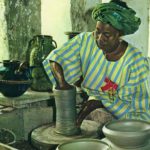
    Everyone knows about the military dictator who’s the face of the ₦20 note, but do you know about the busy-looking woman moulding pots on the back of the note? 

    Well, her name is Ladi Kwali, and we found the most interesting things you should know about her.

    Kwali was born on a Sunday 

    Hajiya Hadiza Ladi Kwali was born in the Gwari region of Northern Nigeria in 1925. Ladi means, “Born on Sunday”, and Kwali is the name of the Gwari village where she was born.

    Pottery was her first life skill 

    As a child, when she should have been outside playing with friends, Kwali learnt how to mould pots from her aunt using a method called “coiling and pinching”.

    [BBC]

    Rich people were Kwali’s clientelé

    Even as an apprentice and later when she relocated to Abuja, clients like the Emir of Abuja were on her roster.

    She’s the first female potter at Michael Cardew’s training centre 

    Kwali studied at the training centre run by the legendary British potter, Michael Cardew. She’s the first ever woman to train in the art of advanced pottery techniques.

    [BBC]

    She was world-famous 

    Kwali pioneered African ceramic art modernism. She gained international visibility and admiration through exhibitions and practical demonstrations arranged principally by Cardew. She remains notable for London exhibitions at the Berkeley Galleries in 1958, 1959 and 1962.

    [BBC]

    She won prestigious national awards

    Kwali received various awards such as the member of the Most Excellent Order of the British Empire (MBE) in 1977. In Nigeria, she also won the National Order of Merit (NNOM) in 1980 and the national honour of the Officer of the Order of the Niger (OON) in 1981.

    She got a doctorate

    Even though Kwali never went to school, she received an honorary doctorate from Ahmadu Bello University in 1977 and became a part-time lecturer in the university.

    [BusinessDay]

    She was immortalised after death

    After Kwali died on August 12, 1984, a major street in Abuja was named the Ladi Kwali Road in her honour. 

    [BBC]

    And, of course, she’s the only known woman who ever made it on any Nigerian currency note. 

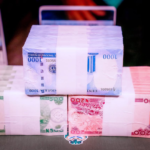
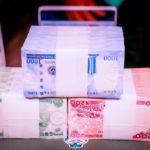
  • The long-awaited day is finally here. Today, December 15, 2022, the Central Bank of Nigeria (CBN), under Godwin “Meffy” Emefiele’s orders, will publicly release new naira notes for the ₦200, ₦500 and ₦1,000 denominations.

    We spoke to some Nigerians about their thoughts on the new banknotes and asked one question, “What’s the first thing you’ll do when you get your hands on the new naira notes?” 

    Here’s what they said.

    Damola

    My friend went to the bank yesterday to withdraw a lump sum of about ₦300k. The bank gave him the new naira notes and I was fortunate enough to see them this morning. The notes are average. It’s just as if they went to put filters on them. I prefer the old notes, seriously.

    On what I’m going to do with the new notes? Well, it’s just for spending. Everyone needs cash now since Christmas is around the corner.

    Tunde

    I run a logistics business so definitely the first thing I’m spending the new notes on is fuel. I’ll also service my bikes and maybe get Christmas items for myself and my family.

    Feyisayo

    I’m not anticipating the release at all. I think I’ve overgrown the thrill of acquiring new naira notes probably because the value of the currency is nothing to be happy about. I’m not looking forward to it. I’m a little curious to see how they look but beyond that, no extra feelings at all.

    Still, if I get my hands on the new notes first thing I’ll spend them on? Probably transport fare and then groceries.

    Karina

    I’ll keep them in my purse and laugh out loud. For sentimental reasons, I’ll hold on to the new notes. I’ll probably not spend till the old notes are out of circulation. Besides, there’s no difference between the old and new notes — just shades of colour. How are we sure that when the new notes get dirty and start fading they won’t look like what we currently have?

    Toluwani

    I’ll take a picture of them and send to my family group chat.

    Victor

    I’ll stare at them so as to recognise them physically and differentiate from counterfeits. But I think I’ll still use the old naira notes until they’re completely phased out. I know there’s a risk that banks won’t accept old notes after some time has passed but I’ll still keep mine.

    People can be somehow. You may offer someone the new notes and they’ll say they want the old one. Some don’t even know the old ones have expiration dates. This delays transactions. So I’ll still have both. If I’m going out for example, I could have ₦4k old and ₦4k new — just to be safe. I don’t want to be fully dependent on the new notes because I don’t know if they’ll be generally accepted.

    Deborah

    Touch them to have a feel. Did the texture change? Or is it just the colour that was changed? I’ll take a closer look too. I’d most likely keep them until next year, because I’m not sure conductors or drivers will collect them yet. So to be safe, I’ll definitely not spend them until next year when I’m certain that’s what everyone is using.

    Timi

    Naira is useless, so I’ll basically spend them lol. I’m a collector of notes so I’d keep the old ones alongside the other currencies of any country I’ve visited as reference. I’ll also make sure to break them into change so I can see the various redesigns in their different types. First thing I’ll spend on? Either food or a hangout since it’s December.

    Chiamaka

    I’d most likely not spend them until it’s necessary — possibly on transport or food or some other necessity. Oh, and take pictures of them and post on my status, lol.

    Niyi

    I’ll take a picture of them and most likely spend them on fuel. I have no issues with the policy to be honest. I just don’t use cash much but for the people who pack my dirt and clean my office, I pay them in cash. They might not be fully informed about this policy so that may be interesting to see. I’ll probably give them the new notes and tell them about the new policy. Cue the weird looks and questions like “Oga, wetin be this?”

    Abisola

    I’ll hold them in my hand to get myself familiar with their new features and differentiate them from fakes. I won’t spend them immediately, but keep them for like three days. Because I’m not ready to buy fish by the roadside and have to start explaining that the new denominations are legit.

  • It’s not a secret that Nigeria is a telenovela series, with twists, mysteries and turns at almost every point. Unfortunately, these plot twists never bring Nigerians the happy endings we want and at this point we’re tired of our character development arc.

    On October 26, 2022, the Central Bank of Nigeria (CBN) announced its plans to redesign the naira to combat counterfeiting and manage inflation. Nigerians weren’t too pleased by the news and even the Minister of Finance, Zainab Ahmed, didn’t like it. But at least we had hopes that maybe the makeover would be impressive. 

    Okay, what happened next?

    When President Buhari unveiled the new notes on November 23, 2022, let’s just say the designs looked… interesting.

    Is it just us or do they look like someone’s tie and dye project?

    What did Nigerians say?

    Nigerians were more disappointed than outraged, as these new notes looked like someone ran them through Snapchat filters. 

    During an interview on Channels Television, the presidential candidate of the African Action Congress (AAC), Omoyele Sowore, claimed the CBN spent about ₦218 billion on the new designs.

    While we can’t say how accurate Sowore’s figures are, we know producing these new banknotes must be expensive. But could this money have been spent better? Let’s look at some alternatives.

    ASUU

    There’s a saying amongst federal university students that, “Every generation experiences an ASUU strike.” It’s funny until you wake up one day and realise you’ve been in 100 level for two years. Just this year alone, federal universities were on strike for eight months. If some of the redesign fund was injected into the education sector, we’d have a better system.

    Flood victims

    Climate change is ruining the environment, and Nigeria is already feeling the brunt of it. This year, we faced one of the worst flooding disasters in our history, with  over 600 deaths and 1.3 million people displaced. Unfortunately, the federal government’s response to this has been underwhelming. The victims would have appreciated some of the money the government used to redesign the banknotes.

    Fix bad roads

    “I’m going to repair bad roads,” has become a mantra for politicians. But once they get into power, they wash their hands off their campaign promises and pick them up four years later for another campaign. 

    We can’t say we’re shocked at the government’s decisions so far. We can only hope that with the coming 2023 elections, we’ll vote for people who can address the challenges Nigerians really care about.