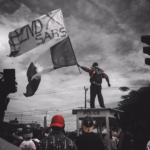
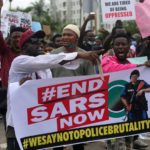
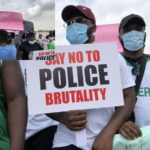
• In October 2020, Nigerian youths spoke in one voice against the widespread police brutality in the country through the EndSARS nationwide protests. On October 20,  2020,  a date that now has sadness forever etched in it, the Nigerian government set out to crush the movement.

    Deep into the night, while protesters at the Lekki Tollgate in Lagos State, held the Nigerian flag and recited the national anthem, soldiers of the Nigerian military fired their guns into the crowd, killing many.

    In the days and years that followed, some politicians and the Nigerian government denied, and have continued to insist, in different ways that the Lekki massacre never happened.

     Here is a timeline of statements made by politicians, both in individual capacities and on behalf of the government, denying Nigerians were killed for demanding their rights.

    Babajide Sanwo-Olu (Lagos State Governor), October 21, 2020

    On October 21, 2020, during a press briefing a day after the shooting, Sanwo Olu said that nobody was killed at the Lekki tollgate.

    “Fellow Lagosians, as we pray for the swift recovery of the injured, we are comforted that we have not recorded any fatality as against the widespread speculation on social media. Both myself and the leadership of the Ministry of Health have been going round. We went round all the hospitals last night, to see and to monitor for ourselves what has happened and to look and identify the injured protesters,” he said.

    Nigerian Army, October 21, 2020

    On October 21, a day after the massacre, the Nigerian army took to its X account to label different reports about the incident as fake news.

    Lai Mohammed-(Former Minister of Information), November 19, 2020

    On November 19, 2020, at a press conference organised to address the EndSARS protests, Lai Mohammed described reports of the Lekki shootings as fake news and encouraged the international community to ignore them.

     “At this juncture, we want to appeal to countries that have made faulty judgments on the basis of fake news and disinformation emanating from #EndSARS crisis to endeavour to seek and find the truth,” he said.

    Wasiu Sanni (Deputy Speaker, Lagos State House of Assembly), October 29, 2020

    On October 29, 2020, during a plenary session, the lawmaker said: “In fact, the way and manner it was out on social media, I could not even eat, I was down, I was very very sad. I thought what we had, we cannot have less than 300 or 100 people who had died from such whatever.”

    Lai Mohammed, November 2020

    After CNN released a report saying the military killed EndSARS protesters in Lekki, the former minister of information said that “the report lacks fairness and balance, and that “the organisation relied heavily on manipulated social media videos.”

    Lai Mohammed, October 20, 2021

    On the first anniversary of the Lekki shootings, Lai Mohammed, speaking for the Nigerian government, continued to deny the massacre happened, even after a Judicial Panel of Inquiry and Restitution set up to investigate the incident described the events of that night as a massacre.

    “Today marks the first anniversary of the phantom massacre at Lekki Toll Gate in Lagos…” Continuing, he said “The military did not shoot at protesters at the Lekki Tollgate on Oct. 20, 2020, and there was no massacre at the toll gate. The only ‘massacre’ recorded was in the social media, hence there were neither bodies nor blood.”

    Tukur Buratai (Former Chief of Army Staff), December 4, 2020 

    At the decoration of some major generals, Buratai denied the Lekki shootings, even after the CNN report confirmed it happened.

    “.. there was no single corpse, but some persons were seeing double at Lekki toll gate in Lagos State,” he said.

    Why are these denials dangerous?

    Apart from being downright insensitive to victims and families who suffered as a result of the Lekki shootings, here are some of the things that make the denials from the Nigerian government dangerous.

    Denials reduce public sympathy for social movements

    Because movements like EndSars heavily rely on public support, denials from government and public figures have a way of making the movement appear illegitimate and reducing sympathy, especially from those who were not directly affected by it.

    Denials delay justice and accountability

    When the government refuses to admit that it has done something wrong, it becomes difficult for movements to push for legal reforms as the system they are fighting against has refused to acknowledge the issue. It also delays justice, as has been seen in the case of the EndSars movement.

    Denials create a culture of fear

    When the government denies events like this and threatens media houses that present alternative reports and narratives, they create a culture of fear that prevents regular citizens and activists from taking more action and this weakens the strength of a movement.

    Denials demoralise people

    When the government does something of this nature and denies it, it makes people feel their actions have been in vain because the government would always get away with such crimes.

    What can Nigerian youths do to avoid future denials?

    This question is key to future social movements and if young people are successful in answering it, things are likely to change. Young Nigerians are asking this question now more than ever and here’s what we think the answer is.

    1. Document events with clear evidence
    2. Utilise secure platforms like blockchain-based archival systems to make sure important footage and documents remain accessible
    3. Build strong alliances with the media
    4. Build stronger social movements

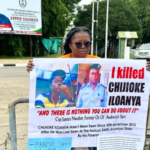
  • Ada is determined to see justice served for the disappearance of her brother, Chijioke Iloanya. Chijioke’s case was part of what fueled the 2020 #EndSARS protest after he went missing in 2012. The notorious Awkuzu SARS in Anambra, where Chijoke lived with his family, is said to be responsible, and there’s a face and name for who to hold accountable. Now, Ada is staging a solo protest at the National Assembly in Abuja, demanding justice for her brother and other victims of police brutality. 

    The Nigeria Police Force’s vision is “To make Nigeria safer and more secure…to create a safe and secure environment for everyone living in Nigeria.”

    However, this vision has been nothing short of a nightmare for Ada and her family, who have been searching for elusive justice for the past 11 years. Ada narrated to Citizen everything that has led her up to this moment.

    Walk us through why you’re staging this protest

    My brother, Chijioke, was arrested by the Nigerian police on November 29, 2012. Then he was transferred to Awkuzu Special Anti-Robbery Squad (SARS) in Anambra state before my mum could bail him out.

    When my parents tried to bail him out at Awkuzu SARS, they denied having him at first. My parents were about to leave the station when they saw my brother being led in, and my mum raised the alarm that he was the one they came to bail out. My parents were thrown out, and it would take several days before they were allowed into the station.

    When they eventually got access, they met James Nwafor, the officer in charge of the SARS unit. When my mum asked for my brother, he told her that if it was those boys (including my brother) she was looking for, he’d already killed them and that there was nothing she could do about it.

    My mum slumped when she heard it and was taken to the hospital. This started this journey for us, and we’ve been trying to get justice in different ways. In 2019, I wrote about it on Twitter. In 2020, I called out James Nwafor because I saw his handle on Twitter.

    I’ve written petitions to the National Human Rights Commission (NHRC). I’ve also written petitions to different Inspector Generals of the Police

    We went to the #EndSARS panel in 2020. The Anambra state government hasn’t made the panel’s recommendations and findings public. No whitepaper has been released either. Nothing has happened. James Nwafor is still a free man while we’re still in the pain of losing our brother and son. Other families have lost someone to James Nwafor, and others have been victims of police brutality. 

    Download the Citizen Election Report: Navigating Nigeria’s Political Journey

    It’s tough what you and your family have had to go through

    I started this protest on July 3. It will go on for ten days, ending on July 13. The reason it’s happening now is because it’s going to three years since we wrote a petition and went to a panel for #EndSARS to demand justice over the death of my brother, Chijioke. 

    The panel made findings and recommendations, but we’ve not gotten that yet, up till now. I’m also doing this because I’m getting tired. I have a life outside of this. My life revolves around Chijioke, and I would like justice for him. It draws me back whenever someone sees me and asks if something has been done about my brother’s case. I have no good answer to that, and that has to change.

    July is also Chijioke’s birth month, which makes this symbolic. His birthday is July 13, which I’ve chosen as the day to end the protest. Because I’ve fought for justice for my brother, other people who have been victims of police brutality have reached out to me as a point of contact. They tell me about family members they’ve lost, and I feel so bad I can do nothing for them. The least I can do is use my voice to speak on their behalf. So while I’m advocating for Chijioke, I’m also trying to get justice for them because we deserve it.

    How’s it been so far?

    I’ve been pushing, although it’s been getting harder and harder. Yesterday’s protest was harder than Monday’s because the sun was scorching hot, and I had to stand for long hours without a place to sit. When I get tired, I sit at the barricades, which still places me under the sun’s searing heat.

    It rained in the morning today so I couldn’t start early. But I’m here now, protesting. I’ve noticed that people have been asking me to go to Ahmed Isah (Ordinary Ahmed of Brekete Family). But when I first tweeted about it, some people like Segalink tried to help, but nothing happened. So I’m conflicted. Do I reach out to him? Would it change anything or not? Also, it’s not just about me. What about other families? It’s a little convenient for me because I’m based in Abuja but what about them? Do they spend their money to come to Abuja to meet Ahmed when it’s easier to arrest James Nwafor immediately? 

    What would you like to see happen?

    Start the investigation and prosecution of James Nwafor immediately. Let each state release its #EndSARS panel reports, whitepapers and recommendations to the public. It makes no sense for ordinary citizens to seek justice through one man who is probably overwhelmed with so much. Why should I rely on a regular Nigerian to help me when we have institutions that aren’t doing their jobs? It’s unfair. I’ve been here since having people look at me with pity, and I don’t want that. I just want justice.

  • More than a year after the Lekki Toll Gate massacre, the Lagos State Judicial Panel on #EndSARS has submitted a report confirming that the Nigerian Army and Police Force were both responsible for the killing of protesters on the night of October 20th, 2020.

    The panel was inaugurated on October 19th, 2020, to quell the ongoing protests by investigating cases of human rights abuses by the Nigerian Police Force, the panel’s role eventually expanded following the night of the massacre.

    “The Nigerian Army was invited for intervention in the State and was deployed to Lekki Toll Gate on the 20th of October 2020. At the Lekki Toll Gate, officers of the Nigerian Army shot, injured, and killed unarmed helpless and defenseless protesters, without provocation or justification, while they were waving the Nigerian Flag and singing the National Anthem and the manner of assault and killing could in context be described as a massacre,” the report read. 

    Here’s everything we know about the report:  

    The Nigerian Army Fired Live Bullets

    After months of going through evidence and listening to eye-witness accounts, the panel concluded that the Nigerian Army actually fired live rounds at the tollgate, killing multiple Nigerians. 

    The panel stated that it had recovered two bullet shells from the scene on October 30th, 2020, when it went for a spot assessment. The shells were duly analyzed by forensic experts who determined that they belonged to the Nigerian Army. 

    Doctors Testified To Multiple Injured People And Over 96 Recorded Deaths

    Presenting its findings, the panel cited the testimonies of three doctors who attended to protesters on that night. In their testimonies, the doctors confirmed that many protesters were critically injured, with over 96 gunshot-related deaths recorded from that night alone (some of the bodies are yet to be identified). 

    The Nigerian Police Also Shot At Protesters 

    The panel’s report also points at another round of shootings from that night, this time by the Nigerian Police Force. According to the report, after the Nigerian Army left the toll gate, officers of the Police Force showed up and shot directly at the remaining protesters who tried to flee the scene. Bodies were reportedly discovered in the shanties and the Lagoon at the Lekki Phase 1 Foreshore, close to the Lekki Toll Gate. 

    The Nigerian Army Blocked Ambulances From Attending To Victims

    Confirming reports made by medics and protesters from that night, the panel found that the Nigerian Army made the situation worse by refusing to allow ambulances to render medical assistance to victims who required it. This eventually led to more deaths that could have easily been prevented if medical aid had been administered at the appropriate time. 

    Lekki Concession Company (LCC) Tried To Stall The Investigation 

    The report also provided more information on the LCC’s role during and after the shootings. According to the panel, the LCC failed to cooperate with the investigation, refusing to hand over vital evidence in its possession. 

    The LCC is also reported to have manipulated the CCTV footage it presented before the panel. 

    A Clean-up Attempt

    Finally, the report also revealed that several government agencies attempted to cover up the incident of October 20th. According to several eyewitness accounts, the Nigerian Army and the Lagos State Environmental Health Monitoring Unit (LASHEMU) allegedly showed up with vans to cart away the bodies of dead protesters. The Lagos Waste Management Authority (LAWMA) was also reported to have arrived at the scene for a quick clean-up immediately after the shootings. Similarly, officers of the Nigerian Army and Police Force were reported to have picked up empty shells from the bullets they used, in a bid to cover up their parts in the shootings.

    Next Steps….

    As part of its report, the panel recommended that the Lekki Toll Plaza be made a memorial site for the protesters who died, renaming it the “ENDSARS TOLLGATE”. Other recommendations included making October 20th of every year a toll-free remembrance day – hinting at plans to reopen the toll gate, a public apology by both the State and Federal Governments, compensation to victims from that night, the establishment of a standing committee to bridge the gap between the society and the police, and the institution of a Human Rights Committee or Tribunal made up of relevant stakeholders. 

    Receiving the report, Governor Babajide Sanwo-Olu promised to set up a 4-man committee led by the Honorable Attorney-General to prepare a White Paper for the purpose of implementing the findings and recommendations expressed in the report. He also promised to send the report to the National Economic Council (NEC) for implementation.

  • Love Life is a Zikoko weekly series about love, relationships, situationships, entanglements and everything in between.


    Audio: I Still Can’t Believe He’s Gone

    Derin, 21, and Oke, 21, had been together for a little over a year before Oke’s tragic death cut their love story short. For today’s Love Life, Derin talks about how they went from best friends to lovers, and all the plans they had for their future together.

    derin and oke love

    What was your first memory of meeting Oke?

    I met him in school in February 2018. I went to study for exams with a friend, and I saw him on her bed, pressing his laptop. My first thought was, “Who is this fine boy?” The moment we spoke, it was clear that he wasn’t like the other guys in my school. 

    I initiated our first conversation because he was really shy. I remember he was watching Grown-ish, and I gave him my laptop to send it to me. We didn’t immediately exchange numbers, but we followed each other on Twitter.

    What happened next?

    We talked on Twitter for a bit, then we moved to WhatsApp and basically became best friends. 

    Ah. Best friends?

    LMAO. Yeah. We were best friends for a while. I liked him as a friend, but I didn’t see him as a potential lover. He always talked about how stressful it was that he was so obviously into me, and I was there forming best friends. 

    The thing is, we would talk every single day. I found him really cool and smart, but in my head, I just couldn’t picture myself dating a guy my age; I’ve always had a thing for older guys. Oke was so deep in my friend zone, I would even tell him about other guys I liked. 

    LMAO. Ouch. Did he ever tell you how he felt?

    Yeah, he did. He actually asked me out around February last year, but I turned him down. He made it clear that even though I didn’t feel the same way, he was still happy being friends and getting to spend time with me.

    I promised him that if my feelings ever changed, I would let him know.

    When did you realise your feelings had changed?

    A few months later. In June 2019, he moved into the same building as me so we could be closer in our final year. I was in Room 9 and he was in Room 20, so we were basically roommates. We did everything together and got even closer.

    By July, I realised I had fallen in love with him. I remember writing it in my Notes app.

    derin and oke love
    Derin’s note about falling for Oke.

    Did you tell him as you promised?

    LMAO. I dropped a few hints. He figured it out, and we started dating on August 15.

    What was the transition from best friends to partners like?

    I know it’s supposed to be easy, but it really wasn’t. Even though we knew so much about each other, it still felt like we didn’t know enough. I definitely found the transition a lot harder than Oke did. 

    I not only had to unlearn my age bias, but I also had to let my guard down in a whole new way, and that was difficult for me. I eventually got the hang of it, but the first three months were tough. We argued too often.

    What did you guys argue about?

    It was always about the most trivial things, and I hated it so much. He was still my best friend, so I couldn’t stand when we weren’t talking. To be fair, the fights were mostly my fault because he was such a gentle person.

    Honestly, he was perfect. 

    What’s the longest you went without talking?

    Our longest fight lasted about a week and a half. I was going through a lot at the time, and I sent him a text about needing to speak to him. He told me to leave a message because he couldn’t talk at the moment. I didn’t because I was mentally exhausted. 

    Later that night, he hit me up so we could talk, but I told him I wasn’t in the best mental state to have the conversation anymore. He got angry, then I got angry and it became this big fight. For over a week, we didn’t talk — only texted to check up on each other. 

    We eventually apologised, and that’s when he sent me that email I shared on Twitter. Emails were how we typically resolved our major issues, and we also used them to randomly send each other mushy messages.

    derin and oke love
    derin and oke love
    One of Oke’s many “mushy” emails to Derin.

    That’s so sweet. Had you dated anyone before him?

    Yeah. Two other people, but my relationship with Oke was very different. It was calming and full of love. We did everything together, and he always looked out for me. He taught me how to love wholly and without fear. That was his style.

    Was that what you loved the most about him?

    It was one of the many things, but what I loved the most was his perspective. Oke always thought outside the box. If you ask me, I think he lived a full life on earth before coming back a second time. How else could someone so young have been so brilliant?

    How did your relationship with him change you?

    It made me a better…everything. A better listener, communicator and lover. Since his death, I’ve been thinking about just how much he changed me. He was a very empathetic person, and that rubbed off on me. He taught me how to look out for others. 

    Did you guys ever talk about the future?

    All the time. We had plans of settling down in about two or three years. We talked about everything, from what our rings would look like, to how our wedding would be. For both of us, we were each other’s final bus stop.

    Would you call him your soulmate then?

    I don’t really believe in the idea of soulmates, but Oke and I complemented each other in the best ways. We were very different, but we were always in sync. On most days, it definitely felt like we were made for each other. 

    Derin and Oke

    Are you fine with talking about the day he passed?

    Yeah, I am.

    Can you walk me through that day?

    Oke and I were always busy during the day, but we would make out time to talk on the phone at around 11:00 p.m. every night. We did the same thing the night before he died. After talking and working together, I went to bed at around 2:00 a.m.

    The next morning, he texted me about how hard it was to calm his hypertensive mother because of the shootings going on in his area. I continued to check up on him, then he told me they’d set his mum’s cars on fire. 

    The last message he read from me said, “We’ll get through the day.”

    How did you find out what had happened?

    I went on Twitter, and I saw someone tweet that they had gunned down their cousin at Mafoluku. I sent him the tweet on WhatsApp, but it didn’t deliver. That’s how my heart started beating fast.

    I sent him another message asking him to keep me in the loop, but that didn’t deliver either. So, I decided to call him. No one answered. At that point, I just assumed that he and his family were trying to get to safety. 

    I waited for about five minutes and called again, and this time, his brother answered. He said that someone had been stabbed, and I should find a way to get an ambulance. So, I immediately tweeted it out. I still had no idea it was Oke. 

    What did you think was happening?

    I assumed he couldn’t answer the phone because he was being his normal empathetic self and helping the person who had been stabbed. After trying and failing to reach him again, I started getting tense, so I searched “Mafoluku Oshodi” on Twitter.

    I saw a couple of tweets that said the area was now calm, but I kept scrolling and that’s when I saw Oke’s picture on the TL. He was lying on the floor, lifeless, with blood coming out from his neck. I screamed. 

    All my neighbours ran to my house. My sisters and I were already on the floor, wailing. I eventually calmed myself down with the hope that they were able to get him to the hospital before he died. 

    How did you get an update?

    I was able to finally reach his brother. One of my neighbours collected my phone and started communicating on my behalf. His brother eventually told my neighbour that Oke didn’t make it. When my neighbour broke the news to me, I went numb. 

    I felt like my whole world had come crashing down.

    I’m so sorry. How were the following days for you?

    For the rest of the week, I could barely eat or sleep. It was the toughest week of my life. Even my sisters were down. He came around a lot, so he was like a brother to them. They loved him so much.

    I’m really sorry, Derin. How are you holding up now?

    It’s tough. I randomly find myself wondering why it had to be Oke. I can’t believe I haven’t spoken to him in weeks. Almost every day, I read through our chats, listen to his voice notes and go through our pictures. 

    I still can’t believe he’s gone.

    What’s something you’ll always remember about your relationship?

    I’ll always remember how intentional we were about making it work. We put in so much effort into our relationship and were always open about what we liked and what we didn’t.

    I’ll also remember how he would just randomly tell me, “OMG! You’re so cute.”

    If you knew what you know now, would you have done anything differently?

    If I knew my relationship would be cut short, I would have made sure we didn’t postpone so many things. We moved a lot of our plans to 2021 because we thought we had so much time. 

    Still, I’m grateful for all we could do together while he was here. 


    Check back every Thursday by 9 AM for new Love Life stories here. The stories will also be a part of the Ships newsletter, so sign up here.

    If you want to share your own Love Life story, fill this form.

  • Last week, we covered some of the ways in which the Feminist Coalition has supported the EndSARS protests in Nigeria. In the light of recent events, like the arrests of the peaceful EndSARS protesters, we asked the Feminist Coalition a few questions on what their purpose is and what struggles they’ve come across in supporting the movement to end SARS brutality in Nigeria.

    Feminist Coalition provides aid for protesters.

    We are scared young Nigerian women who are not a threat. We wanted to contribute towards Nigerians exercising their constitutional rights to protest by providing food, water, masks (for COVID 19), paying medical bills and supporting legal aid for arrested protesters. 

    We do not plan protests; we simply donate to the needs of peaceful protest organisers so that they are safe. We have made it clear in our statements via our website and our social:

    Unfortunately, their goodwill hasn’t been very well received.


    In the past week, we’ve had restrictions placed on our bank accounts, and many people who have donated to us or received donations from us have also complained of restrictions placed on their accounts by certain banks. This is what forced us to move to decentralised payment platforms and only accept donations in bitcoin using BTC Pay.

    There have been threats to the safety of coalition members, FK Abudu, other Nigerian civilians as well as general concerns for the safety of peaceful protesters.

    These threats have been due to misinformation and defamation of who we are and what we stand for by bad actors. 

    We received donations towards the #EndSARS movement from unknown but well-meaning Nigerians and supporters of the movements both here and internationally. People have donated because they are all passionate about building a better Nigeria. What we asked for was an end to the killing of Nigerians at the hands of the police and that the government take real action and hear our cry as people of Nigeria.

    Here is our statement on the killing of peaceful protesters in Lagos Nigeria on 20 October 2020.

    For more information on the Feminist Coalition, you can check out their website.

  • It is very easy to forget to prioritise your mental health in the midst of the protests and what seems like a very important part of Nigeria’s history. We asked five Nigerian women how they manage to protect their mental health even in the midst of it all.

    Sandra, 18

    When it gets too much, I leave social media and binge watch Korean dramas. It is a good escape because, at that point, I am not thinking of anything else other than the movie I am watching.

    Amaka, 24

    I do not. I haven’t spoken to my therapist in a while, and I have daily panic attacks. I really want it all to end. Maybe I can start taking care of my mental health then.

    Fikin, 20

    I cry a lot. After seeing so much, I just break down and cry. When I’m done crying, I get angry and resume my online protest. I also talk to a friend. He knows what to say, and it makes me feel better.

    Zainab, 24

    Weed, friends and my therapist. That’s basically my support system, and it’s working. My friends surround me with a lot of love and everything becomes easier to get through.

    Eniola, 35

    I masturbate. It helps me relax, and then I sleep. Sleep helps me to just forget.

    For more information on women-focused content, please click here

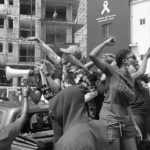
  • Women have been said to be at the forefront of this protest. Although some people say women should not join the protest, they did anyway. We asked six Nigerian women why they joined the #EndSARS protests.

    Linda, 21

    Every day I spend on the road, is for the women and the queers. Police brutality affects those two groups strongly, and people

    Elizabeth, 25

    My brother has been extorted by SARS. I don’t consider it centering men, I consider it fighting for family. It’s a family thing now.

    Chika, 27

    Women. That’s it. Women are raped, assaulted, and STILL extorted by SARS officers. They’re the reason I protest.

    Folorunsho, 26

    I’ve been a victim of SARS. They’ve taken some money from me before, and I’m honestly done with the institution. This protest is for me. For what they’ve taken from me.

    Adaeze, 19

    I want a new Nigeria. A safer one for all of us irrespective of their gender and sexual orientation. If by going to the streets every day will get me that, then so be it.

    Dimso, 35

    I do not want to be on the wrong side of history. I want to be able to tell my children that I stood for something as great as this.


    For more women do focused content, please click here

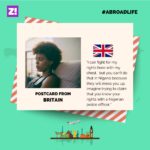
  • The Nigerian experience is physical, emotional, and sometimes international. No one knows it better than our features on #TheAbroadLife, a series where we detail and explore Nigerian experiences while living abroad.


    The #EndSARS movement quickly went from being a national one to being an international one, with Nigerians all over the world lending their voices to demand an end to police brutality in Nigeria. On Abroad Life today, we spoke with a few people who organised, or participated in #EndSARS protests all around the world, and here’s what they had to say:

    1. Ife, Canada

    It all started when I saw Tunde’s tweet calling for Nigerians in Toronto to protest. I was definitely interested, so I got in contact with him and we started planning.

    It was perfect timing because I was already looking to do something on my own. I wanted to stand in front of my house and hold up a placard.  We contacted the media and the city for permission, and he designed the poster. Once we got approval from the city, we shared the poster with all the information. We got all of this sorted in less than 24 hours, and because he has a huge twitter following, it generated a lot of traction and interest. Getting permission from the police was also pretty straightforward. I had to reach out to the head of the Special Events department for Toronto, Lisa Yuill. She understood and gave me all the help I needed. We even had police escorts on the march. 

    The march happened on Saturday morning at Dunder Square. I would say it’s like the Freedom Park, Ojota of Toronto. The turnout was impressive. I was expecting that because Saturday was the beginning of a long weekend (there’s a public holiday on Monday), people would want to sleep in and enjoy their weekend, but by 9 a.m., we already had over 50 people.  In all, we had over 100 people. Our protest incited a wave of protests, and I’m super impressed about that. There are different groups having protests in different parts of the country and that’s amazing. This movement is personal for me because I’ve lost thirty thousand naira in one day to SARS. A few years ago when I was in Lagos, I sent my brother on an errand within the neighborhood. He took my car. Shortly after he left home, I got a call that SARS had arrested him. I got there and asked what was going on. They said they just arrested him, and he had to follow them to the station. 

    “Okay, what did you arrest him for?”

    “When we get to the station, you’ll find out.”

    Then one of them brought me to the side and told me to look at their minibus up ahead. There were already a few young guys like my brother in there. He said they were all going to the station, but if I didn’t want my brother to go as well, I had to give them a hundred thousand naira. I said I only had five thousand to give them. He laughed. We bargained. We agreed on thirty thousand naira. I gave them in cash and left with my brother. 

    As long as the goal is common, we encourage people to protest. If we see that the fire is dying down, we’ll go again. 

    2. Tunde, Canada

    My experience with SARS back home: I was robbed in 2013 at gunpoint. They stole my brother’s car. They drove me and my girlfriend away from the spot they robbed us and dropped us off. But they took the car and our phones. For me, it was my iPhone, so I was able to track and find its location. I went to the police and they introduced some SARS folks to me. I gave them the location of my iPhone; they mentioned they’d take care of it. 

    A week later, they said I should bring one hundred thousand naira, and they would bring the guys out. I gave them. After a week, I paid another 100k. It was clear at this point that they just wanted to keep extorting me, so I stopped giving them money, Why am I giving the police money to get thieves? Aren’t they paid by the government? I suspected that they had found those boys and gotten bribed by them as well. We never found the car or my phones. It was a traumatic experience.

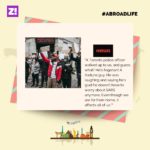
    What soured me organizing that protest was when I saw young folks sleeping in front of the Lagos State Assembly. I was touched, and I knew it meant we were ready for change. When I put the tweet out for the Toronto protests, it gained so much traction and folks started reaching out. We were surprised to have a lot of people turn out. Ironically, that morning, a Toronto police officer walked up to us, and guess what? He’s Nigerian! A Kaduna guy. He was laughing and saying he’s glad he doesn’t have to worry about SARS anymore. I am glad we were able to lend our voices. Even though we are far from home, it affects all of us.

    3.  Rasheedat, England

    I tweeted about being interested in going for a protest if there’s one in London. And someone tagged me on Ogbeni Dipo’s tweet. At the protests, the energy was great. Due to the permissions the organisers had received from metro police, we were restricted to a spot. But trust Nigerians; we “revolted” after a while. People wanted to stand and protest in front of the Nigerian house, so they moved there while others stayed on the other side. After some time, the police came to us (I was standing on the other side) and said we should go down the path that’s next to the Nigerian House. I crossed over then saw Wizzy. 

    4. Afopefoluwa, Germany

    I had many SARS experiences when I was in Nigeria, both personally and through people I really cared about. I remember receiving calls from lovers saying what the police had done to them and feeling completely helpless at the other end of the phone. I remember someone I really cared about just crying and crying for hours after midnight after the police had assaulted, harassed and extorted them. That night, I stayed up for hours listening to them cry on the phone. I often remember the helplessness I felt in those moments, how just saying “sorry” didn’t cut it. 

    Once, my youngest sister and I were coming back from one of those fun nights. I think it was a “90’s baby night”. We were both so excited to be discovering this side of Lagos together, which seemed genuinely like a space where people could just be. We were in an Uber on our way home when SARS stopped us and told us to come down. I often think about the fear in her eyes that night, lanky and tall as she was, and how she immediately went on her knees on the bare ground and raised her hands up in the air saying “Please!” I actually joked about it a lot to her and everyone else because I think I use humour to deal with trauma. But now I think it was insensitive to have laughed about that. It was a traumatic experience and that kind of experience leaves its mark on you. 

    Before all of this started, I had been planning that my own detty Decembers from now on would just be staging protests. My friends are telling me now that “Woah Afope, you had been saying all you wanted to do was protest and look now, there’s a revolution.” I just think Nigerians have had enough, especially the youth, and we’ve been having enough for a while now. So for me, my body has been ready to hit the streets, and since everything already started happening rather organically, I knew I had to join in whatever capacity I was able to. Also being in a political city such as Berlin, I noticed that people were always staging demonstrations for everything and anything. They are aware of their rights. They know what happens when you don’t speak up. So I started to attend some of these and say to the other residents here that when I came back home this was all I wanted to do. They don’t even get even quarter as much shit as we do, and they’re willing to hit the streets to demand their rights and demand to be heard. I thought we could do with some of that in Nigeria as well, and I am so glad to see that we are all united and speaking with one voice about our future. The protests went really good. People got to speak their minds and air out grievances. It was some kind of a healing space, but there was still anger in the air. There was music as well.

    There was a funny scene where the police came out when some protesters were demonstrating a typical SARS encounter, and they tried to intervene because they thought it was real. People also read out stuff. Someone brought puff puff to share. 

    I appreciate everyone who came out and made it a success. Segun Famisa and Akeem Durojaiye supported us with plans and helped us amplify the event. I would like to thank them as well. Though the people in the embassy were peeking out from their homes and taking pictures, no one came out to address us.  I guess it’s because it was a Sunday.

    5. Ibukun, Canada

    Someone on the Zikoko WhatsApp group posted a picture with different locations for protests and there was one for Toronto. I was really happy to see that. I was a bit skeptical though, because the thing with protests is that sometimes they get out of control. I did some research and found Tunde and Ife’s tweets, and then got a friend to follow me. At least I knew I wasn’t alone, and that the protests were going to be organised. We had to be in groups of 25 because of COVID rules, and then as we were gathering, two police officers walked up to us and started asking what happened and why we were protesting. We told them and then one of them just went, “Ahan, my fellow Nigerians.”e He said he was from Kaduna, and he supported our cause. He assured us that as long as we had our permits, we would be fine. 

    It was nice to protest because so many non-Nigerians stopped and asked us what we were protesting about and were really eager to learn. We played the National Anthem and took the knee and then someone got on a mic and addressed us and the passers-by. 

    I think the most emotional moment was when someone got on the microphone and started calling the names of the people that had been killed by SARS and everyone would respond “Killed by SARS!” It was my first ever protest march, and it was good. 

    When I was leaving, a new group was coming.

  • How do we start this?

    Let’s start with a random day: you’re in a car or a bus, on your way home from work. It’s late. You’re eager to get home, eat and unwind in front of your favourite Nollywood web series. It’s dark. The street lamps are dead (typical). You see the flashlights before you see them, the men in uniform. Your mind is still on food. “Hay God,” you mutter as they start to slow down your vehicle. You know what they want. You say a silent prayer. You start to hide your iphone. You watch as they cock their guns, these men in uniform, and listen to their harsh voices telling everyone to get down. You’re scared, thinking at once of the multiple things you’ve not done with your life, the uneaten pounded yam and white soup in your fridge, and how you can ask for help before it escalates. You imagine the Twitter hashtag. You shudder. 

    That’s our reality as young people in Nigeria and that’s only scratching the surface. Over the past couple of days, we’ve witnessed something groundbreaking in the history of Nigeria: young people of different tribes, different backgrounds, living in different cities, states and countries have assembled to protest SARS officers who oppress young people for simply existing. 

    In this time, amongst several problems, the problem of information has been growing and spreading sporadically. False information and fake news is flying around, while at the same time, the news of the protests eludes different sets of people including a chunk of the older generation Nigerian. 

    What did we do?

    At Zikoko, we consolidated efforts to ensure that people were getting verified information at a timely manner, while at the same time providing updates and explaining the situation without the “grammar” that tends to exclude part of our people. We were (and are) providing updates on protest locations, telling the stories of people who have been victims and survivors of SARS brutality and updating our audience on government action. We have been trying to answer important questions: What happens when SARS is disbanded? Who has the power to disband SARS? and so much more. 

    But even answering these questions was not enough. It was good to temporarily solve an information problem, but what about the knowledge problem?

    As an organisation that cares about the things that affect our audience, including how society affects their personal lives, we decided to bring you something bigger. 

    Enter, Zikoko Citizen: The Police Is Not Your Friend But Zikoko Is

    A long time ago, we were told we were the leaders of tomorrow. Ironic that the same people who ruled us then still rule us now. They’re our governors, senators, representatives and even president.

    Here’s where it gets interesting: 

    As Citizens of a country, in this case, Nigeria, we have several rights and freedoms including the right and power to choose who our leaders are. We have the right to demand better policies and hold the people in power accountable. But how do we do this? 

    That’s where Zikoko, your friend REALLY REALLY comes in: 

    Before it even begins to become a problem, Zikoko’s Citizen wants to anticipate and find answers to your burning questions around governance and policy. Curious about what DaddyBubu or Wike or Sanwo is doing and how it affects you? — from employment to elections to health —  Citizen will be on the beat.

    Think of Citizen as a knowledge-hole. Everything you need to know, broken down, simplified, and visually compelling through the use of infographics and simple illustration. 

    So what we have the information now, what next?

    Gbe body e, AKA action. One of the strong points of the EndSARS protests is that we first understood our rights as citizens of Nigeria — a right to life, a right to dignity, a right to freedom, amongst others  —  and secondly, we understood our leaders are to be held accountable. Using that knowledge and transforming it into something tangible as we’ve seen in the past few days is action.

    Action comes in different forms: from protests, to petition to impeachment to getting your PVC so you can vote in elections

    Let us paint you another quick example: it’s 2023. You’re on social media complaining about how messed up Naija is. The elections are in a few weeks, you really really want to vote o, but to go and be stressing yourself for ordinary permanent voter’s card? Your consign no reach like that. You also don’t really know who the candidates up for elections are. You see their posters around, and you know some of them because they were in power when you were in primary school, but the information is too scattered for your busy self. Imagine a database breaking down all the information you need to know about the elections including how to get your PVC and voting centres close to you? Imagine all of this data available months before the elections! That’s what Citizen will do. It will make the long game easier in the short term.  

    Zikoko Citizen is that friend that will always help mobilize you to take action. You ask: There’s a problem, what can we do about it? Zikoko Citizen breaks down your options and explains what’s realistic.

    Who is Zikoko Citizen for?

    You, yes you reading this. Citizen is for you. Whether you’re abroad oh, or you’re in the process of japa-ing oh, or you’re still here, Citizen is for you.

    Why should you care?

    Because you deserve a say in the way things work in Nigeria and it’s high time we exercise some of it. You feel me?

    When should you expect Zikoko Citizen stories?

    Monday morning, 9am sharp. As you’re drinking your coffee like this, or sitting in commute, irritated by traffic, there’s a Citizen story waiting for you. 

    And on Thursday by 9am, as you look forward to the weekend, there’ll be a new Citizen explainer patiently waiting for you to dive into it. 

    After all the long talk here’s what we’re saying: Citizen helps you understand the problem and how to take action. 

    Here’s how to follow the action

    Here’s where it gets even sweeter

    Citizen comes with a weekly newsletter that breaks all the important information to you in the simplest forms. You don’t want to not be on it.

    If you have any questions, suggestions, concerns, hit us up here. We full ground. 

  • Citizen is a column that explains how the government’s policies fucks citizens and how we can unfuck ourselves.

    The right of citizens to protest is protected by the right of assembly, free speech, freedom of association and freedom of movement, contained in the Universal Declaration of Human Rights. Yet, governments worldwide always attempt to suppress the voice of dissent among the populace. 

    It’s an act we’ve seen worldwide, in different countries. In India, the government threatened arrests and physical violence against protesters who were expressing their discontent with a new citizenship law. Still, hundreds of thousands of Indians showed up. Protesters continued to grow in number despite the use of deadly force, with the governments’ efforts backfiring.

    In Hong Kong, similar threats did not prevent 1 million people from pouring out in support of the movement. The protests have continued non-stop since March 2019.

    Seemingly, these threats of crackdowns incense the populace further and strengthen their resolve. 

    Some governments try a different, subliminal approach. Many traditional media outlets are either sponsored, controlled or threatened by the government, but not the internet. Rather than threats of violence, authorities often opt to shut down the internet, a medium of communication that they are unable to control and censor. As we’ve seen in Nigeria, the internet is the only means of receiving and broadcasting accurate information as they happen, away from the grasp of government censorship in media houses. 

    In Sudan, the authorities blocked access to Facebook, Twitter and Instagram to quell anti-government protests. There, citizens relied on Virtual Private Networks to bypass internet restrictions. 

    In 2019, the Iranian government shut down internet services in the country following weeks of protests against corruption, ineptitude and an increase in fuel prices. It was the largest internet shutdown in a country that size. While top politicians, banks and state-run media still had access to the internet, the rest of the populace did not. VPNs did not work either. Citizens had to rely on Toohsheh, a file-sharing service which relies on satellites rather than the internet to disperse information.

    Other governments opt for a more crude approach. Paid protesters, who are offered as low as ₦1,000 per person to counter legitimate protesters, have been documented. All these have been done in an attempt to discredit the protesters and perhaps cause violence.

    Regardless of the methods governments use to suppress protests, the people creatively find a way to bypass restrictions. VPNs and alternative communication means have continued to help citizens avoid censorship by the authorities. In Nigeria, the sheer number of protesters were sufficient to counter hoodlums who intended to stir up violence and smear the protests.

    The Nigerian government can see that the playbook has changed; the people will no longer be silent. 

    We also inform you about what to do in case the government shuts down the internet: #EndSars: A Guide To Staying Online In case Of An Internet Shutdown

    We hope you’ve learned a thing or two about how to unfuck yourself when the Nigerian government moves mad. Check back every weekday for more Zikoko Citizen explainers.