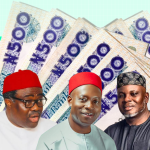
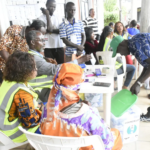
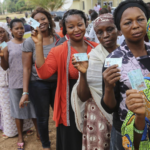
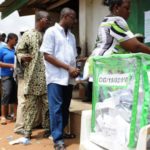
• On Sunday, November 9, 2025, the Independent National Electoral Commission (INEC) announced that the incumbent governor of Anambra, Chukwuma Soludo, had won the governorship elections held the day before.

    According to INEC, Soludo received 422,664 votes, while his closest rival, Prince Nicholas Ukachukwu of the All Progressives Congress (APC), got 99,445. On paper, it looked like a landslide. But truthfully, it had less to do with popularity and more to do with who had the deepest pockets.

    How much does a vote cost these days?

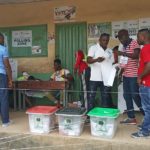
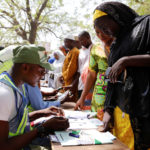
    Election observers said the process was surprisingly smooth. INEC officials actually showed up on time, and the Bimodal Voter Accreditation System (BVAS) worked without the usual drama. And there were hardly any reports of violence.

    Basically, it was as good as elections get in Nigeria, except for one thing: vote buying.

    Civic participation non-profit, Yiaga Africa, confirmed that the final results reflected the actual votes cast. So no rigging in that sense. But they and other observers couldn’t ignore the shameless vote buying that went down.

    Reports say parties handed out anything from ₦1,000 to ₦30,000 to voters.

    Reacting to the news, former Anambra governor and presidential hopeful Peter Obi said, “Someone who is not employed will collect ₦30,000 for his vote. That means you’ve sold your school, your hospital, your job opportunities, and your future. And that’s what’s very worrying about our democracy.”

    Vote buying is nothing new in Nigeria. It’s one of the oldest tricks in the book. Campaigns often feature sharing items ranging from spaghetti, loaves of bread, bags of rice and cold, hard cash. Sadly, it’s part of the political culture.

    But this new level of shamelessness, where party reps hang around polling units and openly buy votes in front of INEC officials and police, is a growing trend. And it’s very disturbing.

    The 2023 general election is mostly remembered for violence and alleged rigging. But there were also reports of people handing out cash or making transfers at polling units to voters who backed their party. 

    The National Bureau of Statistics (NBS) reported that there was a significant jump in the amount of vote-buying in 2023 compared to previous years. Agents of the Economic and Financial Crime Commission (EFCC) were even attacked at a polling unit in Bwari, Abuja, while trying to arrest a vote buyer.

    In September 2024, during the Edo governorship election, Yiaga Africa reported that voters were paid between ₦5,000 and ₦10,000. And all the major parties were involved in the act.

    Kimpact Development Initiative (KDI), another civil society group, estimated that over ₦2 billion was spent on vote buying during the Edo and Ondo governorship elections in 2024.

    With the 2027 general elections around the corner, we won’t be surprised if vote buying gets even bolder.

    Get More Zikoko Goodness in Your Mail

    Subscribe to our newsletters and never miss any of the action

    Na who don chop dey vote

    At the heart of this sad vote buying culture is poverty.

    Nigeria is poor. Like, really poor. The NBS says 63 per cent of the population (over 130 million people) are multidimensionally poor. So it’s not shocking that people are trading their votes for literal daily bread.

    The choices we make at the ballot box affect our lives for at least four years, most likely longer. Like Peter Obi said, selling your vote is selling your future.

    But how do you convince someone to vote for a better tomorrow when they’re hungry today?

    It’s clear that Nigeria’s political class has mastered the art of weaponising poverty to grab and hold onto power. As long as Nigerians stay poor, their votes will stay cheap.

    But in Nigeria, vote buying isn’t just about poverty.

    Why are you here? I thought you were financially stable

    During the People’s Democratic Party (PDP) presidential primaries in 2023, candidates reportedly paid delegates between $10,000 and $20,000 for their votes.

    One delegate, Tanko Sabo from Kaduna, spent ₦12 million of his earnings from the primaries on his community. Amongst other donations to the less privileged, he paid WAEC and NECO fees for students who couldn’t afford them.

    He said he’d promised his people he’d use the money for them if they made him a delegate. After giving the money away, he said, “I’ve satisfied my conscience and all my people are happy.”

    In August 2025, Ibrahim Auyo, a House of Representatives member from Jigawa, claimed that lawmakers pay between ₦1 million and ₦3 million to present bills in the National Assembly.

    At the risk of understating things, we can safely say that Nigerian lawmakers are well-fed. They get all sorts of allowances and perks, paid for by taxpayers. They’re not starving like the everyday Nigerians selling votes just to eat for one day.

    Still, whether it’s ₦20,000 on the streets of Anambra, $20,000 at a party convention in Abuja, or ₦3 million in the National Assembly, votes in Nigeria are always for sale. The only thing that changes is the price tag.

    Nigeria’s political class doesn’t know any other way to do politics.

    Nigerian voter, how market?

    One big reason vote buying works so well for Nigerian politicians is simple: it’s cheap. And it’s cheap because Nigerians don’t vote.

    INEC registered almost 2.8 million voters ahead of the Anambra election. But only about 598,000 showed up on election day. That’s a 21.4 per cent voter turnout.

    Here’s the thing: when people show up en masse to vote, it makes all kinds of electoral malpractice (violence, vote buying, ballot snatching, rigging, etc) less effective.

    Vote buying especially becomes too expensive to be practical. In Anambra, if every registered voter had shown up, buying votes would’ve cost politicians five times more.

    Also, Nigerians who are above the poverty line, who can afford not to sell their votes, need to actually show up and vote.

    Fixing this country requires collective action, and voting is a key part of doing your bit.

    Having money problems

    Like we said earlier, Nigeria has a poverty problem. And that poverty creates the perfect environment for vote buying.

    We need a serious approach to poverty reduction. And while that’s in progress (hopefully), safety nets must be put in place to protect the most vulnerable members of society.

    The International Monetary Fund (IMF) and Ngozi Okonjo-Iweala, director-general of the World Trade Organization (WTO), have repeatedly urged President Tinubu to provide safety nets. But so far, we’ve seen little to no action from his administration.

    Nigerians need to be able to afford the dignity of not selling their votes.

    But here’s the tragic loop: we’re asking vote buyers to fix the very poverty that allows them to buy votes. Personally, I’m not holding my breath.

    The political class has weaponised poverty to gain and keep power. As long as things stay the same, they have zero incentive to fix a system that rewards them for doing the barest minimum.

    And as we’ve already pointed out, even the political elite, regardless of how rich they are, still sell their votes for the right price. So this isn’t just about poverty or lack of choice. It’s a culture.

    We need to redefine how Nigerians see politics and governance. Right now, we’re too selfish, too cynical, too pessimistic, and way too short-sighted. If we can’t see past our noses, we won’t walk far. If we can’t look beyond the credit alert we’ll get today, we’ll never get more than that.

    Not in my job description

    If you’ve been reading and wondering where INEC is in all this mess, you’re not alone. We’ve been wondering too.

    Turns out, they’ve been right there, watching it all happen. And according to them, there’s not much they can do.

    In 2024, after getting criticised for the vote buying seen during the Edo governorship election, INEC said it shouldn’t be blamed.

    Rotimi Oyekanmi, Chief Press Secretary to the INEC Chairman, said INEC couldn’t be held responsible for what political parties do. He added that “other stakeholders should also play their part and stop undermining the electoral process.”

    Basically, every time politicians act out of line, INEC says its hands are tied. For example, ahead of the 2027 elections, candidates have already started campaigning way before the legal 150-day window. But INEC says it can’t do anything because it can’t prove it.

    Victoria Etta-Messi, the INEC Director of Voter Education and Publicity, said that since the politicians are using proxies to put up their campaign posters, there’s nothing INEC can do to punish them.

    Similarly, in Anambra, the Resident Electoral Commissioner (REC) for Anambra State, Queen Agwu, said they had no proof of vote buying, so they would not be taking any action against the parties or candidates.

    Technically, there really isn’t a lot INEC can do about vote buying except reporting it to law enforcement agencies. It is the job of the police, EFCC, and the Independent Corrupt Practices Commission (ICPC) to prosecute vote buyers. 

    In fact, INEC has asked for assistance to prevent vote buying, including calling on the National Assembly in February 2025 to pass laws prohibiting the possession of large sums of cash near polling booths.

    INEC’s Director of Litigation and Prosecution, Tanimu Muhammed, also said it is important for an Electoral Offenses Commission to be established because INEC lacks the ability to prosecute offenders.

    According to Muhammed, INEC is doing its best currently, but a dedicated institution with the legal authority and resources to investigate and prosecute electoral crimes is needed urgently.

    Who is responsible?

    After the Anambra election, the Socio-Economic Rights and Accountability Project (SERAP) has urged INEC to report vote-buyers to these organisations responsible for actual enforcement.

    But the Anambra INEC Resident Electoral Commissioner, claiming INEC did not witness any vote buying, is honestly quite disappointing. Especially when so many election observers noted the prevalence of vote buying during the election.

    It feels very much like selective blindness on the part of INEC. Even if it can’t prosecute them, INEC officials on the ground are the first witnesses of electoral malpractices and should be ready to report offenders to the organisations that can prosecute. Currently, they aren’t even doing that much.

    There are also reports of police officers at polling booths watching vote buying happen and doing absolutely nothing. And while the EFCC does make a few arrests, it’s clearly not enough. The EFCC said it arrested three people for trying to buy votes in Anambra, but observers still say the election was heavily influenced by vote buying.

    INEC, EFCC, the police—all the institutions meant to protect the integrity of our elections—need to step up and do their jobs. Politicians can’t keep breaking laws so publicly, so shamelessly, without consequences.

    But institutions are made up of individuals. And as individuals, Nigerians need to realise: we can’t keep selling our votes (futures).

    What can you do?

    • We need more electoral reforms, including possibly establishing a dedicated body for prosecuting electoral offenders. Call your representative in the National Assembly (NASS) to demand this. You can find their contact details here.
    • Get your PVC and vote. Vote buying is possible thanks to low voter turnout. Do your part and show up on election day.
    • We think this one is obvious, but we’ll still spell it out: Don’t sell your vote!
    • Educate those around you on the importance of political participation. You can do that by sharing articles like this.
    • Help enlighten others on the true cost of vote selling.

    Before you go, help us understand how you and other young people feel about the 2027 general elections by taking this 10-minute survey.


    [ad]

  • This article is part of Had I Known, Zikoko’s theme for September 2025, where we explore Nigerian stories of regret and the lessons learnt. Read more Had I Known stories here.


    Michael Adesanya (37) was the Labour Party candidate for the Remo Constituency House of Representatives seat in the August 2025 bye-elections. But after months of sacrifice and campaigning, his name was left off the ballot. He shares how his idealism collided with the harsh realities of Nigerian politics.

    As told to Franklyn

    Politics excites me. For as long as I can remember, it always has.

    Growing up, when elders prayed for us, they would say, “You will be Governor one day,” or “You’ll grow up to be President.” So, for me, political office holders were always the symbols of success. 

    I think I’m a natural politician. It really excites me, and I woke up feeling very excited that morning. I was staying at my mother’s home in Shagamu in Ogun state for the campaign, and I’d begun to love the refreshing feeling of the Shagamu air in the morning.

    But when my PA rushed into my room, I thought someone had died. His shoulders were slumped under the invisible weight of sadness and panic. He locked eyes with me and asked, “Oga, sotigbo?” Have you heard?

    I was already imagining the worst when I replied, “Heard what?”


    The news that Nigeria had happened to my political career took a moment to settle in, because first I was hit with the relief that nobody I cared about had passed on. But when the reality of the situation sank in, it hit me hard.

    The rest of my campaign team had arrived at the house, and we all just sat in silence for at least half an hour. Nobody had died, but it was still a room full of mourners. We were mourning the months of our lives, the blood, sweat and tears we’d poured into the campaign.

    It was August 2 and the Independent National Electoral Commission (INEC) had just announced that the Labour Party had been disqualified from the 2025 bye-elections taking place on August 16 due to the leadership tussle in the party. Just like that, all our efforts were flushed down the drain just days before the election. We wouldn’t even be allowed to compete.

    I felt almost numb at first, but looking at the deflated faces of my friends, my supporters, the people who had given me all their time and dedication over those months, really crystallised the emotions for me. Their feelings became mine.

    Months of nonstop work wasted for something we had no power to change. We had done everything right, but through no fault of ours, we were handed the worst kind of defeat.

    There was disbelief, disappointment, sadness, even anger. But for me, there was also something creeping at the back of my mind: regret.

    I found myself wondering how I’d ended up in this moment.


    It was March 2025, and I was standing on the beach, feeling the coolness of the water between my toes, soaking up the Maldives sun. My wife was behind me, lounging with her latest read. It was our tenth wedding anniversary. It was perfect. But I was restless.

    I kept asking myself, “What will I do next in my life?”

    I had my phone in my hands and couldn’t stop researching the same thing: what were my chances of winning the House of Representatives seat?

    I’d heard about the death of Honourable Adewunmi Adenuga back in January, which left our constituency’s seat open. I knew the bye-elections were coming. I had thought about it then, but talked myself out of it. I didn’t feel ready.

    But the holiday in the Maldives gave me time to reflect. It was like an epiphany. I knew this was what I needed to do. I envisioned a thirty-year plan for a political career and decided my first step would be the House of Representatives.

    I told my wife, and she supported me. We’ve been together since university, and she’d always known about my love for politics from back in our school days when I was involved in faculty politics.

    Her only conditions were that we set a hard limit on the campaign budget and that she and our kids would remain in California. I agreed, and she gave her blessing. I immediately called my brother and my friends to tell them my plans, and everyone was so supportive.

    Even before I arrived in Nigeria, they had started having conversations with political parties to find the right platform for me.


    After sitting in silence with the team for what felt like forever, I packed my bags and went back to my house in Lagos. I spent the next few days in my room trying to process everything. I barely left the room. My sister would bring me food, which I barely ate. I barely even showered. It was a retreat from the world, a sort of hibernation.

    Get More Zikoko Goodness in Your Mail

    Subscribe to our newsletters and never miss any of the action

    When I decided to run, the most important thing to me was to at least compete. I needed to be on the ballot to really know where I stood with the people of my constituency. That was the main reason I chose the Labour Party. The internal politics of other parties meant I wasn’t guaranteed a spot on their ballots.

    I was really inspired by Peter Obi’s candidacy in 2023. To me, it showed that you didn’t have to automatically choose either the APC or the PDP. It proved that if you’re truly convinced about the change you want to make, choosing a party like LP is a viable option. You just have to be ready to put in the work. And I was ready. I did put in the work.

    I wanted a party that would allow me to really compete without any internal pressure to step down and endorse someone else because “it’s their turn” and I should wait for mine. So I chose the Labour Party.

    But in the solitude of my room in the days that followed, I started second-guessing that choice.


    My father was a PDP man, so it felt almost natural that I should join the party, too. When I told my mother about my ambition, she also suggested either the PDP or the APC, but I convinced her my choice of the Labour Party was the right one.

    Looking back, I can’t believe I willingly walked into a party with two warring factions. Everything was much harder and more expensive than I thought it would be.

    There was barely any structure in the party at the grassroots level, and what little existed was split between the two factions.

    My constituency, Remo, consists of thirty-five wards across three local government areas. The party is supposed to have a ward secretariat in each ward and a local government secretariat in each local government. When I arrived, I saw there were no ward secretariats and only one local government secretariat.

    But I rolled up my sleeves and got to work. The same mentality I had in my career with start-ups took over. To get things moving, I opened ten ward secretariats. I also organised reconciliation meetings between the representatives of the two factions in my constituency.

    It was a very difficult situation to navigate. Obviously, the issues originated from the national level, and I was never going to make the factions see eye to eye. But I needed to make sure both supported my candidacy. And I did. It looked like I was actually going to pull it off—until it didn’t.

    When the African Democratic Congress (ADC) coalition was announced in July 2025, I was advised to make the switch, both by members of my inner circle and even some members of the party. But I didn’t want to come off as disloyal. Was it not too early in my political career to start cross-carpeting like the typical desperate, power-hungry politician?

    My choice was made. I had invested time and resources into the Labour Party. I was starting to build relationships, too. I couldn’t imagine having to start all over again with a different party.

    How naïve I was.


    There’s a way time starts to blend into itself the longer you stay in isolation. And in that moment of fluidity, it was like all my memories were merging, flowing into each other like mixing rivers.

    I remembered how, after graduating from Stanford University, I got a 9-to-5 job as a strategy operations officer. The monotony, the lack of satisfaction, the constant feeling of unfulfillment—a voice in the back of my mind saying, “This cannot be all.”

    I remembered when I had to step away from my first start-up. It all felt too familiar. I’d convinced people to invest based on their trust in me. And now, once again, I’d gotten so many people, my friends, my family, to invest their time, energy, even their money, and I’d failed again.

    It felt like I was reliving patterns. What do I tell them now? Will they ever trust me again?

    I was angry at everything. Angry at the whole political system, the party leaders, and at myself for being too idealistic in my approach to politics.

    But the anger turned into fuel. It ended my hibernation. I couldn’t keep feeling sorry for myself. The next day, I made my way back to Shagamu.

    My family and friends rallied around me. They had been worried by my silence. They understood just how passionate I was and feared the weight of the disappointment might drive me to do something crazy.

    I told them I wanted to fight this. My brother encouraged me, and everyone picked their chins up and held out hope that the issue could be resolved and we’d still be allowed to contest. So we resolved to keep the same energy we’d had all along and keep campaigning.

    I made calls to the party leadership to discuss our legal options to force INEC to recognise my candidacy. We fought until the last day. But the election went ahead with the name field for the Labour candidate left blank. An empty space where my name should have been. We fought, and we lost.


    “Welcome back,” my wife said, hugging me when I rejoined her and the kids in our house in California.

    Missing them for months while I campaigned in Nigeria was another sacrifice on a long list of sacrifices that now seemed to have been in vain. Another thing to regret.

    She had been there for all of it—every win, every loss, from when I ran for faculty president at the University of Lagos (UNILAG) to running for student association president at Stanford. She had seen me consider going into politics in 2019 and again in 2023. Maybe it was finally being with someone who truly got me, who understood how much this meant, that helped me remember myself.

    There’s something about regret that makes you a personal historian. You find yourself living in the past. Should I have chosen a different party? Should I have switched when I still had the chance? Should I not have run at all and waited until I was better prepared in 2027?

    As I picked apart the decisions that led me to that moment, my mind ventured even further back. After graduating from UNILAG, I got a job at Procter & Gamble. But even then, I was thinking about politics. That was why I applied for the Stanford scholarship and went to America. I wanted to better myself so I could come back, get involved in politics, and use political power to do real good that would improve people’s lives. I still want to do that.

    The wounds are still fresh. My regrets still haunt me in the quiet moments when the laughter of my children can’t distract me from my thoughts. But in those regrets, there are lessons. And I’ve learned.

    I don’t know exactly what it will look like when I do, but even now, I know myself and I know I’ll try again.

    Click here to see what people are saying about this on Instagram.


    Do you have a story of regret? Share it with us by filling out this form.


    See what people are saying about this article on Instagram

    [ad]

  • The 2023 presidential election felt like a three-way battle between Tinubu, Atiku, and Obi—and all three look like they’ll be in the mix in the next elections. But the 2027 election looks like it could see a lot more viable contenders throwing their hats in the ring. We’re already seeing a lot of drama: coalitions, defections, divisions, reconciliations, and even a little betrayal. The Nigerian political space has more drama than your favourite soap opera right now.

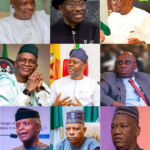
    Since we already know the main characters, we’ll be taking a look at some of the supporting cast who don’t make it to the headlines as much, because even though they may not be grabbing the headlines, they might still stir the pot and make 2027 a really interesting election. Who knows, one of them might even be our next president. If and when it happens, remember we called it first.

    Rabiu Kwankwaso

    Okay, so this won’t be so much of a surprise.  Rabiu Musa Kwankwaso running for president again would be more like the predictable return of the major supporting character from a show’s last season.

    When he ran as the Presidential Candidate of the  New Nigeria People’s Party (NNPP) in 2023 he claimed almost 1.5 million votes. That was only approximately six per cent of the votes, but it was enough to come fourth behind the three heavyweights of Tinubu, Atiku and Obi.

    Kwankwaso and the NNPP have a stranglehold on Kano State, one of the key states in northern Nigeria, from which almost a million of his votes came. It is no wonder that other parties, including the All Progressives Congress (APC) and Labour Party (LP), have been trying to get him on their side even before the 2023 ballots.

    Kwankwaso’s endorsement of any of the other candidates could be all it takes to swing the presidential election. So, whether he runs himself or endorses one of the others, he will have a say in how 2027 plays out. 

    Get More Zikoko Goodness in Your Mail

    Subscribe to our newsletters and never miss any of the action

    Goodluck Jonathan

    Nigerians love a rerun when it comes to political leaders. Two out of the five presidents we have had since 1999 had ruled the country before.  We are not even judging. It’s like binging your favourite show for the umpteenth time when you can’t find anything good to stream. No shame in rewatching FRIENDS again—we listen, we don’t judge.

    Goodluck Ebele Jonathan is apparently ready to take another swing at the office he was famously voted out of in 2015. His party, the PDP, is also apparently open to having him as their candidate, as they scramble for a frontrunner following Atiku’s departure to the African Democratic Congress (ADC). He is an attractive candidate for a party plagued by internal conflict.

    Also, there is a strong sentiment within the party that the presidential ticket should be zoned to the south after multiple cycles of Atiku; going by this sentiment, the Bayelsa native ticks that box.

    He has been there, done that, and got the T-shirt when it comes to winning the presidency.  In addition to this, quality of life  under the ruling All Progressive Congress (APC) has worsened so much that some are beginning to look back fondly on his presidency.

    It is always interesting when a character who was written off a show makes an unexpected comeback, so we are here for it.

    Nyesom Wike

    “Give me, give me, give me. Give me!”

    Perhaps the most controversial entrant on our list, Nyesom Wike has never been shy about stating what he wants—and in 2023 for instance, he was clear in his ambition to be PDP’s presidential candidate.

    When the primaries did not go his way, he seemed to turn on his party, doing his best to help the APC win in his home state and getting rewarded with a ministerial position for his troubles.

    Since then, he has constantly been in the news for seemingly endless reconciliatory meetings with the party leadership, a prolonged spat with Senator Ireti Kingibe, the infamous feud with his successor as Rivers State governor, Siminalayi Fubara, and even being accused of allocating government-owned land in Abuja to members of his family.

    Every story about political intrigue needs that one unpredictable character everyone loves to hate. The one who forms unexpected alliances at the last minute or backstabs their allies. The one who, like Wike, believes that “power is taken,” not given.

    Despite openly fraternising with the enemy, Wike has maintained that he has no plans to leave the PDP and could be sizing up a second attempt at the party’s presidential ticket.

    Last time round, the party delegates favoured Atiku. But with the former vice president having resigned from the party, it would be very interesting to see their response should Wike once again say: “Give me.”

    Nasir El-Rufai

    Nasir El-Rufai is part of the furniture when it comes to Nigerian democratic politics (post-1999). He enjoyed appointments under former President Obasanjo but fell out with the succeeding administration of Umaru Yar’Adua in 2008.

    In 2011, he joined the Congress for Progressive Change (CPC), and when they joined forces with other parties to form the APC in 2013, he was a founding member. He served two terms as governor of Kaduna as an APC man and looked set to enjoy some sort of appointment under the Tinubu administration. But history repeated itself with him falling out again with a succeeding administration from his own party. This was particularly surprising considering how involved he was in Tinubu’s campaign, even acting as his mouthpiece at Chatham House.

    El-Rufai left the APC to join the Social Democratic Party (SDP). It took him a much shorter time to fall out with his new friends. They did not take too kindly to his flirting with the ADC, so he has been expelled and banned from the party.

    As a candidate, he is not very popular or well-liked outside of his home state of Kaduna. In the southern parts of the country, the El-Rufai name is associated with the suspicious disappearance of journalists, Islamisation conspiracies, and threats of ethnically-charged sexual hate crimes.

    El-Rufai has always been one of the men behind the throne as opposed to sitting at the helm himself (at least at Federal level), and we doubt that is likely to change. Seeing him get the presidential ticket of any party would be truly shocking.

    ALSO READ: QUIZ: Can You Win a Nigerian Election?

    Rotimi Amaechi

    Many members of our list are playing their cards close to their chest, but not Rotimi Amaechi. The former Rivers State governor has gone on record to say that he will defeat the ruling APC if he is given the ADC presidential ticket for 2027.

    As a member of the PDP, Amaechi served two terms as governor of Rivers State before dumping them for the APC. He went on to work as  Director General of Muhammadu Buhari’s presidential campaign and he was rewarded for this role with a ministerial position, which he occupied for both of Buhari’s terms in office.

    However, in 2023, he decided he wanted to be president himself but came second in the APC primaries behind Tinubu.

    Amaechi now claims he will expose all of the APC’s shady activities, including vote rigging, if given the opportunity, and promises to use his in-depth knowledge of the party to take them down in 2027, should he be allowed to run as the ADC frontrunner.

    Yemi Osinbajo

    There might be something about the vice presidency position that just makes you desperate for the real thing.

    Atiku Abubakar has run for president every single cycle since he was Obasanjo’s vice. Jonathan, once Yar’Adua’s vice, has been president and might run again in 2027. And Yemi Osinbajo himself ran in 2023 after serving as Buhari’s vice president.

    He lost the APC primaries to current president Bola Ahmed Tinubu, but it appears his attempt at contesting  may have angered some in the party. After all, he was handpicked by Tinubu to be vice president, so not immediately endorsing his benefactor appears to have been interpreted as a betrayal of sorts.

    Since losing in 2023, Osinbajo has largely remained out of the spotlight, especially in presidential discourse, so perhaps his candidacy would be the first real surprise on our list so far.

    Still, he is attractive to the southern Christian demographic, especially in the South-West of Nigeria, where his church, the Redeemed Christian Church of God (RCCG), holds considerable influence, and presidential candidacy rumours keep following him.

    While it appears Osinbajo may have been frozen out by the APC leadership, he is still an official member of the party. But with several bodies within the APC already declaring their endorsements of Tinubu as sole candidate for 2027, any presidential aspirations he has may have to be pursued elsewhere.

    Yusuf Datti Baba-Ahmed

    Maybe there is something about being a vice presidential candidate, too. Peter Obi was Atiku’s running mate in 2019 before deciding he wanted to be the main man for 2023 and beyond.

    So maybe it is just poetic justice that his own 2023 running mate, Yusuf Datti Baba-Ahmed, is considering being the main man too. Baba-Ahmed has claimed he would only contest if Obi did not, but while Obi has been flirting with the ADC, Baba-Ahmed has ruled out a defection to the ADC for himself. How their dynamic would play out should Obi officially move parties remains to be seen.

    In the meantime, Baba-Ahmed has been calling for reconciliation of the warring factions within the Labour Party. He has been very vocal about his loyalty to the party, and should they lose Obi, it is very possible LP puts Baba-Ahmed forward as their candidate.

    While he still seems hesitant to outrightly declare his ambition, there is still a lot of time before 2027, and so much more could happen. But do not be too surprised if you see Baba-Ahmed on the ballots come 2027.

    This could be when the once loyal sidekick gets a dedicated storyline and shows us what he is really capable of. It could be very entertaining.

    Seyi Makinde

    Now this would be a real surprise. But even more than just a surprise, it would be proof of just how desperate the PDP leadership might be.

    With Atikugone, PDP appears to be scrambling for potential candidates. They have been trying to get Obi back to the party, and are considering Jonathan again, though it was with him they lost their title as “ruling party” to the APC. Wike is an option, but he is also openly allied with APC members. It seems anyone will do for the PDP at this point.

    Seyi Makinde will have completed his second term as Oyo State governor in 2027. That is usually when Nigerian politicians swap the governor’s office for a seat in the Senate, but it appears Makinde may be looking towards Aso Rock.

    Conflicting reports surround the governor’s ambitions. Fellow PDP member and former governor of Ekiti State, Ayodele Fayose, claims Makinde assured him he would not run against Tinubu. However, Makinde himself has declared: “I do not have any doubt that I have the capacity to occupy the highest office in this land.”

    Presidential campaign posters for Makinde are already appearing in northern states like Kano and Jigawa.

    Is there anything more exciting than an underdog stepping up and surprising everyone, giving the big names a real challenge?

    Kashim Shettima

    Now this would be a real plot twist. If you have been following the internal rumblings of the APC recently, it might not be too surprising if Kashim Shettima does not return as Tinubu’s VP candidate for 2027. There seems to be trouble in paradise—if paradise were Aso Rock.

    The language of those within the party already endorsing Tinubu for 2027 has drawn attention for the suspicious omission of the vice president’s name. An endorsement of Tinubu at an APC North-East zonal meeting in Gombe State that left out Shettima’s name was received violently in a region where Shettima retains fierce support.

    These days, it feels like all the presidency does is address rumours about the vice president—like having to deny that he was barred from accessing the presidential villa, or that he had implied Tinubu had acted undemocratically by suspending Rivers State Governor, Simi Fubara.

    Unfortunately for Shettima, Tinubu might be better off without him in 2027. Even within his North-East stronghold, some party stakeholders would rather he be dropped. The Muslim-Muslim ticket had always been a hard sell, and with how competitive 2027 is shaping up to be, some are calling for Tinubu to pick a Christian running mate to improve his chances.

    Adding to Shettima’s woes is the fact that Tinubu has a lot of options when it comes to potential running mates. The National Security Adviser, Nuhu Ribadu’s name has been floated as an option. Even the Deputy President of the Senate, Barau Jibrin, has declared: “Whatever the President asks me to do, I will do it—100 per cent” when asked about being Tinubu’s running mate for 2027.

    There is also the mouth-watering prospect of wooing Kwankwaso and his election-swinging one million Kano votes to the APC with the offer of the vice presidency.

    While Shettima’s dismissal by Tinubu seems likely at this stage, we would be surprised if the former Borno State governor decided to run for president himself.

    Scorned ally turns enemy? Now that is drama—dare I say, absolute cinema.

    ALSO READ: Nigeria Is Shifting Towards a One-Party System. Here’s Why It’s Happening

    Ever had a moment where Nigeria’s systems made life harder—or unexpectedly easier? We want to hear about your personal experiences that reflect how politics or public systems affect daily life in Nigeria. Share your story with us here—we’d love to hear from you!

    [ad]

  • Photo credit: Premium Times

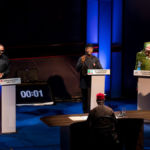
    Nigerian politicians are probably the only people in the world who apply for a job and then blatantly refuse to show up for an interview after their potential employer asks them to. For the longest time, this behaviour has bothered Nigerians but there’s a possibility it’ll stop soon.

    Reports have it that lawmakers in the House of Representatives are preparing to empower the Independent National Electoral Commission (INEC) to conduct compulsory debates for candidates vying for the posts of President and Governor. This move was made possible by a private member bill sponsored by House of Reps member, Ikeagwuonu Ugochinyere. 

    What are the specifics of the bill? 

    The bill is proposing to change the Electoral Act to add a new section (24) saying that:

    1. INEC must ensure that a Presidential and Gubernatorial Debate is conducted for people seeking to be elected into the offices of President and Governor on a date it picks.
    2. Anybody looking to be the President of Nigeria must participate in the Presidential Debates, during which they are required to present a detailed analysis of their manifesto and plans for Nigeria as its potential President.
    3. Anybody looking to be the Governor of a Nigerian State must participate in the Gubernatorial Debates, during which they must present a detailed analysis of their manifesto and plans for the State as its potential governor.

    Timeline of Nigerian Presidents who refused to appear in debates

    Refusal of candidates to participate in debates has been a thing in Nigeria for so long that it has become almost normalised. It’s kind of bizarre too because all the Presidents of Nigeria since its return to democratic rule in 1999 have been candidates who refused to show up to election debates.

    1999—Obasanjo won his election into office even though he refused to debate Olu Falae, his major rival.

    2003—Obasanjo still won his reelection bid after he turned down a debate against his major opponent, Muhammadu Buhari.

    2007—Umar Musa Yar’Adua refused to debate against Muhammadu Buhari and won the election by a landslide.

    2011—Goodluck Jonathan won the Presidential election after failing to show up to the debate

    2015— Buhari who had attended debates for his past Presidential campaigns, did not attend the 2015 debate and went on to win the election.

    2019—Buhari refused to attend the Presidential debate but, after a bit of pressure, participated in a political town hall program known as The Conversation. However, that hardly counts as a debate as the audience was mostly made up of his and Atiku’s (his main opponent at the time) supporters.

    Governorship candidates also do the same thing and go on to win their election bids. In the just concluded Edo State governorship elections, for instance, APC candidate, Monday Okpebholo did not attend the debate, yet he went on to win the elections. If this bill becomes law, however, no candidate will refuse to appear in debates again because it will become a requirement rather than an option. Once this becomes a necessity.

    Why does this bill matter?

    You can draw a straight line from Nigeria’s poor leadership problem to the refusal of candidates to participate in debates. Political economist and Professor, Pat Utomi thinks so too. 

    Speaking to journalists before the 2023 general election, Utomi gave an example of South Korea’s situation.

    “The fortunes of South Korea were turned around because the electoral commission was so despondent about the quality of their politics that they decided that the thing that should matter the most for elections are debates between candidates,” he said, explaining it was incorporated into conventions in the country’s politics.

    “Once debates came to define (the) elections, moneybags and all kinds of criminals and charlatans ran away and their electoral process became one of a sustained, enormously developed country,” Utomi continued.

    Will this bill be successfully passed?

    I’ll hold your hands when I say that the chances of this bill going on to become law aren’t a 100 per cent, partly because it still has to pass through five more stages, and mostly because the bill has been around before and was not successful.

    In July 2014, a similar bill seeking to make Presidential Debates compulsory did not get past the fourth stage (reference to a committee) because the committees rejected it. They took the decision because they felt election debates “should remain outside the purview of the law.”

    What can you do to help the bill become law?

    1. Track the bill’s progress as it moves through different stages by monitoring official channels for media updates.
    2. Talk to other people about it. You know that saying about “power in numbers.” 
    3. Participate in Public Hearings: The National Assembly usually organises public hearings for bills under consideration, and Citizens are allowed to attend to express their opinions.
    4. Reach out to your representatives: you can contact the lawmaker representing your constituency via email or phone to let them know you support the bill. Here is the list of all Senators and House of Rep members with contact details attached.
    5. Launch or sign digital campaigns through platforms like this.
    6. Advocate for the bill on social media platforms by using hashtags.
  • If you have seen the news coming out of Rivers State and the drama between Nyesom Wike and Sim Fubara, chances are you have asked yourself why both men are rolling in the mud over mere Local Government (LG) elections. The straight answer is that levels have changed. Let’s give you the whole story.

    The states bullied the LGs

    In Nigeria, there are three tiers of government: federal, state, and local government. Just like federal and state, local governments also have their own unique functions, importance, and powers but for the longest time, we barely recognised them because didn’t allow them to flex their muscles like their counterparts.

    According to the Nigerian constitution, local government councils are supposed to take care of things like the construction and maintenance of roads, public highways, streetlights, parks, and drains. They also have the duty of collecting rates, radio, and television licenses, assessments of privately owned houses for the purpose of levying, naming of roads, streets, and a bunch of other functions.

    Also, under the Nigerian constitution, LGs, just like states are supposed to get money from the federation account to carry out their duties but the State government had this habit of pocketing everything and leaving the LGs high and dry. For context, states and their LGs usually shared a joint account where the FG paid in money monthly but instead of the states taking their 26.72% cut and moving on, they usually seized the 20.60% belonging to LGs, leaving them broke and powerless.

    Additionally, LGs are supposed to hold independent elections every 3 years for citizens to pick their council chairmen but this barely happened and when it did, state governors simply suspended the democratically elected chairmen and replaced them with glorified errand boys known as Caretaker Committee so instead of active councils working for the people, we had lifeless councils whose monies were seized by state governors, representatives replaced by proxies, and duties to the people left undone.

    The Supreme Court stepped in

    Nigeria’s federal government probably got tired of watching the whole mess because, in May of 2024, the Attorney General and Minister of Justice, Lateef Fagbemi sued all 36 States in court for disrespecting the constitution. Two months later in July, they won the suit as the Supreme Court gave a ruling affirming the financial autonomy of local governments in the country and declaring Caretaker Committees the frauds that they are. 

    The Independent Corrupt Practices and Other Related Offenses Commission (ICPC) also stood on business because after this ruling, its Chairman, Dr Musa Adamu Aliyu said that “local governments must be politically independent, and any state-level official who violates this Supreme Court decision will be held accountable for gross misconduct and abuse of office.”

    A new dispensation and what it means for the people

    Now, the “G” in local governments is no longer invisible because they can actually carry out their duties. Before the Supreme Court’s judgments, about 21 States were running their LGs with Caretaker Committees but now that they have been outlawed, those states have had to carry out elections- this is why there has been a wave of local government elections across the country in the past months. They may not have trended as much as the Rivers election but this year, a total of 19 States have conducted their local government with more expected to follow

    In plain terms, here’s what this means for you:

    1. Local governments can make their own decisions and carry out their own projects.
    2. Local government will now receive funding directly from the federal government.
    3. Expect better roads, schools, healthcare, and other services at the local level.
    4. You can finally get that pothole fixed because you have a more direct path to holding your local representatives accountable.
    5. Local government elections will now be held every 3 years without fail- you get to vote!
    6. You can finally have personal meetings with your representatives- take the problem directly to them if you want to. The benefits are endless.

    Why have the elections become a big deal for politicians?

    For politicians like Wike and Fubara’s part, having their person win means having the soul of the state in their palms.

    Before the Supreme Court ruling affirming the autonomy of local governments, the current fight between Wike and  Fubara wouldn’t even be happening because all Fubara had to do was appoint a Caretaker Committee who would be in his pocket but since that is now illegal, the electoral process of selecting LG Council Chairmen opened up a new avenue for Wike to get back the control that Fubara was taking away from him, hence the recent violence.

    So while the Rivers local government election has taken over the news (mainly because of the history between Wike and Fubara), it is also a reminder of just how much power has been given to local government. Now, LGs are no longer a formality- they matter. This also means that now, Nigerians know what to expect, and who to hold accountable when those things are not done.

  • Lawmakers in the House of Representatives are talking about a cool bill that will pave the way for young people in Nigeria to finally get a chance to run the country. It is called the Bill for Independent Candidacy and has just scaled its first reading on Thursday, September 26.

    Goodbye to political parties, hi to equal opportunity

    Unless you want to, you literally would not need to be a registered member of a party to contest for any political office of your choice if this bill becomes law. What this means is that political party membership would become an option instead of a necessity.

    It also means that “most vulnerable populations such as women, youths, and persons with disability are given a level playing field, to explore opportunities within the political and electoral system,” Ibijoke Faborode, Executive Director of  ElectHer, a Non-governmental Organization (NGO) says.

    Hundred million Naira form, who?

    During the 2023 general elections, young Nigerians watched in disappointment as political parties put their nomination forms at prices that were unrealistic for them to afford.

    If you wanted to stand a chance at being the candidate of the All Progressive Congress (APC) at the last election, you needed to pay the following:

    1. Presidential form- ₦100 Million
    2. Governorship form- ₦50 Million
    3. Senate form- ₦20 Million
    4. House of Representatives- ₦10 Million
    5. State House Of Assembly form- ₦2 Million

    But if the bill for Independent Candidacy is passed, more young people who have been discouraged by these prices would be able to contest because they wouldn’t need to buy nomination forms anymore.

    Here’s all you’ll need

    In place of nomination forms that you can’t afford, the drama, and the ugliness that usually comes with political parties, you would mostly need signatures to secure that position that you want.

    If for instance, you are looking to contest for the Presidency, you need to get signatures of at least 10 percent of registered voters from two-thirds majority of all 36 States to be able to contest without joining a political party.

    Suppose you are interested in being the Chairman of your Local Government Area (LGA). In that case, you need at least 10 percent of registered voters from a two-thirds majority of all electoral wards in your LGA to be able to contest without joining a political party. It’s the same for all posts; 10 percent of registered voters from a two-thirds majority of wherever you are running for office.

    “The signatures of such voters are expected to be verified by the Independent National Electoral Commission (INEC) or the State Independent Electoral Commission in the case of local government elections, while no voter is allowed to write the name of another person.” Also, INEC will “prescribe a security deposit to be paid” by Independent candidates.

    What are the odds of this bill becoming law?

    If it succeeds, this bill might get Nigeria out of the trenches by giving equal opportunity to the younger generation, and more qualified people to take part in politics. Will it make it? Probably not, and this is because its brief history has proven it might not be given the time of day. An explanation:

    The bill for Independent Candidacy has been around before. In 2018, former President, Muhammadu Buhari signed it into law as part of the Not Too Young to Run Bill but it’s unclear why it was never enacted. 

    In 2020, The House of Reps proposed the bill and In 2022, it was finally passed and given to former President Muhammadu Buhari for approval but again, nobody really heard much after that. In fact, in 2023, two NGOs sued the Nigerian governemnt at the ECOWAS court for delaying the passage of the bill. They also asked the court to “direct the Nigerian government to immediately implement” it for all future elections,” but the case was dismissed partly because Nigeria did not “file its statement of defense within the stipulated time,” and mainly because the ECOWAS said it doesn’t really have the authority to make Nigeria implement the bill.

    Can you do anything about the bill?

     Depends really. If Citizens like or dislike the idea of a bill enough, they can take some or all of these steps to influence its passage into law:

    1. Start a social media campaign to talk about it
    2. Call their reps to speak their minds about the bill
    3. Participate in public hearings organised by the National Assembly
  • March 18, 2023, marked the official end of the governorship and state assembly elections, and so far, many lessons have been learnt. 

    Local government LGA Chairman election

    Unfortunately, for many people, the conduct and results of these elections have further made them lose faith in Nigeria’s electoral process. Some people have resorted to burning their Nigerian passports and Permanent Voter Card (PVC) to show their disappointment in the system. 

    But, we should hold onto hope as we can bring about the change we want, and the best place to start this is at the grassroots level. 

    The local government, also called the grassroots government, is the first medium of bringing democracy to the people. It’s one of the most effective ways to build trust between the government and citizens; to create a system that works. 

    Nigeria has 774 Local Government Areas (LGAs), each headed by an elected Chairman, and it’s time that we give these elections as much attention as we would the presidential and state elections. Why? The LGA is directly responsible for many utilities that affect our quality of life, for instance, the construction and maintenance of roads. 

    Also read: What Are the Functions of the Local Government in Nigeria?

    And you might not know this, but elections for the LGA Chairmanship are conducted not by The Independent National Electoral Commission (INEC) but by the State’s Electoral Commissions. 

    The State governments determine the election cycles for the LGAs.

    Local government LGA Chairman election

    So, what is the procedure for electing an LGA Chairman?

    Eligibility of the candidate

    To contest for the seat of Chairmanship for an LGA, you must be: 

    • At least 25 years of age
    • Have a Senior Secondary School Certificate (SSCE) or its equivalent
    • Be a member of a political party and be sponsored by it also.
    • Pay a non-refundable sum of ₦200,000 to the State Commission 
    • Be a registered voter with a copy of your PVC as issued by INEC
    • Have evidence of tax payment as far back as three years before the election year

    The following things can disqualify you from contesting for the seat the LGA Chairman: 

    • According to Section 28 of the Nigerian constitution, you’ll be declared ineligible if you’ve voluntarily acquired citizenship of a country other than Nigeria.
    • If you’re a member of a secret society
    Local government LGA Chairman election
    • If you’ve been declared mentally unstable under any law in any part of Nigeria
    • If you’ve been given the death sentence by any Nigerian court or tribunal
    • If you’ve been declared bankrupt under any law in force in any part of Nigeria
    • If you’ve been dismissed from the Public Service of the local, state or federal government.

    Candidate nomination

    It’s not enough that you’re eligible to contest for the Chairmanship of an LGA. You must be nominated, in writing, by 20 registered voters from all wards in your constituency. 

    Also, the nomination form must be submitted 20 days before the election date at the place appointed by the State Commission.

    Appointment of electoral officers

    As in the previously conducted presidential and state elections on February 25 and March 18, 2023, electoral officers will be appointed to coordinate the state commission’s activities in each LGA. Ad-hoc staff such as Returning Officers, Poll Clerks, Presiding Officers and many more will also be appointed for the smooth running of the polls.

    Voter Eligibility

    To be eligible to vote, you must:

    • Have a PVC
    • Be a registered voter in the constituency or ward of the LGA

    On the day of the election, you’ll once again be accredited using the Bimodal Voter Accreditation System (BVAS), after which you’ll be given a ballot paper to cast your vote. 

    Election and declaration of the winner

    If only one candidate is nominated, the Commission extends the nomination time by seven days. However, a poll will be conducted if no other person steps forward. But this time, instead of voting for political parties, the ballot would be either “Yes” or “No”; if the candidate has more yes votes, they would be declared the winner. 

    But in situations with more than one nomination, the candidate with the majority votes, and at least 25% in at least two-thirds of the wards, will be declared the winner. 

    So, while our spirits may be low right now with grassroots politics, we still have a fighting chance to birth the kind of Nigeria we want. 

  • Over 200,000 corps members were deployed as INEC ad-hoc staff during the 2023 general elections. They play a crucial role in the process, manning polling units, handling electoral materials and making sure every vote counts.
    This story is a first-person account of events from one of these corps members, who worked as a Presiding Officer in the February 25 presidential election in Osun state.


    I’m a big fan of accountability and good governance. I believe elections matter. I don’t have a Permanent Voter’s Card (PVC), but I figured it shouldn’t stop me from participating in the 2023 general elections. As a serving corps member, I could sign up as an INEC ad-hoc staff. This way, I could ensure votes cast mattered at my polling unit. So I registered, did the mandatory training, and like everyone else, I looked forward to the elections. 

    INEC promised ad-hoc staff three things — welfare, security and due process. They barely delivered on any. On the eve of the elections, I found my way to the Registration Area Centre (RAC) per instructions. All electoral officials would spend the night there, get the election materials the following morning and make for our polling units.

    The RAC was a secondary school. But I didn’t imagine all the rooms in the school would be mosquito-infested. The least INEC could’ve done was fumigate one or two rooms in the building they kept us in. And it didn’t help that the closest thing to sleeping materials the commission provided were a bunch of mats. They weren’t even enough for the corps members who signed up to work during the elections.

    We survived the night, but this was a sign of things to come. 

    On election day, I got my materials and set out to the polling unit. One of the first things I noticed was my polling unit was short of an electoral officer. During the training in the months leading up to the election, they told us each polling unit would be managed by a Presiding Officer (PO) and three Assistant Presiding Officers (APOs).

    However, we didn’t have an APO 3 – whose role is to control the queue of voters – in my polling unit. As I found out hours later, the same thing happened across other polling units in my ward. This was interesting because when I checked the ad-hoc staff directory, each polling unit had an APO 3 assigned to them. 

    Something had happened.

    It turned out the names I saw didn’t exist. The Supervising Presiding Officers (SPO) filled the APO 3 roles with ghost workers. Essentially, the government will pay for people who don’t exist and didn’t do any work.

    I wonder where the money will go.

    Back to my polling unit. 

    An APO 3’s job is to manage the conduct of voters and maintain orderliness in the polling unit. Without one, we were short-staffed. Thankfully, the party agents and young people in the unit helped us to control the queue. It could’ve been worse. 

    Remember that they promised us security, too. We got an elderly policeman who couldn’t do much, and we felt exposed the whole time.

    One of my friends at a different polling unit had a scarier experience. Some thugs came, fired a few shots in the air and asked her to think through returning for the forthcoming House of Assembly elections. 

    If anyone wished to attack us, they would’ve been successful. 

    At different times during the election, the party agents came in clusters to discuss with the voters. They asked the voters for their account numbers, promising to send them some money if they voted for a particular party or candidate. It looked a lot like vote buying. 

    INEC instructed us to look out for vote buying and stop it, but only if it happened close to the voting area. If it didn’t, they asked us not to interfere in the process, especially if it might put us at a security risk. 

    With this in mind, all we could do was stay on the sidelines and do our jobs — the only thing we could control. 

    In my friend’s polling unit, someone came and distributed prepaid ATM cards — they work the same way gift cards and vouchers do — to the voters. Each card was loaded with a sum and whoever got one only needed to activate the card at an ATM machine to access the money. 

    By the end of the voting process, I knew one thing — the cash scarcity didn’t stop vote buying. 

    But this wasn’t the last of the irregularities I witnessed. 

    I’ve seen a couple of complaints online about manipulated results and people blaming us corps members for it. From my experience, Presiding Officers are pawns in whatever chess game INEC staff are playing. It’s not far-fetched to say that some Presiding Officers were forced to countersign fabricated results. 

    In my polling unit, we accredited 288 people, but 287 people voted, which meant someone left without voting. I didn’t think this was a problem. The rule states that the number of votes cast cannot exceed the number of accredited voters. So we were good. 

    However, the INEC official I reported to at the collation centre didn’t think so. They asked me to stamp an unused ballot and record it as an invalid vote. Subsequently, they adjusted the numbers so that we could have equal numbers of accredited voters and actual voters. 

    While this didn’t mess with the actual results, it rubbed me the wrong way because I was forced to sign off on the change they made. 

    I’m glad the federal part is over. I signed up to participate in the next set of elections, but now, I’m wondering if it’s a good idea. I hope INEC is more prepared this time around.


  • The 2023 presidential election is here. And as a responsible Nigerian citizen going out to vote, here are tips on how to dress the part. 

    Fly our Naija colours

    It’s pretty simple. If you want fellow voters to take you seriously, make sure your outfits are green-white-green. A green top, white pants and green shoes. 

    Or settle for black

    When in doubt, wear black. It won’t get stained easily, and it’s symbolic. You’re there to bury the shege of the last eight years after all.

    It has to be jeans

    This is not the time for ashawo shorts or Ayra Starr skirts. Wear comfortable clothes, so when you need to tell someone you’ll share one trouser, they’d know you mean it. 

    Or combat shorts

    You’re there to fight for your future. So make that clear. 

    You need them boots

    Too bad those red boots haven’t gotten to Nigeria yet. But your shoes still need to give a “I go match you for head” vibe.

    Have your shades handy 

    Not sunglasses, shades. They need to be large and black, like the type our mothers used to wear. So before someone thinks of starting small talk, they’ll look at your face and reconsider. 

    Face caps are a must

    This isn’t even about fashion. Forget about the on-and-off harmattan, the weather is still HOT, so you’ll need this. 

    RELATED: Three Safety Apps You Should Have on Election Day


    Zikoko Citizen, in partnership with Stears, will publish the 2023 Nigeria election results here. The 2023 Nigeria Election results are sourced directly from INEC and validated by Stears.

  • Every four years, Nigerians make the life-changing decision of who gets into power. We trust the Independent National Electoral Commission (INEC) to ensure the voting process is as fair and seamless as possible. 

    However, there’s a lot of skepticism and tension in the country right now because we’re less than 100 days from the 2023 general elections, and INEC is still facing different trials and tribulations. 

    Arsonists

    Early on December 12, 2022, unknown gunmen attacked an INEC office in Owerri, Imo State using a firebomb. This happened eight days after a similar attack on another INEC office.

    Threats INEC 2023 general elections

    Since the 2019 general elections, INEC has been attacked over 59 times in 29 states, resulting in the loss of thousands of Permanent Voter Cards (PVCs) and ballot boxes and damage to buildings and office equipment. 

    Underage voters

    In 2018, pictures and videos of children voting in Kano’s local government elections flooded the internet. And although a panel was put in place to look into this incident, nothing came of of it. 

    Threats INEC 2023 general elections

    Since then, Professor Mahmood Yakubu has promised Nigerians a clean voter register, especially with the Automated Biometric Identification System (ABIS). 

    Unfortunately, this promise held no water because on November 17, 2022, despite the use of the ABIS, underage voters and multiple registrations were found on the preliminary voters’ register released by INEC for review.

    Threats INEC 2023 general elections

    This brings the credibility of INEC under question. Did the ABIS simply experience a malfunction, or is INEC itself complicit in our problem of electoral fraud?

    Insecurity

    A key issue confronting INEC now is the declining state of our security, particularly in the North. The Speaker of the Borno State House of Assembly recently said Boko Haram terrorists had overtaken two council areas in Borno. This implies that until something changes, the chances of voters’ registration or voting occurring in these areas are zero. 

    Although INEC has tried to solve this issue by relocating polling units and registration areas to safer locations, insecurity will continue to threaten a smooth 2023 election.

    Political Apathy

    INEC has repeatedly complained about political apathy, especially among Nigerian youths. Millions of PVCs are sitting in INEC offices uncollected. This directly translates to a low turnout of voters in certain areas, which completely undermines the efforts of INEC to carry out a fair and credible election. 

    Many people have called the upcoming 2023 general elections one of the most important elections in our history. Therefore, INEC and the government must work together to eliminate any threats or problems we might encounter. 

    Proper security measures must be put in place to protect voters and tackle the attacks on INEC offices. The voter’s register must be cleaned to avoid electoral malpractice, and voter education should be organised to encourage more participation by the people.