• Nothing beats a Jet2 Holiday, especially when taxpayers’ money is paying for it. Nigerian politicians and their families have never been the type to have mercy on money or the people who elected them into office. But their crudeness becomes most apparent when business-class trips and maximised enjoyment are involved.

    From First Ladies to local government chairmen, here are the most ridiculous trips public funds have sponsored recently.

    Madam Tinubu, and Her ₦700 Million World Tour   

    Remi Tinubu has always positioned herself as a frugal queen — from swearing that Nigeria’s money does not impress her to “feeding” her family food grown in her garden — but her travel history doesn’t do much for that PR image. In September 2024, GovSpend, a website that mirrors the Open Treasury Portal, highlighted how the federal government spent ₦700,707,534 to purchase foreign currencies for the first lady’s trips to London, Mozambique, Addis Ababa, France and the United States between November 2023 and March 2024.

     Even though these trips were classified as “official trips,” we are not impressed. The Office of the First Lady remains unconstitutional in Nigeria. It is an honorary position with no public value and should not have any business with public funds.

    Adamawa LG wives and ₦600 million “leadership training” in Turkey

    We always stand ten toes behind women empowerment programmes, but the one that was recently pulled off in Adamawa state is a hard pass for us. In September 2025, the wives of the 21 Local Government Area (LGA) chairmen in the state and some senior officials from the Ministry of Local Government reportedly jetted off to Istanbul for a “leadership training programme” that came with a ₦600 million bill.

    According to Suleiman Toungo, chairman of Toungo Local Government Area (LGA) and head of the Association of Local Governments of Nigeria (ALGON) in the state, the idea was to equip their wives with “leadership skills”. He tried justifying the move by arguing that since the chairmen had trained themselves, it made sense for their spouses to also attend the same training so they could “offer useful advice on governance.”

    Aisha Buhari and her glorified girls’ trip

    Apparently, former First Lady Aisha Buhari walked so Remi Tinubu could fly. In 2022, a viral video showed first ladies from different Nigerian states in Dubai with arms full of gifts, to celebrate Aisha Buhari’s birthday.

    As expected, Nigerians criticised them for dipping into public funds for what looked like a glorified girls’ trip. However, the first ladies released a defensive press statement, insisting that they were in Dubai for “official duties.” According to them, the birthday hangout was just a coincidence, and they wouldn’t be girl’s girls if they didn’t show up with cakes and presents.

    Their key takeaway from the trip was that the government needed to “scale up investments in education, science and technology, and provide more opportunities for young people.” We could have told them that for free, but oh well.  At the end of the day, the “official trip” was still taxpayer-funded and held no public value.

    President Tinubu and his climate activists

    Just like his wife, President Tinubu takes sustainability and eco-consciousness seriously. We’d even go as far as calling him an ecowarrior, given how committed his administration was to the United Nations’ annual climate summit, COP28, in December 2023. Committed, in this case, means removing at least ₦2.7 billion from public funds to sponsor Nigerian delegates for the climate meeting, which kicked off in Dubai.

    The country registered 1,411 delegates, making it third on the list of countries with the highest numbers of participants. Only the host, the United Arab Emirates  (4,409), and Brazil (3,081) showed up with more people. Even China, with its larger economy, was outnumbered by yours truly.

    According to the federal government, not every delegate was on its tab. Nigeria’s Information Minister, Mohammed Idris, clarified that of the 1,411 Nigerians in Dubai, only 422 were sponsored with government funds. He broke down the headcount: 167 participants from ministries, 73 from federal parastatals and agencies, 67 from the Presidency, 40 from the National Assembly, 34 from the Ministry of Environment, 32 from the National Council on Climate Change, and nine from the Office of the Vice President.

    At the time, inflation had hit 27.33%, and the government was planning to borrow over $9 billion to fund its ₦27.5 trillion 2024 budget. The optics of $2.7 billion for COP28 felt less eco-conscious and more reckless.

    President Tinubu and his fancy performance review in Paris

    Of all the places that President Tinubu could have chosen to review his administration’s performance in the first quarter of 2025, he chose Paris, the city of love. According to Bayo Onanuga, Tinubu’s Special Adviser on Information and Strategy, this Parisian getaway was a strategic retreat to evaluate midterm achievements and plan for his administration’s second anniversary.

    While in Paris, the President reportedly reviewed ongoing reforms and engaged in strategic planning to “deepen national development priorities.” Onanuga assured Nigerians that Tinubu was fully engaged with his team and continued overseeing governance remotely.

    We’re not sure how much the president achieved during that trip, but from the looks of things, it doesn’t look like he achieved much.

    How’s this your business?

    Ultimately, all these trips have one thing in common: they’re sponsored by money that could have been used to make life a little less unbearable for Nigerians. While politicians and their families are flying business class, the average Nigerian is stuck with the rising cost of living and fluctuating food prices.

    You’re not just a bystander to these lavish excursions; you’re the one footing the bill, while your passport remains stampless because you can’t even afford local flights, let alone a “strategic retreat” in Paris, or training in Istanbul.

    What can you do about it/Can you do anything about it?

    The road to accountability and transparency in Nigerian politics is still long, but you can play your part by:

    • Holding leaders accountable through social media
    • Supporting civic groups like BudgIT that promote transparency in governance.
    • Staying in the know and receiving daily updates about governance in Nigeria by subscribing to newsletters like The Big Daily.

    [ad]

  • If you’re chronically online, you most likely already know that the Economic and Financial Crimes Commission (EFCC) has just achieved its biggest asset seizure yet—a massive housing estate with over 753 duplexes on the outskirts of Abuja allegedly built with public funds.

    For extra context,  this isn’t one of those modest estates with a few okay-looking flats scattered here and there. This is a prime estate carefully built across 150,000 square meters of luxury.  

    For years, the luxurious buildings have left people in Abuja questioning who’s behind such a display of wealth. We’re still not sure what the answer to that question is because the EFCC is keeping that information to itself, revealing only that it belongs to a former high-ranking government official who allegedly funded this lifestyle with public money.

    We won’t be talking about the government official everybody and their mom is pointing fingers at, but you can take at least 300 guesses in a country like Nigeria.

    A property expert who spoke to the British Broadcasting Corporation (BBC) valued the estate at tens of millions of dollars which sounds about right for 750 luxury houses built with public funds. That left us with a very important question – what existing problems could the money spent on the seized 753 properties have been poured into solving?

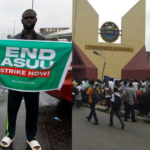
    Put an end to ASUU  strikes

    Academic strikes have become normalised in Nigeria and it’s majorly because the government just can’t seem to cough up enough money to pay lecturers’ salaries or fund universities. 

    In 2013, the Academic Staff Union of Universities (ASUU) demanded  ₦1.3 trillion to fix everything that’s wrong with tertiary education in Nigeria, but the Goodluck Jonathan administration agreed to give the union  ₦200 billion yearly because the country couldn’t afford to disburse ₦1.3 trillion at once. According to ASUU chairman, Professor Emmanuel Osodeke, that  ₦200 billion was only paid once, and it’s been crickets since then.

    The least amount of money the estate is estimated to be is $1 million, and that’s enough to stop the frequent ASUU strikes.

    Better salaries for doctors in rural areas

    The doctor-to-patient ratio in Nigeria is now 1000% below the World Health Organisation’s recommendation. This is mainly because doctors have been relocating to countries that offer better financial benefits to health workers. In Kano, Nigeria’s most populous state, 1,300 doctors are responsible for the healthcare of 15 million people. Meanwhile, in Adamawa, a single doctor treats 13,000 people. The effect of this japa wave is even worse in rural areas.

    In October 2024, doctors (especially those in rural areas) asked the federal government to review their salaries. Before that, the last time that demand reached FG’s ears was in 2013 when it approved a salary review for medical practitioners under the Harmonised/Consolidated Health and Medical Salary Structures but local reports confirm that it never took effect because Nigeria is allegedly broke.

    The seized estate, worth millions of dollars, could have been used to improve the salaries of Nigerian doctors working in rural areas.

    Job creation for young Nigerians

    70% of Nigeria’s total population is made up of young people. But about 53% of those young people (about 80 million youths) are unemployed. 

    The private sector has been one of the biggest employers of youths for years. But even that sector is starting to suffer from the economic mess Nigeria has drowned deeper into in 2024.  A recent report by Stanbic IBTC Bank Purchasing Managers’ Index (PMI®) shows that the employment rate in Nigeria’s private sector has declined for the first time in seven months. For context, this sector has consistently created jobs for the last six months, but it can’t afford to do that anymore because the economy is getting worse, along with the purchasing power of Nigerians.

    With the minimum wage being ₦70,000, even $1 million  is enough to pay the salaries of about 1,900 youths for at least one year. I’m not saying the total value of the seized estate will be enough to solve Nigeria’s unemployment problem, but it can go a long way in reducing the unemployment rate significantly. 

    Fix UNILAG’s accommodation issue

    In an ideal world, students shouldn’t have to hustle for hostel spaces, but that’s the reality of many students at the University of Lagos. Despite having about 40,000 students, the university only has 8,000 accommodation spaces due to the growing population and limited infrastructure. Off-campus housing options range between ₦250,000 to ₦800,000 in extreme cases. You can do the math, but the value of the seized estate is enough to fix UNILAG’s accommodation issue. 

    Reduce the number of out-of-school kids

    10.5 million children in Nigeria barely even recognise what the four walls of a classroom look like. In Borno, Adamawa, and Yobe states alone, two million children have no access to education, and less than 30% of schools are able to meet basic teacher qualification standards, making the kids from these states automatically disadvantaged in life. The Nigerian government currently spends only 6.39% of the 2024 budget on education (because Nigeria is allegedly broke). 

    We can go on and on about the other problems the Nigerian government has consistently put on the back burner with their usual “there’s no money” excuse, but that would be stating the obvious.

    This estate seizure is just another reminder of how much public money has gone into the pockets of a few government officials while the masses suffer.

  • The cancel culture does not respect anything or anyone, not even the Economic and Financial Crimes Commission (EFCC). In October 2024, 16 Nigerian state governors filed a suit questioning the EFCC’s legality.

    As you know, the EFCC has been giving corrupt guys a run for their money since it was established by an Act of the National Assembly on December 12, 2002. 

    Despite their efforts, corruption has remained a major problem in Nigeria. In fact, in 2023, corruption ranked fourth on the list of problems stopping Nigeria from leaving the trenches. Since this is such a big problem in Nigeria, prominent citizens like Femi Falana have been forced to ask the question you’re probably thinking—“Why are Nigerian governors trying to cancel EFCC?” 

    Why? 

    For two decades, the EFCC has had the right to launch investigations, make arrests, and literally be the thorn in the skin of corrupt politicians. But now, these 16 Nigerian governors have filed the lawsuit based on the argument that the EFCC has no constitutional right to do that.

    The EFCC says the governors are only coming after them because they intensified their fight against corruption by reopening fraud cases against 13 ex-governors and other politicians in January 2024.

    The governors, on the other hand, insist they’re only against the EFCC because it was not created legally under Nigerian law. According to them, the anti-corruption agency was set up based on the points obtained from the United Nations Convention against Corruption.

    Their argument is rooted in Section 12 of the 1999 Constitution, which says a treaty can only become law if the National Assembly passes it. For treaties affecting states, state Houses of Assembly must also agree. The states say this didn’t happen when the EFCC was established, making the law invalid.  

    They stood on their ten toes and clarified that the EFCC Act cannot apply to them without their approval. As a result, they wanted the court to declare that the EFCC and similar federal agencies (like the Independent Corrupt Practices and Other Related Offences Commission (ICPC) and the Nigerian Financial Intelligence Unit (NFIU) have no authority to investigate or interfere in how states or local governments manage their funds.

    Is EFCC really illegal?

    The question of whether the EFCC is legal or not can be answered by looking at the Constitution and how it defines the powers of the National Assembly. According to Senior Advocate of Nigeria (SAN) Femi Falana, the Constitution grants the National Assembly the authority to create and regulate agencies like the EFCC. This power is based on Section 15(5) of the 1999 Constitution, which makes it compulsory for the government to fight against corruption and abuse of power.  

    Falana argues that if the establishment of the EFCC seems to conflict with federalism (the balance of power between federal and state governments), it’s because the Constitution itself allows it. In his opinion, as long as the Constitution supports the creation of what EFCC stands for (to fight against corruption), there is no illegality. The Constitution does not limit the fight against corruption to specific levels of government—it applies to federal, state, and even local governments.  

    Sections 13 and 14(4) of the Constitution confirm that all government organs, councils, and agencies must work towards good governance and accountability. This means that the EFCC’s role in fighting corruption is consistent with the responsibilities laid out in the Constitution, making it a legally valid institution.

    What’s the update? 

    On Friday, November 15, the Supreme Court dismissed the suit challenging EFCC’s legality, saying that the case lacks merit. Justice Uwani Abba-Aji, the lead judge in charge of the case, ruled that the states were entirely wrong to claim that the EFCC, created by an act of the National Assembly, is illegal or unlawful. Justice Uwani Abba-Aji ended the legality argument by saying that the EFCC does not need approval from state Houses of Assembly to be considered a legal entity. So the update is simple – EFCC is here to stay, and they’ll keep investigating and charging corrupt politicians and citizens in court.

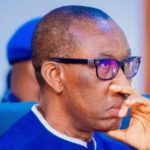
  • On November 4, the Economic and Financial Crime Commission (EFCC) arrested the former governor of Delta State, Ifeanyi Okowa, for allegedly diverting ₦1.3 trillion derivation funds meant for his state’s development.

    His arrest has had Nigerians wondering if he’ll face the wrath of the law, or if, like some others before him, he finds a way to get away with these charges or if his case simply gets forgotten over time.

    This took us down the long memory lane of corruption cases against  Nigerian governors with similar inconclusive endings. 

    Murtala Nyako, former governor of Adamawa state

    On July 19, 2021, an Abuja federal high court told  Murtala Nyako and his son that they had some explaining to do over a ₦29 billion fraud case filed against them by the EFCC. The father-son duo were slammed with a 37 count charge—everything from criminal conspiracy and stealing to abuse of office and money laundering.  The case was later adjourned till January 2022, but it hit a roadblock after the judge in charge became temporarily unavailable. 

    In March 2024, the court case resumedNyako, along with his son, pleaded not guilty, and the judge adjourned the case to October 24 and October 28. If the case was revisited, then Google’s search engine should be questioned because nothing suggests it was. 

    Sule Lamido, former governor of Jigawa state

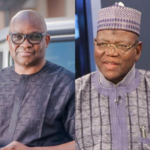
    Lamido and Murtala Nyako might not be besties, but they definitely belong to the same “present-fathers” Whatsapp group. In 2015, the EFCC charged Lamido and his two sons, Aminu and Mustapha with 37 money laundering charges of ₦1.35 billion. In July 2023, after eight years of back-and-forth without results, the Abuja Court of Appeal dismissed the case because, according to them, the federal high court should have held the trial in Jigawa, where the alleged crime was committed instead of Abuja.

    But the EFCC wasn’t about to let it go so easily. In August 2023, they asked the Supreme Court to revive the case and overrule the court of appeal’s decision because it didn’t make sense to them that the case was completely dismissed when it could have been easily transferred to Jigawa. The court didn’t overrule that decision, and the case remains dismissed to this day. If you’re wondering what Sule Lamido has been up to since then, he’s been granting interviews and being referred to as a “seasoned politician.”

    Ayo Fayose, former governor of Ekiti state

    This name probably rings a bell because the EFCC has had its sights set on Fayose and his aide, Abiodun Agbele since 2014 for a ₦6.9 billion fraud and money laundering case. Among many other things that, Fayose and his sidekick did with the money, they reportedly used ₦1.2 billion of it to fund his gubernatorial campaign in Ekiti. 

    The case never made it to court till 2018. He pleaded not guilty and got a   ₦50 million bail on October 24, 2018. In  December 2021, he was re-arraigned after the EFCC filed a petition against the court’s ruling. The back and forth continued for 3 years until March 2024 when the judge ordered the presentation of witnesses. in June 2024, Fayose’s lawyers argued that the EFCC hadn’t provided enough evidence to continue the case and, therefore, had no case against the ex-governor. They presented a no-case submission (a plea to dismiss the case) that was approved by Judge Nnamdi Dimgba from the federal high court in Abuja. EFCC appealed the court’s ruling, but there isn’t much information on what happened after.

    Yahaya Bello, former governor of Kogi state

    Yahaya Bello went from receiving praise for making history as Nigeria’s youngest governor to becoming the EFCC’s regular customer. In May 2024, the EFCC chairman accused Bello of transferring $720,000 from Kogi State funds to a Bureau De Change to cover the children’s school fees in advance before he left office. Instead of cooperating with EFCC’s investigations, Bello avoided the EFCC like a plague and resisted arrest

    In September, Bello got tired of hiding and decided to finally honour the EFCC’s investigation to “clear his name”, but the name-clearing part didn’t happen because the EFCC brought 16 new charges against Bello, accusing him of misusing ₦110.4 billion in state funds to buy fancy properties in Abuja and Dubai and transferring a large part of the funds to a U.S. bank.  As if those allegations are not wild enough, he was still accused of unlawfully obtaining ₦677 million from a business deal.

    After the fresh allegations were brought up, Bello went back to avoiding the EFCC, but a court recently ruled that his trial should start even if he doesn’t appear in court. We still don’t know how the Yahaya Bello story will end, but it’s beginning to look like it might stretch on for years because the case has now been adjourned until January 2025. Yahaya Bello’s history of resisting arrest and acting unbothered suggests that we shouldn’t hold our breath for any consequence. 

    Danjuma Goje, former governor of Gombe state

    In October 2011, Danjuma Goje and four other members of his administration were accused of moving ₦25 billion from the state treasury, but the case kept dragging on. In May 2012,  while the case was being heard, members of the Gombe State Students Association protested outside the court demanding that Goje face justice without delay. But that never happened. 

    Goje and the EFCC had a long back and forth which lasted for eight years until June 2019, when things took a surprising turn: just 24 hours after Goje met with President Muhammadu Buhari and agreed to step down from his race for Senate President in favour of Ahmed Lawan, the EFCC  handed the case over to the Attorney-General’s office, saying they hadn’t completely abandoned it but were simply transferring it. 

    Things worked in Goje’s favour again in July 2019 when the Attorney-General’s office requested to drop the last two charges against him. The court approved this request, and Goje walked away a free man. 

    Orji Uzor Kalu, former Governor of Abia state

    In 2007, the EFCC charged Orji Uzor Kalu and his finance director, Jones Udeogu to court for misappropriating ₦7.65 billion in state funds. For 11 years, Kalu and his finance director didn’t face any real consequence until 2019, when he got a 12-year prison sentence and Udeogu a 10-year sentence.

    But they barely spent one year in prison because, in 2020,  Kalu and Udeogu were released after they argued that the verdict against them was invalid because the judge who gave it had already been promoted to the Court of Appeal when he handed it down.

    The Federal High Court blocked the EFCC from restarting the trial, but they appealed the court’s decision in March 2024. The commission lost again after the Court of Appeal dismissed the appeal over missing documentation—a classic case of Nigeria’s “missing file” issues. The EFCC now says it’s fixing its paperwork system and will continue from where it stopped. Kalu is still a free man and a senator in the National Assembly. 

    The cases referenced in this article are few in a long list of politicians whose corruption cases never saw a conclusive end, either because they never went to court, they went to court and were dismissed after many years of back-and-forth, or they died while the cases were still ongoing.

    [ad]

    Why do some corruption cases fade away?

    1. There are loopholes in the judicial system, and politicians take advantage of them
    2. Nigeria’s judicial system is inefficient, and this sometimes leads to delays.
    3. The EFCC is under-resourced.
    4. Interference from the executive arm of the government 
    5. Overall system corruption

  • The streets are saying the former governor of Delta State and former vice presidential candidate Ifeanyi Okowa has been arrested for allegedly diverting a whopping ₦1.3 trillion.

    The streets are right because the Economic Financial Crimes Commission (EFCC) has confirmed to several media houses that it arrested the former governor on Monday, November 4.

    At the moment, they have not released an official statement and are sort of keeping the whole story hush, but insiders at the commission who spoke to Punch Newspapers have given a bit more insight into the arrest. They explained that Okowa was arrested on Monday when he came to the EFCC’s Port Harcourt office at their invitation. According to them, the money the ex-governor allegedly diverted was a combination of the 13% derivation fund gotten from the federation account from when he was elected to office in 2015 to when he left in 2023.

    If you are wondering what the 13% derivation fund means, it’s a share of all the revenue gotten from oil that the federal government distributes to states where oil is found. The idea behind this is that each state is supposed to use its 13% to develop itself and tackle any environmental issues that may have arisen as a result of oil exploration.

    Apart from the money mentioned above, the EFCC is also investigating Okowa for allegedly diverting other funds to buy estates in Abuja and Asaba and also using the sum of  ₦40 billion shares bought from major banks for the State’s LNG offshore project, for personal use.

    What’s different about this case?

    This news from the EFCC is wild, not only because he is a former governor. Nigeria has a history of governors stealing public funds for their personal use, but there hasn’t been a former governor who has stolen quite as much. For context, the EFCC reopened a fraud case against 13 ex-governors and some ministers in January 2024. The total money they allegedly stole is about ₦853.8 billion. This is almost twice the amount allegedly stolen by 13 governors.

    Why is it important to monitor it?

    Nigeria does not just have a long history of corrupt politicians who embezzle public funds for personal use. It also has a history of letting those politicians off the hook.

    In 2022, Nigeria’s former President, Muhammadu Buhari, granted a presidential pardon to the former governor of Plateau State, Joshua Dariye, and the ex-governor of Taraba State, Jolly Nyame, who were both serving jail sentences for stealing public funds.

    Nyame was sentenced to 12 years imprisonment for diverting  ₦1.64 billion but ended up serving only two years. Dariye, on the other hand, was sentenced to ten years for  ₦1.126 billion fraud, but he served only four years.

    Most recently, in May 2024, the former governor of Kogi State, Yahaya Bello, was declared wanted by the EFCC for money laundering totalling about  ₦80.2 billion. However, he has repeatedly evaded arrest and has failed to appear in court even though the case has been adjourned several times. The case is on track to be forgotten as the Federal High Court has adjourned it yet again to January 2025.

    These are not the only reasons Okowa’s case deserves special monitoring. In May 2024, an anti-corruption group called The Network Against Corruption and Trafficking Initiative (NACAT) revealed that different people had submitted petitions against Okowa to the EFCC, which the commission ignored.

    Also, in May 2023, the Association of Oil and Gas Producing Communities of Delta State, submitted a petition to the EFCC stating specifically that Okowa had looted the 13%derivation funds. In October, they sent the EFCC a reminder but there was still radio silence from them. In January 2024, the association complained again about this silence because, according to them, Okowa and his loyalists had been bragging about the petition being dead on arrival.

    “We are, however, worried about the slow pace, which is giving an impression that indeed Senator Lfeanyi Arthur Okowa and his cohorts are above the law and, as such, can neither be invited nor prosecuted,” they said.

    We are not predicting that Okowa’s case will be swept under the rug, but considering that the EFCC has been slightly accused of siding with him and also considering that crazier things have happened in Nigeria, it’s not out of place to shine the light on his case.

    [ad]

    What can citizens do to ensure justice is served?

    The ₦1.3 trillion allegedly stolen by Ifeanyi Okowa were funds meant for developing Delta State and taking care of communities affected by oil exploration. According to these communities, the funds were never used, and they currently cannot do much farming or fishing to sustain themselves.

    If you want to ensure that this case is not forgotten or unresolved, you can do the following:

    1. File a Freedom of Information (FOI) request,demanding to see reports of funds allocated to Delta State when Okowa was in charge.
    2. Start online petitions on platforms like this, demanding justice
    3. Consistently talk about it on social media using hashtags
    4. If it seems like the case is dying down, reach out to your representatives in the National Assembly to question the EFCC.

  • Over the last two weeks, Fisayo Soyombo, an investigative journalist working to uncover the corruption in Nigeria, brought the covert and blatant corruption of the Nigerian Customs Services to light. 

    Who is Fisayo Soyombo? 

    A Nigerian investigative journalist known for his undercover work in Nigeria’s criminal justice system. He is the Founder/Editor-in-Chief of the Foundation for Investigative Journalism (FIJ).

    In his investigative journey, he has spent five days undercover as a suspect in a police cell and eight as an inmate in Ikoyi Prison to expose corruption. 

    Soyombo also drove the equivalent of a stolen vehicle from Abuja to Lagos, passing 86 checkpoints to investigate bribery. He’s also investigated the abandonment of soldiers injured in battle against Boko Haram and the corruption in the handling of corpses at government-run mortuaries and cemeteries. In 2019, Soyombo went undercover for three weeks as a patient at the Federal Neuropsychiatric Hospital in Yaba, Lagos.

    With the work Fisayo has done, he has been able to cause impact in a few leading to the release of unjustly imprisoned people, treatment of neglected soldiers, arrest of corrupt police officers and commendations from the ex-governor and minister of interior – Ogbeni Rauf Aregbesola among other awards. In other cases, the government has either promised to investigate or dismissed the case.

    [ad]

    What did he uncover about the Nigerian Customs?

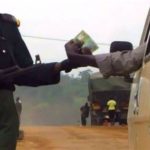
    Posing as a smuggler in 2022, Fisayo discovered that the Nigerian Customs Service is ridden with corruption. In a report published on February 21, 2024, he stated that he illegally imported 100 bags of rice in November 2022 from the Republic of Benin into Nigeria without facing resistance from security operatives because some NCS officials were paid.

    Soyombo linked up with a smuggler who provided insider information about how the customs officers moved, enabling him to transport the rice between Nigeria and the Benin Republic through the forest using motorcycles. 

    He found that smugglers can bring anything into Nigeria without consequence as long as they pay bribes to customs officers. These officers provide insider information to smugglers, further facilitating smuggling activities. According to Fisayo, the major stakeholders in this ring of corruption include popular businessman, IBD Dende, and Comptroller Hussein Ejigbunu, among other officers of the customs services. 

    His findings have sparked social media discussions about the need for reform within the agency and the broader issue of corruption in Nigeria.

    The Nigerian Customs Services respond 

    The Nigerian Customs Services hasn’t officially responded to these revelations. However, they have probed a comptroller. The Nigerian police have also investigated FIJ’s board director – Bukola Shonibare under the guise of an invitation. 

    The Police also demanded that FIJ’s board provide Fisayo Soyombo for investigation. IBD Dende also filed a pre-action statement against Fisayo Soyombo on grounds of defamation and character assassination with a demand for ₦500 million in damages and a retraction of the published report. 

  • Will you be quietly eating the national cake or feeding us lies every weekend on live TV? Take this quiz and we’ll tell you the kind of Nigerian politician you’d be.

  • It’s been nearly four years since President Muhammadu Buhari dissolved the Niger Delta Development Commission (NDDC) board. Finally,  on January 4, 2023, the new NDDC board was inaugurated with its first female chairman, Lauretta Onochie. 

    What is the NDDC?

    The NDDC was created in 2000 by former president Olusegun Obasanjo to help create sustainable development, job opportunities and foster peace in the Niger Delta regions, which have served as Nigeria’s golden goose for years. Taxes are paid to the NDDC by oil companies operating in the area. Sadly, over the years, the commission has performed far below expectations and is now becoming synonymous with abandoned projects and corruption. 

    Remember this man? 

    (Prof. Pondei fainting over corruption charges)

    2020 was a memorable year for many reasons. Coronavirus forced the world to take a temporary break, and we got to see the acting skills of Prof. Kemebradikumo Pondei, the former acting Managing Director of NDDC. 

    In July 2020, a committee from the House of Representatives probed the NDDC for allegedly misusing ₦81 billion. When Pondei was asked to explain how he spent ₦1.32 billion on COVID-19 palliatives and ₦336 million on the Save Life campaign, he “lost consciousness”.  

    You’d think the 2020 probe would lead to ending corruption in NDDC, but that’s a big dream. In August 2022, the Accounts and Finance Director of the NDDC was detained by the Economic and Financial Crimes Commission (EFCC) for allegedly diverting over ₦25 billion in tax remittances. 

    What do we need from the new board?

    Transformation

    Over the years, the NDDC has been in the news for the wrong reasons. The new board should focus on creating lasting solutions to the region’s economic, social and infrastructural problems.

    Fight against corruption

    The NDDC is riddled with corruption, so forensic audits should be done with stolen funds recovered. Once there’s a thorough clean-up of the agency, progress can finally be made.

    Transparency

    There should be accountability and effective monitoring of every process and project, with excess waste prevented at every point. This would ensure that funds are properly managed, and projects can be completed on time.

    The Niger Delta has had its fair share of woes over the years, and it seems only fitting that they have a body that puts its needs and issues first. And hopefully, this newly inaugurated board finally gets it right.

  • The Chairman of the Economic and Financial Crimes Commission (EFCC), Abdulrasheed Bawa, has been sentenced to serve time in the most ‘secure’ prison in Nigeria, Kuje Correctional Prison.

    One can only wonder how Bawa is going to survive, as the prison could contain some very angry fraudsters he has arrested.

    Bawa is going to serve time until he returns N40 million and a Range Rover to Air Vice Marshal (AVM) Rufus Adeniyi Ojuawo. Keep in mind that these items have not been returned to Ojuawo since the court demanded him to in 2018.

    What happened with Ojuawo and Bawa?

    To help you understand this, let’s break down the case into three main points:

    • The Crime: Ojuawo was accused of taking N40 million and a Range Rover. The items are valued at N29.25 million from Hima Aboubakar of Societe D’Equipment Internationalaux Nigeria Limited in 2016.
    • The Court Case: Ojuawo was arraigned in 2016 on a two-count charge for both items in a Federal Capital Territory (FCT) high court. The case was filed by the EFCC.
    • The Verdict: The judge rejected the EFCC case in 2018 and acquitted Ojuawo on the grounds that the commission was unable to show that he accepted the gifts. The EFCC was ordered to return the seized property, which Mr. Bawa clearly didn’t follow up on, hence his sentencing

    However, he is not ready to claim the sentence peacefully, as he informed journalists at a press conference that he had appealed the case and would allow “the law” to take its natural course. His ‘buddies’ at the EFCC have backed him up too, as they officially confirmed that the organization would appeal in the chairman’s case. Talk about a friend in need.

    It may be kind of shocking and sad to hear this news as the EFCC under Bawa’s tenure has recorded significant achievements so far. These range from the recovery of N6 trillion from fraudsters and 978 convictions in August 2021 to arresting 87 forex dealers in November 2022.  

    But how righteous is Bawa?

    Surprisingly, the EFCC chair has not always lived under a cloak of righteousness. He was involved in an alleged  ‘cashing out’ from over 244 oil tankers from between N20-N30 million. This happened while he was head of the zonal EFCC office at Port Harcourt in 2019. 

    EFCC officials have also claimed that his actions deprived Nigeria of receiving at least N4.88 billion in loot recovery. That is money that could pay off some of Nigeria’s debts. To put the cherry on the cake, Bawa was called in to lead the Lagos Zonal Office a year later. This was despite his investigation being far from over. 

    He then became the National Chairman in February 2021.

    Why should you care about Bawa or the EFCC?

    For starters, the actions of these two have serious impacts on your ‘soft life’ and your daily N2K.

    A report by PricewaterhouseCoopers (PWC) was written on the impact of corruption on the Nigerian economy. It states that corruption from the government level can lead to a lack of funds. This could lead to poor infrastructure of hospitals, schools, roads, etc. 

    It can also affect your business, as public funds that are meant to be used as capital for your business are now being used for jaiye jaiye by people who are meant to stop corruption. 

    How can you fight corruption?

    You don’t need to be powerless as a citizen in the fight against corruption. Here are some things you can do:

    • Report issues of corruption to the necessary authorities. You can start with your local police. 
    • Post it on social media. Your phone is not only for Instagram photos and Snapchat.
    • Don’t partake in corruption yourself. How can you fight corruption if you’re also corrupt?
  • Let’s pretend to write the script of an award-winning film.

    EXT. DANBABA SUNTAI AIRPORT, TARABA STATE

    Imagine you’re returning to your home state after four years of being away. As you emerge from a private jet, there’s a crowd of mekunus who erupt in cheers and scream your name. 

    It’s a Saturday, so it’s hard to know for sure if they’re there because they’re unemployed or they really just love you. But you’ll take anything.

    You touch down in your white agbada, happy to be back home, and your rich friends are there to shake your hand. The mekunus all want to touch the hem of your garment. You’re happy to allow them, but there are too many, so you ask them to, “Dress back a bit.” 

    How to Get Away With Stealing in Nigeria — a Jolly Nyame Masterclass

    “Give me some air, please.”

    You’re not ready to go home yet because you’ve spent most of the last four years indoors. You’re an extrovert that needs some outside noise, so you head to a stadium that’s named after you. 

    Your rich friends are there, and so are the mekunus who are still fanning about because it’s a Saturday and there’s no Premier League football to watch because of the Queen’s death. They call this a grand reception, and everyone is in a jolly mood.

    How to Get Away With Stealing in Nigeria — a Jolly Nyame Masterclass

    To the victor, the spoils

    It’s time for speeches and the Speaker of the House of Assembly mounts the podium to say really nice things about you on behalf of the absent state governor. He addresses you as, “Your Excellency” and “an iconic figure” so everyone knows you’re a man of timbre and calibre. Then he calls your return home “an epoch-making occasion” so you know he went to school and isn’t a nepotism baby. He concludes his speech with something about forgiveness.

    How to Get Away With Stealing in Nigeria — a Jolly Nyame Masterclass

    “Forgive and forget, baby. You’re not vengeance.”

    It’s now your turn to mount the podium and address your adoring fans — your rich friends and the mekunus who are still there for some reason. A vote of thanks is important, so you appreciate the retired military general in Abuja who made your return home possible.

    These are tears of joy

    And for your coup de grace, it’s time to talk about the people who were the reason you’ve not been home for four years. You should diss them for keeping you from the comfort of your lovely bed, but you’re not Nyesom Wike and you don’t have his merry band of jesters or the charisma to pull it off. 

    How to Get Away With Stealing in Nigeria — a Jolly Nyame Masterclass

    You’re not him

    As the Christian you are, you forgive your haters with your church mind that doesn’t allow you to wish them evil for sending you away from home. You say, “I hold no grudges against anybody, and I’ve forgiven all who God used to send me to prison.”

    Prison ke? Who are you?!

    You’re Jolly Nyame, and you’re a convicted thief. And the haters you’re forgiving are the people who made sure you faced justice for your crimes. 

    Unfortunately, this is all real life.

    Who’s Jolly Nyame?

    In 1992, the people of Taraba State elected Jolly Nyame as their governor, but his tenure was cut short by the 1993 military coup of General Sani Abacha. Six years later, in 1999, he won another election as governor and a re-election in 2003. This leaves him with the rare flex of having won three governorship elections in Nigeria — a very exclusive club.

    How to Get Away With Stealing in Nigeria — a Jolly Nyame Masterclass

    But when Nyame left office in 2007, the Economic and Financial Crimes Commission (EFCC) knocked on his door to bring him the gospel of anti-corruption. “You’ve been a bad boy,” the EFCC said. Naturally, Nyame didn’t agree

    “Whatever this is about, it wasn’t me that stole the ₦1.64 billion, but I may have taken ₦180 million out of a ₦250 million contract I approved to buy stationery for government offices. I’ll return that small change but leave me alone after,” he said, but not in those exact words.

    The EFCC didn’t leave him alone, and the two parties dragged the case in court for years while Nyame tried unsuccessfully to become a senator in 2011 and 2015. Finally, in May 2018, Justice Adebukola Banjoko of the FCT High Court considered the evidence again Nyame and gave her ruling:

    How to Get Away With Stealing in Nigeria — a Jolly Nyame Masterclass

    Justice Banjoko sentenced Nyame to 14 years in prison, but he fought this judgement at the Court of Appeal which shaved his prison time down to 12 years. Still unsatisfied with his mini-victory, the former governor pressed ahead to the Supreme Court to overturn his sentence, but he lost. 

    These aren’t tears of joy

    Many reasonable people would say this was his final bus stop, but Jolly Nyame’s God doesn’t wear flip-flops — he’s an ordained reverend after all.

    Manna from heaven Buhari

    The government of Buhari (of anti-corruption fame) announced on April 14th, 2022, that the president had granted a pardon to 159 prison inmates and ex-convicts who begged for it. Jolly Nyame was one of the lucky ones. Nigerians were pressed about the pardon, but Nyame couldn’t care less. He was a free man eight years ahead of schedule.

    The presidency explained in April that Nyame got his pardon due to life-threatening ill-health. But that hardly looked the case when the former governor finally made his grand re-entry to Taraba State on Saturday, September 10th, 2022, welcomed and feted by the same people he stole from.

    How to Get Away With Stealing in Nigeria — a Jolly Nyame Masterclass

    What’s the lesson here?

    Nyame’s victory lap in Taraba has naturally received some backlash online: 

    https://twitter.com/Bolajuade/status/1569439428581654530?s=20&t=TibeCLsf4n3A5Ojdb1jJNQ

    Not only has Jolly Nyame got a slap on the wrist for a crime with far-reaching implications on the lives of people he swore to serve, he’s walking around acting like his release vindicates him. Even worse, the people in government are licking the underside of his boots.

    With the 2023 elections around the corner, a man who robbed his state blind is now promising to help reshape its future. It’s a situation that calls for the head of those who released him to get checked by a doctor or a friendly taser.

    Nyame’s Taraba homecoming was ugly, chaotic and an insult to the Nigerian justice system, and the only lesson to learn from it is if you want to steal and get away with it in Nigeria, steal big.

    How to Get Away With Stealing in Nigeria — a Jolly Nyame Masterclass

    ALSO READ: Why Everyone Is Angry Buhari Pardoned Two Thieves for Easter