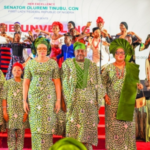
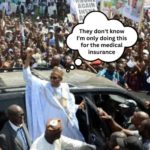
• Since he won the presidential ticket of the All Progressives Congress (APC) in June 2022, all we heard from Bola Tinubu was that it was his turn to be president. But on October 21, 2022, he finally released a manifesto titled Renewed Hope 2023 to back up his entitled “emi lokan” campaign.

    [Image source: Twitter/@O_Muhammadu_O]

    If “Renewed Hope 2023” sounds familiar, then you’re in the same WhatsApp group with the people who’ve accused Tinubu of copying MKO Abiola’s “Hope 1993” campaign which was also a Muslim-Muslim ticket.

    Tinubu promised that his manifesto would provide the “true and innovative solutions” that Nigeria needs to address its challenges, so we had to read this 80-page document so you don’t have to.

    Here are some of the interesting things we found that Tinubu has promised to do for Nigerians if he becomes president in 2023.

    No more police guards for VIPs

    It’s not a secret that the Nigeria Police Force (NPF) is understaffed. Yet, many of the ones we currently have are acting as bodyguards for the highest bidder. They even help their VIP clients carry handbags sometimes.

    But Tinubu’s manifesto promises to free police officers from being guards for VIPs if he becomes president. The VIP guard and bag-carrying job will now go to officers of the Nigeria Security and Civil Defence Corps (NSCDC) while the NPF undergoes critical reform.

    What it means for Nigerians

    Nigeria is suffering from insecurity on a scale that’s never been seen before. We need police officers to be fighting crime, not acting as glorified guards. But Nigerians shouldn’t hold their breaths for this promise because every Inspector-General of Police (IGP) since 1914 and even Buhari have tried and failed to make this change happen.

    The import substitution plan

    Remember how Buhari has been hostile towards importation and even has a ban list for the importation of certain items like rice? Well, Tinubu’s manifesto promises to follow in his footsteps and discourage reliance on imports through policy measures like luxury taxes and higher tariffs. Buhari tried border closure at some point, so we wouldn’t be surprised if that’s on the table for Tinubu too. 

    What it means for Nigerians

    Tinubu’s anti-import plan promises to incentivise international brands to set up manufacturing plants in Nigeria. The manifesto also notes that there’ll be support for local manufacturing and production. But if we’ve learnt anything from Buhari’s anti-import policies over the past seven years, there’s a lot to fear about this part of Tinubu’s manifesto.

    ALSO READ: Emi Lokan: Why Tinubu Feels Entitled to Nigeria’s Iron Throne

    The price control plan

    The agbado master cemented his love for ‘cassava, garri, ewa” and other crops with the promise to establish a commodity board. The major objective of the board is to control the prices of staple crops. 

    Tinubu believes price control will help Nigerian farmers gain their daily ₦‎2k for their business. 

    What it means for Nigerians

     Nigeria doesn’t have a good history with price-fixing and there’s little to suggest Tinubu’s plan won’t fail the economy like the others in the past. Let’s see how things turn out.

    The content creators’ plan

    If you thought Buhari’s attempts to regulate social media were bad, wait until you hear about Tinubu’s plan for content creators if he becomes president. The candidate plans to create a Presidential Creative Industry Advisory Team which would review the legislative framework of the creative industry.

    What it means for Nigerians

    Tinubu says the goal of this plan is to create a better business environment for Nigerian creatives, but we’ve seen all the memes about him and won’t put social media regulation attempts past him.

    The inflation plan that’s not really a plan

    In his manifesto, Tinubu has found a revolutionary action plan for inflation that’s certain to change Nigeria’s economy. That solution, ladies and gentlemen, is to study inflation.

    What it means for Nigerians

    This half-baked non-solution simply means that Nigeria’s 23.12% inflation rate may not improve anytime soon.

    The women empowerment plan

    One fact is clear —  the number of women in Nigeria’s political space is very low

    Tinubu wants to address this and has promised to allocate 35% of all government positions to women. He even plans to strongly encourage private institutions to reserve a minimum number of senior positions for women. Who knew Tinubu is such a feminist?

    What it means for Nigerians

    If this plan works, we may be seeing more women becoming senators, and governors, and maybe even sitting in Aso Rock Villa.

    The only issue with the plan is it’s only offering women 35% when they’re half of the population. Why can’t important government positions be split 50-50 between both genders?

    ALSO READ: One of These Women Is Nigeria’s Next First Lady

  • The japa wave out of Nigeria is making doctors become as scarce as uninterrupted power supply. Many doctors have seen the benefits of working overseas and refuse to stay and fight sapa in Nigeria

    Even though we can’t blame anyone for wanting to earn their daily $2k, the japa wave of doctors is really causing a serious problem for Nigerians.

    How bad is Nigeria’s doctor problem?

    Let’s break it down in numbers. 

    An estimated 217 million people live in Nigeria and they’re all likely to need medical attention at some point. According to the President of the Nigerian Medical Association (NMA), Uche Rowland, Nigeria currently has 24,000 doctors available. This means there’s one doctor available to treat 9,083 patients. 

    But according to the World Health Organization, a country should have a ratio of one doctor to 600 people for their medical needs. Going by this recommendation, Nigeria needs at least 363,000 additional doctors in the country.

    Excluding witch doctors

    According to Rowland, there are some states in the southern region where there’s only one doctor available to treat 30,000 patients. The situation is even worse in some northern states where there’s only one doctor available to 45,000 patients.

    He said, “In some rural areas, patients have to travel more than 30 kilometres from their abodes to get medical attention where available thus making access to healthcare a rarity.”

    Nigerian doctors are rushing for the door

    Even though Nigeria needs more doctors practicing in the country, the ones we already have are looking for work everywhere else. A 2017 survey by NOI Polls revealed that about 88% of medical doctors in Nigeria were seeking work opportunities abroad at the time. 

    In January 2022, the Medical and Dental Consultants Association of Nigeria (MDCAN) said more than 100 of its members left Nigeria within 24 months. A 2022 UK immigration report also showed that 13,609 Nigerian healthcare workers got working visas in the past year, making the country second only to India with 42,966 healthcare workers.

    Who will make it stop?

    Nigeria faces an existential crisis with the japa wave of doctors. As the country grows in population, more healthcare professionals are needed. The government needs to act fast with favourable policies that’ll make practicing in the country attractive to doctors. 

    We know our leaders can jump on a plane and run abroad for their medical needs but regular Nigerians deserve access to care too.

  • The United States Agency for International Development (USAID) is donating $1 million to Nigeria due to a flooding crisis that has affected over 2.5 million people

    [Image Source: The Guardian]

    The U.S. Ambassador to Nigeria, Mary Beth Leonard, announced on October 20, 2022 the donation would help local partners to provide emergency shelter assistance, relief commodities, and hygiene kits. The goal of the relief effort is to promote safe and healthy practices and cash assistance for people impacted by the devastating floods. 

    The U.S. is afraid that the crisis is making Nigeria’s already critical humanitarian situation worse. The ambassador expressed worry that stagnant floodwaters will increase the risk of cholera outbreaks in affected areas.

    [Image source: Relief Web]

    Ambassador Leonard promised Nigerians, “USAID disaster experts will continue monitoring the situation in close coordination with humanitarian partners and the Government of Nigeria to assess needs and determine if additional assistance is required.”

    The U.S. has maintained a history of providing humanitarian assistance to Nigeria. The USAID has provided more than $356 million in humanitarian assistance to Nigeria in 2022 alone. This life-saving assistance is in addition to USAID’s annual $539 million development budget for Nigeria.

    What does this mean for Nigerians?

    The money coming in would be of great help to Nigerian victims of floods who have complained of government neglect. The monetary compensation will help to sustain them while they count their losses. The aid would also help with the clearing of major drainage systems within the affected states as well as the provision of better camps, relief items, and facilities for Internally Displaced People (IDP).

  • The Nigerian experience is physical, emotional and sometimes international. No one knows it better than our features on #TheAbroadLife, a series where we detail and explore Nigerian experiences while living abroad.


    Today’s subject on Abroad Life moved to Togo for school in 2017 and met a country very different from what he’d imagined it was like, growing up in Nigeria. He shares what it’s like living in a French-speaking African country, his newness to the relaxed culture, and why more Nigerians should visit other African countries.

    togo

    What’s your travelling history like?

    I didn’t travel much when I was a kid, but we lived in a different country for a while. My mum got a job with a relief organisation that did some humanitarian work in DR Congo. So that’s where I spent four years of my life.

    What was that like?

    It’s mostly a blurry memory, but I remember there being a lot of people from different cultures. Congo is like Nigeria in many ways, but it’s also different. They have many tribes and sub-tribes that have beef and still marry each other all the time, just like Nigerians. But they’re also poor, which is wild because the country has more resources than Nigeria. I came back when I was ten.

    What was settling back in Nigeria like?

    I basically lost contact with the friends I played with back in Congo. But our financial condition became better at home because my dad started lecturing at different universities. He couldn’t do this when we were in Congo.

    Interesting. So when did you decide to leave Nigeria for Togo?

    I won’t say I decided on it to be honest. The opportunity presented itself. I graduated from secondary school in 2015 and didn’t immediately get admitted into a university. I wrote JAMB but my score was so bad that I didn’t even get admitted for any course.  So for the next one year, I needed something to do. My mum had said something about learning French because she’s a polyglot. 

    I didn’t really buy the idea, but since I didn’t have anything to do, I agreed to it. I enrolled at Alliance Francaise and learnt French for a year. 

    The plan was to use my proficiency in French as a means of gaining admission to study in France, but that didn’t play out as hoped. 

    What happened?

    Nigeria fell on harder times in 2016, and the exchange rate went up. My parents couldn’t afford the tuition fees anymore, so I had to start thinking about alternatives. Fortunately, I’d already applied to OAU. I got accepted, although it wasn’t for a course of my choice. My choice was mechanical engineering, but I’d been admitted for mathematics instead. I decided to take it and resumed school in early 2017. I stayed for a year. Right after the second semester, I knew I couldn’t withstand the madness of the school. The lecturers didn’t care much, we had insane timelines, and the curriculum was very weird. I was used to learning from scratch, but here I was feeling like there was a gap in my education that was left to me fill. I told my parents I didn’t think I could continue. 

    How did they take it?

    They actually took it very well. My dad is a lecturer so he understood what I was talking about. Again, we started looking for alternatives, and my mum suggested Togo. I could already speak French, and it’s a West African country, so there weren’t any visa requirements. She also had people Togolese friends from her work who spoke highly of the standard of education there, so that crystallised the decision. To answer your initial question, I’d say the decision to study in Togo was made in 2017.

    What was the process like?

    My mum found out about this catholic university in Togo that had a good admission rate. I just needed to show my WAEC results and a few other documents, and I was good. I applied sometime in late 2017 and got admitted to study computer science and mathematics. I’d seen what studying mechanical engineering was like through my friends in OAU, and I no longer wanted it. I chose computer science and mathematics, and that’s what I got.

    Sweet. What was immigration like?

    I had my passport and admission letter, so it was easy to prove to the people at the borders that I was entering Togo for school. It was more of a long road trip than I assume a typical japa journey would be like. The only issue I had was when the immigration officers at the Togo border claimed my passport was a “virgin passport”, so I had to pay some money. 

    When I got to Lome, my mum had already arranged for one of her friends to come to pick me up at the park and take me to school. I stayed with her for a week while I sorted out registration at school. 

    What was Togo like? Expectations vs reality

    The first thing I noticed was how relaxed it was compared to Lagos, where there’s this air of struggle. Here, life isn’t so hard for them. The streets aren’t buzzing till long after it’s dark and there’s generally a sense of calm here. I don’t have to wake up before dawn just so I can get to somewhere I have to be. It made me realise that what we call “hustling spirit” in Nigeria is just suffering.

    Another thing I noticed was there were motorcycles everywhere, and unlike in Nigeria, they all had helmets on. It’s as if everyone owned a motorcycle and you couldn’t really tell if a motorcycle was commercial or personal.

    Coming here corrected a bias I’d previously held in my mind, that other African countries are poor and somewhat rural. Even though I’d lived in Congo once before, I just had the thought somewhere in my head. Living in Lome has made me realise how much I didn’t know about other places in Africa. Lome was cleaner than Lagos, with nicer buildings, and apparently, better city planning. 

    They had cleaner beaches too, but I that’s because the country is not very populated. So, while my first impression wasn’t shocking or anything, it was very eye-opening.

    togo

    Tell me about the people

    The Togolese are a little brash, and it’s not uncommon to see a seemingly small argument escalate because people just won’t calm down. But they’re also some of the most accommodating people I’ve known. I spent four years in school, and for the first two, I didn’t go home during the holidays. I’d just stay at a classmate’s home, and it was always a lot of fun. We’d explore places in Togo that I didn’t have the chance to explore during school session.

    One contrasting thing is how they tend to see Nigerians as noisemakers who like to shout to get their way. I’ve heard people make that comment so many times because they’re surprised that I’m actually an introvert.

    Also, Togo is a french-speaking country, but most people can speak English, especially pidgin English, so it’s a bit easy to get by without understanding French. But not in school sha.

    What’s school like?

    The classes are obviously in French, but the curriculum is also a lot more detailed than I experienced back in Nigeria. Even though it was a three-year programme, it went very deep because we weren’t just learning in class. We were assigned to study groups to help us get through the material faster. 

    This really helped when COVID hit in 2020. I had to come back to Nigeria, but classes simply went on as if nothing happened. We moved our main classes to Discord, where we managed our study groups before. It wasn’t as easy as being in a classroom — they even rushed us harder — but it was better than having nothing at all.

    I met people from other African countries and made really good friends. The experience helped me realise I didn’t know anything about other African countries in general. When I blow, I’ll make sure to visit as many of them as possible. There’s just too much to see.

    So, how did your Togo story end?

    I graduated from school in 2021 and came back home to look for work as a mobile developer. My brain has somehow reset into the hustle mode every Nigerian falls into.

    LMAO. Do you think you’ll leave again?

    It’s definitely in the cards for me, but I want to make some money first. I can’t japa without funds, please.


    Hey there! My name is Sheriff and I’m the writer of Abroad Life. If you’re a Nigerian and you live or have lived abroad, I would love to talk to you about what that experience feels like and feature you on Abroad Life. All you need to do is fill out this short form, and I’ll be in contact.

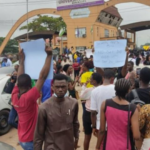
  • It seems as though peaceful protesters can never catch a break in Nigeria, as police brutality reared its ugly head again during the EndSARS memorial procession at the Lekki Toll Gate in Lagos State on October 20, 2022. 

    [Image source: PUNCH Newspapers]

    Nigerian celebrities, Folarin Falana, aka Falz, and Adebowale Adedayo, aka, Mr Marcaroni, led the protest in honour of young Nigerians killed by security forces at the toll gate on October 20, 2020. 

    Police officers interrupted the procession to request that protesters remove a coffin, which was a symbolic reference to the 2020 victims. The protesters refused and the police started to shoot tear gas canisters. 

    [Image source: PUNCH Newspapers]

    [Image source: Punch Newspapers]

    A journalist who works for Arise TV, Oba Adeoye, was also allegedly harassed.

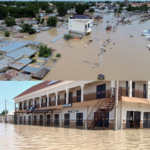
  • As a flooding disaster sweeps through many states in Nigeria, millions of Nigerians are experiencing hardship. Since the start of 2022, over 600 lives have been lost and over a million people have become homeless.

    [Image source: Leadership Newspapers]

    The recent wave of disasters has hit communities in Kogi, Adamawa, Anambra, Benue, Yobe, and many others. But similar ugly scenes may be about to play out in Lagos State.

    A warning for Lagosians

    The Lagos State Commissioner for the Environment and Water Resources, Tunji Bello, announced early in October that communities near the banks of the Ogun River are at risk of flooding. Other communities are also at risk due to the release of water from the overflowing Oyan Dam in Ogun State.

    Which Lagos communities are at risk?

    The Lagos State government said the following areas could be flooded at any moment:

    1. Ketu
    2. Alapere
    3. Agric
    4. Owode Onirin
    5. Ajegunle
    6. Alagbole
    7. Kara
    8. Isheri Olowora
    9. Araromi Otun Orisha community
    10. Agiliti
    11. Maidan
    12. Mile 12
    13. Odo Ogun
    14. Owode Elede
    15. Agboyi 1
    16. Agboyi II
    17. Agboyi III

    What does this mean for affected Lagosians?

    The most important move for residents of the affected areas is to relocate to safer, higher ground. But it’s unclear whether the government is providing temporary shelters for them.

    For those that are unable to move ahead of time, it’s important to stay vigilant for any drastic change in the environment to ensure they’re not stranded. They should also always stay informed to get ahead of any potential disaster.

  • 36 years ago, on October 19, 1986, a messenger delivered a mail package to a residence in Ikeja, Lagos State. The guard at the gate passed the parcel to Billy Giwa who then passed it on to the recipient named on the package, Dele Giwa, a journalist and co-founder of Newswatch. 

    When Dele Giwa opened the package, it exploded and he died shortly after.

    [Image source: Guardian]

    Giwa’s unfortunate assassination — still unresolved — has become a rallying point for press freedom in Nigeria, but we first have to understand his impact.

    Who was Dele Giwa?

    Dele Giwa was born in Ile-Ife, Osun State, on March 16, 1947. He earned an English degree at Brooklyn College in 1977 and a Master’s in Public Communication from Fordham University. In 1980, Giwa joined ‘The Sunday Concord’.

    [Image source: Biographical Legacy and Research Foundation]

    Giwa was imprisoned for two weeks in 1983 for his work as the editor of ‘The Sunday Concord’ newspaper. In 1984, with other journalists interested in pursuing a high standard of journalism in Nigeria, he founded ‘Newswatch’ and became the magazine’s first editor-in-chief. The magazine redefined investigative journalism in Nigeria and grew to have a circulation of around 50,000 readers.

    By 1986, ‘Newswatch’ had begun criticising the military administration of General Ibrahim Babangida. When Dele Giwa was assassinated on October 19, 1986, he had just recently written an article on the second-tier foreign exchange market (SFEM), a Central Bank of Nigeria (CBN) policy introduced at the time. In the piece, Giwa said if SFEM failed, the people would stone “their leaders in the streets.” Two days before his assassination, he was questioned by officials of the State Security Services (SSS) on the article, and he replied by saying that nothing about his article was offensive. The rest, they say, is history.

     What’s the state of press freedom in Nigeria after 36 years?

    It’s sad to note that not much has changed about press freedom in Nigeria since  Giwa’s death. In 2021, the Nigerian Union of Journalists (NUJ) reported that at least 120 journalists had been detained in the country and that many others had fled abroad to avoid harassment, threats, and death. 

    The events that played out during the EndSARS protests of 2020 showed how much behind Nigeria is still suffering from a lack of press freedom.

    [Image source: Stephen Tayo]

    On October 24, 2020, police officers shot Pelumi Onifade, a 20-year-old journalist, while he was covering a protest. Despite wearing a professional jacket, the officials arrested the injured journalist and he died in custody. 

    Ope Adetayo, a journalist who covered the 2021 EndSARS memorial for Al Jazeera, told The Republic of the threats he continued to face days after the event. Adetayo’s report claimed that many young Nigerians were still subjected to police brutality despite the 2020 #EndSARS protests and that the protesters’ demands for reforms had not been met.

    After publishing the story, the journalist received his first hate mail from an unknown sender who copied several editors of Al Jazeera and warned him against painting Nigeria in a bad light. Although he ignored the email, Adetayo said he was scared and spent time after “constantly looking over his shoulders.”

    Nigeria ranked 129 out of 180 countries in the 2022 World Press Freedom Index compiled by Reporters Without Borders (RSF), a decline from 120 and 115 in 2021 and 2020 respectively. RSF also named Nigeria one of “West Africa’s most dangerous and difficult” countries for journalists to work in. 

    Predictably, the Nigerian government publicly criticised this index, claiming that the Nigerian press is both empowered and free. This is a claim that many journalists in Nigeria have disputed, pointing to several recent examples of the government attempting to clamp down on the media and press.

    [Image source: Daily Post Nigeria]

    Is there light at the end of the tunnel?

    The key to enjoying full press freedom in Nigeria is a government that’s not tyrannical and a press that’ll fight for its rights. Nigeria needs more policies that would protect journalists from harassment in their line of duty. 

    As the Vice President of the Nigerian Union of Journalists (NUJ), Ronke Samo, rightly said “While we urge our colleagues to be discreet and professional in performing their duties so as to avoid possible pitfalls and banana peels, we equally urge the state to urgently formulate policies and put in place frameworks that would protect the press from this emerging threat from advancement in digital technology. This should be done in a most patriotic manner because of the fact that a truly free press will bring progress, fairness, justice, and true freedom to our society.”

  • The Chinese government has set up “overseas police stations” all over the world to keep track of its citizens, as reported by THISDAY on October 17, 2022.

    President Xi Jinping of China [Image source: Johannes Eisele/AFP/Getty Images]

    The Chinese Communist Party calls them, “110 Overseas Police Service Centres” to crack down on all kinds of illegal and criminal activities involving Chinese in the diaspora. These stations are run in various parts of Africa, Europe, and America, according to a report by Safeguard Defenders

    In Nigeria, the Fuzhou-Run overseas police “Service Station” is reported to be located in Benin City, Edo State.

    How does the station work?

    Well, the Chinese are setting up the centers in a bid to combat fraud committed by citizens abroad. Chinese authorities have claimed that from April 2021 to July 2022, 230,000 nationals were “persuaded” to return to China to face criminal proceedings. The “persuasion” happened through harassment and intimidation methods, such as threatening the family members of overseas citizens, according to the report.

    Is this even legal?

    Well, despite China’s good crime-fighting intentions, the program isn’t entirely legal. The International Criminal Police Organization (INTERPOL) is the only recognized body for regional police corporations and partnerships around the world. So, if the Chinese government needed help catching fraudsters, they should have partnered with Nigeria’s local law enforcement to do it.

    According to Safeguard Defenders, “These operations eschew official bilateral police and judicial cooperation and violate the international rule of law, and may violate the territorial integrity of third countries involved in setting up a parallel policing mechanism using illegal methods.” 

    What will Nigeria do?

    The Nigerian government hasn’t reacted to the report yet, but everyone is curious about the next line of action. Will we shut down illegal Chinese operations or allow them to continue the fight against corruption? Are we strong enough to stand up to a country we’re owing over $3.48 billion?

    We’re all waiting for Buhari’s move.

  • On October 14, 2022, a German-based Welthungerhilfe and Dublin-based Concern Worldwide published the Global Hunger Index 2022 report which exposed an open secret about hunger levels in Nigeria.

    The index has five levels of hunger — low, moderate, serious, alarming, and extremely alarming. Nigeria ranked 103 out of 121 countries with a score of 27.3 which signifies “serious” hunger levels. Last year, Nigeria held the same position and finished in the 98th position in 2020.

    While “serious” may seem manageable because it’s an average score, we don’t need to get to an “extremely alarming” level before we realise there’s fire on the mountain and we should be running. Or doing something about it.

    What’s responsible for Nigeria’s hunger crisis?

    Why exactly is there a major hunger crisis in Nigeria? There’s a long list:

    Floods

    With the current flood situation happening in key food-producing states like Benue and Kogi, farmlands have been totally destroyed. A disruption in food production inevitably leads to scarcity and a severe hunger crisis. Experts have pegged the food inflation at 23.34% and they don’t see it slowing down anytime soon with the damage caused by the floods.

    Image Source: AP

    Insecurity

    The activities of armed bandits, terrorists, and militants have affected food production and caused food inflation, and an increased reliance on imports. For safety reasons, many farmers have abandoned their farmlands, fled their communities, relocated to urban areas, or taken shelter in Internally Displaced Persons (IDP) camps. And when the farmers are not around to farm, how would there be food?

    COVID-19

    Even though the severity of the pandemic has reduced greatly, it’s needless to say that it caused way more damage than expected. Due to the lack of revenue coming into the country as a result of the lockdown, Nigeria had to borrow as usual

    The country also slipped into its second recession in four years and food security took a hit we haven’t recovered from. 

    The Russian-Ukraine War

    Nigeria relies heavily on imports of major staple foods such as rice and wheat, but trade has been disrupted by the Russian-Ukraine war that started in February. With the two countries being major exporters of agricultural produce for Nigeria, food prices have increased to unimaginable highs. It also doesn’t help that enough local food isn’t produced. 

    How can we escape the crisis?

    Now that you know the causes, what can be our solution to the hunger crisis? Ending terrorism, responding well to the flooding crisis, and praying for the end of the Russian-Ukraine war are obvious answers, but those won’t happen immediately. So instead, here are some solutions that seem much simpler:

    Cultivate the habit of buying food materials in bulk

    When you buy food items in bulk, you’re almost always saving money. Plus, the more food you have, the lesser the need to buy more. It’s that simple.

    Please, let’s slow down on imported foods

    Food grown in Nigeria will always be cheaper than food imported elsewhere. Let that Basmati rice rest for once.

    Avoid food wastage

    It only goes without saying that we should exercise discipline in eating the foods we consume. For instance, don’t finish one bag of rice in a day. You never know if it’s going to be the same price as when you bought it.

  • To his support base, Nnamdi Kanu is the saviour of the Igbo people from the clutches of the Nigerian government. To the Nigerian Government, he’s a terrorist and a threat to democracy. But for the rest of Nigeria, Nnamdi Kanu is simply the leader of the Indigenous People of Biafra (IPOB), a sect prominent in championing the secession of the southeast region from Nigeria to create its own independent state called Biafra.

    Image Source: Afolabi Sotunde/Reuters

    Kanu’s first arrest

    In October 2015, the Department of State Services (DSS) arrested Kanu in Lagos after arriving from the United Kingdom. The government later charged him to court on charges of terrorism and felony. In April 2017, the Federal High Court in Abuja granted him bail on “medical grounds”, but jumped bail months later after a Nigerian Army raid on his home, and he wasn’t seen in public for over a year.

    In June 2021, the Nigerian government announced that Nnamdi Kanu was miraculously back in custody in Nigeria.

    The government refused to disclose how Kanu was arrested and back in the detention of his buddies at the DSS. But he claimed he was illegally arrested in Kenya and extradited to Nigeria without due process. 

    From that point onwards, it’s been nothing but a seemingly unending court case,  accusations of inhuman treatment and counter-accusations between Kanu and the Federal Government. Imagine being forced to wear the same outfit, without any washing, for five months. 

    Kanu’s imprisonment heightened unrest in the southeast, especially with a controversial sit-at-home order implemented on Mondays across the region. The curfew has been blamed for the increase in criminal activities and violence in the region

    Image Source: Daily Post Nigeria

    A bittersweet release 

    On October 13, 2022, the Court of Appeal sitting in Abuja, the Federal Capital Territory (FCT), ruled Kanu’s arrest and extradition illegal and dropped all terrorism charges against him.

    You can only imagine how Kanu must have felt as he heard the verdict. 

    But, don’t rejoice yet. He has still not been released from DSS custody. Why?

    Well, it’s due to the Federal Government, again. This time, the Attorney-General of the Federation, Abubakar Malami, declared that Kanu was only discharged but not acquitted. He added that there were other issues predating Kanu’s rendition “on the basis of which Kanu jumped bail” which remained “valid issues for judicial determination.”

    In other words, the FG is pissed at Kanu’s jumping bail five years ago and wants to show him shege. 

    What are the people saying?

    Well, we have seen a number of mixed reactions to Kanu’s release. His supporters in the southeast region are happy, as this means no more sit-at-home orders from IPOB and getting back to their normal lives. 

    But there are still fears of IPOB lashing out if the Federal Government detains him further. After all, the current Buhari-led government is known for disobeying court orders. 

    There are also fears about Kanu’s potential influence on the 2023 elections and the fate of Peter Obi, the most prominent 2023 presidential candidate from the southeast region. Nigerians are curious to see whether he’ll be Obi’s ally or foe.

    Time will surely tell.