• If there was anything we learned on Monday, it is that nobody is above political breakfast. The Labour Party (LP) presidential candidate, Peter Obi got his in the form of a ₦50 million lawsuit from an activist, Wale Ojo-Lanre, on the use of a toddler, Chioma as a “poster child” in his political rally in Lagos.

    According to Lanre, he decided to be a voice for the voiceless and fight for the rights of this toddler as a “concerned Nigerian and a friend of litigation.” 


    However, Obi doesn’t have to bear the cross alone, as his comrades were also mentioned in the suit. They include the mother (Queen), the Labour Party, the Federal Government, and the Attorney-General of the Federation.

    But that’s not all, folks. Not only does Lanre want N50 million from Obi’s pockets, but he also decided to make some other demands:

    • Peter Obi and the Labour Party should delete their tweets and several other posts on their social media accounts about the underage girl-child.
    • The Federal Government and Attorney-General are to separate the mother and daughter and the girl should be placed in welfare custody.

    But was Peter Obi wrong in the eyes of the law?

    Here’s what the law says. 


    Sections 29 and 33 of the Child Rights Act of Lagos State, states that anyone who exploits a child in any form or way not already mentioned in this Part of this Act which is prejudicial to the welfare of the child commits an offense.

    The punishment is either a fine of N500,000 or imprisonment of up to five years. Even though the amount charged may sound like a hefty sum, count Obi out if you think he’s going to choose imprisonment when he wants to be president.


    The use of underage children in politics

    Sadly, this is not the first time underage kids will be used in the course of political ambitions. It is quite common during election season.


    In 2018, Umar Ganduje, a Kano State governor was accused of using schoolboys in Kano. This was in response to a viral video of him receiving a $5 million bribe. The boys were seen campaigning for Ganduje and asking viewers to vote for him. But INEC later checked it out and decided that the video was from Kenya and not Nigeria.

    In 2012, a video went viral in Sokoto showing dozens of kids and teens voting with fake voter cards. 

    Recently in November 2022, underage kids were spotted as registered voters in INEC’s online voter registration. This is a crime under the 2023 Electoral Act of Nigeria.

    Keep in mind that according to INEC, the ideal age for voters is from 18 years and above.

    Why are underage children used in elections?

    Some electoral officials claim that sometimes the children are used because their parents insist they are up to 18. 

    They also claim that they allow children to vote because any attempt to stop them could lead to violence in these usually “volatile” parts. But what violence is an underage child capable of? 

    What can INEC do?

    If an underage child is used illegally for a rally, or in the polls, it is the duty of INEC to specifically investigate such rallies and polling units and take necessary action.

    INEC, we are waiting for you to do your job.

  • Nearly four months after the Independent National Electoral Commission (INEC) ended its last batch of voter registrations, it has released the official register of confirmed voters. 

    I have taken a closer look at the register so you don’t have to. To help you, here are some of the major highlights, with context.  

    An explanation of Nigeria’s voter count (2019-till date)

    During the last election year (2019), Nigeria had 84 million voters.  The 2023 INEC voter register shows that the voter count has increased by 9,518,188, bringing the new count to  93.5 million

    It was also announced in October 2022 that 12.29 million voters had successfully completed their registration while 2.78 million voters were removed as ineligible voters. 

    Now that you know the basics, let’s look at what stood out for us in the register:

    Delisted southern voters

    When we looked at the register, the math was not ‘mathing’ for the South-South and South-East regions.

    In the South-South

    Bayelsa, a state with a small population of about 2.5 million people, had the highest number of deregistered voters in the country with 307,513 out of 444,652 new voters.

    That means 69.2 percent of the people in Bayelsa committed some “registration crimes” as stated by INEC. But this is a huge number for any state with such a small population. How true could this be?

    Rivers 

    With the population of Rivers State at 9.5million, almost half of the state was recorded as new voters with 3.5 million voters as of October 2022. But when INEC decided to clean up its data, 33 percent of that voter population was cut. 

    In the South-East

    Abia state has a population of 3.7 million people. According to INEC’s voters’ register, 72, 657 registrations were invalid out of 196,683 total registrations. 

    If there was a second position prize for deregistered voters in Nigeria, it would go to Ebonyi with 240,063 invalid registrations. Only  161,447 voters made the cut.

    In Enugu, 61,261 out of 243,656 were deregistered.

    Northern voters were hardly deregistered

    The North seems to have it great, as they have the lowest percentage of invalid voters

    In Zamfara, only 11.2 percent of voters were invalid out of 238,649 new voters. Overall, the total number of new voters in the north was 12.2 million, with 9.5 million valid voters and 2.7 invalid voters. 

    There were some errors with Northern voter registrations

    States like Jigawa had some clearly underage voters in the register with fake dates of birth, like this Hajara that was born in 1996 for example.

    There was also double counting with some of the voters, as some appeared on the list 3 times.

    What are people and INEC saying about this?

    On the streets, it seems like INEC and the people have two conflicting ideologies. 

    Public opinion isn’t having this, as they believe that there are conspiracies. Some don’t trust INEC to conduct a free and fair election.

    https://twitter.com/lumi_dee7/status/1591928511656300544?s=46&t=x8bJItLYYaOzfY5Vv_zLZA

    INEC has stood its ground, noting that the registration process was thorough as removals were due to double/multiple, underaged and fake registrations that failed to meet the rules of the last Continuous Voters Registration (CVR) exercise. 

    INEC chairman, Mahmood Yakubu, said: “At the end of the exercise, 12,298,944 Nigerians successfully completed the registration as new voters. All along, we have repeatedly assured Nigerians that our process of cleaning up the register is robust.”

    But would you see this after a “robust” voter registration exercise?

    The commissioner for information and voter education of INEC, Festus Okoye, backed up his buddy Yakubu to emphasize that the point of releasing the register online. This was for citizens to make their “claims and objections.” 

    How can the errors impact the 2023 elections?

    Errors such as double-counting give the voter the opportunity to vote twice for a candidate, which is considered electoral fraud under the 2022 Electoral Act

    Underage voting is also a crime, as it could lead to one region having more representation for a candidate than others. The law states that a person must be 18 and above before he/she is considered eligible for voting. Section 117 of the 2022 Electoral Act also gives a punishment of 12 months imprisonment or a minimum of N1 million for unqualified citizens who apply for registrations.

    What to do if you spot errors in the register

    When the name of a registered voter has been omitted or needs corrections, pick up the complaint forms at registration areas and Local Government Area (LGA)

    Wards

    To know your preferred LGA according to location, click the link here

  • The Nigerian Voter is a series that seeks to understand the motivations that drive the voting decisions of Nigerians — why they vote, how they pick their candidates, why some have never voted, and their wildest stories around elections.

    The subject of today’s The Nigerian Voter is Abayomi, a 26-year-old TV presenter in Lagos, Nigeria. He tells us about his reasons for voting for Buhari in both 2015 and 2019, his thoughts on youth participation in politics, and his desire to see Tinubu as president of Nigeria in 2023.

    When was the last time you voted, and who did you vote for? 

    I voted in 2015, and also in 2019. Both times, I voted for Buhari.

    Why did you vote for him twice?

    In 2015, I voted for Buhari because at that point, things were actually going bad in Nigeria with Boko Haram and it looked like Jonathan had basically lost the wheels, like he wasn’t in control.

    In 2019, I voted for Buhari again because he was obviously going to win. Atiku was the only other opponent from the People’s Democratic Party (PDP), but he was running for president and failing so many times that I didn’t see the point.

    But other candidates were present beside Atiku. Why Buhari still?

    I pride myself as a realist. Even if there are sentiments or optimism, I pride myself as one who is a realist and I knew the elections were between APC and PDP. A lot of things were going on at the time and it looked like things were falling to pieces, but at that point, it was a Buhari over an Atiku for me. 

    The main reason why is that Atiku looks too desperate. He jumps from one party to another. He doesn’t have an ideology to serve. He doesn’t have anything to campaign on.

    Do you feel the same way about Atiku now in 2022?

    It’s the same for me now. 

    And out of the three candidates, Atiku is the least prepared.

    Why do you say is Atiku not prepared?

    He is not prepared in the sense that PDP is falling to pieces. Over the years, Rivers state has produced one of the highest number of votes for PDP every election year, and now he doesn’t have Rivers. And it’s not only Rivers but also, the chief five governors. The issue has been going on for months now and he is not saying anything about it. He’s running a campaign on the theme  “unifier” but his party is currently the most disorganized, and most unprepared.  

    Regardless of how rich he is, or how much money he has, he cannot win the election on money alone. He had the opportunity to be the governor of Adamawa State in 1999, but he opted to be the vice president of Olusegun Obasanjo. It was a two-term tenure that was ridden with open issues between him and the president all through. I don’t think that kind of person is ready to be the president of Nigeria. I don’t think he has anything to offer Nigeria.

    Where did you vote in 2015 and 2019, and what were your experiences? 

    I voted in Bariga in both 2015 and 2019. During those two years, I can say that the voting experience was quite easy. The process especially was very very peaceful here in Bariga.

    Who would you vote for in 2023, and why?

    Asiwaju Bola Ahmed Tinubu of the All Progressive Congress (APC) has my vote, come 2023. I have been a staunch supporter of him as far back as I can remember. I am a student of politics, even as far back as when I was in school, and I can say that Tinubu is the only politician in Nigeria who understands politics.

    What makes you say so?

    Even if a “Jesus Christ” comes down to Nigeria today and says he wants to govern Nigeria, he would first need to belong to a political party, win the ticket, and then play politics before he can become the president of Nigeria. 

    With Tinubu, he has been doing the things everyone else said they’ll do for only God knows how long. Since he entered the political space in Nigeria, he has redefined politics. If you look at his politics objectively, he has built people, structures, made reforms, and built policies. 

    He has a political model that works, whether we like it or not. Yes, Lagos State is far from where it needs to be as a state with the kind of income it generates. It should be competing with the likes of Dubai and other top cities in the world.

    He also has a political ideology that works. They talk of Ambode, Fashola, and Sanwo-Olu, but these are the guys that went on to become governors of Lagos State. They were all previous members of his cabinet in 1999. Fashola was the Attorney-General of the Federation, Sanwo-Olu was a Commissioner, and Ambode was an accountant. 

    He understands that power in governance is a continuum. In the US midterm elections, there were 80-year-olds winning these elections. We don’t make a fuss if this happens in the US, but we make a fuss if a 70-year-old man is running. Why? There are people that have been in the US House of Representatives for their 6th and 7th terms because they understand that governance is a continuum. If a new person should come in, before he figures out a way to adjust the system, his first term has gone.

    So from what you’re saying, you don’t believe in youth participation in politics?

    Before the Not Too Young to Run bill was introduced, we had some young people in politics. Dimeji Bankole was the youngest speaker in Nigeria’s House of Representatives, and that was at the age of 36, 37. Fashola, Ambode, and Tinubu, were commissioners under Tinubu’s government in their early forties.

    Yes, youth make up the largest percentage of the population in Nigeria. So they deserve a voice. They deserve to be heard. They deserve to run, and they have been running. There is a popular Fuji musician, Taye Currency, whose son is in his early thirties and is a member of the House of Representatives. This narrative people push of the youth not participating is false. Ibrahim Obanikoro representing Eti Osa 3 LGA under the APC is in his early thirties. He is also in the National House of Assembly. So young people have been running.

    But if a young person deserves the position, do you think there is any need for a continuum?

    In politics, before you can term yourself to be deserving, you must have worked for it. If you believe you deserve it, you work for it. You have to be a part of the process, you have to join parties, and you have to campaign. There are people running for State House of Representative, but if you look at the streets, they’ve not done anything. You do not know them. They only come out when it’s politics. These are people that even when they run for councilors of their various zones, they cannot win.

    On the other hand, someone that is older, can’t speak good English, and is not as smart as you are would be elected over you, simply because he understands that he needs to be able to provide the needs of the electorate.

    What do you think of the controversies that have been surrounding Tinubu as of late?

    People have been saying that Tinubu does not attend debates or important functions. If I were Tinubu, I too would not go for those functions, because they seem to be biased and with a hidden agenda as well. They want to try to humiliate and dehumanize Tinubu publicly. If I sense such, I will not attend as well. A lot of things have been put on social media and that’s why some candidates might win on social media and in real life, they would be a distant third. Social media is a lie and it is really deceptive. I rather not play to what social media guys want and win than please them online and lose elections.

    Regarding the controversies surrounding his certificate and drug trafficking, all of these things have been in the open since 1999. As a matter of fact, people have sued him since his tenure as governor ended in 2007. If he was still in office, I can understand because he’d still have immunity as governor. But he hasn’t been in governance for the past 15 years now.

    There are people in charge of these narratives on social media and they take charge of social media. So leave the social media space for them.

    Do you also think that Tinubu is too sick to rule?

    When Buhari was first inaugurated in 2015, there were talks that he may not be able to last a single term because of his frequent medical travels abroad. But he has done eight years now. . All through the primaries when Tinubu’s hand was shaking as he held the flag, I found it funny that people were surprised because the man is 70 years old. 

    He would feel some sort of fatigue if he had to do that for hours. But guess who has been able to visit all arms of APC in the span of three years? Tinubu. Guess who has been moving across the country since he got back from London? Tinubu. If he can keep moving about this way and people say he is too ill to run, then I don’t know what ill health is.

    What are the changes you wish to see from Tinubu if elected as president?

    First, if Tinubu is elected as president, I want him to cut down on the cost of governance. It’s a major challenge. Our economy is drastically bad yet the cost of governance hasn’t been reduced. He needs to cut down on the cost of governance.
    Secondly, the fact that we are a producer of oil that imports oil kills me every time. It makes no sense that we have about four refineries and none is working. We’ve even incurred debts on an annual basis on maintaining refineries that are not functional. If he can privatise all refineries and ensure that they begin to work, it will make sense. Once we can start refining our oil and manufacturing natural gas, our economy will be better.

    We also need to have more professionals in their respective positions. He has shown that he isn’t one to play party politics over competence.

    On the issue of security, of the three candidates in Nigeria, he is the only one without a known bias toward any of the insurgencies in Nigeria – be it ISWAP, IPOB, Boko Haram, etc. Nobody has a direct solution for insecurity in Nigeria but I expect him to bring local and international experts to see how they can bring a total end to the insecurity crisis we have in Nigeria.

    If elected, how do you think Tinubu’s presidency will impact you?

    It will definitely make a positive impact. If he improves the economy, my cost of living will reduce drastically. If there are no insecurity issues in Nigeria, I’d be able to travel by road. If the refineries are fixed, the price of fuel will reduce. These are some of the things that will impact me in a Tinubu presidency.

  • Nigerian politics is hard to navigate as a young person and not knowing how to ask politicians the burning questions you have makes it more complicated. 

    This is why Citizen has partnered with Daria Media to present this year’s version of The Candidates. If you are wondering what this means, we’ve got you.

    Daria Media is run by Kadaria Ahmed, a seasoned journalist with decades of experience covering important issues, even  in Nigeria’s political space. She has been moderating Presidential Debates and town halls since the 2011 elections. 

    Kadaria Ahmed [Image source: DNB]

    Ahead of the 2019 presidential election, she created The Candidates, an election special town hall meeting for presidential candidates and their running mates to elevate election conversations to issue-based conversations.

    With the 2023 elections around the corner, The Candidates is here again but the best part is that we are working with them to ensure that young people are part of the process — asking the right questions and engaging with the presidential candidates. 

    When will The Candidates begin?

    The Candidates will start on Thursday, November 17 and will run till Wednesday, November 23, 2022. 

    Citizen will bring live updates of the conversations to you through our social media pages and you can ask questions directly that six presidential candidates and their running mates would answer. 

    There’d be six presidential town halls and seven other remote shows, with leading national commentators hosting these conversations before each town hall. 

    Fact checkers will also be on ground so no one gets away with telling us lies.

    So, who are the candidates?

    The Candidates 2019. [Image source: Premium Times]

    The top six presidential candidates are expected to take part. Here is the schedule:

    Prince Adewole Adebayo and running mate, Alh. Yusuf Buhari, of the Social Democratic Party – November 17, 2022.

    Mr. Omoyele Stephen Sowore and running mate, Barrister Haruna Garba Magashi, of the African Action Congress Party (AAC) – November 18, 2022.

    Sen. Rabiu Musa Nwankwaso and running mate, Bishop Isaac Idahosa, of the New Nigeria Peoples Party (NNPP) – November 19, 2022.

    Mr. Peter Obi (CON) and running mate, Dr. Yusuf Datti Baba-Ahmed, of the Labour Party (LP) – November 21, 2022.

    Alh. Atiku Abubakar and running mate, Dr. Ifeanyi Okowa of the People’s Democratic Party (PDP) – November 22, 2022.

    Asiwaju Bola Ahmed Tinubu and running mate, Sen. Shettima Kashim of the All Progressives Congress Party (APC) – November 23, 2022.

    How can you participate? 

    The town hall debates will be happening across six remote locations in Nigerian universities. There’ll be live interactive audiences in Maiduguri, Enugu, Port Harcourt, Kano and Abuja who will also take part in the live town hall series. 

    An audience of 100 people for each town hall is expected. This is an opportunity for you to hear directly from the candidates and ask them important questions about their plans for you. If you’d like to be a part of the audience, fill the form here.

    What else should you know?

    If you’d like to learn more about The Candidates, Citizen will be providing exclusive coverage for the duration of the town halls. 

    Follow us on Twitter, Instagram, and Tiktok for more information. You can also follow @TheDariaMedia on Twitter and Facebook and @dariamediang on Instagram.

    ALSO READ: Why Nigerian Youths Should Ask Politicians Questions

  • “The new Nigeria is one in which citizens can criticize and hold leaders accountable.” If the statement made by Peter Obi suggests anything, it’s that the “current Nigeria” shows a high lack of accountability of political figures. 

    In other words, as we prepare for another election year, we should ask politicians more questions directly.

    With the current state of Nigeria — high insecurity rate, increasing rate of inflation, destruction of lives and properties by floods, corruption, and so on — it is only fair that we not only start asking our politicians questions but engage with them in quality conversation.   

    If you need more motivation to do this, here’s some: 

    Youths are excluded from political conversations that affect their lives

    For a country that has the bulk of its population as youths, they seem to be grossly excluded from political conversations. Despite the emergence of the “Not Too Young to Run” bill passed into law in 2018, 17 out of 44 of Nigeria’s current ministers are within the age range of 60 to 69. And our “youth minister” is 59 years old. 

    There’s hardly any evidence of our leaders working, and we need to ask WHY

    Being classified as the “Giant of Africa” is no longer the “flex” it once used to be. This is because our statistics in key areas of the economy depict anything BUT gigantic stature. Nigeria’s inflation rate is currently at double digits at 21.32 percent. It is currently ranked the third worst country in the world in terms of insecurity. 

    And until recently, the naira crashed to an all-time low of N1,005 to a pound with the country facing an unemployment rate of 33 percent.

    Recall that many of the issues happening were against the promises our current president made in his 2015 manifesto.

    Where can you ask these questions? 

    We have partnered with Daria Media on its upcoming programme ‘The Candidates’, a series of town halls. It will be hosted by renowned journalist, Kadaria Ahmed. 

    This year, the town halls will feature six presidential candidates and their running mates. This will include Bola Tinubu, Rabiu Kwankwaso, and Peter Obi. 

    This is not your regular town hall where you only get details after it has happened. You can be a full part of this process from beginning to end. The best part is — you can ask questions and get answers from leading presidential candidates. 

    Start by clicking this link and filling out the form. It’ll take just two minutes.

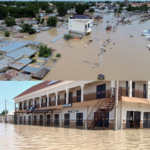
  • We know a lot of things are happening right now but let’s not forget that millions of Nigerians are still suffering the effects of flooding. Although coverage of the issue has reduced, it’s important that we keep in mind that a large part of over 30 Nigerian states are under water. 

    This is not just a case of rains spoiling your plans in October and November because over 612 people have died and millions have lost their homes, means of livelihood and members of their families. 

    The crisis is far from over.    

    [Image Source: Daily Post Nigeria]

    Apart from the direct impact on people, the Nigerian economy has been hit too by the floods, with rice farmlands in Nigeria’s food-basket states being affected, leading to the loss of $20 million. 

    It also affected Nigeria’s daily earnings in global markets, as the Nigeria Liquefied and Natural Gas company (NLNG) called a ‘force Majeure on October 17, 2022, which halted profits that could have come from gas exports.

    Have people gotten help? 

    Although responses were slow in the beginning, some help has started getting to the victims. 

    Here are some of the heavy donors so far: 

    The United States

    The United States provided $ 1 million to flood victims through the US Agency for International Development (USAID). The funds were provided to help local partners and agencies with emergency shelters, relief commodities, and hygiene kits to promote safe and healthy practices, especially with the cholera outbreak that has been widespread across Internally Displaced Persons (IDP) camps. 

    The Red Cross

    The International Federation of the Red Cross/Red Crescent issued a Floods Emergency Appeal of $13 million. This was to provide clean water, emergency shelter, and cash assistance to half a million people in several states. The beneficiaries included severely affected states such as Adamawa, Anambra, Bayelsa, Kebbi, Kaduna, Yobe, and Zamfara. 

    Jordan

    The King of Jordan, Abdullah II bin Al-Hussein Al Hashimi donated useful relief items. These included food packages, clothing, blankets, and sanitary items for flood victims.

    Meghan Markle and Prince Harry 

    The royal couple donated funds for the flood victims in order to provide relief materials. The amount was unspecified. The donation was made to both UNICEF and Save the Children in Nigeria.

    Switzerland

    In response to an emergency appeal by the International Federation of Red Cross and Red Crescent Societies, IFRC, Switzerland donated $756,000. This was to aid the IFRC and Nigerian Red Cross to provide relief support for victims.

    The Knights of St. John

    A Nigerian Catholic group, the Knights of St John International, donated a sum of N8 million to various Catholic dioceses. These were located in Idah, Markurdi, Lokoja, Auchi, Bomadi, and Warri, as well as the archdioceses in Onitsha, and Owerri. 

    The donation is also expected to support the repair of the Catholic Bishops Conference of Nigeria (CBCN) institutions affected by floods.

    Donations from political candidates 

    The All Progressives Congress (APC) presidential candidate, Bola Ahmed Tinubu donated a sum of N100 million to Kano flood victims. This happened during a party held in his honour in October 2022. 50 million naira was also donated to Bayelsa State flood victims by the presidential candidate of the People’s Democratic Party (PDP), Atiku Abubakar. 

    Lastly, Labour Party (LP) presidential candidate, Peter Obi, gave the sum of N5 million to flood victims in Benue. He also gave relief materials which included bread and noodles to Anambra state flood victims.

  • The presidential candidate for the People’s Democratic Party (PDP), Atiku Abubakar, was attacked on November 9, 2022, while on his way to a campaign engagement in Maiduguri, Borno State. Reports say the attack was carried out by some supporters of the All Progressives Congress (APC) who were identified by the party emblems they were carrying.  

    The candidate’s supporters have been attacked before. On October 17, thugs reportedly invaded its rally in Kaduna and beat people up. In the recent Borno attack, 70 people were reportedly injured in the Borno attack, with dozens of vehicles vandalized. 

    It is unclear if Atiku was harmed, but he would probably think twice before setting foot in Borno State again. 

    Also recall that in October 2022, open threats were made by a member of the House of Assembly, Mohammed Gajiram, declaring the need for APC to win all their elections if it means “people being killed and buried in holes.”

    In response to the death threats, a PDP representative in Borno state, Alhaji Zanna Gaddama, has openly appealed to both the Director-General of the Department of State Services (DSS), the National Security Adviser (NSA) and the Inspector General of Police (IG) for help. 

    What does Nigerian law say about death threats?

    In Section 323 of our nation’s Criminal Code Act, there is only a punishment for the threat to kill if the threat is written. As it states, “Any person who, knowing the contents thereof, directly or indirectly causes any person to receive any writing threatening to kill any person is guilty of a felony and is liable to imprisonment for seven years.” 

    However, Gajiram did break Subsection 2 of Section 92 of the Electoral Act of 2022 which states that “abusive, intemperate, slanderous or base language or insinuations or innuendoes designed or likely to provoke violent reaction or emotions shall not be employed or used in political campaigns.”

    Who else has been attacked this election season? 

    Even with the signing of a peace accord by all the presidential candidates, there have been signs of bad faith. This ranges from violence, intolerance, and hate speech.

    Peter Obi

    The Labour Party candidate has received his own share of violence. In September,  gunmen threatened Peter Obi’s supporters in Enugu, while they were holding a meeting in the Awga community. 

    Four unknown gunmen suddenly showed up, shot in the air, and disrupted the meeting.  A day earlier, some members of the party were also attacked in Nenwe of the same state. 

    About a week later, Obi’s supporters were again attacked in Ebonyi state. This time, some members of the Nigeria Police were identified as assailants. In a statement, the Labour Party’s National Publicity Secretary accused APC of using the police to promote violence.

    In October, Obi’s supporters, known as “flag boys” were brutalized in Lagos. The flag boys were accused of carrying Peter Obi’s flags around Oshodi in Lagos. They got beaten by thugs and attempts were made to burn them alive. 

    Senator Ifeanyi Ubah

    In September, Ubah, was ambushed and attacked at Enugwu-Ukwu in Njikoka LGA of Anambra State. Five people were killed during this attack, including some police officers and the senator’s aides. 

    Why should you care about electoral violence?

    As a citizen, electoral violence goes against your right to vote for any candidate of your choice, as stated in the INEC’s Voter Education section. 

    You should also be allowed to attend any rally for any candidate without the fear of being harassed. Start by holding your preferred candidate accountable to the peace accord all parties signed.


  • The Chairman of the Economic and Financial Crimes Commission (EFCC), Abdulrasheed Bawa, has been sentenced to serve time in the most ‘secure’ prison in Nigeria, Kuje Correctional Prison.

    One can only wonder how Bawa is going to survive, as the prison could contain some very angry fraudsters he has arrested.

    Bawa is going to serve time until he returns N40 million and a Range Rover to Air Vice Marshal (AVM) Rufus Adeniyi Ojuawo. Keep in mind that these items have not been returned to Ojuawo since the court demanded him to in 2018.

    What happened with Ojuawo and Bawa?

    To help you understand this, let’s break down the case into three main points:

    • The Crime: Ojuawo was accused of taking N40 million and a Range Rover. The items are valued at N29.25 million from Hima Aboubakar of Societe D’Equipment Internationalaux Nigeria Limited in 2016.
    • The Court Case: Ojuawo was arraigned in 2016 on a two-count charge for both items in a Federal Capital Territory (FCT) high court. The case was filed by the EFCC.
    • The Verdict: The judge rejected the EFCC case in 2018 and acquitted Ojuawo on the grounds that the commission was unable to show that he accepted the gifts. The EFCC was ordered to return the seized property, which Mr. Bawa clearly didn’t follow up on, hence his sentencing

    However, he is not ready to claim the sentence peacefully, as he informed journalists at a press conference that he had appealed the case and would allow “the law” to take its natural course. His ‘buddies’ at the EFCC have backed him up too, as they officially confirmed that the organization would appeal in the chairman’s case. Talk about a friend in need.

    It may be kind of shocking and sad to hear this news as the EFCC under Bawa’s tenure has recorded significant achievements so far. These range from the recovery of N6 trillion from fraudsters and 978 convictions in August 2021 to arresting 87 forex dealers in November 2022.  

    But how righteous is Bawa?

    Surprisingly, the EFCC chair has not always lived under a cloak of righteousness. He was involved in an alleged  ‘cashing out’ from over 244 oil tankers from between N20-N30 million. This happened while he was head of the zonal EFCC office at Port Harcourt in 2019. 

    EFCC officials have also claimed that his actions deprived Nigeria of receiving at least N4.88 billion in loot recovery. That is money that could pay off some of Nigeria’s debts. To put the cherry on the cake, Bawa was called in to lead the Lagos Zonal Office a year later. This was despite his investigation being far from over. 

    He then became the National Chairman in February 2021.

    Why should you care about Bawa or the EFCC?

    For starters, the actions of these two have serious impacts on your ‘soft life’ and your daily N2K.

    A report by PricewaterhouseCoopers (PWC) was written on the impact of corruption on the Nigerian economy. It states that corruption from the government level can lead to a lack of funds. This could lead to poor infrastructure of hospitals, schools, roads, etc. 

    It can also affect your business, as public funds that are meant to be used as capital for your business are now being used for jaiye jaiye by people who are meant to stop corruption. 

    How can you fight corruption?

    You don’t need to be powerless as a citizen in the fight against corruption. Here are some things you can do:

    • Report issues of corruption to the necessary authorities. You can start with your local police. 
    • Post it on social media. Your phone is not only for Instagram photos and Snapchat.
    • Don’t partake in corruption yourself. How can you fight corruption if you’re also corrupt?
  • On November 6, 2022, Benue State Governor, Samuel Ortom, saw his dinner party as a great opportunity to send Atiku Abubakar ‘to hell’. It came as no surprise when Ortom withdrew his support for the presidential candidate of the Peoples Democratic Party (PDP) over his allegiance with the Miyetti Allah, a Fulani cattle-rearing group in the North. 

    Ortom said: “To hell with Atiku and anyone supporting him. They should go and tell him. You want me to be a slave for a Fulani. It’s better I die. Anybody supporting Atiku is an enemy of Benue.”

    Some people have called Ortom out, saying that his outburst of rage was the ‘most embarrassing speech one has heard from a governor’ and ‘a hate speech. 

    In case you were wondering, this is actually hate speech, a commonplace during elections. 

    The Cambridge Dictionary defines hate speech as “public speech that expresses hate or encourages violence towards a person or group based on something such as race, religion, sex, or sexual orientation.” 

    Ortom’s hate speech echoed years of tribal sentiments fuelled by several events you might’ve missed. A single thread can be drawn from the age-long crisis between the Fulani people and the Tiv of Benue State. 

    Let’s catch you up. 

    The Fulani-Tiv Crisis 

    To understand the Tiv (Benue) – Fulani crisis, we need to go back to the basics. Here are a few things you need to know:

    The Tiv and Fulani were once friends during the 19th century, while the Tiv were migrating from the Central African Republic to Cameroon. But, the Tiv decided that they were not ‘feeling the friendship’ anymore due to the Fulani’s “domineering” attitude, and they parted ways.

    There are conflicting stories about how the two groups began to attack and counterattack each other. However, in the 1950s, the Tiv joined the Middle Belt Congress founded by J.S Tarka, simply because they felt the Northern People’s Congress (headed by the Hausas and Fulanis) was “cruel and wanted power all to themselves.”

    Let’s fast forward to 2022 where there is increased violence in Benue State, most of which has been attributed to herdsmen (some of Fulani origin). 

    Just this month, 18 persons were killed, including children, and the state has thousands of Internally Displaced Persons (IDPs) seeking help to feed, clothe and house themselves. 

    There have also been tussles between the state and the Miyetti Allah over anti-grazing laws.  People in the state are mostly farmers and cattle grazing has left their crops destroyed countless times, further impoverishing them.  Attempts to reach compromises on both ends have failed and even led to more violence. 

    Tensions heightened in January 2022 when Ortom insisted that the Federal Government should consider Miyetti Allah Kautal Hore, Miyetti Allah Cattle Breeders Association of Nigeria (MACBAN), and Fulani Nationality Movement (FUNAM) terrorist organizations.

    [Image Source: Peoples Gazette]

    Atiku-Ortom wahala 

    Now that you know more about the Fulani-Tiv crisis, let’s go back to the fight between Atiku and Ortom. 

    It was on October 15, 2022 that the fight really started when Atiku told the Arewa Committee during his presidential campaign that he was angry with Ortom for “profiling Fulani as bandits and terrorists because I am a Fulani.” 

    This was after the Benue Youth Forum (BYF), had awarded him the highest chieftaincy title in Benue, the ‘Zege Mule U’. After his speech, calls were made that the title should be reviewed

    Now that Ortom has consigned Atiku to hell, what is the next gbas gbos that will happen next? We’ll be here to update you. 

  • The Nigerian Voter is a series that seeks to understand the motivations that drive the voting decisions of Nigerians — why they vote, how they pick their candidates, why some have never voted, and their wildest stories around elections.

    The subject of today’s The Nigerian Voter is Safiya, a Muslim lady from Kaduna State in her twenties. She moved to Lagos in 2018 in search of greener pastures. She told us about her past experience voting in the North, and her views on religion and tribalism when it comes to the voting process. 

    What made you come from Kaduna to Lagos?

    I moved here in 2018. The economy is very poor there in Kaduna and farmers are not making ends meet. Here in Lagos, I am making more money than my secondary school teacher and I can employ him, even with my mama put business.

    So that being said, I came to Lagos to get what I want, which is a better life for myself. Kaduna was just too poor and it is not safe with Boko Haram attacks here and there. Most people living in the North are just branching out to different parts of the country. 

    Have you ever voted before?

    Yes, I have. 

    In 2019, I went to Niger State to vote (since that was where I registered), but it was a terrible experience because the INEC chairmen there did not allow one to vote. 

    It’s only the people that settled them with money (bribes) that they allowed to vote. If you don’t settle them well, the vote will not count.

    Have you ever faced any form of harassment during voting?

    Yes oh, very well. 

    I can remember an INEC guy slapping me across the face because I was arguing with someone that jumped the queue. Unknown to me, the person had already bribed this guy with N20,000, which back then, was a lot of money in the North. 

    Even a pregnant woman nearly lost her baby in my presence because she was pushed down with violent force. It was a really tough time.

    Who did you vote for then and why?

    That time, I voted for Buhari, because I was scared that nobody else would win if I voted for them. I know that with these elections, if someone is running for office a second time, it’s that person that will win. 

    So since 2019 was for Buhari’s second tenure, I just voted for him anyway.

    Do you regret voting for Buhari now?

    Ah, well, sometimes I wish I had the courage to vote for someone else. 

    Atiku may not be the best person for Nigeria, but he is better than this Buhari. Anyways, I’m just hoping that 2023 will be different with the right person, insha’allah.

    Who would you vote for in 2023 and why?

    Peter Obi, because we need an educated person that can develop the country financially. People know that supporting businesses will reduce the financial pressure on them as a government, instead of simply encouraging the usual employment by people. 

    Peter Obi has these ideas. And you know Igbos, they’re quite skilled with this business thing. So I know he would create financial freedom for businesses. We would also have our own Nigerian-made stuff instead of importing. I don’t trust men like Tinubu to deliver, and Atiku should go and rest. The man has been running for president ever since I was in primary school. 

    Igbo men are always very successful in business, so I know that if I vote for Obi, he will create ways for businesses to grow. Maybe I can get a restaurant instead of this mama put.

    But would you say religion should be a big part of your criteria for a candidate?

    Look ehn, Nigeria is the way that it is now because we are all voting based on tribe or religion. In 2015, my people voted for Buhari because he is from the North, but look at how that turned out. If I was ever told that my own Northern Muslim brethren could treat us this way, making us become refugees in other parts of the country, I would never have believed it. 

    Election is not about religion or tribalism. We need to vote for the right person. It is religion and tribalism that made us vote for Buhari the first time, and look at where that turned out. I can’t vote for Tinubu because he extorts people, and he doesn’t care. 

    Look at this flooding crisis for instance that happened in Kogi State. Did Tinubu ever go to visit any of those victims? How many days passed before Atiku visited? It was only Obi that had enough sense to go to those places and sympathize with them, and help them. Why would I not vote for that kind of leader? 

    Tinubu said emi l’okan and they’re playing with the presidential seat as some sort of royal seat that is turn by turn. Is it a royal family thing, that you’re saying emi l’okan? Rubbish. This time, we need to all vote and our vote has to count!

    Who are the people you know voting for? 

    It’s still Peter Obi oh, even in the North. 

    I can’t say I know a single person that wants to vote for Atiku or Tinubu. It’s because my own people are all into a business and they’ve seen that Peter Obi is their man. They will go to the polls en-masse in 2023 and cast their vote!