• Two of every three voters during Nigeria’s February 25, 2023, presidential election didn’t want Bola Ahmed Tinubu of the ruling All Progressives Party (APC) to be their president. Yet, the Lagos Jagaban (boss) managed to get 36.6% (8.7 million) of the total votes (24.9 million), to become Nigeria’s president-elect.

    Nigeria 2023 Presidential Election Result. Infographics by Muhammed Akinyemi/BCM.

    It is the smallest win margin of any Nigerian President since 1999. It is also the election with the lowest voter turnout — 29% of 93.4 million registered voters — since Nigeria gained independence.

    Nigeria's voter turnout since 1999. Infographics by Muhammed Akinyemi/Zikoko Citizen.

    While this looks like a decent result from afar, when we zoom in on the massive violence, voter intimidation, harassment, and rigging allegations by opposition parties, one begins to question the legitimacy of the results. 

    Violence was so unbelievably widespread that the House of Representatives majority leader, Ado Doguwa (of the APC), was arrested for allegedly shooting at least three people to death. In North-Central Kogi state, the sitting state governor, Yahaya Bello (of the APC), destroyed five roads leading to the district of an opponent, Natasha Akpoti, claiming he did so to avoid terror attacks.

    But it does not end there.

    INEC: What we ordered vs what we got

    The presidential race saw three other contenders polling at least 1 million votes each: Rabiu Kwankwaso of the New Nigeria Peoples Party (NNPP) got 1.4 million votes, Peter Obi of the Labour Party (LP) got 6.1 million votes,  and Atiku Abubakar of the People’s Democratic Party (PDP) got  6.9 million votes. 

    Atiku was contesting for the sixth time and was no stranger to the process. However, Obi (a third-force candidate who left the PDP months before the election) and Kwankwaso (who lost a presidential primary in 1993) were on the ballot for the first time. 

    All four leading candidates and millions of Nigerians were banking on the promise of the Independent National Electoral Commission (INEC) to organise a free and fair election. 

    The introduction of the Bimodal Voter Accreditation System (BVAS) was supposed to eliminate voter fraud and assist INEC with collating accurate data directly from polling units to the INEC Result Viewing Portal (IReV). But days after the election result had been announced, the IReV portal was yet to host most of the results.

    Image

    Peter Obi’s running mate, Datti Baba-Ahmed, lamented the “widespread technological problems and manipulation of results” at a press conference in Abuja.

    While one could write Datti off as a pained loser, many Nigerians have taken to the IReV portal to collate the numbers as they are uploaded. What is on the portal and what was announced by INEC are at variance.

    Despite getting a ₦305 billion budgetary allocation, INEC did not conduct a convincingly free and fair election.

    INEC cannot blame its failure on the want of time. The BVAS, for instance, has been tested in Anambra (2021), Abuja (2022), and Osun state (2022). 

    Just days before the presidential election, INEC tested its processes again on February 4 across 436 polling units, assuring Nigerians it was ready. Why, then, did BVAS and IReV malfunction mar the electoral process on February 25, 2023? 

    The INEC Chair, Mahmood Yakubu, has questions to answer. And the answers might be in court.

    Legal steps

    Peter Obi and Atiku Abubakar have held press conferences addressing their supporters, opponents, and INEC, ending with a promise to take legal action.

    Obi is notorious for winning post-election litigation, while Abubakar has never won any election petition, although he has a string of successes in other cases, including defeating former president Olusegun Obasanjo. 

    However, one factor stands against both men: no Nigerian President has been sacked from office after INEC declared the winner. And the president-elect seems to be counting on this, as he starts his tour to celebrate with loyalists.

    The Supreme Court’s recent string of cases, which make it seem like it sways in the direction of the ruling party, is also a source of concern. The current Imo State governor, Hope Uzodinma (of APC), sits in office after coming fourth at the polls due to a Supreme court decision which sacked his opponent Emeka Ihedioha (of PDP).

    In a way that Nigerians have not had to do before, there is great attention and expectation that the Supreme court will either validate Tinubu’s victory or reach a conclusion that may lead to recounting an outright announcement of another candidate, or a redo of the voting process.

    The polls might have closed, but the presidential election process is still open.

    With the gubernatorial election days away on March 11, eyes must fall back on INEC. This is an opportunity for INEC to initiate a redemption. Nigerians (locally and abroad) and the international community are all paying attention. 

    INEC has this lifeline left to encourage voter participation. Will it take it?

  • INEC has declared a winner of the 2023 presidential elections amidst multiple rigging allegations and outcries by citizens. This has inevitably led to social conversations on re-awakened japa dreams, even though japa money isn’t as easy to get as money for beans or dodo.

    We spoke to seven Nigerians who’ve either left the country or had the opportunity to but didn’t take it. They shared what they wish they did differently and their advice to younger Nigerians.

    “I planned to retire here, but I might go back”

    — Christiana*, 63

    I moved to the UK in the 70s with my husband and kids because his family is from there. It wasn’t the most popular decision then, and I badly missed Nigeria. It didn’t help that I separated from my husband soon after we left. I became quite successful — and I attribute it to the working system — raised my children alone and regularly sent money home, but I always wanted to return to Nigeria because of how much I missed my country. So when I retired in 2020, I decided to spend my retirement years in my fatherland. I started building a house in Lagos and eventually moved back in October 2022, but I regret it. 

    These past few weeks of cash scarcity have been tough for me. I don’t have a debit card because I put some limitations on my account so they only pay me over the counter. I did this a few years earlier after I got robbed when I visited Nigeria. So, the one time I was able to enter the bank during this period, they gave me ₦5k and asked me not to come back for cash until after ten days. My kids have been pestering me to return to the UK, and I may have to listen to them sooner or later. I’d advise any young person to leave if they have the chance. It’s better to have an option than to be stuck here.

    “I regret not leaving earlier”

    — Wole*, 52

    My wife and I have worked in pretty impressive organisations over the years — even the United Nations — so money wasn’t a problem. We had the opportunity to relocate right after we got married, but I’ve always been an advocate for “Nigeria will be great”. We’ve been married for over 20 years, and Nigeria has only gotten worse during that period.

    Now, we have three children in private universities, and I regret not relocating earlier. It’s now expensive to move everyone at the same time, whereas if we had simply moved after marriage, we’d only have each other to worry about. My wife is still trying to apply to Canada through WES, so we’ll see how it goes. For the younger generation, if you see any opportunity to leave, please, take it.

    “Nigeria is my home”

    — Leke*, 40

    I’ve had the opportunity to leave this country, but I don’t see myself ever leaving Nigeria permanently. Nigeria is my home. My businesses are here, and I can always travel and come back. People think the grass is greener abroad, but do you think it’s easy to succeed there? Especially with the many taxes and regulations. 

    Why don’t we focus all that japa hustle energy on building our country? Let foreigners want to relocate here instead.


    RELATED: 9 Young Nigerians on Why They Haven’t Left Nigeria Already


    “My children will japa on my behalf”

    — Moji*, 43

    I had the opportunity to travel to the UK as a nurse ten years ago, but I didn’t want to leave my children behind. I didn’t trust my husband not to bring another woman into the house who’d maltreat my children.

    I wouldn’t say I regret it now because I’d make the same decision if I could go back in time. My children will japa on my behalf, and I know I won’t suffer, no matter what happens in Nigeria.

    “It’s the best decision I ever made”

    — Goke*, 36

    I relocated to Canada in 2022. I’ve not spent up to six months here, but it’s easily the best decision I’ve ever made. I’m finally in a system that works. I don’t have family members here, but at least, I’m not looking over my shoulder for a policeman or “ungun known man” when I walk the streets.

    For the younger ones, I’ll say if you have to save, do it. If you have to go the educational route, do it. Do whatever it takes to leave that country. Tinubu has finally rigged his way to victory, and I predict it’ll only get worse.

    “I won’t rest till I move my family here”

    — Ify*, 42

    I moved to the US for my PhD in 2015 and became a permanent resident in 2022. I’m glad I got out, and I advise young Nigerians to try the academic route too. Even if you decide to return to Nigeria, at least you know you can leave if things get crazy.

    As for me, I won’t rest till I move my mum and dad here. I don’t know how yet, but I’ll find a way. I can’t let them remain at the mercy of evil leaders.

    “I know Nigeria will be better”

    — Segun*, 35

    I moved to London for my master’s in 2017 but didn’t try to stay back. I believe in Nigeria’s potential, so I chose to come back home and try to be the change I hope to see in this nation. Contrary to popular belief, I know Nigeria will be better with Tinubu at the helm of affairs. He has the experience and prowess, and I eagerly look forward to a new wind of change in this country.


    *Names have been changed for the sake of anonymity.


    NEXT READ: After 20 Years of Catering, She Finally Opened a Food Store in the US

  • Buhari may have promised us free and fair elections, but what we’ve witnessed since the polls started yesterday has been anything but fair. On top of intimidation and violence, while most are done voting, some have not voted at all. Zikoko Citizen got some updates from a polling unit in Rivers state where an election didn’t happen.

    The turnout at the unit was interesting, with some voters getting there early enough

    This happened at a polling unit in Ward 14, Obio/Akpor LGA. People were eager to vote, with some first-time voters getting there as early as 8:30 a.m. to cast their votes.

    https://twitter.com/Lifeofdan_el/status/1629381305229008897?s=20

    But it seemed INEC didn’t get the memo

    Everyone was there but the INEC officials. This happened in many other polling units nationwide, where people had to wait for the INEC officials to show up.

    Two officials later came and said they had no clue there was a polling unit there at all

    Two INEC officials eventually showed up and said they weren’t aware that there was even a polling unit . They said they’ll inform their office and ensure that the assigned agents get there.

    https://twitter.com/Lifeofdan_el/status/1629435556865142786?s=20

    Two hours later…crickets

    Two hours passed, and there was still no sign of INEC or any voting materials at the polling unit. A concerned voter called INEC’s helpline to report the situation at the polling unit and was told they’ll receive the officials soon.

    https://twitter.com/Lifeofdan_el/status/1629457835103862785?s=20

    The materials finally came, but someone forgot to bring the result sheets

    At 3:16 p.m., an INEC official finally showed up, curiously conveyed in a vehicle with PDP agents. But what made things even more suspicious was when the voters were told that all the materials were now available, except that they conveniently forgot to bring the result sheets. The official wanted to leave to get them, but they held him down.

    https://twitter.com/Lifeofdan_el/status/1629499364925231104?s=20

    At 5:16 p.m., election still hadn’t commenced

    Someone called INEC again; this time, they were hostile and dismissive to the caller. The officials on site wanted to start accreditation without the results sheets, but the people said, “No way”.

    After being tired and frustrated the whole day, people left, and no vote was cast at the polling unit

    https://twitter.com/Lifeofdan_el/status/1629524933037510661?s=20

    As it turned out, there were other polling units where voting also didn’t happen

    These polling units had voters, but they didn’t have the votes. There are many polling units where people have been disenfranchised across the country, and INEC needs to cancel whatever results come from these places and carry out a rerun.

    Do you have a similar case in your polling unit? Talk to Zikoko Citizen by joining Citizen Situation Room on Whatsapp. You can also follow the election results live on our portal as INEC is collating them.

  • Nigeria is stressing the homeboys and gyals, and we are not having it. To ask a Nigerian for their average queuing hour in these Buhari times, you have to contextualise the queue; the one for buying PMS/petrol at N350/litre or the one to withdraw their money?

    Everyday guilt pleasures like cookies have become impossible to afford, as necessities like menstrual pads are now becoming out of reach. 

    When you ask who should be held responsible for the financial violence, you’ll get conflicting answers like Aisha Buhari’s brother, Godwin ‘Meffy’ Emefiele, bank managers, or even the everyday Nigerians who have POS businesses.

    Why is petrol so expensive and why can’t we get some? You will have to ask petrol marketers, filling station owners, or perhaps, Rexxie.

    The Nigerian presidency’s tone-deaf approach to handling this crisis shows that we are on our own. Nobody wants to be responsible for Nigeria’s woes, not even President Bubu, who doubles as our petroleum minister.

    [Sahara Reporters]

    To top it all, all this ba la blu hullabaloo is happening just weeks before Nigeria’s election.

    Election era

    Under the Muhammadu Buhari administration, we’ve been in our #EndSARS era, Supreme Court governors era, and eight-month ASUU strike era, and it’s time for our bye-bye to Bubu era.

    Despite young Nigerians making up to 39% of registered voters, the process for collecting their Permanent Voter’s Card has been so scandalous that some people can’t find theirs at INEC offices, even though the portal says it is ready. 

    Many who want to collect theirs are stuck in school and are begging the Nigerian Universities Commission and other bodies to free them for their PVC collection and eventually to vote. Now that the PVC collection era has passed, they can only hope that those who have gotten their PVCs are not forced to be in school, away from their polling units, on election day.

    Why is it difficult for schools to close for one week to allow young voters to participate in the voting process? Are they not the ones that will spend eight years in school if a bad government is elected?

    Likeeee????

    Anybody can collect 

    Nigeria’s bad governance and anyhow behaviour are like sand; they will touch everybody. What this election era is showing us is that nobody is safe and anybody can collect. 

    Politicians like Nasir El-Rufai (Kaduna State gov), Yakubu Dogara (fmr Speaker House of Reps), and Adams Oshiomole are now entering the media to tell us that some party members are plotting against their party’s flagbearer not to win the election. It’s the acting as if it’s not their party that has been clowning Nigeria for the past eight years for me.

    Not Femi Gbajabiamila (current speaker HoR), whose escort killed a newspaper vendor coming out to tell us who to vote for because Nigeria is currently a lawless state. But Mr Lawmaker’s security is shooting shot with innocent lives.

    Please rest

    As if it’s not all of us suffering in this pandemic, some people are now trying to blame gen z for not knowing ministers who have added nothing to them.

    When we live in a nation where you are deprived of basic education on your country’s history, where our principles are guided by who you know and less by what you know, it becomes difficult to blame people for being indifferent.

    The internet, however, provides a space for people to catch up and learn. It’s why you should follow Zikoko Citizen to become a baller on Nigerian politics. You should also subscribe to Zikoko Citizen’s Game of Votes, to get updates on the 2023 elections. But we can’t fix decades of problems in one week’s editorial.

    We continue to implore young Nigerians to vote in the coming elections and decide who they trust enough to lead them. But stop acting like they are the reason you can’t buy petrol in your car. 

    The government has to take responsibility for its failure, and where it can’t, the citizens step in by voting to fix it, as we will do on February 25, 2023, and March 11, 2023.


    This is a Zikoko Citizen Editorial. No part of this publication may be reproduced, distributed or transmitted in any form or by any means without proper attribution to Zikoko Citizen.

  • The Nigerian experience is physical, emotional and sometimes international. No one knows it better than our features on #TheAbroadLife, a series where we detail and explore Nigerian experiences while living abroad.


    This week’s subject on #TheAbroadLife received a trip to London as a birthday gift when she turned ten. Since then, she’s been to 34 countries, from Namibia to Eswatini. At the moment, the US is her home. But will it be her last stop? 

    Where are you now?

    I’m currently living in Washington D.C. in the US.

    What’s your travelling history?

    Interesting question. The first time I travelled was when I was ten years old. It was the first birthday I was celebrating without my brother having a party too. Our birthdays are really close, so we usually had our birthday parties together. When I learned we’d be having separate birthdays, I was really excited about it. I was expecting a party, but my mum came up to me one day and asked if I’d like to go to London for my birthday. I was like, “Of course”. 

    It was my first time out of Nigeria, but only one of many.

    What was the experience like?

    The memory is somewhat faint right now, but I remember going to a toy store with an entire floor dedicated to Harry Potter. My mum wouldn’t let me touch anything because, in her words, Harry Potter was witchcraft. I hated not being allowed to even look, not to talk of buying a book. It sucked more because I really loved books. But the fun part came when I found out that my cousin with whom we were staying had a library card. I could use it to visit the public library and read as many books as I wanted. I also remember being fascinated by the buses and trains, how chill they seemed. Growing up in Lawanson, Lagos, I wasn’t used to that.

    We stayed the whole summer and I came back to Nigeria with enough clothes and “stuff” for me to be hip in school the following week, and it wasn’t until five years later that I was able to leave Nigeria again. This time, to the US.

    Your family must really love travelling

    Yes. Everyone is very well-travelled and it’s actually encouraged to travel as much as we could. The London trip wasn’t something we could afford on a whim, but my mum squeezed out resources, and it was worthwhile.

    Tell me about the trip to the US

    My mum wanted us to have the Disneyland experience, so she planned it out. The park experience was golden. I think I threw up at a point because I had motion sickness sha. But it was a lot more “outside” than the trip to London.

    Where did you go next?

    My mum got a job in Namibia, and because my siblings and I were in boarding school in Nigeria, we had to travel every holiday to see her. We did that for about a year and a half, till I graduated from secondary school.

    After that, I went for an international baccalaureate at a boarding school in Swaziland — now Eswatini — and I was there for about two years.

    Eswatini? What’s it like?

    It’s one of the last two Kingdoms left in Africa, and it opened my eyes to just how diverse Africa really is. The school is quite international, so I was able to meet people from different countries in the same place. I became popular very quickly for being a  “loud” Nigerian, as I was tagged. It’s because everyone else was so chill. The only people who had my energy were the Mozambicans. I’d say they’re the Nigerians of Southern Africa. My stay at the school helped me learn how to identify different African countries based on their accents.

    There was also a sharp contrast between the food in Namibia and Eswatini. Namibia has a lot of wildlife, so they tend to eat a lot of meat, while Eswatini is more lush and green, so their food is heavy on vegetables. After graduating, I went to America for college.

    What did you expect from America, and what did you find?

    I wasn’t expecting anything I hadn’t already seen in some form. But this time was still different. My school was in a small town in Indiana, so it was very Midwestern. I’d been to New York before then, and the contrast is huge. The town was a lot more country-like, and the population was older and much more white. 

    Because it was a small town, there was really no public transportation. Unless you had a car, it was hard to go anywhere far for the things you wanted to enjoy. It wasn’t until much later that this student couple started a delivery service that really saved our lives. A while after, someone opened an Indian restaurant, so things got a bit better.

    I got pretty cooped up very fast, so I started taking any chance I could get to catch a break. I did everything from exchange programmes to internships and volunteering. Eventually, my degree programme ended, and I moved to Washington.

    Why Washington?

    Because of my travel history, I’ve always wanted to work in international policy affairs. So, I got a job in that area, and it required me to move to Washington. Also, my mum had moved to the US by this time. She was staying in Maryland, less than an hour from D.C. by train. 

    Tell me about D.C. 

    Coming here was a breath of fresh air, to say the least. First, it was a lot more culturally diverse for my travelling spirit. There were a lot more black people. In fact, Washington D.C. used to be called “Chocolate City”  back in the 70s by many black people because it had a predominantly African-American population. But the black population is not as high as it used to be because of the high price of houses.

    I have a lot more food options here than I did in Indiana. There’s Thai, Mexican and Indian food, so I no longer need to carry pepper around. I also love that even though it’s metropolitan, it’s not as bustling and crazy as New York. The roads are bigger and cleaner, there’s a lot more greenery, and the people are a bit laid back.

    Tell me more about the people of D.C.

    Washington is a transit city for most people because of its political nature. There are many diplomats or people who work in important government positions here. In fact, you could meet someone who works for the president in a park and have a chat with them without realising who they are. Their stay often changes with the political seasons, though. But for me, D.C. is home now. 

    What’s your favourite thing about the place?

    I’d say the greenery. Maybe it’s just the part of D.C. I live in, but it’s just so beautiful. You need to see it for yourself to appreciate it.

    Will this be your last stop? 

    Even though D.C. really feels like home, I can’t say for sure because that travelling spirit hasn’t left me yet. I’ve been to 34 countries, and I still want to visit many more. I actually have a list to track my travel. I haven’t been anywhere in South America and some parts of Southeast Asia, so they’re definitely in my travel plans.


    Hey there! My name is Sheriff and I’m the writer of Abroad Life. If you’re a Nigerian and you live or have lived abroad, I would love to talk to you about what that experience feels like and feature you on Abroad Life. All you need to do is fill out this short form, and I’ll be in contact.

    Starting next week (January 31st, 2021)
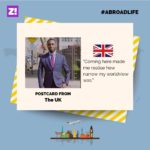
  • The Nigerian experience is physical, emotional and sometimes international. No one knows it better than our features on #TheAbroadLife, a series where we detail and explore Nigerian experiences while living abroad.


    This week’s subject on #TheAbroadLife was a Unilag student who got a fully-sponsored internship in 2022 with an investment bank in the UK. He talks about living in a minor city where he’s often the only black person around, how he’s adjusted to it and why he’s considering a permanent stay in the UK.

    Where are you right now?

    I’m in Nigeria right now, but that’s only because I came back to enjoy my December. But I live in Chester in the UK.

    When did you decide to leave Nigeria?

    I didn’t really decide to leave, but everything was set in motion in my penultimate year in Unilag, when I got a summer internship at an investment bank in the UK. It was a fully-sponsored internship and it prompted my move.

    Goals. How did you get the internship?

    Some global investment banks recruit interns from African countries, as well as other parts of the world. So, it was a typical job application experience. I saw the opening, applied, got invited for a test, a recorded interview followed by a live interview. 

    With these internships, you’re usually applying to a range of divisions within the bank. Divisions like investment banking, capital markets, human resources, technology, etc.

    I started the application late in 2021, and a few months later, I was offered an internship position. It was only meant to be ten weeks long, but my visa allowed me to stay a while longer than that. They initiated the process for me to move and work in their office in Chester, UK.

    That’s sweet. What was the visa application process like?

    The bank uses a travel company called Fragomen to help with the immigration of their employees. They assisted me from the point of getting an offer letter and applying for a work visa to getting my biometric done and my visa approved. I just had to take my documents to TLS, a UK visa application centre in Ikeja, and they mediated everything else from there on out. The process normally takes about six to eight weeks. But due to the war heating up in Ukraine at the time, it took about ten weeks for me to get a decision.

    My visa got approved and the next thing was for me to move. I left Nigeria for the UK in June 2022. The company handled all expenses including my accommodation in the UK.

    What were you expecting when you left for the UK?

    I had an open mind. This was my first time leaving Nigeria at all, so I only knew as much as I’d heard. One thing that struck me about the place is how different Chester is from the more cosmopolitan cities like London. 

    99% of the people are white. I can be sure that when I enter any gathering or location here, I’ll be the only black person. I’m often the only black person on the trains. It makes the experience lonely, but at the same time, eye-opening. The loneliness can be very face-slapping sometimes sha. One time, it got really bad that I decided to try a local dating app, and I couldn’t even find any black person on it.

    Was it the same at your internship?

    Not really. We had way more diversity where I worked. The company hired about 30 Africans, and around 12 of us were in Chester. So, at least I had people I could relate with much better. Of the 12 Africans, one was Nigerian and fluent in French.

    The company itself has a culture of inclusion, and it showed. I met interns who were military veterans. I met someone who could speak up to seven languages. Another has a YouTube channel with over 100k subscribers. Another was a trans person. It just made me realise how much more people could be outside of the straight line of going to school and “reading book”. 

    Also, it made me see how narrow my worldview had been up until then. The experience really widened my psyche, and I’m grateful for it. 

    What’s Chester like?

    It’s an old city built during the Roman empire, so it still has buildings with that ancient feel, places like the Chester Cathedral. It’s a naturally beautiful place, where you can just take a short walk outside and randomly find a spot to take Instagram-worthy pictures. Also, they have the second biggest zoo in all of UK.

    The city is very community-centered. You’ll see families walk their dogs and old people holding hands. They also have a lot of space. Because of that, horse racing is very big in Chester. In fact, it’s almost a weekly festival. You know how families dress their kids up to go to church on Sundays? That’s exactly how entire families dress up to go watch the races on weekends here. It’s so nice to see. Never seen a more laid back group of people before.

    Tell me more about the people

    They’re extremely polite and always want to make small talk, even about things that aren’t exactly their business. They’re also very accommodating. Even though it was a predominantly-white environment, I never felt like I was treated differently. In fact, they always seemed so excited to meet someone who’s new to the place.

    One time, I and a friend — also an intern — were going to a place we’d never been before, and we were talking on the bus, trying to figure out where the right stop was. This woman sitting behind us overheard and politely interfered to tell us where the right stop was. After, she started making small talk about where we were going, and just like that, she became our friend for the rest of the ride.

    Have you had any culture shocks since getting to the UK?

    Ah, yes. Where do I start from? The food! Oh my god. I have to carry pepper with me every time because the food is always bland. And it’s impossible to find African restaurants here. It’s impossible to find Nigerian food unless I cook, which I absolutely don’t like doing. I’ve been to London a few times since I’ve been in Chester, and I always have more food options there. 

    Another thing is the cold. I arrived during the summer, and the weather was 14oC. How in the world is it 14oC during summer? I carried a lot of regular shirts thinking I could make do with them since it was summer. LMAO.

    The accent here is another interesting thing. It sounds like English, and it’s actually English, but you can’t tell for sure when they’re talking to you. Their accent is very similar to Scottish, so it’s different from what you’d hear in places like London. It used to be a struggle when I’m in conversations, but I’m better at understanding it now. 

    Another thing is how much people smoke here. Everyone has a vape pen. I love the people here, but the smoking makes me scared for them sometimes.

    How long was the whole internship experience?

    It was ten weeks long.

    How have you been able to stay so long then?

    After the internship, I applied to extend my stay to get a better feel of the city. On top of that, the company I worked with reviewed my performance and offered me a full-time position. But I had to come back to Nigeria to complete my education first. 

    Now that I’m done, I’m going back to Chester because what am I looking for in Nigeria?

    So you’ll stay in Chester for as long as possible?

    I’d prefer to move to a place with more variety, especially with the food. London would make sense. But I also like Chester, so I can definitely settle here.


    Want more Abroad Life? Check in every Friday at 9 A.M. (WAT) for a new episode. Until then, read every story of the series here.

  • So you’ve decided you’re tired of being a regular citizen and want to go into politics. Read this guide, go forth and prosper.

    Start by being an activist

    Insult politicians 24/7, on every platform you can think of. Make it known that you’d rather chew sand than become one of them.  

    But have exactly zero plans for the country

    What’s your business with the issues the country is facing? You have your own personal issues, so that’s none of your business.

    Once you’re popular, secure an appointment with the same people you’ve been shading

    You can always tell the people you’re trying to change things from the inside this time around. Even though you know the only thing that’ll change is the size of your pocket.

    Prepare your three-letter acronym

    What will people call you? You want something that’s sweet to pronounce and can easily be remembered. So what’s it going to be? GTB? CNN? Just make sure you arrange the letters well, so you don’t end up with ODE.

    Be good with words (or lies)

    It’s not good enough to just tell lies, you need to believe your own lies too. So if anyone wakes you at 2 a.m. to ask a question, you’d give the same devious answer you gave on TV during the day.

    Find a godfather

    You think you can do this thing without a sponsor? Find a godfather and become his apprentice.

    Run for office

    Start with the senate so you can collect enough money to last you forever, in case you don’t win another election.

    Remember to make promises you can’t keep

    If you have transferable skills from your days as a Yoruba demon or Lagos babe, use them here. 

    Hire a music band

    People will insult you anyway, so why not hire a band to sing your praises everywhere you go?

    Steal

    What’s the point of your entire political career if you don’t do this?


    NEXT READ: Nigerians Should Stop Doing These Weird Things for Politicians


  • Nigeria made a resolution to show us pepper last year, and it did. From inflation to Snapchat-filtered naira notes, you’d think it’s done enough. But, what if it has New Year’s resolutions for 2023 too? 

    Be more wicked

    The point is to improve every year. For Nigeria, this means dishing out even more shege.

    Kick Buhari out

    You’d think the eight years of shege Nigeria has seen would make it choose a better leader this time. But Nigeria has really poor taste in leaders, so we’ll just have to wait and see.

    Spend money it doesn’t have

    It’s a new year for Nigeria to live bougie while earning mechanic money. You’re asking Nigeria to live within its means? You must be a clown. Doesn’t matter that its yearly budget can’t survive without borrow-borrow. Nigeria must ball.

    Stop fighting Ghana

    Lowkey, Nigeria knows the rivalry should have ended at Jollof rice. Because why are we arguing with a boring copycat. It doesn’t matter now anyway. They’re both broke, and brokies don’t beef each other. More love, less ego.

    Buy fuel

    This one is a constant. It doesn’t matter that Nigeria has fuel at home. It will still hustle for fuel from other places and pay big money for it.

    Stop taking Burna Boy’s insults

    Maybe Nigeria would finally end this toxic relationship with Nigerian artists and ask them to do better. But we can only hope.

    Win AFCON

    Nigeria already missed the World Cup. Unless it wants to be an olodo by all means, it needs to win AFCON to avoid back-to-back embarrassment.

    Start a reality TV show

    Too much wild stuff happens in Nigeria’s everyday life for it to not be televised. It’s about time. You can tell “Keeping Up With Nigeria” will be an instant hit.


    NEXT READ: 8 Signs You’ve Already Failed Your New Year’s Resolutions


  •  From the story of a Nigerian woman who almost committed suicide because of the UK’s slow healthcare system to that of another man who got served breakfast in the freezing cold of winter, Abroad Life has always given you the best stories from Nigerians living abroad.

    Just in case you missed them, here are some of the most interesting Abroad Life Stories for the year.

    1. “You Don’t Know How Black You Are Until You’re on a Train With Only White People” — Abroad Life

    A career opportunity helped him move to Germany, but he’d made the decision much earlier when his friend got stabbed in the neck and died because the hospital wouldn’t treat her without a police report. He decided he’d had enough and started looking to leave Nigeria.

    What you’d find most interesting in this story is the tax. . I can’t imagine the Nigerian government asking me to surrender that much of my income every month. I will fight.

    2. “England’s Slow Healthcare System Almost Led Me to Suicide” – Abroad Life

    The UK’s healthcare system might be free, but it apparently can be ridiculously slow, according to this woman’s story. The subject of this story felt this the hardest when she couldn’t get urgent medical care for a condition that made her suicidal. 

    The wildest part of the story for me is the fact that medical appointments often have to be made months in advance.

    3. “Sorry, Not Everyone in Jamaica Smokes Weed” — Abroad Life

    This story flies in the face of many stereotypes that exist about Jamaica, but the highlight of the story for me was the fact that Jamaicans actually love Nollywood. This is definitely a must-read for anyone who wants to know what it’s like to live in Jamaica.

    4. “I Tried to Leave Nigeria Three Times, and I Saw Pepper” – Abroad Life

    Many parts of this story felt like a movie. From moving to Italy all alone as a teenager to being deported from another African country as an African, this country had me saying “Omo” so many times.

    5. “The French Have Beef With People Who Speak English” – Abroad Life

    Most of us agree that French is a sexier language than English, but who would have thought that the French people would be snobbish about it? The key takeaway from this story is — Speak English to a French person and you’ll get aired.

    6. “I Was Denied a Job in South Africa Because of My Nigerian Surname” — Abroad Life

    He moved to Johannesburg when he was five years old and has spent over seventeen years there. By many measures, he’s South African. But in real life, he’s still denied a lot of opportunities because his parents are Nigerian.

    7. “North Cyprus Can Be Scary for Nigerians” — Abroad Life

    We once said that you should remove North Cyprus from your Japa plans, and this story tells us exactly why. From unwarranted arrests of new entrants to discriminatory work conditions for immigrants, Cyprus doesn’t really like Nigerians like that.

    8. “I Turn Off My Lights at Night to Pretend I’m in Nigeria” — Abroad Life

    As a Nigerian who’s frequently affected by Nigeria’s electricity issues, I felt this one in my chest. But it’s nice to see how the subject adapts to having access to things that’ll normally stress you here in Nigeria.

    9. “Travelling Made Me Feel Like a Bird Set Free” — Abroad Life

    The subject of this story didn’t like that he couldn’t move around freely in Nigeria. He decided to take matters into his own hands and move to Poland. Since then, he’s been touring all of Europe. 

    10. “The Dating Scene in the UK Is Scary”- Abroad Life

     The subject of this story may avoid dating in the UK because of his experience. He fell into a talking stage with a Nigerian woman and travelled for two hours in the freezing cold to go see her. He got there for the dinner they’d planned, and she said she wasn’t feeling like going anymore. More than the weather, he’s still shaken by her coldness and will be sticking to the streets.

  • We spent the year telling you some of the most interesting stories of Nigerians living abroad and here are the top 10 stories people loved.

    1. “If I Knew What I Know Now, I Wouldn’t Have Come to Canada” — Abroad Life

     There’s often a lot of talk about why you should move abroad, but not much is said about the not-so-colourful sides of it like loneliness, finances, and the often terrible weather. 

    The subject of this story relied on Youtubers for her idea of what it’s like to live in Canada, and she found out the hard way that they left out a lot of things.

    2. “Canada Isn’t All That. Nigeria Is Just Bad” — Abroad Life

     If you thought that being in a place without drinking water and access to the internet for a 10-hour drive could only happen in Nigeria, think again. The subject of this story faced a reality of Canada that was completely different from everything she thought she knew. From job-hunting to the cold and then the racism that still exist, Canada’s PR is in the trenches this year.

    3. “The Dating Scene in the UK Is Scary”- Abroad Life

    The next time Nigerians in the UK tell you the dating scene is wild over there, believe them. The subject of this story was left hanging by a UK babe after travelling across the country to see her. His takeaway from the experience: UK babes don’t really care about you.

    4. “Nigerians, Remove China From Your Japa Plans”- Abroad Life

    The subject of this story grew up watching Chinese movies, and that made her fall in love with the language. 

    She fell so much in love that she decided to move to China for school. When she did, everything she thought about the place changed forever. 

    5. “I’m Scared to Show My Mum Who I’ve Become in Russia”- Abroad Life

    This story is relatable for most people. Moving out of the home for university, then changing so much and so drastically that it’s better to just maintain an image at home. 

    The subject of this story lives a double life every day in Russia. The one he lives in reality, and the one his parents think he lives.

    6. “I Was Treated Like a Criminal in Seychelles”- Abroad Life

    Seychelles is often a favourite holiday destination for Nigerians, but the experience of this story’s subject paints a different picture. He eventually had a fun vacation, but not after being treated like a criminal at the airport.

    7. “Coming Back to Canada Was the Wrong Decision”- Abroad Life

    If you’ve ever wondered why someone would leave the abroad to come back to live in Nigeria, you’ll get your answer in this story. BlWas it a good decision? You’ll find out too.

    8. “Hungary Is a Dead Place, and I’m Not Even Kidding” – Abroad Life

    The highlight of this story is the fact that he doesn’t receive money from home anymore because Nigerian banking system makes his allowance arrive four months late at least. 

    9. “My Husband Missed Our Wedding Because He Couldn’t Leave Canada” — Abroad Life

    My highlight of the story is the fact that she got all she ever wanted in the end, japa included.

    The subject of this story got a visa to the UK within three months after she got tired of waiting for Canada to give her a visa. But on getting there, she found a couple of things she didn’t like, such as having too much electricity and over-politeness.

    10. “My Friends in the UK Make Life Amazing for Me” — Abroad Life

    This Nigerian doctor moved to the UK because he didn’t want to practice medicine in Nigeria. It turned out to be one of the best decisions he’s made, has he’s having the time of his life after reuniting with friends in the UK.