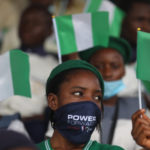
• It’s Children’s Day in Nigeria today, so you’ll likely hear performative speeches from public officials on the value and importance of children to the country. But they’ll not tell you that Nigeria is working overtime to snuff the life out of them.

    Not to be one of those guys, but there’s not much to celebrate. Nigeria has, by multiple standards, become one of the worst places to be a child. If you need proof of this statement, we’ll give you a few:

    The schools are emptied out

    The schools are emptying out, and we don’t mean a handful of schools. Across Nigeria, you can find more children at home and on the streets than in class. The most recent Situation Analysis of Children and Adolescents in Nigeria (SitAn), done by the federal government and the United Nations Children’s Fund (UNICEF) in November 2024, revealed that 10.2 million children of primary school age in  Nigeria are out of school. For context, this means many children aged six to 12 are deprived of basic education.

    It gets worse — many of those who manage to make it through primary school cannot continue. According to the 2024 SitAn, 8.1 million children of secondary school age are not in school. These two figures, put together, amount to 18.3 million, making Nigeria the country with the highest rate of out-of-school children globally.

    These numbers, as high as they are, are mostly concentrated in the Northern part of the country, where insecurity continues to destroy classrooms and the communities. Other factors causing the surge in out-of-school children include multidimensional poverty, worsened by economic reforms, which the government insists are effective, but for some reason, have refused to reflect in the lives of everyday Nigerians.

    Get More Zikoko Goodness in Your Mail

    Subscribe to our newsletters and never miss any of the action

    Children can’t get enough to eat

    Nigerian children didn’t ask for it, but they are certainly number one on the list of God’s strongest soldiers.

     In addition to being deprived of basic education, they are not guaranteed the most basic need of every child—food. The most recent data from UNICEF shows that about 11 million children under the age of five in Nigeria experience severe child food poverty. This means that one in every three children under the age of five in Nigeria doesn’t have enough to eat. 

    The situation is so bad that the country is among the top 20 worldwide that make up  65 per cent of 181 million children suffering severe child food poverty. The culprits of this tragedy are the same ones causing a surge in out-of-school rates: insecurity and poverty.

    It’s raining and it’s pouring for Nigerian children, but if the government is seeing it at all, it certainly acts like it doesn’t.

    [ad][/ad]

    Child marriage is still a thing

    While countries like Sierra Leone have broken free from child marriage by enacting a strong law banning it,  Nigeria continues to put its female children at risk by allowing vague and porous laws that encourage the practice.

    In Nigeria, many girls are still victims of early forced marriage, especially in Northern Nigeria, where 48 per cent of girls are married off by their families as young as 15, while 78 per cent are married off at 18.

    While these figures might make it seem like there is no law against this practice, the Child Rights Act (2003) prohibits this. Still, like a lot of laws in the country, this one is merely treated as a suggestion because child marriage is still openly practised, even by government officials.

    Nigeria’s Child Rights Act seeks to protect children by outlawing the marriage of individuals under the age of 18, and this should ordinarily gain general support. However, only 24 out of the country’s 36 states have domesticated the law, and even then, they are not fully enforcing it. Much worse, some states (in Northern Nigeria) that have domesticated the law have watered it down so much that it has lost its power to protect children.

    There have been a ton of downs for Nigerian children than there have been ups, and we wish we could say it’ll get better, but it doesn’t look like it, at least, not at the rate at which the country is moving. Currently going through what has been described as its “worst economic crisis in a generation,” the setting where Nigerian children must grow up is anything but conducive. This is also worsened by insecurity which gulped ₦6.11 trillion, of the 2025 budget, leaving a miserly ₦5.7 trillion for education, a far cry from the 20% recommended by the United Nations International Children’s Education Fund (UNICEF). It’s good to wish, but we doubt the country’s leadership will change the story of Nigeria’s children unless it is held accountable. This duty is highly up to everyday Nigerians, especially considering that the opposition, which should naturally do that, is being absorbed into the ruling party.

  • Last week, the Presidency announced that Remi Tinubu, the First Lady of Nigeria, had come up with the bright idea of having a national unity fabric worn nationwide to celebrate the country’s independence on October 1. This news has caused quite a stir online so I thought I’d add extra context to help Nigerians understand why this isn’t a bad idea.

    First of all, it’s important to know that Remi has a thing for sustainability and resourcefulness (I know this because she started her own farm to solve Nigeria’s food insecurity problem), so the idea that this fabric was just a show of insensitivity to Nigerian’s plight is not entirely true.

    Now, here are the real reasons why the First Lady came up with this idea:

    Reduce tribalism in Nigeria

    You might think it’s ironic for someone whose husband centered his entire campaign around tribal differences (with slogans like “Yoruba L’okan,” or “It’s Yoruba’s turn” in English) but should the sins of a man be taken out on his wife?

     If the First Lady says she’s trying to unite the country with the national aso-ebi, then allow her.

    Bring back corsets/snatched waists

    The country has not been the same since women started wearing fewer corset dresses. Some Nigerians may argue that this isn’t a matter of national concern but I disagree and the First Lady disagrees too. I want to see snatched waists and a united Nigeria. 

    Promote “wear Nigerian” culture

    It’s okay when X folks use the hashtag #WearNigerian but it’s not okay when the First Lady does the same? Maybe you’re the problem. In case you didn’t know, a Nigerian designer called  Mofinyinfoluwa Bamidele designed the fabric and it’s mass-produced by local manufacturers in Kano and Lagos too. 

    Start a new culture of celebration 

    The last time Nigerians went all out to celebrate Independence Day was probably 1960. Wouldn’t it be a shame to have a Yoruba woman as First Lady and not have a national owambe? 

    Help Nigerian tailors get their bags

    The last time your tailor ate good was during the Eid celebrations. There are at least 200,000 pieces of the unity fabric so imagine how happy tailors across the country must be. Still think it’s a bad idea? 

    Bring back native Friday

    Did you ever stop to ask yourself why Nigerians no longer wear native attires to work on Friday? Well, the First Lady has been asking those questions so you wouldn’t have to. 200,000 pieces of fabric are more than enough to restore this culture. With these few points of mine, I hope I’ve been able to confuse and not convince you that the national owambe is exactly what Nigeria needs to feed its 31.8 million citizens who can no longer afford to eat and address the other 1,001 unresolved problems bothering it right now.

  • The off-cycle election campaign in Edo State is upsetting for several reasons, but top of the list is the open display of Godfatherism. If you are wondering, political godfathers are known or unknown figures who help politicians get into power in exchange for different gains.

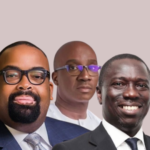
    Of the 17 gubernatorial candidates listed with the Independent Electoral Commission (INEC), three major contenders have emerged: Monday Okpebholo of the All Progressive Congress (APC), Asue Ighodalo of the People’s Democratic Party (PDP), and Olumide Akpata of the Labour Party (LP). If the conduct of the politicians is anything to go by, there are actually only two strong contenders  — former governor of Edo State, Adams Oshiomohle, and current governor Godwin Obaseki. From all indications, it would seem that Obaseki is the PDP candidate’s godfather and Oshiomole is the APC candidate’s godfather.

    Even though both men won’t be on the ballot on Saturday, they’ve been in the news Almost as much as the candidates due to their unofficial role as godfathers.

    “It is no longer strange and surprising that the Edo governorship election scheduled for September 21 has become a battle between former allies, Comrade Adam Oshiomhole, and his successor, Governor Godwin Obaseki,” says a Punch analysis.

    This is worrisome. 

    To get a sense of why this matters, let’s take a look at previous cases of political godfatherism and its dangers in Nigeria’s history. 

    Times Nigerians have been the victims of political godfatherism

    No matter the nature of the agreement between a godfather and his godson, it all comes down to two things: power sharing and resource control. Whatever the case the Nigerian populace always suffers severe consequences.

    Nyesom Wike vs Sim Fubara

    The most recent example was the power struggle between the FCT Minister, Nyesom Wike, and his political godson (and governor of Rivers State), Sim Fubara. Their fight led to talks of impeachments, a “coincidental” burning of the State House of Assembly, the bulldozing of the complex by the governor, and the subsequent allocation of ₦19.6 billion in taxpayers’ money for its reconstruction.

    But others walked so Wike and the new generation of godfathers and godsons could run.

    Rashidi Ladoja vs Lamidi Adedibu

    Former governor of Oyo State (2003-2007), Rashidi Ladoja’s feud with his godfather, Lamidi Adedibu, saw citizens stabbed and shot in the cross-fire, with state properties being destroyed as father and son jostled for control.

    In a later interview, Ladoja told Human Rights Watch (HRW) that the fight began when he refused Adedibu’s order to “turn over 25 percent of the government’s security vote—or roughly ₦15 million ($115,000) per month—directly to him.” 

    This was in addition to Adedibu deciding the commissioners in his cabinet. Ladoja’s godfather booted him out of office for a while, before Ladoja found eventual victory at the Supreme Court, putting Oyo state through a leadership crisis. 

    Chris Ngige vs Chris Uba

    The most fitting illustration of how dangerous godfatherism is to Nigerian politics, economy, and democracy is the feud between the former governor of Anambra State and his godfather, Chris Uba.

    In 2003, Uba bragged about being the first individual to “single-handedly put in position every politician in a state” and also having “the power to remove any of them who do not perform up to my expectations anytime I like,”

    Uba had the former governor sign an agreement binding him to be loyal at all times and allowing him to run the government too. We found archived copies of four of such agreements.

    We found archived copies of agreements between Ngige and his godfather. This image only shows one of them

    Their fight began when Ubah’s demand to “nominate all political appointees, take the largest share of state allocations,” and be paid “the sum of ₦2.5 billion” as the cost of helping Ngige, clashed with the governor’s need to use the state’s money in doing actual work for the people.

    To teach the governor a lesson, Ubah used his thugs (and the police) to kidnap him, then publicly confessed to helping him rig the elections, which ultimately led to the invalidation of his office and his removal by the Court of Appeal.

    Other examples of godfather-godfather relationships gone sour (with citizens caught in the middle) include:

    1.  Akinwumi Ambode of Lagos State vs President Tinubu
    2.  Chimaroke Nnamani of Enugu State vs Jim Nwobodo
    3.  Gboyega Oyetola of Osun State, vs godfather, Rauf Aregbesola.
    4.  Alhaji Mohammed Lawal of Kwara State vs Olu Saraki.  
    5. Mode Ali Sheriff of Borno vs Achalla, and many more.

    Why is the Edo situation triggering?

    If you haven’t made the connection yet, the common factor in every fight between political godfathers and godsons is the money belonging to the citizens. Godfathers always come like the Grim Reaper to collect what they feel is owed them, and their godsons (who happen to be in political offices) end up doing next to nothing for the people.

    Another prime example of this phenomenon is the former governor of Anambra State, Chinwoke Mbadinuju,and his godfather, Emeka Offor. A 2013 study from the International Journal of Research in Arts and Social Sciences says the fight between them “got so pronounced that it crippled the machinery of governance in Anambra State, and the repercussion was a gross deficit of democratic dividends.”

    In the buildup to the elections happening on Saturday, September 21, Obaseki and Oshiomohle of Edo State appeared to have been at each other’s necks, hustling to secure a win for their anointed candidates; are there expected rewards and loyalties? Will they be ‘duly’ paid? What will it cost the people?

    History has proven that sons of political godfathers eventually resist their outrageous demands (which then starts a fight between them); While this is good news for the commonwealth of the people, history has also shown that in a majority of cases, not much gets done while they fight. Some young Nigerians on X have also expressed their fears

    Expressing similar concerns for Edo, Channels TV asked Obaseki’s anointed candidate, PDP’s Asue Ighodalo how he intends to navigate the possibility of a controlling godfather and he said he will be serving the people of the state, not a godfather.

    “Definitely, I will be a man of my own. Truly, I have been a man of my own since I was 18 years old. I was brought up by my parents to make my decisions by myself and I have gone through life having done several things,” he answered.

    Young people stand to lose if godfatherism continues

    We are not going on a limb to say this. In 2023, YIAGA Africa, a nonprofit organisation promoting democratic governance and civic engagement published research naming the “domineering influence of godfathers” as one of the major things keeping young people away from politics.

    The research carried out in the Sokoto State to determine the level of youth political participation says over 72% of young people in the state have never contested for political office and among the reasons listed, there were three pulling the weight:

    Education was on top of the list at 31%, finance at 28% and godfatherism followed at 19%.

    “Of course, godfathers are a threat to youth political participation. I told you earlier that I wanted to contest but was told to wait for my turn,” Umar Aminu, an interviewee told Yiaga.

    “The problem associated with youth participation in politics is being associated with godfatherism because even if you have the money as a youth those elites will not allow you to cross the line of becoming a party candidate for an election,” Naziru Ibrahim, another participant said during a focus group discussion.

    In its conclusion, the study suggests “breaking the stronghold of godfathers of the political space and political parties” through steady reforms of the political ecosystem.

  • Following the flooding that has displaced over 70% of Borno State this week, President Bola Ahmed Tinubu expressed concerns and directed his Vice and Borno’s former governor, Kashim Shettima, to visit the affected state. The President also ordered the National Emergency Management Agency (NEMA) to assist and evacuate the flood victims. Tinubu promised to take care of their well-being.

    Vice President Shettima pledged, while on his emergency visit to Borno, that the federal government will face the flooding challenge with a new solution strategy. He also promised that the government would support them with fifty trucks of rice, although the public has reacted with outrage.

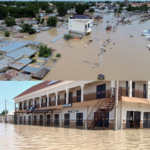
    The flood began last weekend and has lasted over four days, worsened by heavy rainfall, after the Alau Dam overflowed. It was reported that the dam suffered a spillway collapse, causing a heavy surge of water that led to widespread flooding in some parts of the state.

    The flooding has displaced Maiduguri and its surrounding communities, including Chibok, Biu, Konduga, Bama, Dikwa, and Jere, which are reportedly underwater. Strategic areas such as the University of Maiduguri Teaching Hospital, the Shehu of Borno Palace and Monday Market, and the Maiduguri Central Market have also been affected. Although the state has not identified the number of casualties, it has declared public and private schools closed for two weeks.

    Also, an alarm has been raised about more than 200 inmates who escaped from the Maiduguri Correctional Facility after a part of its fence was brought down by the flood. The spokesperson for the Nigerian Correctional Service Borno Command, Bala Adamu, confirmed the jailbreak and stated that they’re “still assessing the number of inmates who escaped.” He also noted that they’ve recaptured only three escapees so far. 

    The state’s zoo isn’t left out. The flood has left about 80% of the animals in Sanda Kyari Zoo lifeless. Residents have reported that the flood has washed up wild animals like crocodiles and snakes in residential areas. In a general statement, the zoo’s general manager, Ali Abatcha, warned residents to take necessary precautions to avoid the wild animals.

    Despite providing an evacuation route for affected residents to follow for safe passage, hundreds of displaced people and families fill the streets of Borno State. The livelihoods of affected residents and business owners have taken a hit. They’re left without businesses to open and cater to. In response to this terrible flood disaster, three Internally Displaced People Camps (IDP Camps) have been opened in the state to take in victims.

    This is a developing story.

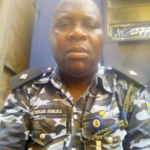
  • The accused, Superintendent Owolabi Akinlolu

    At 4:46 AM, before dawn yesterday morning, a restless X user @AdetheExplorer took to his X account to seek the public’s help for justice for his 17-year-old sister who was raped in Ogudu police station by a police superintendent named Owolabi Akinlolu.

    @AdetheExplorer‘s cry for help came two days after the matter escalated, and their mum, Mrs. Aramide Olupona, stated that the accused’s wife and family members were begging her to let it go because the accused’s retirement is near. The mum also mentioned that the authorities are trying to bury the accusation. The Area Commander invited her to convince her to let it go. The police informed her that the accused’s whereabouts are unknown, although the Lagos State Police Command’s spokesperson, SP Benjamin Hundeyin, said the suspect is in custody.

    According to the victim’s recount, the accused police officer offered to help her track and recover her stolen phone after he overheard her narrating her situation to her mum.

    On June 29, 2024, the teenager’s mum received a call from Officer Owolabi stating that the phone thief had been caught and demanded the teen come to the police station. On her arrival, they told her that they arrested the wrong person due to a mistake in tracking.

    Then Officer Owolabi sent his personal assistant to call the teenager into his office. On getting inside, the officer locked the door and kept the keys in his pocket. Scared and confused, the teenager asked what was happening, and she was threatened with a cocked gun instead. He threatened to shoot her if she didn’t keep quiet and cooperated. He began to pull her clothes and harass her. When she struggled with him, he hit her on the back of the head with his gun—then violated her.

    The accused, Superintendent Owolabi Akinlolu

    Then, the officer demanded that she report to his office daily, during school lunch break or on her way home after school. Then he added that she finally fell into his trap after watching her for two years.

    On June 14, the Lagos State Police Command’s spokesperson, SP Benjamin Hundeyin, tweeted that the police aren’t trying to conceal the case and that a full-scale investigation has started.

    At 7:16 on July 15, the victim’s brother posted on X that the accused superintendent is now in police custody.

    An hour later, Benjamin Hundeyin tweeted that the teenager had undergone a medical examination and that they were waiting for the result.

    What Nigerians are saying

    The public is curious why the name, pictures and crime of the accused police officer, Owolabi Akinlolu, aren’t publicly displayed, as the police force posts other suspects and accused.

    This is a developing story.

  • Academic activities at the University of Benin have been suspended indefinitely following an announcement from the school’s Public Relations Officer, Doctor Benedicta Ehanire.

    Why did this happen?

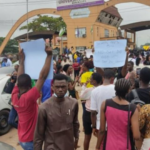
    On July 3, 2024, Uniben students seized the Benin -Ore highway to protest a power outage and lack of water in their hostels and campuses. The university has been struggling with power cuts, thanks to a new  200% increase in its monthly electricity bill — from 80 million to ₦200-280 million. This new energy cost came after the Benin Electricity Distribution Company (BEDC) cut the university’s power supply over a ₦300 million debt, forcing the university to work with power generators.

    The students say they took to the street because light now comes up for only an hour a day, compared to the 20 – 22 hours they usually got. As a result, studying without electricity has become unbearable for them.

    Image source: ChannelsTV

    The university statement, announcing the closure, states that the university’s senate considered the students’ demand for 24-hour electricity and stable water supply in their hostels and the two campuses unrealistic. It instructed all students to leave the school hostels immediately. Academic and non-academic staff on primary duties are unaffected.

    Power outages aren’t limited to Uniben alone. In a report by Punch, rising energy costs are crushing Nigerian universities. 

    “Some of the institutions have been disconnected from the national grid owing to millions of unpaid electricity bills to DISCOS while others who are still connected are currently grappling with huge amounts of debts running into millions of naira.”

    The College of Medicine, University of Lagos, is struggling with its migration to Band A, which has increased energy costs to ₦253 million. The University of Ilorin’s electricity bill jumped from ₦70 million to ₦230 million. Kano Electricity Distribution Company (KEDCO) disconnected the power supply at the Aliko Dangote University of Science and Technology due to a ₦248 million unpaid debt. The University of Jos has an electricity bill debt close to ₦126 million.

    For Uniben, this isn’t the first time it’d shut down over students’ protests. In 2021, the university closed for 24 hours following a protest over a ₦20,000 late registration fee.

    What Nigerians are saying 

    This is a developing story.

  • On the night of December 3, 2023, Nigerian military drones “mistakenly” attacked a village called Tundun Biri in Kaduna State. This horrible incident in which the Nigerian Army bombed civilians isn’t the biggest news in the country right now. But it should be, so we took it upon ourselves to compile everything to know about it.

    An Eid-el-Maulud celebration

    It all started when locals of Tundun Biri village came together to celebrate the birth of the Holy Prophet Muhammad. According to the National Emergency Management Agency (NEMA) North-West Zonal Office, the bombing started around 9 p.m. Observers recounted that the first bomb ended over 30 lives on the spot. As people raced to help the injured and dead, a jet dropped another bomb.

    Image source: X.com

    The death count

    As of December 5, NEMA has the official death count at 85, with 66 injured and receiving treatment at the Barau Dikko Hospital. However, an anonymous officer revealed that the army received at least 126 dead civilian bodies.

    Tinubu speaks

    President Bola Tinubu is currently at the COP28 Climate Summit in Dubai, but he conveyed his condolences through his spokesperson, Ajuri Ngelale, condemning the drone attack. He also called for a thorough investigation into the “bombing mishap”.

    The Nigerian Army’s response

    The General Officer, Commanding 1 Division of the Nigerian Army, Major-General Valentine Okoro, admitted that the attack came from the Nigerian Army. As the commander of the division that caused the mishap, Okoro gave a statement to Samuel Aruwan, Kaduna’s Commissioner of Internal Security and Home Affairs. Apparently, it was an error made while the drone operators were on a routine mission against terrorists. The Army spokesman, Brigadier General Onyema Nwachukwu, said the aerial patrol troops mistook the celebration for terrorist activities. 

    Image source: X.com

    On December 5, the Nigerian Chief of Army Staff (COAS), Lieutenant General Taoreed Lagbaja, visited the village to commiserate with the families of the deceased and apologise to the village. He also promised to cover the hospital bills. But who will answer for the bombing of these innocent people?

    CAN, Amnesty International and other NGOs

    The Kaduna chapter of the Christian Association of Nigeria (CAN), Amnesty International, Arewa Youth Consultative Forum (AYCF), among other non-govermental organisations, have condemned the military’s mishit. The chairman of the CAN Kaduna chapter, Reverend John Hayab, said they’ll continue to pray for the government, while the AYCF National President, Shettima Yerima, charged the government to launch an investigation.

    Not the first bombing mishaps

    In 2023, there have been three bombing mishap cases. The first happened in Niger State on January 24. The second killed over 40 herders in Nasarawa State two days later. According to research, at least 425 Nigerians have perished due to military “error” bombing between 2017 and 2023. 

    The Nigerian Air Force denies involvement

    Although the Nigerian Air Force is behind the first two cases of bombing civilians by mistake this year, it quickly disassociated itself from the Tundun Biri incident. On Monday, December 4, the Nigerian Air Force (NAF) released a statement through its Director of Public Relations and Information, Air Commodore Edward Gabkwet. According to him, NAF had nothing to do with the attack and hadn’t operated in the state or its surroundings in a while. “The NAF is not the only organisation operating combat-armed drones in the Northwestern region of Nigeria.”

    Citizens protest

    On December 7, protesters marched to the National Assembly and demanded the immediate resignation of Badaru Abubakar, the Minister of Defence. In Zaria Local Government Area, Kaduna State, a group of youths took to the streets to protest the brutal bombing.

  • By Civic Hive

    Are you ready to shake up the political scene and hold our new President, Tinubu, accountable? As active citizens, we must understand that information is power, and the government knows this. We get them rattled.

    Our plug at Civic Hive knows how to get the information and proper tools to make a real impact by holding President Tinubu accountable and other elected officials through effective means. You can demand transparency and challenge the status quo by equipping yourself with the tools below.

    Project Tracking: Tracka (www.tracka.ng

    Keep tabs on government projects in your community like a pro with Tracka. Tracka allows you to be a close spectator and become an active citizen by ensuring government promises turn into action. With Tracka, you can hold President Tinubu to his word and ensure your communities receive the services they deserve. You get to track, monitor, and make some noise until you can make real progress!

    Government Budgets: BudgIT (www.budgit.org)

    Budgets? Aha ahah not a problem! BudgIT makes navigating the complex world of government finances a breeze. You get to have a sneak peek into how our hard-earned tax money is allocated and spent. Armed with this knowledge, you’ll be unstoppable in demanding fiscal responsibility and transparency from President Tinubu’s administration. It’s time to put those numbers to work and make them work for us!

    Read Also: You Aren’t Doing Citizenship Right if You’re Not Doing This 

    Access to Legislative Information: Shine Your Eye (www.shineyoureye.org

    No more being left in the dark when it comes to legislative matters! Shine Your Eye is a secret weapon stay informed about what our representatives are up to. Bills, motions, and decisions—we’ll be in the know. You get to hold President Tinubu and our elected officials accountable by engaging with them directly. It’s time to shine ya eye on our democracy!

    Know Your Constituency Projects: BudgIT (me.budgit.org)

    Say hello to me.budgit.org, and you get an all-access pass to the federal, state, and local governments’ allocations and spending. BudgIT dives into the nitty-gritty of those constituency projects to ensure they’re executed as promised. You can login to @me.yourbudgit.com to create your account. President Tinubu won’t know what hit him until we’re armed with facts and ready to demand accountability. It’s time to take charge and make everyone’s voices heard.

    Civic Innovation: Civic Hive (www.civichive.org)

    At Civic Hive, innovation is their middle name, and civic engagement is their playground. With their vibrant social incubation hub in Lagos, you get to meet young minds like yours who are in governance and create solutions to Nigeria’s social problems. 

    Wherever you find yourself, continue brainstorming, collaborating, and accelerating ideas for positive change in Nigeria. 

    And with the tools we’ve shared in this article, President Tinubu won’t know what hit him when our youthful energy meets civic innovation!

    Don’t be shy if you loved this story or have any comments to help improve our reporting. Let us know through this form.

  • He has a thing for rigging elections

    After winning the Rivers State governorship elections in 2015, he was served a petition that contested its validity. A tribunal was set up, and it was reported that the INEC awarded him votes that were five times higher than the number of registered voters in the state at the time.

    Long story short, he kept evading the tribunals until the court had to paste their processes on the walls of his house, since he wouldn’t show up. On October 24th, 2015, the election was annulled and the court ordered a rerun.

    But he managed to stay on as governor

    He fought the case all the way to the supreme court, where he was able to have the verdict overturned in January 2016. This allowed him to stay on as governor.

    His re-election bid was rife with violence

    As if this election fraud wasn’t enough, the election that ushered him in for a second term was suspended for days due to electoral violence. It eventually happened, and he won by an insane margin of 500,000 votes.

    He declared free tuition in Rivers state’s public primary and secondary schools

    After finding out that public school administrators collected the fees for personal use, he declared that primary and secondary education would be free within the state. This included fees for exams like NECO and WAEC, which would all be taken care of by the state.

    He did a lot more to improve education in Rivers state

    His administration invested billions of naira in the school system. He revamped school structures and built new ones across the 23 local government areas within the state.

    But it fell short of expectations

    In spite of the effort put into improving education within the state, lack of teachers and poor teaching infrastructure led to the abandonment of many of these schools.

    He ordered the demolition of a hotel during the COVID-19 pandemic

    While certain governors denied the existence of COVID-19, Wike took extreme measures to contain it. One of these measures was ordering the demolition of two hotels that’d disobeyed the lockdown order and stayed open for business. Governor Wike got wind of this and ordered the demolition and establishment of a school on the land.

    He and his band gave us many hit songs

    It’s safe to say Governor Wike is the biggest hitmaker without a Headies award in Nigeria — he doesn’t need one because he’s bigger than the award anyway. He and his band have given us incredible live shows, and even though they were either singing his praises or mocking his enemies, we remain grateful for their artistry.

    @zikokomag_

    There’s no party like a Wike band party 💃🕺. #citizen #zikoko #zikokocitizen #wike #fy #fyp

    ♬ original sound – Zikoko

    Best in flyovers

    We mentioned how Governor Yahaya Bello deserves an award for being the best in construction. But he doesn’t come close to Governor Wike, who constructed three flyovers in sixteen months. It makes you wonder what he’s doing right, because other governors spend years doing the same thing.

    He signed a law allowing women to inherit properties

    It might be surprising to hear, but there are places in Nigeria where a woman is still not allowed to inherit properties from her family. This extremely discriminatory custom has left a lot of women and families in poverty when the wealth of their parents or spouses are torn up among other members of the family. In 2022, Governor Wike signed a law against it within Rivers state.

    But he handles the state like a dictatorship

    If this wasn’t already obvious from the unwarranted demolition of a hotel building, he once asked his aide to arrest two people for making noise while he was giving a speech.

    He de-recognised a former governor of the state

    In 2007, Rotimi Amaechi won the primary elections to become PDP’s governorship candidate in Rivers state. But it was awarded to Celestine Omeiha instead, who eventually went on to win the general elections. Rotimi Amaechi fought this in court and Omeiha was removed as governor, as he never should have contested in the first place.

    In October 2022, Governor Wike signed a legal instrument into law that de-recognised Omeiha as ever being a governor in the state. The man takes no prisoners when he doesn’t like you. That one’s for sure.

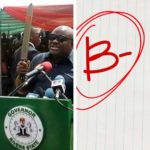
    Overall Grade: B-

    In spite of his huge focus on infrastructure and education within the state, his administration is rife with high-handedness that borders on tyrannical, and is notorious for electoral sneakiness.


    NEXT READ: What’s in Governor Sanwo-Olu’s Four-Year Report Card?


  • For eight wild years, Governor Yahaya Bello ruled over Kogi State in ways that were either crazy, unpopular or downright distasteful. From owing salaries to denying the presence of COVID-19, here’s what his report card looks like.

    Year One

    He spent ₦260 million on security votes

    In 2016, barely a week after he was elected governor, he approved a total of ₦260 million for himself as security votes. His reason was that Kogi state had way too many criminals, and he needed to protect himself.

    But ₦148 million of that money was for renovating his office

    Of all that money he approved for security votes, ₦148 million was used to renovate the state house he lives in. It’s safe to say he wasn’t just securing himself but also securing the bag.

    Then he decided to “clean up” the state’s civil service

    He used to be a civil servant. So when he was appointed (not elected) to office, he decided to clean up the civil service after seeing how messy it was.

    Year Two

    But owed salaries for months in the process

    As part of his plan to clean up the civil service even better, he thought the best way to do this was to stop the payment of salaries until everyone in the state’s civil service could successfully pass a screening system to ensure they deserved their job.

    The result: He ended up owing salaries for as long as 39 months, and a lot of people were plunged into poverty.

    But he fished out thousands of ghost workers

    To his credit, the scheme was effective in fishing out some ghost workers, but at what cost?

    He reduced the incidence of kidnappings in Kogi state

    Before the wave of insecurity that swept Nigeria over the past few years, Kogi State was already an unsafe place. People would regularly get kidnapped on highways and travel was unsafe. When he assumed office, he helped bolster the security forces within the state and the kidnappings were reduced.

    Result: The kidnappings did reduce, but there was a surge again in 2021 when banditry became an issue in Nigeria.

    Year Three

    He upgraded primary healthcare facilities in the state

    In 2018, he established 21 model primary healthcare centres in the state, to help increase access to healthcare. In fact, in his first four years, he constructed, upgraded, or renovated 400 primary healthcare centres within the state.

    The result: Kogi State emerged as the best-performing state in the World Bank’s ANRiN project, a priority healthcare project that’s focused on increasing access to nutrition services for pregnant and lactating women, adolescent girls, and children.

    Year Four

    He refused to pay civil servant salaries even after receiving bailout funds

    In October 2019, the federal government released salary bailout funds to the states that had salary backlogs and Kogi State was one of them. But the problem is, these funds weren’t paid out. This didn’t come to light until a year later when the EFCC found ₦20 billion of salary bailout funds sitting in a fixed deposit account.

    Then he denied the money and threaten to sue the EFCC

    After the EFCC found the money and tied it back to the Kogi State government, they returned it to the CBN. Governor Yahaya Bello then said the whole scandal was cooked up to damage his reputation and he had nothing to do with the money. He even threatened to sue the EFCC but that never happened.

    Year Five

    He denied the existence of COVID-19

    At first, he claimed that the virus was artificial and even refused to wear a face mask during public appearances. He also proclaimed that Kogi State was COVID-free, and did his best to suppress testing by the NCDC on so many occasions.

    The Result: Five cases of COVID-19 were reported and he simply dismissed them as being manufactured by the NCDC.

    He rejected ₦1.1 billion COVID-19 in support funds from the World Bank

    In October 2020, he said that he rejected a sum of ₦1.1 billion in COVID-19 support funds from the World Bank because in his words, “COVID-19 is nothing but glorified malaria.” It’s almost as if the millions of deaths across the world meant nothing to him.

    Year Six

    He spent ₦90 million on COVID-tracking software

    After denying the existence of COVID in his state and rejecting money from the World Bank, he went on to spend ₦90 million on COVID risk-assessment software. It turned out that the software only cost ₦300,000 to build.

    Then he became a fake professor

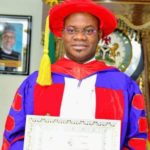
    In April 2021, Governor Yahaya Bello claimed that he received an honorary professorship in  “Humanitarian Services, Human Resource Management, and Peace Building” from St. Thomas-a-Becket University in London. He flaunted the professorship in his typical influencer style. It later turned out that the course does not exist, and that the school he claimed to have received it from doesn’t offer any UK-recognized degrees. It wasn’t even registered as a university, to begin with.

    Year Seven

    He “asked” the president to declare a state of emergency in Kogi State

    In anticipation of the floods that were already predicted to happen, he asked the president to declare his state a “National Disaster Zone”. What this was supposed to achieve, we’re not quite sure.

    But he also did some things to help flood victims within the state

    In September 2022, the floods hit all the states that were along the River Niger. Kogi State was one of the worst affected states with around 10,000 people rendered homeless by the floods. However, Governor Yahaya Bello created ten Internally Displaced Persons (IDP) camps for those rendered homeless, and also donated relief items to them.

    Year Eight

    He destroyed roads leading to his opponent’s hometown

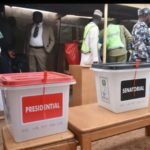
    In a bid to disenfranchise voters and prevent INEC from reaching the place, Governor Yahaya Bello destroyed some of the major roads leading to the hometown of PDP’s senatorial candidate, Natasha Akpoti. 

    The result: People fixed these roads so they could vote, but his party won the election by 369 votes.

    Other Highlights

    Best in road construction

    When he’s not destroying roads for political, he sure knows how to construct them. In his first five years in office, he constructed 500km of roads within Kogi State

    Overall grade: C-

    Governor Yahaya Bello’s eight-year reign has been very self-contradictory. He built primary health centres but still denied COVID. He approved questionable sums of money but went to great lengths to fight corruption in the civil service. It’s giving the same level of unseriousness as a secondary school student who’s not really sure why they’re in school.