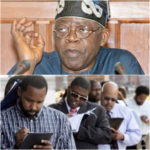
• The scary and unfortunate reality of life in Nigeria right now is that kidnapping is big business. It’s become a billion-naira industry, and under Tinubu, the business has boomed a great deal. But it’s Nigerians who are paying the price of the seeming normalisation of kidnapping.

    Maximising shareholder value

    According to security research consultancy SBM Intelligence, the numbers have been tracking upward in a manner that would make any shareholders jump for joy.

    • Between July 2021 and June 2022: 3,420 people abducted; ₦653.7 million paid in ransom.
    • Between July 2022 and June 2023: 3,620 people abducted, ₦302 million paid in ransom.
    • Tinubu gets sworn in as president in May 2023.
    • Between July 2023 and June 2024: 7,568 people abducted (more than twice the previous year); ₦1.048 billion paid in ransom (kidnapping becomes a billion-naira business).
    • Between July 2024 and June 2025: 4,722 people abducted; and ₦2.56 billion paid in ransom (that’s a 144% year-on-year growth).

    Locking in for the last quarter

    There’s a real human cost to the growth of this violent industry, and we’ve really seen it play out in the last quarter of 2025. In the second half of November, we witnessed a devastating week of violence and kidnapping that we will not forget any time soon:

    Sadly, the kidnappings have not stopped. In fact, as the year comes to a close, they appear to be ramping up. But in a news cycle that feels like it’s moving at 200 miles per hour, these kidnappings can get lost in the constant noise. So here’s a list (that is by no means comprehensive) of some of the recent incidents you might have missed.

    13 Women kidnapped in Mussa, Askira/Uba Local Government Area of Borno

    On Saturday, November 22, 2025, 13 young women were kidnapped in Mussa, Askira/Uba Local Government Area of Borno state. The kidnappers let one of them go after she told them she had a newborn that still needed breastfeeding.

    The remaining 12 were released a week later on November 29. According to Abubakar Mazhinyi, the president of the local Askira-Uba council, it was the parents of the victims who went into the bush to speak with the kidnappers and secure their release. But Mazhinyi claims that no ransom was paid because the kidnappers realised the army was in pursuit.

    ₦300 million ransom demand in Isapa, Kwara state

    On Tuesday, November 25, 11 villagers were kidnapped from the Isapa community in Kwara state. The kidnappers demanded ₦300 million as ransom.

    They gave the community a deadline of December 10 to pay the ransom and refused the ₦5 million offer the community members offered. There have been no further updates and it’s unknown if the victims are even still alive.

    The Red Wedding of Sokoto

    On the night of Saturday, November 29, armed attackers abducted 13 women and a child in the village of Chacho in Wurno LGA, Sokoto State. A bride and ten of her bridesmaids were among those abducted.

    Two days after the abduction, the kidnappers contacted the bride’s family, demanding to speak with the traditional ruler of the community. He refused to speak with them, and the kidnappers have declined to negotiate with anyone else. There have been no further updates since.

    Snatching royalty in Ifelodun LGA, Kwara

    On November 29, Kamilu Salami, the Ojibara of Bayagan-Ile community in Ifelodun Local Government Area of Kwara State, was kidnapped. The community has accused security agencies of not doing enough to rescue him, which has left the people feeling afraid and uncertain.

    Cherubim and Seraphim Church in Kogi

    On Sunday, November 30, a newly established Cherubim and Seraphim Church in central Kogi was attacked. About 20 people were taken by the attackers, including the pastor and his wife. The attackers are demanding ₦200 million.

    Attack on ECWA Church in Kogi

    During the morning Sunday service on December 14, armed men attacked Evangelical Church Winning All (ECWA) in the Ayetoro Kiri area of Kogi state. They took over 30 worshippers away. The kidnappers contacted the community on December 16 to demand a ransom of ₦600 million.

    It’s someone’s job to stop this, right?

    We have security agencies whose job it is to stop this kidnapping epidemic, and those agencies all answer to one person: the Grand Commander of the Order of the Federal Republic (GCFR). In other words, President Tinubu.

    So what has Tinubu and his administration been doing about all of this?

    Get More Zikoko Goodness in Your Mail

    Subscribe to our newsletters and never miss any of the action

    Officially, there is fire on the mountain 

    As we’ve already made very clear at this point, things are not looking good. It’s been looking bad for a while. But the widespread coverage of the incidents between November 15 and 22 seemed to help our dear president realise what everyone could already see: there is fire on the mountain.

    They say whenever you wake up, is your own morning. Tinubu’s morning apparently came  on November 26 when he declared a “nationwide security emergency.” He announced a number of steps to address the situation.

    • The police are to recruit an additional 20,000 officers.
    • Police training facilities are to be upgraded, and they can also use National Youth Service Corps (NYSC) camps as training depots.
    • Police officers serving as security for VIPs are to be withdrawn and deployed to security-challenged areas of the country.
    • The DSS are to recruit more forest guards and deploy those who have already been trained as such.
    • The Federal Government will support state governments that have set up security outfits at the state level.
    • The National Assembly is to begin reviewing our laws to allow states that need state police forces to establish them.
    • Mosques and churches in vulnerable areas can request police protection during gatherings.

    Who’s worth protecting?

    The withdrawal of police security from VIPs has probably been the most talked-about item on that list of emergency responses.

    Members of the National Assembly have complained about the withdrawal of their police orderlies, especially when they can see the directive is being selectively enforced.

    On Tuesday, December 9, Senator Abdul Ningi raised a point of order to complain about the withdrawal of his police orderly. He called out the selective enforcement of the directive, claiming he had seen certain groups retain their own police protections while senators were being stripped of theirs.

    Ningi said, “It should be done across the board. Let us see what happens from the office of the President to the Vice President, the Senate President, the Speaker of the House, ministers, governors, business concerns, and even the sons and daughters of political office holders.”

    Added to Ningi’s comments, Nobel Laureate, Wole Soyinka, recently criticised Tinubu’s son, Seyi Tinubu, for moving with a security team large enough to “take over a small country.”

    Honestly, we see the good intentions behind the directive. But it makes no sense for elected lawmakers to be stripped of protection while the President’s son goes about with a small army.

    The karate instructor as Defence Minister

    I’ve never been president before, so maybe I just don’t know what I’m talking about. But I think that when you have to declare a nationwide emergency because kidnappers are carrying hundreds of school children away at a go, it’s a sign someone at the Ministry of Defence is slacking.

    But I guess Tinubu sees it differently because he didn’t sack the Minister of Defence, Badaru Abubakar. Instead, Abubakar resigned on Monday, December 1, 2025, citing health issues.

    Still, it offered an opportunity for Tinubu to bring in fresh blood, fresh eyes and fresh impetus. So what did he do? He appointed the immediate past Chief of Defence Staff, retired General Christopher Musa.

    It feels too much like Tinubu rewarding another ally with an appointment, just like he’s doing by nominating names like Femi Fani-Kayode, Reno Omokri, and former INEC chairman, Mahmood Yakubu, for ambassadorial positions.

    While he was still Chief of Defence Staff, General Musa advised Nigerians to learn martial arts like karate to protect themselves from bandits and kidnappers; the same ones the security agencies claim have “sophisticated weapons.” Forgive me if I’m struggling to be excited that he’s been appointed Minister of Defence.

    When asked how these karate skills would protect against bullets, Musa said Nigerians should “avoid where bullets are flying.” I’m still wondering whether the schoolgirls in Kebbi and Niger should have avoided their school in order not to be kidnapped.

    Well, from the actions the government is taking, it appears the answer to that is yes.

    The “holiday” no one asked for

    Between Wednesday, November 19, 2025 and Saturday, November 22, several states announced full or partial closure of schools or boarding houses:

    • Kwara State
    • Plateau State
    • Katsina State
    • Taraba State
    • Yobe State
    • Niger State

    On a federal level, the Ministry of Education has shut down 41 of the 104 federal government colleges. By November 26, when the nationwide emergency was announced, 20,468 schools across seven states had been closed indefinitely.

    You have to catch them first 

    One of Tinubu’s security emergency directives was for the National Assembly to work on laws to establish state police forces. But the Senate has decided that what needs immediate attention is increasing the punishment for kidnapping.

    The Senate is working on amending the Terrorism (Prevention and Prohibition) Act to classify kidnapping as an act of terrorism. If the amendment bill gets passed, it will make it possible to sentence offenders to life imprisonment.

    This implies our lawmakers think that kidnappers are not afraid enough of the current punishment. But I’ll argue that these kidnappers are not afraid of being caught. They are boldly posting videos on TikTok. That’s not the behaviour of people who think they are about to be arrested anytime soon.

    So while the Senate’s amendment is good in theory, does it really achieve anything if the kidnappers are never caught in the first place?

    “I will look for you, but I will not find you”

    So how’s the hunt for these kidnappers going?

    Liam Neeson’s character in the Taken franchise might have had a very particular set of skills, but it seems all the Nigerian government has is a particular set of excuses.

    Despite the fact that we have bandits and kidnappers posting like content creators on social media, the federal government claims it cannot track them. The explanations for this failure vary depending on which official you ask.

    Special Adviser to the President on Policy Communication, Daniel Bwala, says it’s because they use the Starlink satellite network, and that makes it impossible for the Nigerian government to track them.

    The Minister of Communications and Digital Economy, Bosun Tijani, says they bounce calls over multiple cell towers using special technology.

    Yet somehow, according to presidential spokesperson, Bayo Onanuga, security agencies were able to secure the release of the 38 worshippers from Eruku by tracking the kidnappers in real time.

    And though they could track this group of kidnappers, the security agencies did not pursue and arrest them after they released the worshippers. Apart from the crime of kidnapping, they killed two people in their attack on the church, yet they are allowed to continue roaming free.

    This is Nigeria

    We can’t deny that the government is making moves to address the insecurity in Nigeria. It’s just so sad to see the same nepotism, corruption, incompetence and all-around anyhowness that have come to define life in Nigeria show up in each of these moves. One can see them in:

    • The directive to withdraw police security to fight insecurity is being selectively enforced.
    • The new defence minister is the old Chief of Army Staff under whom kidnapping became a billion-naira industry. As though that’s not bad enough, his solution is for Nigerians to learn karate and avoid bullets.
    • We’re passing laws to increase punishments when we can’t even track and arrest the criminals.
    • We cannot track kidnappers because they use Starlink and bounce their calls, except when the case is high enough in profile, then suddenly we can track them in real-time.

    The bottom line

    It is hard to decide what’s scarier: the fact that kidnapping has become a billion-naira industry with a growth rate to rival tech unicorns, or that the people paid to stop it think “avoiding bullets” is valid advice.

    While the “shareholders” of the abduction industry continue to see record-breaking returns, it’s ordinary Nigerians who pay the dividends in trauma, ransom, and lives. We are watching schools close, churches and homes turn into crime scenes, and roads become no-go zones. 

    Meanwhile, the government plays musical chairs with security appointments and suggests we karate-chop our way out of a national crisis.

    Unless this government fixes up or gets replaced by an actually useful one, the only “booming” business will be the snatching and trading of people.


    Before you go, help us understand how you and other young people feel about the 2027 general elections by taking this 10-minute survey.


    If you or anyone you know have been affected by the epidemic of kidnapping or any of Nigeria’s many problems, share your story with us here. We’d love to hear from you!


    [ad]

  • On May 22, 2025, President Bola Ahmed Tinubu addressed an APC national policy summit, where he accepted the endorsement of various party organs, including the Progressive Governors’ Forum (PGF) and National Working Committee (NWC), as their sole presidential candidate for the 2027 elections.

    But, in true Tinubu fashion, he had to make another addition to his growing list of unconventional quotes.

    During the address, he said: “You don’t commit abortion after the baby is born; that’s murder.”

    The statement makes very little sense in the context of his speech. The president was explaining the wisdom of ending fuel subsidy payments when he blurted out the unexpected line about abortion. He claimed the continuation of subsidy payments threatened the future of unborn generations. Only the president seems to know how this connects to abortion.

    As has become the norm with Tinubu’s remarks, social media content creators jumped on it, and it has made its way into hilarious lists alongside his other strange and confusing statements, such as “A dead fish cannot be sweet in any soup; they are dead.”

    For those of us who prefer the fish in our soup to be dead and properly cooked, the quote stands out as more than just another strange, confusing fusion of words to be included in humorous compilations.

    It brings to mind how religious and cultural conservatives in Nigeria often describe abortion, typically equating it with murder. Rather than trying to decipher what the president meant, it’s worthwhile to reflect on Nigeria’s hostile stance toward women’s sexual health rights.

    Being a woman in Nigeria is tough business. They have long been fighting to be treated as if their lives have greater meaning beyond being vehicles for childbirth. But Nigerian culture is stubborn and slow to change.

    In 2025, we are still having spirited debates online about whose life should be prioritised between mother and foetus in cases of medical complications.

    But the banger boys of X have a lot more in common with Nigeria’s religious and cultural conservatives than you might think. It is the same obsession to prevent female autonomy over their own lives and bodies that seems to fuel both.

    ALSO READ: 4 Nigerian Women On How Nigeria’s Abortion Laws Have Affected Them

    Enter religion and morality

    Religion and morality tend to shape debates around women’s autonomy. It is no different in the case of Nigeria’s abortion laws.

    Religious bodies have lobbied to keep Nigeria’s abortion laws unchanged since 1960, despite constant efforts from women’s rights groups to push for reform. In 1981, for instance, the Society of Gynaecologists and Obstetricians of Nigeria (SOGON) attempted to lobby for a Termination of Pregnancy Bill but were opposed by religious leaders and the Nigerian National Council of Women’s Societies, who argued that it would promote sexual promiscuity.

    In 2001, the Catholic Women Organisation (CWO) marched against a law that would legalise abortion, which they called murder. Several religious organisations spoke up against the law, including the Christian Association of Nigeria (CAN), and Alhaji Yusuf Yusuff, a chief Muslim imam in Lagos, said anyone who aborts a child should be punished the same as a murderer.

    However, Nigeria’s official stance on abortion is hypocritical. A 2024 study in Osun State found that, among women with unwanted pregnancies, 53.5% of those with anti-abortion religious beliefs still attempted to terminate their pregnancies. By contrast, 59.6% of women with pro-abortion religious beliefs also tried to end their pregnancies, suggesting that faith plays little, if any, part in the decision to seek an abortion.

    Get More Zikoko Goodness in Your Mail

    Subscribe to our newsletters and never miss any of the action

    Nigeria’s abortion stance = pennywise and pound foolish 

    Nigeria’s restrictive laws have never stopped or reduced abortions. In 2015, Guttmacher Institute, a US-based research and policy organisation, reported that around 25% of pregnancies in Nigeria are unplanned—due to poor sexual education and limited access to contraception—and 56% of these unintended pregnancies end in abortion. These laws only serve to endanger women’s health, driving them to untrained practitioners or harmful pills. According to the African Human Rights Law Journal, about 63% of abortions in Nigeria take place in unsafe conditions and account for 10% of the country’s maternal deaths.

    Even the Nigerian military has been accused of forcing abortions as part of its fight against terrorism. A Reuters report claims that, between 2013 and 2022, the military forcibly terminated at least 10,000 pregnancies resulting from rapes by Islamist militants in the country’s north-eastern region.

    The government vehemently denies these accusations, and the Nigerian National Human Rights Commission (NHRC) says its investigation found no evidence of forced abortions by the military. The Commission claimed that the military’s structure would make such acts difficult and instead accused Doctors Without Borders of performing abortions in the north-eastern region.

    Is it time for a review?

    Nigeria currently has the worst maternal mortality rate in the world. In 2023, Nigeria accounted for 29% of all maternal deaths worldwide, with an estimated 75,000 women losing their lives.

    With this being the situation at hand, is it not vital that women be allowed to make such a life-threatening decision as childbirth for themselves, instead of being forced into it by the arm of the state?

    Women’s rights groups and “pro-choice” advocates make their case with facts and figures. They call attention to the grim reality on the ground—there is a crisis of women dying while seeking back-door abortions. They dispel fear-mongering with the fact that abortions are one of the safest medical procedures when performed by qualified doctors in proper medical settings.

    They clamour for the upholding of women’s right to dignity through autonomy to exercise sexual health rights, but are met with opposition on the grounds of morality, equating their freedom with murder.

    Abortion is an incredibly sensitive issue in Nigeria, and for the women it affects, it is often a matter of life and death. That is why it is so jarring to hear it invoked so casually by the man who holds the highest office in the land, especially in a speech that had nothing to do with reproductive rights. It is strange, but sadly not surprising, given how such moments have become normalized under Tinubu’s presidency.

    His words are puzzling, especially in the context in which they were said. Still, they offer a chance to ask a vital question: How long will the Nigerian woman have to wait before the law reflects an obvious truth—her choice over her own body is not murder?

    ALSO READ: I Had an Abortion All by Myself at 16

    [ad]

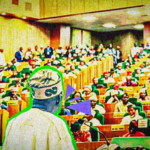
  • Reworked photo of Tinubu addressing the National Assembly. Credit: Aderemi Adesida BCM

    You know that confident, unbothered way you move when you know there’s nothing standing in your way? That’s exactly how Bola Tinubu has been operating. For the average person, that might be admirable, but for the president of a democratic country, it’s unsettling — and we have the National Assembly to blame for it.

    What’s happening?

    On Tuesday, March 18, President Bola Ahmed Tinubu made a national broadcast declaring a six-month-long state of emergency in the South-South state of Rivers. As part of this sweeping action, he also suspended the state’s governor, Sim Fubara, his deputy, Ngozi Odu, and the entire Rivers’ House of Assembly. Finishing off with a flourish, he appointed Vice Admiral Ibot-ette Ibas (rtd) as the state’s military administrator. 

    According to Tinubu, the move was necessary due to political unrest in the state. He cited Section 305 of the 1999 Constitution, which allows a president to declare a state of emergency in cases of national danger, disaster, or threats to public order and safety.

    But here’s the thing— the Nigerian constitution does empower a sitting president to make such declarations, but it also clearly outlines the conditions under which the powers can be exercised. These include war, major security threats, breakdown of public order and safety, natural disasters, the inability of the government to function properly, or a direct request from a governor — none of which apply to the situation in Rivers. And even if they did, Section 305 doesn’t give the president the authority to suspend elected officials like the governor or his deputy.

    Unsurprisingly, the backlash against this was swift. Political stakeholders, legal experts and organisations condemned the president’s glaring disregard of the Constitution. The Nigerian Bar Association (NBA) called it an “unconstitutional usurpation of power and a fundamental breach of Nigeria’s federal structure.” Femi Falana, a Senior Advocate of Nigeria (SAN), reminded Tinubu that “the office of an elected governor can only become vacant upon death, ill health, resignation, or impeachment. Even where the office of the Governor becomes vacant for any reason whatsoever, the Deputy Governor shall be sworn in as the Governor.”

    Tinubu looks on as the newly appointed Rivers’ military administrator takes oath. Credit: National Record

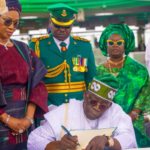
    If the president heard any of these criticisms, he sure didn’t act like it. Barely 24 hours after his declaration, on Wednesday, March 19, he swore in Vice Admiral Ibot-ette Ibas as Rivers’ state military administrator.

    The Nigerian constitution also requires that the president publish such a proclamation in the official government gazette and obtain the National Assembly’s approval via a two-thirds majority.  But on Thursday, March 20, instead of doing their job and rejecting this blatant overreach, both chambers of the National Assembly approved it

    Why are we dragging Nigeria’s parliament?

    Photo images of Nigeria’s Senate President and House of Reps Speaker Photo: Channels Television

    In most democracies, the legislature exists to keep the executive arm of government in check. But Nigeria’s National Assembly seems to have left that group chat and deleted the app. If you think this is the first time they’ve rolled over for Tinubu, then you’re in for a ride.

    The assembly has gotten so cosy with the president, that they have been deservedly tagged  a ‘rubber stamp’ assembly — yes-men who agree to anything the President says, no matter how ridiculous. And they’re not even subtle about it.

    Take November 2024, for example. After months of delay, Tinubu finally presented the 2025 budget —  ₦49 trillion, a whopping 36.8% increase from the previous year. But it wasn’t just its size that had Nigerians bothered; it was also the plan for financing it. According to Tinubu’s minister of finance, Wale Edun, ₦35 trillion would be gotten through revenue, while the remaining ₦13 trillion (4% of the country’s GDP) would come from borrowing. Financial experts and anyone with half a brain raised eyebrows and voices over the negative impact this would have on the country’s sorry public borrowing tab, already at  ₦134.3 trillion at the time.

    So, what did the National Assembly do? Grill him? Ask hard questions? Nope. On December 18 2024, when Tinubu entered the Senate chamber, Senate President Godswill Akpabio immediately broke into a pro-Tinubu song, ‘On your mandate we shall stand,’ even before the man got the chance to begin his presentation. By the next day, December 19, the budget had passed the first and second readings at the Senate and was on its way to the committee stage.

    And it doesn’t stop there.

    Tinubu and Akpabio pose for a photo. Credit: Vanguard

    In October 2024, Tinubu proposed changing Nigeria’s national anthem. Within a week, his besties in the National Assembly passed it, sparking outrage across the country. Political analyst Afolabi Adekaiyaoja told Financial Times, “The lack of public engagement also doesn’t show a legislature able to provide necessary checks on the executive — which doesn’t encourage citizens [that there is] effective accountability.”

    [ad]

    In March 2024, the National Assembly gave Usain Bolt a run for his money when they approved a whopping ₦1.2 trillion FCT budget just three legislative days after Tinubu submitted it. 

    In November 2024, they outdid themselves again, approving Tinubu’s $2.2 billion loan request barely 48 hours after he made it.

    In October 2023, Tinubu nominated 10 Resident Electoral Commissioners (RECs), four of whom  were his loyalists (including two card carrying members of the APC). Despite public outcry, the National Assembly confirmed them without hesitation..

    Why does this National Assembly hardly oppose the President?

    Tinubu speaks with the leaders of the National Assembly. Credit: Daily Trust

    If you think Tinubu simply lucked out with this assembly, think again. The president was very intentional about setting up a National Assembly that would cause him little to no stress.

    He played a central role in installing the leadership of both chambers — openly backing and working for the successful emergence of Godswill Akpabio as Senate President and Abbas Tajudeen as Speaker of the House.

    Tinubu was so public with his support that others openly talked about it as well. In May 2023, while National Assembly members prepared to select the leaders of both chambers, Tinubu’s current Chief Of Staff, Femi Gbajabiamila and Godswill Akpabio (before becoming  Senate President) held a meeting with members of the House of Representatives where they warned them against opposing Tinubu’s anointed candidates. Akpabio was quoted as saying “…In your daily dealings, my late mother told me that I should be aware of the 3Gs: The first G is God; the second G is Gun, and the third G is Government.

    “The first G is God Almighty. The second G is what? Gun, and the third one is Government. May you conduct yourself mindful of the admonition of my late mother by respecting the 3Gs, particularly the government,” he said.

    Tinubu likes to be thorough, so he didn’t stop at securing leadership spots for Akpabio and Tajudeen; he reportedly did the same hard work for Barau Jibrin and Ben Kalu, who emerged as deputy senate president and deputy speaker.

    The minority leaders — Kingsley Chinda (an ally of Nyesom Wike) and Abba Moro (announced by Akpabio) — weren’t left out. Neither were the chief whips of both chambers.

    But capturing the leadership of the Senate and House of Representatives wasn’t enough. Tinubu, through his loyal allies — Gbajabiamila, Akpabio, and Wike — ensured that the entire National Assembly would fall in line throughout his presidency. First, they formed a multi-party coalition within the Assembly. Then, they instilled the fear of God in lawmakers. Finally, Tinubu sealed the deal by dazzling them with a ₦70 billion “gift.”

    In July 2023, Tinubu submitted a bill to the National Assembly seeking to increase the 2022 supplementary budget originally signed by the previous Assembly. ₦185 billion was slated for the Ministry of Works and Housing for flood recovery, ₦19.2 billion to the Ministry of Agriculture to assist farmers affected by the flooding, ₦35 billion to the National Judicial Council, and ₦10 billion to Federal Capital Territory (FCT) projects. But most notably, ₦70 billion was earmarked for the National Assembly to “support the working conditions of new members.”

    Despite widespread criticism of both the ₦35 billion judiciary allocation and the ₦70 billion Assembly “support,” lawmakers from both majority and minority parties rushed to approve and amend the budget without hesitation.

    And just like that, Tinubu secured the most devoted fan club a president could hope for. From rubber-stamping his controversial proposals to singing his praises on the floor, this National Assembly has gone all in. The recent approval of his outrageous emergency rule? That might just be the tip of the iceberg.

    Why this is dangerous

    The Nigerian government is fashioned to run under the doctrine of the separation of powers.  The entire idea behind this doctrine is to ensure that the three arms of government (the judiciary, legislature, and executive) are independent of each other and that the powers of each arm do not conflict with the others.

    In order to ensure that the separation of powers is maintained, Nigeria also practices the principle of checks and balances. This is essentially a method designed to keep each branch of government in line. How does this principle work? By arming each branch of government with enough constitutional power to defend itself in the event that any arm tries to cross the lines drawn between them.

    Tinubu’s bromance with the National Assembly blurs these lines and renders them useless so that instead of watching his steps and his actions to be careful of overstepping his bounds, Tinubu confidently does whatever he likes, knowing his buddies would always have his back, even if he  single-handedly suspends a democratically elected governor, something only the legislative arm of government (specifically the State House of Assembly) can do. Today, the President suspended the governor of Rivers State; tomorrow, it could be in multiple states. Who will keep him in check then?

    [newsletter]

    How can you help to fix this mess?

    Nigerians might just have to step in if the National Assembly cannot call the President to order. Here are some of the ways you can help prevent Nigeria from descending into even bigger messes in the future:

    • Call your representatives in the National Assembly and tell them how you want them to vote on issues. You can find the lawmaker representing your constituency here.
    • Recall your lawmaker if you are convinced they are not performing. Here are the steps for recalling Senators and House of Rep members. If you have questions about this process, you can find your answers here.
    • Name and shame lawmakers who support illegality.
    • Speak up on social media using hashtags.
    • Start digital campaigns demanding that the National Assembly shut down laws unfavourable to Nigerians or decisions that disregard the constitution. Petitions are easy to create, and you can create one on platforms like this.
    [ad]
    
    
  • On the evening of Tuesday, March 18, Nigeria’s President, Bola Ahmed Tinubu, had everyone shook when he declared a state of emergency in Rivers State during a nationwide broadcast.

    The declaration also included the instant suspension of the state governor, Sim Fubara, his deputy, Ngozi Odu, and the state assembly for six months.

    Tinubu said that his decision became necessary following the political unrest in the state, which, according to him, has led to the destruction of several pipelines by militants.

    To take charge of the state’s administration while the governor and the assembly serve their suspension, the President appointed Vice Admiral Ibokette Ibas (rtd) as the military administrator.

    Immediately after Tinubu’s declaration, military trucks moved into the Rivers State government house. Daily Trust also reported that the governor’s whereabouts could not be ascertained suggesting it was likely he found out about the suspension beforehand.

    Hours later, however, the governor’s official statement on the matter was made available to journalists by the state’s Commissioner for Information and Communication, Joe Johnson. Read the full text of the governor’s message below.

    My dear Rivers People,

    I address you today with a deep sense of responsibility and calm, as we navigate this unfortunate moment in our state’s political history.

    Since assuming office as your Governor, all my actions and decisions have been guided by my constitutional oath of office and a great sense of duty.

    We prioritized the protection of lives and property and ensured the continuous progress of our dear State.

    Even in the face of the political impasse, we have remained committed to constitutional order and the rule of law, putting the interest of our people above all else.

    This was why, immediately after Mr. President’s intervention to broker peace, we did not hesitate to implement the agreed terms in good faith, including welcoming back commissioners who had previously resigned on their own volition.

    Furthermore, we moved swiftly to comply with the Supreme Court’s judgement immediately we received the certified true copy of the judgement to return the state to normalcy.

    These steps were taken not for personal gains but to foster peace, unity and stability in our dear State.

    Unfortunately, at every turn, members of the Rivers State House of Assembly frustrated our efforts, thus making genuine peace and progress difficult.

    Our priorities remained the security of lives and property and advancing the well-being and prosperity of Rivers people.

    Yes, we have political disagreements, but good governance had continued, salaries have been paid, and great projects were being executed to move the State forward. Above all, Rivers State is safe, secure and peaceful under our watch.

    At this critical time, I urge all Rivers people to remain peaceful and law-abiding. We will engage with all relevant institutions to ensure that our democracy remains strong and that Rivers State continues to thrive.

    We have always been a resilient people, and we will face this situation with wisdom, patience, and unwavering faith in the democratic process.

    God bless Rivers State. God bless the Federal Republic of Nigeria.

     Sir Siminalayi Fubara, GSSRS

    [ad]
  • On September 25, 2024, Tinubu hinted that he’d be dropping some ministers from his cabinet and appointing new ones, aka cabinet reshuffling. He really wanted to keep it in wraps because even his Special Adviser on Information and Strategy, Bayo Onanuga, did not know when the changes were to take place.

    Maintaining the mystery he started with, Tinubu unexpectedly made the announcement on the evening of October 23, 2024, through a statement signed by Onanuga. As part of the President’s cabinet reshuffle, he sacked five ministers (and nominated seven new ones). Here are the sacked ministers and their replacements.

    Minister of Women Affairs

    Name: Uju Kennedy-Ohanenye

    To be replaced by: Imaan Sulaiman-Ibrahim.

    Minister of Youth Development

    Name: Dr. Jamila Bio Ibrahim

    To be replaced by: Ayodele Olawande

    Minister of State for Housing and Urban Development

    Name: Abdullahi Muhammad Gwarzo

    To be replaced by: Rt. Hon. Yusuf Abdullahi Ata

    Minister of Education

    Name: Tahir Mamman

    To be replaced by: Morufu Olatunji Alausa

    Minister of Tourism

    Name: Lola Ade-John

    Seeing as the Ministry of Culture has been merged with the Ministry of Arts and Culture to become the Ministry of Arts, Culture, Tourism, and the Creative Economy, Lola Ade-John’s position will be assimilated by the current Minister of the Creative Economy, Hannatu Musawa.

  • On Monday, October 21, the Federal Government flagged off its construction project for 40 Judges’ quarters in Katampe, Abuja. This project has different meanings but it depends on who you’re asking.

    If you ask the Chief Justice of Nigeria (CJN), Justice Kudirat Kekere-Ekun, these houses are important because “Judicial officers require peace of mind, security, and comfort in their residences to fully dedicate themselves to the rigorous task of interpreting and applying the law.”

    If you were speaking to the FCT Minister, Nyesom Wike, he’d tell you that the construction of a Judges’ quarters by FG is important because “With that, it will be difficult for anybody to manipulate or interfere with their duties.” 

    Who approved the construction of the houses?

    The Federal government approved this project and directed the FCT to oversee its execution- this decision was announced in September 2024 after a Federal Executive Council (FEC) meeting headed by President Bola Tinubu.

    What was the reason behind the approval?

    Back in September when the project was approved, Wike said the President came up with it because the President held the judiciary in high esteem and didn’t think their living conditions were safe or convenient. In Wike’s words, “he [Tinubu] finds it difficult how judges and Justices will be living in rented houses and hotels, that is not safe for our judicial officials, not convenient for them to do their work.”

    What are the details of the project?

    Following the flag-off ceremony on Monday, the construction of the houses has officially begun and will be completed in less than 15 months. Once it’s done, Ten of the houses will be allocated to the Federal High Court, ten will be given to the Court of Appeal and the remaining 20 will be allocated to the FCT High Court.

    According to Wike, 70% of the money needed for the execution of the housing project had already been made available since September.

    Why are people kicking against this move?

    Back in September when the project was initially approved, some Nigerians took to their X accounts to express their concerns that a project of this kind might actually make judges impartial to the Tinubu administration.

    After the flag off ceremony on Monday, October 21, the Human Rights Writers Association of Nigeria (HURIWA) released a statement saying the move to build houses for the judges was “an act of corruption.”

    HURIWA feels strongly that FG’s housing project for judges is an indirect way of influencing their judgments and also taking away their independence, which is an essential part of their duties.

    They said, “The independence of the judiciary is not merely a desirable attribute, but an essential characteristic of a democratic system of government, for it enables the judiciary to perform its constitutional role of protecting individual rights and ensuring that the other branches of government act within the limits of their constitutional authority.” 

    Should you be concerned?

    Depends on how you look at it however, considering Nigeria’s history of determining election results in court and the Judiciary’s history of corruption, questioning FG’s move to give them houses is not out of place.

  • Last week, the Presidency announced that Remi Tinubu, the First Lady of Nigeria, had come up with the bright idea of having a national unity fabric worn nationwide to celebrate the country’s independence on October 1. This news has caused quite a stir online so I thought I’d add extra context to help Nigerians understand why this isn’t a bad idea.

    First of all, it’s important to know that Remi has a thing for sustainability and resourcefulness (I know this because she started her own farm to solve Nigeria’s food insecurity problem), so the idea that this fabric was just a show of insensitivity to Nigerian’s plight is not entirely true.

    Now, here are the real reasons why the First Lady came up with this idea:

    Reduce tribalism in Nigeria

    You might think it’s ironic for someone whose husband centered his entire campaign around tribal differences (with slogans like “Yoruba L’okan,” or “It’s Yoruba’s turn” in English) but should the sins of a man be taken out on his wife?

     If the First Lady says she’s trying to unite the country with the national aso-ebi, then allow her.

    Bring back corsets/snatched waists

    The country has not been the same since women started wearing fewer corset dresses. Some Nigerians may argue that this isn’t a matter of national concern but I disagree and the First Lady disagrees too. I want to see snatched waists and a united Nigeria. 

    Promote “wear Nigerian” culture

    It’s okay when X folks use the hashtag #WearNigerian but it’s not okay when the First Lady does the same? Maybe you’re the problem. In case you didn’t know, a Nigerian designer called  Mofinyinfoluwa Bamidele designed the fabric and it’s mass-produced by local manufacturers in Kano and Lagos too. 

    Start a new culture of celebration 

    The last time Nigerians went all out to celebrate Independence Day was probably 1960. Wouldn’t it be a shame to have a Yoruba woman as First Lady and not have a national owambe? 

    Help Nigerian tailors get their bags

    The last time your tailor ate good was during the Eid celebrations. There are at least 200,000 pieces of the unity fabric so imagine how happy tailors across the country must be. Still think it’s a bad idea? 

    Bring back native Friday

    Did you ever stop to ask yourself why Nigerians no longer wear native attires to work on Friday? Well, the First Lady has been asking those questions so you wouldn’t have to. 200,000 pieces of fabric are more than enough to restore this culture. With these few points of mine, I hope I’ve been able to confuse and not convince you that the national owambe is exactly what Nigeria needs to feed its 31.8 million citizens who can no longer afford to eat and address the other 1,001 unresolved problems bothering it right now.

  • We’re back to the basics with the new national anthem of Nigeria. On May 29, 2024, President Bola Ahmed Tinubu signed a law officially replacing “Arise, O Compatriots” with “Nigeria, We Hail Thee.” This marks the end of the anthem that had been in place since 1978, as Nigeria reverts to its first-ever national anthem after independence.

    So, why was the Nigerian national anthem changed? And how do both anthems compare? Here’s everything you need to know about the new national anthem, its lyrics, history, and the controversy surrounding it.

    Nigeria We Hail Thee – Full Lyrics of Nigeria’s New National Anthem

    Stanza I (1)

    Nigeria, we hail thee,

    Our own dear native land,

    Though tribe and tongue may differ,

    In brotherhood, we stand,

    Nigerians all, and proud to serve

    Our sovereign Motherland.

    Stanza II (2)

    Our flag shall be a symbol

    That truth and justice reign,

    In peace or battle honoured,

    And this we count as gain,

    To hand on to our children

    A banner without stain.

    Stanza III (3)

    O God of all creation,

    Grant this our one request,

    Help us to build a nation

    Where no man is oppressed,

    And so with peace and plenty

    Nigeria may be blessed.


    ALSO READ: The Complete Guide to 36 States and Their Slogans in Nigeria


    Listen to Nigeria’s New National Anthem

    Want to learn the lyrics and melody? Listen to the new national anthem here:

    Why did Nigeria change its National Anthem?

    On May 29, 2024, Nigerians woke up to the news that the Nigerian government had replaced the national anthem — but not with an entirely new composition. Instead, the country reverted to its first national anthem, “Nigeria, We Hail Thee,” which was originally used from 1960 to 1978.

    The lyrics of Nigeria’s first national anthem, “Nigeria, We Hail Thee,” were written by Lilian Jean Williams, a British woman, while the music was composed by another British national, Frances Benda.

    But what prompted this decision? According to the government, the new (old) anthem “promotes national unity” and evokes stronger emotional connections with Nigerians.

    However, it’s worth noting that the replaced anthem — “Arise, O Compatriots” — was composed entirely by Nigerians:

    • Lyrics by: John A. Ilechukwu, Eme Etim Akpan, Babatunde A. Ogunnaike, O Sota Omoigui, and P. O. Aderibigbe.
    • Music by: The Nigerian Police Band, directed by B. E. Odiasse.

    How Nigerians are Reacting to the New National Anthem

    The decision to change the anthem has sparked mixed reactions on social media, with many Nigerians questioning its impact on national unity.

    For some, switching back to an old anthem written by British nationals does little to address Nigeria’s actual challenges. In contrast, others focused on how quickly the bill was passed — within just one week, in fact.

    Here’s how it happened:

    • May 23: The House of Representatives debated and passed the bill.
    • May 27: The Senate approved it.
    • May 28: President Tinubu signed it into law.

    Since then, Nigerians have continued to voiced their opinions on platforms like X (formerly Twitter):

    Who Wrote the New National Anthem?

    Since Nigeria has officially reverted to “Nigeria, We Hail Thee,” it’s worth learning about its creators.

    Lilian Jean Williams (Lyricist)

    Lilian Jean Williams was a British expatriate working in Nigeria’s Federal Ministry of Labour and Welfare before independence.

    In 1959, the National Planning Committee for Independence launched a competition to select a national anthem for Nigeria’s independence in 1960, which drew entries from different countries such as Belguim, South Africa, the United Kingdom, and the United States of America. Williams entered the competition and won £100 for her lyrics, which she later donated to the Nigerian Red Cross.

    Frances Benda (Composer)

    After finalising the lyrics, another global competition was held to compose the anthem’s music. A total of 3,693 entries were submitted.

    The winning composition came from Frances Benda, a British woman who turned out to be Mrs. Charles Kernot, a private music teacher and professional pianist from the Carol Hill School of Classical Ballet, London. She won £1,000 for her work.

    New vs. Old: How Do the National Anthems Compare?

    To properly understand the change, let’s look at the replaced anthem:

    Old National Anthem: ‘Arise, O Compatriots’ (1978–2024)

    Stanza I (1)

    Arise, O compatriots,

    Nigeria’s call obey

    To serve our fatherland

    With love and strength and faith

    The labour of our heroes past,

    Shall never be in vain

    To serve with heart and might,

    One nation bound in freedom, peace, and unity.

    Stanza II (2)

    O God of creation,

    Direct our noble cause

    Guide thou our leaders right

    Help our youth the truth to know

    In love and honesty to grow

    And living just and true

    Great lofty heights attain

    To build a nation where peace and justice shall reign.

    Key Differences Between ‘Nigeria, We Hail Thee’ and ‘Arise, O Compatriots’

    1. Tone & Message

    • “Nigeria, We Hail Thee” focuses on nation-building, unity, and pride.
    • “Arise, O Compatriots” is a call to action, urging Nigerians to actively serve their country.

    2. Patriotism vs. Optimism

    • “Arise, O Compatriots” emphasises patriotism and duty, reminding Nigerians to honour past heroes.
    • “Nigeria, We Hail Thee” takes a softer, optimistic tone, highlighting Nigeria’s potential.

    3. Motherland vs. Fatherland

    • “Nigeria, We Hail Thee” refers to Nigeria as a “Motherland.”
    • “Arise, O Compatriots” refers to Nigeria as a “Fatherland.”

    4. Composers & Writers

    • “Nigeria, We Hail Thee” was written and composed by British nationals.
    • Arise, O Compatriots” was entirely written and composed by Nigerians.

    Frequently Asked Questions about Nigeria’s National Anthem

    Q: How many national anthems does Nigeria have?
    A: Nigeria has had two official national anthems since its independence in 1960. The first was “Nigeria, We Hail Thee” (1960–1978), and the second was “Arise, O Compatriots” (1978–2024). In 2024, the country reverted to the first anthem.

    Q: What is the first national anthem of Nigeria?
    A: The first national anthem of Nigeria is “Nigeria, We Hail Thee.” It was adopted at independence in 1960 and used until 1978.

    Q: What is the full version of Nigeria’s national anthem?
    A: The full version of the current national anthem is “Nigeria, We Hail Thee” with three stanzas.


    ALSO READ: Alté Songs That Could Replace Our National Anthem

  • It seems Jagaban has pressed pause on waxing lyrical since he became the president. And we understand, Nigeria isn’t an easy country to govern — the work choke.

    However, who can “forget the aspire to maguire” quotes that trailed the president’s campaign season? Our president was in his Socrates bag, and he had the best ones for real.

    We decided to compile some of President Tinubu’s most iconic quotes.

    No matter how short you are, you get out, you will see the sky

    You will get what is coming for you. 

    To start chaos is easy

    This quote is self-explanatory. Never start what you cannot finish.

    A town hall different from Balablu

    In this life, just try to avoid hullabaloo. 

    Is it for eba? Is it for garri? Is it for beans and dodo?

    Use this quote when sugar daddy is not giving sugar. Also to be used during a candid tete-a-tete with your creator.

    [ad]

    Enjoy your weekend

    Because problem no dey finish.

    Let the poor breathe, don’t suffocate them

    Poor people are already going through a lot, don’t make life any more difficult for them. 

    God bless PDAPC

    This quote means it’s OK to pray for your enemies. The real problem is if you get the prayer point right. 

    A common screwdriver can create a path to fortune

    Don’t go around underestimating people or opportunities. 

    A dead fish cannot be sweet in any soup

    If it didn’t dey, it didn’t dey.

    A creative mind is a fertile land for growth

    This quote is the opposite of “Lazy hands is the devil’s workshop”

    We can be squeaky like old mama’s car, but we will never break apart

    Simply put: Bobo no go die, unless to ba darugbo (until he gets old).

  • On Tuesday, October 31, Nigerians woke up to the news that President Bola Tinubu is seeking the approval of a supplementary budget of ₦2.17 trillion, which bumps up the 2023 appropriation bill President Buhari’s government signed.

    Key Takeaways from President Tinubu’s ₦2.1 Trillion Supplementary Budget

    This comes weeks after he proposed a total of ₦26 trillion for the 2024 budget. 

    Tinubu’s request has sparked reactions from Nigerians who have criticised the expenses despite the current economic hardship in the country.

    Some of the key spends in the additional budget:

    • ₦1.5 billion on vehicles for the office of the first lady
    • ₦2.9 billion on SUVs for the presidential villa
    • ₦2.9 billion to replace operational vehicles for the presidency
    • ₦4 billion on renovation of the president’s residential quarters
    • ₦2.5 billion on renovation of the vice president’s residence
    • ₦28 billion for the state house
    • ₦12.5 billion on the presidential air fleet
    • ₦476 billion for national defense and security
    • ₦210 billion for the payment of wage awards
    Key Takeaways from President Tinubu’s ₦2.1 Trillion Supplementary Budget

    Further breakdown of the budget: 

    Has the budget been approved?

    The Federal Executive Council (FEC) approved the supplementary budget on Monday, October 30, pending the approval of the National Assembly. 

    As of Tuesday, October 31, President Tinubu’s ₦2.1 trillion supplementary appropriations bill had passed for second reading at the House of Representatives.

    Senate President Godswill Akpabio also read the president’s request on the floor of the upper legislative chamber.

    “It has now become necessary to make further provision for additional palliative including the wage awards for public servants and the enhanced cash programme for vulnerable members of our society.

    “In addition, defense has become critical to provide for peace and to secure the lives and properties without which the economic agenda of the administration cannot be achieved,” President Tinubu’s request read in part.

     [ad]

    What are Nigerians saying?

    Many Nigerians have aired reservations against the president’s request, noting that some of the earmarked funds are unnecessary and come off as insensitive to the plight of citizens. 

    This is a developing story.

    You’ll have your fill of grilled, peppered or fried meat and many more at Zikoko’s meat festival on November 11. Have you bought your Burning Ram ticket? You can do that real quick here.