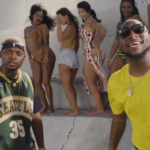
• Once you’ve seen one Nigerian music video about falling in love, you’ve seen them all. The stories are almost always the same, so we decided to see what we can learn about romance from some of them.

    The babe has to look uninterested.

    As a rule of thumb, the babe always has to be immensely uninterested the first time the guy comes up to her. In fact, she has to fix her face like his mouth is smelling.

    The guy has to stalk and disturb.

    After the babe shows her disinterest, the guy cannot just walk away like a sensible person. This is where he has to creepily stalk her until she finally realises that she actually likes him.

    You need multiple love interests.

    The music videos for songs about an artist’s “one and only” are always filled with multiple love interests, and if that doesn’t teach you the importance of side pieces, what will?

    Dates can only happen at a beach or the arcade.

    If Nigerian music videos are to be believed, there are only two ideal places for a date: a beach and an arcade. We dare anyone not to fall for you when you take them there.

    Nothing’s more romantic than a parked car.

    For whatever reason, a parked car (a very expensive one, of course) is the most ideal place for lovers to chill and lovingly stare into each other’s eyes in slow motion.

    You have to awkwardly dance together.

    According to all the Nigerian music videos we’ve seen, it seems nothing bonds a new couple faster than awkwardly dancing together in the middle of a large empty space.

    You can only fall for light-skinned people.

    A dark-skinned woman as the love interest? Nigerian music videos can’t relate. That means when you go to find love, your only option is the lightest woman out there.

    You always have to fight and makeup.

    Is it even love if you aren’t fighting and making up every other day? According to Nigerian music videos, it’s not. Real love is screaming, breaking shit and apologising with a hug.

  • 2019 gave us a bunch of exciting new stars, including Joeboy, Fireboy DML and Rema. So, as we all settle into 2020, we’ve decided to highlight 10 rising stars that we believe will dominate the music scene this year, based on their past work and unmistakable potential.

    Tems

    With the undeniable impact of “Try Me”, Tems announced herself as a star on the rise. “Mr Rebel” and “Looku Looku” — the two fantastic singles that preceded that smash hit  — also prove the exceptional singer is capable of so much more, and we can’t wait to see her deliver on all that promise. 

    Gigi Atlantis

    Last year, Gigi Atlantis dropped “Wahala On The Rocks” — one of 2019’s best and most underrated gems. Now that she’s dropped a music video, we’re hoping the song catches on, but regardless, if whatever she drops next is even half as good, then 2020 will be her year.

    Crayon

    While Rema ended up being the bigger star, he wasn’t the only afropop upstart Mavin Records introduced the world to last year. They also gave us Crayon, who quickly revealed his gifts on his astonishing Cray Cray EP. He is more than ready for his own moment in the spotlight.

    Terri

    Since he landed his big break on 2018’s biggest song, “Soco”, Terri has been releasing solid singles that hint at his potential. With the announcement of his debut project, Afro Series, it’s clear that the Starboy signee is finally ready to make a grand statement.

    Oxlade

    More than any other artist on this list, it’s clear that Oxlade is right on the cusp of becoming one of Nigeria’s biggest stars. With every new song and feature, it becomes harder to imagine a future without Oxalde at the forefront of the afropop revolution. 

    BUJU

    With the success of his Zlatan-assisted hit, “Spiritual”, BUJU shot to the top of the list of ‘stars to watch’. Since then, he’s dropped other singles that show just how skilled he is at crafting earworms — a gift that will surely help make his 2020 domination a veritable cakewalk.

    Tolani

    At the start of 2019, Tolani teamed up with Reekado Banks for her biggest song yet, “Ba Mi Lo”.  She then followed it up with two equally refreshing singles, “Liar” and “Maybe Baby”. A breath of fresh air in our overcrowded afropop landscape, the r&b star deserves superstardom. 

    Oladapo

    While JoeBoy became emPawa’s breakout star, he wasn’t the only gifted artist that got the Mr Eazi seal of approval. Oladopo was one of the initiative’s most exciting picks, dropping the underrated “Gbe Bodi”. If he maintains that quality, he will become a household name in no time

    https://www.youtube.com/watch?v=oA8sxCd8Xwk

    Lyta

    2019 was a really great year for Lyta. He scored a smash hit, “Monalisa” and landed one of Davido’s strongest features. With all that momentum, the afropop star should be able to make a real name for himself this year, as long as he continues to drop infectious hits. 

    MOJO

    The charismatic MOJO broke out with one of 2019’s most essential anthems, “Chop Life Crew”. He then followed that up with the party-starting banger, “Shawarma”. Both songs not only showcase his range, but they also make a great case for his mainstream dominance.

  • How well do you know songs by Nigeria’s biggest and most beloved stars? Can you tell which artist sang (or rapped) which words? Well, if you’re feeling confident, this quiz is here to test your knowledge.

    Go ahead:

  • 2019 had a ton of great Nigerian albums, courtesy of big-name stars like Burna Boy and rising phenoms like Lady Donli. While all of these releases came with solid singles, all of them still have non-singles that are worthy of our attention as well.

    Burna Boy’s “Wetin Man Go Do” (African Giant)

    Burna Boy’s Grammy-nominated magnum opus, African Giant is overflowing with excellent deep cuts, but a clear standout is the hustler’s anthem, “Wetin Man Go Do”. Even Kel-P, the album’s primary producer, declared it his favourite track.

    Lady Donli’s “Take Me Home” (Enjoy Your Life)

    Lady Donli’s debut album, Enjoy Your Life was easily one of the best releases of 2019. While a lot of tracks on the LP could have made this list, the strongest has to be the BenjiFlow-assisted “Take Me Home”, an immensely sensual song about the allure of the chase.

    Santi’s “RX-64” (Mandy & The Jungle)

    On Santi’s transportive, genre-defying debut album, Mandy & Jungle, the singer invites us into his vivid universe, and the sun at its centre is the KrisIrie-aided “RX-64 (The Jungle)”. Excellently produced by Odunsi, the hypnotic deep cut shows Santi at his magnetic best.

    Asa’s “Stay Tonight” (Lucid)

    With Lucid, Asa’s masterful fourth album, the singer-songwriter brilliantly explored the messiness of love and heartbreak. On “Stay Tonight”, the LP’s dreamiest deep cut, she looks to heal from the hurt, bravely putting herself back out there in search of the one.

    Simi’s “Immortal” (Omo Charlie Champagne Vol. 1)

    On Omo Charlie Champagne Vol. 1, Simi tackles a host of different themes — from loss to fame — but it’s on “Immortal”, her sexiest song to date, that she truly shines. With a fantastic assist from Maleek Berry, “Immortal” is further proof of Simi’s dynamic range.

    Falz’s “Follow Follow” (Moral Instruction)

    Thanks to Sess’ faultless production work, Falz’s Moral Instruction emerged as one of the most technically impressive albums of 2019. The track that most perfectly encapsulates the album’s sonic mastery is “Follow Follow”, a Fela-inspired gem that calls out posers.

    Davido’s “Get To You” (A Good Time)

    The most cohesive project of Davido’s career, A Good Time finds the afropop juggernaut celebrating happiness and love. For the latter theme, the song that does the best job of capturing that is “Get To You” — a delightfully toned down and deeply romantic effort.

    Tay Iwar’s “DON’T KNOW” (Gemini)

    Tay Iwar is one of our most gifted musical minds, and he proved that on his astonishing debut, Gemini. Every song on the LP is a testament to his genius, but “DON’T KNOW”, which features his equally brilliant brother, Suté Iwar, shines just a little bit brighter.

    Fireboy DML’s “Like I Do” (Laughter, Tears & Goosebumps)

    With Laughter, Tears & Goosebumps, Fireboy DML delivered one of the strongest afropop debut albums we’ve had in years. While littered with beautifully written and performed songs, a clear standout on the project is “Like I Do” — a truly heartwarming love song.

    YCee’s “Dada” (YCee Vs Zaheer)

    YCee’s debut album, YCee Vs Zaheer, served as an infallible reminder of his range — both as a singer and a rapper — but it was on the Dapo Turbuna-assisted “Dada”, easily the project’s most infectious deep cut, that he reminded us just how much fun he could be as well.

  • Stars like Wizkid, Burna Boy, Tiwa Savage and Davido have been doing it for years, but do you have what it takes to orchestrate an afropop hit? Well, all you have to do is pick your artists, producer, co-writer and video director, and we’ll let you know if your song flops or not.

    Go ahead:

  • If you’re a fan of Nigerian music, you must have caught the “Afrobeats To The World” bug. In the last four years, buoyed by a sprinkling of cosigns by foreign superstars, Nigerian music has earmarked the American market as its next frontier.

    The energy is strong and we’ve recorded small wins. But success has come at a much more lethargic pace than was initially expected. DJ Cipha Sounds made angry Wizkid fans painfully aware of that on the episode of the R.O.A.D podcast below.

    Where afrobeats is stuck at the door, Latino music has found its way in and started a party. One of the more significant conversations in world music has been how Latino music has become commercially successful in the US. Between 2016 and 2017, the number of hit songs on the much-vaunted Billboard Hot 100 jumped from a mere four to 19.

    This year, the collaboration between Ozuna and Bad Bunny has been heralded as ‘a bid for world domination‘, and the numbers are there to show. They used to pander for collaborations, now Latino A&Rs are the darlings of pop stars looking for a streaming boost.

    It’s safe to say Latino music is what Afrobeats wants to be like when it grows up; so what lessons can it learn in its own push to become a global force? We looked through the former’s rise and streamlined two decades worth of groundwork into three brief lessons:

    • To Believe In The Diaspora Or Nah?

    The incursion of foreign sounds into the US market has always been buoyed by immigrants and their offspring. Jamaican communities, their influence in the hippie culture led to the rise of that country’s music and Bob Marley’s popularity in the 1970s.

    https://www.youtube.com/watch?v=imfiY8ZVZ0g

    Starting in the 1990s, the gradual assimilation of Latino culture and the gaiety of the music helped it break into the US. The trend has continued since then. Second generation Nigerians in the UK have already birthed new variations of Afropop while flying their flags proudly.

    If Nigerian music doubles down on that, and every Bayo in Baltimore sets daily reminders to play Burna Boy’s newest song at high volumes in a residential area, things could happen.

    • On Adjusting To Fit The Popular Sound

    If you’ve noticed how most Latino hits sound like the same thing nowadays, you’re not alone. Eduardo “Visitante” Martínez, a musician who has racked up numerous awards for his work in the group Calle 13 said recently,Latin music right now, all the sound is the same.” “It’s all the same harmony, the same arrangement, the same key,” Despite the vast variety of sounds from the Americas, most Latino hits nowadays are what radio DJs call ‘urban’.

    Think of it as everything you’re likely to hear on Soundcity FM on a Friday night. It’s what Rihanna calls airport lounge music. Urban music refers to singles by hit performers; songs that have been genetically modified to sound good, like DJ Khaled’s “Wild Thoughts”, Cardi B’s “I Like It” or a Wizkid single in Nigeria. The sad thing about that analogy is that Wizkid’s music is only just veering towards urban in the US Afropop in its most genuine forms is too foreign for the audience that artists want to convert. What they’ve learned over the past half-decade or so, is that they’re better off adapting than waiting for the people to get with their vibe.

    Selling out always comes at its own considerable price. Retaining the diversity of Nigeria’s sounds will be far more important than anything, a reality Latino music is now coming to terms with. Many of its most popular playlists share about 50% of songs, much higher than the average at 4%. It’s largely because fans expect a certain type of song. It’s starting to happen in Afropop too. As other subcultures, like the alte scene and Agege’s street culture continue to stretch the range of Afrobeats, it’s important they’re allowed to flourish.

    • On Taking Your Time

    The release of “Dutty Rock” and the worldwide hit “Get Busy” gave Sean Paul his breakout year. It’s taken 17 years for another genuine face of Latino music to emerge in the Atlanta-trap clone, Bad Bunny.

    Sure, the sound has been gentrified. Justin Bieber and Major Lazer have met the needs of US audiences the most. But the length of the wait between those two eras shows just how slow the burn is when new sounds catch on.

    It took 2 years for Davido’s Fall to reach charts in the US. If that’s any sign, it may mean you’ve already heard the song that will cement Afropop’s place as a global sound. What if it’s a Naira Marley song?

  • Singer/songwriter Oluchi first began to take music seriously after she left Project Fame in 2016.

    https://www.instagram.com/p/BIktrz2A8HS/

    She had made it to the top 10 but it wasn’t her day or her edition.

    “I had been making music since after secondary school but I started taking it seriously after (Project Fame),” she tells me.

    Her first release, “Chi Ihunanya” came shortly after in the same year.

    The song, produced by YBNL’s in-house beatmaker, Pheelz is an African contemporary folk song about a woman’s search for love.

    It was Oluchi’s foot in the water – and you can hear the early form of what she now describes as her “Afro-Soul” sound taking shape.

    https://www.instagram.com/p/Bbt-kAtB6oO/

    Love and the people she shares it with are key themes in Oluchi’s music. She’s not afraid to tell deeply personal stories.

    On “xxxx”, an unreleased track from her forthcoming EP, she recalls her mother’s sacrifices.

    It is brutally thankful, as a grateful child would do to a mother she adores but with a tinge of anxiety as if she worries if she could deliver on the faith shown in her.

    Recently, Oluchi has been spending her time chasing her Master’s Degree.

    https://www.instagram.com/p/BtGsgWIg-c9/

    It’s been a good couple of months but that chapter is done now.

    And it’s back to her first love.

    She’s currently working on her debut EP.

    It’s set for release sometime this year. Here’s what we can tell you.

    Just. Wait.