• The Nigerian experience is physical, emotional, and sometimes international. No one knows it better than our features on #TheAbroadLife, a series where we detail and explore Nigerian experiences while living abroad. 


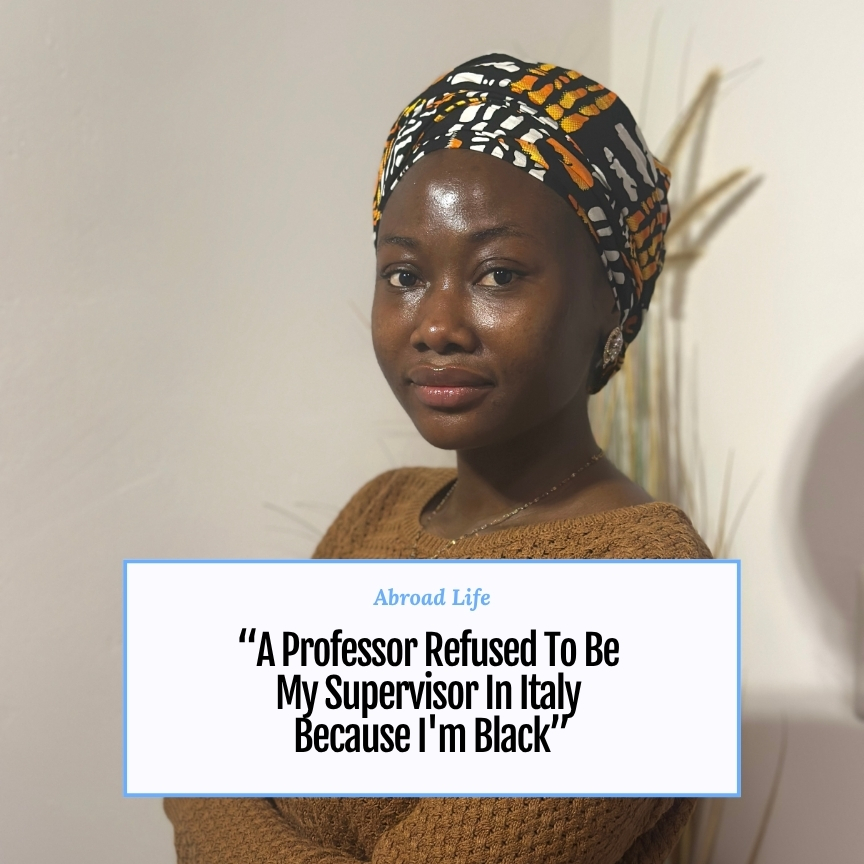
    Raphael (29) liquidated a successful pharmacy practice in Nigeria to pursue a master’s degree in England. In this story, he talks about life in England being faster, harder and more racially hostile than he expected. He also shares how he’s now found the perfect place for a Nigerian immigrant in Scotland.

    This model is AI-generated and not affiliated with the story in any way

    Where do you currently live, and when did you leave Nigeria?

    I currently live in Glasgow, Scotland. I left Nigeria in January 2023.

    What inspired you to leave?

    Honestly, I felt I knew who was going to win the 2023 election. Before I left, I managed a pharmacy practice, but the cost of living and the cost of drugs were going up. I knew that if the ruling party won the election, things were just going to get worse, and I was right.

    What was life like before you left?

    Life was good, and income was steady because people will always fall sick and need medication. But for me, pharmacy is about patient care, not just business. As time went by, patients who urgently needed medication would come in and wouldn’t be able to afford the drugs I had on the shelves. It was difficult having to turn people away.

    Even for me, sourcing drugs became difficult. I would pay a certain amount for a medication, and when I came back to restock a couple of months later, the supplier would say the price had doubled. It just wasn’t making financial sense anymore, so I decided to liquidate.

    How did you end up going abroad?

    I moved to England first on a study visa for a master’s degree. After my studies, I relocated to Scotland because I got a job there that gave me a work visa.

    Get More Zikoko Goodness in Your Mail

    Subscribe to our newsletters and never miss any of the action

    How did friends and family react to your decision to leave Nigeria?

    My friends were happy for me because I had told most of them, even before I started applying to schools in the United Kingdom (UK), that I wanted to leave. So they were really happy for me when I got the opportunity to go. It was different from my parents. They were not really on board at first. But they eventually became supportive. I think now they’re very glad I left because of how much worse things have gotten in Nigeria. If I were still there, I don’t think I could even afford to leave now.

    How did you handle the tuition and living costs?

    I had paid about 70% of my fees before moving, and when I moved, it was still relatively easy to get a job. I arrived in January and got a job by mid-February. The cost of living in the UK was also lower then. I worked as a pharmacy assistant for a while and then started working in physiotherapy before joining the National Health Service (NHS).

    How many years did you spend in England, and what was it like?

    I spent about two and a half years in England. It wasn’t too bad, but I am quite introverted, so I don’t think I experienced everything it had to offer. Between the academic pressure and trying to stay afloat financially, I didn’t have the time to do as much as others might.

    What was your social life like in England?

    Social life was good. I made friends in and out of school. I was also fortunate because many of my friends from pharmacy school had already left Nigeria. Barely two weeks after I arrived, I walked into a store to do some shopping and ran into a friend from school. I knew he’d left Nigeria earlier, but I didn’t know he was in the same city. So having people like that around me really helped me adjust faster.


    Zikoko’s HERtitude is back this April 2026. Grab your tickets here.


    Was there any hesitation when you decided to move from England to Scotland?

    None at all. I was working in the National Health Service (NHS), but immigration rules in England were starting to change. I  started applying for jobs in Scotland because I found from my research that the cost of living is cheaper and the pay is marginally better. When I got a job offer with a work visa, it was a no-brainer. I packed my bags and ran. That was in July 2025.

    How does life in England differ from life in Scotland?

    Life in England is fast, and life in Scotland is very, very slow in comparison. Moving here was a breath of fresh air because I take things easier now. You don’t have to run around as you do in London.

    Also, the immigration sentiment is different. You experience more anti-immigration sentiment and racist issues in England. Scotland, in contrast, is very welcoming. I was on a train wearing my Nigerian jersey once, and two Scottish men walked up to me to talk about Victor Osimhen. In England, you’ll be in the same situation, and there’ll be someone just staring at you like they’d stab you if they had a knife.

    I’ve seen people on social media say people shouldn’t come to the UK on a study visa. But they need to realise the UK isn’t only England. In Scotland, things are different. If you study the right thing, you’ll settle easily in Scotland even if you come on a study visa. Scotland is not as competitive as England. There isn’t as much pressure, and the cost of living is cheap. If you’re looking for a UK destination, choose Scotland.

    Without a strong support system, England might break you. But Scotland is slower, easier, and cheaper. I love it here.

    Interesting. What is your current job?

    I work as a physiotherapy assistant practitioner in critical care and the Intensive Care Unit (ICU). It’s mostly rehab work. Some days are tense, but I enjoy them. It’s given me a new perspective on patient care.

    How did you switch from pharmacy to physiotherapy?

    To practice as a pharmacist in the UK, you have to run a specific program. Only a few schools offer it, and there was a massive backlog. I was so intent on leaving Nigeria that I wasn’t patient enough to wait for an offer. I took an offer for a master’s programme that wasn’t in pharmacy, and that meant I couldn’t practice pharmacy immediately. I started in the NHS as a physiotherapy support worker, got some certifications, and eventually applied for my current role in Scotland.

    Do you plan to return to pharmacy eventually?

    Definitely. I renew my Nigerian pharmacy license every year, even though I don’t use it. I even plan to write the Canadian pharmacy exams this year. I intend to return to pharmacy practice eventually.

    Have you been back to Nigeria since you left?

    I haven’t. I might visit for a quick trip in the future, but I don’t see myself relocating permanently back to Nigeria for now. Maybe after Tinubu, if Nigeria’s fortunes begin to turn around.

    What is your support system like in Scotland?

    I have family and friends, and even my manager at work is very supportive. I work Monday to Friday, so weekends are mostly for resting and recovering before going back on Monday.

    What do you do for fun in Glasgow?

    As an introvert, my work colleagues usually drag me out for drinks or dinner. Sometimes I go to the movies or just stay home and play FIFA on my TV.

    What were your biggest culture shocks?

    Just how orderly everything is here compared to Nigeria. The cost of living was also a shock. I realised there are things here that we pay about five times the price for in Nigeria. And the minimum wage is actually enough for a person to comfortably survive on.

    What has been your worst experience since moving?

    Back in England, I once went out wearing just a hoodie and didn’t check the weather. It snowed all day, and I waited for my bus for four hours. By the time I got home, I almost had frostbite. It was only a few days after I arrived in the UK, and I didn’t know that a hoodie wasn’t enough protection from the snow, especially for someone coming from a hot country like Nigeria. You need to have a winter jacket.

    What about your best experience?

    Moving to Scotland has been a great experience for me. My time in England was crazy with constant planning and strategising. Since moving here, I can wake up and take life at my own pace. The past ten months have been really good for me.

    What is your favourite thing about Scotland?

    Most people are welcoming, and life feels slow-paced and relaxed. It’s perfect for someone like me.

    And your least favourite?

    The weather. It’s very cold.

    Do you see Scotland as home for the long-term?

    I’ll say, for the short to medium term, Scotland is home. Whether I’m here long-term depends on how the immigration rules change.

    On a scale of one to ten, how happy are you in Scotland?

    I’d say a nine out of ten. When the summer comes, and the weather gets better, it will be a ten.


    Do you want to share your Abroad Life story? Please reach out to me here. For new episodes of Abroad Life, check in every Friday at 12 PM (WAT).


    Click here to see what other people are saying about this article on Instagram

  • Someone you know has left or is planning to leave. 1,000 Ways to Japa speaks to real people and explores the endless reasons and paths they take to japa.


    When Vincent (28) developed a passion for Sustainable Development Goals SDGs), he knew his best shot at building a successful career was a master’s abroad, so he worked hard and got a scholarship. In this story, he shares his processes, his journey and how he later landed his dream job in Germany.

    Where do you currently live, and when did you leave Nigeria?

    I currently live in Munich, Germany, but when I left Nigeria, it was for Paris, and it was in 2021. 

    What inspired your decision to move?

    I was (and still am) passionate about  Sustainable Development Goals (SDG), so I was primarily motivated by the desire to pursue a career in that path and partly by the wave of sadness that hit everyone after the outcome of the #EndSARS protests the previous year, 2020.

    So, those were the reasons I left Nigeria to do a master’s abroad.

    What did you study?

    I studied International Management and Sustainability at Sciences Po University.

    That’s nice. How did you fund your studies?

    I got a 75% scholarship and made up for the rest.

    What scholarship was that, and how did you find out about it?

    The scholarship is called the Emile Boutmy scholarship, and it’s quite an interesting way how I discovered it; I heard about the opportunity through the MasterCard Foundation Scholarship, which I had initially applied for.

    MasterCard Foundation usually partners with select schools for its scholarship. At the time, they had partnerships with schools in Europe. I wanted to study on the continent, so I submitted most of my applications to schools there. Sciences Po was one of them.

    My application for the MasterCard Foundation scholarship didn’t turn out successful, but it had also been a blessing because I heard about my school through them, and they indirectly paid for my application.

    How so?

    After the MasterCard Foundation scholarship reviews your application, it gives you the go-ahead to apply to your school of choice, and it’ll pay for the application fee to enable you to seek admission there. If your admission is successful, you go back to MasterCard for further review of your application, then wait for a shortlist of your name if you made it.

    I didn’t make the shortlist, but I had been admitted by the school board at Sciences Po. I deferred my admission by one year and applied again to the MasterCard Foundation scholarship. I still wasn’t successful. But then, I learned through people that there were other scholarships in France that I could access since I wanted to study there. I found out about the Emile Boutmy scholarship, applied and got a 75% scholarship. 

    This is such a nice turn of events. Love it for you.

    It was. Thank you.

    Get More Zikoko Goodness in Your Mail

    Subscribe to our newsletters and never miss any of the action

    So, what was the application process like? 

    It was rather straightforward. Much more straightforward than the MasterCard application process. I don’t recall writing any essays, which was something I experienced when I applied to different scholarships, not just MasterCard.

    For Emile Boutney, I was asked to upload certain documents, and that was it.

    What were the required documents?

    They asked for a degree certificate to show I had indeed obtained a bachelor’s degree, as I said I had. They also asked for my transcripts and a few other documents I can’t quite recall. But I remember it being so seamless. I think it was the only application I was able to start and finish in one day. I remember sitting in my brother’s room finishing it in one sitting.

    After the submission, what’s next?

    Once the documents get to the school, they review them and decide what percentage of scholarship to award the applicant— 75%, 40%, or 30%. There was no fully funded scholarship from that organisation at the time.

    How long did it take to hear back from them?

    It actually took a while to hear back from them. So much so that I had forgotten I applied. I was getting rejections from the scholarships I applied to, so I tried to apply to as many as possible. Emile Boutney was one of them. It also wasn’t top of mind for me because I really wanted a fully funded scholarship, and they weren’t offering one.

    When the scholarship came, I had to seek advice from other people and also weigh my options. Deciding to go with it wasn’t an easy choice considering the exchange rate at the time, but honestly, I am so glad I made that choice.  

    That’s nice. What was the visa application like?

    The visa process wasn’t so tedious. I got help from Campus France, a French Agency in Nigeria, which assists Nigerian students intending to study in France.

    I took my offer letter to Campus France, and they provided guidance on the entire visa process. I wasn’t particularly alone. Campus France held my hand throughout the process; they do the same for everyone. 

    What documents were you asked to bring for the visa?

    If I recall correctly, I was asked to bring my International Passport, proof of funds and my offer letter (to prove I had indeed gained admission and was headed there to study). It took about one month to get my visa.

    Can you remember how much the entire process cost you?

    I can make an estimate, and this would be based on the exchange rate at the time. If you’re talking about how much it cost me to move to Paris and fund the rest of my studies, I’d say ₦3.6 million. But I encourage people to do their own research, as the economy has drastically changed since then and the exchange rate with it.

    Tell me about your experience at Scienses Po? Do you recommend it?

    I fully recommend Scienses Po. It’s a top global school for political sciences and social sciences. In terms of alumni power, career opportunities, global reputation, and diversity,  the school is up there. I definitely, definitely recommend. 

    How did you navigate your classes, seeing as you come from an English-speaking country?

    All my compulsory courses were taught in English. There was the option of English and French for the electives. I also had language classes four hours per week, so I picked up French along the way. I am so fluent that it’s become my second language.

    What’s your advice to people looking to get this scholarship or something similar?

    I advise everyone to do their own research. We live in an era where information is easily accessible, even more so with the advent of AI tools. Take your time to do some research; do not outsource your research and application to third parties. I understand how things can be in Nigeria, but do not be in a hurry; take your time and do the work yourself. Ask the right questions, compare, contrast, and weigh your options carefully. 

    It’s also important to have a plan. I know things do not always go according to plan, but have one regardless. Having a plan would typically come from being knowledgeable and grounded about certain things, and also being eligible for them. All of these tie back to doing the job of research by yourself. Having vast knowledge will help you decide what’s best for you.

    Be one step ahead and opportunity-ready as well. In my case, I knew I had to have an International passport, so I got one about two years before I started applying for scholarship opportunities. Have your transcripts and important documents ready, too.

    So, Germany, how and when did you move there?

    I finished my master’s programme in mid 2024 and moved to Germany in March 2025. I worked a bit in Paris, doing consulting. But I was also applying for jobs, and I didn’t limit myself to France; I applied to organisations outside of the country and got one in Germany, so I moved. I currently work in Sustainable Finance.

    That’s so cool. Were you still on the student visa when you left?

    Yes, I was. The visa was still valid at the time. I moved to Germany on a work visa, and that’s what I’m currently on.

    What’s Germany’s work visa like?

    It’s not a permanent thing; it has to be renewed. But unlike the student visa, which has limitations, it allows you to work any number of hours you’d like and do other things as well.

    What’s it like living in Germany?

    I am relatively new here, but thankfully, they speak English and have a lot more people open to speaking English than in France. So, even though I only started learning German,  it’s been easy to integrate. 

    I also have hobbies like track and field. I’m part of a run club, and that has helped with my integration. I have a solid work-life balance, so I can’t complain. Life has been good here. 

    That’s lovely. What’s your favourite thing about Germany?

    I like that I’m able to pursue my hobbies and have an identity outside of work; I don’t take that for granted, so it’s what I love the most about Germany. 

    Another thing is how easy it is to move around in Germany. My monthly transportation pass, for instance, enables me to go to cities within the country and a few European countries.

    I also enjoy German cuisine and try it whenever I’m out.

    So, yes, I love all these things and also love that I’m surrounded by people who have my best interest at heart.

    On a scale of one to ten, please rate life in France and Germany

    I will give France a solid eight. If you’re a student in France under the age of 26, you get to enjoy crazy benefits. I got rent support from the French government, my transportation was also subsidised, and so were groceries. I could go to a restaurant and get a solid meal for one euro because I was a student. Life was good there.

    I suspect I’d have rated France lower because I was a student my entire stay and would have had to experience life there without those benefits.

    For Germany,  I’m inclined to give it an 8.5 even though I’ve only been here a year. I think my rating is biased by how safe my city is. In my first week here, I lost my wallet, which had all my bank accounts, on a train and did not realise until two days later. Someone found it, and I was able to retrieve it with everything intact.

    That sounds great. I wish you the best of luck in Germany

    Thank you.


    Want to share your japa story? Please reach out to me here.


    Zikoko’s HERtitude is back this April 2026. Grab your tickets here.


    Click here to see what other people are saying about this article on Instagram 


  • Every week, Zikoko seeks to understand how people move the Naira in and out of their lives. Some stories will be struggle-ish, others will be bougie. All the time, it’ll be revealing
    .


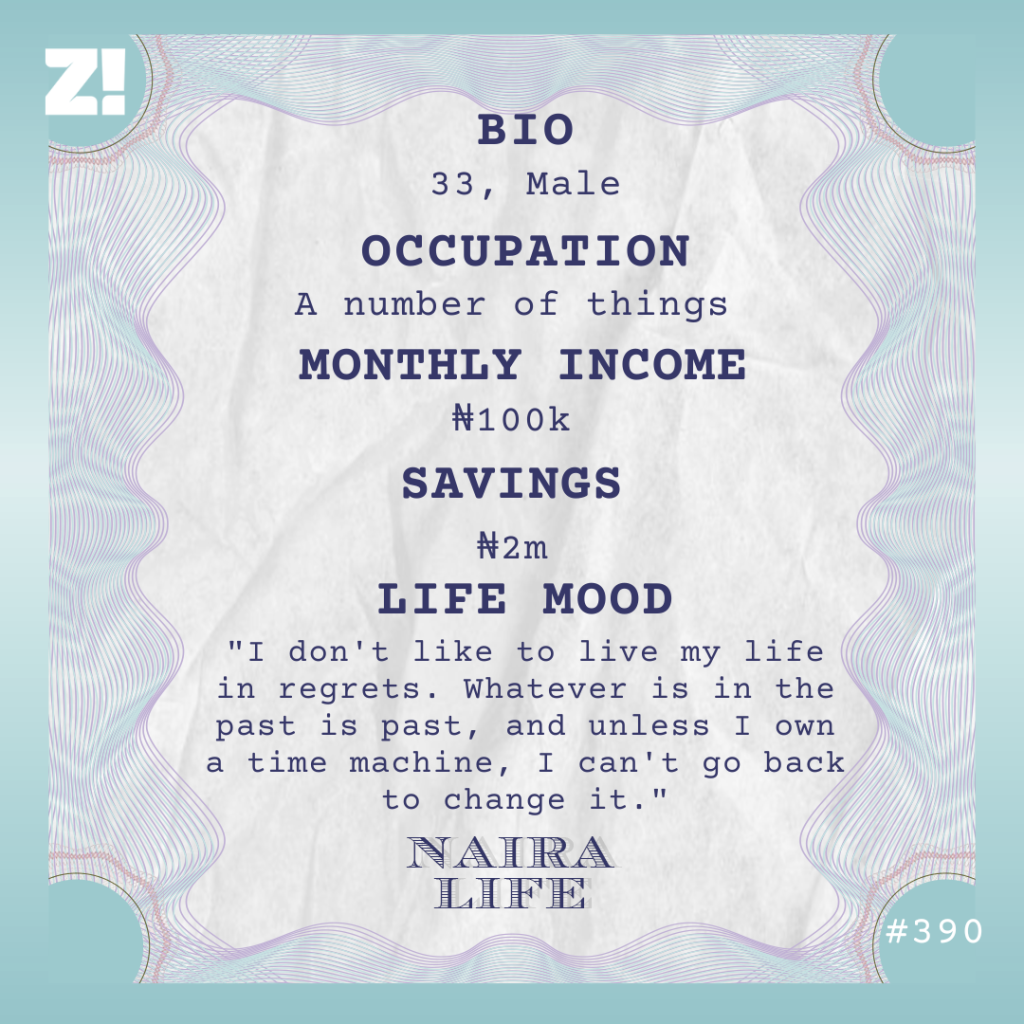
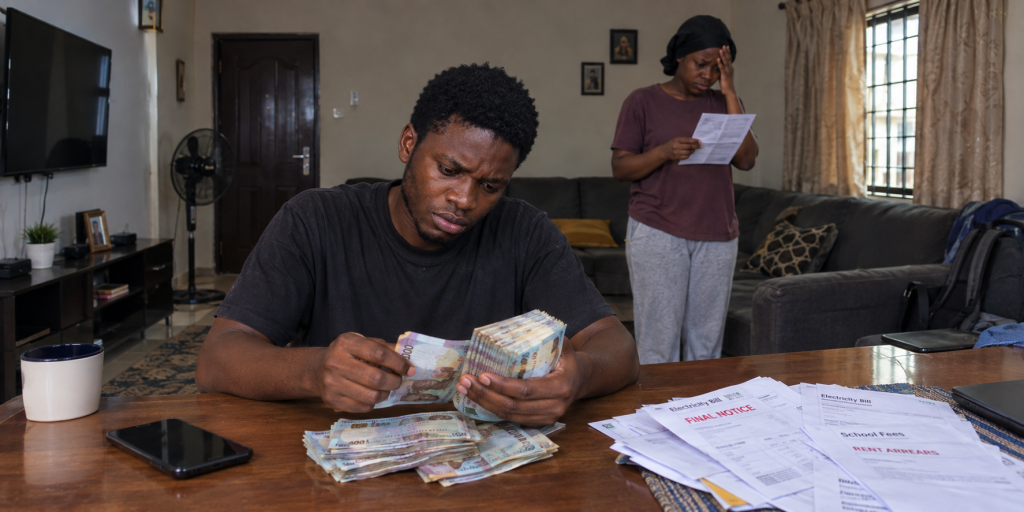
    Nairalife #366 bio

    When did you first realise the importance of money?

    2018, when I made some careless financial decisions in uni. This happened partly because my parents didn’t exactly train my siblings and me in money matters. To be honest, I felt some resentment towards them for a long time.

    Why was that?

    They were the kind of Nigerian parents who believed everything was “the will of God”. 

    In my earliest memories, they often struggled to make ends meet. My dad is a pastor and doesn’t earn much. My mum had an office job that brought in more money. But when I was in secondary school, she had to leave the job when my dad got transferred to another church. 

    She later started a business, but it wasn’t like before. She didn’t make as much as she did when she had a job, and we had to live on my dad’s income. Things were tight. I remember we often had to rely on foodstuffs from church members. But my parents were still very much big believers in “things will work out.”

    I think that might have influenced the careless decision I made when I got into uni in 2018.

    We’re back to that now. What did you do?

    I had a trashy phone that didn’t work, and I needed a functional one because that’s how students passed information in school. My dad is the kind of person who’ll go, “Just manage what I got you.” He wasn’t ready to buy me another one. 

    So I had the bright idea of buying a new phone with the ₦60-something thousand my parents gave me for school fees, believing I’d magically make the money back.

    What was the plan?

    There was no plan. I just thought my parents would send me pocket money, and I’d gather it to pay my school fees.

    Unfortunately, I was getting around ₦5k a week, and most of that went into trying to survive in school. I couldn’t save anything because I was broke and barely surviving. I managed to write my first semester exams, but by the time the second semester exams came, I was too depressed. 

    The school management kept saying, “If you’ve not paid your fees, you won’t write exams.” I thought it would be embarrassing to be asked to exit the examination hall. So, I just stayed back in my room. 

    After the exams, my coursemates came to see me to ask what happened, and I explained the situation. They were like, “Ah. You should have come. They’re not strict with school fees like that.” If only I had known that earlier. I ended up getting carryovers that later resulted in an extra year.

    Did your parents find out about the school fees issue?

    I didn’t tell them. They still don’t know to this day. I eventually used tuition from subsequent years to gradually settle my debt. 

    Also, in my second year, I got a receptionist job at a photography studio for ₦15k/month. That job was so stressful. I couldn’t even attend classes because I worked Mondays to Saturdays. During exams, I’d write a paper and then return to work. As you can probably guess, I failed a lot of courses that added to my already long list of carryovers.

    I worked there for a year and left when I couldn’t handle the stress anymore. This was 2021, and I was now in 300 level. I decided to take a small break from making money to focus on school and try to pass my courses. 

    Later that year, I went for the compulsory six-month IT work experience at a stockbroking company.

    Get More Zikoko Goodness in Your Mail

    Subscribe to our newsletters and never miss any of the action

    Was it a paid internship?

    Yes. My employer paid me ₦30k/month to work as an investment analyst — even though I mostly worked as a personal assistant. The plan was that he’d put me through what I needed to work in stockbroking. He was also actively trying to sleep with me, but I naively thought I could keep him at arm’s length and do my job.

    After I finished my IT, he persuaded me to continue working with him. He transferred me to work in the HR department and increased my pay to ₦45k. My final year was very busy, but I managed to juggle school with work. My pay was good enough for me to stop asking my parents for money. I could fend for myself.

    Meanwhile, my employer was still trying to move to me sexually, but I kept ignoring him. My aunt even warned that I’d regret staying in that situation, but I told her I could handle it. I kept working with him after I left school in 2023, and finally left in February 2024. As my aunt warned, I eventually regretted trying to deal with his behaviour.

    How so?

    His frustration with my insistence on keeping our working relationship professional often led him to try to embarrass me in front of others. At some point, he tried to set me up and claim I embezzled money. Thankfully, I had covered my tracks, and he couldn’t use that against me.

    I didn’t even plan to resign when I did. I had a panic attack that morning and told myself I couldn’t continue. He was shocked to see my resignation letter. At the point I left, my salary was ₦75k/month. He even increased it to ₦90k just before I resigned, trying to get me to stay, but I was done.

    I resigned without a plan, but thankfully, I wasn’t unemployed for long. The following month, I got a job with my aunt, who lives abroad. She was a postgraduate student and ran a business on the side. So, she hired me as an admin assistant and paid me ₦150k every two weeks. My job was essentially to handle business emails and help her with schoolwork and assignments. 

    ₦300k/month was a big deal to me. I was earning reasonably well. That’s when I had the stupid idea to start a business myself.

    It sounds like the business didn’t do well

    It even started my journey into debt. Here’s what happened: I started a skincare products business in August 2024 to earn extra income on the side. I sold my first set of products on a pre-order arrangement because I was importing them from China. Sales went well, but shipping to Nigeria became a problem.

    The person I trusted to ship them might have cheated me because I later asked other people and learnt the shipping fee shouldn’t be that much. Anyway, she charged me ₦700k to ship ₦500k worth of products. 

    Ah

    I had no choice but to pay the fee since I’d already collected customers’ money. I had to borrow the ₦700k shipping fee from my aunt (who was also my employer) to clear the goods. 

    You’d think I’d stop the business after that incident, right? I couldn’t. I had to make the money back to repay my aunt. However, it wasn’t as easy as I expected. The books just weren’t balancing. Around the same time, my aunt stopped paying me a salary because she wasn’t making money from her business. I kept helping her out with work because she’d been good to me. I couldn’t just leave her.

    So, I was without an income and trying to make my business work. I didn’t last a year. By February 2025, I’d closed the business down and started looking for something else to do. I needed to make money to repay my debt.

    How did the search go?

    I got a job at a brewing company almost immediately, but I left after three months. They were supposed to pay me ₦80k/month to work in HR, but they didn’t pay me a single naira.

    After that, I moved to Lagos to live with a relative. I was actually supposed to leave the country, but it didn’t work out.

    Oh. What happened?

    My aunt had a friend who convinced both of us that I could make $700/month working in a South-Asian country. Now that I think about it, we didn’t really have specific details of what the work was. My aunt just trusted this friend a lot, so she fully sponsored the process and spent about ₦10m. 

    In the end, the whole thing fell through because the country’s immigration authorities found my lack of travel history suspicious. When it happened, I got really depressed. I resolved I wouldn’t return to my parents’ house. I had to “make it” in Lagos.

    I was unemployed for another three months before I found my current job. I work as an executive assistant and admin staff for a medical group. When I first started, my pay was ₦250k/month. That was increased to ₦300k this month. 

    Since I got this job, I haven’t actually lived on my full salary because of my debt.

    The debt to your aunt? How’s that looking now?

    I was this close to being debt-free. Over the last few months, once I got my salary, I sent my aunt something between ₦60k and ₦100k. About a week ago, my debt dropped to ₦167k. 

    Then, my apartment, which I moved into around September 2025, was demolished by the government. The landlord knew this would happen, but he didn’t inform the tenants. It happened so quickly, without any warning.

    Oh my. So sorry about that

    Thank you. I had to take another loan from my aunt to rent another apartment. So now, my debt is back up to about ₦900k. I’ve not even been able to move into the house because my work schedule is so tight. 

    I’m currently staying in an uncle’s apartment. But he’s been trying to get me to leave. He rents out the place, so my staying there is costing him money. At this point, I’m just waiting for him to physically drive me out because I don’t know what to do.

    I’m so overwhelmed. I often consider going back to my parents’ house, but if I go back, what happens next? Sometimes, I burst into tears. It’s like things aren’t getting better. Even before this demolition, things were hard. Since I was repaying debt, I barely had enough left to survive. I couldn’t even save. I often need to rely on my parents for money. Sometimes, when I ask them, they’ll be like, “How come you’re earning more than we used to earn in our days, yet you’re asking us for money?” They just don’t get it.

    Beyond the whole debt situation, I have money issues that I’m still trying to unpack.

    Tell me about them

    Where do I start? Money has always been scary to me. For most of my life, I didn’t keep track of my account or expenses. Like, I’d make transactions and avoid looking at my account balance because I was scared of money leaving my account.

    However, since I got my current job and started repaying my debt, I had to sit and think deeply about my money issues. I realised they were rooted in fear, insecurity and scarcity. So, I started actively writing down my transactions and debts. That way, I knew exactly where my money was going, how much I had repaid and how much I owed. I even locked up ₦50k in a savings account till August because I was too embarrassed about having zero savings.

    In February, I started calculating my projected expenses to see where I could cut costs. The idea is to free up money to save and invest. I need to save at least ₦60k/month to make my next rent. It’ll also be nice to get into stocks and start investing little by little. Remember I worked in stock broking? I have some investing knowledge, just no money to put to use. However, with my recent budget cuts, I’m hoping that will happen soon.

    Walk me through some of these budget cuts

    For one, I no longer pay for Netflix. I also used my sister’s school email address to create a Spotify account so I can pay ₦800/month (for the student discount) instead of ₦2k. 

    Then I cut down my data costs and now buy tiny concentrated perfume oils instead of the regular perfumes to save money — perfumes are a necessity for me because of my work. I also now trek half the distance to work, cutting down my transport fare from ₦2k per day to ₦800. I save money and get my steps in at the same time. Win-win.

    I rate it. What do these expenses usually come down to in a typical month?

    Nairalife #366 expenses

    How would you describe your relationship with money now?

    I’m trying to get over my fear of money. I’m 25 and see how I’m budgeting myself. I’m scared I’ll be stuck in this cycle forever. This cycle of budgeting and financing year-round, and still not having enough. It feels like a rat race, doing the same thing over and over.

    Something has to change. I think I’ve been scared to take another risk since the skincare business didn’t work out. I’ve been too comfortable with the 9-5 cycle. 

    So, I’m going to branch out. I’ll try business again someday, but for now, I’ll start looking for menial jobs. I don’t mind going to clean people’s houses on weekends or helping with market runs and cooking. I just need something to change, and I have to take a step towards that change.

    Rooting for you. Is the goal to repay your debt faster?

    Sort of. It’s mostly to have some money either to save or settle other things after repaying my debt monthly. For instance, when I don’t want to go to my parents for money, I borrow from my younger siblings. They also call me for money when they’re broke. I want to be able to help them out with ease.

    Is there an ideal amount of money you think you should be earning right now?

    ₦1 million/month should be ideal. I’ve been applying for foreign remote jobs without success. If I can get one in addition to my current role, it will take me a step closer to paying off my debt and leaving this rat race.

    How would you rate your financial happiness on a scale of 1-10?

    3. I feel that if people hear the amount of money I earn, they’ll act like my parents, saying, “But you’re earning a lot,” and think I don’t need help. Yet I’m struggling. It’s really frustrating.

    Hoping things get better soon. What’s one thing you’d like to be better at financially?

    Saving. I feel like it’s the bedrock of being an adult. People always say, “Women have a lot of money in their Piggyvest,” and there’s me with next to nothing. It’s embarrassing. I want to be like other girls. I want to have something to my name.


    If you’re interested in talking about your Naira Life story, this is a good place to start.

    Find all the past Naira Life stories here.

    Subscribe to the newsletter here.

    The Naira Life Conference is returning in June 2026! Expect honest conversations and insightful sessions on building wealth, scaling businesses, as well as practical strategies to manage your money. Join the waitlist to be the first to know when tickets start selling.

  • The Nigerian experience is physical, emotional, and sometimes international. No one knows it better than our features on #TheAbroadLife, a series where we detail and explore Nigerian experiences while living abroad. 


    Gerry (25) always wanted to get a master’s abroad. But about two years into Tinubu’s regime, he decided the time was now. In this story, he talks about life in Scotland’s Aberdeen, the exciting whims he’s indulged, and his plans for the future.


    Where do you currently live, and when did you leave Nigeria?

    Currently, I’m in Aberdeen, Scotland. I left Nigeria in January of 2025.

    What inspired you to leave Nigeria?

    Honestly, for lack of a better word, I just wanted fresh air. I always knew I would get a master’s degree at some point, and with Tinubu in power now, I felt it was time to initiate my escape from the country. I decided to go abroad for my master’s, and to leverage it to move to whichever country my heart deems fit after I’m done.

    Are you done with your master’s now?

    Technically, I’m done. I’m in the process of turning in my dissertation. My graduation is just a few weeks away.

    Congratulations. Scotland isn’t a popular destination for Nigerians I’ve interviewed. Why did you choose it?

    I’m surprised to hear that. Being here, you see the opposite—Scotland is actually a prime destination for Nigerians. There are a lot of Nigerians here. In fact, sometimes, I  only interact with Nigerians for months on end.

    I grew up in Port Harcourt, then spent my last two to three years in Nigeria in Lagos. And I preferred Port Harcourt, which is significantly quieter than Lagos. So I knew I needed a city that was just as quiet, hence why I chose Aberdeen.

    Is Port Harcourt your favourite Nigerian city?

    It’s actually Akure. I’ve been around a lot of cities in Southern Nigeria, and Akure just stands out as a very fun place. I’d describe it as a perfect retirement city. Most of the businesses there cater for retirees and make people feel as relaxed as possible.

    But the thing with people in their retirement era is that there are a lot of big birthdays and burial ceremonies. So if you’re looking for a type of fun that is very Nigerian but not Lagos-centric, Akure is a good place.

    That’s very interesting. But how could you tell Aberdeen would be your type of city before you arrived?

    I have a couple of relatives and very close family friends who have been here for over ten years.  That was where my insight came from.

    It must have been great having that support when you arrived. But what were you up to in Nigeria before you left?

    I worked in marketing. My master’s is also in marketing. I came to Lagos for my National Youth Service Corps (NYSC) in 2022. After that, I got a job at a top marketing agency. I spent a little over a year there and then moved to a health tech startup in an executive position. At the same time, I had side contracts as well.

    I lived what I’d describe as a very unbothered, soft life in Lagos. I wasn’t paying rent for the years I spent there, so all my income went into my personal needs. I was very independent.

    Life in Lagos, as hectic as it was, was a very good career step. I knew I had to be there because that’s where all the big media and marketing work in Nigeria is done. So between 2022 and 2024, my life was basically all about work.

    Get More Zikoko Goodness in Your Mail

    Subscribe to our newsletters and never miss any of the action

    What was the experience like when you first arrived in Scotland?

    When I landed in Aberdeen, it hit me, and I realised I may have made a big mistake. Aberdeen is really far up north on the map. It is a very cold city. So I’d arrived in London, and it wasn’t that cold, and there was no snow. Then I got on the plane to Aberdeen and slept throughout the 45-minute flight. I woke up to whiteness. Every building, the ground, everything was white with snow.

    Climate-wise, they are like close cousins to Scandinavian countries. It’s similar to the weather you’d have in Norway. The mistake I’d made was that I was only wearing a sweatshirt. The first week was not a fun experience. I had to battle a horrible cold, and my body was struggling to adapt. But now I can walk out in the snow wearing just shorts.

    How have you found social life in Aberdeen?

    It’s not bad at all. You also don’t need a lot of money to relax here. Aberdeen is the sort of city where you can meet literally anybody if you’re the social type. There is a Nigerian club here called Club Lagos. There are enough Nigerian events that mirror the experience from back home, just in slightly higher quality. On a scale of one to ten, I’ll give the social life in Aberdeen a solid nine.

    What activities do you do to unwind in Aberdeen?

    I like to go running and hiking on the hills here. There are lots of hills and mountains in Scotland. I’ve been to the lake where the mythical Loch Ness monster supposedly is. It’s a hilly valley with a mountain range. It was weird realising there are mountains of over 2,000 feet in Scotland. I climbed one of the shorter ones, and it was a really fun hike.

    Then there is the food. I think that is actually my go-to fun activity. In the last year, I think I’ve tried practically 80 per cent of the restaurants here. I’m always dragging my friends to the new restaurants I want to try. They already know they don’t have a choice; once I decide we are going to a restaurant on the weekend, we are going.

    What are you eating at these restaurants?

    I do not like English or Scottish food. I don’t fancy it at all. I’ll only eat it if my back is against the wall. They know, too, that their food is horrible, so they’re very welcoming of foreign food. There are so many Indian, Southeast Asian, Thai, Vietnamese, and Italian restaurants here. I’ve even been to a Cambodian restaurant in Glasgow.

    What is your favourite ethnic food?

    Still Nigerian food. After that, I’ll say Asian fast food.


    Zikoko’s HERtitude is back this April 2026. Grab your tickets here.


    Have you been back to Nigeria since you left?

    No, and I don’t intend to if it’s just for a visit. It’s just too much work. I’ll have to take three flights to get to my father’s house in Port Harcourt. I don’t have it in me to take three flights right now. If it were possible to take just one flight, I would go easily.

    I am open to moving back to Nigeria for work on a permanent basis. But not going back for fun because I don’t think there’s any fun to be had in Nigeria.

    What are your plans for the future?

    I’m currently in the process of looking at what the short term looks like, but I’m horrible at short-term planning. Long term, if the UK is still an option in five years, the goal would be to get Indefinite Leave to Remain (ILR) or a Global Talent visa. I’d use that as a bedrock to explore other countries, particularly Canada, for work opportunities.

    What is your support system like in Aberdeen?

    I have a very close-knit personal network that is surprisingly very female-driven. Most of my male friends here have moved to different cities. I also have the relatives and family friends I mentioned who have been here for decades.

    How have you met new people?

    I have met a bunch. A decent chunk of Nigerians live in my building; that was the first entry point. My university is also very African-centred, so I met Nigerians and Ghanaians there. As much as I’m not a social person, people are drawn to my personality, so I actually meet a lot of people. Mostly it’s through church, school, and work.

    What culture shocks have you experienced so far?

    “Culture shock” isn’t the right word for me because I was already conversant with Western society before leaving Nigeria. Nothing felt like a shock. But one thing that still surprises me is how everyone keeps in line while waiting for the bus. It might not be an orderly single file, but everyone knows who got to the bus stop first, and they signal to each other in that order when boarding.

    Something I had to get used to quickly was that Aberdeen is a very cashless city. Everyone uses a card or Apple Pay. I arrived holding about £1,000 in £50 notes. That’s the highest denomination here, and the notes are rare to find because if you need to pay for something that much, people expect you to just make a transfer.

    Have you experienced racism in Scotland?

    I can’t say I have directly experienced it, but in certain situations, you feel it. For example, while working at a retail store, I noticed that all the higher-level staff were white, specifically Scottish whites. Systemically, you notice it takes a while to gain “trust” in corporate settings when you’re an immigrant.

    But I think the closest thing to racism you’ll see from a Scot is when they’re around English people. Scottish people generally don’t like English people; you can see the tension most when English people come to Aberdeen for a holiday in the summer.

    What is your favourite and least favourite thing about Aberdeen?

    My favourite thing is winter. My least favourite thing is also winter. They are great to look at, but horrible to experience.

    What has been your worst experience in Scotland so far?

    I haven’t really had a horrible or bad experience. The worst I can think of is my phone going off while I’m outside. But even then, I can just walk into any electrical or repair store and get it charged. If you are good at quick thinking, you won’t have many problems here. People are generally willing to help or guide you.

    What has been your best experience?

    There are quite a lot. I spent a weekend with a friend, seeing every major landmark in Aberdeen. We both had cameras and played a “colour game” where we looked for things of a particular colour in every region of the city and took pictures. It was a great, personalised city tour.

    A runner-up would be going to Glasgow on a whim, then to Edinburgh for a concert, staying at someone’s house for dinner, and not returning home until Monday morning. That was a whole weekend across two cities in three nights.

    On a scale of one to ten, how happy are you in Scotland?

    A solid seven out of ten. It’ll be complete when I get a proper job.


    Do you want to share your Abroad Life story? Please reach out to me here. For new episodes of Abroad Life, check in every Friday at 12 PM (WAT).


    Click here to see what other people are saying about this article on Instagram

  • If you grew up in the 1999s/2000s, congratulations. You experienced the golden age of Nollywood. This era not only brought us humour and authentically Nigerian storytelling, it also gave us iconic characters who served lewks and were fine as hell. These characters were so hot, fly, and sexy, that they had some of us crushing HARD. Characters like: 

    1. Sharon (Genevieve Nnaji) in Sharon Stone 

    The OG herself. Sharon excelled in what is usually a male-dominated field by juggling not one, not two, but three men simultaneously with nothing but finesse and lies, and somehow made it look like the most natural thing in the world. We all wanted Sharon or wanted to be her, which are pretty much the same thing. 

    2. Rachel (Ini Edo) in Corrupt Girls

    The movie tried to position Rachel as a cautionary tale about what happens when a girl engages in promiscuous hijinks but all we see was a sexy, bad girl who knew exactly what she wanted out of life and wasn’t afraid to go get it by any means necessary (fraudulently extracting money from high profile men). If that kind of girl doesn’t wake the dead butterflies in your belly, you need help.

    3.  Karishika (Becky Okorie) in Karishika

    Yes, she came fresh from hell to steal, kill, and destroy. But you can’t deny that when she walked out of that graveyard at the beginning of the movie in a tie & dye shirt, baggy pants, and middle-part bussdown down to her ass, you didn’t feel something stir inside of you. Don’t be shy. There’s only a few hundred thousand of us here. It’s a safe space.

    4. Monique (Regina Askia) in Suicide Mission

    From the second Monique sets her eyes on Austine (RMD), Monique knows she wants him to destroy her honey pot with his weapon of love. She immediately does everything she can (having sex with a corpse and eventually trapping his soul in a groundnut bottle) to get him and she succeeds. Beautiful AND a go-getter? How could you not crush on her?? 

    5.  Beyonce (Nadia Buari) in The Beyonce Cinematic Multiverse

    Beyonce might’ve been spoiled, petulant, and straight up insane, but that’s clearly only because she’s a passionate girl who loves too hard and will do anything for the people she cares about. Don’t let the fact that she stole Rihanna’s car because of man (Beyonce & Rihanna) and poured acid in Ciara’s face because of another man (Beyonce: The President’s Daughter) distract you from how fine she is.

    6.  Pamela (Mercy Johnson) in White Hunters

    Pamela’s most attractive trait is her confidence. Yes, her ex-fiancé served her breakfast and she does embarrassing things in her quest to bag white men. But, she’s happening babe and you can’t tell her otherwise because she knows it’s a fact. That kind of confidence is sexy as hell, and that’s why we all loved her.

    7. Jennifer and Sophia (Clarion Chukwura and Eucharia Anunobi) in Abuja Connection

    We could say something about the appeal of women in power and that would be true for these characters but Jennifer and Sophia are way more than that. That scene where they jam each other on the road and start shading the hell out of each other is super delicious and awakened something in many people. 

    8. Gloria (Omotola Jalade-Ekeinde) in Blood Sisters 

    Many of you refer to Gloria as naive because she should’ve seen Esther’s deception coming, but that’s exactly why we love her. She’s sweet, trusting, and innocent, and we need more of her in this rotten, disgusting world. 

    9. Alicia (Rita Dominic) in Girls Cot

    We can’t talk about the iconic Girls Cot without mentioning Alicia. The movie depicts the lives of four Nigerian women who live a facetious life, deceiving men and blackmailing them for a living. Alicia’s edgy aura made her impossible not to gush over.


    10. Gina (Tonto Dikeh) in Dream Maker

    Okay, we loved this character out of sympathy. Gina, played by Tonto Dikeh, was the wife who was married to an abusive Charles (Jim Iyke), who was also cheating. Her outfits in every scene looked perfectly planned. Even when she almost broke a bottle on his side chic’s head, she was still serving looks.


    ALSO READ: 12 Nollywood Actresses Who Shaped OG Nollywood

    Get More Zikoko Goodness in Your Mail

    Subscribe to our newsletters and never miss any of the action

  • GridLocked is a daily pop culture guessing game built for Nigerians. Every weekday by 9am, you’ll get six clues, sixty seconds, and an answer only a Nigerian would know.


    Today’s GridLocked is slang.

    How many clues do you need to get it right? 👀

    Share your result when done, but don’t spoil the answer for others. (Missed yesterday’s GridLocked? Play it here.)

    04 APRIL 2026

    Come back every weekday by 9am for a new grid or subscribe to Z Daily, Zikoko’s daily newsletter, to get new GridLocked puzzles, real Nigerian stories and other fun content in your inbox.


    How to Play GridLocked

    • The Goal: Guess the answer for the day before time runs out. (The answer could be a Nigerian person, place, song, movie, or even slang.)
    • The Lock: You cannot type a guess until you have revealed at least one tile (clue).
    • The Reveal: Tap any tile to reveal a clue. Every clue describes the answer for the day. The fewer tiles you flip, the better.
    • The Clock: You have 60 seconds to guess right. The timer starts the moment you flip your first tile. (You get multiple guesses.)

    The GridLocked Squares: What Do They Mean?

    When the game ends, you see your guess count, total time spent, and the number of tiles flipped. The tiles are shown as white and purple squares.

    • ⬜ (White) = A tile you flipped
    • 🟪 (Purple) = A tile you left closed

    The fewer white tiles you have, the better your result.

    • Best Result = ⬜🟪🟪🟪🟪🟪 | Guesses: 1 (Only needed one clue and one guess to get it right)
  • Easter in Nigeria is never a single-day experience. It stretches across a long and beautiful four- day weekend. It begins with the quiet reflection of Good Friday and builds up to the loud joy of Easter Sunday before settling into the relaxed outdoor vibes of Easter Monday.

    For many Nigerians, this weekend is a rare pause button. It is a time when the relentless hustle of the city finally takes a breath, hard workers find some time to rest, and families gather to celebrate a season of sacrifice and ultimate renewal. Here’s how you can spend the long weekend in a way you’ll actually remember.

    Rest Like You Mean It

    We’re not talking about the kind of rest where you just scroll on social media till your eyes hurt. This is about actual rest and embracing the soft life. It is a slow morning with no alarm clock, and a long shower followed by your favourite playlist. You can light a scented candle to officially signal that the work week is over. The BIC EZ Reach Lighter makes it easy to set that mood because its extended wand reaches into deep jar candles without you having to struggle with the flame. You can just light it and let the fragrance take over your space.

    Whip Up A Sunday Resurrection Feast

    All those cooking videos you’ve been saving on your phone won’t cook themselves. Now that you finally have the time, you can try that complex jollof recipe, the goat meat pepper soup that needs to simmer just right, or even bake something sweet to share. Whether you’re in the kitchen alone, moving at your own pace and enjoying the quiet, or bonding with family as everyone plays a role, cooking becomes part of the celebration itself.

    When you need to light up your gas stove for the multiple pots you’ll need, the BIC EZ Reach Lighter gives you a safe, easy way to get things going without hurting your fingers. And when it’s time to bake your sweet treats or take things outside to the grill, the BIC Mega Lighter steps in with its strong, steady flame and long reach handling everything from the gas oven to charcoal with ease.

    Have an Easter Picnic

    Everyone has seen the aesthetic picnic pictures on their timeline and thought about doing it with their own crew. Easter Monday is the perfect chance to actually follow through. You can pack a basket with snacks, your favourite meals, and drinks, and find a spot at the park or the beach with your friends. Whether you need to light a small portable stove, a candle, or even a bonfire as the evening sets in, the BIC Pocket Lighter makes it effortless. It sparks on the first flick every time, so the only thing you’re fumbling with is the food.

    Join A Congregation To Celebrate

    Nothing beats celebrating with a group of people. This long weekend, you can immerse yourself in the deeper meaning of the season by attending a Good Friday service, joining an Easter conference, experiencing the power of an Easter Sunday cantata, or reconnecting with your church community at a laid-back Easter Monday picnic. Sometimes, a perfect weekend makes you reflect on the ultimate sacrifice as you pray the Stations of the Cross with candles lit by your BIC Pocket Lighter, flickering in the darkness.

    Have One Evening With No Screens

    As a 9-5er or entrepreneur, your phone can be the bane of your existence. This long weekend is the perfect time for a digital detox. Put your phone face down, turn off the television and enjoy a screenless evening. Deciding to do it alone? Set up mood lighting with a warm candle lit by your BIC EZ Reach Lighter, grab a book you love or your Bible, and disappear into a whole new world. Who knows? You may learn something new about the significance of Easter. If you’re surrounded by friends or family, you could bring out the Ludo board or a deck of cards, or even have a conversation with a neighbour that goes beyond just saying hello.

    Whichever way you spend your long weekend—dressed up for Sunday service, chilling with your people, finally taking that trip, or simply doing nothing at all—make it a weekend that feels yours fully. From lighting candles to firing up the grill, the BIC Flame for Life range is there to keep every moment glowing, literally and effortlessly.

    Happy Easter from BIC Nigeria. Cheers to making every spark count.

  • In the past couple of years, Nigerian men have become hot in the global dating market, especially among foreign women who go on and on about finding their ‘Nigerian prince’ like they’ve been jazzed.

    Scroll through social media and you’ll see women sharing tips on how to keep a Nigerian man, others proudly wearing aso-ebi or learning Igbo for their partner. Say what you want about Nigerian men, but dating them has become… a thing.

    What’s the catch?

    Nigerians are everywhere, and they tend to stand out. According to Financial Times, Nigerian men rank among the most ambitious and highly educated migrant groups in the United States, which counts for a lot in an increasingly competitive dating scene.

    The ‘Odogwu’ mentality

    Nigerian men have built a reputation as ‘providers and protectors’, and because they like to show off, they don’t do it quietly. Early on in relationships, it’s common for them to come in strong with grand gestures and big promises that sweep women off their feet.

    Because Nigerian culture leans heavily towards family values, they’re not shy about committing or stepping into the role of “husband” early on (even when they might already have a whole family back home).

    For women coming from more individualistic dating cultures, that kind of attention can feel refreshing.

    Add the widely held but unverified belief that Nigerian men are exceptionally good in bed, and it’s safe to say that Nigerian men just have very good PR.

    There’s also a pop-culture effect

    The reputation doesn’t exist in a vacuum. Nigerian culture itself has been gaining global attention, and it’s doing a lot of the heavy lifting. From Afrobeats to Nollywood to fashion, the country has become impossible to ignore on the global stage.

    Nigerians wear their culture loudly, through bold style, extravagant weddings and an overall sense of spectacle the world has clearly bought into.

    At some point, the appeal of the Nigerian man stopped being just about the man, but a part of a seductive package.

    Even TV has played a role. Shows like The Real Housewives of Atlanta have helped frame Nigerian men as desirable, with cast members casually referencing their “African kings” and showing off the lifestyle that comes with them.

    Do it for the plot?

    Nigerian men are apparently great for character development. So, for anyone who likes the whwirlwind romance and the drama, it’s a no-brainer, no?


  • If you grew up in a Nigerian household, the math of your upbringing probably didn’t add up.

    You knew your dad worked a company job and your mum was a teacher. But somehow, there was always a poultry farm in the backyard and businesses they ran on the side. Long before passive income became a LinkedIn buzzword, our parents were already doing everything to make ends meet.

    Think back for a second. Was it really just the salary that paid those outrageous school and excursion fees or bought those fancy party clothes? Or was it the esusu or ajo contributions that suddenly matured exactly when the landlord showed up?

    Things Are Never the Same..

    In Nigeria, income has never been straightforward and easy. Back then, side-hustle wasn’t a popular conversation. Today, side-hustle is the personality. In 2026, nobody just has “a job.” We now have a 9-to-5, a 5-to-9, a crypto wallet that we don’t talk about in public, and a little business that pays for our daily spendings and subscriptions.

    Things aren’t the same like before. We moved from physical stores and business keepers to new-age digital content creators, but the core remains the same that one income is never enough.

    Why Does This Matter Now?

    We’ve spent decades acting like we’re all just living on a salary, but the reality is much more interesting. Nigerian households are built on a complex web of multiple streams and extra activities.

    This is why Nidacity is launching the “Many Roads” survey. We want to stop guessing and start knowing. We’re mapping out the real Nigerian income story. Is it true that every Nigerian has at least three legs of income? How did our parents actually do it, and how are we doing it now?

    If you’re a Nigerian founder trying to scale without losing your mind (or all your money), Nidacity is your new bestie. Think of it as a massive cheat sheet for the Nigerian business scene. They provide the heavy-duty gear you need to stay afloat, from stockroom management tools to deep-dive guides into financial clarity.

    Nidacity is all about giving you the receipts and the resources to stop guessing and start growing. But it goes beyond spreadsheets and math. Nidacity has a podcast where they grill seasoned founders and big-time thought leaders on how they survived the trenches, plus articles that break down the moves successful brands made to win. Whether you’re a growing entrepreneur or an established full-time CEO, it’s the one-stop shop for the tea and tactics needed to thrive in this wild Nigerian market.

    Take The Survey: How Many Incomes Raised You?

    What we are asking for is more than data; it’s your story. Whether you were raised by a single salary or an influx of seven different businesses, we want to hear it.

    Your input helps Nidacity build a clearer picture of how wealth is actually made (and sustained) in Nigeria.

    We’re helping create the real paths to growth. Take the survey here.

  • Love Life is a Zikoko weekly series about love, relationships, situationships, entanglements and everything in between.


    Alex* (26) and Toyosi* (29) met at a vigil one night in 2024.

    On this week’s Love Life, they talk about meeting while she was healing from a failed engagement, reconnecting months later after his mother’s death, and navigating a relationship where she wants to be married by 30 but he’s not financially ready to take that step yet.

    If you want to share your own Love Life story, fill out this form.

    What’s your earliest memory of each other?

    Alex: We met at a church vigil in July 2024. The vigil was happening on my street, and I’d helped the pastor secure the necessary permissions for the venue. Because of my involvement, I wasn’t following the program closely or participating in the prayers. I was mostly walking around, making sure everything was running smoothly. That’s when I saw Toyosi. 

    She was in one corner of the venue, completely absorbed in prayer and crying intensely. I overheard some of her prayer requests, and she was asking God to break the spell of failed marriages in her family. She was pouring her heart out about her fears and her pain. It was a deeply personal, vulnerable moment, and I knew I was invading her privacy by standing there. But I couldn’t help it. I was genuinely intrigued. I wondered why someone who looked so put together, pretty, and articulate would have such heavy prayer requests.

    Toyosi: I didn’t want to attend that particular vigil because I had another one the next day, but my mum encouraged me. She said, “We don’t know where God will answer your prayers.”

    I was fresh out of a two-year engagement that had ended badly. It was my first real, serious relationship, and I invested so much time and emotion into it. When it fell apart, I was devastated, sad and depressed. I poured myself heavily into church activities to cope with the pain. 

    This particular vigil was one of those nights where I desperately needed God to calm my mind and heal my heart. I was crying out to Him about my family’s history with broken relationships and my fears about repeating that pattern. I didn’t notice anyone watching me while I prayed. I was completely lost in my conversation with God.

    Get More Zikoko Goodness in Your Mail

    Subscribe to our newsletters and never miss any of the action

    Right. So, at what point did you guys interact?

    Alex: I approached her the next morning, introduced myself and tried to make conversation. But I could tell she seemed uncomfortable. I wasn’t sure if it was me or if she just wanted to leave.

    Toyosi:  I was worried about my morning breath. We’d been at an overnight vigil, and I hadn’t brushed my teeth yet. And his breath wasn’t exactly pleasant either. It was just an awkward moment all around. But he seemed nice and well-spoken, so I gave him my number.

    Screaming. What happened after you exchanged numbers?

    Alex: I didn’t reach out for months. Life got very serious very quickly. I lost my mum shortly after we met, and that took a heavy toll on me. I wasn’t in a space to think about anything else, let alone reaching out to someone I’d just met.

    Toyosi: I expected him to reach out within the first week or so. When he didn’t, I mentally moved on. I’d told God after my engagement ended that I didn’t want another situation where I’d be the one chasing after a guy. So I left it alone.

    Alex: Then, in December 2024, the church had its crossover service for New Year’s Eve at the same location where we first met. I ran into Toyosi again. Honestly, I was actually quite reluctant to say hi to her because I felt guilty. Months had passed, and I hadn’t reached out at all. I thought she might be upset with me or think I was just playing games. I didn’t want it to be awkward or uncomfortable. But she saw me first and greeted me very casually, like it was no big deal, like she wasn’t holding anything against me. I took the greeting as a positive sign and made sure not to sit too far from her during the service. I positioned myself where I could see her and where we could potentially talk afterwards.

    Toyosi: At that point,  I’d already moved on from anything with him. So it was just a friendly greeting.

    Alex: After the service, I had a moment with her and explained why I hadn’t reached out. I told her about losing my mum and everything that had happened. She was very sympathetic. Over the next few weeks, she started checking on me regularly, asking how I was doing and how I was coping.

    Toyosi: Losing a parent is devastating. I could tell he was going through a lot, and I  wanted to be there for him as a friend and make sure he was okay. I’d send messages, call sometimes to check in. We’d spend a lot of time on the phone talking about life and the people we’d lost. We also got into details about our personal and romantic lives. 

    Was this when you started developing feelings for each other? 

    Alex: In a way, yes. But I was hesitant about acting on those feelings. There were several major things holding me back and making me overthink the situation. First, she’d shared with me how she’d just come out of a two-year engagement. I didn’t want to seem like I was taking advantage of her emotional vulnerability during a healing period. I didn’t want her to think I was trying to be a rebound or a distraction from her pain. 

    Second, I wasn’t personally ready to marry yet. I wanted a serious, committed relationship with clear intentions, but marriage itself felt far off for me. I needed more time. 

    And third, she’s three years older than me. I wasn’t sure how she’d feel about dating someone younger.

    Toyosi: I wouldn’t say I was exactly developing feelings. I was in a state where I wasn’t really sure of what I wanted, even though I was praying to God for true love. As we got closer, I knew Alex was interested. These things are obvious even when they aren’t stated. I was waiting for him to make his move, but I didn’t understand why he was taking so long. But I’d made a vow to God that I wouldn’t chase a man, so I kept quiet and waited.

    Curious, when did you finally make your move, Alex?

    Alex: I finally summoned the courage in February 2025. I took Toyosi out on Valentine’s Day. We had dinner at a nice restaurant,  and I laid everything out. I started with the age thing — told her the three-year gap didn’t bother me. Then I told her I wasn’t ready for marriage yet, but I wanted a serious relationship with her. I wanted us to be intentional about building something together.

    Toyosi: It was a lot to process in one sitting. The age thing wasn’t an issue for me at all. Alex doesn’t look or act younger than me. He’s mature, and he carries himself well. But the marriage thing was worrisome. I’d just come out of a two-year engagement that went nowhere. I didn’t want to enter another long relationship that would lead to the same dead end. I was 29 years old. I’d always envisioned being married by 30 at the latest. So hearing him say he wasn’t ready for marriage made me pause.

    I didn’t give him an answer that day. I needed to think about it.

    Right.

    Toyosi: I had to weigh everything carefully. On one hand, I genuinely liked Alex. He was kind, thoughtful, and intentional in his approach. He’d been there for me during what was actually a difficult transitional time in my life. On the other hand, I was genuinely scared of wasting more precious time 

    I prayed intensely about the situation. I asked God for real clarity and direction. And I also tried to be very realistic and honest with myself about my timeline versus his, and whether those two could align.

    Were you guys still spending time together during this period?

    Alex: Yes. We kept spending time together and going on dates. I didn’t want to pressure her for an answer, but I also wanted her to see that I was serious, even if I wasn’t ready for marriage.

    Toyosi: Those weeks helped me see more of who he was. How he treated me, how consistent he was, how he communicated. It gave me more information to work with.

    In April, I said yes. It was kind of out of the blue. We were hanging out, and I just told him I’d thought about everything, and my answer was yes. I wanted to give us a chance.

    Alex: I was surprised. I kept asking her why she said yes, what changed her mind, what made her decide. I needed to understand her reasoning.

    Toyosi: I was just trusting my gut. I couldn’t explain it logically. I just felt this was the right decision, despite the uncertainty about the timing of marriage.

    Sweet. You’ve been together for almost a year now. Tell me about the relationship.

    Alex: It’s been good. We’ve had minor differences and arguments here and there, but nothing serious. We communicate well. We’re learning from each other. We’ll be celebrating our one-year anniversary this year.

    Toyosi: I’m happy in the relationship. Alex is a good partner. But I do worry sometimes about the marriage timeline. I always envisioned being married by 30. I’ll be turning 30 this year, and we haven’t really broached the topic of marriage seriously since we started dating.

    I don’t want to pressure him about marriage. I’m very aware that he told me upfront and very clearly that he wasn’t ready for marriage. And I made an informed decision. I accepted that reality when I said yes to the relationship. 

    But now that we’re approaching a full year together and I’m also approaching my 30th birthday, a significant milestone for me, the worry is creeping back. I find myself wondering when exactly he’ll be ready. I wonder if we’re actually on the same page about timing or if we’re years apart in our expectations. I wonder if I’m going to end up in another painful situation where I invest multiple years of my life and emotional energy, and it doesn’t ultimately lead to the marriage I want. These thoughts keep me up at night sometimes.

    Have you talked to Alex about this?

    Toyosi: Not directly. I drop hints sometimes. But I haven’t sat him down and had a serious conversation about where we’re headed and when.

    Alex, are you aware of her concerns?

    Alex: I’m aware. I know she’s probably wondering when I’m going to be ready, and I’m getting there. I’m gradually approaching the point where I want to get married. I just need to be a little more financially settled before I can take that step.

    Talk about what financial settlement means to you.

    Alex: I want to be able to comfortably afford the wedding itself, which can be expensive. I want to handle the engagement process and all the traditional requirements that come with it. And I want to have some decent savings set aside before we start our life together. I don’t want to go into marriage completely broke or struggling financially month to month. I don’t want us to start our marriage stressed about money from day one. 

    I’m actively working on building my income streams right now. I’m saving money deliberately. I’m trying to get to a more stable and secure financial place. Once I’m actually there, once I feel comfortable with my financial situation, I’ll be ready to have the marriage conversation seriously and move forward with those plans.

    Toyosi: I understand where he’s coming from completely. I genuinely appreciate that he wants to be financially ready and responsible before taking the step into marriage. That shows maturity and planning. But I also really wish we could have more of this kind of detailed conversation together as a couple, instead of hearing about his timeline and thought process secondhand or having to guess what he’s thinking. We mostly scratch the surface, but I’d appreciate it if we could sit together and openly discuss his specific plan, his realistic timeline, and the financial milestones he’s working toward. That way, I can know what I’m working with. But I guess this is a starting point.

    Fair enough. What’s the best thing about being with each other?

    Alex: Toyosi is supportive, understanding, and patient. She was there for me during one of the darkest periods of my life. She’s kind, she’s smart, she challenges me to be better. I value her deeply.

    Toyosi: Alex is intentional and consistent. He shows up. He communicates. He makes me feel valued and cared for. Even with the uncertainty around the marriage, I feel loved in this relationship.

    On a scale of 1 to 10, how would you rate your love life?

    Alex: I’d give it an 8. We have a strong foundation, we care about each other, and we’re building something good. The only thing keeping it from being higher is the pressure I feel about the marriage timeline and knowing that Toyosi is worried about it.

    Toyosi: I’d also say 8. I’m happy with Alex. I love what we have. I just need more clarity about where we’re headed and when.

    *Names have been changed to protect the identity of the subjects.


    If you want to share your own Love Life story, fill out this form.

  • GridLocked is a daily pop culture guessing game built for Nigerians. Every weekday by 9am, you’ll get six clues, sixty seconds, and an answer only a Nigerian would know.


    Today’s GridLocked is a song.

    How many clues do you need to get it right? 👀

    Share your result when done, but don’t spoil the answer for others. (Missed yesterday’s GridLocked? Play it here.)

    2 April 2026

    Come back every weekday by 9am for a new grid or subscribe to Z Daily, Zikoko’s daily newsletter, to get new GridLocked puzzles, real Nigerian stories and other fun content in your inbox.


    How to Play GridLocked

    • The Goal: Guess the answer for the day before time runs out. (The answer could be a Nigerian person, place, song, movie, or even slang.)
    • The Lock: You cannot type a guess until you have revealed at least one tile (clue).
    • The Reveal: Tap any tile to reveal a clue. Every clue describes the answer for the day. The fewer tiles you flip, the better.
    • The Clock: You have 60 seconds to guess right. The timer starts the moment you flip your first tile. (You get multiple guesses.)

    The GridLocked Squares: What Do They Mean?

    When the game ends, you see your guess count, total time spent, and the number of tiles flipped. The tiles are shown as white and purple squares.

    • ⬜ (White) = A tile you flipped
    • 🟪 (Purple) = A tile you left closed

    The fewer white tiles you have, the better your result.

    • Best Result = ⬜🟪🟪🟪🟪🟪 | Guesses: 1 (Only needed one clue and one guess to get it right)
  • Nollywood is still releasing great movies on YouTube. From romances to messy family dramas, our April recommendation list is stacked. I’ve scoured the channels to find the best Nigerian movies to watch on the streamer this month. Enjoy.

    10. Memories On the Rooftop (2026)

    Running time: 1h 24m

    Director: Uduak-Obong Patrick

    Genre: Romance

    Adaora (Sarian Martin) is a Lagos event planner. Her latest gig is an exclusive Christmas Eve bash for a high-end business. It’s the big break she’s been working hard for, but the only thing standing between her and a career upgrade is Oladapo (Daniel Etim Effiong), an uptight tech entrepreneur with the keys to the rooftop venue she desperately needs.

    Their initial encounter isn’t a great one. But as the late-night planning sessions stretch into the early hours, the friction begins to generate a different kind of heat. They begin to get close and open up to each other. Now, they have to make sure pride doesn’t ruin their work and if they want to take their feelings beyond work.

    Memories On the Rooftop is streaming on YouTube.

    9. Two Stubborn Hearts (2025)

    Running time: 1h 45m

    Director: Uduak-Obong Patrick 

    Genre: Romance

    It was supposed to be the proposal of the year, but one missing gesture turned the moment into a breakup. Now, the messy breakup of Ramsey (Deyemi Okanlawon) and Rita (Ekama Etim-Inyang) is the trending topic. They’re both desperately trying to move on, but life clearly has other plans. Every attempt to hard-launch a new life just ends up pulling them back into each other’s orbits.

    They have to decide if they’re going to keep playing to their trauma or heal before they lose their chance at a real connection for good.

    Two Stubborn Hearts is streaming on YouTube.


    Subscribe to Zikoko Pop newsletter, The Feed, for the most important pop culture news


    8. She Said No (2026)

    Running time: 1h 38m

    Director: Mo Fakorede

    Genre: Romance

    Akin (Eso Dike) is a rich businessman who believes every “no” is just a “yes” that hasn’t seen enough zeros on a cheque yet. Naturally, he stages a proposal designed to break the internet, but things go south when Teni (Adetola Jones) gives him a cold “No” in front of everyone. Akin’s massive ego takes a hit.

    He slowly regains his confidence with the help of Ini (Imem King), his ride-or-die bestie who refuses to let him drown in his own tears. Ini’s constant ginger and support push Akin to learn to let go of the pride that got him into this mess in the first place.

    Watch She Said No on YouTube.

    7. The Bloom After (2026)

    Running time: 1h 28m

    Director: Great Valentine Edochie

    Genre: Romance

    After two decades of being the ideal spouse and maintaining a picture-perfect home, Inara (Bolaji Ogunmola) is blindsided when her husband abruptly asks for a divorce. In an instant, she’s thrust back into single life, but things feel strange. After a while, she cautiously steps into modern romance.

    Beneath the years of routine and responsibility lies a version of herself she had long forgotten. As she begins to open herself up to love again, she realises that heartbreak hasn’t closed doors.

    The Bloom After is streaming on YouTube.

    6. After the Chase (2026)

    Running time: 2h 4m

    Director: Uduak-Obong Patrick 

    Genre: Romance

    Bella Bakare (Cynthia Clarke) is the IT girl in the real estate game. But all isn’t all shiny as it seems. She faces pressures from her strenuous job and also from her family, which sees nothing for her except marriage. Then there’s Dr. Omar Danjuma (Tayo Arimoro), a surgeon who’s also fighting for his life against traditions that his family says are compulsory.

    He’s tired, she’s tired. Between all these things and dodging toxic exes who don’t know how to move on, they make the brave decision to live for themselves.

    After the Chase is streaming on YouTube.


    READ NEXT: AMVCA 2026: The Complete List of Nominees


    5. Blood War (2026)

    Running time: 2h 4m

    Director: Tobi Makinde

    Genre: Drama

    After the sudden death of his father, Dayo (Maurice Sam) is thrown into a brutal battle to secure what rightfully belongs to him. Standing in his way are his calculating stepmother, Nneka (Uche Jumbo), and her son, Ike (Martins Ibikunle), both determined to claim the inheritance for themselves. Dayo is forced to push back at every turn just to hold on to his legacy.

    Blood War flips a familiar narrative on its head. Instead of the usual tales of extended family laying claim to a deceased man’s wealth, the tension is rooted within the immediate household.

    Watch Blood War on YouTube.

    4. Where Love Lies (2025)

    Running time: 2h 26m

    Director: Great Valentine Edochie

    Genre: Romance

    Deadi (Bimbo Ademoye) and her husband (Uzor Arukwe) just moved from a modest life in Alaba to a high-brow Lagos estate to celebrate their second anniversary. But as they unpack, they realise that bigger houses come with bigger headaches. They’ve traded the noise of Alaba for the posh, passive-aggressive judgment of rich neighbours and the sharp tongues of intrusive relatives who are all obsessed with one thing: why their marriage is still childless after two years.

    Between the pressure to fit in and the weight of everyone else’s expectations, the cracks start to show. Deadi and her man have to figure out if they can survive the scrutiny of the Lagos elite and family pressure.

    Watch Blood War on YouTube.

    3. Plus One (2026)

    Running time: 2h 07m

    Director: Uduak-Obong Patrick

    Genre: Romance

    One night, Naya (Sophie Chioma), a slightly drunk stranger, suddenly points at Chris (Saga Adeolu), calls him her boyfriend and faints in his arms. By morning, what should have been an awkward moment turns into something more deliberate. Naya agrees to step into the role of his girlfriend for a crucial family event, setting clear boundaries that it’s all an act. But once she enters his world, the lines start to blur. His family takes to her instantly, their chemistry is great, and the arrangement begins to feel real.

    Watch Plus One on YouTube.


    Get More Zikoko Goodness in Your Mail

    Subscribe to our newsletters and never miss any of the action


    2. A Flicker of Us (2026)

    Running time: 1h 40m

    Director: Jide Jblaze Oyegbile

    Genre: Romance

    In a quiet, dust-laden town in Western Nigeria in the late 1980s, two fifteen-year-old girls, Tiwa Bada (Bamike “BamBam” Olanike) and Lase “Lala” Lawal (Bolaji Ogunmola), hold tightly to each other as besties. Both are sharp, ambitious and weighed down by the expectations of their families.

    They’re bonded by a shared vision to rise above poverty, earn scholarships, and carve out lives far removed from the limitations of their small-town reality. On the night before their final exams, Lala persuades Tiwa to break routine and attend a local party, promising it will be their one chance to feel free before adulthood takes hold. Though hesitant, Tiwa gives in. Midway through the night, Lala grows weary and decides to head home, urging Tiwa to remain behind and enjoy herself for both of them. It’s a small decision, but one that sets off a chain of events neither of them could have foreseen, altering the course of everything.

    Watch A Flicker of Us on YouTube.

    1. Before We Let Go (2026)

    Running time: 1h 53m

    Director: Mo Fakorede

    Genre: Romance

    On the timeline, Ada (Sophia Alakija) and Folarin (Eso Dike) are ”couple goals.” They’ve got a gorgeous crib and an adorable daughter. But behind the closed doors of their Lekki home, the energy is dangerously stagnant. Folarin is emotionally unavailable and constantly chasing the next big work promotion, while Ada is slowly watching the vibrant woman she used to be disappear into the shadows of school runs and house management.

    When David (Paul Chibuzo Utomi), Ada’s ex, enters the picture, old feelings reawaken. As the tension at home reaches a breaking point and buried misunderstandings start to leak out, Ada and Folarin have to ask the one question they’re terrified to ask: Is there actually anything left to save in their marriage?

    Watch Before We Let Go on YouTube.


    ALSO READ: Who Is Nollywood’s Best Female Yearner?


  • Lagos, March 19, 2026 – The second edition of The Creative Blueprint brought together leading voices across film, media, music, fashion, beauty, and technology in Lagos, reinforcing its position as a growing platform dedicated to shaping the future of women in the creative economy.

    Anchored by filmmaker and industry powerhouse Funke Akindele, the masterclass featured a lineup of influential speakers, including Wangi Mba-Uzoukwu, Mojisola Hunponu-Wusu, Tara Durotoye, Tobi Ayeni, and Financial Jennifer, alongside panellists such as Toke Makinwa, Niniola Apata, Gbemi Olateru-Olagbegi, KieKie, Rima Tahini, Bisola Aiyeola, and Jade Osiberu. Conversations centred on creative entrepreneurship, brand building, content monetisation, and navigating sustainable careers in the creative industry.

    Beyond the discussions, the event featured a series of activations designed to spotlight and reward emerging talent. A monologue competition gave participants the opportunity to earn roles in Funke Akindele’s upcoming blockbuster, while select attendees received scholarships to a music academy and cash prizes through a raffle draw.

    The experience was further elevated by live performances, opening with a powerful national anthem rendition by legendary vocalist Yinka Davis, featuring performances from Vocal Monix, and closing with a performance by singer-songwriter Fave.

    Built around the theme “Giving Today, Gaining Tomorrow,” the event positioned itself as a platform for intentional growth and access. In her address, Funke Akindele emphasised that “what you invest in yourself today will shape who you become tomorrow,” encouraging participants to engage actively and apply what they learned.

    Since its inception, The Creative Blueprint has continued to bridge the gap between potential and opportunity, building a growing community of creatives and industry leaders committed to advancing women in the creative economy.