• More and more politicians are going to new heights to declare their intentions to run for office. Rotimi Amaechi ran a lap around a stadium to prove his fitness for office, and Adamu Garba II climbed a rock to declare for the presidency at a spot he said is the real centre of Nigeria. 

    It’s all so entertaining, but what about the voters?

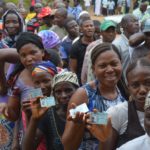
    PVC collection

    What’s up with PVC registration?

    The Independent National Electoral Commission (INEC) resumed registration for Permanent Voter Card (PVC) in June 2021. The commission set a target to register 20 million new voters to add to the existing 84 million on the register of voters. The exercise was divided into four quarters:

    First Quarter – June 28th 2021 to September 21st 2021

    Second Quarter – October 4th 2021 to December 20th 2021 

    Third Quarter – January 3rd 2022 to March 22nd 2022

    4th Quarter – April 11th 2022 to June 30th 2022.

    As of the end of the third quarter, 4.4 million new voters had completed their PVC registration — only 22% of the target set by INEC. 

    PVC registration

    Eligible Nigerians who are 18 years old or older have only three months left to register for the card. But this article isn’t about them.

    ALSO READ: Time Is Running Out for You to Register for Your PVC

    I have registered. When can I get my card?

    PVC collection

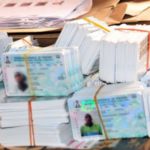
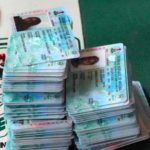
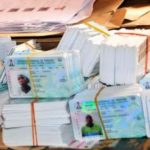
    INEC announced on April 13th 2022 that 1,390,519 PVCs have been printed for new registrants. The commission also printed 464,340 PVCs for people who applied for transfer or replacement of cards. This means a total of 1,854,859 PVCs are now ready for collection from April 19th 2022.

    Who qualifies to collect PVC now?

    The current round of collection is for applicants who completed registration in the first and second quarters of the ongoing exercise. This means people who registered for new cards or applied for transfer or replacement between June 28th 2021 and December 20th 2021.

    INEC will contact them by email and text messages on the availability of the cards and the places to collect them. You can also verify your registration status here.

    What do I need to collect PVC?

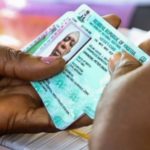
    If you qualify for collection, you need to present your Temporary Voter Card (TVC) at the INEC centre to get your PVC.

    ALSO READ: How To Register For PVC Online In 7 Easy Steps

    There’s a little problem…

    It’s possible that you registered for PVC as a new voter between June and December 2021 but you won’t be getting your card. 

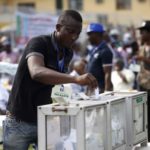
    PVC collection

    While INEC has printed 1.3 million PVCs for new voters, 2.5 million people actually registered within the period. The commission said 1,126,359 of the applications were ruled to be invalid. This represents 44% of the total number of registrations.

    This was due to a lot of reasons which include illegal double registration and incomplete data. The invalid registrants won’t be included in the register of voters.

    What’s the solution?

    Nigerians who are affected by this problem can contact INEC’s Help Desk, social media handles or registration officers at the registration centres for guidance on how to proceed.

    ALSO READ: Zikoko’s Responsible Voter Starter Kit for 2023 Elections

  • The 2023 general elections are less than a year away and politicians have already started hustling to appear on the ballot. Aspirants for public office are buying nomination forms worth millions of naira, making campaign promises and producing painfully hilarious campaign jingles like this:

    While the politicians are already setting things in place, statistics are showing that voters are maybe not doing enough to prepare

    To vote in the election, every Nigerian of voting age needs a permanent voter card (PVC). It’s important. You can’t show up to a voting centre with your driver’s licence to vote.

    Time Is Running Out for You to Register for Your PVC

    At the end of the 2019 elections, Nigeria had 84 million people on the voters’ register. And when the Independent National Electoral Commission (INEC) resumed the PVC registration exercise in June 2021, it set a target to register 20 million new voters

    More than nine months into the registration exercise, only 4.4 million people have registered. That’s only 22% of the target set by INEC. More than three million have started their online registration but haven’t completed it yet.

    Time Is Running Out for You to Register for Your PVC

    Let’s run down a list of the most common questions about the registration process:

    When does registration end?

    The ongoing PVC registration exercise will be paused on June 30th 2022. Anyone that hasn’t registered for PVC by then won’t be able to vote in the 2023 general elections. The registration exercise also likely won’t resume until at least 2024.

    ALSO READ: How To Register For PVC Online In 7 Easy Steps

    What if I need to change my voting centre?

    INEC is also still processing other PVC-related issues including change of voting location and requests for new PVCs. You can start that process with an online application here. This will also be paused on June 30th.

    What if I can’t register online?

    Some people have experienced problems with completing their online registration. This shouldn’t stop you. If you’re affected by this, you can show up at a registration centre close to you to start the process there instead.

    ALSO READ: Don’t Fight Me, but This Is Why I Don’t Have a PVC

    I have registered but when do I get my PVC?

    INEC is yet to start printing PVCs for new voters. The agency has to clean up the registration process to ensure only genuine registrants are added to the voters’ register. When this is completed, INEC will announce the date new voters can start collecting their PVCs. 

    Why do I need to register for PVC?

    Voter turnout in Nigeria’s general elections has been dropping since 2003 even though the voters’ register has been increasing. This is due to a host of reasons including disorganisation, election violence, voter apathy and probably Desmond Elliot.

    But despite the disappointment Nigerians feel about the political class, voting at the ballot remains the most effective way for them to determine the future of the country. Getting as many people as possible to register and vote for the right candidates will determine how the country will deal with its many challenges.

    This is why it’s important that everyone that’s eligible to vote does so. It’s the part you have to play in the giant machine that is Nigeria.

    ALSO READ: Zikoko’s Responsible Voter Starter Kit for 2023 Elections

  • In 2021, INEC  set a target to register 20 million new voters before June 2022. But like the many times the government has promised better power supply, they’re nowhere near that target. As of March 2022, INEC only recorded 4.4 million registered voters since June 2021, only 22% of the 20 million target. So what’s going on? Why aren’t Nigerians registering to vote?  We asked Nigerians without PVCs to explain themselves.

    Please note: all the names affiliated with this article have been changed.

    Kemi: I’ve actually tried. Earlier this year, I registered online, but no one from my voting centre has contacted me to come and collect my PVC. 

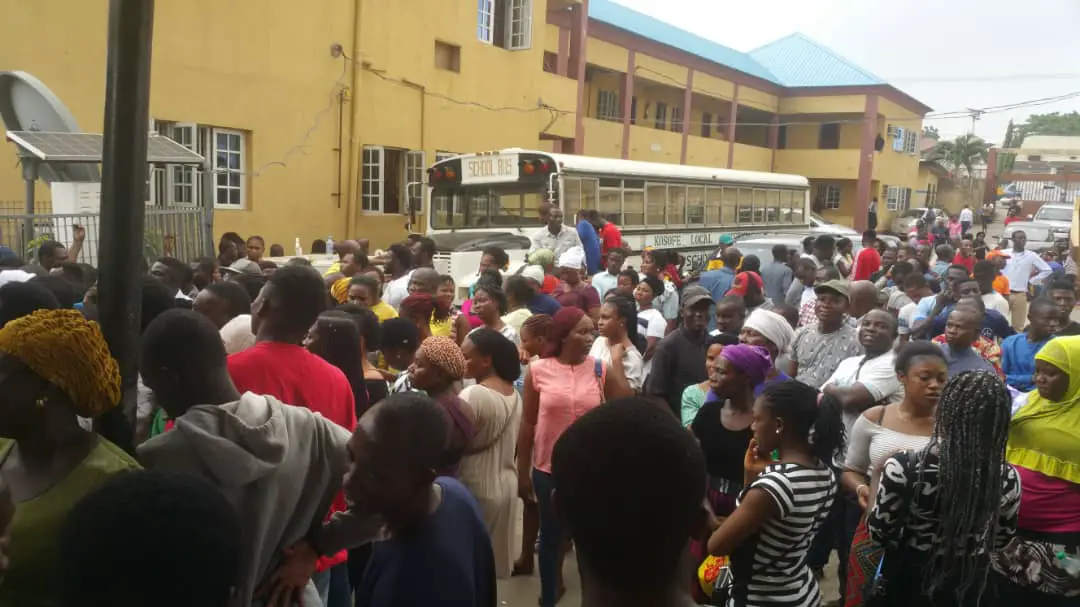
    Salami: Kemi, shey at least you’ve registered? I started my registration online and went for my biometrics but the queue sent me back home. The whole place was crowded. I just postponed the whole thing abeg.

    Tejiri: The same thing happened to me in March. I was told to show up for my biometrics by 1 p.m., but I didn’t get my biometrics done until 4 p.m. Like, I left the queue to sort out an issue with my bank account at a GTB branch and went back to still meet the queue at the Abule Okuta centre in New Garage. And you know how long bank queues are. 

    Kemi: If you people know anyone from Kosofe Local Government Area, beg them to release my PVC.

    Lizzy: The online registration process is stressful because tell me why I haven’t been able to upload my passport.

    Kimi: Look at that. It’s kuku not only me. Every time I try to take a picture, it just shows me “invalid”. It’s quite annoying. Even when I try to add a picture from my gallery, the website rejects it. I don’t know if it’s a studio passport I’ll need to succeed at this point.

    RELATED:  How to Get Your Permanent Voters Card In 4 Simple Steps

    Kemi: Again, Kosofe Local Government I’ve tried my best, please. Help me help my country.

    Susan: LOL. Me and you both sis. I first registered in Ogun State, but I moved to Abuja and applied for a location change. Since January, not a word from either state.

    Ogundairo: I know you people didn’t call those of us with PVCs, but can we talk about how the voting itself is unnecessarily stressful? During the last election, I couldn’t even find a bike to my voting centre. No kekes, no bikes, nothing!

    Tunde: Broooo! 2019 was a big turn off for me to care about 2023. I lived in Isolo then, and there were gangs in certain areas harassing and attacking people they suspected to be Igbo. And it was all because they wanted them to vote for Buhari. I kuku stayed inside my house.

    Lizzy: You’re Igbo?  

    Tunde: No oh, but people always assume I am. So to be on the safe side, I stayed inside. 

    RELATED: Zoning: Who Do Nigerian Politicians Want as Buhari’s Successor?

    Rita: I tried registering and they told me to come back when I turned 18.

    Tejiri: I don’t get. How old are you?  

    Rita: 16. 

    Salami: ???  

    Rita: Doesn’t the country affect me too?  

    Tejiri: LOL. Nigeria isn’t running away. Enjoy being 16 sis.

    Salami: But does my vote really count? 2023 will just be another round of rigging.

    Amaka: Omo. I just need it for identification.

    Kimi: I understand what you guys mean, but how does “not voting” solve anything?  Any move these guys make affects everything. 

    Tunde: No problem. I’m sha travelling in 2023. I’ll see how it goes from the abroad.

    Ogundairo: Kemi, how far? We fit go Kosofe if you’re up for it.

    Kemi: Oya.

    ALSO READ: Zikoko’s Responsible Voter Starter Kit for 2023 Elections

  • Nigerians will go to the polls to elect a new president exactly one year from today on February 18, 2023 — if a zombie apocalypse doesn’t consume all life on earth before then.

    It’s a day that kicks off the 2023 elections and will define the country’s future for the next four years.

    Election season is serious business in Nigeria, and we’re slowly easing into it with all the drama around zoning, youth inclusion, and a pee scandal — but we don’t talk about the pee scandal.

    Bola Tinubu is one of the frontrunners for the 2023 Elections

    As a Nigerian of voting age, there’s a weight of responsibility on your shoulders that should be taken as seriously as signing a work contract.

    With one full year of preparation, what do you need to do between now and next February to make the best choice for yourself and the country?

    We’re here to help.

    Register for your PVC

    You need your PVC for active participation in the 2023 Elections

    A voter without a permanent voter card (PVC) is like a train without an engine.

    You can only remember where that tune is from if you’re at least 40 years old.

    If you’re over 18 years old or sure to turn 18 before June 2022, you should start the registration process for your PVC after reading this, if you haven’t.

    Nigeria has just over 84 million registered voters as of today, but the Independent National Electoral Commission (INEC) set a target in 2021 to register 20 million new voters before the continuous voter registration (CVR) exercise is paused in June 2022.

    With only four months to go, only about 3.1 million people have fully registered for their PVC.

    Only about 3.1 million new voters have registered for PVCs ahead of the 2023 Elections

    INEC is off its target by over 80%.

    The very first step to becoming a responsible voter is to arm yourself with the only thing that can make your voice heard.

    Dust your PVC

    A presidential aspirant that shall not be named recently goofed and told his supporters to go register for new PVCs because the ones they currently hold have expired.

    Bola Tinubu is one of the frontrunners for the 2023 Elections

    This guy, again.

    It’s the kind of broadcast message your aunty sends you at 4 am alongside Bible verses.

    But as you have already been told by INEC, that panic message is as true as bail is free.

    What we can advise is that you should make sure your PVC is in good working condition, or that you even still have it.

    If your PVC is lost or damaged or needs to have its records updated, this is the time to fix all that before the CVR is paused in June.

    Transfer to your closest location

    Nigerian voting laws are still Living in Bondage, which is why your PVC is only useful in the specific polling unit you are registered.

    If you have changed your residential location since the last election, it means you also have to transfer your PVC information to the nearest polling unit.

    INEC also created over 50,000 new polling units last year to move voting centres closer to the people.

    This means that even if you didn’t move locations, you can transfer your PVC record to a polling unit that’s possibly closer to you than before.

    You can start the transfer process here.

    Join a party

    This is not absolutely necessary to do as a voter, but it’s not the worst idea in the world.

    Find a party that aligns with your ideas, and contribute to its internal processes.

    Direct elections are likely to be popular ahead of the 2023 elections. This makes it possible for you to have a direct impact on what candidates your party presents for the elections.

    Pay close attention

    No one does election campaign drama better than Nigerian politicians. 

    They will do this again for the 2023 Elections

    They are proof that characters that have come to steal, kill, and destroy also have the audacity to be entertaining.

    Watch out for all the theatrics for the 2023 Elections

    Exhibit #94,906,949,305

    Campaign season means there’s a lot going on to sell you on candidates and what they’re capable of if elected. It’s all a game and you have to play.

    It’s your responsibility as a voter to open your eyes and ears to what they show and tell you.

    Try to learn as much as you can about candidates and what they stand for, stood for, and are capable of.

    Don’t fall for fake news, and don’t share fake news like your WhatsApp uncles and aunties.

    Don’t sell your vote. It’s an actual crime.

    Stick with us

    Zikoko Citizen will help you to navigate all the hard work needed to make the best choice for the 2023 elections.

    Only an informed voter can make an informed choice and we’re committed to helping you with that by cutting out the noise.

    Update

    INEC has announced a new date for the presidential election after the signing of the Electoral Act Amendment Bill into law.

    The new date is February 25, 2023.

  • Election bells are ringing again, and the Federal Capital Territory (FCT) is in the spotlight this time.

    Residents of Nigeria’s capital will get another chance to elect officials that promise to make their lives better, just like they promised before the last election and the ones before that. 

    What do you need to know?

    The February 12, 2022 elections are for the positions of chairman, vice-chairman, and councillors of the FCT.

    The capital city has six area councils. They are Abaji, Abuja Municipal Area Council (AMAC), Bwari, Gwagwalada, Kuje and Kwali.

    There are 62 wards littered across these councils, with 10 in each except for Abuja which has 12.

    FCT Elections take place on February 12, 2022

    Map of FCT [Research Gate]

    The FCT council elections are conducted every three years and the last happened in March 2019.

    Winners of tomorrow’s elections will be sworn in on May 19, 2022.

    Who’s in it? 

    In total, there are 68 positions up for grabs in the FCT elections, and 473 candidates scrambling to get a piece of the national cake.

    52 men and three women are gunning for the chairmanship positions, while 47 men and eight women want to fill the vice-chairmanship seats.

    110 candidates will battle for the chairmanship and vice-chairmanship positions in the FCT Elections

    Chairmanship and vice-chairmanship candidates for FCT elections [INEC]

    332 men and 31 women are also battling to become the chosen ones to start warming the councillorship seats by the time the elections are over.

    363 candidates will battle for the councillorship positions in the FCT Elections

    Councillorship candidates for FCT elections [INEC]

    There are over 1.3 million registered voters in the FCT to decide who gets what.

    What parties are involved? 

    All the candidates for the FCT elections are being sponsored by 14 parties in total.

    They are: Action Alliance (AA), African Action Congress (AAC), African Democratic Congress (ADC), Action Democratic Party (ADP), All Progressives Congress (APC), All Progressives Grand Alliance (APGA), Allied Peoples Movement (APM), Labour Party (LP), New Nigeria Peoples Party (NNPP), National Rescue Movement (NRM), Peoples Democratic Party (PDP), Peoples Redemption Party (PRP), Social Democratic Party (SDP) and Young Progressive Party (YPP).

    Why should you care?

    Local government elections are the most regularly ignored in Nigeria, sort of like the middle child.

    Despite how important councillors are to making sure people at the grassroots feel the impact of governance, voter turnouts are usually terrible.

    It is important that Nigerians exercise their rights to vote for the exact kind of leaders they want in office.

    So if you reside in the FCT and have a permanent voter card (PVC), you should vote.

    If you don’t have a PVC, you should plan for the future and start the registration process here.

  • On Saturday, July 24, 2021, the Lagos State Independent Electoral Commission (LASIEC) will conduct an election to elect the next chairman and councillors in the 20 local government areas and the 37 local council development areas in the state. 

    Lagos elections

    Why should you care about this?

    Provisions in the 1999 constitution and the Electoral Act of 2010 say that citizens of Nigeria have the right to register as voters and vote for the candidates of their choice during election cycles. 

    Saturday’s election is happening because grassroots representation is important, which makes it more interesting. Nigeria operates a three-tier government system, and the local government is the closest to everyday Nigerians. The winners in Saturday’s polls will oversee the affairs of their respective local government and ensure its development during the time they are in office. That is, they will be in charge of everything you care about.

    What do you need to know about this election?

    For starters, the Lagos State government has announced a movement restriction that will last for seven hours on the day of the election. In a statement by Lagos State Commissioner for Information and Strategy, Mr Gbenga Omotoso, the restriction will start at 8 a.m and end at 3 p.m.

    Part of the statement reads:

    “The restriction is to enable the Lagos State Independent Electoral Commission, LASIEC, to conduct hitch-free elections into positions of chairmen and councillors in all the 57 local government and local council development areas.”

    What does this mean for you?

    If you live in Lagos, you should consider staying at home between 8 a.m. and 3 p.m. Why is this important? It will allow ease of movement for people who want to go out to vote. Also, it will be easier for election officials to move the materials to the polling units where they are needed and allow for effective monitoring and security. 

    The sets of people this movement restriction doesn’t affect are election officials, press and medical personnel and other essential workers.

    I have a permanent voters card, what should I do?

    If you’re a registered voter with a permanent voters card, you should go out to vote. The Chairman of LASIEC, Justice Ayotunde Philips has expressed the commission’s readiness to conduct credible, free and fair elections. 

    Lagos elections
    Image source: Google

    Mrs Ayotunde says, “LASIEC, the body charged with the statutory responsibility of electoral management and administration, is committed to conducting a free, fair, credible and inclusive election.”

    Okay, cool. I have my PVC and I’m going out to vote. How does this work?

    The process is largely straightforward and can work in four or five simple steps. Let’s break it down :

    1. Find your polling unit: If you’re not sure where your polling unit is, this locator microsite from INEC might help you.
    1. Verify and authenticate your PVC: As part of the accreditation process, an election official, usually the Assistant Polling Officer (APO)  at the polling unit will ask for your permanent voters card and run it through a card reader configured for this purpose. The entire process will take between 10 and 20 seconds. Then you will be asked to do a biometrics verification to confirm that you’re the cardholder. Once you have been verified, you will be asked to proceed to the next stage. 
    1. Collect your ballot paper from the polling officer: The Polling Officer at your unit will give you the ballot paper and direct you to the voting booth.
    1. Vote for the candidate of your choice and cast your ballot 
    Lagos elections
    Image source: Google

    You can read more about the process here.

    That’s it. However, you should consider staying behind at the polling unit until voting has concluded. Take part in ballot counting and wait until the results of the polling unit are announced.

    I don’t have my voters card but I want to vote. Is there anything I can do?

    Sadly, you won’t be able to vote if you don’t have a permanent voters card. The good thing is that you can start the process of getting one today. If you’re not sure how to do it, this article is a good place to start. 


    Read more articles like this here.

  • Becoming a Nigerian politician is a long and tedious process many people are unwilling to go through. But we’ve hacked it for you and broken it down into these 10 simple steps so that you can become a Nigerian politician and start living your best life.

    1. You have to start by becoming a political activist.

    Call out corrupt politicians on every platform possible and amass a large following. Renounce politics and all politicians because they are the devil’s spawn. Make it clear that you’d rather sell your kidney than become one of them.

    2. When you’ve become a very well known activist and a voice of the people, use your popularity to collect political appointment from the same people you were criticising.

    After you collect your appointment jump through hoops to defend your appointees and blame everything on the previous government. Rain is falling too much? The previous government embezzled the money that was meant to pay rainmakers to hold the rain.

    3. Now, start making promises that you have no intention of ever keeping.

    You will give Nigerians 24/7 light and free WiFi. You will build 20 schools in one week. You will reduce the exchange rate to $1 to ₦1. With you, corruption shall go to an early grave.

    4. As you progress in your political career decide whether it’s broom or umbrella you want to be carrying.

    There are 68 political parties in Nigeria but you know the fastest way to get a post is to carry broom or umbrella.

    5. Next find yourself a godfather or godmother to sponsor your career.

    Image

    You think political campaigns are cheap? Better be ready to drop it down low so you can get sponsorship.

    6. Practice your fighting skills especially if you are gunning for a place in the National Assembly.

    Maybe ask Uncle Dino for some tips.

    7. You have to show Nigerians that you are one of them.

    You might be worth millions of (laundered) naira but that doesn’t mean you will stop taking okada or buying corn on the road like the average Nigerian.

    The script is to act like you feel their plight, so get in character and act like your life depends on it.

    8. As a politician you also need to get yourself security by whatever means.

    Hire cultists, militants or religious extremists. What’s your business if they end up becoming a terrorist group because you funded them.

    9. You have to get your wardrobe on check too. Get a tailor to sew plenty agbadas for you.

    Only make white. White is the colour of serious politicians.

    10. Once a year share bags of rice to a few people and take a thousand pictures.

    Bathroom slippers too isn’t a bad idea. Depends on the kind of message you intend to pass.

    Image

    Any time Nigerians accuse you of not doing your job publish the pictures online to show them that you are a very hardworking politician.

    Now that we’ve shown you the way go forth and flourish as the baby girl or baby boy politician we know you have the potential to be.

  • We were doing some research and to our surprise, APC and PDP are not the only registered political parties in Nigeria. According to INEC, there are actually 68 registered political parties! We are pretty sure you’ve never heard of these ones.

    All Blending Party (ABP)

    From the name, you’ll already know these ones came to play. What does All Blending Party mean?

    Abundant Nigeria Renewal Party (ANRP)

    Is this a political party logo or the logo for a Yahoo boy’s side hustle?

    All Democratic Peoples Movement (ADPM)

    I like how they’ve already packed themselves inside bus. They better keep driving until they reach Cotonou, because we don’t want them here.

    Citizens Popular Party (CPP)

    These ones had the liver to put ‘popular’ in their party’s name. Why tell such lies?

    Freedom and Justice Party (FJP)

    ‘Freedom and Justice’, as if any Nigerian politician knows the meaning of those words.

    Green Party of Nigeria (GPN)

    I like how there’s a hand telling us ‘your father’ in their logo. At least they are straightforward.

    Independent Democrats (ID)

    If we put all Nigerian politicians together in a room we are pretty sure none of them can spell ‘Independents’ or ‘Democrats’ but there is a political party called Independent Democrats?

    Justice Must Prevail Party (JMPP)

    Is there anywhere in this country that justice prevails?

    Masses Movement of Nigeria (MMN)

    These ones what to use ‘we the people, for the people’ to deceive us. Stay woke, they are all the same.

    National Conscience Party (NCP)

    I’m pretty sure we all know that if there’s one thing all Nigerian politicians lack, it’s conscience.

    New Generation Party of Nigeria (NGP)

    Just look at these wicked people that don’t want us to progress as a country. How can they use hand fan as their logo? So they are praying for us to never have light?

    National Rescue Movement (NRM)

    It took a bit to convince me this is a political party. What’s the bee doing there, please?

    Re-build Nigeria Party (RBNP)

    Please, there is nothing to rebuild we need to start from scratch. We have to lay foundation again.

    Socialist Party of Nigeria (SPN)

    So there are people who are socialists in this country?

    Young Progressive Party (YPP)

    So there is a Young Progressive Party in this country and Buhari is still president. Wawu.
  • Nigeria’s 2019 General elections are close, but what’s super close is the deadline to register to be eligible to vote.
    On the 6th of July 2018, the Independent National Electoral Commission (INEC) said it’ll suspend the Continous Voter Registration (CVR) by 5pm, August 17. At the time of the announcement, the CVR was ending at 3pm, only on Mondays to Fridays. This timing clearly made it more difficult for working-class people to register.

    INEC listened to feedback, and later announced that from August 1st, CVR will happen till 5pm everyday of the week, including Saturdays and Sundays. Awesome.

    While this is great, it still doesn’t solve some fundamental problems with the process.

    We asked over 100 Nigerians currently living in at least 10 states in Nigeria, all scattered across every region. The problems appear to be the same.

    “I don’t even know where to register.”

    28.5% of the respondents say they don’t even know where to find registration centres in their area.
    This is despite the fact that tools already exist to make this process easier. INEC’s website has features like a PVC locator and a Voter Verification page. GoVote has a locator to help people find registration centres.
    We built GetYourPVC.com to help people walk through the entire registration process in 5 minutes.

    “Have you seen the queues?”

    “I’ve been there like 3 times,” Blessing said, “but every time I reach there at 6am, my number on the list will almost be at no. 200. I got tired and stopped going.”

    She’s not alone. Over 48% of the respondents say this is why they haven’t registered. The understaffed INEC centres take the hit, with officials transferring that frustration to people trying to register.
    “Someone came out and announced,” Bankole said, “We’re only registering 100 people today.” The crowd was way more.

    “They were collecting ₦2000 to register people.”

    That’s what Prince said. There have been allegations of INEC officials taking advantage of this overwhelming process, collecting bribes, and giving preferential treatment.

    But complaints like these, including the “they said the machines were bad” issues, only account for less than 3% of reasons people gave for not wanting to register.
    People we’ve spoken to have generally commended the INEC officials for sticking to their albeit cumbersome process, and refusing bribes.
    “In the INEC office I registered,” Samsideen said, “they were very strict and were sending away people wanting to break the process.”

    “What’s the point?”

    With almost a third of the people in the survey not believing in the electoral process, this might be an indication of a wider problem.

    Allegations of election malpractice from the 2015 general elections has bred mistrust. Reports of misconduct by INEC officials like this one in Taraba isn’t helping (INEC fixed this immediately). According to Taiwo Makanjuola, INEC’s Citizens Contact Center Manager, INEC has had a pretty good record in the past few years. “Since 2015, we’ve conducted elections in 182 constituencies, and only 2 have had issues at the Tribunal.” Apathy is not exactly a Nigerian problem. In the United States, almost half of eligible voters didn’t even show up in the 2016 elections Trump won.

    Updated poll numbers

    231,556,622 eligible voters 46.9% didn’t vote 25.6% voted for Clinton 25.5% voted for Trump 1.7% voted for Johnson — Josh Nelson (@soxmachine_josh) November 9, 2016 Bringing it back home, of the 67,422,005 registered voters, only 43.65% of them came through to vote in the 2015 elections.
    Even worse is the fact that the total votes cast in 2015 was about 10 million less than was cast in 2011. Still, Taiwo believes the turnout has been impressive. “Since April 27, 2017, when CVR started, about 11.4 million Nigerians have registered.” The inconveniences people are currently facing, he believes, is a consequence of the last minute rush. What this means, is that INEC didn’t properly prepare for this rush, inevitably cutting a significant amount of people off.

    This is just one poll.

    The observations on the other hand, are valid; a lot of people won’t be able to vote in February 2019, and it won’t be because they didn’t try.

    It’ll be because of the flaws that could have been avoided in a more efficient system.

    Have you registered?

    If you haven’t, visit getyourpvc.com and in 5 minutes, you’ll have a better understanding of what it is you need to do.
  • Nigeria is a country blessed with an extraordinarily diverse set of people. Our politicians are a different breed of their own.

    Let’s talk about of the distinct types of politicians in Nigeria.

    The first type of politicians are the calm ones, believe it or not, some of them fall under this category.

    Whatever the situation, they remain calm.

    Then we have the CEOs of trouble making.

    From jumping fence to tearing cloth, these ones can scatter anywhere.

    You know those types of people who can lie their way out of every situation?

    No comment.

    There’s the special ones who have Ph.Ds in dancing.

    They play a very vital role in the Nigerian politics.

    Let’s not forget the ones who have refused to fully retire.

    Help us beg these baby boys o. It’s okay.

    This category is for the ones who grace us with their beautiful grammar once in a while.

    Higi Haga. Crinkum Crankum.

    The ones who are always in the news for one drama or the other.

    We know the people we’ll send to Big Brother next year.

    What of the ones that change party like SIM cards?

    Home is where the power is.

    There are the ones that are just doing House of Cards with Nigeria

    Will the real Frank Underwood please stand up?

    What about the ones who do everything but their job?

    Is that why we’re here?

    Is this list even complete without the Keyboard Warriors?

    Lion on the Internet, but meow-meow when it’s time to solve our problems.

    Finally, we have the ones who are ready to change Nigeria.

    We’re still waiting for the change sha.

    So if you’re tired of all this nonsense, perhaps the first step is to:

    Make your voice heard. Visit getyourpvc.com and learn how to register to get your PVC ASAP.

    What type of politician did we miss out on? Tell us in the comments below or tweet us @zikokomag!