• This article is part of Had I Known, Zikoko’s theme for September 2025, where we explore Nigerian stories of regret and the lessons learnt. Read more Had I Known stories here.


    Tade* (25) recalls February 2023 as one of the scariest times of her life. She had sworn never to vote, but her brother Toba was the opposite. Excited to cast his ballot, Toba left the barber’s shop with his cut hair sealed in a nylon bag and headed straight for Sagamu — an innocent decision that changed everything for both siblings. 

    This is how Tade’s mind replays those memories:

    February 2023 still haunts me and forces me to stay quiet when people complain about this administration. I was one of those people who would rather chew stone than stand under the sun to vote. You couldn’t even pay me to do it. 

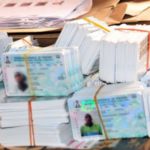
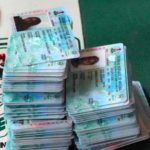
    My brother Toba, on the other hand, was the opposite. He was one of the first set of people to register for their permanent voter card (PVC). They showed him pepper and wasted his time during the collection process, but he was determined to “make Nigeria better.” Foolishness, I called it.

    “Nobody can make Nigeria better,” I’d think to myself.

    Toba finally got the PVC and couldn’t shut up about it. He was schooling in Ijebu, Ogun state, at the time, while I was in Lagos, yet I heard all about how Peter Obi was going to change everything for Nigerian youths.

    He planned to travel down to Sagamu, Ogun state, where he registered to vote — just a short distance from Ijebu. He intended to arrive two days before the election because he didn’t want to take any chances. He was so passionate about the voting process that he rushed to the motor park straight from the barber’s shop.

    Toba has always been as superstitious as our mother, so he packed the cut hair inside a black nylon bag and put it in his backpack — an innocent act that would later make him a criminal in the eyes of the police.

    Get More Zikoko Goodness in Your Mail

    Subscribe to our newsletters and never miss any of the action

    “I’m going to deliver my polling unit #Obidient,” he tweeted from the backseat of the jalopy bus that was supposed to take him to Sagamu. I laughed at his dedication and moved on with my life. My only plan for the election was to spend time with my partner, cooking enough food to carry us through the day. I texted my brother, “Safe travels,” dropped my silenced phone on my bed, and took a long nap.

    A few hours after I woke up, I checked my phone notifications and saw 15 missed calls from my mother, five from my father, and a text from my brother: “They are taking me to the police station.” My first thought was, “What the hell?” My mind went straight into panic mode. I was clumsily scrolling through my phone, trying to process what was going on. I called my mother and got no response. I couldn’t reach Toba or our father either.

    My breath seized, and my heart started beating wildly. I was completely in the dark and unable to help Toba from Lagos. About an hour later, my mother finally picked up her call.

    “What happened? Where is Toba?” I asked.

    “They’ve arrested him. We’re on our way to the police station,” she answered.

    Toba and the police station were two different worlds that could never mix. He’s always been sweeter and gentler than most young men his age. It just didn’t make sense.

    “What did they say he did?” I pressed further.

    My mother explained that the policemen had stopped his bus for a stop-and-search. They said he looked like a yahoo boy and asked to search his bag. When they found the nylon bag with his cut hair, they concluded that he was a ritualist. Toba tried explaining that he was coming from the barber’s shop and planned to dispose of the hair properly when he got to his location, but they didn’t listen. Instead, they asked the bus driver to leave and dragged Toba to the police station.

    They took his phones, took his bag and threw him into a cell.

    One of the policemen later gave him a phone to call his relatives, and that’s how my parents found out that their son had been arrested for the most ridiculous reason.

    By the time my parents arrived at the police station, it was already dark. They asked if they could post bail that same day, but one of the superiors said he’d be keeping my brother in the cell until the end of the election because he suspected Toba might be one of the hoodlums paid to disrupt peace in the area. Another stupid assumption. My aged mother knelt down and begged him to let my brother go, but he refused. For days, I endured multiple panic attacks and lived in fear of what could happen to my brother. I had heard stories of people being unjustly sentenced to jail for even more ridiculous reasons, and I feared that would happen to Toba.

    My parents had no choice but to stay in a hotel until the end of the election. Even after the country wrapped up the voting period, it still took three days, the involvement of a lawyer, and a ₦200,000 bribe to secure my brother’s freedom. He left the cell that day, but his mind is still recovering from the traumatic effect of the experience.

    He missed the election he was so desperate to participate in, endured the worst and most inhumane treatment of his life, and came out to the news that his revered candidate had lost the election.

    On election day, my mind was filled with “what if” questions. I kept refreshing my Twitter timeline to keep up with all the media houses in the country. What if Toba’s candidate could actually save Nigeria, or at least try to? What if I had put in some effort to vote?

    My mind was filled with anger. You don’t realise how broken our systems are in this country until Nigeria happens to you or your loved ones. Toba’s arrest made me realise that maybe people like me, who would rather sit at home than vote, are part of the reason incompetent leaders keep ruling this country.

    My brother’s arrest was a result of years of brokenness passed down from one incompetent leader to another. I felt useless sitting at home and leaving my fate for the next four years in other people’s hands. Maybe if we had more people like Toba, who would rather travel across cities to vote, Nigeria would be a better place. Maybe if I had voted, my vote would have counted.

    I’ve asked him if he would be voting in 2027, and he says his vote will be counted as long as he’s still alive. I’ve pre-registered for my PVC too, and by God’s grace, I’ll be voting in 2027 as well.


    If you’d like to pre-register to vote in the 2027 elections, kindly find out how to do so here.


    Do you have a story of regret? Share it with us by filling this form.

  • March 18, 2023, marked the official end of the governorship and state assembly elections, and so far, many lessons have been learnt. 

    Local government LGA Chairman election

    Unfortunately, for many people, the conduct and results of these elections have further made them lose faith in Nigeria’s electoral process. Some people have resorted to burning their Nigerian passports and Permanent Voter Card (PVC) to show their disappointment in the system. 

    But, we should hold onto hope as we can bring about the change we want, and the best place to start this is at the grassroots level. 

    The local government, also called the grassroots government, is the first medium of bringing democracy to the people. It’s one of the most effective ways to build trust between the government and citizens; to create a system that works. 

    Nigeria has 774 Local Government Areas (LGAs), each headed by an elected Chairman, and it’s time that we give these elections as much attention as we would the presidential and state elections. Why? The LGA is directly responsible for many utilities that affect our quality of life, for instance, the construction and maintenance of roads. 

    Also read: What Are the Functions of the Local Government in Nigeria?

    And you might not know this, but elections for the LGA Chairmanship are conducted not by The Independent National Electoral Commission (INEC) but by the State’s Electoral Commissions. 

    The State governments determine the election cycles for the LGAs.

    Local government LGA Chairman election

    So, what is the procedure for electing an LGA Chairman?

    Eligibility of the candidate

    To contest for the seat of Chairmanship for an LGA, you must be: 

    • At least 25 years of age
    • Have a Senior Secondary School Certificate (SSCE) or its equivalent
    • Be a member of a political party and be sponsored by it also.
    • Pay a non-refundable sum of ₦200,000 to the State Commission 
    • Be a registered voter with a copy of your PVC as issued by INEC
    • Have evidence of tax payment as far back as three years before the election year

    The following things can disqualify you from contesting for the seat the LGA Chairman: 

    • According to Section 28 of the Nigerian constitution, you’ll be declared ineligible if you’ve voluntarily acquired citizenship of a country other than Nigeria.
    • If you’re a member of a secret society
    Local government LGA Chairman election
    • If you’ve been declared mentally unstable under any law in any part of Nigeria
    • If you’ve been given the death sentence by any Nigerian court or tribunal
    • If you’ve been declared bankrupt under any law in force in any part of Nigeria
    • If you’ve been dismissed from the Public Service of the local, state or federal government.

    Candidate nomination

    It’s not enough that you’re eligible to contest for the Chairmanship of an LGA. You must be nominated, in writing, by 20 registered voters from all wards in your constituency. 

    Also, the nomination form must be submitted 20 days before the election date at the place appointed by the State Commission.

    Appointment of electoral officers

    As in the previously conducted presidential and state elections on February 25 and March 18, 2023, electoral officers will be appointed to coordinate the state commission’s activities in each LGA. Ad-hoc staff such as Returning Officers, Poll Clerks, Presiding Officers and many more will also be appointed for the smooth running of the polls.

    Voter Eligibility

    To be eligible to vote, you must:

    • Have a PVC
    • Be a registered voter in the constituency or ward of the LGA

    On the day of the election, you’ll once again be accredited using the Bimodal Voter Accreditation System (BVAS), after which you’ll be given a ballot paper to cast your vote. 

    Election and declaration of the winner

    If only one candidate is nominated, the Commission extends the nomination time by seven days. However, a poll will be conducted if no other person steps forward. But this time, instead of voting for political parties, the ballot would be either “Yes” or “No”; if the candidate has more yes votes, they would be declared the winner. 

    But in situations with more than one nomination, the candidate with the majority votes, and at least 25% in at least two-thirds of the wards, will be declared the winner. 

    So, while our spirits may be low right now with grassroots politics, we still have a fighting chance to birth the kind of Nigeria we want. 

  • Millions of Nigerians, us included, believed the Independent National Electoral Commission (INEC) when it said it would adhere strictly to the Electoral Act, deploy the use of the BVAS and upload results in real-time to the INEC Result Viewing Portal (IReV). 

    [INEC chair Mahmood Yakubu / Punch]

    What played out was the opposite. Across the country, results were not uploaded in real time as promised. Nine days after the general elections, results are still being uploaded to IReV, calling INEC’s competence and integrity to question as it has already declared a winner.

    INEC’s failings have led to an atmosphere of distrust and may have the effect of creating voter apathy. There’ve even been reports of people destroying their Permanent Voters’ Cards (PVC). 

    https://twitter.com/youngskidmusic/status/1630697781957476356

    Destroying your PVC is the wrong approach. In a few hundred words, we hope to convince you why you should still use your PVC to vote on March 11.

    You are in the majority

    There’s a common expression, “majority carries the vote.” It means that in a democracy, the people’s choice of a leader should reflect whoever gathers the most votes. While the president-elect, Bola Tinubu of the All Progressives Congress (APC), has been declared the winner, the victory is disputed in court following protests by the opposition parties over election irregularities.

    [President-elect, Bola Tinubu]

    Opposition votes combined outnumber the winner by nearly 6 million. The importance of this should be evident. It sends a message that despite irregularities, the people can still have their say with their ballots. Abstaining from elections because they don’t go as planned is the equivalent of cutting your nose to spite your face. Remember, the matter is still in court. Whether you turn up or not, elections will proceed. 

    Higher voter turnout reduces the chances of rigging

    You’ve heard this one before, and it’s true. The more people turn out, the less likely the possibility of rigging elections. The saying that there’s strength in numbers carries more weight than you realise.

    The 2019 elections had a 35% voter turnout. This meant 65% of eligible voters didn’t vote. When INEC planned the election, it did so with the assumption that everyone would come out to vote. Millions of unused ballot papers are susceptible to manipulation when the majority don’t come out to vote.

    [Ballot papers / Guardian Nigeria]

    If, on the other hand, voter turnout is in the high eighties or nineties, there’ll be fewer available ballots to swing the election in favour of any one candidate.

    Higher voter turnout is also a thug’s nightmare. A determined voter populace keeping watch at their polling unit will be tough to intimidate because how many people you fit beat? Besides, citizens are better informed and prepared based on how things played out in the February 25 election. So don’t be afraid. Go out and vote.

    State elections are more important than you realise

    All eyes were on the February 25 elections, and understandably too. It’s the top job, and you want whoever gets that seat to merit it because leading Nigeria today is not a job for the fainthearted. 

    However, it’s a mistake to think it all starts and ends with who gets to be president. Arguably, governorship elections are just as important. Your governor can wake up one morning and ban okadas rendering thousands of people jobless. Governors can increase tuition fees of state universities on a whim. They can decide that local government elections won’t hold.

    They are also, as we’ve seen now, very capable of using the powers of their office to sway elections in “interesting” ways. As citizens, it’s in your best interest to vote for candidates not based on ethnic considerations but also based on their character and competence. If a candidate has a history of owing salaries or pensions, for example, a vote on March 11 will make clear that such impunities will no longer be tolerated. Coming out to vote on March 11 will send a message that citizens won’t be dissuaded.

    We’re all learning lessons from the conduct of our elections, but the critical point is that regardless of everything, you should come out to vote on March 11. It’s hard, but it’s necessary. You won’t get this chance again for another four years.

  • In case you missed it, February 5, 2023 was the “final” deadline for collecting permanent voters cards (PVC) ahead of the general election. The Independent National Electoral Commission (INEC) twice extended this deadline from January 22 to January 29 and, most recently, February 5. 

    It’s unclear if there might be another extension. So far, INEC has been silent on whether there’d be another extension, but word on the street is not many Nigerians are thrilled about this.

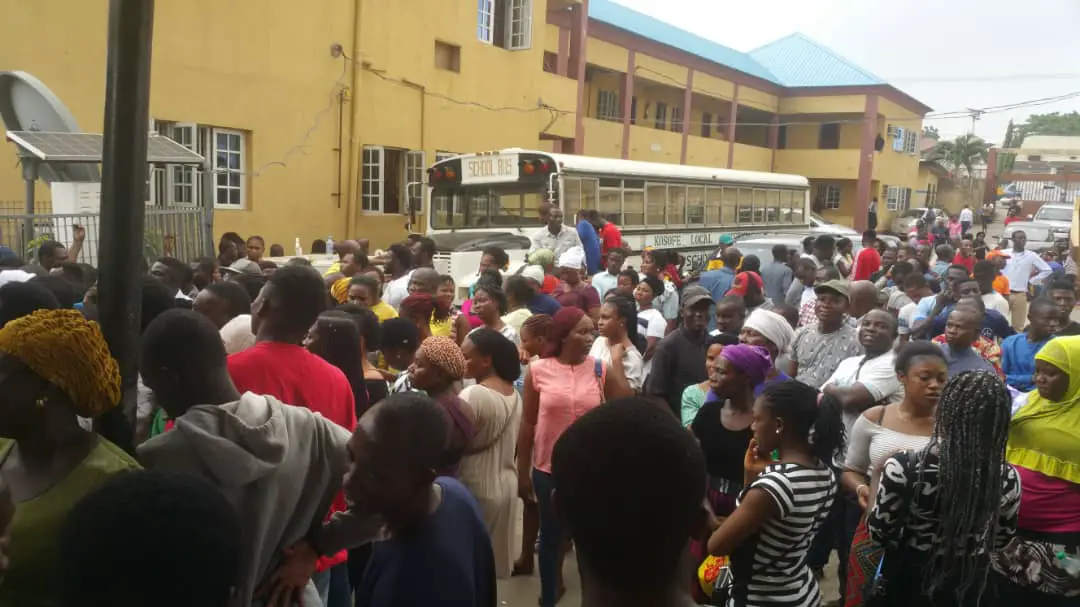
    [Crowd at a PVC collection centre in Abia state. The Sun]

    Citizen spoke to a couple of young Nigerians asking why they hadn’t gotten their PVCs, and we got some interesting responses ranging from apathy to frustration with the process. 

    [PVC collection survey summary. SBM Intelligence]

    Here’s what they said.

    Deborah*

    “I don’t have a personal voter’s card and did not register for one during the registration period. I suffer from an intense form of voter’s apathy, unconcerned about the electoral process and its likely outcomes. Perhaps, I hold a pessimistic attitude towards Nigerian elections, but I have no faith in the system to provide the leadership that Nigeria requires. 

    “I find all the candidates who are currently forerunners to be largely underwhelming. There’s the APC candidate with his failing health, there’s the PDP candidate clueless and capitalising on the goodwill from past positions held, and there’s the Labour Party’s candidate whose claim to fame is his appeal to millennial and Gen Z voters. 

    “If these are my options, I’d rather sit the elections out. Whatever the results — and it is one of the hardest to call in the history of elections in Nigeria —, we will live with the consequences. Above all, I pray for a peaceful transition of power. We deserve to catch a break.”

    Feyisayo

    “When the announcement first came out for PVC registration, I registered on my browser. I even asked around about how to go about it and in the beginning I was dedicated towards getting my PVC. I was in Akure when I started my registration. 

    “Unfortunately I wasn’t sure where I’d be during the election period, I had relocated to Lagos and had to think about the process involved with transferring my PVC or even registering again at another local government. I settled for Kosofe local government at the time. I took time off work to go there to register. 

    “The INEC officials had given me an exact date to come around and I thought it would be better organised because I had an appointment. But when I got there, I saw a crowd of people. I was like, ‘no way.’ The last time I did this was during NYSC and I’m not subjecting myself to this hassle without knowing anybody at INEC. That was basically what discouraged me. I don’t think I waited more than 30 minutes before I went back home.

    “Now though, I kinda regret it. I feel bad and maybe I should’ve waited for a few hours to get my PVC.”

    Vera

    “God knows I tried. I couldn’t get my PVC because it wasn’t found physically at the INEC office even though it reflected on INEC’s portal that it was available. Between November and February I went to their office in Oshodi ten times. Of course I feel bad I couldn’t get my PVC but I know I tried my best so my conscience is clean.”

    Tolu

    “After I finished my online registration I was supposed to go to the local government office on a given day. Unfortunately, I couldn’t go and I just lost track of the whole thing. The process seemed too complicated and wasn’t easy so I just didn’t bother anymore. I don’t feel anyhow about not getting my PVC. I don’t know if that’s the right answer but I just don’t feel anything.”

    Korede

    “I registered online early last year in Abeokuta. I went to the INEC office once to ask about my PVC. They told me it wasn’t ready. I asked a contact at their office to help me confirm the status of my PVC and he kept telling me it wasn’t ready. I was surprised, how can it not be ready? I’ve registered since. I feel bad that I wasn’t able to get my PVC but life goes on. We go still vote, anyhow.”

    * Respondent chose to remain anonymous

    Are you signed up for our Game of Votes newsletter yet? We help you make sense of news jargon and keep you up-to-date, especially with election news. Make the subscription of a lifetime here.

  • In the past seven and a half years, Nigerians have seen things go from bad to beyond worse. It’s unbelievable that a few years back, we could buy spaghetti for ₦120 or sliced bread for ₦250. 

    This situation is motivating voter turnout for the 2023 elections. There have been many sensitisation efforts encouraging people to pick up their Permanent Voter Cards (PVCs) because they won’t be able to vote without them.  

    Recently, the Independent National Electoral Commission (INEC) announced the final dates for PVC collection to be from January 25-29, 2023. This announcement motivated people sounding the alarm for PVC collection. However, some of the methods employed recently to encourage people to collect their PVCs infringe on their fundamental human rights. 

    What’s happened now?

    On January 26, 2023, a video surfaced on the internet where people – traders and customers without their PVCs were denied entry into the electrical section of the Alaba International Market, Lagos.

    An eyewitness explained that the market leaders planned it to ensure everyone went out to vote in the forthcoming elections. Although their enthusiasm can be applauded, it doesn’t change the fact that we’re in a democracy, and people have the choice of whether or not to vote. They can’t and shouldn’t be coerced into it. 

    PVC Alaba Entry human rights violates

    Here are some fundamental rights being violated:

    Rights to freedom of movement

    According to the 1999 constitution (as amended), except for people suspected of or have committed a criminal offence, every Nigerian is free to move freely throughout the country. And barring them from entering anywhere because they don’t have a PVC directly infringes on this right. 

    Freedom of opinion and expression

    Although the best thing for the country would be voter participation,, some Nigerian citizens do not believe in voting for personal or religious reasons. And they are 100% entitled to their beliefs and opinions. Everyone has the freedom to hold opinions without interference and to seek, receive and impart information as long as it doesn’t amount to treason. 

    While trying to protect our democracy, we should respect other people’s opinions and not turn into the monsters we’re fighting. Additionally, you can be sentenced to imprisonment or made to pay heavy fines if prosecuted for these infringements. 

    PVC Alaba Entry human rights violates

    Are you signed up for our Game of Votes newsletter yet? We help you make sense of news jargon and keep you up-to-date, especially with election news. Make the subscription of a lifetime here

    Starting next week (January 31st, 2023)
  • If you have registered for your Permanent Voter’s Card (PVC) but there has been no time to pick it up, we bring good tidings. The Independent National Electoral Commission (INEC) has pushed the deadline for PVC collection from January 22 to January 29, 2023! This was announced by the INEC National Commissioner, Festus Okoye, in a statement released on January 12, 2023.

    But why was the deadline extended? 

    INEC gave two specific reasons why they gave Nigerians more time to get their PVCs. They are:

    Massive Voter Turnout 

    Since January 6, the number of voters who have collected their PVCs has risen dramatically to as high as 100,000.

    The deadline extension is simply a pat on the head for the turnout of Nigerians so far in collecting their PVCs. It is also a gesture to encourage defaulters to pick theirs.

    To investigate extortion by officials

    Asides giving Nigerians a second chance, Okoye has decided to use the extension to play ‘Sherlock Holmes’. This is to fish out INEC officials guilty of demanding bribes from voters for PVC collection.

    According to Okoye, “the Commission is investigating allegations of extortion by officials at some of the collection centres and inducement by some unscrupulous voters to circumvent processes in order to obtain their PVCs. Those found culpable will face disciplinary action and/or prosecution.”

    INEC officials better watch their back now. Otherwise…

    How would the PVCs now be collected?

    Due to the deadline extension, a few things have changed about the timelines and locations for PVC collection:

    • PVC collection at the registration area (Ward) level is extended by one week from Monday 16th – Sunday 22nd January 2023.
    • PVC collection at the local government level will resume on Monday, 23rd – Sunday, 29th January 2023.

    How to pick up your PVC

    To make your PVC collection less stressful, we made a 4-step list of what you should do so you don’t have to:

    • Go to the state where you did your registration.
    • Locate the local government area (LGA), LGA code with the registration area name (RA Name and code), and the collection centre/ward. You can find the addresses of these wards here.
    • Show up at the collection centre with either your temporary voter card, photocopied driving license, photocopied National Identity Card or passport photo 
    • And voila! You now have your PVC to vote for your favourite candidate in February!

    Good luck!

    In our weekly newsletter, Game of Votes, we write the news and track the 2023 election coverage for citizens, by citizens. Make the subscription of a lifetime here.

  • A happy new year to you all. While you’re adjusting to life after Detty December, now’s a good time as a registered Nigerian voter to make it your new year resolution to pick up your Permanent Voters Card (PVC), before January 22, 2023.

    What’s so special about that date? Well, that’s the last day set by the Independent National Electoral Commission (INEC) for anyone to get their PVCs, no extension. We did an explainer here on how to collect your PVC.

    That leaves you with just 18 days to get your PVC if you haven’t already. 

    Here are a few things to know.

    6.7 million PVCs are yet to be collected across 17 states.

    According to a report by Punch, 6.7 million PVCs are locked up in INEC safes across 17 states and the FCT. That’s a lot and INEC is begging you all to go and claim them. 

    On December 29, 2022, INEC disclosed that in Lagos State, 5,816,528 PVCs have been collected while 1,693,963 PVCs remain unclaimed. 

    In the same time period, Edo state had 661,783 voter cards uncollected. Ondo and Ekiti states had 300,000 and 205,127 unclaimed as at December 8. 

    Other states with a high number of unclaimed PVCs include Oyo, 700,000; Osun, 437,454; Kwara, 120,602; Ogun, 400,000; Cross River, 409,604; Kogi, 160,966; Imo, 300,000, Gombe, 231, 900; Anambra, 132,623; Niger,150,988 and over 200,000 in Adamawa. 

    Borno and Plateau States have had decent collection rates with only 80,117 and 49,000 PVCs unclaimed respectively.

    Ride hailing apps are offering 50% off on rides to and from PVC collection centres.

    If you’re in the urban centres of Lagos, Abuja and Port Harcourt, Uber is still in Detty December mood. 

    The ride hailing company is offering a 50 per cent discount on all rides to and from PVC collection centres in those locations. The promo commenced on December 15, 2022 and will continue for up to five weeks from that date. Rides are on weekdays, between 8 am and 5 pm.

    Between January 6 and January 15, PVCs can be picked up at RACs

    The way INEC has designed the collection process is to have PVCs picked up either in all the 774 INEC local government offices, or in the 8,809 registration area centres (RAC), aka wards, in the country. 

    From January 6 to January 15, 2023, PVCs will be available for collection at the RACs.  After then, pickup reverts to the LG offices till the deadline on January 22, 2023. A list of all RACs nationwide is available here

    So there really is no excuse for you. If you decide not to get your PVC because the process is “stressful”, then you’ve lost the right to complain if the wrong people take charge of Nigeria. Choose your stress wisely.

  • The Independent National Electoral Commission (INEC) has finally suspended the Continuous Voter Registration (CVR) for Permanent Voter’s Card (PVC) after 13 months. 

    The CVR resumed in June 2021 to give millions of Nigerians the opportunity to register as new voters ahead of the 2023 general elections and millions turned up

    PVC registration in Nigeria

    The registration exercise finally closed on July 31st, 2022 after a dramatic final few weeks, involving a court case to extend it — which was dismissed in favour of INEC. Here are the most important things we learnt.

    Nigerian youths are serious

    By the time the CVR was suspended, INEC had registered a total of 12.3 million new voters in 13 months. 

    — 8.8 million of the new voters are young people aged between 18 and 34 years old. 

    — 4.5 million of total new registrants are students, many of whom are currently affected by the closure of universities due to the strike by the Academic Staff Union of Universities (ASUU)

    PVC registration in Nigeria

    Nigerian youths are often accused of going missing in the electoral process but the number of young, newly-registered voters may suggest a change in the tide. All that’s left is to receive their PVCs and show up for the elections.

    Digital technology makes things easier. Who knew?

    For the CVR exercise, INEC allowed new voters to apply online. This enabled applicants to pre-register and book appointments for a later date to complete registration at INEC centres. The online portal remained open for a year and gave many Nigerians a chance to start their registration process from the comfort of their homes. 

    Like this

    The ease of registration was pivotal to getting many people to register early for the process. This speaks volumes about how much more INEC needs to involve the use of technology in the electoral process to make it more seamless. Nigerians want things to be more accessible and we can’t blame them.

    Online registrants dozed off

    Despite the use of the online portal, a great percentage of Nigerians who started their registration online didn’t complete it. INEC received a total of 10.5 million online applications from new voters, but only 3.4 million completed the process for their PVCs. 

    It means Nigeria could have seven million more new voters right now if people who began the process online, left the comfort of their homes to complete the biometrics capture at INEC stations. Or could it just be because of the manpower issues INEC failed to address at physical locations?

    INEC needs to be protected

    Generally, Nigeria has a worrying security crisis on its hands, so it’s no surprise that it also touched INEC and the PVC registration process. Gunmen killed an INEC official during an attack on a centre in Imo State in April 2022. They also warned people to stop registering for PVCs, threatening that there’ll be no election. 

    The attack resulted in the suspension of PVC registration in the affected area and was one of the black marks on the CVR exercise in a long line of aggression against the electoral process. INEC has suffered 41 attacks spread across 14 states, since 2019, and remains a target for non-state actors.

    PVC registration in Nigeria

    The government needs to provide more security cover for Nigerians going into the general elections to instill confidence in the process.

    The number of new voters still short of expectations

    The demand for PVCs ahead of the 2023 elections has been described as unprecedented, but the numbers simply fail to back up the claim. 

    In 2021, INEC set a target to register 20 million new voters, but the final tally of 12.3 million (61.5%) new voters falls way off that target. It’s also less than the 14.2 million new voters who registered ahead of the 2019 general elections, although that CVR exercise lasted for a longer period — 15 months, as opposed to this period’s 13 months.

    The PVC registration process needs to be more effective

    PVC registration in Nigeria

    Despite INEC’s best efforts, many problems plagued the CVR exercise during its 13-month run. There were periods when centres were overrun by enthusiastic applicants without adequate manpower and resources to deal with them. Many critics have also expressed disdain towards the 13-month timeline of the exercise. 

    With PVC registration now suspended seven months before the election, tens of thousands of Nigerian youths who turn 18 before the next general elections will be disenfranchised.

    INEC’s excuse is that it needs a lot of time to process applications and deliver PVCs to applicants before the elections, but that’s simply not good enough in 2022. The process has to become more efficient to cater to as many eligible Nigerians as possible.

    Our message to INEC:


    ALSO READ: A Reminder That 2023 Is Not Just About Who Becomes President

  • The permanent voter’s card (PVC) has become a household name in Nigeria over the past few months. It may be just a regular plastic card but it’s the only tool Nigerians have to choose their leaders. And with the 2023 general elections only eight months away, it’s almost impossible to survive a full 24 hours without hearing about the PVC.

    Eligible Nigerians need to register for PVC to vote

    The Independent National Electoral Commission (INEC) resumed the continuous voter registration (CVR) exercise in June 2021 for new voters. This allows eligible Nigerians who are 18 and above to register to vote. The CVR also allows those with damaged cards and other card problems to rectify their issues before next year’s polls.

    The deadline for the CVR exercise was initially set for June 30th, 2022 but was recently extended without a definite date.

    We decided to look at all the important numbers one year since the CVR started. These figures are based on INEC’s update of June 27th, 2022.

    8.6 million new voters

    A total of 8,631,698 people have completed their PVC registration nationwide since June 2021. They will join the other 84 million voters that were on the register for the 2019 general elections.

    6 million youths will vote for the first time

    Out of the 8.6 million new voters, 6,081,456 of them are young people between the ages of 18 and 34. This voting demography is followed by 1,748,993 middle-aged new voters between 35 and 49 years of age and 703,968 elderly voters between 50 and 69.

    97,279 people who are 70 and above will also vote for the first time.

    3.1 million student voters

    3,084,924 of the 8.6 million that are fully registered are students who’ll also get to vote for the first time.

    4.3 million female voters

    The gender distribution of new voters is almost evenly split, but there are slightly more women (4,339,006) than men (4,292,690). 

    Offline > Online

    The CVR started in June with an online pre-registration process, but more people started and completed their registration by going directly to INEC centres. Of the total 8.6 million that completed registration, only 3,250,449 started online. To put that in context, a total of 10,487,972 submitted online applications for PVCs since June 2021, leaving more than seven million yet to complete the process.

    Southern dominance

    States in the southern region have set the pace in online applications and the number of applications completed over the past year. These are the top five with completed applications:

    Delta — 396,900

    Kano — 380,582 

    Bayelsa — 379,438 

    Rivers — 372,406 

    Lagos — 371,760

    23.5 million online applications in total since 2021

    A total of 23,560,043 applications have been submitted on the INEC portal since June 2021. This figure includes applications for new PVCs, transfer of voting location, requests to replace damaged or lost PVCs or requests to update voter information records.

    PVC collection

    Those who registered between June and December 2021 are already cleared to collect their cards and those who have been registering since January will start collecting their cards in October 2022. Nigerians currently rushing to register for PVC are unlikely to start collecting their cards until January 2023

    Since it’s unclear when CVR will end, you should go to an INEC centre near you (only if you’re eligible, of course), and register to vote.

    ALSO READ: Zikoko’s Responsible Voter Starter Kit for 2023 Elections

  • The campaign season for the 2023 elections in Nigeria isn’t even in full gear yet and presidential aspirant, Bola Tinubu, is already dominating the charts for the most public blunders. 

    The former Lagos State governor raised eyebrows in 2021 when he said he would solve unemployment with the recruitment of 50 million Nigerian youths into the Army.

    That’s a force large enough to fight 10 world wars

    Tinubu has also managed to call Dolapo Osinbajo, the wife of the vice president, the wife of the president and claimed Nigerian youths are “tweeting on WhatsApp”.

    While these blunders are harmless, entertaining fodder for online mockery, there’s another one Tinubu keeps repeating that could have dire consequences.

    Tinubu’s stubborn lie about PVCs

    At a consultation meeting in January 2022, Tinubu said the permanent voter cards (PVC) that Nigerians have had expired. He said it with the confidence of a man who knew what he was talking about. He further told his supporters to go back to the Independent National Electoral Commission (INEC) to register for new ones.

    Unsurprisingly, it turned out that he was saying nonsense. INEC quickly announced that PVCs don’t expire. It’s probably what the “permanent” in permanent voter cards means.

    Tinubu keeps making a false claim about the PVC

    Tinubu’s team immediately apologised for his blunder and that should have been the end of it. Except he’s struck again.

    At a campaign event in Lagos on April 16th 2022, Tinubu asked his supporters to make sure their PVCs haven’t expired. He told them to go revalidate their cards so that they can vote in the 2023 elections.

    ALSO READ: PVCs Are Coming! And New Voters Can Start Collecting Them, But…

    What does INEC think?

    INEC chairman, Mahmood Yakubu, announced on April 13th 2022 that 1,126,359 out of the 2,523,458 new applications for PVC between June and December 2021 were faulty. The cleanup of the data of registrants showed that 45 out of every 100 new applications in the six-month period were invalid.

    Tinubu keeps making a false claim about the PVC

    Yakubu offered two specific reasons for the trend: people who already registered but were registering for the second time and people who provided incomplete data and didn’t meet the criteria for registration.

    Registering more than once, like Tinubu keeps pushing, is an electoral offence punishable by one-year imprisonment, a fine of ₦100,000 or both. This is clearly stated in Section 23 of the Electoral Act 2022.

    Tinubu keeps making a false claim about the PVC

    What if I have a problem with my PVC?

    INEC has provided two reasons for why such a high number of people’s PVC registrations were invalid: ignorance or deliberate attempts to cheat the system. People engaging in the latter will smell jail if convicted, but people in the former simply need education.

    Tinubu keeps making a false claim about the PVC

    Listen carefully

    INEC’s message is clear: you don’t have to register for a PVC if you’ve already registered before. If you’ve had problems in the past with your PVC or fingerprint recognition during accreditation in any previous election, all you need to do is revalidate. A revalidation involves visiting a registration centre to recapture your fingerprints and picture.

    If your PVC is missing or defaced, your details need correction or you need to transfer your PVC location, you also don’t need to register from scratch. INEC has provided resources for solving those problems too, available on the commission’s online platform.

    The registration for PVC is for Nigerians who have clocked the age of 18 years and have never registered before. PVCs don’t expire.

    Don’t say you weren’t warned.

    If you’re not sure of your registration status, you can contact INEC’s Help Desk, social media handles or registration officers at the registration centres for guidance.

    What you shouldn’t do is listen to Tinubu.

    ALSO READ: Time Is Running Out for You to Register for Your PVC