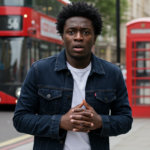
• Bolu* (27) had a simple plan: spend a week in London with loved ones, head to Spain for a birthday trip, then return to life in Lagos. But everything changed when his backpack — carrying his passport, laptop, and phone — vanished on a train. 

    Just when it felt like all hope was lost, two close friends, Akin (31) and Kayode (28), stepped in and pulled off what felt like a real-life heist movie.

    This is Bolu’s story, as told to Daniel Orubo. 

    I arrived in London from Lagos in late March 2025. The plan was to enjoy a week with family and friends before heading to my main destination: Spain. I’d spend a few days in Barcelona before going to Tenerife for a friend’s 30th birthday celebration. 

    My first stop was my grandma’s house. While heading out to see a friend, she told me to hold my phone tight because of the city’s rising theft rate. I had visited London about four times before, but this was the first time she had given me that warning. 

    It took less than a day for the warning to make sense.

    I was heading back to her place, checking Google maps, when a masked man on a bike tried to snatch my phone. It happened quickly, but I had a tight grip, so he couldn’t pull it away. Seconds later, I saw him grab a woman’s phone a few feet away and speed off. I was a bit shaken watching her scream and chase after the guy, but I just felt lucky it wasn’t me. 

    The next day, I was in a great mood, feeling like I’d conquered London. So I headed to Borough Market with a friend to try the Instagram-famous strawberry and chocolate dessert, which was delicious — London strawberries and Lagos strawberries are not mates. Then we capped it off with an incredible Michael Jackson show at the Prince Edward Theatre. 

    I was on a high while heading back to my friend’s house, but that was when my luck finally ran out. 

    Earlier that day, I’d packed my backpack with my MacBook, a change of clothes, my passport, some cash ($150 and ₦30k), and my second phone. I remember having my backpack on the seat next to me on the train one moment, and the next, I was getting off without it. I nearly had a panic attack when I realised. 

    Get More Zikoko Goodness in Your Mail

    Subscribe to our newsletters and never miss any of the action

    The train had already left, so I lodged a complaint at the station, but it was almost midnight, and the staff couldn’t do much. Luckily, my second phone was in the bag, so I checked Find My. It said the phone was about two kilometers away, in the opposite direction. I couldn’t make sense of it because it had only been a few minutes since I noticed my backpack was missing. 

    I was devastated, so I called Akin, one of my guys who lived nearby, and went to crash at his place. Kayode, his brother and one of my closest friends, was also there. 

    As much as I appreciated being around loved ones, I couldn’t sleep that night. I kept tossing and turning, frantically trying to retrace my steps. I was holding out hope, convinced that the station would call with good news, and choosing to ignore the confusing locations Find My kept showing me. But as the hours passed, I started to feel defeated. I was sad about my MacBook and the Spain trip I was about to miss, but I was mostly worried about not having my passport in a foreign country. 

    A friend I spoke to in Nigeria reassured me that I could always go to the embassy and get a travel document to return home. I had some clarity on what to do next, but it didn’t erase my crushing disappointment. 

    After going through the five stages of grief in two days, a glimmer of hope finally appeared. 

    I received an alert from Monzo, the digital bank I use in London, that a transaction on my card had been denied at a store. Thankfully, Monzo’s notification included the exact time and location of the transaction: 11:16 am at Ilford. I checked Find My again, and it confirmed that my phone was in the same area, about 3 minutes away from the store.  

    I told Akin and Kayode, and they immediately swung into action. They’d stayed optimistic about finding at least my passport — especially Akin. The moment I showed them the notification, they didn’t even let me take a shower. We hopped on a train and began the one-hour and 30-minute journey to Ilford.

    When we got to the store, the woman at the counter was surprisingly open to helping. She said we could check the CCTV footage, but we’d have to wait six hours for her boss to arrive. I was ready to give up, but Akin wasn’t having it. He offered to pay the boss to return early. That seemed to show her how serious we were, so she called someone else who could operate the CCTV. He said he’d be there in about 45 minutes.

    While we waited, we decided to do some investigating of our own. Find My was still showing the phone in a nearby building, so we snuck in and started going floor by floor — 11 floors in total — pinging the device as we moved, hoping to hear a sound.

    On the eighth floor, Find My suddenly changed from “5 mins ago” to “Now.”

    There were four flats on that floor, but only one had the lights on. We took it as a sign. Akin knocked on the door, and a white girl opened it. The moment she saw the three of us, she shut the door, then came back with a friend.

    We explained that we were tracking a stolen phone, but they both looked confused. They said they were just 17 and babysitting their brother. They gave us details about the other tenants on the floor and wished us luck with our search. I thanked them for their help and gave them my number to reach out if they saw anything. 

    We continued checking other floors, but the location kept shifting — “3 mins ago,” then “Now” again when we returned to the eighth floor. We were sure the phone was on that floor; we just couldn’t prove it.

    Since it was almost time for the CCTV guy to arrive, we returned to the store. When he got there, he pulled up the footage for us. We watched closely as a guy in a hoodie showed up around the time of the attempted transaction — we were sure it was him, but he paid in cash.

    Then, right before the clock hit 11:17, we saw three girls walk in. One of them pulled out my red Monzo card to pay. It declined, and they played it off, then paid with cash.

    Two of the girls were the same ones who had answered the door on the eighth floor.

    We ran back to the building, armed with the video evidence. We knocked gently at first, but they didn’t answer. Akin eventually lost his patience and started banging on the door, shouting that we had proof and would call the police if they didn’t hand over the backpack.

    They started screaming from behind the door, denying everything and telling us to leave.

    [ad]

    We tried calling the police, but the call wouldn’t go through. So Akin told me to head to the nearest station and get someone in person. On my way down, I ran into a lovely Jamaican woman in the lift who pointed out she hadn’t seen me in the building before. I gave her the gist of what was happening, and she was instantly invested.

    She told me I didn’t need to go all the way to the station — I just needed to call the emergency number, 999. She even helped me explain everything over the phone. The police said they’d be there in about an hour.

    I went back upstairs to make sure no one tried to leave while Kayode and Akin waited downstairs for the police. As I stood there, a Black guy showed up and asked if I was the one banging on his door — the girls had called for backup.

    He walked into the house, and I quickly called Kayode to come upstairs in case things escalated. A moment later, the guy came back out with two girls. One was carrying a massive Ghana-Must-Go-type bag filled with bras and underwear. She said she was going to a doctor’s appointment, but I told her they couldn’t leave until I found my backpack.

    Kayode joined us, and we all agreed to head downstairs to sort it out. It was becoming clear the guy had no idea what was really going on. As we explained, you could see it click for him that he’d been lied to.

    By the time we got downstairs, the police had arrived and were speaking to Akin. That clearly rattled the girls. The one holding the bag tried to hand it off to the other, but she refused.

    The guy pulled them aside to get the truth. That’s when they dropped the bag, and there it was: my backpack, buried under a sea of underwear.

    I checked to find the money gone — I’m still not sure what ₦30k was supposed to do for them in London — but my MacBook, passport, and second phone were still there. 

    It felt surreal.

    The guy apologised, saying he thought he was coming to defend his friends. Then the two girls ran off. We finally went upstairs to tell the police we’d found my backpack.

    They asked if I wanted to press charges, but I said no. I was too relieved, too tired.

    As I said that, the girl who opened the door started screaming, demanding an apology for banging on their door. Kayode, who had been calm all through, finally lost it. He started screaming at her, but the police asked us to let it go.

    They praised us for our detective work and told me I could still press charges later if I changed my mind. The case was now on file.

    As we walked away, I could only think: Thank God for my guys. Because of them, I left with my passport, MacBook, and a hell of a story.


    ALSO READ: I Hit My Mum When I Was 15. We Never Recovered

    Get More Zikoko Goodness in Your Mail

    Subscribe to our newsletters and never miss any of the action

  • A year and eight months after Nigerian adventurer, Kunle Adeyanju, successfully rode from London to Lagos on a motorcycle, UK-based Nigerian, Pelumi Nubi, has been inspired to make a similar trip — this time, by car.

    She’s already visited 80 countries across six continents, so the seemingly impossible task is in capable hands. Here’s everything we know about the road trip.

    Pelumi Nubi: The 29-Year-Old Woman Driving From London to Lagos

    Photo source: Instagram/@pelumi.nubi

    Why is Pelumi embarking on this trip?

    The trip is an important one to 29-year-old Pelumi for four reasons: She loves adventure, wants to inspire other female solo travellers, especially by driving representation among black female solo adventurers, and she simply wants to show people what’s possible.

    “As a traveller, I wanted to do something quite adventurous. It was something that was in the books for me. We also don’t see a lot of solo black female travellers. It’s just like, representation matters. It’s important to see people do things and just open your minds to what’s possible. Some people don’t know it’s possible to go through London to Lagos by road,” she revealed during a podcast interview on Friday, January 19, 2024.

    But that’s not all. She was also inspired by Kunle Adeyanju’s aforementioned 2022 solo trip.

    “He did it by bike two years ago. I was on the phone with him and mentioned how it was so cool what he did.”

    How long will the trip take?

    Pelumi plans to traverse 17 countries in two months, and explore every city and country on her way. 

    Her transatlantic journey will pick up from England and take her through France, Spain, Morocco, West Sahara Desert, Mauritania, Senegal, Gambia, Guinea, Sierra Leone, Liberia, Mali, Burkina Faso, Cote d’Ivoire, Ghana, Togo, Benin, and finally, to Lagos.

    She’s expected to arrive in Lagos at the end of March.

     [ad]

    When does the journey begin?

    No official announcement of a commencement date has been made, but tweets suggest the last week of January. On Wednesday, January 24, she shared a video of her car going through some modifications for the long journey ahead.

    The next day, she shared a tweet indicating that the start date is just a few days away.

    Pelumi Nubi: The 29-Year-Old Woman Driving From London to Lagos

    Her previous road trips

    Pelumi Nubi: The 29-Year-Old Woman Driving From London to Lagos

    Photo source: Instagram/@pelumi.nubi

    Prior to this trip, Pelumi has travelled by road from Lagos to Ghana twice. She’s explored Namibia for two weeks and gone on a road trip from London to Lake Como, Italy. These experiences have served as test runs for her latest and most ambitious adventure yet.

    How is she funding the trip?

    During her podcast interview, she revealed that the entire trip will cost $15,000 – $20,000, covering fuel, accommodation and other essential needs.

    A year of planning and saving up personal funds have made Pelumi’s adventure a reality. However, she still seeks support from brands looking to partner.

    Is she receiving any support?

    Pelumi Nubi: The 29-Year-Old Woman Driving From London to Lagos

    Pelumi’s trip has received attention from fellow Nigerians, travel enthusiasts and the internet community through the hashtag, #London2LagosByRoad. 

    Interest is expected to pick up once she starts making stops in the different countries and cities.

    The biggest women-only festival in Lagos is BACK.
    Get your tickets here for a day of fun, networking and partayyyyy

    This is a developing story.

    Read next: The Hilda Baci Roadmap to a 100-hour Cook-A-Thon

  • The Nigerian experience is physical, emotional, and sometimes international. No one knows it better than our features on #TheAbroadLife, a series where we detail and explore Nigerian experiences while living abroad.


    This week’s Abroad Life subject is a healthcare worker, freelancer and data analyst in his early thirties. He lives in London but works in Bournemouth at the moment. He speaks to us about his life before moving to London, how life in London has been so far, and his newfound love for politics since the buildup for the 2023 general elections started. 

    What motivated you to move to the UK?

    I was born and raised in Nigeria. After I graduated from university, I started working at a publishing company in Lagos. But life was hard for me there. This was for several reasons. Firstly, my residence was at Ikotun, and my workplace was at Ilupeju. The distance was insane but still manageable. After some months, the company relocated to Lekki. Now imagine me having to go all the way to Lekki from Ikotun every single day. That is a distance of almost 60 km. At some point, I got sick of it. 

    Also, I’ve always wanted to return to school and do my Master’s. The initial

    Plan was to do it somewhere in Nigeria, as I felt it was too expensive to do it abroad. But I guess at some point, I thought that the dysfunctional nature of Nigeria would always catch up with me. My best bet was to leave, so I saved up money and, with the help of my family, left Nigeria. 

    How was the migration process? 

    So initially, my first plan was to move to Canada. I started the process in 2019 with the use of an agent. I even got admission into Thompson Rivers University, but my visa was rejected. This was because they felt I would not return after school. I spent the next year in Nigeria and got more motivated to leave due to the pandemic and the overall frustration of the country’s lack of working systems. 

    I then asked a friend sometime around mid-2020 if it was too late for me to start my master’s application to schools in the UK, and his answer was no. He told me to start the process immediately. I went through the process myself, got the visa and then travelled in 2021. 

    Nice. So how would you describe London so far?

    London is like Lagos, but a bit more organised. There are better transport systems. You can always use the tube or train. You get to see a lot of people like you in London. Near my house is an African Market where you can get egusi and other African foodstuffs. There are even African restaurants. 

    However, when you move away from cities like London or Manchester and you move to places like Bournemouth (where I am currently), it’s way calmer. There’s less traffic and the scenery is nicer. But you hardly see people like you; less African stores and the like. You can also hardly see African food here and you just have to stick to European dishes. 

    Even though it’s cheaper to live in Bournemouth, I still have friends in London; hence, I can never really leave London. It also reminds me of Lagos too. You can be walking and see two people speaking Yoruba.

    I can remember my first week in London. I needed someone to exchange currency with and the person was in Arsenal, so I had to travel there. I can remember seeing local brooms and people selling puff puff in London. It was crazy. It gave me PTSD of my Lagos experiences. 

    What are the challenges and advantages of living in London?

    It can sometimes get lonely, especially if you don’t make friends easily. There was a time I stayed somewhere for a year and I didn’t even know who my next-door neighbour was. In Nigeria, when you move to a new place, before the next two days you know everyone on the block. I’m lucky I have my cousin here with me, as we both came at the same time. I don’t know how I’d have survived without my family. There is no way I can forget Nigeria in a hurry. I always keep up with current affairs from time to time.

    However, you’re sure that nothing will halt your progress because they have systems that work. If you’re working a 12-hour shift, for instance, you can be sure that you will get paid your dues no matter what. No one is telling you that they can’t afford to pay your salary or you get half your salary like in Nigeria. 

    Also, if you work hard here, you’ll succeed. You can be sure of seeing the fruit of your labour. But in Nigeria, it’s not the case. It’s very risky to do business because you’re not sure of the next government policy that can strike it down. Like this naira redesign for instance, you see the way people are panicking. Things like that don’t happen here. 

    I’ve noticed that Nigerians here also tend to do very well. This is because we are used to battling systems and external forces that are out to destroy our efforts. When one arrives with that anger and zeal, there is always the possibility of one doing better because those bad systems are almost non-existent. This is the biggest advantage here really. 

    Get More Zikoko Goodness in Your Mail

    Subscribe to our newsletters and never miss any of the action

    Nigeria’s elections are less than two weeks away. Would you vote if you were in Nigeria?

    I’d definitely vote if I were in Nigeria. 

    Did you know you’d not be able to vote from the UK? If you did, then why did you still leave? 

    I knew I’d not be able to vote. This wasn’t because of a lack of patriotism. I know that when I was doing my undergraduate studies back in Nigeria, I was in groups that advocated for better governance and sensitisation for citizens. 

    But it got to a point where I was almost going insane with everything going in Nigeria and I needed an escape. I still really love Nigeria and I still wish to come back. However, with Nigeria’s current state, I don’t see how it can benefit me at the moment. Also, I’m the only boy in my family. At some point, my parents will start expecting me to pay bills and do things that a ‘son of the house’ should do. When you’re in Nigeria, paying bills, and your financial capacity isn’t growing anywhere, things will become difficult for you. 

    Who are you supporting in the 2023 elections, and how do you wish to show your support from abroad?

    Funny enough, I supported the All Progressives Congress (APC) in 2015 over the People’s Democratic Party (PDP) because I felt PDP was enjoying a huge monopoly and needed some real competition, having been in power for the last 16 years. However, the APC came and made things even worse. 

    However, with the rise of a third-force party, I’ve now become a supporter of Peter Obi, who’s under the Labour Party (LP). I believe he’s not part of the ‘inner cabal’ of Nigerian politicians and, therefore, can bring in fresh ideas for Nigeria to become a better place. I’d love for him to be elected as president so that he can change the country and I can come back home. Nigeria is a sweet country to live.

    As to how I’m showing my support, I’m making sure that my friends and family are ‘Obidient’. My dad, for one, was so surprised at my newfound political awareness. This is because my dad’s image of me whenever it comes to politics is forcing me to watch the 9 o’clock news back in Nigeria. But when I pitched Obi as the right candidate in one of my calls he was shocked, and so were my family members. So I can say that yes, I show my support by heavily endorsing Obi to everyone I know back home. I also make sure to always make my support loud for Obi on social media, especially on Twitter.

  • For the love of the real stars, the producers, we created #Beatsmith — a series that focuses on the connections and inspirations that led to the creation of that hit song or album.


    Last week on #Beatsmith, we spoke to Altims about producing Rema’s latest banger, “Lady” — a standout off his third EP, Bad Commando. Now, we’re turning our attention to the EP’s title track, which seems to be gaining more momentum with each passing day.

    Produced by fast-rising talent, London, “Bad Commando” is an utterly infectious earworm that burrows itself into the brain of anyone who listens. So, we decided to catch up with the song’s producer to discuss how a rejected beat became another Rema hit.

    On meeting Rema:

    I met Rema back in 2018. Before we got acquainted, I used to hear his songs, but I didn’t know who he was. Then I saw him recording at the Mavin Records studio one day, and I introduced myself.

    https://www.instagram.com/p/B30k2C-hW8m/?utm_source=ig_web_copy_link

    On first discussing “Bad Commando”:

    Honestly, none of this was planned. I had originally made the beat for another artist, but he wasn’t feeling it at that point. So, I played it for Rema and he immediately liked it.

    On main inspiration:

    If I’m being honest, I didn’t have anything in my head when I was making the beat. I was just flowing with the vibe. Well, I was eating during the process, so I can say there was a lot of joy in my heart.

    On difficulty level:

    Compared to the other songs I’ve worked on (Starboy’s “London”, DJ Tunez’s “Turn Up”), making “Bad Commando” was probably the easiest. I made the beat in like 20 minutes and finished everything when he recorded.

    On the song’s short runtime:

    I think the shorter a song is, the sweeter it gets. When it doesn’t go on for too long, like with “Bad Commando” (which clocks in at one minute and forty-four seconds), you can play it over and over again.

    On if he’d change anything:

    Listening to the song post-release, there are a few minor tweaks I’d like to make here and there, but at the end of the day, I’m happy with the way it turned out.

    https://www.instagram.com/p/B3MVo7ShrbO/?utm_source=ig_web_copy_link
  • There’s a new type of Nigerian Pride in the air.

    Israel Adesanya

    You may have caught it at a party, dancing like it owns grime and afro-swing from the UK. If you listen closely, it sneaks foreign slang from around the world into every sentence it speaks.

    On social media, it tweets in support for artists from different countries.

    For some reason, it has given Nigerian nicknames to relative outsiders.

    In its latest iteration though, it’s claiming someone as its own. He’s a Mixed Martial Artist called Israel Adesanya.

    At 29 years of age, the lean, muscular fighting machine is the UFC’s latest darling.

    https://www.instagram.com/p/Bp8K8OHgX_b/

    He moved to the UFC from New Zealand in 2018 and has remained unbeaten since. He’s managed those 19 fights by teasing opponents and punching their lights out.

    For 25 years, the United Fighting Championship has entertained fans with gladiator-style brawls between mixed martial artists in what is now the fastest growing sport in the world.

    There must have been a few Nigerian UFC fans before Adesanya.

    Whether the style-bender has inspired a new frenzied fanbase in the country of his birth is a different question.

    Last weekend, before his main event fight, Nigerian rapper, Wale, tweeted a highlight reel of Adesanya with the words “We wit you@laststylebender”.

    All over the internet, Nigerians, from news outlets to your favourite actor, waited. There could be only one outcome.

    The Naija boy had to beat this unknown opponent and continue his run.

    Some say Adesanya fights like a Nigerian.

    https://www.instagram.com/p/Bp8if2dgbgY/

    Hard, quick and flamboyant. During the fight, he paused after delivering a combo of punches, put his left arm behind his back and invited his opponent for more.

    Of course, he’d be silly to do this if he couldn’t handle himself.

    He can hit with all his limbs, which basically means sleep can come upon an opponent from anywhere.

    But most are drawn to his pride in Nigeria.

    Adesanya first came under the public radar on the night of UFC 221. He grabbed a mic and promised Nigerians he would always make them proud in his native Yoruba.

    Ask around and you may well be told that the 70s and 80s are Nigeria’s golden age. But while we were reacting to the first fruits of independence, an undercovered exodus was ongoing. It hasn’t ended since.

    Either for fear of living in a military dictatorship, pre-emptive efforts to avoid the impending crises that would define Nigeria in the 1990s – or just a good old search for greener pastures, many Nigerians began to emigrate to English-speaking countries across the world.

    Most of them settled in Europe, particularly in England. Others, like the Adesanya’s, covered more miles and ended up in New Zealand.

    What happened after is untold history.

    Skepta Nigerian Chief

    The children of these immigrants lived like Nigerians among their families and immigrant communities. But they also had access to opportunities, more than they would have had here, and new cultures – in food, music, fashion and ends. A generation of foreign nationals, weaned on the West, but with strong ties to Home.

    Some of them were born in conditions that birth art like Skepta in London’s Meridian Walk Estates, or like Sade Adu, from a market town in Essex. Some like Israel chased their fancy from New Zealand to China.

    I saw Isreal fight Anderson Silva, a Brazilian “future Hall of Famer” as he was described, at my brother’s flat in Ajah.

    https://www.youtube.com/watch?v=u_Fsg3m1p0I

    Adesanya’s fighting background is most Oriental. In the UFC’s Octagon though, Silva is one of his heroes. So he showed respect against a formidable opponent and tired him out with quick blows and kicks to his knee.

    It’s horrid stuff at times like that, but then the fight ended and Israel and Silva bowed before each other.

    The boy with the ‘BROKEN NATIVE’ chest tattoo began to cry.

    My brother’s friend Seun whispered “Naija gats dey thankful to the UK”.

    https://www.instagram.com/p/Btrfrqdnh2-/

    So, I’m fiercely anti-every-focken-colonial-power-that-still-exists-because-Nigeria-Congo-etc-etc, but it made sense.

    The UK has been the bridge between Nigerian pop culture and the world. A conveyor belt, from the first sprinklings of 70s fashion to the gleeful rhythms of Afrobeats. Ojuelegba stayed in London’s Meridian Walk Estate before the 6God took it to a global level. It’s where most of this Nigerian Pride has come from.

    Chief Joseph Junior Adenuga, the Amuludun of Odo-Aje, or Skepta as you probably know him is the best example. Skepta has single-handedly has strengthened a cultural connection between Lagos and London.

    And there are many more like him. There may have been a time when their ‘Nigerian-ness’ would be questioned but things are different now

    Israel is a real Nigerian boy too, or at least, what we’re often depicted to be.

    https://www.instagram.com/p/Btpujd9nq4-/

    He’s probably the only Naruto fanboy from Nigeria who got to do the real thing. Like most of us, he’ll make sure you know he’s running things – like in this Instagram post hours before the fight. He drives a Range Rover and wears a thick gold chain because, contrast.

    There’s a bit of Melancholy about it though.

    Before he shut down London’s O2 Arena, Davido offered a sobering lens on our adoption of pop culture when he told the UK’s Channel 4, “Back home in Nigeria, entertainment is one of the few things we have to be happy about”.

    It’s not far from the truth.

    It’s easy to see why then – while things go sour at home and Nigerians face a decision between the devil and the deep blue sea, we enjoy these spatial moments of delight coming from the abroad.

    We may draw up a hundred and one reasons why we love his fighting but there’s a sense that all Israel Adesanya had to do was be Nigerian.

    As long as Jack keeps Twitter free and we are still allowed to take pride in our own, we won’t let anyone forget it.

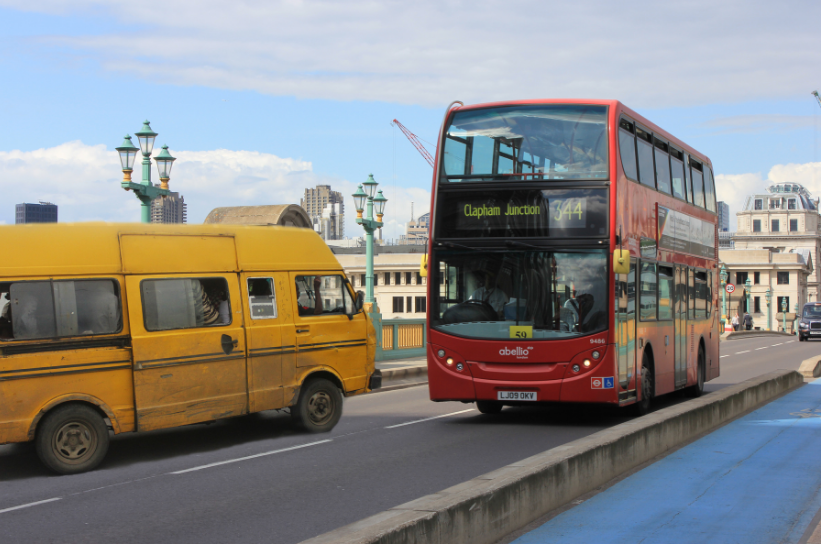
  • So did someone actually drive a danfo on the streets of London? Sadly, no. Talented Nigerian photographer and writer, Wonuola Lawal used her amazing Photoshop skills to create a brilliant fusion of pictures taken in Lagos with those taken in major cities abroad and she called it ‘The Displacement Series’. Her reason is simple – “by combining two different stories, each picture is able to tell a new one”.

    1. When oyinbo people realize roasted corn is fire

    A Nigerian woman roasting corn in a New York subway station.

    2. When Lagos danfo meets London bus

    Crossroads; when two popular means of transportation from two different worlds meet. 

    3. Kekes cannot be left out

    Keke Maruwas in New York.

    4. These hawkers fit right in

    Pastry sellers from Awolowo road, Ikoyi selling their pastries in Rittenhouse Square, Philadelphia.

    5. People in France still have to eat groundnut, right?

    A trader from Marina, Lagos selling her wares on a side-street in Sitges, Spain.

    6. When you’re going abroad and you remember to take your busstop with you

    Lekki Phase 1 bus stop in Boston

    7. Lagos taxi lounging in Monaco

    A Taxi driver from Monaco points as a Taxi from Lagos, Nigeria suddenly appears in the middle of the road.

    8. When you’re in Britain and Nigeria at the same time

    A man makes a call in a British telephone box, while on the streets of Lagos.

    I know you love it. You’re welcome!

    Pictures and captions from Wonuolalwal.com. Follow Wonuola’s Instagram too for some brilliant photography.
  • As a Nigerian, there’s the sadistic happiness that comes with knowing ours is not the only country where things simply don’t work. Our Nigerian brother was in London Heathrow Airport recently, and guess what he noticed while it rained? Leaks in the roof! And not just that; these guys used a bucket to gather rain water.

    Even though it’s very petty of us, we are honestly just as happy as this guy.

    Because apparently, it’s not only Nigerian Airports that can embarrass.

    But Heathrow’s hilarious reply was what really cracked us up: they claimed it was planned!

    Even Lagos Airport got on the funny thread, pretending to have planned out the scene with London Heathrow.

    We all know it was not planned though.