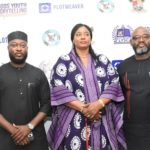
• The Lagos State government has appointed PlotWeaver as Technology Partner for the Lagos 2025 Youth Storytelling Challenge.

    The endorsement came after a thorough evaluation and review of PlotWeaver’s proposal to serve as technology partner to the competition by the Lagos State Films and Videos Censorship Board (LSFVCB).

    In its letter of approval to PlotWeaver signed by LSFVCB’s Executive Secretary, Agbaminoja Adebukola, the board said PlotWeaver’s proposal was found to be credible.

    “Sequel to your proposal to provide technology partner for the Lagos State Youth Storytelling Challenge 2025, we write to notify you that the proposal has been found credible for the agency’s endorsement.

    After a thorough evaluation, we recognise Plotweaver’s ability to provide a digital platform to engage over 200,000 students across Lagos State’s six educational districts,” Adebukola said in a letter addressed to Olumuyiwa Ojo, PlotWeaver’s Chief Partnership Officer (CPO).

    The partnership between the Lagos State Films and Videos Censorship Board and PlotWeaver marks a significant step in the state’s quest to set a new standard in creative education in Nigeria by investing in her youths.

    Get More Zikoko Goodness in Your Mail

    Subscribe to our newsletters and never miss any of the action

    Terms of the deal include the delivery of a digital platform, real-time analytics, a post-event archive, and opportunities by PlotWeaver to help showcase the challenge internationally and promote films and video works — especially those that educate and celebrate values and culture. PlotWeaver is also expected to seek sponsorship from other organisations toward the actualisation of the project.

    Meanwhile, the Lagos State government, through the state Films and Videos Censorship Board (LSFVCB), will provide regulatory support, ensure content compliance, and widely promote the initiative. The challenge includes a robust prize structure, featuring full production of the winning script, scholarships, mentorship, and media exposure.

    Speaking on the development, PlotWeaver’s CPO, Olumuyiwa Ojo, said the firm plans to extend the gesture to other states and the Federal Capital Territory (FCT) after the Lagos event is concluded.

    Oluwole Fagbohun, CEO of PlotWeaver, added:

    “At PlotWeaver, we believe storytelling is a superpower. This partnership gives hundreds of thousands of young people in Lagos a chance to discover their voices, sharpen their creativity, and showcase their brilliance to the world. We’re honoured to support the state’s vision for youth development through purposeful technology.”

    PlotWeaver is an innovative AI-powered end-to-end storytelling and film production platform which has revolutionised content creation for filmmakers, producers, and media houses across Africa.

    By integrating AI-driven script development, production automation, and collaboration tools, PlotWeaver has empowered African storytellers to scale their content globally while streamlining production workflows.


    [ad]

  • On June 11, 2024, Professor Akin Abayomi, Lagos State’s Commissioner for Health, issued a press statement that reported, confirmed, and warned about excess cholera reports in Lagos State.

    Although the state government issued another official statement yesterday stating that the alarming gastroenteritis cases are contained, this is what’s been happening.

    According to the Nigeria Centre for Disease Control and Prevention (NCDC)… 

    The data from the NCDC showed that from January 1 to June 11, 2024, Nigeria reported 1,141 suspected cholera cases, 65 confirmed cases, and 14 deaths across 96 local governments in 30 states. Ten states contributed 90% of the total numbers: Abia, Bauchi, Bayelsa, Cross River, Delta, Imo, Katsina, Nasarawa, and lately Lagos.

    The Lagos State’s cases

    According to the surveillance reports, Prof. Abayomi (Commissioner for Health, Lagos) revealed severe cases in areas like Ikorodu, Kosofe, Eti-Osa and Lagos Island.

    The casualties

    The Lagos Health Commissioner’s report noted five deaths and nothing less than sixty hospital admissions.

    Increased surveillance and investigation

    The Ministry of Health Directorate of Environmental Health and the Lagos State Environmental Protection Agency are alerted to investigate a likely water contamination source around Victoria Island and Lekki. These agencies have also taken in samples for confirmation.

    Hotlines

    Report suspected cholera cases in Lagos to the following emergency contacts: 08023169485 and 08137412348. You can also dial helplines 112 or 767.

    Suspected cases in Ibadan

    In a press statement issued on X on June 13, 2024, the Oyo State government reported two admitted suspected cases of Cholera from Lagos state in a private hospital in Ibadan. However, the state’s health agencies are on it.

    Federal government’s intervention

    The government has established a multi-sectoral National Cholera Technical Working Group that comprises the NCDC, Federal Ministries of Environmental and Water Resources, the National Primary Health Care Development Agency (NPHCDA), World Health Organizations (WHO), United Nations Children’s Fund (UNICEF), and other partners.

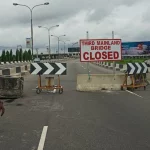
  • On Tuesday, November 1, the Federal Government commenced rehabilitation of the third mainland bridge in Lagos state. Minister of Works, David Umahi, inspected the 11.8-kilometer-long bridge on Saturday, October 28, ahead of the repairs.

    The repairs will affect Lagos commuters in different ways, so we’ve highlighted seven important things to keep in mind. 

    Rehabilitation officially kicks off on November 1

    Repair works on the 3rd mainland bridge kicked off on Wednesday, November 1.

    The bridge will be  closed partially

    According to Umahi, the repair work will be carried out at midnight to reduce the constraint on road users.

    The repairs will last for three months

    The repair work will span three months and be completed by January 2024.

    The bridge will be closed at midnight and opened at 4 a.m. on weekdays

    While addressing pressmen at the inspection, Umahi said, “We’re are going to be working weekends, Saturdays and Sundays. If we ever work during the other days, it has to be from 12 in the midnight to 4 a.m. the next day. We will not inconvenience Lagosians.”

    Two sections of the bridge will be closed

    According to Engr. (Mrs.) O. I. Kesha, the Federal Controller of Works, Lagos, the rehabilitation will begin with the ramps connecting Oworoshoki to Adekunle and Lagos Island (Adeniji Adele) to Adekunle simultaneously.

    These ramps will be closed to traffic at 7 a.m. on Monday, November 6, 2023, for five weeks.

    [ad]

    Alternative routes to consider 

    The Lagos State Commissioner for Transportation, Oluwaseun Osiyemi, urged motorists to consider alternative routes.

    “SCENE 1: Motorists from Lagos Island heading to Ebute Metta will be diverted to Ilubirin to connect Carter Bridge (Idumota) to link Iddo toward Otto/Oyingbo axis and access Herbert Macaulay Way to link to their desired destinations.

    “SCENE 2: Motorists from Victoria Island are to go through Bonny Camp to Onikan Marina Bridge, Apongbon to Eko Bridge, Costain to Apapa Road, Railway Compound to Alagomeji, Glover Road to Apena Junction, Herbert Macaulay Way to reach their destinations.

    “SCENE 3: Motorists from Motorway will be diverted to Ikorodu Road (Ojota, Anthony, Onipanu, Fadeyi) and Jibowu to access Herbert Macaulay Way to continue their journey.

    “SCENE 4: Motorists from Gbagada can go through Anthony Interchange to link Ikorodu Road inwards Jibowu to access Herbert Macaulay Way and link their desired destinations.

    “SCENE 5: Motorists from Apapa-Oshodi Expressway wishing to link Ebute-Metta are advised to link Oshodi Bridge to Town Planning Way to Ikorodu Road and then link to their various destinations.”

    Installation of solar-powered lights, CCTV cameras

    https://youtu.be/k3ZNwYWeUrM?si=FVX4Y1ubuzKpWmyC

    Minister Umahi said the rehabilitation will also include installation of solar lights and CCTV to monitor the movement of people in the lower and upper sections of the bridge.

    You’ll have your fill of grilled, peppered or fried meat and many more at Zikoko’s meat festival on November 11. Have you bought your Burning Ram ticket? You can do that real quick here.

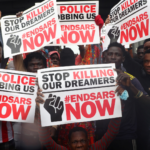
  • Serah Ibrahim, a self-acclaimed human rights frontier, shared an official document online from the Lagos State Public Procurement Agency on the morning of July 23, 2023. Ibrahim was the first social media user to make the document public. Many people, including news platforms, demanded answers and criticised the government.

    What was the document about?

    Dated July 19, 2023, the document revealed the approval of N61.2 million. This was for a mass burial for 103 victims of the #EndSARS massacre of October 20, 2020. Onafowote Idowu, the agency’s Director-General, signed the letter and addressed it to the Ministry of Health.

    An excerpt from the letter reads, “Following review of your request and based on the information provided therein, the agency has ‘No Objection’ to award the contract to MESSRS. TOS FUNERALS LIMITED at a total cost of N61,285,000 only for the mass burial for the 103, the year 2020 EndSARS victims.”

    What was Lagos State’s response?

    For the Lagos State Government, their reaction was to “set the record straight.” According to the Permanent Secretary of the Lagos State Ministry of Health, Olusegun Ogboye, the 103 bodies in question were not from the Lekki Toll Gate. 

    They were retrieved from various parts of the state, such as Fagba, Ketu, Ikorodu, Orile, Ajegunle, Abule-Egba, Ikeja, Ojota, Ekoro, Ogba, Isolo, and Ajah. The government says that some were even retrieved from a jailbreak at Ikoyi Prison.

    Ogboye also mentioned in the statement that the Lagos State chief pathologist was legally summoned to produce the full records of unclaimed bodies in the Lagos State Central Mortuary. This was immediately after the tragic incident of October 20, 2020.

    He also confirmed that relatives of the lost or dead victims were advised to contact the Department of Pathology and Forensic Science at the Lagos State University Teaching Hospital (LASUTH). However, “nobody responded to claim any of the bodies.”

    “After almost three years, the bodies remain unclaimed, adding to the congestion of the morgues. This spurred the need to decongest the morgues. This procedure follows very careful medical and legal guidelines if a relative may still turn up to claim a lost relative years after the incident,” he explained.

    What were citizens’ reactions?

    We can use two words to describe citizens’ reactions: outrage and dismay. This was because the state government had initially denied that there was “no casualty” recorded during the #EndSARs protest, particularly with the event that led to “Lekki Massacre”. Till today, the government has not been able to share a clear statement on what actually happened the night of October 20, 2020. 

    With this, Nigerians are reacting to the news of the mass burial and the government’s statement. 


    Here’s more on what’s stirring the reactions:

    In November 2021, the Lagos State Government released a White Paper on the report by the EndSARS panel. This panel investigated the events of the Lekki Toll Gate incident of October 20, 2020.

    According to this report, armed soldiers trying to scatter protesters away from the grounds killed nine people at the toll gate. 

    But Governor Babajide Sanwo-Olu dismissed the report as “assumptions and speculations.” 

    Human rights organisations like Amnesty International and CNN International, which carried out independent investigations into the event, continue to stand by their reports that protesters were shot at. 

    Their claim also carries weight, as many Nigerians watched Obianuju Udeh (aka DJ Switch) livestream and heard gunfire while protesters at the scene waved their flags in the air and sang the national anthem. 

  • We’ve been noticing a trend in Nollywood where it seems like the darkest political secrets of Lagos are being brought to light. In the Netflix series, Shantytown, we saw an influential politician in charge of prostitution rings, thugs and drug trafficking; frighteningly similar to the Commander-in-Chief of the agbado army. 

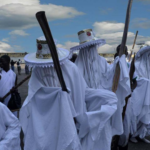
    On April 7, 2023, a movie titled Gangs of Lagos was released that gave insight into how thugs in Isale-Eko, Lagos, are used during Nigerian elections. However, there has been outrage from the Lagos state government recently over a scene that portrayed the Eyo masquerade as a villain. 

    The Isale Eko Descendants Union released a statement on April 12, 2023, saying the movie defamed Isale Eko and the Eyo masquerade. On the same day, the Lagos state government called the film a total abomination derogating Yoruba culture. 

    What’s amusing is that the Lagos state government is paying more attention to the “misinterpretation” of the Eyo masquerade than violence during elections which was the movie’s focal point. 

    Is the government intentionally turning a blind eye to the message Gangs of Lagos tried to pass, or is the outrage from them performative because Nollywood is hitting too close to home this time? 

    What else happened this week? 

    NUPENG Raises Red Flag Over Fuel Subsidy Removal

    When it comes to Nigeria, problem no dey finish. On January 5, 2023, the Minister of Finance, Budget, and National Planning reminded us again that by mid-2023, the federal government would  cease fuel subsidies. This means we’ll pay up to three times more than the current fuel price.

    However, the Nigeria Union of Petroleum and Natural Gas Workers (NUPENG) is warning the federal government that it may be over its head as our local refineries still aren’t operating fully. As a result, the removal of fuel subsidy might have negative economic impacts on Nigerians that the government is unprepared for. 

    Hopefully, the government will work towards this and put the right structures in place to ensure that when fuel subsidies are finally removed, we won’t be plunged into multidimensional suffering. 

    Video of the week

    Question of the week

    Nigeria’s president-elect, Bola Ahmed Tinubu, was listed on the Times 100 most influential list of 2023. On a scale of “this is a win for Nigeria” to “everyone is on drugs”; what do you think about this?

    Ehen one more thing…

    There was an unfortunate accident on April 13, 2023, where a seven-story building collapsed in Banana Island, Lagos. Here’s everything to know about the tragedy.

    Game of Votes solely aims to break down and pique your interest in politics, policies and governance. How have we done so far? Please give your feedback by filling out this form. Thank youuu!

  • The Nigerian Voter is a series that seeks to understand the motivations that drive the voting decisions of Nigerians — why they vote, how they pick their candidates, why some have never voted, and their wildest stories around elections.

    Editorial Note: The Nigerian Voter is a platform for Nigerians to passionately discuss policies and politics with little interference to individual opinions. While our editorial standards emphasise the truth and we endeavour to fact-check claims and allegations, we do not bear any responsibility for allegations made about other people that are founded in half-truths.  

    The subject of today’s “The Nigerian Voter” is Victor, a travel consultant in his mid-twenties who is a resident of Lagos State. He told us about his shattered dreams for Obi as president, his reasons for preferring a second term with Babajide Sanwo-Olu as Lagos State governor, and his thoughts on the other Lagos gubernatorial candidates for the March 11 elections. 

    When was the first election that you participated in? 

    The 2023 election was the first election I participated in. This is because I never had an interest in politics until the EndSARS movement when people came out to protest in large numbers and were also killed. I always felt that nothing in the political system of Nigeria could change, but something very special happened during EndSARS — there was just this newfound belief that people had the power in their hands to make the country work. This belief birthed in me the desire to vote. I no longer wanted to sit on the fence and criticize the government. I registered for my Permanent Voter’s Card (PVC) in 2021 and voted in 2023. 

    Who did you vote for during the 2023 presidential elections and why?

    During the presidential elections, I voted for Peter Obi of the Labour Party. I don’t vote based on parties but rather based on individuals. Peter Obi was my best choice because I saw his background as an economist and I felt he could fix up our economy. I was so disappointed when he lost. 

    The All Progressives Congress (APC) at the federal level has failed us woefully, especially in my area of expertise. 

    For instance, in Jonathan’s time, it is possible for you to see the Naira to Dollar exchange rate between ₦180-₦200. But now, with a ₦740 to a dollar exchange rate, a round-trip ticket from Nigeria to London would cost you nothing less than ₦3.3 million through Virgin Airways. This was a place that people used to go to for ₦110,000 back in the day. This has really discouraged people from travelling. 

    Now that Tinubu is president-elect, have you accepted the current administration? 

    Well for me, no. I’ve not accepted that man as my president, but at the same time, I don’t want to get my hopes high. He may not be Buhari but he still had a crucial role to play towards his administration. 

    I’m just watching and waiting for what happens over the next couple of months regarding the post-election tribunals.

    Have you ever taken an interest in Lagos State governance? What are your thoughts?

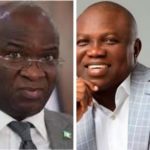
    Yes, I have. I firstly believe that it is Babatunde Fashola that really made the positive changes in Lagos, not Tinubu. Then Akinwunmi Ambode did his best, then Sanwo-Olu came in. 

    I believe that the current governor has tried in his capacity. A lot of projects have been going on such as The Blue Rail Project, the invention of new road networks, and even safety too. If you go back to some years before now, there are areas in Lagos that you can’t even go to once it’s 7 p.m. due to thug harassment. But Sanwo-Olu has been able to take care of those boys and make the roads safe for travel. 

    For instance, there was a friend of mine that came to Lagos recently and arrived in Oshodi at midnight. I was so scared for her safety, but she got to her place unhurt. It was even the touts that were helping her and warning others that she shouldn’t get hurt. I was really amazed. This would have been a very risky move for her to make some years back. 

    He has also tried in education. I spoke with a friend who is a teacher, and she told me that the education system has improved greatly in the last four years. The curriculum now has been made to properly prepare students towards the needs of the outside world. With all these testimonies, I feel the activities and governance of Lagos State have been a success so far under Sanwo-Olu.

    So is it fair to say that you’d vote Sanwo-Olu for re-election as Lagos State governor?

    Yes, this is definitely what I’m doing. I’ve noticed that Sanwo-Olu always tries to make amends for his wrongs. I know some think he is doing this just for his re-election, but this is a trait I’ve always noticed in him. Some leaders (whom I’d rather not name) would prefer that the country burns than listen to what you have to say. But that’s not Sanwo-Olu.

    For instance, look at this cash scarcity issue. He has made sure that all Bus Rapid Transit (BRT) vehicles have their fares cut to 50% and the same is true for vehicles under the National Road Union of Transport Workers (NURTW). That is the act of a leader that listens and cares for people.

    (Editorial note: Sanwo-Olu did reduce the fares of all state-owned transportation services by 50% in February 2023. However, there is no news on a fare reduction from the NURTW.)

    What would you then say about his lack of accountability towards the Lekki Toll Gate shootings? 

    One thing people don’t realise is that there is no established fact on who gave the order for the shooting. This October would make it three years since the tragedy happened, but we still don’t know for a fact. So how can you then accuse Sanwo-Olu directly for anything?

    Also, I feel the administration of Lagos is purely run as a godfatherism thing. This is not to say that Sanwo-Olu is completely a puppet. But what if the order came from above and was completely out of his hands? That is something that would not be publicised. He tried to pay the medical bills for victims as well as set up a panel of inquiry. Is that the best he could do? Not quite, but I’d not hold that against him. I really don’t think that Sanwo-Olu is responsible for what happened, until we are aware of who gave the order.

    (Editorial note: Sanwo-Olu did set up a trust fund of ₦200 million to compensate victims of the Lekki Toll Gate shootings. He also set up a panel of inquiry. However, it is not clear if the trust fund was set aside specifically for medical bills or not.)

    What would you say about the other Lagos gubernatorial candidates?

    I know of the Labour Party guy (Gbadebo Rhodes-Vivour) and Jandor of the People’s Democratic Party (PDP). For Gbadebo, I’d say that I never knew him until after the presidential election. I feel he is personally running off the wave of support for Peter Obi, which honestly is smart in a sense. I don’t blame him for it. However, this doesn’t mean that the man has elaborated fully on what he has to offer Lagosians. 

    Watch: Lagos State Is Run Like A Mafia Government – Gbadebo Rhodes-Vivour

    For Jandor, I don’t know his portfolio. I only know that Fashola said that he was his cameraman when he was in power. 

    What are those problems that you’d like Sanwo-Olu if re-elected?

    Well, now that we have a Tinubu presidency incoming, I want Sanwo-Olu to have a very firm grip on the agberos or touts. I don’t want Lagos to be violent from the activities of these people again just because Tinubu is president. 

    I’d also like for him to continue his work on infrastructure. He has been trying but there are many places in Lagos that still has bad or poorly maintained roads. 

    In the end, after all said and done, a Nigerian politician would always be a Nigerian politician. I’m not expecting him to be a Messiah, but he should try as much as possible to make life easy for the average Lagosian. That’s all I require. 

  • Next Saturday, the current governor of Lagos state will be seeking re-election. But how has he fared over the past four years? Here’s what his report card looks like.

    Year One

    He banned motorcycles in Lagos

    In January 2020, less than a year into his tenure, Governor Sanwo-Olu decided that commercial motorcycles were no longer a part of the mega plan he had for Lagos and that they just had to go. It didn’t matter that the state had a terrible traffic situation, or that most people had no alternative.

    The result: Lagosians had to trek… everywhere. Ride-hailing companies like Gokada, Max, and Opay laid off thousands of people, leaving them without a means of livelihood.

    Closed down the Eko bridge

    On March 11, 2020, Sanwo-Olu closed down the Eko Bridge in the early hours of the day without prior notice, causing a lot of people to be stuck in traffic in other areas. 

    The result: Commute became harder for people and the traffic got worse. The bridge was later reopened, but it was closed again after a fire gutted a section of it last year. It’s remained closed ever since.

    The Lekki shootings happened under his watch

    On the 3rd day of the ENDSARS protest, the 20th of October, Sanwo-Olu announced a curfew that would start at 4 p.m. This was ignoring the fact that it was a weekday and many people were outside. People kicked back against it, and the curfew was moved to 8 p.m. By 7 p.m., Sanwo-Olu called in the army and they arrived at the toll gate.  

    The result: Dozens of people were massacred at the gates and Sanwo-Olu still denies any involvement in the incident.

    Year Two

    He told people to roll up their windows when they got robbed

    In 2021, after the Eko bridge was finally reopened, insecurity had gone up in Lagos and people were getting robbed in traffic on the bridge. What did he say? “Roll up your windows and stay safe.” 

    Year Three

    He “increased” the salaries of civil servants in Lagos

    In October 2022, Sanwo-Olu announced that he was going to increase the salary of civil servants in Lagos by the end of the month.

    Result: 2022 is gone, and 2023 is here, but the pay raise is yet to be implemented. Why that is the case, it’s currently unclear.

    He asked containers to stop falling off the Ojuelegba bridge

    Who knew that all we needed to do was to just ask nicely and containers would stop falling? 

    Containers falling off bridges have been an issue for so long in Lagos. Since 2015, at least 20 people have been killed in accidents involving containers in Lagos State. Instead of erecting a simple barrier on these bridges to prevent huge trucks from using them at all, he simply said he’s not going to tolerate containers falling off bridges anymore. We’re sure the containers won’t try it again.

    He bought 62 fire trucks for the Lagos state fire service

    This is commendable considering how often fire outbreaks happen in markets and different areas of Lagos. Sanwo-Olu inaugurated 200 fire trucks in October 2022 to be used by the fire service authorities in the state for quick response to fire outbreaks. 

    Year Four

    He commissioned Lagos’s first light rail

    Earlier this year, Sanwo-Olu commissioned the first phase of the Lagos Blue Line with President Muhammadu Buhari. It’s a light rail system that had been planned as far back as 1983 before it was scrapped by the same person, Muhammadu Buhari. The line runs from Okokomaiko to Marina, and we were told to expect two more lines after this one.

    This is expected to ease up traffic within Lagos over time. But a few days ago, fire razed a section of the blue line and the fire service was reported to be super late to the incident.

    Overall Grade:  E 

    Why? Despite the pockets of work he did here and there, he oversaw one of the worst cases of human rights abuse this country has seen in the past few years.

  • Do you even know the names of the past governors of Lagos State or did you come to Lagos to count bridges? Take this quiz and prove yourself.

  • For Lagosians, news of a building collapsing is just another Sunday, except for people that are unfortunately affected. 

    The state is a witness to many incidents of buildings, completed and uncompleted, crashing down to the ground. 

    It’s impossible to forget how more than 40 people died when a 21-storey luxury building under construction in Ikoyi collapsed in November 2021. The collapse of a three-storey building in Lagos Island in May 2022 also claimed the lives of three people.

    Despite the promises made by different administrations over the years to put a stop to the unfortunate trend, it isn’t slowing down. And now, yet another building has collapsed.

    What’s new?

    Everything You Should Know About the Latest Building Collapse in Lagos

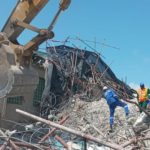
    On Sunday, September 4th, 2022, a building collapsed in Oba Idowu Oniru Street beside Avi Maria in Victoria Island, Lagos. The seven-storey building was still under construction when it collapsed and trapped six people under it.

    The Lagos State Emergency Management Agency (LASEMA) responded to the scene of the collapse to commence rescue operations. 

    Everything You Should Know About the Latest Building Collapse in Lagos

    By the end of Sunday, emergency workers recovered two bodies from under the rubble. The agency recovered four more bodies on Monday, September 5th, 2022, leaving the death toll at six.

    Who’s responsible for the building collapse?

    Before its collapse on Sunday, the Lagos State government shut down construction work at the building site three times over code violations. But construction somehow resumed each time.

    When he visited the site of the collapse on Sunday, the Lagos State Commissioner for Physical Planning and Urban Development, Idris Salako, vowed to crack down on those behind the project.

    The commissioner accused the building developer of disregarding the state’s building planning laws. He said the developer constructed the building without a valid planning permit. 

    According to Salako, the developer merely applied for the permit and went ahead with construction without getting approval. The name of the developer hasn’t been made public, but the commissioner accused him of using his personal security to intimidate government officials who attempted to inspect the project.

    The government is now searching for the developer and all the professionals that worked on the building.

    Who’s the scapegoat?

    On Monday, September 5th, Salako resigned as the Commissioner for Physical Planning and Urban Development in Lagos. Governor Babajide Sanwo-Olu called it a “restructuring” of the ministry, but that’s like calling a potato a fruit. The resignation was obviously a consequence of the collapsed building and dozens of others that have happened in Lagos.

    Everything You Should Know About the Latest Building Collapse in Lagos

    And the governor gave himself away when, in a statement about the resignation, he warned stakeholders in the building sector to play by the rules or face consequences. 

    The resignation or dismissal of a government official in reaction to tragic incidents is very rare in Nigeria. Should the government do more of this? Maybe it might help foster a culture of accountability?

    How to stop the next building collapse

    The government has its work cut out for it and needs to improve surveillance of buildings under construction across the state. But vigilant citizens can also help the government by sending tips to authorities if they suspect buildings in their environment aren’t up to code. If you see something, say something as that’s what might prevent the next tragedy.

    Everything You Should Know About the Latest Building Collapse in Lagos
  • The taxi renewal agenda in Lagos state is like an ogbanje spirit. It never stays long enough to live out its purpose, but it keeps finding its way back to us. 

    Let me explain

    For years, the Lagos state government has been determined to phase out yellow taxis, particularly the unlicensed drivers. In 2009, Governor Fashola — unaware of his future role as Sherlock — commissioned over 1,000 taxi cabs and four cab hire service schemes. In 2011, 250 taxis were added to the fleet and re-branded as “Mega Taxis” in 2015

    It keeps going

    With Uber and Bolt taking over the transport scene, the government had to pretend to be wise. As the saying goes, “If you can’t beat them, join them.” In 2020, Lagos partnered with EkoCabs — a ride-hailing company — to compete in the digital transportation market. 

    Funny thing, the same yellow taxis the Fashola government tried to phase out were meant to be incorporated into the platform. A few months after the partnership was announced, the yellow taxis were rumoured to be in an entanglement with another ride-hailing company called UNIVASA

    Talk about a scorned lover. 

    The details on the triangle between Lagos, EkoCab and UNIVASA are unclear and nothing has been heard about it since 2020

    Back to 2022

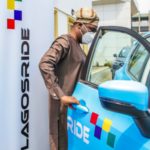
    Now, Governor Sanwo-Olu — resident chess player/coach — has commissioned the launch of a new ride-hailing app, Lagos Ride. It’s nearly the same as Fashola’s injection of cars, but with a sprinkle of technology. 

    With the same promise to revamp the transportation system, 1000 new vehicles have been added to the congested streets of Lagos. Yay us!

    RELATED: 8 Ways To Successfully Avoid Traffic In Lagos

    So Lagos is trying to build the next Bolt?

    The government has clarified that Lagos Ride is not in competition with Bolt or Uber.

    Who are we to question that? 

    So what makes them different? Here are three main things:

    1. Lease-to-own initiative for drivers

    First, Lagos Ride is described as an empowerment scheme for the unemployed masses. While it’s designed to phase out the rickety yellow taxis and inevitably leave the drivers unemployed, Lagos Ride compensates the drivers with an opportunity to own a brand new car. In how long? Three to four years.

    But for how much?

    Well, these new cars supplied by CIG Motors Company Limited, a Chinese car manufacturing company, start at $26,000 (approximately ₦10 million) and an initial deposit of ₦1.9 million is required to access the cars. On one hand, there’s an opportunity to own a new car. But in an economy where the inflation rate makes the minimum wage useless, do the “unemployed” have the ₦1.9 million the government is asking for?

    Also, if the target market can’t afford the new cars, how are the rickety yellow taxis phased out? These are the questions that haven’t been answered yet.

    2. There’s money on the table

    In 2020, Lagos and the car suppliers of Lagos Ride entered into a joint venture partnership. The partnership allows the company to establish an assembly plant in Lagos, to ensure ease of access for car maintenance. 

    A tweet from the Senior Special Assistant (SSA) to the Governor of Lagos State on New Media, Jubril Gawat.

    Between fuel scarcity and the constant traffic in Lagos, why is this sensible to the government? One factor may be the promise to train 50 students in an engineering vocational program. Another reason may be the opportunity to export the cars or sell to Nigerians. There’s money to be made and the government is in the driver’s seat. 

    RELATED: Interview With Lagos & Traffic: “What God Has Joined Together…”

    3. Security features

    Lagos Ride is set up with features like a security system on the dashboard. Also, all cars are uniformly painted and branded with a unique identification number. With the security issues reported from Bolt riders and drivers, this may be a plus for Lagos Ride.

    Uncle Sanwo-Olu in his new baby

    There are many questions about the scheme that can only be answered as things evolve. For now, one question with an immediate answer is: what do Lagosians think of this government version of Bolt? 

    1. “Our government needs to focus on finishing one thing first”

    — Tunde*, 40, University lecturer and transport expert

    A taxi service cannot be the backbone of a city with over 10 million people. Even with the affordable options such as the train and BRTs, people are still hopping on danfos and bikes to commute, how can Lagos Ride compete? Let’s not forget that there are so many ride-hailing services with cars already on the road and Lagosians can stop in the middle of traffic to fly bikes. Lagos Ride can only work if the government wants to monopolise the market.

    2. “It’s government-owned, so I’ll feel safe”

    — Oyinlola, 25, banker

    I like the idea of a government-owned taxi. I’ve been harassed by a driver on one of the platforms and a number of my friends have been through the same thing. I sent several emails complaining about the driver and I never got any feedback. Now, I use a bus or beg a friend to drop me off. I’m not sure how the customer service on Lagos Ride will be, but at least now, there’ll be an office to go and complain physically.

    3. “As long as it’s cheap, I don’t care”

    — Fiona*, 23, university student

    I’m here for the cheapest option. I have like four taxi apps on my phone. Whichever one is cheaper when I need to get to work is what I use. So for Lagos Ride, it’s the same approach I’ll take.

    4. “It needs to have special benefits that cut Lagos traffic”

    — Prince, 28, data analyst

    Lagos Ride will make sense if they have access to the BRT lane. That means I don’t have to worry about LASTMA when I’m trying to cut traffic. Also, it has to be as cheap as the danfo I take to work. Now that transport fares have increased, I pay ₦700 from Palmgrove to Ikeja. Lagos Ride should be able to maintain the price or go lower. It won’t make sense if it’s owned by the government and expensive.

    5. “The government should focus on collecting tax from Uber and Bolt”

    — Chika*, 45, development consultant

    I think it’s a waste of funds. Government has no business partnering with a Chinese company on anything besides road infrastructure and the mass rail transit they’re building. How many projects can they do at the same time? All the roads are dug up in the name of construction. Let’s face one first. 

    If it’s a money thing, they should focus on taxing Uber and Bolt. There’s no need for 1000 cars on Lagos roads. Abeg.

    6. “More cars are unnecessary in Lagos”

    — Linda, 30, climate change activist

    It sounds unnecessary, but have you seen the smoke in Lagos? The combustion from vehicles? I understand that the taxis consume less fuel, but there are still more cars. What’s the point of working on a policy for non-motorised transport if the end goal is more cars? Let’s think about the climate for once.

    ALSO READ: Fuel Scarcity + National Grid Collapses — How are Nigerians Coping?