• This article is part of Had I Known, Zikoko’s theme for September 2025, where we explore Nigerian stories of regret and the lessons learnt. Read more Had I Known stories here.


    Gender-based violence is a terrifyingly dangerous reality for many women in Nigeria. In 2019, the National Bureau of Statistics estimated that 30% of Nigerian women aged 15-49 had experienced physical violence, while 68%  had faced emotional, economic, or sexual abuse. 

    Yet, domestic violence remains one of the most underreported crimes in Nigeria, with many victims citing a lack of confidence in the legal system. Funmi is one of those women. 

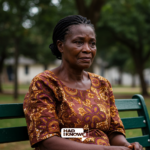
    Funmi* (64) fell in love with a man who became the greatest danger to her life and career. In this story, she shares how she endured years of torment at the hands of her husband, whom she finally left after one life-threatening encounter. 

    This is Funmi’s story, As Told To Margaret

    I remember pulling up the zipper of my oversized white blouse, which looked as ugly as the long skirt I paired it with. The dry lace fabric scratched my skin, leaving red patches behind. Still, I smiled because that day wasn’t just a random Friday in 2005; it was the day Badmus decided to make our union official. It was a day of honour, even though we were too poor to afford a proper wedding dress. 

    I didn’t think much about what to do with my hair, so when my oldest friend and maid of honour showed up with a white hat big enough to hide the shame I was determined to keep from my fourth and last child, I was beyond grateful. My youngest, born two years before our wedding and as curious as a cat, wanted to know why I was dressed in white and why her father was impatiently pacing the living room in an oversized suit.  I didn’t know how to explain to her, or my three older children, that their father would only become my husband that day. 

    Even now that she’s old enough to understand the story, I’ve realised that some things are better left unsaid. I was 45 on our wedding day, and our oldest child was 15. We fell in love in 1988, and everything moved quickly. Things were different then; meeting a man’s family and being accepted by them was enough to take on the role of a wife. We didn’t have an official wedding day until 2005, but I had been his wife in all the ways that mattered long before then. 

    I was sitting in the reception of the radio station where my uncle had helped me get a job when Badmus first looked at me. Gratitude and disbelief made my chest tight. He was a university graduate; I only had a secondary school certificate. All the women in the radio station looked at him with melting eyes, yet he chose me. Maybe that’s why I agreed so easily when he asked me to be the mother of his children — a title that, at the time, felt like the ultimate proof of my womanhood.

    Get More Zikoko Goodness in Your Mail

    Subscribe to our newsletters and never miss any of the action

    When we first started our relationship, he was a good man. He washed my clothes without hesitation and haggled in the market better than I did. He did it all happily until the day another man from the radio station saw him carrying sacks of tomatoes. 

    Badmus told me how the man laughed and asked if I had given him “efo,” the traditional way of suggesting a woman had used charms to control a man. I could tell Badmus hated me for it. He didn’t say those words out loud, but his frown lines told me everything I needed to know.  

    The very next day, he became a different man, determined to be as manly as possible. He insisted I eat one piece of meat while he eats two; he refused to be seen in “feminine” places like the market; he ordered me to quit my job and start calling him “sir.”

    By then, I was already pregnant with our first child. When I asked if he expected me to frequent the market with my protruding stomach, he threw a 25kg keg at me. My eyes widened in disbelief, and my stomach turned in fear. I think my visible fear made him feel like a man, because he inched even closer and slapped me across the face. Then, without a word, he walked out of the house, leaving me writhing in pain on the floor. 

    I called my younger sister, who lived 10 minutes away. Even though she got there as fast as she could, I felt like I’d been on the floor for hours. The first thing she checked for was blood or any sign that the baby was hurt. Thankfully, there was nothing. 

    I told her what Badmus had done and asked if I should leave him. She sighed and said nothing. At the time, she was a single mother of two who idolised my relationship with Badmus. In her eyes, it was better for a woman to have a violent husband than none at all. So, I stayed and bore him three more children. 

    I took the “for worse” part of our wedding vows to heart and hid my pain from the outside world. But in 2011, life suddenly became brighter. I converted from Islam to Christianity, answering what felt like a call from Jesus and a promise that He would make me smile again. I became a born-again Christian and, eventually,  an ordained pastor. 

    Badmus remained irreligious, but he was respectful of the Christian God. Something about my new role as a woman of God made him stop beating me. It felt like my prayers had finally been answered. And it wasn’t just my personal prayers. My intercessory prayers were getting answered, too. Barren women, sick people, even the mentally unstable — all of them came back with testimonies. Even though I was still forbidden from working, I started making more money than Badmus. The people I prayed for would often insist on blessing me financially, often in pounds, as many of them lived in the United Kingdom. 

    Eventually, I saved enough money to start my own church. It was glorious, and people, especially women, started flocking in. In addition to the usual Sunday service, I began offering marriage counselling. Women were the only ones who used to come for these sessions. Their marital problems were always similar — cheating or domestic violence. 

    I’m not proud to admit this now, but I would usually tell the ones with cheating husbands to pray about it and keep their homes. Badmus never cheated to my face, but we stopped having sex in 2013, and even though I couldn’t prove it, I knew there was another woman. It was easier to ask a woman to stay with a cheating husband than a violent one. So, every time a woman came to me with a story of domestic violence, I made sure she found a way out. 


    While the country has policies like the 2015 Violence Against Persons (Prohibition) Act to protect victims, they still face serious barriers. As of March this year, the VAPP Act was at risk of being annulled by the National Assembly, despite repeated criticism from stakeholders. Without laws and policies that are duly implemented against violence, women will be subjected to more danger in the hands of intimate partners. 


    My maid of honour, Mommy Ayo, was one of those women. In 2016, her husband, an alcoholic and impulsive man, beat her so badly that the tissues of her breast became visible. I had never seen a sight as disturbing as that. I gathered ₦150,000 and took her to the police station to make a statement. 

    The police men knew me well. The first time I took one of the women from my church there to make a complaint against her husband, they told us to “go and settle it at home.” But when I slid a bundle of naira under their counter, they asked for the man’s address and threw him in a cell that night. I can’t say I’m proud of the bribery, but it felt like the only option at the time. 

    The police never kept the husbands in custody for long, but that brief window was enough for me to help the women steady themselves. It cost me dearly — most had children and no jobs. But God works in mysterious ways. The church helped them find work, and with tithes and special offerings, we covered what we could. Altogether, we were able to stand by seven women.


    If you or anyone you know is suffering violence at the hands of an intimate partner, please reach out to any of these helplines


    Everything was going well until Badmus retired in 2021. The government made big promises about gratuity and pension, but they still haven’t paid either since then. I became the breadwinner. I paid rent and school fees for our children. One of the people I pray for in the UK came visiting, and insisted that I move to a bigger building, with all expenses on her. I proposed the idea to Badmus, and if looks could kill, I would have died that day. He already hated that I paid the rent of the house we were living in, so moving to somewhere more expensive felt like an insult to him and his masculinity. 

    After that day, he became more aggressive. He would remind me that he was still the man of the house, and no matter how much money I thought I had, he would still be the head. Little expenses, like buying turkey instead of Titus fish, would make him angry. He would say I was trying to prove that I was richer than him. 

    Finally, Badmus lost the little fear of God that made him stop hitting me and started again. It happened gradually. First came the new rules. 

    “You’re no longer allowed to leave the house without permission.” 

    “You must be back home before 7 p.m., no matter where you go.” 

    He would bark silly orders, and I obeyed, desperate to keep the peace. But it was never enough. One day in 2023, I mistakenly got home later than 7 p.m., making Badmus feel disrespected. I didn’t expect him to hit me since it had been so long since the last beating, but he did. 

    This time, it was worse. He looked at me with disgust and yelled, “You are nothing. Your family is nothing.” Then he moved closer, wrapped his two hands around my throat and squeezed hard until my second son came to help. I saw my son threaten to beat his own father if he didn’t release me, and that was the day I knew I had to leave. I had been so worried about what people would say if I, a woman of God, left my husband at such an old age. But, I’d rather have people talk about me while I’m alive than wait until the day my husband snaps and kills me. 

    I finally left in 2024 and moved in with my oldest son, who has built a life for himself in the UK. My only regret is not leaving sooner. Badmus and I still talk, but the children can’t even stand to look at him. For years, I hid the violence from them, but that day, they saw it for themselves. He still hasn’t received his gratuity, so I occasionally send him money. These days, I feel more pity than anger toward him. After all, he can’t hurt me anymore.


    Do you have a story of regret? Share it with us by filling this form.

    [ad]

  • Nigerian women are not strangers to Gender-Based Violence (GBV), especially at the hands of intimate partners. About 35% of married women in Nigeria have been hit at least once by their husbands. Like a double-edged sword, the abuse not only harms them, but it also affects their children.

    In this story, Imaobong (24) shares how she developed a fear of phone calls from her family members after she received a devastating call informing her that her father had almost killed her ageing mother. 

    This is Imaobong’s story, as told to Margaret

    Growing up, I was a daddy’s girl. My dad was the first person who made me feel like a princess. We were so close, we had our own traditions. We loved the same kind of music, read the same  newspapers and ate the same akara every morning. He loved carrying me, even though everybody else said I was too old and fat to be held.

    My dad and I were a team. He never said no to me, never yelled at me, or even hit me. But he wasn’t like that with my siblings. They never understood our bond because their relationship with him was different. It was more distant and strict. They never looked him in the eye, and they never had good things to say about him, but in my eyes, he was perfect. Well, until he wasn’t anymore. 

    I started suspecting that something was wrong with my father the day he almost killed my sister. He asked her to sweep the floor, and when he found that she didn’t do it, he asked her to flatten herself on the floor, then stamped his feet hard on her head.. I couldn’t move. She didn’t move either. She didn’t even make a sound. My mother rushed out of her room to see her child unconscious on the floor, and my father just walked out. He went to work like it was just another Monday morning. We rushed my sister’s unconscious body to the hospital, and thankfully, she lived to tell the story. We never spoke about it again.

    Get More Zikoko Goodness in Your Mail

    Subscribe to our newsletters and never miss any of the action

    I started to fear him after that incident. We still ate our akara and read our newspapers, but I didn’t want him to hold me anymore. One day, he yelled at me and hit me on the back of my neck; he apologised to me, but my fear of him intensified.

    Though my fear lingered, our closeness didn’t go away. At university, we’ll call and talk for hours about music, politics, what he was eating, and everything else. I didn’t care that my mom sent me more money in one year than he did during my five years in university. I didn’t care that my mom was the one who took loans to pay my school fees till I graduated. It felt like my father had personality, while my mom didn’t have any. It felt like all she knew how to do was be a mother and wife,  two things I couldn’t relate to. She never read newspapers, barely ate akara and only listened to ancient gospel songs. We just didn’t have much in common. 

    Her love for God, prayer mountains and prophecies was the reason why I found out that my dad used to hit her. A prophet walked up to us, asking her if her husband had apologised for hitting her when she was pregnant. I waited for her to debunk it, but she didn’t. Instead, she shared more details about how and when it happened— she was pregnant with my older brother; she couldn’t remember what led to the brutality, but remembered being hit with a 25 KG keg filled with water. I knew my father was many things, but a wife-beater wasn’t one of them.

    COVID came, and he became a raging man easily irritated by everybody, paranoid for no reason and ironically prideful. My mother was suddenly buying turkey every day, replacing my siblings’ phones and enjoying life as it came. She has always been blessed with people who liked her enough to gift her money, but he had his, so it never mattered that much to him.  All of that changed during COVID because he was no longer earning money— my mother’s ability to buy whatever she wanted crushed his ego, so he took it out on everyone. First, it started with yelling until it became more violent. My father and I stopped talking completely. Home no longer felt safe, so I ran to school after lockdown. 

    After I graduated from university, I had no choice but to return to my family. It was then that I saw how much worse his anger and resentment towards my mother had become. He found fault in everything she did, even imposing a curfew on her like a child. One night, she missed her curfew, and he locked her outside, threatening to throw her down the stairs if she tried to knock on the door. It was raining and she was cold. My siblings had gotten tired of the same old rubbish. My brother wanted to punch him, my sister said she chose to stay, and she should face the consequences. I didn’t know what to feel, but I knew I’d rather die than allow my mother to die in that cold. I took a blanket, packed some food and snuck out of the back door to give to her. Then I spoke freely. She looked small, almost pathetic. I asked her why she was staying. She said it was because of us. I asked her if she knew how traumatised we’ve all become because of this thing, their marriage. I asked her if she knew that my sister and I might never see men as anything other than abusers if she continues to stay with him. She asked me what people would say if she leaves him at her old age. I told her they will say worse if he eventually kills her and forces his children to drag their father to prison. 

    One day, not long after that incident, he came into the room I shared with my sister and started hitting me. I fell to the floor, and instead of stopping, he started kicking my ribs. I left after that and never looked back. My mother continued to stay, but I left that house to save myself.

    Two years after I left, my siblings called to tell me that he had beaten her terribly, to the point where she was bleeding. One minute, I was watching football and yelling at players. The next minute, I was on the phone with the only friend who didn’t judge me for my family’s dysfunction. I  cried helplessly, wondering if I would finally need to arrest my father. I didn’t do it because it would have traumatised me even more; I just couldn’t deal with that.

    My friend stayed on the call with me, comforted me and told me that he’d be with me every step of the way if I chose to have him arrested. In that moment, I hated my siblings for telling me what he had done — I liked living in the world I had created. I had my person, I was happy, and I was thriving. I didn’t need to be reminded that my father was an abuser and my mother was a victim who refused to leave. 

    Every call after that event terrified me. I would allow it to ring for a few minutes before picking up. The same thought used to fill my head, “What if he has killed her?” How will I ever recover from knowing that my father had killed my mother? 

    It’s been almost a year, and I’m still scared of picking up calls from home. My mother has left him, and so has everybody else. I don’t know if it’s because I’m an empath or because a little part of me still loves the dad I grew up with, but I feel bad for him. The last time I saw him, he was skinny and frail. It broke me to see him that way. I can’t see him that way anymore. 

    My mother, on the other hand, is happy. She has her own house and has filled it with pictures of me and my siblings. I still can’t stay in her place, either, because it reminds me of everything that has been broken. But I am happy that he’s no longer hurting her. Now, she can truly live.


    If you or someone you know is experiencing domestic violence, please reach out for support. You can find some helplines here.

    [ad]

  • The news is out. Industrial product designer and ambassador of the Global Talent Visa platform (TechNation), Funfere Koroye, has a history of violence and abuse against women. This raises an important question: “How can victims of abuse and sexual violence obtain justice?”

    When Ozzy Etomi, a gender and culture writer, asked her Twitter followers on July 1, 2023, about organisations that could help victims of stalking, harassment, and battering, not many people had an idea of what was going on. And the responses she got were filled with curiosity about who the stalker was, without many positive responses about which organisations the victim could go to.

    A week later, Etomi revealed the alleged actions of stalking, sexual harassment, and violence by Koroye against his Ex.

    https://twitter.com/account20235767/status/1677697711338840066?s=20

    The news so far has sparked public outrage. It has also gotten the attention of the Lagos State Domestic and Sexual Violence Agency (Lagos DSVA), which has promised to work with the Ex to receive support, protection, and justice. 

    Also read: Everything We Know About Funfere’s History of Violence and Abuse

    Sexual harassment, stalking, and physical assault by men are problems that women face. But to understand what to do in these contexts, let’s explain what the Law says.

    Is this a crime, and is it punishable by law?

    Yes, sexual harassment, stalking, and physical assault are crimes. It is punishable under the Violence Against Persons Act of 2015 and the Criminal Code Act of Nigeria 

    For Stalking and Sexual Harassment 

    Under Section 46 of the Violence Against Persons Act, stalking is listed as a type of ‘harrassment.’ 

    Under Section 17 of the same act, a person who stalks another commits an offence and is liable on conviction to a term of imprisonment not exceeding 2 years, a fine not exceeding N500,000, or both.

    Sexual harassment is listed as a form of sexual violence under Section 264 of the 2004 Criminal Code Act. It says that “anyone who sexually harasses another commits a felony that is liable on conviction to imprisonment for three years.”

    For Rape 

    According to Section 359 of the Criminal Code Act of Nigeria, any attempt to commit rape is liable to 14 years imprisonment. 

    Under Section 1 (2) of the 2015 Violence Against Persons Act, the offender will get a life imprisonment sentence if convicted and 14 years imprisonment if the offender is under 14.

    It is worth noting that the 2015 Violence Against Persons Act is yet to be signed into law in Lagos, Ekiti, Kano, Katsina, Taraba, and Zamfara. However, Lagos State has The 2007 Protection Against Domestic Violence Law. Ekiti also has the 2019 Gender Based Violence (Prohibition) Amendment Law in place of the Act.

    You are a victim or know someone who needs help; what can you do? 

    The Executive Secretary of the Lagos DSVA, Tiwalola Rhodes-Adeniyi, told Citizen that victims of these crimes should first be able to “build their case by having evidence.” 

    If you wonder what building your case with evidence looks like, it involves getting hold of and presenting text messages, voice recordings, pictures, or videos. It can also include physical evidence like bruises, wounds, or damaged clothing. 

    This all helps your case and helps you achieve justice. According to Rhodes-Adeniyi, “If a victim has these, one can successfully get an emergency restraining order.”

    Usually, police officers give an emergency restraining order in domestic and sexual violence cases where there is immediate danger or an inability to go to court immediately. These usually last for 5-7 days.

    In cases where the issue of violence wasn’t recent, one can get a temporary restraining order of 7-14 days. You can also get a domestic violence or no-contact restraining order, which is usually issued after court hearings and lasts for a longer period of time depending on the case.

    What if you can’t reach the police? 

    Olivia Ovuodo-Peters, a sexual and gender-based violence expert, shares that one can always follow up with police personnel if they don’t respond quickly.

    According to Ovuodo-Peters, “If you report to the police on duty at the Sexual Base Desk and don’t hear from them, you can write a letter explaining your case to the Divisional Police Officer (DPO),” and if that doesn’t work, you can write to the State’s Commissioner of Police and copy the appropriate DPO. 

    However, not everyone sees going to the police as their first line of action. The Communications Officer at Stand to End Rape (STER), Elfrida Adeleye, recommends that victims should always contact a non-governmental organisation (NGO) when filing these cases. 

    According to Ayodele, these NGOs already have contacts in important governmental ministries such as the Ministry of Justice, and Ministry of Women Affairs. Thus, they can help “push the right buttons to get these cases heard faster. You don’t need to go in alone.” 

    How can social media best help you?

    Rhodes-Adeniyi passionately advocates for the use of social media as a platform to shed light on sexual assault, harassment, and abuse. In her view, it is a powerful tool to “raise public awareness on cases” and support victims who have experienced such atrocities. She firmly believes that victims should have the freedom to speak the truth to power in their own way without being dictated how to do so.

    With genuine concern, Rhodes-Adeniyi asserts, “We shouldn’t tell a victim how to speak truth to power.” She recognises that social media can be instrumental in calling for justice and creating a collective voice against these injustices. However, she cautions that social media alone is “not to make a formal report.”

    Rhodes-Adeniyi insightfully reveals the potential risks faced by victims who do not formally report their cases. She highlights the possibility of the offender filing a lawsuit, accusing the victim of defamation through libel or slander. 

    To reduce this risk, she strongly recommends victims “formally file their case with evidence with the police, an NGO, or a court of law” before resorting to social media. Rhodes-Adeniyi suggests additional steps, such as visiting a hospital to obtain medical documentation if there are visible injuries. She also emphasised that having an “official statement of the case somewhere” is crucial.

    Rhodes-Adeniyi advises victims to safeguard themselves legally by formally reporting these cases. This will ensure their claims are supported by substantial evidence and provide a solid foundation in the event of a legal backlash. 

    By taking these steps, victims can effectively navigate Nigeria’s complex justice system while leveraging social media to shed light on their experiences and rally support for their cause.

    Which organisations can you reach out to for help?

    STER (Stand to End Rape Initiative)

    The Stand to End Rape (STER) initiative is an enterprise advocating against sexual violence, and supporting survivors with psychosocial services. They handle all forms of sexual violence.

    You can reach out to them by filling out this form or sending an email to the team here.

    The Mirabel Centre 

    The Mirabel Centre is Nigeria’s first sexual assault referral centre where survivors can get medical and psychological aid.

    You can call them at 08187243468, 08155770000, or 0701 349 1769. You can also visit them at the Lagos State University Teaching Hospital, Ikeja General Hospital Road, Ikeja, Lagos.

    Alternatively, you can send an email to sarc@pjnigeria.org

    The Women at Risk International Foundation (WARIF)

    WARIF is a non-profit organisation. WARIF helps to address high incidence of sexual violence, and rape amongst young women across Nigeria.

    You can contact them at 0809 210 0008 or you can send an email to info@warifng.org

    The Lagos Domestic and Sexual Violence Agency (DSVA)


    DSVA
    is an organisation under the Lagos State government. They help eradicate domestic and sexual violence in the state.

    You can contact them at 08000333333 or email them at info@lagosdsva.org

    The International Federation of Women Lawyers (FIDA)

    The International Federation of Women Lawyers (FIDA) Nigeria is a non-governmental, non-profit organisation comprised of women lawyers, formed in 1964. They take pro-bono cases across Nigeria, usually on domestic, sexual, and other related violence against women.

    You can visit their website to find the branch closest to you or call +234 708 849 6115

  • The effects of an abusive marriage on the children should be spoken about more. To grow up in a home where domestic violence occurs frequently leaves a scar that takes long to heal or never heal at all. In this article, 9 Nigerians talk about witnessing abuse in their parents marriage, and how they feel about it.

    TW: Domestic Violence, Abuse.

    Image used for illustrative purposes. Source: Office On Women’s Health.

    *Lydia.

    Growing up, I witnessed a lot of domestic violence between my parents. They got separated just last year and we, their children, are very happy because it’s something that has been going on for over twenty-six years. The abuse was not a one way thing; it was mutual. My mum would hit my dad, and my dad would hit her too, and my mum would take out the frustration on us, the children, especially me.

    They had a misunderstanding when I was eight. My mother took the boiling ring on the table and hit him with it. He ended up with a broken rib. I still have nightmares about it. The fights were about random things. When I was a child, it was about him not coming home on time from his job as a doctor, or about his family’s interference in their marriage. When I grew older, it became about infidelity and sex. Sometimes even, it was about her beating and yelling at us. In these cases, he would try to interfere and it would end up as their own fight. Once, they had a very big fight, and the house almost burnt down. After that, my mother packed her things and left. But then, they still ended up together.

    Everywhere we went to, every compound we lived in, people knew about the fights. Even when we built our own house, the stigma of their fight hung around us. It was a very shameful thing to witness. Eventually, they separated. I guess they’d both had enough, but we all knew the marriage ended a long time ago and we kept begging them to go their separate ways before they kill each other.

    I am happy they are no longer together. We have peace now. My siblings are okay with it, and no one is calling us to judge anything or mediate between two parties. But even then, I feel a mix of sadness, resentment, and love. I am sad that they wasted three decades of their lives fighting each other instead of just moving on. I love them, but I resent them for ruining my childhood and making me hate marriage, because witnessing what went on in their marriage changed my view of it completely. I hope to be married someday, but I worry that something might go wrong.

    Priye.

    With my parents, it’s more emotional abuse and manipulation plus gaslighting. My father says things and when you talk about it weeks later, he’ll deny blatantly. It’s a family of six. Five people are telling you that you said something and you deny it. Once, he beat my sister with a broom. My mother tried to beg, but he didn’t even care that someone was there. My younger brother held him back and he turned on him, finished the broom on his body and went away. He never spoke about that incident, never acknowledged my mother. Once, he did something and my mum asked him. Asked, not confronted. And he told her she talks like a senseless person. Another time, he told her that he only intended to have one child but she kept on getting pregnant at will, as though the act was not something they both willingly participated in. There was this time my mum purged overnight. They stay in the same room, yet my father lied that he never heard her go to the toilet.

    He married her when she was twenty-one with an SSCE. Since they got married, she has been telling him that she wanted to go to school, but never at any point did he encourage her. Rather, he belittles her achievements. He would tell her, “Let me finish first,” and this is a man who has been attending school since 2002 and has never supported or pushed her. He complains that my mother never brings anything to the the family, which is a lie because the amount he drops for upkeep is very small compared to what my mother spends to make everything work out well. Recently, he asked my mum to cook soup for his friends and the same amount he dropped for upkeep for a whole week was the amount he dropped for the soup. And this is clear indication that he knows just what he ought to drop but is willingly choosing not to do it. Anytime my sister and I make it clear that we won’t marry someone like him, he says that my mother is turning us against him.

    Most times my mother cries because she’s helpless. He never listens to her. If you hear my father talk about my mother, you’ll think she’s a big fool and a thoughtless person. It’s why he prefers to table family matters to his friend and not her. And when when everything turns bad, he then returns home to listen to her advice. The gaslighting, manipulation and belittling are top notch. He once told her she’s a witch and her umbilical cord is buried somewhere so she needs deliverance. Now, my mum is considering divorce and we support her.

    Blog - Page 8 of 9 - Nigerian Parents
    Image used for illustrative purposes. Source: Nigerian Parents

    Ayobami.

    My dad was beating my mum before I was born. Even when I was a child, it continued, but I did not get a hint of this. He was always very careful about it. He hardly ever beat her when the kids were around and even if we were, I was never there to witness it. I was probably off playing somewhere while my brothers bore the brunt of the whole thing. Once in a while, they would stand up to my dad but rather than resolving things, it caused an issue between my dad and eldest brother. And as though the beating was not enough, he was also cheating on her with several women.

    When I turned seven, my mother took me and my brothers to stay with her family, and then she left the country. She was away for five years. My dad tried everything he could and finally got in touch with her. They started talking again on the phone and he convinced her to return to Nigeria, even though he was remarried with 2 other kids. She came back but refused to stay in the same house with my step-mother so my dad had to rent another house for my step-mother. And then, he resumed the abuse.

    We thought the going was good and since I never really witnessed any domestic violence when I was young, it didn’t occur to me that anything was going on in the house. Until one day when I was alone at home with my parents and my brothers were in the university. They started arguing about how my dad was cheating with the neighbour’s wife. Things got heated and my dad started beating my mother.

    He beat her from the backyard to the kitchen to the sitting room to her room, then back to the sitting room. The house was in shambles that day. The gas cooker was upside-down, food was upturned, and yet my father was not satisfied. I couldn’t do anything, he had already pushed me away a long time ago and I felt powerless in the face of the abuse. I was crying as I watched my mother, and she too was crying. And then he went to pick up a hammer and told her that he would kill her and no one would ask him about it. That was how the fight ended: my dad, raising a hammer over my mum, about to kill her.

    That was the fight that broke everything. My dad called his family members the next day and told them he wanted my mother out of his house. She begged and begged but they didn’t listen. My mum and I had to leave the house very early the next morning so the whole estate wouldn’t see us leaving with all our luggage.

    Kazeem.

    The earliest memory I have of my dad hitting my mum was when I was about four years of age. She had started a new business selling and packaging kunu for sale. He travels a lot, and was away when she started the business. When he returned, he saw the business and expressed his dislike for it by hitting her. He hit her in public, scattered her wares and broke everything down. She cried, we consoled her, and later at night, he came to beg her.

    The beating was frequent. Traveling helped a lot, but whenever he got back, especially after hanging out with the boys, and taking a drink or two, my mum would have to walk on eggshells or hand will touch her. Most times when he starts acting up and throwing things at her, sh would run outta the house. By the age of seven, I had learned how to run with her. We would take strolls to two bus stops away and walk back when things have cooled off.

    The most amazing thing was, my dad was the perfect father. He was caring, quite responsible and everything good a person would want in a dad, but he was a monster of a husband. With time, my mum became accustomed to his rage and she became fiesty and began to talk back. It cooled him off a bit, but when it gets to him, he would react. Even when he was above fifty, he would chase my mum round the house, trying to hit her.

    When we, the children, stand up for her, he also started hitting us and was shameless about it. But one thing was frequent: he would come back to apologize. He would tell us, too, that his weakness is anger. And yet, after apologizing, he would go back to doing the same thing. Where does one draw the line in that kind of situation?

    Family members that have stayed with us know what my mum goes through. The neighbours too. People rarely respect her. She never left because she had absolutely nothing to get back to. He prevented her from using her degree (he sponsored it after her third child), never wanted her to start a business, & always wants everything she owns to come from him.

    Presently, he works in another state, and we don’t look forward to when he comes home. It’s not like he still hits us, but we are all scared of it happening again. We, the children, all have strained relationships with our dad now, and he’s jealous of what we have with our mum. But the truth is the truth: it’s hard to love a father who treats your mother badly.

    8 Crazy Things Nigerian Parents Flog You For | Zikoko!
    Image used for illustrative purposes. Source: Google.

    Amaka.

    My mum herself was abusive to us, her children. But I feel that an abused person becomes abusive because of the things they have gone through. My father abused her. Every week, they had arguments, some about money, and these arguments degenerated into fights. Once, when I was about eight or nine in JSS 1, he beat her, ripped her clothes and sent her out of the house naked that night. Our neighbours had to take her in and give her clothes so she could go sleep at her parents house.

    Several times, I had to call the neighbours to separate fights. At some point, it became embarrassing. She left him, came back, and yet the beating never stopped. He gave her a black eye once, and the scar still remains.

    One thing that guides me now is that he is abusive, and I never want to be like him. He has married two more wives, and he beats them too. Recently, his third wife sent me a message to say that he beat her. I didn’t talk to him for a long time and our relationship is weird, and this is one of the thing that influences it. Eventually my mum left when I was fifteen. And we the children had to choose who we wanted to stay with. He disowned me when I decided to go with my mum. He’s the reason I don’t want to have children. I think I would be a shitty parent.

    Mildred.

    My dad used to beat my mum but I never saw it. I just saw the aftermath of it, like the time he pulled out a whole cornrow from her head and that part of her head had no hair, just shiny and bald. This was when I was seven. I would tell my mum to leave him even at that age but she didn’t. The only time I ever saw him hit her was once when he stomped her in me and my brother’s presence, that’s when I was eight.

    Even then I never used the words domestic violence. I knew what it was but it wasn’t until I was about thirteen or fourteen that I was able to use it and even then it made me uncomfortable because it seemed like an outside thing, not something that was happening in my own house. The worst part was my father once trying to justify it to me when I was sixteen, talking about how she didn’t respect him. That was the day he died to me.

    The day I saw him hit her was the day she left, but she came back after a year and then that cycle repeated itself two more times. Now she doesn’t speak to him unless they happen to be in the same environment and she rarely sees him because they don’t live together anymore.

    I don’t like my father and I try not to blame my mother for staying but the truth is that I do. As a child, I never wanted to get married but now my view on it is “If it happens, then fine.” I think it’s also made me the kind of person that’s very aware of the little things and any sign of anything that might lead to abuse of any kind, both emotional and physical. I’m out with a quickness.

    Temitope.

    The abuse robbed me of my childhood. It happened too many times, it became the single story of my childhood. When I think about growing up, the abuse is what comes up. My siblings and I hardly knew the cause. We just heard people screaming, and someone would come out, usually my mum. At some point, it became our playtime drama. We had fun times shouting, “Daddy please don’t kill mummy.”

    1,949 Black Family Fighting Stock Photos, Pictures & Royalty-Free Images -  iStock
    Image used for illustrative purposes. Source: Istockphoto

    One incident I specifically remember is when my dad lost his job and he blamed my mum. He called her a witch to our faces. On some occasions, my mum’s brother would come to intervene. And when things ended, they ended because my dad refused to move in with us. Why? He didn’t want to live in a house “built by a woman.” Like I said, he’d lost his job and couldn’t get another. We got thrown out of the house we were living in. But my mum had bought this land. So she quickly put together some bungalow on the plot, but my father said he wouldn’t be moving in. End of. They separated.

    Tobiloba.

    My dad never wanted to marry my mum, but she had promised herself that anyone who deflowered her would be the one to marry her, and my dad happened to be that man. What was worse, she was pregnant. He refused to marry her. He said he did not know if my mum had slept with someone else and was trying to force a bastard on him. In the end, he caved in, and that was the genesis of the abuse.

    He beat her while she was pregnant, and this affected the first child’s ability to understand things quickly. And yet, the beating during pregnancy never stopped. It carried all the way down to the third child. After I was born, he would bring in other women and lock my mum out. There was a time he beat her so much and he hit a table on her leg. Till date, the scar remains. There was the other time he brought out a cutlass too.

    There are excuses that might be tendered for his behaviour. One of it would be that he came from a military family. All of them in that family, from my father to their last born, all of them with a history of violence. Once, I was in university, and my brother called to inform me that he had beat my mum again and locked her in the house. I left school, took a night bus, all so I could get home. Not that it would have stopped him anyway.

    He’s changed now. In fact, he is the president of the men’s union in church for two years in a row. But some things are unforgettable, unforgivable, perhaps? Sometimes, he blames my mum for my eldest brother’s ‘condition’, and says that he turned out the way he did because he is a bastard, not his child. He does not mention the beating during the pregnancy.

    My aunt too goes through the same thing with her husband (who is my dad’s youngest brother) and each time she comes to our house to share, my mum encourages her to keep fighting. Sometimes, I get angry and tell her it’s not worth it and she is lucky she did not die in the process. I respect my mum for fighting for us, and I love my dad. A part of me believes firmly that he deserves whatever bad things happen to him, but then he’s still my dad and he is trying everything possible to be the best dad he was not in the earlier years. I believe he could be better for himself, and for us, his family.

    Sarah.

    When I was younger, my parents used to have a lot of issues. I really didn’t grasp what was happening; I was about five. But I remember very clearly, one night my sister and I were making our bed to sleep when we heard a noise. We ran out and saw my my father hitting my mother. I remember us telling him to stop, leave her alone, but nothing could have prepared me for the punch my father gave me so I could get out of the way. I tell it as a joke now, but the truth of it remains that he was so blinded that he hit a five-year-old.

    There was another fight they had where he broke a mug on my mother’s head. He tried to take her to the hospital, but she screamed at him to leave her alone. She took herself to the hospital, but my father never went to see her throughout her stay there.

    Many of the fights didn’t make sense. Some of them happened because she demanded for school fees, or because he returned home drunk. I really believed she should have left him all those years ago, but she never did. They are still together. Sometimes when I ask my mother why she stayed, she tells me she did not have the choice to leave him. Leaving a man was not an option that was considered possible then. Where was the money, first of all? And where was the parental support to back you up when you did such a thing? The first time she tried to leave him, her mum told her to go back. And she had five kids. Even if she wanted to leave, where would she have put them? Now, she is almost sixty, and he doesn’t hit her anymore, so I guess they have found a way to make it work.

    *Names have been changed.

    [donation]


  • Navigating life as a woman in the world today is interesting. From Nigeria to Timbuktu, it’ll amaze you how similar all our experiences are. Every Wednesday, women the world over will share their experiences on everything from sex to politics right here. 

    Last week I spoke to 7 women about their experiences with gender-based violence. Their responses ranged from experiencing GBV in mundane situations to dating violent men. This week, I decided to go a little deeper. 

    On this week’s What She Said, I talk to a woman and her mother on how growing up with a violent father and husband shaped the people they are today. 

    What was your earliest memory of the violence?

    Daughter: I was probably in Primary 2. I was six years old, that was 18 years ago. I don’t really remember the details because I was really young but I remember my father was fighting with someone, telling them to leave the house. I personally hadn’t experienced any violence with him yet.

    Mother: It was 22 years ago, in my second year of marriage. My daughter was very small, so she can’t remember. I can barely remember what even happened. I know I questioned him about certain things and he refused to answer. I decided to go out with him that night. I told him, “Wherever you’re going, I’m going to go too.” As soon as I got into the car, he started to shout and threaten me, so I went back into the house. He followed me and started to beat me. When it seemed like he wasn’t going to stop, I had to pretend like I was bleeding. I was pregnant with my second daughter so he took me to the hospital. I stayed in the hospital overnight, and he came to pick me up the next day. That was the first time he beat me.

    But that wasn’t the only time?

    Mother: (Laughs) That wasn’t, that wasn’t. So many times. 

    Daughter: So many times. 

    How did it make you feel?

    Mother: I was shocked, I was just shocked. I never thought he could beat a woman.

    Daughter: He was a church man, very involved in church activities.

    Did you tell anyone about it?

    Mother: I didn’t intend to immediately. Unfortunately for him though, my mother came to visit the next day. Back then, our house was set up in such a way that we lived upstairs while his office was downstairs. I was sitting in the house when he came rushing in, telling me that I shouldn’t open the door for any visitor that knocks on the door. At that point, I didn’t even know my mother was coming, but he had seen her approaching from his office, that’s why he rushed upstairs. My face was swollen and I had bruises all over my body. When I heard the knocking, I didn’t go to the door. I decided to obey my husband. It wasn’t until I heard my mother’s voice and that I went to the door.

    When she saw me she started shouting “Who did this to you?” I didn’t answer. I tried to cover my face with a scarf. She yanked it off, so I explained everything to her and she marched me to the police station. On the way there, she called my aunt. My aunt told her, “See this is between your daughter and her husband, do you want to send her out of her matrimonial home? Moreso this girl is pregnant if you take her to the police station, they’ll arrest the father of her child.” So my mother changed her mind. But she wanted documentation, so she took me to the studio to take pictures of my face and body. My mother went back home to warn him and that’s how it died down.  I still saw those pictures in my father’s archives a while ago. 

    Do you remember the first time he hit your mum?

    Daughter: Yes, yes I do. I was in JSS1, I was 11. That was 13 years ago, but that wasn’t the first time he hit her. It’s just the one I remember. I remember hearing both of them shouting, I don’t know what led to the fight. I remember coming out of my room because I heard some noises from my dad’s room.

    Next thing, my mum ran out and into the room, I shared with my sister. He had already started beating her. I remember she was wearing this white lace and it was already torn. There was blood on it. He got a hammer and threatened to break the door open. I was scared and confused. As he tried to break the door down, my mum was shouting that she wanted to leave with my sister and me, but he won’t let her. It was so late. It was just horrifying. My mum ended up leaving that night, but he didn’t let her leave with us. 

    How did this make you feel?

    Daughter: He hadn’t started hitting me yet at that time. He had hit me in the past but it was not as bad as when he started hitting me later on in life. At that point I wasn’t scared of him hitting me, I was just worried about my mum. It was late and I didn’t know where she went to.

    Where did you go that night?

    Mother: I wanted to go to the police station, so I called my sister and told her what was happening. Her husband discouraged me. He told me not to be the one to bring the police into my husband’s home. So I stayed over with a friend and she said to me: “Please go back to your father’s house don’t stay with this man anymore.” The next morning I went to pick my things. 

    Daughter: I remember you came home the next morning. It was a Sunday.

    How often did he get violent?

    Mother: I noticed he mostly got violent when he was broke.

    Daughter: Yeah, even with me too. When he started hitting me later on, it was usually when he had financial issues that he’d pour his frustrations on me.

    Was he the breadwinner?

    Mother: Yes, he didn’t allow me to work. One day, sometime after I had her, I had a job interview at 9 am. He was supposed to take me, but he kept on posting me till around 12 pm. When I said I was going to go with or without him, it caused a fight and I ended up not going.

    Daughter: The same thing happened when I got a job last year. It wasn’t even a high paying job. I used to close around 6 pm and get home around 7 pm. One day I got home and he started shouting at me. He was asking why I was working, and if he wasn’t providing enough for me. “What are you looking for outside?” He got really angry and started hitting me. This incident was the final straw for me. He hit me so much, I was deaf in my right ear for a while. He kept on shouting he’ll kill me. 

    Mother: He was financially down then.

    Daughter: Yes, he was financially down. In fact, I think that was one of his lowest lows. He just kept hitting me until my sister came to intervene, then he started hitting her too, shouting, “I’m going to kill you, I’m going to kill you.” Neighbours came out to intervene, but he locked the door and said no one is going anywhere. This was around 9 pm. My sister ran out and jumped out of the balcony. It was the first floor, and she just ran out and jumped without even looking. I decided to escape the same way, but I decided to collect our certificates and some other important things first.

    At that point, he had stopped hitting me and was looking for something. I don’t even know what, but that’s how I got the chance to pack my things. I just threw them in a box and threw the box over the balcony, then I started climbing down the balcony. He saw us, came down and started hitting us again. Then he took the box and went back up. He said that we had to leave his house empty-handed. No cash, no phones; he took our phones because he bought them for us. The neighbours gathered around and gave us cash. Luckily, we had a place to go. It was the same house my mum was talking about, the one she ran to the first time he beat her (22 years ago). 

    Have you been back since then?

    Daughter: I’m never going back to live there, I’m done. I go once in a while to see my half-siblings but beyond “good morning sir,” we don’t talk at all. I’m just happy he even lets me see my half-siblings I don’t want to lose the bond I have with them. 

    I know you left early on into your marriage, did you ever go back? 

    Mother: Yes, I did. The first time I left was just after giving birth to my second daughter. I took both my daughters and left but we had an arrangement that allowed him to have them on weekends. This was three years into our marriage. Years after when he moved to Abuja, he reached out and asked me to come. I thought he had changed so I went. I ended up only staying a month before I went back to Lagos. This time around he didn’t allow me to leave with my children.

    Have you seen him since then?

    I saw him for the first time in over ten years yesterday. I ran into a friend who was at our wedding and didn’t really know what had gone on between us and she insisted on going to visit him. Getting there, he started telling my friend all sorts of things he claimed I had done to him. That I used to curse him, that I prayed he’d be arrested and disgraced. 

    Was this what he used to justify the violence?

    Mother: Yes. He said everything that I said about him came to pass. That he only beat me when I started cursing him and if he let me finish cursing him, it’ll come to pass. 

    Daughter: He didn’t have anything tangible to say. 

    Mother: I was even surprised he agreed to see my friend yesterday. Over the years, he won’t even see his own family about this issue. When they told him he was behaving like a bastard, he changed his name. 

    Daughter: Oh so that was why he changed his name? The truth is whenever people come to mediate they always focus on the woman. “Oh just apologize, beg him” or “kneel down, beg him.”

    Mother: Yes! “Tell him you regret your actions and you are sorry.” 

    Daughter: “It’s not good for a woman not to have a husband”, “it’s not good for a woman to be living outside her husband’s house”. With me the last time he hit me, I said this is not happening, he does this to every woman in his life and he keeps doing this to me, but I’m the one who’s supposed to go and beg and pat his ego. So this last time I didn’t. Even yesterday my mum’s friend kept saying, “Even if you have to kneel down and beg him, just beg.” Beg for what again? After 20 something years.

    How would you describe your relationship with him 

    Daughter: Nonexistent. When I think about our relationship all that stands out is the violence. Even when he did something nice, I didn’t see it as an act of love. It was just someone providing for me. When he gets violent, he doesn’t behave like a father or even a stranger; he behaves like…

    Mother: The devil.

    Daughter: The devil, like someone I did something bad to. I still have pictures on my phone of the many times when he beat me and my sister until we bled. Those memories stand out more than anything nice he ever did.

    How did growing up in such a violent environment, affect everything outside of home?  

    Daughter: I was very withdrawn growing up, I didn’t have many friends. It was hard to open up to people. Even now, it’s hard to open up. My mindset towards relationship is very weird. My mum has been asking, “Where’s your boyfriend? Where’s your husband?” but I’m just not interested. Marriage is not in my plans. I don’t see myself doing it. For a very long time, I had trust issues. I couldn’t trust anyone except my mum and sister.

    I wasn’t good socially but I was good academically, so I just focused all my energy there. And doing well academically made me happy. It changed my perspective on life. I’m a feminist; I think growing up with him is why I’m such a staunch feminist. At some point, I had to learn to enjoy pain. There’s almost nothing anyone can do to me that will really hurt me because I’ve been through it. 

    I’ve forgiven him now. But I can never forget. I choose to not forget so that I never go back. 

    Mother: I also thought I had forgiven him and forgotten about it all, but what he said yesterday kept me up all night. That he could say all those things after all these years. It’s his life, let him live it. 

    Is there anything you wish I asked?

    Mother: Nothing, except you want to get his perspective, you know how people say there are two sides to every story (Laughs). 

    No. There’s never an excuse. 

    Hi there! The HER weekly newsletter launches on the 6th of March, 2021. A new newsletter will go out every week on Saturday by 2pm. If you have already subscribed please tell a friend. If you haven’t, you can by clicking this button. It will only take fifteen seconds. Trust me, I timed it!

  • Domestic Violence is a serious social issue.

    And after many years of it being swept under the carpet, Nigerians are finally facing it.

    Thanks to social media, we’re hearing of more cases, speaking up about those cases and even getting justice for the victims.

    But as much as social media has served as a platform for advocates to speak up against Domestic Violence, it has also served as a means for different people who feel like they know shit to come and spit what they think is “wisdom” in our eyes.

    Suddenly, everybody thinks they know the golden rule to stopping domestic violence once for all.

    So when Pete Edochie’s son, Yul Edochie, also started dropping them tips like it was hot eba, the Internet went:

    In the gospel according to Yul, Domestic Violence can be stopped if the woman learns to “zip up”, among other things:

    But we’re having a hard time understanding what he is saying.

    Is respect not supposed to be reciprocal?

    And how about we stop using that “We are Africans” thing as an excuse for nonsense?

    Can we NOT use culture to hide our wrongdoing?

    Why does it have to be the woman’s job to keep the peace?

    And really, if keeping quiet worked for his mother, it doesn’t mean it’ll work for every woman.

    In finality, his advice is really not wanted.

    More Zikoko!

    https://zikoko.com/list/8-things-everyone-who-used-to-be-the-teachers-pet-will-immediately-understand/
  • After a long bout of silence following her accusations against her husband for giving her STDs, Tonto is telling us the full story in this heartbreaking video

    The full video shows Tonto talking about the domestic and emotional abuse she suffered from her ex-husband, Churchhill, and how she’s had to make numerous sacrifices for her son.

    1. We’ve learned a few things: Men are scum

    But then, we already knew that one before.

    2. Do not stay in an abusive relationship

    This applies to both genders. Know the signs of an abusive person(emotional and physical) and EXIT the relationship for your own peace of mind.

    3. If someone loves you, they most likely won’t hit you

    This one is self-explanatory. Shine your eyes.

    4. Don’t stay in a bad marriage because ‘I’m thinking about my children’

    Trust me, I know the troubles of a woman who’s not ‘in her husband’s house’. But it’s BS, and your children will blame you for not being strong enough to leave.

    5. Understand that giving up on your marriage is much better than getting killed in your marriage

    The slap that turned to blow will soon develop into cutlass -Pete Edochie. (Just kidding, but you get the drift).

    6. Try counselling with your spouse

    But if you don’t notice a change, forget it!

    7. We’ve realized the worst thing about assholes is they are unaware of their assholish behaviour

    Hence their continued assholery. There’s no reasoning with them!

    8. Seek help!

    Don’t suffer silently. Reach out to people who can help you.
  • It was 7am on Friday, May 6 when Mrs Ronke Shonde was found dead at home in Egbeda. The family nanny had arrived to prepare the children for school and found the house locked. Peeping through the window, she found the little children crying because they couldn’t get their mummy to wake up.

    After breaking the door open, Mrs Shonde was found dead and her corpse showed signs of domestic violence.

    Her husband, Mr Lekan Shonde, was however, nowhere to be found. She was allegedly beaten to death by her husband, whose phones have been switched off since she was found dead. Her phone was also missing from the scene of the crime.

    Surprisingly, Mr Lekan spoke to The Punch from hiding, claiming he had nothing to do with his wife’s death.

    He claimed they only had an argument. He explained how he saw her by the staircase and thought she was only pretending.

    According to him, his wife constantly cheated on him and refused to cook for him.

    He said his late wife never bought anything for the house throughout the 8 years of their marriage.

    He even said he gave her money weekly for soup and for her hair, bathed the children and washed her underwear when she got sacked from her bank job three years ago.

    Lekan said Ronke got another job at a publishing company and started sleeping with her boss three months ago.

    He said he had overheard her talking to the man he suspected she was cheating with about the sex they had during the week.

    As he explained, he confronted her and it lead to an arguement on the night before her death.

    He said the last time he beat her was three years ago and he never laid his hands on her afterwards although Ronke’s family members and neighbours insist he beats her very often.

    He ended his testimony with this shocking comment, “I am a Lagos boy and I can be in this Lagos for the next 30 years and nobody would see me.”

    These things aren’t adding up sha.

    Why is Mr Lekan hiding if he truly didn’t kill his wife?

    Why did he keep mentioning her infidelity and inability to cook for him instead of mourning her death?

    Did he think of his children’s welfare before going into hiding?

    May her soul rest in peace and we hope her killer is caught soon enough.

    Read more of this story on Punch.ng.