• Every week, Zikoko seeks to understand how people move the Naira in and out of their lives. Some stories will be struggle-ish, others will be bougie. All the time, it’ll be revealing.


    Over 5 million people trust Carbon to reach their goals without drowning in debt. Transparent terms, fast approval, and full control. Turns out, loans don’t have to come with pain. Click here to start.


    Nairalife #347 bio

    What’s your earliest memory of money?

    My aunt, whose place I used to wait at after school until my parents returned from work, usually gave my siblings and me ₦5 or ₦10 to buy sweets. Sometimes, we would take the money home and give it to our mum to keep. Of course, we never got the money back.

    Of course. What was the financial situation at home like?

    My parents were civil servants, and growing up was pretty chill. We weren’t “rich”, but I never worried about what my next meal would be. I don’t think I lacked anything, really. 

    Do you remember the first time you earned money?

    That was in uni. I made money writing assignments for some of my guys. I started it when I first got into uni in 2017, but I was a naive young boy. They’d ask for my help, and I’d do the assignments for free; I only asked for money for printouts.

    However, in 300 level, I realised they were taking me for granted and I needed to start charging for my time. So, I began demanding small payments, usually ₦2k – ₦3k.

    How often did these assignment requests come?

    Not frequently. In a semester, I could do about six assignments. My earnings from that supplemented my ₦10k – ₦25k/month pocket money, so I lived a relatively okay life as a student. At least, I didn’t go hungry even though I rarely cooked.

    Besides the assignments, I also had a couple of volunteering stints with an NGO, where I got a ₦2k stipend whenever we went out for campaigns. It wasn’t an actual income. 

    Fast forward to 2022, I graduated from uni, then I taught at a secondary school for NYSC the following year. My only income was the ₦33k allawee, which I supplemented with money I made from shoemaking.

    I need to give you some context for this shoemaking part.

    Haha. Yes. When did you learn shoemaking?

    2022. The long ASUU strike came just before my final exams, and I was idle and frustrated at home. I wanted to learn a skill that wasn’t already saturated. I’d already learnt graphic design earlier, but I wasn’t getting any gigs. I didn’t want to be a fashion designer because that’s what all my siblings learnt, and it felt like I knew too many tailors. 

    One day, I just thought, “What of shoemaking?” I didn’t know many people who did that, and I felt that footwear was something everyone bought, whether they had money or not. In fact, at the time, my footwear was the most expensive thing I owned. That’s how I came to a decision: I would learn shoemaking.

    My parents were against it, though. They wanted me to continue in graphic design. Some of my friends didn’t like the idea either, mostly because of the “prestige”. 

    They said, “How can you be a graduate making shoes?”

    But I didn’t care. We’re talking about money here, and you’re saying graduate. Is it better to be a poor graduate? 

    Plus, the person I planned to learn from was also a graduate. So, that was extra motivation. I was just like, “Fuck it. This is what I’m going to do.”

    Energy. Did you have to pay to learn?

    Yes. I paid ₦30k. The training was supposed to last a year, but I ended up learning for about four months because ASUU called off the strike, and I had to return to school. 

    However, from the first day of my training, I was already telling people I made footwear. I didn’t know how to do shit, but I was posting, “I’m a shoemaker” on my WhatsApp status. 

    My boss was a very nice woman. Whenever I received orders, I would tell her, and we would make the footwear together. It made me learn faster, while earning small cash on the side. I made like ₦1k profit on a ₦5k pair of palm slippers. 

    I moved to a different state for NYSC in 2023 and didn’t have any way to continue learning. I didn’t even have a machine to work with, so I initially planned to act as a middleman for footwear orders. I’d take orders, look for a shoemaker to make them and charge a little profit. But after making a few findings, I realised the arrangement would make the shoes unaffordable for people. 

    Instead, I decided to talk to the shoemakers and asked them to allow me to work from their shops. Luckily, I found someone who allowed me to do that. He didn’t charge me, but I took the initiative to occasionally buy him bread and drinks, or give his apprentice small money whenever I worked at his shop.

    Get More Zikoko Goodness in Your Mail

    Subscribe to our newsletters and never miss any of the action

    What was your income flow like?

    It was pretty good. I stayed in a corper’s lodge, and sometimes I took the shoes I worked on home to complete them. When people saw me, they’d ask what I was doing, and I used that to spread the word. So, I was getting clients from my WhatsApp status and through word-of-mouth referrals.

    In a month, I was sure of making at least five footwear. Some people also came to me for shoe repairs. My price for new footwear depended on the design. My customers were fellow corps members, and I couldn’t charge much. Plus, the number of shoes I made was more important to me than putting huge price margins on only one pair.

    My only strategy was to add a ₦1200 profit to the cost of materials and transport for whatever footwear I was making. Then, there was a popular restaurant in my area that sold a plate of food for ₦1200. My reasoning was, “If I work, I’ll sha chop.” 

    Real. Did you do this throughout your service year?

    Yes, I did. After I finished NYSC in 2024, I returned to the state where my uni is located, with a plan to double down on shoemaking. I was convinced I could make more money by putting more energy into my craft. 

    My theory worked. I stayed among students and quickly started getting customers. Unfortunately, my parents pressured me to return home to Lagos after three months. I got to Lagos and everything just dried up. 

    Phew. You stopped getting customers?

    Not totally, but there was a big difference. During NYSC and in school, I had a community of people I could talk to and plug my work. But Lagos is like a jungle; no one sends you like that. 

    I decided to use the opportunity to improve my shoemaking skills. I found a shoemaker and paid ₦40k to learn more designs. I even paid the ₦40k in instalments. 

    How long was the training for?

    I only spent about three months there because I secured an internship through a government-funded graduate internship scheme, which places people in various organisations. My internship was with an insurance company, and they paid me ₦60k/month for the three-month period.

    While doing that, I returned to school for my master’s program because my parents wanted me to. They weren’t even in support of my learning more shoemaking skills. They insisted on the master’s until I relented. I’m still on it. I’ve completed my coursework, though; only my project is left. 

    How do you support yourself in school?

    It’s mostly my parents. They don’t give me an allowance, but I tell them what I need for school, and they pay for it. 

    When I’m not in school, I live at home with them, so I don’t have major expenses. I handle petty expenses with the income from the occasional shoemaking orders. I usually pile up the orders for when I return home during the weekends so I can work on them at my boss’s shop. 

    On a positive note, I now have a filing machine, but that’s just one of the many pieces of equipment I’ll need if I hope to stand on my own one day.

    What’s your income like these days?

    I make an average revenue of ₦100k/ month, but my profit after deducting the cost of materials and transport only amounts to between ₦20k and ₦30k. It’s not big money, but at all at all na im bad.

    At least, I’ve gone from charging ₦5k to at least ₦15k, and I market my business on my various social media platforms. I know I can earn more from this if I put in more effort and acquire additional equipment. I’m also jobhunting, but nothing has come out of that yet, so I’ll have to hold on to shoemaking.

    If I push harder, I might even make more than whatever a 9-to-5 job would give me. I’m open to every opportunity.

    You mentioned equipment. Have you thought about what you’d need?

    The last time I wrote down a list of machines, it totalled about ₦10 million. But that’s on a full industrial scale. For a start, I estimate about ₦500k for equipment. The most important things I need are shoe lasts and a sewing machine. That ₦500k doesn’t include the cost of renting a shop. I don’t know how much that would be. 

    How would you describe your relationship with money?

    I’m stingy with money like mad because I don’t know where the next one will come from. If I don’t need something, I won’t buy it. My major expenses are data and small stocks that I buy once in a while.

    Stocks? How did you start?

    I started in 2020 with a fintech app that allows you to buy shares from global companies like Apple, Microsoft and Google. I didn’t know much about it; I just put money there that time. I can’t even remember how much. Then, when I was broke, I took it out. 

    It wasn’t until recently, when I started seeing buzz around foreign stocks, that I realised I could’ve made so much money if I hadn’t sold it. The incident drove me to research financial instruments and education. Now, I try to put small ₦1k here and there in stocks. I follow people who talk about money online and try to observe what they’re doing. 

    I currently have like ₦40k spread across both Nigerian and US stocks. The dividends aren’t much because it’s still small money, but I figure it’ll grow as I stay consistent with it through the years. 

    Do you also save, or are stocks your primary financial instrument?

    I don’t typically save. I used to buy dollars to keep my money before, but I stopped because the naira started gaining against the dollar, and it no longer seemed profitable to buy dollar. I should also have some Bitcoin somewhere, but it’s been a while.

    Let’s break down your typical monthly expenses

    NairaLife #347 expenses

    Is there an ideal amount you think you should be earning?

    If I see ₦500k/month right now, whether from a 9-to-5 job or my business, I’ll be chilled.

    What do future plans look like for you right now?

    Honestly, I’m still figuring it out. I want to do more with shoemaking; I also want to get a good job. I’ve been searching for one within the advocacy sector, but I’m fine with anything. There’s still a lot to figure out, but I’m optimistic and hopeful. I believe my future is bright.

    Rooting for you. Is there anything you want right now but can’t afford?

    I’d like to change my phone to an iPhone 11 Pro Max. I don’t even know how much they sell it. Maybe ₦400k?

    How would you rate your financial happiness on a scale of 1-10?

    Happiness? Zero, abeg. I’m not happy at all. I have no cash. That’s not a happy situation.

    Hoping things change for the better soon. What would make you happy?

    Thank you. If I see 100 orders now, I’m sure that rating will change. I believe it’ll happen one day.


    If you’re interested in talking about your Naira Life story, this is a good place to start.

    Find all the past Naira Life stories here.

    Subscribe to the newsletter here.

    [ad]

  • If you’re chronically online, you most likely already know that the Economic and Financial Crimes Commission (EFCC) has just achieved its biggest asset seizure yet—a massive housing estate with over 753 duplexes on the outskirts of Abuja allegedly built with public funds.

    For extra context,  this isn’t one of those modest estates with a few okay-looking flats scattered here and there. This is a prime estate carefully built across 150,000 square meters of luxury.  

    For years, the luxurious buildings have left people in Abuja questioning who’s behind such a display of wealth. We’re still not sure what the answer to that question is because the EFCC is keeping that information to itself, revealing only that it belongs to a former high-ranking government official who allegedly funded this lifestyle with public money.

    We won’t be talking about the government official everybody and their mom is pointing fingers at, but you can take at least 300 guesses in a country like Nigeria.

    A property expert who spoke to the British Broadcasting Corporation (BBC) valued the estate at tens of millions of dollars which sounds about right for 750 luxury houses built with public funds. That left us with a very important question – what existing problems could the money spent on the seized 753 properties have been poured into solving?

    Put an end to ASUU  strikes

    Academic strikes have become normalised in Nigeria and it’s majorly because the government just can’t seem to cough up enough money to pay lecturers’ salaries or fund universities. 

    In 2013, the Academic Staff Union of Universities (ASUU) demanded  ₦1.3 trillion to fix everything that’s wrong with tertiary education in Nigeria, but the Goodluck Jonathan administration agreed to give the union  ₦200 billion yearly because the country couldn’t afford to disburse ₦1.3 trillion at once. According to ASUU chairman, Professor Emmanuel Osodeke, that  ₦200 billion was only paid once, and it’s been crickets since then.

    The least amount of money the estate is estimated to be is $1 million, and that’s enough to stop the frequent ASUU strikes.

    Better salaries for doctors in rural areas

    The doctor-to-patient ratio in Nigeria is now 1000% below the World Health Organisation’s recommendation. This is mainly because doctors have been relocating to countries that offer better financial benefits to health workers. In Kano, Nigeria’s most populous state, 1,300 doctors are responsible for the healthcare of 15 million people. Meanwhile, in Adamawa, a single doctor treats 13,000 people. The effect of this japa wave is even worse in rural areas.

    In October 2024, doctors (especially those in rural areas) asked the federal government to review their salaries. Before that, the last time that demand reached FG’s ears was in 2013 when it approved a salary review for medical practitioners under the Harmonised/Consolidated Health and Medical Salary Structures but local reports confirm that it never took effect because Nigeria is allegedly broke.

    The seized estate, worth millions of dollars, could have been used to improve the salaries of Nigerian doctors working in rural areas.

    Job creation for young Nigerians

    70% of Nigeria’s total population is made up of young people. But about 53% of those young people (about 80 million youths) are unemployed. 

    The private sector has been one of the biggest employers of youths for years. But even that sector is starting to suffer from the economic mess Nigeria has drowned deeper into in 2024.  A recent report by Stanbic IBTC Bank Purchasing Managers’ Index (PMI®) shows that the employment rate in Nigeria’s private sector has declined for the first time in seven months. For context, this sector has consistently created jobs for the last six months, but it can’t afford to do that anymore because the economy is getting worse, along with the purchasing power of Nigerians.

    With the minimum wage being ₦70,000, even $1 million  is enough to pay the salaries of about 1,900 youths for at least one year. I’m not saying the total value of the seized estate will be enough to solve Nigeria’s unemployment problem, but it can go a long way in reducing the unemployment rate significantly. 

    Fix UNILAG’s accommodation issue

    In an ideal world, students shouldn’t have to hustle for hostel spaces, but that’s the reality of many students at the University of Lagos. Despite having about 40,000 students, the university only has 8,000 accommodation spaces due to the growing population and limited infrastructure. Off-campus housing options range between ₦250,000 to ₦800,000 in extreme cases. You can do the math, but the value of the seized estate is enough to fix UNILAG’s accommodation issue. 

    Reduce the number of out-of-school kids

    10.5 million children in Nigeria barely even recognise what the four walls of a classroom look like. In Borno, Adamawa, and Yobe states alone, two million children have no access to education, and less than 30% of schools are able to meet basic teacher qualification standards, making the kids from these states automatically disadvantaged in life. The Nigerian government currently spends only 6.39% of the 2024 budget on education (because Nigeria is allegedly broke). 

    We can go on and on about the other problems the Nigerian government has consistently put on the back burner with their usual “there’s no money” excuse, but that would be stating the obvious.

    This estate seizure is just another reminder of how much public money has gone into the pockets of a few government officials while the masses suffer.

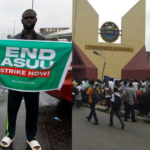
  • In this episode of Nigeria jaga jaga, the President of the country is off to the UK on a 2-week vacation while Nigerian students stand the risk of suffering another strike action from the Academic Staff Union of Universities (ASUU).

    After his award winning Independence Day speech on Tuesday, President Bola Ahmed Tinubu packed his bag and jetted off to the United Kingdom (UK) on a two-week leave on Wednesday.

    The explanation from his spokesman, Bayo Onaguga, that “he will use the two weeks as a working vacation and retreat to reflect on his administration’s economic reforms” still cannot excuse the fact that he has not earned this annual leave. We can’t even say for sure that he’s been hitting any of his KPIs

    While Tinubu sips hot tea in innit land, ASUU, one of FG’s regular customers is warming up to exit tertiary institutions across the country to go sip some tea of their own at home.

    Where is this coming from?- On Wednesday, across different news dailies, the Yola and Nsukka zones of the union sent out clear warnings to the Tinubu administration saying it would go on strike if its demands were not met.

    What does ASUU want?

    For almost an eternity, the Federal Government (FG) and ASUU have been on each other’s necks over disagreements and each time this happens the union ends up going on strike and Nigerian students end up at home until FG and ASUU forgive each other then it’s rinse and repeat. At this time and by all we know, ASUU is asking Tinubu’s government to do the following:

    1. Release funding for the revitalisation of universities
    2. Revisit the 2009 FGN/ASUU Agreement 
    3. Pay 2022 salaries that were held back because of FG’s no work no pay verdict during the strike action that happened then.
    4. Change the Integrated Payroll and Personal Information System (IPPIS) 
    5. Pay up accumulated 35 months’ salaries and allowances captured in the 2023 budget, among others.

    What’s the holdup?

    Play Omawunmi’s “If You Ask Me,” because really if you ask us, who are we going to ask? FG and ASUU have been at this for over two decades and across different administrations. Most recently though, in August, the Union brought up the issue again, telling the government that it had 14 days to meet its demands. What did the government do?- set up a panel!

    Nigeria has a puzzling history of setting up endless lines of panels to investigate issues that never end up getting resolved; that is exactly what has happened with the ASUU issue. After the panel had a two hour long meeting (which ASUU attended), both parties agreed to return on September 6.

    “We have met to discuss all the issues and review them. We have given the government between now and the next meeting to see what they have to do. We believe in the interest of the Nigerian child and we will be protecting their interest if the issues are resolved amicably,” Osodeke said.

    They never met again so they gave the federal government a 14-day ultimatum in September which they didn’t meet. Now, they are slamming them with another 14-day ultimatum which started to count from Wednesday, October 2.

    Any hope for Nigerian students?

    This is hard to tell. ASUU and FG have been fighting each other longer than we’ve known Rihanna so what’s to say they will resolve it now? For context, this is how many times ASUU has gone on strike in the past

    1. 1999 – 5 months
    2. 2001 – 3 months
    3. 2002 – 2 weeks
    4. 2003 – 6 months
    5. 2005 – 2 weeks
    6. 2006 – 3 days
    7. 2007 – 3 months
    8. 2008 – 1 week
    9. 2009 – 4 months
    10. 2010 – 5 months
    11. 2011 – 59 days
    12. 2013 – 5 months
    13. 2017 – 1 months
    14. 2018 – 3 months
    15. 2020 – 9 months
    16. 2022  – 8months

    “We have consistently held press conferences, staged protests, and organized town hall meetings to avoid strikes and impress upon the government the need to act. Unfortunately, all these efforts have been futile,” Rafael Amakohia, ASUU’s Nsukka zonal coordinator said on Wednesday.

    “The ball is now in the government’s court. If we go on strike, the blame lies squarely with the Federal Government,” he said again.

    So it’s over to FG then or till Tinubu returns from the UK? Welp!

  • Every week, Zikoko seeks to understand how people move the Naira in and out of their lives. Some stories will be struggle-ish, others will be bougie. All the time, it’ll be revealing.


    Nairalife #270 bio

    What was your first introduction to money?

    Getting into university at 16 was my introduction to financial responsibility — or my lack of it. I started receiving a ₦15k monthly allowance and finishing it on food before the 19th of the month. Then I realised money wasn’t just there. I had to use it wisely if I didn’t want to go broke before I got my next allowance. Before that time, I never thought about money because my parents shielded me from it. 

    What do you mean by “shielded”?

    I attended schools that were above my parents’ means. They’re civil servants, but my dad happily took loans to send me to expensive schools. Of course, I didn’t know this, so I had this illusion that we had all we needed. 

    It started to show we didn’t have much money when my dad would wait until the last minute to pay my tuition. One minute, he’s like I don’t know if I’ll be able to pay tuition. The next minute, he’d bring the money. It was obvious he had to take loans.

    Interesting. When did you first make money for yourself?

    My second year in uni. I helped a student faculty union political aspirant write campaign speeches for ₦2k. The thing is, there was no structure to the payment arrangement. He could just remember me randomly and send me ₦2k today and another ₦2k three weeks later. That lasted for only one semester. The guy lost the election; the last thing I wrote for him was an appreciation announcement.

    But the experience taught me that I could get paid for writing. I’d been writing for fun since primary school, and I didn’t imagine I could get paid for it. So, I decided to pursue it further.

    How did you get the next gig?

    In 2019, a friend introduced me to some people who needed a writer to work on a white paper for a crypto token. I had no idea what a white paper was, and I went ahead to overpromise and undercharge. I charged them ₦50k and said it’d be ready in two days. Something that should’ve been around $500 – $1k. 

    I got it done though, but it has to be the worst piece of writing I’ve ever done. I downloaded several other white papers and just combined them. Thankfully, my employers didn’t know what a standard white paper looked like, and they thought it was acceptable. They put me on a retainer and paid me ₦30k – ₦40k/monthly to write promotional articles and employee agreement forms. The internet helped me a lot here. I just needed to search for templates and tweak for what I needed.

    By the way, they gave me three million crypto tokens as a founding member— I still have them even though they’re practically worth $0 now. I stopped working with them after four months. The project wasn’t really taking off and there wasn’t much for me to do.

    What did you do next?

    I got a few opportunities to write for crypto companies. I also dabbled into trading crypto, and it was a lot of trial and error: I’d compete for airdrops and trade the token I got. 

    A few friends also introduced me to forex trading. The first day I tried it, I traded $10 on synthetic indices and turned it into $700. I guess it was beginner’s luck, but I was sold. I immediately called a friend and asked him to bring money so I could trade for him. He gave me $100, but I lost it. Thankfully I was able to pay back with the money I’d won.

    That was a close one

    Heh. It wasn’t the last time I lost someone’s money while trading. Towards the end of 2021, I lost $8k of my and other people’s money. I’d gained some trading experience and my portfolio was worth $5k, so I was comfortable trading with more money. I didn’t expect the loss.

    How did it happen?

    So, about $3k of that money was for me and a friend. We were collaboratively trading, so our money was together. The remaining $5k belonged to three lecturers and another friend. 

    How my lecturers got involved was so random. One day, I was on my phone in class, and the lecturer seized my phone. He saw I was on a trading platform and asked me about it when I went to pick up my phone. Apparently, he’d heard about the platform and wanted me to teach him. I convinced him to give me his money instead because my friend and I had a strategy to make about $100k from $8k. He brought in two more lecturer friends and they raised about $4k between themselves. The plan was to trade for three months and pay them back with 300% interest. 

    Why were you sure you’d make $100k?

    My friend and I constantly explored ways to game the system and we came up with an arbitrage strategy for futures trading. It required us to trade simultaneously on two devices. We’d open a “buy position” on one device and a “sell position” on the other. If the market went up, we’d close the sell position and wait for it to balance out. It felt like a safe gamble since we were trying both ways.

    When we were successful, we could make $10 every five minutes. So we thought — rather foolishly — that if we did that 100 times, we could make $10k daily. It didn’t happen like that; we made $300 on the first day. 

    Then a few days later, I left my room to watch a football game and dropped my tablet with my friend so he could trade with two devices as usual. When the match was over, I saw that my friend had called me several times. I called back and he said he’d lost the money. His phone had gone off before he could close a position and the only thing left of the $8k was $500.

    Ah

    I didn’t understand it. But I was very audacious and arrogant about my skills. I believed I’d trade the remaining $500 and make the money we lost back. I don’t need to tell you I failed miserably. 

    I had two months to pay back $5k and I couldn’t tell the people involved what had happened to their money. When the time elapsed, I called one of the lecturers and asked for three more weeks because the money was locked up in a trade. He called me a scammer and said I had used their money to buy clothes. The lecturer I discussed the opportunity with initially was more cool-headed.

    But then the three weeks came, and still no money. I had to come clean. The cool-headed lecturer — who was a senior lecturer — told me I wouldn’t graduate if I didn’t pay him his money. 

    Damn

    It was a chaotic situation. They were all on my neck and it seemed like the two other lecturers were willing to harm me physically. Thankfully, ASUU went on strike in February 2022, which gave me some breathing space. I stopped taking most of their calls so I could think about how to make money. I didn’t know how long the strike would last, and I needed to make the most of it.

    I decided to go back to the basics: writing. I got ₦6k from my dad and paid for a “How to use Upwork” course. I was added to a group with the other course participants.

    Within a week, someone in the group got a gig. I’m very competitive, and suddenly I didn’t just want any gig, I wanted to catch up with that person. So, I started studying like my life depended on it. 

    I believe that helped

    It did. But I had to send proposals every day for a month before I landed a video transcription gig that paid me $15. I got another writing gig that was supposed to pay $1k, but after they made the first milestone payment of $10, they never got back to me again. After that, I regularly got random $20 gigs here and there.

    I got my big break a few weeks after. I landed a $25 gig to write an edition of a daily crypto newsletter. They liked my work and paid me $125 weekly to write the newsletter daily. I did that for three weeks before they offered to take the gigs off Upwork so I’d join the team full-time. 

    On the same pay?

    Somewhat. They offered $500/month. I took the meeting in my dad’s room, and after the call, I told him I’d turn down the offer. He thought I was mad, but I felt I could get more. I was basically keeping the newsletter running. 

    So, I made a list of the things I’d do on the job, requested another meeting with my employer, and successfully negotiated an increase to $750. My dad was shocked. Honestly, I wasn’t completely sure it’d work, but I had to try. This was in July 2022.

    In September, I got another Upwork gig to create a tutorial for an edtech company. I had to walk a friend through the process over the phone so he’d do it for me on his laptop — I didn’t have one, and it was necessary for the tutorial. The employer liked the work and I became a regular tutorial content creator for them. The hourly pay usually came to $1,500/month. 

    By the time ASUU called off the strike in October, I had enough to pay everyone with interest as agreed. I even had to beg one of the lecturers with extra $200 because he was really pissed and insisted I wouldn’t graduate. I paid back $8,100 in total.

    Phew

    I kept working like crazy after school resumed. My boss at the edtech company was pleased and gave me $1k for a new laptop after I complained about the one I was managing. The money was enough to get me a laptop, a headset, keyboard, and a mouse.

    Two months later, I got laid off from the newsletter job because of funding issues. I had the edtech job, so I wasn’t bothered. I’d also somehow transitioned into their marketing guy, so I was doing more strategy than creating. 

    My salary increased to $2500 in 2023. On average, I was spending ₦200k/month. I wanted something stable to put my money in, so I started thinking of starting a business.

    What kind of business were you considering?

    A lot. At first, I thought about building a restaurant. Later, I considered a gym. But in 2023, I finally settled on a co-working space after my friends and I visited one during a trip. I had $4k — about ₦2m — in savings which was nowhere near the ₦8 million I projected I’d need to start. I got two more friends who also earned quite well on board and we got started.

    We leased land somewhere and worked on the building project for six months. All our savings and salaries went into it, and we eventually spent about ₦50m on that project. We’ve been in business for about three months and have made about ₦8m in revenue. Most of the money still goes back into the business because our dream now is to build co-working spaces in multiple locations.

    That’s audacious

    It is, but we have a roadmap for how we hope to achieve that. It’s transformed from just a means for me to invest and make passive income. It’s now the crux of my life’s work.

    I should add that I also formed a digital services agency with two other friends in 2023. They’re badass designers and software developers. We pitched handling marketing and product development to a startup, and they accepted. 

    So, we gave ourselves a name, pitched more people and kept a portfolio of clients. We’re now a 10-person team and currently have one retainer that pays us ₦900k/month. We also get other bigger clients from time to time. I get about 40% – 50% of whatever we make monthly because I fund the upfront costs of running the projects. However, profit sharing is dependent on the project and terms. The highest payout I’ve gotten is ₦5m. There’s no standard amount, but it’s naira income and I like that it helps me save my dollar earnings. 

    What’s your monthly income like right now?

    My 9-5 pays me around $3,500 these days. It slightly differs sometimes based on the number of hours I work. I make an additional average of $600 – $1200 from the agency. I earned more here in 2023, but I’ve not been as active this year because of school work.

    Wait. Are you still in school?

    I wrote my final exams a few weeks ago, so I like to say I’m done with school. But there’s still clearance and a few more steps before I’m officially done.

    How would you describe your relationship with money?

    I’m not shy about spending money. I don’t necessarily live above my means— my quality of life is pretty modest — but I spend aggressively on things that can improve the quality of my life, like my businesses. 

    Right now, I’m super confident that I have what it takes to make money at any time. So, I’m willing to take more risks and put my money into possible income opportunities because I know I can get it back. 

    Let’s break down your typical monthly expenses

    Nairalife #270 monthly expenses

    Black tax is mostly self-imposed. I just send money to my parents and siblings because I want to. I live in a two-bedroom apartment that I share with a flatmate, and that sets me back about ₦300k in rent yearly.

    What are your savings like right now?

    Absolutely non-existent. I mentioned my partners and I are pursuing the expansion of our co-working facility, and most of my money goes into that. I recently made an additional ₦750k investment a few weeks ago.

    What might the next few years look like?

    I think I want a PhD, which is ironic because I didn’t take my undergraduate years seriously. However, working on my final year project resurrected an interest in school. But I’ll focus on my 9-5 and business for the next two to three years because I need to leave Nigeria before 2027.

    Why 2027?

    I feel like our president will contest for a second term, and it’s my personal responsibility to be out of here before he wins.

    Haha. What would that mean for your businesses, though?

    I’ll spend the next few years building them to become self-sufficient. The goal is to build systems and structures that move them from mere businesses to proper organisations.

    What’s a recent unplanned expense you made?

    I bought two phones in the last three months for frivolous reasons. I replaced my iPhone 13 with the same model in January because it had a scratch. That cost ₦800k. In March, I decided I needed a new phone for another sim and spontaneously bought a ₦500k Google Pixel. I only needed the phone to make calls. Thinking about it now, those weren’t smart decisions. 

    How would you rate your financial happiness on a scale of 1 – 10?

    6.5. I’m earning reasonably well, but I think I’m still leaving money on the table. I’m not earning as much as I should because being in school hasn’t helped me explore all the opportunities available to me. Now that I’m nearing graduation, I intend to fix that.

    What’s an ideal amount you think you should be earning?

    At least $10k/month. It’s audacious, but I have a mental picture of how to get there. I’ll definitely need to pursue entrepreneurship on a larger scale. I have ideas for businesses I can start, as well as how I can increase cash flow to my digital services agency. I’ll also need to find a way to reduce time spent at my 9-5 to give more time to these ideas. 

    I’m curious. Have you ever thought about when you’d like to retire?

    I think about that every day. I want at least a million dollars in liquidity so I can retire at 30 — even if it’s pseudo-retirement. I may not stop working totally, but it should be reduced to the barest minimum so I can pursue fun projects. I’ll be 22 in a few weeks, so I have eight years to achieve that goal.


    If you’re interested in talking about your Naira Life story, this is a good place to start.

    Find all the past Naira Life stories here.

    Subscribe to the newsletter here.

    [ad]

  • The Academic Staff Union of Universities (ASUU) has asked members to join the nationwide strike declared by the Nigeria Labour Congress and the Trade Union Congress of Nigeria. 

    Here’s all we know about the situation that has raised anxiety among students.

    NLC, TUC Embark on Strike. But Why Is ASUU in the Mix?

    What happened?

    On Monday, November 13, the leadership of the NLC and TUC directed members to withdraw their services nationwide from midnight.

    Festus Osifo, TUC president, informed journalists of the planned industrial action in Abuja on the same day. According to him, the strike will continue until “government at all levels wake up to their responsibility.”

    The strike is also connected to the November 1 alleged battering of NLC president, Joe Ajaero, during a labour protest in Imo state.  Benson Upah, NLC’s Head of Information, told the press that Ajaero was arrested by the police ahead of the state-wide protest to highlight the plights of workers in Imo.

    At a press conference in Abuja on Friday, November 10, Ajaero recounted his ordeal at the hands of police officers.

    “I can’t explain the beating I received. They tied my hands and dragged me on the floor like a common criminal. I am not even a card-carrying member of any political party as alleged.”

    However, Imo Police Public Relations Officer, ASP Okoye Henry told a different account of the story. According to Henry, the NLC president was taken into protective custody following a mob attack that stemmed from protesters trying to shut down areas of essential services.

    “Upon receiving this report, the Imo Police Command swiftly deployed police operatives to the scene where the Officer in Charge exercised his operational discretion by taking the NLC President into protective custody at the State Command Headquarters to ensure the protection of his life and that he was not lynched in the scuffle that followed,” he said.

    During the November 3 press briefing in Abuja, the NLC rolled out a six-point demand to the federal government including the investigation and redeployment of Imo commissioner of police, Mohammed Barde, and removal of officers believed to be involved in the attack against Ajaero. 

    The NLC also demanded a thorough examination of Ajaero to ascertain the level of physical and psychological injuries inflicted on him.

    Why is ASUU involved?

    On Monday evening, November 13, President of ASUU, Prof Emmanuel Osodeke, directed its members to join the NLC and TUC’s industrial action.

    In a letter sent to all the union zonal coordinators and branch chairpersons of the union, Osodeke wrote:

    “The Nigeria Labour Congress at a Joint National Executive Council (NEC) of NLC and TUC directed all affiliate Unions to commence withdrawal of services with effect from 12:00 midnight today 13th November 2023. 

    “As an affiliate of NLC, all members of our union are hereby directed to join this action of NLC to protect the interest of Nigerian workers and the leadership of the union. Zonal coordinators and branch chairpersons should immediately mobilise our members to participate in the action.”

    [ad]

    How are Nigerians reacting?

    News of ASUU joining the NLC and TUC’s strike has since stirred reactions from concerned Nigerians and students.

    https://twitter.com/sidi_omar15/status/1724316956805788099?s=46&t=gV-1mmgH3NC_RQhcgp1x3w

    How long was the last ASUU strike?

    ASUU’s last strike lasted eight months. The union embarked on the strike on February 14, 2022, to press home its demands from the FG. The union’s demands included the release of revitalisation funds for universities, the release of earned allowances for university lecturers, and the deployment of the University Transparency and Accountability Solution (UTAS).

    It called off the strike on October 17, 2022, following an order from the industrial court.


  • This week’s subject on #TheAbroadLife left Nigeria to start over in school after being forced to stay at home for a whole year due to ASUU strikes. He lost three years in total, but today, he’s worked with the company that built the popular game, Call of Duty.

    When did you decide to leave Nigeria?

    I didn’t make the decision myself, TBH. It was something my parents decided and kinda worked towards. I’d noticed them talking to my cousins about schools in the US, and I was just in the background cheering them on because I was excited at the thought of leaving OAU to study abroad.

    LMAO. What’s wrong with OAU?

    Everything. First, it’s a mentally draining place, like everything conspires to suck the mental curiosity out of you. I once had a lecturer tell the whole class that we were all going to fail because he didn’t like us. Just like that. We had someone give a test ten minutes into the start of his class because he noticed many people weren’t in class yet. The place is just full of wickedness. So, I was really excited about leaving. 

    Was this what made your parents decide, or was it something else? 

    My parents are kinda used to the fact that Nigerian schools are messed up in many ways, so the things I was experiencing probably seemed like child’s play to them because they experienced worse. But the last straw for them was 2020. 

    We’d gone on strike before the COVID-19 pandemic, but the lockdown didn’t make it feel like the strike was serious. We came out of the lockdown a few months later, and I still couldn’t go anywhere because ASUU strike was on. The last strike that had happened was in 2018 but this was enough to freak my parents out, so they started looking for options.

    Why did they choose the US?

    I had cousins who live here and understand how things work, so it was only natural for them to be the starting point for my parents. We realised I could move abroad with an undergraduate assistantship which would afford me a tuition-free undergraduate education. That became the thing to pursue for the next six months. 

    I wrote the SATs and passed really well, and I applied to about five schools to study electrical engineering, which was what I was studying in OAU. I applied to schools with the highest acceptance rates, low tuition and good post-university placement rate. This helped with my admission and career chances.

    Did you get admitted to any of these schools?

    Yes. I got admitted to a university in Minnesota in March 2021, but the session was to start in August. We applied for the student visa with my admission, paid the fees, after which I started planning to “travel out”. 

    I didn’t tell a lot of my friends about the whole thing, mainly at the behest of my parents. They were scared of “village people” when it came to my matter, so we were all very discreet.

    What happened next?

    My visa was approved, and I left Nigeria in June 2021.

    Paint me a picture. You’ve just landed in Minnesota, USA. What’s it like?

    I saw the tallest buildings I’d ever seen in my life, and it blew my mind. That was my first time out of Nigeria, so I’d only ever seen them in movies. But movies don’t do justice to how tall some of these buildings are. Then the roads. My God, the roads are big, and the cars on them too. I think Americans simply love big things. The food portions are big too. Same thing with the billboards.

    When winter was done, I could finally appreciate just how beautiful the state is. It was naturally beautiful with the nicest treescapes and landscapes. I hate that I still haven’t been able to explore the natural side of the state because I’ve been busy with school.

    Speaking of, how did it go at school?

    I did all the registrations, met and signed up with the lecturer to whom I was supposed to be a research assistant. He was warm and welcoming. The work I had to do for him was only on a part-time basis so I could focus on school.

    When school started, I realised I’d been suffering all my life. There’s an unspoken sentiment in Nigeria that school needs to be hard for it to make sense, or that it’s normal for students to suffer just because they’re students. That thing is complete rubbish. The first thing that shocked me here was that the lecturers want your opinion, and they actually care about it. This was new to me because asking the wrong questions in my class back in OAU could mean you’d get washed by the lecturer. 

    The style of learning w also perfect for me. It wasn’t just knowing and regurgitating facts. You got to see how to apply them in practical situations. A lot of things I used to need to memorise were just unnecessary. Because of this, I’ve been on a perfect GPA since my first year in school, and I don’t even work as hard at school as I did in OAU.

    Omo. I love it for you

    Because I have the grades and time, I’ve been able to do a lot extracurricular activities like building student developer clubs, and take on internships and side jobs to make more money. It’s a better deal coming here TBH.

    Last summer, I did a 3-month software engineering internship at the company that makes the Call of Duty game that everyone loves so much. I had a fun time and made awesome friends. 

    That’s awesome! Tell me about the people of Minnesota

    The people here are super-polite, almost to a fault. It was off-putting at first, especially coming from Nigeria where people are often careful when talking to strangers. They say “please” so much it kills me. They smile whenever they’re talking to you, and it didn’t sit well with the Yoruba boy in me. Like, why are you smiling? Are you planning to do me bad or what?

    I eventually got used to it, and I now get along well with people. In school, I made a lot of American friends, but I was also able to connect with Africans because we have societies and associations that make that easy. 

    When you’re here, you don’t really see people from other African countries as different from you because you’re mostly coming from the same situation back home, and people simply make no distinction between what country people are actually from.

    What do you plan to do after school?

    I don’t know. I haven’t actually thought about that. But I know for a fact I want to stay back here. There are lots of opportunities for me to choose from.  The most obvious thing for me to do is to get a job here so I can get a work visa and probably stay here long enough to become naturalized. 

    My main goal is to work in big tech, but we’ll see.


    Want more Abroad Life? Check in every Friday at 9 A.M. (WAT) for a new episode. Until then, read every story of the series here.

  • Nigerian students across the country have received a fresh wave of disappointment from their lecturers, as the Federal Government (FG)  bluntly refused to pay the Academic Staff Union of Universities (ASUU) their full salaries.


    Why is FG holding lecturers’ salaries?

    Even though the government may be making a diss move towards ASUU, their actions are legally right.

    According to the Trade Act Union, Vol.15 CAP T8 Laws of the Federation of Nigeria, 2004, federal workers that go on industrial action (or strike) do not deserve to be paid for the months they were away from work.

    While the Federal Government may claim that its decision in paying the workers half of their salaries is legally right, it totally defeats the purpose of ASUU striking for eight months, which was to collect their wages in full.

    How’s ASUU taking this? 

    After ASUU lecturers checked their phones and saw that their ‘credit alerts’ weren’t complete, they decided not to relent, as they began a new wave of protests.

    The University of Lagos (UNILAG) chapter of the ASUU kicked off with a peaceful protest on November 15, urging the government and stakeholders to reverse the payments before another crisis erupts in the nation’s universities. 

    The Bayero University in Kano, while not protesting, has decided to postpone exams previously slated from November 17 for an indefinite period.

    But since Ngige is not willing to hear word, we may have to brace ourselves for another nationwide strike from ASUU.

    How are students taking the news?

    The reactions from Nigerian students across social media have gathered some mixed reactions, as some students are tired of the constant ASUU-FG back and forth, while others are hoping the strike occurs due to their lack of preparation for exams.


    Some have also decided to fight the good fight with their lecturers. Some UNILAG students also decided to join the protests.

    Right now, the biggest question for Nigerians is, will ASUU still go on strike? Well, let’s wait and see.

  • On October 14, 2022, when the Academic Staff Union of Universities (ASUU) called off its strike after eight long months, we warned that it was not yet uhuru. This was because the underlying issues that led to the strike in the first place weren’t resolved — another strike action was a matter of when, not if.

    In boxing, several months pass before boxers consider a rematch. But ASUU seems not to subscribe to boxing rules and is ready to face the government again. Naturally you’re wondering, “What triggered the rematch clause?”

    What’s ASUU’s latest grievance?

    Even though ASUU suspended its strike, it was really an industrial court order that forced the union’s hands. The ASUU chairman, Emmanuel Osodeke, made it clear at the time that issues had not been resolved and agreements not signed. So essentially, it looks like the referee prematurely intervened in their first bout.

    ASUU summoned its National Executive Council (NEC) for an emergency meeting on November 4, 2022 hours after lecturers got credit alerts from the government. The lecturers only received half salaries for the month of October, starting from when they called off the strike. Imagine receiving a half-month salary when you were expecting payment for the eight months of strike.

    How are lecturers reacting?

    ASUU’s Gombe chapter has already threatened to withhold the results of students. 

    One lecturer has threatened the resumption of the worst nightmare of Nigerian students — another strike.

    One student also shared a screenshot of a Bauchi-based lecturer advising students to delay resumption and monitor the situation. He said he won’t attend to any students until the government addresses the salary issue.

    What’s the government doing?

    It looks like the federal government is employing divide and rule tactics, much like it did when it certified a different faction of ASUU during the strike. The government’s latest move is clearing the backlog of arrears of medical staff at the Usmanu Dan Fodiyo University, Sokoto without doing the same for lecturers. This has led to  internal tension and accusations the Minister of Labour and Employment, Chris Ngige, is creating division in the university.

    Nigerian students are now back in limbo as they don’t know whether to prepare for exams or hold off in anticipation of another strike. The government and ASUU continue to throw punches, but students are the unfortunate punching bags. Who will save Nigerian students from this mess?

    ALSO READ: Will Nigerian Students Ever Be Free of ASUU Strike?

  • On October 14, 2022, the Academic Staff Union of Universities (ASUU) suspended its eight-month-long strike. As a result, several public universities across the country have announced resumption dates with some scheduling exams to start immediately.

    What are people saying about it?

    On October 22, 2022, the spokesman of the Northern Elders Forum (NEF), Hakeem Baba-Ahmed, commented on how students are the biggest losers of the strike. He noted that they’ll be “railroaded” into completing their academic year but lecturers will get their outstanding salaries and the government will face no penalties. 

    A political economist who replied him also noted that some students are struggling with Nigeria’s flooding crisis but their problems are not taken into account. 

    Citizen spoke to two students about their experiences on readjusting to school life after the ASUU strike.

    Ebuka — University of Nigeria, Nsukka (UNN)

    “I’ve already gone back to UNN. I’m a medical student so I don’t really have classes per se. We’ll be having online classes on Monday due to the sit-at-home order in Enugu. We’ll start going for postings at the hospital from Tuesday to Friday — that’s what we’ll be doing for eight weeks.

    The cost of living has gone up a lot. A keke ride that used to be ₦‎50 is now ₦‎100, a bag of water has gone up to ₦‎200 and a bottle of Fanta is ₦‎220. I don’t even know what a ride to the hospital will cost now. Before the strike it was ₦‎150 and slowly increased to ₦‎200. It could be higher now with the flooding crisis and fuel scarcity.”

    Shola — Federal University of Agriculture, Abeokuta (FUNAAB)

    “Yes, I’m in school now, but FUNAAB hasn’t released its academic calendar yet. I’m in school because of my project and it’s been a devastating thing for me as I should have graduated a long time ago. I’m still in school for a four-year course and I’ve spent six years already.

    As a matter of fact, we’ve not yet resumed. Our Vice Chancellor will be rounding up his service on October 31, but there’s currently an internal issue  — we don’t know when the calendar of the school will be out. Students are just roaming about the school environment. 

    It’s not been an easy journey for us as students of FUNAAB with national issues like the ASUU strike, the internal strike and also the NASU strike affecting us. We’re bitter and it’s not been funny — we’re down financially, morally and mentally.”

  • When the strike started in February [2022], some students may have assumed it wouldn’t last more than a month — it was a four-week warning strike, after all.

    But when the strike kept extending till it was declared indefinite, many students were like:

    Welp! Time to secure the bag

    The strike is finally over, and students are expected to resume school by October 24 [2022]. What happens to those who already secured jobs during this period to make good use of the by-force holiday? I asked seven of them about their plans, and here are their answers.

    “I’m not smelling school till next year”

    — Yewande, 25, Master’s student, Unilorin

    I sat at home for the first five months of the strike before I landed my current human resources job in Lagos. It wouldn’t make sense to just up and leave when I’ve not even spent six months.

    Sure, they know I’m a student and may understand, but honestly, I don’t even want to go. ASUU themselves said their demands haven’t been fully satisfied. What’s to say they won’t start another strike next month? Which lecturer would even want to resume after being owed since February?

    They’ll be alright. My focus now is my job. Some graduates don’t even have jobs, so I can’t abandon mine for people who can change their minds in one minute. I’ll go back to school, but that’ll be in January.

    “I had to abandon my internship”

    — Joke, 19, first-year student, EKSU

    My school’s management ordered the resumption of school activities ahead of the ASUU strike call-off, so I had to go back around September [2022] for practicals.

    It was really painful because I’d just got an internship with this real estate company in Lagos in late August [2022]. They were even going to give me a stipend, and it would’ve been my first professional work experience, but I didn’t get either.

    ASUU and co, well-done o.

    “I’m still keeping my job”

    — Kunle, 20, third-year student, Unilag

    I got a virtual assistant job in August [2022], and it’s been great. With school resuming now, it’ll likely be very tough because the job is demanding. But I’ll just find a way around it.

    It’s too soon for me to request leave from work, so that’s out of the question. If worse comes to worst, and exams start, I’ll form sickness and take sick leave. School is important, but money is importanter.


    RELATED: “Let the ASUU Strike Continue” — These 5 Students Are More Interested in Making Money Online


    “My business will likely take a bad hit”

    — Jane, 23, final-year student, UI

    My elder sister helped me start a mini fashion supply business last month [September 2022]. Since I’m based in Lagos, I have easy access to Balogun market. So, I post stuff on my WhatsApp and supply them to people.

    Now that the strike is over, I need to return to Ibadan. It doesn’t seem financially prudent to continue because I’ll have to include dispatch fees. How much would my profit be?

    I’m not happy because I was just getting the hang of the business, but at least I finally get to go back to school and start thinking of graduation.

    “This isn’t what we planned, ASUU”

    — Goke, 20, second-year student, FUNAAB

    I started an internship in September [2022]. I confidently started a physical one because I’d concluded the strike would stay on till next year, especially since our government is more interested in the campaigns.

    Now, I’m forced to leave without giving the company adequate notice. This isn’t what we planned, ASUU.

    “I’m more than happy to go back to school”

    — Ann, 19, second-year student, Unilag

    Since the strike started in February, I’ve been teaching at a school close to my area. The money is trash — just ₦8k — but I took it so I wouldn’t have to stay home.

    Immediately I got confirmation of the strike call-off, I resigned. School is stressful, but at least, I’ll get an allowance and live my best baby girl lifestyle.

    “I can’t afford to go back just yet”

    — Mide, 23, final-year student, EKSU

    I got a teaching job just like most of my peers did. But unlike them, I can’t afford to resign now. Firstly, I usually get paid in the first week of the new month, so I have to stay till November [2022] at least.

    Still, I’m considering staying till December because final year is expensive, and I need to make sure I’m loaded. I’m also confident my landlord at school will start disturbing me for payment once he sees me. I don’t even have time to think about it now. I just need to have money.


    Let Zikoko tell you where the money at! Subscribe to the Money By Zikoko newsletter to get all the gist about how money moves in Nigeria, by Nigerians.


    ALSO READ: “My School Is the Ghetto, But I Miss My Friends” – 9 Students Share What They Missed During the ASUU Strike