You know this person, or perhaps you are this person. The strong one. The first call when something goes wrong, the one who shows up even when running on empty, the friend who listens for hours but rarely speaks about their own troubles. And for a long time, that identity feels like something to be proud of. Until the weight of it becomes too much to carry quietly.
For many Nigerians, psychologist Sandra Anyahaebi explains, strength stops being a choice and becomes a performance that people feel trapped in. They hear, “be strong,” “don’t let people see you weak,” “others have it worse,” “you’re the firstborn.” Over time, worth becomes tied to how much a person can endure rather than who they actually are.
In this article, ten Nigerian women share what happened when the weight finally became too much, and what it took to begin putting it down.
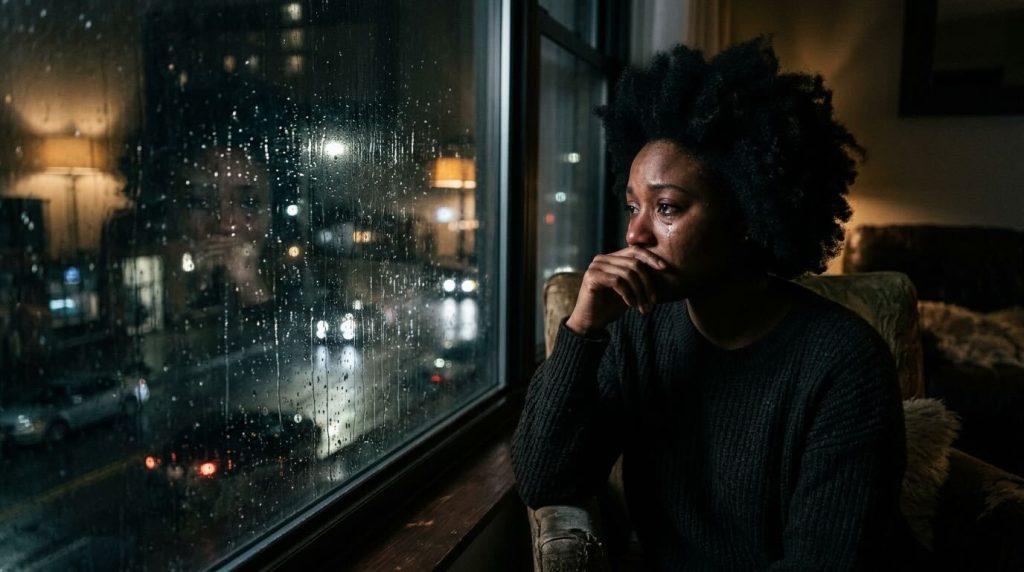
1. “I had a toxic job that almost took my life” — Elle*, 27
When I was 23, I had a toxic job that almost took my life. The work hours were ridiculous. I would wake up as early as 4 am so I could get there by 6, and I would leave there by 10 pm because my bosses were very fond of dropping their tasks on me. I wasn’t sleeping and barely had a social life, but every time I complained to my mother or anyone, they would ask me why. They told me I should be glad I had a job in a country where most people didn’t. They kept telling me to endure, and I kept doing it because I believed they were right. I ignored the stress migraines, the chest pains, the eye twitches, and the rapid weight loss. That turned out to be a huge mistake.
Eight months into my job, I entered the office as usual, only for me to fall. When I opened my eyes, I found myself in a hospital. The doctor let me know that my fainting was an indicator of my body slowly reaching its limits, and honestly, that was my breaking point. The moment I was discharged, I quit my job, and for three months, I spent my days doing nothing except sleeping, eating well, and seeing my family and friends. I had to give myself that room to experience what it was like to live before I found myself another job. Now, whenever I get a new job and realise that it’s going to be toxic like the old one, no one even tells me before I pack my load. I can’t kill myself, please.
2. “I had to become an adult before I knew what it meant” — Precious*, 25
My parents were really busy in our earlier years, and the pressure was on me to look after my siblings because it was my “responsibility as the firstborn.” I had to become an adult before I knew what it meant.
My mum hated it whenever I complained or cried about being overstimulated from babysitting my siblings. If she caught me crying, she would tell me I had it so much better than other kids, so why was I complaining? I never received the kind of comfort my siblings received as kids. I was required to be “strong” because my siblings looked up to me. As a result, I became someone who found it uncomfortable to be vulnerable.
As an adult, whenever my mental health was in the dumps, I would keep myself busy with more work instead of talking about it with someone because I felt it made me weak. Every time I made a slightly concerning statement around my friends, and they suggested looking into therapy, I would lie to them that I didn’t really need it because that was better than telling them that the thought of vulnerability scares me.
My friend always says this thing about how “a bullet will someday hit a moving target”, and I never fully understood her until the day I had a mental breakdown. I don’t quite remember much of what happened during that episode because I was in a dissociative state for most of it. It was my friends who somehow found a way to break into my house, took care of me for weeks, and when I finally began to feel more human, they were the ones who found me a credible therapist.
Healing took time. I had to get comfortable with opening my heart to my therapist, but when I did, I was finally able to release all the horrible, awful emotions I’d been holding all my life. I turned from this high-strung person, who needed to be constantly occupied with work, to a light-hearted person who spent her weekends sleeping and relaxing. I also started talking and crying more.
3. “My mental health continued to rot while I played the role I was expected to play” — Zaynab*, 30
There was a time I prided myself on being the fixer in everyone’s lives. I was the daughter, sister, and friend you could always count on to be there. If my parents needed me for anything, I was there; if my sisters needed money, I wouldn’t think twice, even when I didn’t have anything to give. And if my friends called me at 3 am to cry about something, I would pick up the call even when I had work to be at that morning.
I didn’t care that my own mental health was deteriorating because I felt like I needed to be there for everyone without making it obvious that something was wrong with me. I didn’t even feel like there was anyone I could talk to because most of the time, the people in my life only remembered my existence when they needed something. My mental health continued to rot while I played the role I was expected to play in everyone’s lives until the day I had a panic attack at my home.
I remember temporarily losing my ability to breathe normally and how much it felt like my chest was genuinely on fire. I wanted to call someone, but I couldn’t. I cried so much because I didn’t know how to regulate my breathing back to normal. It took almost an hour before I could breathe better, and when I did, I finally had to sit down with the uncomfortable feeling that I couldn’t live the way I was living.
My first step to healing was actually quitting my job, travelling to Benin, and turning off my phone while I was there. It might seem ridiculous, but spending a month in Benin without anyone constantly calling me was the most amazing thing that had ever happened to me. It was freeing. It felt like a weight had been lifted off my shoulders, and to maintain that, when I got back home, I began to set boundaries with my family and friends.
I let my parents know that there would be times when I can’t constantly make myself available for them; I told my sisters they would only see money from me once a month, and I let my friends know that there would be periods when I wouldn’t pick up a midnight call unless it’s a serious emergency. They didn’t really understand it, but they respected it when they realised how serious I was. I’ve also started seeing a therapist weekly. I can say I’m breathing better these days.
4. “I didn’t want to be called a quitter for leaving my first job” — Ifeoluwa*, 29
For two years of my life, I’d experienced the worst burnout that one could ever go through. It had infiltrated every aspect of my life. I couldn’t create art the way I usually did, I stopped cooking, even though it was an activity I loved, and I couldn’t summon the usual energy I always put into learning new things, and this was all because of my emotionally exhausting job. The amusing part about all of this was that I could have left the job, but because I didn’t want to be called a quitter for leaving my first-ever real job, simply because the workload was killing me mentally, I put in the work, even when I turned into a shell of myself.
The day I realised I couldn’t keep going on was when my friend asked me how work was going, and I started crying. She listened to me as I spoke about how the work was genuinely killing me, and after I was done, she gently advised me to quit my job and told me no one would actually think I was weak for doing so. I want to say I immediately took her advice, but no. I still spent like two months before I woke up one day and told myself that I couldn’t keep doing this to myself. I sent in my notice, and two weeks later, I was finally free. After quitting, I decided that it would be best to rest and start putting my energy into things that once brought me joy. That’s what I’m still doing till now, and I can’t lie, I am happier than ever.
5. “I told myself I just needed to put a strong front for everyone” — Chisom*, 42
As a mother and wife, I had to break my back. A lot. My husband was a deadbeat who barely contributed financially to our children’s lives, so I was the one who had to take two jobs because I didn’t want my children knowing anything was amiss. I also didn’t want my neighbours, friends, or anyone in my family to know, because the idea of exposing our dirty laundry to the outside world didn’t sit well with me. I told myself I just needed to put on a strong front for everyone, even though working two jobs, caring for two children, and maintaining the house had me pondering my existence in the early hours of the morning. There were times I just wanted to open my mouth and tell my friends everything, but I would think of how my mother said it’s important not to bring in a third party when it comes to married people. She always said that as a wife, it’s my job to be strong and stable for the children.
This continued until the day I heard the story of our neighbour who continued to toil for a husband who barely cared about her until she died, and her body was barely cold in the ground before he brought in a new wife. That became my awakening. I realised that my husband was very capable of doing something like that, and I decided that, for the sake of my health, it would be best to leave a marriage that wasn’t serving me the way I’d been serving it.
I got my divorce from him, quit one of my jobs, and with my children, I moved into a friend’s BBQ that she’d happily offered to me once I’d told her about my predicament. Till now, my parents haven’t understood why I divorced him, but I don’t care because I’m able to breathe better. I’m still figuring myself out, but I am learning to be more open about how I’m feeling because I’ve realised how important it is.
6. “I was living for my family and not necessarily for myself” — Kemi*, 27
Right from the moment I turned eighteen, I got a job so I could support my single mother and my other siblings and due to this, my mum and everyone else began to perceive me as this independent girl who didn’t need to be checked on, but frankly, I was drowning. I was eighteen and working even when my friends were living their lives.
I got admitted to university to study accounting, not because I genuinely liked it, but because I felt that, once I started exploring jobs in the field, I would earn enough money to take care of my family. I was living my life for my family and not necessarily for myself. I didn’t have a personality that could accommodate my family. I managed to juggle my side jobs with my exhausting university schedule, and every time I felt like I couldn’t do it anymore, I shoved that feeling down. I couldn’t ask anyone for help because, as I’d mentioned earlier, everyone saw me as an independent woman who didn’t need help.
It was in my fourth year that my repressed feelings finally caught up to me. I remember it was during my first semester exams. I was reading for a particularly hard exam while my siblings were bombarding me with texts about money, and I just decided that I couldn’t do it anymore. The next day, I dropped out of school, temporarily blocked my family, and then used the money I’d been saving for future emergencies to move to a neighbouring state where my friend lived and was willing to welcome me into her fold.
She held space for me to drag myself out of the fog I hadn’t realised I’d been stuck in, and it was with her help that I started learning to live my life the way I’d always wanted to. I won’t exactly say that I’m at the stage where I can consider myself a fully healed human being, but I’m taking it one step at a time. I can finally experience joy without constantly feeling like I owe my family, and honestly, that’s something.
7. “Every night I muffled my tears into a pillow because I couldn’t bear anyone hearing” — Fathia*, 24
Being the “good” daughter who didn’t ask for much and never stressed her parents or complained about anything ended up being something I regretted a lot when depression hit me. The thing about depression is that it’s just this dark abyss that you keep falling into, and every night I muffled my tears into a pillow because I couldn’t bear anyone hearing me.. I thought it would be weak of me to show that I, the daughter whom everyone could always count on, didn’t feel like participating in life at all. I continued to pretend that everything was going on well until I found out that I could get free therapy from a particular mental health organisation. That was where my healing started.
With my very nice and patient therapist, I started learning to feel comfortable talking about my feelings. I also transitioned from the quiet daughter who didn’t want to inconvenience anyone to the outspoken girl who isn’t very ashamed to speak up about what she wants. I’ve realised that one of the factors that contributed to my depression was my need to repress my words because I wanted to satisfy people constantly, but now, I’ve decided to prioritise myself first.
8. “Suppressing my emotions triggered hypertension” — Bukunmi*, 26
I’ve seen a lot of people speak about how the environment you grow up in affects the way you start to perceive the real world, and I think that was the same thing for me. Seeing a mother who pretended like she had it all, even though it was somewhat obvious that she was crumbling, made me think that’s how it’s supposed to be. You had to keep pretending so no one would see the rot beneath the surface.
You had to act like you had your life figured out because the world wasn’t kind to women who didn’t. I began to live like that and ignored how exhausting it was. My life could be falling apart, and I would pretend it was not because I didn’t want to be perceived as weak, even though I was a big advocate of telling my friends to be open about their feelings. I was the one they relied on for advice, the one they would call to get something off their chest, and every time they told me I could do the same, I would lie to them, saying I didn’t have anything to get off my mind. I ended up regretting that.
Also, another thing to learn about suppressing your emotions is that it eventually catches up with you one way or another. Mine caught up to me in the form of hypertension. When I found out, everyone kept saying it was ridiculous because I was too “young” to have heart issues, but when I finally pushed myself to find a therapist, she was the one who let me know that suppressing my emotions definitely triggered the hypertension. I hadn’t realised that, and knowing that was what finally pushed me to be more open about how I’m feeling. I can’t necessarily say that I have mastered the art of opening my heart for people to look into it, but I’m trying my best, and I’ve observed that every time I talk about something, I feel lighter. I really love that feeling.

The Naira Life Conference is returning on August 22, 2026, in Lagos! Come learn from finance experts and industry leaders, and partake in unfiltered conversations about building wealth and diversifying your income stream in a country like Nigeria. Real stories, expert advice you can actually use, and a community ready to build wealth together. Secure your spot here.
9. “My parents had painted vulnerability as something to be ashamed of” — Tolu*, 30
I was not allowed to be “emotional” as a child. It was something my parents frowned upon. I couldn’t cry because to them, it was “embarrassing”, and I couldn’t talk to them about anything that was going on with me because they felt like I should be able to figure myself out. I was ten. I needed emotional guidance, and yet, I didn’t get it from them. Every time I felt like crying or talking to someone about something horrible that happened to me at school, I couldn’t because my parents, my dad especially, had painted vulnerability as something to be ashamed of. This followed me into adulthood. I was working three jobs because one, the economy, and two, because I didn’t think much about my feelings when my brain was being crippled by thousands of work tasks. Unsurprisingly, I ended up having a psychotic meltdown that apparently went on for weeks. I do not remember most of it, and though my housemate tried to fill in the gaps for me, she was really unhelpful. All she said was that I was acting like a “mad person,” seeing things that weren’t there. It didn’t give me a full picture, but it was still my wake-up call. I didn’t even need a therapist to tell me what to do or anything.
For me, my healing began with cutting off my parents, finally venturing into the communities my friends had been hoping to drag me into, and finally being able to show my emotions without caring about how I would be perceived. The first time I allowed myself to cry properly, I realised how much my parents possibly stunted my growth as a person, and I got mad at them all over again.
10. “My depressive episodes were so crippling” — Elenai*, 25
For a long time, I told myself that being vulnerable was something that was not accepted because I’d seen the way society tended to mock people for exposing their feelings. That, and being raised by a military father, effectively killed my desire to be open to people. So, when I started having mental health issues like depression and anxiety in university, I thought it would be best to keep them in. I’d seen the way my friends weren’t afraid to talk about their mental illnesses, and I even did my best to support them, and yet, the thought of talking about my issues scared me.
My depressive episodes were so crippling, and yet, I would still struggle through them and go to classes because I didn’t want anyone to think I was weak for wanting to bedrot instead. This was something that kept going on until the day I downed over fifty sleeping pills because I truly wanted to die, but no one told me that overdosing on sleeping pills would just lead you to falling in and out of sleep while vomiting your guts out. I didn’t die, and my friends told me that was my second chance to do right by myself, and ever since then, I’ve been following that. I won’t say I have reached that zen stage, but these days I can choose to rest when I’m not feeling like being around people, and I don’t feel guilty about it.
Next Read: What She Said: She Didn’t Want to Be My Friend. She Wanted to Be Me.