Every week, Zikoko spotlights the unfiltered stories of women navigating life, love, identity and everything in between.
What She Said will give women the mic to speak freely, honestly and openly, without shame, about sex, politics, family, survival, and everything else life throws our way.
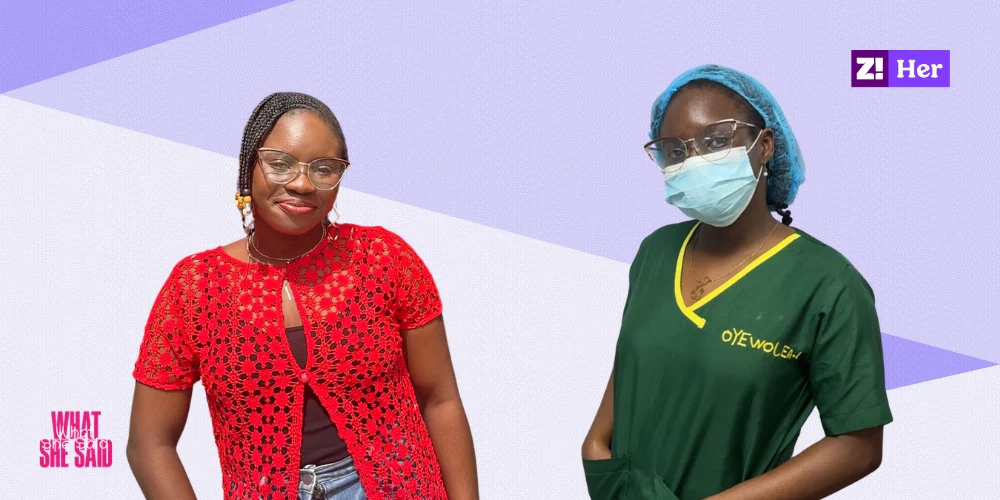
The subject of today’s #WhatSheSaid is Ifeoluwa Oyewole, a 23-year-old medical student at the University of Lagos and the founder of The Cardio Health, an organisation that has reached over 40,000 people with cardiovascular health education and screening. She has just been named a recipient of The Diana Award, one of the most respected honours for young people anywhere. She talks about the childhood that shaped her, the conversation that changed how she saw high blood pressure, and the dream that gave her organisation its name.
Can you tell me about yourself?
My name is Ifeoluwa Oyewole. I am a medical doctor-in-training, global health advocate, youth development advocate and award-winning social entrepreneur. I am also a project manager and event curator, with a passion for building initiatives that create meaningful social impact, particularly in healthcare and community development.
I spent most of my childhood in Ibadan, where I had my primary and secondary education, before moving to Lagos for university at the University of Lagos.
What was growing up in Ibadan like?
I had a beautiful childhood. My father was a lecturer, so education and reading were significant parts of our home life. We were encouraged to read, learn and stay intellectually curious. We also had Sunday family gatherings where we spent time together, shared stories and listened to moonlight tales. Those moments gave me a strong sense of family and shaped some of my earliest memories.
Looking back, I grew up in an environment that encouraged learning, curiosity and ambition. A lot of who I am today can be traced to those early experiences.
What kind of child were you?
A very ambitious one. Being the firstborn, I think I naturally developed a strong sense of responsibility and independence. My family and friends would probably describe me as a go-getter, audacious, outspoken, someone who isn’t afraid to say exactly what she thinks.
I was always interested in doing something. I loved writing, volunteering, advocacy and organising things. I enjoyed managing people’s projects, events and outings, even when there was no formal title attached to what I was doing. I simply enjoyed bringing ideas together and making things happen.
I was also academically competitive. I was consistently among the top students in my class throughout much of secondary school. I remember being particularly disappointed when my Further Mathematics grades affected my overall position in SS2. I went from first to third, and my mum was not particularly pleased. That pushed me to work harder, and I eventually regained my position.
Even as a child, I knew I wanted a life that involved doing meaningful things. I didn’t have all the details figured out, but I knew I wanted to be in spaces where I could contribute, organise, create and make a difference.
You mentioned your mum’s reaction to your grades. What values did your parents raise you with?
Integrity, hard work, ambition and the importance of pursuing whatever we set our minds to.
One thing my father did that I particularly appreciate was recognising my early interest in healthcare. When I got to junior secondary school, he noticed I was becoming interested in the health sector and connected me with medical professionals in our church.
That exposed me to an entirely different world at a very young age. I became particularly close to one of them, the late Dr Sotumbi, a consultant anaesthesiologist at the University College Hospital, Ibadan. She was one of my earliest role models, and I admired her tremendously.
She would invite me to her medical outreach programs, and I got to observe how healthcare professionals engaged with communities and addressed people’s health needs. I think that exposure was one of the most important gifts my parents gave me. They allowed me to explore an interest that would eventually become a significant part of my life’s work.
How did those outreaches change you?
I started volunteering when I was 13, and I think that fundamentally shaped how I relate to people and the world around me.
I was drawn to opportunities where I could make someone’s situation a little better. Whenever I visited hospitals and saw patients get better, I felt a genuine sense of fulfilment. It made me want to be part of creating those outcomes for other people. I was also very passionate about young people and their potential. I have always believed that young people have enormous capacity to influence their communities.
It taught me something early on: you don’t have to wait until you are older, more established, or have a particular title before you can contribute to society. You can start with what you have and where you are.
You called Dr Sotumbi a role model. Was there a moment with her that changed how you understood health?
Yes. I remember hearing about a 37-year-old man who had suddenly collapsed and died. I was curious about what had happened, so I asked Dr Sotumbi. She explained that he had high blood pressure.
At 13, I didn’t really understand what that meant. I knew about common illnesses like malaria, but hypertension was not something I knew much about. I simply accepted the explanation without appreciating its implications.
A few years later, when I was about 15 and in SS3, I went back to ask her what high blood pressure actually meant. This time she explained it in more detail, including how it could lead to serious complications and even sudden death.
What stayed with me was that a 37-year-old man could die from a condition he might not even have known he had. I began to realise there was a significant gap in awareness, early detection and preventive healthcare.
After secondary school, I started visiting different communities to educate people about their health, particularly the importance of checking their blood pressure. When I moved to Lagos for university, I continued. I went with a few friends to different streets and communities around Akoka, Yaba, Sabo and Bariga, speaking to residents about their health and encouraging them to take prevention seriously.
At the time, I didn’t have a formal organisation or a large team. I simply had a conviction that people deserved to know more about their health before it became a crisis. Looking back, I can trace the beginning of my work in cardiovascular health to that encounter when I was 13.
Incredible. You introduced yourself as a medical doctor-in-training. Can you share more about what the road to medicine was like?
It has largely been driven by one ambition: studying Medicine and Surgery.
I have wanted it for as long as I can remember. After secondary school, I received admission offers to study Medicine at institutions including Ekiti State University and Babcock University, but I remained determined to attend the University of Lagos. Even when I eventually had an opportunity at LAUTECH, I still had my sights set on UNILAG. It was a university I had always wanted to attend.
Today I am at the University of Lagos, approaching the completion of my medical training. It has been a journey of persistence, and I am grateful to be close to achieving something I have long wanted.
My interests have always extended beyond clinical medicine, though. I have always been interested in healthcare policy, preventive healthcare and finding ways to improve how people access health information and services. I want to contribute not only through individual patient care but by influencing the systems and interventions that determine people’s health outcomes.
Was there a moment in those community visits that showed you how big the gap was?
Yes. I organised an outreach in the Iwaya community around 2020. We were speaking to residents about their general health, and I encouraged them to check their blood pressure regularly. One person stopped me and asked, “What is blood pressure?”
I took time to explain it, but I decided to ask other residents if they knew what blood pressure meant. To my surprise, several people didn’t. What made it even more concerning was that some of the people we screened had elevated blood pressure without knowing it.
I realised the problem was much bigger than I had imagined. We were talking about a condition that contributes significantly to deaths globally, yet people in some communities didn’t even know what it meant, let alone the importance of screening for it. If people didn’t know what hypertension was, how could we expect them to prevent or manage it?
That strengthened my commitment to cardiovascular health. Healthcare must involve more than treating people when they become ill. We also have to make health information accessible enough for people to protect themselves before complications develop.
Next Read: Why Are Young Girls Learning to Defend Patriarchy?
Was there another outreach that stayed with you?
In 2021, I visited Magboro community for a church-organised medical outreach. I had been invited to speak to residents and conduct a health outreach, and we attended to approximately 200 people that day.
While we were there, I became concerned about the healthcare infrastructure available to the residents. I looked around and couldn’t identify a functional primary healthcare centre that people could readily access. I wondered what happened to residents who needed medical attention outside the occasional outreach.
During the screening, we again met people with elevated blood pressure who were unaware of their condition. It reinforced something I had been observing for years: hypertension can exist without obvious symptoms, and many people carry on with their daily lives without knowing their blood pressure is elevated.
That experience showed me that taking healthcare to underserved communities was not simply about conducting a one-day medical exercise. It was about creating sustained awareness, encouraging early detection and connecting people to healthcare services they could access when they needed them.
Had your earlier volunteering taught you anything about how people access healthcare?
Before all of this became an organisation, I had spent several years volunteering with different organisations and hospitals. I also worked with the Oyo State Ministry of Health around 2018.
Those experiences showed me some of the difficulties people face when trying to access healthcare. For some, the problem was financial. They couldn’t afford medical care. Others struggled with the distance to healthcare facilities, limited access to functional health centres or long waiting times.
These challenges were interconnected. Having a hospital in a community didn’t necessarily mean everyone could access it, and having access to a doctor didn’t automatically mean people had the information they needed to make informed decisions about their health. I began to understand that improving outcomes required addressing both access to services and access to health information.
At what point did this stop being something you did with friends and become an organisation?
In 2022, after one of our outreaches, my friend Tolu suggested we turn what we were doing into a structured movement. My first reaction was that I wasn’t sure I wanted to. I enjoyed being able to call a few friends, identify a community, go out, educate people and return home without the additional responsibilities of running an organisation.
My friends kept encouraging me. Eventually, I told them I would give myself six months to come up with a name and a clear conviction to build something bigger. If I couldn’t, I would simply continue what I was already doing.
Months passed. October came, then January and February, and I still had no name. I remember joking that perhaps we should abandon the idea.
Then came March 17, 2023. This might sound funny, but I dreamt the name The Cardio Health. I woke up, and that was the name that stayed with me. I immediately contacted my friends and told them I had finally found it. They loved it. We were a team of 10 people. We worked on the vision, mission, identity, logo and branding, and on April 24, 2023, The Cardio Health officially began.
Why does the work happen in communities rather than in hospitals?
Many people only seek medical attention when they are already experiencing complications. By then, managing their condition can be far more complicated and expensive. Some people have lived with elevated blood pressure for years without knowing it. Someone can feel perfectly fine and still have dangerously high blood pressure.
My philosophy has always been that prevention is better than cure. If someone understands the relationship between their diet, physical activity, blood pressure and cardiovascular health, they can begin making informed lifestyle choices.
I also believe health education should not only be reserved for people who can afford hospital consultations. Sometimes all it takes is meeting someone where they are, explaining a health concept in a language they understand and encouraging them to take the next step. There is a saying I often think about: what you don’t know can hurt you.
What did those early days look like?
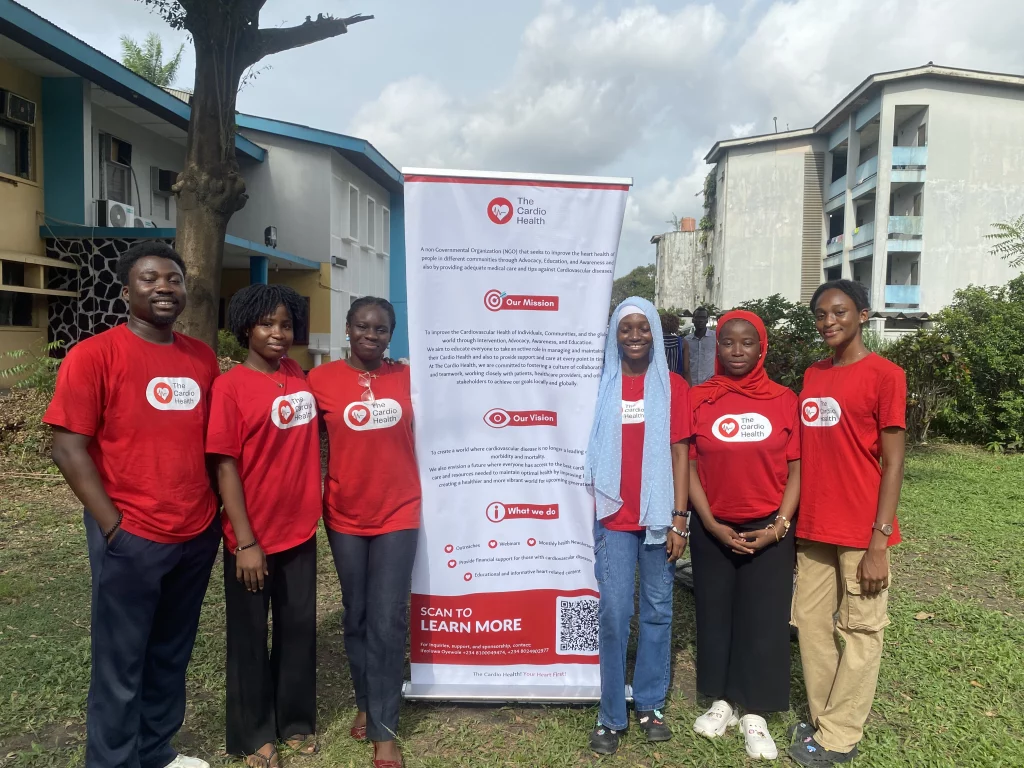
Exciting. I had a team of people who were enthusiastic, committed and willing to work. We started with about 10 people, and everyone brought something different to the table.
What I appreciated most was that they didn’t just support the idea verbally. They showed up, contributed their skills and put in the work. Within our first six months, we had already secured a media feature, which was encouraging for a new organisation. We didn’t have all the resources, but we had people willing to build something meaningful.
Did your parents know you had started an organisation?
Interestingly, I don’t think my mum knew about The Cardio Health until about two months after I started it. I don’t think I formally announced it to her before then. I probably spoke to my dad earlier, when the idea was still developing, and I was trying to put things together. I’m naturally closer to my dad, so I tend to share more with him. But both my parents have been very supportive, and that has meant a lot, especially as I balance the organisation with medical school.
Who paid for it?
For the first eight months, I personally funded the organisation’s activities. I would divide the money I earned from my other engagements, putting one portion towards The Cardio Health and keeping the other for my personal expenses. It required discipline because I had to ensure the organisation could continue operating even without external funding.
I have never had to convince anyone to support my vision. I simply communicate what I want to build, demonstrate my commitment to it and allow people to decide whether they want to be part of it.
Was there ever a point when you doubted you could build this?
Honestly, I don’t remember one. I have always been very ambitious, and I approach things with the mindset that if I decide to do something, I will find a way.
That doesn’t mean everything has been easy. There have been times I needed to rethink our approach or find new resources. But I never let those moments make me question whether what we are building is possible. What keeps me going is remembering why we started. Every community we visit, and every person who learns something new about their health, reinforces the importance of the work.
Walk me through what an outreach looks like.
Our outreaches are quite structured. We don’t just arrive in a community and start screening people.
The first step is engaging the community’s leadership. We liaise with the local chief, the Baale or other recognised representatives, introduce The Cardio Health, explain what we intend to do and seek their approval and cooperation. Once we have their support, we organise our team and assign responsibilities. We have different units, including outreach, research, content, publicity and social media. During the outreach, some team members handle registration; others take measurements such as height, weight, and BMI; and our medical personnel conduct health screenings, including blood pressure checks, and provide education and counselling.
We make a conscious effort to explain what we are doing rather than just taking measurements and moving on. We want people to understand what their results mean and why they should pay attention to their health.
When we identify someone with a concerning result, we counsel them and facilitate referrals to appropriate facilities or medical professionals within our network. When someone faces financial barriers, we also try to help cover the cost of further medical attention. And our work doesn’t end when the outreach does. We follow up, sometimes after two or three months, to find out whether people have acted on the recommendations they received.
For us, a successful outreach isn’t about how many people we screen in one day. It is about what happens to those people afterwards.
What misconceptions do you keep running into?
The biggest one is the belief that if you feel healthy, you cannot have high blood pressure. A lot of people associate hypertension with being visibly sick. Another is that it only happens to people with a family history. I’ve met people who tell us nobody in their family has ever had high blood pressure, so they don’t believe they could develop it. Both assumptions are dangerous, because as I have said often, hypertension can exist without noticeable symptoms.
I’ve also come to understand how closely poverty, health education and healthcare access are connected. In some communities, people face difficult living conditions and significant financial constraints. Sometimes even when someone understands they need medical attention, they simply cannot afford it. That is why we conduct free outreach in communities. People should not have to wait until they can afford a hospital visit to access basic health information and screening.
It taught me that healthcare inequality is not just about whether hospitals exist. It is about whether people can afford to access them, whether they know when they need help and whether the system can support them when they do.
Is there an outreach you will never forget?
Our second anniversary outreach in Makoko. We met a 52-year-old man with a blood pressure reading of approximately 210/120 mmHg. I was very concerned when I saw it, because it was extremely high and needed urgent medical attention.
I contacted one of our patrons, a cardiologist, explained the situation and arranged for the man to receive further care. We didn’t want to identify a serious problem and leave him to figure out what to do next, so The Cardio Health also supported the cost of his consultation, medications and other necessary care.
We kept following up. By the third month, his systolic blood pressure had decreased from approximately 210 mmHg to 142 mmHg with medical care.
Imagine if we had not visited that community that day. He might have gone on living with dangerously elevated blood pressure without knowing how serious it was, or worse. Sometimes a simple screening can be the beginning of a completely different health journey for someone.
The Cardio Health started with 10 friends. What does it look like now?
When we started, I knew I wanted it to grow, but I didn’t anticipate the scale. As we continued our work, more young people became interested and started applying to join. In our first year, we began building a campus representative network across about 10-12 institutions. Over time, it expanded, and we gradually established chapters across Nigeria and internationally.
Today, The Cardio Health has reached over 30,000 people, with more than 35 chapters across Nigeria and five internationally.
I would attribute the growth to three things: the commitment to our mission, the people who have believed in it and the structures we have gradually developed. I have been intentional about building a team where responsibilities are distributed. We have team leads across different units who coordinate their teams, oversee activities and give feedback. That means the organisation isn’t dependent on me being physically present for every activity or making every decision.
I also want to credit the people who have volunteered their time, skills and resources. It would be impossible to tell the story of The Cardio Health without them.
What has leading it taught you?
That leadership requires you to be intentional about listening. When you lead a large team, everyone has different perspectives and ideas. You have to create an environment where people feel heard and included. Sometimes I sit down and carefully consider different suggestions even when I already have an idea of how I want something done. Leadership isn’t about having the final word on everything. Sometimes the best idea comes from someone else on the team.
Before this, I had managed projects and coordinated activities, but I had never led a team of this size. It showed me I could bring people together, manage different personalities and work towards a common objective. It also taught me that multiple heads are genuinely better than one.
My understanding of success has evolved too. It is no longer just about what I can personally accomplish. It is about what I can build with other people, the opportunities I can create for them and the systems that can keep running even when I am not directly involved.
You are doing medicine, running this organisation and running businesses. What has that cost you?
I would say building The Cardio Health has enriched my personal life more than it has taken from it. It has introduced me to people, opened doors and created opportunities I might not otherwise have encountered.
There are sacrifices. There are times when I have an outreach or an important speaking engagement around the same period as an examination or academic commitment. In those situations, planning becomes extremely important. I have had to become deliberate about managing my time and making sure one part of my life doesn’t completely overshadow another.
But I wouldn’t say there has been a discouraging period that made me regret starting. The past three years have been filled with beautiful experiences, learning and personal growth. If I had to make the decision again, I would still do it.
If you’d like to be my next subject on #WhatSheSaid, fill this form.
Outside all of this, who are you?
I wear quite a number of hats. I am a project manager, public speaker, entrepreneur, and event curator, and I run businesses that people who know me mainly through my advocacy might not realise.
My day is organised around a to-do list. I start with my devotion, and depending on the schedule, I head to school for my medical training. After that, I attend to my businesses, respond to organisational responsibilities, work on projects and sometimes spend time applying for opportunities or preparing for engagements. I like having things planned out because there is usually quite a lot to do.
But I genuinely enjoy the little things. I love talking to my friends and parents, having ice cream, eating chocolate and spending time with people I care about. I’m also a huge romance movie person. When I’ve had a long day, I can pick up my laptop or phone, find a romance movie and settle in. I might not even finish it, but it helps me unwind. And honestly, achieving my goals makes me incredibly happy. I love looking back at something I set out to do and knowing I accomplished it.
You’ve mentioned how much you enjoy achieving the goals you set for yourself. Has there been a recent achievement that has felt particularly significant?
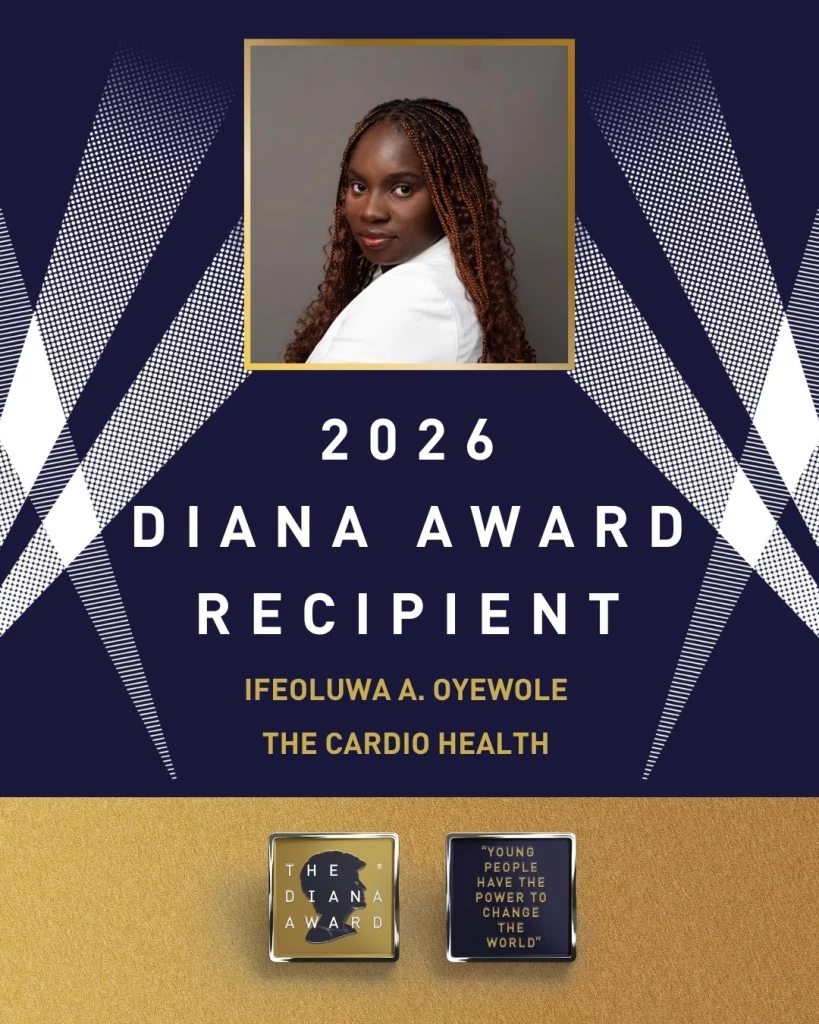
Recently, being recognised with The Diana Award has been particularly special. It’s encouraging to see the work we’ve put into The Cardio Health receive such recognition.
How did you find out you had received The Diana Award?
I received the news on July 16, 2026, in an email from The Diana Award informing me that I had been selected as a recipient. The email described it as one of the most prestigious honours a young person could receive for their work in leadership, social action and empathy.
I was genuinely happy. I shared the news with my friend Abigail and reached out to someone who had supported me through the process. Interestingly, that person told me they had received the notification before I did!
I also had to keep it private until the official announcement and presentation in November, which was probably the hardest part, because I was so excited and wanted to tell everyone. It was a moment of gratitude, excitement and reflection. I thought about where we started, the communities we had visited and the people who had contributed to the journey.
What did you know about the award, and what does it mean to you?
I knew it was an internationally recognised honour that celebrates young people making a difference through social action, leadership and positive change in their communities. I had followed the work of some previous recipients, so I understood the significance of being part of a global network of young changemakers. I understand thousands of young people are nominated, and only a select number are recognised each year, and I do not take being among them for granted.
For me, it is not simply another award to add to my CV. It is recognition of the work we have done, the communities we have served and the people who have made The Cardio Health what it is today.
Did you ever imagine this?
No, honestly. When I started, my motivation was very simple. I had seen a problem; I understood that people needed access to better cardiovascular health information, and I wanted to do something about it. I wasn’t thinking about international awards. I was thinking about the next community we could visit, the next person we could screen and how to make our work more sustainable.
So to see something that started with a group of friends and a shared conviction grow into an organisation that has reached over 40,000 people, five international chapters, and 10 to 12 campuses in year one. And receiving this recognition is incredibly special. Personally, it reminds me that the work matters. It tells me to keep going.
What do you hope the award makes possible?
I see it as an opportunity to take our work further. Even within the first week of receiving the recognition, I started noticing new opportunities and conversations that could create room for collaboration. I want to be intentional about using that visibility to connect with institutions, organisations, funders and individuals who share our commitment to cardiovascular health, and to translate it into stronger partnerships, more resources, expanded community interventions and more sustainable programmes.
But I also see it as a responsibility. Recognition should not be the end of the journey. If anything, it should challenge us to do more.
When you think of the little girl you were, what would she make of you now?
I think she would be incredibly proud. Growing up, I always knew I wanted to do big things. I was daring, ambitious and always willing to take on something new.
In 200 level, some of my seniors told me I did too much and needed to calm down. I was always involved in something, running around, organising things, taking on responsibilities. Looking back, those comments are quite funny. I think that little girl would be proud that the things she was so passionate about have become a significant part of her life. I have made mistakes along the way, and there are things I could have handled differently, but I am grateful for the journey. Most importantly, I think she would be happy that I never lost that audacity to dream and try.
What is next?
I would rather not give everything away just yet, but I’ll simply say: watch out! We have only just started, and there is so much work to do.
Personally, I want to be remembered as a doctor who took preventive healthcare beyond hospital walls and into communities. Someone who used her medical knowledge, platform and opportunities to make healthcare more accessible and improve people’s lives. I want to build something meaningful, work hard, and leave a legacy that keeps making a difference long after I’m gone.
You’ll Also Love: Nigerian Women on Why Switching Won’t Fix The Pad Problem