Every week, Zikoko spotlights the unfiltered stories of women navigating life, love, identity and everything in between.
What She Said will give women the mic to speak freely, honestly and openly, without shame, about sex, politics, family, survival, and everything else life throws our way.
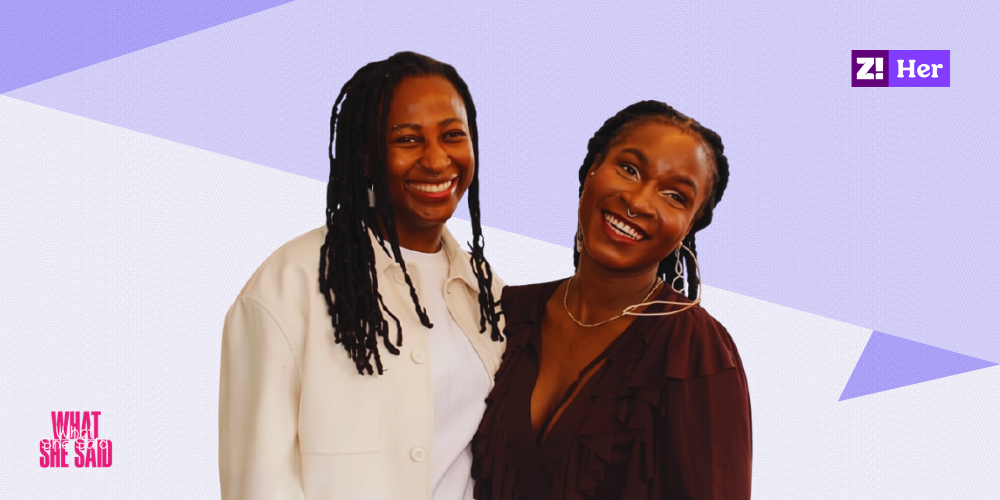
The subject of today’s #WhatSheSaid is Amara Ogara, a 32-year-old Nigerian businesswoman, storyteller, content creator and filmmaker known online as Amara the Lesbian. She talks about growing up Igbo in the North, the complicated love she carries for parents who hurt her and shaped her, meeting the woman who became her wife, and reclaiming a word people once used to silence her.
Can you tell me about yourself?
My name is Amara Ogara. A lot of people call me Glory now because it is my first name and my work name, but Amara is what I respond to instinctively. Sometimes I forget I am Glory.
I am a businesswoman. I am a storyteller. Many people found me and connected with me through my stories. I believe in using stories as a medium to raise social awareness and drive impactful change in society, because what people see, they believe. What they believe, they can become.
I am a multidimensional creative, although I am currently working inside the corporate system in America. I recently completed a master’s programme and am now in the workforce, but I still identify as a creative. A storyteller. A filmmaker, because I know that at the end of everything, I will be making films. I still share my stories through my social media platforms.
And I am a lesbian. A married one. My wife is Nigerian, too. We have been together for eleven years and counting.
Where did you grow up?
I am the second-born and first daughter of an Igbo man and an Igbo woman, and I always mention that because being Igbo adds a specific layer of context to your Nigerian experience.
My parents met in Kano. I was born in the North. My dad was born in 1960, which means he was seven years old when the Biafran War started. My mum was born in 1970, the year the war ended. They were babies during that time. I never really understood what that meant until I became an adult and started reading and understanding my Igbo history, and what war leaves behind in the hearts of children, fathers and mothers who survive it. I feel like I was touched by that war even though I was not born during it. In some ways, because of my father. That trickle-down is real.
What was your father like?
Complex. My father struggled enormously with his anger, his temper, and his temperament, and I was a huge recipient of that struggle. He believed in spare the rod, spoil the child, so my dad would not spare the rod. He would spoil the rod, and so many rods were spoiled on me. I went to school with scars on my back. There was one time there was a scar on my face from the rod. I had so much anger toward my dad growing up. So much.
But I also want to say this, because it is the truth: my dad is a beautiful man, too. He was an artist. He would make our hair, plait it, relax it, and massage my mum’s feet. He created artworks. He taught us how to soak paper in water, let it soften, pound it, and then use the pounded pieces to make sculptures. He was a fantastic artist with a fantastic mind. He has had a stroke for the past fourteen years or so, and he is different now, but the person I grew up with was both. Both things are true at the same time.
What kind of child were you in all of that?
A pendulum. Going from one end of rebellion to one end of people-pleasing.
When I was in people-pleasing mode, I would not wait to be told to make the bed. If I knew Mummy liked the bed made, before she came back from the market, I would have already done it. I wanted her to feel good when she walked in. I wanted her to laugh. I wanted her to be happy.
But I was also the kind of child who would steal money from my parents. Because you beat me yesterday or last weekend, I am going to school now, and I want to buy minerals for my friends and eat shortbread, but I do not have the money for that, so I will take it. I cannot talk about my childhood without talking about how much I stole from them, and I say it honestly because I remember that child. That child struggled deeply with powerlessness and hated it. My mum had a restaurant and was bringing in cash daily, so I would take 200, 100, or 50 naira. Just enough for Coke and shortbread for my friend and me. That was the whole deal.
Underneath all of that, though, I was carrying a deep sadness. I was very depressed growing up. Some days, I would be crippled in bed and just crying, or wake up in tears like I had been running in my dreams, running from my father and his cane. I struggled with intense darkness for years. There was a period where I genuinely did not think I was going to make it to 30. Not that I was going to act on it, but it lived as a quiet background thought: “I am not going to live long anyway. Let me just experience what I can and then go.” It took growing up and fully understanding myself to realise where all of that was actually coming from.
But I was also a loving child. I loved my siblings. Something about experiencing my father’s anger made me want to be everything he wasn’t. I learned very early to communicate my frustration without raising my hand because I had experienced what it felt like to be on the receiving end, and I never wanted to pass it on to anyone smaller than me. My siblings called me a crybaby. Every small thing, Amara is crying again. But funny enough, they would do anything to avoid seeing me cry.
What She Said: I Left a Safe Marriage with a Man for a Woman Living a Double Life
What values came out of that upbringing?
Hard work, above everything. We would wake as early as 4:30 am to handle our responsibilities. My elder brother and I were in charge of opening the Santana leather, the ones used to roll eba and semo, getting them ready before the cooking started. Food was leaving for the shop by 6 or 7 am, so everyone was already in the process before the sun was properly up.
My parents also raised us to understand money very early. If the mai ruwa would normally be paid to fetch water, my mum would offer to pay us instead. So even as small children, we were calculating: let me go and fetch this water and make this money.
I had my own farm at eight years old. My father had unused land around the house. He said I could farm whatever I wanted, so I bought aleho (the Hausa name for a fast-growing leafy vegetable widely known as African spinach) seeds, planted them, harvested them, tied them into bunches, and hawked them. I had my own system for making money while also earning from my parents’ system.
Everywhere I go, I introduce myself as a businesswoman because I am constantly looking for money-making opportunities. When I walk into a room, trust that I have already found the demand and the supply chain. That comes entirely from that childhood.
What were you like in school?
A storyteller. If you ran a public poll and asked people who knew me from secondary school what they remember, I guarantee you would find someone saying, “That senior who would always tell us stories.”
After prep class, I would ask, “Who wants to hear a story?” And junior students would gather around my bunk, scatter into corners around me, someone calling from the top bunk, “Senior Amara, talk louder so we can hear from here.” I would make up stories on the spot. I still do this with my wife. When she is feeling a certain way, I say, “Should I tell you a story?” and I just create something right there.
I was also known for generosity. I am a big believer that nobody should starve around you. If there is food, share it. I was known for that, stories and trouble. I was mischievous and goofy. Still am. Just slightly more reserved now, if I do say so myself.
You mentioned feeling a deep sadness growing up, like something was off, but you couldn’t name it. When did you start to understand what that was?
Not until my early twenties, genuinely. Growing up, I was not exposed to anything that gave me that awareness. My siblings and I watched Diego and Paloma, When You Are Mine, Esmeralda, Super Story, and Nigerian movies my mother rented from the shop. Nothing that explored same-sex relationships. It was completely outside my radar until I was about 19 and I watched Blue Is the Warmest Colour.
That movie stayed in my mind, both conscious and subconscious, for almost a year. The character Adèle had so much of me in it. I had always gotten along well with boys, had good friendships, and had good banter. But once it came to romance, it always felt like I was giving them an upgraded friendship. I did not understand the disconnect.
I started learning about boy-girl relationships around 13 or 14. I even set a rule for myself that I would not date until I was 18. On my 18th birthday, there were boys waiting, and I had to pick one. Even after I did, it always felt like a weird chore. Every time I thought about the future, I did not even know what to think. Looking back, that depression was wrapped up in everything I had not yet understood about myself. I was carrying so much that I could not yet name until I got into university.
What was university like?
I went to Eastern Mediterranean University. That distance from my family and from Nigerian culture genuinely helped. It created space for things I would not have had space for back home.
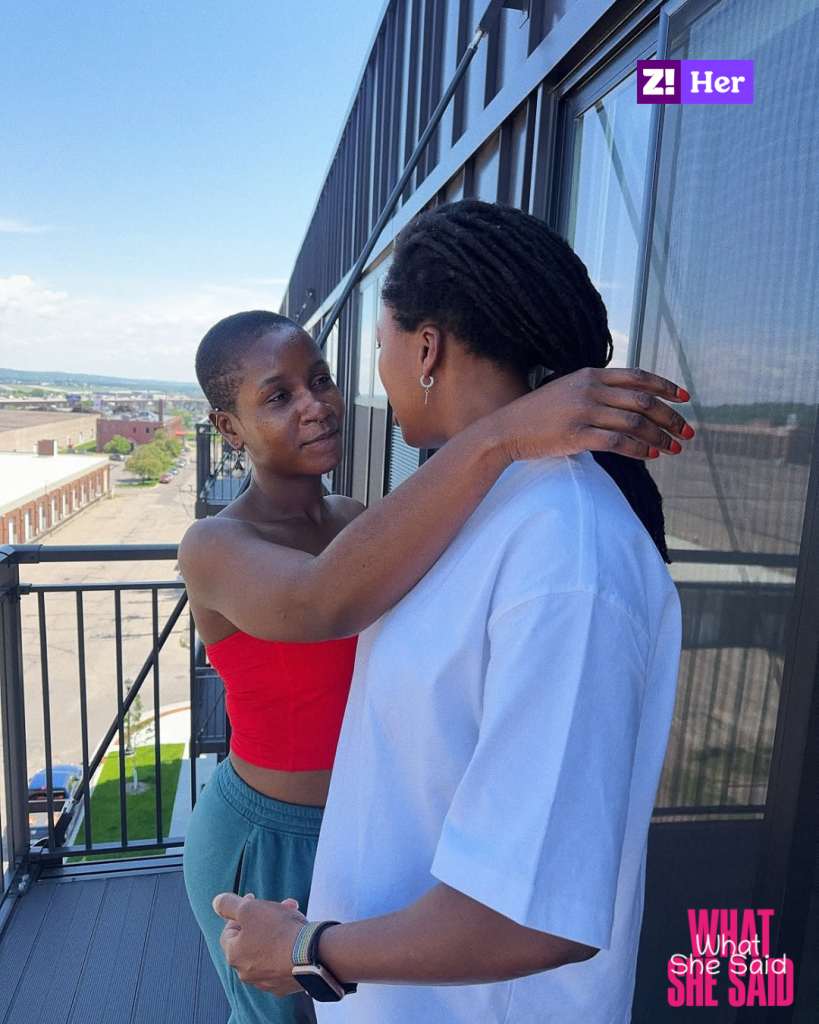
In the first semester, I was out with a friend. We went dancing, drank, and on the way back in the Uber, we were cuddling into each other, and it felt so natural to look at her and ask if I could kiss her. She said yes. I asked if she wanted to come back to my dorm. She said yes. That was my first physical, sexual experience with a woman.
The next morning, she woke up, and we went straight back into friend mode. We never spoke about it. Not once. Not until thirteen years later did we finally have a proper conversation about what had happened between us. In the moment, it was just something that lived between us in silence. What we do in the darkness we do not talk about in the light. During the day, I was her friend, she knew my boyfriend, I knew her boyfriend, and that was that.
You had a boyfriend at the time? How were things with him?
He was actually one of my closest friends. We were like best friends. We talked about everything, including non-monogamy and my feelings for women. It was not like I was hiding things from him. He knew me in ways that most people did not.
When I met my wife for the first time while still with him, I came home and told him I had met this person and I really, really liked her. He understood. Our relationship ended because of how much I liked her. I eventually lost that friendship because he couldn’t just be my friend anymore, but I have never regretted the choice.
Can you tell me about meeting your wife?
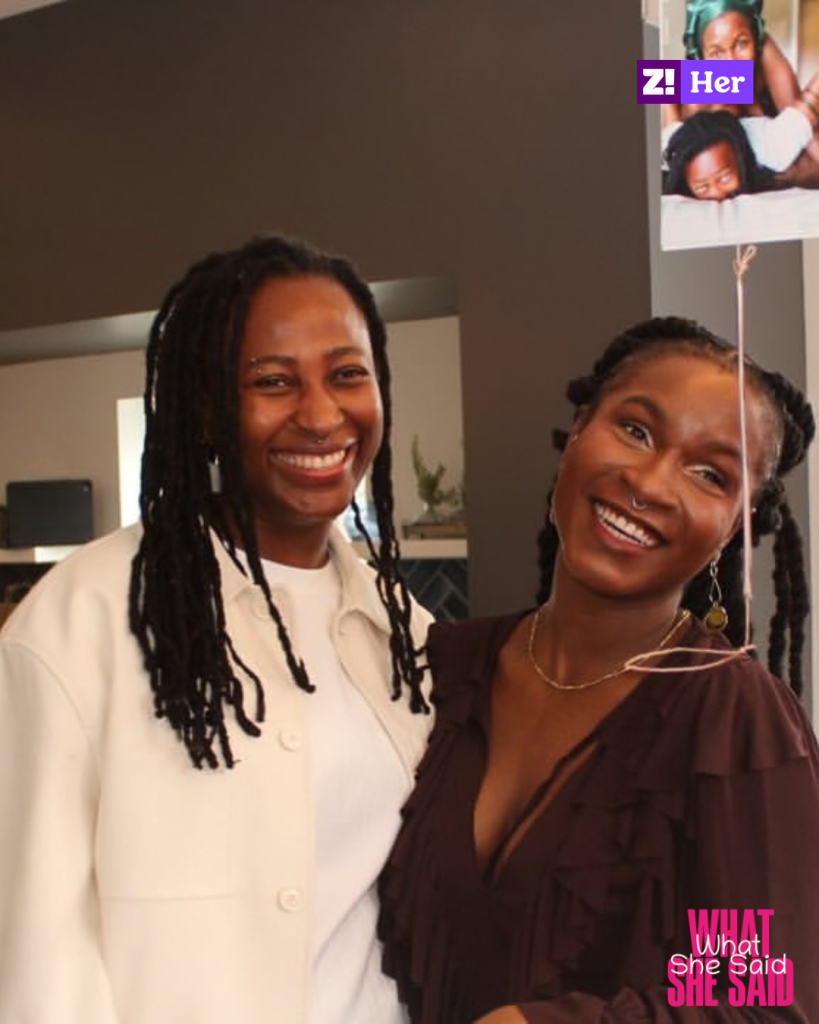
She punched me on the school bus by accident. Every time we ran into each other after that, she would say, “Oh my God, I am so sorry about the other day!” This went on for about a year. One afternoon, she came to find me while I was sitting outside the department and said she just wanted to say sorry again. I told her, “Girl, you need to find something new to say to me. You cannot keep saying the same thing all the time.” We laughed. We talked.
She had grown up queer in Nigeria. She had dated women since she was a teenager. She was the first real-life lesbian that I ever actually experienced, and I was completely mind-blown. She had so many stories, so many experiences.
And then one day, we were taking a walk, and I asked her what she thought about marrying a woman. She stopped walking, looked at me, and said something about how some things are sacred and should stay sacred, that marriage is not for people like us.
And I stood there thinking, wait. I understand the world is against you, but why are you not on your own side?
That conversation changed everything for me. I walked back to my dorm with this conviction in my heart that I wanted to shift the world for this person. Even if I could not change everything that was wrong with it, I wanted to change the way she saw herself in it. The next day, I started talking about her. I told my friends. I talked about her on YouTube. I made a video about kissing a girl. I just started talking, and I did not have a game plan. All I wanted was for the idea of being with a woman to feel as normal as being with a man. Years later, I started going by Amara the Lesbian.
When did you become certain you are a lesbian?
Before I met Yinka, my wife, I had been telling myself I was pansexual. I like people. I am attracted to people. That is what I kept saying while I was still dating boys.
Then I remember the first time Yinka and I were intimate, and I thought, yo, this is exactly what it should feel like. That was also, coincidentally, the very first time I had an orgasm in my life. And I lay there thinking, my body is not actually broken. I can feel things. I can actually feel things. Because before that, I had genuinely wondered: Is something wrong with me? Is my body broken? Did my father break my body with all those canes? It had always felt like a chore with boys. Something I would do to reward someone, or run away from when I could.
With Yinka, I understood. I stopped saying pansexual and started saying what I actually was. You like women. You like women, women, women.
You mentioned you had started making YouTube videos about this around this time. Did your family ever find them?
I wasn’t really hiding. I was documenting my life on Snapchat, bits and pieces. I hosted a River9ja Network event where I talked about having a girlfriend. People back home heard, and somebody told my parents. To this day, I do not know which video they found or exactly how they heard about it. I just know they heard while I was still in Cyprus.
At the time, I was working so hard to sustain myself. From the day I landed in Cyprus, I was looking for ways to make money. I brought two bags from Nigeria, one full of foodstuffs and another full of hair attachments, human hair, relaxers, and combs to sell to girls in my dormitory. I made enough to save 500k to 600k in my GTB account that first semester without touching the money sent from home.
Later on, I started cooking for students, especially Yahoo boys who were my primary customers. I was cooking for them like mad, making $200 to $300 a day. I also wrote academic papers for students before ChatGPT existed.
By my fourth semester, I was paying my own school fees out of pocket. I even enrolled in a master’s program in film in Cyprus, paid the first instalment to renew my residence permit, and then realised I would rather use that tuition money to buy land and build a business back home. My wife and I pooled our money together and bought land in Nigeria.
Because I was paying my own way and sending money back home, I was the breadwinner. And I have learned something very clearly in my journey as a lesbian: Dem no dey challenge breadwinner. Everybody moves accordingly around a breadwinner. My parents did not say anything directly to me until I came back to Nigeria in 2019.
What happened when you came back to Nigeria?
I built a poultry farm in the village, about 15 minutes away from my childhood home. I bought land, fenced it, built the structures, and bought birds. I was running a real commercial business. I was showing up at my farm by 6 am, feeding my birds, doing the physical work alongside my workers, supplying eggs to airport caterers, and selling meat to slaughterhouses.
Because I had tools, resources, security, and a small farm car, money shielded me inside that village. I was oblivious to much of the gossip about me because I was so focused on calculating feed costs, managing supply chains, and poaching customers.
But my cash flow had changed since I had been abroad, making dollars. When that financial interaction changed, the resistance surfaced. Instead of people being honest and saying, “You are back home now and not sending as much money,” they started saying, “Oh, your sexuality, we don’t accept your sexuality.”
And I was not taking it lightly. We trended because I was not going to absorb it. There was a day my mum was saying what she was saying, and I just picked up my phone, recorded my goodbye saying I was not coming back to that house, and posted it. That video went viral on Instablog9ja and everywhere. That was the height of our falling out.
Half the time, most people do not actually care what you are doing with your life. What they care about is what they can benefit from you. When it is beneficial to be associated with you, they are. When it is not, they will use any available excuse. Sometimes that excuse is your sexuality.
I’m sorry you went through that. You mentioned calling yourself Amara the Lesbian publicly during that period. Where did that name come from?
People had been using that word to try to silence me for years. My housemate in Cyprus called me a bloody lesbian during an argument. My elder brother, during a disagreement, said at least his own was better because he was not a lesbian. Every time someone said that word to me in a high-energy moment, I would go quiet because they had called the word that was not supposed to be called.
Then one day in Nigeria, I was walking and heard children whispering, “That is her, that is Amara the Lesbian.” And I heard that name, and I thought: Amara The Lesbian? That is such a powerful name.
That was the beginning. I changed my YouTube name. I started saying it constantly. At first, the word tasted funny in my mouth. Now I say lesbian so much it sounds like my surname. It sounds melodic and sweet. Sometimes, with my friends, I just say “l-lesbian.” I love the way my tongue does lesbian.
I took the power from the word by becoming the one who called it first. So before you can say, “Oh, you’re a lesbian,” I have already said it. No be for my page you hear am? You cannot use it to insult me anymore. And funny enough, since then, nobody has tried.
Dem no dey challenge breadwinner
Amara the Lesbian
That’s truly empowering. After you moved back to your farm in Nigeria, was there a specific moment that made you realise that living here was becoming unsustainable?
It happened gradually, especially after the farm closed down and I had more time to feel. But #EndSARS was the turning point.
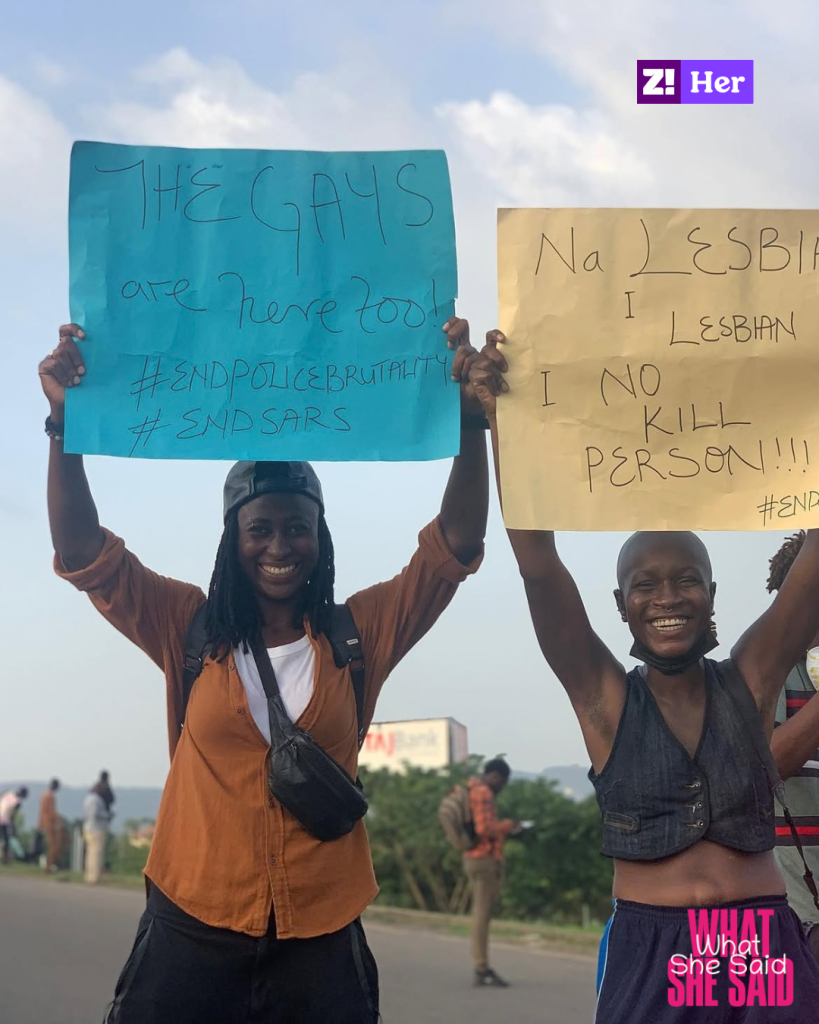
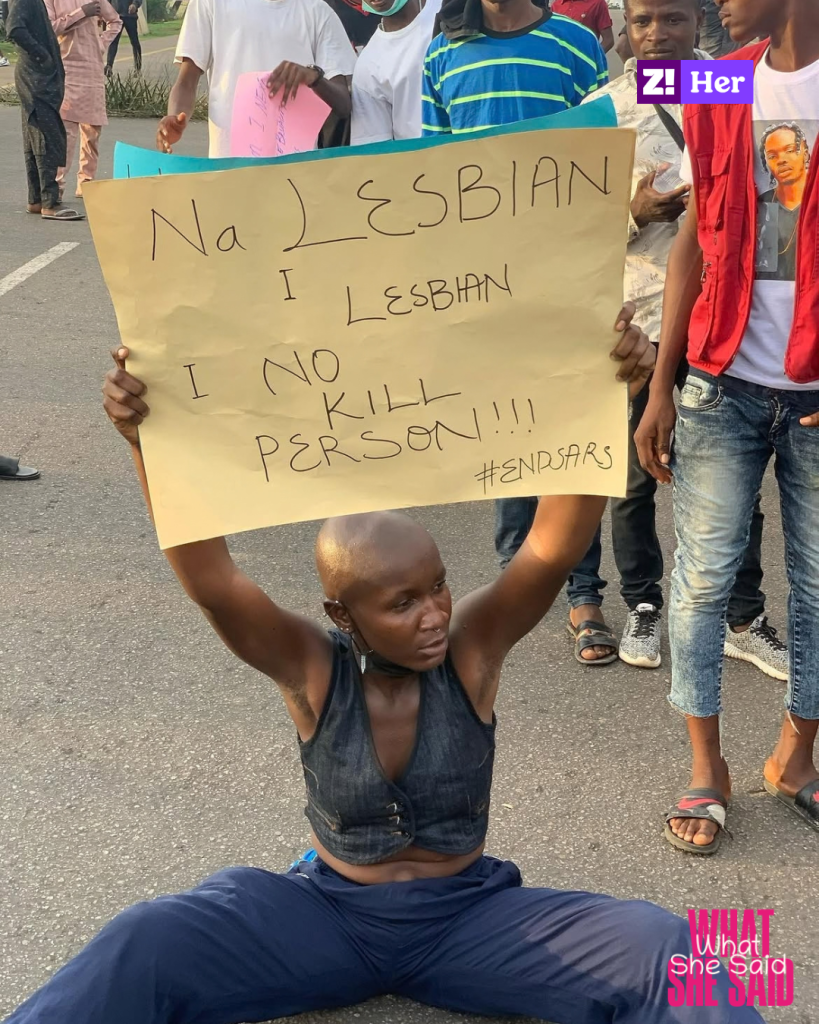
During #EndSARS, my wife and I were unemployed. News started circulating locally via WhatsApp that my partner and I were instigating youths to fight for queer laws, when we were fighting for EndSARS. Local clickbait headlines made us scapegoats in a community that didn’t even understand the mainstream Twitter conversations.
Things became hostile fast. One night, we went to dispose of our trash and met vigilantes who were usually friendly, but that night, they were stubborn. A local man drove up in his car and tried to confront my wife. When she ignored him and walked away, he started his car and drove directly toward her. The next thing I saw was Yinka on the bonnet of his car. I completely froze in terror, reaching out and pulling my wife close to me.
After #EndSARS, our daily experiences became openly confrontational. We started escaping to town or travelling to Lagos for weeks at a time just to be away from the village’s hostility.
When Yinka left Nigeria in September 2021 to finish her PhD, I went completely underground. I stayed inside my gated compound, planted crops, made self-care videos, and minded my business. My heart was broken from being in the public eye without boundaries.
By 2023, I told myself, “Guy, you either pour yourself into work or you kill yourself.” So I poured myself into making an independent short film. We produced it, screened it in Lagos and Abuja, and got selected for the Lift-Off First-Time Filmmakers festival in the UK.
You’ll Enjoy: Why Premenstrual Dysphoric Disorder (PMDD) Is a Suicide Risk
How did you end up leaving Nigeria, and how did your wife become your wife legally?
In April 2023, my wife called me from the US in tears. She was lonely and terrified of facing another winter alone. I promised her right on that call that I would be with her by next winter. That same day, I started applying for master’s programs in the US. I got accepted, did my interview, and left Nigeria on December 22, 2023. I graduated with my master’s in December 2025, and six months later, I entered the corporate workforce here.
When I landed in America, the transition was so freeing. I felt like a human being again. I could walk around, arrange our home, shop at the supermarket, and drive.
We had been talking about getting married since 2023, but we both had fairy-tale ideas and didn’t want to rush a legal process out of pure necessity. But by January 2025, we looked at each other and said, “Why are we not married?” It would make a lot of things easier for us. We know we want a fairy tale, but we can’t afford that right now. That doesn’t erase the love. So on February 15, 2025, we gathered our close friends and signed our marriage certificates. We are legally married now, though we still plan to have our big fairy-tale wedding ceremony someday when we are ready.
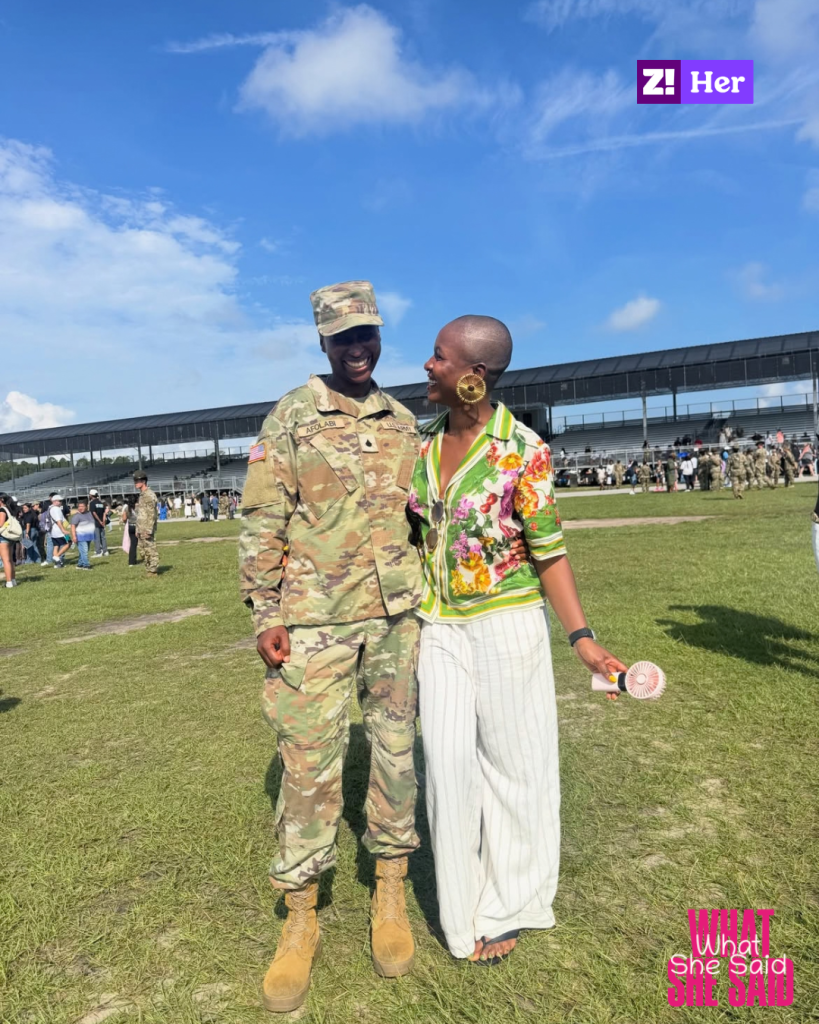
That’s beautiful. You recently posted a video tapping your wife out at her military graduation. What did that moment mean to you?
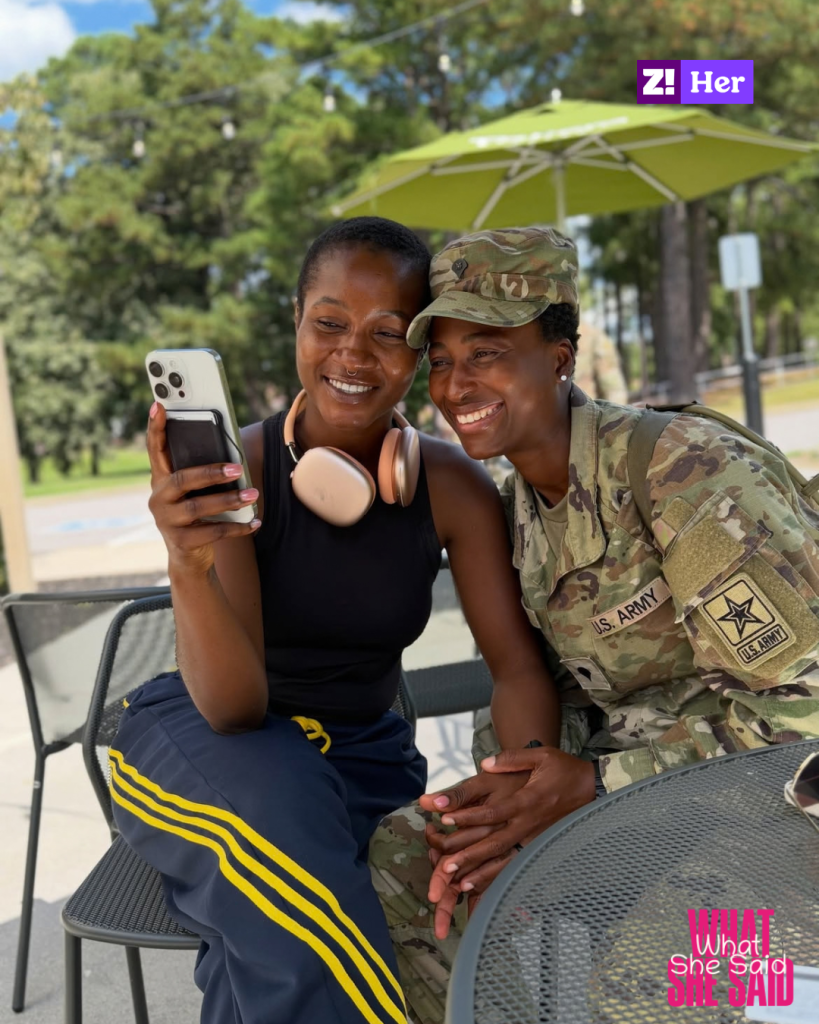
It took so much to get to that point! My wife is an incredible person who loves to challenge herself. She already has a BSc, two master’s degrees, and a PhD, but she wanted a new challenge and decided to join the US military.
On the day of her tapping-out ceremony, I thought she was going to be the one crying, but I started crying on the drive there. I was in complete awe, thinking, “Look at me, the Nigerian lesbian Amara, driving onto a US Army military base because my wife is being tapped out as a US soldier!” It felt completely surreal. I will frame that day in the wall of my heart forever.
What has this freedom you have outside Nigeria taught you about yourself?
I had to learn how to hold joy. In Nigeria, I was constantly on guard, waiting for the worst to happen. I used to associate myself only with power, never beauty. When I looked in the mirror, I only checked if I looked powerful enough to step outside.
Here, I had to learn the necessity and responsibility of beauty. Beauty is a testament to self-devotion and self-care. I built strict discipline for myself. I wake up at 4:00 am every single day for my workout classes, whether it is Solid Core, Jungle classes or Saturday runs. I limit myself strictly to one weekend cocktail, I watch my sugar intake because I realised sugar makes me sad, and I treat my body with care.
I also do deep inner child work. People see a hard guy on the outside, but when I take off my clothes at night, there is a little broken girl sitting in the boardroom of my mind. I commune with her, I talk her through my day, and I protect her fiercely. For the first time in my life, I have the privilege of loving myself, spreading out, and genuinely feeling like a human being.
If you’d like to be my next subject on #WhatSheSaid, fill this form.
I’m happy for you. Is your relationship with your family different today?
Not once, but twice, has my father apologised to me for my childhood. Apology does not change the scars or the memories, but I am grateful that I am now dealing with an evolved mind. My mum also tries. When I bring something up and say it was painful, she says, “I’m sorry.” Back in the day, she would have said, “You don’t see what we sacrificed for you.” Now there is a real conversation. Now there is an acknowledgement that where they were was not okay.
I am experiencing restoration. I am experiencing forgiveness. I am experiencing what it feels like to choose healing. And my parents are a part of that. I am genuinely grateful for that.
You mentioned your community of friends earlier. What has that community meant to you?
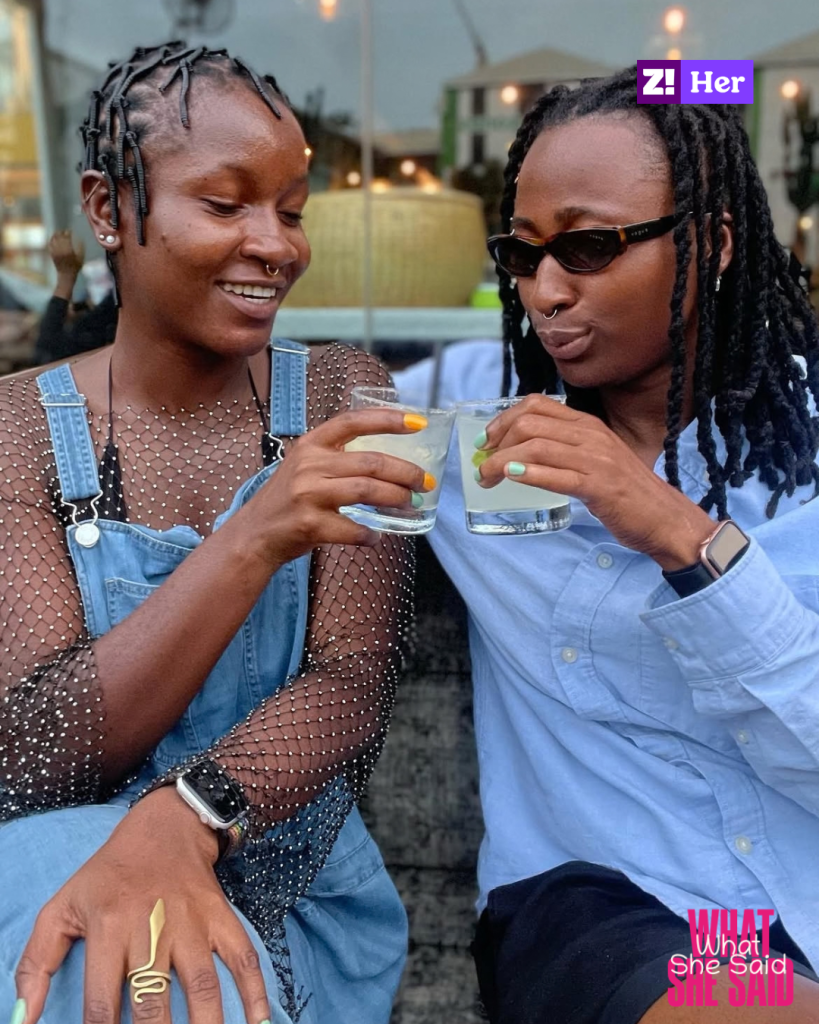
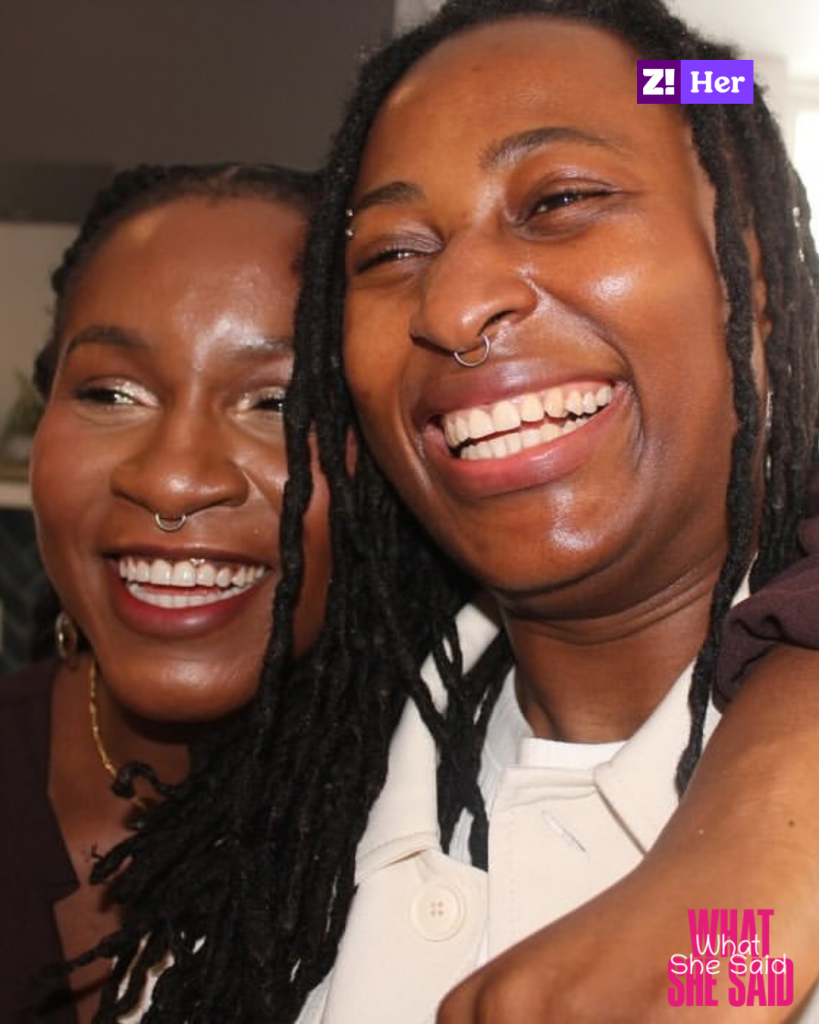
It is great to be a lesbian with lesbian friends, I am telling you! It makes everything so much more navigable. Even right now, being a married Nigerian woman married to another Nigerian woman is a foreign concept, but having lesbian friends who are on their way to getting married or are already married makes you feel understood.
Amara, the Lesbian brought so many incredible friends into my life. I had to learn boundaries, discernment, and emotional regulation along the way, but having that community saved me.
What do you think the version of you who was still in Nigeria would say if she could see your life now?
I think she would say thank you. Every version of me that came before did her absolute best to take care of this house we live in and contribute to the journey. None of them tried to destroy my temple. I look back at the version of me in Cyprus and the version in Nigeria, and I say, “Thank you, really, thank you.”
What do you want people, especially queer Nigerian women, to take from your story?
Stay focused on your empowerment. Look out for yourself. Protect your retirement. Think about who you will be as an older woman. Invest in things that will take care of you.
My sexuality is a constant reminder to hustle and stay financially independent. ‘Na lesbian you be o! Lesbian.’ I remind myself. It’s also made me more intelligent and more aware. I think from a more refined and seasoned place than I did when I did not yet know I was a lesbian. It has been a lot. I have learned so much. One day, I should gather my thoughts into a book. But in all things I know this: I am capable of my life, and I stay capable.
And if someone has used a word to shame you or silence you, take the word. Wash it. Bathe it. Remove the shame from it. Carry it so loudly that they can never use it against you again.
That is what I did. I became Amara the Lesbian so fully that the name now sounds like the most natural thing in the world. Because it is.
You’ll Also Love: 10 Nigerian Women on The Male-Centered Women in Their Lives