Every week, Zikoko spotlights the unfiltered stories of women navigating life, love, identity and everything in between.
What She Said will give women the mic to speak freely, honestly and openly, without shame, about sex, politics, family, survival, and everything else life throws our way.
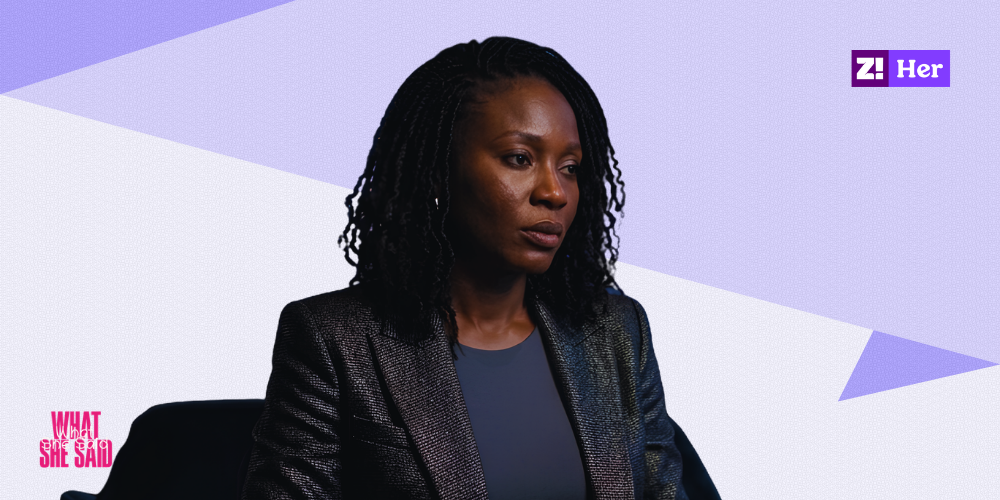
The subject of today’s #WhatSheSaid is Temi*, a 39-year-old project and product manager based in Lagos. She talks about the women who came before her, the sister who raised her and died too soon, a marriage she rushed into and walked out of two years later, and the decade she spent building a life so solid, but loneliness still found a way in.
Can you tell me about yourself?
I am thirty-nine, I live in Lagos, and I work in project and product management. I started out as a civil servant, which I don’t talk about much because it feels like a different life now. When my marriage ended in my late twenties, I needed something to hold onto that was entirely mine, something that answered only to me, and I used that need to rebuild my career from the ground up. I pivoted, studied, pushed, and have been rising steadily over the decade since. Work has been the one place where the effort I put in has reliably come back to me. I cannot always say the same for other areas of my life.
I travel when I can, mostly across Africa. I have built some financial stability. I have a life that looks, from the outside, like something a person should be grateful for. And I am. I am genuinely proud of what I have made of myself. And I am also very lonely.
Why do you feel so lonely?
I think it comes from wanting to share something with someone and realising there is nobody to share it with. I have people in my life. I have friends, family, and colleagues I respect. But there is loneliness that has nothing to do with how many people are around you, and to understand why I am sitting here at thirty-nine feeling this way, you have to understand where I come from and the women in my family.
Tell me more.
My mother was seventeen when she had my older sister, the product of a marriage to a man who eventually abandoned them both, leaving her with my sister and a son who later died. She eventually remarried almost 10 years after and had my brother, then me. That second marriage lasted five years before she walked out after fights that left emotional and physical scars on them and us, the children. For the next eleven years, she raised us mostly on her own, making a life from whatever she could gather and her teaching, with my brother and me going from her house to our father’s across the years, until a third man came and turned out to be something she had probably stopped believing existed.
This man was kind to her. Genuinely kind. He noticed things and remembered them. He showed up without being asked, which makes a woman feel loved and like she has a true partner rather than someone who has simply assigned her a role to fill. He was even romantic with her. My mother, in her forties, after everything that had come before, finally had the love she deserved. She had two more sons with him. Then he died. And she had to begin again, a single woman with five children, her oldest grandchild already the same age as her second-to-last child, her last-born only two years older than her second grandchild, both of whom were my sister’s children.
My sister, that first daughter my mother had at seventeen, had her own first daughter at eighteen and went on to have four more daughters for a man who had money and used both the money and his hands to remind everyone in the house who held the power. He was abusive, and he was unfaithful, and he was the kind of man who made himself indispensable while making everyone around him smaller, and my sister spent over a decade with him, leaving and returning and leaving again in the exhausting rhythm of women who love men who hurt them and feel like they have no choice because of the children they have for them do, until she finally left for good.
Can you tell me more about your sister?
She was eighteen with her first baby when I was eleven years old. While she was inside that man’s house, his money put me in school, kept food on the table for me, kept me safe and comfortable for the years she was with him. She helped raise me. She was my big sister in the fullest sense of that phrase, the person who stood between me and whatever was coming next.
She was there when I got pregnant at 21 and didn’t know what to do. She sat with me through the abortion without a word of judgment, just presence, just her hand and her voice and the absolute certainty that I was not alone. She was there through every man who damaged me because I was young and still learning what I was worth, through the heartbreaks and the cheating and the slow accumulation of disappointments. She was there after I was tricked into an audition that turned out to be something else entirely, something that stripped us literally and figuratively, something that took a long time to shake from my body. Every time, she was the first call I made, and she always answered.
She eventually left her husband. And then she died. The man who killed her was not the one she had spent almost 2 decades with; he was the one she found after she finally freed herself from that one. She survived the man who hurt her for years and was killed by the next one. He beat her so fiercely that she was in a coma for weeks before she passed. I do not have a way to make that make sense, because it does not. It is just what happened.
I had been planning my wedding with her. She knew every detail. We had talked through all of it together; she was supposed to be standing next to me at the front of that room. She died 10 months before I got married.
What She Said: My Father Is Engaged to the Woman I Called My Sister
I’m so sorry. It must have been a horrible weight to carry. How did it affect your wedding plans?
I still got married, and I want to be honest about everything that was driving it, because it was not simple.
The whispers had been getting louder for years, about the women in my family and what followed us, about how we could not hold onto men, about a curse that was being passed down through our blood. I had heard about my grandmother’s life and her struggles with marriage. I had watched my mother. I had watched my sister pour herself into a man who did not deserve a single drop of her, only to then die at the hands of another man. I was terrified of becoming another chapter in that story, and I was also grieving my sister in a way that made me want to hold onto what we had been building together, as if finishing the wedding she had planned with me was a way of keeping her present in my life.
The red flags were there. Looking back now, I can see them clearly. I was 28, he was in his mid-forties. The whole thing moved too fast, but he was performing so well for everyone around me, putting money in my younger siblings’ hands, showing up for my nieces, and being entirely available and enthusiastic.
What happened after the wedding?
Less than a month in, the performance stopped, and I started seeing who I had actually married.
It began with things I was not supposed to find: video calls, names I did not recognise on his phone, and a husband who was physically present in our home while emotionally somewhere else entirely. It got to the point where I started following him, and I found exactly what I had been afraid I would find. There were women who reached out to him, women I tracked down myself, a husband whose attention and energy had apparently always been distributed across multiple people, none of whom was his wife. We fought about it constantly and resolved nothing because you cannot resolve anything with someone who was never genuinely with you to begin with. Every argument ended where it started, with me holding the evidence and him giving me just enough reassurance to keep holding on.
I held on for two years. I held on because leaving felt like confirming everything people were already saying about the women in my family, like becoming another chapter in a story I had married specifically to escape. But the marriage was what it was from the beginning, and nothing I did inside it was going to change that, so eventually I left. I walked out childless, with nothing from those two years except a very expensive education in exactly what I was no longer willing to accept from anyone.
What haunted me most in the aftermath was not the cheating. It was the question I could not answer about my own body because all the tests said I was fine. I had not been able to get pregnant in that marriage, and I did not know whether the abortion I had when I was young had quietly closed something inside me that I would never be able to reopen. The church offered its own explanation, a spiritual husband blocking the natural one, and when you are raw and desperate for a reason that is not your fault, you will accept almost any story that removes the weight from your own chest. I held that one longer than I should have.
What happened to the whispers when you left?
They stopped being whispers. People said it plainly and directly, and to anyone who would listen. The women in that family, they said, something follows them, something is wrong with them, they cannot hold a man. I was 30, divorced and childless, and I had just handed everyone who believed in the curse the freshest evidence they could have asked for. It felt like the story had always known how it would end and had simply been waiting for me to catch up.
If you’d like to be my next subject on #WhatSheSaid, fill this form.
What did you do with that?
I built. I threw myself into work, into becoming financially independent, and into a version of myself that did not need anyone to hold her up. I pivoted my career, I studied, and I rose through every role I took on. I traveled. I invested in myself in every way I knew how.
I had men over the years, various men in various shapes of disappointment. Unfaithful ones, unavailable ones, men who were already married and had simply not mentioned it, men who wanted everything I was offering while offering as little of themselves as they could get away with. Each time one of them failed me, I added another standard, another line I would not cross, another thing I had decided I was no longer available for. I built the boundaries carefully, and I was proud of them, proud of the clarity they gave me, proud of no longer being the woman who accepted things she should not have accepted.
What changed?
Nothing dramatic. Just time, and the loneliness that time brings when you have been alone long enough.
I am thirty-nine. I have built more than most people I know personally, and I mean that without arrogance, just as a fact. I am financially stable, I am rising in my career, I travel when I want to, and I take up space in my own life in ways I could not have imagined when I was 30 and walking out of a marriage with nothing but my dignity. I am proud of all of it.
And I am lonely. It’s not about being without company but about wanting to share something with someone who is genuinely yours, and realising there is no one there to share it with. And I want a child. I have wanted a child for longer than I have let myself say out loud, and I have been lying to myself about it by calling it a future thing, a when-the-time-is-right thing, a thing that could wait. It cannot wait the way I have been pretending it can.
Do you believe the curse is real?
I think about my mother finding love in her forties with a man who was kind and romantic and who saw her fully. And I think about how he died, and she still had to keep going anyway, still had to raise children and make a life without him. By the end, my mother had done everything ‘right,’ and it was still hard. Maybe the curse was never a curse but just the specific difficulty of being a woman who loves in a world or society that does not always handle that love with care. Maybe the women in my family were not marked by anything supernatural. They were just women, surviving men who were not worthy of them and building whatever they could from what was left.
I do not know if I will marry again. I genuinely do not know. What I know is that I am not willing to take apart the standards I have spent ten years building, not even now, not even with the loneliness this close. The boundaries I have built are not the reason love has not found me. They are what I constructed precisely because I know what it costs to love without them. Men have spent years suggesting that I am the problem, that I have made myself too much, too unwilling to bend, too difficult to love, the way I insist on being loved. I have spent more time than I should have wondering if they were right.
At thirty-nine, I am choosing to believe they were not. What I am looking for deserves to come to this version of me, the whole version, the one who has been through everything I have been through and is still standing and still wanting. Not a smaller version or a more convenient one.
If that takes longer, it takes longer. But I will not undo a decade of becoming myself just to make the waiting end sooner.
You’ll Enjoy: Virginity Is a Social Construct. So, Why Does It Carry So Much Weight?
Names have been changed*