A TikTok video by Ayria DanDave, sharing her views on Nigerian feminists and women’s responsibility to society, has sparked online conversations.
Her argument, which places the blame for men’s abusive behaviour on the women who raised them, has particularly unsettled people.
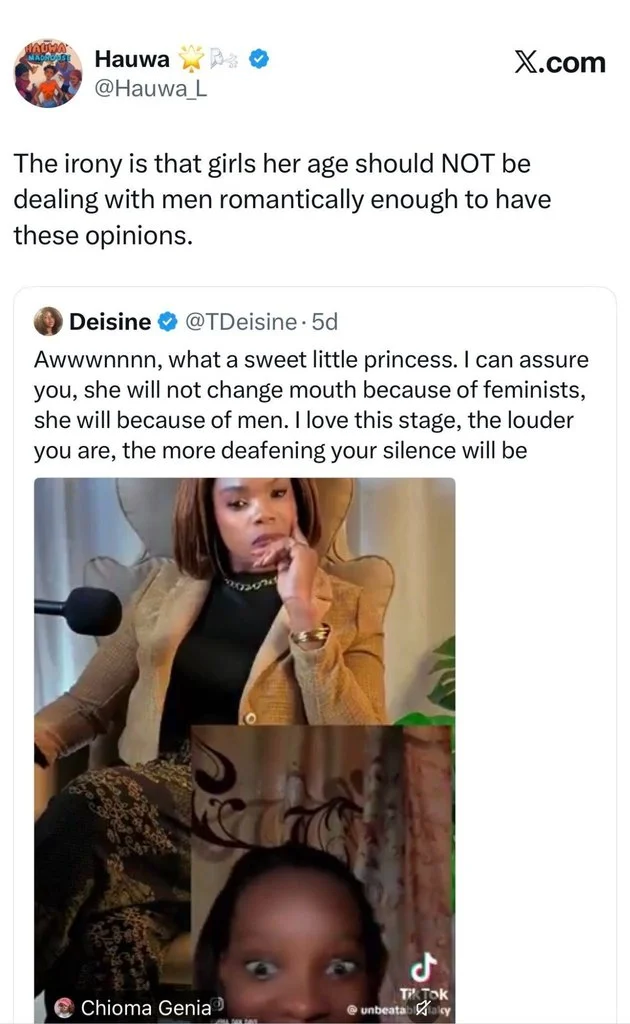
Popular feminist Obidi eventually addressed the video after people repeatedly asked her to speak about it.
However, other feminists have argued that Ayria should be left alone. They all seem to collectively agree that she is a child and still has a long way to go. Despite the consensus that her opinions are troubling, they do not believe she should be subjected to online insults or hostility.
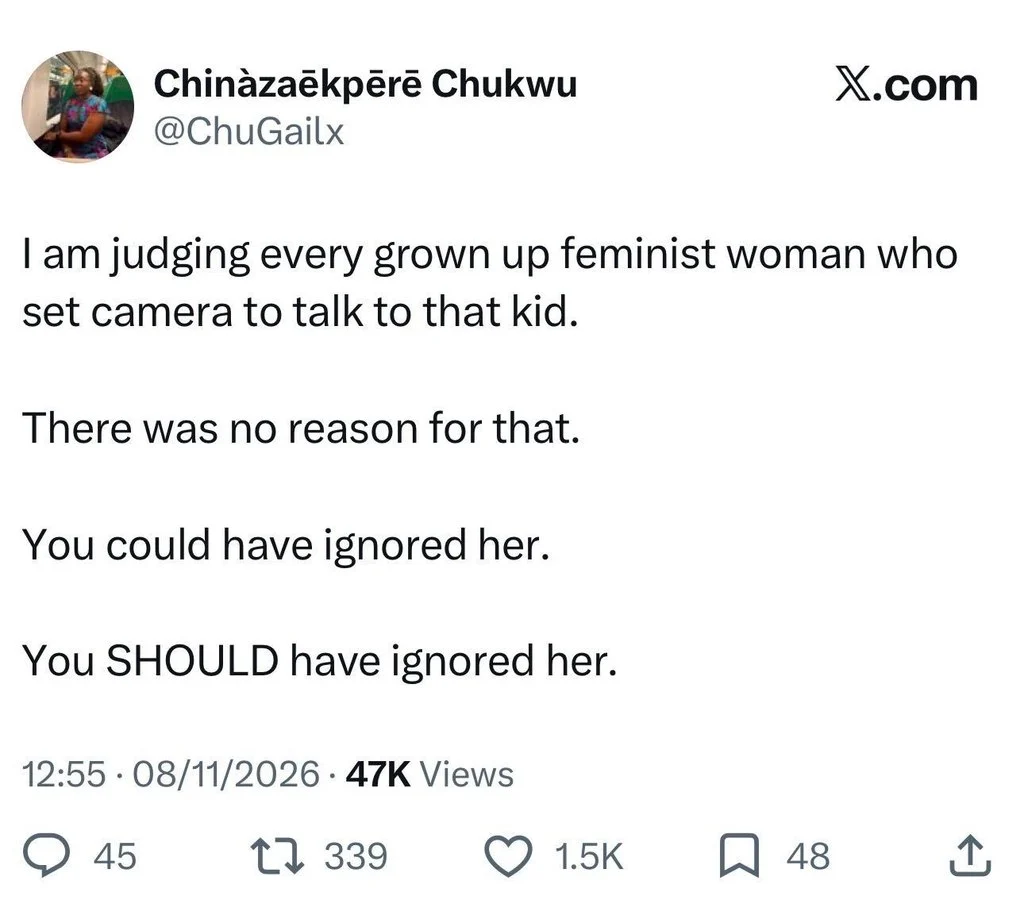
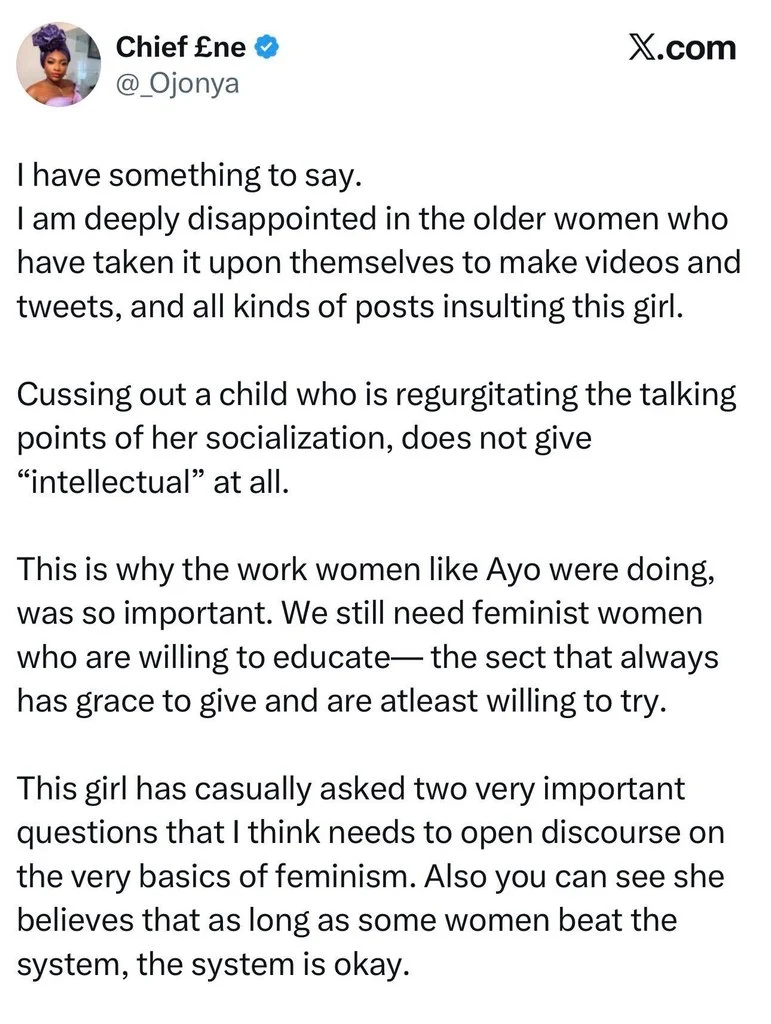
While we agree that she should not be bullied, there is a much bigger conversation to be had about why a 19-year-old already holds such strong averse opinions about men’s wrongs, ‘women’s role’ in it and feminism.
What is particularly concerning about Ayria’s argument is how easily it absolves men of responsibility for their own actions. By suggesting that women should be blamed for raising men who abuse others, she places the responsibility for men’s behaviour on women. It is another instance of the impossible expectations placed on women. We are expected to raise men properly, protect ourselves from those same men and take responsibility when they hurt others.
However, these attitudes do not develop in isolation. Research has consistently shown that children learn gender expectations through their interactions with the people and environments around them.
A 2016 systematic review found that young adolescents commonly hold stereotypical and unequal views about gender, with family and peers playing significant roles in shaping these attitudes. The researchers also identified early adolescence as an important period when gender expectations become more deeply internalised.
In a society where patriarchal expectations are woven into our everyday life, girls can spend much of their childhood watching women being held responsible for maintaining marriages, raising children, protecting family reputations and managing men’s behaviour. They hear conversations that excuse men’s actions while questioning what women did to provoke them. They see women being asked to bend, accommodate, and endure, even when they are the ones who are constantly hurt.
Next Read: Stigma Kills, Not The Abortions- Sanasi Amos, Komfort Health
Slowly but surely, these expectations can become so normalised that girls begin to reproduce them themselves.
A Nigerian study of 1,057 adolescents aged 13 to 18 found that 66.5% believed girls were responsible for preventing pregnancy, while 69.6% thought boys should be the ones to initiate sex. These findings offer another look into how deeply gendered expectations can mould young people’s understanding of relationships and responsibility.
This is why Ayria’s comments deserve attention beyond the immediate backlash. We cannot know exactly where her opinions come from or what experiences have shaped them. However, we should be concerned when a girl who is still quite young has already learnt to approach conversations about women’s oppression by asking what women have done wrong.
She should not have to experience sexual harassment, abuse or discrimination herself before she can recognise why women speak about these issues. She should not have to become a victim before she understands that men are responsible for their actions.
There is a difference between allowing a child room to develop her own opinions and pretending those opinions are harmless. We can disagree with her without insulting her; we can also acknowledge that she is young while still questioning the ideas she is absorbing and repeating.
The bigger issue here is not that Ayria has an opinion about feminism. It is that she already seems to have learnt to blame women for the very harm they experience, rather than question the men who inflict it. If girls are learning to defend the systems that disadvantage them before they are old enough to comprehend how those systems work, it’s about time we started asking exactly what we are teaching them.
Next Read: The 12 Best Health Tests Every Woman Should Take Before 40