• There is a new social media platform that might be giving Elon Musk a run for his money and having him choke on whatever irks his throat. Ever since Twitter had Mr. Musk as its new landlord, things haven’t quite been the same. And on Wednesday, July 5, Meta launched a messaging app called “Threads” that looks like the start of a new era for many social media users. 

    What exactly is Threads, and how is it different? 

    Threads is a text-based social messaging app launched in over 100 countries that allows you to follow the same accounts you do on Instagram. You can post pictures or texts and like, comment, repost, and quote them. While it’s yet to have a trend table or options for sending private messages, unlike the Bird app, Threads is free, and you can put the worries of exceeding a daily limit behind you. 

    For many people, especially Nigerians who have a larger following on Instagram than Twitter, this new app is an opportunity to create a new social media personality. After all, it’s never too late to achieve your dreams of becoming an influencer. And it also looks like Nigerian lawmakers have the same idea as many of them have become “Tailors”, as many Nigerians call themselves on Threads. Hours after its launch, they’ve begun sewing content for many Nigerians.

    Download the Citizen Election Report: Navigating Nigeria’s Political Journey

    Who are the lawmakers there now?

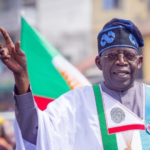
    President Bola Ahmed Tinubu

    Since the days of his campaign, no love has been lost between Tinubu and the Bird app, so Threads might finally give him a chance to breathe.

    Babajide Sanwo-Olu

    If there’s one thing the Lagos state governor does well, it’s preaching the gospel of his good news and putting his legs in strategic corners, and a new app isn’t going to stop him. 

    Abba Kabir Yusuf

    Kano state governor, Abba Kabir Yusuf, also didn’t carry last here. He’s already spreading his message of good tidings. 

    So far, eight other governors have joined the Threads app; they include Prince Dapo Abiodun, Ogun state governor; Umo Eno, Akwa Ibom state governor; Bala Mohammed, Bauch state governor; Peter Mbah, Enugu state governor; Biodun Oyebanji, Ekiti state governor; Uba Sani, Kaduna state governor; Yahaya Bello, Kogi state governor; and Seyi Makinde, Oyo state governor. 

    Other key lawmakers and political figures on the app are Vice-President Kashim Shettima, Atiku Abubakar, Senator Orji Uzor Kalu, former Vice-President Prof. Yemi Osinbajo, and the Police Public Relations Officer, Lagos State Command, SP Benjamin Hundeyin. 

    Also joining the Threads are some key government agencies, such as the Federal Inland Revenue Service (FIRS), to remind you that you can’t escape tax in this administration, and the National Drug Law Enforcement Agency (NDLEA), with their message of catching drug abusers and traffickers.

    As expected, you’ll also find many media houses like the National Television Authority (NTA), Silverbird TV, Arise News, Channels Television, and the TVC on the new tailoring app.

    Also, Read: New Phase, Who This? The Nigerian Television Authority (NTA) Resurgence

    And, of course, ZikokoCitizen is on Threads to ensure you’re always up to date with everything and anything Nigerian in politics, policies, and governance. 

  • On July 3, 2023, Dr Sadiq Abdulrahman, the director of the Federal Capital Territory (FCT) Public Health Department, announced the diphtheria outbreak in some parts of Abuja. And there have been 8 suspected cases and the unfortunate death of a four-year-old child. 

    This diphtheria outbreak started earlier this year in January, with multiple cases being confirmed in Lagos, Yobe, Katsina, Osun, Cross River, and Kaduna. So far, at least 80 deaths have also been recorded. 

    To prevent the further spread of this disease across neighbouring states, the FCT Public Health Department is set to implement state border surveillance while advising residents to take their personal hygiene very seriously. 

    What exactly is Diphtheria?

    The bacterial strain Corynebacterium diphtheriae, which releases toxins into the bloodstream, is what causes diphtheria, an infectious disease. This illness typically affects the mucous membranes of the nose and throat in infected people, resulting in difficulties swallowing and breathing. 

    Diphtheria’s fatality rate is up to 20%. As you progress through reading this article, you’ll learn more about its spread, preventive measures, and treatment. 

    Unfortunately, this disease is contagious and spreads by:

    • Respiratory droplets, i.e. if you’re sneezed or coughed on by an infected person 
    • Secretions: being directly exposed to the saliva or mucus of an infected person
    • Contaminated personal items: people in the same household as an infected person are also at risk as personal items like towels or tissues may be contaminated. 
    Download the Citizen Election Report: Navigating Nigeria’s Political Journey

    What are the symptoms to look out for?

    Diphtheria has an incubation period of 2-5 days, and in some cases, 10 days, after which symptoms will appear. Some common signs are:

    • Weakness
    • Sore throat and hoarseness
    • Swallowing and breathing difficulties
    • Appetite loss
    • Fever
    • Swollen glands in the neck
    • A thick grey or white patch at the back of the throat. 
    Source: Vanguard News

    It’s advised to see a doctor immediately after exposure to diphtheria, as it can lead to complications such as kidney failure, paralysis, nerve damage, heart damage (myocarditis), and death. 

    Is there any treatment for this disease?

    Being a bacterial infection, it can be treated with antibiotics to eradicate and stop the spread of the disease. However, vaccines are one of the most effective ways of combating and preventing this illness. 

    The diphtheria vaccine is one of the childhood vaccinations, and it’s given at different stages: 2 months, 4 months, 6 months, 15 to 18 months, and 4 to 6 years of age. Booster shots are also given at around 11 to 12 years old to maintain immunity to this disease. 

    Also, an important prevention method is maintaining good personal and environmental hygiene. 

    What has the government done so far?

    In response to this situation, the FCT Health and Human Services Secretariat has initiated the Diphtheria Incident Management System (IMS), which involves case finding by sample collection and community awareness programmes. Residents are also encouraged to visit any of the 400 vaccine outlets within the state. Rivers State is also calling for the statewide vaccination of children, and the State Emergency Response Team has been placed on red alert.

    Also, the Nigeria Centre for Disease Control (NCDC) has deployed Rapid Response Teams (RRT) and the Diphtheria IMS to affected states. Physicians and scientists are also being trained, along with the supply of laboratory and sample collection tools nationwide. 

    Hopefully, this bacterial infection will be contained as soon as possible before it escalates into a nationwide epidemic. 

  • Welcome to the first week of July and the second half of the year! My mid-year resolution is to look at the bright side of all things moving forward; therefore, I won’t be a harbinger of bad news in this edition of Game Votes. Instead, we’ll look at some positive events across Nigeria this week. 

    We had two days of public holidays:

    Last Wednesday and Thursday were the Eid-al-Adha celebrations that gave many of us a much-needed break from capitalism. And one thing that makes this last Salah break special is that it’s the last one we’ll have in a while, as the next national break is in October. So hopefully, you were able to make the most of the Salah break. 

    Seven victims of kidnapping were rescued:

    Sadly, many Nigerians have become desensitised to news like this, but for the families of the victims, this brings an end to their nightmare. On June 27, 2023, the Enugu State Police Command paraded 3 kidnappers notorious for terrorising the area. The police commissioner, represented by DSP Daniel Ndukwe, also revealed that 12 additional suspects responsible for the kidnapping, rape, and murder had also been apprehended. The police command acted on a series of distress calls and tip-offs and rescued seven kidnapped victims. They also recovered 7 firearms, two motor vehicles, one motorcycle, one dagger, and a cash sum of ₦701,000. 

    Download the Citizen Election Report: Navigating Nigeria’s Political Journey

    The electricity tariff hike might not be happening:

    The recent news of a 40% hike in the price of electricity tariffs effective July 1 threw many Nigerians into panic mode, and rightly so. However, on Wednesday, June 28, Mike Faloseyi, a spokesperson for the Nigerian Electricity Regulatory Commission (NERC), confirmed that they have yet to make such a statement. The Abuja and Ikeja Electricity Distribution Companies also recently announced to their customers that the news should be regarded as fake as no approval for an increment was given. 

    17 women were rescued from a baby-making factory:

    On June 25, 2023, some Nigerian Army troops raided a baby-making factory along Adamawa state’s Nigerian/Cameroon border. The soldiers were able to arrest seven operators of this factory, two babies, and 17 women between the ages of 19-21. These women were recruited as minors without the knowledge of their families and used for prostitution and the delivery of babies for sale for the past 3 years. Hopefully, these women will be able to get the help they need, and the perpetrators will be duly punished.

    What Else Happened This Week?

    Implementation of Proof of Vehicle Ownership to Kick Off in July

    I’m going to say what everyone’s thinking—as a country, we might have jumped from frying pan to fire, but I’m sure there’s a bright side to this new development if we look hard enough. 

    On June 27, 2023, the Federal Government Joint Tax Board introduced a Proof of Ownership Certificate (PoC) verification fee of ₦1000 to be paid annually by all motorists. According to Abdulhafiz Toriola, the Permanent Secretary for the Lagos state Ministry of Transportation, the PoC will contain information such as the licence plate number, model and year of manufacture, and the owner’s details. It’ll also show that a vehicle legally belongs to a person or an entity. 

    Toriola further explained that the PoC will help track the real-time status of vehicles on the National Vehicle and Identification Scheme (NVIS) database and work towards the country’s national security and economic development; implementation is expected to begin in Lagos by July. However, this news hasn’t gone well with many Nigerians, who are still struggling to adjust to our new economic reality. Sadly, it’s starting to look like, once again, we’ve elected a government insensitive to the struggles of the everyday Nigerian. 

    Video of the week

    Question of the week

    We’ve recently seen a resurgence of the National Television Authority (NTA) as the government’s mouthpiece. Do you think President Tinubu is responsible for this?

    Ehen one more thing…

    Whisper it quietly, but the FG has secured a new $500m loan from the World Bank. Who will be the beneficiaries of this loan? Find out here. 

  • The Joint Admissions and Matriculation Board (JAMB) is once again making headlines, but this time for contentious reasons. The recent release of the 2023 Unified Tertiary Matriculation Examination (UTME) results has sparked a wave of controversy in the past week, leading to widespread doubts about the effectiveness and reliability of the examination board.

    This is what happened

    On June 24, 2023, during the 2023 policy meeting held in Abuja, JAMB registrar Prof. Ishaq Oloyede announced Umeh Nkechinyere as the top scorer in the 2023 UTME with an aggregate of 360. However, soon after, Mmesoma Ejikeme, an Anglican Girls Secondary School (AGSS) student, claimed she got the highest score with a cumulative mark of 362. 

    Download the Citizen Election Report: Navigating Nigeria’s Political Journey

    Many people celebrated this news, and congratulatory messages poured in from around the country for Ejikeme. The founder of Innoson Motors promised her a scholarship worth ₦3 million, and the Anambra state government, where she resides, was set to reward this academic feat before things started taking a different turn. 

    The examination body claimed that Ejikeme faked her results on Sunday, July 2, and actually received a score of 249 rather than a 362. By scanning the QR code of the result, Fabian Benjamin, a JAMB spokesperson, says they were able to identify the fake result, and that it belonged to a candidate who took the UTME in 2021 and scored 138. Also, to further confirm the result’s authenticity, her registration number was put through JAMB’s system, which revealed that she allegedly got 249 and not 362, as she claims. 

    JAMB maintains its stance that the proclaimed result has been manipulated and attributes the entire situation to syndicates engaged in producing counterfeit UTME results.

    Ejikeme stands her ground

    In the thick of this, she has dismissed the allegations. In a video online, she says, “I’m the owner of this result.” She went on to provide details about how she had her result printed from JAMB’s portal, “This is what they gave me. This aggregate of 362 is exactly how I printed. But they are now saying that I forged the result, of which I don’t know.”

    Her parents, staunch supporters of their daughter, affirm her consistent academic excellence and attribute the current situation to a conspiracy aimed at thwarting her success.

    What are the reactions so far?

    Unfortunately, this has once again divided many Nigerians along ethnic lines, as some people believe that JAMB has handled the case with undertones of targeted harassment. 

    A South-East group called South East Fact Check has expressed concerns over JAMB’s approach to this situation, calling it an “ambush” and believing Mmesoma should be given a fair hearing. Nigeria’s former Minister of Education, Oby Ezekwesili, also weighed in on this issue and demanded an independent forensic investigation to confirm the result’s authenticity. 

    On the other hand, however, some Nigerians believe that this mayhem is due to a technical glitch in JAMB’s system. 

    What’s the latest update now?

    The Anambra state government has set up a panel, and the Department of State Services (DSS) has also been invited to launch a full investigation into this issue. 

    The management of Innoson Motors, which had promised Ejikeme a scholarship, also laid claims in the hope of independent investigations that’d determine if she manipulated her results. The outcome of the report will decide if the scholarship offer will be withdrawn or not. If she’s innocent of the allegations laid against her by JAMB, the company says she still gets to hold on to the opportunity regardless of whether or not she had the highest score.

    But for now, JAMB has declared that Ejikeme will be prohibited from taking JAMB examinations for the next three years. 

    Despite the intense pressure to address this issue, there are inconsistencies in the media regarding Ejikeme’s age, with some references suggesting she’s a minor. This is why many Nigerians advocate for her to be treated fairly and with respect while criticising the examination body for their hasty declaration, influenced by a media trial. 

  • Have you ever wondered what the different codes on the plate numbers of vehicles in Nigeria mean? Also, did you know that there are different types of plate numbers that signify the vehicle owner’s class? You’ll learn all about it in this article, but first, here are some basic facts about Nigerian plate numbers.

    They are issued only by the Federal Road Safety Corps (FRSC)

    The FRSC is an independent federal agency responsible for producing and issuing number plates in Nigeria; it also has a database to keep records of all registered vehicles in Nigeria. And to make the process of number plate collection more manageable, the agency has approved centres for number plate collection in all 36 states. 

    You can use any state’s plate number for your vehicles

    You can use any state’s number plate for your vehicle, as no law restricts you to your state of residence or origin. However, the registration price for these plate numbers differs from state to state. 

    Download the Citizen Election Report: Navigating Nigeria’s Political Journey

    We use the American format

    Our licence plate numbers, formally introduced in 1992, are based on and similar in shape and size to those in the United States. Other African countries use the European plate number format while Nigeria and Liberia are the only African countries that use the North American format. 

    Our number plates in Nigeria typically look like “ABC-324DE”; What do these abbreviations and numbers represent? 

    What’s the meaning of the codes on your number plates? 

    The first three letters on your number plate stand for the Local Government Area (LGA) where the vehicle registration was done, and the last two letters following the three digits are there for numbering purposes. 

    There are 774 LGAs in Nigeria, so we’ll be unable to cover all the plate number abbreviations across the 36 states, but here are some common ones and the LGAs they represent: 

    Abuja:

    AbbreviationLGA
    ABCAbuja Municipal Council
    BWRBwari Area Council
    KWRKwali Area Council
    RSHKarshi Area Council

    Lagos:

    AbbreviationLGA
    AAALagos Island LG
    AGLAjeromi Ifelodun
    SMKSomolu
    JJJOjo
    FKJIfako Ijaiye
    AKDIbeju Lekki
    EKYEti-Osa LG
    GGEAgege
    LSRSurulere
    BDGBadagry

    Rivers:

    AbbreviationLGA
    ABMAkukutoru
    BNYBonny
    PBTOpobo/Nkoro
    NCHEleme
    NDNAndoni

    Also, another thing you might have noticed is that plate numbers in Nigeria have different colours, and this is because we have several types of plate numbers in Nigeria. They are: 

    Private number plates

    These are the most common types of plate numbers in Nigeria, as they’re used by private vehicles for personal transportation. These plates have a white background with blue letters and numbers.

    Special number plates

    These number plates, also called customised plates, are usually used by most Nigerian celebrities and famous people. Although it also has a white background and blue lettering, car owners can write what they want on their number plates; obscene or offensive words aren’t allowed.

    Commercial number plates

    These plate numbers are reserved for commercial vehicles transporting people or goods. These vehicles include school buses, taxis, mass transit buses, fire trucks, construction vehicles, and cargo vans. The red lettering on a white background distinguishes this plate number. 

    Armed Forces/Paramilitary number plates

    The black letters on a white background make these number plates simple to identify. They are used by only members of the armed forces, i.e., the Nigerian Army, Air Force, Navy, and paramilitary. 

    Government number plates

    As the name suggests, these number plates are reserved for public office holders such as the president, governor, and other lawmakers. It’s identified by green lettering on a white background, and the number usually starts with “FG”, signifying that it’s a government vehicle.

    The temporary number plates

    Temporary number plates are issued when a vehicle is newly purchased to indicate that it was sold legally, and in this case, the plate number would be marked by “DLA”. Temporary number plates are also issued when the original number is missing or lost. An application must be submitted to FRSC with an affidavit and a police report before issuance. These types of plate numbers have white lettering on a black background.  

    Diplomatic number plates

    These number plates are of three types:

    • Corps diplomatique number plates: issued to ambassadors and other diplomatic representatives It is distinguishable by its white lettering on a neon purple background.
    • The Corps Consulate number plates are distinctive due to their white lettering on a brown background, and they are only available to the consular corps of embassies in Nigeria.
    • The Corps Technique number plates: an easy way to identify these number plates is that they have white lettering on a navy blue background. 

    Also read: What Are the Different Types of Nigerian International Passports?

  • For many Nigerians, public holidays are the best part of the year, so in this article, we’ll look at the various public holidays in Nigeria and the reasons behind the celebrations. 

    New Year’s Day

    What better way to open up a new year than with celebration and resolutions that end up being abandoned mid-year? 

    According to the Gregorian calendar, New Year’s Day is the first day of the year, January 1, and it’s the most widely observed public holiday as it’s celebrated worldwide, with Israel being the only exception. 

    The Armed Forces Remembrance Day

     Armed Forces Remembrance Day (AFRD), also called “Armistice Day“, is celebrated on January 15. And it’s a public holiday for members of the armed forces only, i.e., the Nigerian Army, Nigerian Air Force, Nigerian Navy, and the Nigerian Legion. 

    This day is used to commemorate the surrender of the Biafran troops in 1970 and honour the military officers who lost their lives protecting Nigeria. AFRD is usually celebrated with sales of the remembrance emblems; special prayers are held in military churches and mosques around the country; and a military parade and wreath-laying ceremony are organised in each state. 

    Easter

    This is a Christian holiday usually celebrated in the first week of April. It’s observed nationally to mark the resurrection of Jesus. It usually starts on a Friday, called Good Friday, which commemorates the crucifixion and death of Jesus, and ends with Easter Monday, which marks the day after His resurrection. 

    Many Catholics consider Easter to be the most important Christian holiday. They refer to that week as the “Holy Week.”  On Thursdays, they celebrate the washing of the disciples’ feet by Jesus; on Fridays, dramas are conducted to re-enact the crucifixion; on Saturday, an Easter vigil is organised; and a mass is conducted on Sunday. Pentecostal churches also hold special programmes and services to celebrate Easter. 

    Eid-el Filtri

    Eid-el Filtri, also called the “Festival of Breaking of the Fast” or “Small Sallah,” is an Islamic national holiday used to mark the end of a month of fasting popularly known as Ramadan. The dates for this celebration usually differ each year as it depends on local mosques’ sightings of the new moon. 

    During this celebration, many Muslims attend Eid prayers at their local mosque early in the morning, and it’s also customary to wear new clothes, give money to the children of the family, and make donations to charity. 

    Worker’s Day

    Worker’s Day is commemorated on May 1 every year, and it’s used to mark the achievements of the labour movement. 

    Download the Citizen Election Report: Navigating Nigeria’s Political Journey

    This holiday, also called May Day or International Worker’s Day, is also observed in over 80 countries. In Nigeria, May 1 was first recognised and declared a public holiday by the Kano state’s People Redemption Party (PRP) in 1980, and it became a national holiday on May 1, 1981.  

    Children’s Day

    Children’s Day is celebrated every year on May 27 in honour of children. It was first proclaimed in 1925 at the World Conference on Children Welfare in Geneva. This day is a public holiday for children in primary and secondary schools. 

    Inauguration Day

    This day was formerly recognised as Democracy Day until former president Muhammadu Buhari declared June 12 the new date to celebrate Nigeria’s democracy. 

    Now, May 29 is used solely to mark Nigeria’s transition to a new government.

    Democracy Day

    Before the declaration of June 12 as Nigeria’s Democracy Day, this day usually served as a reminder of the flaws in our electoral system. 30 years ago, on June 12, 1993, MKO Abiola won the presidential election against Bashir Tofa in a landslide, but the election was annulled by then the military government led by Ibrahim Babangida. 

    However, on June 6, 2023, Buhari decided to honour the late Chief MKO Abiola with the Grand Commander of the Federal Republic, GCFR—the highest national honour reserved only for presidents and former presidents. And he also moved Democracy Day to June 12 to celebrate Nigeria’s democracy.

    Eid-el Kabir

    The Eld-el Kabir is the “Feast of Sacrifice”, also popularly known as “Big Sallah”. This festival is used to honour the willingness of Ibrahim to sacrifice his son. This holiday is the second main holiday in Islam after Eid-el Filtri, and dates also differ from year to year.   

    Muslims start their celebrations with early morning prayers, followed by the slaughtering of rams, camels, cows, or goats. The meat from the animal slaughtered is shared into three parts: family, relatives and friends.

    Eid-el Maulud

    This is another Islamic national holiday celebrated by Muslims worldwide to observe the Prophet Muhammad’s birthday. The date for this celebration also differs annually, but it usually occurs in late September. 

    On this day, many Muslims are encouraged to embody the virtues of the Prophet Muhammad, i.e., love, tolerance, patience, and perseverance, and some use this day to give to the less privileged.

    Independence day

    Independence Day is a national holiday celebrated every October 1 to mark Nigeria’s independence from British rule in 1960.

    Christmas Day

    This is another Christian holiday celebrated worldwide every December 25 to commemorate the birth of Jesus. Common traditions on this day involve special church services, carol singing, and gift-giving. 

  • For many young Nigerians, their first experience of premium shege probably starts when they sit for the Unified Tertiary Matriculation Examination (UTME), popularly known as JAMB

    As many of us know, this exam determines whether or not you scale through to a tertiary institution, and many midnight candles are burned trying to read and meet the minimum cut-off mark of 180 for universities and 150 for polytechnics and colleges of education. 

    However, with the latest development, on June 24, 2023, the Joint Admissions and Matriculation Board (JAMB) announced new cut-off marks set at 140 for universities and 100 for polytechnics and colleges of education.  

    What’s their reason for this? 

    Although JAMB has yet to state their reasons behind this, during a Policy Meeting on Admissions on June 24, presided over by the Minister of Education, Adamu Adamu, JAMB’s registrar, Professor Ishaq Oloyede, revealed that out of the 1,761,338 candidates who sat for the 2022 UTME, only 378,639 (21.5%) scored above 200, and about 520,596 (29.56%) scored 190 and above. With 48.97% scoring below 180. 

    Download the Citizen Election Report: Navigating Nigeria’s Political Journey

    However, Oloyede pointed out that universities can set their own cut-off marks. Still, they aren’t allowed to go under the newly agreed minimum marks of 140 for universities and 100 for polytechnics and colleges of education. 

    Nonetheless, this announcement has been met with many mixed reactions from young Nigerians, educators, and students. 

    Zikoko Citizen reached out to some of them, and they shared their thoughts.

    What are people saying?

    Yinka’s a teacher at a private secondary school in Lagos, and she believes that the new JAMB cut-off marks will affect our quality of education. “There’s no justifiable reason for what JAMB did. The quality of education has drastically dropped because of exam malpractice. We already see cases where university students are unable to write simple letters. And yet, admission cut-off marks are being further lowered, which shows that our level of education in Nigeria is gone. I’m not in support of it at all.”

    According to the World Economic Forum (2017), Nigeria ranks 124th out of 137 countries in terms of primary education, and we’re also missing in the top ten education systems in Africa. A report by Businessday also revealed that the poor quality of tertiary education in Nigeria contributes to about 18% of yearly school dropouts. 

    OJ, who recently passed out of the National Youth Service Corps (NYSC) programme, shares the same sentiment as Yinka. According to them, “If people educated by the government are struggling to meet 1/4th of the cut-off mark, it’s telling of the shambles our educational system is in. Cutting down the cut-off mark won’t change that; the whole thing is a joke either way.” They add that the government might be taking the easy way out and should instead focus on making policies and reforms that would benefit our educational system. 

    But not all reactions are negative about the new cutoff mark, as some students are excited about this announcement. Victoria, who sat for the 2022 UTME, says she’s happy with the news as she believes it’ll benefit her. She had 195 in the last examination and thinks the new cut-off mark will increase her chances of getting into her preferred course. 

    On the other hand, some people, like Reggie, question the relevance of JAMB altogether. He says, “The West African Senior School Certificate Examination (WASSCE) and internal exams set by universities should be enough to screen prospective students. JAMB should be scrapped.”

  • Did you know that there are several types of Nigerian passports that are differentiated based on the status and needs of the individual? In this article, we’ll discuss the different kinds of Nigerian passports and the requirements to get one. 

    Let’s delve right in:

    Standard Passport

    This Nigerian passport is the regular one, commonly known as the international passport. It is easily recognisable by its green cover and is specifically issued to the general public and everyday citizens. 

    The standard Nigerian passport is also a means of identification for Nigerians travelling abroad, with a total validity period of 10 years.

    The requirements for applying for a standard passport vary depending on whether you’re a first-time applicant or requesting a re-issuance of a new one. For first-time applicants, the following documents are needed:

    • A completed passport application form
    • National Identity Number (NIN)
    • A copy of your birth certificate or age declaration
    • Local government letter of identification
    • A passport photograph
    • Letter of consent from parents (for applicants under 16 years)
    • A guarantor’s form is signed by a commissioner of oaths.
    • Marriage certificate (if applicable)
    • Receipt of payment of passport fee

    The requirements for a passport renewal include the following:

    • A completed passport application form
    • A recent photograph
    • A copy of the old passport
    • A Police Report that says the passport was stolen or lost
    • Receipt of payment of passport fee.

    Official Passport

    The official passport is distinguished by its blue colour. As the name suggests, this kind of passport is issued to government officials such as ministers, governors, permanent secretaries, top military and police officers, and heads of government parastatals. 

    The requirements for an official passport are:

    • A letter of introduction from the applicant’s ministry or parastatal duly signed by an official not below the rank of a director or secretary to the state government
    • A passport photograph
    • Receipt of passport fee

    Diplomatic Passport

    This passport has a distinctive red colour, and it’s issued to ambassadors, consulates, diplomats, and top-ranking government officials like the president, vice-president, senate president, and governors. 

    The immediate family members of diplomatic passport holders are also eligible to apply for a diplomatic passport themselves. 

    Unlike other Nigerian passports, the diplomatic passport comes with special privileges. Some of these privileges include:

    • Exemption from certain airport routines like bag searches and identity checks
    • Visa-free access to 69 countries 
    • Exemption from paying tax on earnings that result from travelling by air or land
    • Permission to use diplomatic licence plates while driving in a foreign country. 

    The requirements for a diplomatic passport are:

    • Written application request
    • The return certificate from the Independent National Electoral Commission (INEC) for political office holders
    • Proof of age
    • A valid identity card
    • Application or introduction letter from their organisation
    • Recent appointment/promotion letter
    • Two passport photographs
    Download the Citizen Election Report: Navigating Nigeria’s Political Journey

    Pilgrim Passport

    The pilgrim passport has no specific colour as it changes yearly, and it is typically issued to people who want to embark on religious pilgrimages, for instance, to Mecca and Jerusalem. And unlike other Nigerian passports, the validity period of the pilgrim passport is 6 months. 

    Seaman Passport

    The seaman passport can be identified by its maroon cover; it is issued to sailors and other maritime personnel.

    It allows these sailors access to other countries by sea and shows their qualifications. 

    The requirements for applying for a seaman’s passport are as follows:

    • Local government letter of identification
    • Completed passport application form
    • Birth certificate
    • A passport photograph
    • The data page of a guarantor’s standard Nigerian passport
    • Guarantor’s driving licence or national identity card

    Also read: Can Your Nigerian Passport Support Your Japa Plans?

  • There’s hardly any sector today where women won’t be found doing amazing things. And in this article, we’ll look at a trailblazer whose resilience and passion broke the stereotypes in Nigeria’s aviation industry. Her name is Chinyere Kalu, Nigeria’s first commercial pilot.

    What’s her story? 

    Chinyere is a native of Akwete, Ukwa East Local Government Area (LGA), in Abia state. She was primarily under her mother’s care following her parents’ separation. She had her primary school education at the Anglican Girls Grammar School in Yaba, and for her secondary education, she attended the Lagos Anglican Girls Grammar School in Surulere, Lagos. Initially, she wanted to become an air hostess, but along the way, she changed her mind and decided to pursue piloting. 

    Download the Citizen Election Report: Navigating Nigeria’s Political Journey

    Her decision to have an aviation career was met with the support of her family, particularly her aunt, who was the family’s matriarch. She attended the Nigerian College of Aviation Technology in Zaria, Kaduna, to train as a private and commercial pilot, where she had to face different challenges.

    What were the challenges?

    It’s well known that the aviation sector is male-dominated, so she had to deal with self-doubts, especially as her male colleagues sometimes intentionally made it difficult for her. But aside from this, there was the constant tension of being dismissed as during her time in aviation school, letters of dismissal were sent out on Fridays to weed people out, but she managed to pull through. 

    In addition to her aviation college training, Zaria, she took other aviation courses in the United States and the United Kingdom. Here’s an overview of some of her training:

    • Air Transport Pilot License (ATPL) Course, Bolivia Aviation, Memphis, Tennessee, USA
    • Aircraft Accident Investigation and Prevention Course, Federal Aviation Administration, Tulsa, Oklahoma, USA
    • Flight Instructor’s Rating, Civil Aviation Authority, Oxford, United Kingdom
    • Commercial Pilot License (CPL/IR), NCAT, Zaria
    • Postgraduate Diploma, Transport Management and Logistics, Nigerian Institute of Transport Technology (NITT), Zaria
    • Airborne Collision Avoidance/T-CAS Training for Air Traffic Controllers Course
    • Pilots Human Performance and Limitations/Crew Resources Management/Human Factors Course

    Chinyere Kalu received her licence as a commercial pilot on May 20, 1981, from the Nigerian College of Aviation Technology, and the rest, as they say, is history. She has gone on to receive many awards and recognitions. She was conferred a member of the Order of the Federal Republic of Nigeria in 2006 and a member of the Nigerian Women Achievers Hall of Fame. Some of her other awards include:

    • African International Achievers Merit Award, 2007
    • The Rare Gems Professional Achievement Award, 2007
    • Nigeria’s 50 Greatest Women of Democratic Administration of Ghana 2012 

    She served as the Nigerian College of Aviation Technology’s rector and chief instructor from October 2011 until 2014, when Captain Samuel Caulcrick succeeded her. 


    Chinyere Kalu’s story is proof that when it comes to dreams, there are no gender boundaries, and she’ll continue to be a source of inspiration for many young Nigerian girls and women.