• The former governor of Kaduna state, Nasir El-Rufai, is in the news. Social media users have been critiquing his comments during the week regarding his state’s governorship election. Uba Sani of the All Progressives Congress (APC) was declared the winner by the Independent National Electoral Commission (INEC) in a tightly fought election. El-Rufai spoke about his party leveraging Islamic religious sentiments to give Sani victory at the polls.

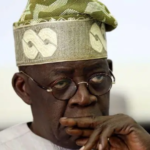
    [Nasir El-Rufai / Vanguard]

    The comments have sparked reactions online and offline, with the Christian Association of Nigeria (CAN) asking Nigerians to ignore El-Rufai.

    El-Rufai was addressing Muslim clerics in Kaduna at an event where he was handing over to Sani. The speech, which was in Hausa, has been transcribed by Premium Times. Here’s the transcript below: 

    Transcript

    “Why did I pick Dr Hadiza Sabuwa Balarabe as my deputy in 2019? First, I calculated that most of those, not Muslims, don’t vote for our party. Most of them. So, why should I give them the deputy (governor) position? I did my calculation, and I knew we could win the election without giving them (the position of deputy governor). That’s first. That’s a purely political issue. It’s politics. You want to win an election and seek people to vote for you. We have observed that since we started practising democracy, we know places we used to win elections and those places we don’t. We’ve done that calculation politically. That’s the political point of it.

    Secondly, what we wanted to prove to people, and thank God in the last four years, we’ve vindicated ourselves and proved that a government that has a Muslim as governor, a Muslim as deputy governor, a Muslim as SSG (secretary of state government), a Muslim as chief of staff, a Muslim as finance commissioner, we’ll not cheat Christians in Kaduna State. And everywhere we go, we tell them, Yes, that’s it; the top government hierarchy in Kaduna State are Muslims, but can any Christian in Kaduna prove that we’ve oppressed them? Is there any district that we didn’t renovate schools? Is there any district we didn’t construct a hospital? Anywhere that we didn’t build roads? Is there anywhere we didn’t help farmers, whether they voted for us? We’ve given everyone their entitlements.

    Of course, Kubau (Local Government Area) voted for us the most (in Northern Kaduna), so I’ll add something to Kubau because they voted for us. What I’ll give Jaba, I’ll increase it for Kubau because Jaba didn’t vote for us. But we’ve given them their entitlements.

    You, Imams and Ulamas, taught us that leadership in Islam is all about justice. The Prophet (peace be upon him) and his companions lived with those that were not Muslims, including Jews, Christians and even pagans, but they addressed him as El-Amin (trusted one) because he treated them with fairness. Caliphs like Abubakar, Umar, Usman, and Ali did justice to those who were not Muslims. Nobody can say he was oppressed for not being a Muslim. But you’ll prefer the ones who support you. But don’t oppress any.

    I always tell them. During this campaign season, they said “this and that,” and I replied ‘Yes, we’re looking for those who can deliver. We’re not looking at your religion. Of course, we consider the religious aspect, but I can’t say that. But what I am saying is, who is being oppressed? Open up and tell us if this government has treated you unjustly. No answer. Well, no one can say he is used to being engaged in criminal activities, used to being idle, but we stopped that. Or you were used to blocking the road, and we said if you do it again, this will be the consequences, and you know we can do it.

    That’s what we’ve done for four years, myself and my team. And that’s what we still did, and Senator Uba Sani and Dr Hadiza Sabuwa Balarabe still won their election (as governor and deputy) even with the religious gang up against us. You, the Imams and Ulamas here, were the ones who did the work, not even the politicians, because the politicians even betrayed us. And he, Senator Uba Sani, knows this. We know it. We’re aware of those who collected money on election day but switched off their phones, slept off and didn’t even bother to come out for the election. But we know the First Aid group members that served as polling agents. 

    Those we paid to protect the votes didn’t do so, but the first aid group members did. And we’re grateful for that, and may God reward you and how you dedicated yourself and supported us. In the name of God, I beg you to support Senator Uba Sani when he finishes his first four years. Re-elect him into office. Then we can continue to prove to people that Islamic leadership doesn’t discriminate but doesn’t condone deliberate mocking. It doesn’t condone indignity. That’s the only thing we want to prove, and we’ve started, but this is not the end; we’ll have to do it for at least twenty years, which will make everyone understand.

    After Uba finishes his tenure and gets re-elected, that’ll be sixteen, right? (El Rufai served two terms of eight years as governor). Then we’ll have another tenure which will make it 24 years. That is when everyone will understand and say, ‘Okay, we understand, we know our status, and we know the Muslims will not oppress us.’ That’s it. And you’ll see that there will be peace. I swear to God, this has been our plan from the first day we started APC in the state, and God has been helping us with your prayers and commitment. We’re on the right path. May God bless you all.”

  • Today, June 7, President Bola Tinubu officially swore in George Akume as the new Secretary to the Government of the Federation (SGF). The Benue-born senator was initially announced to take on the role on June 2 alongside Femi Gbajabiamila, who’ll be Tinubu’s Chief of Staff. Akume’s fame among many young Nigerians is still in training, so who is George Akume, and what do we know about his new role?

    [Akume (L) Tinubu (M) and Gbajamiamila(R) / The Cable]

    Who is George Akume?

    Akume was born on December 27, 1953. He hails from the Wannune Tarka Council Area of Benue state. Akume was a former governor of the state from May 1999 to May 2007—the same time as Tinubu, who was then governor of Lagos state. He ran under the flag of the People’s Democratic Party (PDP). After office, he served as the Benue North-West Senatorial District senator from 2007 to 2019. In 2011, he defected to the Action Congress of Nigeria (ACN), which was the brainchild of Tinubu. He served as the minority leader of the Senate between 2011 and 2015.

    Akume ran again under the now-merged All Progressives Congress (APC) in 2015 and won. He ran again in 2019 but lost his seat to the PDP. Former President Muhammadu Buhari appointed him Minister of Special Duties and Inter-governmental Affairs that year. Having bid his time and supported Tinubu’s candidature, Akume has now been rewarded with the position of SGF.

    What does the SGF do?

    Under the Tinubu administration, Akume takes over a position that Boss Mustapha previously held while working with our former president, Buhari. The SGF’s mandate is to:

    • Monitor and coordinate the implementation of government policies and programmes.
    • Serve as the frontline advisory institution of the Presidency.
    • Drive policy formulation, harmonisation, and implementation.
    • Monitor institutions of governance.

    The office of the SGF has various functions. They include:

    • Handling constitutional, political, and economic issues referred to it.
    • Providing support services to Administrative Tribunals, Commissions, and Panels of Inquiry.
    • Coordinating national security and public safety matters.
    • Protocol
    • Dealing with matters concerning the conditions of service of political office holders.
    • Processing appointments to the leadership positions of statutory bodies, commissions, and agencies. 
    • Overseeing National Honours Awards.
    • Handling petitions and appeals addressed to the president.
    • Processing requests for approval of duty tours and medical treatment abroad.
    • Liaising with Secretaries to State Governments.
    • Providing office accommodation and support services to political office holders.

    Are there any controversies surrounding Akume?

    Akume has his fair share of political controversies. They go all the way back to his time as governor when he was accused of corruption. In 2013, Akume was embroiled in a certificate forgery suit brought against him by an indigene of Benue state. At the time, he was the Senate Minority Leader. However, the West African Examination Council (WAEC) and his alumni, the University of Ibadan, cleared him of any forgery allegations.

    In October 2021, the Benue state government petitioned the Economic and Financial Crimes Commission (EFCC) and the Independent Corrupt Practices Commission (ICPC) to investigate Akume over allegations of fraud to the tune of ₦‎4.56 billion.

    How have reactions to his appointment been?

    Akume’s appointment has elicited mixed reactions from political analysts. On the one hand, some describe his appointment as a “round peg in a round hole.” On the other hand, critics say Tinubu’s appointment of Akume means it will be “business as usual.”

    With his history as a political journeyman, what Akume brings to this new role remains to be seen. For his sake and Nigeria’s, we hope he performs well.

  • The Nigerian Labour Congress (NLC) has announced that following the removal of the fuel subsidy, it will embark on a nationwide strike on Wednesday, June 7. 

    [NNPC filling station / Premium Times]

    Despite the general acceptance that the subsidy had to go—particularly from the leading presidential candidates, including the Labour Party (and, by extension, the labour union), the NLC insists on a strike. So what’s happening, and what’s the way forward?

    The labour unions’ position 

    On June 4, the NLC and the Trade Union Congress (TUC) shunned a meeting with the government delegate chosen to address the subsidy matter. The meeting had in attendance the Governor of the Central Bank of Nigeria, Godwin Emefiele, the Managing Director of the Nigerian National Petroleum Corporation (NNPC), Mele Kyari, Dele Alake, and Adams Oshiomole, among others. The TUC said they boycotted the meeting because the representatives had no official authority to negotiate on the government’s behalf.

    [NLC / Premium Times]

    From the viewpoint of the labour unions, the government doesn’t respect them. 

    According to Joe Ajaero, the NLC president, the meeting had no purpose. In a TV interview on Sunday, Ajaero said

    “Of what use is today’s meeting? As of Tuesday night, I had a meeting with the president of the TUC and some other government officials. I told the NNPCL MD that increasing the pump price would be considered war.”

    The TUC said they want a minimum wage increase, tax holidays for certain groups of workers, and a return to the previous petrol pump price of ₦‎195 per litre while negotiations are ongoing.

    The government’s position

    One man who may know more than anyone about strikes and subsidy removal is former NLC president Adams Oshiomole. Having fought on both sides of the divide, he was on TV after the boycotted meeting with the trade unions to share his insights about the subsidy removal.

    [Adams Oshiomole / Ripples]

    Oshiomole believes the labour unions have every right to be aggrieved. He argued that if the subsidy removal could save up to ₦‎6 trillion, the government could use the savings to fix infrastructural deficits and ensure that lecturers never embark on strike. Oshiomole repeatedly said during the interview that he wasn’t the government spokesperson. So why was he negotiating with the trade unions on the government’s behalf?

    Oshiomole said some possible proposals to cushion the fuel price hike include increasing the minimum wage. He also spoke on providing tax breaks so workers pay less taxes and increase their take-home pay. Oshiomole said the government was considering providing buses, which could reduce transport costs.

    A good faith gesture

    Another meeting between the parties is scheduled for Tuesday before Wednesday’s looming strike. 

    That said, Tinubu has had a shaky start to his office. Despite saying he’d like to emulate former president Umaru Musa Yar’Adua, his actions since assuming office have been markedly opposite. In Yar’Adua’s inaugural speech, he admitted that the process that brought him to power was flawed. Tinubu, by contrast, said his election was “fairly won.” 

    [Bola Tinubu/ Punch]

    Unlike Yar’Adua, who publicly declared his assets, Tinubu is unlikely to do so, possibly only before the Code of Conduct Bureau. 

    Yar’Adua brought down the pump price while in office, and Tinubu’s first act was to declare that the “fuel subsidy is gone”. It’s now time for Tinubu to lead by example.

    Tinubu’s big challenge is making Nigerians see that he’s in the grind with them and empathises with their suffering. It’s not enough to say you’ll remove subsidies. In what way are you also making sacrifices? 

    His wife has already said they don’t need Nigeria’s money. How about taking a salary cut himself? It’s a symbolic gesture showing Nigerians he has skin in the game. He can appeal to the national assembly, dominated by members of his party, to take salary cuts, which drain our treasury. 

    Beyond the above, providing palliatives for the most vulnerable must be done transparently. He must pay critical attention to power generation and distribution, which drive demand for fuel consumption. Tinubu must also get his cabinet up and running as soon as possible so they can devise a plan to manage the economy.

    The ball is in Tinubu’s court. He wanted this task from day one; here’s his opportunity to prove he’s up to it.

  • In this week’s Navigating Nigeria, Citizen speaks with an imam from Bauchi who shared his wild tale about visiting sex workers and encountering a trigger-happy police officer who boasted about ending his life. Through it all, the Imam believes everyone should be allowed to share their story without being judged. For him, reality is a spectrum, and morality is a construct.

    Editorial Note: Navigating Nigeria is a platform for Nigerians to passionately discuss the Nigerian experience with little interference from individual opinions. While our editorial standards emphasise the truth and endeavour to fact-check claims and allegations, we are not responsible for allegations made about other people based on half-truths.

    Walk us through your experience

    This was in 2018. I lived in a large house in a Government Residential Area (GRA) in Bauchi. Our compound had six huge mango trees. It was also very close to the Government House. There’s this abandoned airport down the road, which also has an old air tower. It’s a fantastic spot. People come there on weekdays and weekends to play football. Some play around, go on trains or drive their cars. Nothing else happens around the area during the day. 

    One night, I was at home watching TV, and they told the story of a lady who got into prostitution. I remembered thinking then about how we were all part of some equation. It’s like calculus. Our environment influences what we become in the same way that deriving the function of a function changes the equation’s outcome.

    I come from a society that tends to be hypocritical about sexuality. They talk about modesty so much you’d think we’re the standard. But there’s a lot of hypocrisy. You see people hiding who they are. I don’t have any trouble with homosexuals, as I understand it’s biology. I’ve seen gay men and women kissing in Bauchi. Yet there’s a lot of preaching against it as if it’s not part of the culture here. The TV documentary on prostitution inspired me to see it for myself.

    I guess this is where your story takes off 

    I’d heard of this place called Bayan Gari. Bayan Gari, in English, means “behind the city.” It’s not really behind the city in reality. It just happens to be a place dominated by Igbos and people who aren’t core Northerners.

    In the northern setting, there’s segregation between Christians and Muslims. They tend to live apart even though they’re in the same state.

    I grew up in Lagos, but when I came to the North, I began to really observe this dichotomy. However, this isn’t to say that Lagos didn’t have its issues, particularly with the derogatory way of referring to anyone of Northern extraction as aboki.

    Anyway, after that documentary, I decided to visit Bayan Gari to learn about and document it. I planned to immerse myself there to fully understand what was going on.

    At the time, I was an imam at a local mosque. One afternoon, I drove down there using a friend’s car. It looked like a regular market, with people going about their lives and businesses. The stories I’d been told about it were that it was filled with naked prostitutes, but that’s not the picture I saw when I initially went there. 

    What was it like?

    I debated whether I wanted to do this on my first night there. We live in a world where people get judgmental. They somehow think they’re better than others because of some norms they hold on to. But this highlights what Chimamanda has described as the danger of a single story. What about those people there? What about their lives? Do you know what they’re going through and why they’re doing what they’re doing?

    I left around 9 p.m., donning a face cap and sneakers while presenting myself as what I presumed a person visiting such a place would look like. Bauchi has a cool club culture but also has other cultures, like Bayan Gari, which they don’t like to talk about.

    The first thing I saw on my first night was the presence of almajiris. The term comes from Arabic and means “traveller.” Originally, almajiris were young folks supposed to grow in the way of scholars. But the whole system has been upended and now borders on exploitation everywhere in the North. I believe the practise should end.

    The almajiris—young boys—were smoking cigarettes, weed, and gambling while dancing to a club banger. During the day, you’d see these kids on the streets, begging. At night, they’d come down here to flex. I was surprised to find that these happen in Bauchi.

    I sat close to some guys selling porno CDs. There were ladies in their hijabs who were prostitutes. It felt like I was in a whole new world. The guys around me asked me to join them in gambling, but I didn’t answer. I felt like I didn’t belong there, so I walked around. There was a ghetto-like feel to it. Some areas were filthy. Some of the ladies there carried offensive scents. 

    I contrasted this with when I lived in Lagos. Then I stayed on the island.

    When you go along Obalende at night, you’ll see prostitutes on the road pulling your clothes as you walk past. I didn’t see that sort of thing here. The Fulani ladies here don’t call out to you. You’d just see them drinking and smoking, ready to get in on the act. 

    I got back home around 11:30 p.m. No one knew where I went, not even my friends. As an imam, it would’ve been difficult to deal with the judgmental stares of folks if they’d known that I’d been to Bayan Gari.

    How were you able to reconcile being an imam with visiting Bayan Gari?

    Understanding science, philosophy, and history helped me navigate that.

    Also, there is a verse in the Quran where Allah says, “Verily, in the creation of the heavens and the earth, the changing of day and night are signs for those who reflect.”

    That verse alone doesn’t restrict what one can explore.

    I went to that place to get answers to my questions and to understand why people do what they do. There’s a talk I listened to about the psychology of evil that has a lot to do with some of the answers most of us are looking for. The key realisation here is that we all have stories. And while we think our stories are valid, others think the same about theirs too.

    That sounds deep

    I visited again the next day because it had stories I believed should be told. It was the same experience as the previous day. I walked around as usual and saw this very pretty Fulani girl who was a prostitute. I’m Fulani myself. 

    I tried to have small talk with her, but it was apparent she was high on something. I asked how much she’d charge me per hour. She told me there was no hourly payment. It was simply a matter of having sex with her till I cum. Once that happens, I’ll pay her ₦‎500. I didn’t know if this was a uniform rate across the board, but this was what she charged for her services.

    So I asked why she was doing this. She was reluctant to answer at first, but she eventually did. She said she needed to care for her parents and fend for herself because no one could help. She’d come down to Bauchi from her village in Jos.

    I felt pity for her and offered her some money. She asked if I was taking her to my apartment in Bauchi, but I had no intention of doing so.

    Then I left.

    When I returned home, I was in deep thought, replaying everything in my head. People have different stories, yet it’s so easy to pass judgement when you haven’t listened to them. I walked around the old tower and was in a serious philosophical mood. The old tower used to be a bubbly place used by the rich but has now become a relic of the past. 

    And it hit me how the past and the present are interwoven. I never asked the girl’s name, but I kept thinking about how her past and her history with poverty had shaped her present situation as a prostitute. When I left her, she returned to her friends in her high state, laughing and going about her business. 

    She was so pretty. I considered asking her hand in marriage to get her out of there and giving her a new slate. I wrote about it but lost it. My mind kept returning to her, and I wanted to visit that place again. I didn’t know why I suddenly wanted to become her saviour—maybe because of her story. Or because she was pretty? Or because she had an innocent look? Her face was gentle, and she had large eyes. 

    Hmmm

    I went there again three days later. After searching for and finding her this time, I asked her name. She told me it was Aisha. I tried following her around to talk to her, but she wasn’t listening, perhaps high on some substance. She kept telling me to let her be. She left me and went to a dark corner, where another guy followed her. I kept waiting for her and hoping the guy would be done with her to make my case. 

    While waiting, I saw another tall, pretty girl who looked like a Shuwa Arab. I was gobsmacked.

    I’d found another potential story in my head, so I approached her to ask the same questions I had asked Aisha. She told me to give her ₦5,000 for the whole night. I was only interested in hearing her story. She insisted on that amount regardless, which made me realise she was old in the game.

    In the bargaining process, I sensed that ladies were clustering around me, so I removed myself. As I left, I saw the ladies come around with two policemen, who accosted me. I’d seen policemen smoking and touching girls on my earlier visits. 

    The policemen told me I had to pay that amount. That was unexpected; I had nothing with the lady except a discussion. I was almost outside of Bayan Gari at this point. 

    When they saw that I refused to pay, one of them brought out a chain and started wiping me with it. 

    Wawu

    They had guns with them. At one point, one of them left while the other continued assaulting me. The girls, meanwhile, were laughing at the whole thing. They queued up behind the policeman while he kept beating me. I fell on my knees, pleading that I had done nothing wrong. 

    Some people gathered around to intervene on my behalf, but the policeman escalated matters. He lied to them, saying I was a Boko Haram member.

    Ahhhh!

    He said I was one of the leaders of Boko Haram in Jos and that he knew my face very well. I don’t know if I mentioned this, but I have beards. He told them I ran to Bauchi when security agents tried to track them down.

    The policeman took out his gun, pointed it at my head, and said he’d shoot me, and no one would know what happened. He said no one would question him. See, my body went cold.

    Fortunately, I’d withdrawn some money earlier that day, which I had on me. He put his hand in my breast pocket and took out the ₦5000 there. People started pleading with him after seeing me battered, saying he should let me go. It was after he extorted me that he eventually left with the girls.

    Narrow escape

    I started trekking alone that night. It was around 12:30 a.m. No bikes were on the road, and I was going to a GRA. I was thinking about everything that had happened and started laughing. When I got to Wunti market, I saw a bike man and explained my encounter with the police to him. He laughed at me and zoomed off. I wondered why no one cared to listen to or help me. In my mind, I was a good person and didn’t deserve what was meted out to me. 

    I walked further until I got to a mosque, where I saw another bike man sympathetic to my plight. He carried me to my gate.

    What was the aftermath of your experience?

    When I got in, I took off my clothes. My skin was tender with bruises, and my back was swollen. I was still shocked by the thought that a policeman was willing to pull the trigger because of ₦5,000. I was pursuing a story, but another story came at me.

    None of my friends knew about this because they wouldn’t understand why I chose to go to a place known for prostitution and drug use. Many would judge me, and only a few would appreciate why I did what I did. It was only in 2020 that I shared this story with a few open-minded friends. 

    There are other places where people go for cheap sex, like Gwalla-meji where the federal polytechnic is located. So when I see Northerners go online to bash people for engaging in sexual activity, I consider it collective hypocrisy because it happens in our backyard.

    My takeaway is that beauty exists in different formats; people experience it differently and call it different things. I see those young boys in Bayan Gari as having embraced hedonism in their own way, even though the rest of the world frowns at it. 

    But we should ask, how many people who frown at these things indulge in them in one way or another? People do things for reasons best known to them. We shouldn’t be too quick to judge until we hear their stories. To my mind, reality is a spectrum, and morality is a construct. This is how I choose to see the world.

  • On June 1, 2023, Daily Trust newspaper exclusively reported with the headline “CBN Devalues Naira To 630/$1”. On its Twitter page, the news has received over 426k views at the time of writing. It has also been retweeted 493 times.

    On Wait First, we divide claims into three categories. A valid claim is a fresh banana. A false claim is a burnt dodo. And a misleading claim is cold zobo.

    So, how valid is this claim?

    Background

    According to the news report by Daily Trust, the Central Bank of Nigeria (CBN) devalued the naira from ₦461.6 to ₦6‎31 to the dollar. It then sold at the new rate in the “Importers and Exporters (I&E)” window on May 31. 

    Nigeria currently runs a multiple exchange rate system. The CBN provides its rates, and the parallel market, commonly known as the black market, provides another. The gulf between the two creates arbitrage. This is a situation where people trade in currencies by taking advantage of differing prices for the same currency. 

    As of May 31, the CBN’s rate was ₦461.26 to the dollar. 

    The black market rate for the same day was ₦750 to the dollar.

    Verification

    Not long after the news report was released, the CBN released a screenshot describing it as “fake news”.

    The CBN then followed up with a statement signed by its acting director of corporate communications, Isa AbdulMumin. It read:

    “The attention of the Central Bank of Nigeria (CBN) has been drawn to a news report by Daily Trust Newspaper of June 1, 2023, titled ‘CBN Devalues Naira To 630/$1’.

    We wish to state categorically that this news report, which in the imagination of the newspaper is exclusive, is replete with outright FALSEHOODS and destabilising innuendos, reflecting potentially willful ignorance of the said medium as to the workings of the Nigerian Foreign Exchange Market.

    For the avoidance of doubt, the exchange rate at the Investors’ and Exporters’ (I&E) window traded this morning (June 1, 2023) at ₦465/$ and has been stable around this rate for a while.

    The public is hereby advised to ignore this news report by Daily Trust in its entirety, as it is speculative and calculated at causing panic in the market.

    Media practitioners are advised to verify their facts from the Central Bank of Nigeria before publishing in order not to misinform the public.”

    Verdict

    The CBN has come out to state that the claim by Daily Trust is emphatically false. Therefore this news is nothing but burnt dodo.

    Hi friend! For the past few months, we’ve helped you say on top of Nigerian politics, policies and governance or have we? In less than 2 mins, tell us what you think about Zikoko Citizen here, and we owe you an interesting story next week.

  • Forgive our catchy title. President Tinubu’s famous phrase inspired it as he declared his plans to “hit the ground running” during his first days in office. Today, we bank on it for Nigeria’s newly inaugurated governors.

    In a way, Tinubu’s pronouncement on removing the fuel subsidy exemplifies the race we just got into as a nation. Nigerians are now hustling for fuel in a rat race to the filling station. It’s, however, not all doom and gloom. According to Bloomberg, the announcement has led the Nigerian stock market to rally to its highest value since November 2020. We can only hope that this surge sustains some financial analysts’ optimism.

    Away from Tinubu, 28 governors—18 new ones and ten returning ones—took the Oath of Office on May 29. As is typical with Nigerian politicians, they all made promises during their campaigns, and the momentum was sustained in their inauguration speeches. We highlighted five we found worthy enough, and we bring to you, in no particular order, those who have hit the ground running.

    Alex Otti, Abia State

    [Alex Otti / Punch]

    The leadup to the Abia State elections had surprising twists, which we covered in detail.

    Ultimately, the Labour Party’s (LP) Alex Otti emerged winner in a hotly contested election. In his inaugural speech, Otti was jubilant but took shots at the previous PDP-led administration.

     “We rejoice in the birth of a new and glorious era, yet we cannot easily forget the years of waste and missed opportunities arising from self-seeking, prebendal and profligate governance,” Otti said. He added that his administration inherited debt to the tune of ₦‎200 billion, ₦50 billion in salary arrears and colossal infrastructure decay. Otti said his administration would launch, within a month, a ₦10 billion Micro, Small and Medium scale Enterprises (MSME) financing scheme in the state to address unemployment.

    Abba Kabir Yusuf, Kano State

    [Abba Kabir Yusuf / BBC]

    The Kano Guber election, which we also covered, saw Abba Kabir Yusuf of the New Nigeria Peoples Party (NNPP) coast to a commanding victory over the incumbent APC. In his inaugural speech, Yusuf promised to investigate the mysterious disappearance of the journalist Abubakar Dadiyata.

    After his inauguration, Yusuf’s first port of call was the Kiru Reformatory School, which he said would be fully reopened to rehabilitate drug addicts. He also spoke on electoral violence:

    “We shall investigate all cases of political violence that led to the loss of lives and properties across the State in the last eight years. The infamous case of AlHassan Ado Doguwa, who allegedly sponsored the maiming and murder of over 15 innocent souls in Tudun Wada Local Government, will be pursued to its logical conclusion.”

    Rev. Fr. Hyacinth Alia, Benue State

    [Hyacinth Alia / The Cable]

    The All Progressives Congress (APC) won Benue State in a tight contest. Benue is one state we can confidently say has no “First Lady” as it’s governed by a Reverend Father, Hyacinth Alia.

    Alia’s first act in office mirrors a template already seen in Ebonyi, Enugu and several others upon assuming office—freezing the state’s bank accounts. In his inaugural speech, Alia made mention of the security, employment and infrastructural challenges plaguing the state. He outlined his seven pillars which he believes will transform the state. He asked for cooperation as he lacked a “magic wand” to actualise his plans for the state.

    “I want to say to you, Benue, I am ready and willing to provide the requisite leadership to take that leap of faith into a future of shared prosperity for Benue. And I will not fail you,” he said.

    Umo Eno, Akwa Ibom State

    [Umo Eno, Premium Times]

    With his swearing-in on May 29, Akwa Ibom’s Umo Eno made history by becoming the first albino governor in Nigeria. In his inaugural speech, the PDP governor of the oil-rich state donned his religious toga by saying he’d lead his state “in the way of the Lord.”

    “I stand here as one of you and promise to make you proud. We will lead this state in the way of the Lord. And we will continue to keep the standard and even seek to improve the Christ-centric government that His Excellency Deacon Udom Emmanuel has established,” he said.

    His first act in office was to make appointments, including a secretary to the state government and an economic adviser. We hope he can go beyond sermons and deliver on good governance, which his people elected him for.

    Seyi Makinde, Oyo State

    [Seyi Makinde / Punch]

    Seyi Makinde was part of the G5, a group of PDP governors opposed to the presidential aspiration of Atiku Abubakar. While Atiku didn’t win the presidency, measuring how the G5 contributed to his loss is tough. Four of the five governors, including Makinde, ran for office in various capacities, including governor and senator. Only Makinde won re-election. 

    In his speech, Makinde listed his achievements in his first term. He promised to clear backlogs in gratuities for state workers while building on economic and infrastructural gains. “It’s time to upgrade to the Omituntun 2.0 lifestyle,” he said. 

    “Let me reassure the good people of Oyo state that Omituntun 2.0 will be better than 1.0. We will work even harder to ensure that the prosperity our people have started enjoying under Omituntun 1.0 will continue for four more years,” he added.

    Makinde’s first act was to dissolve the Disciplinary Committee in charge of the state’s Park Management System (PMS) immediately. The committee was headed by one Mukaila Lamidi, popularly known as Auxillary. The Oyo State Police Command, on May 30, arrested 78 suspects. They were linked to an attempt to cause trouble in the state following the dissolution of the PMS.

    Hi friend! For the past few months, we’ve helped you say on top of Nigerian politics, policies and governance or have we? In less than 2 mins, tell us what you think about Zikoko Citizen in this Google form and we owe you an interesting story next week.

  • On May 24, we reflected on Buhari’s time in office, which we perceived as a period marked by missed opportunities. Here’s an excerpt:

    On May 29, 2023, the president-elect, Bola Ahmed Tinubu, will give his inaugural speech. Despite misgivings about the elections, Tinubu’s speech might give insights into what to expect from his administration. Ultimately, if Buhari’s time in office has taught us anything, we should set our expectations lower.”

    Background

    In case you missed it, here’s President Tinubu’s inaugural speech summary. Out of his promises to Nigerians, the “fuel subsidy is gone” announcement quickly became a standout topic for Nigerians, and the media contributed to amplifying its implications. 

    While there was applause from the inaugural attendees and many Nigerians across the country, you only need to go back to eleven years ago, on January 1, 2012, when former President Goodluck Jonathan announced the removal of the fuel subsidy. The nationwide Occupy Nigeria protests followed, leading to Jonathan’s ouster from office. 

    Tinubu was the same guy who lambasted Jonathan for taking the same decision. At the time, he said, “The government has tossed the people into the depths of the midnight sea” by removing subsidies on fuel.

    To be fair to Tinubu, all the leading presidential candidates suggested during their campaigns that the subsidy had to go. Some Nigerians also agree with them. There are at least 7.3 trillion reasons we can think of. Still, we need to understand the shift in stance.

    For one, Tinubu went off script. Here’s a part of the written version of the speech shared by his media executives with the press: 

    “We commend the decision of the outgoing administration in phasing out the petrol subsidy regime, which has increasingly favoured the rich more than the poor. The subsidy can no longer justify its ever-increasing costs in the wake of drying resources. We shall instead re-channel the funds into better investment in public infrastructure, education, health care and jobs that will materially improve the lives of millions.”

    Now compare it with what he said by firmly saying that “fuel subsidy is gone.”

    We’re not the only ones who noticed this difference: 

    As it turns out, we wouldn’t have to wait until Thursday

    Citizen spoke to a few Nigerians living in Lagos who shared their thoughts on Tinubu’s impromptu announcement on the subsidy removal. Here’s what they had to say:

    Toluwani

    “I knew it was going to happen. I don’t feel anything about it. I’m only annoyed and irritated that Nigerians are again trying to exploit the situation because why are filling stations selling at 500-700 already? The subsidy hasn’t been effected yet, so why make life more difficult than it has to be? I’ve said this before, Nigerians are bad people, and if given the opportunity, we’ll do much worse than the leaders we criticise daily. Nonsense.”

    Tolulope

    “All the three top candidates were clear on this subsidy. Their stand was that it wouldn’t stay. What the president said yesterday in his first speech is a mere formality. 

    Provisions made down already state subsidy payments will continue until the end of June 2023. So why are filling stations hoarding it? The loudest opposers are those who hoped he wouldn’t be inaugurated, so they need to wake up please and ask the right questions to the right quarters.”

    Daniel

    “It’s just greed. Yesterday morning, everything was fine. You could walk into a petrol station two days ago, and in three minutes, you’re out. Today, you’ll spend a whole day. These people will not open the filling station till they change the pump price. Fuel price from ₦‎185 two days ago they’re selling at approximately ₦‎600 now. With subsidy removal, fuel is supposed to be around ₦‎380/litre. It’s daylight theft.”

    Emmanuel

    “I bought fuel yesterday at ₦‎585 at a filling station in Fola-Agoro, Abule-Ijesha, Lagos. They were the only ones selling at that time, around 8 p.m. They weren’t selling to car owners, only those with kegs. If you came in your car, you’d still have to buy in a keg. And buying with a keg comes with extra charges.

    The one that hurt me the most was my way to work this morning. I left home a bit late.

    Normally on days like this, I’d ride from my house at Yaba to the office at Ikeja. The price on the ride-hailing app Bolt is usually between ₦1800 and ₦3000. This morning, it was hovering between ₦4200 and ₦5100. On Uber, it was between ₦4500 and ₦4900. Only Lagride had a lower price of between ₦2800 and ₦3000 because I have a discount. On a normal day, it would cost between ₦1500 and ₦1900.

    So I think the announcement has caused a lot of panic leading to a price hike.”

    It’s only day one, but going by reactions to the announcement both online and offline, Tinubu is up to a rough start in office. Nigerians would be eagerly looking forward to how he responds.

  • Sometimes in life, you don’t get a warning about what’s ahead of you. Some things show up, and you are expected to make tough decisions that have to weigh many factors, such as love, the law, societal norms, and moral values. Suppose you find yourself in an online dating scenario where you only want a good time, and a drug trafficker shows up and asks for your help. Will you stake it all out for love? For Navigating Nigeria this week, Citizen spoke to Angela*, who narrated how she almost unknowingly became a drug courier.

    *Name redacted to protect their identity

    Editorial Note: Navigating Nigeria is a platform for Nigerians to passionately discuss the Nigerian experience with little interference from individual opinions. While our editorial standards emphasise the truth and endeavour to fact-check claims and allegations, we are not responsible for allegations made about other people based on half-truths.

    Walk us through your experience

    This was in April 2021. It had been years since I had a boyfriend or someone to call a lover. It also didn’t help that I’m an introverted person. Parties and nightclubs weren’t scenes I was accustomed to. 

    Because of this, I used Tinder, the dating app, to connect with people within my neighbourhood. Call it naïveté, but I wasn’t particular about the age of the guys. I was looking for anyone with a fine face and a sexy body.

    Lol. Any luck?

    I found the profile of this fair-complexioned and handsome man named David, who happened to be in his 30s. I swiped right to accept, and after a few minutes, I got a notification that he swiped right on my profile too. Boom, a match! 

    We then got talking, and he mentioned that he worked as a project manager in London and was coming to Nigeria for his sister’s wedding the following weekend. 

    He then asked me if I was single or in a relationship, as he was looking for a cool lady to “settle down with” and that he “admired me.” I began to suspect that things were fishy because how could he admire me after only two days of knowing each other? But I went along with it. 

    A few days later, he came to my DMs to ask if he could buy anything for me since he was coming to Nigeria. I told him it wasn’t necessary, and he sounded cool about it. 

    The following week, I woke up early in the morning to receive a call from a freight agency saying that I had a package from David. That morning, David had also sent a message that he had sent me gifts despite my earlier insistence that it wasn’t necessary.

    The gift items included an iPhone 11, wigs, shoes, and a sealed box. I won’t lie, I was so excited and started planning how to receive the package from Customs. 

    Three hours later, I got a call from Customs asking me what was in the box. I told him it was £300 as David told me, and they didn’t believe me. They had dogs sniff the package, and they had every reason to suspect that there were drugs in it. 

    I confronted David about it, and he told me that he had kept both £300 in the box for me and also five grammes of methamphetamine, aka meth, which is a banned substance. 

    Ahhh

    He wanted to sell it to a firm in Nigeria to produce certain pills. David also told me things had been difficult for him in London, and he was planning to relocate to Nigeria. He had to use the drug to get money for relocation. It was then that I knew that I had been interacting with a drug trafficker all along and that I was in serious trouble if this matter proceeded any further. 

    He begged me to tell them it was just money, but I refused and left Customs to confiscate the package. We never spoke again after that day.

    What was your takeaway from the whole experience?

    The primary emotion I felt was anger, not even fear. Because if I had known that the guy was a drug pusher, I wouldn’t have gone through this wahala. Thankfully, I wasn’t there when the dogs were sniffing the package. It was the Customs guy who informed me of the arrival of the goods and told me everything via phone.

    I only got away without much trouble because I was crying hot tears on the phone. And this was after I paid #10k or so. Even then, I had to plead my innocence with them, using my age as a young girl who’d never met the man in my life. Since then, I’ve not used Tinder again. I prefer making real-life connections.

    ***In April, the UN Office on Drugs and Crime released its Global Cocaine Report for 2023. The report revealed that Nigeria played a significant role in the smuggling of drugs—particularly at mid-level and dealer levels—in Africa and beyond.

    ALSO READ: Is Nigeria the Cocaine Capital of Africa?

  • On May 19, 2023, several news outlets like the Daily Trust, PM News, Punch (in a now-deleted post), TVC News, Guardian, ICIRLeadership, Business Day, The Street Journal, and The Sun, ran the news that the Federal High Court in Kano State had nullified the candidacy of Abia State governor-elect Alex Otti.

    On Wait First, we divide claims into three categories. A valid claim is a fresh banana. A false claim is burnt dodo. And a misleading claim is cold zobo.

    So, how valid is this claim?

    [Alex Otti / Punch]

    Background

    The period immediately after elections is often very litigious. Various courts and tribunals nationwide are neck-deep in suits and countersuits. This is because individuals and parties often contest election outcomes. For example, the Osun State governorship election was disputed all the way to the Supreme Court. The Supreme Court eventually in favour of Ademola Adeleke.

    Similarly, one Ibrahim Haruna Ibrahim filed a suit against the Labour Party (LP) and the Independent National Electoral Commission (INEC) at the Federal High Court in Kano. This suit’s purpose was to seek to nullify the candidacy of all LP candidates in Kano and Abia States and for the court to revoke the certificates of return issued to all LP candidates declared winners in Kano and the 35 states of the Federation, including the FCT.

    According to Premium Times, the judge cited the failure of the Labour Party to submit its membership registers to INEC ahead of the party’s primaries as the reason. A part of the judgement which the newspaper claimed to see on Friday, May 19, read:

    “That the failure of the 1st defendant to submit its register of members in Kano State and Abia State is in crass breach of the provisions of section 77(3) of the Electoral Act, 2022, and the purported Primary Elections of the 1st defendant is invalid, null and void and of no effect.”

    Verification

    Our partners, Fact-Check Elections, looked into this claim. Here’s what they found:

    “FactCheckElections contacted a lawyer (Barrister Desmond Orisewezie) on the true interpretation of the judgment. When asked about the court’s true position and whether it has sacked the Abia state governor-elect, the lawyer said, ‘No, it only concerns Kano but has legal implications for Otti and Obi.’

    A report credited to NAN states the Federal High Court sitting in Kano has denied nullifying the candidature of the Abia State governor-elect, Dr Alex Otti. “Candidates who participated in the 2023 general election in Abia were not parties before his court. This court lacks jurisdiction to make an order to issue a certificate of return,” Justice Muhammad Nasir-Yunusa was reported to have said.

    Another report by Vreporters says the Kano Judge faults the media report of nullifying Abia state governor-elect candidature. “Media reports that it nullified the candidature of the Abia State governor-elect, Dr Alex Otti, who contested the election on the platform of the Labour Party, LP, are misleading,” said the court judge. However, he added that the court annulled the election of all the Kano LP candidates that contested the 2023 general election. Nasir-Yunusa said, “The court declared only the primary election of the Labour Party in Kano State null and void.”

    Verdict

    Based on the evidence above, reports claiming that a court sacked Abia state governor-elect Alex Otti is misleading. It’s cold and undiluted zobo.

    Can you handle the hotness of Zikoko’s Hertitude? Click here to buy your ticket and find out.

  • As the curtain closes on President Buhari’s eight years in power, Nigerians are left to reflect upon a legacy marked by regrettably missed opportunities. Ebenezer Obadare, a political expert, describes Buhari’s time in office this way:

    “That Buhari managed to turn such wild enthusiasm about his candidacy into grave disappointment, going from a regime of which many, rightly or not, had high hopes, to one that most can’t wait to see the back of, ranks among the most remarkable instances of reputational collapse in the whole of Nigerian political history. 

    It was clear within the first few months—the initial struggle to put together a cabinet being particularly telling—that Buhari, for all his desperation to take power, had not done his homework and was ill-prepared for the demands of the office.”

    Riding on the “Sai Baba, Sai Buhari” mantra and backed by a political figure like Bola Ahmed Tinubu, there were high expectations that Buhari would put Nigeria on the right trajectory. However, Buhari failed to live up to expectations of his promises.

    A summary of Buhari’s eight years

    His ardent supporters will say he built more infrastructure than any other leader before him. They’ll point to the construction of the Second Niger Bridge, multiple railroad projects, and roads across the country. 

    [Loko-Oweto Bridge / Bashir Ahmed / Twitter]

    They’ll also say he assented to many bills the coming administration can hopefully build upon. Some will also applaud Nigeria’s response to the COVID-19 pandemic under his watch, which the WHO ranked as the fourth-most successful globally. While Buhari can claim these achievements, the tradeoff has come at a steep cost.

    His anticorruption stance initially earned him the “Mai Gaskiya” title, meaning “the honest one.” Time has, however, eroded that perception. Nothing captures this better than when he granted pardons to two ex-governors, Joshua Dariye and Jolly Nyame, who were indicted for corruption. The Economic and Financial Crimes Commission (EFCC) said they were demoralised by that action, having spent eleven years and hundreds of millions of naira prosecuting those cases.

    No other president has plunged Nigeria into as much debt as he has. In his eight years in office, Buhari raised Nigeria’s debt from $7.3 billion, inherited from former President Goodluck Jonathan, to $41.8 billion—a 400% increase. 

    His economic policies left many scratching their heads. Take your pick from anyone between the controversial Anchor Borrowers’ Programme, TraderMoni, the naira redesign, and the shutdown of our borders. All told, 133 million Nigerians now live in multidimensional poverty. The World Bank projects that by 2025, 13 million more Nigerians will join them. Unemployment will rise to 41% this year.

    Electoral reform, which Nigerians initially had high hopes about—us included—was another facade. The events of the 2023 general elections made that apparent.

    Buhari has a mixed record on human capital development. Some people might say it’s terrible. Although there were capital interventions in the health and education sectors, the unending ASUU strikes and the brain drain of doctors tell you all you need to know about how that went. This follows a recurring theme in Buhari’s administration. Money is thrown at projects that either become misappropriated or poorly executed.

    Due to his military credentials, many Nigerians expected him to bolster security. This turned out to be a massive letdown. While it’s true that Boko Haram has recently piped down, it’s unclear if that is entirely due to Buhari’s efforts or the internecine struggles of Islamist terrorist groups in northern Nigeria. In the South-East, the proscribed Indigenous People of Biafra, IPOB, has been a constant scourge with its enforced sit-at-home orders. The rise in banditry and kidnapping for ransom across Nigeria is alarming. A former minister described it as a “burgeoning industry”.

    The Vanguard reports that since he assumed office in May 2015, 63,111 Nigerians have been killed under his administration. And young Nigerians will not forget the events of EndSARS, culminating in the military officers’ shooting of unarmed protesters on October 20, 2020. Till today, Buhari hasn’t told us who gave the kill order. 

    We could point to his nepotism as evident in his lopsided appointments, disregard for the rule of law, clampdown on the media, frequent junketing and medical tourism, and inability to unite Nigerians. Losses in several areas quickly overshadowed any gains he made in one area. Based on these, his eight years as president are best described as a net negative. This is Buhari’s legacy.

    Buhari’s famous last words

    Buhari was camera-shy in his early days in office and rarely addressed the media. This came with several conspiracy theories about his health, such as possessing a body double. Nigerians on Twitter will also recall that he locked his comment section for a while. 

    However, the latter end of his regime has seen him speak out more, surprisingly off the cuff. Buhari asked Nigerians for forgiveness in April, saying he’d accept all criticism. This represents a marked departure from the nonchalant and aloof demeanour that has become a representation of his political career. Despite his hard-guy stance, Buhari cares what we think of him and wants history to be kind to him.

    But perhaps the most revealing utterance Buhari has made to date comes from his speech on May 23 at the launch of the new headquarters of the Nigerian Customs Service in Abuja. A viral portion of that speech has made it online. In the speech, he explained his reason for the controversial closure of Nigeria’s land borders.

    Buhari said it was deliberate and designed to force Nigerians to grow what they eat. He genuinely thinks it was a good policy, which Nigerians “appreciated” him for eventually. He added, “I said these few things about my personal belief because I have only six more days to go. And I plan to be as far away from Abuja as possible.

    Thank goodness, I come from an area far away from Abuja. I said if anybody forces me, I have a good relationship with my neighbours, Niger people will defend me.”

    Nigerians are reeling in utter shock at their Commander-in-Chief.

    Buhari has earned wide condemnation for his comments on various sociocultural forums. These include the MiddleBelt Forum, the Afenifere, the Pan Niger Delta Forum PANDEF, and the Northern Elders Forum. 

    And yet, for all the uproar, Buhari has consistently said that he’s all about himself for the last eight years. In his inaugural speech on May 29, 2015, Buhari said: “I belong to everybody, and I belong to nobody.” If only we knew and were ready.

    On May 29, 2023, the president-elect, Bola Ahmed Tinubu, will give his inaugural speech. Despite misgivings about the elections, Tinubu’s speech might give insights into what to expect from his administration. Ultimately, if Buhari’s time in office has taught us anything, we should set our expectations lower.

    Can you handle the hotness of Zikoko’s Hertitude? Click here to buy your ticket and find out.