• To some people, Nigeria is a land with milk and honey flowing into the pockets of politicians. But to others, Nigeria is a country living a fake life just to stunt on Instagram.

    Why Buhari Isn't Making Enough Dough for Nigeria

    In reality, Nigeria’s a country neck-deep in debt with its borrowed milk and honey still flowing into the pockets of politicians.

    As a business, Nigeria is a company in distress. We recently found out that the country isn’t making enough money to even service the debt it owes. Where did all the money go?

    In a recent meeting at Aso Rock Villa, senior civil servants reminded President Buhari that the civil service needs a general salary review because sapa is in town and taking hostages. Buhari offered some excuses explanations on why the salary review is unlikely to happen. 

    Why? His government isn’t making enough dough for Nigeria.

    Why Buhari Isn't Making Enough Dough for Nigeria

    And what were the reasons Buhari highlighted for why Nigeria’s not making enough?

    Thieves

    Nigeria is one of the biggest producers of oil in the world. And oil is the country’s biggest source of revenue. But thieves in high places are stealing the country’s oil and pocketing trillions of naira that belong in the treasury. This culture of theft has always existed but got so much worse under the Buhari administration. 

    Why Buhari Isn't Making Enough Dough for Nigeria

    Nigeria was producing 2.13 million barrels of oil per day in 2015, but that has dropped to 1.25 million barrels per day as of May 2022.

    So it’s convenient that Buhari will use theft as an excuse even though he’s not doing enough to curb it. His administration recently promised to expose the “big men” responsible for all the stealing, but we’re still waiting for him to expose the ones funding terrorism, so don’t hold your breath.


    ALSO READ: Who Are the Biggest Onigbese Governors in Nigeria?


    Vladimir Putin, sort of

    Why Buhari Isn't Making Enough Dough for Nigeria

    In February 2022, President Vladimir Putin ordered Russian troops to invade Ukraine because he didn’t like his neighbours making powerful new friends. The ongoing war has disrupted the global economy and given many world leaders a convenient excuse for their domestic struggles. Of course, Buhari isn’t the type to let a good excuse go to waste so he’s blaming the war for Nigeria’s revenue issues.

    COVID-19

    COVID-19 came for everything when it ripped through the world in 2020. Nigeria even slipped into a recession after months of socio-economic lockdown across the country. So it’s only natural that Buhari would blame the virus for Nigeria’s long-lasting struggles with generating revenue. 

    Security investment

    Buhari told the civil servants his administration has poured so much into fixing security that other sectors which could boost the economy have suffered. 

    It’s the kind of excuse that made him shrink Nigeria’s Excess Crude Account (ECA) from $2.5 billion in 2015 to $376,655 in July 2022. 

    He justified the security spending by saying it’s finally being rewarded, but are Nigerians safer now than they were seven years ago?

    Why Buhari Isn't Making Enough Dough for Nigeria

    ALSO READ: How Buhari Negotiated With Terrorists and Lost

  • The Nigerian Bar Association (NBA) invited six of Nigeria’s 17 candidates that’ll contest in the 2023 presidential election to its annual conference on August 22nd, 2022. 

    The candidates used the platform to toast Nigerians and sell themselves as the best things since agege bread

    What We Learnt About 2023 Presidential Candidates at NBA Conference

    We learnt some new things about them at the conference.

    Tinubu is a busy man

    What We Learnt About 2023 Presidential Candidates at NBA Conference

    Let’s immediately get it out of the way that the candidate of the All Progressives’ Congress (APC), Bola Tinubu, didn’t attend the conference even though it took place only a few minutes from his house. 

    Maybe he was too busy drawing up his strategy for the millions of youths he plans to draft into his agbado army, or maybe he’s just a late-blooming introvert too shy to show his face in public.

    Tinubu sent his running mate, Ibrahim Shettima, to the conference instead and we have to talk about him…

    Shettima needs a stylist

    Shettima showed up to the NBA conference looking like this:

    What We Learnt About 2023 Presidential Candidates at NBA Conference

    And the only plausible explanation is that he’s a victim of “What I Ordered vs What I Got.” It’s also possible that Tinubu only told him about the conference last minute, so he only got the chance to hurriedly dress himself at the car park. Either way, we (don’t) sympathise.

    Dumebi Kachikwu isn’t a one-minute man

    The most basic lesson even a primary school student learns is to always listen to instructions. But the candidate of the African Democratic Congress (ADC), Dumebi Kachikwu, is a man that likes to assert himself.

    When the MC asked him to give his closing remarks in one minute or less, he protested that it wasn’t enough. The instruction was for him to talk about what he’d do for Nigerians as president, but he kept talking off the script so much that the MC cut him off and moved on to the next candidate.

    Atiku wants to make Nigeria… great again?

    In his address at the conference, the candidate of the People’s Democratic Party (PDP), Atiku Abubakar, advocated for a Nigeria where everyone has a sense of belonging and there’s unity and we’re all singing kumbaya around a fire.

    What We Learnt About 2023 Presidential Candidates at NBA Conference

    And, according to him, that only ever happened when the government of Olusegun Obasanjo assumed power in 1999. Conveniently, Atiku was his vice president at the time and he thinks Nigerians need to bring back that “experience” in 2023 to rescue the country. According to him, to escape the trenches, we must go back to move forward.

    Peter Obi wants to flip a switch

    In his address, the candidate of the Labour Party (LP), Peter Obi, was unforgiving in his assessment of Nigeria as a failed country. And his fix is that Nigeria must make the transition from an insecure country to a secure one, from a disunited country to a united country, from a lawless country to a country of law and order and from a corrupt country to a transparent country.

    Obi didn’t clearly outline how he’ll make this happen, so the only assumption is that there’s a switch somewhere waiting to be flipped.

    Tinubu wants to recreate the Lagos experience for Nigeria

    As Tinubu’s representative at the conference, Shettima proudly announced to everyone that the APC candidate will recreate the Lagos experience for Nigeria. But what’s the Lagos experience? The fourth-largest economy in Africa? Or the home of life-threatening annual floods and an agbero culture that’s become a trademark? Is the Lagos experience a blessing or a threat?

    Shettima also promised that a Tinubu presidency will address “ecology” and we’re not sure if that’s a synonym for “unemployment” or the name of a vegetable.

    What We Learnt About 2023 Presidential Candidates at NBA Conference

    ALSO READ: The 2023 Presidential Campaign Promises We Already Find Laughable

    Dumebi Kachikwu will make everyone patriots

    The MC gave Kachikwu a second chance to sell himself after his initial stumble and his proposal is to introduce a patriot bill that makes everyone equal. 

    To make Nigerian leaders care about real issues, he plans to force them to use the same public amenities the average Nigerians use. For instance, his patriot bill forces public officers to travel only by road except in case of emergencies.

    What We Learnt About 2023 Presidential Candidates at NBA Conference

    His theory is simple: The people who have the power to make Nigeria work would do everything possible to make it happen if it directly affects them and their families.

    Adewole Adebayo knows where the money is buried

    There’s an unending debate about whether Nigeria is a rich country or in the chokehold of sapa. But the candidate of the Social Democratic Party (SDP), Adewole Adebayo, believes Nigerian politicians are lying when they say there’s no money on ground. That means our money will grow like grass if he wins?

    Also, Adebayo’s strategy to win the election is appealing to Nigerians to change the people they usually vote for. We wonder where we’ve heard that change thing before.

    What We Learnt About 2023 Presidential Candidates at NBA Conference

    So original

    ALSO READ: What Nigeria Can Learn from Kenya About Cutting Politicians’ Salaries

  • Every worker deserves their fair wages — until they meet a Nigerian governor. 

    Governors are notorious for owing workers and pensioners for as long as they can get away with it. The situation has improved over the years, but it’s still common to see images like this:

    Which Nigerian governors owe the most?

    A recent survey by civic organisation, BudgIT, showed that at least 15 state governors owed civil service workers at least one month’s salary as of July 2022. Eight of them owed more than one category of workers surveyed for the study. 

    These governors didn’t spare even pensioners who should be kicking back and enjoying the fruits of their life-long labour after retirement.

    Which Nigerian governors owe the most?

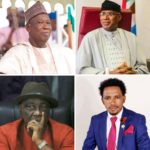
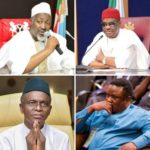
    Here are the faces of the biggest offenders, according to BudgIT:

    Okezie Ikpeazu — Abia

    Which Nigerian governors owe the most?

    Abia State governor, Okezie Ikpeazu, has failed to pay pensioners and state tertiary institution workers for more than 30 months. 

    The state’s primary healthcare workers (over 12 months) and secondary healthcare workers (over 10 months) are also being owed. 

    And because he (probably) didn’t want anyone feeling left out, Ikpeazu also owes primary school teachers (six months), local government workers (six months), secondary school teachers (five months) and local government workers (five months).

    Ben Ayade — Cross River

    Governor Ayade owes primary school teachers, secondary school teachers and secretariat workers in Cross River State two months’ salary each.

    Dave Umahi — Ebonyi

    Which Nigerian governors owe the most?

    Pensioners are also casualties in Ebonyi State where Governor Umahi hasn’t paid them in six months. He also hasn’t paid three months’ worth of salaries to secretariat workers.

    Godwin Obaseki — Edo

    Edo State governor, Godwin Obaseki, should protect his shirt collar anywhere he sees local government and primary healthcare workers whom he owes salaries for more than six months.

    Rotimi Akeredolu — Ondo

    Which Nigerian governors owe the most?

    Rotimi Akeredolu is another governor owing so many people, it almost feels deliberate. He owes primary school teachers and primary healthcare workers five months each and owes four months to secondary school teachers, local government workers, secretariat workers and state secondary healthcare workers. 

    State tertiary institution workers and pensioners are also waiting on him to pay more than six months’ worth of salaries.

    Abdullahi Sule — Nasarawa

    Abdullahi Sule owes secretariat workers four months’ worth of salaries and owes six months each to secondary school workers and local government workers.

    Simon Lalong — Plateau

    Which Nigerian governors owe the most?

    Governor Lalong is owing everyone except pensioners. He owes primary school teachers (four months), secondary school teachers (three months), local government workers (six months), secretariat workers (three months), primary healthcare workers (three months) secondary healthcare workers (three months) and state tertiary institution workers (three months).

    Darius Ishaku — Taraba

    Which Nigerian governors owe the most?

    Governor Ishaku’s owing local government workers (six months), primary school teachers (four months) and secretariat workers (four months).

    Dishonourable mentions

    The BudgIT report also showed that governors in Adamawa (Ahmadu Fintiri), Benue (Samuel Ortom), Borno (Babagana Zulum), Delta (Ifeanyi Okowa), Ekiti (Kayode Fayemi), Kogi (Yahaya Bello) and Imo (Hope Uzodinma) owe at least one category of workers or pensioners.

    Why are Nigerian governors chronic debtors?

    Paying salaries in Nigeria is such a big deal that it’s used as a campaign promise. It’s like water wanting to be praised for being wet. And even though the bar is deep down in the mud, some Nigerian governors like those on this list still fail to clear it.

    Low revenue generation is one of the biggest reasons for this culture of not paying salaries. And when you stack on rising debt and the government’s mismanagement of resources, you have the recipe for what’s happening in the culprit states.

    A total of 1,042 respondents contributed to the data published by BudgIT. And the public reception has shown that there are probably more states also owing workers not captured by the result.

    The obvious repercussion of having an unpaid workforce is an unhappy workforce whose productivity will likely be impacted. State governors simply have to do better. Nigeria is already hard enough for workers not to get their fair wages.

    ALSO READ: The Dramatic Impeachment Stories of Nigerian Governors

  • The 2022 strike by the Academic Staff Union of Universities (ASUU) is turning out to be one of the longest in Nigeria’s history. And even though this video marked a hilarious commencement of the strike in February, the situation is hardly as funny anymore:

    When ASUU went on strike, the union said it was sick of the government’s attitude. And perhaps the worst thing about ASUU strikes is that nothing is ever really new. Many of the issues in contention are as old as Methuselah.

    Why Nigerian Students Deserve Compensation for ASUU Strike

    ASUU is fighting for earned academic allowances, university funding, autonomy, and control over salary structure and payment.

    Of course, the biggest casualty of this unending organ-measuring contest between two agbayas is the students who desperately need education. And they’ve been crying for both sides to sheath their swords and allow peace to reign.

    What’s the status of the strike?

    Even though ASUU has grabbed the headlines for strikes, it’s not the only school union on strike. The Senior Staff Association of Nigerian Universities (SSANU), Non-Academic Staff Union of Educational and other Associated Institutions (NASU) and the National Association of Academic Technologists (NAAT) have also embarked on strikes along the way with their own lists of demands.

    When providing a status report on the government’s dealings with the unions on April 18th, 2022, the Minister of Education, Adamu Adamu, said ASUU remains the black sheep of the family.

    Why Nigerian Students Deserve Compensation for ASUU Strike

    According to the minister, all the other unions are set to call off their strikes but ASUU remains deep in its main character energy bag. 

    And why exactly is ASUU still holding out in the negotiations? If the minister’s words are to be believed, it’s because the government has refused to pay them for the six months they’ve been on leave.

    Compensation war

    A journalist asked the minister what suffering students should look forward to as compensation in the middle of all the strikes. After all, it’s the students that sit by the sidelines and wait forever for the government and unions to tire each other out. 

    But the minister was quick to dismiss the notion of the government owing the students compensation. He promptly passed that hot coal of responsibility to ASUU instead.

    Why Nigerian Students Deserve Compensation for ASUU Strike

    What are students losing to ASUU strikes?

    When ASUU strikes, the greatest loss for Nigerian students is time.

    Why Nigerian Students Deserve Compensation for ASUU Strike

    If a student started university in January 2022, they’ve now lost six months of their first year to sitting at home. This already extends the number of years they’ll have to spend pursuing a university degree.

    And if such a student paid a landlord rent in January, they’ve been denied the opportunity to use that service for six months and will have to renew the rent when it expires. 

    Affected students also have to deal with low-level twisted banter like this:

    Nigerian students take a lot of hits with every new strike. So it’s not ridiculous that the government and ASUU should consider compensating them.

    The real claim to compensation

    The claim to compensation isn’t even a new concept. After eight months of strike in 2020, the Law Students’ Association of Nigeria sued ASUU to return to work. They also asked the court to order ASUU to pay ₦10 billion to students as compensation for infringing on their rights as guaranteed by the 1999 Constitution.

    They argued that the strike caused students psychological and emotional torture as it wasted their valuable time.

    That lawsuit never went anywhere, but the argument was as true in 2020 as it is in 2022. If ASUU thinks it needs its members compensated for the six months they’ve not worked, then students have a big claim for compensation. It doesn’t even matter if that compensation is coming from ASUU or the government. So, it may be time to resurrect that lawsuit.

    Generations of students have been forced out of classrooms by ASUU and the federal government for more than four years combined since 1999. That’s enough time to get a full degree. Yet, even when the 2022 strike ends, there’s nothing to show it will indeed be the end of the road for this endless conflict.

    If Nigerian students will never be free of ASUU strikes, they may as well start getting something out of it. But more than the compensation, students only have one real demand:

    Why Nigerian Students Deserve Compensation for ASUU Strike

    ALSO READ: Will Nigerian Students Ever Be Free of ASUU Strike?

  • There’s nothing that screams witchcraft more than a group of people rejoicing over pulling the switch that puts millions of people into eternal darkness.

    Yet, that’s what happened when members of the National Union of Electricity Employees (NUEE) went on strike on August 17th 2022.

    Why?

    The NUEE’s strike was against the treatment of electricity workers by the government-owned Transmission Company of Nigeria (TCN).

    The strike commenced only days after the union released a circular for its members to stop working. 

    Their main goal was to show the government pepper and flex their muscles over the millions of Nigerians who depend on their services. 

    But what were the issues?

    The NUEE listed three key issues as the reasons why it was going to war with the government. 

    The most pressing one of those issues was regarding work promotions. A new directive by the TCN had mandated that some classes of staff will have to undergo a promotion interview before they can be promoted.

    Oh, the horror of interviews!

    The NUEE doesn’t like this basic requirement we all have to face at our jobs for two reasons: it wasn’t consulted and it’s against its union rules. That second reason is probably responsible for the first reason, but we move.

    The NUEE also listed the stigmatisation of its staff from the office of the Head of Service as another grievance to iron out. This stigmatisation manifests in the form of preventing union members from working in the other areas of the power sector. 

    The third issue was the government’s failure to ensure that over 2,000 former staff of the Power Holding Company of Nigeria (PHCN) are paid their severance packages. 

    These workers lost their jobs when the government privatised PHCN and the union has been campaigning for them to receive their dues for years. During one of NUEE’s strikes in the past, the government reached a December 2019 agreement to ensure the payment of the severance package, but that hasn’t happened. And the NUEE finally said:

    So the only reason a country of over 200 million people was held hostage with darkness was that a union couldn’t iron out its issues with the government in a civil manner. Hence, the strike.

    What happened to the strike?

    Once the protesting workers put Nigerians in darkness, the government moved at lightning speed to organise a reconciliation meeting. After hours of negotiations, the NUEE agreed to suspend the strike.

    And what’s a Nigerian problem that can’t be solved by setting up a committee? This committee is tasked with dealing with the issues and submitting a report in two weeks.

    What did the strike affect?

    It’s not like it needs any help, but the strike led to another collapse of the national grid. This collapse left many Nigerian businesses resorting to alternative power sources that are very costly to keep up with these days.

    The NUEE promised to restore power immediately after suspending the strike. But many parts of Nigeria are still left in darkness 24 hours later, proving once again that it’s easier to break something than fix it.

    What happens if issues aren’t resolved in two weeks?

    “Hello Darkness, my old friend.”

    ALSO READ: What Happens When the National Grid Collapses?

  • The average age in Nigeria is 18 years old, but the country’s affairs are mostly run by baby boomers born between 1946 and 1964. 

    The Baby Boomers Still Running Things in Nigeria

    Nigeria’s “leaders of tomorrow” have been waiting for eternity to take over as promised and take charge of their own future but the queue isn’t moving fast enough.

    The Baby Boomers Still Running Things in Nigeria

    And even though you can be too young to run for office in Nigeria, you can never be too old.

    So, in honour of Baby Boomers Recognition Day, we look at the Nigerian leaders holding up the queue and keeping the leaders of tomorrow out of the room.

    Muhammadu Buhari, 79

    The Baby Boomers Still Running Things in Nigeria

    Nigeria’s current president is the oldest to ever sit in the top seat. He was a military dictator between 1983 and 1985 when he was booted out. He must have forgotten something in that office because he returned 18 years later to contest presidential elections four times before he finally won in 2015. He’s set to finally retire to his livestock farm in Daura when his second term ends in 2023.

    Theodore Orji, 78

    Theodore Orji served as Abia State governor for eight years and could have retired immediately as he was already 70+ when his tenure ended in 2015. But he jumped straight to the Senate and contested again in 2019. Thankfully, he says he’ll retire when his current term ends in 2023 to make way for younger people.

    Senator Abdullahi Adamu, 76

    The Baby Boomers Still Running Things in Nigeria

    Senator Abdullahi Adamu hasn’t had a moment of rest since he actively joined politics in 1977. He’s worked with many political parties and was a minister under General Sani Abacha

    He later won an election as the governor of Nasarawa State in 1999 and served two terms until 2007. He became a senator in 2011 and remained in the Senate until he was elected the national chairman of the All Progressives Congress (APC) in 2022.

    Atiku Abubakar, 75

    The Baby Boomers Still Running Things in Nigeria

    Atiku is one of the favourites to win the 2023 presidential elections, but he’s been playing that game since 1992. If the former vice president wins, Nigeria would go from one septuagenarian to another. And if he loses, history shows there’s nothing to stop him from running again in 2027.

    ALSO READ: Atiku Can’t Stop Running for President Despite His Record

    Bola Tinubu, 70

    The Baby Boomers Still Running Things in Nigeria

    Bola Tinubu is another favourite to win the 2023 presidential election who could continue Nigeria’s septuagenarian line of presidents. He was a senator in the 1990s and served two terms as Lagos State governor before settling into an alleged godfather role for the next three governors. He now has his sights on the Aso Rock Villa as his retirement home.

    Ahmad Lawan, 63

    The Baby Boomers Still Running Things in Nigeria

    He’s not exactly 70+ but he’s a baby boomer and one of the longest-serving lawmakers in Nigeria. He’s risen from being a House of Representatives member to becoming the Senate President and landlord head of the National Assembly which makes him the third most powerful person in Nigeria currently. And he’s already started targeting the number one position.

    Nicholas Mutu, 62

    He’s also not 70+ but Nicholas Mutu is another baby boomer who’s clung to power in Nigeria. At the age of 39, he was elected the representative of Bomadi/Patani federal constituency of Delta State in 1999. He’s simply never left since then and is a proper National Assembly landlord himself.

    Femi Gbajabiamila, 60

    The Baby Boomers Still Running Things in Nigeria

    He’s the youngest person on this list but as the Speaker of the House of Representatives, Femi Gbajabiamila is currently the fourth most powerful person in Nigeria. And he’s climbed all the way over there by nailing down a seat in the chamber since 2003.

    ALSO READ: The Dramatic Impeachment Stories of Nigerian Governors

  • When you’re caught pants down doing something you probably shouldn’t be doing, the honourable thing to do is be humble and show remorse.

    There's a Place for Animals in the Nigerian Public Service

    But for people in the Nigerian public service, animals have become the ultimate scapegoats for all manner of fraud. 

    Animals want to have fun too?

    In 2018, an audit found that ₦36 million had magically cat-walked out of the accounts of a Joint Admissions and Matriculation Board (JAMB) office in Benue State. When the EFCC identified the main suspect, she blamed a mysterious snake who conspired with her housemaid for the theft. 

    There's a Place for Animals in the Nigerian Public Service

    Shortly after, a former senator, Shehu Sani, speculated that monkeys raided the home of another senator and stole ₦70 million. It was more of a joke, but the public ran with it and it joined the collection of bizarre animal events in Nigeria.

    And, of course, it’s impossible to forget President Buhari aka Travel Blogger’s brush with his own animal episode. When he returned from three months of medical leave in the United Kingdom in 2017, rats were presiding over the affairs of his office. This forced him to work from home for three months before remote work became a global phenomenon three years later.

    There's a Place for Animals in the Nigerian Public Service

    We can now add another animal to the collection in 2022

    In 2013, the management of the Nigeria Social Insurance Trust Fund (NSITF) sent more than ₦17.2 billion into various untraceable accounts. The Office of the Auditor General of the Federation (OAuGF) audited the agency’s accounts in 2018 and found these shady transactions. In a sane world, these spendings were supposed to have supporting documents to justify the transfers, but auditors didn’t find any.

    And this is where the Senate Public Accounts Committee (SPAC) stepped in. The committee called on present and past officials of the NSITF to explain what happened with the money. 

    All the Senate needed to see were payment vouchers and supporting documents relating to the transfers. The absence of these means Nigerians would just have to accept the words of the NSITF that the fund was spent wisely.

    Like on an owanmbe

    Umar Abubakar was the managing director of the NSITF when the transfers were made in 2013 but he distanced himself from making any explanations because he wasn’t in office anymore when the audit happened in 2018. 

    There's a Place for Animals in the Nigerian Public Service

    Adebayo Somefun was the managing director during the 2018 audit and simply told the panel that the NSITF’s account section should be able to trace the documents.


    ALSO READ: ₦80 Billion Fraud: Accountant-General Has Been Doing More Than Accounting


    Enter the termites

    Things only got interesting when the current managing director, Michael Akabogu, finally told the panel that the documents actually exist and there’s nothing shady going on. The only problem, according to him, was that the documents weren’t properly stored and had fallen victims to rain and termites. 

    There's a Place for Animals in the Nigerian Public Service

    How did that happen? Apparently, the NSITF kept the documents in a container that was abandoned in an isolated area at its Abuja office.

    Does it sound fishy at all that the documents that should prove ₦17.2 billion worth of fraud didn’t happen nine years ago were left for termites to feast on? 

    We’d like to hear from these termites what their interest is in a corruption probe of this magnitude. At least put them on trial for obstruction of justice or something.

    What will happen now?

    It just so happens that shady transfer of money isn’t the only thing that the audit turned up. Auditors also found that the NSITF routinely pays salaries to dead or retired staffers. 

    There's a Place for Animals in the Nigerian Public Service

    The NSITF is also under the microscope for buying vehicles and other properties without proper documentation.

    The Senate committee asked the managing directors to reappear for another round of questioning in September to clear the air on these other allegations. And we imagine there are many animals in Nigeria right now living in dread of being accused of something they probably didn’t do.

    There's a Place for Animals in the Nigerian Public Service

    Or maybe these animals are actually as guilty as charged and are just preying on the public’s disbelief. And if we allow these animals to continue to get away with it, don’t be shocked when hyenas steal ballot boxes in 2023 or dogs drive dubious-looking bullion vans filled with money for vote-buying.

    There's a Place for Animals in the Nigerian Public Service

    ALSO READ: How to Get Away with $9.8 Million — the Andrew Yakubu Story


  • When terrorists attacked a train on the Abuja-Kaduna rail line in March 2022, it represented a new low for the Buhari administration. The terrorists bombed the rail line, killed nine people and kidnapped dozens of passengers.

    The attack made a mockery of President Buhari’s supposed success in tackling insecurity. What Nigerians didn’t know at the time was that the government’s incompetence didn’t end there.

    Buhari’s bold face

    On August 11th, 2022, President Buhari met with representatives of the hostages in his castle in Abuja. He assured them that he was doing his best to ensure the release of the 31 hostages still left with the terrorists over four months after the attack. 

    The president also noted that the release of some of the hostages over the past few weeks was due to the efforts of his government.

    How Buhari Negotiated With Terrorists and Lost

    The face of someone that’s proud of doing his best even when his best isn’t enough

    But then, all the tea about how the terrorists continued to fool the president after the attack came from the mouth of his own senior special assistant, Garba Shehu.

    What we thought was happening

    Weeks after the train attack and abduction of the passengers, the terrorists demanded the release of their comrades in the government’s custody.

    One of their known leaders, Abu Barra, also demanded the release of his children. He accused the government of forcefully keeping them in custody in Adamawa. The government didn’t respond publicly to these demands and maintained a bold face. This was in line with the government’s policy of not negotiating with terrorists and defeating them in press statements instead.

    How Buhari Negotiated With Terrorists and Lost

    But the terrorists kept demanding ransom from the families of their hostages and lined their pockets with hundreds of millions of naira. This led to the release of some of the hostages in different batches over the past four months.

    But new revelations show Buhari could have secured the release of the hostages without their families having to lose money in ransom. The only problem was the president tried and failed quite spectacularly.

    ALSO READ: What Happens When Nigerian Police Officers Clash With Soldiers?

    What really happened

    The release of the hostages for ransom has attracted more ridicule for the Buhari government. To fight back against the accusation that it’s done nothing to help the hostages, Shehu spilled the beans on some details that should have probably stayed inside the pot.

    How Buhari Negotiated With Terrorists and Lost

    In an interview with BBC Hausa on August 12th, 2022, Shehu said the government cooperated with the terrorists when they first took the hostages. They reached an arrangement that would allow the terrorists to get what they want so the government could get the hostages back. What could possibly go wrong?

    For its part of the gentleman’s agreement, the government took care of the pregnant wife of one of the terrorist leaders. On the government’s watch, fully-funded by taxpayers, she delivered twins. 

    The government, feeling very generous, handed her over to her husband’s parents, fulfilling the demand of the terrorists for her release. This was the first time the government scratched the back of the terrorists and you’d expect the terrorists to scratch back. But what’s a little oath-breaking for terrorists? 

    When it was time to fulfil their own part of the bargain, the terrorists said:

    How Buhari Negotiated With Terrorists and Lost

    Still marinating in his humiliation and (probably) concerned about the poor hostages, Buhari succumbed to more demands from the terrorists. Remember those children Abu Barra said were in detention in Adamawa? Well, the government sent a plane to pick them up and gift-wrapped them to the terrorists.

    But did the terrorists give the president a reacharound for his troubles?

    Instead, they started asking him for money. And this was the point Buhari realised the terrorists were hustling him like a JJC in Oshodi Underbridge.

    How Buhari Negotiated With Terrorists and Lost

    We assume no one was holding a gun to Shehu’s head when he made these revelations, so why did he make them despite being very embarrassing to Buhari?

    Well, he did it so that he could say, “People shouldn’t say the government is doing nothing.” And this only proves that if there’s one thing Buhari hates, it’s insult. But public humiliation is fine.

    ALSO READ: Buhari’s Old Tweets That Have Aged Like Fried Rice

  • A total of 18 political parties will participate in Nigeria’s 2023 general elections, and each one will do anything to convince Nigerians they’re the best choice. And anything includes lies and exaggerations.

    It’s our responsibility to fish out the truth about the intentions of these parties and there’s nowhere better to look than their logos.

    If the logos of Nigerian political parties could speak, what would they say? We listened to all of them and they whispered back.

    Accord (A)

    Nigerian Political Parties and What Their Logos Say About Them

    We’re the “don’t worry, be happy” party. Vibes on vibes.

    Action Alliance (AA)

    We couldn’t afford to pay a professional graphic designer, and this was the result.

    Action Democratic Party (ADP)

    We’re the party of bookworms — no ASUU strikes.

    Action Peoples Party (APP)

    We’ll address the elephant in the room, whether it’s climate change or the price of your bread.

    African Action Congress (AAC)

    Nigerian Political Parties and What Their Logos Say About Them

    Who wants to party inside a 1990s disco club?

    African Democratic Congress (ADC)

    Nigerian Political Parties and What Their Logos Say About Them

    We offer firm handshakes and nothing more.

    All Progressives Congress (APC)

    Nigerian Political Parties and What Their Logos Say About Them

    Sweeping our enemies away and sweeping our own dirt under the rug.

    All Progressives Grand Alliance (APGA)

    Nigerian Political Parties and What Their Logos Say About Them

    We’ll be there to wake you in the morning when your alarm doesn’t work. Also useful for dinner.

    Allied Peoples Movement (APM)

    We’ll unite the country and make cassava great again.

    Boot Party (BP)

    We needed a logo to match our party name while also causing you eye pain.

    Labour Party (LP)

    Nigerian Political Parties and What Their Logos Say About Them

    We’re a respectable establishment with a strong wazobia family unit.

    National Rescue Movement (NRM)

    Nigerian Political Parties and What Their Logos Say About Them

    We float like a butterfly and sting like a bee. We don’t know what it means but it’s provocative; it gets the people going.

    New Nigeria People’s Party (NNPP)

    Christmas hampers, everyone?

    People’s Democratic Party (PDP)

    Nigerian Political Parties and What Their Logos Say About Them

    This logo is a Rihanna song. Ella, ella, eh, eh, eh.

    People’s Redemption Party (PRP)

    Nigerian Political Parties and What Their Logos Say About Them

    We hold the key to unlocking all your problems.

    Social Democratic Party (SDP)

    Nigerian Political Parties and What Their Logos Say About Them

    This is a Lil Nas X song. Can’t nobody tell us nothing.

    Young Progressive Party (YPP)

    We offer the gateway to the legalisation of weed. “Come to us and ye shall always be high.”

    Zenith Labour Party (ZLP)

    It’s the Labour Party, but with stairs to — we sha don’t know where e dey carry us dey go.


    ALSO READ: What Vibe Do These 10 Nigerian Political Parties Give Off?


    Game of Votes

    Subscribe to the Game of Votes newsletter to get all the tea about Nigeria sent directly into your email inbox.

  • On August 4th, 2022, a High Court in Akwa Ibom State sentenced Uduak Akpan to death. That name sounds familiar because he’s the main suspect in the chilling rape and murder of Iniobong “Hiny” Umoren in 2021.

    Umoren was a young lady who advertised her job search online only to fall prey to Akpan’s scheme. Her rape and murder in 2021 caused a nationwide outrage so much that Akpan’s final fate appeared sealed before he even stepped inside a courtroom.

    Why the Death Penalty Doesn't Work in Nigeria

    Justice Bassey Nkanang sentenced him to death by hanging, but what does it mean to be on death row in Nigeria?

    First, a little bit of history

    One of Nigeria’s most notorious use of the death penalty is the execution of the Ogoni Nine in 1995. The military government of Sani Abacha executed the nine Niger Delta activists and suffered international ridicule for it. 

    Many Nigerian military governments used the death sentence to punish political opponents and keep them in line. The execution of armed robbers was also a public spectacle to serve as deterrence. 

    But there’s been a shift since Nigeria returned to a democratic system of government in 1999.

    Who meets the hangman?

    There are a number of offences in Nigeria that attract the death penalty — treachery, treason, armed robbery and murder. And depending on the location of the crime, suspects convicted for kidnapping, homosexuality and blasphemy can also get the death penalty. 

    Convicts can be hanged, shot by a firing squad, stoned to death or killed by lethal injection.

    Why the Death Penalty Doesn't Work in Nigeria

    Nigerian courts have sentenced tens of thousands of people to death for these crimes for decades. But many of these convicts aren’t actually executed as ordered. In fact, executions have happened in only a handful of states, including Kaduna, Plateau, Enugu, Rivers and Edo, since 1999.

    Governors aren’t very cool with killing people

    When a court sentences a convict to death, they’re allowed by law to appeal all the way to the Supreme Court. If the court upholds their death sentence, then they’re at the mercy of state governors who have to sign the death warrant to seal their fate. 

    But many Nigerian governors have displayed a reluctance to sign death warrants since 1999. 

    Why the Death Penalty Doesn't Work in Nigeria

    This reluctance forced former President Goodluck Jonathan in 2013 to publicly beg the governors to sign the warrants.

    In 2021, the Minister of Interior, Rauf Aregbesola, made a similar appeal for governors to enforce the death penalty. He said this would help to decongest prisons. This came from a man who never signed a death warrant himself in his eight years as the governor of Osun State.

    Why the Death Penalty Doesn't Work in Nigeria

    “Do as I say, not as I do.”

    The death penalty debate in Nigeria

    The death penalty is a very controversial topic anywhere in the world, considered by activists a human rights violation. The utility of the government executing someone has come under serious question in the modern world and is seriously frowned at.

    Many countries, including in Africa, have abolished the death penalty on grounds of being archaic and inhumane. And many more countries, like Nigeria, have shown cold feet about following the law to the letter on death sentences.

    The last known death sentence executed in Nigeria happened in Edo State in 2016. Civil societies and international organisations have pounced on this reluctance from governors to ask for an official end to the death penalty in Nigeria.

    Many death row inmates already live out the rest of their lives in prison anyway. Their sentences are sometimes officially commuted to life imprisonment or, in rare cases, the government pardons them after a long stint in prison.

    Why the Death Penalty Doesn't Work in Nigeria

    There are currently more than 3,000 death row inmates stashed away in Nigerian prisons. But with how things stand in the country, a death sentence is essentially life imprisonment. It may be time to make it official and remove the death penalty. But the debate will remain controversial, especially with people like Uduak Akpan as a beneficiary of that change.

    ALSO READ: 5 Nigerians Laws That Shouldn’t Exist